3 Days in Barcelona: The Perfect Itinerary for First-Time Visitors

The first time I arrived in Barcelona, I made the classic mistake: I tried to see everything in one exhausting day, and ended up remembering the queues better than the city. Barcelona does not reward rushing. It rewards slow mornings with coffee, long lunches that drift into the afternoon, and evenings that only get going once the light turns gold.
If this is your first visit, three days is the sweet spot. Long enough to see the Gaudí masterpieces, wander the medieval lanes of the old town, eat very well, and still leave room for the beach — and short enough that every day feels full, not frantic.
This itinerary is exactly how I would plan it for a friend. The days are grouped by neighbourhood, so you are not zig-zagging across the city all day. I have added the stops where booking ahead genuinely matters, and the food breaks I would not skip. Follow it loosely, leave gaps for getting happily lost, and Barcelona will do the rest.
Where to Stay in Barcelona
Pick the right base and this whole itinerary becomes easier — most of what follows is walkable from these three areas. All three picks are real, well-established hotels I am happy to recommend as a starting point for your own search.
Luxury pick — El Palace Barcelona
A grand, old-school five-star just off Passeig de Gràcia, El Palace has been hosting travellers since 1919 and still does everything properly: elegant public rooms, a lovely rooftop terrace, and service that makes you feel looked after from the moment you walk in. You are a few minutes’ walk from Casa Batlló and the Eixample’s best shopping, with the Gothic Quarter an easy stroll downhill.
Boutique pick — Mercer Hotel Barcelona
Tucked into a quiet street in the Gothic Quarter, the Mercer is built into a building with genuine Roman and medieval bones — parts of the old city wall run through it. Rooms are calm and design-led, there is a small rooftop pool, and you step out of the door straight into the oldest, most atmospheric streets in Barcelona. Perfect if atmosphere matters more to you than a big-hotel buzz.
Budget pick — Hotel Lleo
A dependable, good-value option a couple of minutes from Plaça Catalunya and the top of La Rambla, Hotel Lleo gives you the most connected location in the city without the five-star bill. Rooms are simple but comfortable, there is a small rooftop pool for a cooling dip, and the airport bus and half the metro network are on your doorstep — ideal for a short, sightseeing-heavy trip.
Table of Contents
- Where to Stay in Barcelona
- Day 1: Gaudí’s Greatest Hits — Sagrada Família, Park Güell and Passeig de Gràcia
- Morning: Sagrada Família
- Afternoon: Park Güell
- Evening: Casa Batlló, Casa Milà and Dinner in the Eixample
- Day 2: The Old Town — Gothic Quarter, La Rambla and the Sea
- Morning: Gothic Quarter and Barcelona Cathedral
- Afternoon: La Rambla, La Boqueria and Palau de la Música
- Evening: Barceloneta Beach and Paella by the Sea
- Day 3: Montjuïc, Camp Nou and a Tapas Farewell
- Morning: Montjuïc Castle and Gardens
- Afternoon: Camp Nou and the Barça Museum
- Evening: Magic Fountain and a Pintxos Crawl on Carrer de Blai
- Final Thoughts
Day 1: Gaudí’s Greatest Hits — Sagrada Família, Park Güell and Passeig de Gràcia

Day one is Gaudí day. These are the sights you have pictured a hundred times, and seeing them first means that if anything overruns later in the trip, you have not missed the essentials. It is also the day where advance booking matters most — please do not leave the two big entries to chance.
Morning: Sagrada Família
Start early and go straight to the Sagrada Família, ideally on the first entry slot of the day. Gaudí’s unfinished basilica is unlike any church you have ever stepped into: columns that branch like a stone forest, and stained glass that washes one side in cool blues and the other in warm reds and oranges. Give yourself at least 90 minutes, and add a tower visit if you want the city views.
One non-negotiable warning: book your ticket online, for a fixed time slot, as soon as your travel dates are confirmed. Entry is timed, capacity is controlled, and in busy months slots sell out days ahead. Turning up and hoping rarely works. Book ahead online before you go.
Getting there: Metro L2 or L5 to Sagrada Família station, which drops you right outside. Grab a coffee and a pastry in the Eixample before your slot rather than paying tourist prices on the doorstep.
Afternoon: Park Güell
After lunch, head uphill to Park Güell, Gaudí’s fantastical public park above the Gràcia neighbourhood. The monumental zone is the part you have seen in photos: the mosaic salamander on the entrance steps, the gingerbread-style gatehouses, the stone columns of the Hypostyle Hall, and that famous wavy bench on the main terrace, tiled in broken ceramics and curving around views of the whole city and the sea beyond.
Like the Sagrada Família, the monumental zone uses timed entry and daily numbers are capped, so book this one in advance too. The rest of the park is open green space and free to wander, so arrive a little early and explore the quieter paths before your slot.

Getting there: Metro L3 to Lesseps, then a 15-minute uphill walk (there are escalators part of the way on Baixada de la Glòria), or a bus straight to the entrance. Your legs will feel the hill — save this for after lunch, not first thing.
Evening: Casa Batlló, Casa Milà and Dinner in the Eixample
Finish the day on Passeig de Gràcia, Barcelona’s grandest avenue, where two more Gaudí houses sit on the same famous block. Casa Batlló is the dreamlike one — a facade of shimmering blue-green tiles and bone-like balconies, inspired by the legend of Saint George and the dragon. Casa Milà (La Pedrera), a few minutes up the street, is the sculptural one, all rippling stone and twisted iron, with a rooftop of surreal chimney stacks that looks best in the evening light.
Pick one for a full interior visit — Casa Batlló’s is superb — and admire the other from the street, then stay in the Eixample for dinner. Look a street or two away from Passeig de Gràcia itself for the best-value restaurants.
Day 2: The Old Town — Gothic Quarter, La Rambla and the Sea
Today is about the Barcelona that existed long before Gaudí: two thousand years of history packed into a tangle of lanes where you can walk from Roman walls to a medieval cathedral to a buzzing food market in under an hour. Wear comfortable shoes — you will be on foot almost all day.
Morning: Gothic Quarter and Barcelona Cathedral
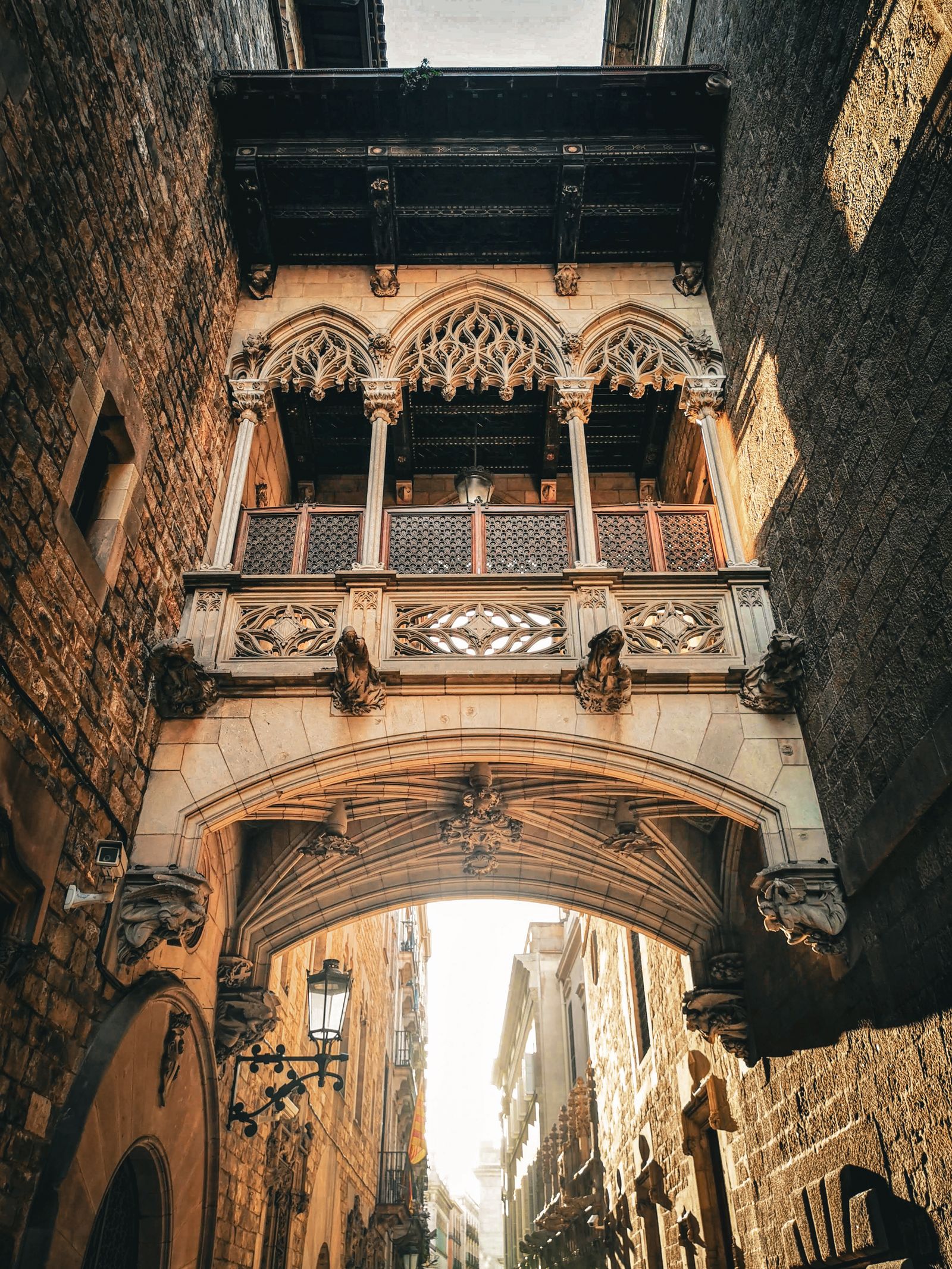
Start in the Gothic Quarter with no fixed route for the first half hour. Get a little lost on purpose around Plaça de Sant Jaume and the quiet squares behind it. Then make your way to Barcelona Cathedral, the city’s great Gothic church (not to be confused with the Sagrada Família). The real treat is the cloister, home to a small garden, a fountain, and a resident gaggle of white geese — thirteen of them, one for each year of the young martyr Santa Eulàlia’s life.
Take the lift to the cathedral rooftop if the weather is clear; the view across the old town rooftops is one of the best cheap thrills in the city. Dress respectfully — covered shoulders and knees are expected inside.
Tip: The streets around the cathedral fill up by late morning. An early start means you get the famous narrow lanes around Carrer del Bisbe almost to yourself for photos.
Afternoon: La Rambla, La Boqueria and Palau de la Música
Walk over to La Rambla, the city’s famous tree-lined boulevard, and stroll it once, properly — from Plaça Catalunya down towards the Columbus Monument and the sea. Watch the flower stalls and street performers, and keep a hand on your bag: this is prime pickpocket territory, like any famous street in Europe.
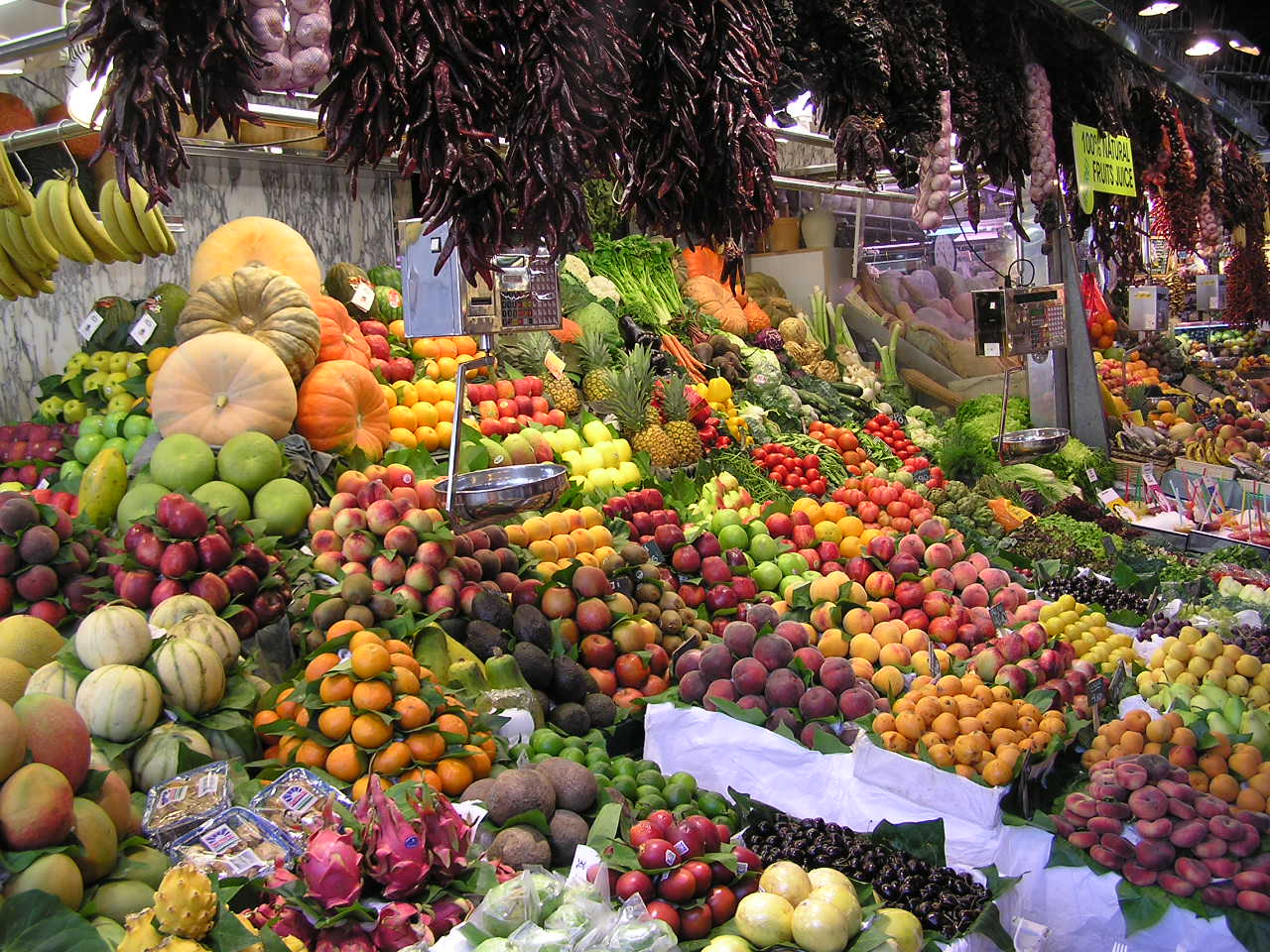
Halfway down, duck into the Mercat de la Boqueria, Barcelona’s most celebrated food market. Graze your way through: a paper cone of jamón and cheese, a fresh fruit juice, a few oysters or a plate of grilled seafood at one of the little bars at the back of the market, where the locals actually eat. The stalls by the entrance are the priciest — walk deeper in for better value and fewer crowds.
From the market, cut across the old town to the Palau de la Música Catalana, a modernista concert hall so ornate it looks carved out of stained glass and roses. The daytime guided tour is the only way to see the auditorium as a visitor, and it is well worth it.
Evening: Barceloneta Beach and Paella by the Sea
End the day where the city meets the Mediterranean. Walk from the old town down to Barceloneta, the old fishermen’s quarter, and along the promenade as the beach empties and the light softens. If the weather is kind, this is your moment for a swim or simply a drink with your feet practically in the sand.

For dinner, stay in Barceloneta for paella — this is the neighbourhood for it. Two honest rules: real paella takes at least 20 minutes to cook to order (if it arrives in five, it was not made for you), and many traditional places serve it at lunch rather than dinner, so check the kitchen times when you book. A seafood paella or a black rice (arròs negre) shared between two, with a cold drink and the sea in front of you, is the perfect end to day two.
Day 3: Montjuïc, Camp Nou and a Tapas Farewell

Your last day mixes the city’s green hill, its footballing religion, and the best cheap eating street in Barcelona. It is deliberately lighter than the first two days, because by now you will have tired feet and, hopefully, a list of places you want to go back to.
Morning: Montjuïc Castle and Gardens
Take the funicular from Paral·lel metro station up Montjuïc, the broad hill overlooking the harbour, and ride the cable car the last stretch to Montjuïc Castle at the top. The fortress has a dark history, but today people come for the 360-degree views — city, port and open sea in one slow turn. Walk back down through the hill’s gardens and past the Olympic stadium from the 1992 Games; the descent is one of the prettiest walks in the city.
Getting around tip: By now a travel pass will have paid for itself. The Hola Barcelona card or a T-casual ticket bundle both beat single metro fares — the metro is clean, fast and air-conditioned, and you will use it more than you expect.
Afternoon: Camp Nou and the Barça Museum
Football fan or not, the Camp Nou experience is a genuine Barcelona institution — Europe’s largest stadium and the home of FC Barcelona. Note that the stadium has been undergoing a major rebuild (the Espai Barça project), so the tour route and what is open changes as the works progress; check what the current experience includes before you book. The museum and trophy rooms carry the visit even when pitch access is limited.
Getting there: Metro L3 to Palau Reial or L5 to Collblanc, then a short walk. Allow half a day door to door from Montjuïc, including the cross-city metro ride.
Evening: Magic Fountain and a Pintxos Crawl on Carrer de Blai
For your final evening, head first to the Magic Fountain below the Palau Nacional on Montjuïc’s lower slopes, where the after-dark shows of water, light and music are one of Barcelona’s great free spectacles. A practical warning: the fountain’s show schedule is seasonal, it does not run every night, and drought restrictions have paused shows for long stretches in recent years — check the current timetable on the day so you are not disappointed. Even without the show, the avenue of cascades and the illuminated palace above are a fine sight at dusk.

Then finish the trip the way Barcelona deserves: a pintxos crawl on Carrer de Blai in Poble-sec, at the foot of Montjuïc. This unassuming street is lined with bars serving Basque-style pintxos — little bites on bread, speared with a cocktail stick, most costing just a couple of euros each. The system is simple: take a plate, help yourself, keep your sticks, and pay by the stick at the end. Hop between three or four bars, try the tortilla and the stuffed peppers, and toast a trip done properly.
Final Thoughts
Three days will not make you a Barcelona expert, but it will do something better: it will make the city feel like yours. You will have stood inside Gaudí’s stone forest, eaten your way through a market, watched the sun soften over Barceloneta, and learned that the best plan here always leaves a little room for the unplanned — the tiny square, the vermouth bar, the street you took by accident and loved.
If you are staying longer, or already plotting a return, keep exploring our Barcelona guides — we have deeper dives on where to eat, the neighbourhoods beyond the centre, and day trips out of the city. Barcelona rewards the curious. Give it your three days, and do not be surprised when you start planning the next three before you have even left.
¡Buen viaje!
Photo credits: Barcelona skyline panorama — Photo: Benlet26, CC BY-SA 3.0, via Wikimedia Commons; Sagrada Família — Photo: Ronny Siegel, CC BY 4.0, via Wikimedia Commons; Park Güell — Photo: Valérie et Agnès, CC BY-SA 3.0, via Wikimedia Commons; Gothic Quarter, Pont del Bisbe — Photo: tkirkgoz via Pexels, Pexels License; Mercat de la Boqueria — Photo: Dungodung, public domain, via Wikimedia Commons; Barceloneta beach — Photo: Otto Normalverbraucher, CC BY-SA 2.0 AT, via Wikimedia Commons; Magic Fountain of Montjuïc — Photo: Iván Melenchón Serrano, public domain, via Wikimedia Commons
; Montjuïc Castle — Photo: Enric, CC BY-SA 4.0, via Wikimedia Commons.