Seville Filming Locations: 15 Famous Movie & TV Settings You Can Visit
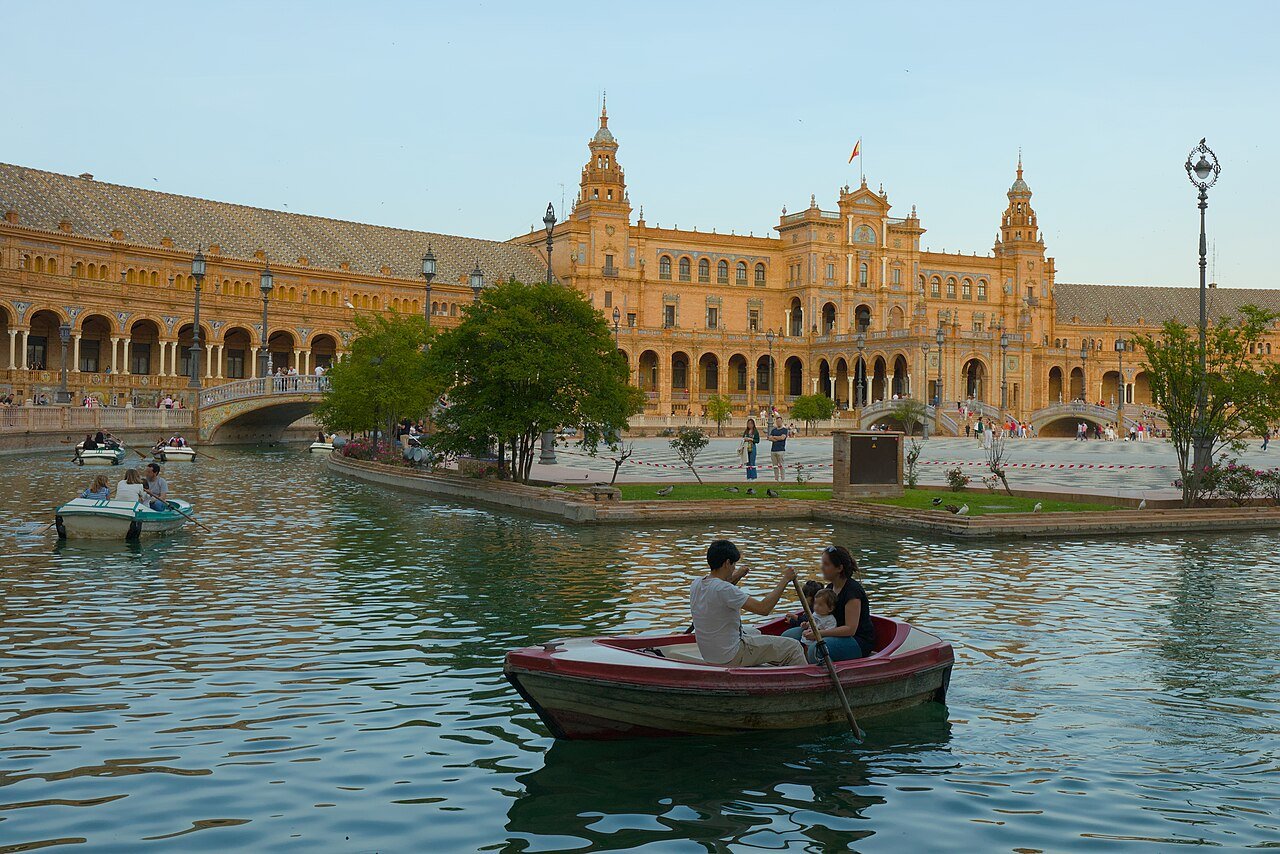
Stand on the bridge at Plaza de España at golden hour and you are standing in three films at once. Anakin Skywalker and Padmé Amidala walked this colonnade as the royal palace of Theed on Naboo. Peter O’Toole’s Lawrence of Arabia turned the same square into a British officers’ club in Cairo. Sacha Baron Cohen’s Admiral General Aladeen ruled his Wadiya from its façade. Seville has been quietly playing other places for more than sixty years — Jerusalem, Dorne, sixteenth-century Seville itself — and the remarkable thing is how little set dressing it needs. The palaces, plazas and Roman ruins in this guide are all real, all open to you, and almost all within a twenty-minute walk of each other.
This is the complete map: the fifteen locations that matter, what was filmed in each, what is verified and what is local legend, and the order to walk them in. One location sits outside the city — the Roman amphitheatre at Itálica, which Game of Thrones turned into the Dragonpit. It is also the one place where a guided trip genuinely earns its money: the From Seville: Itálica Roman City & Medieval Monastery Tour runs about four hours with transport from Seville and entry included, and the guides walk you through the amphitheatre’s underground passages as well as the arena you see on screen. Everything else in this guide you can do on foot, for the price of two palace tickets.
The Short Version
Short on time? These are the fifteen, in the order most people walk them:
- Plaza de España — Naboo in Star Wars: Episode II, Cairo in Lawrence of Arabia, Aladeen’s palace in The Dictator
- The Royal Alcázar — the Water Gardens of Dorne in Game of Thrones; also Kingdom of Heaven and 1492: Conquest of Paradise
- Casa de Pilatos — Lawrence of Arabia, Kingdom of Heaven and the villain’s hideout in Knight and Day
- Hotel Alfonso XIII — the officers’ club courtyard in Lawrence of Arabia
- Plaza de América — civic buildings of Jerusalem in Lawrence of Arabia
- Casino de la Exposición — the council chamber in Lawrence of Arabia
- Itálica amphitheatre — the Dragonpit in Game of Thrones season 7
- Plaza Virgen de los Reyes and the Cathedral quarter — the chase streets of Knight and Day
- La Maestranza bullring — Knight and Day’s Seville, around the ring and the riverfront
- Las Atarazanas — the royal shipyards of La Peste
- Monasterio de San Isidoro del Campo — Golden Age Seville in Alatriste, and the second stop on the Itálica tour
- Barrio de Santa Cruz — the plague-struck lanes of La Peste
- Triana and Calle Betis — La Peste across the river
- Plaza Nueva — the city-centre squares of Knight and Day
- Osuna bullring — Daznak’s Pit in Game of Thrones season 5, an hour out of the city
Table of Contents
- The Short Version
- Why Seville Keeps Playing Other Places
- Plaza de España: Naboo, Cairo and a Dictator’s Palace
- The Royal Alcázar: The Water Gardens of Dorne
- Casa de Pilatos: Hollywood’s Favourite Palace
- Hotel Alfonso XIII: Lawrence’s Officers’ Club
- Plaza de América and the Casino de la Exposición
- Itálica: The Dragonpit
- The Cathedral Quarter: Knight and Day and the Impossible Festival
- Las Atarazanas: Golden Age Seville on Screen
- Santa Cruz and Triana: La Peste’s Seville
- Beyond the City: Osuna, Daznak’s Pit
- A One-Day Filming Locations Walk
- Practical Info
- Tickets and Costs
- Getting There
- When to Go
- How Long You Need
- Tips for Visiting Seville’s Filming Locations
- FAQs
- Final Thoughts
Why Seville Keeps Playing Other Places
Directors come to Seville for the same reason the city was rich in the sixteenth century: it can be anywhere the story needs. The Alcázar’s Mudéjar plasterwork reads as Damascus, Jerusalem or a fantasy court in Dorne without moving a single column. The 1929 exposition palaces around María Luisa Park are grand enough to pass for the civic architecture of half the Mediterranean. A Roman amphitheatre that held 25,000 people sits twenty minutes away, empty, sunlit and available. Add more than 300 days of sun a year, a regional film commission that actively courts productions, and streets that have barely changed in four centuries, and Seville becomes what the Andalucía Film Commission calls a natural film set.
The habit is old. Lawrence of Arabia shot here in 1962, when David Lean needed a Middle East his cameras could reach from a European base. It never really stopped: Ridley Scott returned twice, George Lucas borrowed the Plaza de España, HBO built two Game of Thrones set pieces in the province, and La Peste, Spain’s costliest series of its time, was shot almost entirely on these streets. What follows separates the confirmed locations from the ones guides repeat on thinner evidence — where a claim rests on a single source, this guide says so.
Plaza de España: Naboo, Cairo and a Dictator’s Palace
The square Aníbal González built for the 1929 Ibero-American Exposition is the most filmed place in Seville, and it earns the title three times over. In 1962 it became British Cairo: Lawrence of Arabia used the central building as the officers’ club headquarters, and if you watch the film’s Cairo sequences with the square in mind, the arcades and towers give the game away. In 2000 George Lucas brought Natalie Portman and Hayden Christensen here for Star Wars: Episode II – Attack of the Clones — the walkway and bridge where Anakin and Padmé cross to the palace of Theed are the canal side of this square, with the towers digitally multiplied behind them. In 2012 the same façade became the palace of Admiral General Aladeen in The Dictator.
The reason it keeps being cast is scale: a vast semicircle wrapped around a canal, with tiled bridges and two towers, all of it real and all of it free. It opens around 8am, and the light — and the location-spotting — is best before 10am, when the colonnade is quiet enough to hear your own footsteps. Our full guide to the Plaza de España covers the tiled province alcoves, the boat hire and the best photo angles in detail.
The Royal Alcázar: The Water Gardens of Dorne
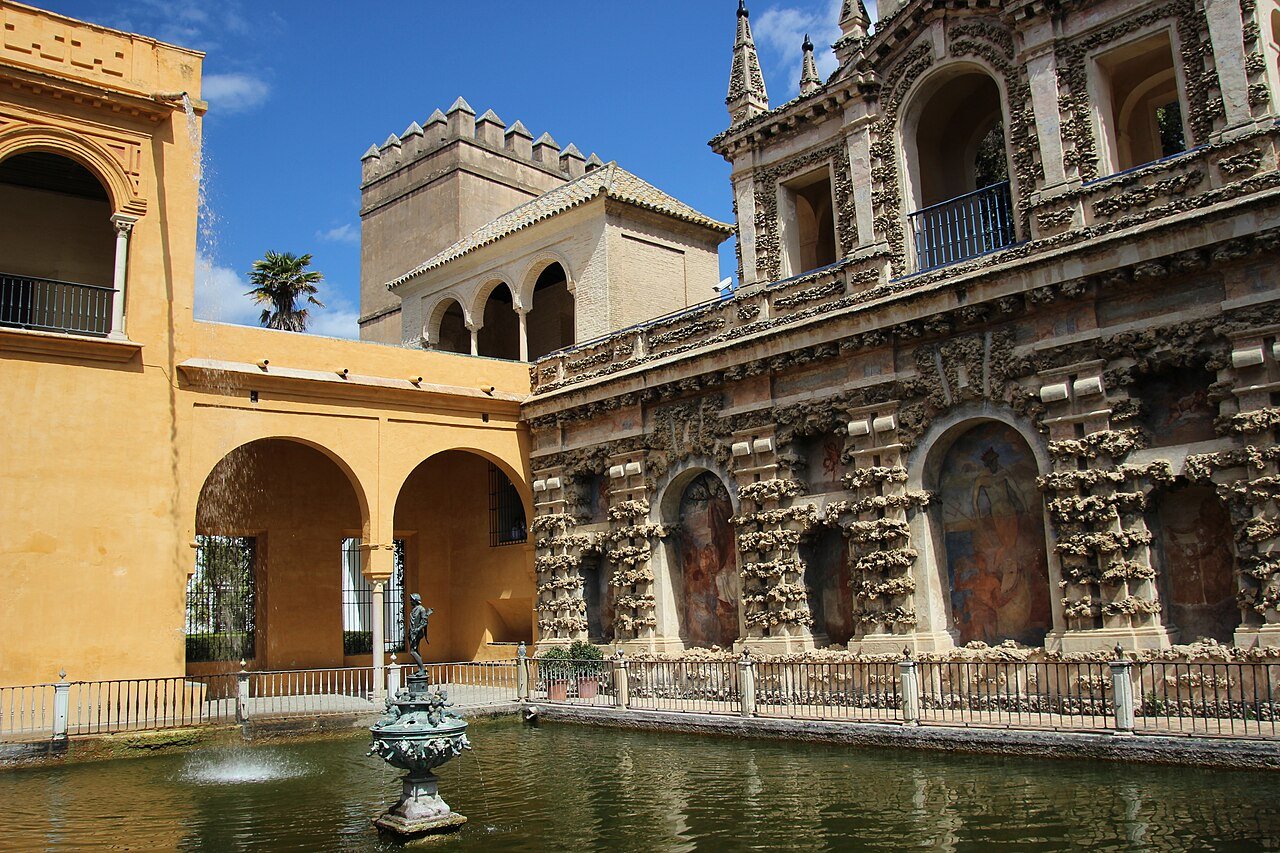
When Game of Thrones needed the Water Gardens of Dorne — the private palace gardens of House Martell — in seasons 5 and 6, it did not build them. It booked the Real Alcázar. The pond you want is the Estanque de Mercurio, Mercury’s Pool, where a small bronze Mercury stands over green water beneath the grotesque-work gallery: Jaime Lannister and Bronn fight the Sand Snakes within sight of it, and Prince Doran watches the gardens from the gallery above. Inside the palace, the Salón de Embajadores, the Ambassadors’ Hall with its gilded dome, appears as the Martells’ court. Walk the gardens slowly and the geography of the show assembles itself around you.
HBO was not the first production to see it. Ridley Scott used the Alcázar and Casa de Pilatos for 1492: Conquest of Paradise in 1992, and came back for Kingdom of Heaven in 2005, when the palace stood in for twelfth-century Jerusalem. Local screen-tourism guides also place a scene from the Spanish blockbuster Ocho apellidos catalanes in the Patio de Banderas just outside the palace walls — that one rests on a single source, so treat it as a bonus rather than a promise. Practicalities matter more than filmography here: general admission is €15.50, tickets are nominative and timed, and the palace sells out — book the official slot days ahead and go at opening or late afternoon, as our Royal Alcázar guide sets out.
Casa de Pilatos: Hollywood’s Favourite Palace
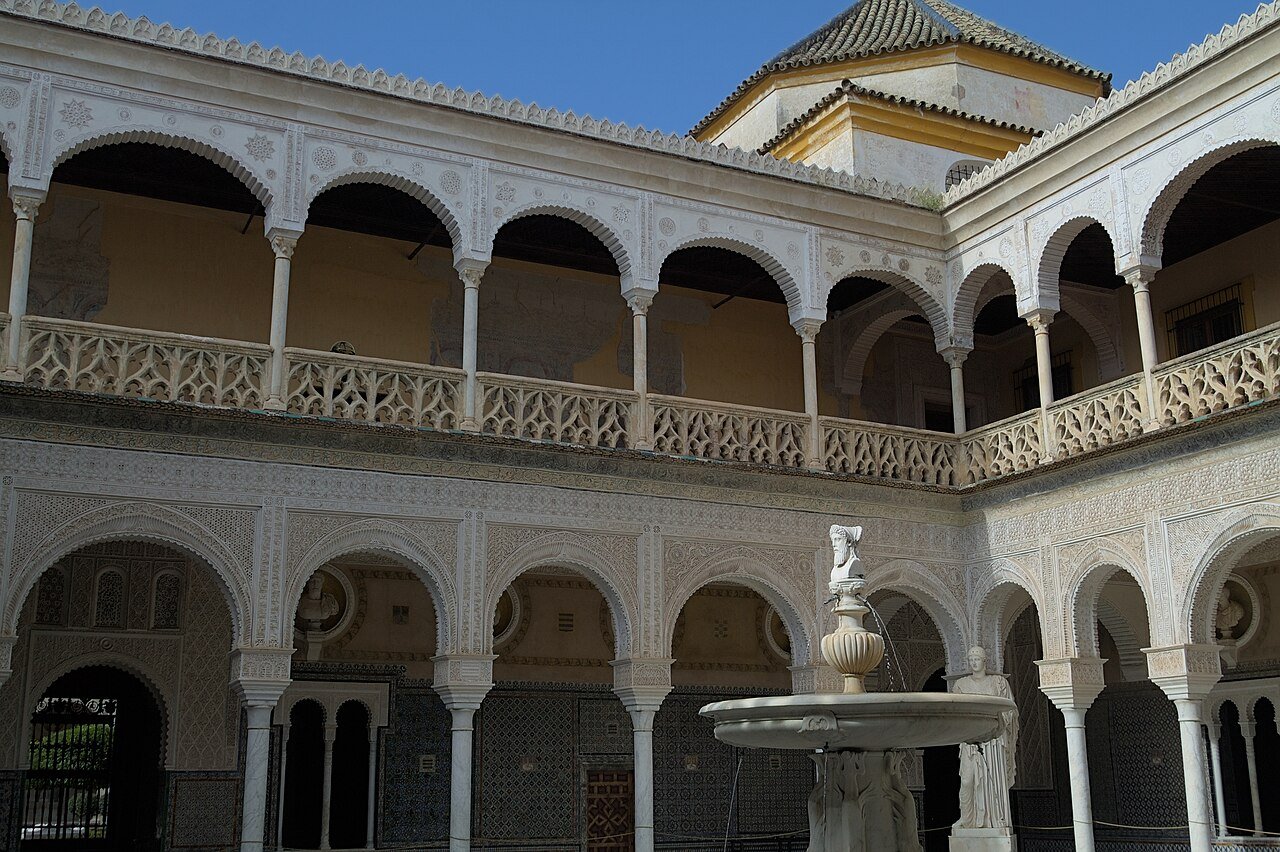
If the Alcázar is booked out, Casa de Pilatos is where film people go — and its screenography is the strongest of any private house in Spain. The palace’s own filmography, as catalogued by Wikipedia, runs to four major productions: Lawrence of Arabia in 1962, where Lawrence is taken to meet General Allenby; Ridley Scott’s 1492: Conquest of Paradise in 1992; Kingdom of Heaven in 2005; and Knight and Day in 2010, where the courtyard and galleries play the villain’s hideout. Stand in the main patio, with the Janus fountain in front of you, the emperor busts in their niches and azulejos running to shoulder height, and you understand the appeal: it is a complete Renaissance-Mudéjar palace in one eyeline, no construction required.
It is also, quietly, one of the best-value sights in the city. The ground floor costs €12 with an audio guide included; the upper floor, reachable only on a guided tour, adds €6. It opens daily — roughly 9am to 6pm in winter and 7pm in summer — and rarely queues. Our Casa de Pilatos guide covers the rooms, the gardens and the upper-floor tour times.
Hotel Alfonso XIII: Lawrence’s Officers’ Club
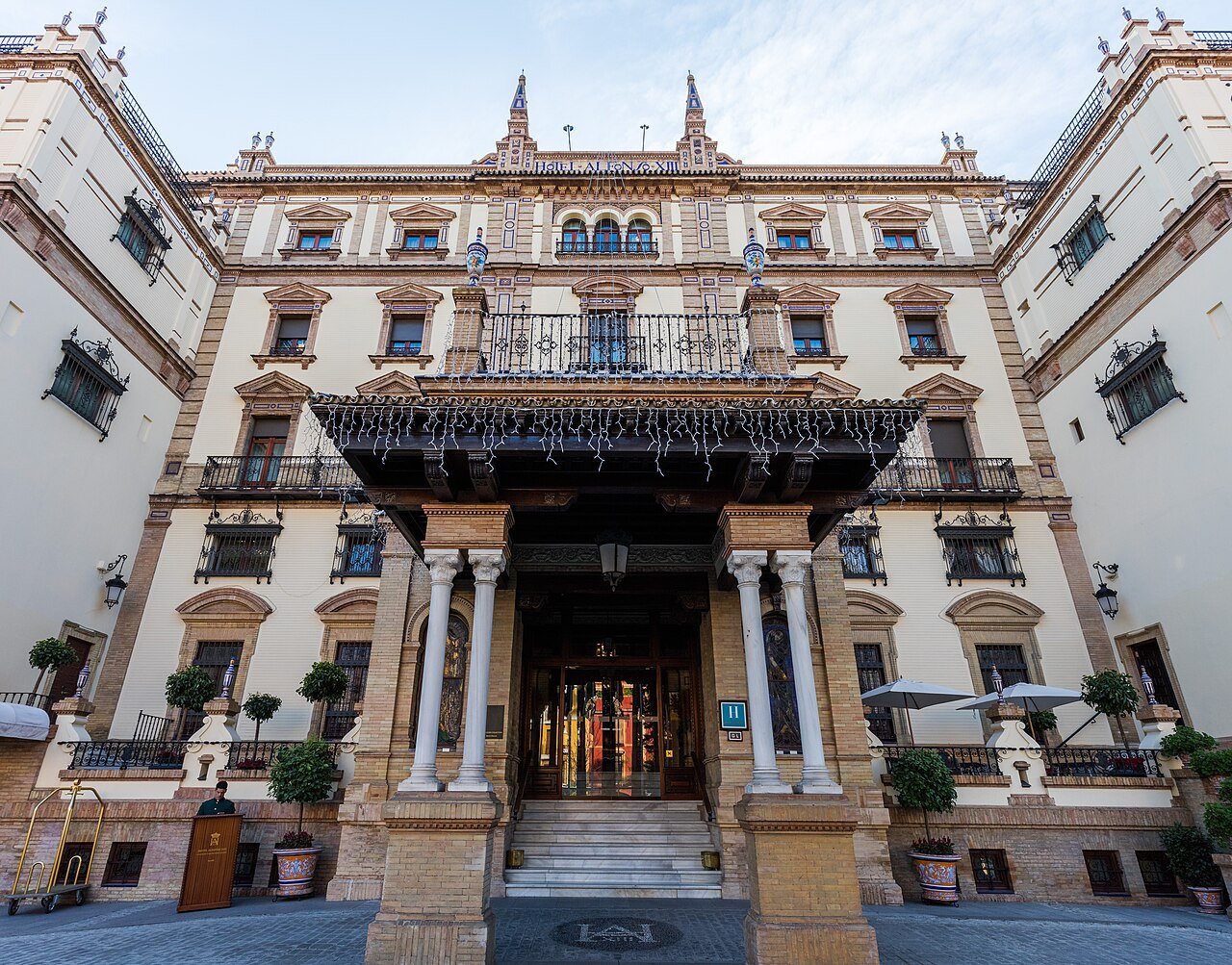
Seville’s grandest hotel was built for the same 1929 exposition as Plaza de España, and in Lawrence of Arabia its tiled courtyard became the interior of the Cairo officers’ club — the companion piece to the club headquarters filmed up the road at the plaza. It is the easiest location in this guide to enjoy exactly as the cast did: the hotel is a working five-star, and non-guests can take coffee or a drink in the courtyard and bar, surrounded by the arches and azulejos of the film. The hotel is also reported to have stood in for a Californian villa in The Crown — a single-source claim, repeated here as the local guides tell it, not as established fact. Either way, this is the one filming location where the correct visitor behaviour is to order something and sit down.
Plaza de América and the Casino de la Exposición
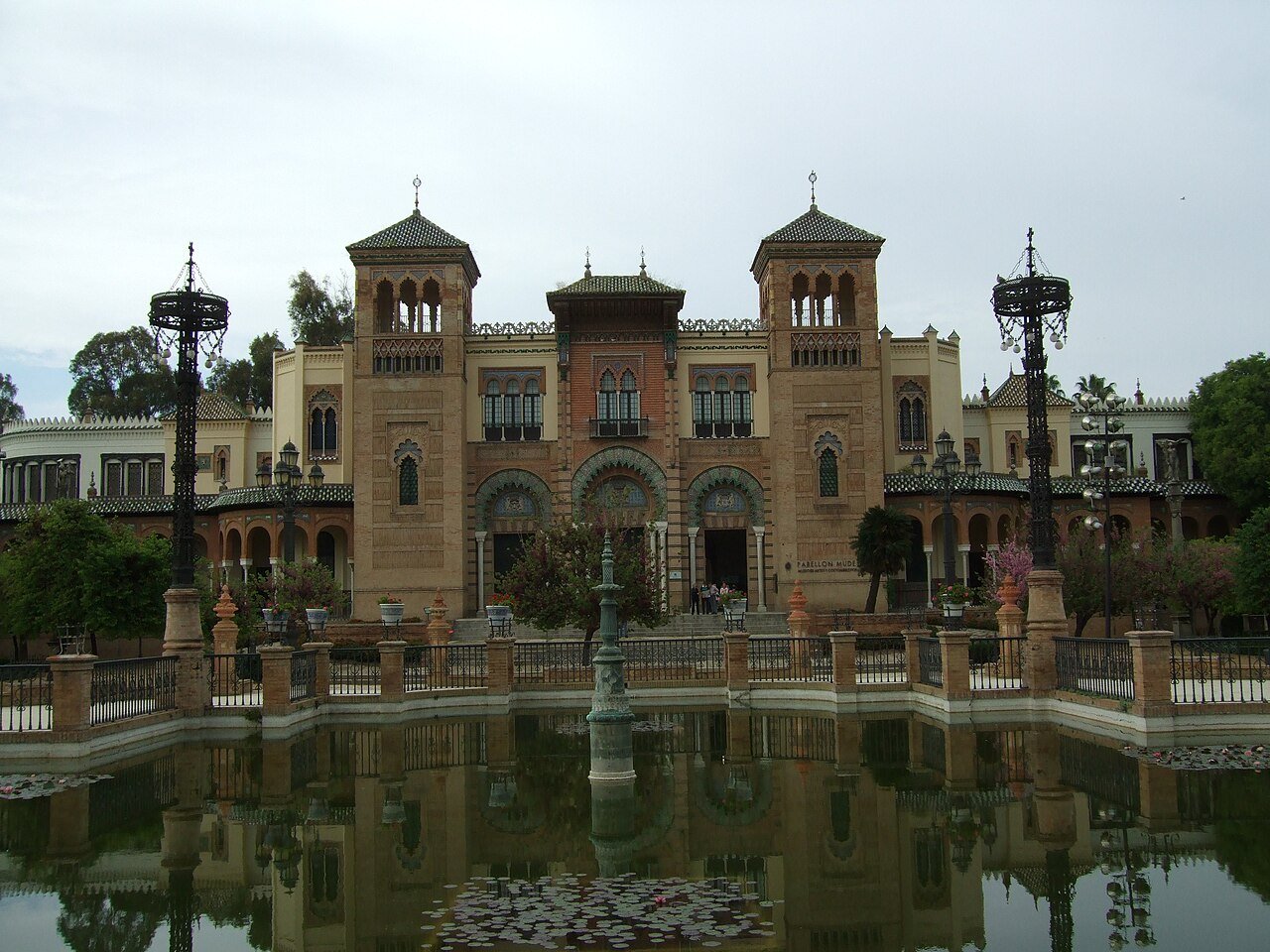
Five minutes from Plaza de España, at the southern end of María Luisa Park, Lawrence of Arabia built its Jerusalem. Local filming-location guides identify the grand pavilions of Plaza de América — today the Museo de Artes y Costumbres Populares in the Pabellón Mudéjar and the Archaeological Museum opposite — as the civic buildings of the film’s Jerusalem, and the Casino de la Exposición, the domed 1929 pavilion beside the Lope de Vega theatre, as the council chamber where Lawrence’s fate is argued over. The attributions come from local guides rather than the production’s own records, so hold them a notch looser than the Plaza de España scenes; the buildings, though, are unmistakably of the film’s world — exposition-era orientalism designed to look like somewhere else, which is precisely why a film crew chose them.
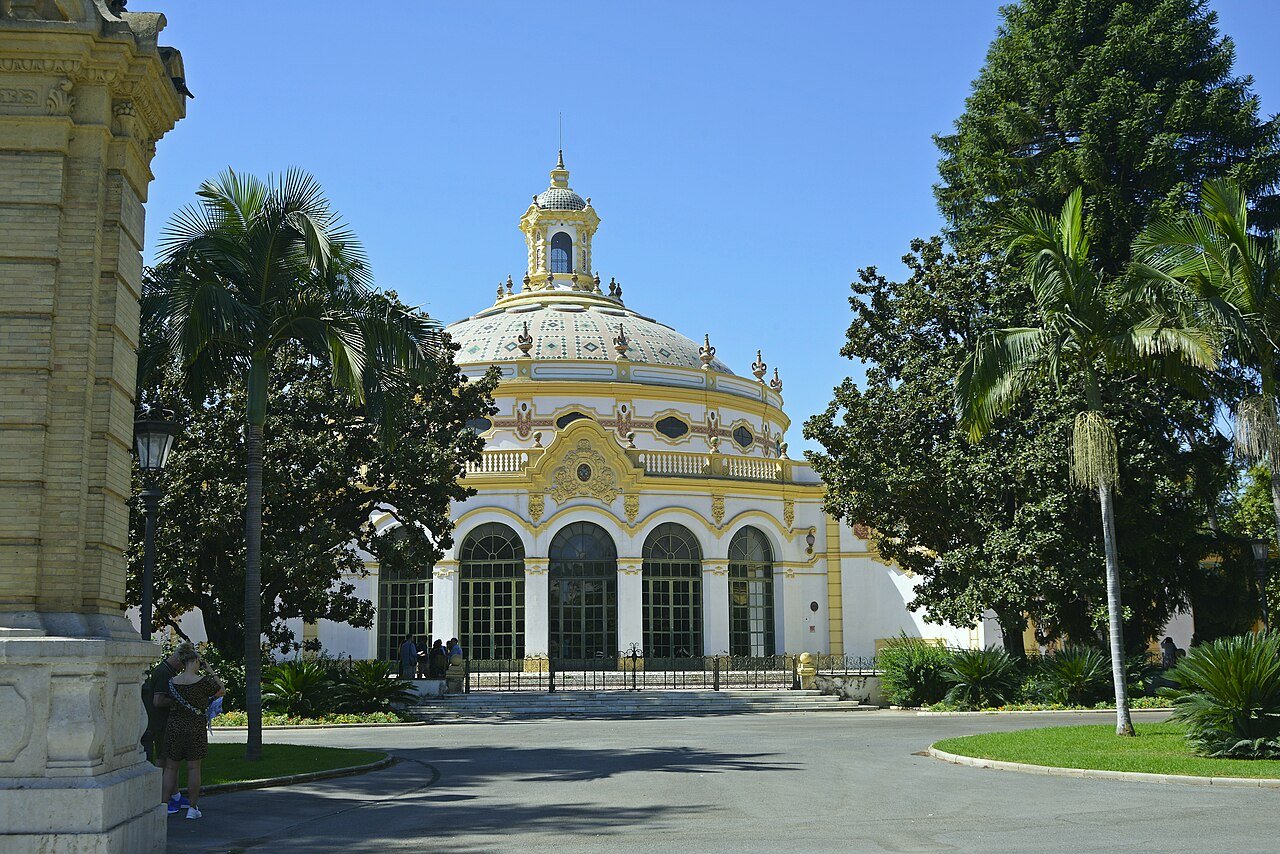
Both fold easily into a park morning: the square is free, the folk museum is free for EU citizens and cheap for everyone else, and the park itself is covered in our María Luisa Park guide.
Itálica: The Dragonpit

The single most consequential Game of Thrones location in Spain is a Roman ruin in Santiponce, twenty minutes northwest of the centre. Itálica was founded in 206 BC and gave Rome the emperors Trajan and Hadrian; its amphitheatre held around 25,000 spectators, among the largest in the empire. In season 7 it became the Dragonpit of King’s Landing: the parley between Cersei, Daenerys and Jon is staged in the arena, around the same central pit where gladiators once waited below the sand. The production dressed the ruins with timber and canvas, but the stone bowl, the pit and the vaulted service corridors underneath are exactly what you visit.
Go with a guide if the Thrones connection is why you are here, because the site itself is signed for archaeology, not television. The From Seville: Itálica Roman City & Medieval Monastery Tour is the established option — about four hours, transport from Seville and entry included, the amphitheatre’s underground passages on the route, and a second stop at the fortified monastery of San Isidoro del Campo, rated 4.5/5 from more than 1,200 reviews at the time of writing. Independently, entry is free for EU citizens with ID and €1.50 for everyone else, and the site closes on Mondays. Our Itálica guide covers the mosaics, the Trajan temple quarter and the bus from Plaza de Armas if you go alone.
The Cathedral Quarter: Knight and Day and the Impossible Festival
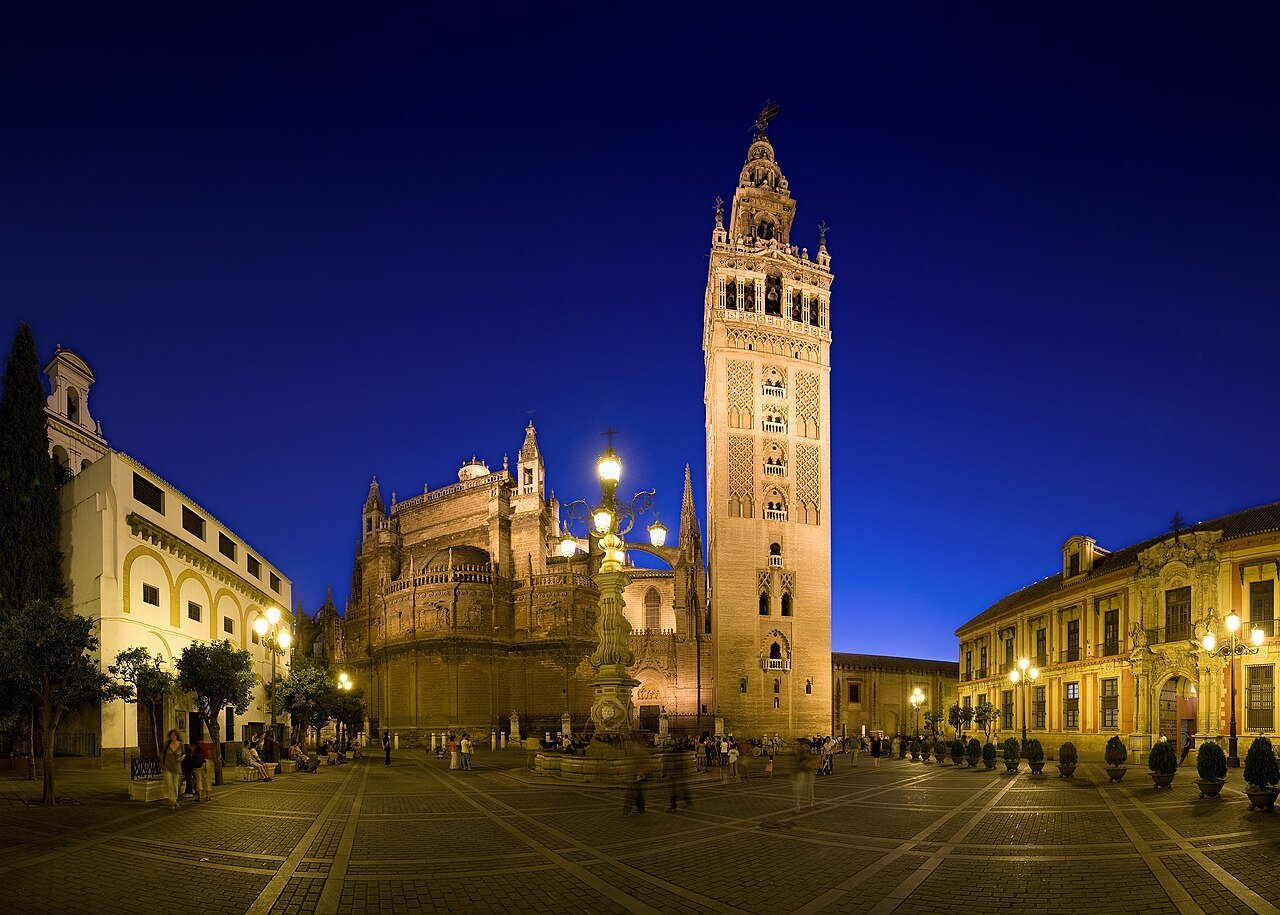
Tom Cruise and Cameron Diaz raced through this quarter in Knight and Day, filmed in Seville and Cádiz at the end of 2009. The production’s conceit was audacious: June’s flight lands her in Pamplona for the running of the bulls — so Seville was dressed as Pamplona, and the bulls ran here. Locations reported for the Seville shoot cluster exactly where you would hope: around the Cathedral and Plaza Virgen de los Reyes, the little Plaza Santa Marta, Plaza San Francisco and Plaza Nueva in front of the Ayuntamiento, and the streets by the Maestranza bullring. Treat the scene-by-scene list as reported rather than documented — the production ranged widely and local accounts differ — but the quarter itself is unmistakable on screen, Giralda and all.
This is also the place to enjoy Hollywood’s most famous Seville error. The opening of Mission: Impossible II presents a Seville festival that combines a Semana Santa-style procession, Fallas bonfires from Valencia and the white-and-red of San Fermín in a single night — a fiesta that has never existed in any Spanish city. Sevillanos have been pointing this out since 2000. Watch the quarter at dusk from Plaza Virgen de los Reyes, fountain lit and the Giralda above you, and you get the version the location scouts fell for: no dressing required.
Las Atarazanas: Golden Age Seville on Screen
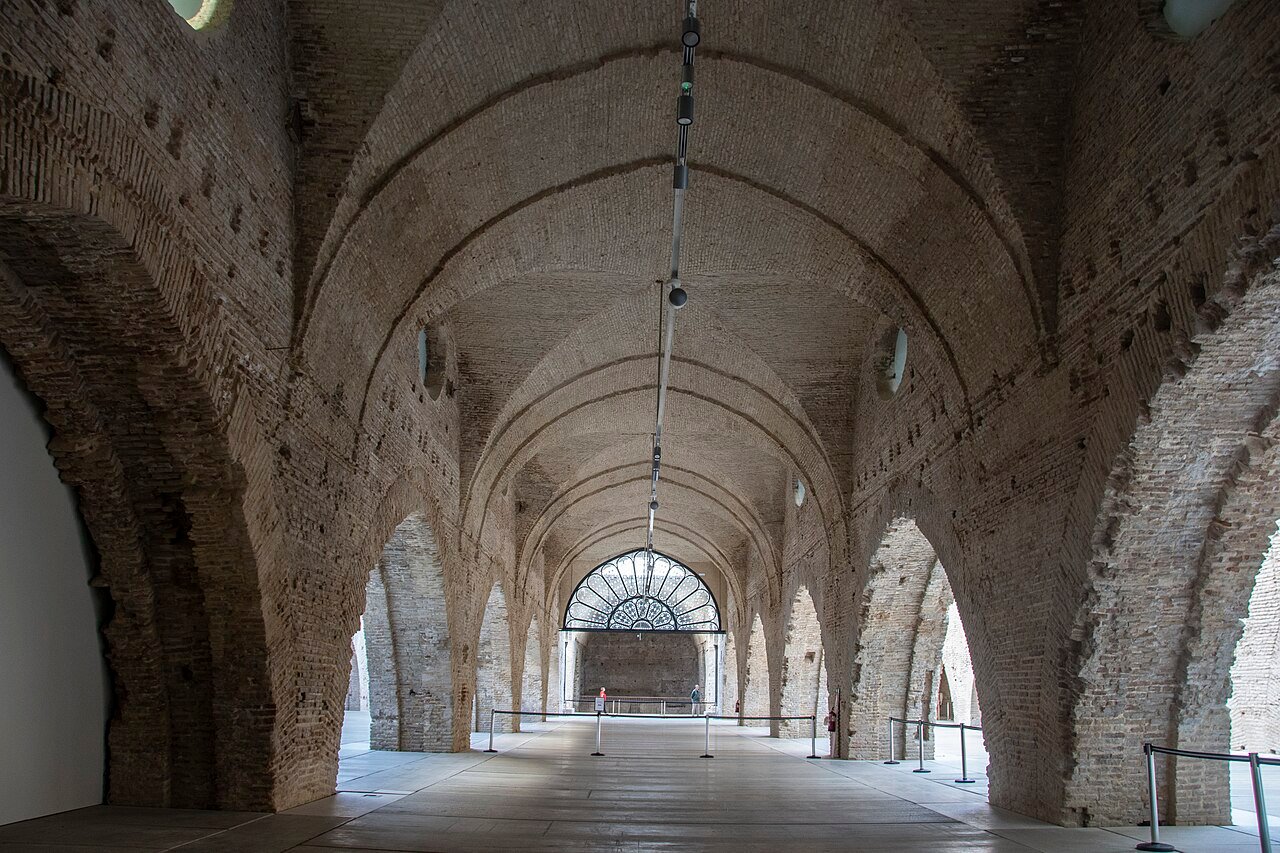
The greatest Spanish television production of its decade was set in this city, in its own century of glory and plague. La Peste (Movistar+, 2018–2019) recreates Seville in the 1590s, rich on American silver and rotting from within, and the Andalucía Film Commission records that the production filmed across some 130 sets, including the Reales Alcázares and Las Atarazanas — the vast brick-vaulted royal shipyards where galleys were built a street from the river. Those shipyard naves, seven of which survive and have recently been restored, are the show’s Seville in a single image: medieval industry on a cathedral scale. A detail film fans treasure, reported by El País from the set: real torches were banned inside the Alcázar during filming, so the torchlight in those scenes is faked with lanterns.
The same Golden Age Seville anchors Alatriste (2006), Agustín Díaz Yanes’ adaptation of the Pérez-Reverte novels with Viggo Mortensen. Locations reported for its Seville include the old Casa de la Moneda, the royal mint by the Torre del Oro, and the Monasterio de San Isidoro del Campo in Santiponce — the same fortress-monastery the Itálica tour visits, which gives the place a second screen life alongside its Roman neighbour.
Santa Cruz and Triana: La Peste’s Seville
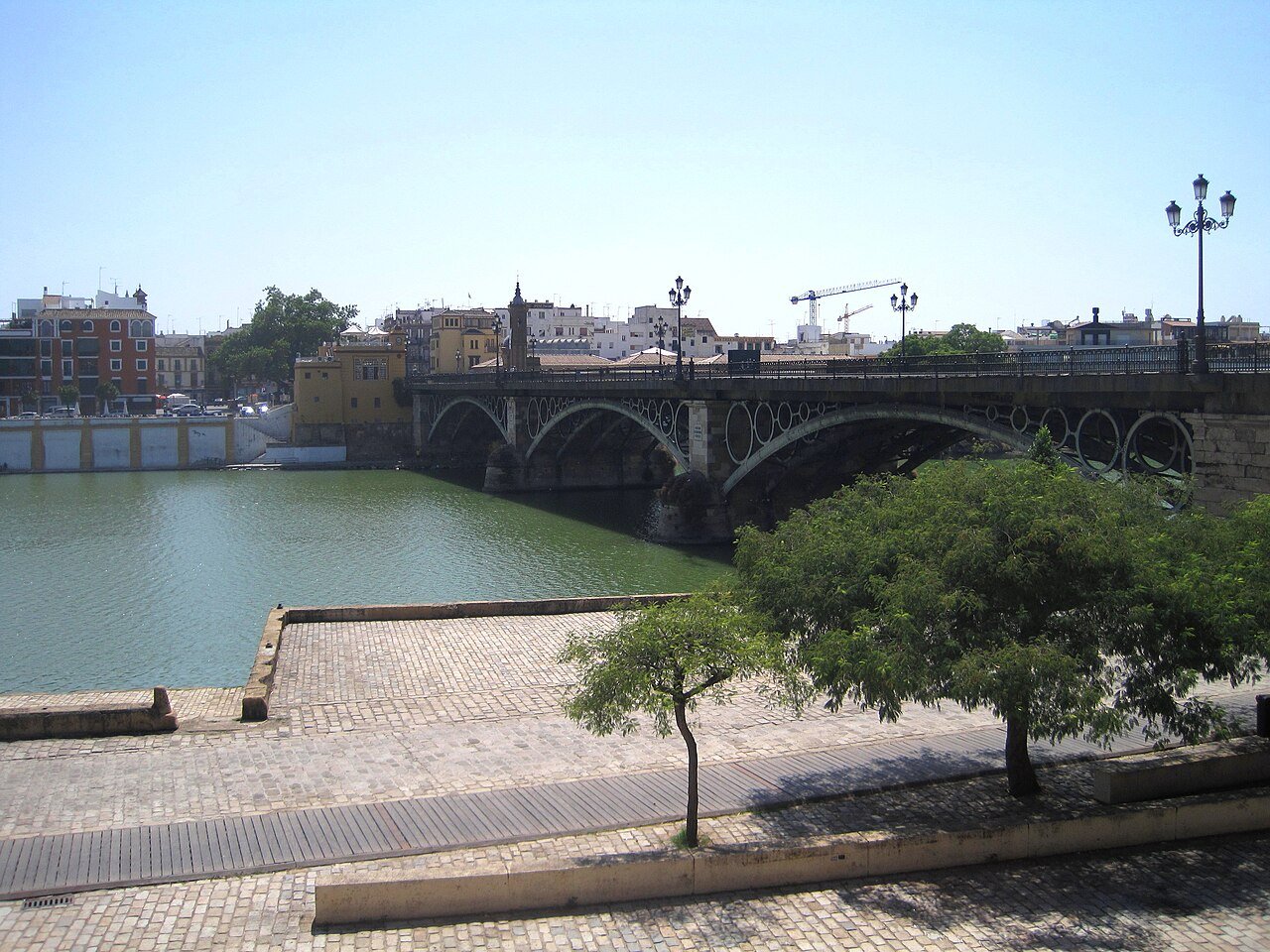
La Peste did not stay inside the monuments. Spain Screen Tourism’s route for the series runs through the lanes of Santa Cruz — the old Jewish quarter of white alleys, iron grilles and orange trees that needs no dressing at all to read as 1590s Seville — and across the river to Triana, along Calle Betis and over the iron bridge that everyone here calls the Puente de Triana. Of all the locations in this guide, these are the ones to visit the way the camera does: on foot, slowly, ideally in the evening when the lanes empty and the riverfront bars fill. Our Barrio Santa Cruz guide maps the quarter’s patios and plazas; cross the bridge at sunset and walk Betis back along the water.
Beyond the City: Osuna, Daznak’s Pit
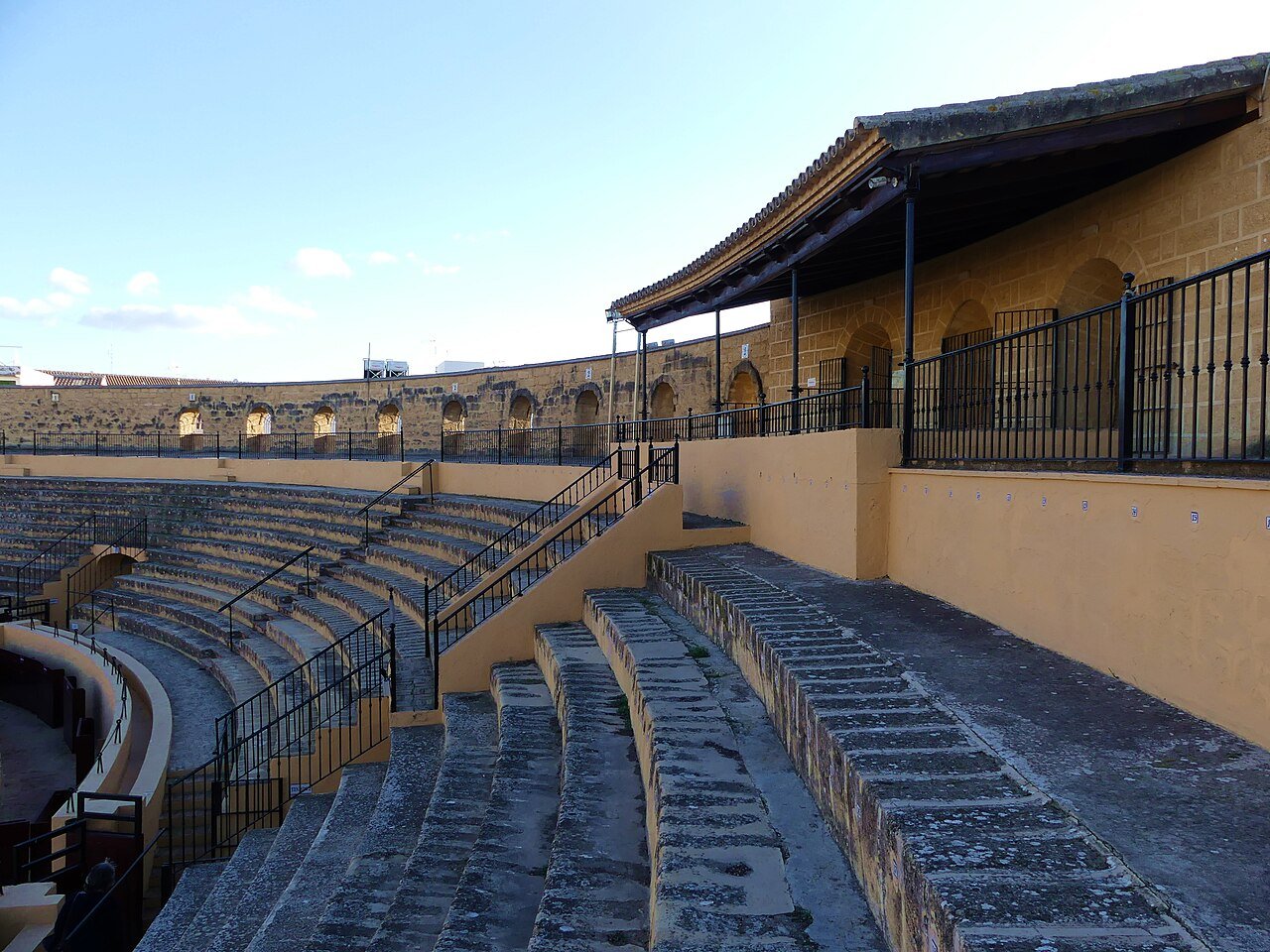
Two seasons before the Dragonpit, Game of Thrones came to the province for its other great arena scene. The bullring at Osuna, a handsome stone plaza de toros about an hour east of Seville, became Daznak’s Pit in Meereen for season 5 — the fighting pit where the Sons of the Harpy attack and Drogon burns his way in to rescue Daenerys. The town has embraced the casting: expect Thrones references in the bars around the ring, and a bullring that is visitable on non-fight days. Osuna makes a natural pairing with the Itálica trip if you are building a full Thrones day, or a stop on the road to Córdoba and Granada. Unlike the city locations, this one needs a car or a train-and-bus combination, so plan it as its own half-day rather than an afterthought.
A One-Day Filming Locations Walk

The city-centre locations form a loop of roughly 5 km that takes a full, unhurried day with the interiors done properly. Start at Plaza de España at 8.30–9am for the square in its best, emptiest light, then walk ten minutes to Plaza de América and the Casino de la Exposición in María Luisa Park. Come back into the centre for the Hotel Alfonso XIII — coffee in the courtyard — and continue to your pre-booked Royal Alcázar slot late morning. Lunch in Santa Cruz, then Casa de Pilatos in the quiet early afternoon. Finish in the Cathedral quarter: Plaza Virgen de los Reyes, Plaza Santa Marta, then west through Plaza Nueva to the river and the Maestranza.

Cross the Puente de Triana at sunset, walk Calle Betis, and the La Peste city is complete. Itálica and Osuna sit outside the loop by design: give Itálica its own morning — it deserves more than the gap between other sights — and Osuna its own half-day.
Practical Info
You need remarkably little for this guide: the locations are working sights with their own entrances and hours, not closed sets. The only locations requiring tickets are the Alcázar (€15.50), Casa de Pilatos (€12, or €18 with the upper floor) and Itálica (€1.50, free for EU citizens). Everything else — Plaza de España, both plazas in the park, the Cathedral quarter, Santa Cruz, Triana — is public space, and the Alfonso XIII asks only that you behave like a hotel guest. Photography for personal use is allowed at all of them. The two habits that matter: book the Alcázar ahead, always, and check the day — Itálica closes on Mondays, and Casa de Pilatos’ upper floor runs on set guided-tour times rather than continuously.
Tickets and Costs
The whole trail, done independently, costs less than most single tours:
- Royal Alcázar — €15.50 general, €8 reduced, under-13s free; nominative, timed, book the official site days ahead in season
- Casa de Pilatos — €12 ground floor with audio guide, plus €6 for the guided upper floor
- Itálica — free for EU citizens with ID, €1.50 for everyone else; closed Mondays
- Plaza de España, Plaza de América, the Cathedral quarter, Santa Cruz, Triana — free; they are streets and squares
- Hotel Alfonso XIII — free to enter as a bar and café guest; you are paying for your coffee, not a ticket
Under €30 covers every ticketed highlight. The one upgrade worth pricing is the Dragonpit with logistics removed: the From Seville: Itálica Roman City & Medieval Monastery Tour bundles the bus, the entry and a guide who knows both the archaeology and the filming, across about four hours, with free cancellation up to 24 hours ahead. Against €1.50 and a local bus fare, what you are buying is the underground passages explained, the monastery included, and no timetable anxiety.
Getting There
Every city-centre location in this guide is walkable from the Cathedral, and the furthest — Plaza de España — is fifteen minutes on foot. Itálica is the exception: the site sits in Santiponce, roughly 9 km northwest, reached by bus from Plaza de Armas station in about twenty minutes, or in fifteen by taxi; the guided tour collects from central Seville and removes the question entirely. Osuna is about an hour’s drive east; trains and buses run from Seville but make it a planned half-day, not a detour. Santa Justa station and the airport bus both land you within walking distance of the Cathedral quarter, where this trail begins.
When to Go
The locations film all year because Seville looks like Seville all year. For visiting, spring (March to May) and autumn (mid-September to November) give you the light without the furnace: July and August afternoons above 40°C will empty Plaza de España of everyone except the truly committed, exactly as the stillness in the Lawrence scenes suggests. Winter is mild and the queues shortest. Time of day matters more than season for photographers: Plaza de España before 10am, the Alcázar gardens at opening, the Triana bridge at sunset.
How Long You Need
One full day covers the city loop at a civilised pace, including the Alcázar and Casa de Pilatos interiors. Add a morning for Itálica — half a day door to door — and a further half-day if Osuna makes your list. Film fans who want every location in this guide, done properly, should allow two full days in Seville plus the two excursions; everyone else can cherry-pick the Thrones and Star Wars highlights inside a single day and miss nothing essential.
Tips for Visiting Seville’s Filming Locations
- Do Plaza de España first, early. By midday the colonnade is a crowd scene of a different kind; at 8.30am it is a film set waiting for its actors.
- Book the Alcázar before anything else. It is the one location that can simply be full. Timed, nominative, official site — and bring the ID you booked with.
- Watch the scenes before you go. Ten minutes of the Dorne and Dragonpit sequences on your phone will do more for the visit than any plaque; the Alcázar’s Mercury’s Pool moment lands completely differently once you have seen Bronn fight beside it.
- Keep Mondays for the city. Itálica closes, so Monday is your Plaza de España, palaces and quarters day.
- Respect the working buildings. The Alfonso XIII is a hotel, the Casino a theatre, the Maestranza a working bullring, and Santa Cruz is where people live. The locations work as a trail precisely because Seville carries on inside them.
- Carry water from April onwards. Half these locations are unshaded stone in full sun; the fountains in the squares are for looking at, not drinking from.
FAQs
Where was Game of Thrones filmed in Seville?
In three places. The Royal Alcázar is the Water Gardens of Dorne in seasons 5 and 6 — look for Mercury’s Pool and the Ambassadors’ Hall. The amphitheatre at Itálica, in Santiponce just outside the city, is the Dragonpit in season 7. And the bullring at Osuna, an hour east, is Daznak’s Pit in season 5.
Where was Star Wars filmed in Seville?
At Plaza de España. In Episode II – Attack of the Clones (2002), Anakin and Padmé cross the square’s canal bridge and colonnade as they arrive at the palace of Theed on Naboo. Filmed in 2000; the towers were digitally extended, but the walkway is exactly where you can stand today.
Can you visit the Seville filming locations?
Yes — all of them. They are ordinary public sights rather than film sets: Plaza de España and the plazas are open streets, the Alcázar and Casa de Pilatos are ticketed monuments, Itálica is a public archaeological site, and the Hotel Alfonso XIII welcomes bar and café guests.
How much does it cost to visit the main locations?
Under €30 for everything ticketed: the Alcázar is €15.50, Casa de Pilatos is €12 (€18 including the guided upper floor), and Itálica is €1.50 — free for EU citizens with ID. Plaza de España, the park pavilions from outside, the Cathedral quarter, Santa Cruz and Triana are all free.
Is there a Game of Thrones tour in Seville?
Dedicated Thrones tours come and go, so check what is running for your dates. The reliably bookable option is the guided day trip to Itálica, which covers the Dragonpit and the monastery of San Isidoro del Campo with transport included; the Alcázar and Osuna are straightforward to visit independently with this guide.
Which filming location should I see if I only have time for one?
Plaza de España, for the three-for-one value: Star Wars, Lawrence of Arabia and The Dictator in a single free square. If you are here for Game of Thrones specifically, make it the Alcázar — Dorne is the most screen-faithful location in the city, because HBO changed almost nothing.
Travel insurance, sorted
Whether it is a two-week holiday or a longer move, travel insurance is not the most glamorous part of a trip — but it is the one booking you want to have in place before a trip, and while you are already away. Get a quote from SafetyWing
Final Thoughts
Most film trails ask you to look at a car park and imagine a castle. Seville asks the opposite: stand in real palaces and notice that the films barely changed them. Lucas added towers to Plaza de España in a computer; Lean renamed it Cairo; HBO pointed a camera at a four-hundred-year-old pond and called it Dorne. The city has spent a century being cast as somewhere else because it already looks like everywhere stories happen. Walk the loop in this guide and you will collect Naboo, Cairo, Jerusalem and the Water Gardens before lunch — and still be in Seville in time for tapas.

Itálica Roman Ruins: The Complete Guide to Seville’s City of Emperors
Photo credits: Plaza de España by Benjamin Smith, CC BY-SA 4.0; Mercury’s Pool, Royal Alcázar by Miguel Hermoso Cuesta, CC BY-SA 4.0; Casa de Pilatos by o_andras, CC BY-SA 4.0; Hotel Alfonso XIII by Diego Delso, CC BY-SA 4.0; Pabellón Mudéjar, Plaza de América by Jared Preston, CC BY-SA 3.0; Casino de la Exposición by Alberto-g-rovi, CC BY 4.0; Itálica amphitheatre by Diego Delso, CC BY-SA 4.0; Plaza Virgen de los Reyes by Diliff, CC BY-SA 3.0; Reales Atarazanas by Anual, CC BY-SA 4.0; Puente de Triana by Roberto Chamoso G, CC BY-SA 3.0 es; La Maestranza by Diego Delso, CC BY-SA 4.0; Plaza Nueva by Gzzz, CC BY-SA 4.0; Osuna bullring by CarlosVdeHabsburgo, CC BY-SA 4.0 — all via Wikimedia Commons.



One Comment