The Royal Alcázar of Seville: The Complete Visiting Guide
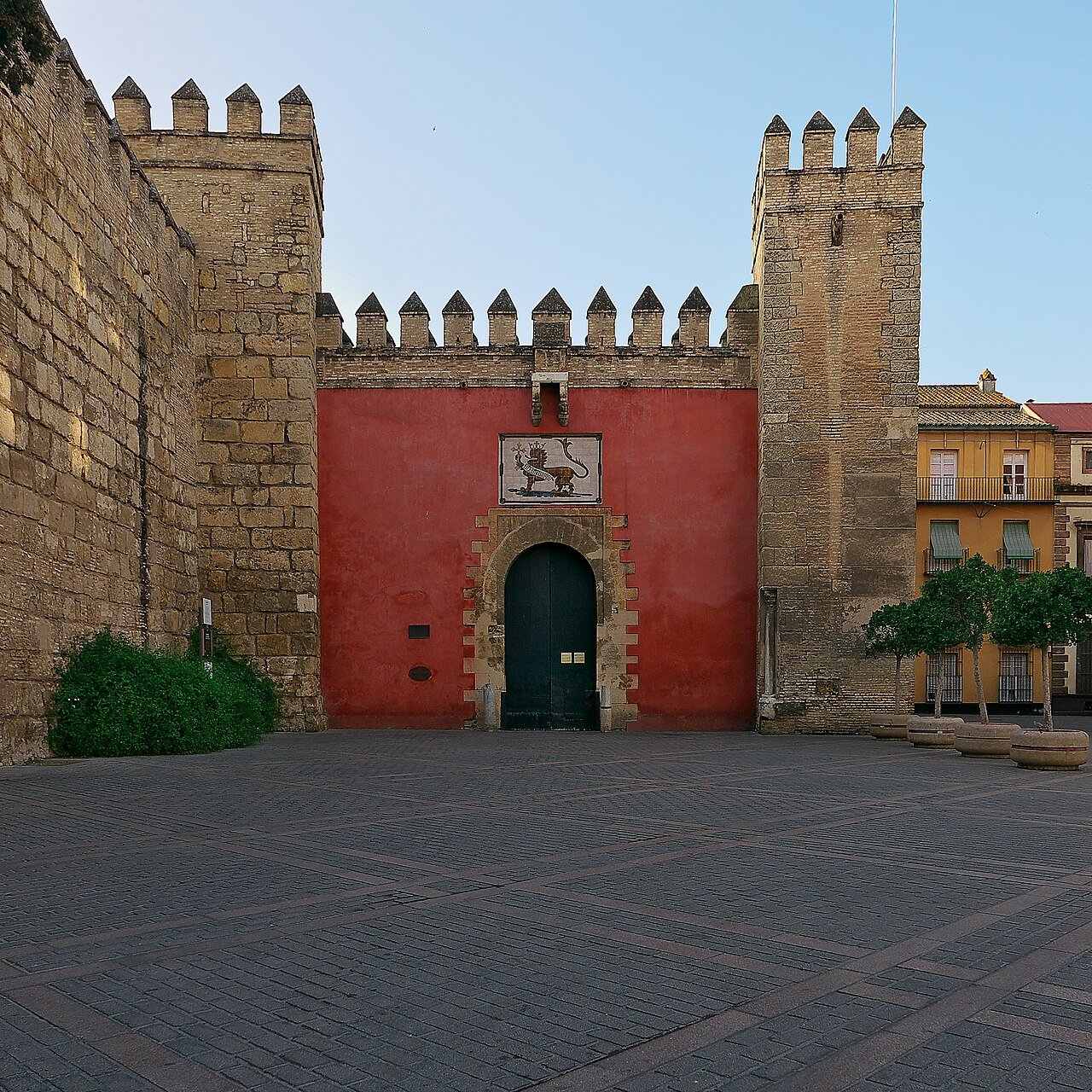
From the street, the Royal Alcázar gives you almost nothing: a red wall, a lion in tiles above a gate, and a queue. Walk through that gate, though, and you step into the oldest royal palace in Europe that a royal family still uses — a place where Muslim craftsmen carved Arabic blessings for a Christian king, and where a working palace hides some seven hectares of gardens behind Seville’s busiest square. I have been through the Puerta del León more times than I can count, and the Alcázar has never once failed to land. If you book a single ticket in Seville, make it this one — it tops our Best Things to Do in Seville guide for a reason.
This guide covers the whole visit: the history in short form, the ten things I would not let you miss, and the practical detail — tickets, hours, queues, the separate royal apartments. It takes most people two to three hours. Give it that, and read this first.
The Alcázar at a Glance
- What it is: a fortified royal palace complex — Almohad, Mudéjar, Gothic and Renaissance palaces around a chain of courtyards, plus vast formal gardens. UNESCO World Heritage listed since 1987, together with the Cathedral and the Archivo de Indias.
- Time needed: 2 to 3 hours for the palaces and gardens; add around half an hour if you book the Cuarto Real Alto (the upper royal apartments).
- Tickets: timed entry, booked online in advance — general admission is from around €15.50 at the time of writing; always check the official site (alcazarsevilla.org) for current prices. The Cuarto Real Alto costs a small supplement on top.
- Opening hours: roughly 9:30–19:00 from April to September and 9:30–17:00 from October to March; closed on 1 and 6 January, Good Friday and 25 December — confirm on the official site before you go.
- Entrance: the Puerta del León (Lion Gate) on the Plaza del Triunfo, across the square from the Cathedral.
- Best moment: the first entry slot of the day, when the Patio de las Doncellas is still nearly empty.
Table of Contents
- The Alcázar at a Glance
- A Short History of the Alcázar
- What to See: The 10 Highlights
- 1. Patio de las Doncellas
- 2. Patio de las Muñecas
- 3. Salón de Embajadores
- 4. The Gothic Palace and the Salón de Tapices
- 5. Baños de María de Padilla
- 6. Estanque de Mercurio
- 7. Galería del Grutesco
- 8. Pabellón de Carlos V
- 9. The Gardens
- 10. Cuarto Real Alto: The Upper Royal Apartments
- Tickets & Practical Information
- Tips for Visiting
- Final Thoughts
A Short History of the Alcázar
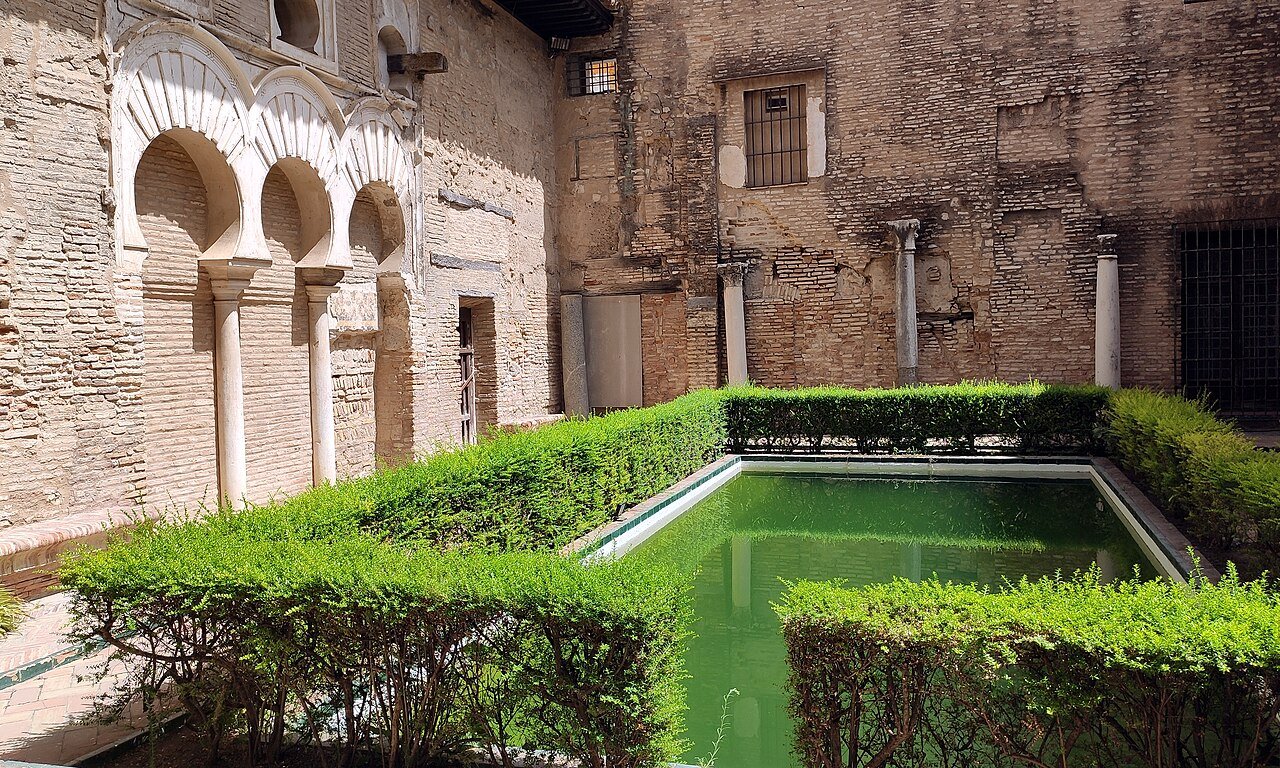
The Alcázar began as power, not beauty. In 913, the Umayyad ruler Abd al-Rahman III ordered a fortified government enclosure built on the southern edge of Islamic Seville, and rulers have been rebuilding on this spot ever since. The Almohads, who made Seville their capital in the 12th century, expanded it into a great palace-city; the plain, weathered Patio del Yeso, with its horseshoe arches and still pool, is the fragment of their palace that survives almost intact.
When Ferdinand III took Seville in 1248, the Christian kings did something unusually wise: they moved into the palace instead of demolishing it. Alfonso X added a Gothic palace of stone vaults and tapestries. Then, in the 1360s, Pedro I of Castile — Pedro the Cruel, or Pedro the Just, depending on who was writing — commissioned the masterpiece. Working with Muslim craftsmen from Granada and Toledo, he built the Mudéjar palace visitors cross the world to see: the Palace of Pedro I, finished around 1364–1366, its walls carrying Arabic calligraphy in praise of a Christian king. Charles V married Isabella of Portugal here in 1526 and added Renaissance galleries and ceilings; later monarchs kept adjusting; and in 1987 UNESCO listed the whole complex. The Spanish royal family still stays upstairs when in Seville — this is not a museum that looks like a palace, but a palace that admits visitors.
What to See: The 10 Highlights
1. Patio de las Doncellas
The Courtyard of the Maidens is the Alcázar’s signature view and the ceremonial heart of Pedro I’s palace: a long, still reflecting pool, sunken garden beds on either side, and arcades of paired marble columns carrying plasterwork so fine it looks embroidered rather than carved. The name is usually explained by the old legend of the tribute of a hundred virgins supposedly demanded of Christian kingdoms — a story, not a fact, but one that has stuck for centuries. Look closely: the sebka diamond lattice, the Arabic inscriptions braided with Pedro’s heraldry, and the upper gallery, which is not Mudéjar at all but a Renaissance addition built under Charles V — two empires stacked into one courtyard. The sunken beds follow the original medieval garden plan, uncovered by archaeologists beneath later paving. Arrive at opening time and you may get it almost to yourself; by eleven, you will be sharing it with the world.

2. Patio de las Muñecas
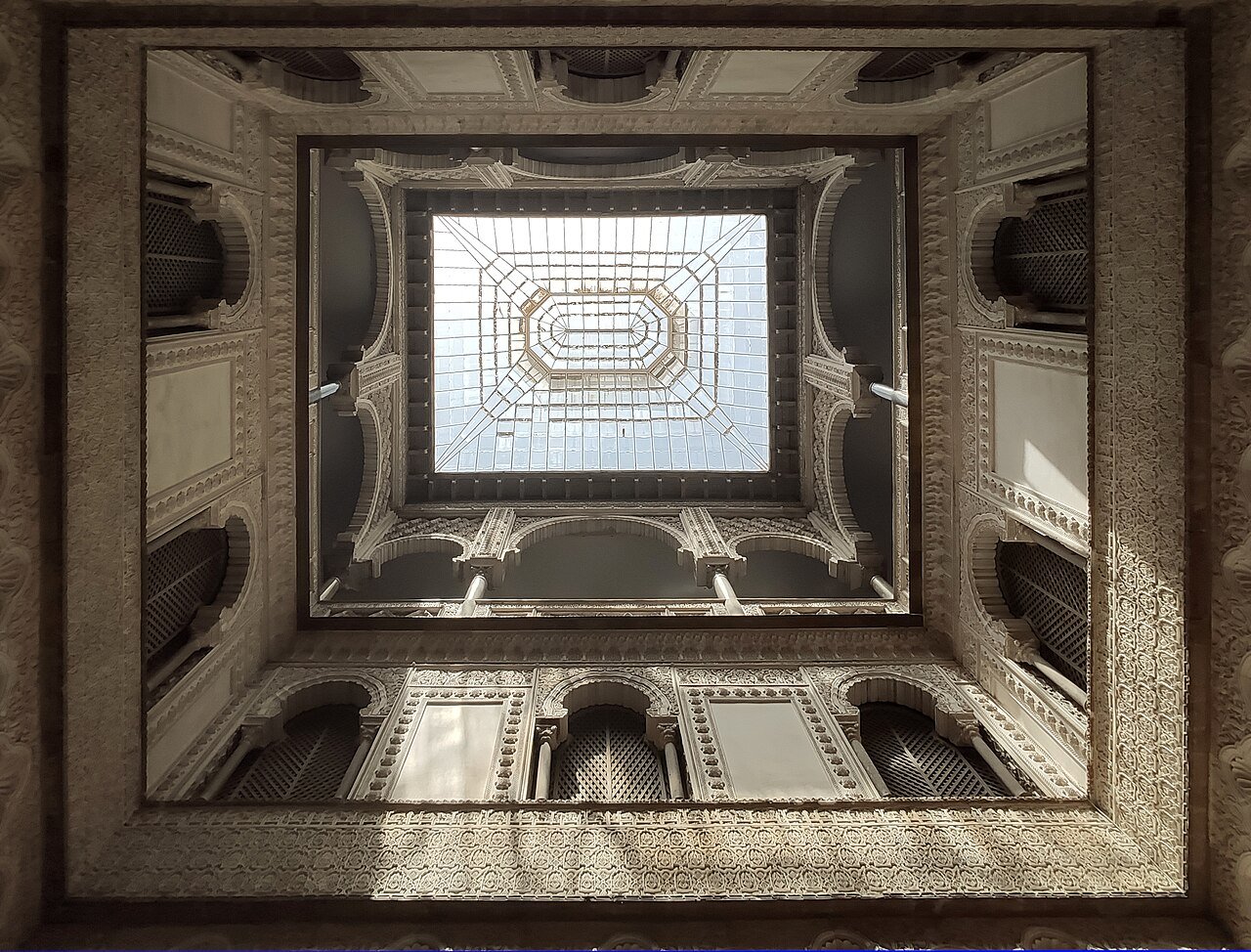
A few steps away, the palace turns intimate. The Patio de las Muñecas — the Courtyard of the Dolls — is tiny, barely a room with the sky for a ceiling, and it was likely part of the palace’s private, family quarters. Its marble columns are far older than the building around them: they are spolia, recycled from earlier monuments, several of them said to come from the ruined caliphal city of Medina Azahara outside Córdoba. The name, tradition says, comes from the tiny faces — dolls — hidden in the carved decoration of its little arches; hunting for them is a good game if you are visiting with children. Today a glass roof protects the courtyard, which only adds to the jewel-box feeling. Most visitors hurry past on their way to the great hall. Don’t. This miniature is Pedro’s palace at its most delicate.
3. Salón de Embajadores
The Hall of the Ambassadors is the most sumptuous room in the palace — the throne room where Pedro I received embassies and where, one suspects, the entire building was designed to end. It is a square qubba in the Islamic tradition, opened on its sides by triple horseshoe arches, its lower walls sheeted in brilliant tilework and everything above carved, painted and gilded plaster. Then you look up. The dome — the famous media naranja, the “half-orange” — is a hemisphere of gilded wood built in 1427 by the master carpenter Diego Ruiz, an interlaced geometry of stars meant to represent the heavens suspended above the king. Around the upper walls runs a gallery of painted portraits of the kings of Castile, added later, and in 1526 Charles V and Isabella of Portugal celebrated their marriage in this room. There is an angled mirror in the hall so you can study the dome without wrecking your neck. Use it, then look up anyway.

4. The Gothic Palace and the Salón de Tapices
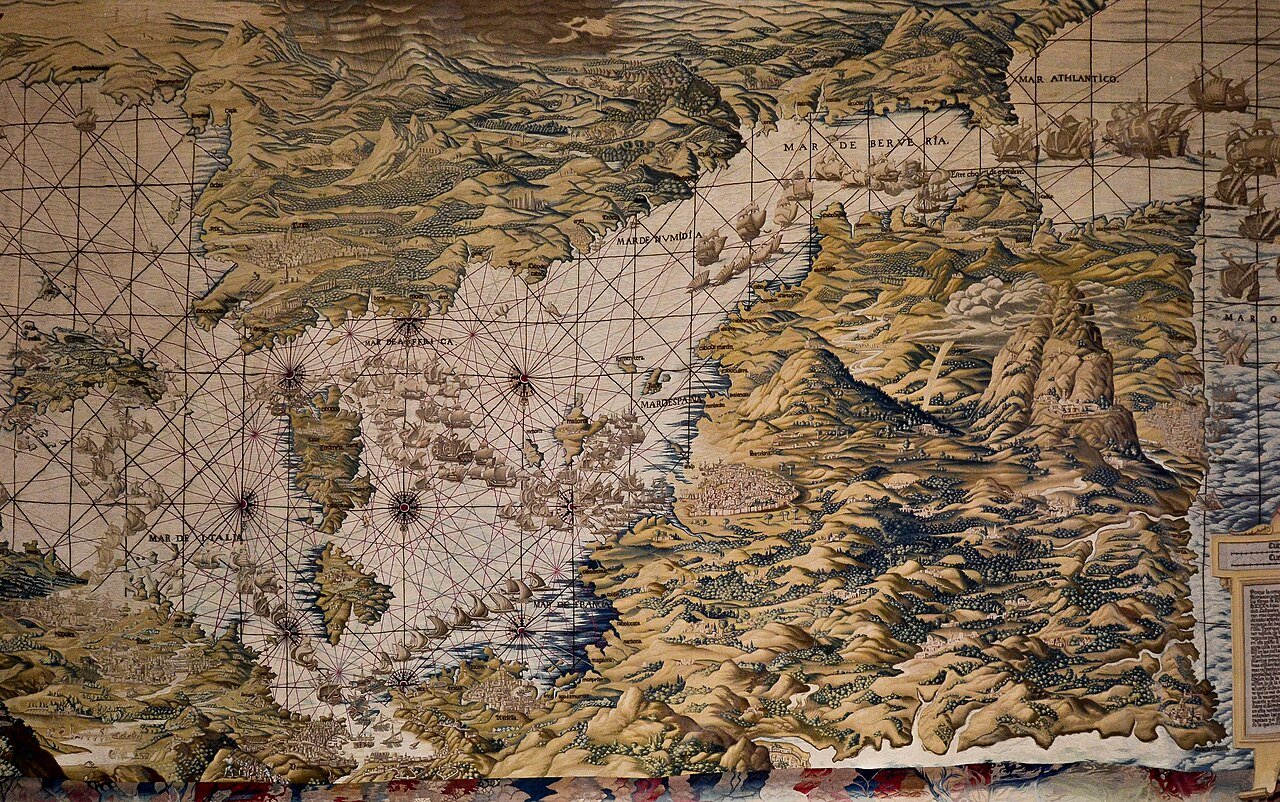
Cross into Alfonso X’s Gothic palace and the temperature of the architecture changes: no lace-like plaster, but stone, height and vaults. The star exhibits here are the tapestries of the Salón de Tapices — enormous woven scenes of Charles V’s Conquest of Tunis in 1535, made in Brussels workshops from cartoons by Jan Cornelisz Vermeyen and Pieter Coecke van Aelst, who had sailed with the expedition. The most famous panel, El mapa, is a map of the western Mediterranean woven into tapestry — with south at the top, so the world looks briefly, wonderfully upside down. Nearby, the palace chapel holds the Virgen de los Navegantes, one of the earliest paintings of the age of discovery, showing Mary sheltering the ships and sailors of the new Atlantic world. After the Mudéjar rooms, this wing reminds you the Alcázar was never one palace — it is a stack of them.
5. Baños de María de Padilla
Beneath the Patio del Crucero, down a short flight of steps, the palace goes quiet and amber. The Baños de María de Padilla are not baths in any modern sense but a great vaulted cistern — a long, rib-vaulted rainwater tank under the gardens above, its still water doubling every Gothic arch in reflection. They carry the name of María de Padilla, Pedro I’s great love, and legend insists she bathed here and that courtiers drank the water afterwards to share in the king’s favour; treat that as the palace’s folklore, of which there is a great deal. What is certain is the effect: cool, echoing, golden-dark, and the single most atmospheric space in the Alcázar. On a summer visit, when Seville is doing its impression of an oven, this is also the most physically pleasant room in the building.

Free Seville travel guide
Planning a trip to Seville? Get our free one-page Seville checklist: what to book ahead, what to skip, and the tapas bars we actually eat in.
6. Estanque de Mercurio
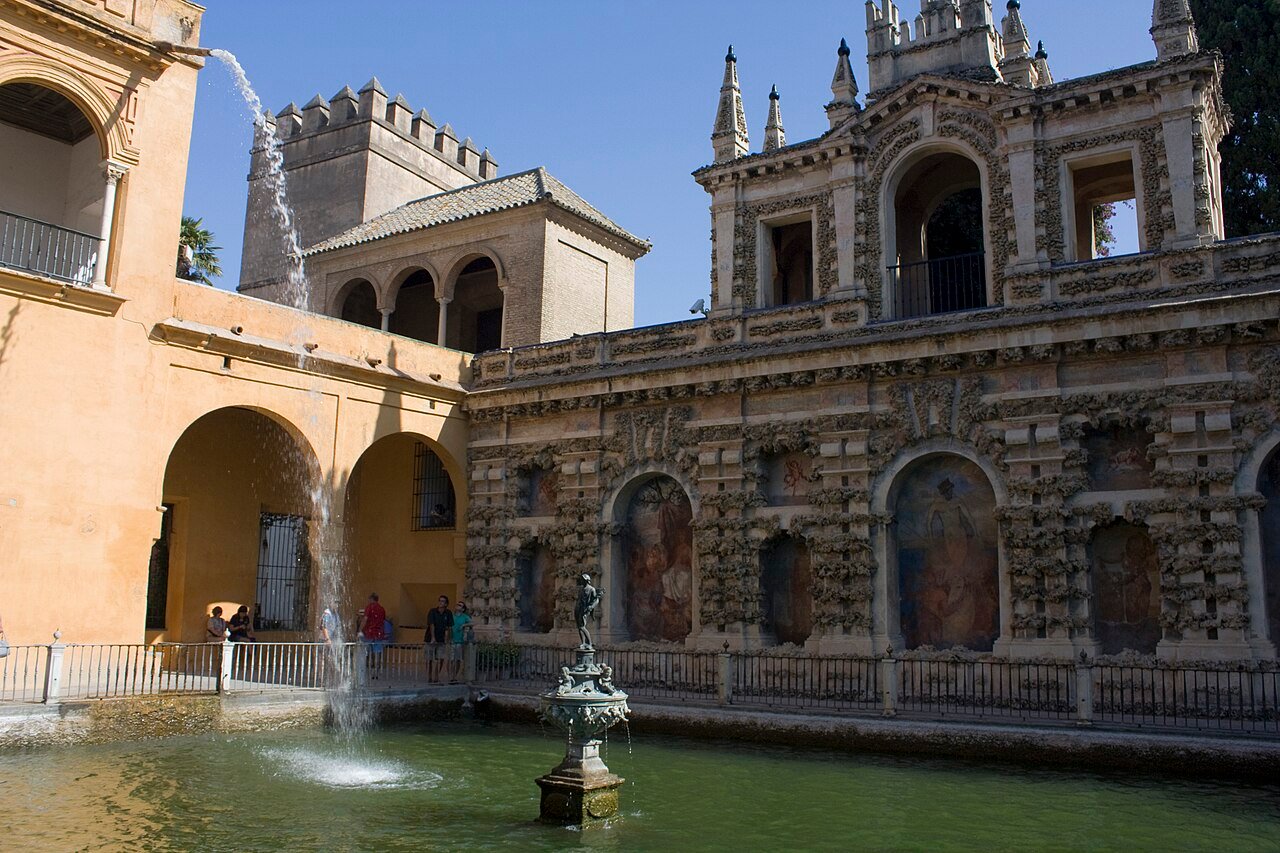
The Mercury Pool is where the palace exhales into the gardens: a large rectangular pond, once a reservoir for irrigating the grounds, presided over by a small bronze figure of Mercury on its central fountain. Behind it rises the long garden wall of the Galería del Grutesco with its faded frescoes, and from a lion-headed spout at one end, water arcs in continuously — the sound follows you around this whole corner of the gardens. Goldfish (and, if you are lucky, a cruising peacock on the balustrade) complete the picture. Photographers love the reflections here in the morning. It is a working piece of hydraulic engineering dressed up as a pleasure garden, which is the Alcázar in miniature.
7. Galería del Grutesco
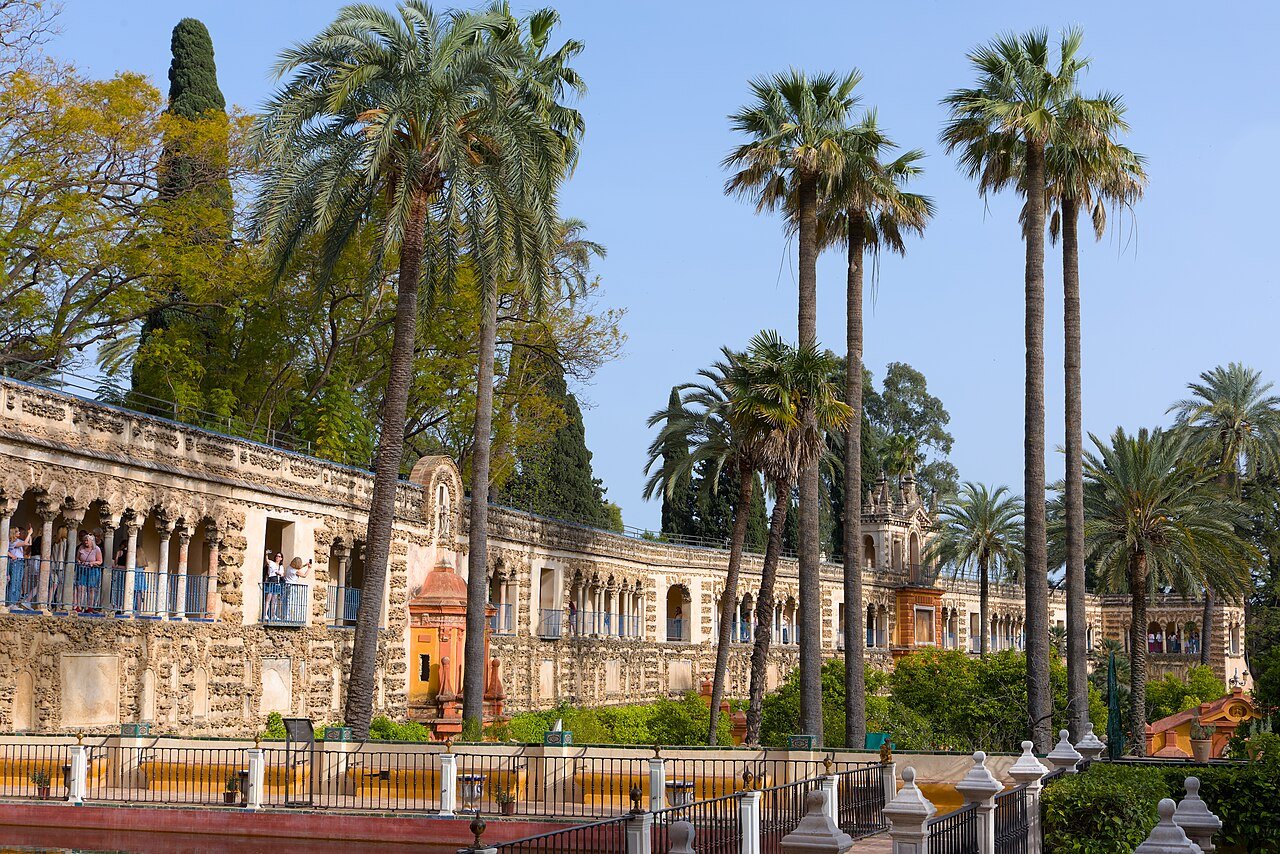
Climb onto the Galería del Grutesco and the gardens reorganise themselves beneath you. Built in the early 1600s on top of an old Almohad defensive wall, this long gallery-facade — faced in rough, rusticated stonework dotted with shells, and named for its grotesque-style painted decoration — turns a fortification into a viewing platform. From its arched walkway you look down the length of the formal gardens: the Mercury pool, the clipped hedges of the Jardín de las Damas, palms and pavilions laid out like a green map of the palace’s ambitions. It is the best orientation point in the gardens and the shot every postcard uses. Walk its full length; the views keep changing, and the far end is always quieter than the palace side.
8. Pabellón de Carlos V
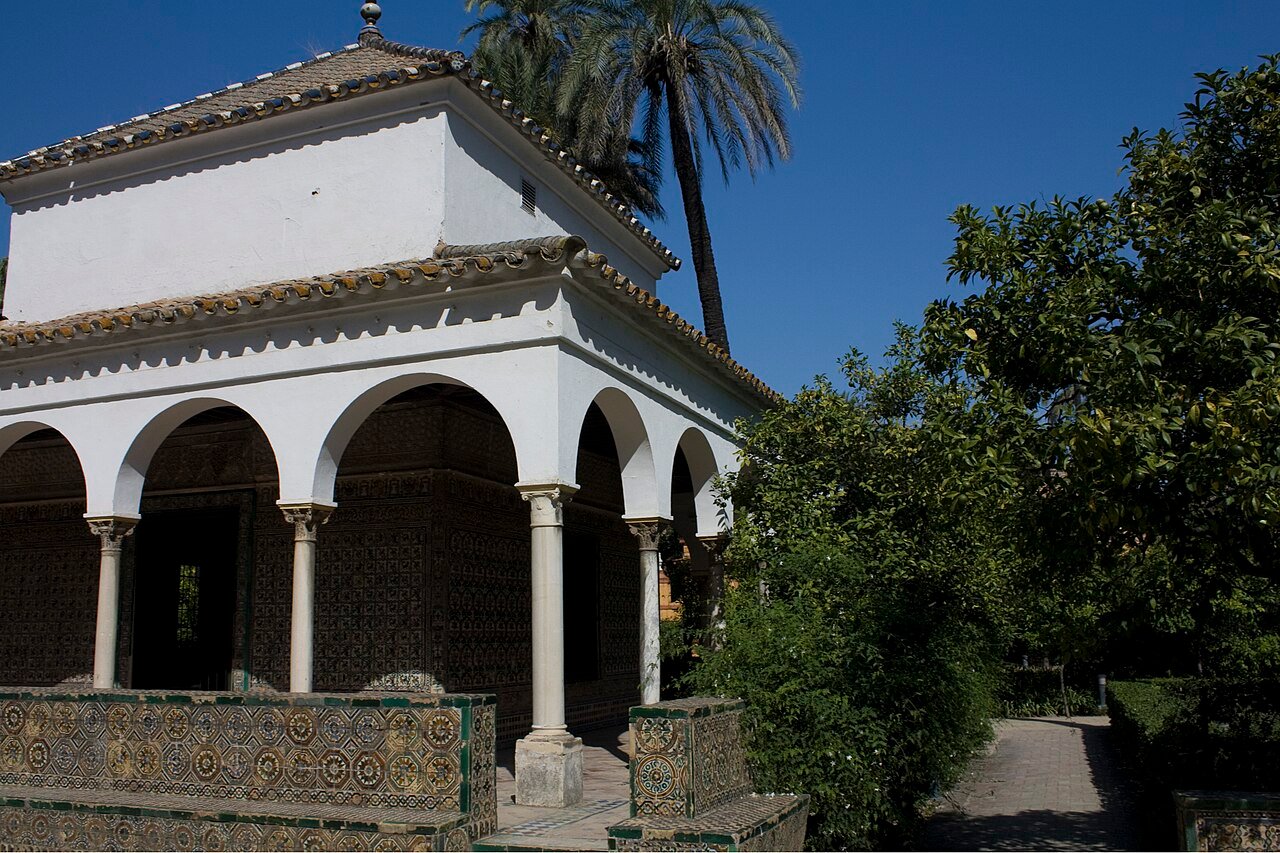
Deep in the gardens stands the little pavilion built in the 1540s for Charles V — a square, white, round-arched summerhouse that would be charming anywhere, but which the Alcázar turns into something close to perfect by wrapping it in tiles. The pavilion and the benches around it are faced in 16th-century azulejos, cool to the touch and cool to look at, all geometry and glaze. This is my favourite pause in the whole complex: sit on a tiled bench, in the shade, with the garden quiet around you, and you are doing exactly what the building was designed for five centuries ago. It also makes the gardens’ point better than any plaque — this was never a public park that kings visited; it was a private paradise that happened, eventually, to open its gates.
9. The Gardens
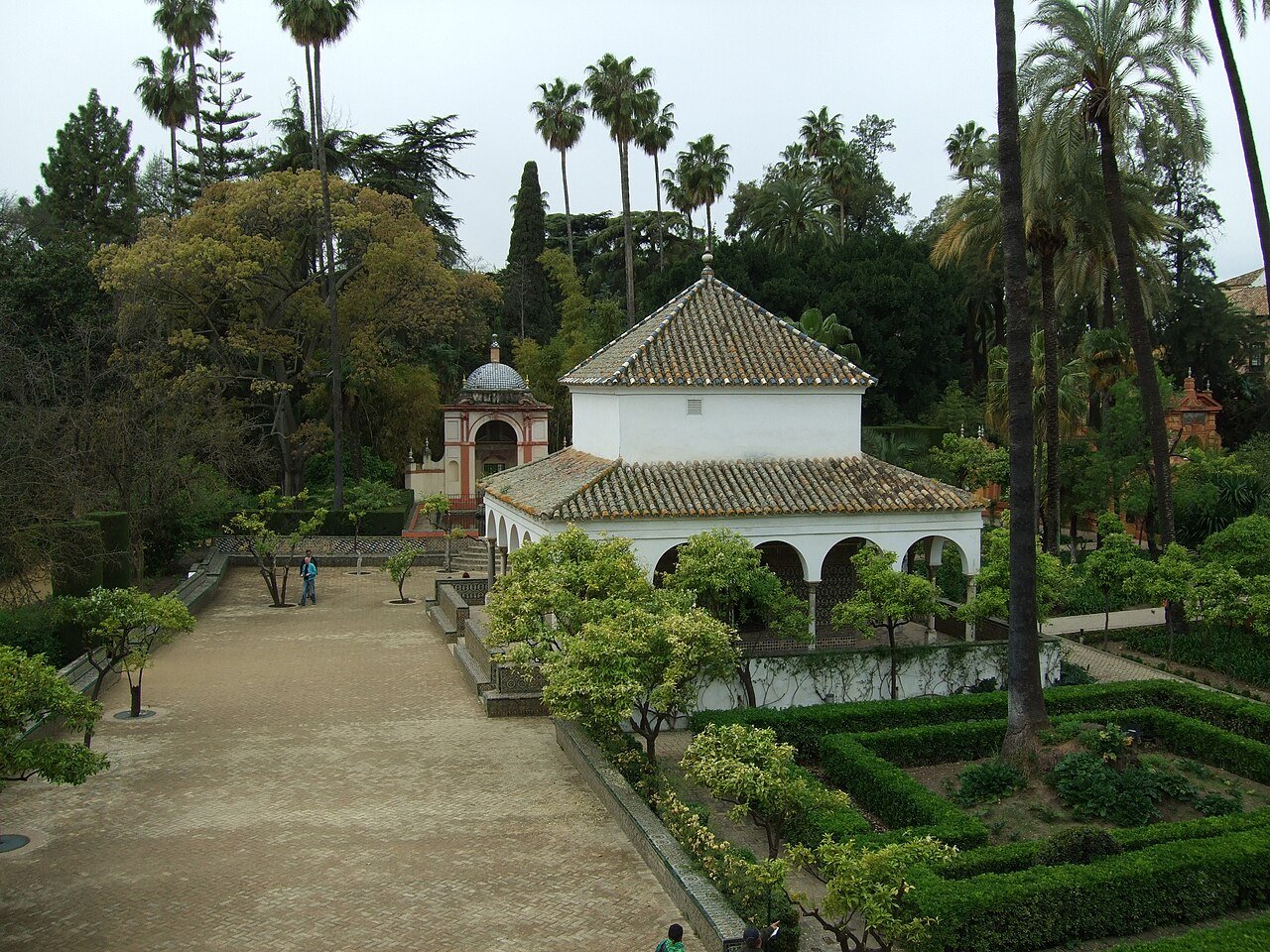
Leave at least an hour for the gardens, because they are not an appendix to the palace — they are half the experience, some seven hectares of them: Renaissance formality near the palace in the Jardín de las Damas, an English-style garden from the 19th century, a hedge labyrinth, orange groves everywhere, and water in every form Andalusia ever devised — pools, channels, fountains, dancing jets. Peacocks patrol the paths with total self-assurance. Screen fans will recognise the whole complex as the Water Gardens of Dorne from Game of Thrones (it also appears in Lawrence of Arabia and Kingdom of Heaven). My route: walk the Grutesco gallery first for the overview, then drop down and get pleasantly lost. In spring, when the orange blossom (azahar) is out, the scent alone justifies the ticket.
10. Cuarto Real Alto: The Upper Royal Apartments
The Alcázar’s final layer is the one still in use. The Cuarto Real Alto — the upper apartments, where the Spanish royal family stays when in Seville — is visited separately, in small timed groups with a guide, for a supplement of a few euros on top of general admission (from around €5.50 at the time of writing). What you get is a different palace again: furnished state rooms, an oratory, the official dining room — less jewel-box Mudéjar, more working royal residence, and all the more interesting for being real rather than restored for show. Two warnings: the slots are few and sell out before the ordinary entry tickets do, so book this first if you want it; and don’t expect to take photographs inside. If it has already gone when you book, console yourself that the ground floor alone is worth the trip twice over.
Tickets & Practical Information
Book online, in advance, on the official site (alcazarsevilla.org). Entry is by timed slot, visitor numbers are capped, and on spring and autumn days the popular slots sell out days ahead, while the same-day queue can eat an hour of your morning. General admission is from around €15.50, with reduced rates (from around €8) for over-65s and for students and European Youth Card holders aged 14–30, and free entry for children up to 13 accompanied by an adult — but prices and rules change, so treat those figures as a guide and check the official site for the current ones. Prefer a guided visit? A skip-the-line ticket or small-group tour with a licensed guide turns the stone-and-plaster overload into a story: Royal Alcázar of Seville ticket. Bring photo ID — the name on the booking and the person at the gate are expected to match. Last entry is usually about an hour before closing.
Hours: roughly 9:30–19:00 from April to September, 9:30–17:00 from October to March, closed on 1 and 6 January, Good Friday and 25 December. There is also traditionally a free-entry slot in the last hour on Mondays, bookable online in advance — worth knowing, though it goes fast and excludes the Cuarto Real Alto.
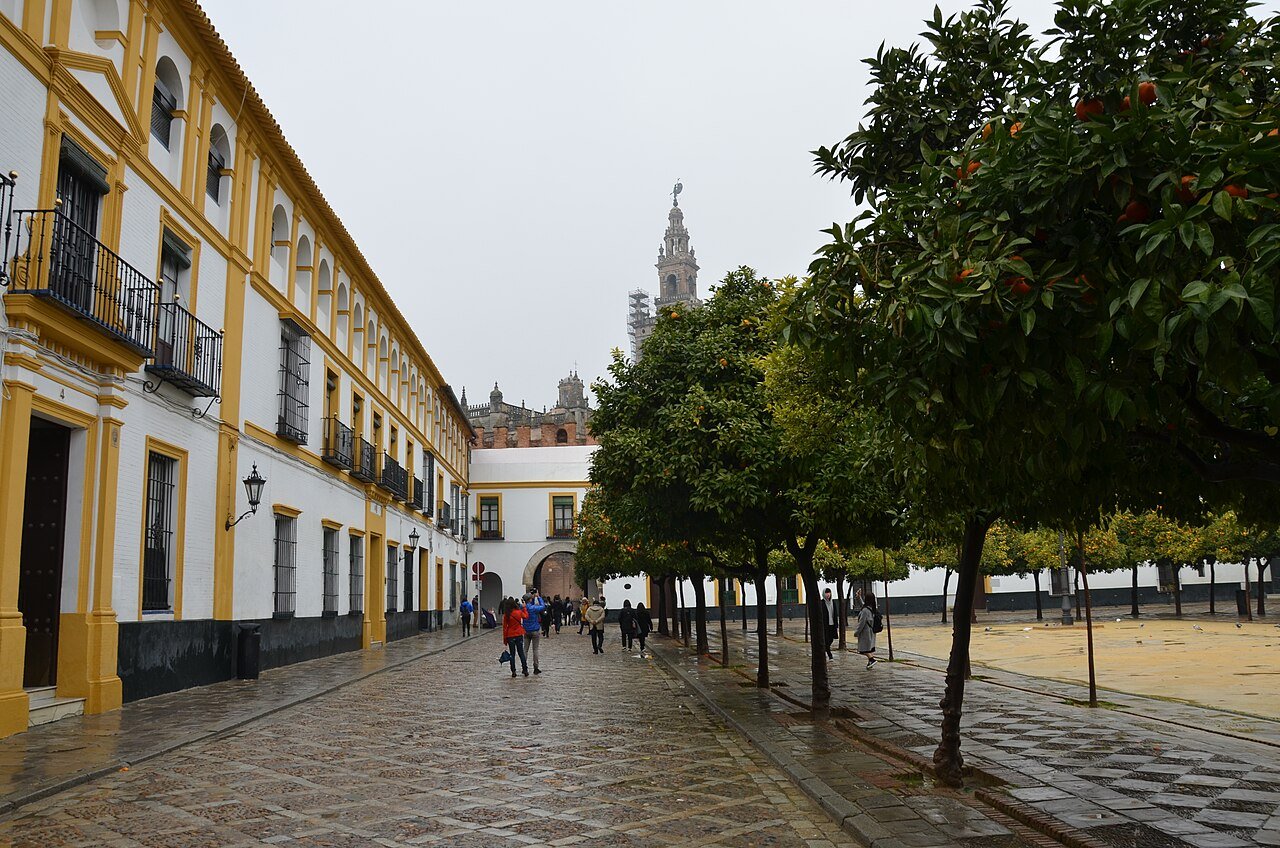
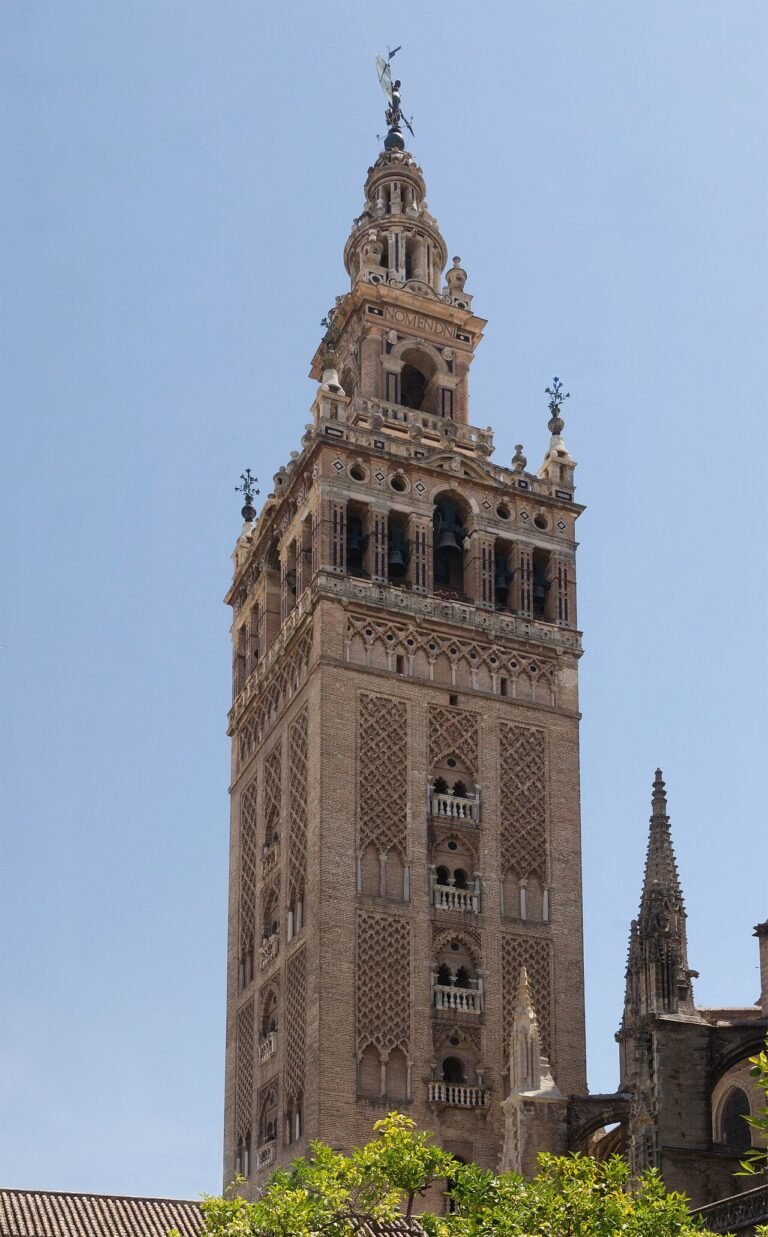
Getting there: the entrance is the Puerta del León on the Plaza del Triunfo, a couple of minutes’ walk from the Cathedral. The tram stops at Archivo de Indias practically at the gate, and Puerta de Jerez metro station is about five minutes away. You exit through the Patio de Banderas, under the orange trees, with the Giralda in front of you — which makes the obvious pairing a visit to the Cathedral itself, five minutes across the square; combined guided visits of both monuments exist for exactly this reason: Seville Cathedral and Giralda. For where to base yourself for all of this, our Where to Stay in Seville guide covers the neighbourhoods within walking distance, and the Alcázar fits a first morning in both our 2 Days in Seville itinerary and our 3 Days in Seville itinerary.
Tips for Visiting
- Take the first slot of the day. At 9:30 the courtyards are quiet, the light is kind, and the Patio de las Doncellas is the photograph you came for. By midday you will be sharing every room.
- Do the palaces first, gardens second, and don’t reverse it. Most visitors drift into the gardens early; the palace rooms are at their emptiest in the first hour, and the gardens are built for the long, lazy end of a visit.
- Book the Cuarto Real Alto before your entry ticket — its few daily slots disappear first.
- Allow 2–3 hours minimum. Ninety minutes is the rushed version; the gardens alone repay an hour.
- Mind the season. Seville’s summers are fiercely hot; the Alcázar’s shade, water and the Baños’ cold vaults make it one of the better midday refuges in the city, but spring and autumn are the glorious months — our Best Time to Visit Seville guide breaks the year down.
- Wear real shoes. Stone floors, garden gravel and a lot of ground: this is a three-hour walk in disguise.
- Download or pick up the audio guide if you skip a tour — the palace’s inscriptions and layers reward explanation, and the rooms do not label themselves generously.
Travel insurance, sorted
Whether it is a two-week holiday or a longer move, travel insurance is the one booking not to skip. We point readers to SafetyWing’s Nomad Insurance — cover built for travellers, remote workers and longer stays abroad, on a flexible monthly subscription you can start before a trip or while you are already away. Get a quote from SafetyWing
Final Thoughts
Every great Spanish city has one building that explains it, and in Seville that building is the Alcázar: Islamic geometry and Christian ambition, a fortress that became a paradise and never stopped being a palace. The Cathedral across the square is bigger; nothing in the city is more beautiful, room for room and garden for garden. Book the early slot, look up in the Ambassadors’ hall, go down into the golden dark of the Baños, and give the gardens the hour they ask for. You will leave through the Patio de Banderas understanding why kings kept this place for a thousand years — and why, on my list, it never moves from number one.
¡Buen viaje!
Photo credits: Puerta del León — José Luis Filpo Cabana, CC BY 4.0 · Patio del Yeso — Américo Toledano, CC BY-SA 4.0 · Patio de las Doncellas — Cat from Sevilla, CC BY 2.0 · Patio de las Muñecas — Américo Toledano, CC BY-SA 4.0 · Salón de Embajadores dome — Benjamin Smith, CC BY-SA 4.0 · Salón de Tapices, “El mapa” — Jan Cornelisz Vermeyen & Pieter Coecke van Aelst, Public domain · Baños de María de Padilla — Tesla Delacroix, CC BY-SA 4.0 · Estanque de Mercurio — Daniel Villafruela, CC BY-SA 3.0 · Galería del Grutesco — Benjamin Smith, CC BY-SA 4.0 · Pabellón de Carlos V — Daniel Villafruela, CC BY-SA 3.0 · The Alcázar gardens — Jared Preston, CC BY-SA 3.0 · Patio de Banderas — Steven Lek, CC BY-SA 4.0. All via Wikimedia Commons.


11 Comments