Barrio Santa Cruz: The Complete Guide to Seville’s Old Jewish Quarter
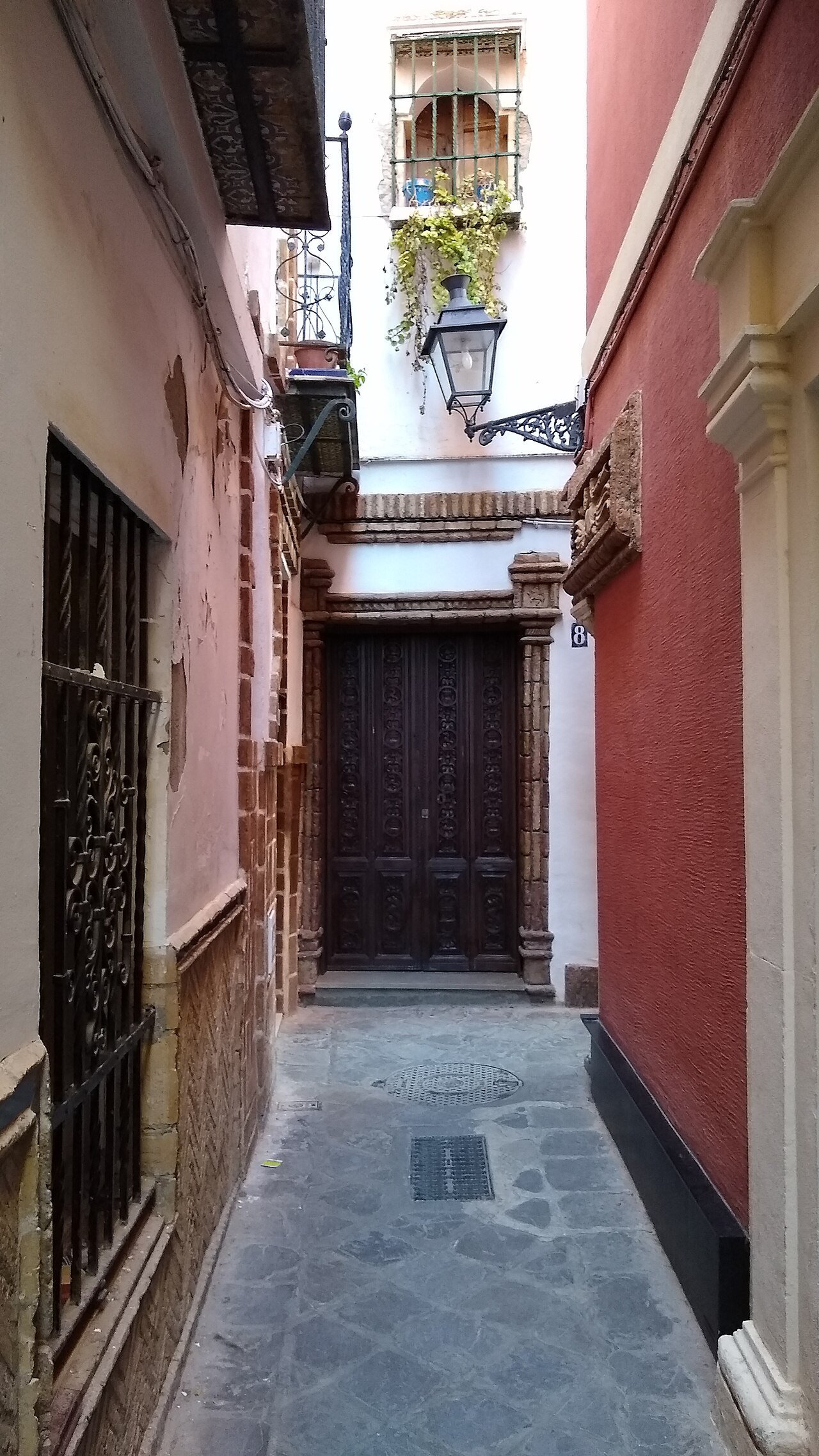
Every great city has one neighbourhood that refuses to behave like the rest of it. In Seville it is Santa Cruz: a knot of lanes so narrow that two people with shopping bags must negotiate a passing place, whitewashed walls leaning in over cobbles, geraniums falling out of every balcony, and around every corner — guaranteed — a tiny plaza full of orange trees that you did not expect and cannot find again afterwards. It is the old Jewish quarter of Seville, squeezed between the Cathedral and the walls of the Alcázar, and it is the part of the city visitors fall for hardest and understand least. There is almost nothing here you queue for. The quarter itself is the sight.
This guide walks it the way it should be walked: slowly, and with the story told first. Santa Cruz has a heavy history under all that prettiness — a medieval Jewish community, a massacre, an expulsion, centuries of decline and then a deliberate, romantic-era rebirth as the Seville of the postcards. Then the places in the order you will meet them: the two great little plazas, the lane that runs along the palace wall, the gardens next door, the quarter’s one real museum, its oldest church, and the patios, tapas bars and flamenco that fill the lanes between. It belongs near the top of any list of the city — it sits high in our Best Things to Do in Seville guide — and it costs nothing at all to enter. Put the map away. That is not laziness; in Santa Cruz it is genuinely the technique.

The Short Answer
Yes — Barrio Santa Cruz is unmissable, it is completely free, and you should wander it early in the morning or after dark, when the day-trippers have gone. There is no ticket, no entrance and no correct route: the quarter is a dozen lanes and half a dozen tiny plazas folded between the Cathedral, the Alcázar walls and the Jardines de Murillo, and the whole experience is the wandering — orange trees, azulejo benches, dead ends that turn out to be somebody’s beautiful front door. The one exception is the Hospital de los Venerables, the quarter’s single ticketed sight, a small museum and frescoed church well worth its modest ticket. Give Santa Cruz half a day of drifting, or better, an early morning and a lamplit evening, and let it sit between the big sights: it is the pause that makes the Alcázar and the Cathedral land properly.
Table of Contents
- The Short Answer
- The Story in Brief: A Jewish Quarter, a Massacre and a Romantic Reinvention
- What to See: The Plazas — Doña Elvira and Santa Cruz
- What to See: The Callejón del Agua and the Palace Walls
- What to See: The Jardines de Murillo
- What to See: The Hospital de los Venerables
- What to See: Santa María la Blanca
- What to See: Patios, Tapas and Flamenco
- Practical Info
- Tips for Visiting
- Final Thoughts
The Story in Brief: A Jewish Quarter, a Massacre and a Romantic Reinvention
When Fernando III took Seville from its Almohad rulers in 1248, the city’s Jewish community was settled — as in so many Spanish cities — in a defined quarter of its own, hard against the Alcázar palace and the Cathedral-to-be. It was a good address and a gilded cage: protected by the Crown because it was useful to the Crown, taxed heavily for the privilege, and walled into its lanes at night. At its height the Judería held synagogues, schools, markets and some of the most prosperous families in Seville, and its footprint is the maze you walk today. Those lanes are narrow for reasons that have nothing to do with charm. They follow an Islamic street plan built for shade and defence — high walls, no straight lines, no room for a cart, let alone an army — and every dead end and sudden dogleg is the medieval city doing its job.
The end, when it came, was brutal. In 1391, after years of incendiary preaching, mobs stormed Jewish quarters across Spain; Seville’s was among the worst hit, with thousands killed and the survivors forced to convert or flee. The synagogues were handed to the Church — one of them, as you will see, still stands as the church of Santa María la Blanca. A century later, in 1492, the remaining Jews of Spain were ordered to convert or leave, and the quarter’s reason to exist left with them. Santa Cruz settled into a long, poor afterlife as a working district of convents, hospitals and crowded tenements — picturesque only to people who did not have to live in it.
The Santa Cruz you photograph is, honestly, a reinvention — and the city is not embarrassed about it. In the nineteenth century the romantics arrived: Washington Irving wrote his way through Andalusia, travellers swooned over the decaying lanes, and the quarter collected its legends — Don Juan Tenorio, the great seducer, is said to have wooed his Doña Elvira in the plaza that now carries her name. Then, in the early twentieth century, the Marqués de la Vega-Inclán, Spain’s great promoter of romantic tourism, set about tidying the quarter into the dream of itself: plazas landscaped, azulejo benches built, orange trees planted, façades whitewashed to a uniform glow, all polished further for the Ibero-American Exposition of 1929. It worked completely. The maze is medieval; much of the perfume is a hundred years old. Know that, and the place gets more interesting, not less — this is a neighbourhood that was rescued by being turned into a story about itself.
What to See: The Plazas — Doña Elvira and Santa Cruz
The quarter hangs on two little plazas, and you will cross both a dozen times without trying. Plaza de Doña Elvira is the jewel: a square of orange trees around a low fountain, ringed with benches faced in blue-and-white azulejos, quieter than it has any right to be given that it sits two minutes from the Cathedral. It is named for the heroine of the Don Juan legend — Zorrilla’s play made Doña Elvira the woman Don Juan Tenorio loved and lost, and local tradition plants her father’s house on this square — and romantic Seville has been sighing over it ever since. Come at nine in the morning and you may have it to yourself and the orange blossom; come at dusk and the benches hold court. There is no sight here, and that is the sight.


Five lanes away, Plaza de Santa Cruz is the quarter’s namesake and its little green heart — a garden square built over ground with a darker past: a synagogue stood here first, then the church of Santa Cruz that replaced it, demolished during the French occupation in the early 1800s. The painter Murillo, who was born in this neighbourhood, was buried in that church, and a plaque in the plaza remembers him on ground that no longer holds his grave. At the centre stands the square’s strange treasure, the Cruz de la Cerrajería — the Locksmiths’ Cross — a riot of seventeenth-century wrought iron, all scrolls and lanterns, made by Seville’s locksmiths’ guild and moved here from the shopping streets in the 1920s. Stand under the orange trees, look at the ironwork, and you have the whole quarter in one view: beauty laid carefully over loss.

What to See: The Callejón del Agua and the Palace Walls
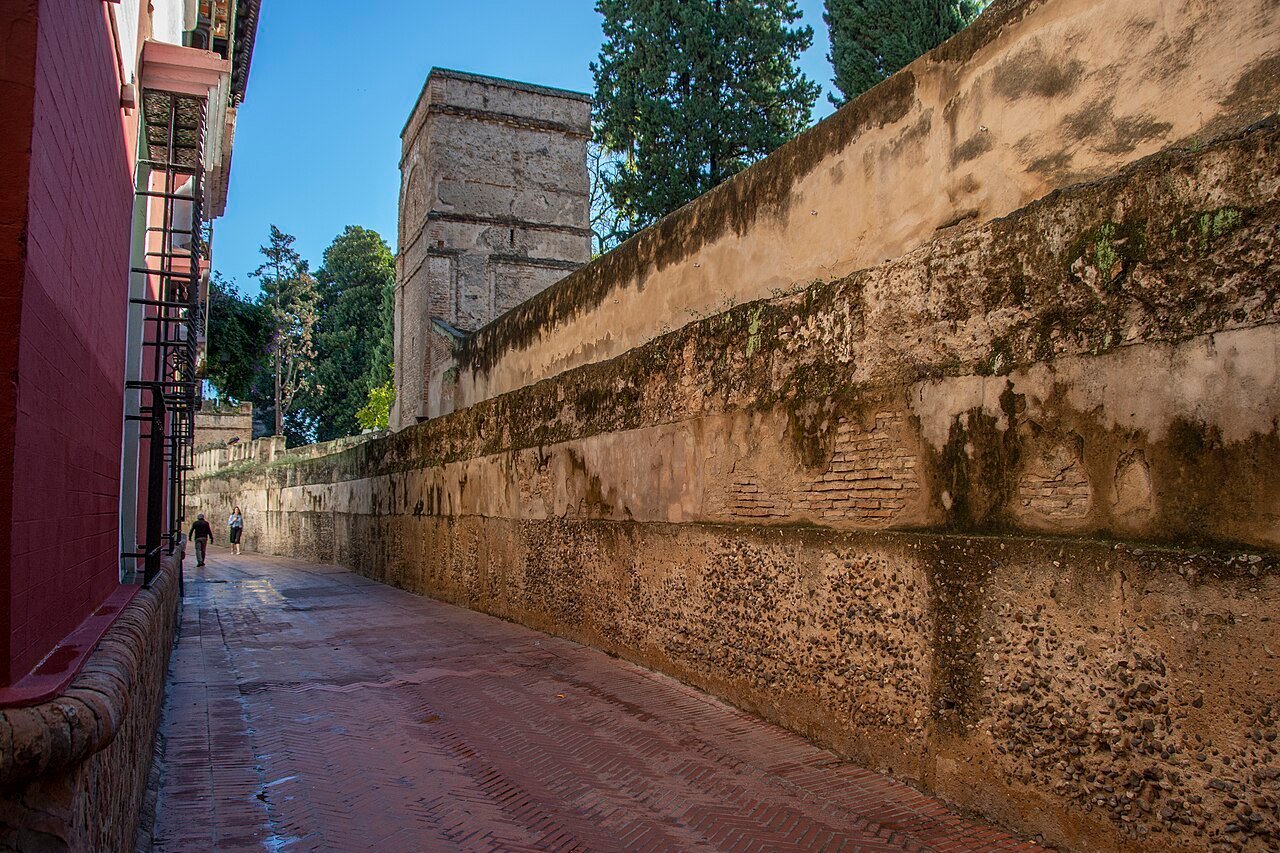
On the quarter’s eastern edge runs its most atmospheric street of all: the Callejón del Agua, the Alley of the Water. On one side, modest houses with barred windows and flower pots; on the other, a towering wall of rammed earth and brick — the outer wall of the Alcázar gardens, running the lane’s whole length. The name is literal. Water for the palace gardens arrived from the Caños de Carmona aqueduct and was channelled along this wall in pipes and conduits, and the lane still carries the cool, damp, shaded feeling of a place built around running water. It is the classic Santa Cruz stroll: no traffic, no shops to speak of, just the wall, the shade and the sound of the gardens on the other side. A plaque on one of the houses remembers Washington Irving, who lodged in the quarter while he gathered the tales that made Andalusia famous in English — the romantics were here early, and this lane is why.
Free Seville travel guide
Planning a trip to Seville? Get our free one-page Seville checklist: what to book ahead, what to skip, and the tapas bars we actually eat in.
What to See: The Jardines de Murillo
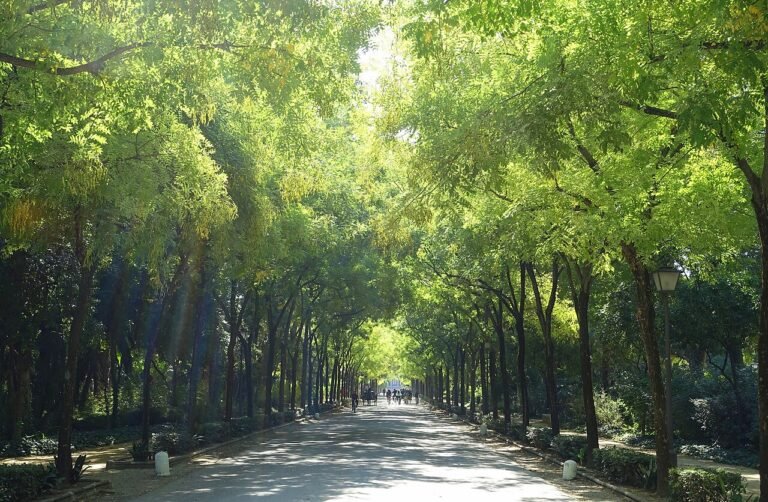
Follow the Callejón del Agua to its southern end and the walls give way to green: the Jardines de Murillo, the quarter’s garden next door. These shaded walks were carved out of the Alcázar’s orchard gardens and given to the city in the early twentieth century, and they are named for the painter — Murillo again; in Santa Cruz it is always Murillo — whose house stands on the plaza nearby. Inside: broad avenues of palms and enormous ficus trees, tiled benches and fountains, and at the far end the Columbus monument, two columns carrying a caravel between two prowling lions. Treat the gardens as the quarter’s front porch and decompression chamber: the place to sit with a coffee after the lanes, plan the next sight, and watch Seville walk its dogs. The Paseo de Catalina de Ribera continues the same green strip southwards if the wandering mood holds.

What to See: The Hospital de los Venerables
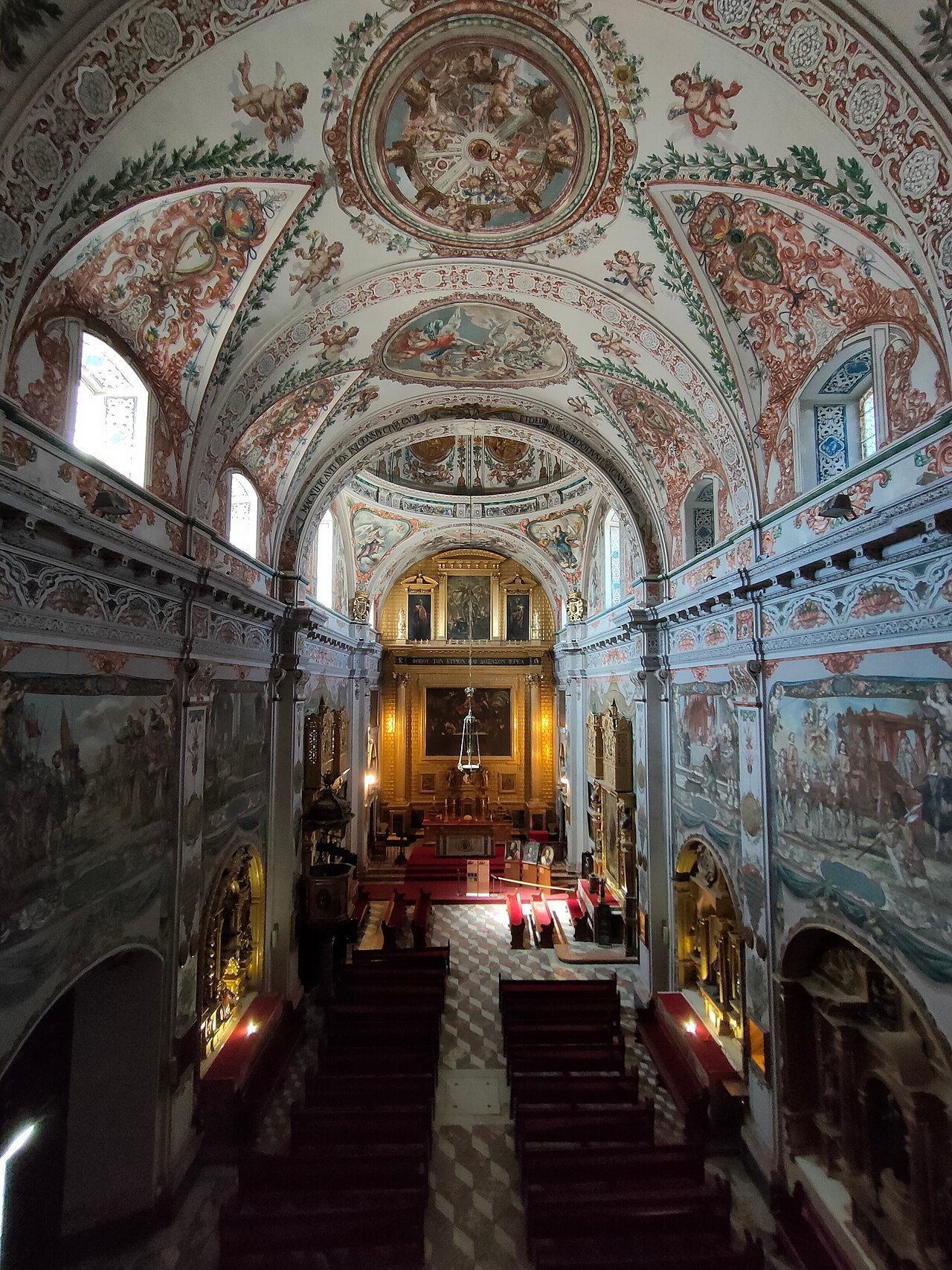
Every neighbourhood gets one sight you pay for, and Santa Cruz’s is a good one. The Hospital de los Venerables, on the tiny Plaza de los Venerables at the quarter’s heart, was founded in the 1670s as a retirement home for elderly, destitute priests — the “venerable ones” — and it is a complete little Baroque world: a sunken-centred courtyard of orange trees and azulejos, a staircase painted like a stage set, and a church whose walls and vaults are a single blaze of fresco by Valdés Leal and his son Lucas Valdés. This was Murillo’s parish territory, and the museum tells his saddest story: his great Immaculate Conception painted for this church was looted by Napoleon’s Marshal Soult, wandered through collections for a century, and now hangs in the Prado in Madrid — the copy and the empty glory here are part of the exhibit.
The honest practicalities: the Venerables is a separate, paid entry — a modest ticket, not a free church — and its tickets sit in the same ecosystem as the Cathedral’s cultural visits, so combined Cathedral-and-Venerables tickets circulate and are worth checking before you buy either alone. It is run as a small museum (the Focus Foundation’s Velázquez Centre is based here, with a handful of serious Golden Age paintings), it rarely takes more than an hour, and it is the one place in the quarter where going inside beats wandering outside. Go in the morning, when the courtyard light is best and the lanes outside are still waking up.
What to See: Santa María la Blanca
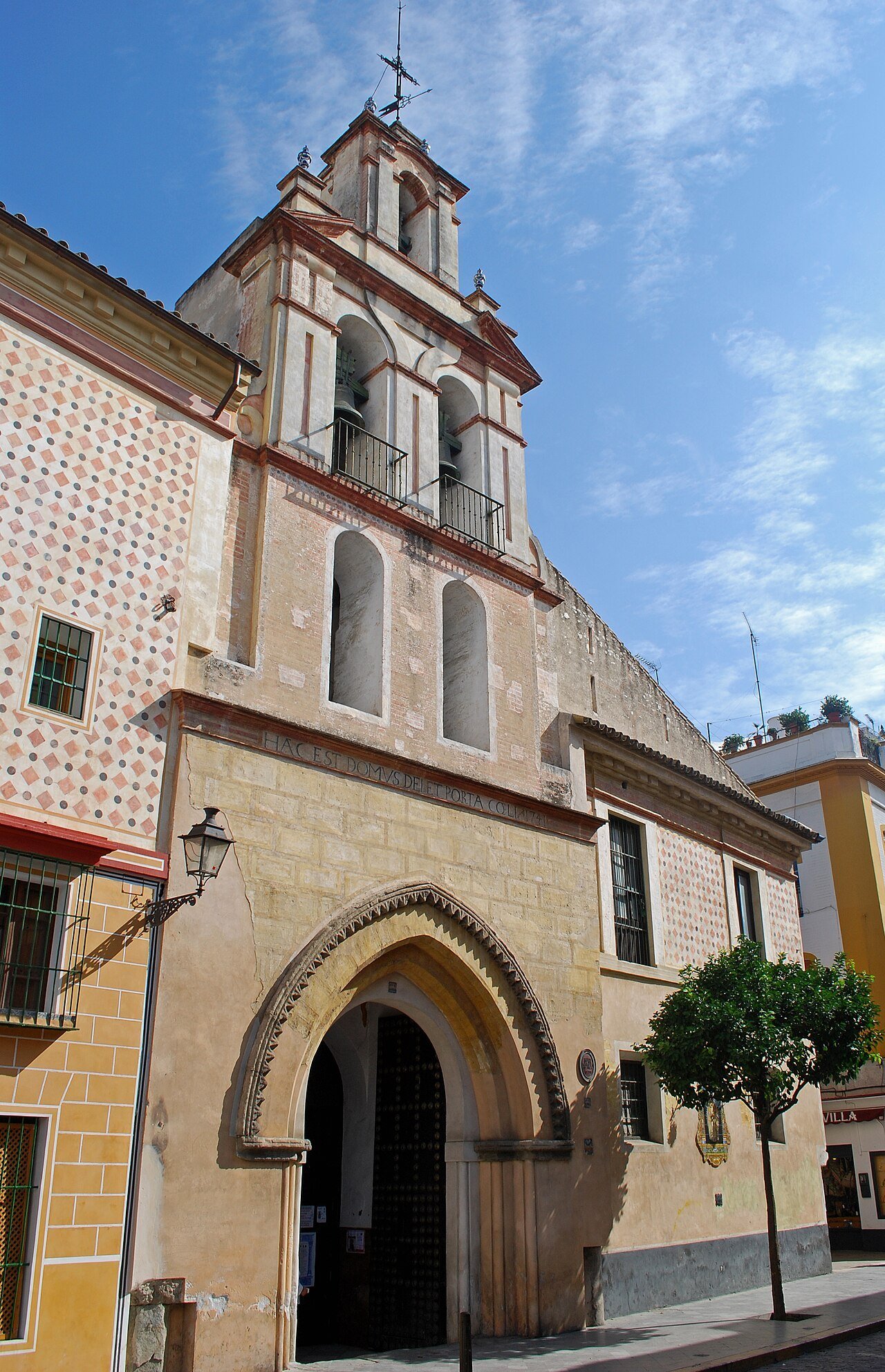
At the quarter’s eastern edge, on the street that carries its name, stands the building that tells Santa Cruz’s whole story in one façade: Santa María la Blanca. It began as a synagogue — one of the Judería’s three — and after the massacres of 1391 it was converted into a church, which it remains. The whitewash that gives it its name (“the White One”) covers a Mudéjar interior of horseshoe arches and carved plaster that is unlike any other church in the city, part synagogue, part mosque’s memory, part Baroque church all at once. Murillo painted two great lunettes for it telling the legend of its founding; Soult’s men took those too, and what you see are worthy replacements in frames that remember giants. It is a working parish church, free to enter outside service times, and almost always quiet — the most historically loaded room in the quarter, and the one most visitors walk straight past.
What to See: Patios, Tapas and Flamenco
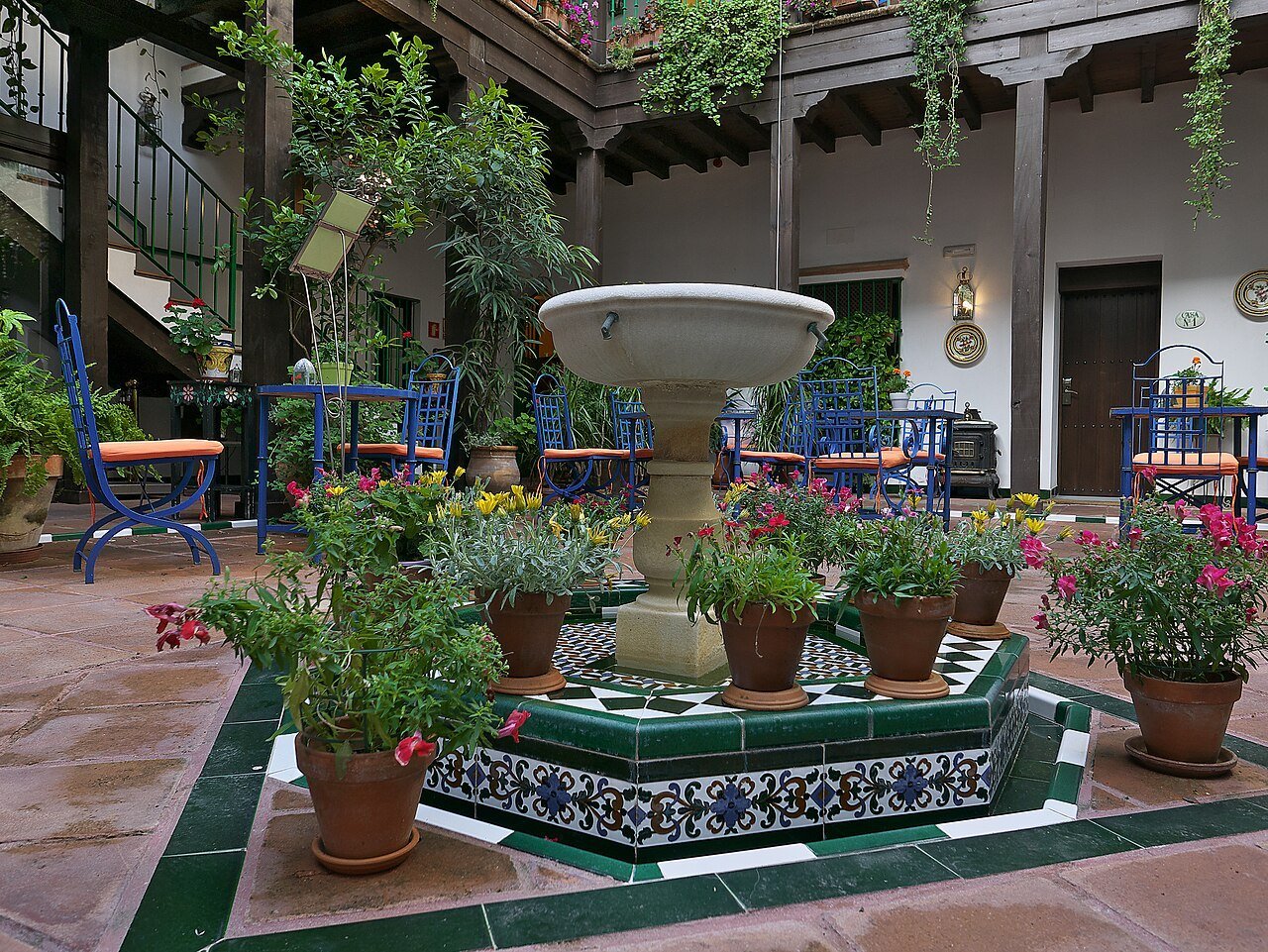
Between the named sights, the quarter’s real texture is hidden in plain sight: the patios. Santa Cruz houses turn inward, and behind the plainest door you will glimpse — through a wrought-iron gate left ajar — a courtyard of tiles, fountains, pots and cool green shade, the private machinery that made life in these dense lanes bearable. Many are now small hotels, bars and restaurants, which is your legitimate way in: order a coffee in one, linger, and look properly. Nobody will hurry you; the patio is Seville’s living room, and it has been receiving guests for eight centuries.
When the wandering makes you hungry, you are in the right maze. The tapas bars cluster thickest around Calle Mateos Gago — the broad lane running down from the Cathedral, its terraces aimed at the Giralda — and around Plaza de los Venerables and Calle Santa Teresa. This is the spiritual home of espinacas con garbanzos, spinach with chickpeas, the Lenten dish Seville turned into a year-round tapa, and of salmorejo, espinacas’ cold tomato cousin from Córdoba. Order both, add a plate of jamón, and you have eaten the quarter. A guided GetYourGuide – Seville tapas crawl makes an excellent evening of it if you want the stories with the spinach; our Best Food in Seville guide maps the bars street by street. And after dinner, the quarter keeps its oldest promise: flamenco. The tablao Los Gallos, on Plaza de Santa Cruz, has been staging serious flamenco since 1966 — no dinner theatre, just the singing — and guitar drifts out of doorways all over the quarter after dark. This is where the romantics heard it first. It still sounds like it belongs here.

Practical Info
Finding your way (by getting lost, then not). Santa Cruz defeats maps and phone GPS alike — the lanes are too narrow and crooked for either — but it cannot actually swallow you. The quarter is small and walled in by landmarks: the Alcázar walls on the east, the Cathedral looming west, the Jardines de Murillo south. Your compass is the Giralda: the tower is visible down the end of half the lanes in the quarter, and it always means “Cathedral that way”. Walk towards it to exit west, away from it to dive deeper, and remember that any lane you follow for three minutes delivers you to a plaza, a wall or a main street. Budget your pride accordingly: everyone gets lost here once, briefly, and enjoys it.

When to come. Early morning and evening are the quarter’s two golden shifts. Before ten, the lanes belong to residents, deliveries and the smell of orange blossom; after eight in the evening — later in summer — the stone gives back the day’s heat, the lanterns come on and the whole place turns to theatre. Midday in July and August is the honest exception: the lanes are shaded by design, which helps, but 40°C is 40°C — do the Venerables’ cool interior, a long patio lunch, and save the wandering for the edges of the day. Spring, with the orange blossom out, is the quarter at its absolute best.
Staying inside the quarter. Santa Cruz is one of the best bases in Seville — a cluster of small hotels in converted palaces, all patios and roof terraces, with the Cathedral two minutes away and silence in the lanes after midnight. The trade-offs are real: rooms in old houses can be small, prices carry a romance premium, and no car will ever reach your door — which most guests count as the final point in its favour. Combine a stay here with the sights on the quarter’s doorstep: the Royal Alcázar of Seville guide palace over the garden wall, and the Seville Cathedral & La Giralda guide at the end of every lane.
Tips for Visiting
- Get lost on purpose, first. Give yourself one full wander with no destination before you “do” the quarter properly — it is small enough that the experiment is free, and afterwards every lane feels half familiar.
- Use the Giralda as your compass. If you can see the tower, you know where west is and where the Cathedral waits. If you cannot see it, you are in the good part.
- Time the two shifts. Morning for the empty plazas and the photographs, evening for the atmosphere — and never judge Santa Cruz by its crowded two o’clock.
- Book the Venerables with the Cathedral in mind. Combined tickets circulate in the same system; check before buying either sight alone, and do the Venerables in the morning.
- Eat one street back. Mateos Gago’s terraces sell the Giralda view; the lanes behind Plaza de los Venerables sell the same spinach for less. Do both, in that order of wisdom.
- Look through the gates. The patios are the quarter’s hidden half — any open iron gate is an invitation to peek, and a patio café is an invitation to stay.
Travel insurance, sorted
Whether it is a two-week holiday or a longer move, travel insurance is the one booking not to skip. We point readers to SafetyWing’s Nomad Insurance — cover built for travellers, remote workers and longer stays abroad, on a flexible monthly subscription you can start before a trip or while you are already away. Get a quote from SafetyWing
Final Thoughts
Barrio Santa Cruz is the rare famous neighbourhood that deserves its fame for the right reason: not a monument, but a mood — eight centuries of history compressed into lanes built to be walked slowly, in shade, with nowhere particular to go. Its story is genuinely dark, and the guidebooks that sell it as a fairy tale do it a disservice; but the city took that dark little maze and, in one of its better decisions, chose to love it back to life rather than demolish it. Go early. Get lost. Find the locksmiths’ cross, the water lane, the white church that was a synagogue, and a bench under the orange trees — and let Seville’s oldest quarter do what it has done to travellers since Washington Irving: make an hour feel like the whole trip.
¡Buen viaje!

Photo credits: Calle Judería in the spring — Heinz Joerg Kretschmer, CC BY 3.0 · A dead-end lane in the quarter — CarlosVdeHabsburgo, CC BY-SA 4.0 · Plaza de Doña Elvira — CarlosVdeHabsburgo, CC BY-SA 4.0 · An azulejo bench in Plaza de Doña Elvira — Colling-architektur, CC BY-SA 3.0 · Plaza de Santa Cruz and the Cruz de la Cerrajería — Felicia Yu-Jyun Fan, CC BY-SA 4.0 · The Callejón del Agua — Anual, CC BY-SA 4.0 · Inside the church of the Hospital de los Venerables — Millars, CC BY-SA 4.0 · Santa María la Blanca — Anual, CC BY 3.0 · A patio in the quarter — Jl FilpoC, CC BY 4.0 · The Jardines de Murillo — CarlosVdeHabsburgo, CC BY-SA 4.0 · A tapas street in the quarter — CarlosVdeHabsburgo, CC BY-SA 4.0 · The Giralda from Calle Mateos Gago — Oliver Pitzke, CC BY-SA 4.0. All via Wikimedia Commons.

5 Comments