Christmas Traditions in Spain: 14 Customs, From the Christmas Lottery to the Twelve Grapes
Spain does not celebrate Christmas the way the rest of Europe does, and it does not really celebrate it on 25 December either. The Spanish season runs for more than two weeks, opens with a lottery so large it stops the country, and reaches its emotional peak not under a tree but on the morning of 6 January, when the Three Kings — not Santa Claus — deliver the presents. Along the way there are nativity scenes treated as serious art, a Catalan log that is beaten with sticks until it poops sweets, a tiny figure squatting in the corner of the manger scene that children hunt for like treasure, and a midnight ritual involving exactly twelve grapes and a great deal of chewing under pressure.
This guide walks the season in the order Spaniards live it, from the lottery draw on 22 December to the last lottery of the holidays on 6 January. Every tradition below is one you can genuinely witness or join as a visitor — none of it is staged for tourists, which is exactly why it is worth travelling for.
Contents
- 1. El Gordo: The Christmas Lottery That Starts the Season
- 2. The Belén: Nativity Scenes Taken Seriously
- 3. Nochebuena: Christmas Eve at the Family Table
- 4. The Caga Tió: The Log That Poops Presents
- 5. The Caganer: The Figure Hiding in the Nativity
- 6. Turrón, Polvorones and the Christmas Sweet Table
- 7. The Zambomba: Jerez’s Flamenco Christmas Parties
- 8. Olentzero: The Basque Country’s Gift-Bringer
- 9. Santos Inocentes: Spain’s Day of Pranks
- 10. Nochevieja: Twelve Grapes at Midnight
- 11. The Cabalgata: The Three Kings Arrive
- 12. Día de Reyes: The Real Gift-Giving Day
- 13. Roscón de Reyes: A Cake with a Bean and a King
- 14. El Niño: One Last Lottery
- 15. The 2026/27 Christmas Calendar: Every Date You Need
- 16. Final Thoughts
1. El Gordo: The Christmas Lottery That Starts the Season
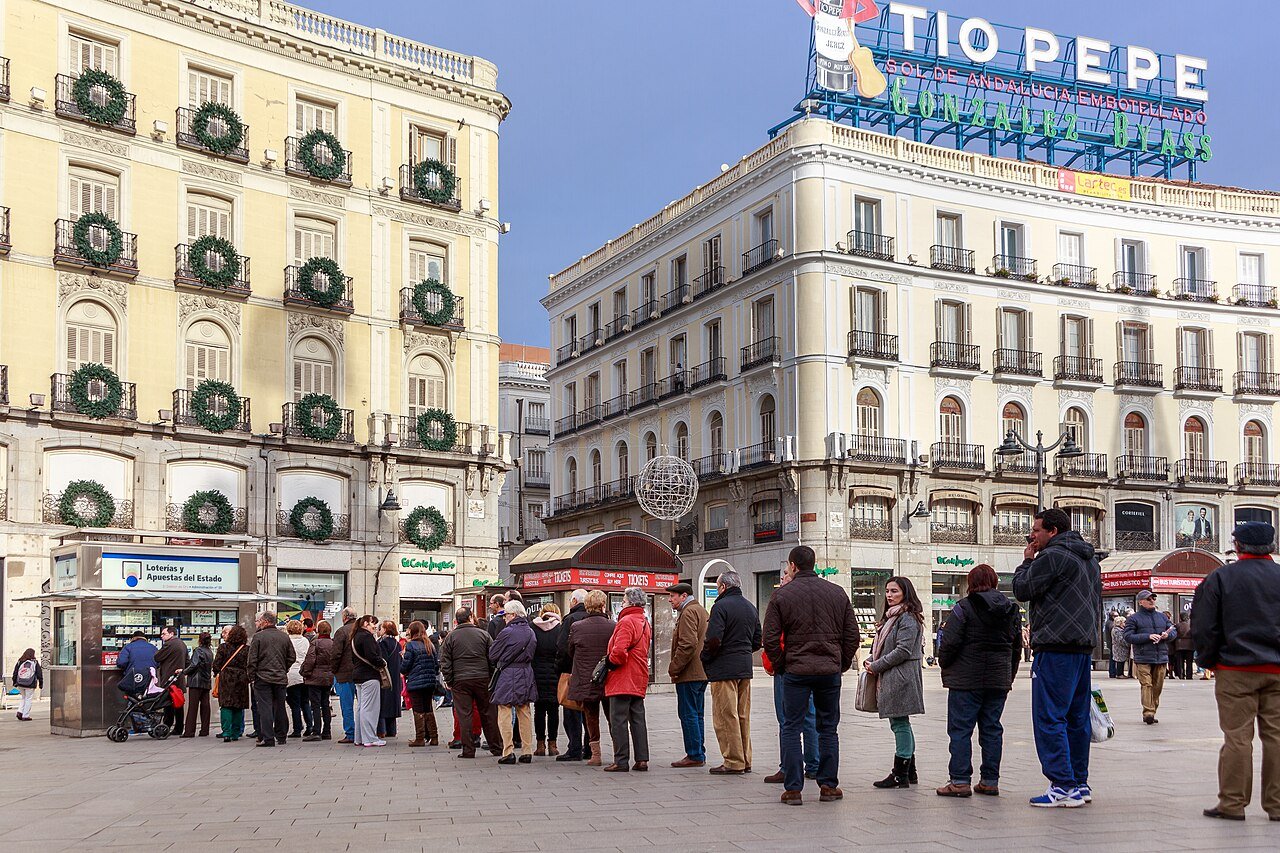
For most Spaniards, Christmas begins at about nine o’clock on the morning of 22 December, when the first wooden balls roll out at Madrid’s Teatro Real and the children of the San Ildefonso school begin their famous sung chant — two voices alternating, one for the number, one for the prize — that will run, live on television and radio, for hours. This is the Sorteo Extraordinario de Navidad, the Christmas Lottery, and by total prize money it is the biggest lottery draw on Earth. The 2026 edition pays out a record €2.87 billion across thousands of prizes; the first prize, El Gordo — “the Fat One” — is worth €400,000 for every €20 décimo (tenth of a ticket) held.
The detail that matters is how social it all is. Décimos are bought from July onwards, shared between workmates, families, bar regulars and village associations, so a single winning number can enrich an entire office or street. Queues form outside famously “lucky” administrations months ahead, and in the days before the draw the whole country talks numbers the way other countries talk weather. The draw itself, first held in Cádiz in 1812, is pure theatre: if you are anywhere in Spain on the 22nd, find a bar with the television on, order a coffee, and watch a nation hold its breath in song.
2. The Belén: Nativity Scenes Taken Seriously
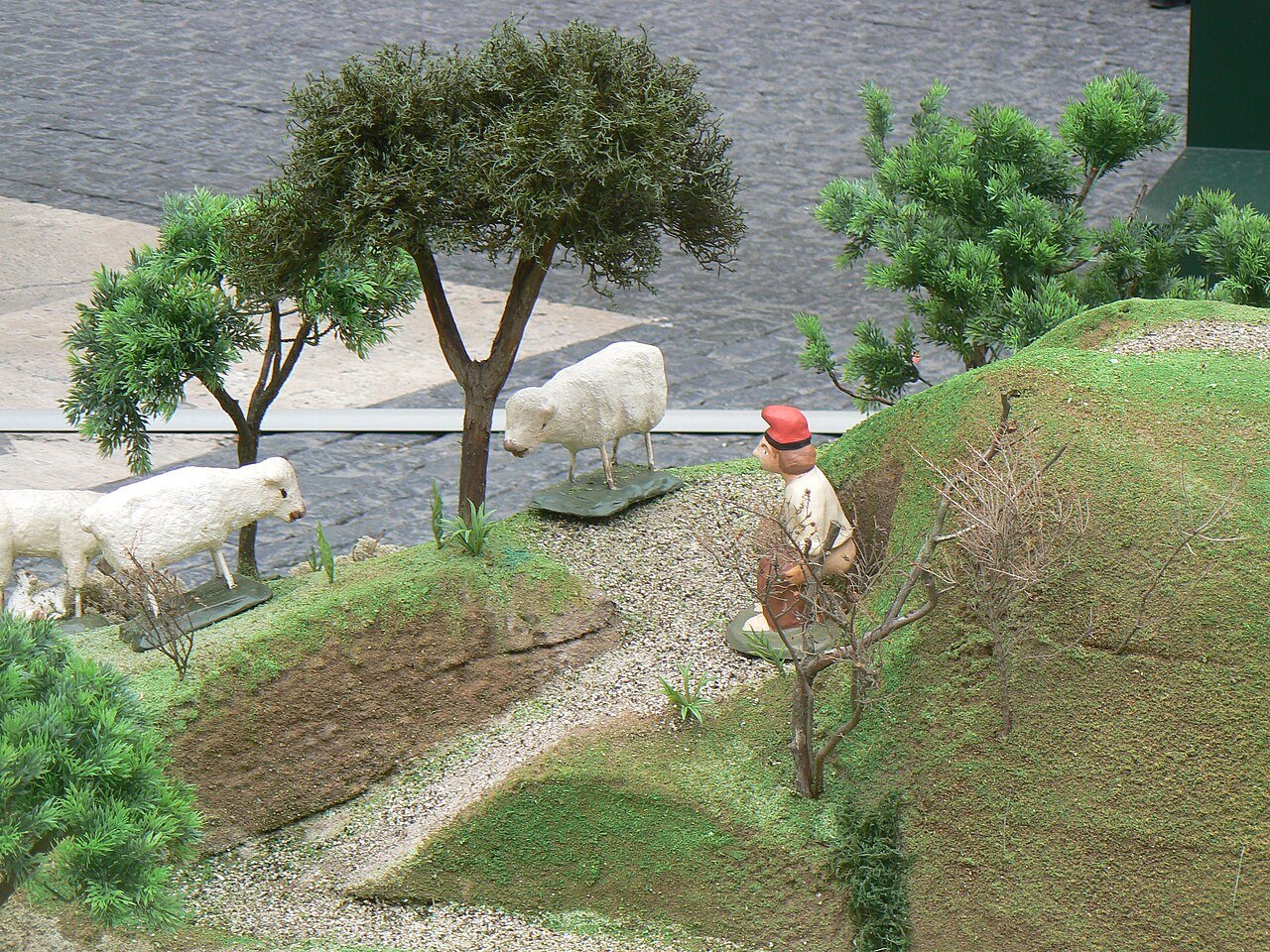
The Christmas tree is a recent import in Spain; the belén — the nativity scene — is the real institution, and it is closer to landscape art than to decoration. Families build them at home with moss, cork bark and dozens of figures, but the serious end of the tradition is public: cathedrals, town halls, banks and cultural centres mount enormous scenes, some with hundreds of figures, running water, working mills and day-to-night lighting cycles, and crowds queue to file past them. The Neapolitan style — 18th-century figures with painted terracotta heads and silk costumes, set in bustling street scenes — is the connoisseur’s favourite, and historic examples surface in museums and palaces every December.
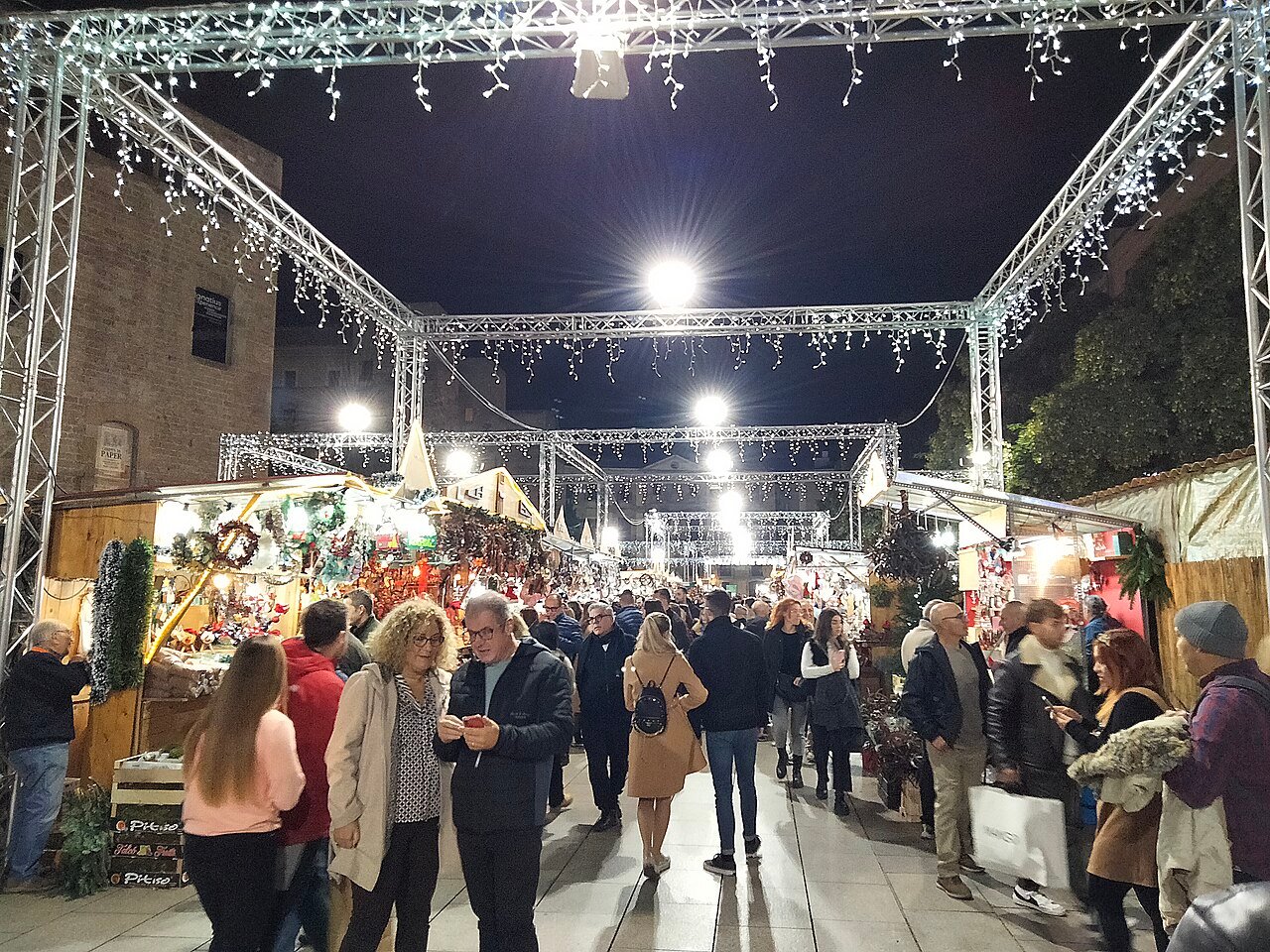
Regional schools compete with each other: Murcia treasures the clay figures in the tradition of its great sculptor Salzillo, Catalonia fills its pessebres with whole villages of everyday life, and scores of Catalan towns stage pessebres vivents, living nativities in which the entire village performs the scene in the streets. The figures themselves are bought at Christmas fairs — Barcelona’s Santa Llúcia fair, in front of the cathedral since the 18th century, is the great marketplace of the belén, as our guide to Barcelona’s Christmas markets maps stall by stall. Buy one small figure as a souvenir and you are taking part, not just spectating.

3. Nochebuena: Christmas Eve at the Family Table
The 24th — Nochebuena, “the Good Night” — is the most family-bound night of the Spanish year, and visitors should plan around it rather than against it. Shops close early, streets empty by evening, and the country sits down to the biggest home dinner of the season: seafood and cured ham to start, then a roast — lamb in Castile, suckling pig around Segovia, sea bream or turkey elsewhere — followed by the sweet table of §6 and a long, loud sobremesa (the conversation that outlasts the food). Restaurants that open at all serve set festive menus booked days ahead; the traveller’s winning move is to book one, or to eat very well at lunch and make dinner a picnic of market luxuries.
After dinner, the traditional night continues at the Misa del Gallo — Midnight Mass, literally “the Mass of the Rooster” — which fills the great churches at midnight with carols. Christmas Day itself, by contrast, is deliberately quiet: a long lunch, a walk, very little commerce. In Catalonia the feasting extends one day further, to Sant Esteve (26 December), a public holiday there that most of Spain does not take, traditionally built around canelons made from the Christmas leftovers.
4. The Caga Tió: The Log That Poops Presents
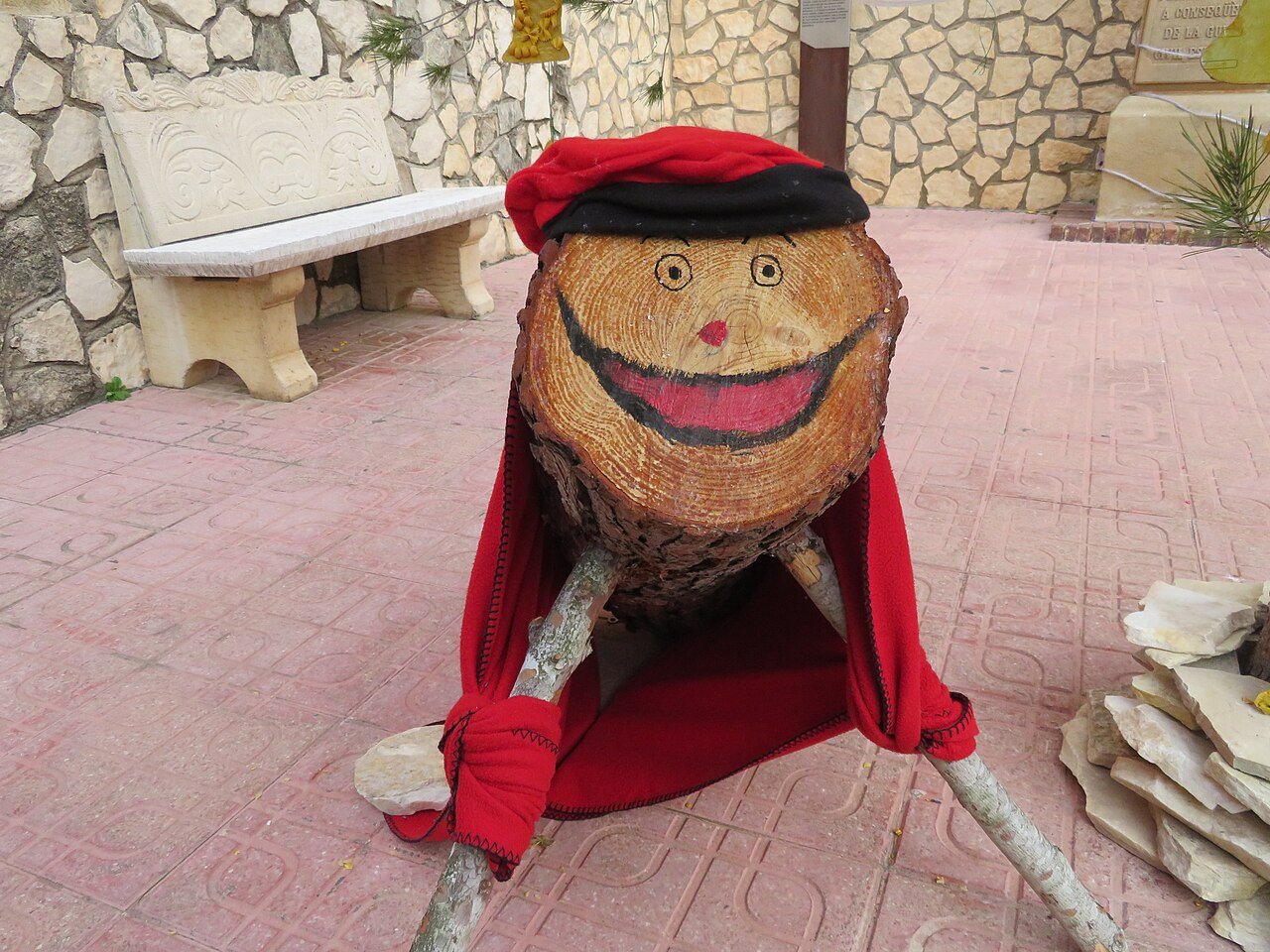
Catalonia’s beloved Christmas character is a log. The Tió de Nadal — known to every Catalan child as the Caga Tió, the “pooping log” — is a short branch with a painted smiling face, stick legs and a red barretina cap, which “arrives” in homes around 8 December. For the next two weeks children feed it nightly scraps — orange peel, nuts, tangerine skins — and tuck it under a blanket so it does not catch cold, on the logic that a well-fed log will produce generously.
On Christmas Eve or Christmas Day comes the payoff. The children beat the tió with sticks, singing the traditional song that politely orders it to poop turrón and sweets rather than sardines, while the adults slip gifts and candy under the blanket; a peek under the cloth reveals what the log has “produced”, to general astonishment, and the ceremony repeats until the log gives up only an onion or a lump of coal — the sign it is empty. Giant public tiós preside over town squares and Christmas fairs across Catalonia, and beating one is the single most joyful thing a visiting family can do in a Catalan December.
5. The Caganer: The Figure Hiding in the Nativity
Hidden somewhere in almost every Catalan belén — behind a wall, beside a stream, never in the centre — sits a small clay peasant with his trousers down, calmly doing his business. This is the caganer, and a Catalan nativity scene without one is considered unfinished. The traditional explanation is earthy and rather beautiful: he is fertilising the soil, guaranteeing the harvest and the year to come, a reminder that the sacred scene belongs to ordinary working people too. The figure has been part of Catalan nativities for at least two centuries, and spotting him is the game every child plays first at any belén.
Modern caganers are a small industry of gentle satire: alongside the classic peasant in his barretina, the Christmas fairs sell squatting versions of footballers, politicians, film characters and world leaders, all rendered in the same dignified pose. If you want to see the whole cast in one place — and meet the Tió of §4 explained by a local, with turrón and hot chocolate stops built in — the Barcelona Christmas Curiosities Tour is built exactly around these customs: a guided evening walk rated 4.51 out of 5, from around $31, running from the illuminated Gaudí houses of Passeig de Gràcia to the belén stalls of the Santa Llúcia fair.
6. Turrón, Polvorones and the Christmas Sweet Table
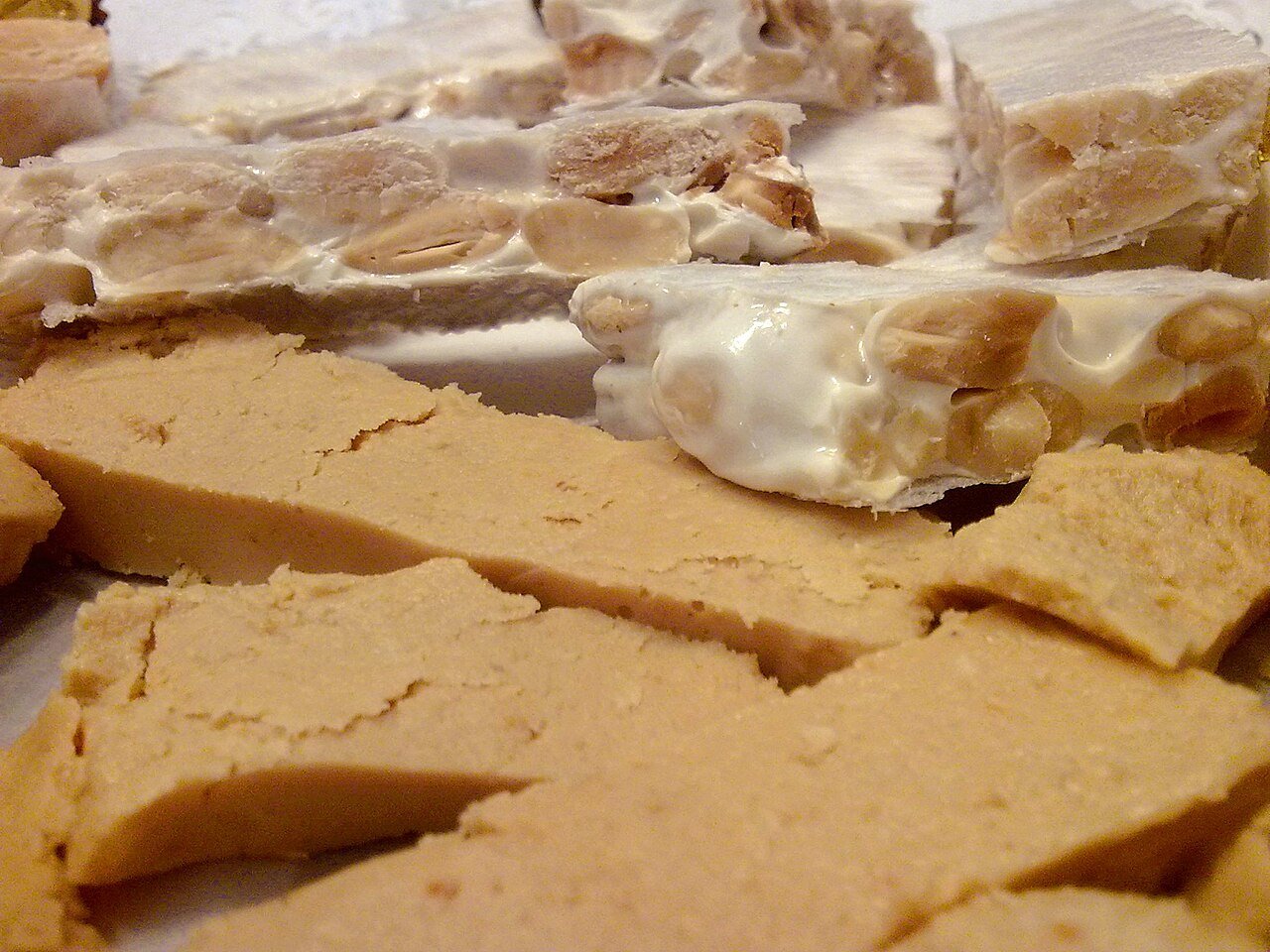
No Spanish Christmas table is complete without the sweet battalion, and its general is turrón: the almond nougat of the Alicante coast, made in two classic forms — turrón de Jijona, soft, dense and almost fudgy, and turrón de Alicante, hard, white and gloriously tooth-threatening — both protected names and both built on Marcona almonds and honey. Supermarket aisles surrender whole walls to turrón from November, in flavours from the classic pair to chocolate, coconut and yema tostada, but the two originals remain the test of quality.
Around it gather the rest: polvorones, the crumbly almond shortbreads of Estepa in Seville province, which disintegrate to powder if squeezed — and are traditionally squeezed, to prove the point, before being eaten in one careful bite; their richer cousins the mantecados; and the mazapán of Toledo, marzipan moulded into tiny fruits and animals. These are not desserts so much as a standing institution: a tray appears after every meal from mid-December to 6 January, alongside coffee, anís and the local liqueur, and refusing a second piece requires visible effort.
7. The Zambomba: Jerez’s Flamenco Christmas Parties
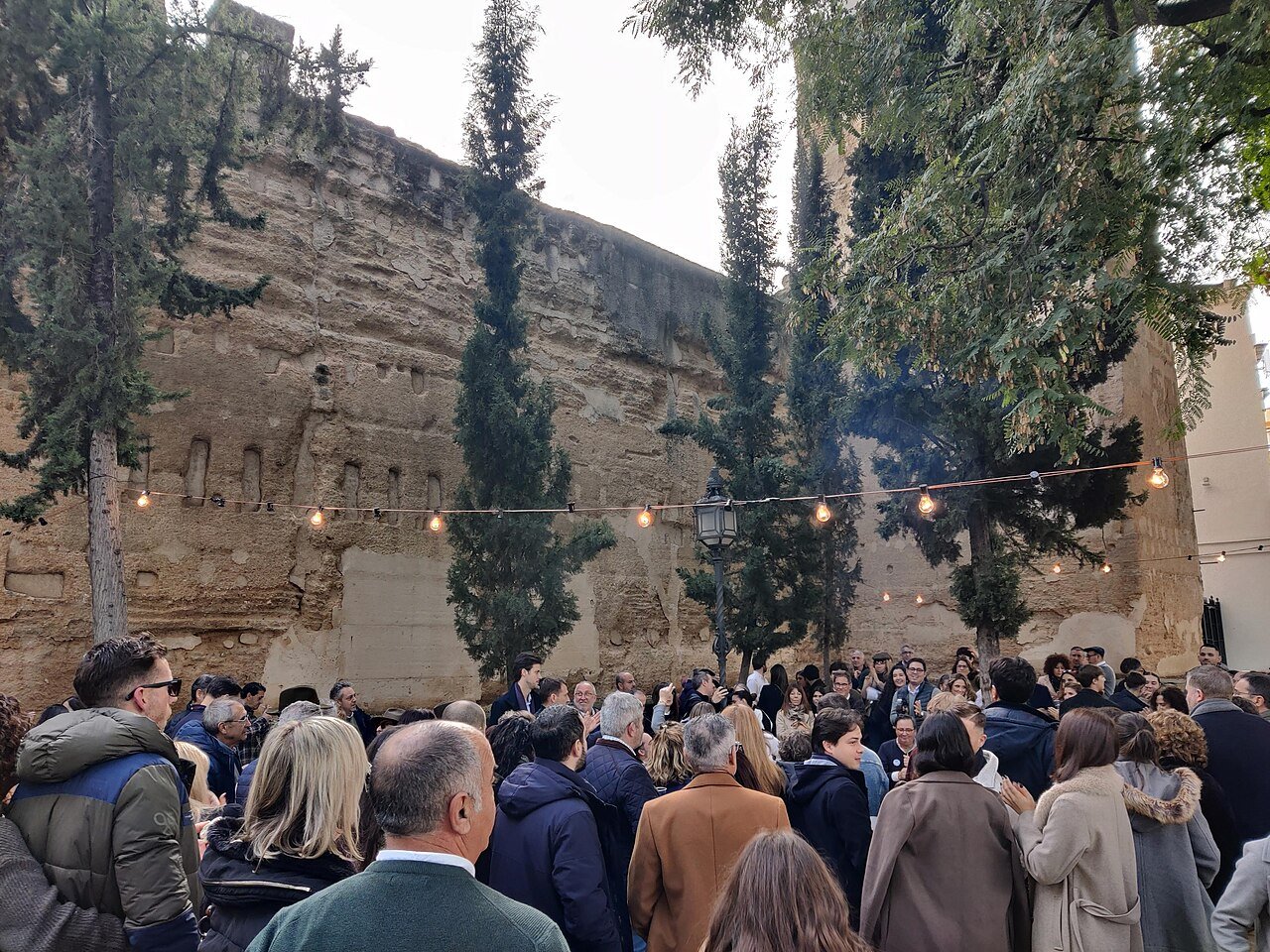
In Jerez de la Frontera, Christmas does not sound like carols sung in a church; it sounds like a party in a courtyard. The zambomba is the season’s defining gathering across Jerez and neighbouring Arcos de la Frontera: from late November until Christmas Eve, peñas, brotherhoods, bars and neighbourhood patios host open gatherings where villancicos — Christmas songs — are sung in flamenco rhythm, the whole crowd joining the choruses, clapping palmas and keeping time around a bonfire.
The instrument that gives the party its name is a friction drum: a clay pot covered with a skin, sounded by rubbing a cane up and down through its centre, producing a deep, pulsing grunt that drives the singing. Guitars, cajón drums and improvised percussion — bottles, bells, hands — pile in around it. There is no stage and no audience: you are handed a glass, taught the chorus and absorbed. If your December route crosses Andalusia, one night at a Jerez zambomba is the most purely local Christmas experience in Spain.
8. Olentzero: The Basque Country’s Gift-Bringer
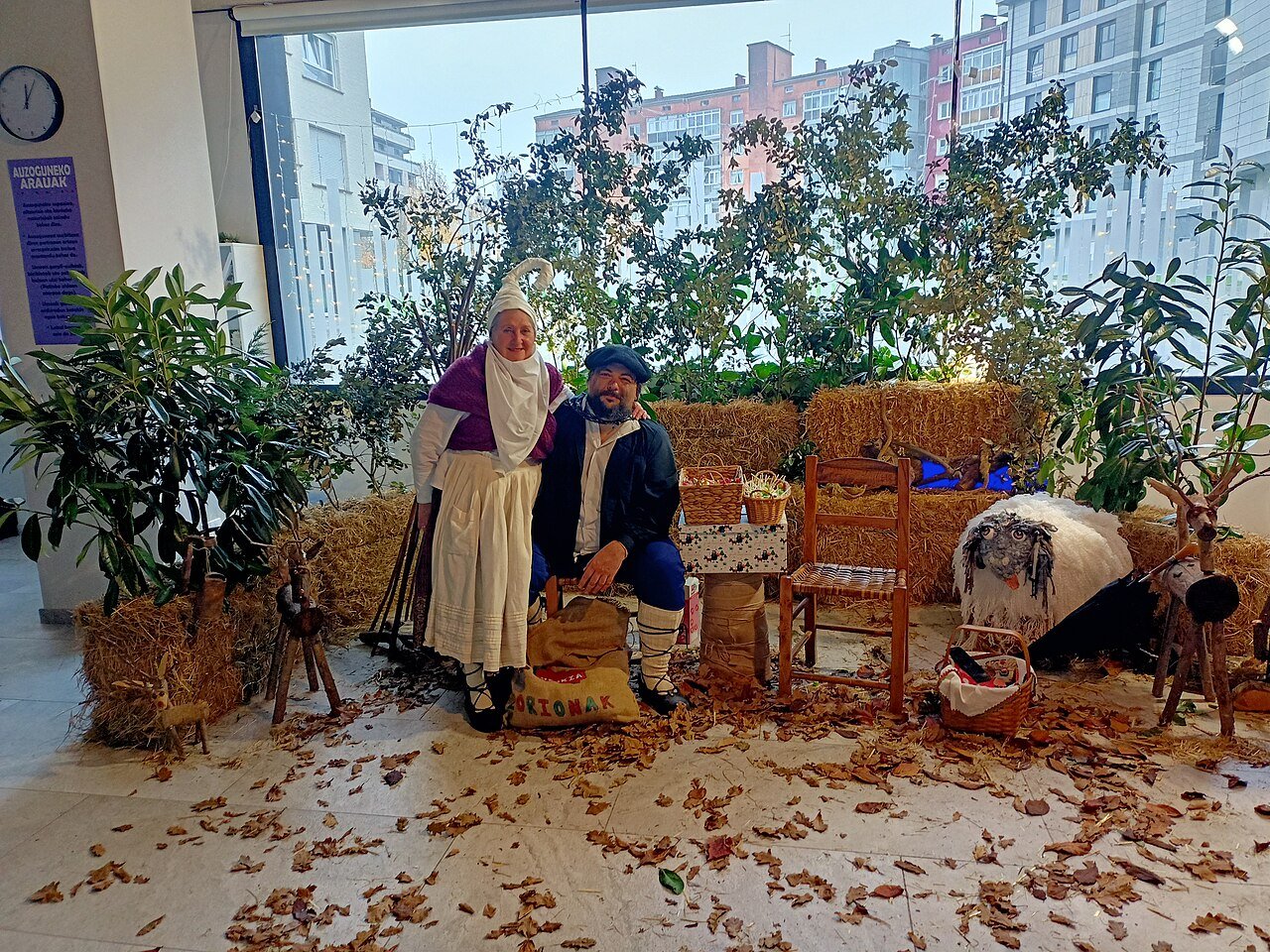
The Basque Country keeps its own Christmas figure, and he could not be less like Santa Claus. Olentzero is a charcoal burner from the mountains — soot-faced, fond of food and drink, carrying his sickle and his flask — who comes down to the villages on 24 December to bring presents to children who have behaved. In the modern telling he began as a figure of the winter solstice feast; today he is the beloved centre of Christmas Eve in the Basque Country and Navarre, where towns stage his descent as a parade: in Bilbao, San Sebastián and Pamplona he processes through the streets on the afternoon of the 24th, nowadays accompanied by Mari Domingi, his sharp-witted partner in traditional dress.
The parades are family theatre at full volume — choirs sing Olentzero’s songs in Basque, children wear their best berets, and the character’s float distributes sweets. Children leave their shoes ready and, in the villages, something out for a man who has walked down from the hills. If you are spending Christmas in the north, this is the tradition that will make you feel furthest from home and most welcome at once.
9. Santos Inocentes: Spain’s Day of Pranks
Every 28 December, Spain plays April Fools’ Day — four months early and with its own name. The Día de los Santos Inocentes commemorates, in the calendar, Herod’s massacre of the innocents; in practice it is the national day of the inocentada, the practical joke. The classic is the monigote, a paper figure pinned or taped to an unsuspecting victim’s back, worn proudly until somebody breaks the news. Newspapers and broadcasters run elaborate fake stories with straight faces — and every year, some of them are believed.
The day has one spectacular extreme: in Ibi, in the hills of Alicante province, the festival of Els Enfarinats turns the town square into a mock military coup followed by a full-scale battle fought with flour, eggs and firecrackers, coating every participant ghost-white by lunchtime. Travellers should simply adopt the day’s rule: believe nothing you read, check your back before photographs, and accept any prank in good humour — being fooled on the 28th is, technically, a blessing.
10. Nochevieja: Twelve Grapes at Midnight
Spain’s New Year’s Eve — Nochevieja, “the Old Night” — builds to the most precisely choreographed twelve seconds in the national calendar. As midnight approaches, the country gathers around the clock of the Real Casa de Correos in Madrid’s Puerta del Sol, tens of thousands in the square itself and millions more in front of televisions (the chimes have been broadcast nationally since 1962). First the ball drops and the four cuartos sound; then the twelve campanadas begin, roughly three seconds apart — and with each chime, you eat one grape. Finish all twelve uvas de la suerte, the grapes of luck, in time with the bells, and the year is yours.
The custom sounds ancient and is anything but: it was popularised in 1909, when vine-growers of the Vinalopó valley in Alicante, facing a bumper harvest, marketed the “twelve lucky grapes” and Spain — which loves a ritual with snacks — adopted it for good. Practical notes from a century of practice: buy the small, seedless grapes sold in tins and tubes for the purpose, peel nothing, and do not attempt conversation mid-chime. Sol also hosts the preúvas on 30 December, a full dress rehearsal at midnight for those who want the ritual twice (or cannot get in on the 31st). Round the night out as the locals do: red underwear for luck — tradition insists it must have been given to you — a toast of cava at midnight, and, after the parties, hot chocolate with churros at dawn.

11. The Cabalgata: The Three Kings Arrive
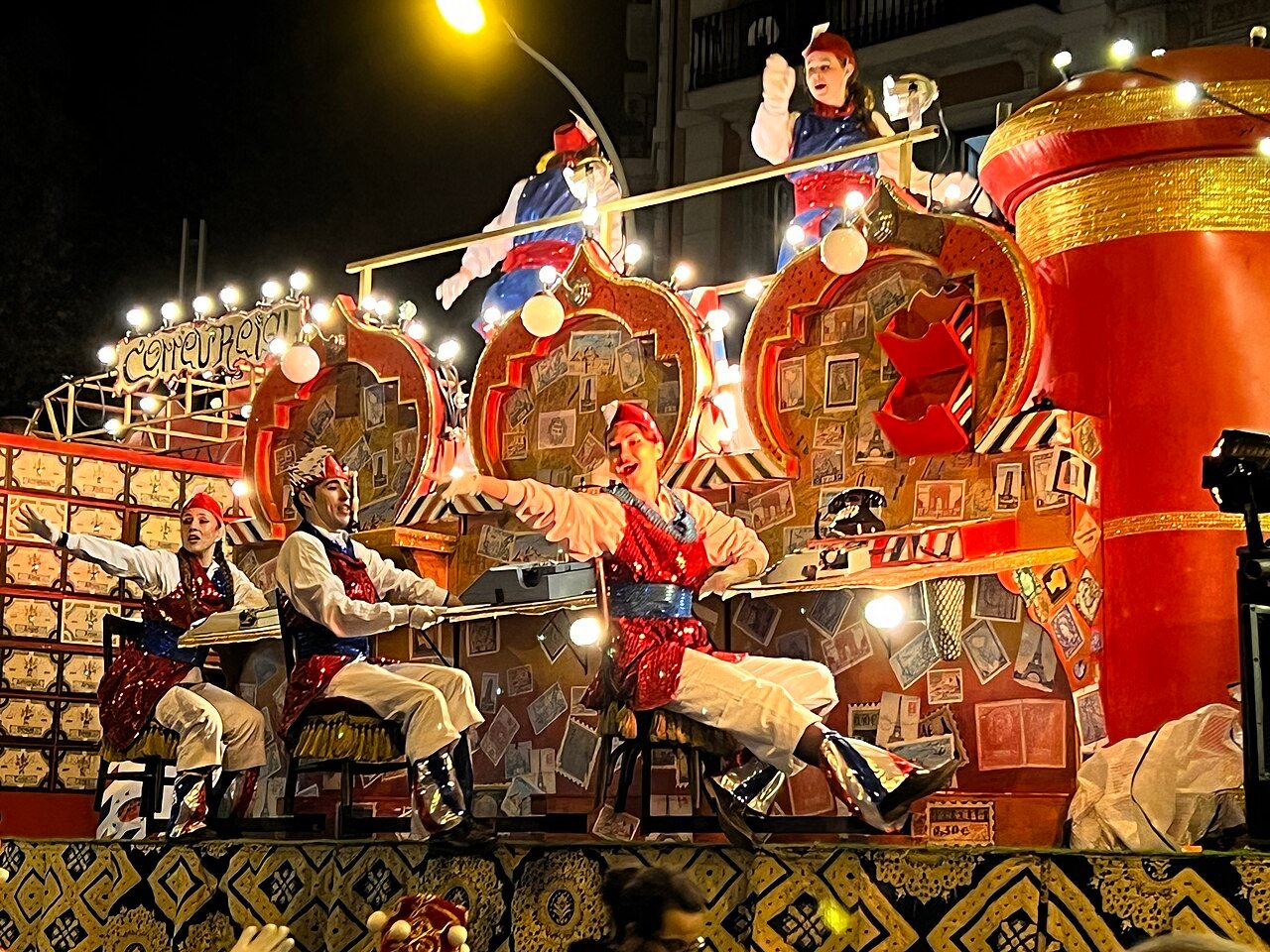
On the evening of 5 January, every city, town and village in Spain closes its streets for the Cabalgata de los Reyes Magos — the arrival parade of Melchior, Gaspar and Balthazar, who have travelled from the East to deliver the presents. This, not Christmas Eve, is the great spectacle of the Spanish season: floats lit like small palaces, bands and dancers, pages hurling sweets into the crowd by the sackful, and children holding out bags — and, sensibly, umbrellas turned upside down — to catch them. In Barcelona the Kings arrive by sea at the port before processing through the city; in many towns they come on camels or on horseback.
The oldest and most storied cabalgata of all rolls through Alcoy (Alcoi), in the hills behind Alicante: first documented in 1866 and held continuously since 1885, it is a Festival of National Tourist Interest, and its most famous moment belongs to the royal pages — the negrets — who climb long red ladders placed against the houses to hand presents directly to children waiting at their balconies. Wherever you watch, stake out a spot an hour early and bring a bag. That night, children across Spain polish their shoes and leave them out with water and a little food for the camels — because of what happens next.
12. Día de Reyes: The Real Gift-Giving Day
Epiphany, 6 January — el Día de Reyes — is a public holiday across Spain and the emotional summit of the whole season: this is the morning the presents are opened. The Kings, having paraded the night before, have spent it delivering; children wake to gifts beside their shoes, and the day unrolls slowly — a family lunch, the last of the turrón, and the cake of §13. Those who misbehaved face the traditional threat, softened by centuries of mercy into a joke: carbón dulce, “sweet coal”, black sugar candy that looks exactly like a lump of coal and tastes like a reprieve.
For the visitor, 6 January is a day to slow down and watch rather than sightsee: expect museums and shops largely closed, bakeries doing the best trade of their year, and parks full of children testing new bicycles. If you are based in Barcelona and want the customs of §§4–5 woven into the streets where they happen, the private version works beautifully too — a Christmas walking tour with a local host, built around your interests over three hours, covers the Santa Llúcia belén stalls, the city’s nativity scene and the stories behind the caganer, and is rated 5 out of 5 by its first reviewers.
13. Roscón de Reyes: A Cake with a Bean and a King
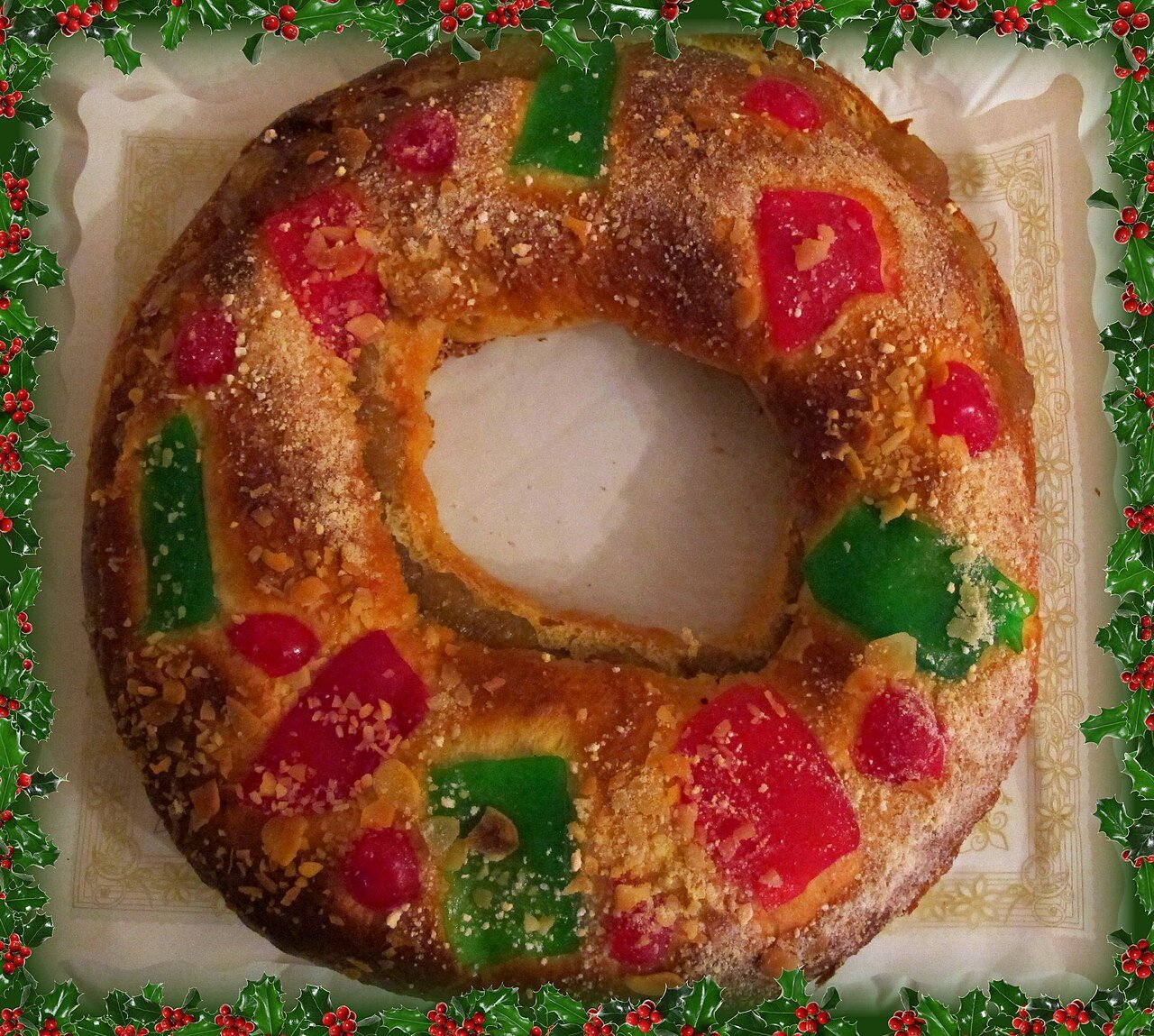
The season’s last great food ritual is a cake shaped like a crown. The roscón de Reyes is a ring of sweet, orange-blossom-scented brioche, split and often filled with whipped cream or custard, and crusted with candied fruit in reds and greens — the jewels of the crown. Bakeries sell them by the hundred thousand on 5 and 6 January, each boxed with a gold paper crown, and the roscón is eaten at breakfast or merienda on Reyes, washed down with hot chocolate thick enough to stand a spoon in.
Hidden inside the crumb are the cake’s two destinies. Find the tiny porcelain figurine — a king, traditionally — and you are crowned on the spot, paper crown and all, king or queen of the feast. Find the dried broad bean, the haba, and the table’s verdict is instant and merciless: you pay for the roscón. Families guard both rules with total seriousness, bakers load the odds with multiple figurines for peace at the children’s end of the table, and the whole thing is over, crumbs and crown, in about ten minutes.
14. El Niño: One Last Lottery
Spain refuses to let the season end without one more flutter. At noon on 6 January, as the roscón crumbs are still on the table, the state lottery runs the Sorteo del Niño — “the Child’s Draw”, named for the Christ child of Epiphany. It is the second great draw of the holidays: décimos again at €20, a prize pool of around €770 million, and noticeably kinder odds than El Gordo, with a far larger share of tickets winning something.
Plenty of Spaniards fund their Niño tickets from small Christmas winnings, and plenty more buy them as the season’s closing ritual — a last, cheerful appointment with luck before the tree (and the belén, and the log) come down. When the Niño numbers are sung out, a Spanish Christmas is officially over — all fifteen days of it.
15. The 2026/27 Christmas Calendar: Every Date You Need
| Date | What happens |
|---|---|
| Late Nov – 23 Dec | Christmas markets and public belenes across Spain; zambombas in Jerez through to Christmas Eve |
| Tue 8 Dec | Immaculate Conception (public holiday) — the Caga Tió arrives in Catalan homes and is fed nightly |
| Tue 22 Dec | El Gordo Christmas Lottery draw, Teatro Real, Madrid (morning) |
| Thu 24 Dec | Nochebuena — family dinner and Misa del Gallo; Olentzero parades in the Basque Country |
| Fri 25 Dec | Christmas Day (public holiday) — quiet day, family lunch |
| Sat 26 Dec | Sant Esteve — public holiday in Catalonia, canelons from the leftovers |
| Mon 28 Dec | Santos Inocentes — pranks everywhere; Els Enfarinats flour battle in Ibi |
| Wed 30 Dec | The preúvas — the grapes rehearsal at Puerta del Sol, midnight |
| Thu 31 Dec | Nochevieja — the twelve grapes at midnight, then parties until dawn |
| Fri 1 Jan | New Year’s Day (public holiday) — a slow, churros-fuelled morning |
| Tue 5 Jan | Cabalgatas in every town (evening); shoes out before bed |
| Wed 6 Jan | Día de Reyes (public holiday) — presents, roscón, and the El Niño draw at noon |
To catch several traditions in one trip, aim for either end of the season: 19–26 December for the lottery, the belenes and Nochebuena, or 30 December–6 January for the grapes, the cabalgatas and Reyes. Barcelona runs the full sequence superbly — our Barcelona in December guide plans that month day by day, and on the ground, the Barcelona Christmas Curiosities Tour remains the fastest way we know to turn these fourteen customs from a list into an evening out.
Travel insurance, sorted
Whether it is a two-week holiday or a longer move, travel insurance is not the most glamorous part of a trip — but it is the one booking you want to have in place before a trip, and while you are already away. Get a quote from SafetyWing
Barcelona Christmas Markets: The Complete Guide to Santa Llúcia, the Sagrada Família Fair & the Three Kings Fair
16. Final Thoughts
What makes a Spanish Christmas unforgettable is not any single spectacle — it is the length of the run and the sincerity of it. Fifteen days in which a whole country plays the same games at the same hours: singing lottery numbers, feeding a log, hunting for a tiny squatting figure, swallowing grapes against the clock, and waiting, genuinely waiting, for three kings to sail, ride or climb into town. None of it is performed for visitors, and all of it welcomes them. Pick your dates by the calendar above, learn the grape technique before midnight, and God willing you will come home understanding why Spaniards think Christmas anywhere else is simply too short.
Frequently Asked Questions
When does Christmas start and end in Spain?
The season builds from late November, when the markets and lights open, and ignites on 22 December with the El Gordo lottery draw. It ends on 6 January, the Día de Reyes — Spain’s main gift-giving day — making the full run about two weeks longer than a typical northern-European Christmas.
Do Spanish children get presents on Christmas Day or on 6 January?
Traditionally on 6 January, from the Three Kings, after the cabalgata parades of 5 January; Santa Claus (Papá Noel) brings small gifts in some homes on Christmas Eve, but Reyes remains the main event — which is why Spanish children write their letters to the Kings.
What is the Caga Tió?
A Catalan Christmas log with a painted face and a red barretina cap. Children “feed” it from 8 December, keep it warm under a blanket, then beat it with sticks on Christmas Eve or Christmas Day while singing — and it “poops” turrón, sweets and small presents hidden under the blanket.
Why do Spaniards eat twelve grapes at midnight on New Year’s Eve?
One grape for each of the twelve chimes of the Puerta del Sol clock in Madrid — finishing all twelve in time is said to bring luck for each month of the new year. The custom was popularised in 1909 by grape growers of the Vinalopó valley in Alicante after a surplus harvest, and is now followed nationwide, in the square and in front of televisions.
What is El Gordo?
The first prize of the Spanish Christmas Lottery — officially the Sorteo Extraordinario de Navidad — drawn every 22 December. By total prize money (a record €2.87 billion in 2026) it is the largest lottery draw in the world; a €20 décimo (tenth share) holding the winning number pays €400,000.
Is everything closed in Spain over Christmas?
Mostly on the core family days: shops shut early on 24 December and close on 25 December and 6 January (both nationwide public holidays), and 26 December is also a holiday in Catalonia. Museums and attractions often keep reduced hours — check the day itself — while the streets, markets (until 23 December) and parades are at their liveliest between those dates.
2 Comments