Barcelona in December: 12 Festive Things to Do, From Christmas Markets to New Year’s Eve
December is the month Barcelona stops being a beach city with monuments and becomes something else entirely: a Mediterranean Christmas capital with its own rules. The season does not copy northern Europe — no glühwein steam clouds, no snow — because Catalonia celebrates differently. The centrepiece is a 240-year-old nativity fair in front of the cathedral, the big gift-giving day is not Christmas but Three Kings on 6 January, the festive log in the corner is expected to poop presents when beaten with sticks, and on Christmas morning hundreds of people swim 200 metres across the harbour while crowds in coats cheer from the quay. Add around 130 kilometres of Christmas lights, a choral concert tradition older than the building it is sung in, and New Year’s Eve around a dancing fountain, and December becomes one of the most characterful months of the Barcelona year.
The shape of the month matters more here than in almost any other. The fairs run from late November and close on 23 December. Christmas itself — the 24th, 25th and 26th — belongs to families: the city goes quiet and shops shut. Then the energy builds again to New Year’s Eve and the Three Kings parade on 5 January. Time your trip to the wrong act and you will miss the thing you came for, so this guide runs in calendar order: the twelve things below go from the first fair weekend to the last midnight of the year.
One practical anchor before the list. December evenings belong to the lights, and the easiest way to see the whole display in one go is the Christmas Lights Open-Top Bus Tour: an 80-minute open-top loop from Plaça Catalunya with a live guide, rolling past the Sagrada Família, the Sant Pau site and the illuminated Gaudí houses of Passeig de Gràcia, from around €15. Ride it on your first evening to learn the city’s festive geography, then walk the same streets slowly on the nights after — point 2 below is the walking version.
Barcelona Weather in December: Mild Days, Proper Winter Nights
December is Barcelona’s coolest month, but “cool” is a Mediterranean word here. Expect daytime highs of about 14 °C (57 °F) on the seafront and in the centre, with nights dropping to roughly 5–8 °C (41–46 °F) — cold enough for a real winter coat after dark, mild enough that lunch on a sunny terrace in a jumper is a genuine December pleasure. December is one of the drier months of the Barcelona year, with long runs of bright days — though a grey, wet spell is always possible, and the sea wind can make the seafront feel sharper than the thermometer suggests.
The real December constraint is light, not temperature. The sun rises after 8:00 am and sets at about 5:20 pm all month — the earliest sunsets of the year — which is why this guide is organised around late afternoons and evenings: the city is designed, in December, to be seen lit up. Plan museums and interiors for the short mornings, keep the 4 pm slot for golden hour at a viewpoint, and save your energy for after dark, when the fairs glow and the lights come on. The sea, for the record, sits around 14–15 °C (57–59 °F): swimmable only if you are a Copa Nadal swimmer (point 6) or made of stern stuff.
Pack layers rather than one heavy coat — a warm mid-layer, a waterproof outer, shoes you can stand in for hours on stone streets, and gloves and a hat for the open-top bus and the port. For the longer month-by-month comparison of temperatures, rain and crowds, see our guide to the best time to visit Barcelona — December’s case rests on atmosphere, not weather, and on that measure it wins.
What December in Barcelona Actually Looks Like
Think of the month as three short trips wearing one coat. The first, from the lights switch-on in late November to 23 December, is the fair season: markets open daily, shops run late, and the city is at its most decorative. The second, 24–26 December, is the family core — Christmas Eve (la Nit de Nadal), Christmas Day (Nadal) and Sant Esteve on the 26th, a public holiday in Catalonia that most of Spain does not take. Restaurants serve set festive menus, almost everything commercial closes on the 25th, and visitors who plan for it — a concert, a harbour swim to watch, a long Christmas lunch booked ahead — have a wonderful time; visitors who expect normal sightseeing hours do not. The third act, 27 December to 6 January, builds to the year’s end and the Kings: the Three Kings Fair trades on the Gran Via, New Year’s Eve fills Plaça d’Espanya, and the biggest parade of the season rolls through the city on the evening of 5 January.
Two calendar quirks shape crowds in 2026. Spain’s early-December puente (bridge holiday) falls on Sunday 6 December (Constitution Day) and Tuesday 8 December (the Immaculate Conception), so many locals take Monday 7 December off too — expect a festive long weekend with full markets from the 5th to the 8th. And Christmas Day itself falls on a Friday in 2026, with Sant Esteve on the Saturday, stretching the family weekend towards Monday 28 December. Hotel prices follow the same waves — the puente and New Year are the peaks; mid-December weekdays are the sweet spot.
Contents
- Barcelona Weather in December: Mild Days, Proper Winter Nights
- What December in Barcelona Actually Looks Like
- 1. Start at the Fira de Santa Llúcia, the Fair That Invented Barcelona Christmas
- 2. Walk the Christmas Lights Route After Dark
- 3. See the Sagrada Família in Its Own Christmas Story
- 4. Browse the Other Fairs: Sagrada Família and the Three Kings
- 5. Follow the Pessebre Trail, Caganer Included
- 6. Spend Christmas at Nadal al Port — and Watch the Harbour Swim
- 7. Wander the Light Trail at Els Llums de Sant Pau
- 8. Use the Free-Museum Sunday: 6 December
- 9. Hear the Sant Esteve Concert at the Palau de la Música
- 10. Eat December: Escudella, Canelons, Turrón and Cava
- 11. Shop and Stroll the Old Town
- 12. See the Year Out at Plaça d’Espanya
- Which December Trip Are You On?
- What a December Trip to Barcelona Costs
- Final Thoughts
- Barcelona in December: Your Questions Answered
1. Start at the Fira de Santa Llúcia, the Fair That Invented Barcelona Christmas
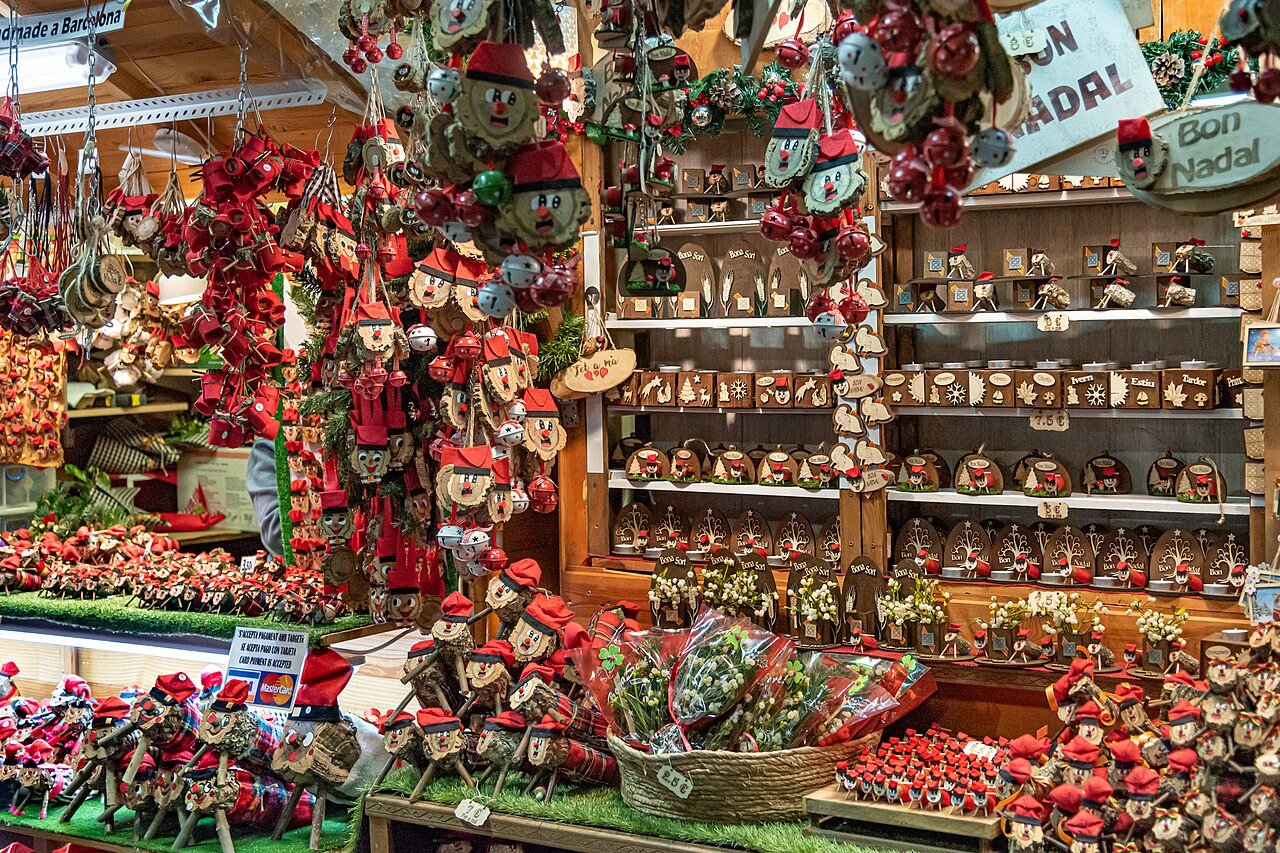
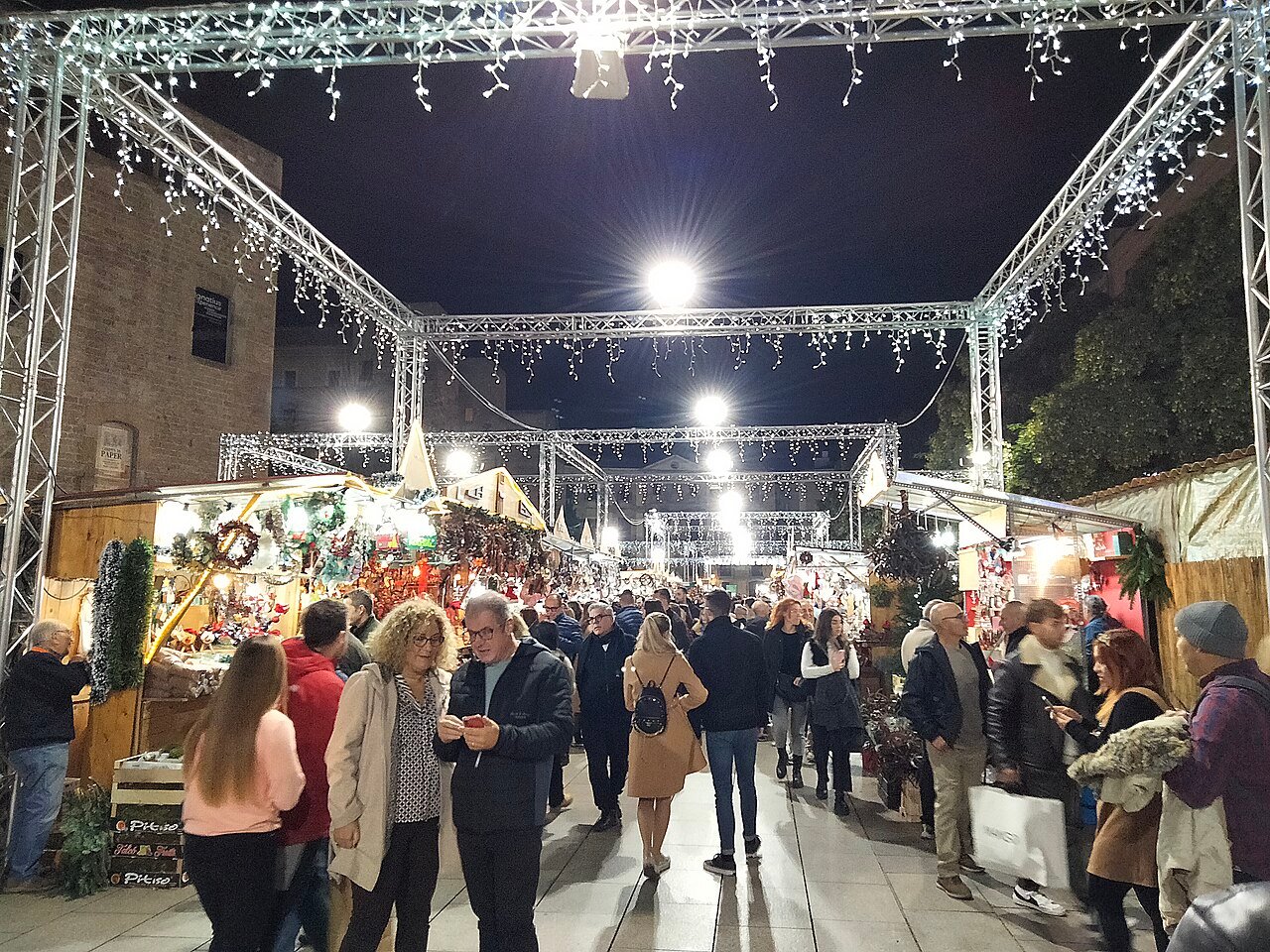
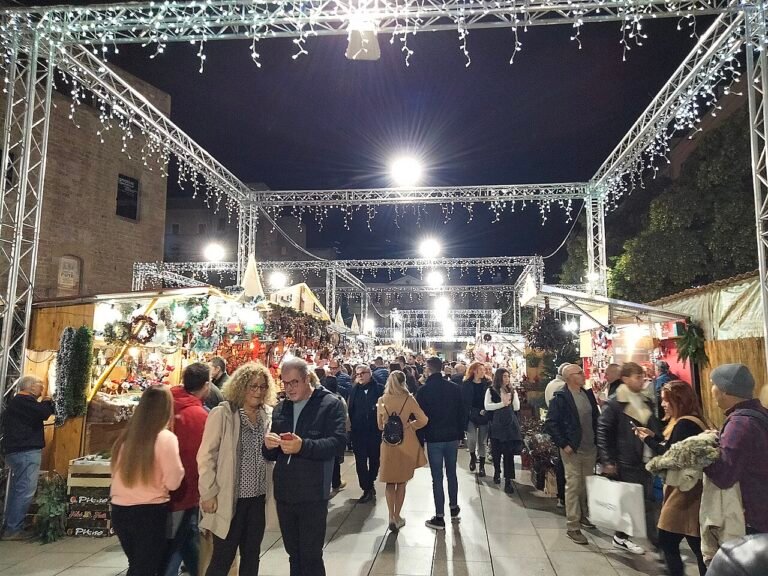
Every Barcelona Christmas starts on the Avinguda de la Catedral, in the shadow of the cathedral’s spires, where the Fira de Santa Llúcia has set up its stalls since 1786. It is the city’s oldest Christmas fair and still its most important: around 270 stalls selling everything a Catalan Christmas needs and several things you will not find anywhere else on earth. One long wing sells pessebre material — hand-modelled nativity figures, cork-bark mountains, moss, tiny houses, working waterwheels — because in Catalonia the nativity scene, the pessebre, is not a decoration but the decoration, built fresh in homes, schools and shop windows every December. Another wing sells greenery: trees, wreaths, holly and mistletoe. And everywhere are the two figures who explain Catalan Christmas better than any guidebook: the caganer, the little squatting man hidden in every proper pessebre for luck and fertility, and the Tió de Nadal, the smiling log in a red barretina cap that children will be beating with sticks on Christmas Eve (point 5 has the full, glorious explanation).
For 2026 the fair is expected to run from the last days of November to 23 December, roughly 10:00 am to 9:00 pm daily ⚠ — the organisers confirm the exact opening day each autumn, and in 2025 the fair ran from 28 November to 23 December. Go twice if you can: once on a weekday morning, when stallholders have time to talk, and once at dusk, when the cathedral floodlights come on and the square smells of pine resin and roasted chestnuts. Prices rise towards the cathedral steps; the same caganer costs less three rows back. While you are here, step into the cathedral cloister to meet its thirteen white geese, a Barcelona institution in their own right.
2. Walk the Christmas Lights Route After Dark
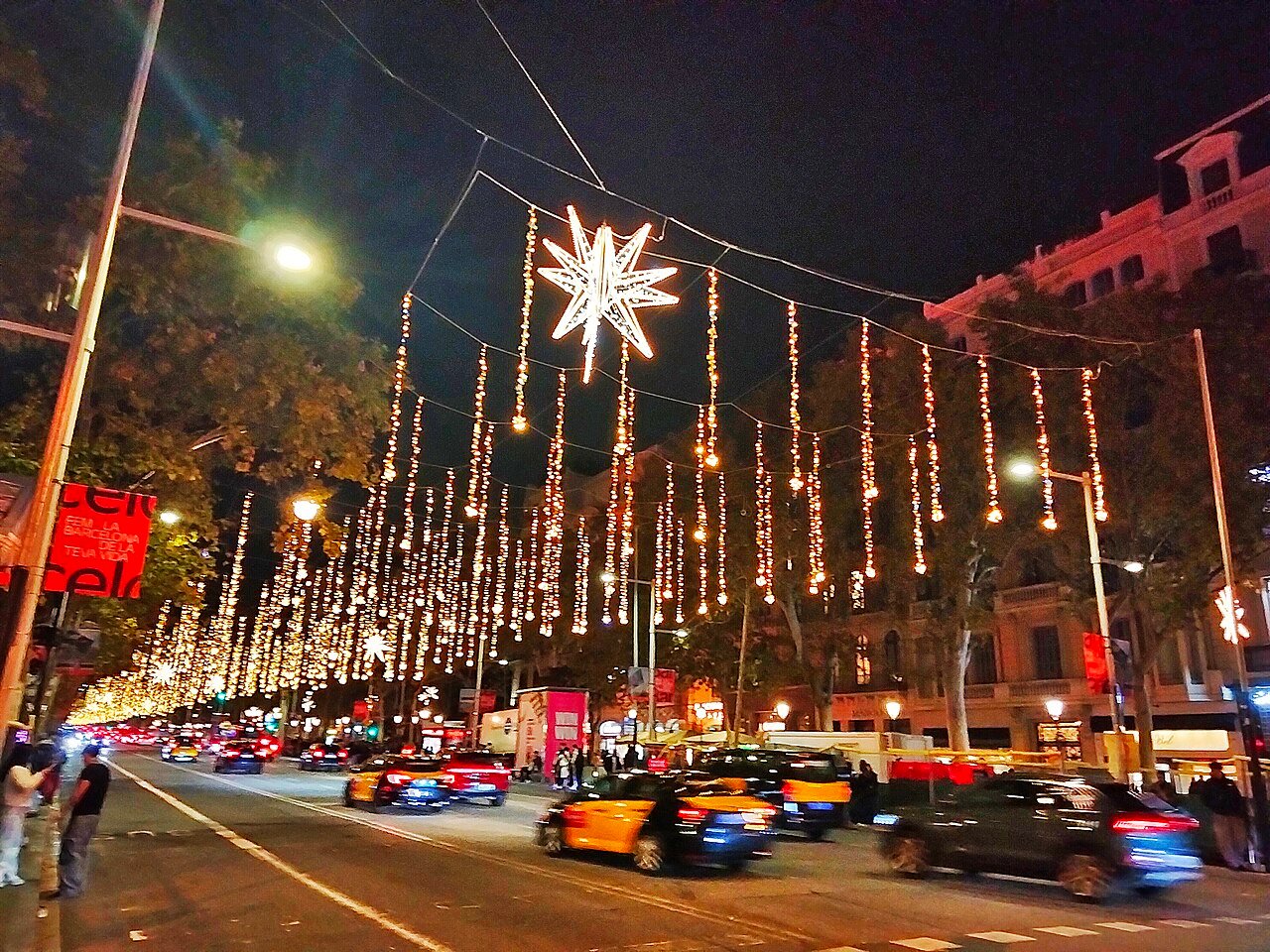
Barcelona does not decorate a street or two for Christmas; it wires up the whole city — around 130 kilometres of streets carry lights in recent seasons, each district with its own designs. The switch-on, expected on Thursday 26 November in 2026 (the traditional last-Thursday-of-November slot, with the council confirming the programme each autumn ⚠), turns Passeig de Gràcia into an open-air ceremony. The lights then burn every evening until Three Kings Day: roughly 5:30 pm to 11:00 pm, and an hour later on Fridays and Saturdays ⚠, timed to the early sunset so the city goes from dusk to full sparkle in minutes.
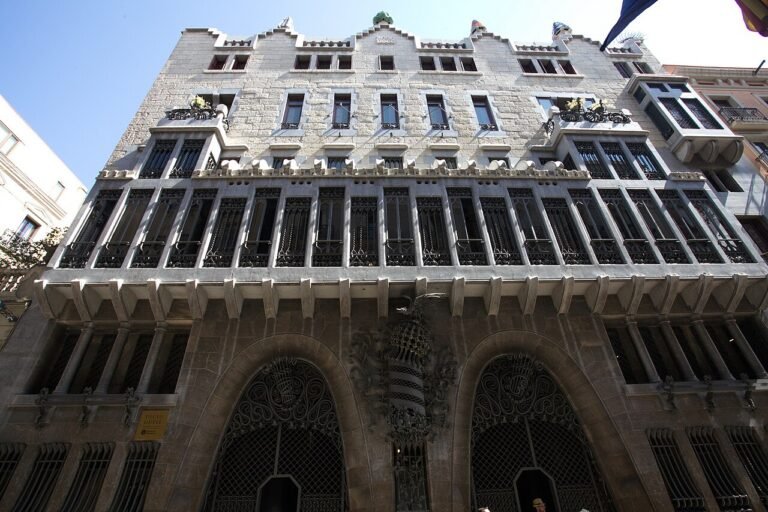
The classic walking route takes about ninety unhurried minutes. Start in Plaça de Catalunya, where the department-store façade becomes a wall of snowflakes, then walk up Passeig de Gràcia beneath its canopy of falling stars — the boulevard’s signature design — pausing at Casa Batlló and La Pedrera, both floodlit and stranger than ever against the glow. Drop down La Rambla and finish along Carrer de Ferran into the Gothic Quarter, where the lights narrow with the streets and the effect turns medieval. If your feet or the weather say no, this is precisely the route the Christmas Lights Open-Top Bus Tour covers seated: 80 minutes, a live guide in English, Spanish and Catalan, departures from Plaça Catalunya from around €15, with free cancellation up to 24 hours in advance if the forecast turns.

3. See the Sagrada Família in Its Own Christmas Story
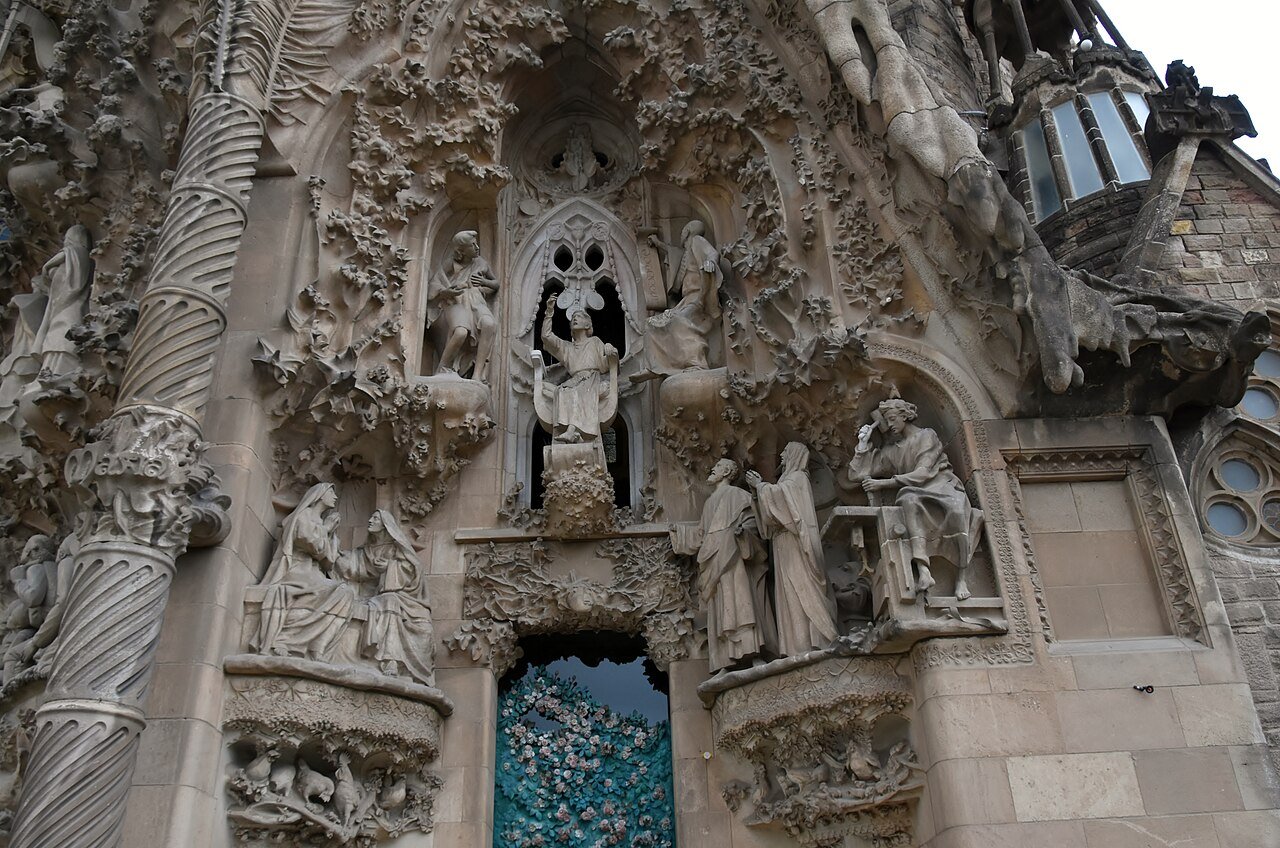
No building in Europe is more literally about Christmas than the Sagrada Família. The oldest of its great façades, the Nativity façade, is the Christmas story carved in stone — the birth, the shepherds, the Magi, angels and animals swirling up through Gaudí’s stone forest — and December is the one month when half the city tells the same story in miniature, in pessebres modelled consciously or not on the basilica’s. Come in the morning, when low winter sun comes through the warm-toned glass and the interior glows amber and green, and give the façade a slow half hour before you go in: in December it reads less like architecture and more like the world’s grandest nativity scene. Our dedicated guide to inside the Sagrada Família covers the interior in full; the December-specific advice is about hours and booking.
They change, and they catch people out. On 25 and 26 December — and again on 1 and 6 January — the basilica opens for a short morning only, 9:00 am to 2:00 pm ⚠, so a Christmas Day visit must be the first thing you do. On Christmas Eve, the basilica holds its Christmas Mass at 7:00 pm: free, deeply atmospheric and capacity-limited, with places released in advance — check the basilica’s website in early December if you want to be there ⚠. Ordinary December days sell out like summer ones, so book a timed entry several days ahead whatever your dates, and pair the visit with the fair in the square outside (next point).
4. Browse the Other Fairs: Sagrada Família and the Three Kings
Santa Llúcia is the famous fair, but it is not the only one, and the other two solve different December problems. The Fira de Nadal de la Sagrada Família fills the square in front of the basilica with around a hundred stalls of trees, decorations, pessebre figures and festive food, under the best backdrop any Christmas market in Europe can offer. It is expected to open in late November, around the same weekend as Santa Llúcia, and to close on 23 December, trading roughly 10:00 am to 9:00 pm ⚠. It feels calmer and more local than the cathedral fair — this is where Eixample families buy the tree — and combining basilica, fair and a hot chocolate in one morning is one of December’s easiest pleasures.
The Fira de Reis, the Three Kings Fair, is the specialist. It sets up along the Gran Via between Carrer de Muntaner and Carrer de Calàbria in mid-December and trades right up to 5 January ⚠ — after every other fair has closed — because in Catalonia the presents arrive with the Kings on 6 January, not with Father Christmas on the 25th. Its stalls lean to toys, games, gifts and sweets, including mountains of coal-shaped candy for children who have been warned about their behaviour. If your trip falls after Christmas, this is your fair; if you are here before, walk it anyway for the churros stands. Plaça de Catalunya also hosts the city’s Festival de Nadal in recent years — free outdoor shows in the days either side of Christmas, roughly 20 to 30 December ⚠.

5. Follow the Pessebre Trail, Caganer Included
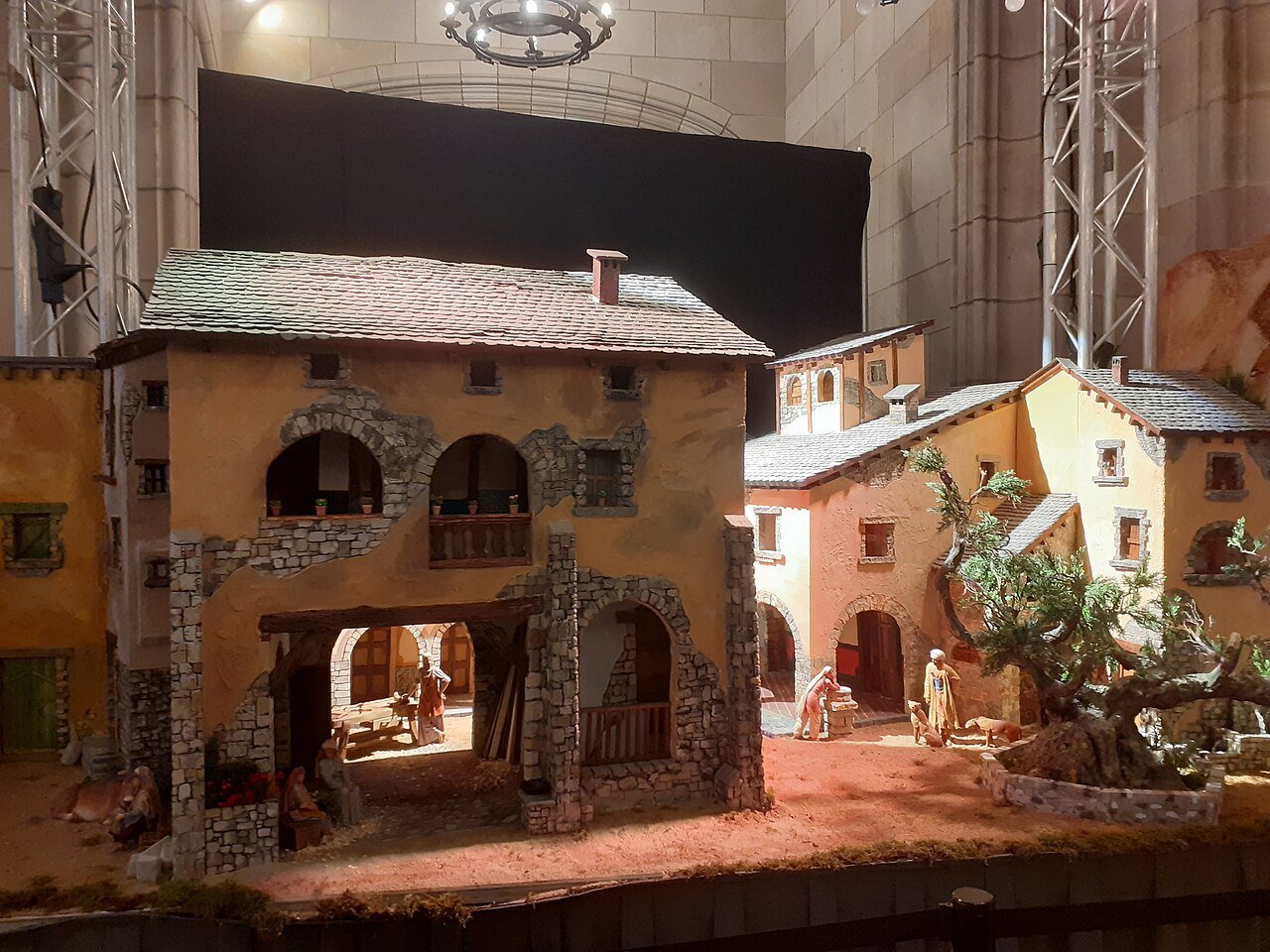
Spend one December morning doing what Barcelona families do: walking the nativity scenes. Start at Plaça Sant Jaume, between the city hall and the Generalitat palace, where the Ajuntament builds the city’s official pessebre each year — a large, ambitious scene that changes theme annually (in 2025 it was inspired by the sea) — beside the city’s official Christmas tree, which stood 20 metres tall in 2025 ⚠. Then cross to the Museu Frederic Marès, behind the cathedral, whose Christmas exhibition of pessebre dioramas shows the art form at its highest level: whole Catalan landscapes in miniature, built by the city’s master nativity-scene makers. The cathedral cloister and old-town churches add their own scenes, and half the pleasure is the hunt — every pessebre hides its caganer somewhere disrespectful, and finding him is a recognised sport for Catalan children and, within the hour, for you.
Two traditions explain everything you are looking at. The caganer — a trouser-down peasant, these days joined by footballers, politicians and film characters — has squatted in Catalan nativity scenes since at least the eighteenth century, a symbol of fertilising the earth and of luck for the year ahead; leaving him out is considered bad form and worse luck. The Tió de Nadal is stranger and better: a log with a painted smiling face and a red barretina, which children “feed” with peel and nuts from 8 December, keeping it warm under a blanket — then, on Christmas Eve, beat with sticks while singing for it to poop out sweets and small gifts. Buy the caganer; the tió only works if you have children to beat it, and a straight face.
6. Spend Christmas at Nadal al Port — and Watch the Harbour Swim
The newest of Barcelona’s big Christmas fixtures has become one of its best, with one unbeatable advantage: it is open on Christmas Day. Nadal al Port fills the Moll de la Fusta, the old timber wharf of Port Vell, with a Christmas fair under the harbour masts — a giant Ferris wheel, an ice rink in most years, food stalls, concerts and a nativity scene that floats, illuminated, on the water among the yachts. For 2026 it runs from 27 November to 6 January ⚠ — the dates are published on the event’s official site — open long hours, roughly 11:00 am to 11:00 pm, and it keeps going through the 25th and 26th when most of the city is dark.
Come down on Christmas morning for the reason the wharf fills with spectators in coats and scarves: the Copa Nadal, the Christmas Cup. Since 1908, swimmers organised by the Club Natació Barcelona have raced 200 metres across the harbour here on 25 December — the oldest swimming race in Spain, still swum in water of about 14–15 °C (57–59 °F) with no wetsuit in sight. Hundreds take part, from serious club swimmers to grandfathers in festive hats, and the city turns out the way other cities turn out for a parade. Stand on the Moll de la Fusta with a coffee, cheer people considerably braver than you into the Mediterranean, then go for your Christmas lunch feeling virtuous by association. It is, quietly, one of the great European Christmas mornings.

7. Wander the Light Trail at Els Llums de Sant Pau
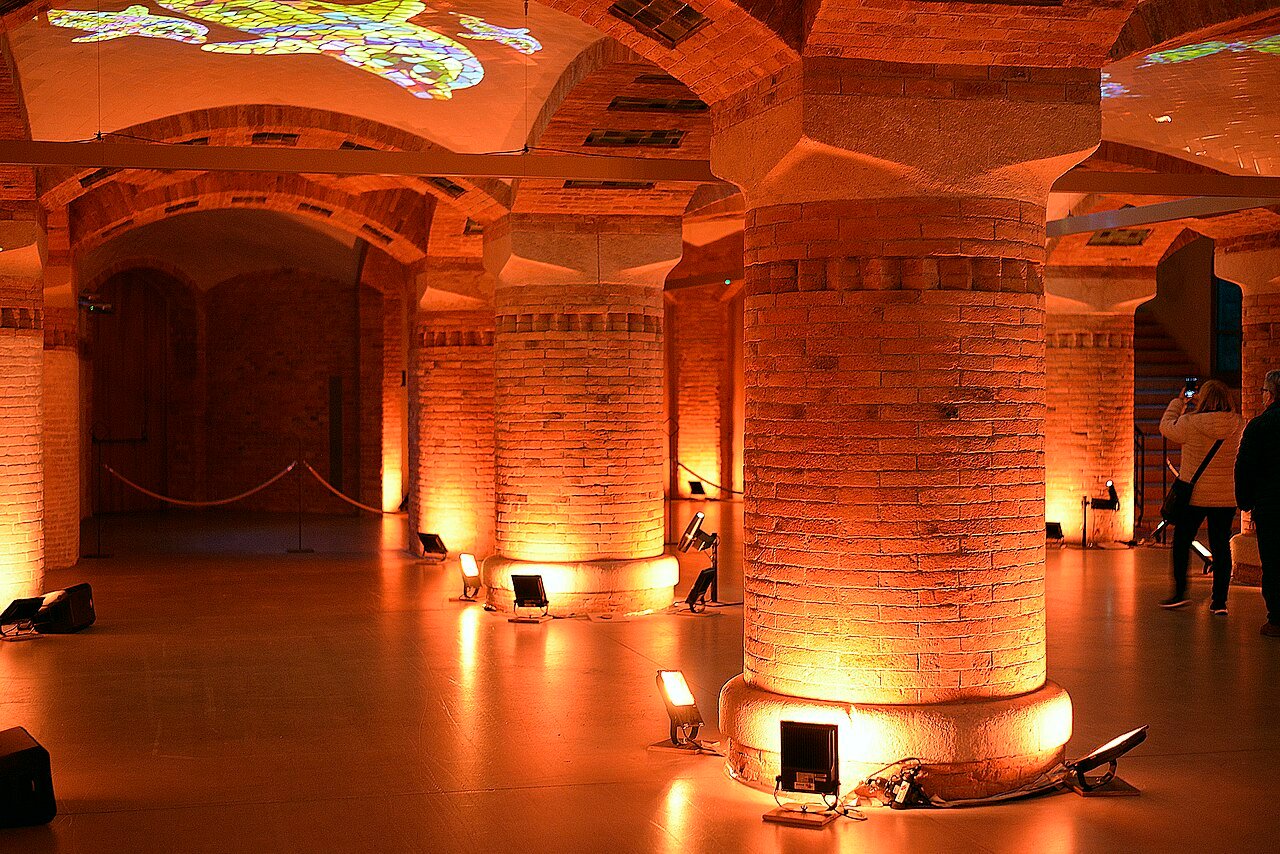
If the street lights are December’s free show, Els Llums de Sant Pau is its ticketed spectacular. For the Christmas season the Recinte Modernista de Sant Pau — Domènech i Montaner’s vast Art Nouveau hospital complex, a UNESCO World Heritage Site and the largest modernista ensemble in the world — becomes an illuminated night trail: pavilions and gardens washed in colour, projections on the brick vaults, light sculptures along the paths and, returning this year, an ice rink. The 2026 edition is themed on The Little Prince and runs from 19 November 2026 to 10 January 2027, roughly 6:00 pm to 11:00 pm, closed on 24 and 31 December and 5 January ⚠. Entry is by timed ticket, and December weekend slots go first — book online before you travel, and pick a weeknight if you can, when the gardens breathe and the photographs come easier.
Sant Pau rewards a double visit if your trip allows it: the site by day, as one of the great buildings of Barcelona, and the same site by night in December, unrecognisable. Arrive while there is still a little light in the sky — the brickwork and ceramic domes hold the dusk beautifully — and leave time afterwards for the bakery-and-bar streets between Sant Pau and the Sagrada Família, ten minutes’ walk away. Of all the items on this list, this is the one Barcelona residents themselves book ahead for; join them, ticket in hand.
8. Use the Free-Museum Sunday: 6 December
December 2026 hands culture-minded visitors a gift: its first Sunday, 6 December, falls inside the puente weekend and doubles as Constitution Day — and on the first Sunday of every month, many of Barcelona’s best museums open free. The MNAC, the national art museum in the Palau Nacional above Plaça d’Espanya, is the headline: a thousand years of Catalan art, from Romanesque church frescoes to modernisme, in a palace worth the trip alone, with the city’s best terrace view at the top of the steps. The Picasso Museum in El Born is the other big prize — its first-Sunday free tickets are released online and vanish, so claim one the moment your dates are fixed — and the city history museum, the MUHBA, and a string of smaller houses join the scheme.
The strategy is simple and worth following exactly. Choose ONE museum, book its free slot in advance where the system allows it, and be at the door at opening time: by midday the free-Sunday queues are the month’s longest. Use the afternoon for the fairs and the pessebre trail, and the evening for the lights. Done this way, the 6th becomes the best-value day of a December trip: a world-class museum, a Christmas fair and the illuminated city, and the only thing you have paid for is lunch.

9. Hear the Sant Esteve Concert at the Palau de la Música
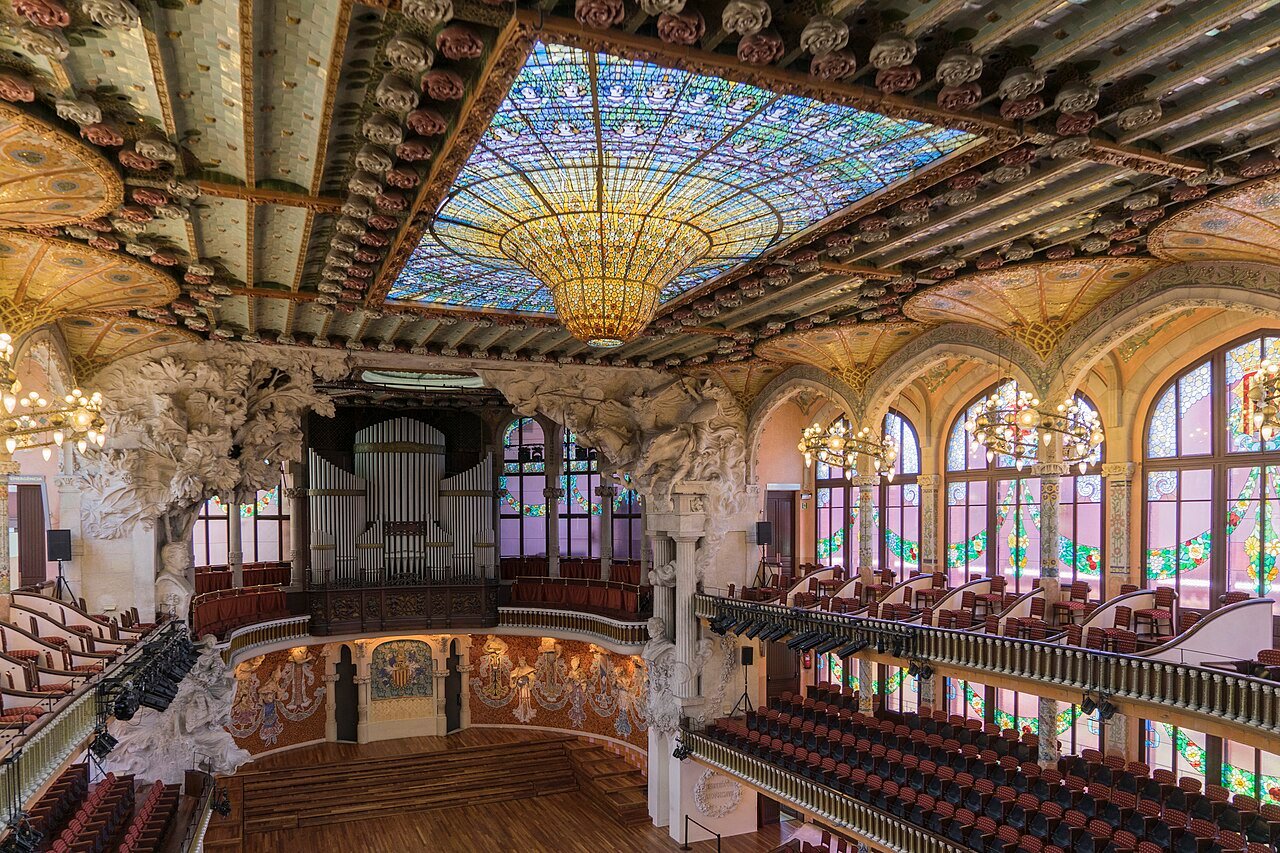
Every 26 December since 1913, in a hall that looks like a jewellery box turned inside out, the choirs of the Orfeó Català have sung the Concert de Sant Esteve — and in 2026 it falls on Saturday 26 December at 7:00 pm, in the Palau de la Música Catalana ⚠: the full family of Orfeó choirs, from the children’s voices to the great senior choir, singing Catalan Christmas music under Domènech i Montaner’s stained-glass skylight. It is the single most Barcelonan ticket of the festive season, broadcast on Catalan television: Sant Esteve is Catalonia’s second Christmas day, a holiday the rest of Spain does not keep, and this concert is its ceremony. Tickets go through the Palau’s own box office and the best seats sell early; book as soon as your dates are set, and dress a notch smarter than sightseeing clothes — the audience does.
If the 26th does not fit, December fills the Palau and the city’s other halls with Christmas programmes all month — carol concerts, Nutcracker performances, gospel and flamenco nights — and the Palau itself is worth a daytime visit purely as a building: our guide to the Palau de la Música Catalana covers its tours and history. But if you can only buy one ticket in December, buy this one: a choir keeping the same appointment for over a century, in that room, on that day, is not a concert so much as the city keeping a promise.
10. Eat December: Escudella, Canelons, Turrón and Cava
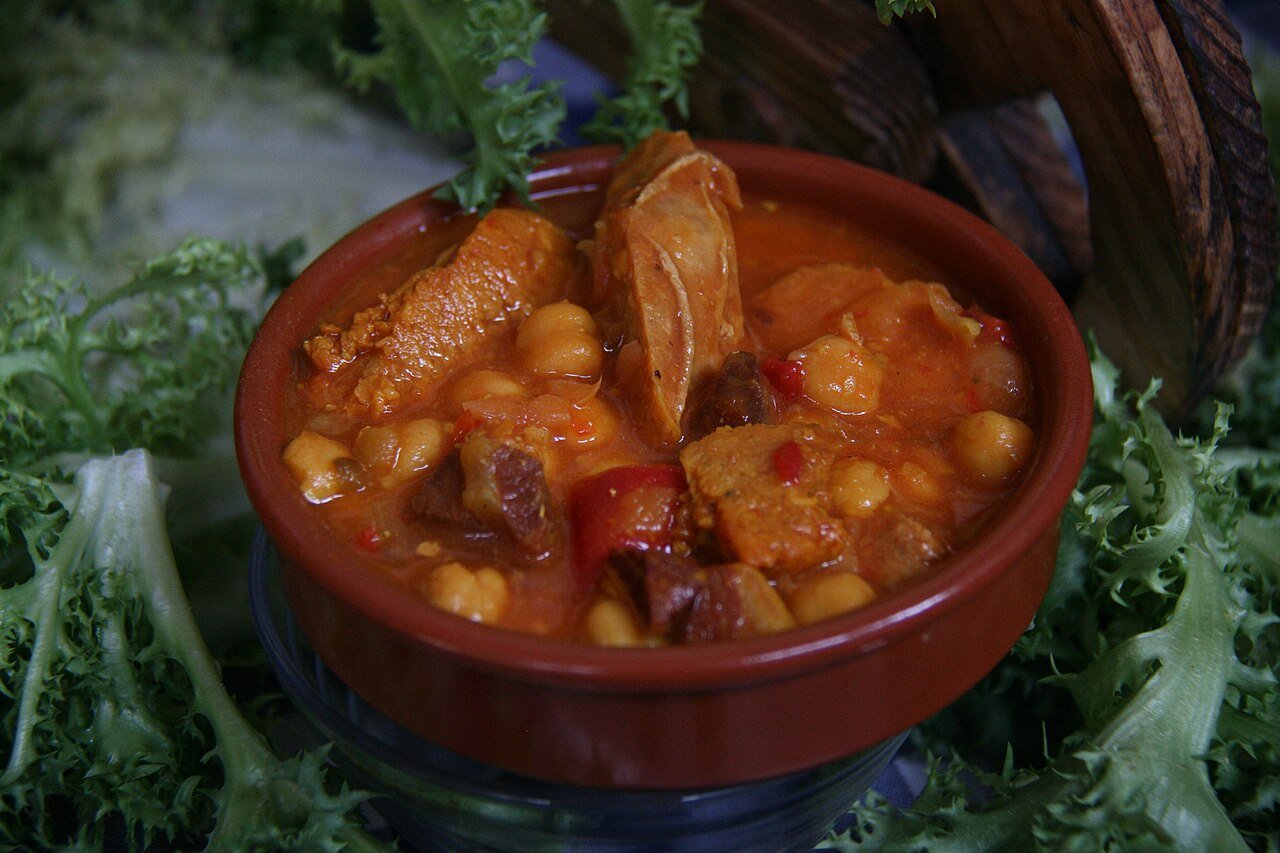
Catalan Christmas is cooked in a strict order, and December is your one chance to eat it in sequence. Christmas Day lunch is the feast of the year, and it opens with escudella de Nadal: a great dark broth served as soup with galets, the big elbow-shaped pasta, followed by the carn d’olla — the meats and vegetables the broth was built on, brought to the table as a course of their own. On Sant Esteve, the 26th, the same families eat canelons: pasta tubes filled with the finely chopped remains of the Christmas roasts, under béchamel and cheese — a recycling recipe so good it outlived its leftovers, and the dish Barcelona restaurants put on December menus with real pride. If a traditional restaurant offers a set Christmas menu (menú de Nadal) on the 25th or 26th, book it and eat exactly this.
Between the feasts runs the sweet economy: turrón (torró in Catalan), the almond nougat that arrives in December in a dozen forms — hard Alicante, soft Jijona, burnt-yolk, chocolate — sold by weight in turrón shops that do their year’s business in six weeks; thin neules wafers to dip in cava; and cava itself, Catalonia’s own sparkling wine, the correct drink of the season. Add churros with thick hot chocolate after the lights walk and chestnuts from the fair-side roasters, and December is the best eating month of the Barcelona year. Our guide to the best food in Barcelona will keep you fed the rest of the trip; for these two weeks, eat to the calendar.
11. Shop and Stroll the Old Town
December turns Barcelona’s old town into the city’s Christmas parlour, and the shopping has a rhythm of its own: because the presents arrive on 6 January, the season runs late, the shops stay full right up to 5 January, and the famous winter sales (rebaixes) do not begin until 7 January — after the Kings — so do not come in mid-December expecting discounts that do not exist yet. Start at Portal de l’Àngel, the pedestrian avenue off Plaça de Catalunya strung with lights, then dive into the Gothic Quarter: Carrer de Ferran’s jewellers and chocolate shops, the little streets around the cathedral full of pessebre-figure workshops, and the Pont del Bisbe, the old town’s most photographed bridge, strung between palaces on Carrer del Bisbe.
Cross into El Born for the other half of the present-buying: independent boutiques, Catalan design shops, wine stores for the cava run, and the streets around Santa Maria del Mar strung with their own lights. Our walking guide to Barcelona’s Old Town and Gothic Quarter lays out the lanes properly. Two December warnings: nearly all shops close on 25 and 26 December and on 1 January; and the afternoons of 24 and 31 December run short hours, the city emptying early for family dinners. Do your shopping on the bright weekdays between the fairs, and the old town will feel — as it does for Barcelonans — less like a tourist district and more like the city’s front room.

12. See the Year Out at Plaça d’Espanya
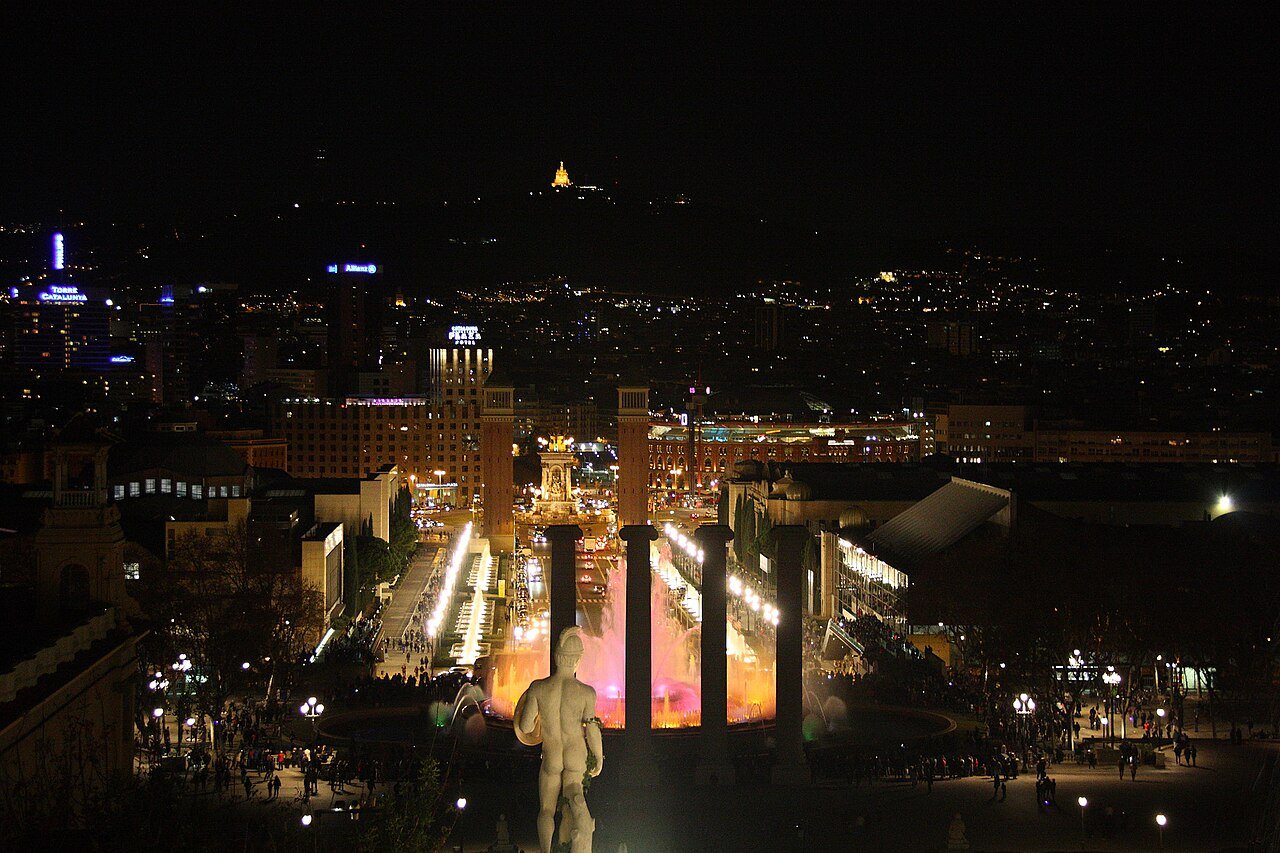
Barcelona ends its year the way it does everything else in December: outdoors, at midnight, with a crowd. First, the day’s own ritual — the Cursa dels Nassos, the “Race of the Noses”, a 10-kilometre city run on 31 December that sends thousands of runners, many in costume, into the last afternoon of the year: enter it if you run, spectate if you do not. Then, after the family dinner that fills the evening’s early hours, the crowd flows to Plaça d’Espanya and the Avinguda de la Reina Maria Cristina below Montjuïc, where the city stages its official New Year’s Eve celebration around the Magic Fountain: music, light and water shows and fireworks over the Palau Nacional as the clock runs down ⚠.
The countdown itself is Spanish, which means it is edible. Bring twelve grapes — sold everywhere in the last days of December, in tins and tubs sized for the job — and eat one on each of the twelve chimes of midnight, les dotze campanades, for luck in each month of the coming year. It is funnier and harder than it sounds, especially washed down with cava, and the whole avenue does it together, strangers toasting strangers under the fountain. Wear something red underneath for luck, as half the crowd will be doing, and plan the exit before you arrive: the metro runs through the night on New Year’s Eve, but the stations beside the square are the busiest in Spain for one hour of the year, so walking ten minutes to a quieter stop is the veteran move.
Which December Trip Are You On?
The fair collector: points 1, 4 and 5, in that order — Santa Llúcia for the pessebre wing, the Sagrada Família fair for the tree, the pessebre trail for the sport of finding the caganer. Travel before 23 December, or two of your three fairs will be gone.
The light chaser: points 2 and 7 are your trip. Walk the route on your first night, ride the open-top bus on the second, and book Els Llums de Sant Pau for the third — three evenings, and you have seen the street lights plus the city’s great ticketed light show.
The family Christmas: points 6 and 8, with the fairs wrapped around them. Nadal al Port is open when nothing else is, the Copa Nadal gives Christmas morning a story your children will retell for years, and the free-museum Sunday keeps the culture quota painless.
The culture trip: points 3 and 9 — the basilica in its own story’s month, and a century-old choral appointment on the 26th. December is the one month these two buildings are doing what they were built to do.
The food trip: point 10, supported by 11 — escudella on the 25th, canelons on the 26th, turrón in the suitcase, the old town’s chocolate shops in between. Book the festive menus before anything else; they go first.
The New Year trip: point 12, arriving on the 30th or the morning of the 31st. Run or watch the Cursa dels Nassos, eat the long dinner, and take your twelve grapes to the fountain. Sleep late on the 1st — the whole city will be, and the Reyes fair will still be open when you surface.
What a December Trip to Barcelona Costs
December splits into two price seasons wearing one month: the puente weekend (5–8 December) and the nights around New Year price like high season, while the ordinary weekdays between them — fairs open, lights on, museums quiet — are among the best-value days of Barcelona’s year. Flights follow the same curve. The striking thing about a Barcelona December is how much of it is free: the city’s Christmas is a street-and-square celebration, and the paid items are the garnish, not the meal.
- The Fira de Santa Llúcia, the Sagrada Família fair and the Three Kings Fair — free entry; your budget is what the caganers and turrón do to it.
- The Christmas lights walk — free, ninety minutes, the best show in the city.
- Christmas Lights Open-Top Bus Tour — from around €15 for 80 minutes with a live guide; free cancellation up to 24 hours in advance, as stated on the product page.
- Els Llums de Sant Pau — a timed, ticketed night trail; prices vary by day and slot, and December weekends go first, so book online in advance.
- The Concert de Sant Esteve (26 December, 7:00 pm) — tickets through the Palau de la Música box office, priced by seat; the month’s other Christmas concerts follow the same pattern.
- The free-museum Sunday (6 December) — free at the MNAC, the Picasso Museum and the other participating museums; book the free slots online where offered, and arrive at opening.
- Sagrada Família entry — standard timed tickets, but December’s special mornings (25 and 26 December, 9:00 am–2:00 pm) sell out fastest of all; book days ahead.
- Christmas Day and Sant Esteve set menus — the one real splurge of the month: traditional restaurants serve fixed festive menus on the 25th and 26th, and the good rooms book out. Reserve before you fly.
In short: bring your normal Barcelona budget, shift your splurge from tickets to one great Christmas lunch, and December will feel less like peak season than like a gift the city gives its winter visitors.
Barcelona Christmas Markets: The Complete Guide to Santa Llúcia, the Sagrada Família Fair & the Three Kings Fair
Travel insurance, sorted
Whether it is a two-week holiday or a longer move, travel insurance is not the most glamorous part of a trip — but it is the one booking you want to have in place before a trip, and while you are already away. Get a quote from SafetyWing
Final Thoughts
Every city has a Christmas; Barcelona has a December, a longer, stranger and more generous season than the single day it is named after. It starts with a log being fattened under a blanket and a fair older than the modern state, passes through a harbour swim and a hundred-year-old concert, feeds you the same dish twice in two days on purpose, and ends with twelve grapes eaten against the clock under a lit fountain — before remembering, on 5 January, that the real present-giving has not even happened yet. Come for any ten days of it and you will not recognise the beach city you thought you knew. If your trip begins in the season’s first days, our guide to Barcelona in November covers the switch-on and the All Saints’ weekend; the fairs themselves are covered stall by stall in the Christmas markets guide linked just above. Book the concert, book the light trail, pack the warm coat — December is the month Barcelona keeps for itself, and it is happy to share.
Barcelona in December: Your Questions Answered
Is Barcelona worth visiting in December?
Yes — if you come for the season rather than the beach. December brings the city’s oldest fair, around 130 kilometres of Christmas lights, a ticketed light festival, a century-old concert tradition and New Year’s Eve around the Magic Fountain, in mild weather of about 14 °C (57 °F) by day. Sightseeing hours shrink on 25 and 26 December, but planned well, those days become highlights rather than gaps.
What is the weather like in Barcelona in December?
Mild Mediterranean winter: daytime highs around 14 °C (57 °F), nights of 5–8 °C (41–46 °F), and more dry, bright days than wet ones — December is one of the drier months of the year. Sunset is about 5:20 pm all month, so December life happens in the lit-up evening. Bring layers, a warm coat for after dark, and gloves for open-top buses and rooftops.
When do Barcelona’s Christmas markets run in 2026?
The Fira de Santa Llúcia and the Sagrada Família fair are expected to open in the last days of November and close on 23 December, roughly 10:00 am to 9:00 pm daily; the organisers confirm exact opening days each autumn (in 2025, Santa Llúcia ran 28 November–23 December). Nadal al Port runs longer — 27 November 2026 to 6 January 2027 on its official site — and the Three Kings Fair on the Gran Via trades from mid-December until 5 January.
What is open in Barcelona on Christmas Day?
More than you might fear, but less than a normal day. Nadal al Port opens through the 25th, the Copa Nadal harbour swim fills the Moll de la Fusta in the morning, churches hold Christmas services, and the Sagrada Família opens for a short morning (9:00 am–2:00 pm, as on 26 December) — while most shops and many museums close and restaurants serve pre-booked festive menus. Book your Christmas lunch ahead, and plan the day around the port and the basilica.
How does Barcelona celebrate New Year’s Eve?
With grapes. After the Cursa dels Nassos 10k run on the 31st and long family dinners, the crowd gathers at Plaça d’Espanya and along Avinguda de la Reina Maria Cristina for the city’s official celebration around the Magic Fountain — music, fountain shows and fireworks — and eats twelve grapes, one per midnight chime, for luck. The metro runs through the night; stations beside the square are extremely busy after midnight.
When do Barcelona’s Christmas lights switch on in 2026?
The switch-on is expected on Thursday 26 November 2026, the traditional last-Thursday-of-November slot, with the city council confirming the programme each autumn. After that, the lights — around 130 kilometres of them in recent seasons — shine every evening until Three Kings Day, 6 January: roughly 5:30 pm to 11:00 pm, and an hour later on Fridays and Saturdays.


One Comment