Valencia Old Town: The Complete Guide to Ciutat Vella
Every great Spanish city has an old town, but Valencia’s is a palimpsest you can walk in an afternoon. Ciutat Vella — the Old City, the city’s district 1 — packs two thousand years into a rough circle barely a kilometre across: the Roman forum sleeps under its main square, the Moorish medina still bends its streets, and over it all stands the golden age of the silk trade, when Valencia’s merchants built a Gothic exchange so beautiful that UNESCO put it on the World Heritage list. Add one of Europe’s largest food markets, a church nicknamed the Sistine Chapel of Valencia, two mighty medieval gates and a bar scene that wakes up as the monuments close, and you have the essential Valencia day.
This guide walks the old town the way it is organised — by its six historic barrios (neighbourhoods) — so you always know which layer of the city you are standing in. It pairs naturally with our round-up of the best things to do in Valencia; here, we stay inside the old walls and go deep.

Contents
- 1. The Six Barrios: Your Map of Ciutat Vella
- 2. La Seu: The Cathedral Quarter
- 3. La Lonja de la Seda: The Silk Exchange
- 4. El Mercat: The Central Market Quarter
- 5. San Nicolás: Valencia’s Sistine Chapel
- 6. Torres de Serranos: The Ceremonial Gate
- 7. Torres de Quart: The Cannon-Scarred Gate
- 8. Plaza Redonda and the Sant Francesc Quarter
- 9. El Carmen: Cloisters, Street Art and Nightlife
- 10. Eating and Drinking in the Old Town
- 11. A Half-Day Route and Practical Tips
- 12. Final Thoughts
A Short History in Five Layers
Ciutat Vella reads like a core sample of Valencia itself. The Romans founded Valentia in 138 BC and put its forum where Plaza de la Virgen stands now — the excavated streets are visitable at the Almoina museum on the square’s edge. The Moors of Balansiya made it a walled medina of mosques, baths and silk workshops, a street plan the old town’s bent lanes still follow. Jaume I’s conquest in 1238 raised the cathedral over the great mosque and started three centuries of Gothic building — the cathedral, the Lonja, the two great gates — funded by the silk trade that made Valencia one of the Mediterranean’s richest ports. The Baroque added its swirls (San Nicolás, the basilica), the 19th century demolished the walls in 1865 and built the grand squares at the old town’s edge, and the 20th gave it the Central Market. Walk slowly: every street is a different century arguing with the last.
1. The Six Barrios: Your Map of Ciutat Vella
Ciutat Vella is made of six barrios, and learning their names is the fastest way to stop feeling lost. La Seu, around the cathedral, is the ancient core — Roman, Moorish and episcopal Valencia in a few lanes. La Xerea, to its east, is the quiet, well-kept quarter of palaces and the university’s old buildings. El Carmen (El Carme), the whole north-west, is the bohemian quarter: convents turned museums, street art, bars and the city’s nightlife. El Pilar, once called Velluters after its velvet- and silk-weavers, is the working old town of workshops and local shops. El Mercat is the market quarter, ruled by the Central Market and the Lonja. And Sant Francesc, to the south, is the grand 19th-century edge — the city hall square, the bullring and the Estació del Nord.
The quarters flow into each other without signs or ceremony — you will cross three barrios on a five-minute walk and never notice. But the characters hold: sleep and churches in La Seu, art and noise in El Carmen, food in El Mercat, grandeur in Sant Francesc. Keep the two towers — Serranos to the north, the cathedral’s Miguelete in the middle — as your compass points and the old town becomes a village.

2. La Seu: The Cathedral Quarter
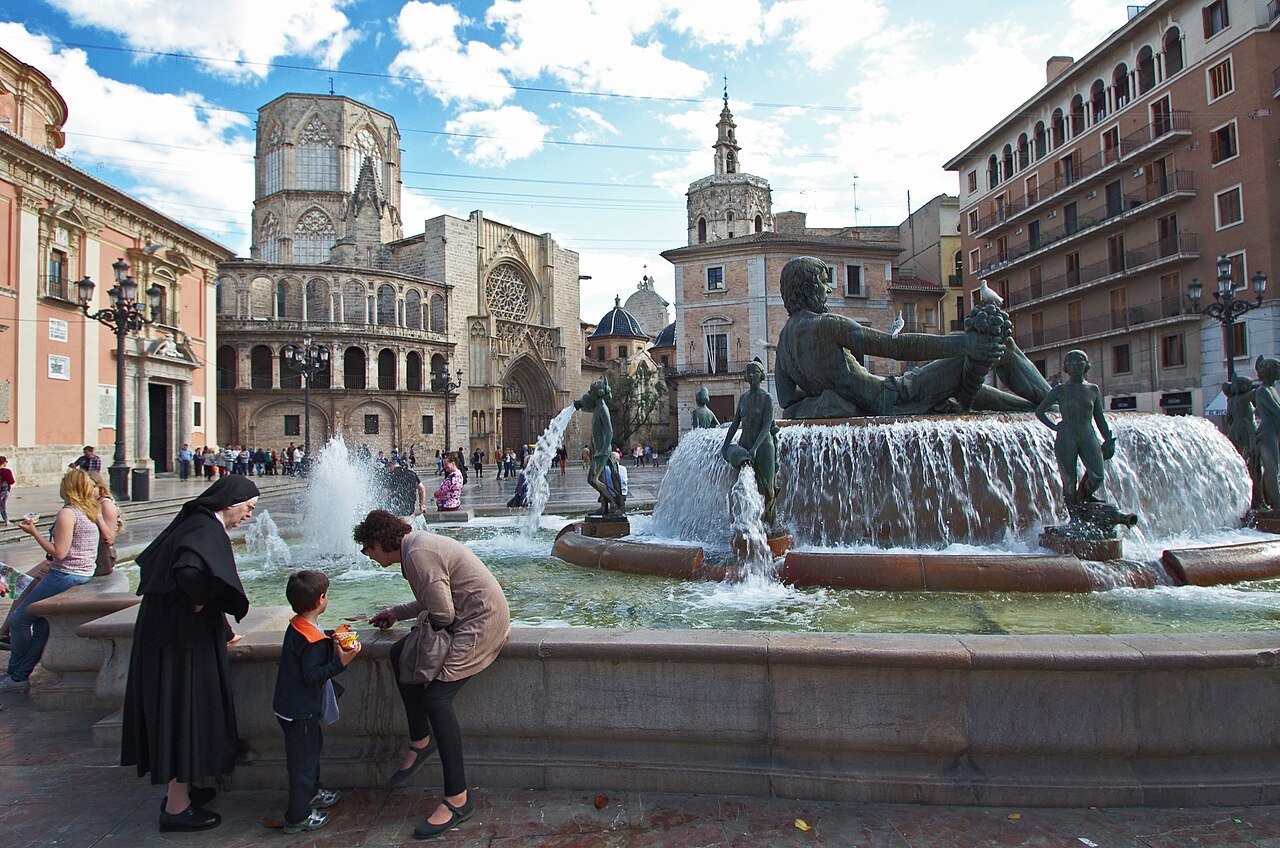
The cathedral quarter is where Valencia began, and it still does the city’s ceremonial work. Start at Plaza de la Virgen, the square over the Roman forum: the cathedral’s Gothic Apostles’ Door, the pink basilica of the Virgin of the Forsaken, the Palau de la Generalitat and the reclining river god of the Turia fountain all stand around one small paved space. Every Thursday at noon the Water Tribunal — a farmers’ court that has settled irrigation disputes here for around a thousand years — sits in front of the Apostles’ Door and finishes its business in minutes. The square deserves its own hour; its full story is the Read Next guide at the foot of this page, and the underground Almoina museum on its northern edge descends to the Roman streets themselves.
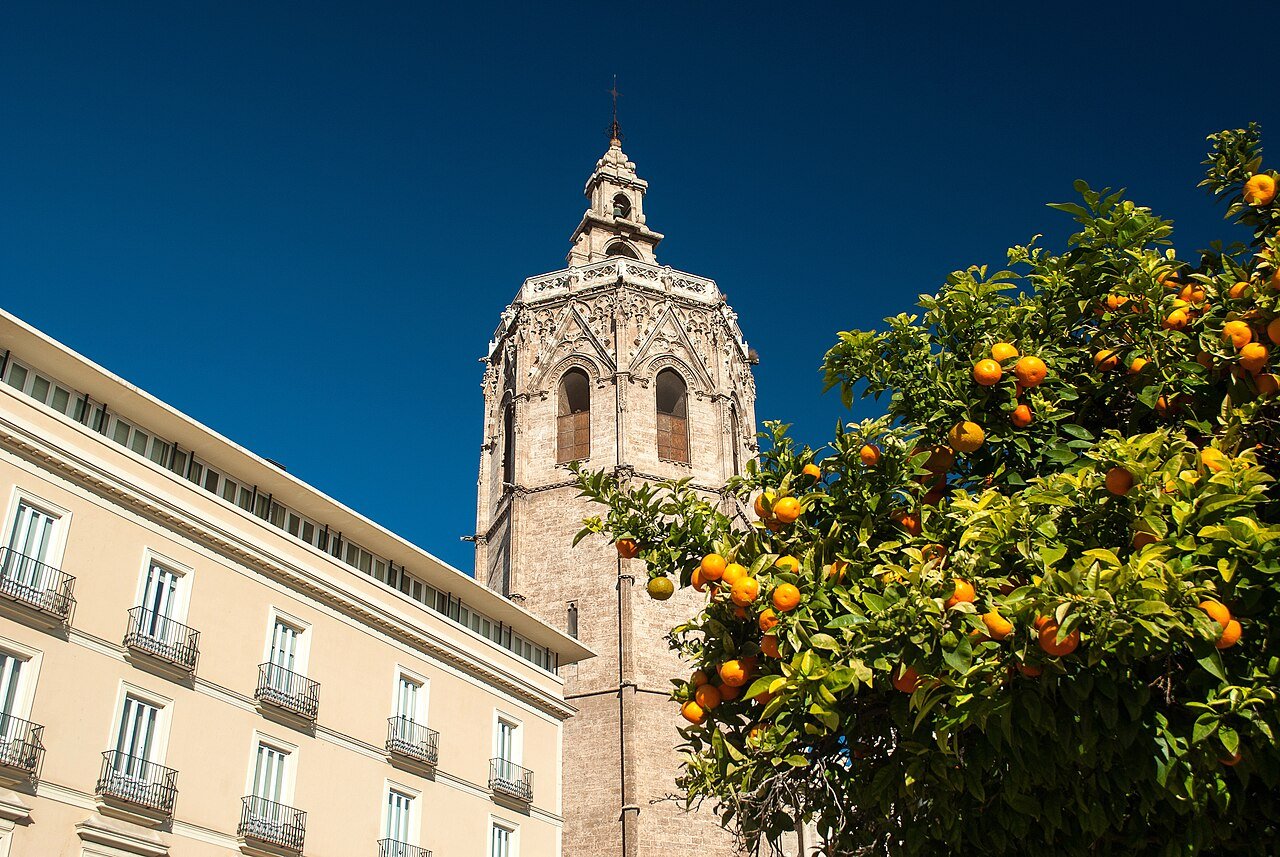
The cathedral behind the door is a layer cake of Romanesque, Gothic, Renaissance and Baroque, holding the chapel of the Holy Chalice — the agate cup venerated as the Holy Grail — and the Miguelete (El Micalet), the octagonal bell tower that is the old town’s landmark. Climb its 207 steps for the definitive rooftop view: terracotta tiles, blue church domes and the Turia gardens curving away to the sea. Our Valencia Cathedral guide walks the building chapel by chapel; from the square, do not miss the third great church of the quarter either — the frescoed basilica beside the cathedral, where Valencians visit their patroness, la Geperudeta, at all hours. For the square itself, start with Plaza de la Virgen.
3. La Lonja de la Seda: The Silk Exchange
If you see one interior in the old town, make it this one. The Lonja de la Seda — the Silk Exchange, built between 1482 and 1533 to Pere Compte’s design — is the masterpiece of Valencian Gothic and a UNESCO World Heritage site, raised at the height of the silk trade to give the city’s merchants a hall worthy of their money. Step into the Sala de Contratación and the architecture does the boasting: eight soaring columns twist like palm trunks into a star-vaulted ceiling, deliberately echoing the ropes and rigging of the ships that carried the silk.
The complex rewards a slow circuit: the Consolat del Mar wing with its coffered Renaissance ceiling, the Orange Tree Courtyard (the calmest seat in the old town), and the tower that once held debtors who had failed to pay. Entry is free — it is a municipal monument — and mornings are quietest. Stand across the square afterwards and take in the full façade with the Central Market opposite: church, exchange and market, the three powers of old Valencia, all within a stone’s throw.

4. El Mercat: The Central Market Quarter
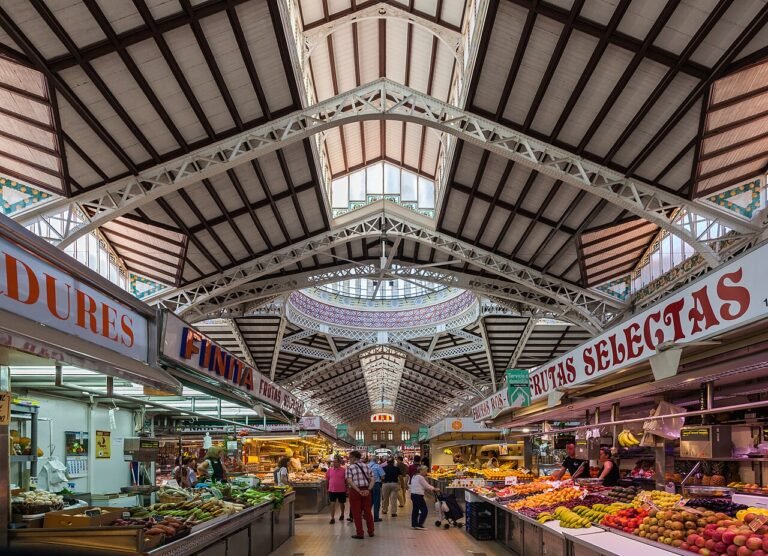
Across from the Lonja, the old town’s stomach has been beating since 1928. The Mercado Central is one of the largest food markets in Europe — some 1,200 stalls under a Modernista palace of iron, glass and ceramic tile, crowned by domes and a famous parrot weathervane. The main hall is for produce, meat and the huerta’s vegetables; the annexes hold fish so fresh it is still arguing. Come on an empty stomach and graze: horchata and fartons, a bocadillo at the legendary Central Bar inside, cheeses, olives and whatever the boats brought in.
Practical notes: the market trades Monday to Saturday (closed Sundays) and winds down by mid-afternoon, so go in the morning. Our complete Mercado Central Valencia guide maps the stalls hall by hall. Do not leave the quarter without looking at its church: Santos Juanes, facing the Lonja across the square, is the market’s own Baroque church, its façade a carved riot and its tower clock a neighbourhood institution.

5. San Nicolás: Valencia’s Sistine Chapel
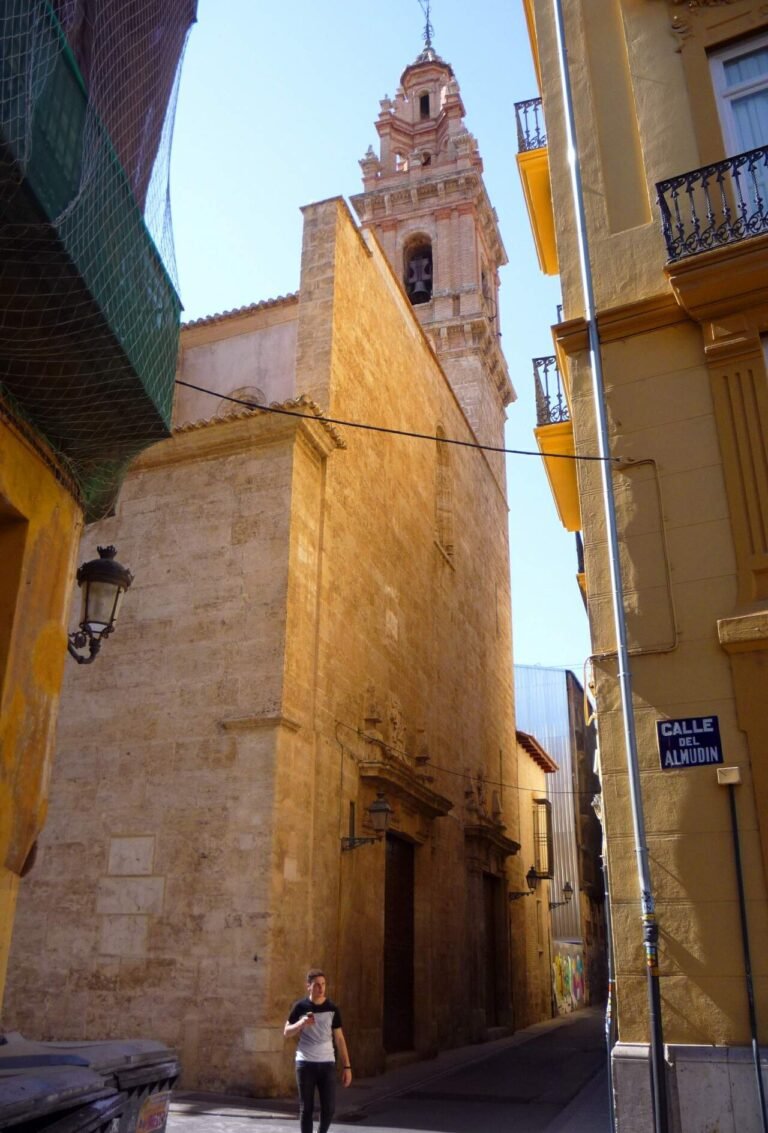
The old town’s most astonishing room hides behind the plainest of doors. The church of San Nicolás de Bari y San Pedro Mártir, a few lanes north of the market, looks like a modest Gothic parish church — until you look up. Its entire vault is a single frescoed sky: the lives of its two saints unrolling in scene after scene of clouds, angels and gilded architecture, painted around 1700 by Dionís Vidal to the designs of Antonio Palomino. The restoration that cleaned the frescoes revealed colours of almost violent freshness, and the inevitable nickname stuck: the Sistine Chapel of Valencia.
It is a working church with visiting hours woven around services, and a modest entry fee applies at tourist hours — check the day’s times on the door, and combine it with the Lonja, five minutes away. Our dedicated guide to San Nicolás Church covers the frescoes scene by scene. Photography rules vary; ask, look up, and take your time — this is the old town’s masterpiece that most visitors walk straight past.

6. Torres de Serranos: The Ceremonial Gate
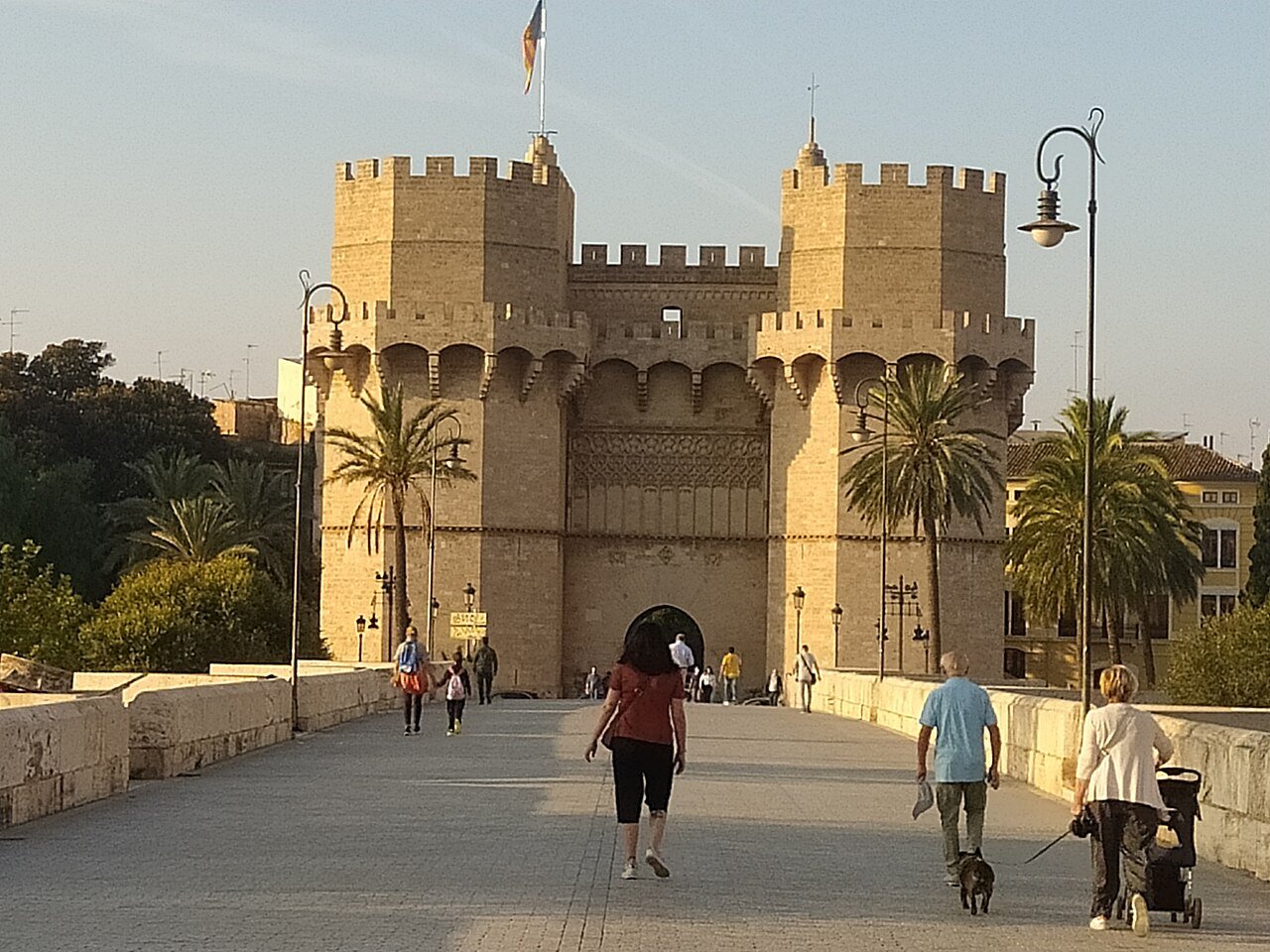
The old town’s front door stands at its northern edge, where the city met the river. The Torres de Serranos, built in 1392–1398 by the master mason Pere Balaguer, were the grandest gate in Valencia’s medieval walls — less a fortification than a triumphal arch in stone, used for the ceremonial entry of kings and ambassadors, and for centuries afterwards as a prison for nobles (its chambers kept their honour even in disgrace). The walls themselves came down in 1865; the gate survived because the city could not bear to lose it.
Today the towers face the Turia gardens across the old riverbed, and the climb to the top is one of the old town’s best small efforts: vaulted chambers, the great Gothic portal from inside, and a terrace view over the rooftops to the sea. The gate has one more annual starring role — on the last Sunday of February, the Crida, the torchlit proclamation that opens Las Fallas, is delivered from the Serranos towers to the crowds below. Entry is inexpensive and free with the city’s tourist card. Our full guide to the Torres de Serranos covers the gate’s history tower by tower.
7. Torres de Quart: The Cannon-Scarred Gate
The Serranos’ sterner sibling guards the old town’s west. The Torres de Quart, built in 1441–1460 and modelled on Naples’ Castel Nuovo, were pure military engineering: two massive, drum-round towers of rough stone, angled to deflect artillery — and the pockmarks are still in the walls, cannonball scars from Marshal Moncey’s French siege of 1808, when the gate held and the city kept the damage as a badge of honour.
The Quart towers are the rougher, quieter visit of the two: fewer crowds, the same rooftop reward, and the El Carmen and El Pilar quarters at their feet. Walk the wall-top between the towers and read the city from the battlements — market rooftops one way, the Turia park the other. Together with the Serranos gate, they are all that remains of a wall that once carried twelve gates around this whole guide. See our Torres de Quart guide for the siege story in full.

8. Plaza Redonda and the Sant Francesc Quarter
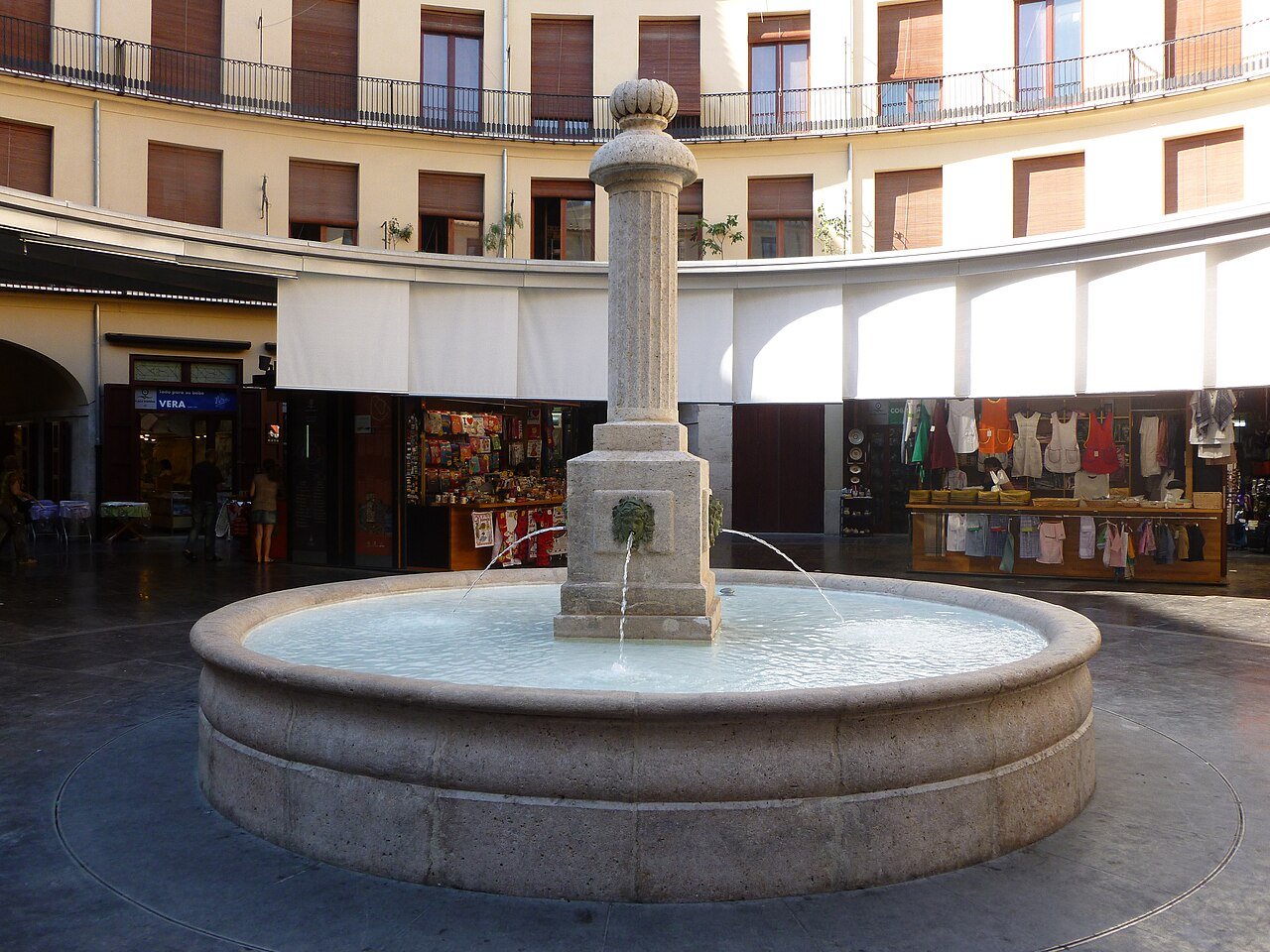
South of the market, the old town plays a geometric joke. Plaza Redonda — the Round Square, built in 1840 — is a perfect circle of balconied houses wrapped around a central fountain, reached by four short lanes that give no hint of what is inside. It was built for the city’s fish and poultry sellers and still trades in the useful and the curious: haberdashery, fabrics, ceramics, lace, souvenirs of the better kind, and tapas bars around the rim where market traders take their mid-morning break. On Sunday mornings a small market tradition continues in and around the square.
Plaza Redonda sits in Sant Francesc, the old town’s grand southern quarter, named for a vanished Franciscan convent. Its showpiece is the square in this guide’s opening photograph: Plaça de l’Ajuntament, the city hall square, ringed with white early-20th-century palaces, the flower stalls under its trees and the great fountain at its heart. This is the old town’s civic stage — the daily mascletà of Las Fallas shakes it every March lunchtime — and its natural southern doorstep: the Estació del Nord and the bullring stand a few minutes further on.
9. El Carmen: Cloisters, Street Art and Nightlife
The north-western quarter is the old town’s bohemian heart, and its layers are convents. Begin at the Centre del Carme, a former convent turned contemporary culture centre, whose two cloisters — one Gothic, one Renaissance — frame the single most peaceful garden in Ciutat Vella; entry to its exhibitions is free, and the orange trees in the cloister garth are the old town’s best free seat. Around it, El Carmen’s lanes hold the quarter’s beautiful decay and its revival in the same view: palaces converted to museums (the Benlliure house-museum, the ceramics museum is across the old town in La Xerea’s Marqués de Dos Aguas palace), tiny squares like Plaça del Carme and Plaça de l’Arbre, and street art on every shutter — whole walls painted by the city’s celebrated urban artists.
After dark the quarter changes shift: El Carmen is Valencia’s original nightlife district, its bars and small clubs filling the lanes around Carrer de Quart and the Torres until late. By day it is the wandering quarter — bring no plan beyond the cloister and let the lanes decide. Our guide to El Carmen maps its museums, squares and street art corner by corner.

10. Eating and Drinking in the Old Town
You will not go hungry inside the walls. The market quarter runs on mid-morning esmorzaret — the Valencian institution of the mid-morning sandwich, eaten standing at a bar with olives and a small beer — and the lanes around the Lonja and Santos Juanes are its densest territory. For horchata, the tiger-nut milk that is Valencia’s signature drink, the classic address is the Horchatería Santa Catalina beside the church of the same name, serving it with fartons (long sugar-dusted fingers for dunking) in a tiled interior that has barely changed in a century. Paella is a lunch dish here — Valencians are firm on this — and the old town’s traditional houses serve the real thing at midday; our guide to the best food in Valencia names the tables.
And for the evening, do what the best-rated tour in the old town does: eat your way through its history. The Valencia Old Town Tour with Wine and Tapas — rated 4.95 out of 5 across more than 2,100 reviews — walks the Roman, Moorish, Gothic and Baroque layers for four hours, then takes you somewhere no walk-up visitor can go: inside an 11th-century monument, exclusively opened for the group, for a tasting menu of tapas and paella with prizewinning regional wines. At $89.60 a head it is a splurge by Valencia standards and, by the reviews’ account, the old town’s standout food experience. Book the old town tour, wine and tapas experience a few days ahead — group sizes are small and the monument seats few.
11. A Half-Day Route and Practical Tips
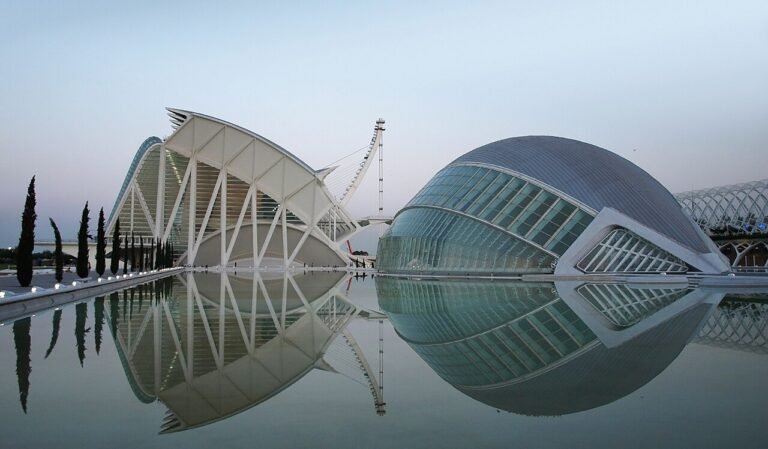
The route (3–4 hours, about 3 km, all flat): start at Plaça de l’Ajuntament and walk five minutes north to the Mercado Central (morning, while it trades); cross to the Lonja; drift north through San Nicolás to Plaza de la Virgen and the cathedral, climbing the Miguelete if the day is clear; continue north to the Torres de Serranos and look back over the rooftops; then turn into El Carmen, rest in the Centre del Carme cloister, and finish at Plaza Redonda for a late lunch or a horchata. That single loop touches all six barrios and every sight in this guide except the Torres de Quart — add twenty minutes west if you have them. To stretch it into a full day with the riverbed park and the City of Arts and Sciences, follow our 1-day Valencia itinerary.
Practical tips. The old town is almost entirely pedestrian in spirit — wear shoes for cobbles and leave the car anywhere but here. Sights cluster their closing on Mondays (museums) and Sundays (the market); the towers and Lonja are free or nearly so, and the Valencia Tourist Card bundles the municipal museums with transport if you are doing several in a day. For where to sleep inside or beside the walls, see where to stay in Valencia — La Seu and El Carmen put you in the middle of this guide; Sant Francesc puts the stations on your side. And if you would rather have the layers explained as you walk, the Valencia old town tour with wine and tapas from §10 follows almost exactly this route in four hours.
Travel insurance, sorted
Whether it is a two-week holiday or a longer move, travel insurance is not the most glamorous part of a trip — but it is the one booking you want to have in place before a trip, and while you are already away. Get a quote from SafetyWing
Plaza de la Virgen: The Complete Guide to Valencia’s Ceremonial Square
12. Final Thoughts
Ciutat Vella’s trick is density without exhaustion: two thousand years, six neighbourhoods, a World Heritage hall, a great market and a frescoed sky, all inside a twenty-minute walk — and threaded, at every third corner, with a bar stool and something good to eat. Give it a full day if you can and a slow morning at the very least; walk it once with this guide and once with no guide at all. The old town rewards both, and God willing it will still be arguing with itself, century against century, when you come back.
Frequently Asked Questions
What is Ciutat Vella in Valencia?
Ciutat Vella (the Old City) is Valencia’s district 1 — the historic centre inside the line of the demolished medieval walls. It contains six barrios (La Seu, La Xerea, El Carmen, El Pilar, El Mercat and Sant Francesc) and almost all of the city’s great sights: the cathedral, La Lonja, the Central Market, San Nicolás and the two surviving city gates.
How long do you need in Valencia’s old town?
A focused half-day covers the highlights — market, Lonja, cathedral square, one gate and El Carmen. A full day lets you add the museums, the second gate and a long lunch without hurrying, and the old town also repays an evening visit when El Carmen’s bars open.
What are the must-see sights in Valencia Old Town?
La Lonja de la Seda (the UNESCO-listed silk exchange), the cathedral and Miguelete tower with Plaza de la Virgen, the Mercado Central, the church of San Nicolás with its frescoed ceiling, the Torres de Serranos and Torres de Quart, Plaza Redonda and the Centre del Carme cloister in El Carmen.
Is Valencia Old Town walkable?
Completely — it is roughly a kilometre across, flat, and largely pedestrianised or traffic-calmed. Almost everything in this guide is within a 20-minute walk of everything else; the nearest metro stations are Xàtiva, Colón and Àngel Guimerà on its edges.
When is the best time to visit the old town?
Mornings for the market and the quietest monuments; late afternoon for the gates’ golden light and the squares filling up; Thursday before noon if you want to see the Water Tribunal sit at Plaza de la Virgen. In mid-March the whole district becomes the heart of Las Fallas — glorious, and very crowded.


2 Comments