New Year’s Eve in Barcelona 2026: Grapes, Fireworks, Parties and the First Swim
Barcelona does not ease into the new year; it swallows it, one grape at a time. On Thursday 31 December 2026 the city runs a double shift: a family evening of long dinners and television chimes, then a second night — parties, clubs, an all-night metro — that starts at midnight and finishes somewhere around breakfast. In between sits the strangest thirty seconds in the Spanish calendar, when an entire country tries to eat twelve grapes in time with a clock.
This guide is the whole night in depth: how the grapes ritual actually works and where to stand for it, the official celebration — which in 2026 is reported to be moving up Montjuïc to a new home — the gala dinners and the flamenco alternative, the big parties and the club floors, the all-night transport that makes it all possible, and the icy swim that starts 1 January at noon. For the wider season around the night — the lights, the fairs, the concerts — our Christmas overview covers December as a whole; this guide is for the thirty-first itself.
One piece of timing before the detail: in 2026, 31 December is a Thursday and 1 January a Friday and a public holiday, so the night sits inside a long weekend. Book the dinner, the party ticket and the hotel earlier than feels necessary. Barcelona rewards the organised on this of all nights.
In This Guide
- 1. The Twelve Grapes: Midnight, Spanish Style
- 2. The Official Celebration: Fireworks on Montjuïc — and the 2026 Move
- 3. The Campanadas on Screen, and the Day That Builds to Midnight
- 4. Dinner First: Gala Menus and the Long Spanish Evening
- 5. The Big Party: New Year’s Eve at Poble Espanyol
- 6. Clubs and Party Tours: Dancing Until Dawn
- 7. A Flamenco New Year: Tablao Cordobés
- 8. 1 January, Noon: The First Swim of the Year
- 9. New Year’s Day: The Slowest Morning of the Year
- 10. Where to Stay for New Year’s Eve
- 11. Practical Notes: Transport, Timing and Staying Safe
- 12. Final Thoughts
1. The Twelve Grapes: Midnight, Spanish Style
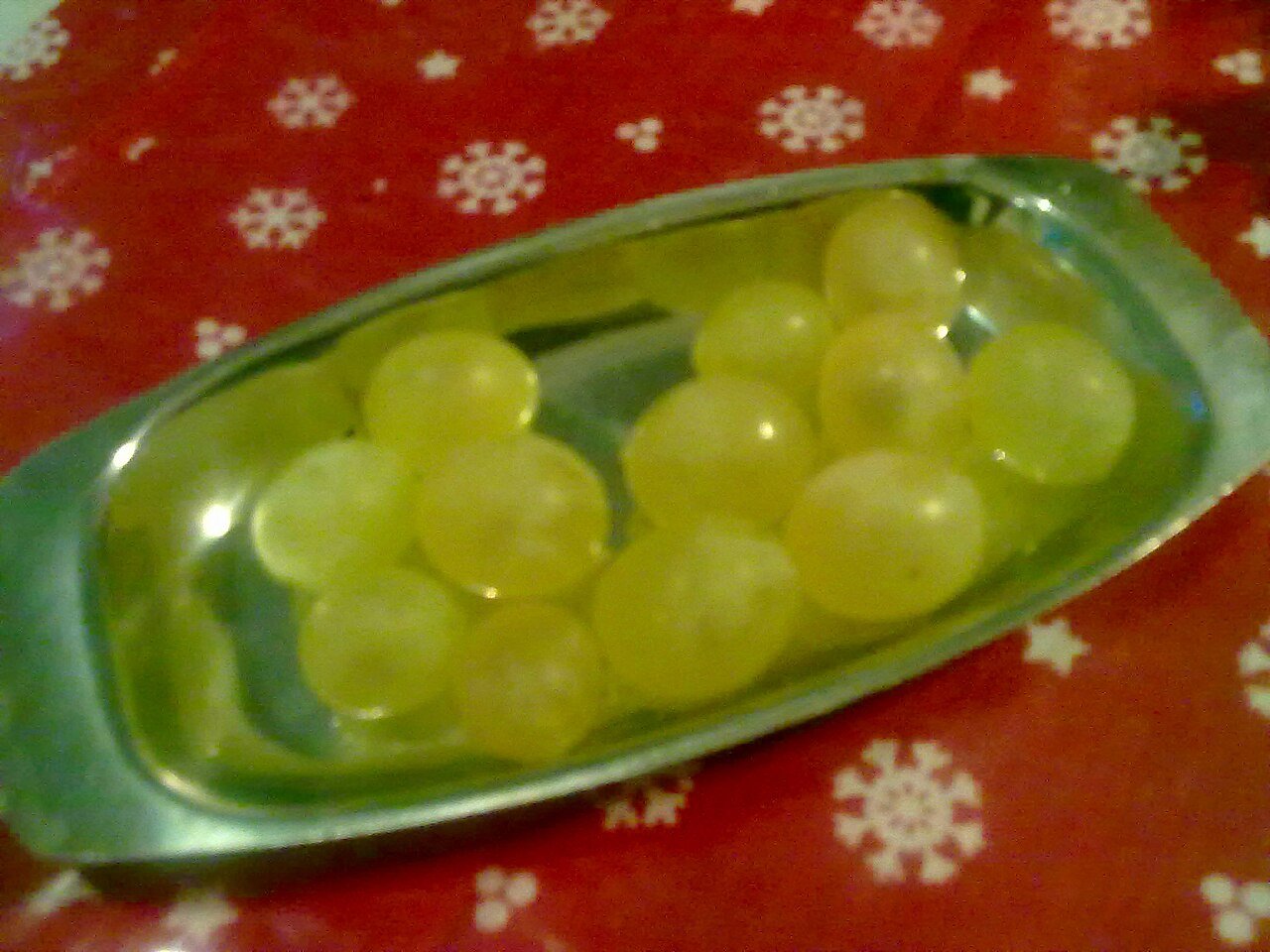
Everything on this night is organised around twelve grapes. At midnight, as the clock strikes twelve — in Catalan the campanades, in Spanish las doce uvas de la suerte, the twelve grapes of luck — you eat one grape on each chime. Finish all twelve in time and the year is yours: each grape is said to buy luck for one month of the twelve to come. Fail, and you start January with a mouthful of fruit and a story.
It is harder than it sounds. The chimes fall roughly three seconds apart, which is comfortable for the first four grapes and a genuine athletic event by the tenth. Spain has industrialised the ritual accordingly: from mid-December every supermarket sells the grapes prepared — small, seedless, sometimes peeled, counted into tins and plastic cups of exactly twelve — and party shops sell them alongside the cotillón, the party pack of hats, streamers, masks and noisemakers that comes out the moment the last grape goes down. Buy your grapes in this form. A loose bunch from a market stall means seeds, stems and a size lottery you will lose at grape nine.
Two traps catch first-timers every year. The first is the cuartos: before the twelve chimes, the clock sounds four sets of double chimes — the quarters — which sound alarmingly like the real thing. Half of Spain’s visitors start eating on the cuartos every year and finish their dozen a full minute early, to applause from everyone watching. Wait for the crowd’s roar, or for the television presenters to say so. The second trap is dress: the night has its own luck customs, and the one you will actually see is red underwear — worn by half the country, traditionally only working if it was given to you as a gift — plus a glass of cava raised the second the grapes are done, sometimes with a gold ring dropped in it for wealth.
Where you eat them is the night’s big decision, and the rest of this guide is built around the options: in the crowd at the city’s official celebration (§2), in front of a television at home, in a restaurant or at a party with the broadcast on a big screen (§§3–6), or at a table in a tablao (§7). The history of the ritual — how a surplus grape harvest in 1909 turned a Madrid custom into a national one, and how the rest of the season’s traditions fit around it — is told in our guide to Christmas traditions in Spain; this guide keeps to the mechanics, because on the night itself the mechanics are what matter.
2. The Official Celebration: Fireworks on Montjuïc — and the 2026 Move
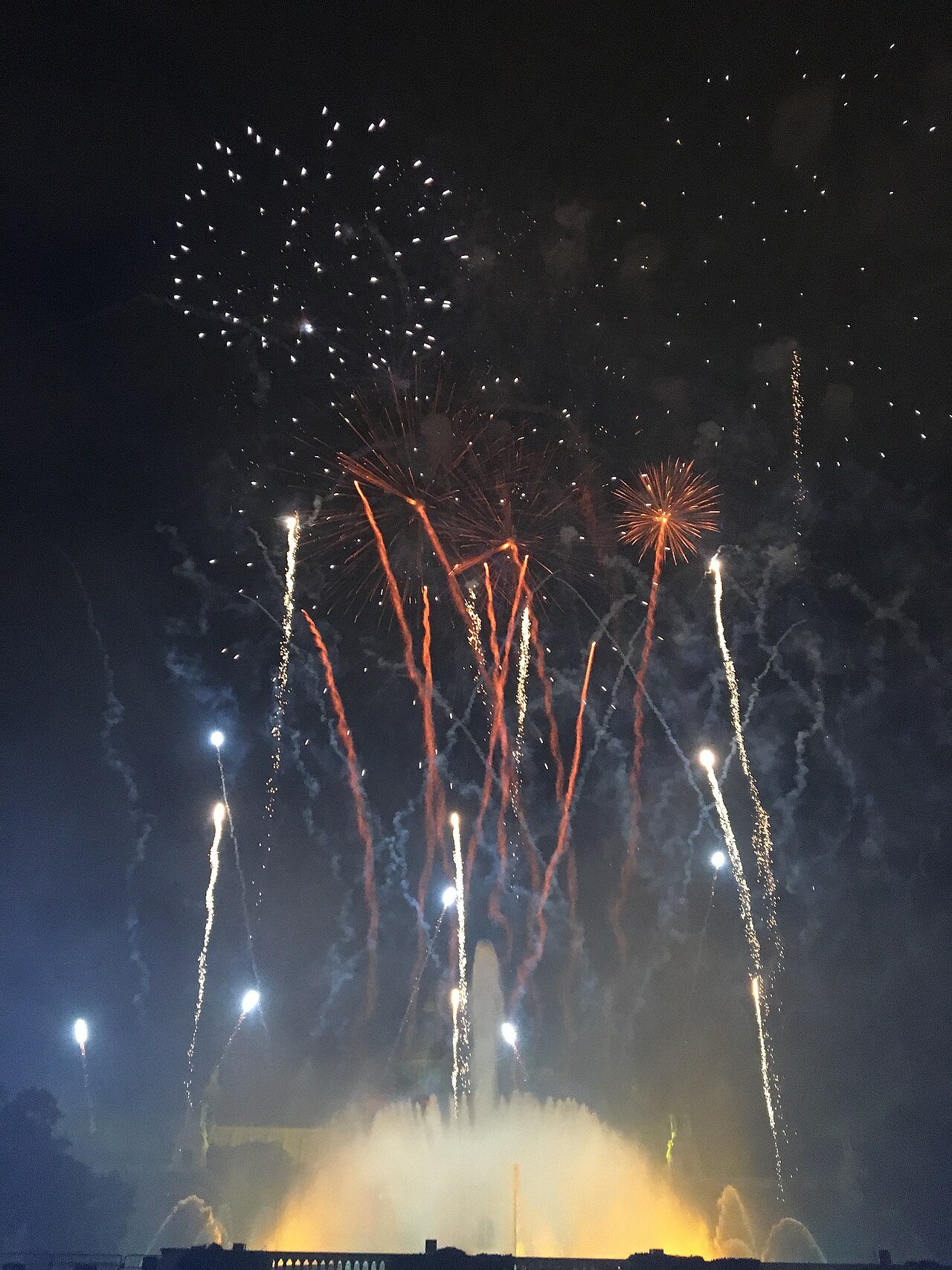
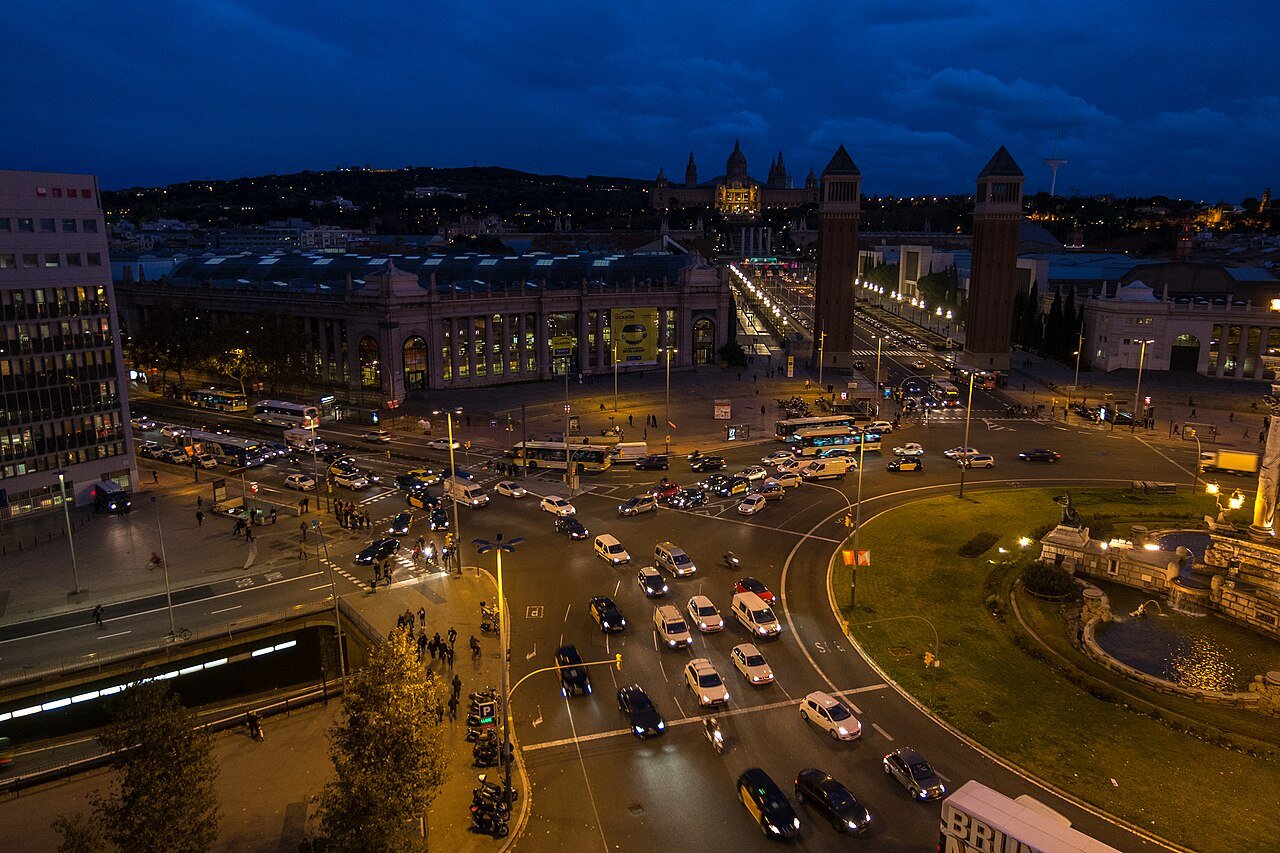
Barcelona’s official New Year’s Eve celebration is a free, unticketed street show, and since 2013 its home has been Avinguda de la Reina Maria Cristina, the wide avenue running from Plaça d’Espanya up to the Magic Fountain, with the Palau Nacional of the MNAC lit on the hill behind. In 2025 it drew around 115,000 people. The format in recent editions has been consistent: the avenue fills from about 21:30, a pre-show warms up the crowd, and from around 23:30 the French company Groupe F has directed a spectacle of music, illuminated drones and fireworks that peaks at the twelve chimes and burns on past them. One recent caveat: the Magic Fountain itself, dried out by the drought years, has sat silent through the last editions — the show happens around and above it, not with its water.
For 2026, plan on a different map. The Fira de Barcelona’s Montjuïc exhibition halls, which line the avenue, are in the middle of a major renovation, and there is no longer room for a six-figure crowd on Reina Maria Cristina. Municipal sources quoted by local media since July say the celebration moves uphill to the Anella Olímpica — the Olympic Ring, the esplanade around the Estadi Olímpic Lluís Companys and the Palau Sant Jordi, built for the 1992 Games. At the time of writing the city council had not yet published the final programme: it confirms the venue’s access points, the show’s timings and the special transport plan in December, and some official listings still show the old avenue. So treat the Anella Olímpica as the announced plan, not a settled fact, and check the council’s December programme before you fix your own.
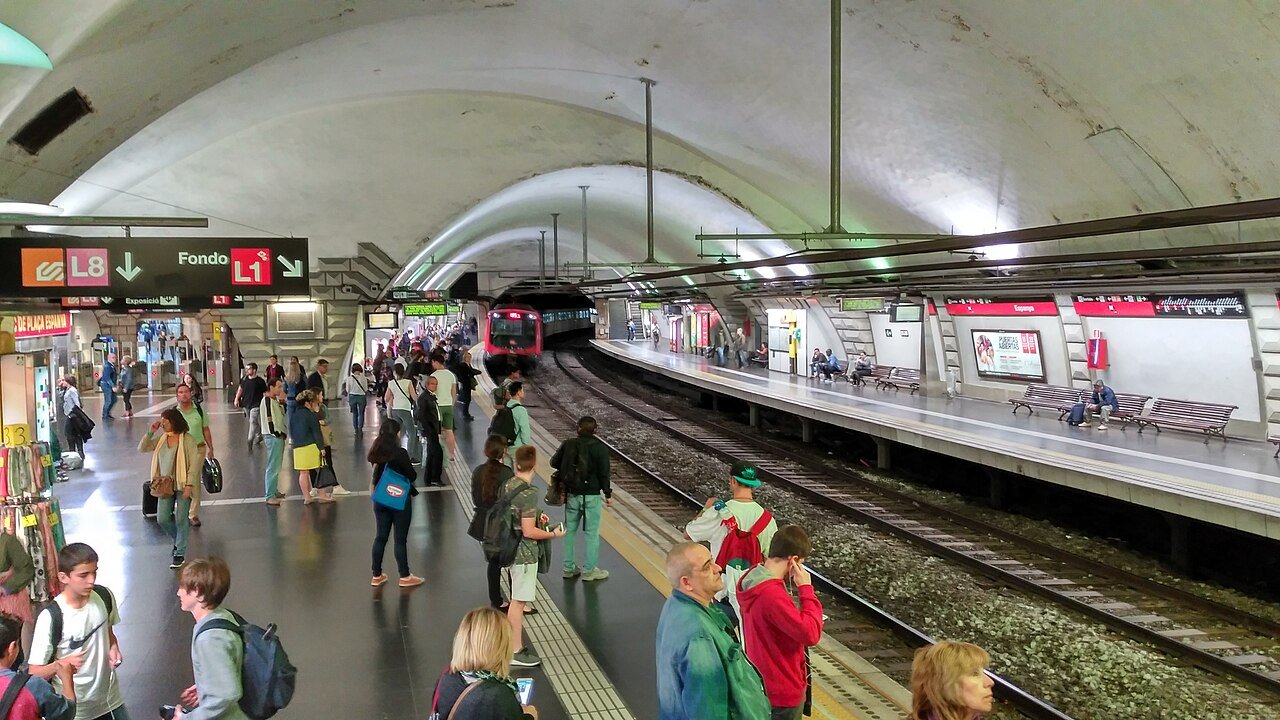
If the move goes ahead, the practical picture changes in three ways. First, space: the Olympic esplanade is broad and open, with the stadium as its backdrop — a natural arena rather than a street, and better suited to a drone-and-fireworks show. Second, the walk: the Anella sits high on Montjuïc, a 20–30 minute uphill walk from the nearest metro stations (Espanya on L1/L3, or Poble Sec on L3), so the special buses and transport arrangements in the council’s plan will matter — and comfortable shoes matter more than at the old site, where the metro delivered you to the crowd’s edge. Third, the view back: the esplanade looks out over the whole city, so the midnight fireworks will play against Barcelona lit below.
Whichever site hosts it, the rules of the night are the same. Arrive early — access points close once the space is full, and the last hour before midnight is a shuffle, not a walk. Bring your own grapes and a plastic cup of cava (glass is a bad idea in a crowd this size), keep your phone zipped away between photos, and pick a meeting point outside the arena in case the group separates: the mobile networks seize up at midnight every year, exactly when everyone tries to use them.

3. The Campanadas on Screen, and the Day That Builds to Midnight
For all the street spectacle, the statistically normal Spanish New Year’s Eve happens indoors, in front of a television. The campanadas are a national broadcast ritual: the transmission begins around 23:40, with presenters in evening dress filling the last twenty minutes with toasts and gentle comedy, and the whole country — at home, in restaurants, in bars with the volume up — follows the same clock. That clock is the one on Madrid’s Puerta del Sol, carried nationally by TVE’s La 1 and by Antena 3, whose broadcasts fight the night’s biggest ratings battle; Catalonia’s TV3 runs its own Catalan-language campanades alongside them. It is worth understanding what you are watching: the broadcast is why the cuartos trap (§1) springs on the whole nation simultaneously, and why, at five past midnight, every Spaniard has done exactly the same thing at exactly the same moment.
For a visitor, the television version has real advantages. You eat the grapes warm, seated, with a full glass and a bathroom; the parties afterwards do not start in earnest until one in the morning anyway (§6), so nothing is missed. Many restaurants and most organised parties put the broadcast on a screen for exactly this reason — the room goes quiet at 23:55 in a way no DJ can command. If your hotel room is your venue, any of the main channels will do; if you want the Catalan version of the night, choose TV3.
The day itself has its own fixtures. The most Barcelona of them is the Cursa dels Nassos, the city’s New Year’s Eve run: a 10-kilometre race through the seafront streets of Sant Martí that in 2026 starts from Carrer Selva de Mar at 17:15 on 31 December, with a 90-minute limit and an elite international 5 km following it in the evening. Its name honours the Home dels Nassos, the Man of the Noses — the Catalan folk figure who has as many noses as the year has days remaining, which on 31 December makes him a man with one nose, and the children who hunt for him through the day a running joke of the season. Ten thousand runners have taken part in past editions and entries sell out; as a spectator sport it is the city’s last daylight party, all fancy dress and cowbells, and it finishes in time for dinner.
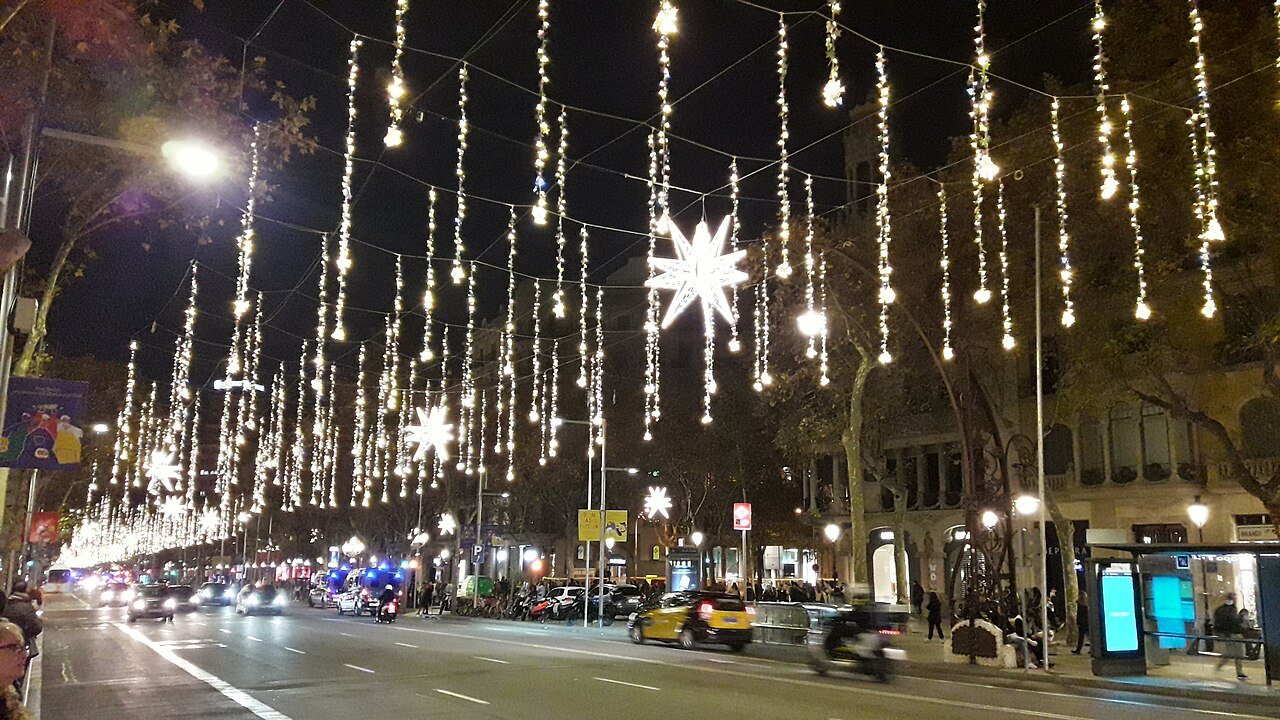
The rest of the daytime is deliberately ordinary — this is a working Thursday, and the city’s rhythm is shops, a long lunch, then a pause. The Christmas lights, which burn until 2:00 in the morning on holiday eves, give the early evening its walk: dinner in Spain on this night starts at 21:00 at the earliest, so there is a lit, unhurried hour to fill, and Passeig de Gràcia fills it better than anywhere.
4. Dinner First: Gala Menus and the Long Spanish Evening
Spanish New Year’s Eve is built backwards from midnight: the party is the tail, and dinner is the dog. The classic shape of the night is a long, dressed-up meal — at home with family, or in a restaurant that serves a set menú de fin de año — that starts around 21:00 or 21:30 and is timed so that coffee and cava land just before the chimes. Nobody in Spain eats early on 31 December, and a visitor who books a 19:00 table will eat in an empty room and finish two hours before the night begins.
Restaurants across the city publish special menus for the night from autumn onwards, and the format is consistent enough to plan around: a fixed, multi-course menu with wines, the twelve grapes supplied at midnight and a glass of cava for the toast, often followed by a party pack and music in the same room. Prices scale with ambition — a neighbourhood restaurant’s menu is a modest splurge, while the gala dinners in the big Passeig de Gràcia and seafront hotels are black-tie occasions with prices to match, and the most sought-after rooms sell out weeks ahead. The practical rules: book as soon as the menus appear, confirm in writing that the grapes and the midnight moment are part of the deal (the good ones make a ceremony of it), and check the finishing time — a menu that ends at 23:00 strands you between venues at the city’s busiest hour, while one that carries you through the chimes is the whole point.
What is actually eaten follows the season’s grammar — seafood and jamón to open, a grand main course, turrón and cava to close — and our guide to Christmas food in Spain covers the festive table in depth. One New Year’s Eve special deserves its own line: the city’s most theatrical dinner is not in a hotel at all but in a flamenco house on La Rambla, and it gets its own section below (§7).
If you are cooking or grazing instead, note the day’s logistics: supermarkets and markets keep near-normal hours on the 31st but close by early evening, the prepared-grapes tins sell out first, and 1 January is a full holiday shutdown (§9). Stock the flat before dinner, not after.
5. The Big Party: New Year’s Eve at Poble Espanyol
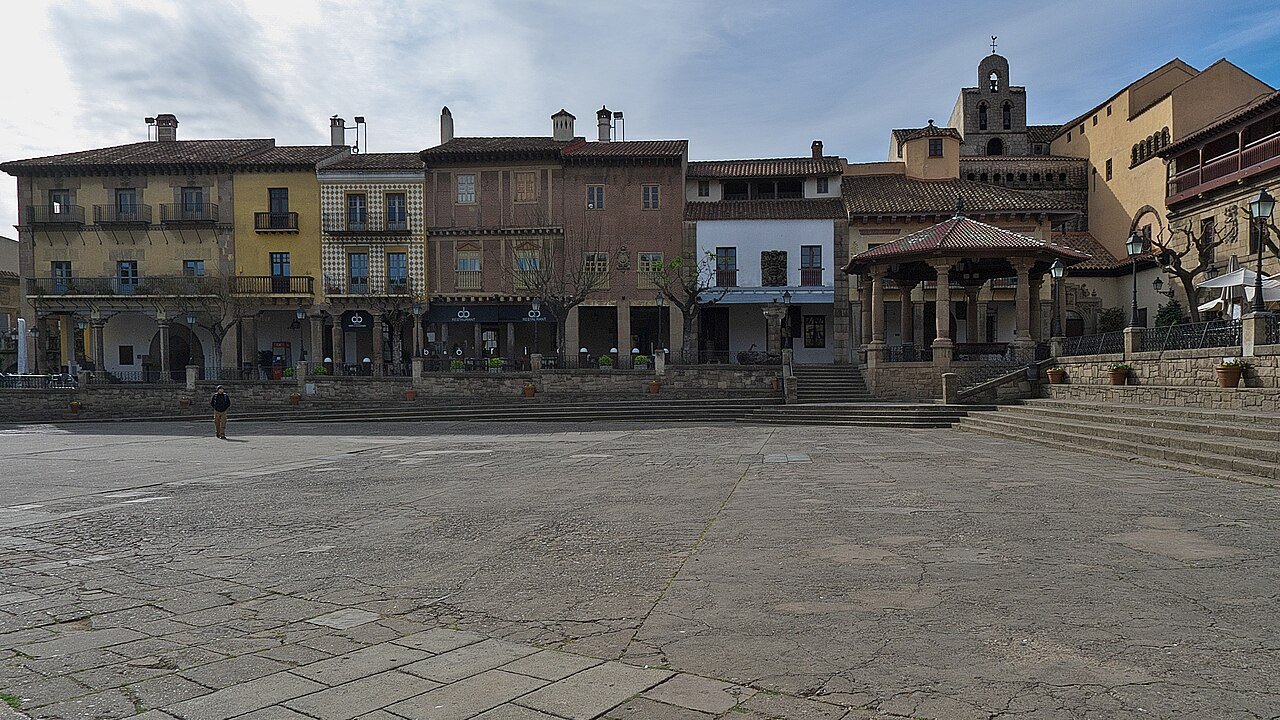
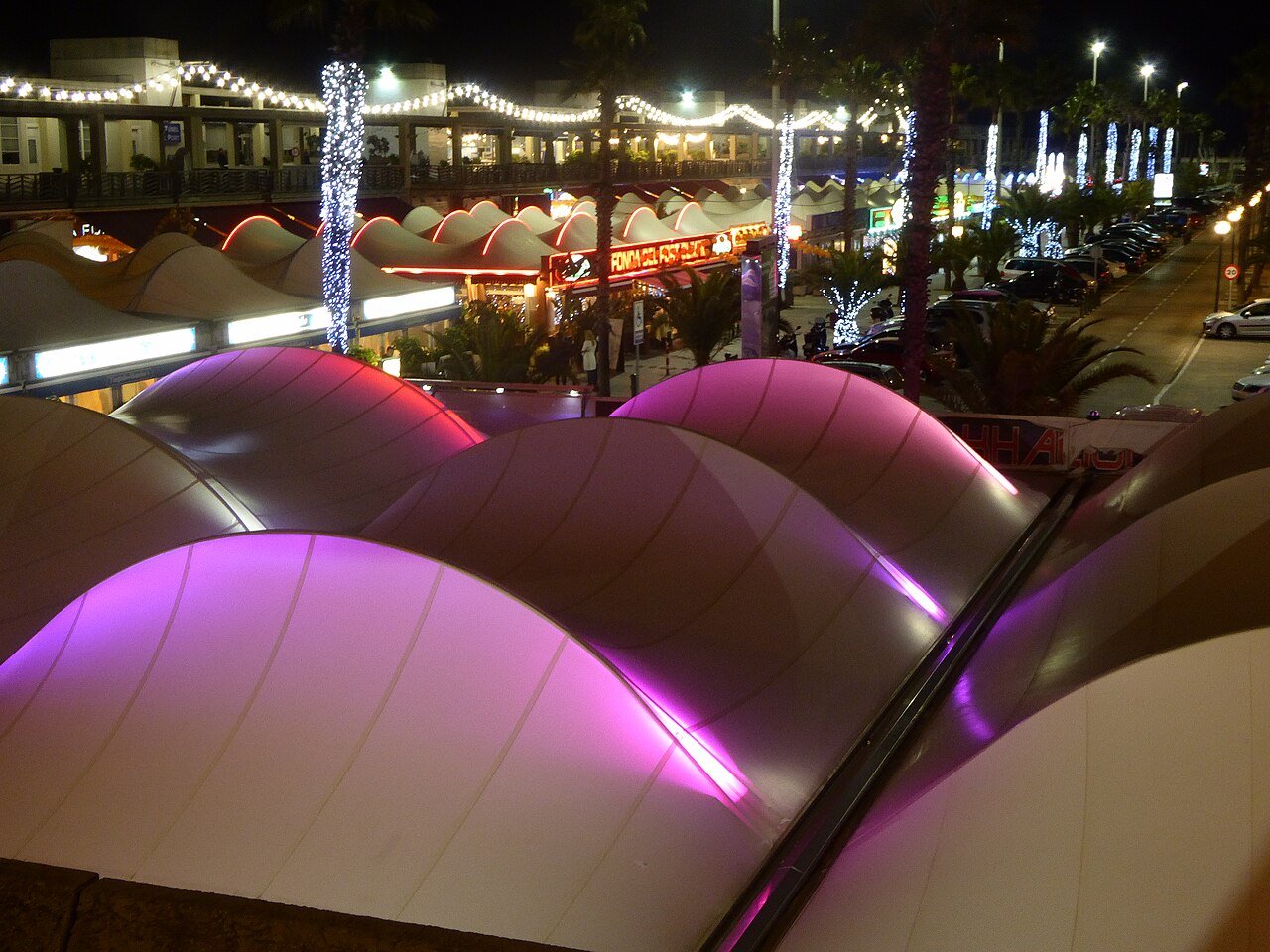
The single biggest organised party in Barcelona happens in a fake village. The Poble Espanyol, the open-air architectural museum on Montjuïc built for the 1929 International Exhibition — a whole Spanish town of replica squares and streets from every region — has thrown the city’s New Year’s Eve fiesta for well over three decades, and it remains the default recommendation for a visitor who wants the countdown, the grapes and a dance floor in one ticket.
The night runs from 22:30 to 06:00, which tells you its shape: you arrive dressed up, the chimes and grapes happen inside with the whole crowd, and then the village becomes a festival until dawn. The space divides into distinct areas — in recent editions the Hivernacle, a heated glasshouse marquee over the main square, playing hits from the eighties to today; La Carpa, a tent given to house and techno (the “four-on-the-floor” floor); Monestir Infierno’s, an urban-music room; and a VIP area, Golden Hits, for the upgraded tickets. A general ticket in recent editions has included several drinks, the twelve grapes and a cotillón party pack, which is the detail that makes it work: nobody has to source grapes at 23:50.
Current listings for the 2026/27 edition start general tickets at €45, with the price climbing in tiers as the night approaches and the door price — if any tickets remain — the highest of all. The pattern is the same every year: the cheap tiers are gone by mid-December. Book on the official site as soon as your trip is fixed, and note the geography in your favour: the Poble Espanyol sits on Montjuïc a short walk from Plaça d’Espanya, so if the official show (§2) is your midnight, the village is your after-party — and if the show moves to the Anella Olímpica as announced, the two are on the same hill.
6. Clubs and Party Tours: Dancing Until Dawn
Midnight is not the climax of Barcelona’s club night; it is the warm-up. The city’s clubs treat the chimes as a starting gun — doors for the big New Year’s Eve sessions fill from around 00:30–01:00, the floors peak at three, and the night ends at six or later with the metro (§11) still running to take everyone home. You do not need to choose between the grapes and the club: the standard local manoeuvre is grapes wherever you are at midnight, then the club from one.
The headline rooms are the ones that headline all year. Razzmatazz, the five-room warehouse club in Poblenou, runs one of the city’s biggest New Year’s Eve parties — current listings show the 2026 night opening at 22:30, so it can host your whole evening, with tickets from €55 rising through successive releases as they sell out. Down on the seafront, the Port Olímpic strip — Opium, Shôko and Ku, the club formerly known as Pacha, in a row under the twin towers — runs ticketed gala parties with the Mediterranean as the backdrop and a smarter dress code than the warehouse floors. Every one of these sells advance tickets for 31 December, and every one is cheaper, surer and quicker to enter with one bought in advance: door queues on this night are measured in hours, and some doors simply close.
If you would rather be organised by someone else, two bookable party formats run on the night itself. The New Year’s Eve Party Pass starts at 21:30 with a two-hour open bar — beer, wine and spirits included — moves to a second bar to see midnight in the traditional Spanish way with a free glass of champagne, and finishes with skip-the-line entry to a club, one drink included; it is an 18+ night aimed squarely at travellers who want a crowd to belong to, and it comes with free cancellation up to 24 hours in advance if your plans change. Quieter and cleverer, the New Year’s Eve speakeasy evening starts at 20:00: a local guide leads a small group through the city’s hidden, speakeasy-style bars — unmarked doors, low lights, proper cocktails — with a shared tapas plate and three drinks included, and brings everyone together for cava as midnight lands. It is the party for people who do not want a superclub, and at around $111 it is priced like the dinner it partly replaces.
Whichever floor you end up on, the night’s etiquette is simple: buy tickets in advance, carry ID (the clubs check, and 18 is a hard line), and dress a notch smarter than a normal club night — New Year’s Eve is the one date Barcelona’s door staff are at their strictest.
7. A Flamenco New Year: Tablao Cordobés
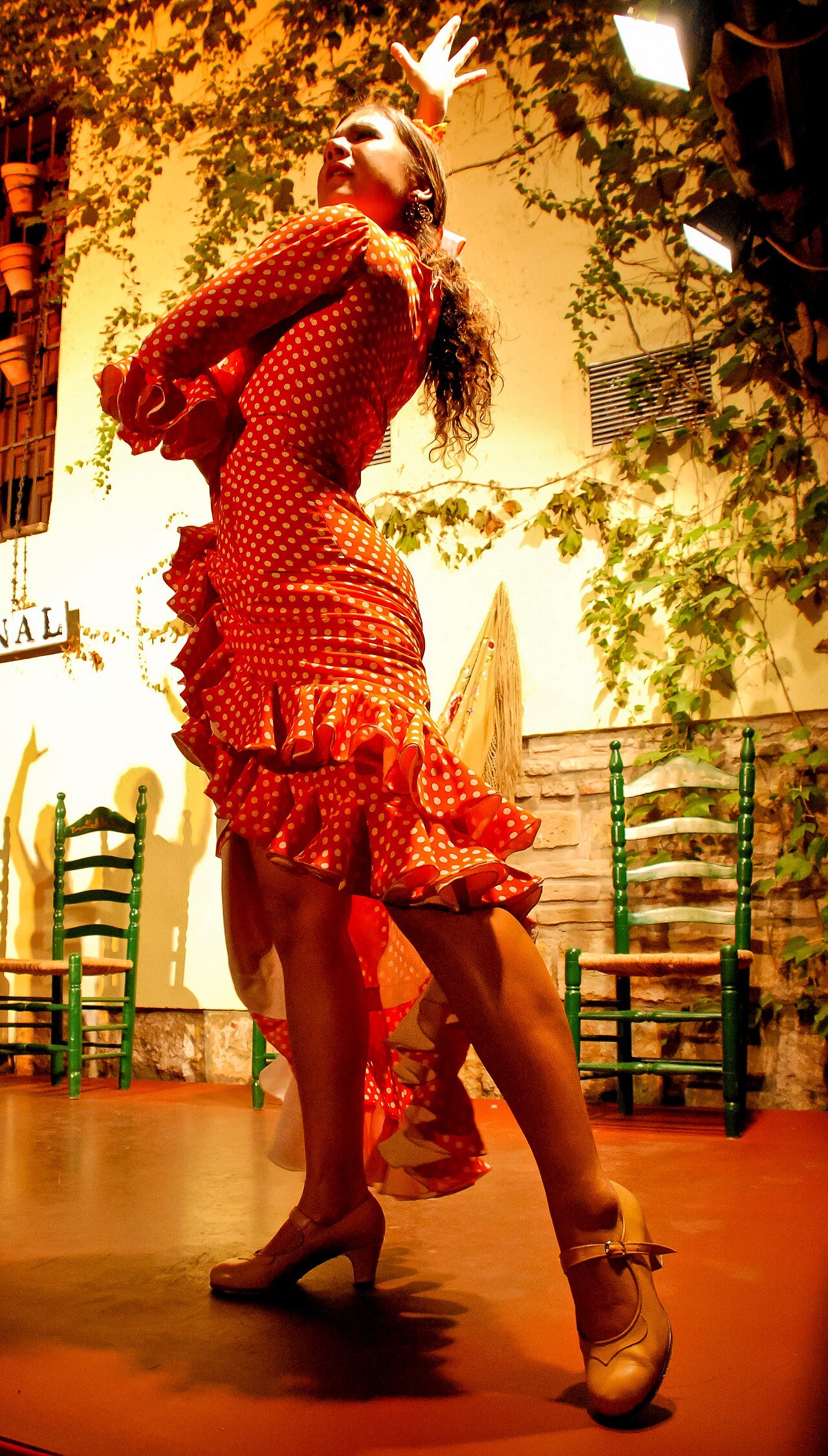
The most Barcelona way to see in the new year involves no DJ at all. Tablao Flamenco Cordobés, the family-run tablao at La Rambla 35 that has staged flamenco since 1970 — and was named Best Tablao in the World 2025 by the Flamenco School of Andalusia — turns its intimate room over to a New Year’s Eve Gala for just 80 guests. It is the night’s boutique option: a seated dinner, a full flamenco show by the house’s artists, and the grapes at midnight in a room small enough that every seat is a good one.
The gala comes in two forms, booked direct with the tablao. Show + Dinner (€150) gives you preferred seating, a special buffet menu — lobster is the advertised centrepiece — with unlimited drinks and premium wines through dinner, then the show with two further drinks. Show + Drink (€80) skips the dinner for the show with two drinks included. Both include the twelve grapes and party favours at the chimes, in a room dressed for the night. Two warnings in the practical sense: the gala is expressly non-refundable — the house is blunt about it, since an 80-seat night cannot be resold at short notice — and it sells out; if it is your plan, it should be your first booking, not your last.
If the gala is full, or flamenco sounds better on a quieter night, the tablao’s ordinary show is one of the surest tickets of any Barcelona trip — about seventy minutes of voice, guitar and dance at touching distance, a drink included, with tapas or a full dinner served beforehand in its Alhambra-style dining room. It is rated 4.6 out of 5 across more than 5,300 reviews on GetYourGuide, with entry from about $39 — book it for the 30th or New Year’s Day weekend, and keep the 31st for the streets.
8. 1 January, Noon: The First Swim of the Year
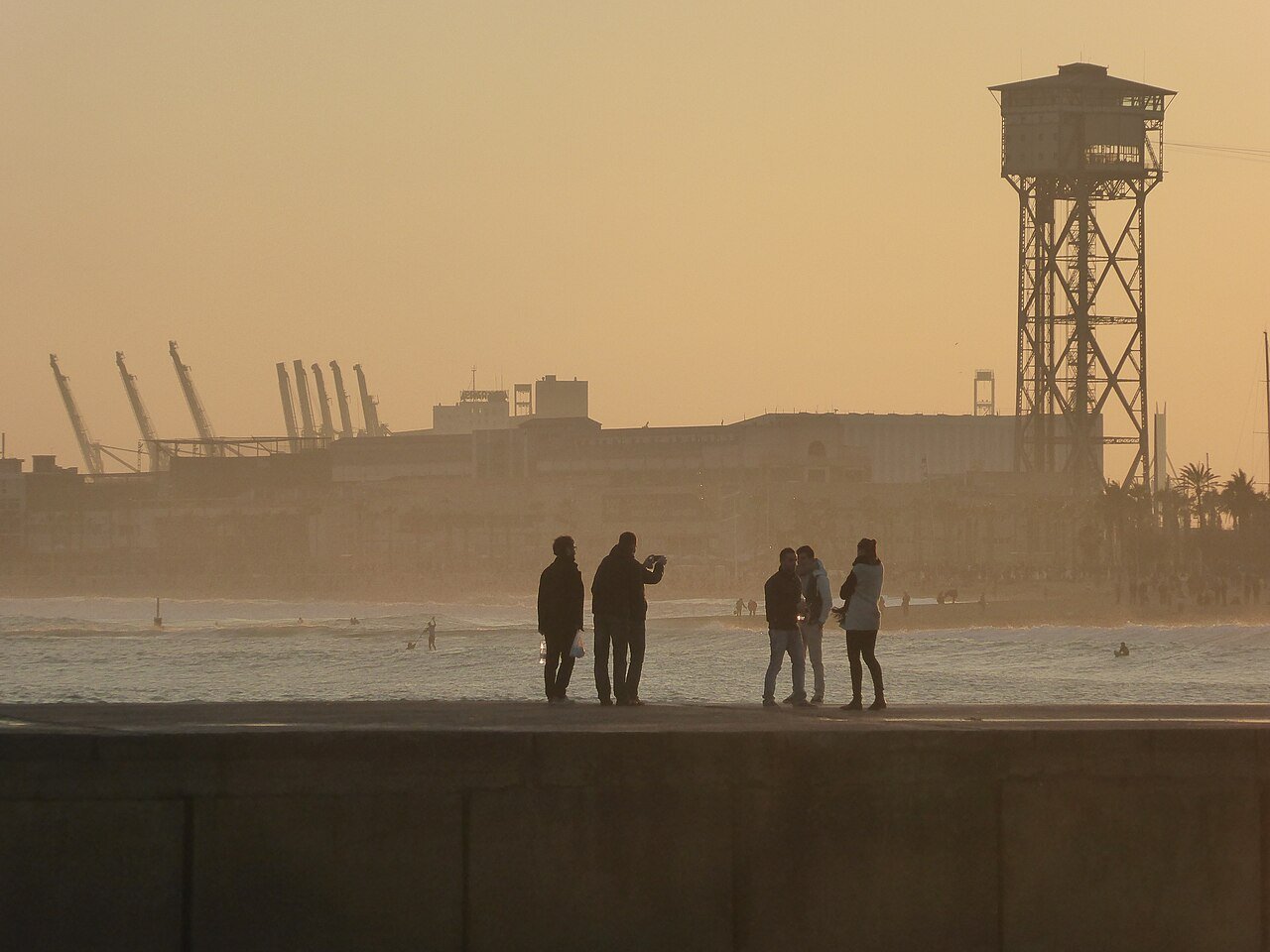
Every city has a hangover cure; Barcelona’s is the Mediterranean, in January, in public. At 12:00 on 1 January, on Platja de Sant Sebastià — the city beach at the Barceloneta end of the seafront, in front of the old swimming club — several hundred people in swimming costumes, some in fancy dress, many holding a glass of something restorative, charge into the sea together for the Primer Bany de l’Any, the First Swim of the Year. It is the city’s happiest spectator sport and, for the swimmers, a brisk announcement that the year has started properly.
The swim is organised by the Club Natació Atlètic-Barceloneta (CNAB), the historic swimming club whose building stands on the beach, and it is run as a solidarity event: in recent editions registration has cost a symbolic €4, donated to charities working with homeless people — the 2025 edition’s went to Projecte Sostre and Salut Sense Sostre — and it buys you the practical comforts that make a January dip civilised: the club’s changing rooms and lockers before and after, and a cup of hot broth when you come out. The 1 January 2026 swim was the event’s 27th edition, so the 2027 edition is expected to be the 28th on the same pattern; the club publishes the registration details in December, and joining in is a matter of signing up rather than qualifying. Spectators need nothing but a place on the sand.
Calibrate your expectations honestly. The Mediterranean off Barcelona in early January sits at about 13°C — not Arctic, but cold enough that the swim is a dash, a shout and a retreat rather than a paddle, and the beach bars afterwards, full of swimmers in towels ordering vermouth, are half the tradition. Go in quickly, come out when your feet say so, and have the towel and the warm layer in someone’s hands at the waterline. Between the swim at noon and the morning’s late start (§9), it is the perfect hinge of the day — and the sea, on a clear January noon, with the city skyline behind you and the whole beach applauding, is a genuinely glorious way to open a year.

9. New Year’s Day: The Slowest Morning of the Year
Friday 1 January 2027 is a public holiday, and Barcelona treats it as one. The morning belongs to sleep: the city that was awake until six surfaces late, the streets are quiet until well past ten, and the day’s first social event for many families is a long lunch. For a visitor, the honest way to plan New Year’s Day is around what is not open, and then to enjoy what is.
Most museums and many attractions close on 1 January or open late, and shops are shut for the holiday. The exceptions are worth knowing: Casa Batlló opens every day of the year, La Pedrera has opened on New Year’s Day in recent years, and the seafront — the beaches, the promenade, the port — belongs to everyone, all day, for free. The Christmas lights still burn in the evening (they run until the Kings on 6 January), the fairs are in their final days, and the restaurants that open do a strong trade in recovery lunches; book the one you want rather than wandering hopefully.
The day’s two fixed points are the swim at noon (§8) and, for anyone staying the course, the approach of the season’s real finale: the Three Kings arrive by boat on 5 January, and the city that has just finished one festival immediately starts dressing for the next. If your trip runs that long, you have chosen the best week of the Spanish winter; our guide to Barcelona in winter covers the season beyond the festive fortnight — the quiet museums, the calçotadas to come, and the January light that makes photographers forgive the cold.
10. Where to Stay for New Year’s Eve
The all-night metro (§11) means no neighbourhood is a bad base, but the night has a geography, and choosing with it in mind saves the two journeys you will be least fit to make: the walk to midnight and the walk home at dawn.
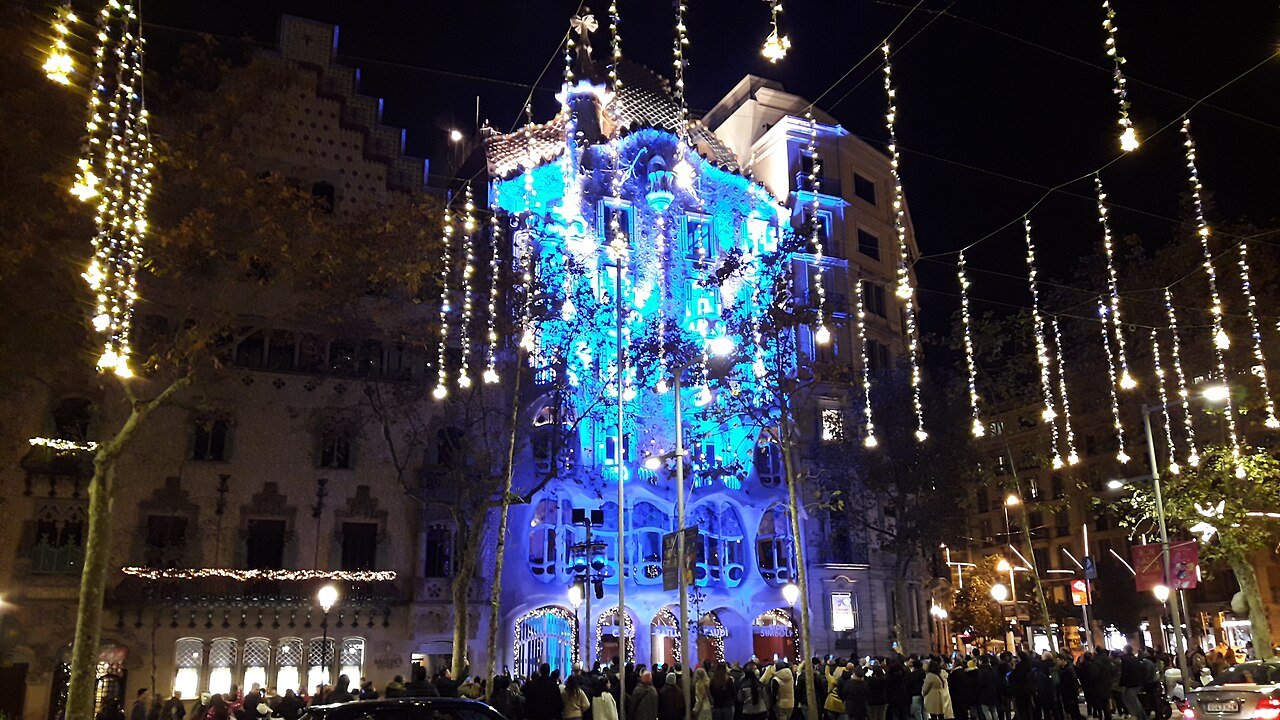
Sants-Montjuïc, around Plaça d’Espanya, is the tactical choice for 2026. It is the gateway to the hill — walking distance to the Poble Espanyol party and the closest base to the Anella Olímpica if the official move is confirmed — with Espanya’s metro and FGC station under the square and prices a step below the centre’s. The Eixample, along Passeig de Gràcia, is the glamorous one: the designer lights overhead, the gala-dinner hotels and the Gaudí houses on the doorstep, Casa Batlló lit blue at Christmas a minute’s walk away, and every metro line in reach. Book this district earliest; it is where the city’s own celebration class sleeps.
The Gothic Quarter and La Rambla put the restaurants, the bars and the Tablao Cordobés within a stroll, and the old town’s small hotels are full of character — in exchange for the night’s noise, which on 31 December runs until morning and does not respect your shutters. Barceloneta and the Port Olímpic are the party-and-swim base: clubs on the strip below your window, the First Swim a short walk along the sand at noon, and the L4 metro line into the centre. They suit travellers whose plan is §6 then §8, in that order, with nothing in between but sleep.
Wherever you book, book early and read the cancellation terms twice: 31 December is a peak night in a long-holiday week, rates climb steeply from late autumn, and the good rooms near the hill go first.
11. Practical Notes: Transport, Timing and Staying Safe
The metro runs all night. This is the fact that makes Barcelona’s New Year’s Eve work: on 31 December the metro runs continuously, without closing, through the night into 1 January — in 2025 the non-stop service ran for a full 43 hours, from 05:00 on the 31st to midnight on New Year’s Day. A normal ticket or travel card is all you need. The FGC suburban lines and the TRAM also run all-night services on their main routes, the Nitbus night buses follow their usual pattern through Plaça de Catalunya, and taxis work all night with a €4.60 special-night supplement added between 20:00 on the 31st and 08:00 on the 1st — if you can get one at all in the hour after midnight, which is the night’s one genuinely scarce resource. Stations nearest the big crowds — Espanya above all — are at their most crushed in the thirty minutes after the chimes; the seasoned move is to let the first wave go, have another drink, and ride in comfort at one.
Timing the night. The working timetable, assembled from the sections above: the Cursa dels Nassos from 17:15 if you are running or watching; a walk under the lights (on until 2:00) before a dinner that starts at 21:00–21:30 and runs to the chimes; the official celebration’s ground filling from about 21:30 if the street show is your midnight instead; parties and clubs from 00:30–01:00 to 06:00; the First Swim at 12:00 on the 1st. Notice what is missing from that list: any reason to rush. Spanish midnight is a beginning, not an end.
Staying safe is mostly a matter of respecting the crowd arithmetic. A six-figure gathering at midnight is a pickpocket’s harvest festival: keep your phone and wallet in a zipped, front-facing pocket or bag, take photos with a hand through the strap, and agree a meeting point away from the arena in case the group splits when the networks jam. Drink at the pace of people who will still be dancing at five. And keep the glass out of the crowd — cava in plastic cups is the local norm at street celebrations for a reason.
Finally, the two checks that protect the whole plan. First, the venue check: the official celebration’s 2026 home — the Anella Olímpica as announced, the old avenue in some lingering listings — will be settled by the city council’s December programme, which also publishes access points and the night’s transport plan; read it before you book anything non-refundable around a location. Second, the season check: everything in this guide sits inside Barcelona’s six-week Christmas, and our guide to Barcelona at Christmas is the companion for the days either side — lights, fairs, concerts and the Kings.
Travel insurance, sorted
Whether it is a two-week holiday or a longer move, travel insurance is not the most glamorous part of a trip – but it is the one booking you want to have in place before a trip, and while you are already away. Get a quote from SafetyWing
Barcelona at Christmas 2026: Lights, Nativities, Concerts and Catalan Traditions
12. Final Thoughts
New Year’s Eve is the Spanish year in miniature: a tradition eaten at speed, a family night that turns into a street party, a public show that ends with everyone dancing until the trains — which never stopped — carry them home. Barcelona adds its own flourishes: a countdown under fireworks on a hill of Olympic stadiums and exhibition palaces, a party in a village built for a fair a century ago, flamenco at midnight on La Rambla, and a swim in the January sea to prove the new year has really started. Come organised — dinner booked, tickets in hand, grapes counted — and then let the night do what it has done here for generations. ¡Feliz Año Nuevo! — Feliç Any Nou!
Frequently Asked Questions
How do you celebrate New Year’s Eve in Barcelona?
With the twelve grapes. Wherever they are at midnight — at the city’s official celebration on Montjuïc, at a restaurant table, at a party or in front of the television — Barcelonans eat one grape on each of the twelve chimes for luck, toast with cava, and then party: the clubs and the big organised parties run from after midnight until about 06:00, the metro runs all night, and the next day starts with the First Swim in the Mediterranean at noon on 1 January.
Where is Barcelona’s official New Year’s Eve celebration in 2026?
It is on the move. From 2013 to 2025 the free official show filled Avinguda de la Reina Maria Cristina, between Plaça d’Espanya and the Magic Fountain, drawing around 115,000 people in 2025. Renovation works at the Fira de Barcelona halls have taken the avenue out of use, and municipal sources quoted by local media say the 2026 celebration moves to the Anella Olímpica, the Olympic esplanade higher up Montjuïc. The city council publishes the final programme — venue, access points and transport plan — in December, so check it before you go; some listings still show the old site.
Does the Barcelona metro run all night on New Year’s Eve?
Yes. On 31 December the metro runs continuously through the night into 1 January on a normal ticket — in 2025 the non-stop service lasted 43 hours. The FGC lines and the TRAM also run all-night services, night buses run as usual, and taxis add a €4.60 special-night supplement between 20:00 and 08:00. Expect the stations nearest the celebrations to be very crowded in the half hour after midnight.
What are the twelve grapes, and how do you eat them?
It is Spain’s defining ritual: twelve grapes, one eaten on each of the twelve chimes of midnight, one grape for each month of luck in the year ahead. The chimes fall about three seconds apart, so buy the prepared grapes sold everywhere in December — small, seedless, counted into tins of twelve. Beware the cuartos, four double chimes that sound just before the real twelve; eating on those is the classic first-timer’s mistake.
Where is the biggest New Year’s Eve party in Barcelona?
At the Poble Espanyol, the open-air architectural village on Montjuïc, which has hosted the city’s biggest fiesta for over three decades: 22:30 to 06:00 across several music areas, with the grapes and a party pack included in the ticket. Current listings for 2026/27 start at €45, rising in tiers as the night nears — book early. For club floors, Razzmatazz and the Port Olímpic clubs run the biggest ticketed sessions.
What happens in Barcelona on New Year’s Day?
A slow start. 1 January is a public holiday: most museums close, shops shut, and the city surfaces late. The day’s set piece is the Primer Bany de l’Any, the First Swim of the Year — at 12:00 hundreds of swimmers charge into the sea at Platja de Sant Sebastià in front of the Club Natació Atlètic-Barceloneta, a solidarity event whose small registration fee (€4 in recent editions, donated to homeless charities) includes changing rooms and a cup of hot broth afterwards. Casa Batlló opens as usual, and the Christmas lights and fairs are still running towards the Three Kings on 5–6 January.


One Comment