Things to Do in Málaga: 12 Highlights From the Alcazaba to the Caminito del Rey
Málaga is the city that southern Spain happens to. Millions of visitors a year land at its airport, walk straight through its railway station and out to the resorts of the Costa del Sol, treating one of Spain’s oldest and liveliest cities as a corridor with a beach attached. That is a waste of a very good city. Málaga has a Moorish fortress and a castle stacked on one hill above a Roman theatre, the cathedral its own people call the One-Armed Lady, the birthplace of Pablo Picasso with two museums to prove it, a food market behind a medieval shipyard gate, a port that has been rebuilt as the city’s evening promenade, and a city beach where lunch is sardines grilled in a boat full of sand. The famous claim is 300 days of sunshine a year — civic boasting, but boasting with a strong basis in fact.
This guide to the best things to do in Málaga is organised the way a first visit actually flows. Start up the fortress hill in the cool of the morning. Do Picasso and the big museums through the middle of the day. Graze the market for lunch, stroll the marble shopping street, and finish at the port and the beach as the light goes golden. Then, if you have a third day, spend it on the cliff walk that has become one of the most famous hikes in Europe. If Málaga is one stop on a longer Andalusian loop, it also works as the loop’s easiest base — our one week in Spain itinerary explains why we no longer treat it as a place to skip, and this guide is the day-by-day proof.
In This Guide
- 1. Start on the Hill: The Alcazaba and Gibralfaro Castle
- 2. The Roman Theatre: Two Thousand Years at the Alcazaba’s Feet
- 3. The Cathedral: La Manquita, the One-Armed Lady
- 4. Picasso’s Málaga: The Museo Picasso and the Casa Natal
- 5. Calle Larios and the Old Town Around It
- 6. Mercado Central de Atarazanas: The City’s Larder
- 7. Muelle Uno, the Palmeral and the Centre Pompidou Málaga
- 8. Museo Carmen Thyssen Málaga: Andalusia Painting Itself
- 9. La Malagueta and the Espeto: Málaga at the Beach
- 10. Day Trip: The Caminito del Rey
- 11. Málaga Practicalities: Getting There, Getting Around, Where to Stay, When to Go
- 12. Final Thoughts
1. Start on the Hill: The Alcazaba and Gibralfaro Castle
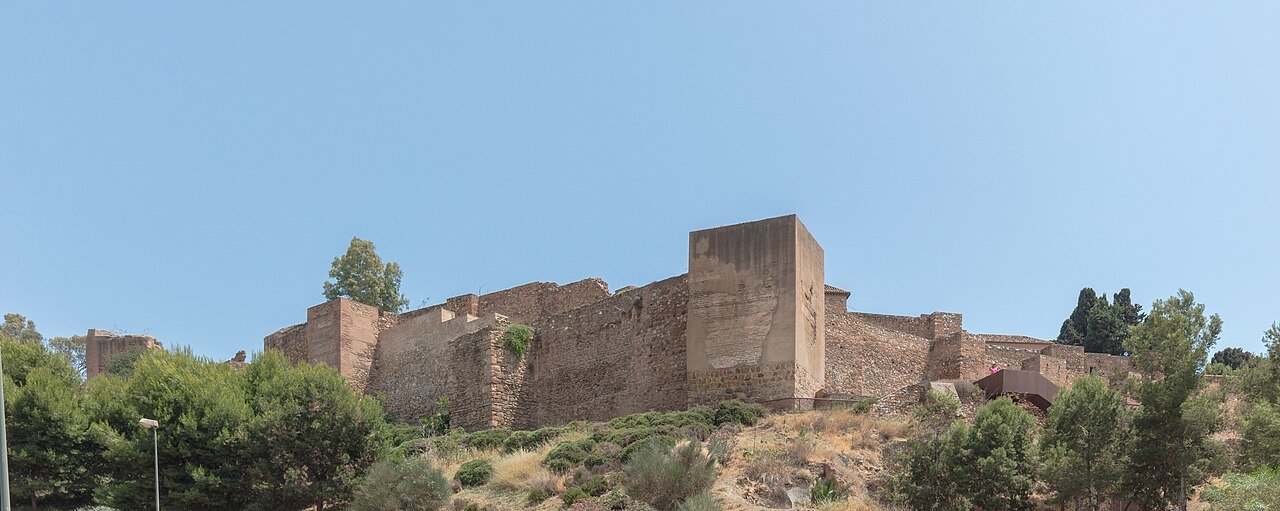
Every Málaga visit should start here, early, before the hill gets hot and the tour groups get thick. Two fortresses share one green hill above the port. Lower down sits the Alcazaba, the palatial citadel of Muslim Málaga, begun in the eleventh century, with its palace quarter credited in the standard account to Badis ibn Habus in the years around 1057. Higher up, joined to it by a long walled corridor called the Coracha, stands Gibralfaro Castle, the fourteenth-century stronghold built to guard the fortress and the harbour below it. Together they are the city’s founding image — the Alcazaba appears in our best places to visit in Spain for exactly that reason — and the walk between them is the best free lesson in Málaga’s geography you will get.
The Alcazaba is the finer of the two, and it is routinely described as the best-preserved alcazaba in Spain. Where Granada’s Alhambra is a whole royal city, this is a palace-fortress at human scale: two walled enclosures climbing the slope, gateways that force you through bent, defensible turns, and then, suddenly, the quiet of the palace quarter — small courtyards, horseshoe arches, carved plaster, pools and gardens where the loudest sound is water. It gets called a small Alhambra, and for once the nickname is fair: the same Nasrid-flavoured world, at a size you can absorb in an hour without your eyes glazing over. Leave time simply to stand on the ramparts. The views run over the Roman Theatre below, the cathedral tower, the port and the bullring, and they teach you the whole layout of the centre in one slow turn.
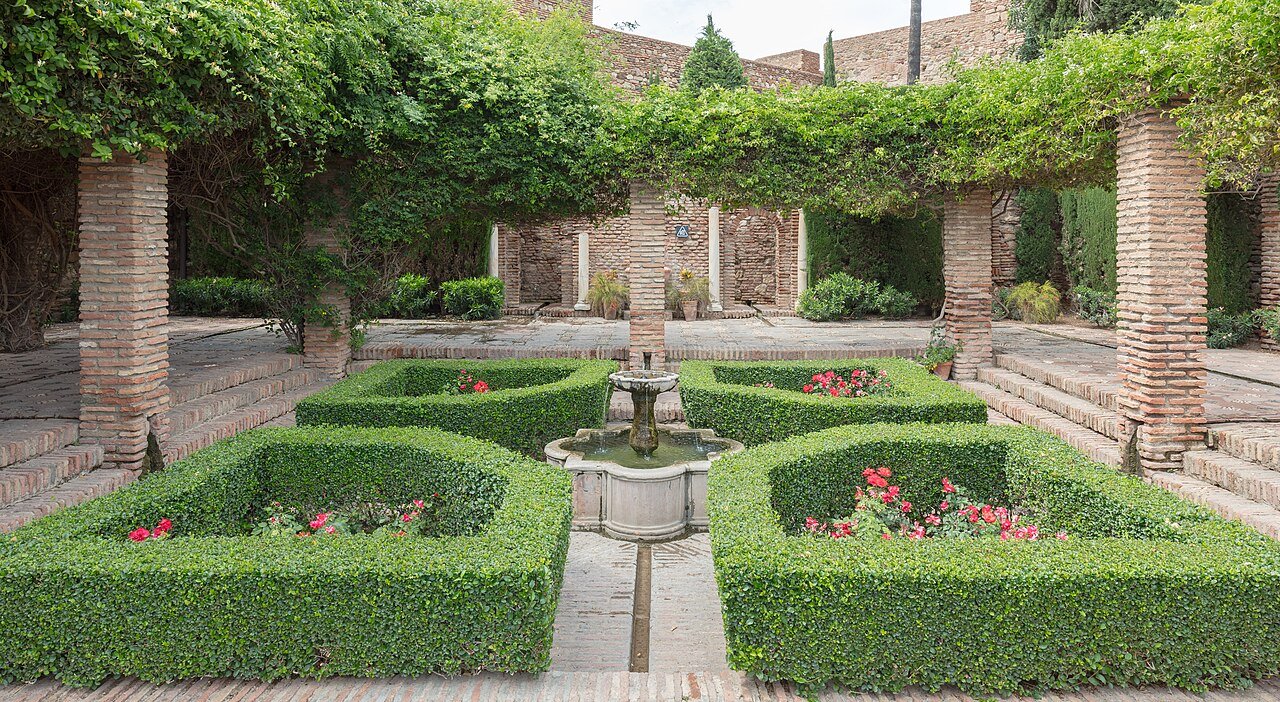
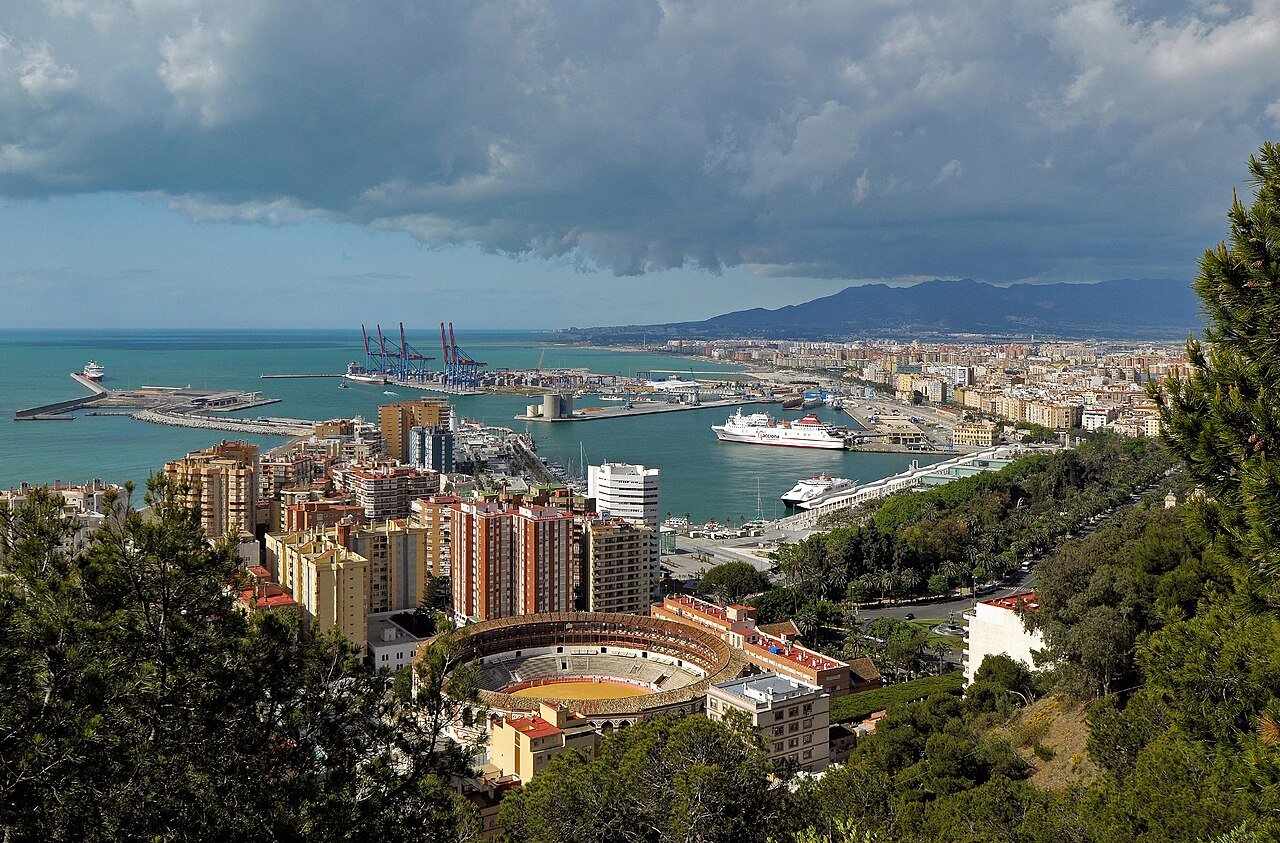
Gibralfaro, up the Coracha or by the path (or the bus, if your knees vote against the climb), is a plainer, more military place — thick walls, a keep, a small exhibition about the garrison’s life — and its glory is entirely the panorama. This is the highest classic viewpoint in the city: the bullring directly below, the port and its lighthouse, La Malagueta beach curving away east, the cathedral standing over the old town’s roofs and the mountains walling the whole scene in. Come up in the last hour of light if you can only do it once; the featured photograph at the top of this guide was taken from these walls. Between the two fortresses the Coracha itself is worth the walk — a double-walled zig-zag corridor built so the garrison could move between castle and palace under cover.
Practicalities, with a warning first. A single ticket costs €7 for each monument, and the combined ticket covering both is €10 — and if you are reading older guides that quote €3.50 and €5.50, be aware the city roughly doubled these fares in 2025 and the old numbers are simply out of date. Entry is free every Sunday from 14:00, which is good value and correspondingly busy. Opening runs 9:00 to 18:00 in winter (November to March) and 9:00 to 20:00 in summer, with last admission an hour before closing, and both sites close on 1 January and around Christmas (24, 25 and 31 December). The combined ticket is the obvious buy, but plan it as two visits with a walk between them, not one continuous tour — the castle and the palace are separate enclosures.
If you would rather have the hill explained than merely wandered, the neatest package is the Alcazaba & Roman Theatre guided tour: 1.5 hours with a local guide, entry to both the Alcazaba and the Roman Theatre included, a separate skip-the-line entrance, rated 4.5/5 from 1,422 reviews and costing from $13.39. The page states free cancellation up to 24 hours in advance for a full refund, plus reserve now & pay later, and the group meets at the glass pyramid (the Pirámide de Cristal) on Calle Alcazabilla — look for the orange umbrella. It is the tour this guide would book for a first morning in the city.
2. The Roman Theatre: Two Thousand Years at the Alcazaba’s Feet
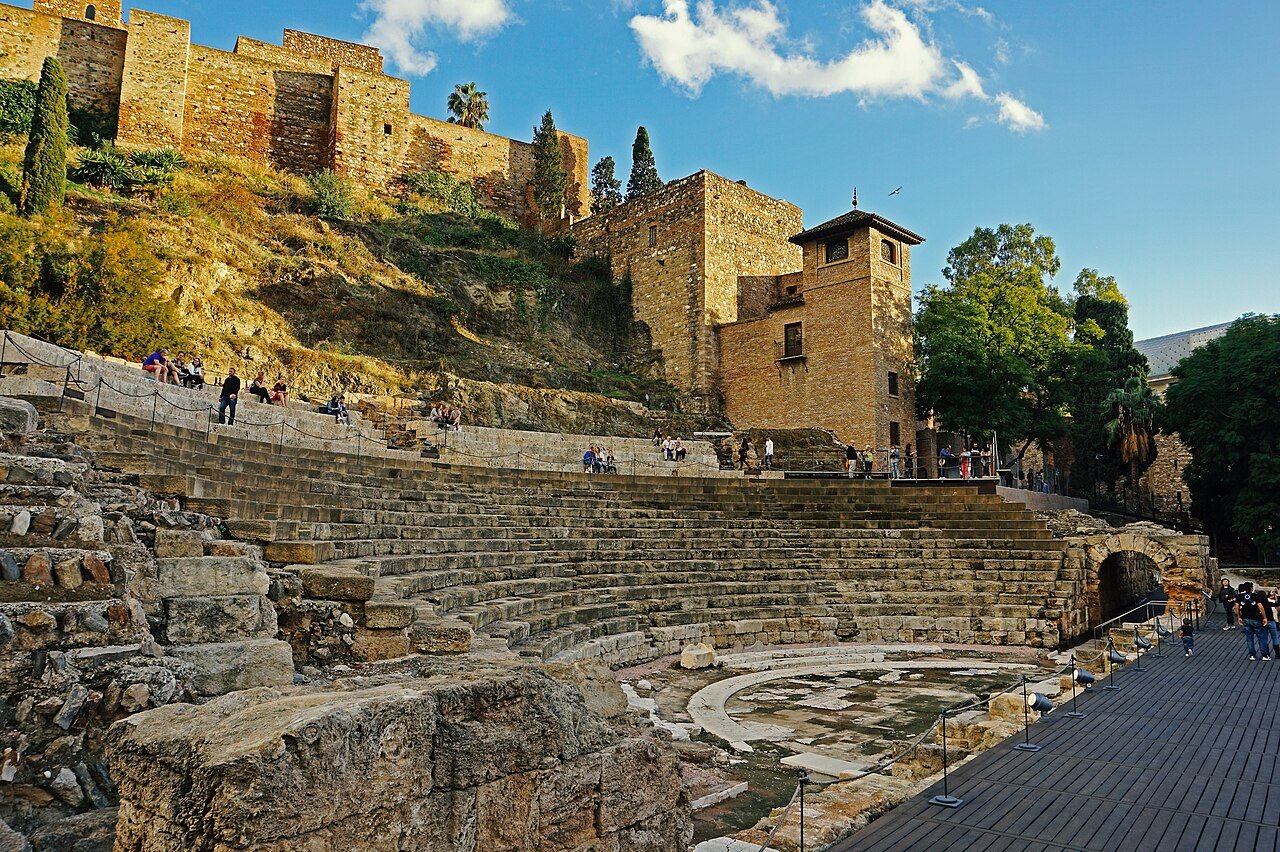
At the foot of the Alcazaba’s hill, on Calle Alcazabilla, the city’s layers sit in a single view: a Roman theatre in the foreground, a Moorish fortress on the slope above it, and between them a small glass pyramid marking the entrance. The theatre was built in the age of Augustus, in the first century BC, when Málaga was the Roman port of Malaca, and it did its job for some two hundred years before the city moved on. Later generations treated it as a quarry and then as a cemetery, and stone from its seats went into the Alcazaba above — the fortress quite literally built out of the theatre. Then the whole thing disappeared under the city, and stayed disappeared until 1951, when workmen digging the foundations of a cultural centre struck the seats and Málaga got its theatre back.
Entry is completely free, including the small interpretation centre beside the stage, which does a good job of explaining what you are looking at with finds from the site. It opens Tuesday to Saturday 10:00–18:00 and on Sundays and public holidays 10:00–16:00, closing on Mondays, with last entry half an hour before closing — but the honest secret of the Roman Theatre is that you barely need to go in at all. The whole cavea, the great bank of stone seats, is open to the street and lit at night, and half the pleasure is sitting on those steps with the city going past, exactly as this photograph shows its visitors doing. On summer evenings the ancient stage still hosts performances, which makes the point better than any panel: this is not a fenced-off relic but a working piece of the city that happens to be 2,000 years old. Pair it with the Alcazaba above — the guided tour in §1 covers both — and you have read Málaga’s first two chapters in one street.
3. The Cathedral: La Manquita, the One-Armed Lady

Málaga’s cathedral stands where the city’s main mosque stood, and it was begun in 1528 and worked on, in fits and starts, into the eighteenth century. It is a grand, golden-stone church in the Spanish Renaissance manner with a baroque main facade — and it is famous, throughout Spain, for what it does not have. The plan called for two towers. The north tower was finished, all 84 metres of clock, bells and dome. The south tower was never built at all, and stands to this day as a roofless stump. Malagueños looked at their lopsided cathedral and named it with an affection no architect could have bought: La Manquita, the One-Armed Lady. The night photograph above shows the pair — the completed tower floodlit on the right, the stump on the left — more clearly than any daytime view.
There is a beloved local story about the missing tower: that the money set aside to finish it was sent instead to fund the American War of Independence, and the cathedral has been one-armed ever since as a side-effect of the United States existing. Tell it, enjoy it — but know it is a tale told in Málaga rather than a documented fact, and the likelier truth is the dull one that runs through so many Spanish cathedrals: the money simply ran out, repeatedly, over 250 years.
Inside, the scale is the surprise: soaring vaults, an enormous carved choir in the middle of the nave in the Spanish style, and chapels of real quality around the ambulatory. General admission is €10 (reduced tickets run €6–€9 for students, over-65s and teenagers, and under-12s are free), and one warning matters this year and for some years to come: the rooftop tours, long one of the cathedral’s pleasures, are suspended while the roof is restored — work that began in 2024 and is a multi-year project — so ignore any ticket bundle that still tries to sell you the roof, and check the cathedral’s own site before counting on it. Tourist entry runs from 10:00 Monday to Saturday, with the closing hour shifting by season, and on Sunday afternoons; the early-morning opening is for worship, and it is for prayer, not sightseeing. Come back after dark, though, whatever you do: floodlit, with the stump silhouetted beside the tower, La Manquita is the city’s most romantic sight.
4. Picasso’s Málaga: The Museo Picasso and the Casa Natal
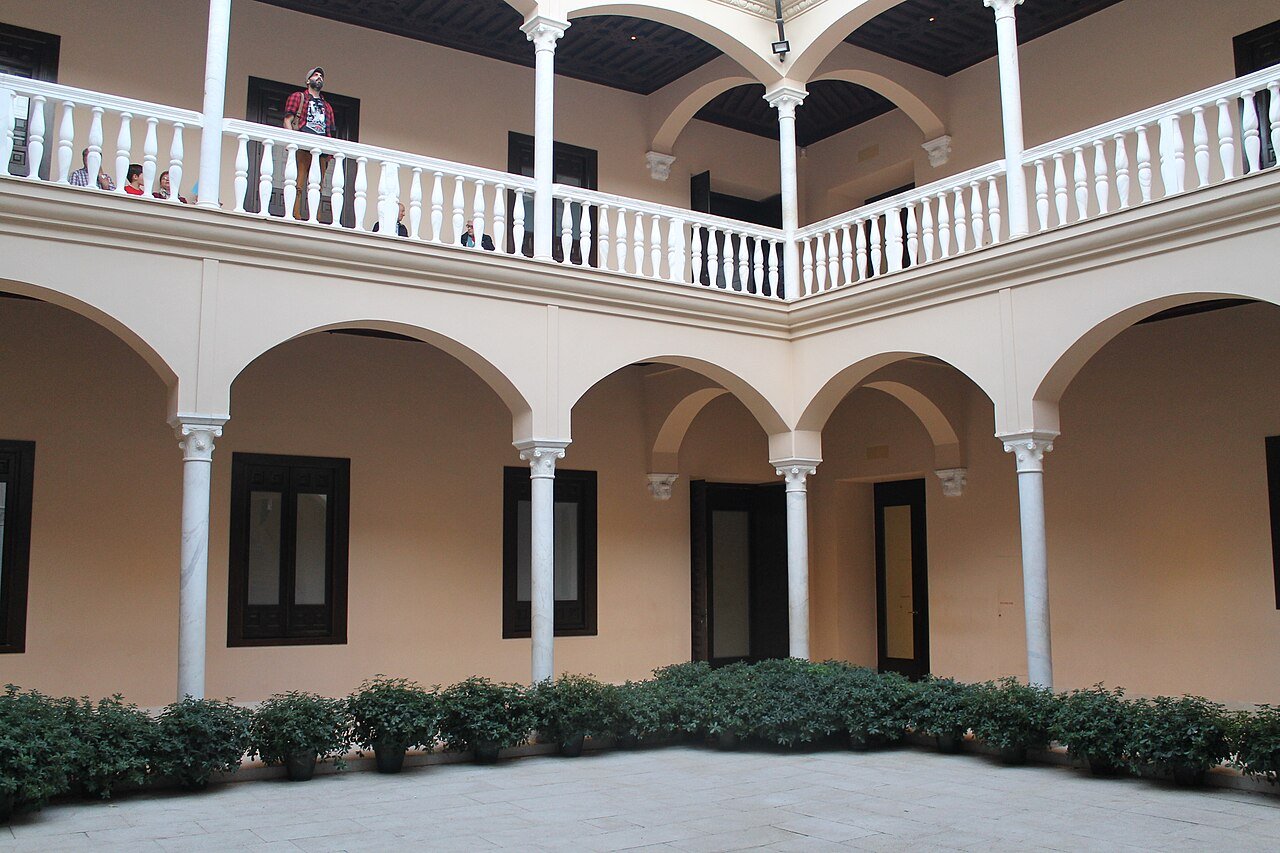
Pablo Picasso was born in Málaga in 1881, and although he left young and never really lived here again, the city he barely knew has built its modern identity around being his birthplace — and the centrepiece is a genuinely excellent museum. The Museo Picasso Málaga stands in the Palacio de Buenavista on Calle San Agustín, a Renaissance palace with Mudéjar bones (it was declared a National Monument in 1939) whose basement still holds Phoenician, Roman and Arabic remains. The museum exists because Picasso himself wanted his work exhibited in the city of his birth; it was made real by donations from his daughter-in-law Christine and his grandson Bernard, and it opened in October 2003. What you get is not a greatest-hits warehouse but a thoughtful survey of the whole career — paintings, drawings, sculpture, ceramics and prints, from the teenage academic studies through Cubism to the loose, joyful canvases of his last years in the 1970s.
The full-access ticket costs €13 (€11 reduced) at the museum and includes the temporary exhibitions and an audio guide. Under-17s get in free, and so does everybody on Sunday afternoons, in the last two hours before closing. It opens every day of the year except 25 December, 1 January and 6 January, at 10:00, closing at 18:00 in winter, 19:00 in spring and autumn and 20:00 in high summer, with last entry half an hour before. If you would rather have the ticket sorted before you arrive, the museum’s own entry ticket is sold on GetYourGuide from about $15 — rated 4.5/5 from more than 14,000 reviews, covering 141 works and the temporary shows. (One practical note: this is the museum’s single most popular ticket in the city, and the Sunday free hours are correspondingly crowded; a weekday morning is the connoisseur’s slot.)
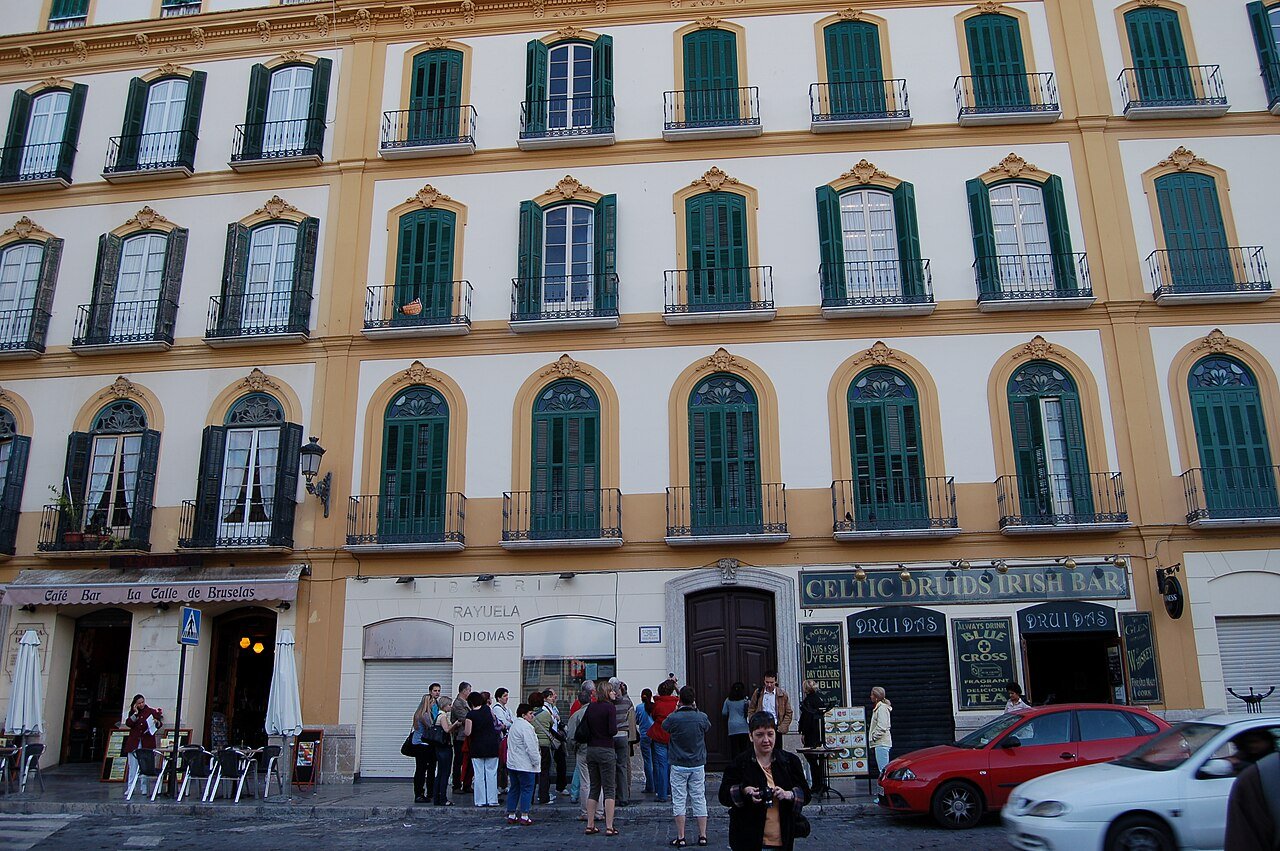
Ten minutes’ walk north, on Plaza de la Merced, the story begins. The Casa Natal — the birthplace museum — occupies the house at numbers 15–17 of the square, where Pablo Ruiz Picasso was born on 25 October 1881 and spent his first childhood years. Do not expect a palace: as the photograph shows, it is a modest, shuttered apartment block, which is rather the point — the most revolutionary artist of the twentieth century started life in an ordinary bourgeois flat above a square. Inside are family mementos, his christening robe, early sketches and a reconstruction of the world of his childhood, plus temporary exhibitions in the adjoining rooms. Entry is about €3 for the house and about €4 combined with the exhibitions, and it is free on Sunday afternoons. The square itself, with its cafés and the obelisk at its centre, is one of the old town’s nicest places to sit; and a few streets away stands the church of Santiago, with its Gothic-Mudéjar tower, where the baby Pablo was baptised. Museum first, birthplace second is the order that tells the story best: the work, then the beginning.
5. Calle Larios and the Old Town Around It

Every Spanish city has one street that is its drawing room, and Málaga’s is Calle Marqués de Larios — Calle Larios to everyone. It is a short, marble-paved, pedestrian boulevard running from the port-side Alameda up to Plaza de la Constitución, lined with the city’s best shops under curved, balconied facades built as a single harmonious scheme. In high summer the street is roofed with shade sails against the heat; at Christmas it carries some of the most famous lights in Spain (our winter packing guide shows them in full blaze); during the August fair it becomes the daytime party’s main floor. The rest of the year it is simply where Málaga goes to stroll, and the correct way to experience it is at the city’s pace — slowly, with at least one stop for coffee or a vermouth on a terrace.
At the top, Plaza de la Constitución is the old town’s main square and its natural meeting point, ringed with cafés. From there the historic centre unspools in every direction in a tight, walkable grid: down Calle Granada past tapas bars towards the Picasso Museum, past the cathedral’s flank on Calle Molina Lario, or into the little Pasaje de Chinitas, the alley named for the café-concert where Lorca once listened to flamenco. None of this needs a plan or a ticket. The old town’s pleasure is precisely that its sights — the fortress, the theatre, the cathedral, both Picasso museums, the market — all sit within about ten minutes of this square, so the streets between them become part of the sightseeing rather than the gaps in it. Give the grid an hour with no destination at least once in your stay.
6. Mercado Central de Atarazanas: The City’s Larder
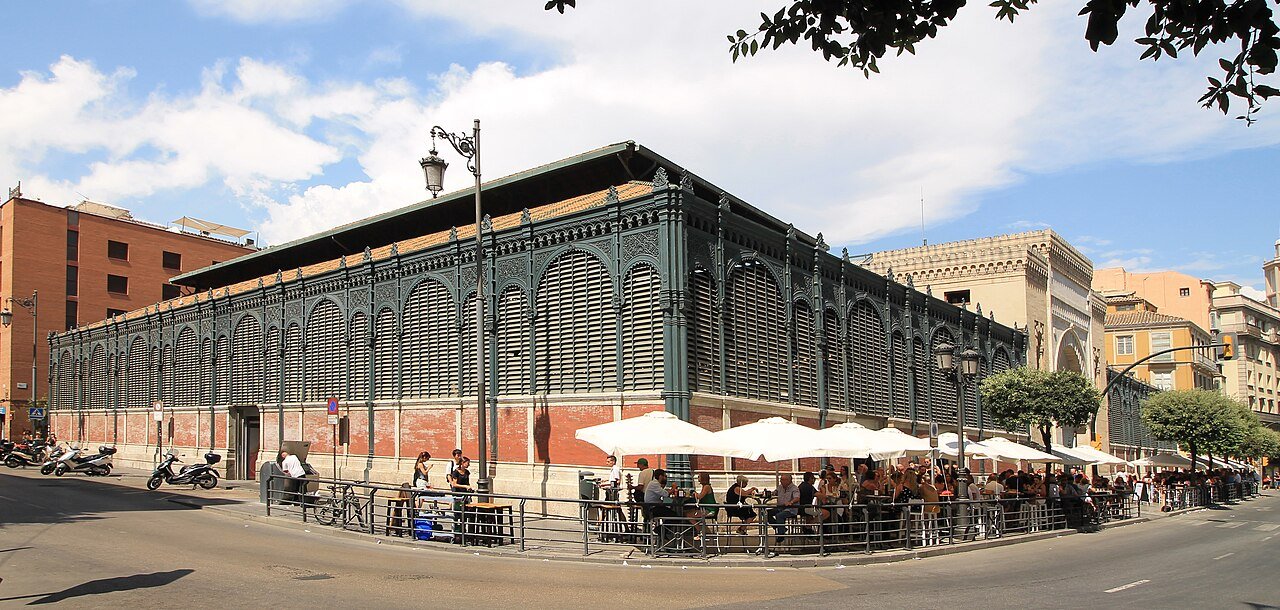
If the cathedral is Málaga’s soul, the Atarazanas market is its stomach, and the better people-watching of the two. You enter through a horseshoe-arched marble gateway that looks like the door of a mosque — because it is, in effect, a survivor of Muslim Málaga: the Puerta de Atarazanas is the one great gate left from the Nasrid shipyards that stood here by the medieval shoreline (atarazanas is simply Spanish for shipyards), kept when everything around it was rebuilt. Behind it stretches a grand nineteenth-century iron-and-glass hall, and inside that hall some 260 stalls do the city’s daily shopping: fish and shellfish still glittering from the morning boats, jamón sliced to order, pyramids of olives, Málaga raisins and sweet wine, subtropical fruit from the Axarquía hills, and butchers, bakers and cheese stalls in the side aisles.
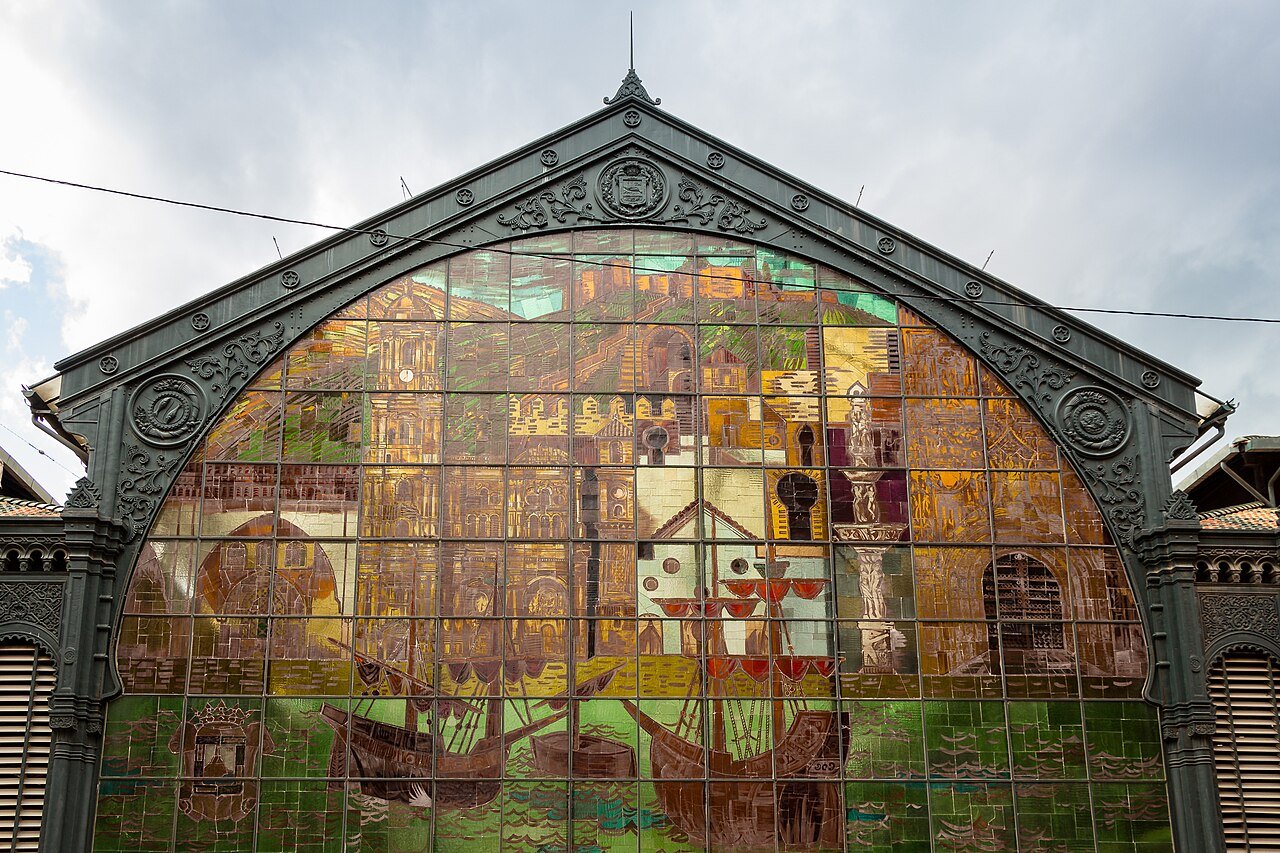
Come in the morning, and come hungry. The market opens Monday to Saturday from about 8:00, with most stalls packing away by about 14:00 — and note that the fish section closes on Mondays, there being no Sunday fishing. The ritual is to shop a little and graze a lot: the bars around the market’s edges and just outside its doors serve what the stalls sell, so a plate of boquerones (the little anchovies that give malagueños their nickname), a skewer of prawns and a glass of something cold is the correct mid-morning pause. Before you leave, walk to the back of the hall and look up: the rear gable is one huge stained-glass window picturing the city’s own landmarks — cathedral, Alcazaba, Gibralfaro — over two old sailing ships, made in the city’s colours of green and purple. A market that depicts the city to itself while it feeds it: that is Málaga in a single image.
7. Muelle Uno, the Palmeral and the Centre Pompidou Málaga
For most of its history Málaga’s port was a working harbour the city turned its back on. The rebuilt Muelle Uno reversed that: the old pier is now an open-air promenade of shops, restaurants and terraces running along the cruise quay, shaded by the Palmeral de las Sorpresas, a wave-roofed walk of palm trees that is the city’s favourite place for an evening paseo. Walk it at golden hour and the whole cross-section of Málaga walks with you — families, courting couples, cruise passengers staring up at their ship. At the pier’s root stands La Farola, the white lighthouse that has guarded the harbour since the nineteenth century and holds a small linguistic honour: it is the only lighthouse in Spain with a feminine name, la Farola rather than el faro, and malagueños are quietly proud of the fact.
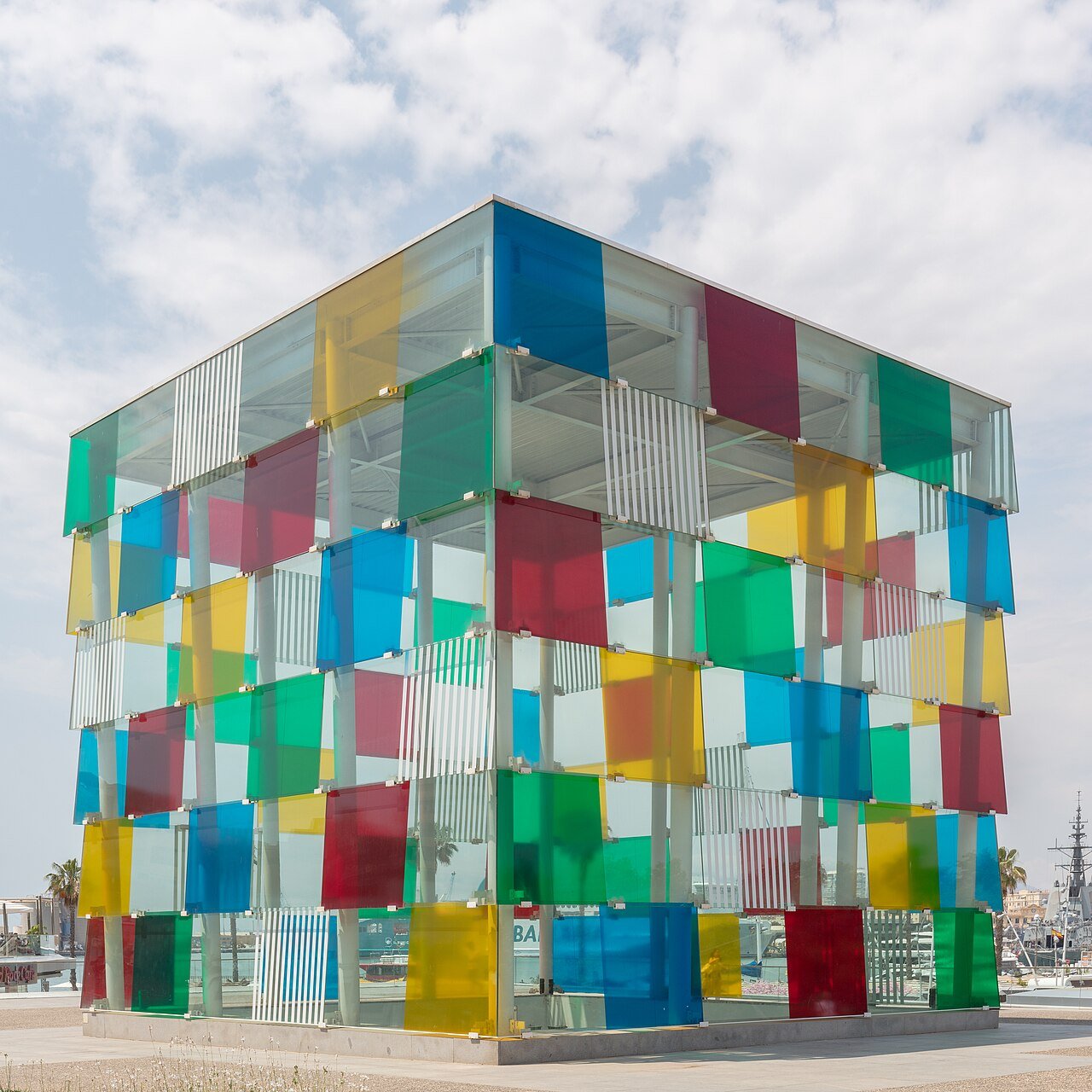
Halfway along, the promenade delivers you to a giant child’s building block: El Cubo, a cube of coloured glass panes — red, blue, green, yellow — designed by Daniel Buren, which is the skylight and symbol of the Centre Pompidou Málaga beneath it. This was the Paris museum’s first-ever satellite outside France when it opened in 2015, and there was real doubt it would stay; a renewed agreement has since secured it for another decade, so the experiment is now part of the city’s furniture. Inside, a semi-permanent exhibition of modern and contemporary art from the Paris collection (€7, or €9 combined with the temporary shows) fills a calm, white, underground gallery — Miró, Magritte and their descendants at the scale of a morning, not a marathon. It opens 9:30–20:00 and closes on Tuesdays; on Sunday afternoons from 16:00, entry is free. Combined with the port at sunset, it makes the best late-afternoon pairing in the city.
8. Museo Carmen Thyssen Málaga: Andalusia Painting Itself
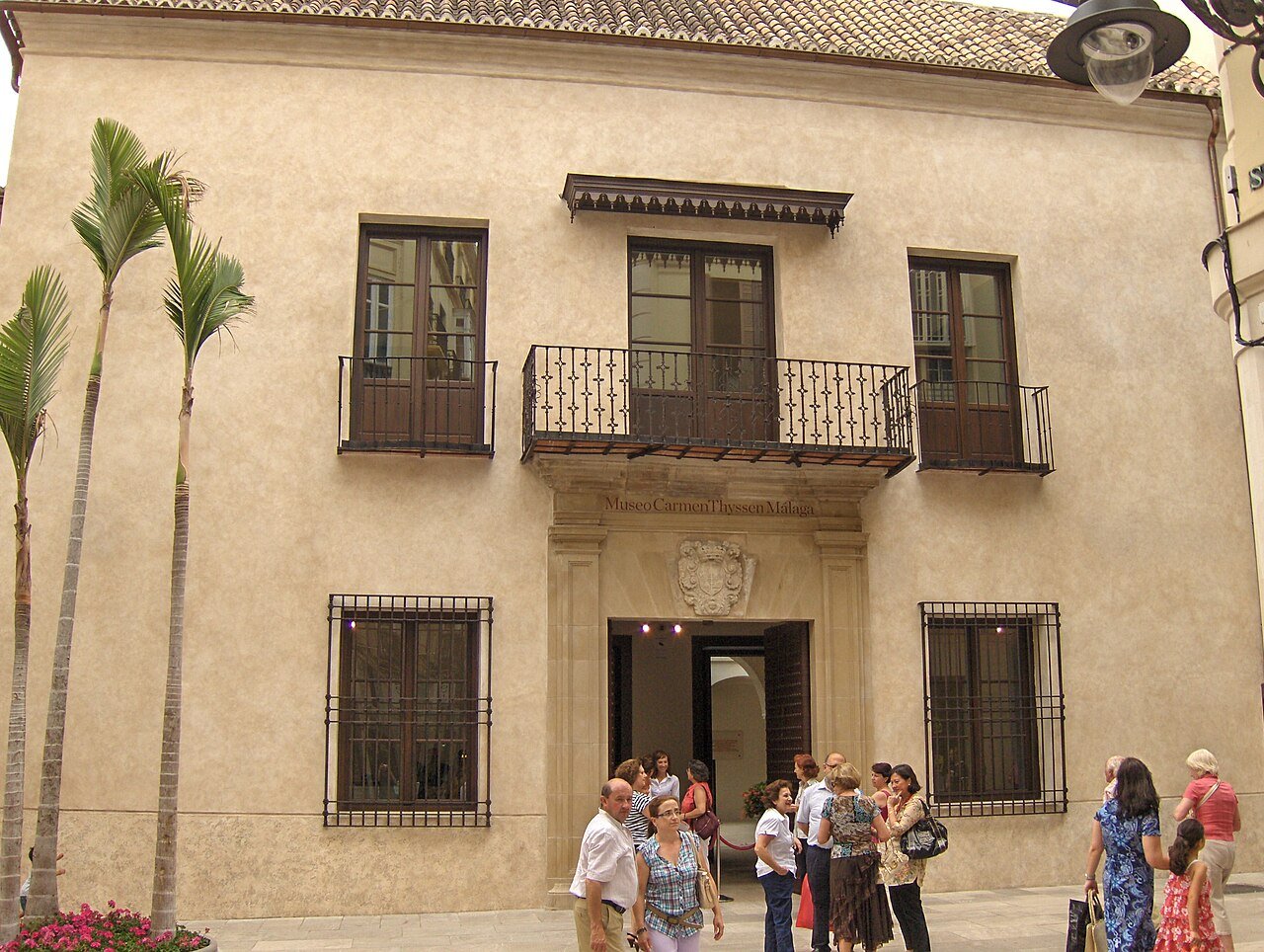
Málaga’s third great museum is the quietest and, for understanding where you are, maybe the most rewarding. The Museo Carmen Thyssen Málaga fills the Palacio de Villalón, a sixteenth-century palace on a little square off Calle Compañía, and its collection is Baroness Carmen Thyssen’s Spanish painting with an Andalusian heart: nineteenth-century landscapes, costumbrista scenes of courtyards, bullfights, ferias and village life, and the sun-drenched luminismo of Sorolla and his generation. This is the Andalusia of the romantic travellers — the one they painted, embroidered and exported to the world — shown in the city that inspired half of it, and walking its calm galleries after the bustle of the Picasso Museum is a lesson in how the region learned to see itself.
The palace is half the pleasure: a cool patio, carved ceilings, and Roman remains preserved in the basement, where excavations under the building found a Roman residence with its own fish-salting connections — the ancient industry of this coast, turning up under a museum of paintings about the same coast. General admission is €12 (under-18s free), and the museum opens Tuesday to Sunday, 10:00–20:00, closing on Mondays; Sunday afternoons from 16:00 are free. It rarely queues, which in high season is a recommendation in itself: when the Picasso Museum’s line looks grim, the Thyssen is fifteen minutes away and will take you straight in.
9. La Malagueta and the Espeto: Málaga at the Beach
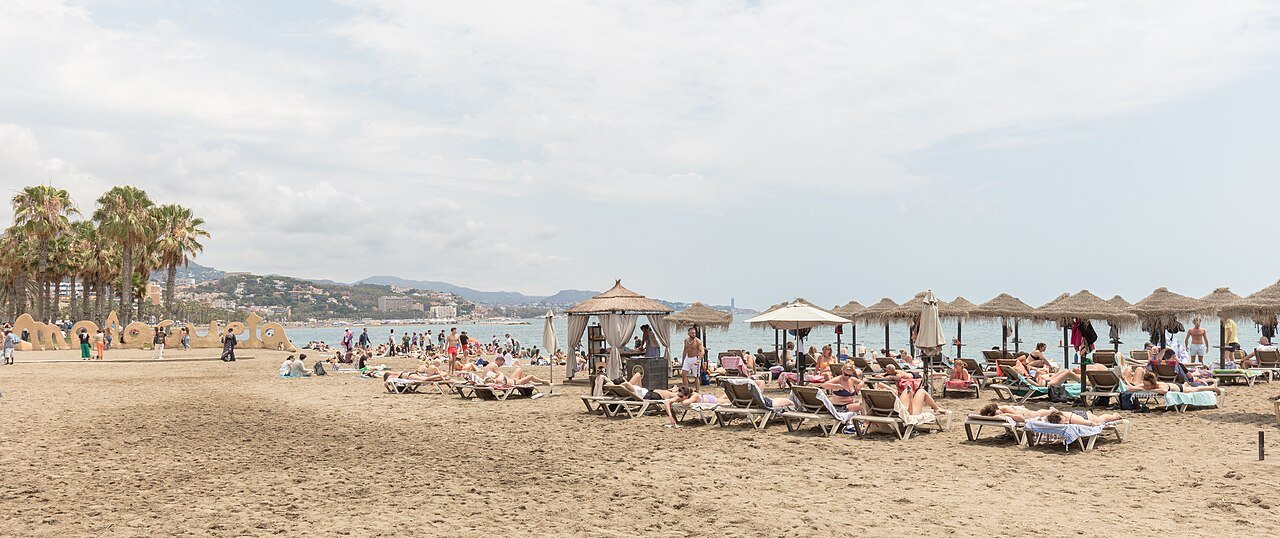
Not many great cities let you finish a day of fortresses and Picassos with a swim, but from Plaza de la Constitución it is a fifteen-minute stroll east, past the bullring, to a kilometre and more of city beach. La Malagueta is Málaga’s own strand — about 1.2 km of dark, volcanic-looking sand some 45 metres wide, fronted by the palm-lined Paseo Marítimo and signed, in case you were in doubt, by enormous sand-coloured letters spelling MALAGUETA at its western end. It is not the Costa del Sol’s prettiest beach and does not try to be: it is a city beach in the best sense, full of local families, volleyball games, rented loungers and thatched parasols, with the port at one end and the eastern suburbs climbing the hills at the other. The water is the Mediterranean, the backdrop is Gibralfaro, and nobody here is performing for anybody.

The beach’s true institution is lunch. Along the promenade and spilling onto the sand stand the chiringuitos, the beach restaurants, and every one of them keeps, out front, the apparatus in the photograph: an old boat filled with sand, a fire of olive wood smouldering at one end, and skewers of fish planted in the sand to grill. The king of these is the espeto de sardinas — fresh sardines threaded onto a split reed cane, salted, and roasted over the embers until the skin crisps. It is Málaga’s signature dish, eaten with your fingers at a plastic table with the sand under your feet, and local wisdom holds that sardines are at their best in the months without an “r” — May to August — which happens to be exactly chiringuito season. Order pescaíto frito (a mixed fry of the day’s small fish) and a bowl of ajoblanco, the cold almond-and-garlic soup that is the city’s other gift to Spanish cooking, and you have eaten the essential Málaga lunch; our guide to famous Spanish foods puts both in their national context. Swim first, espeto second, siesta third: on a warm afternoon, this section outranks every museum in the guide.
10. Day Trip: The Caminito del Rey

An hour inland, the Guadalhorce river has cut a gorge through the limestone of the Desfiladero de los Gaitanes, and pinned to that gorge’s wall, up to a hundred metres above the water, runs a walkway with a name that tells its story: the Caminito del Rey, the Little King’s Path, because Alfonso XIII walked it in 1921 to inaugurate the dam it served. For decades after its working life ended, the decaying original path earned a reputation as one of the most dangerous hikes in the world. The restored Caminito, reopened as a safe, railed, one-way route, keeps every metre of the drama and none of the mortal risk: boardwalks bolted to a vertical cliff, a glass-floored section, and a hanging bridge near the end that sways just enough to remind you where you are. The walkway section is about 3 km, the whole route takes most people two and a half to three hours, and it is the single most spectacular day trip from anywhere in Andalusia.
Book it properly, because the rules are strict and the tickets are finite. Admission bought on the official caminodelrey.es platform costs €10 (the official guided visit is €18), tickets are released in blocks — the current release covers visits to 2 May 2027 — and official tickets are non-refundable: if you cannot go, the money is gone, with a date change offered only when the walkway itself closes for weather. Children under 8 cannot enter at all, there are no toilets on the path, and a shuttle bus (€2.50) runs between the route’s two ends. Doing it yourself by train is entirely possible — Cercanías trains from Málaga run to El Chorro station at the route’s southern end — but you are juggling the ticket release, the shuttle and the one-way logistics yourself.
Which is why most first-timers take the organised version, and the honest comparison is this: you are paying for the coach, the guide and the certainty, not the ticket. The Caminito del Rey full-day tour from Málaga runs 7 hours, rated 4.8/5 from 1,592 reviews, from about $88, and includes the air-conditioned coach from the city, the entry fee, a guided walk and a bottle of water; it meets at the corner of María Zambrano station. Crucially, where the bare €10 ticket never refunds, this tour’s page states free cancellation up to 24 hours in advance for a full refund, plus reserve now & pay later — on a weather-dependent cliff walk booked weeks ahead, that difference is worth real money. The page repeats the park’s own rules: under-8s are not allowed, and the tour itself may be cancelled in bad weather. However you go, go early in the day, wear real shoes, and take more photographs than you think you need.
11. Málaga Practicalities: Getting There, Getting Around, Where to Stay, When to Go
Getting here is the easiest part of any Andalusian trip. Málaga-Costa del Sol Airport is the region’s great gateway, and from the terminal the Cercanías C1 train reaches Málaga Centro station in about 12 minutes, running about every 20 minutes — cheaper and usually faster than the taxi queue. The mainline station, María Zambrano, is the south’s rail hub: AVE trains reach Madrid in under three hours (the fastest in about two and a half), Córdoba is about an hour away, and Seville around two hours by direct train. Granada is the one awkward sister: the direct Avant trains take about an hour and twenty minutes but only a handful run each day — the rest change at Antequera-Santa Ana — so check times before assuming, exactly as we advise in our guides to things to do in Granada and things to do in Córdoba. Once you arrive, forget transport: the entire historic centre covered in this guide fits inside a fifteen-minute walk, and the beach is fifteen minutes more.
Where to stay comes down to three neighbourhoods. The Centro Histórico puts every sight in this guide on your doorstep and the restaurants under your window — stay here on a first visit. Soho, the streets between the centre and the port, is the arty quarter, all street art, small hotels and café life, five minutes from everything. La Malagueta, east along the beach, trades a slightly longer walk for sea views and a local, residential calm. Málaga rewards the thrifty better than most Spanish cities, too — the free Sunday hours at the Alcazaba, the Pompidou and the Thyssen, the always-free Roman Theatre and the €10 combined fortress ticket — and our budget travel in Spain guide collects the same tricks Spain-wide, alongside our general Spain travel tips for the mistakes every first-timer makes once.
When to come needs one honest warning. Málaga’s default weather is superb — spring and early autumn are the connoisseur’s seasons, warm enough for the beach, cool enough for the hill — and the city’s two great festivals are both magnificent and both crowd the place to bursting. Semana Santa, Holy Week, fills the centre with some of Spain’s most solemn processions (in 2027 it falls in late March). And the Feria de Agosto is one of the biggest parties in the country: a week in mid-August built around 19 August, the anniversary of the city’s capture by the Catholic Monarchs in 1487, with fireworks over the port to open it, the feria de día packing Calle Larios with dancing in traditional dress, and the feria de noche carrying on at the Cortijo de Torres fairground until dawn. In 2026 the fair ran 15–22 August; the 2027 dates are not yet announced, so expect the same mid-August week and check before you book — hotels double in price and sell out months ahead. Come for the Feria if you come for it, with your eyes open and your room booked by spring. Come in May, June, September or October, and you will wonder why anyone ever flew straight past.
Travel insurance, sorted
Whether it is a two-week holiday or a longer move, travel insurance is not the most glamorous part of a trip – but it is the one booking you want to have in place before a trip, and while you are already away. Get a quote from SafetyWing
12. Final Thoughts
Málaga’s story is the best news in Spanish travel: a city the world used as an airport has quietly become one of the country’s most complete short breaks. It has the fortress hill and the Roman stones for the historians, a world-class Picasso museum and two more art museums for the gallery-goers, a market and a beach-grill culture for the eaters, a port promenade made for golden hour, and a cliff walk an hour away that people cross oceans to do — all of it inside a centre you can cross on foot in fifteen minutes, under skies that earn their 300-days boast more often than not. Give it two days and it will charm you. Give it three or four, with the Caminito and a slow afternoon on La Malagueta, and you will start doing what the people in this guide’s photographs are doing: sitting down in a city you had only meant to pass through, in no hurry at all to leave.
Things to Do in Córdoba: 10 Essential Highlights From the Mezquita to the Patios
Frequently Asked Questions
What is the best way to see the Alcazaba and Gibralfaro?
Buy the combined ticket (€10 — €7 if you only do one) and treat them as two visits with the Coracha walk between: the Alcazaba’s palace courtyards first, while it is cool, then the castle for the panorama. Entry to both is free every Sunday from 14:00. If you want the two sites explained, the guided Alcazaba & Roman Theatre tour in §1 covers the fortress and the theatre in 1.5 hours with entry included, from $13.39, with free cancellation up to 24 hours in advance as its page states.
How many days do you need in Málaga?
Two full days cover this guide’s centre: the fortress hill and Roman Theatre, the cathedral, both Picasso sights, the market, the port and an afternoon on La Malagueta. Add a third day for the Caminito del Rey and a fourth if the museums deserve a slower pace — or if the Feria or Holy Week is on, when the city itself becomes the main event.
Is the Caminito del Rey worth a day of a short trip?
Yes — it is the most spectacular walk in Andalusia and only an hour away. Book ahead: official tickets (€10) are released in blocks and are non-refundable, while the organised tour from Málaga (from about $88, rated 4.8/5) includes the coach and entry and, as its page states, free cancellation up to 24 hours in advance. Children under 8 cannot walk the Caminito at all.
When is the best time to visit Málaga?
Spring (April to June) and early autumn (September to October) balance beach weather with sightseeing comfort. August brings the Feria — magnificent, but the city is at its fullest and hotel prices roughly double, and the 2027 dates are yet to be announced (in 2026 it ran 15–22 August). Holy Week, in late March in 2027, is the other great peak. Winter is mild and quiet, and the museums and fortresses are at their emptiest.
Where should you stay in Málaga?
In the Centro Histórico for a first visit — every sight in this guide is walkable from it. In Soho, between the centre and the port, for street art, small hotels and café life. Or in La Malagueta, along the beach, for sea views and a local feel at the price of a longer walk into town.
Is Málaga just a gateway to the Costa del Sol?
It was, for decades — millions landed at its airport and never saw the city. Not anymore: with the Picasso Museum, the Pompidou on the port, the Carmen Thyssen, the restored fortresses and the Caminito del Rey an hour inland, Málaga now holds travellers for days in its own right. Use it as a destination first and, if you must, a gateway second.
Post navigation
Similar Posts
What to Pack for Spain: 24 Essentials for Every Season
Pack for the Spain you are actually visiting, not the postcard: one light, mix-and-match wardrobe built on layers, one pair of shoes you can walk all day in, and a rain layer in the bag whatever the month — that combination, plus the small gear in this list, covers a beach week in Andalusia, a…
7 Islands Close to Barcelona (and How to Reach Each One)
Stand on the beach at Barceloneta on a clear morning and you can feel it rather than see it: out there, across a couple of hundred kilometres of open Mediterranean, sits an entire archipelago that most Barcelona visitors never reach. The Balearic Islands are this city’s natural second act — close enough that the fastest…
Spanish Gift Ideas: 15 Presents and Souvenirs Worth Bringing Home
The best Spanish gifts are edible ones — and the single best buy in the country is a vacuum-packed pack of jamón ibérico, the acorn-fed ham that tastes like nowhere else on earth and travels home in a suitcase corner. Spain is a gift-giver’s gift to themselves: the food is world-class and portable, the crafts…
Things to Do in Granada: 12 Unforgettable Highlights From the Alhambra to the Free Tapa
Granada is the Spanish city most often visited badly. The pattern is famous: a train or a tour bus in the morning, three breathless hours inside the Alhambra, and out again by evening — with the traveller left wondering why the most beautiful palace in Europe felt like hard work. The Alhambra is not the…
Romantic Getaways in Spain: 9 Places Couples Will Love
The best romantic getaways in Spain are not the famous honeymoon clichés — they are the places where the evenings do the work for you, and if you only pick one, make it Seville. Nowhere else in the country stacks the deck quite like it: a floodlit cathedral, orange trees in every square, a slow…
Two Weeks in Spain: The 14-Day Itinerary That Finally Fits It All In
Two weeks is where a Spain trip stops being a compromise. One week — and our one-week itinerary walks it day by day — forces a hard choice between Andalusia and Barcelona. A fortnight ends the argument: Madrid with its great day trip, Córdoba, Granada, Málaga, Ronda and Seville strung along the southern railway, then…


3 Comments