Romantic Getaways in Spain: 9 Places Couples Will Love
The best romantic getaways in Spain are not the famous honeymoon clichés — they are the places where the evenings do the work for you, and if you only pick one, make it Seville. Nowhere else in the country stacks the deck quite like it: a floodlit cathedral, orange trees in every square, a slow river made for boat rides and an old town built for wandering after dark. But Spain is unusually generous to couples, and “romantic” here can mean nine very different trips — a palace city in the Sierra Nevada foothills, a vineyard town where the tastings start at the railway station, hot-spring pools you can soak in for free, or a whitewashed fishing village at the end of a mountain road.
This guide gives you nine getaways, each chosen for a different kind of couple logic, with the experiences that actually make each place, the neighbourhoods and villages to base yourselves in, and the season when it all works best. There is deliberately no ranking — the right answer depends on whether your idea of romance is a rooftop at sunset, a long lunch that drifts into a winery cellar, or a cove you have almost to yourselves. At the end you will find a short how-to-choose section and an honest look at what a couples’ break in Spain really costs.
Several of these places also earn their spot in our guide to the best Spanish towns — but a town that charms a general traveller and a town that works for two people travelling together are not always the same thing. These nine were picked purely on the second test.
In This Guide
- Seville — the sunset-city classic
- Granada — the palace city under the Sierra Nevada
- San Sebastián — the foodie bay
- Girona — the small river city
- Ronda — the gorge-town drama
- Cadaqués — the whitewashed cove town
- Haro, La Rioja — the vineyard town
- Deià, Mallorca — the island hideaway
- Ourense — the thermal spa town
- How to Choose Your Romantic Getaway
- What a Romantic Break Costs (and When to Go)
1. Seville — the Sunset-City Classic
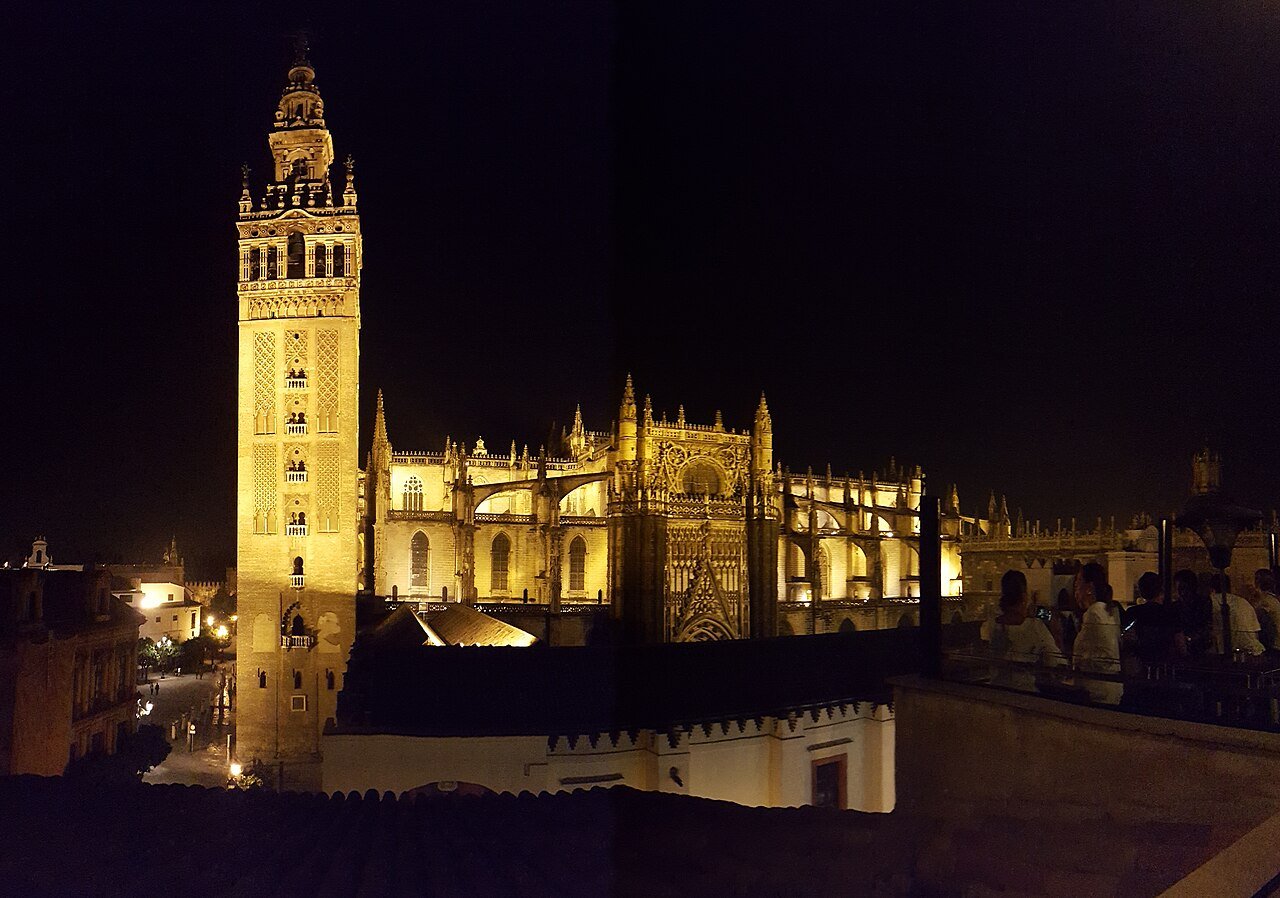
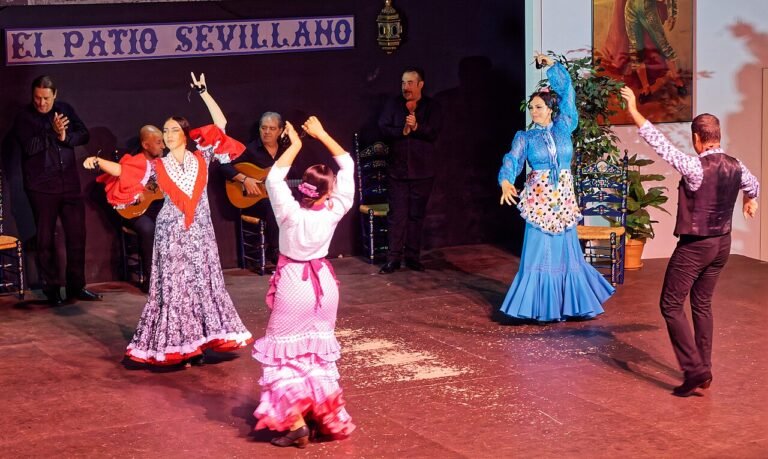
Seville is the standout because romance here is not an activity you book — it is the default setting. The historic centre is a maze of lanes in the Barrio de Santa Cruz, the old Jewish quarter, where bougainvillea spills over whitewashed walls and every third doorway opens onto a tiled patio. The cathedral and its Giralda tower glow gold after dark, the Plaza de España gives you a canal, rowing boats and tile-work built purely for pleasure, and the Guadalquivir river runs wide and slow past the Torre del Oro, made for golden-hour strolls. Add flamenco in small Triana bars across the river and a tapas culture that turns dinner into an evening-long wander, and the city romances you without any planning at all.
The one experience to build the trip around is the river at sunset. Walking the banks is lovely, but being on the water, just the two of you, is better.
A private boat on the Guadalquivir — the Sevilla: Romantic Boat Ride takes a maximum of two people, so the boat is entirely yours. It is rated 4.9/5 from 74 reviews and starts from $78. The 1-hour option includes a bottle of frizzante wine; stretch to 1.5 hours and it becomes a bottle of Moët & Chandon with chocolate bonbons, and you can play your own music on board. It comes with free cancellation up to 24 hours in advance for a full refund, and you can reserve now and pay later — book the sunset slot and let the city light up around you.
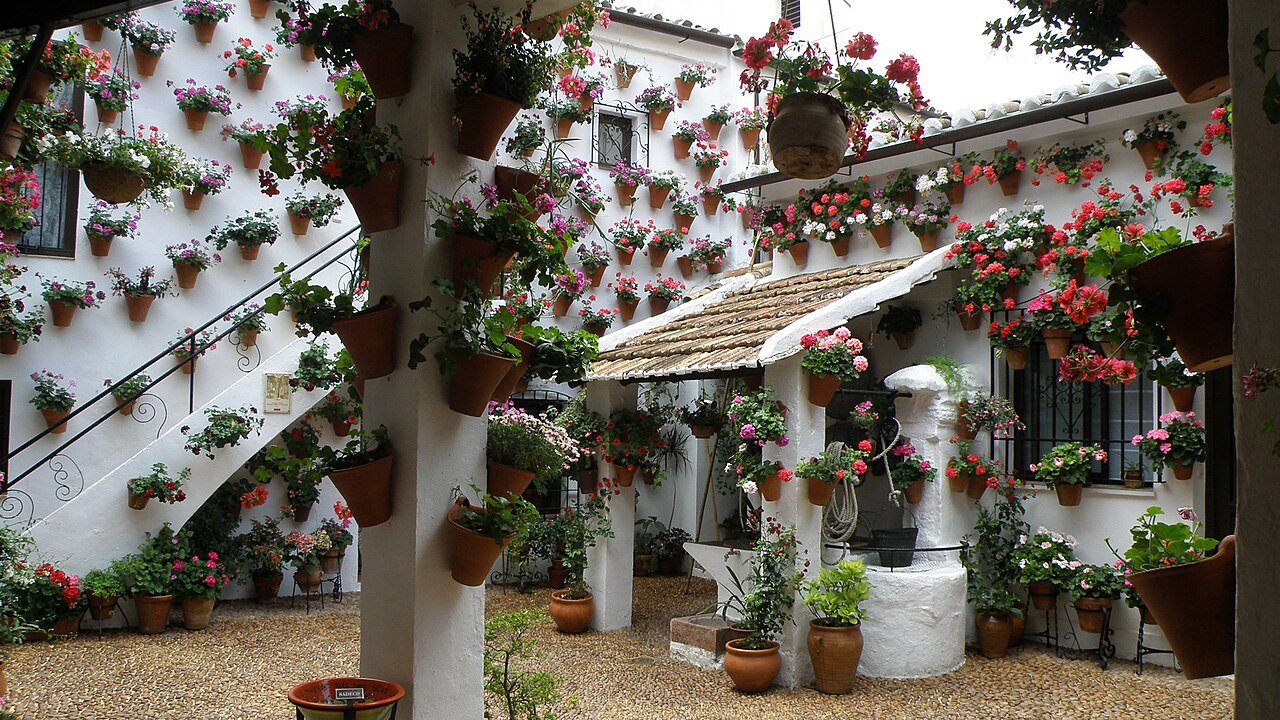
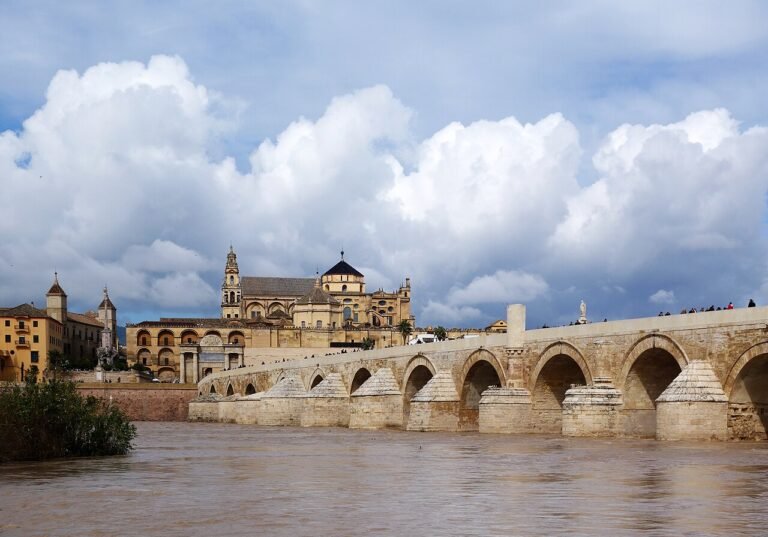
Where to base yourselves: the Barrio de Santa Cruz for first-timers who want everything on foot, or Triana, across the river, for a slightly more local feel with the same views back at the skyline. Best season: spring and autumn. Seville is one of Europe’s hottest cities in July and August, and the romance wilts with everything else; April and May bring orange blossom and the Feria de Abril, while Easter week (Semana Santa) is spectacular but crowded and pricey. Handy bonus: Córdoba, with its mosque-cathedral and flower-filled patios, is barely 45 minutes away by direct train — an easy day trip or a gentle second base.
2. Granada — the Palace City Under the Sierra Nevada
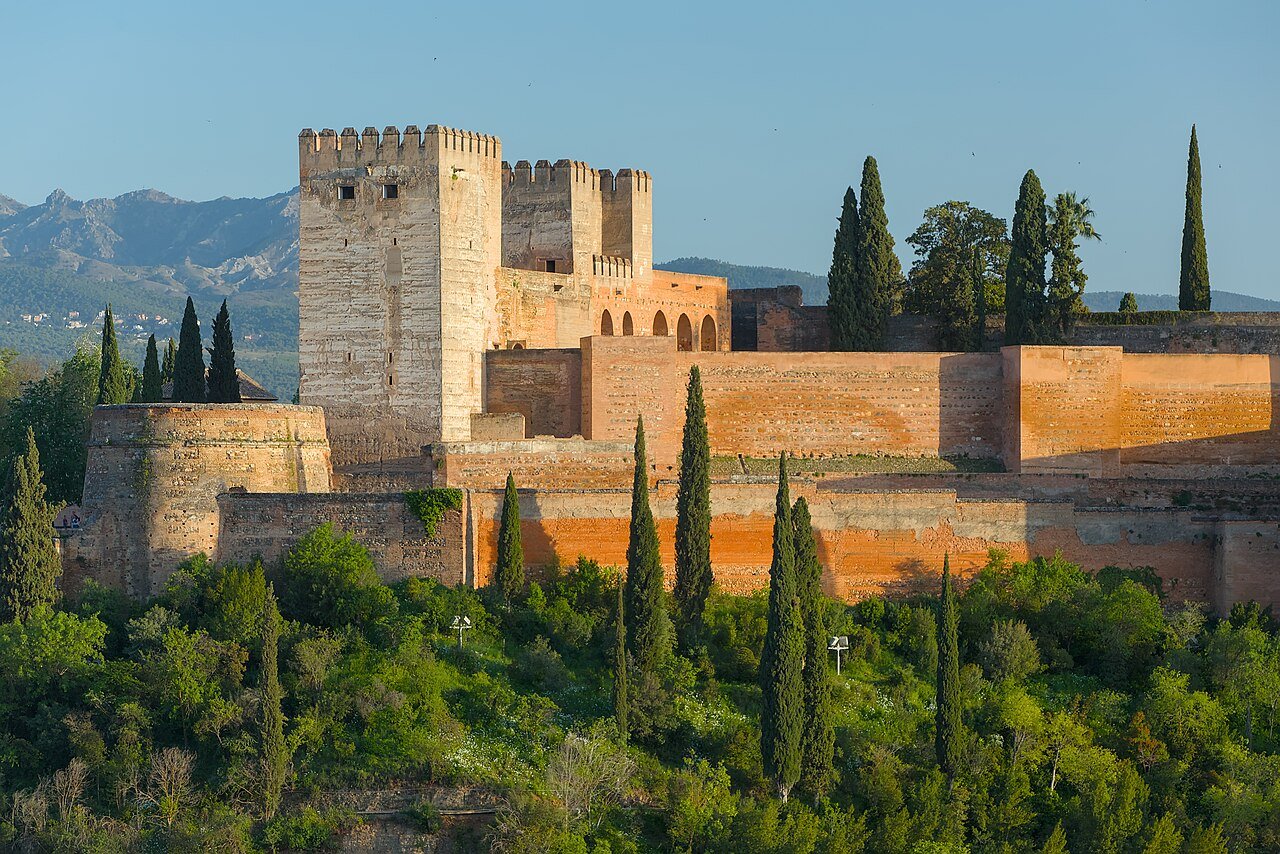
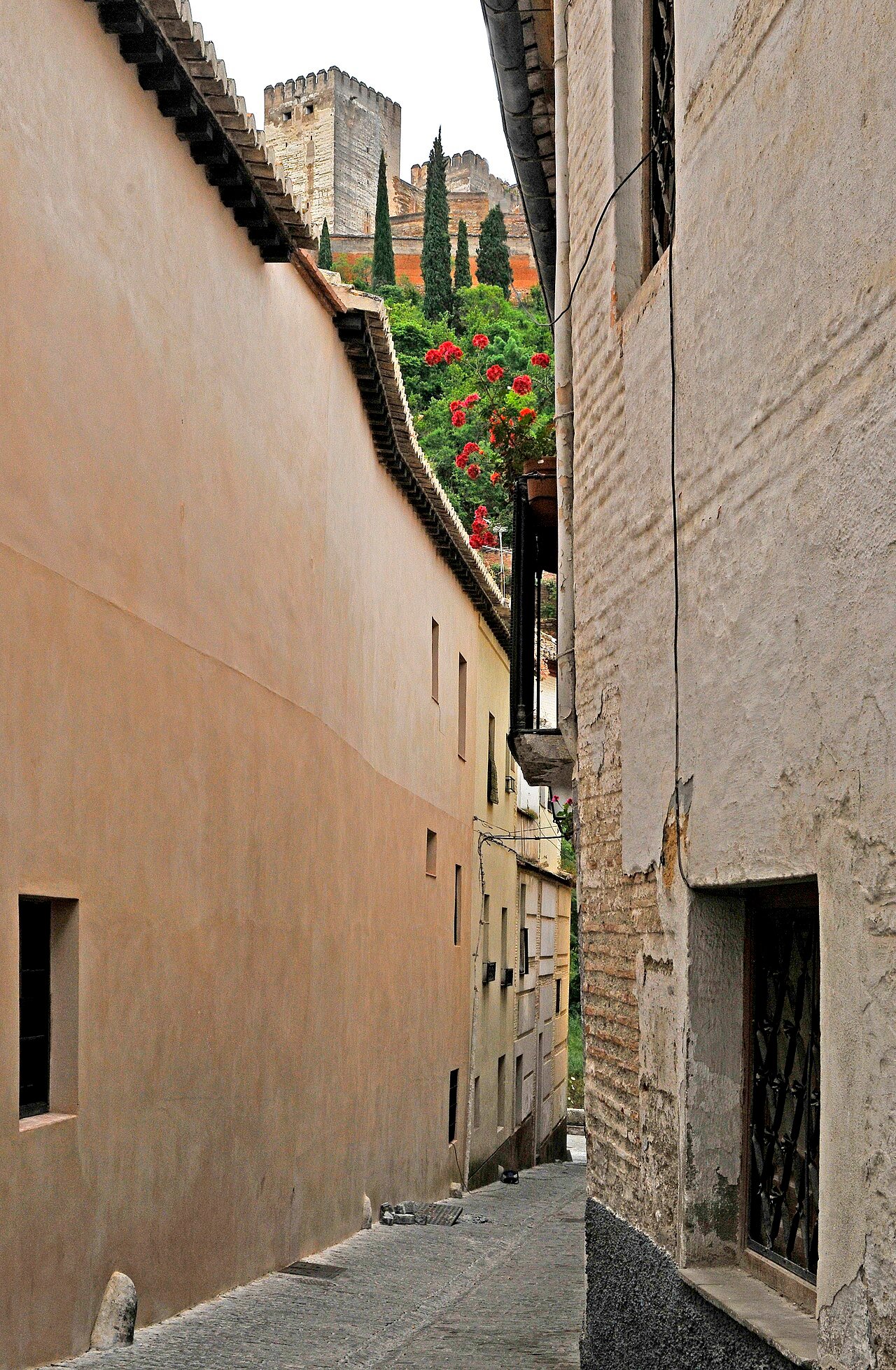
Granada runs on a single, unbeatable image: the Alhambra, a rose-red Moorish palace-city, glowing at sunset against the snow-dusted Sierra Nevada while the whitewashed Albaicín quarter climbs the hill opposite. Couples have been making this pilgrimage for two centuries, and the city still delivers — because the romance is in the rhythm as much as the view. Days are for the palace’s courtyards and the Generalife gardens; evenings are for losing yourselves in the Albaicín’s stepped lanes, drinking mint tea in a tetería on Calle Calderería, and watching the light change from the Mirador de San Nicolás, where the Alhambra fills the frame exactly as it has on a million postcards.
Book Alhambra tickets well ahead — entry is timed and the best slots sell out weeks in advance in busy months — then balance the big sight with something slower. Granada is one of the few cities where a hammam is not a spa-day cliché but part of the place’s living heritage, in the city that perfected Arab bath culture in Spain.
A traditional bath beneath the Alhambra — the Granada: Traditional Bath at the Palacio Nazarí Hammam is a 90-minute session through seven pools at different temperatures, with a Turkish bath, a hot stone and Oriental teas included, five minutes from the cathedral. It is rated 4.6/5 from more than 1,300 reviews and starts from $50 per person, with massages available to add. Free cancellation runs up to 24 hours in advance for a full refund, and you can reserve now and pay later — go in the evening, after the mirador, and float while the city cools down above you.
Where to base yourselves: the lower Albaicín or the streets around Plaza Nueva and the Carrera del Darro — the prettiest walk in the city, along the river beneath the Alhambra — put you between the palace and the tapas bars; the Realejo, the old Jewish quarter on the other side of the centre, is quieter and full of small hotels in converted mansions. Best season: spring and autumn, when the Sierra Nevada can still hold snow above the city while the terraces are warm; winter is atmospheric and cheaper, summer fiercely hot at midday. For a fuller plan of the sights, see our guide to the things to do in Granada.
3. San Sebastián — the Foodie Bay
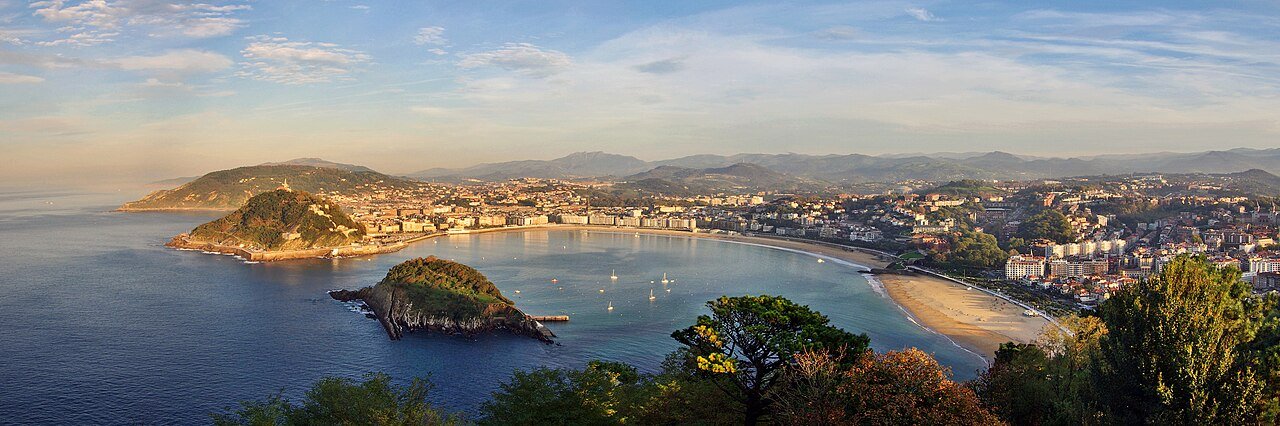
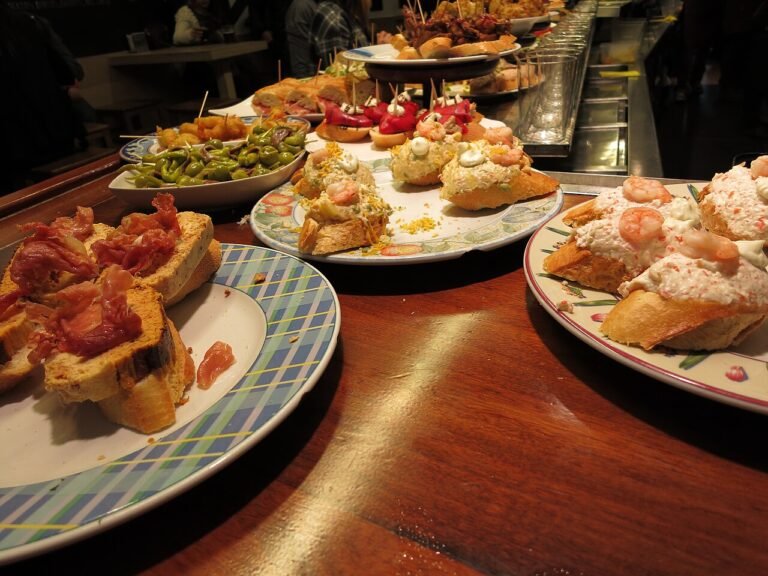
If your love language is food, stop reading the rest and book San Sebastián. The city curves around La Concha, a perfect shell of golden sand widely considered one of the finest city beaches in Europe, fronted by an elegant promenade with white railings made for arm-in-arm evening walks. Behind it, the Parte Vieja (Old Town) holds one of the densest concentrations of great bars on earth, where the romance format is the pintxo crawl: small, beautiful plates — seared foie gras, txangurro crab, a perfect tortilla — ordered two at a time, with a glass of txakoli or Rioja, then on to the next bar. It is dinner as a shared adventure, and nobody does it better.
Days split easily: swim or sunbathe at La Concha in the morning, ride the funicular up Monte Igueldo for the postcard view over the bay in the afternoon, and walk out along the Paseo Nuevo beneath Monte Urgull at sunset, when the waves hit the sea wall. Couples who want the eating organised rather than improvised will find the guided-crawl format covered in our guide to food tours in Spain. The city also suits slow mornings — grand cafés, a handsome shopping district of belle-époque streets, and Ondarreta beach at the quieter end of the bay.
Where to base yourselves: the Centro, between the beach and the Old Town, keeps everything within a ten-minute walk; Gros, across the river, is younger, surfier and a little cheaper, with its own beach at Zurriola. Best season: late spring and early autumn — warm enough to swim, without the August crush or the September film festival, which fills every room in the city and lifts prices with it. Be honest with yourselves about the weather: this is Spain’s green, Atlantic north, and a rainy day is always possible — which, in a city built around eating, is less of a problem than it sounds.
4. Girona — the Small River City
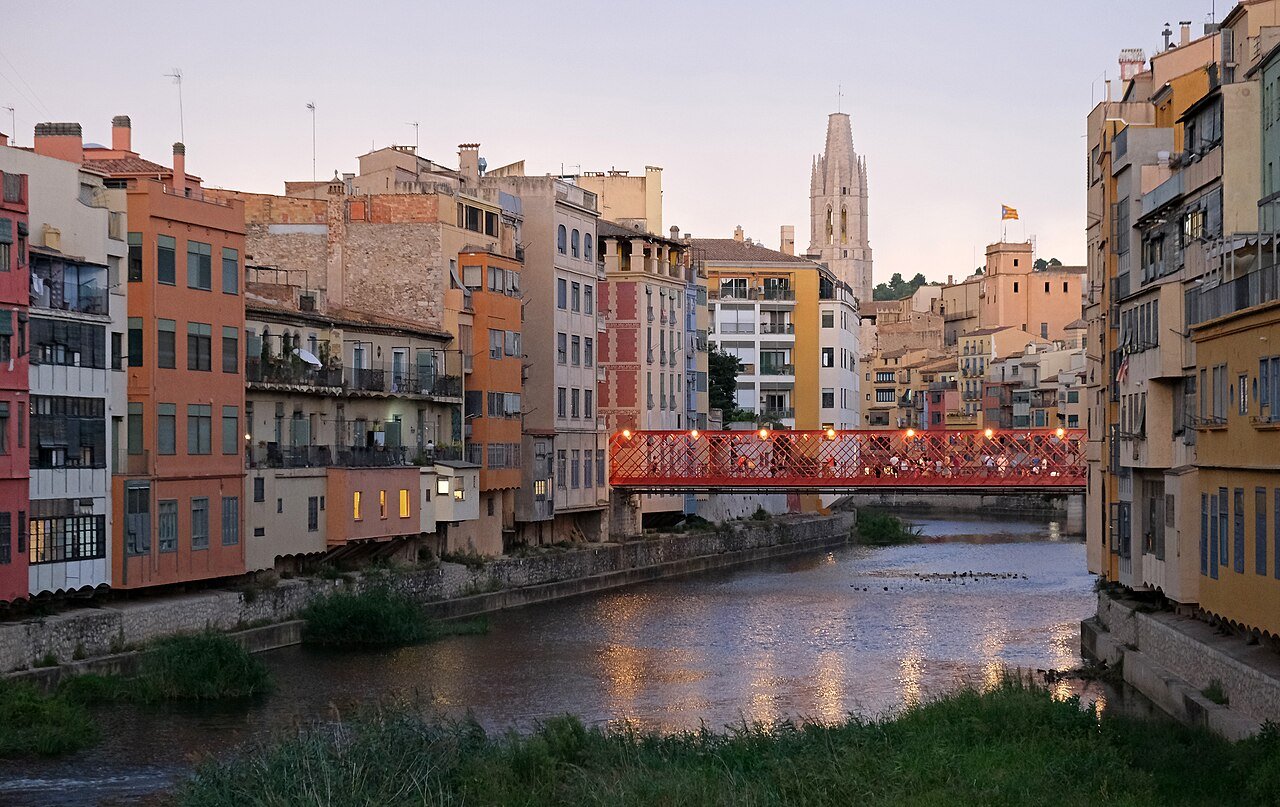
Girona is for couples who loved the idea of Barcelona but not the crowds. Barely under 40 minutes from Barcelona Sants on the fastest high-speed trains, it is a complete medieval city at a fraction of the scale: pastel houses stacked along the Onyar river, an iron footbridge built by Gustave Eiffel’s company before the Paris tower existed, and a walled old town of stone staircases, arcaded squares and one of Europe’s best-preserved Jewish quarters, the Call. Everything is walkable, evenings are local rather than touristic, and dinner means serious Catalan cooking — Girona’s province holds some of Spain’s most celebrated restaurants, and the city itself eats very well at every budget.
The couples’ routine writes itself: coffee in the Plaça de la Independència, a slow climb up the cathedral’s great staircase and along the old walls (the Passeig de la Muralla gives you rooftop views the whole way), a gelato on the Rambla de la Llibertat, then across the red Eiffel bridge at dusk when the river turns to mirrors. In May the Temps de Flors flower festival carpets the old town’s patios and stairways in installations — book early if you come for it, because the whole region does.
Where to base yourselves: inside the Barri Vell (old town) if you can — small hotels and apartments in stone lanes put the river and the cathedral steps on your doorstep; the streets across the river near Plaça de la Independència are the practical alternative, a few minutes’ walk from everything. Best season: spring, for the flowers and mild evenings, and autumn for harvest-season menus and quiet lanes; Girona also works beautifully as a winter city break, when the old town’s stone and lamplight do the heavy lifting.
5. Ronda — the Gorge-Town Drama
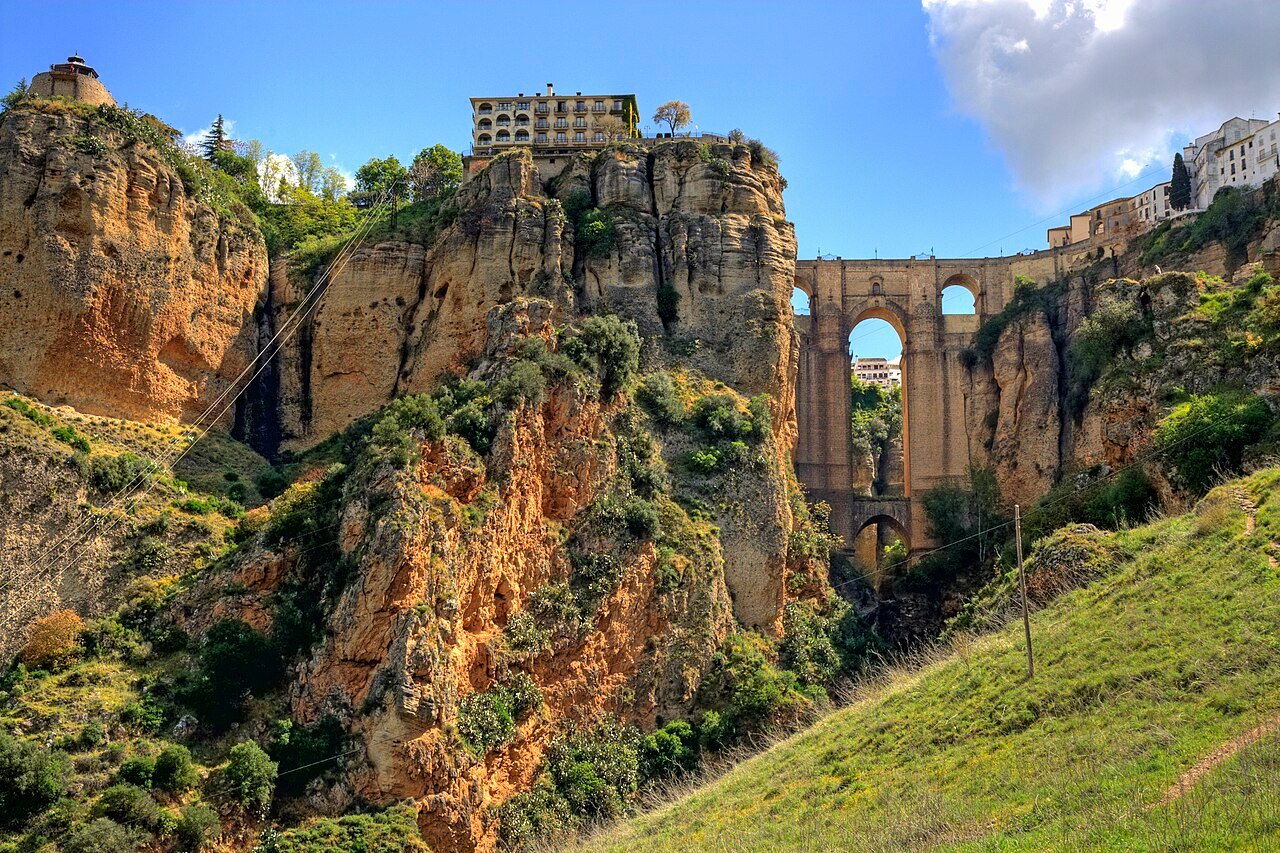
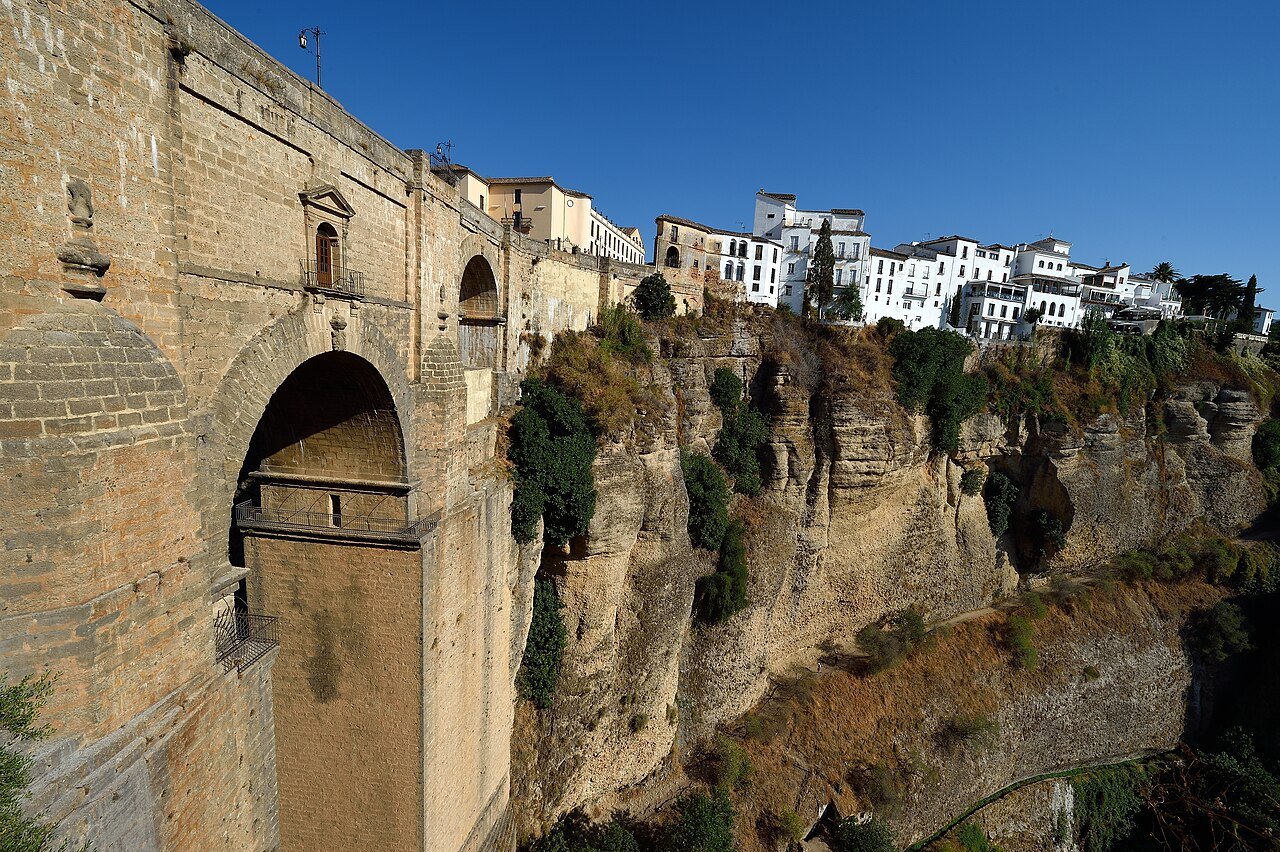
Ronda is Spain’s great theatrical gesture: a white town split in two by the El Tajo gorge, a chasm around 100 metres deep, and joined by the Puente Nuevo, an 18th-century stone bridge that looks like it grew out of the cliff. Writers from Hemingway to Orson Welles fell for it, and the drama has not faded — but the secret to Ronda as a couple is timing. Day-trippers pour in by coach from the coast and pour out again by late afternoon; stay the night and the bridge, the miradores and the old town’s lanes are suddenly, wonderfully yours.
Spend the day walking both halves: the Ciudad, the old Moorish town of palaces and the church of Santa María la Mayor, and El Mercadillo, the newer side with the bullring — one of Spain’s oldest — and the Alameda del Tajo gardens, whose balconies hang over the gorge. Walk down into the chasm on the path from the old town for the bridge view from below, and be on the Puente Nuevo or at the Mirador de Aldehuela as the sun drops and the cliffs turn amber. Dinner in the old town, in a courtyard restaurant, finishes the day at the right register.
Where to base yourselves: the old town (La Ciudad) for atmosphere — small hotels in converted palaces, some with terraces facing the gorge — and accept the short walk across the bridge for the newer town’s restaurants. Best season: spring and autumn; summer days are hot and busy, though evenings still cool down at this altitude, and winter brings mist into the gorge, which has a drama of its own. Ronda pairs naturally with the other white villages of the Cádiz and Málaga sierras if you are touring by car.
6. Cadaqués — the Whitewashed Cove Town
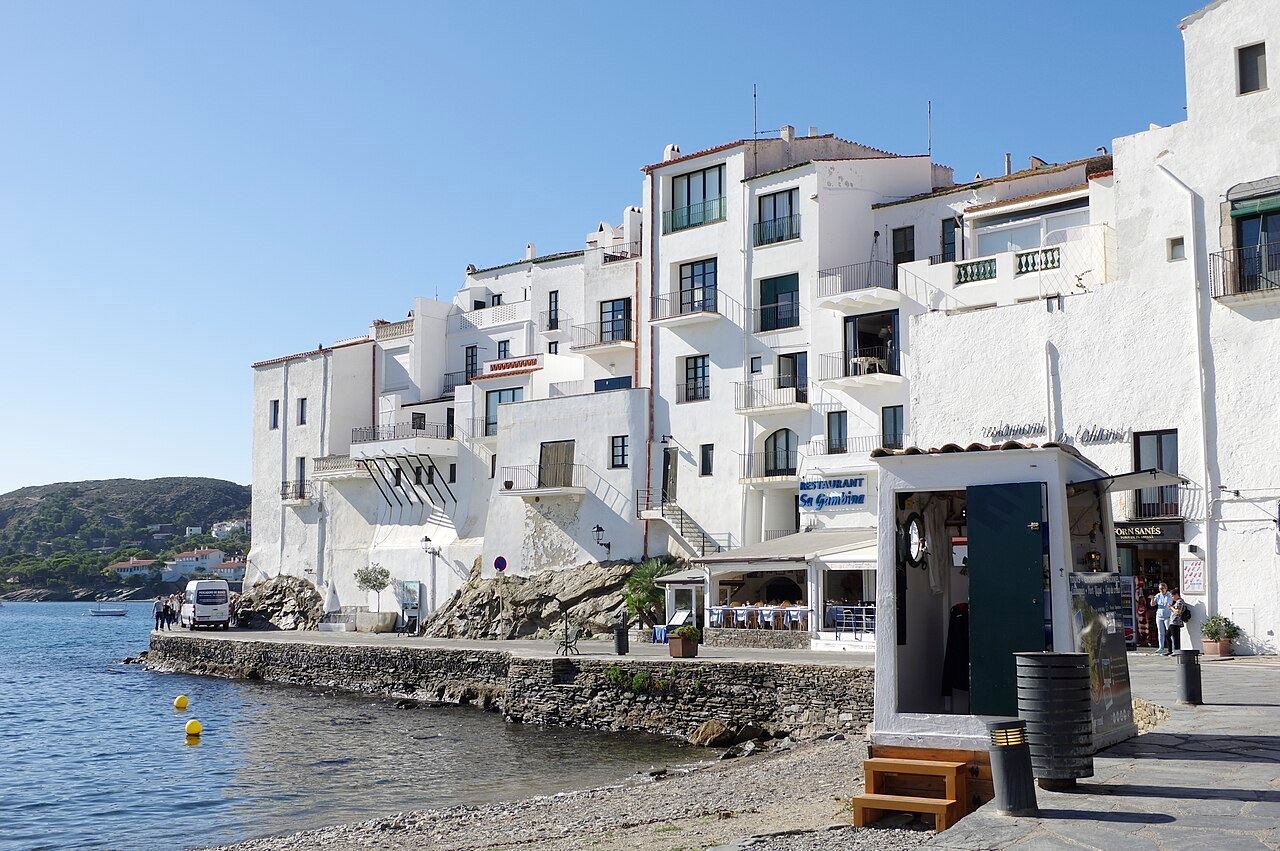
Cadaqués is the end of the road, literally: the last village on the Cap de Creus peninsula, reached by a single winding road over the ridge from Roses, and that effort is exactly what keeps it special. What waits is a cluster of whitewashed houses around a calm, boat-dotted bay, a 16th-century church on the hill, and a seafront of café terraces where the plan for the day is simply to watch the light change. Salvador Dalí made the village famous — his house at Portlligat, a labyrinth of fishermen’s cottages a short walk around the bay, is now a museum you should book ahead for — but the town’s appeal is simpler: swimming coves, seafood lunches and a creative, slightly bohemian calm that has drawn artists for a century.
Build your days around the water. Walk the coastal path to Portlligat, swim from the little town beaches and the rocky coves beyond, and take a boat trip along the Cap de Creus headland if the sea is calm — the wind-sculpted rocks of Spain’s easternmost point are a landscape like nowhere else in the country. Evenings belong to the seafront: grilled fish, a bottle of Empordà white, and a final stroll past the anchored boats. There is no nightlife to speak of, which is rather the point.
Where to base yourselves: in the village itself, in a small hotel or apartment near the seafront — Cadaqués has no big resorts, and staying in town means the bay at breakfast and the terraces at midnight are both a stroll away. Best season: late May, June and September, when the water is warm, the light is at its best and the summer crowds and the notorious parking pressure have eased; in July and August, arrive early in the day or prepare to circle for a space. The tramuntana wind can blow hard in winter — dramatic, but better for walking than for swimming.
7. Haro, La Rioja — the Vineyard Town
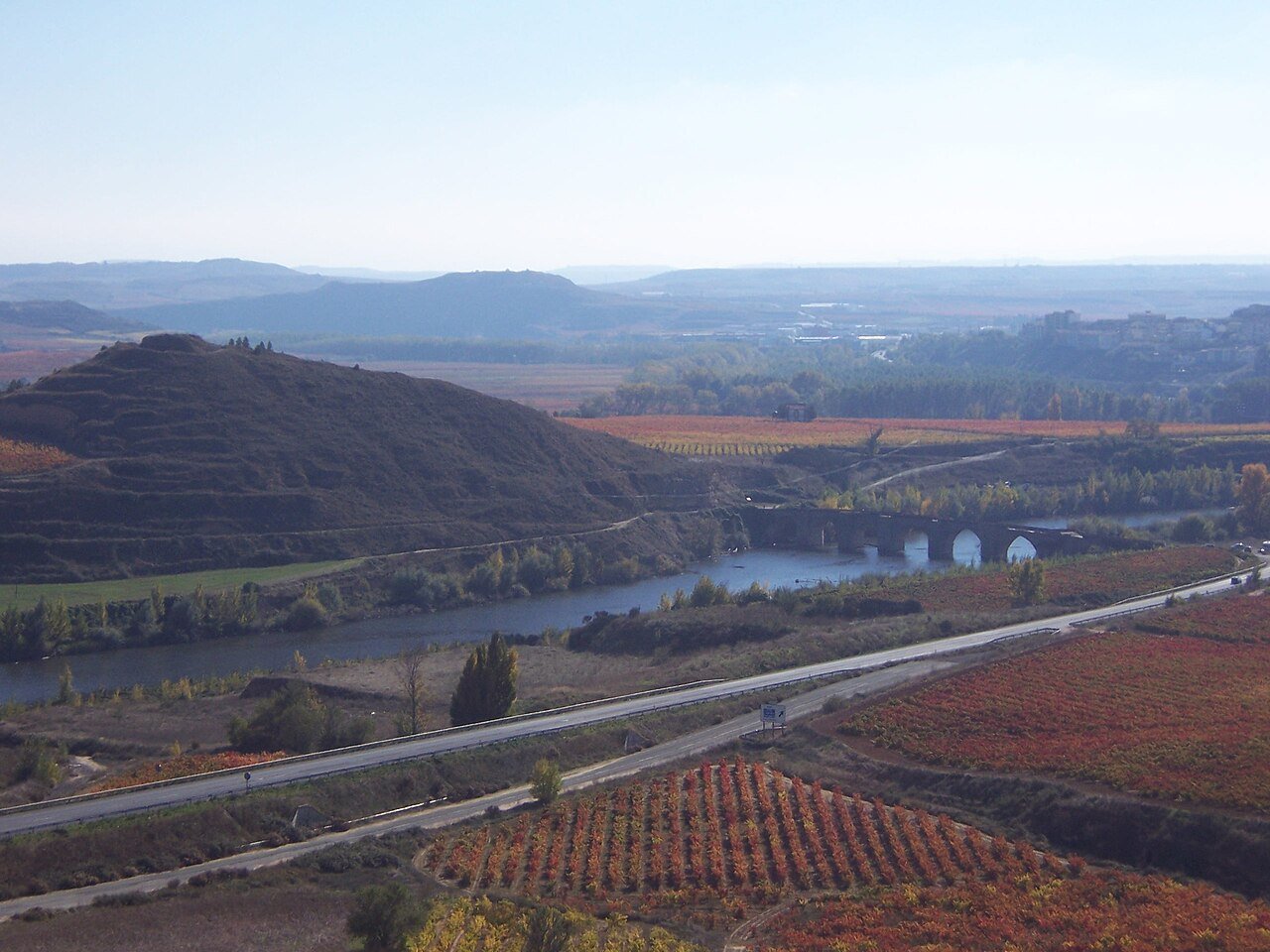
Most wine towns make you drive between wineries. Haro, the capital of Rioja Alta, put them all in one walkable quarter instead: the Barrio de la Estación, beside the railway station, holds the greatest concentration of century-old bodegas anywhere in Spain — names like CVNE, López de Heredia Viña Tondonia, Muga, La Rioja Alta and Gómez Cruzado, most founded in the late 19th century when French winemakers crossed the Pyrenees and Rioja wine was shipped out by rail. For couples, it is the perfect format: wander from cellar to cellar on foot, taste in cool stone vaults and barrel rooms, and never once argue about who is driving.
Fill the gaps the Spanish way — a long lunch in the old town, tapas along its bar-lined streets, and a sunset walk down to the Ebro river at the Puente de Briñas, where the vineyards run to the water. If you are staying in Haro itself, the big-name visits are bookable directly with each bodega. But if your trip is based in Bilbao or elsewhere on the Basque coast, the organised version removes every logistical headache at a stroke.
Rioja without the driving — From Bilbao: La Rioja Wineries Day Trip with Wine Tastings is a 9-hour day that pairs a guided tour and tasting at CVNE in Haro with a guided walk of the town’s old centre, then continues to a family-run cave winery in medieval Laguardia for a second tasting, passing the famous Marqués de Riscal winery at Elciego on the way. It is rated 4.4/5 from 218 reviews and costs from $84 per person, with free cancellation up to 24 hours in advance for a full refund and the option to reserve now and pay later. Basing yourselves in Barcelona instead? Catalonia has its own version of this trip — see our guide to Barcelona wine tours.
Where to base yourselves: Haro’s old town puts the station quarter and the tapas streets within an easy walk of each other, and its small hotels and wine-themed stays keep the theme going; Laguardia, over the border in Álava, is the medieval-walled alternative. Best season: the September–October harvest, when the vineyards turn red and gold and the cellars are at their busiest and most alive — book tastings ahead — with late spring the gentler second choice. On 29 June the cliffs above nearby San Vicente host the Batalla del Vino, a wine battle in which thousands get soaked in red wine; glorious fun, but perhaps not in your best clothes.
8. Deià, Mallorca — the Island Hideaway
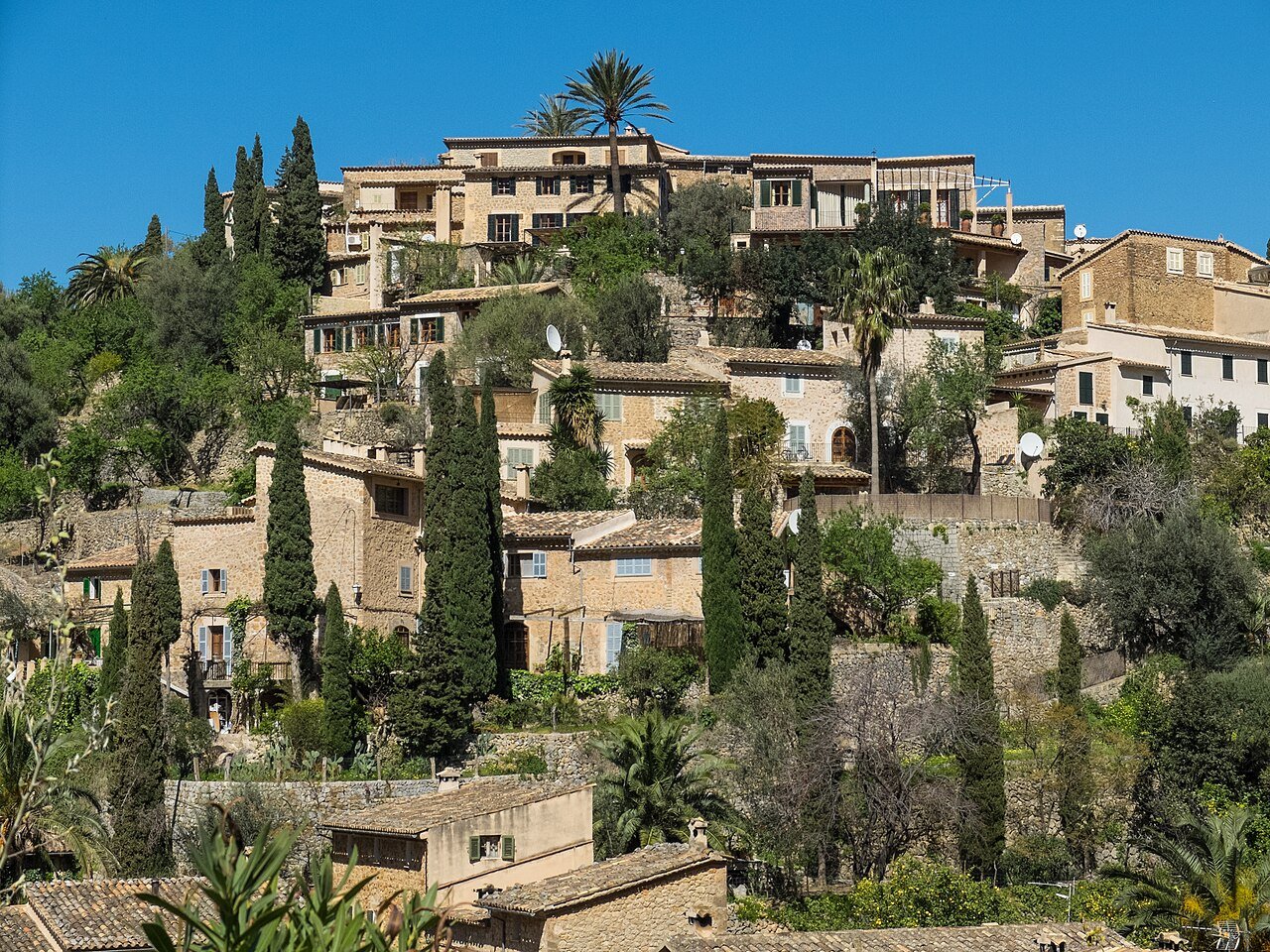
Deià is the Mallorca that luxury forgot to spoil: a small village of honey-coloured stone houses stacked up a hillside in the Serra de Tramuntana, wrapped in cypresses, olive terraces and mountain air, a short and winding drive from Palma. The poet Robert Graves settled here, is buried in the little churchyard at the top of the village, and set the tone — writers, painters and musicians have been quietly following ever since. Days here are deliberately unstructured: a slow breakfast, a walk down through the terraces to Cala Deià, the rocky cove below the village, a swim in glass-clear water, and lunch at one of the simple seafood restaurants above the rocks.
The village itself takes an hour to explore and a weekend to sink into — a handful of galleries and cafés along the main street, the church at the top for the view, and walking paths out to the Son Marroig estate and the neighbouring hamlet of Llucalcari for those who want a gentle hike. For a full splurge, the village’s famous hotel, Belmond La Residencia, set in old olive-press buildings above the road, is one of Spain’s classic romantic addresses — but Deià works at humbler budgets too, in family-run inns and village apartments.
Where to base yourselves: in the village, full stop — the magic is in the mornings and evenings, and day-trippers miss both. Staying elsewhere on the island and visiting for lunch is a fine taster, but the hideaway feeling only arrives when the road empties. Best season: May, June and September, when the cove is swimmable, the walking is comfortable and the island breathes more easily; July and August bring heat and pressure to every Tramuntana road, and in winter some restaurants close — though the village in the quiet season, with the mountains to yourselves, has its own devotees.
9. Ourense — the Thermal Spa Town
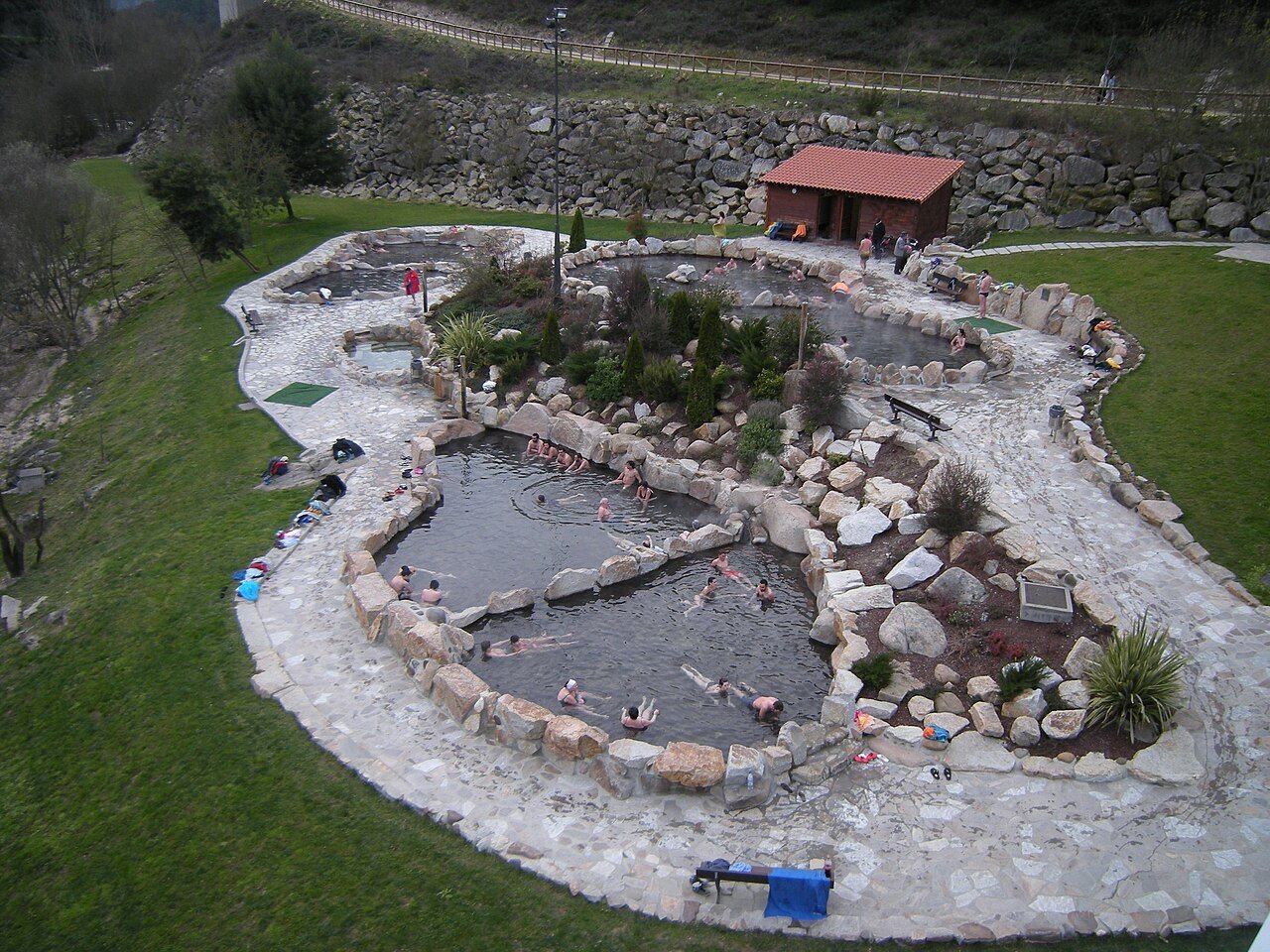
Ourense is the getaway on this list your friends will not have heard of, and it may be the most romantic of all — because the city’s great pleasure is completely democratic. Galicia’s inland capital sits on the river Miño, above one of Europe’s richest thermal springs: the water that bursts out at the As Burgas fountains in the old town emerges at around 60–67 °C, and along the riverbanks the city has built a string of outdoor pools — pozas — where you can soak in hot water under the sky. The finest of them, at Outariz and Muíño da Veiga, are free public pools; the paid Termas de Outariz next door adds a Japanese-style circuit of indoor and outdoor baths for a few euros. A little thermal train runs from Plaza Mayor out along the river to the pools.
The couples’ ritual is simple and wonderful: check in, wander the old town’s squares and the cathedral, take the little train down the river as the light fades, and spend the evening moving between steaming pools while the air cools around you. In winter, sitting in near-40 °C water with cold Galician air on your face is one of Spain’s great sensory pleasures — and because Ourense sits off the standard tourist circuit, prices for hotels and dinners stay at a level the famous cities left behind years ago.
Where to base yourselves: the old town (Casco Vello), near the cathedral and As Burgas, for tapas streets and atmosphere — the thermal pools are a short ride away, and several city hotels have their own small thermal circuits if you want the water on site. Best season: honestly, winter — this is the one Spanish getaway that improves as the weather worsens, with autumn and spring close behind; summer in inland Galicia is hot, and a hot pool loses some of its magic at 35 °C, though the river swimming areas earn their keep then.
10. How to Choose Your Romantic Getaway
Start with the kind of days you actually enjoy, not the prettiest photograph. If you want a city that entertains you from breakfast to midnight, Seville and Granada are the pair — and they combine well: give Seville three nights and Granada two, with Córdoba as a day trip from Seville or a stop between them. If food is the point of travel, San Sebastián stands alone, and pairs naturally with a Rioja detour — the day trip in the Haro section above runs from Bilbao, an easy hop along the Basque coast. Girona and Cadaqués are made to be combined on one Catalan trip: two nights in Girona’s old town, then over the ridge for two or three nights by the bay.
Ronda works best inside a wider Andalusian road trip — it is a two-night stay rather than a week — while Deià is an add-on that upgrades any Mallorca holiday into something special, and Ourense is the natural finale to a Galicia trip, after Santiago de Compostela. Two or three nights per base is the sweet spot almost everywhere on this list: long enough to find your café and your bar, short enough to keep each place feeling like a discovery. Before you book, run through our Spain travel tips for the practicalities — siesta hours, late dinners and train booking windows all shape a couples’ trip more than most people expect. And if you are stitching several bases into one journey, our 10 days in Spain route shows how the classic cities fit together.
11. What a Romantic Break Costs (and When to Go)
Honesty first: Spain remains one of western Europe’s better-value countries for couples, but “romantic Spain” spans a wide range. At the gentle end, Ourense, Girona and Ronda give you boutique doubles in old-town locations, long tapas dinners and most of the experiences in this guide for a fraction of big-city prices — Ourense’s best experience, the riverside pozas, is literally free. In the middle sit Seville and Granada, where the splurges are the activities rather than the beds: the private Guadalquivir boat in our Seville section starts from $78 for the two of you, and Granada’s hammam session from $50 per person. San Sebastián and Deià are the premium pair — the Basque city’s hotel prices rival anywhere in Spain in summer, and Deià’s charm comes with island-village scarcity — while the Rioja day trip at $84 per person shows what an organised, no-driving wine day costs when you do not base yourselves in wine country.
Three habits keep any of these trips in budget. Travel in the shoulder seasons — March to May and September to October deliver the weather and halve the pressure on the famous names — and you will usually find the same rooms and experiences noticeably cheaper than in July and August. Book the headline experiences early but keep the rest loose: the boat slots, Alhambra tickets and winery tours are the things that sell out, not the tapas bars. And spend on one signature moment rather than upgrading everything — couples remember the sunset boat and the midnight soak long after they have forgotten the thread count. Our full budget travel in Spain guide breaks down daily costs across the country if you want the numbers in detail.
Travel insurance, sorted
Whether it is a two-week holiday or a longer move, travel insurance is not the most glamorous part of a trip – but it is the one booking you want to have in place before a trip, and while you are already away. Get a quote from SafetyWing
Final Thoughts
Spain does not do romance by halves, and it does not do it one way either. The nine getaways in this guide share one quality — each gives two people a setting where being together is the activity — but they deliver it through sunsets and snow-capped palaces, pintxos and pozas, gorge bridges and vineyard cellars. Pick the logic that sounds like you, time it for spring or autumn if you possibly can, and book the one experience you will still be talking about in ten years. For the wider map of where these places sit among the country’s great destinations, start with our guide to the best places to visit in Spain.
10 Days in Spain: One Classic Route, Three Travel Styles
Frequently Asked Questions
What is the most romantic place in Spain for couples?
For most couples, Seville. No other Spanish city combines so much — a floodlit cathedral quarter, a boat ride on a slow river at sunset, flamenco after dark and tapas bars made for grazing until midnight — in such a walkable centre. Granada runs it very close, and wins outright if a single great view matters most to you: the Alhambra at sunset is the most romantic sight in the country.
Which romantic getaway in Spain is best on a budget?
Ourense, and it is not close. Its headline experience — soaking in the free public thermal pools at Outariz and Muíño da Veiga — costs nothing, the paid Japanese-style baths cost a few euros, and hotels and dinners in this off-circuit Galician city sit well below famous-name prices. Girona and Ronda are the next-best value picks, especially outside the summer months.
When is the best time of year for a couples’ trip to Spain?
Spring (April to early June) and autumn (September and October) suit almost everywhere on this list: warm evenings, swimmable seas by late spring, harvest colour in Rioja and far fewer crowds than August. The exception is Ourense, whose hot outdoor pools are at their best in cold weather — it is the one Spanish getaway we would actively recommend in winter.
How many days do we need for a romantic break in Spain?
Two to three nights per base is the sweet spot. A long weekend covers one city properly — Seville, Granada or San Sebastián all reward three unhurried nights — while a week lets you pair two bases, such as Seville with Granada, or Girona with Cadaqués, without the trip turning into a transfer schedule.
Is Spain a good honeymoon destination?
Yes — it is one of Europe’s best, precisely because it is not one-note. A classic honeymoon pairs a grand city (Seville or Granada) with somewhere slow and beautiful (Deià or Cadaqués), travels in May, June or September rather than peak August, and books the signature experiences — the private boat, the hammam, the winery day — in advance while leaving the days around them unplanned.
Which of these getaways works best without a car?
Seville, Granada and Girona are all reached easily by train and explored entirely on foot — Girona is under 40 minutes from Barcelona on the fastest services. Haro also works car-free thanks to its station-quarter wineries. Cadaqués and Deià are the two that genuinely reward a car: both sit at the end of winding roads with limited bus services.
Can we visit two of these places on one trip?
Yes — and several of the nine were chosen with pairings in mind. Seville and Granada link by train with Córdoba as a stop or day trip between them; Girona flows naturally into Cadaqués over the Cap de Creus ridge; San Sebastián combines with Rioja via the Bilbao day trip described in the Haro section; and Ourense makes a perfect final stop after Santiago de Compostela on a Galicia trip. Two bases, two or three nights each, will beat a whistle-stop tour of five every time.

One Comment