15 Mistakes to Avoid in Seville: The Complete Guide for First-Time Visitors
Seville is one of the easiest cities in Europe to love and one of the easiest to get wrong. Almost every first visit trips over the same handful of avoidable errors: the palace that sold out three days ago, the square that turns into a furnace at two in the afternoon, the hotel booked — cheaply, triumphantly — for the one week of the year when the whole city closes its streets for processions. None of these mistakes ruins a trip beyond repair, but each one costs hours, euros or tempers that a little foreknowledge would have saved.
This guide collects the fifteen we see most often, from the two big booking errors to the quiet ones — the siesta, the private casetas, the ración that feeds four. Work through it before you book anything, and Seville becomes the city it should be: intense, beautiful and entirely manageable. If you would rather have the logistics handled for you on the big sights, the pattern that beats most of these errors at once is a timed entry booked ahead — the Seville: Alcázar, Cathedral & Giralda Skip-the-Line Tour is a guided tour of all three monuments with the skip-the-line tickets included in its price, which removes the queueing mistake from your first morning entirely.
The Short Version
Short on time? Here are the five that hurt most:
- Not booking the Alcázar and the Cathedral ahead. Both sell timed tickets, both sell out, and the walk-up queue is the worst hour of many trips.
- Sightseeing through the early afternoon in summer. Seville is Europe’s hothouse; the city naps, and so should you.
- Arriving blind into Semana Santa or the Feria de Abril. Glorious if you planned for them, chaotic if you did not.
- Eating and drinking on the cathedral-front terraces. The view is free a few streets away, and the food is better.
- Trying to see it all in one day. Seville rewards slowness; two monuments done properly beat six done at a sprint.
Table of Contents
- A City That Runs on Its Own Rules
- Mistakes 1 and 2: Leaving the Big Two to Chance
- Mistakes 3 and 4: Fighting the Heat (and the Siesta)
- Mistakes 5 and 6: Landing in a Festival by Accident
- Mistake 7: Eating Where the View Does the Cooking
- Mistakes 8 and 9: Eating on the Wrong Clock (and in the Wrong Sizes)
- Mistake 10: Treating Santa Cruz as the Whole City
- Mistake 11: Never Crossing the River
- Mistakes 12 and 13: Wheels — Driving In, and Overpaying the Airport Run
- Mistake 14: Sprinting — Trying to Do Seville in a Day
- Practical Info
- Tickets and Costs
- Getting There
- When to Go
- How Long You Need
- Tips for Visiting Seville
- FAQs
- Final Thoughts
A City That Runs on Its Own Rules
Most visitor mistakes in Seville are really one mistake: assuming the city runs on northern-European settings. It does not. Seville keeps late hours, eats later, closes in the middle of the day, organises its year around two enormous religious festivals, and bakes all summer under some of the fiercest sun on the continent. The locals are not being difficult — the whole rhythm of the place is an adaptation to climate and custom refined over centuries. Every mistake below is a small collision with that rhythm, and every fix is the same fix: bend your plans to the city’s clock, not the other way round.
Mistakes 1 and 2: Leaving the Big Two to Chance
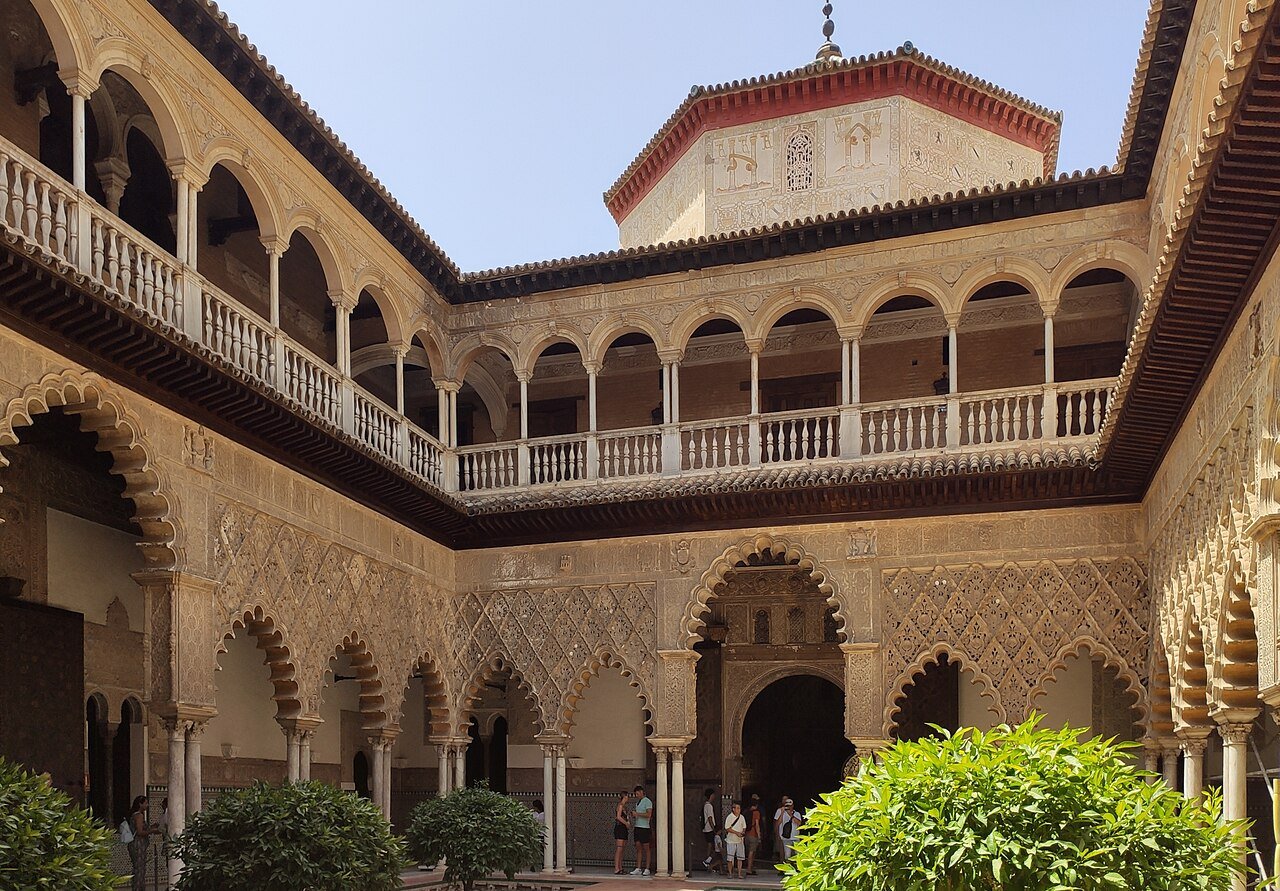
The Royal Alcázar and Seville Cathedral are the city’s two essential interiors, and both now work like flights: timed tickets, fixed capacity, and a strong chance of selling out on spring weekends, festival weeks and any Saturday you care to name. Turning up mid-morning hoping to walk in is the single most common first-timer error in Seville — the Alcázar’s ticket-office queue can swallow an hour before you even learn whether your slot exists.
Book both online, days ahead. The Alcázar’s own site sells general admission at €15.50 at the time of writing (€8 reduced for over-65s and students aged 14–30; under-13s free), with the palace open 9:30am to 7pm from April to September and to 5pm from October to March. Two details catch people out. First, Alcázar tickets are nominative: the name on the booking must match the ID you show at the gate. Second, the famous free entry is real but narrow — the last hour on Mondays only (6–7pm in summer, 4–5pm in winter), in limited numbers, and it still has to be reserved online in advance. Our full guide to the Royal Alcázar of Seville walks the palaces room by room once you are in.
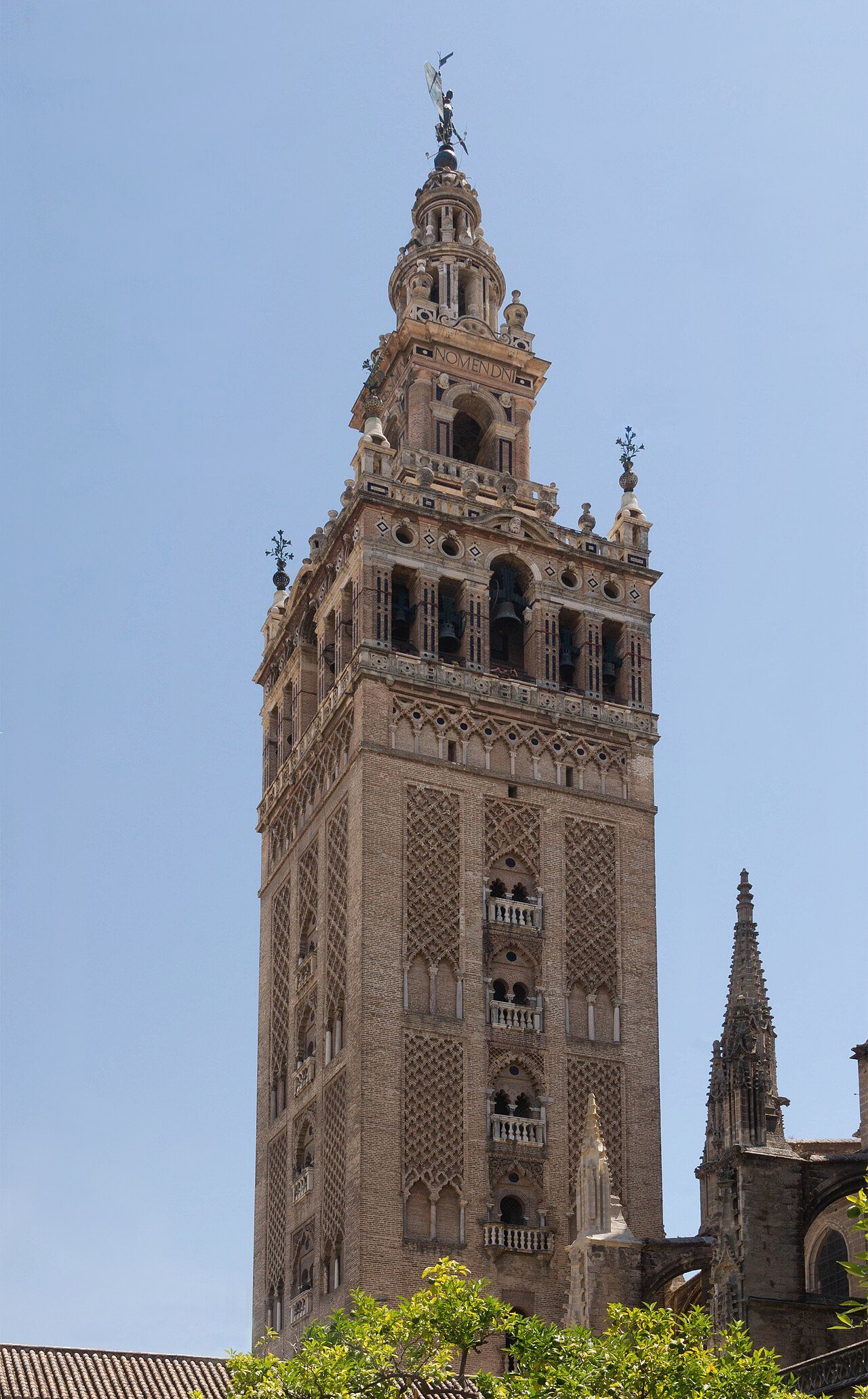
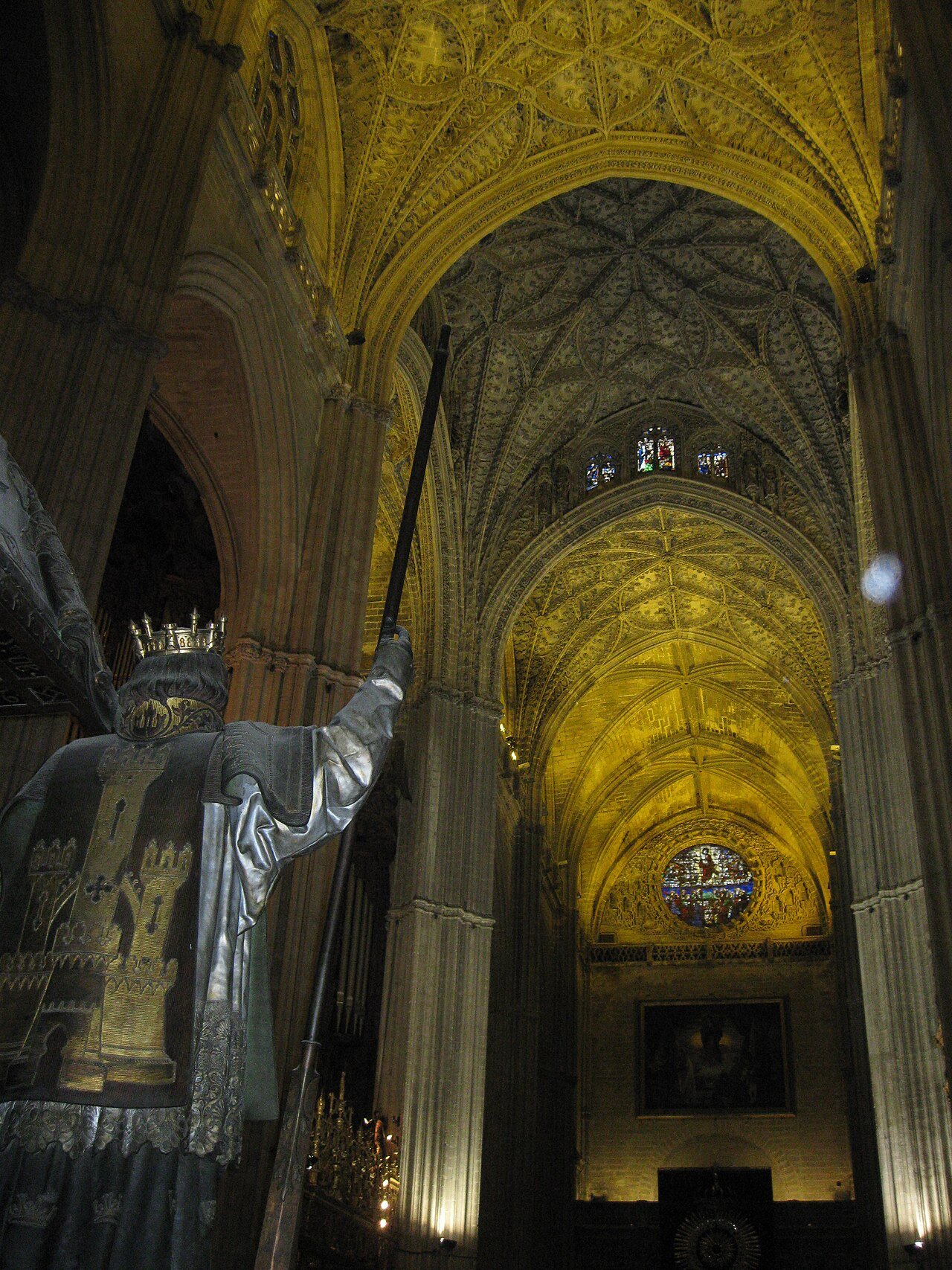
The Cathedral plays the same trick with different timings. Cultural visits start at 11am Monday to Saturday and 2:30pm on Sundays — arrive at ten expecting to stroll in and you will spend an hour watching the doors. The general ticket costs €13 online or €14 at the door at the time of writing, and it quietly includes two things many visitors miss: the climb up the Giralda, and entry to the Iglesia del Salvador, a splendid Baroque church ten minutes away that most ticket-holders never use. Online tickets enter by the Puerta del Lagarto; the box office, with its longer queue, is the Puerta del Príncipe. A local shortcut: tickets are also sold at El Salvador itself, usually with a fraction of the queue. Our Seville Cathedral and Giralda guide covers what to look for inside, from Columbus’s tomb to the great altarpiece.
If you prefer the two monuments stitched into one visit, the Alcázar, Cathedral & Giralda skip-the-line tour covers all three with a guide in about three hours, tickets included — rated 4.8/5 from more than 13,000 reviews at the time of writing. It is a guided tour rather than a bare ticket, so weigh it against the €28.50 the two official entries cost together; what you are buying is the guide, the timing and the certainty.
Mistakes 3 and 4: Fighting the Heat (and the Siesta)
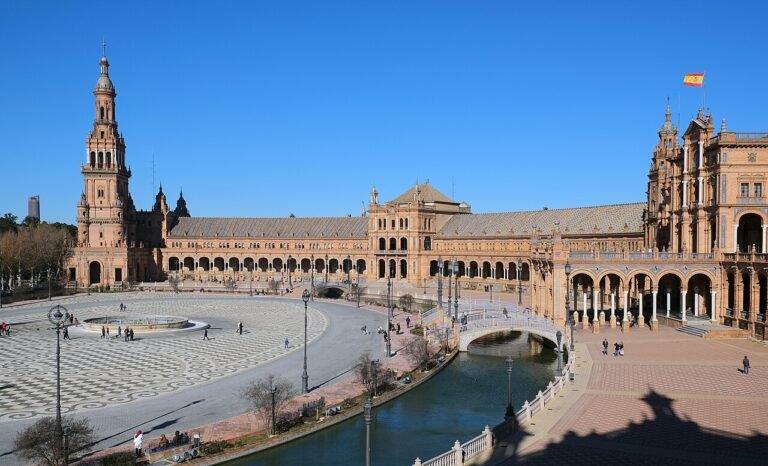
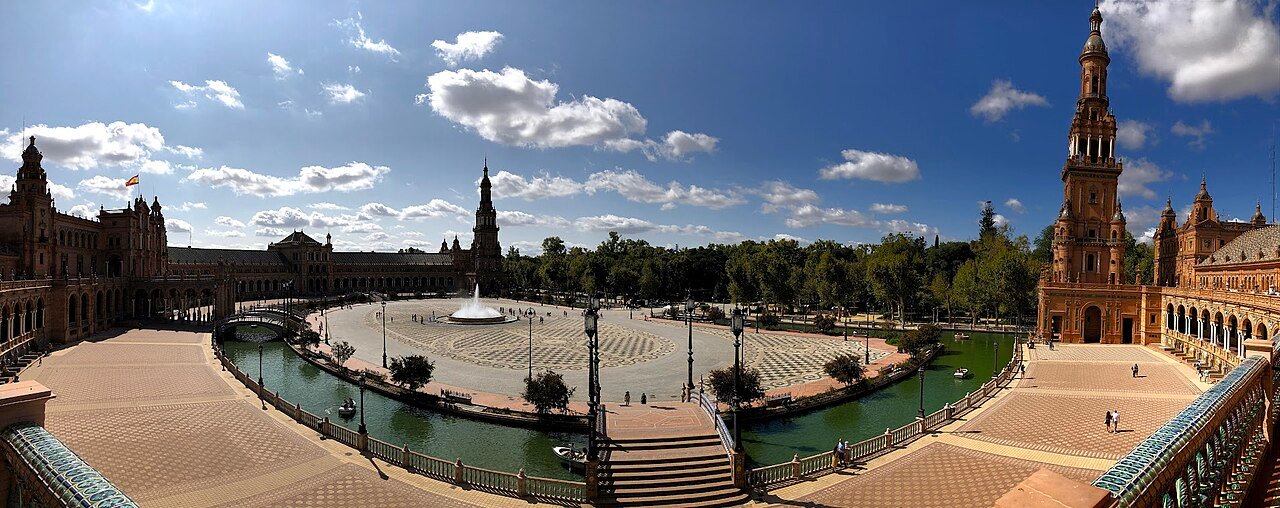
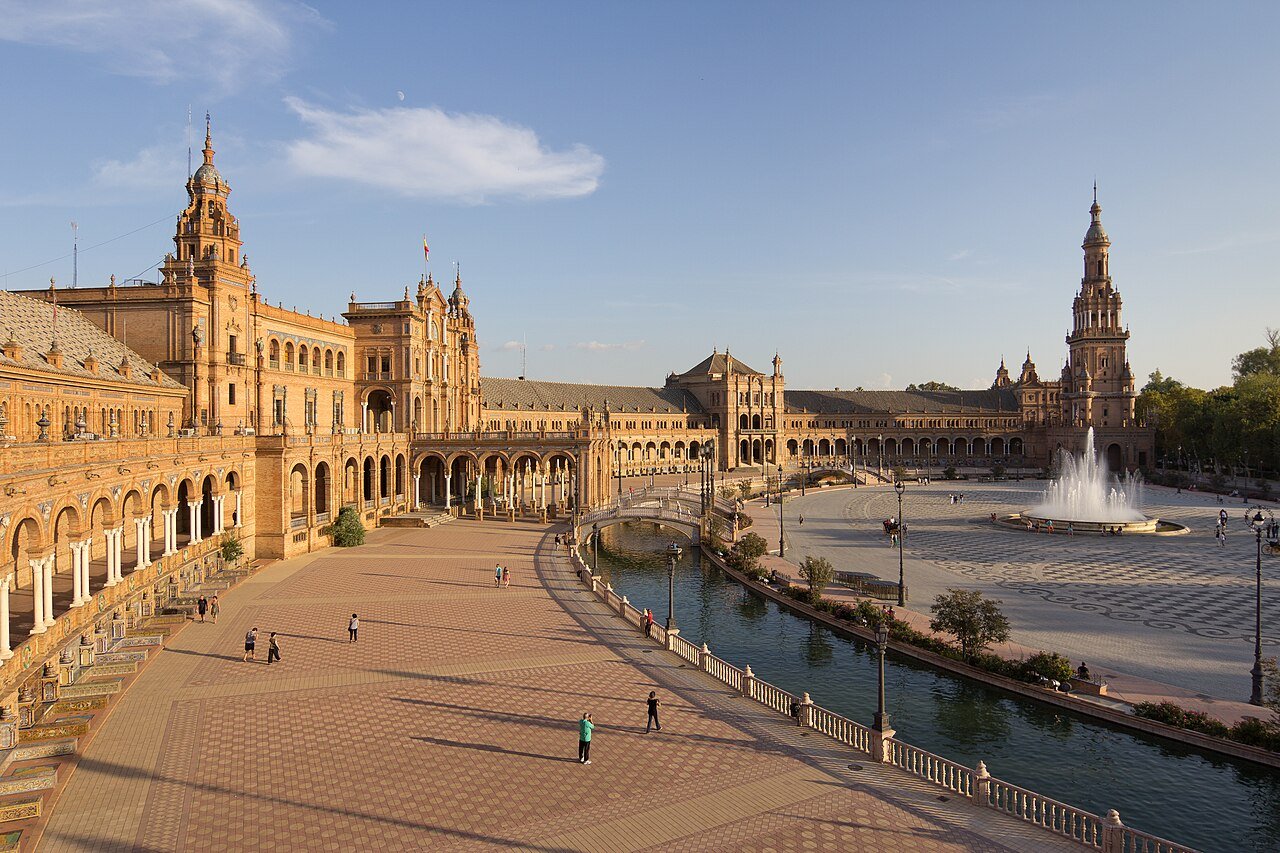
Seville’s summer statistics deserve respect: average daytime highs sit around 36 °C in July and August, and spells above 40 °C arrive most years. Yet every summer afternoon the Plaza de España fills with visitors doing the full circuit of its tiled benches at three o’clock, in unsparing sun, wondering why the locals have vanished. The locals have not vanished. They are indoors, eating lunch late and resting, in a daily pattern the whole city is built around — and the smart visitor copies it wholesale. Sightsee early, take the big interiors in the late morning, eat long and late, and give the hours between roughly 3pm and 6pm to a siesta, a museum or a shaded café. The city’s second act — terraces, the river, the monuments lit gold — starts when the heat breaks, and it is the best part of the day.
The siesta’s other face is the closed door. Many smaller shops, market stalls and family businesses shut from around 2pm until 5pm or later, and some never reopen on Saturday afternoons or Sundays at all. The monuments, big stores and museums keep their own posted hours, so the mistake is not catastrophic — but the traveller who plans the day’s shopping, pharmacy run or market visit for mid-afternoon will spend it reading opening-times notices on locked shutters. Do errands in the morning, like everyone else.
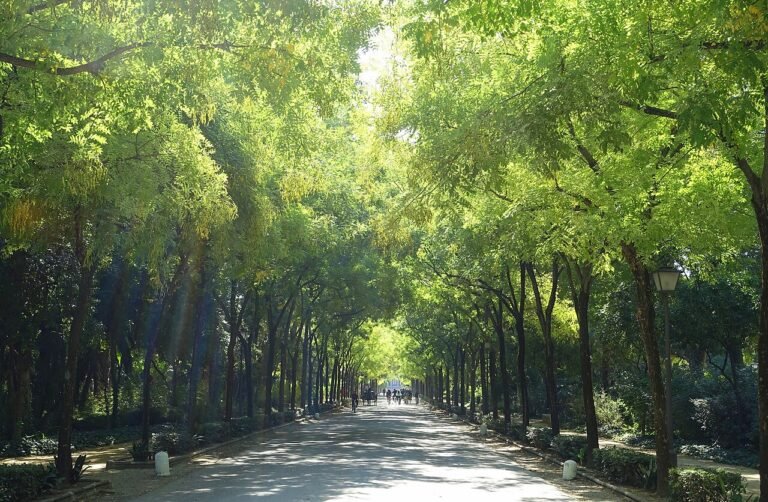
Work with the heat and it quietly improves the plan. The Cathedral’s cultural visits start at 11am and run through the afternoon, and its stone interior is the coolest ticket in Seville at one o’clock; the Alcázar’s gardens were designed as shade architecture five centuries before air-conditioning, all fountains, orange trees and tiled pavilions. Put the interiors and the gardens in the hot middle of the day, the open squares and viewpoints at its edges, and the weather stops being an opponent and becomes a timetable.
Mistakes 5 and 6: Landing in a Festival by Accident
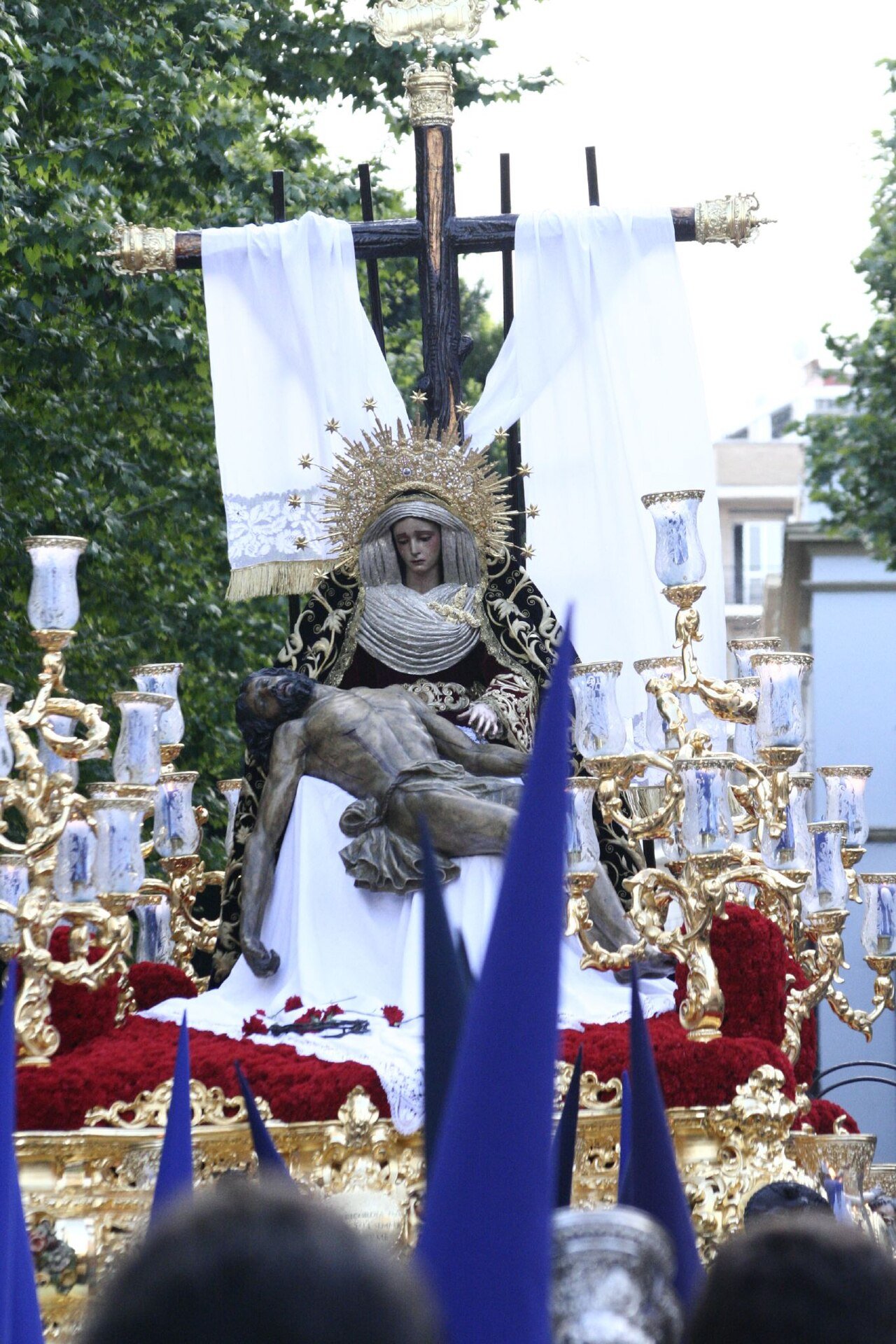
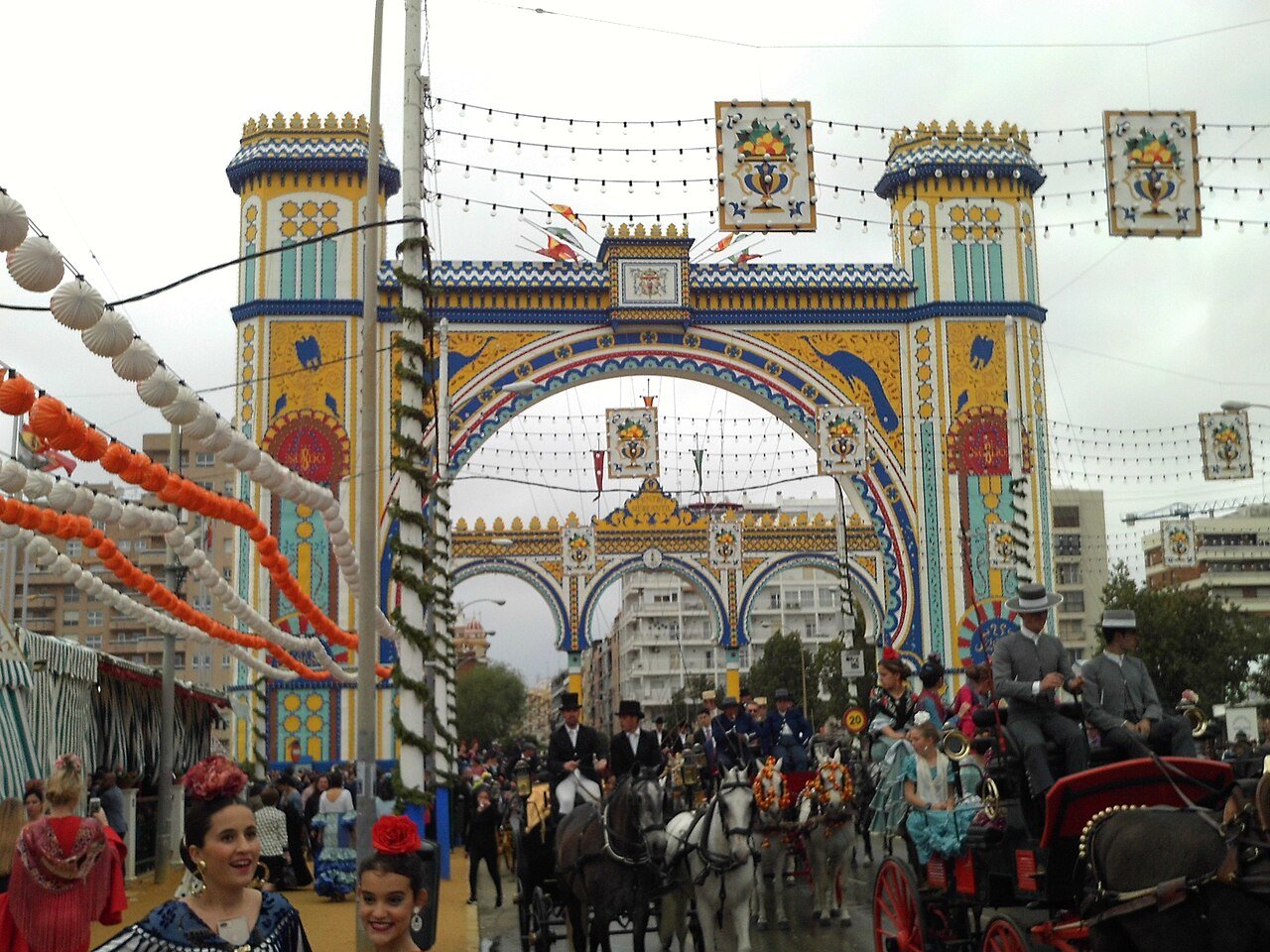
Twice a spring, Seville stops being a normal city. Semana Santa — in 2027, from 21 to 28 March — fills the old town with more than seventy brotherhoods carrying their pasos through streets that close as each procession passes; hotel prices peak, restaurants fill, and simply crossing the centre can take an hour of patient shuffling. The Feria de Abril follows a fortnight later (in 2027, expected from Tuesday 13 to Sunday 18 April, opening with the alumbrao lighting ceremony on the Monday night): a fairground city of casetas rises in Los Remedios, and Seville dances, rides and drinks until dawn for six days. Both festivals are among the great spectacles of Europe, and both are miserable if you booked the week by accident because the flights were oddly expensive. Check the dates before you book anything, then decide deliberately: come for them, with our Semana Santa guide and Feria de Abril guide in hand, or come the week before or after and enjoy the same city at half the price and a quarter of the crowd.
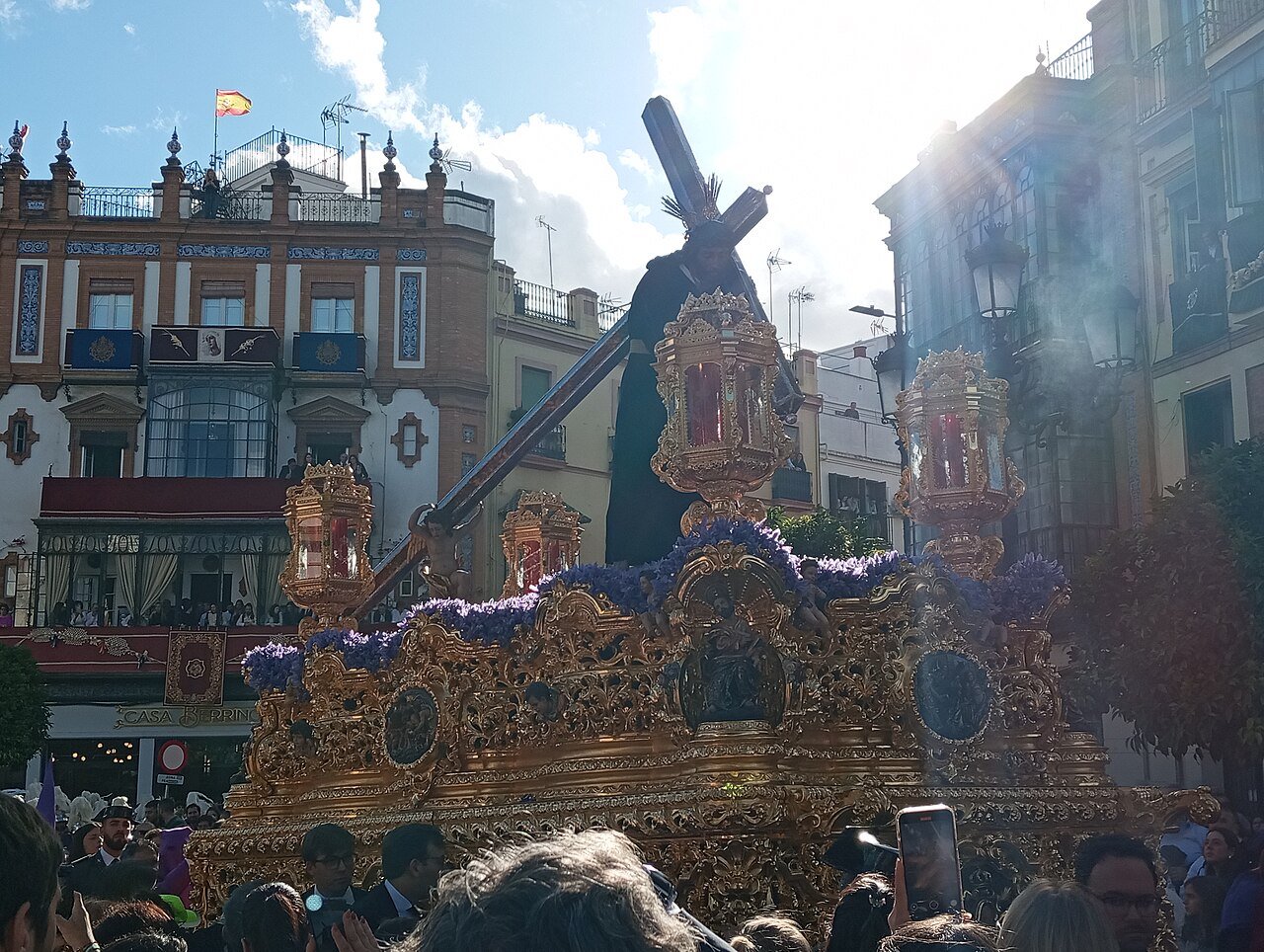
Two smaller festival traps sit inside the big one. The hooded figures in our photographs wear the capirote, the traditional penitential dress of the nazarenos who walk with each brotherhood — centuries old, entirely local, and best met with the respect you would show any act of devotion. And at the Feria, the prettiest mistake of all is assuming the casetas work like bars: the great majority of the thousand-plus tents are private, run by families, firms and associations for their members and guests. Visitors are welcome in the public casetas — the casetas públicas, including the large municipal one — which are signed and open to everyone; start there, and let any further invitations be a bonus.
Mistake 7: Eating Where the View Does the Cooking
The terraces facing the Cathedral and lining the Avenida de la Constitución charge for their postcard, and the kitchen knows it. The pattern repeats across Mediterranean cities but Seville’s version is easy to dodge, because the city’s eating improves with every street you put between yourself and the monuments. Walk five minutes into the side streets of El Arenal, the Alameda de Hércules or Triana and the same money buys the fried fish, the espinacas con garbanzos and the salmorejo that Sevillians actually queue for — our guide to the best food in Seville maps the dishes to find and the quarters to find them in. The rule of thumb: if the menu is mostly photographs and the tout is doing the selling, keep walking.
Mistakes 8 and 9: Eating on the Wrong Clock (and in the Wrong Sizes)
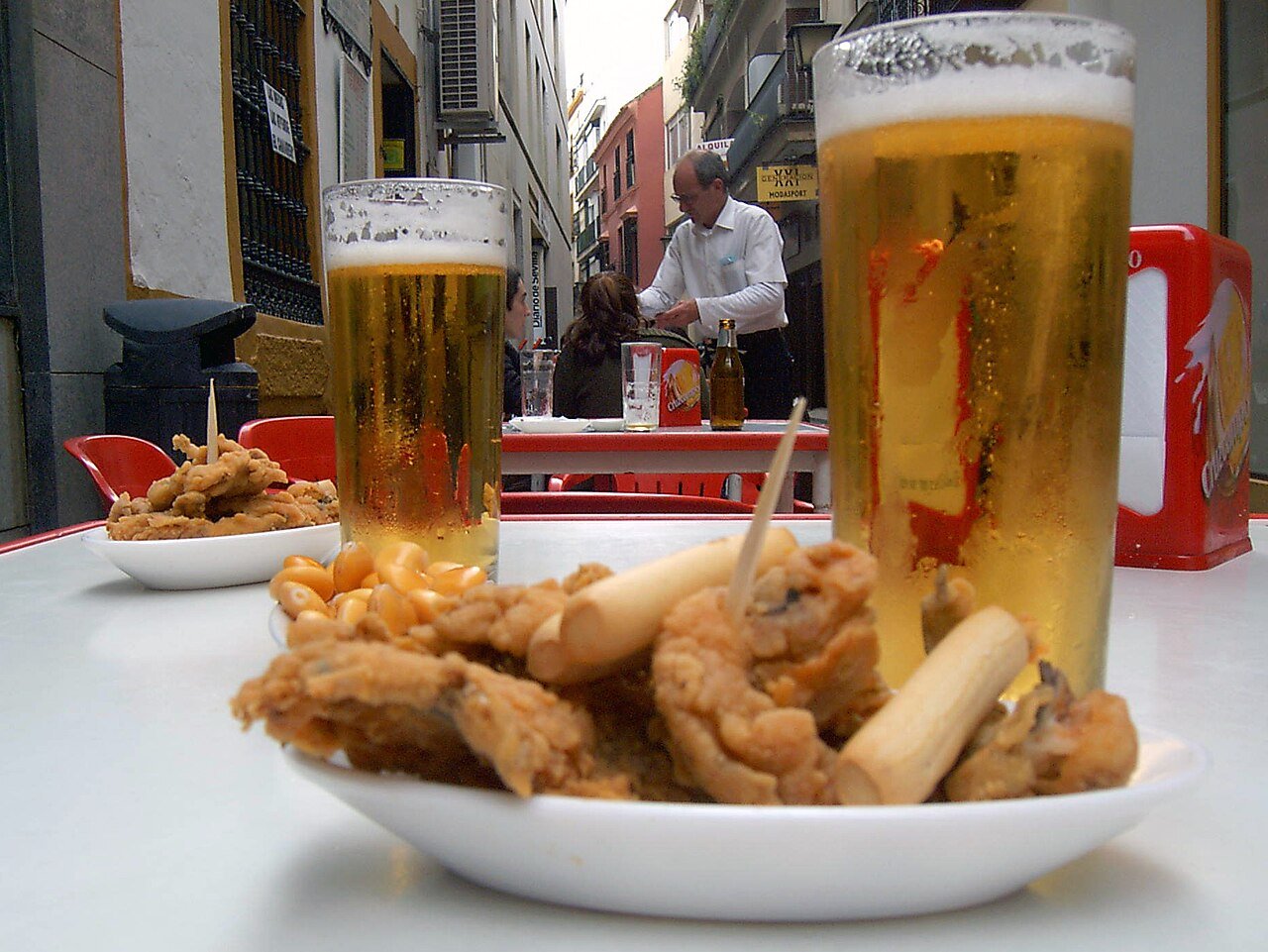
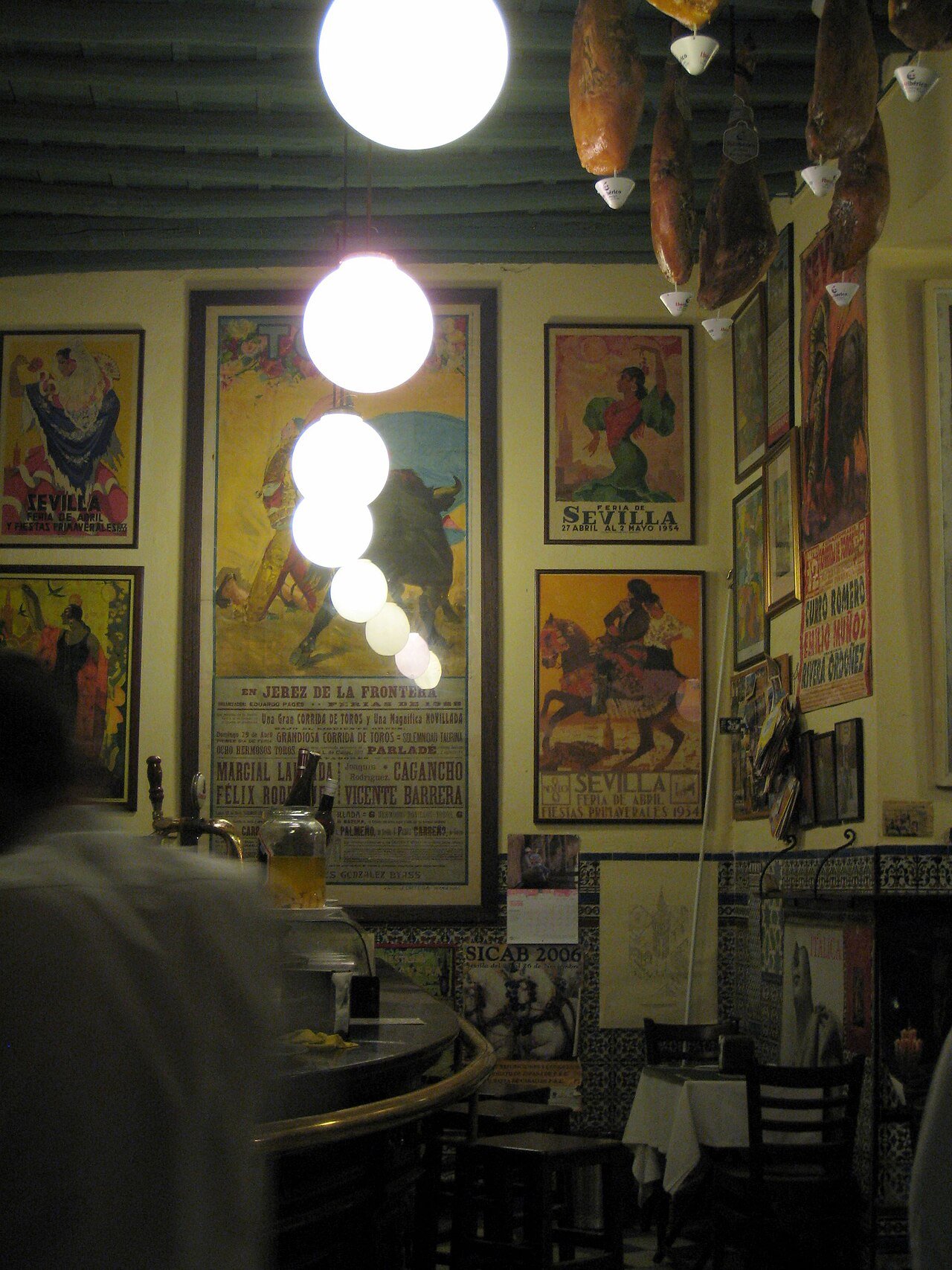
Seville eats late, and ordering dinner at seven in the evening is a reliable way to eat alone in a kitchen that has not yet lit its grills. Lunch runs from about 1:30pm to 3:30pm and dinner from 8:30pm onwards; the bars in between serve whoever is standing at them, which is the correct way to bridge the gap. The second error is one of scale. Tapas in Seville come in three sizes — the tapa, a small tasting plate; the media ración, a half portion; and the ración, a full plate built for sharing. The first-timer who orders a ración each of five dishes has accidentally catered a wedding. Order tapas one or two at a time, stand at the bar like the locals where bars are standing bars, and let the meal build. And when a waiter chalks your running total on the counter, that is not a scam — it is bookkeeping, settled at the end.
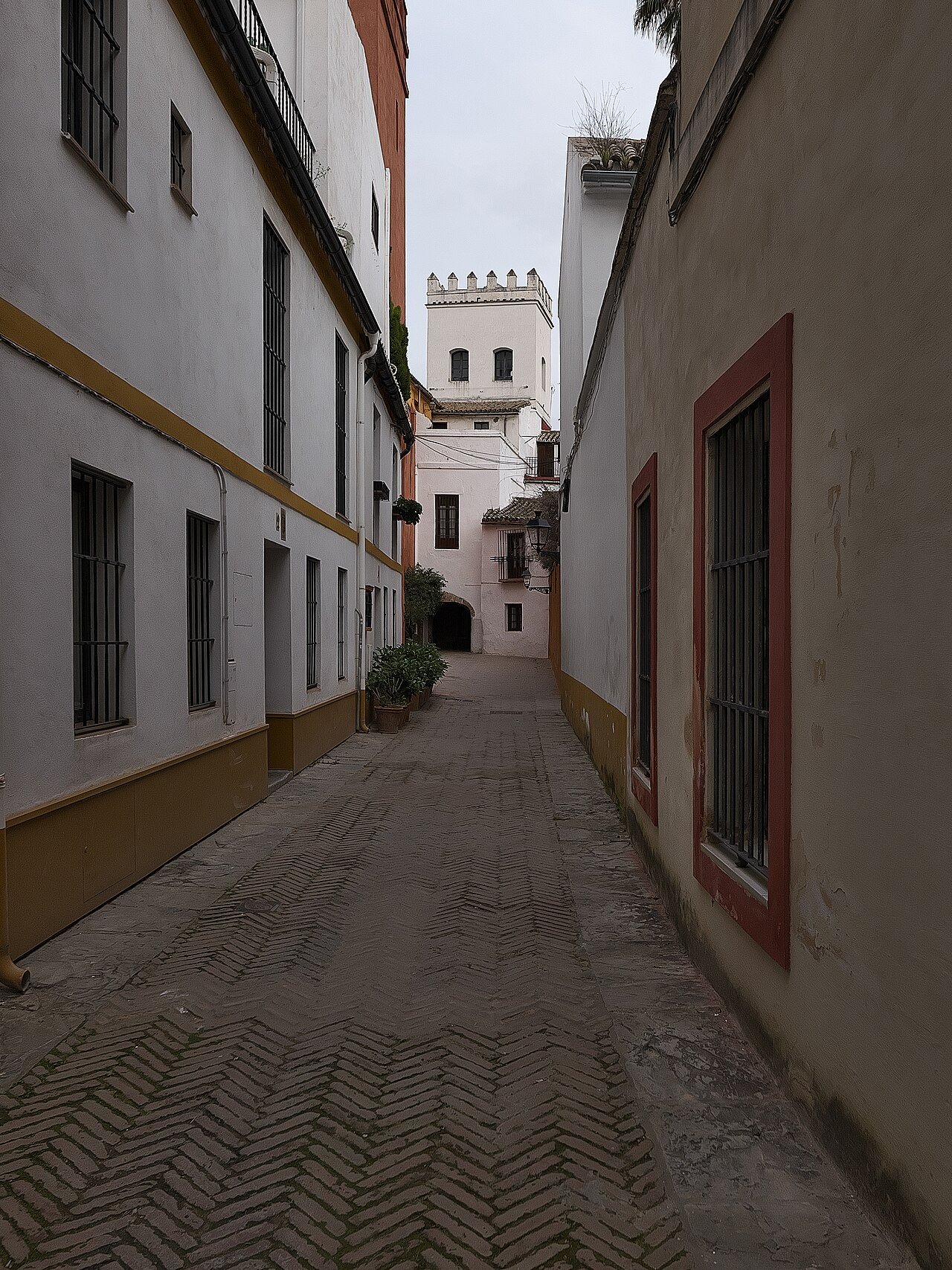
Mistake 10: Treating Santa Cruz as the Whole City
The Barrio Santa Cruz is where almost every first visit sleeps, eats and wanders — understandably, since its whitewashed lanes sit in the Cathedral’s shadow. The mistake is letting it become a container. Hotel rates in the monumental centre are the city’s highest, its streets the most touristed, and its version of Seville the most curated. The city beyond is bigger and better company: the Alameda’s big local terraces, the Macarena’s churches, Triana across the river, the café life of Nervión. Stay in Santa Cruz if you love it — plenty do — but budget your days across the whole map, not just its prettiest square kilometre.
Mistake 11: Never Crossing the River
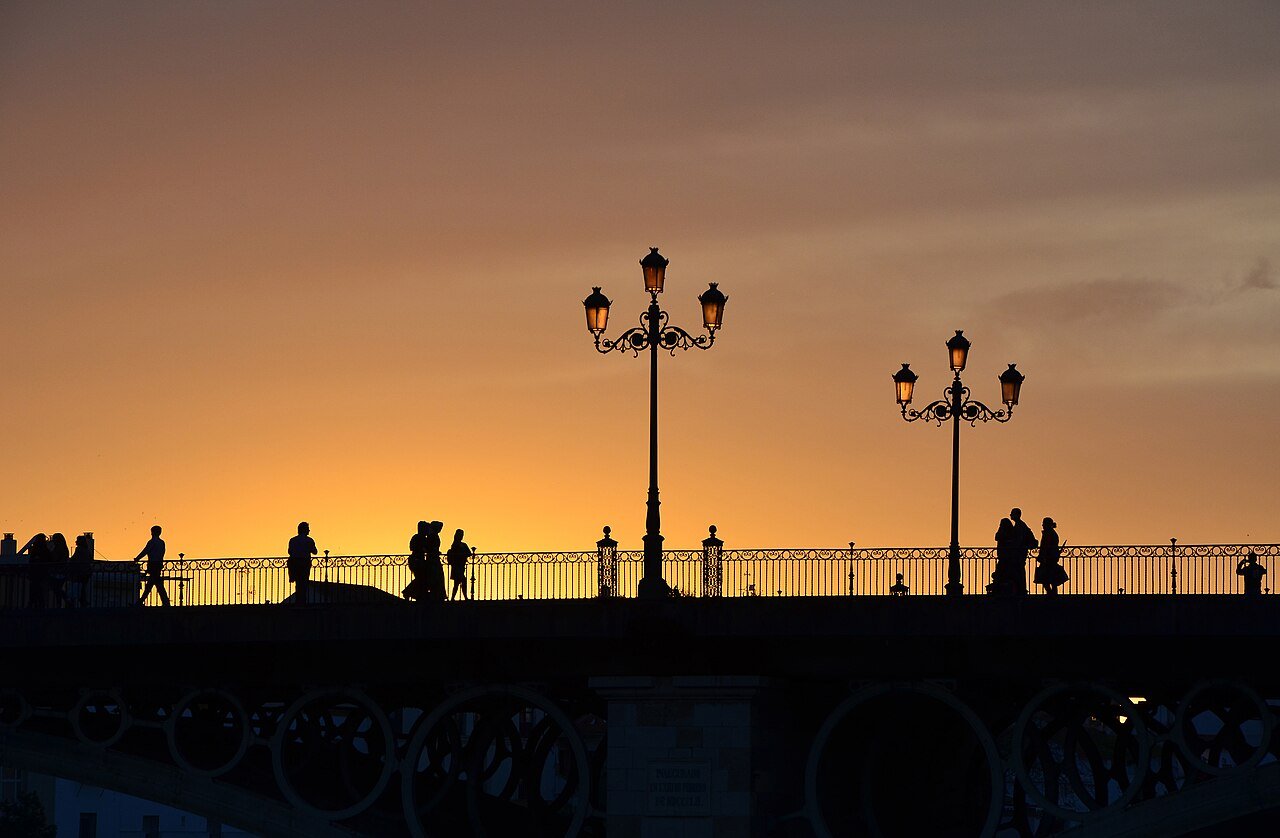
It takes five minutes to walk over the Puente de Isabel II, and a surprising number of visitors never do it. On the far bank, Triana keeps the city’s other personality: the potters’ quarter of tiled façades and ceramic workshops, the market on its castle ruins, the bars of Calle Betis facing the old town across the water, and the parish church of Santa Ana, older than the Cathedral’s Christian city around it. Our Triana guide covers the quarter street by street. Go at dusk, when the bridge fills with strollers and the centre turns gold across the river — the photograph below is not an exaggeration, it is a Tuesday.
Mistakes 12 and 13: Wheels — Driving In, and Overpaying the Airport Run
Seville’s old town was built for feet and horses, and it defends itself against cars with one-way lanes, restricted zones and parking that costs more than lunch. If your trip is based in the city, you do not need a hire car at all: the centre is flat and walkable, the Metrocentro tram crosses it, and the metro and buses cover the rest. Save the car for the day you leave for the countryside, and pick it up on your way out.
The matching error happens at the airport. The taxi fare between Seville Airport and the city is fixed by the city council — €26 in weekday daytime hours and €29 at nights, weekends and holidays under the 2026 tariff, luggage included — so there is no meter to watch and no route to argue about. The EA airport bus does the same journey in about 35 minutes to Santa Justa station and Plaza de Armas for a few euros (around €5 at the time of writing; the fare has risen more than once in recent years, so check TUSSAM before you travel). Either is simple; the only real mistake is the unlicensed “taxi” tout inside arrivals.

Mistake 14: Sprinting — Trying to Do Seville in a Day
Cruise excursions and tight itineraries produce the saddest Seville mistake of all: the one-day sprint that touches the Cathedral, the Alcázar, the Plaza de España and Santa Cruz at a jog, and remembers none of them. The city’s sights are close together but deep; each of the big two deserves half a day around it, and the pleasures in between — the long lunch, the shaded park, the bar at dusk — are not filler, they are the substance of the place. If you genuinely have one day, choose: one great monument done properly, one quarter explored slowly, one long lunch. Seville will still be here, and so, in all likelihood, will you — most sprinters come back and do it properly.
Practical Info
Mistake 15: dressing for the beach at the Cathedral. The Cathedral is a working church with an enforced dress code: shoulders and knees covered, hats off inside, no beachwear. Every summer visitors are turned away at the door in vests and short shorts; in hot weather a light scarf in your bag solves it in five seconds.
Money and cards. Cards are accepted almost everywhere in the centre, but carry some cash for the smallest bars, market stalls and the Feria’s street vendors. Tipping is a courtesy, not a percentage: round up, or leave the small change from a good meal.
Safety. Seville is a safe city whose main visitor crime is pickpocketing in crowds — festival crushes, the tram, the cathedral square — so keep bags zipped and phones off café tables there. Around the Cathedral, a woman pressing a sprig of rosemary into your hand is not offering a gift: the sprig comes with a palm reading and then a demand for money. A polite “no, gracias” and walking on ends it. Emergencies: 112 works across Spain.
Tickets and Costs
Done officially, the big two cost €28.50 together at the time of writing: Alcázar general admission €15.50 (reduced €8; the Cuarto Real Alto royal apartments add €5.50) and the Cathedral’s €13 online or €14 at the door, which includes the Giralda and the Iglesia del Salvador. Both monuments have genuine free windows — the Alcázar’s last hour on Mondays, and a free Sunday-afternoon slot at the Cathedral — but both must be reserved online in advance and both go fast; treat them as a bonus for the organised, not a plan.
The structured alternative is Seville: Alcázar, Cathedral & Giralda Skip-the-Line Tour, a roughly three-hour guided tour of all three monuments with skip-the-line tickets included, rated 4.8/5 from more than 13,000 reviews at the time of writing. It costs more than the two door prices combined, and the difference buys the guide and the single booking — worth it for many first visits, unnecessary if you are happy with the official audio guides and your own timetable. Everything else in this guide is free: the festivals are street events, the quarters cost shoe leather, and the most expensive remaining mistake is a ración ordered in error.
Getting There
Seville Airport (San Pablo) sits about 10 km north-east of the centre. The EA bus runs to Santa Justa station and Plaza de Armas in around 35 minutes; official taxis from the rank outside arrivals charge the fixed €26/€29 city fares described above, and the drive takes 15–25 minutes depending on traffic. Santa Justa is also the rail gateway — high-speed AVE trains from Madrid take about two and a half hours — and from the station the centre is a 20-minute walk or a short bus or taxi ride. However you arrive, arrive knowing the fixed fare: it converts the first negotiation of the trip into a non-event.
When to Go
The forgiving seasons are spring and autumn: March to May and late September to November bring warm days, cool evenings and the city at its ease — with the two festival spikes of Semana Santa and the Feria inside that spring window, to be chosen or avoided on purpose. Summer is for the heat-proof and the bargain-hunter, and only with the siesta strategy above. Winter is mild, bright and quiet, with the Alcázar gardens at their emptiest; pack layers for evenings rather than a heavy coat. Our month-by-month guide to the best time to visit Seville goes deeper on weather and crowds.
How Long You Need
Two full days is the honest minimum — one for the Alcázar and Santa Cruz, one for the Cathedral, the Giralda and an evening in Triana — and three or four days is where Seville starts to feel like a place you know rather than a list you completed. Add a day for a festival, a day for a day trip, and a half-day somewhere in the middle with nothing in it at all. That empty half-day is not an indulgence; in this city it is where the trip usually happens.
Tips for Visiting Seville
- Book the big two first, before hotels and restaurants: their slots shape the rest of the itinerary.
- Front-load the day. Seville starts early and late at once — sights in the morning, life in the evening, rest between.
- Carry water and a scarf from April to October: one for the heat, one for the Cathedral’s dress code.
- Learn the three sizes: tapa, media ración, ración — and order in rounds, not all at once.
- Look for the casetas públicas at the Feria, and the Iglesia del Salvador shortcut when buying Cathedral tickets.
- Cross the river at dusk at least once, and let the walk back over the bridge be the plan, not the transport.
FAQs
What is the single biggest mistake visitors make in Seville?
Leaving the Alcázar and the Cathedral to chance. Both run on timed tickets that sell out days ahead in busy weeks, and the unprepared lose their best hours to the ticket-office queue — or miss a monument entirely. Book both online before you book anything else.
Do I need to book the Alcázar and Cathedral in advance, really?
Yes, in any week with a festival, a holiday or a Saturday in it — which is most good weeks. Book the Alcázar on its official site well ahead (tickets are nominative, so match the booking name to your ID), and the Cathedral online for the Puerta del Lagarto entrance. The guided skip-the-line tour of all three monuments is the fallback when official slots have gone.
Should I avoid Semana Santa and the Feria, or aim for them?
Neither, blindly. Both are extraordinary and both triple the effort and cost of an ordinary week — Semana Santa 2027 runs 21–28 March and the Feria is expected 13–18 April 2027. Come for them if they are the point of the trip; if they are not, the weeks either side give you the same city in a calmer mood.
How hot does Seville actually get?
Hotter than most visitors picture: average highs around 36 °C in July and August, with spells over 40 °C in most summers. It is entirely manageable if you copy the local day — early sights, long lunch, siesta hours indoors, and the city again in the evening — and genuinely unpleasant if you fight it.
Can anyone go into the Feria casetas?
Into the public ones, yes: the casetas públicas are open to everyone, free, and easy to find by their signage. The rest — the great majority of the fair’s thousand-plus tents — are private, for members and their guests. Wander the fairground, ride, eat and drink in the public casetas, and treat any invitation into a private one as the compliment it is.
Is the Cathedral’s dress code really enforced?
Yes. Shoulders and knees covered, hats removed — visitors in beachwear are turned away at the door every summer. A light scarf or shawl in your day bag covers shoulders instantly and weighs nothing.
Travel insurance, sorted
Whether it is a two-week holiday or a longer move, travel insurance is not the most glamorous part of a trip — but it is the one booking you want to have in place before a trip, and while you are already away. Get a quote from SafetyWing
Final Thoughts
Seville’s mistakes are forgiving ones, because every one of them is a signpost to how the city actually works: book ahead because the monuments matter, rest at midday because the sun insists, eat late and small because that is where the flavour is, and cross the river because the other half of the story is waiting there. Avoid the fifteen above and you will not just have a smoother trip — you will have a Sevillian one.
15 Best Things to Do in Seville You Can’t Miss
Photos: Jebulon, NACLE, Américo Toledano, Gab416, Cofrades 2020 sevilla, Ángel Cachón, CarlosVdeHabsburgo, Marta, Frédérique Voisin-Demery, Jl FilpoC, Gzzz and Chabe01, via Wikimedia Commons (CC0, CC BY 2.0, CC BY-SA 3.0 and CC BY-SA 4.0).