15 Best Things to Do in Seville You Can’t Miss
Seville is not a city you tick off. Its famous sights are famous for a reason — the biggest Gothic cathedral on Earth, a square so theatrical it has played other planets in films — but the moments people carry home are just as often the small ones: jamón sliced in a working market, a singer in a tiny Triana room, the river turning gold at eight in the evening. This list mixes both.
One rule before the list: Seville rewards the early starter and the late finisher, and punishes anyone sightseeing at 3pm in July. Book the two big timed tickets — the Alcázar and the Cathedral — before you arrive, build a siesta-shaped hole into the middle of every day, and save the squares and the river for the evening light. Base yourself well, too — our Where to Stay in Seville guide covers the neighbourhoods — and the itineraries linked at the end stitch these sights into one, two and three days. Here are the fifteen things I would send any friend to first.
Where to Stay in Seville
You will walk to most of this list from anywhere central. These are the three hotels I point everyone to.
Luxury pick — Hotel Alfonso XIII
Seville’s grande dame since 1929, five minutes from the Cathedral and the Alcázar, with tiled courtyards and a garden pool for the hot hours.
Boutique pick — Corral del Rey
A 17th-century casa palacio hidden in Barrio Santa Cruz: Roman columns, a plunge pool, and a rooftop terrace facing the Giralda.
Budget pick — Hotel Amadeus Sevilla
A friendly, family-run, music-themed hotel on a pedestrian street in Santa Cruz — the city’s best-located neighbourhood at a fair price.
Table of Contents
- Where to Stay in Seville
- 1. The Royal Alcázar
- 2. Seville Cathedral and the Giralda
- 3. Plaza de España
- 4. Barrio Santa Cruz
- 5. Las Setas (Metropol Parasol)
- 6. Triana Market
- 7. Archivo de Indias
- 8. Casa de Pilatos
- 9. Torre del Oro and the River Walk
- 10. María Luisa Park
- 11. A Flamenco Show
- 12. Centro Cerámica Triana
- 13. Tapas at Plaza del Salvador
- 14. The Guadalquivir by Boat or Kayak
- 15. Hospital de los Venerables
- Final Thoughts
1. The Royal Alcázar
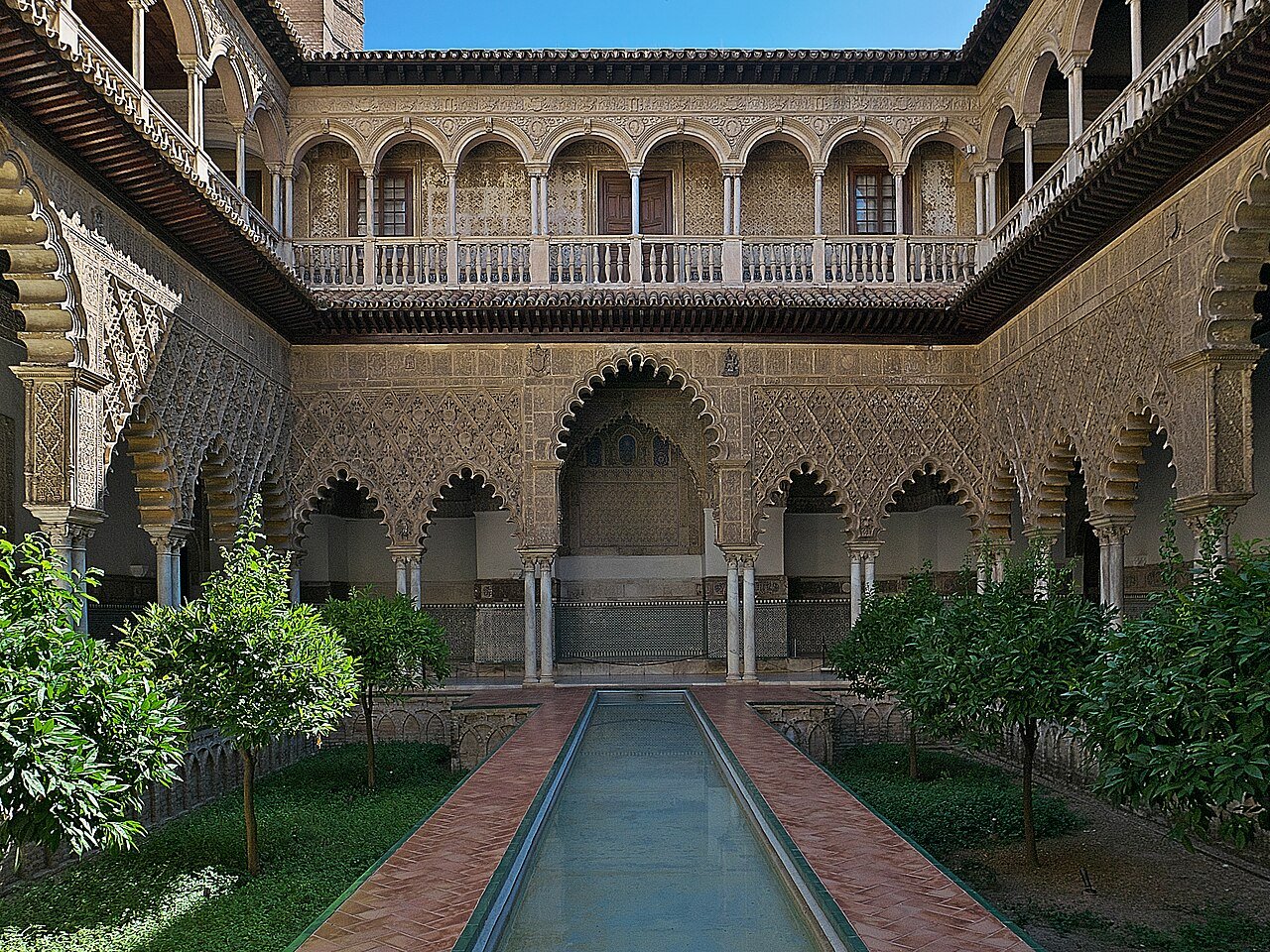
The oldest royal palace in Europe still in use, and for my money the single finest sight in Seville. Behind plain walls beside the Cathedral, Christian kings built a palace in the Islamic Mudéjar style: room after room of carved plaster, glazed tiles and horseshoe arches, opening onto the Courtyard of the Maidens with its sunken garden and still reflecting pool. Give it at least two hours and do not skip the gardens — hedges, orange trees, peacocks, the shadiest acres in the old town. Practical tip: entry is timed and capped, and slots sell out days ahead in spring and autumn. Book the first slot of the day online and walk in while it is still quiet.
2. Seville Cathedral and the Giralda
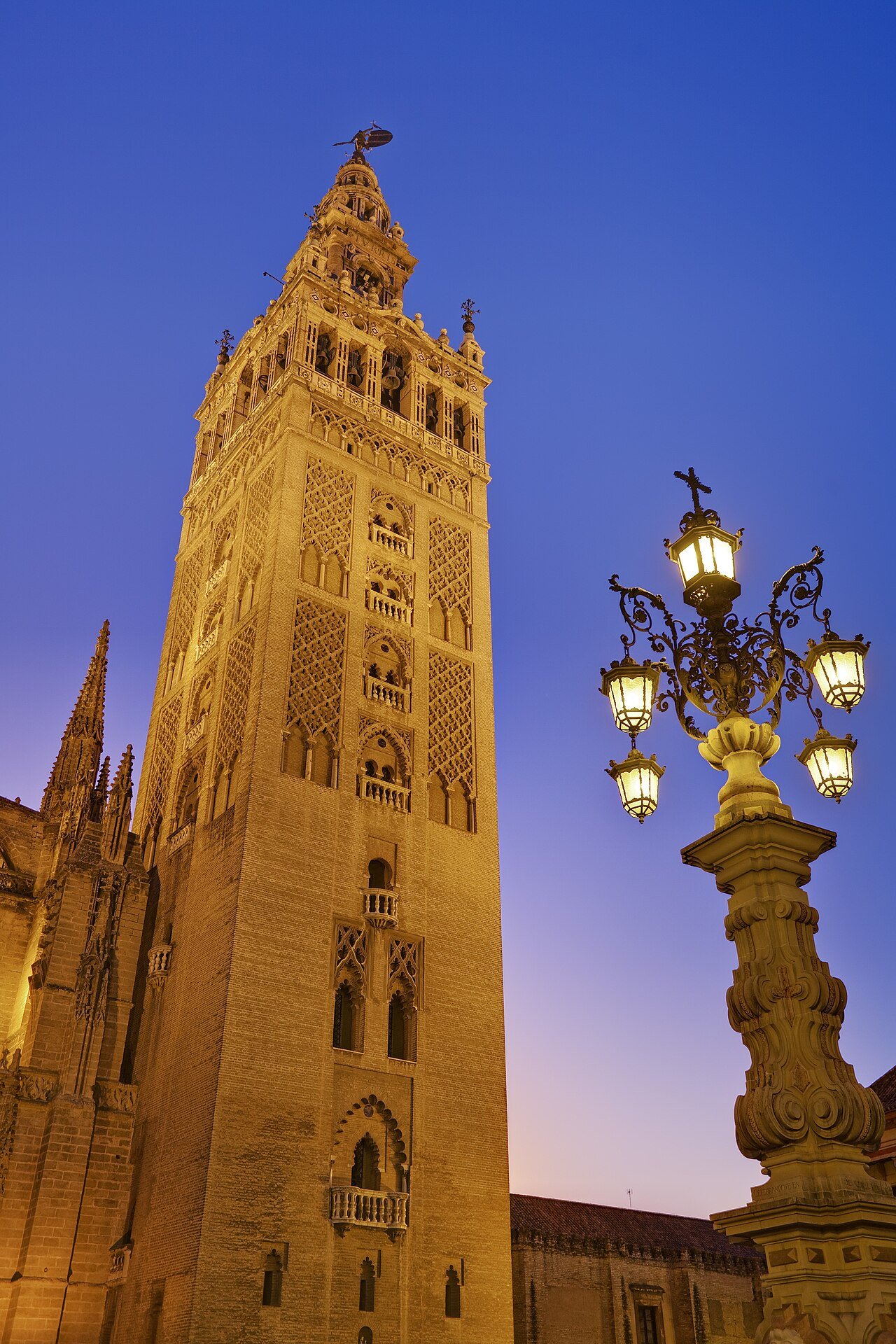
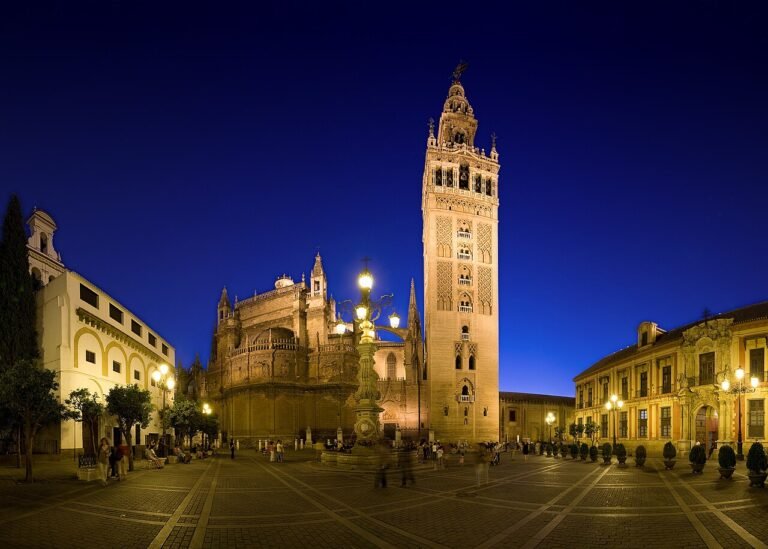
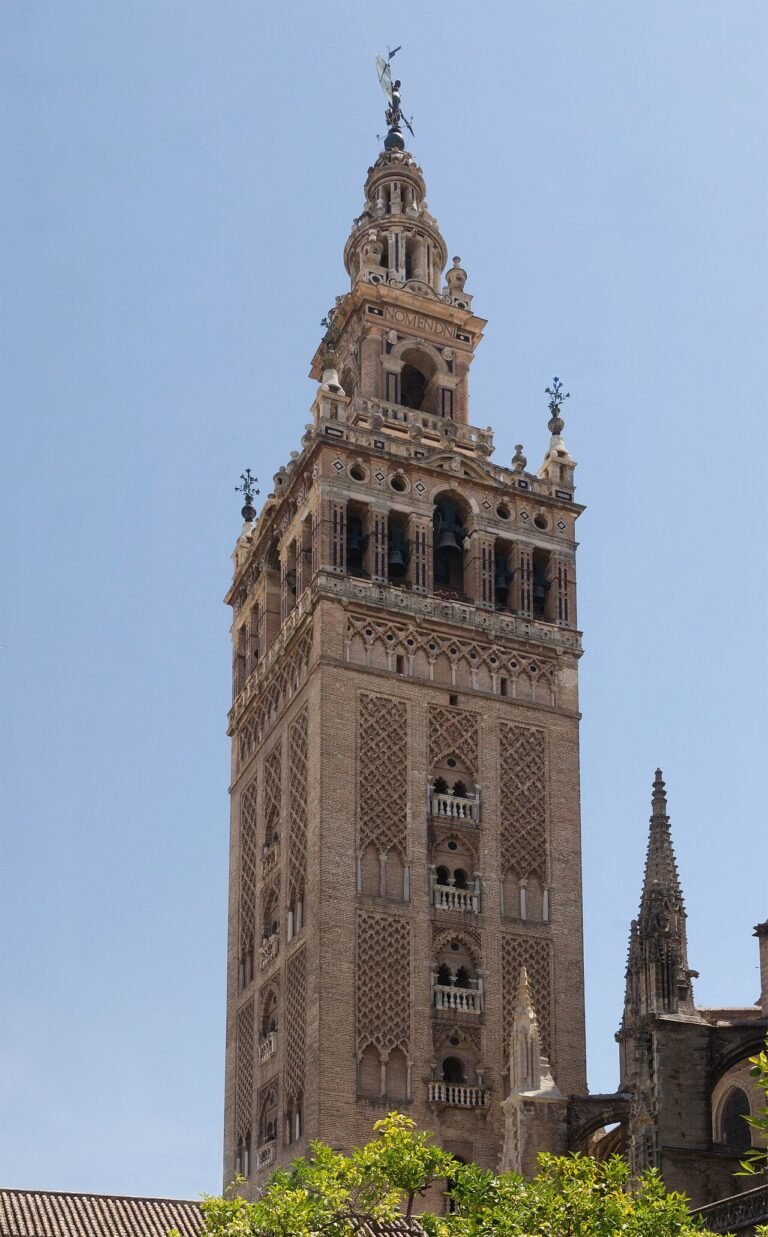
The largest Gothic cathedral in the world, raised on the site of the city’s great mosque. Inside are the tomb of Christopher Columbus, carried by four kings, and a golden altarpiece that took most of a century to carve. Then climb the Giralda, the mosque’s old minaret — famously, it has no stairs, just 35 wide ramps built for a horseman, winding to a bell chamber with the best view in Seville. Practical tip: cover shoulders and knees, and go early or late — sightseeing pauses during services and the midday queue is the city’s worst. A guided visit ties the layers together beautifully.
3. Plaza de España
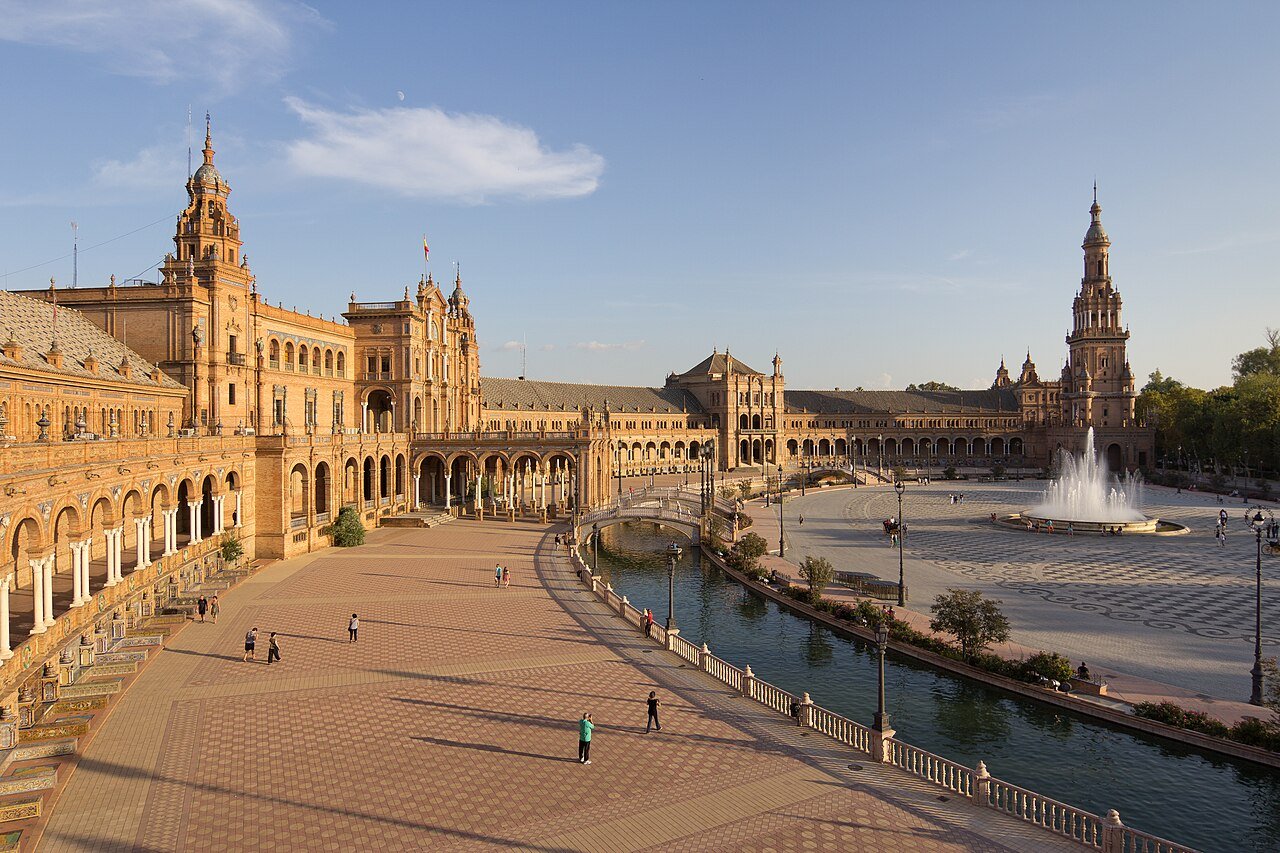
Built for the 1929 Ibero-American Exposition, this vast tiled semicircle — part palace, part film set, all theatre — is the most joyful square in Spain. Walk the arcades, find your province among the 48 tiled alcoves, cross the little bridges, and hire a rowing boat for half an hour: yes, it is touristy; yes, it is also enormous fun. The plaza fronts María Luisa Park, so the two pair naturally into one morning. Practical tip: there is almost no shade here, and by 1pm in summer the square is a furnace. Come before 11am or in the golden hour, when the brick glows and the day-trippers have gone.
4. Barrio Santa Cruz
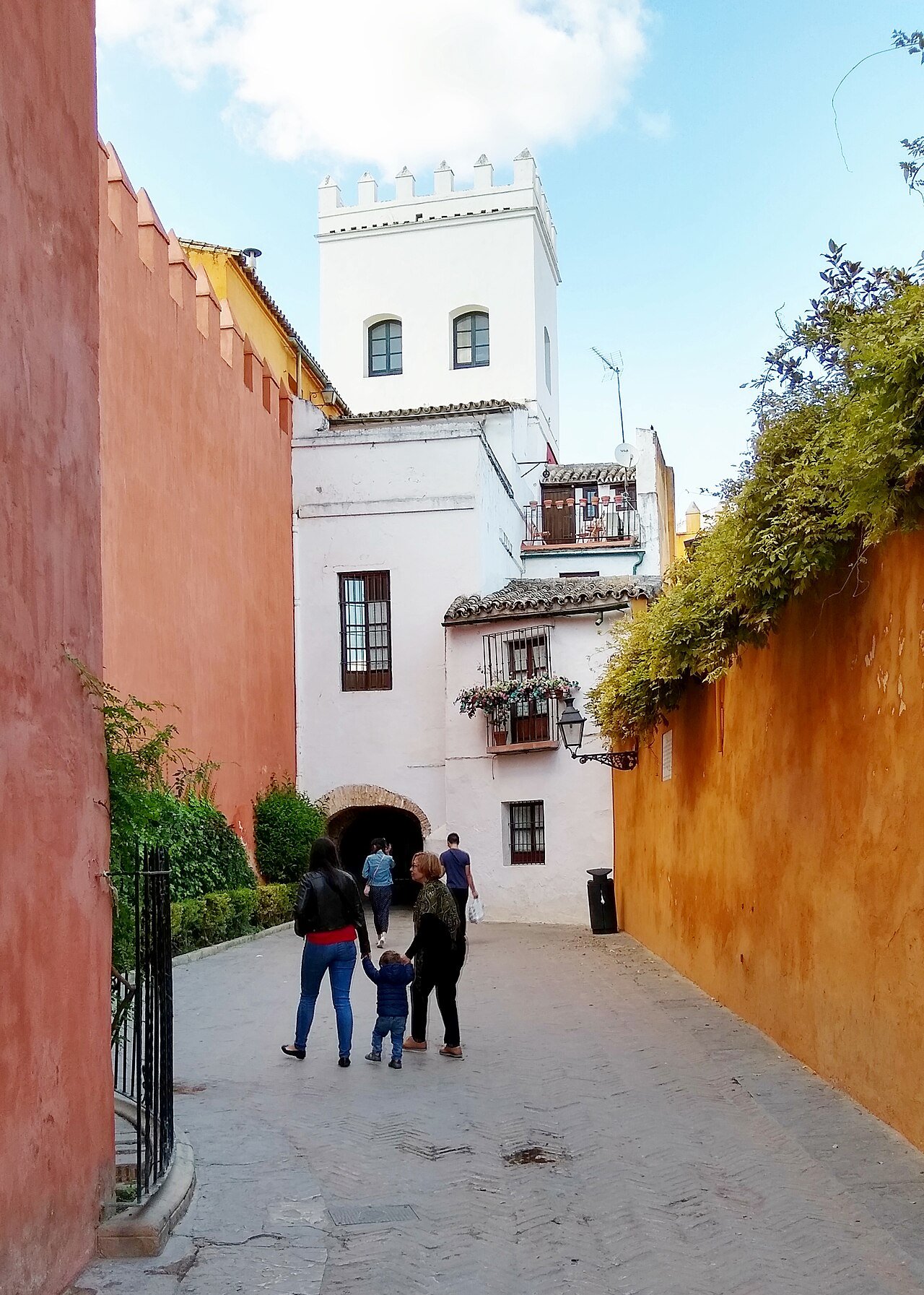
The old Jewish quarter, and the prettiest square mile in Seville: a deliberate maze of whitewashed lanes, tiny plazas with orange trees, iron balconies and geraniums, built to hold the shade. There is no single sight to queue for, and that is the point — the quarter itself is the attraction. Walk the Callejón del Agua along the old city wall, find the Plaza de Doña Elvira with its tile benches, and squeeze down the Calle de los Besos, named for kisses because it is barely wider than one. Practical tip: come twice — once in the morning before the groups arrive, and once after dark, when the lanes empty and a tapas crawl down Calle Mateos Gago is the best dinner plan in the city.
5. Las Setas (Metropol Parasol)
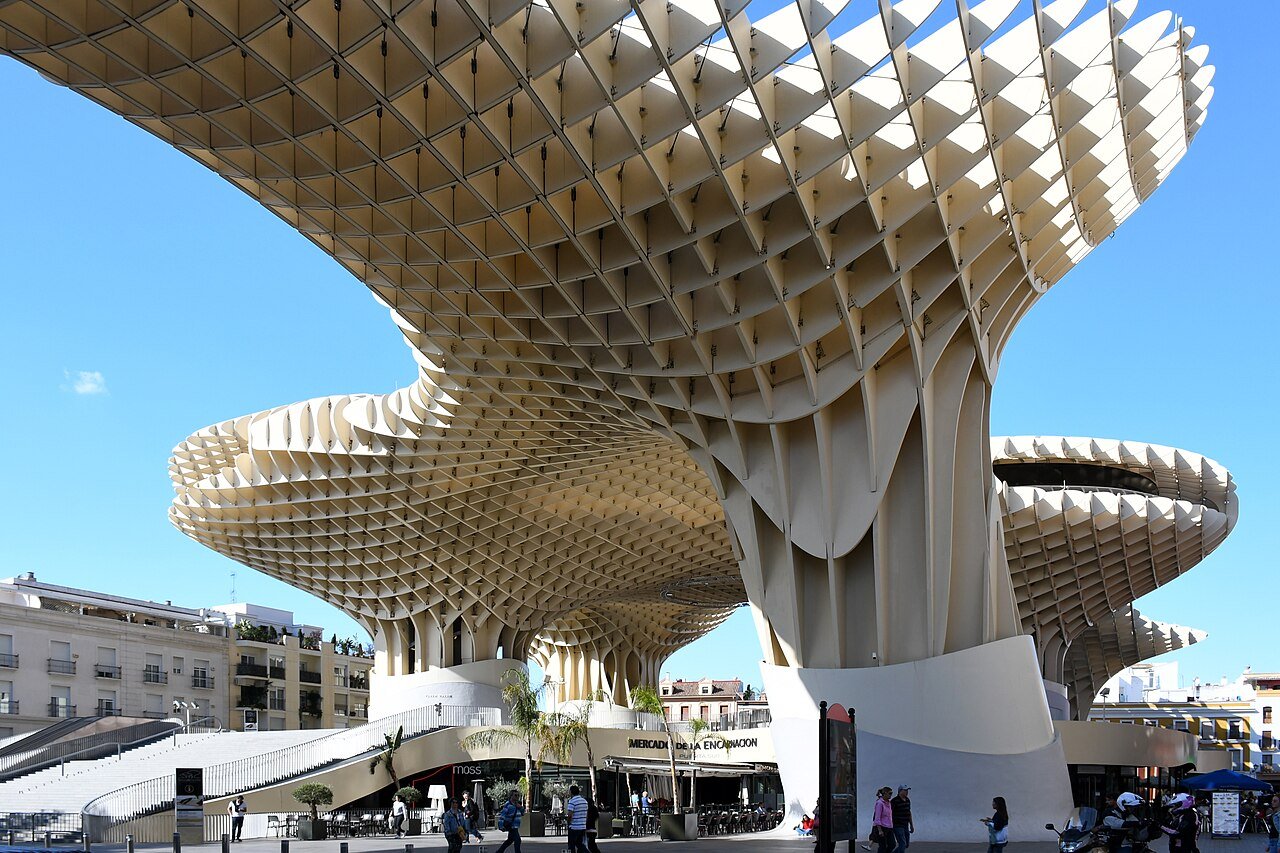
The vast wooden lattice — “the mushrooms” — that shades the Plaza de la Encarnación is the largest timber structure in the world, and the best sunset viewpoint in the old town. A walkway winds across the top of the canopy, 26 metres up, with the whole centre spread below: the Giralda dead ahead, church towers in every direction, and the structure itself glowing amber as the sun drops. Sevillians mocked it for years, then quietly changed sides. Below are the Encarnación market and the Antiquarium’s Roman remains. Practical tip: entry to the walkway is timed — book the sunset slot ahead, and arrive twenty minutes early to watch the light change.
6. Triana Market
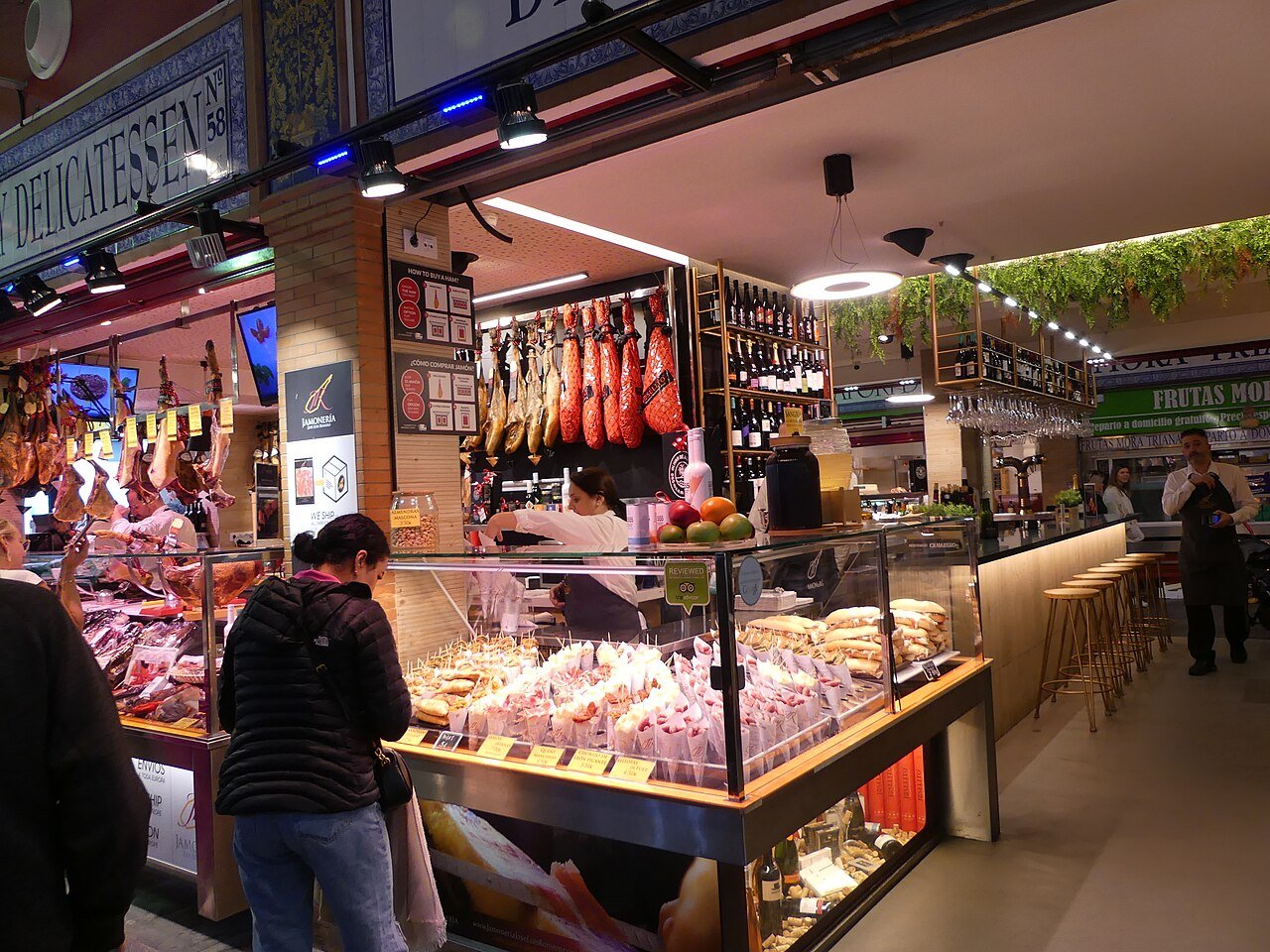
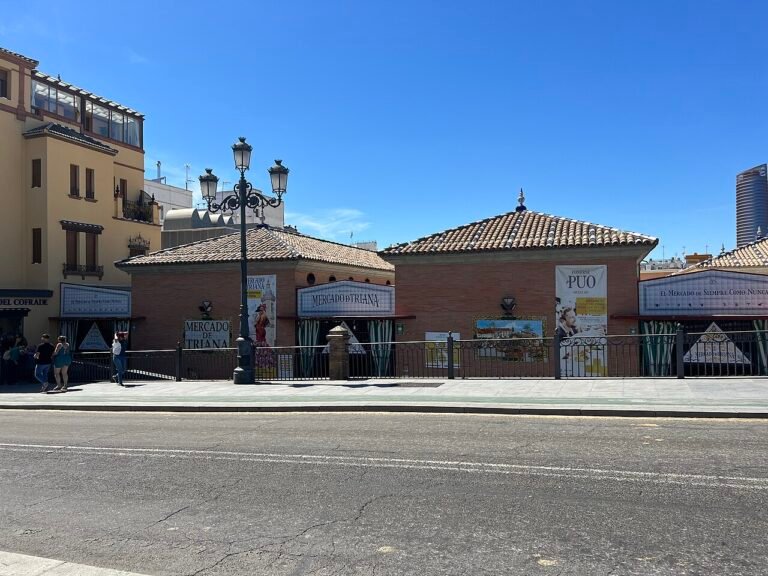
The Mercado de Triana is a working food market first and a sight second — exactly why it belongs on this list. Built over the ruins of the old Inquisition castle, it is fishmongers, jamón stalls, flower sellers and little bars frying fish to order. Have breakfast the local way — coffee and a tostada con tomate at a market bar — or graze stall to stall: a cone of jamón here, fried fish there, vermouth to finish. Practical tip: come hungry before about 1:30pm, when the stalls are at full stretch; by mid-afternoon the market winds down. A guided visit pairs well with a cooking class.
7. Archivo de Indias

Beside the Cathedral stands the old merchants’ exchange, a serene Renaissance hall where Spain files the paperwork of an empire: some 80 million pages of maps, letters and ledgers from the Americas, including Columbus-era documents. It sounds dry and is anything but: cool, hushed galleries, rarely crowded, where the paperwork of the discovery age lives. Exhibitions rotate through the documents, from exploration maps to treasure-fleet paperwork. Practical tip: entry has traditionally been free, making this the smartest air-conditioned hour in the old town — schedule it for the fierce part of the afternoon, when the Cathedral crowds are at their worst and you need the calm most.
8. Casa de Pilatos
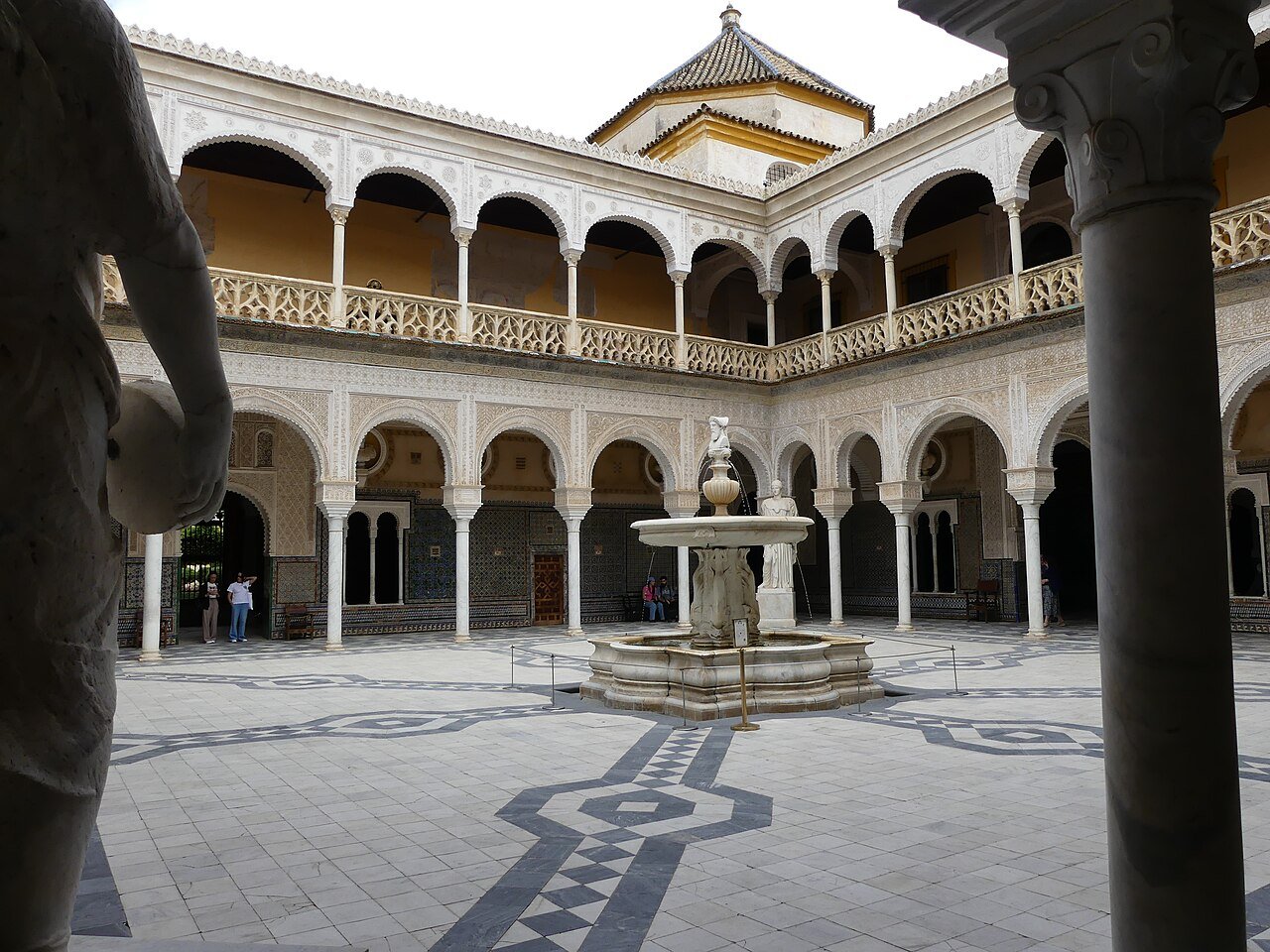
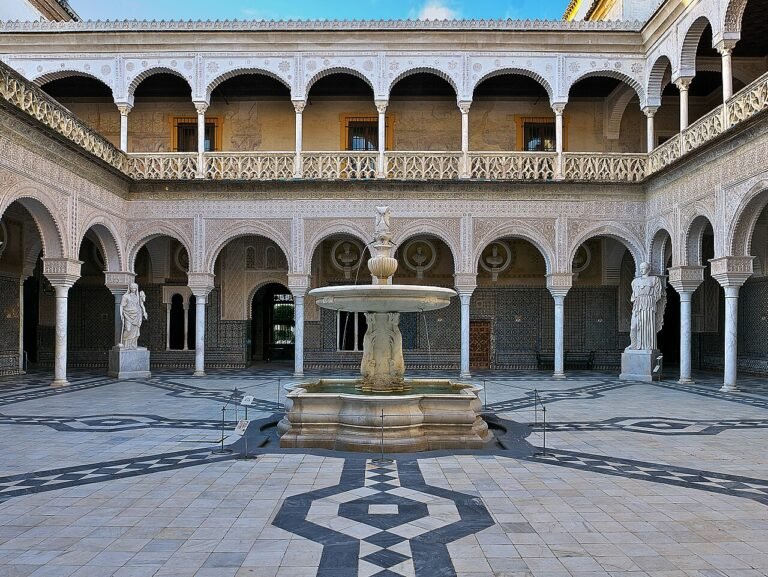
My favourite of Seville’s palace houses, and the one locals quietly prefer to the Alcázar. A 16th-century palace built around a serene main courtyard: Mudéjar tilework up to your waist, Renaissance arcades above, a Genoese marble fountain at the centre and Roman statues in the corners. It shows you how Seville’s nobles actually lived, at a fraction of the Alcázar’s crowd levels. The ground floor is the essential part. Practical tip: it sits ten minutes from the Cathedral, so pair it with a Santa Cruz wander — and buy entry ahead in peak season to skip the small queue.
Free Seville Travel Guide — Planning a trip to Seville? Get our free one-page Seville checklist: what to book ahead, what to skip, and the tapas bars we actually eat in.
9. Torre del Oro and the River Walk

The squat, twelve-sided “Tower of Gold” has guarded the Guadalquivir since the 13th century, when a great chain ran from its base across the river to close the port. It holds a small naval museum, but honestly the tower itself — glowing in the afternoon light — is the attraction, and the walk that comes with it is one of the city’s great free pleasures: the Paseo de Colón past the bullring, river on one side, Triana’s colourful Calle Betis facing you across the water. Practical tip: walk it in the late afternoon, heading north towards the Triana Bridge, and cross over for an evening drink on the far bank. The little museum inside is cheap and quick.
10. María Luisa Park
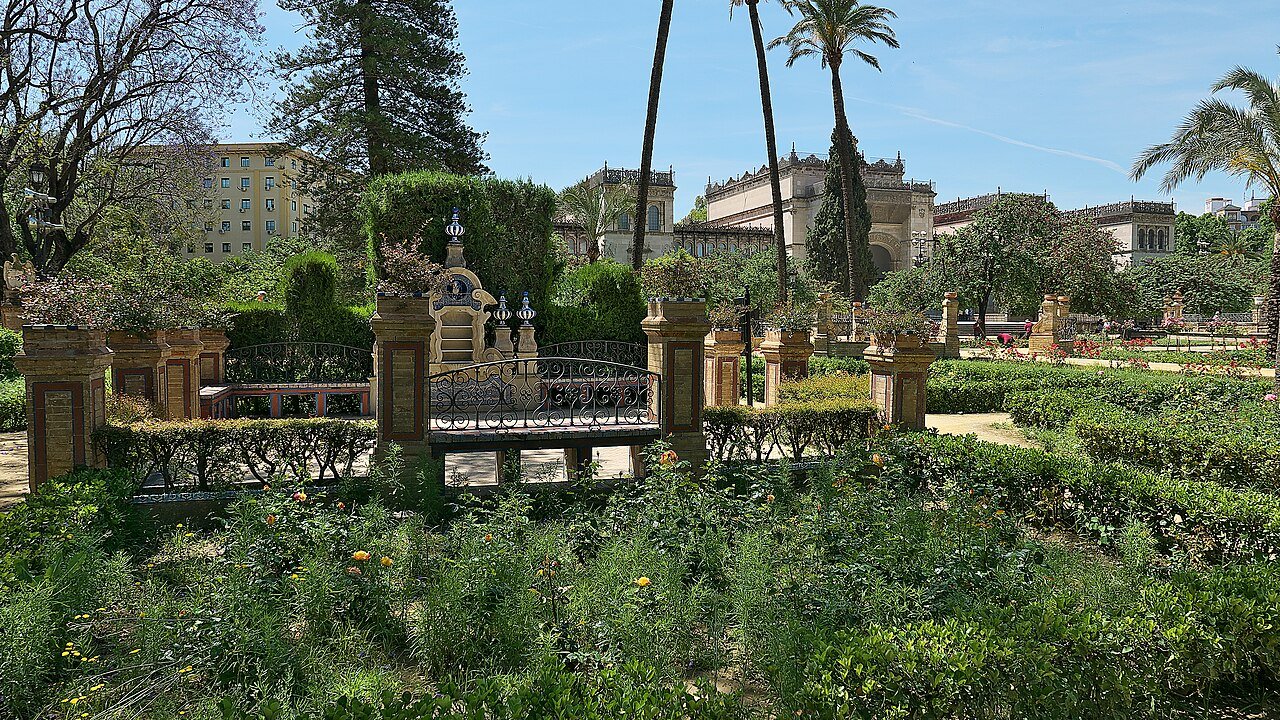
Seville’s great green lung, laid out for the same 1929 exposition as the Plaza de España it fronts. This is no lawn but a romantic garden in its own right: shaded avenues, duck ponds, tiled fountains and dozens of glorietas — tiled pavilions dedicated to writers and artists. At its southern end, Plaza de América holds two museum pavilions (archaeology and popular arts) and clouds of white doves. Practical tip: rent a bike or a four-wheeled family cycle at the gates and give it a slow hour in the morning; the park is bigger than it looks, and it is the coolest place in the city when the streets start to shimmer.
11. A Flamenco Show
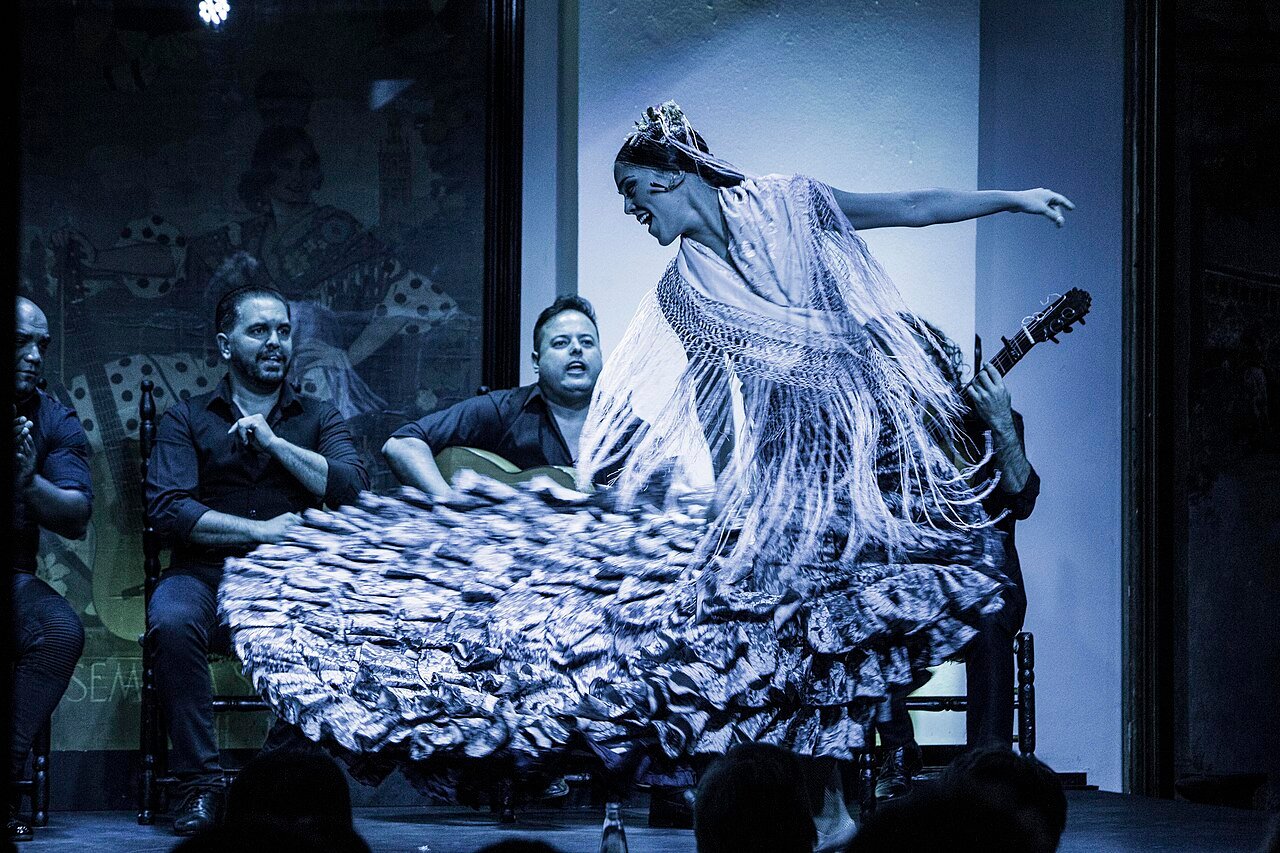
Flamenco was born in neighbourhoods like Triana, and hearing it properly — a singer who means every word, a guitarist, a dancer close enough that you can hear the shoes strike the boards — is the single experience visitors talk about for years. Choose a small room over a big theatre — the difference is everything. Shows run early-evening and late; the late show in a small Triana room is the genuine article. Practical tip: the good small venues sell out, especially at weekends, so book seats before you arrive. Afterwards, cross the bridge home slowly — the Giralda lit up across the water is the encore.
12. Centro Cerámica Triana
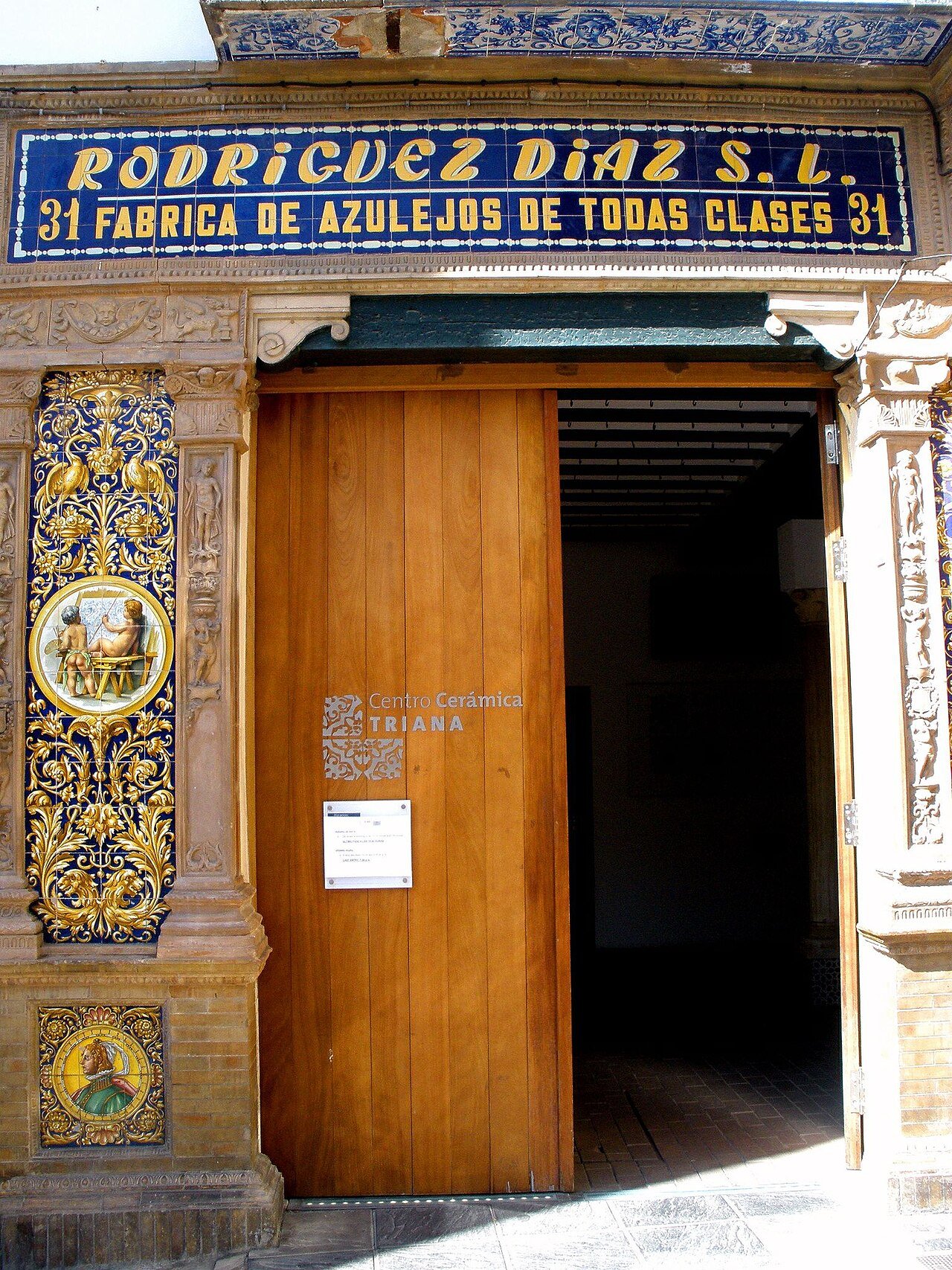
Behind Triana Market, the old Santa Ana factory is now a small, fascinating museum of the craft that quite literally covers this city. The tiles on half the buildings you have photographed this trip were made in Triana, and this is where you learn how: the clay from the riverbank, the painted glazes, the old bottle kilns still standing in the yard. It takes about forty minutes and explains the whole city’s look. Afterwards, browse the workshops on Calle Callao and Calle Antillano Campos, where pieces are still painted by hand. Practical tip: a hand-painted tile or small plate from a working workshop is the best souvenir Seville offers — flat, light and genuinely made here.
13. Tapas at Plaza del Salvador
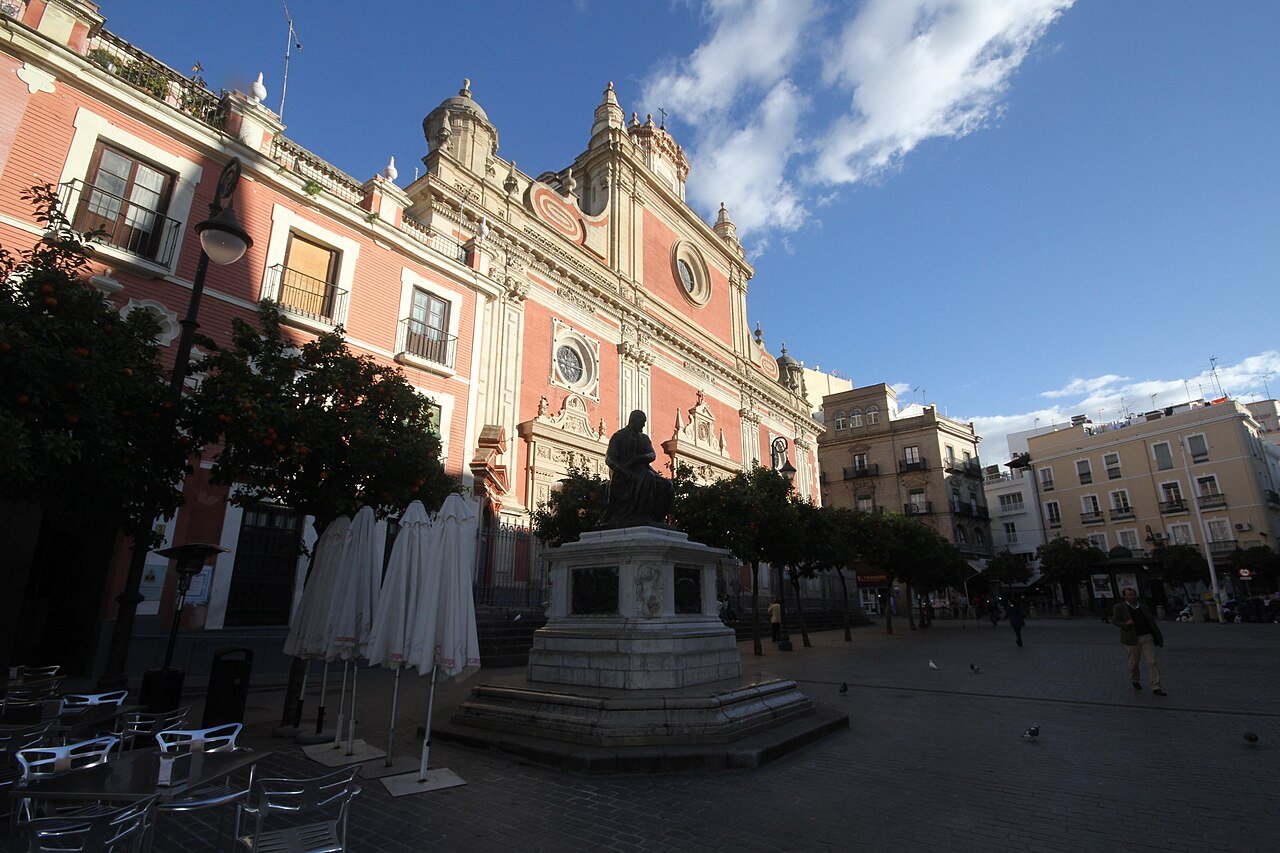
Skip the restaurant row and do what Sevillians do: stand at a bar around the Plaza del Salvador, where the pink baroque church of El Salvador watches over some of the best people-watching terraces in the centre — at dusk, half the city seems to hold a beer on the church steps. The rules are simple: never more than two plates in one place, order the house speciality, and keep moving. Around here that means espinacas con garbanzos (spinach with chickpeas, a Seville signature), salmorejo, carrillada — slow pork cheek — and a cold caña or a tinto de verano. Practical tip: lunch runs 1:30–3:30pm and dinner rarely before 9pm; a guided crawl is the fastest way to learn the ropes on a first night.
14. The Guadalquivir by Boat or Kayak
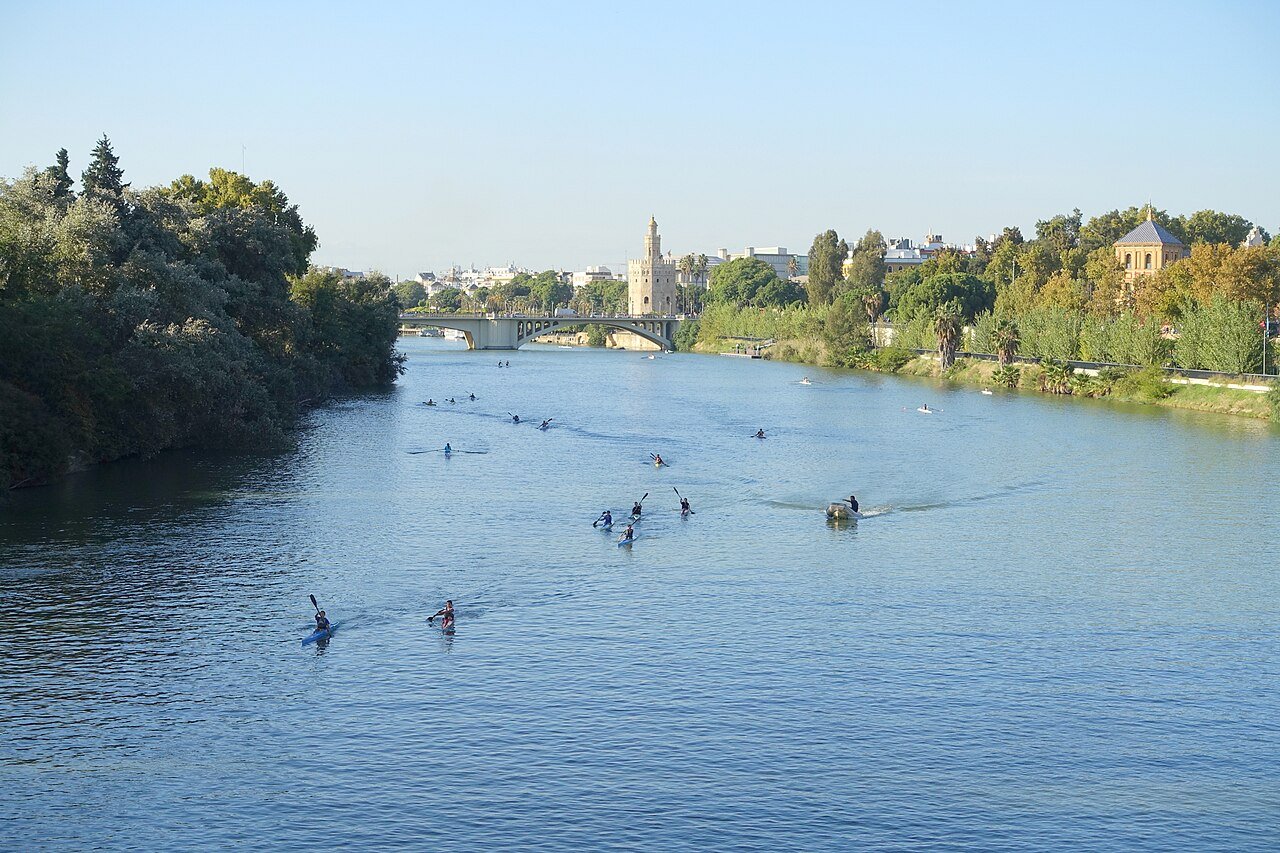
Seville is a river city that turned its back on its river for decades — get on the water and you get the city back. The easy option is the panoramic cruise from below the Torre del Oro: an hour past the bridges, the bullring, Triana’s waterfront and the pavilions of the 1992 Expo, with the Giralda presiding over all of it. Better still: a kayak or paddleboard at sunset, when the bridges light up one by one. Practical tip: for the cruise, sit on the right-hand side heading out for the Triana views; for kayaking, book the last departure of the day and bring a change of shirt — you will not stay dry.
15. Hospital de los Venerables
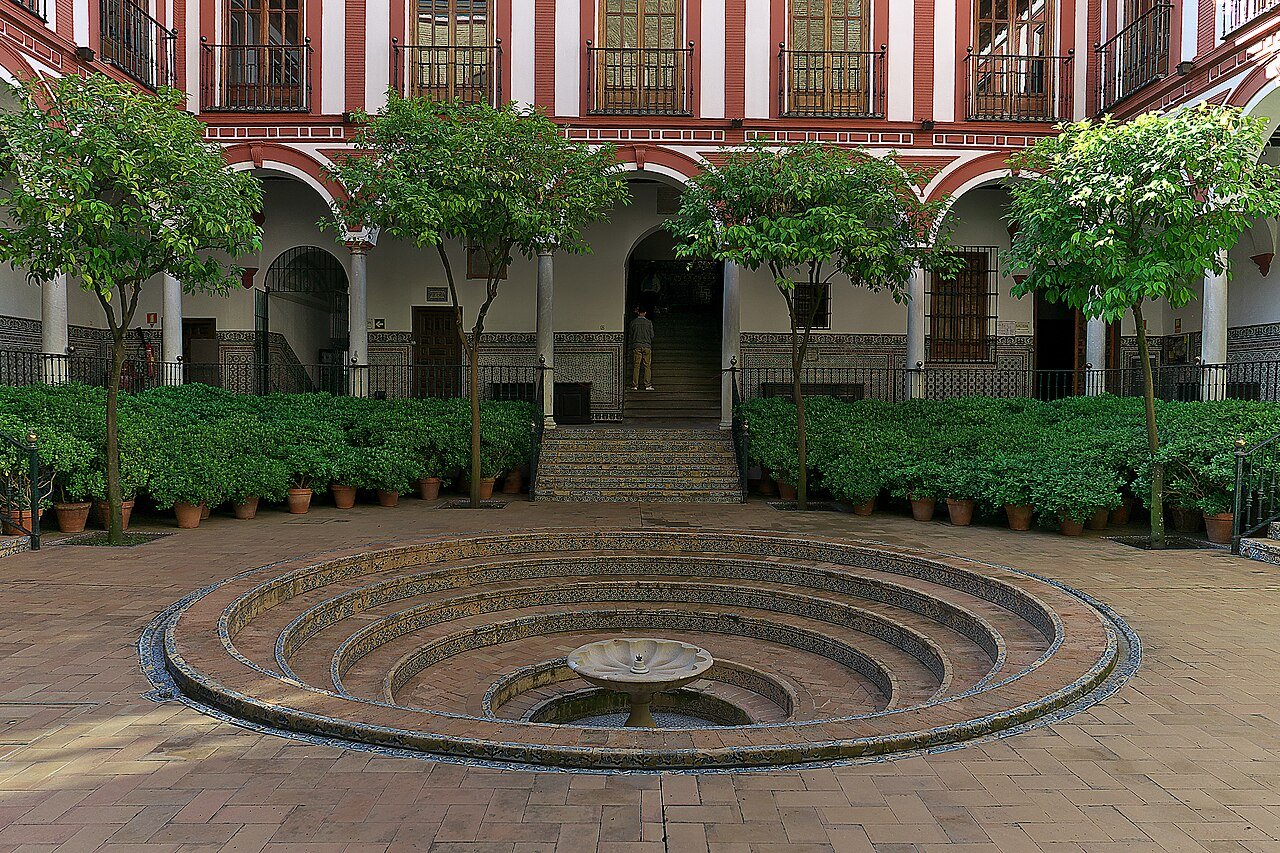
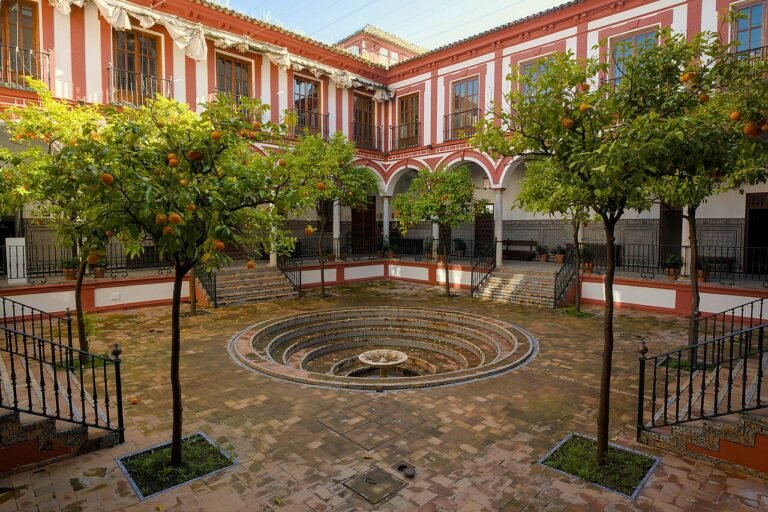
Tucked into the lanes of Santa Cruz, this 17th-century home for elderly priests is the old town’s quiet masterpiece: a serene arcaded patio, a small church covered in Valdés Leal frescoes, and Golden Age paintings — Velázquez was born a few streets away, and his Santa Rufina hangs here. It never draws the crowds it deserves: cool, calm and contemplative while the Alcázar queues bake outside. Practical tip: entry runs on timed slots and it pairs perfectly with a Santa Cruz morning — go after the Alcázar, when you are ready for shade and silence. Give the church ten full minutes.
Final Thoughts
Do the first five properly and you have had a great Seville trip; do all fifteen and you have had the one locals would plan for you. The pattern matters more than any single entry: monuments early, shade at midday, squares and the river in the evening, flamenco to finish. For these sights stitched into routes, our 3 Days in Seville itinerary spreads them over three unhurried days, the 1 Day in Seville itinerary compresses the essentials into one, and our Your Ultimate Guide to Seville gathers every Seville guide we have written. However many you manage, give Seville your evenings — that is when the city keeps its promises.
¡Buen viaje!
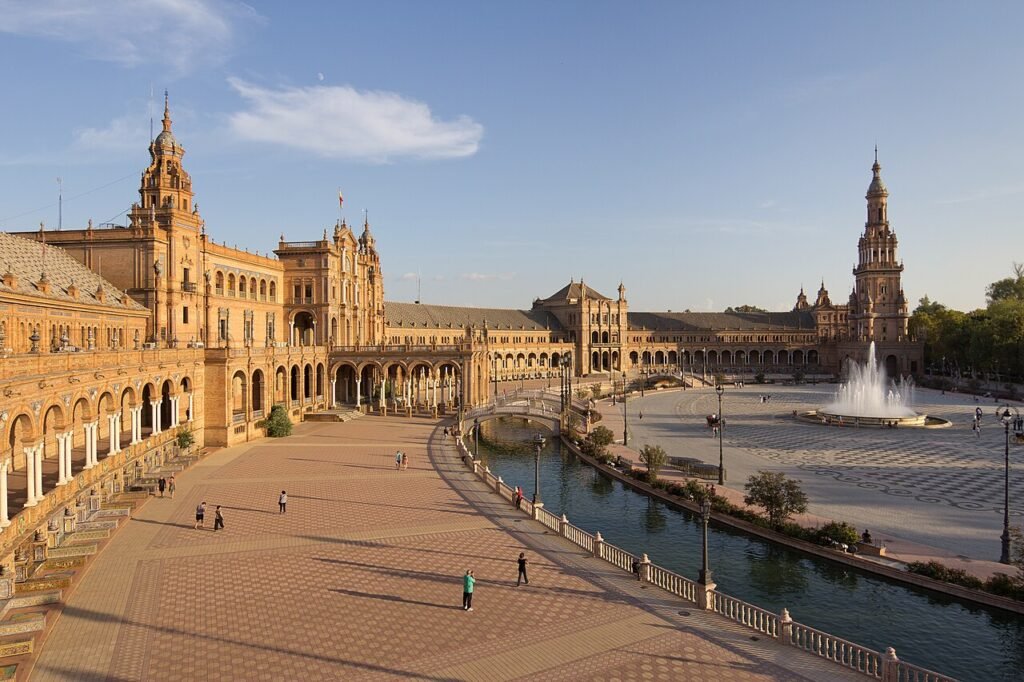
Photo credits: Courtyard of the Maidens, Royal Alcázar — Jl FilpoC, CC BY-SA 4.0 · The Giralda at dusk — David Iliff (Diliff), CC BY-SA 3.0 · Plaza de España — Carlos Delgado, CC BY-SA 4.0 · Calle Judería, Barrio Santa Cruz — CarlosVdeHabsburgo, CC BY-SA 4.0 · Metropol Parasol — Gzzz, CC BY-SA 4.0 · Mercado de Triana — CarlosVdeHabsburgo, CC BY-SA 4.0 · Archivo de Indias — Anual, CC BY 3.0 · Casa de Pilatos — CarlosVdeHabsburgo, CC BY-SA 4.0 · Torre del Oro and the Guadalquivir — Benjamin Smith, CC BY-SA 4.0 · María Luisa Park — Jl FilpoC, CC BY 4.0 · Flamenco — Photo: Noeliv, CC BY-SA 4.0, via Wikimedia Commons · Centro Cerámica Triana — Photo: Zarateman, CC0, via Wikimedia Commons · Plaza del Salvador — Photo: José Luiz, CC BY-SA 3.0, via Wikimedia Commons · Guadalquivir kayakers — Photo: Daderot, CC0, via Wikimedia Commons · Hospital de los Venerables — Photo: José Luis Filpo Cabana, CC BY-SA 4.0, via Wikimedia Commons. All via Wikimedia Commons.
37 Comments