Seville Cathedral & La Giralda: The Complete Visitors’ Guide
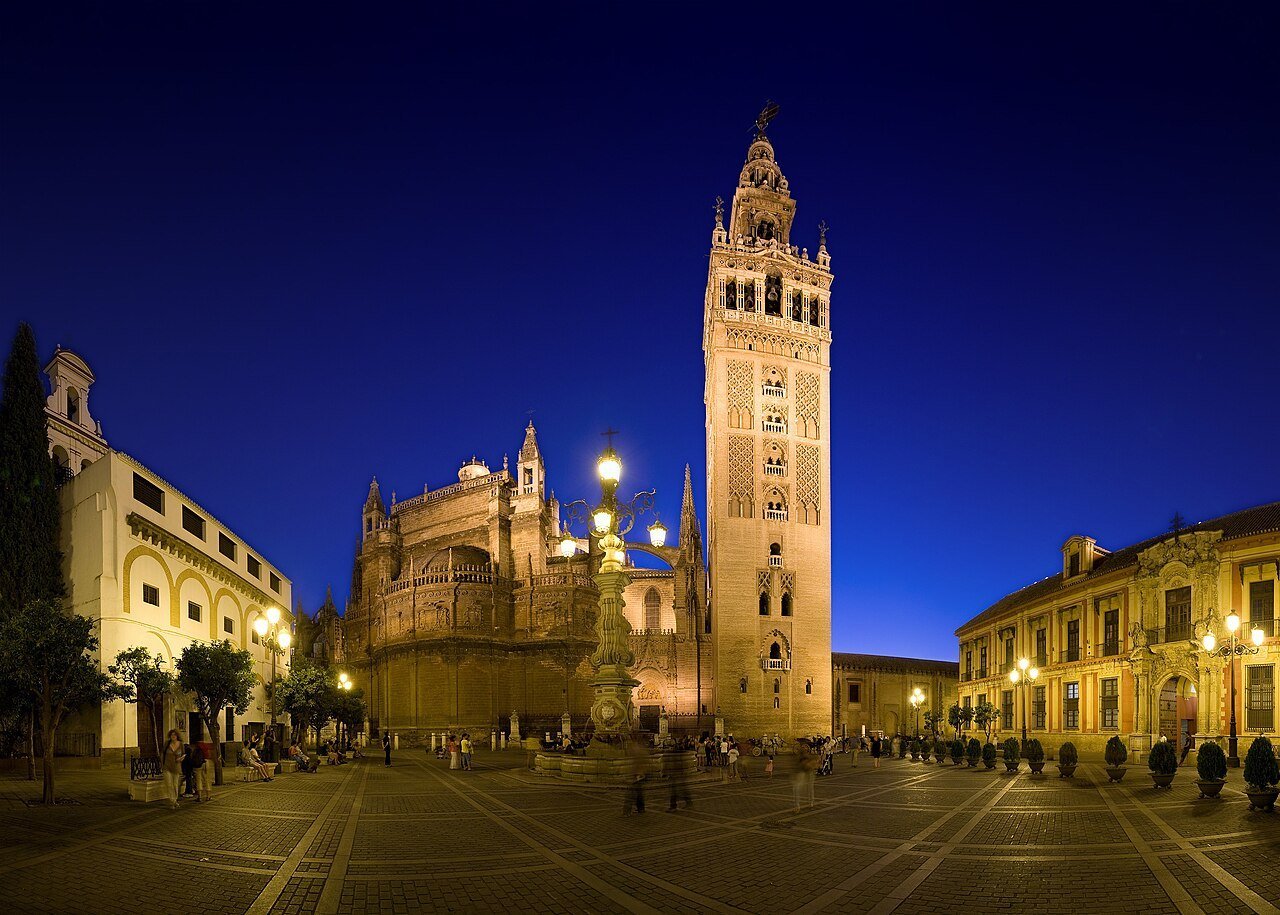
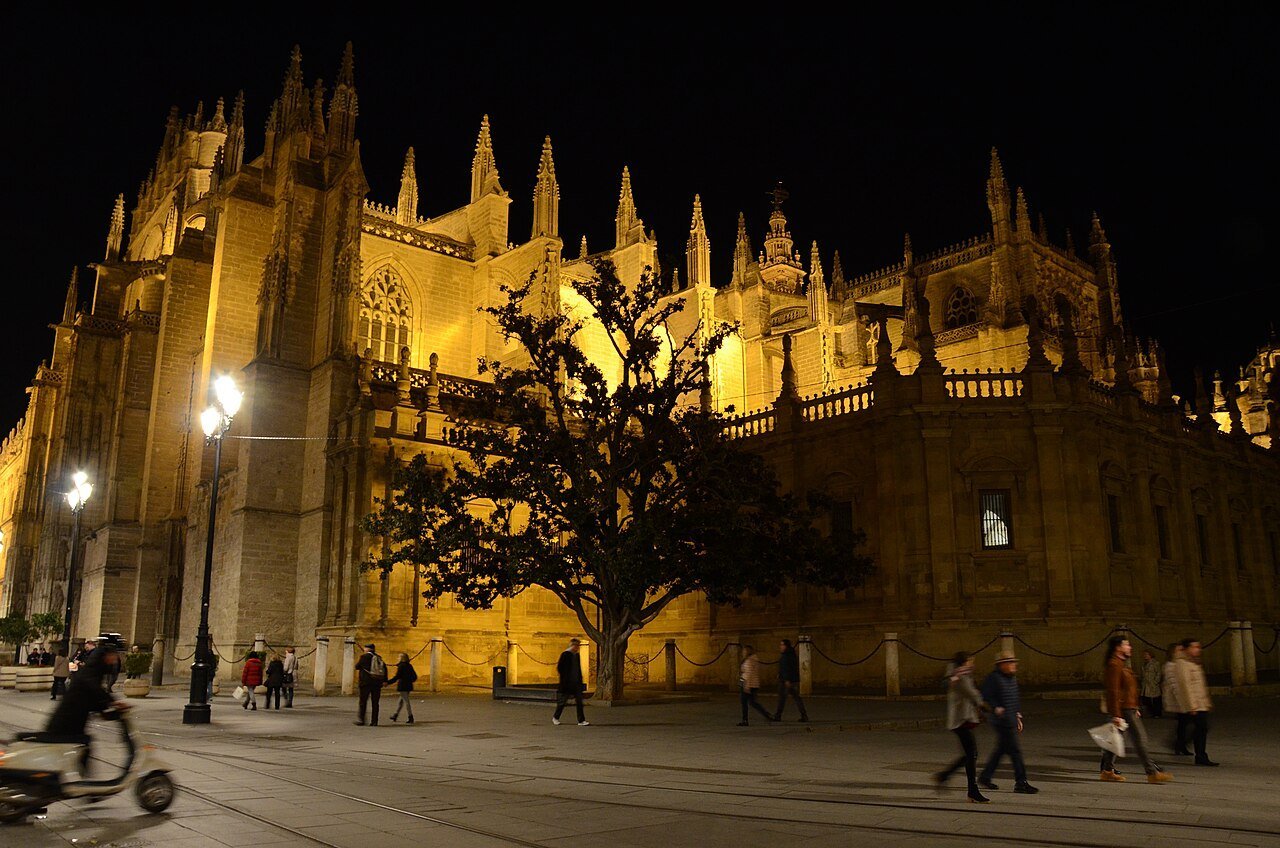
There are bigger churches by a measurement or two, and taller towers, and richer altarpieces — actually, no. On that last one, Seville wins outright. The Cathedral of Santa María de la Sede is the largest Gothic cathedral on earth: a five-aisled mountain of stone planted in the middle of Seville, wrapped around a courtyard of orange trees, and pinned to the sky by La Giralda, a 12th-century Islamic minaret that Christian Seville loved too much to knock down and instead crowned with bells and a bronze giant. Almost everything about this building is a superlative, and yet the superlatives are not the point. The point is the moment you step in from the glare of the Avenida de la Constitución, the temperature drops ten degrees, your eyes adjust — and the scale of the place lands on you like a hand on the shoulder.
I pair the Cathedral with the Alcázar across the square in almost every itinerary I write, and the order matters: palace first for beauty, cathedral for awe, tower last for the view that explains the whole city. It sits near the top of our Best Things to Do in Seville guide for exactly that reason. This guide gives you the visit in full: the history in brief, what to look at inside and in what order, how the famous ramps of La Giralda actually work, and the honest truth about tickets — including the combined-ticket question everyone asks and the free-entry rules everyone gets wrong.
The Short Answer
Yes — Seville Cathedral is unmissable, and La Giralda is included in the same ticket, so the two are one visit. Allow 90 minutes for the church alone and a full two hours if you climb the tower, which you should: the climb is by ramps, not stairs, and the view from the bell chamber is the best in Seville. Book the cultural-visit ticket online in advance Seville Cathedral and Giralda ticket — the queue at the door is the single most avoidable waste of time in the old town. Go early, do the interior in the order this guide suggests, climb the tower before the heat builds, and finish in the shade of the orange trees where the visit naturally ends.
Table of Contents
- The Short Answer
- The Building in Brief: From Mosque to Cathedral
- Inside the Cathedral
- Climbing La Giralda
- Tickets & Practical Info
- When to Go
- Tips for Visiting
- Final Thoughts
The Building in Brief: From Mosque to Cathedral
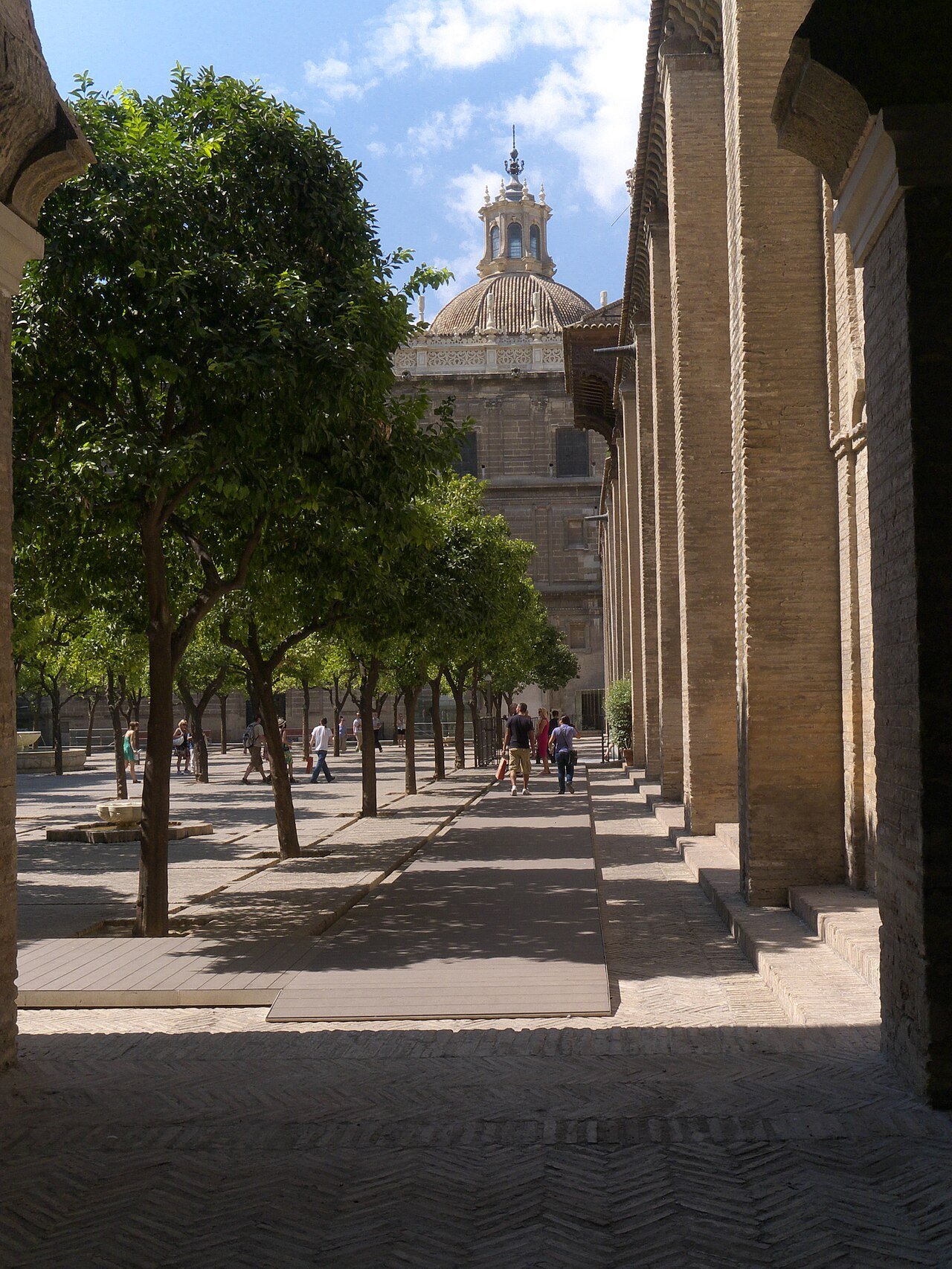
Stand in the Patio de los Naranjos and you are standing in the mosque. Seville’s great Almohad mosque was built between 1172 and 1198, when the city was a capital of the Islamic west, and its courtyard of ablutions — orange trees in rows, channels of water, a fountain at its heart — survives almost intact as the cathedral’s entrance garden. Its minaret, begun in 1184, was finished in 1198 and topped with golden spheres that could supposedly be seen for a day’s journey. When Ferdinand III took Seville in 1248, the mosque was consecrated as a cathedral, and for a century and a half the Christian city worshipped inside the Islamic building — a pragmatic, very Sevillian arrangement.
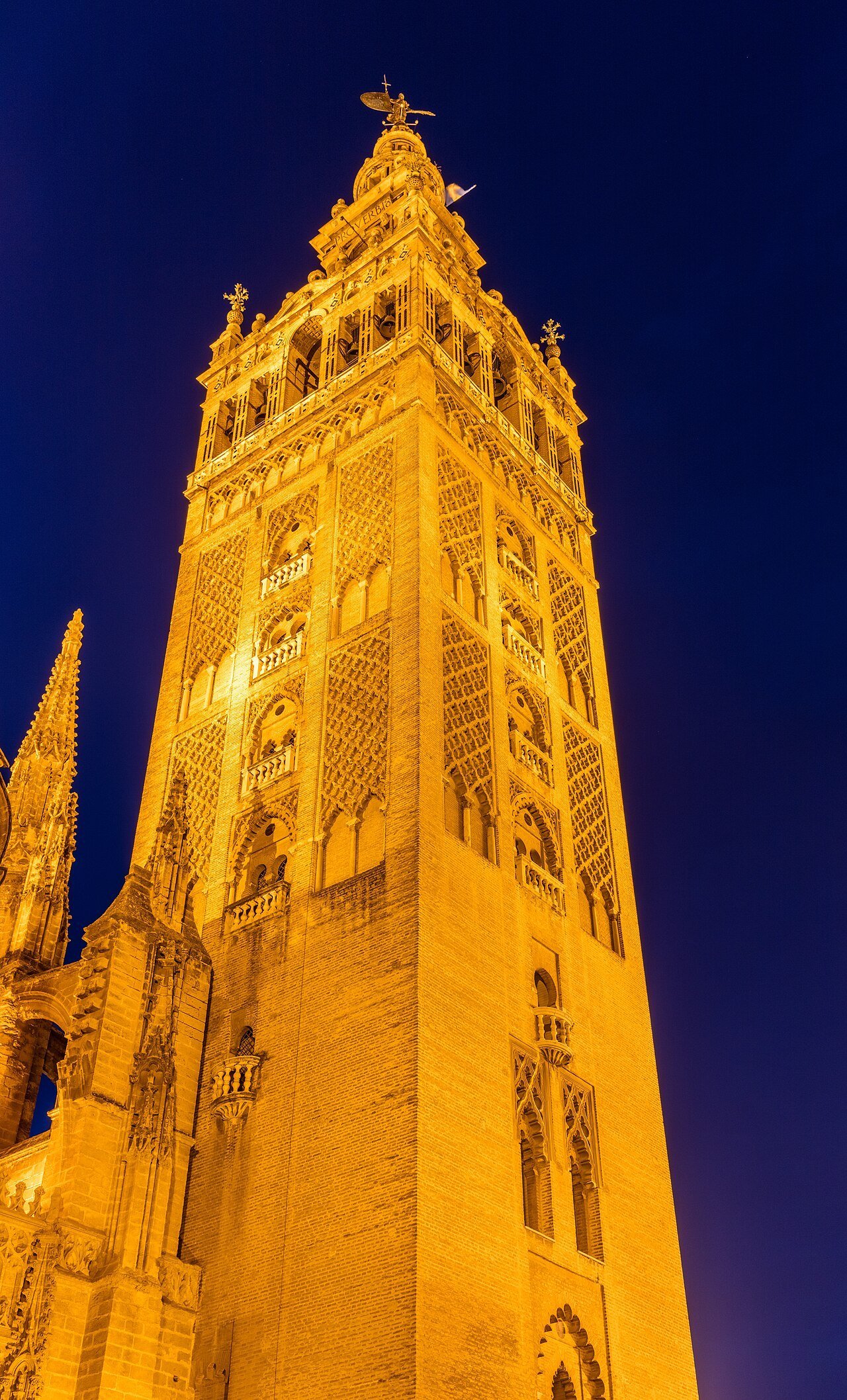
Then, in 1401, the cathedral chapter resolved to start again. Tradition records their reasoning in one of the great sentences of Spanish history: let us build a church so great that those who see it finished will think we were mad. Work ran through the 15th century and into the 16th; the new church was consecrated in 1507, and Renaissance chapters kept adding — the Royal Chapel, the great sacristy — for decades after. What they built follows the mosque’s footprint, which is why the cathedral is so unusually wide and rectangular: some 116 metres long and 76 wide, with the central vaults rising 42 metres. And the minaret? They kept it. In 1558–1568 the architect Hernán Ruiz II added the Renaissance bell stage on top of the Almohad shaft, and in 1568 the bronze figure of Faith — El Giraldillo, the great weathervane that turns with the wind — went up to crown it. The tower took its name from her: girar, to turn. Islamic brick below, Renaissance stone above, 104 metres in total — the whole history of Seville stacked into one tower, which is why it, and not the cathedral, is the city’s emblem.
Inside the Cathedral
The cultural visit follows a set route, but nobody tells you what actually deserves your time. This is the order I walk it, and the things I stop for.
The nave: learning to feel small
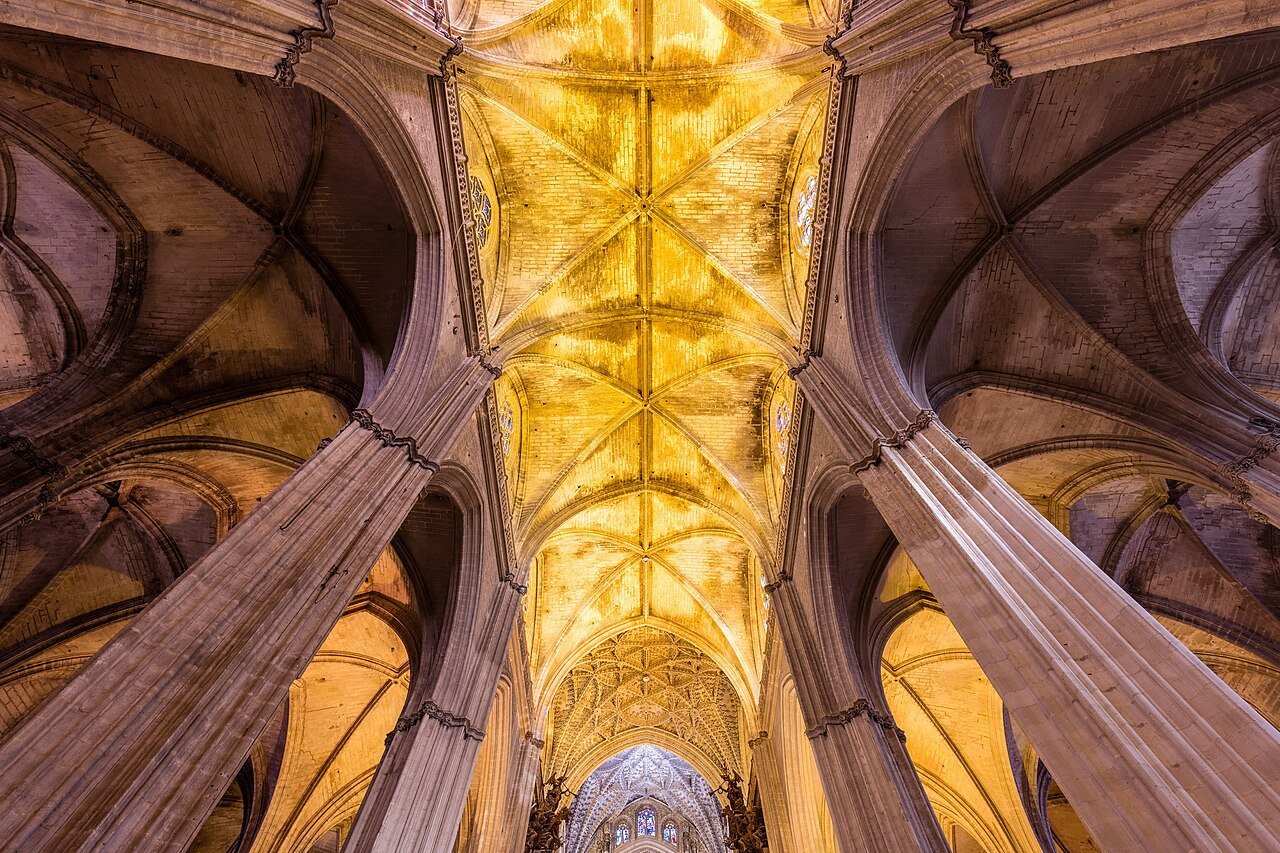
Enter, and take the scale slowly. Five aisles run the length of the building on a forest of clustered piers, and the central nave’s vaults — plain, pale, almost severe by Spanish standards — climb to 42 metres, higher than a twelve-storey building. Seville’s cathedral is not intimate, and it is not trying to be: it is civic pride in stone, financed by a city that the Atlantic trade was about to make very rich. Walk to the crossing and look up into the dome, then look along the nave both ways. The choir — the enclosed coro with its 15th- and 16th-century stalls — sits in the middle of the nave in the Spanish manner, with the great organ cases rising on either side. Everything else in this guide hangs off this central space, so give it its five quiet minutes first.
The main altarpiece: the largest in Christendom
Behind the choir, protected by a great iron screen, stands the reason art historians make pilgrimages here: the Retablo Mayor, the main altarpiece, which is quite simply the largest altarpiece in the Christian world. Begun in 1482 by the Flemish master Pierre Dancart, it occupied generations of sculptors and was not finished until 1564 — more than eighty years of carving. The finished wall of gold measures roughly 27 metres high and 18 wide and holds 45 scenes from the lives of Christ and the Virgin, worked in polychromed wood in such detail that the upper panels were designed to be read from the floor far below. Stand back first, for the full golden shock of it, then move in close: individual scenes have landscapes, crowds, jokes of perspective. In the centre, at the base, sits the small silver image of Santa María de la Sede, the Virgin of the See, to whom the whole cathedral is dedicated. Nothing else in any cathedral I know does quite this — a single object that is simultaneously a sermon, a treasury and a feat of endurance.

Columbus’s tomb: four kings carry a coffin
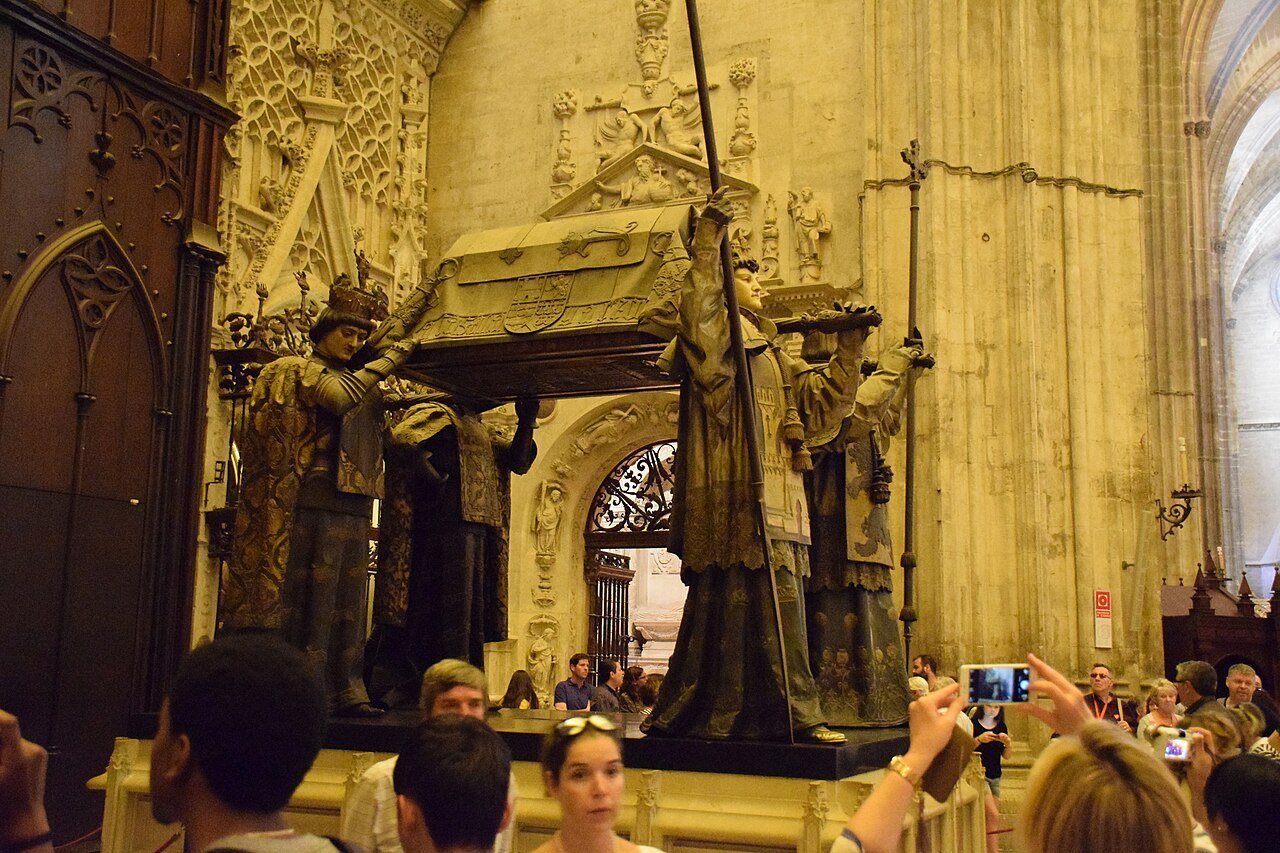
Near the south door, four bronze heralds in full ceremonial dress carry a coffin on their shoulders — and manage to be one of the most recognisable tombs in Europe. The four bearers represent the kingdoms of Castile, León, Aragón and Navarre; the monument, by Arturo Mélida, was installed in 1899 to receive the remains of Christopher Columbus, whose body had already had a busier afterlife than most people manage in life: Valladolid, Seville, Santo Domingo, Havana, and back to Seville in 1898 as Cuba was lost. Is it really him? Studies in the 2000s compared DNA from these remains with Columbus’s brother and son and found them consistent — as certain as five centuries of moving house allows. Notice the detail at the front: the herald of Granada spears a pomegranate, the city’s symbol, a small stone sermon on whose empire the coffin rests. Whether you come for the history or the sculpture, give it a minute; the crowd around it is permanent, and deserved.
The chapels and sacristies: the cathedral’s treasure rooms
A ring of chapels runs around the building, and two rooms on its south side are worth singling out. The Capilla Real, the Royal Chapel behind the main altar, is the cathedral’s royal burial place: a Renaissance rotunda holding the silver shrine of Saint Ferdinand — Ferdinand III, conqueror and patron of Seville — and, in its silver tabernacle, the small, beloved statue of the Virgen de los Reyes, the Virgin of the Kings, the city’s own Madonna, said to have been given by the saint-king himself. It is the devotional heart of the building; speak quietly here, because Sevillians are praying, not sightseeing.

Then come the sacristies, which in Seville are really treasury-museums. The Sacristía Mayor, built in the 1530s to designs begun by Diego de Riaño, is one of the great rooms of the Spanish Renaissance — a Greek-cross chamber under a carved dome — and displays the cathedral’s treasures: a vast silver monstrance some four metres high carried through the streets at Corpus Christi, a cross traditionally said to be made from the first gold brought from the Americas, and paintings by Murillo and Zurbarán, Seville’s own masters. The adjoining Sacristía de los Cálices holds more painting, including Goya’s Saints Justa and Rufina. Do not rush these rooms; they are where the cathedral keeps the proof of the centuries when the fleets came up the Guadalquivir and a share of every treasure in the Americas seemed to end up as gold leaf.

Free Seville travel guide
Planning a trip to Seville? Get our free one-page Seville checklist: what to book ahead, what to skip, and the tapas bars we actually eat in.
The Patio de los Naranjos: out through the mosque
The visit ends, beautifully, in the open air. The Patio de los Naranjos is the courtyard where worshippers once performed their ritual ablutions before prayer: rows of orange trees — bitter orange, planted in a grid over the old prayer-yard — the Visigothic fountain at its centre, and the Puerta del Perdón, the great horseshoe-arched Gate of Forgiveness, leading out to Calle Alemanes. After the cathedral’s stone immensity, this green shade is a physical relief, and in spring, when the orange blossom (azahar) is out, it smells better than anywhere in the city. It is also the one part of the mosque every visitor experiences whole. Linger. The tower climb, if you have left it for last, starts from inside — but most people do it mid-visit; either way, the Patio is the right full stop.

Climbing La Giralda
The climb is the part everyone enjoys more than they expected, because of how it is built. There are no spiral stairs. Inside the tower runs a continuous series of 35 wide brick ramps, generous enough — tradition says — for the muezzin’s guards to ride up on horseback, and the effect today is a steady, civilised walk rather than a climb: you will pass families with pushchairs folded, older visitors taking it slowly, and nobody gasping on a landing. Display cases in the ramp chambers along the way show the tower’s history and finds from the site. At the top, a short final flight of steps brings you into the bell chamber itself.
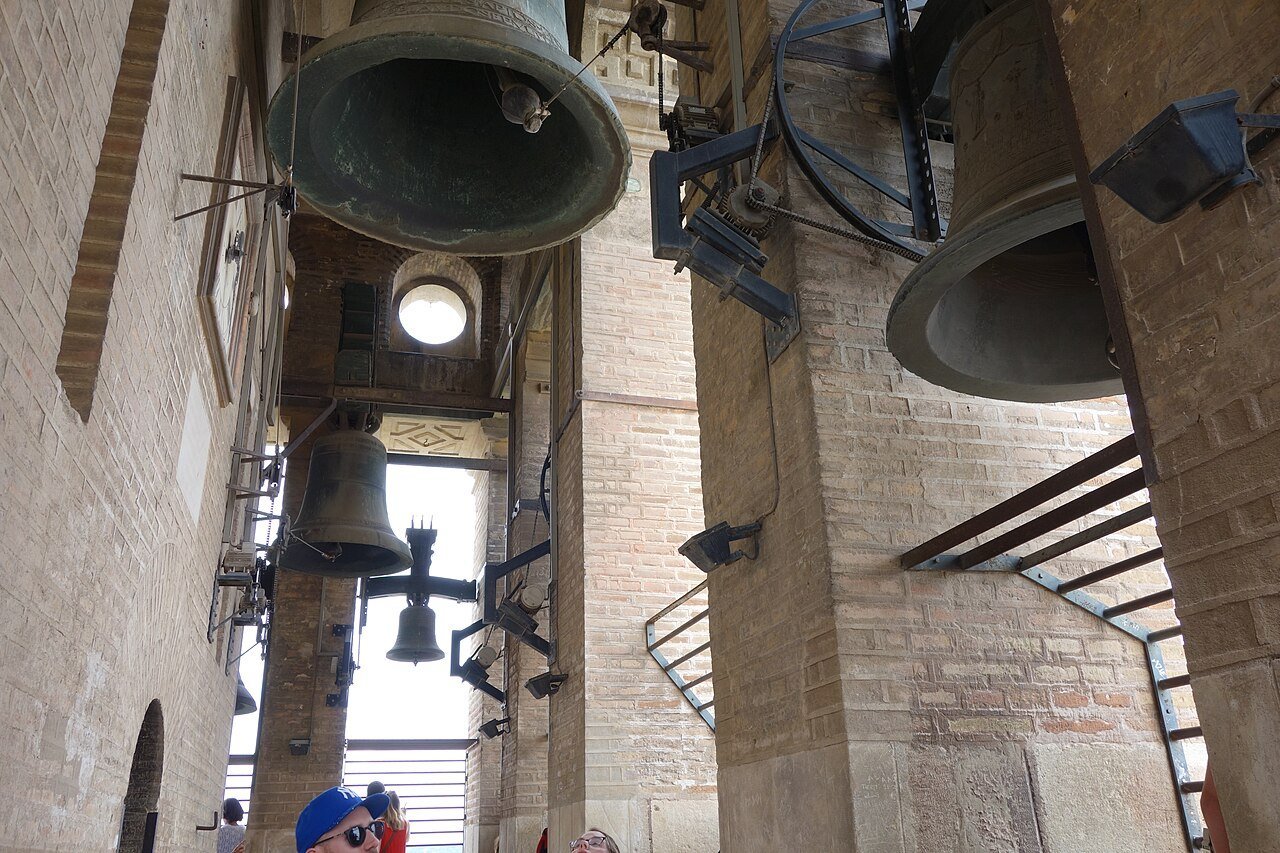
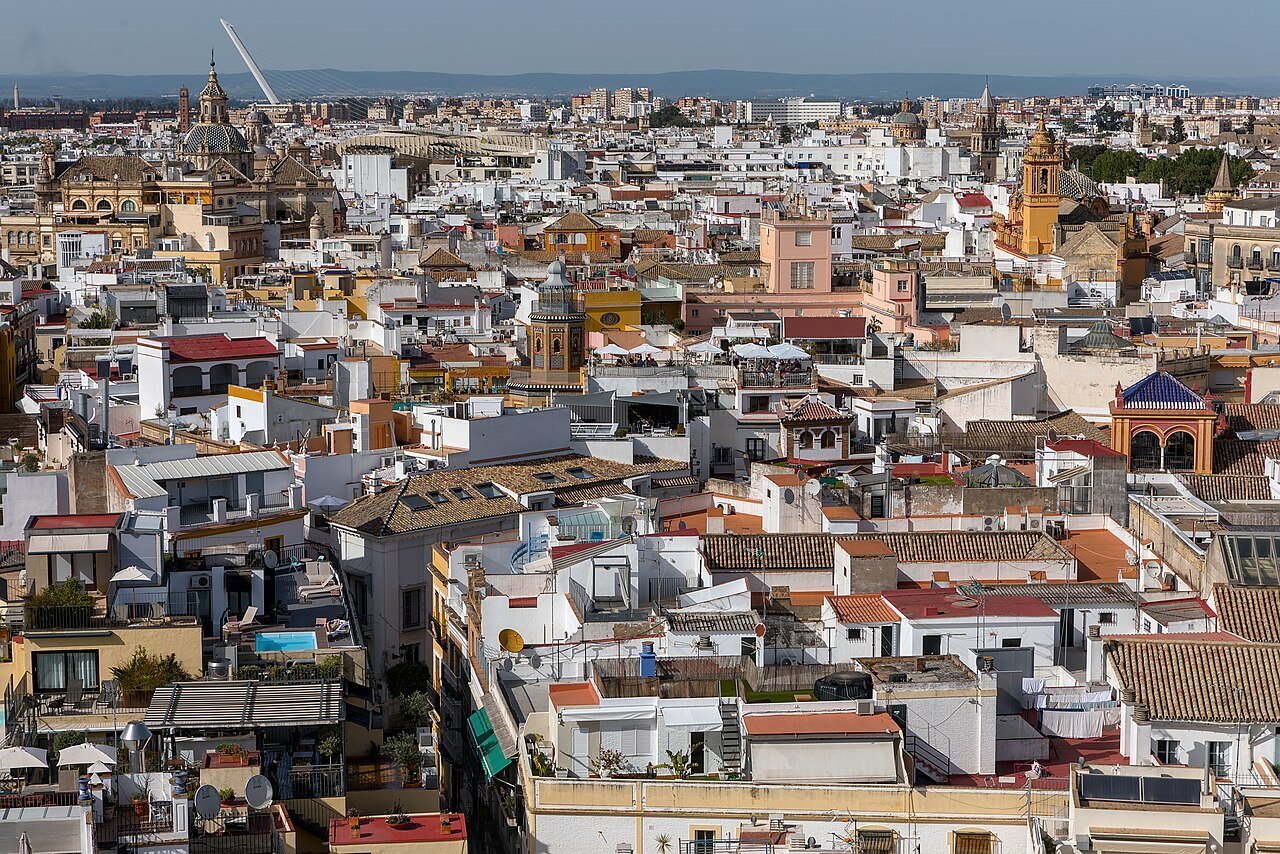
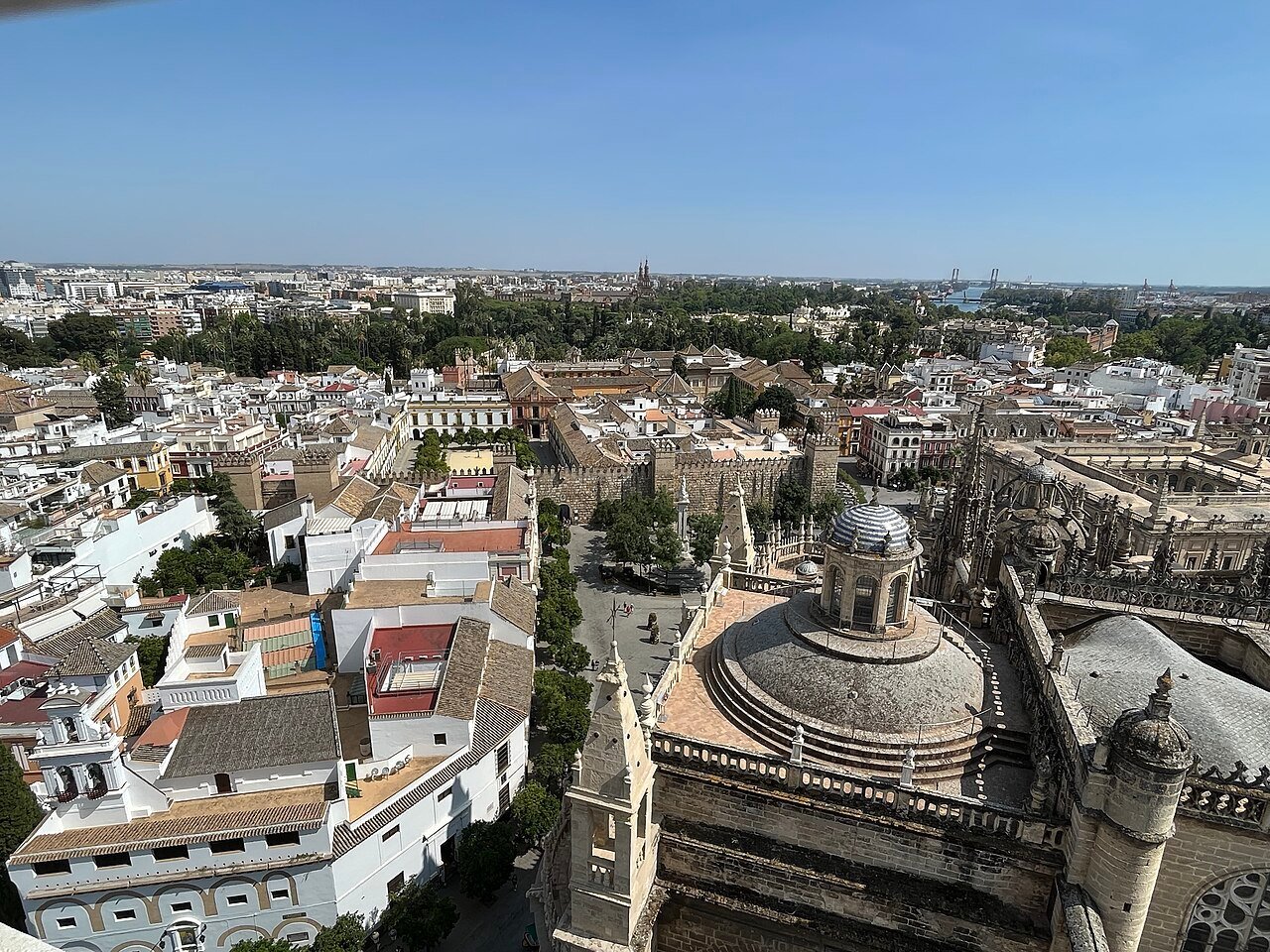
And the bell chamber is the destination, not a viewing platform bolted on: you stand among 24 great bells, in the open arches of Hernán Ruiz’s Renaissance stage, with the city laid out in every direction at 70-odd metres up. South, the cathedral’s own roof — a stone landscape of domes and pinnacles almost nobody sees from the ground — and beyond it the walls and gardens of the Alcázar; east, the rooftops of Santa Cruz; west, the Guadalquivir and Triana across it; north, the whole modern city running to the hills. It organises Seville in your head the way no map does, which is why I send people up here on day one of a trip — our How Many Days in Seville guide builds both this and the palace into the first full day.
Who should skip it? The ramps remove the stair problem, but the climb is still roughly a ten-storey walk in warm air; anyone with heart or breathing trouble should take the cathedral and skip the tower without regret, and the bell chamber’s open arches, though safely railed, will not suit severe vertigo. Note too that if the bells begin to ring while you are up there — and on feast days they do — it is gloriously, physically loud. It is also one of the easiest big sights in the city to do alone — see our Solo Travel in Seville guide.
Tickets & Practical Info
The cultural-visit ticket covers the cathedral, La Giralda and the Patio, and currently costs around €13 for adults (with the usual reductions for students, over-65s and children, and an audioguide included — always confirm the current price and hours on the official site, catedraldesevilla.es). Book online and choose your entry time: in spring, autumn and around Semana Santa and the Feria, the popular morning slots go, and the walk-up queue in the sun is nobody’s idea of a good start. Seville Cathedral and Giralda ticket covers the same entry, and the small-group guided versions add a licensed guide, which in a building this dense with stories is money well spent.
Now the combined-ticket question, honestly. There is no single official combined ticket for the Cathedral and the Alcázar — they are run by different institutions and each sells its own entry on its own site. Where you see “combined” offers, they are third-party packages: a guided tour that walks you through both monuments in one outing, with both entries bundled in. Those genuinely can save money versus buying two separate guided tours, and they save a great deal of logistics — one meeting point, one guide, no queueing twice. But if you are visiting both sights on your own with standard tickets, buying each from its official site is the cheapest route; no bundle will beat it. For the Alcázar half of the day: Royal Alcázar of Seville ticket, and our Royal Alcázar of Seville guide has the full visit.
Free entry, also honestly. The cathedral is a working church: entry for Mass and prayer is free, always — but worship hours are not sightseeing hours. During services the tourist route is closed or restricted, visitors are expected to sit, pray or leave quietly, and staff will redirect anyone plainly touring. Separately, the cathedral offers a limited number of free cultural-visit slots (in recent years on Sunday afternoons, booked online in advance, capacity small and released ahead) — worth knowing if your dates fit, but do not build a plan around them until you have one actually booked. Children under a certain age and various concession categories also enter free or reduced on the paid visit; the official site lists the current rules.
Dress code and conduct: this is enforced here, kindly but firmly. Shoulders and knees covered, hats off, no beachwear; in summer, carry a light layer for the purpose. Photography for personal use is generally allowed in the tourist visit without flash — be discreet, and never photograph people at prayer. Getting there: the entrance for the cultural visit is by the Puerta de San Cristóbal on the south side, facing the Alcázar; the tram stops at Archivo de Indias a minute away, and the cathedral fills the block between Avenida de la Constitución and the Plaza del Triunfo. Bags go through a quick security check; large luggage is a problem the building cannot solve for you, so leave it at the hotel.
When to Go
- For quiet: the first entry of a weekday. The nave at opening time, before the tour groups converge, is a different and better building; the tower ramps are emptiest then too.
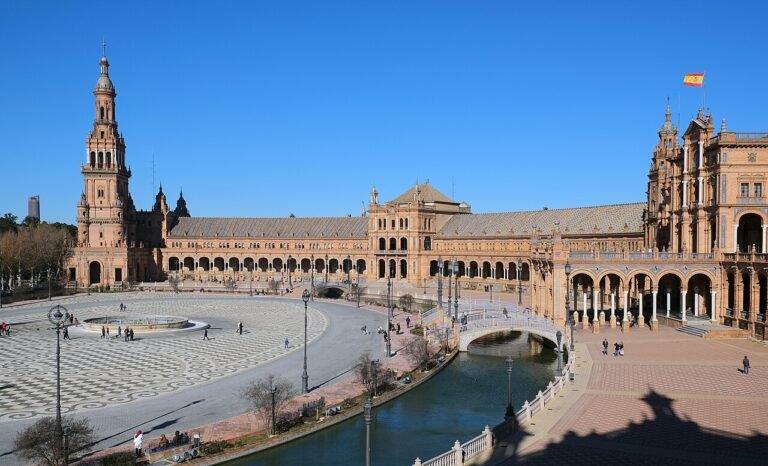
- For light: morning inside — the high windows throw the nave’s pale stone gold — and late afternoon up the tower, when the city turns warm-coloured and the Alcázar gardens glow. Our Plaza de España guide makes the natural sunset pairing, twenty minutes’ walk away.
- For atmosphere: a Sunday or feast-day morning, when the cathedral is a church first — you will not be sightseeing the full route, but the music and the city in its best clothes are an experience in themselves.
- Seasonally: spring is the peak (book everything early) and autumn nearly as good. In high summer, come at opening, climb first, and treat the interior’s cool as your midday strategy — the Patio’s shade at the end was designed for exactly this climate.
Tips for Visiting
- Book the slot, then plan around it. Cathedral first or Alcázar first is a genuine choice — my default is Alcázar at opening, cathedral late morning — but fix both tickets the day you fix your dates in busy months.
- Climb the tower before touring the chapels if the day is heating up; the ramps are shaded but the bell chamber is full sun.
- Use the audioguide or take the tour. This building does not label itself; the altarpiece alone repays an explanation in your ear.
- Follow the order in this guide — nave, altarpiece, Columbus, Royal Chapel, sacristies, Patio, tower wherever it fits — and you will not double back through crowds.
- Watch the calendar for Masses. A funeral or a wedding can close the Royal Chapel or reroute the visit without notice. It is a church that admits tourists, not a museum with an altar; roll with it.
- Carry the light layer. The dress code surprises more visitors than the queue does, every single summer day.
Travel insurance, sorted
Whether it is a two-week holiday or a longer move, travel insurance is the one booking not to skip. We point readers to SafetyWing’s Nomad Insurance — cover built for travellers, remote workers and longer stays abroad, on a flexible monthly subscription you can start before a trip or while you are already away. Get a quote from SafetyWing
Final Thoughts
Some monuments you admire; Seville Cathedral you submit to. It was designed to overwhelm — by a city chapter that said, in effect, build it mad — and eight centuries of Seville have been adding their treasures to it ever since: a minaret turned belfry, a gold wall for an altarpiece, a coffin carried by kings, a courtyard of orange trees that outlived the mosque it served. Come early, walk it in order, climb the ramps slowly, and stand a while among the bells while the whole of Seville turns beneath you. Of the two great monuments facing each other across the Plaza del Triunfo, the palace is the beautiful one. This is the great one — and great, done properly, is unforgettable.
¡Buen viaje!
Photo credits: Plaza Virgen de los Reyes and La Giralda at night — Diliff, CC BY-SA 3.0 · La Giralda floodlit — Diego Delso, CC BY-SA 4.0 · The cathedral nave vaults — Diego Delso, CC BY-SA 4.0 · The Retablo Mayor — Diego Delso, CC BY-SA 4.0 · Tomb of Christopher Columbus — kenward, CC BY 2.0 · Virgen de los Reyes, Capilla Real — José Luis Filpo Cabana, CC BY 3.0 · Sacristía Mayor dome — Diego Delso, CC BY-SA 4.0 · Patio de los Naranjos — José Luis Filpo Cabana, CC BY 3.0 · Patio de los Naranjos from La Giralda — Jebulon, CC0 · Bells of La Giralda — FlyingCrimsonPig, CC BY 2.0 · Seville rooftops from La Giralda — Benjamin Smith, CC BY-SA 4.0 · The Alcázar from La Giralda — Ajonesish344, CC0 · Seville Cathedral at night — Steven Lek, CC BY-SA 4.0. All via Wikimedia Commons.



8 Comments