Christmas Markets in Spain: 10 Festive Fairs From Madrid to San Sebastián
A Spanish Christmas market is not a smaller copy of a German one. There is little glühwein and almost no sausage; instead the stalls sell the raw materials of a different kind of Christmas — clay shepherds and cork-bark hillsides for the family belén, moss by the bag, joke wigs for the national day of pranks, marquetry boxes, ceramics, and turrón by the kilo. Most of these fairs exist so that Spaniards can build, dress and stock their own celebrations, which makes them the most local shopping a visitor can do all year: you are not buying souvenirs of the festival, you are buying the festival itself.
The season also runs to a Spanish timetable. The first fair opens in early November, most squares fill in the last week of that month, and while Barcelona’s great fair shuts up shop on 23 December, half the markets in this guide trade on through New Year to the real finish line of the Spanish season — the Día de Reyes on 6 January, when the Three Kings, not Santa Claus, deliver the presents, and last-minute gift stalls do their best business of the year.
This guide walks ten cities from the capital to the Cantabrian coast: what each market actually sells, where exactly it stands, when it runs in 2026, and the one thing in each city you should not miss while you are there. A full dates table and the practical notes — siesta hours, market-hopping by high-speed train, what to buy where — close the guide.
In This Guide
- Madrid: Plaza Mayor, the Capital’s Great Christmas Square
- Barcelona: Fira de Santa Llúcia, Spain’s Oldest Christmas Fair
- Seville: Feria del Belén, a Market of Nothing but Nativity
- Valencia: Plaza de la Reina, Under the Miguelete
- Zaragoza: Plaza del Pilar and the Biggest Belén in Spain
- Málaga: Paseo del Parque and Muelle Uno, Christmas in the Sun
- Granada: Bib-Rambla, the Craft Market Beneath the Alhambra
- Bilbao: Muelle de Ripa, Gabonart and the Santo Tomás Fair
- San Sebastián: Along the Urumea, the North’s Elegant Market
- Salamanca: Plaza de Anaya, in the Golden City
- At a Glance: Every Market’s 2026 Dates
- How to Plan a Christmas-Market Trip: Practical Notes
- Final Thoughts
1. Madrid: Plaza Mayor, the Capital’s Great Christmas Square
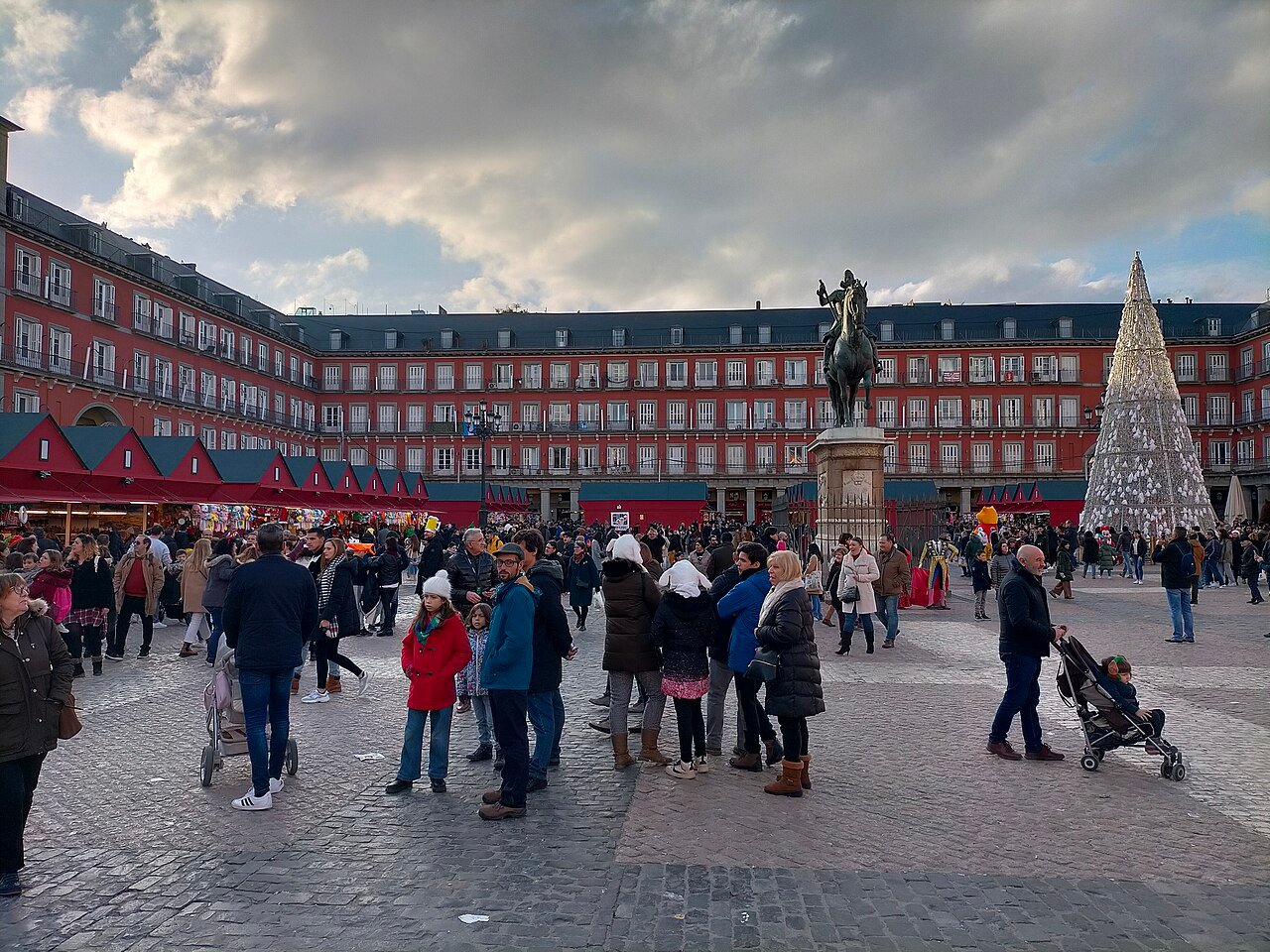
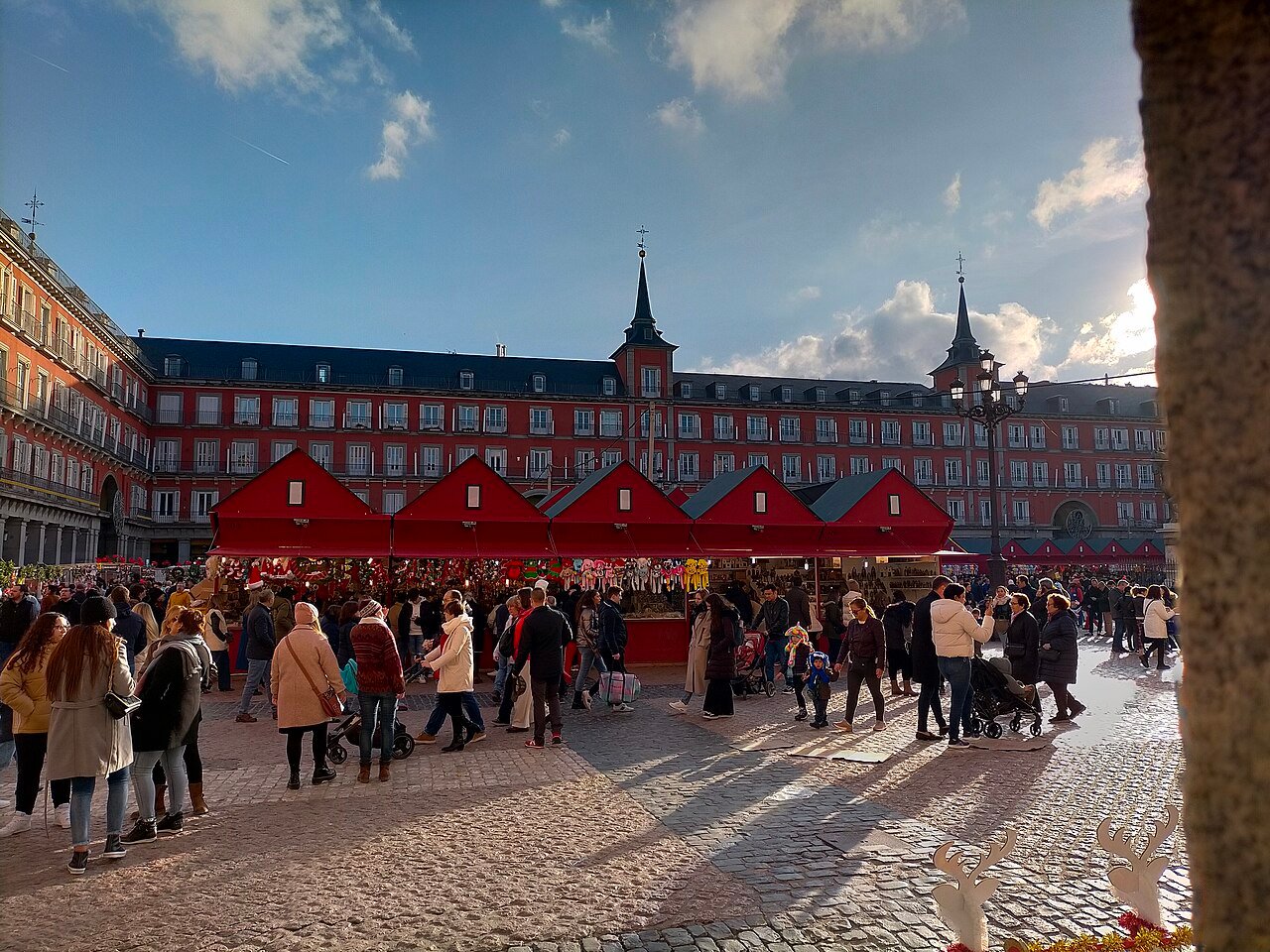
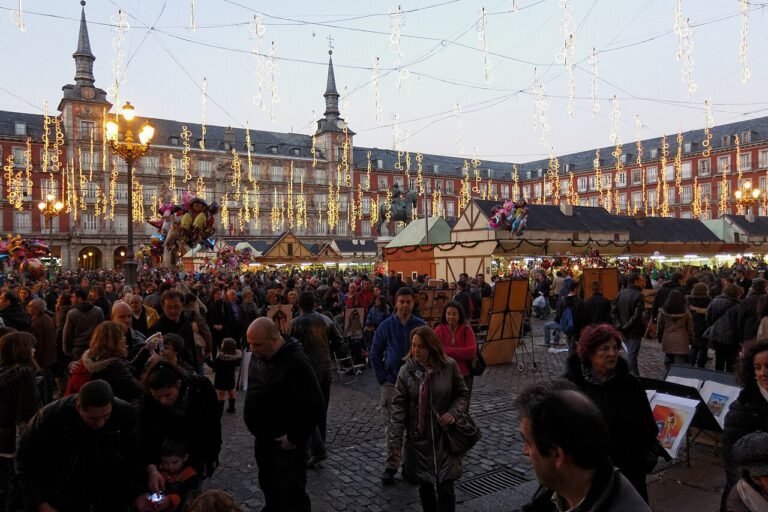
If Spain has a Christmas market of record, it stands inside the great arcaded rectangle of the Plaza Mayor. Every winter the square fills with 104 red-roofed stalls, run by individual vendors and organised by the Plaza Mayor Christmas Market Association — a fair the city’s own tourism office calls a hundred years old, whose stalls took their present wooden-hut form in a 1980s renovation. It is less a market than a national department store for the Spanish Christmas, and its stock tells you exactly how the country celebrates.
The serious trade is the belén. Stall after stall sells nativity figures in every size and material — the Holy Family, the Kings, shepherds, washerwomen, bakers — plus the scenery to house them: cork bark for the hills of Judea, moss, tiny houses, wells, bridges and strings of lights. Madrid families add a figure or two every year, and the Plaza Mayor is where they come to do it. The second trade is pure mischief: a whole category of stalls sells artículos de broma — joke and party goods, wigs, crowns, fake moustaches, novelty glasses — bought for 28 December, the Día de los Santos Inocentes (Spain’s April Fools’ Day), and worn again for the bells of Nochevieja. Decorations, toys and musical instruments round out the square.
The market runs from late November to 31 December 2026 — the city announces the exact opening day each November, and recent editions have opened in the month’s last week. Hours are a civilised 10:00 to 21:00 Sunday to Thursday, and until 22:00 on Fridays, Saturdays and the eves of public holidays, with no midday closure. Two satellites complete the picture: a vintage carousel turns in neighbouring Plaza de Santa Cruz into early January, and for genuinely artisan gifts the Feria de Artesanía of the Paseo de Recoletos — workshops from across Spain, ceramics, jewellery, leather — runs through December (1–30 December in the published listings). When the browsing is done, the classic move is five minutes across the square to Chocolatería San Ginés, Madrid’s temple of churros and thick hot chocolate, open through the night.
To have the square explained as you walk it — the nativity scene, the turrón shops, the twelve-grapes ritual at neighbouring Puerta del Sol — the Madrid Christmas Walking Tour with Nativity Scene covers exactly this ground in two hours, from around $22, with free cancellation up to 24 hours before it starts.
2. Barcelona: Fira de Santa Llúcia, Spain’s Oldest Christmas Fair
Barcelona’s fair is the elder of Spanish Christmas: the Fira de Santa Llúcia has been held in front of the cathedral since 1786, which makes it older than the Christmas tree as a Spanish custom by well over a century. It began as a one-day market for the feast of St Lucy on 13 December, when girls came to the cathedral square to buy the makings of the family pessebre; it now spreads across the Avinguda de la Catedral and the Pla de la Seu for the best part of a month, and a wander through it remains, for most Barcelonans, the moment Christmas properly starts.
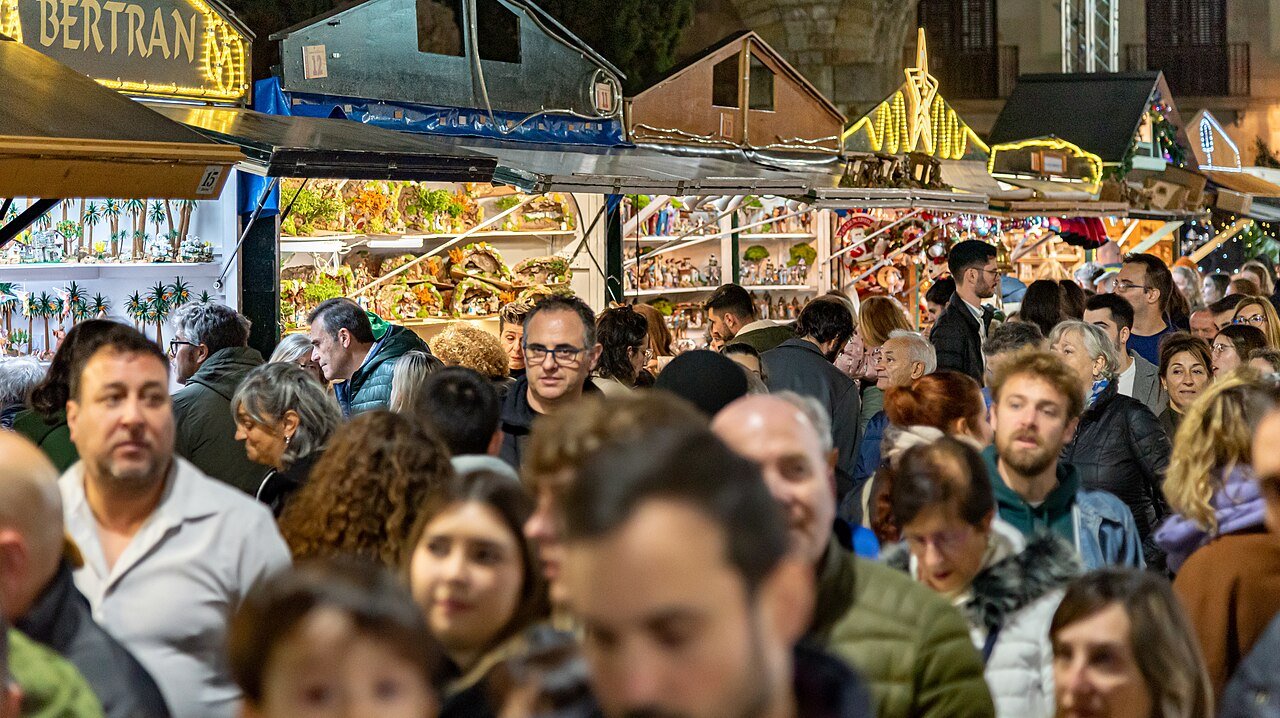
The organisers count 215 stalls, more than 160 of them selling strictly Christmas goods. This is the world capital of the belén trade: figures by the thousand, whole miniature villages, cork, moss (molsa) and the greenery of the Catalan scene, plus natural Christmas trees and plants. Around thirty stalls sell crafts — ceramics, textiles, jewellery, wooden toys — but the two purchases that mark you as an insider are pure Catalonia: a caganer, the little squatting figure hidden in every Catalan nativity for luck and fertility, and a Tió de Nadal, the smiling log that Catalan children feed through December and beat with sticks on Christmas Eve until it “poops” sweets and presents. Buy either here and you are carrying home the two best stories of the Catalan Christmas.
One discipline sets Santa Llúcia apart: it closes on 23 December, the earliest finish of any major fair in this guide — once Christmas itself begins, the market’s job is done. For 2026 the fair is expected to open in late November (season listings point to 27–28 November) and run to 23 December; the organisers confirm the exact dates each autumn, so check before you build flights around them. If you arrive after it closes, the city is not done: the Fira de Nadal de la Sagrada Família, founded in 1962 by Santa Llúcia stallholders who could no longer fit in the cathedral square, trades in the basilica’s shadow to about 23 December too, the Port Vell fair runs at the harbour into January, and the Fira de Reis on the Gran Vía de les Corts Catalanes opens in mid-December and trades until 6 January for the Kings’ gift rush. Our dedicated guide to Barcelona’s Christmas markets maps all of them stall by stall.
The neatest way to chain the fairs after dark is the Barcelona Christmas Lights and Markets Bike Tour — an evening ride of about 12 km from the Gothic Quarter up Passeig de Gràcia, past the lit Gaudí houses, to the Sagrada Família market and back through the Born, rated 4.9 out of 5 by its reviewers and from around $34.
3. Seville: Feria del Belén, a Market of Nothing but Nativity
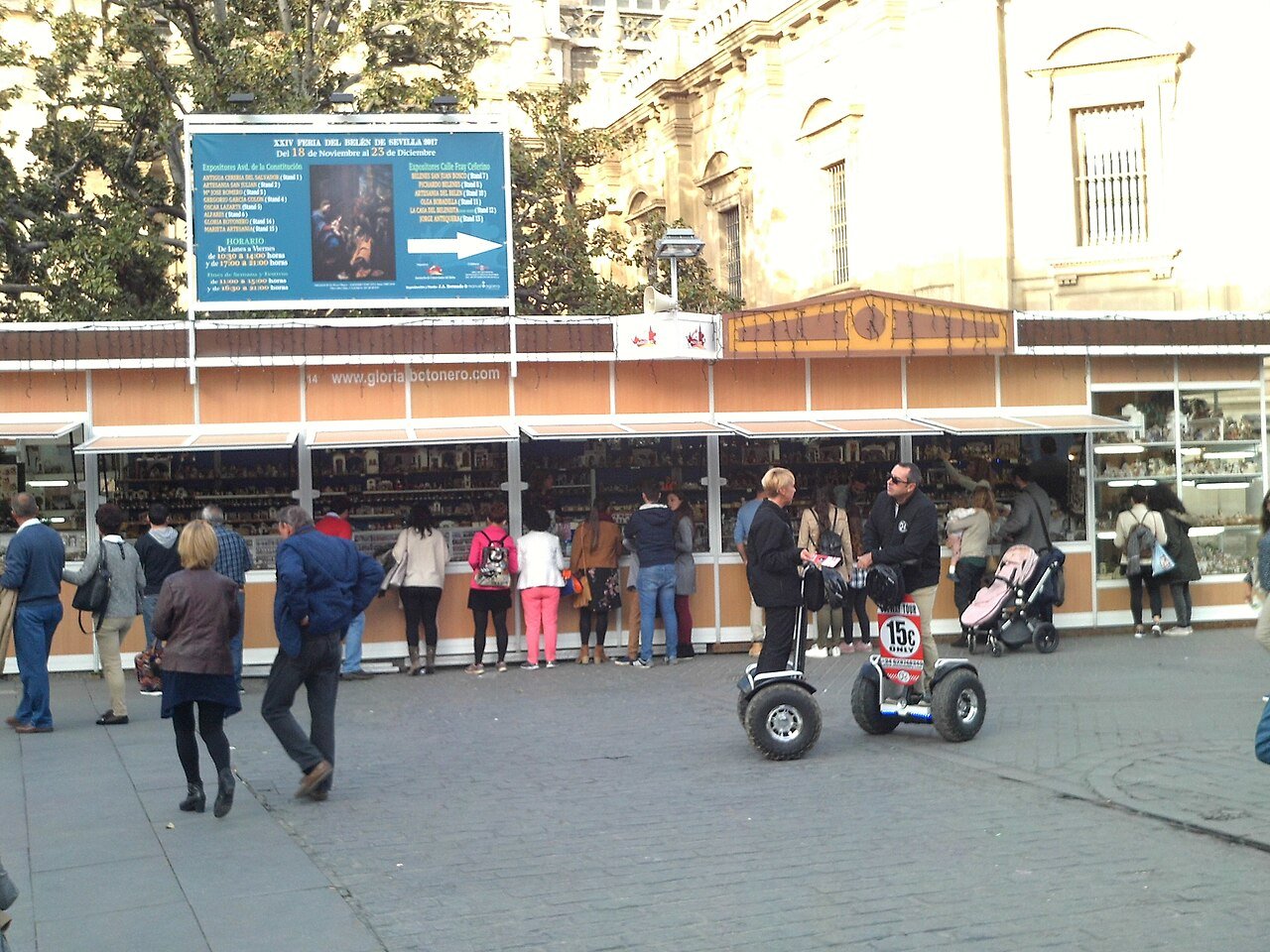
Every market in this guide sells nativity figures; Seville’s sells nothing else. The Feria del Belén is a fair consecrated entirely to the belén — figures, buildings, landscapes, accessories — and it is run by ACOBE, the association of the city’s nativity-scene merchants and makers, whose members include some of the most respected figure workshops in Spain. Its stalls line the Avenida de la Constitución and Calle Fray Ceferino González, in the few metres of street between the Cathedral and the Archivo de Indias, which is to say in the most monumental setting any Spanish market enjoys.
It is also the season’s early bird: the fair opens in the first week of November (published 2026 listings give 7–8 November) and trades until 23 December — a full three weeks before any other market in this guide has raised a stall. That long season mirrors the depth of the hobby here: a Sevillian belén is a serious construction, and between November and Christmas its builders return repeatedly — a new inn one week, a working fountain the next, lighting the week after. Prices span the whole craft: pocket-money clay figures for a couple of euros at one end, hand-painted collectors’ pieces for several hundred at the other, and a middle range in which €20–€50 buys a figure of genuine quality that will outlive its buyer.
Do not leave the old town without following the fair with the city’s other great December ritual, the ruta de belenes — the route of monumental nativity scenes mounted by churches, brotherhoods and civic buildings, for which the tourist office publishes a map. And note two companions in the season’s calendar: the Feria de Artesanía Creativa, some fifty stalls of Andalusian craft — pottery, silver, leather, fans re-imagined — which traditionally occupies Plaza Nueva and has been held in the Jardines de Cristina in recent seasons while that square is renovated (mid-December into early January), and the fair of convent sweets in the Real Alcázar, when enclosed nuns sell their Christmas baking — yemas, marzipan, polvorones — over a few days in early December; its 2026 dates had not been announced when this guide was prepared. All of it happens in Seville’s December, which is less a winter than a bright, kind autumn of 15–18°C afternoons.
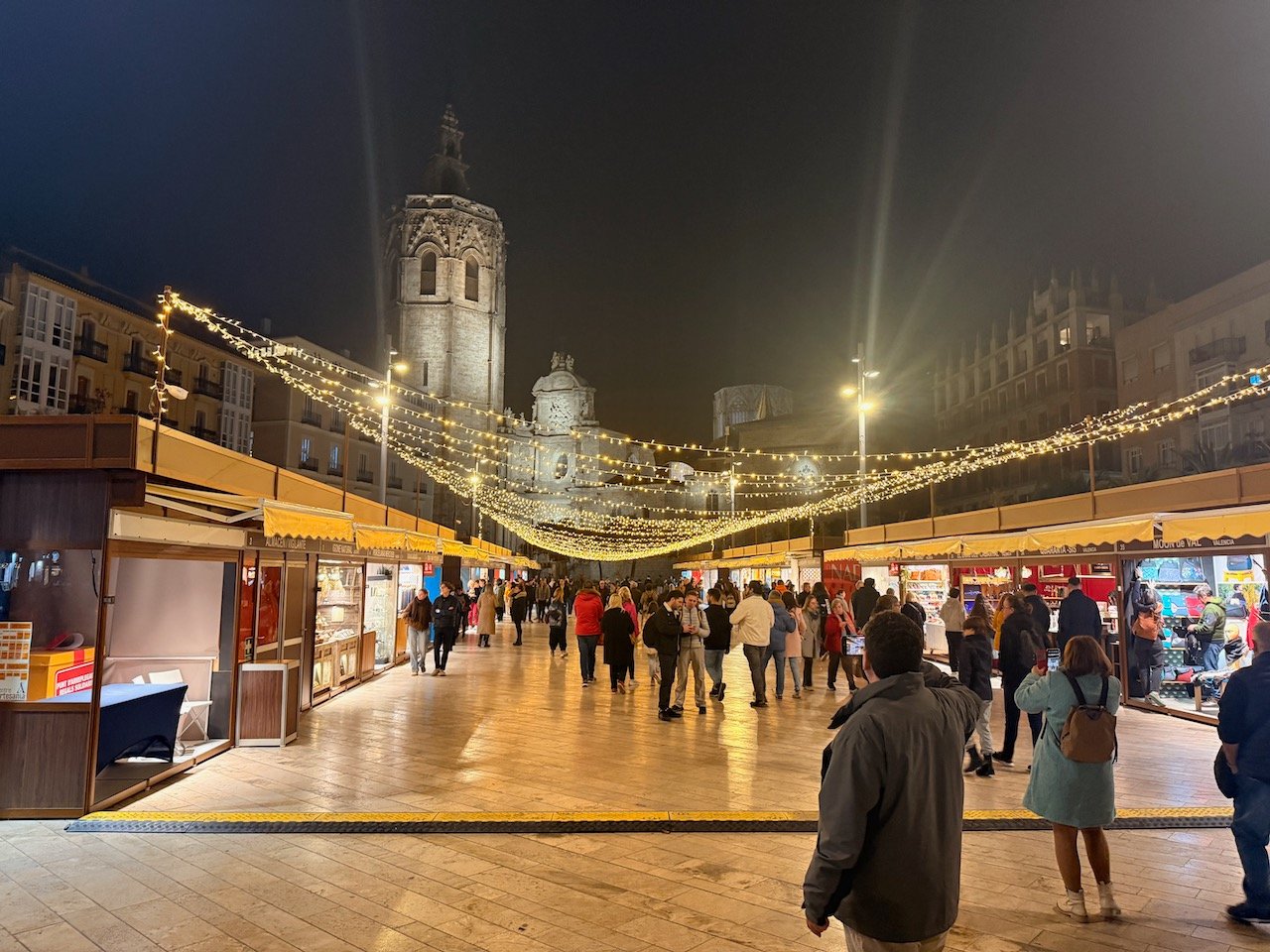
4. Valencia: Plaza de la Reina, Under the Miguelete
Valencia’s Christmas craft fair brings the season to the city’s most ceremonial square. The Feria de Artesanía de Navidad sets out some thirty wooden stalls across the Plaza de la Reina, in front of the Cathedral and its octagonal bell tower, the Miguelete — a market devoted to things made by hand: ceramics in the Valencian tradition, jewellery, leather, wood, glass, textiles and decorations, sold by the artisans who made them. It is a smaller, calmer fair than Madrid’s or Barcelona’s, and that is its charm: you can talk to the maker at almost every stall.
Published listings run it from late November (27–28 November) to 6 January 2027, and its hours carry a lesson every visitor to Spain should learn early: the Valencian split day. The fair trades 10:30–14:00 and 16:30–21:00, closing through the middle of the afternoon — a pattern you will meet again at markets in the north, and one that rewards planning your browsing for the late afternoon, when the lights come on and the square is at its best. The second Valencian market is the modern counterpoint: from mid-December to 6 January the City of Arts and Sciences hosts around fifty stalls and food trucks beneath the white curves of Calatrava’s Umbracle — come at dusk, when the buildings light up, and combine it with the aquarium’s Christmas programme next door. Design hunters should also know the Tapinería market a few streets away, a small weekend creative market in a courtyard off the old town.
Valencia’s festive geography completes itself in the Plaza del Ayuntamiento — the great tree, the ice rink, the carousel — and answers the season’s last question in the Mercado de Reyes: from 3 to 6 January the stalls around the Cabanyal market trade in the Kings’ gifts, staying open deep into the night of 5 January for the families shopping ahead of the Cabalgata parade. In Valencia, more than anywhere in this guide, the market season visibly belongs to January as much as to December.
5. Zaragoza: Plaza del Pilar and the Biggest Belén in Spain
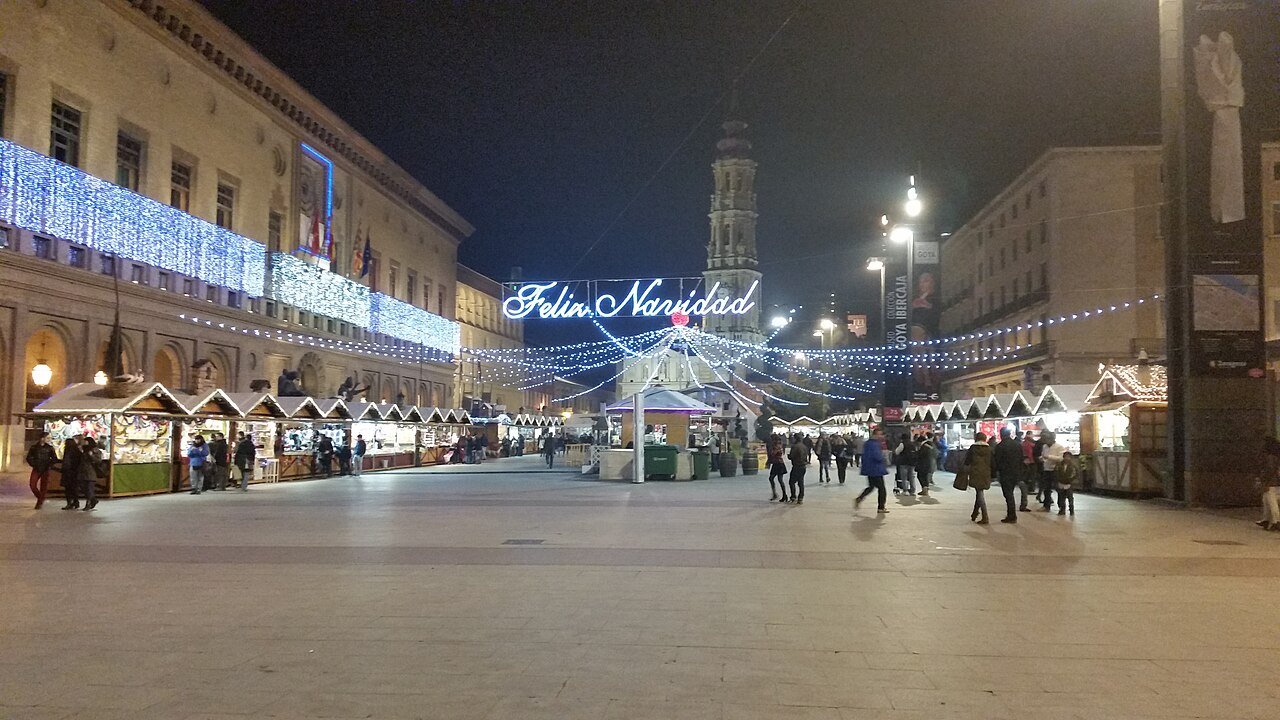
Zaragoza’s market has a fairground’s energy and a cathedral square’s dignity, and it holds one outright national record. The Plaza del Pilar — the enormous riverside square between the Basílica del Pilar and La Seo — fills with around forty stalls selling belén figures, decorations, crafts and sweets, an ice rink, rides for children and, dwarfing them all, the Belén de Judea: a walk-through nativity covering more than 1,000 square metres, with around one hundred life-size figures arranged in a miniature biblical town complete with Herod’s palace, a souk and workshops of the old Aragonese trades. In a past edition it drew more than 300,000 visitors; in December it is, for a few weeks, the largest nativity scene in Spain, and entry to it is the square’s main event.
The market’s own emblem is gentler: the Árbol de los Deseos, the Tree of Wishes, on which visitors hang written hopes for the coming year until the branches disappear under paper. The stalls trade the Aragonese Christmas faithfully — figures for the home belén, frutas de Aragón (candied fruits in chocolate), turrón, roasted chestnuts — and the square’s cafés pour thick hot chocolate against the cierzo, the cold Ebro wind that is Zaragoza’s one December hardship and the reason the market feels so properly wintry. Published listings open the season in late November (27 November or the first days of December) and run it to 6 January, the square lit and busy through the whole arc of the holidays.
Zaragoza also happens to be the most useful market in Spain for a train traveller: it sits on the Madrid–Barcelona high-speed line, about an hour and a quarter from either, and the square is a short walk from the Delicias station bus or a brief taxi ride. The practical notes at the end of this guide build a whole itinerary on that fact.
6. Málaga: Paseo del Parque and Muelle Uno, Christmas in the Sun
Málaga rewrote the Spanish Christmas a decade ago, and the rest of the country has been copying it since. The city’s season is built on light: millions of LEDs across the centre, a cathedral video-mapping show, and above all the canopy of Calle Larios, the marble shopping street whose light-and-sound display plays several times a night — in recent editions at 18:30, 20:30 and 22:00 — to crowds that fill the street end to end. For 2026 the city has reserved the programme from 27 November 2026 to 4 January 2027, with the switch-on, one of the great civic parties of the Andalusian year, on Friday 27 November.
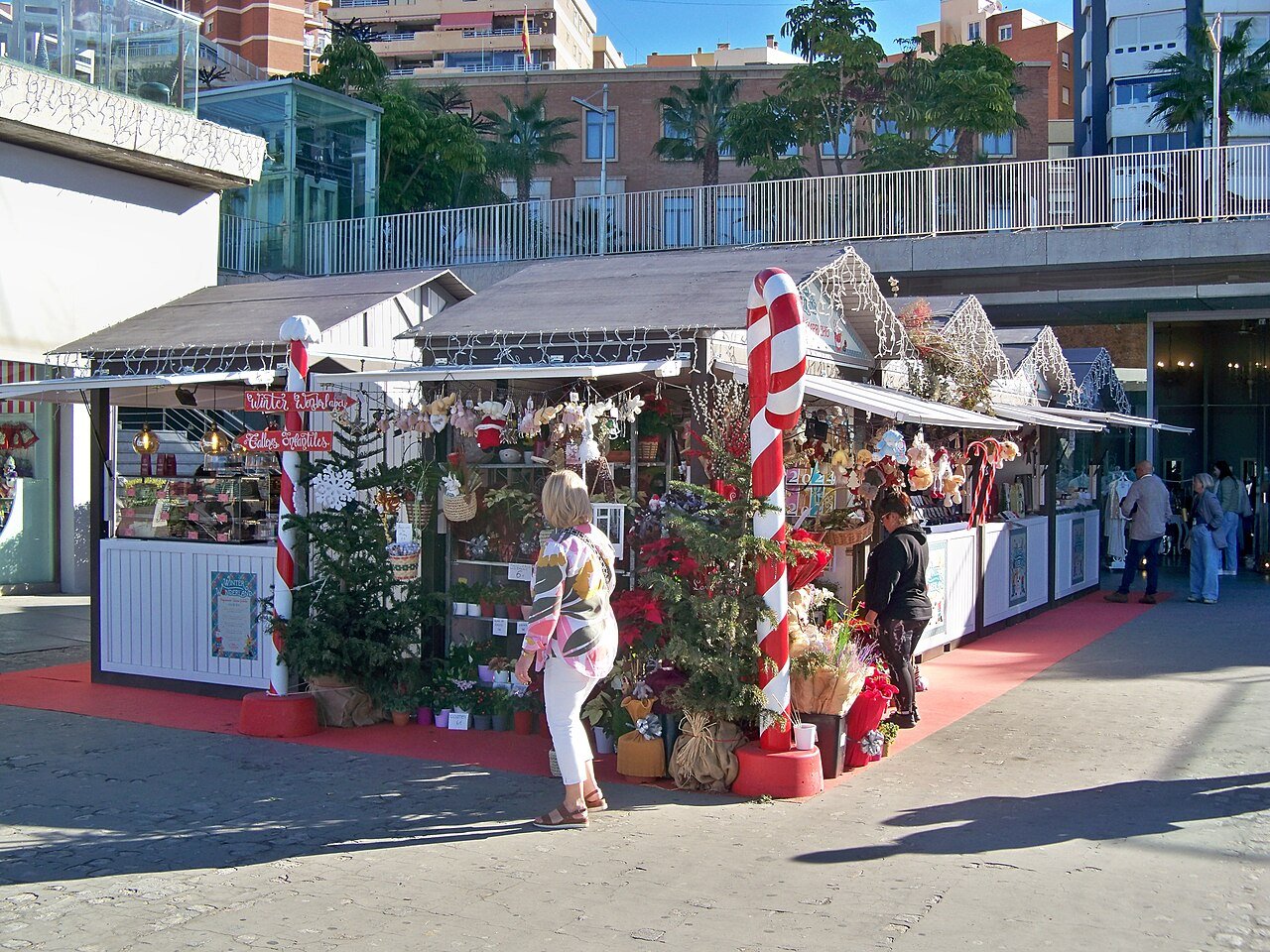
The market itself is split between two waterside sites a ten-minute stroll apart. The traditional fair, some ninety stalls in the published listings, lines the Paseo del Parque, the subtropical promenade of palms and ficus between the port and the old town, trading roughly 11:00–22:00 from the start of December — some listings say from the lights switch-on itself — until 6 or 7 January: belén figures, decorations, crafts and sweets, browsed in shirtsleeves under a December sun that regularly reaches 18–20°C. The second market fills Muelle Uno, the port’s leisure quay, where the stalls face the lighthouse and the Pompidou Centre’s coloured cube, and the shopping bleeds happily into the quay’s bars and restaurants.
The way to see it all at its best is after dark, when the market crowds thin into the Larios shows; the Málaga Christmas lights night tour by electric car does the circuit in a self-drive two-seat Citroën Ami, in convoy behind a guide’s lead vehicle, finishing at the Gibralfaro Castle viewpoint above the lit city — drivers need to be over 25 with a valid licence.
7. Granada: Bib-Rambla, the Craft Market Beneath the Alhambra
Granada’s market keeps the oldest trading square in the city. Plaza Bib-Rambla, the flower-filled square a minute from the Cathedral — for centuries the city’s commercial heart, and still ringed with cafés famous for churros — fills each December with craft stalls: nearly seventy of them, spread between Bib-Rambla and neighbouring Fuente de las Batallas in the tourist office’s count. Published listings run the fair from 1 December to 6 January, about 11:00–21:00, closed on Christmas Day and New Year’s Day themselves.
What it sells is the best of the city in portable form. Granada is one of Spain’s great craft towns, and its signature work is taracea — marquetry of bone, silver thread and contrasting woods inlaid in geometric Moorish patterns, made into boxes, chess sets, trays and guitars in workshops that still line the old town. Beside it you will find the blue-green glazes of Fajalauza ceramics, hand-tooled leather, silver jewellery from Albaicín workshops, and figures and scenery for the family belén. A second, gastronomic row of stalls sets up towards Puerta Real with the season’s sweets and produce. Granada also runs a city-wide belén competition each year, and the tourist office’s route of the entrants — in churches, convents and civic halls — is the connoisseur’s way to spend a December afternoon.
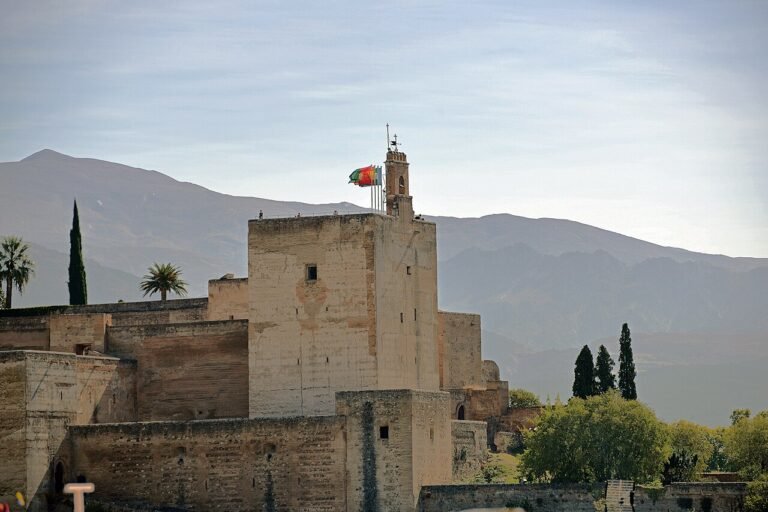
The setting does half the work. Bib-Rambla sits in the flat old town with the Sierra Nevada white on the horizon, and the market days come with a built-in evening: the stalls at dusk, then twenty minutes uphill to the Mirador de San Nicolás for the Alhambra floodlit against the snow, the most famous winter view in Spain. Two practical notes: Granada’s December is genuinely cold once the sun drops — this is an inland city at 700 metres — and on the snowiest days the parks department sells out of nothing at all; the stalls simply become more atmospheric.

8. Bilbao: Muelle de Ripa, Gabonart and the Santo Tomás Fair
Bilbao keeps its Christmas small, Basque and — for one day in December — gloriously agricultural. The standing market, on the Muelle de Ripa along the river in front of the old town, is a modest affair of some twenty stalls in the published listings, running from early December to 5 January: decorations, crafts, sweets, hot drinks. A few minutes away, from mid-December, the Gabonart craft fair fills the tents of El Arenal with Basque makers — ceramics, wood, leather, textiles, jewellery — the best quality shopping of the city’s season, keeping the northern split hours of a late-morning session and a long evening one.
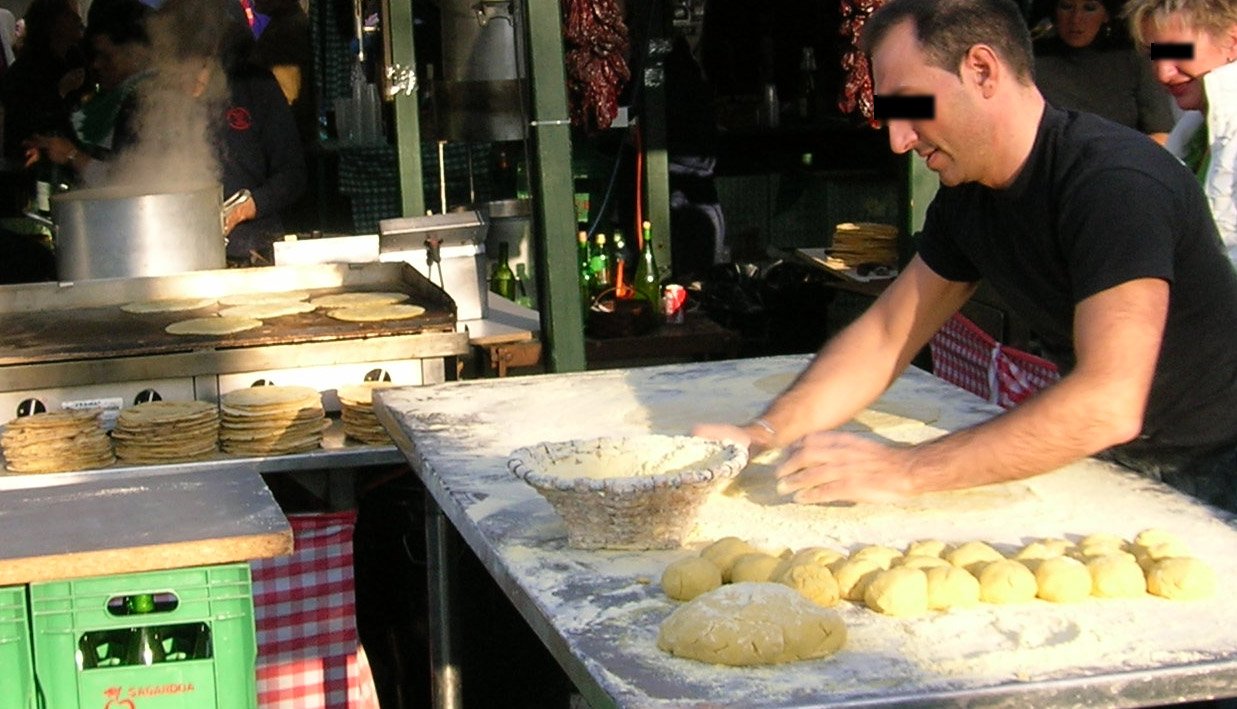
But the date to build a trip around is Monday 21 December 2026 — Santo Tomás. For one day, Bilbao’s Plaza Nueva and El Arenal become a farmers’ fair of around 250 stalls (txosnas), as producers come down from the farmhouses of Bizkaia with the whole Basque larder: cheeses, beans, honey, cider apples, vegetables, livestock on show. The fair descends from the 19th-century day when tenant farmers came into the city to pay their landlords the year’s rent, and its ritual dish is unvarying — a talo, a hot corn flatbread rolled fresh off the griddle, wrapped around a txistorra sausage and washed down with a glass of sagardoa cider or txakoli wine, eaten standing up in a crowd of thousands doing exactly the same. It is not strictly a Christmas market at all; it is better — the city’s own feast, which happens to fall four days before Christmas.
The days after Santo Tomás belong to the Basque Christmas’s own cast: on 23–24 December the Olentzero, the charcoal-burner who brings Basque children their presents, parades through the city with Mari Domingi, and the Guggenheim’s riverfront, strung with lights, gives the whole season its modern backdrop.
9. San Sebastián: Along the Urumea, the North’s Elegant Market
San Sebastián does Christmas with the same polish it does food. The Gabonetako Azoka — the Christmas fair — strings about 65 stalls along the river and the Romantic Quarter: 37 chalets on the Paseo del Urumea, following the river past the belle-époque bridges and the Kursaal’s glowing cubes, and 28 more in Plaza Ramón Labayen, a cluster with a food corner of local produce, sweets and hot drinks. The stalls trade daily, roughly 11:00–21:30, from the last days of November to 6 January, and the standard of what they sell — Basque design, crafts, books, deli food — is conspicuously high; the fair has been named among the best small Christmas markets in Europe, a title its food stalls alone would justify in a city of this culinary seriousness.
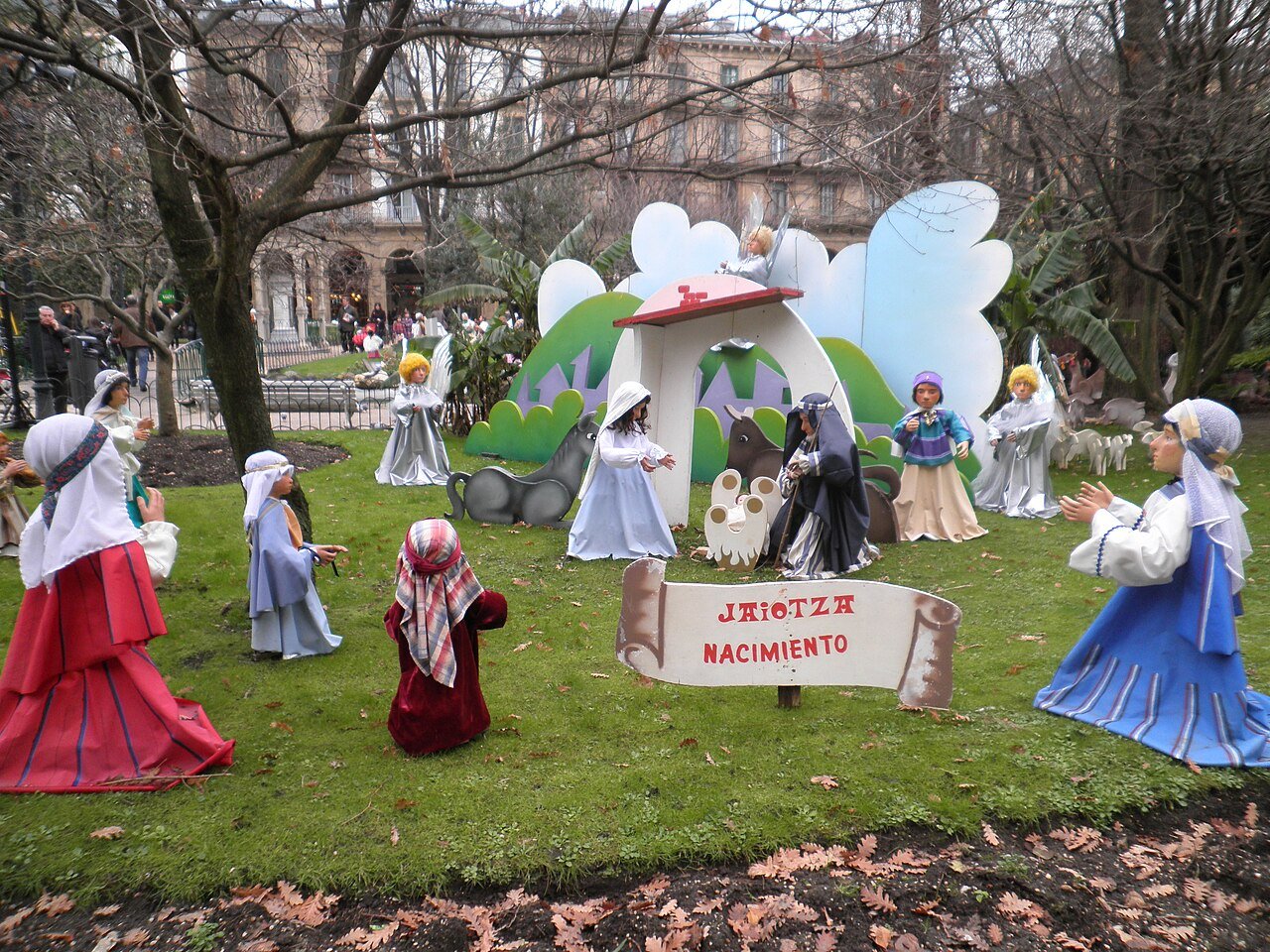
Two minutes inland, a second craft market sets up on Plaza Cataluña in the Gros district’s edge, and between the two fairs stands the city’s beloved belén of Plaza de Gipuzkoa: more than 150 figures, each around a metre tall, arranged in the gardens of the provincial palace — a nativity you walk through rather than peer at, and a fixture of Donostiarra childhoods for generations. The lights deserve their own evening: the switch-on, with a drone show over La Concha bay, opens the season in the last days of November, and the bay’s promenade, the Alderdi Eder gardens and the old town form a lit circuit that the market route slots straight into.
San Sebastián keeps the Basque calendar, too: Santo Tomás is celebrated here on 21 December as in Bilbao, with talo and txistorra stalls around the old town, and on Christmas Eve the Olentzero and Mari Domingi parade brings the gift-givers down from the hills to the city. Come hungry, browse slowly, and expect the market to behave like everything else in this city — smaller than the capitals’, and better made.
10. Salamanca: Plaza de Anaya, in the Golden City
Salamanca’s market is the smallest in this guide and the most beautiful walk-up. The stalls — 39 planned for 2026 — stand on the Plaza de Anaya, in the shadow of the city’s two cathedrals, the Romanesque Old and the soaring Gothic New, with the whole scene built, like everything in Salamanca, from the golden Villamayor sandstone that turns amber in the December dusk. Published dates run from 26 November 2026 to 5 January 2027, and the stock is the classic Spanish mix: belén figures and scenery, decorations, crafts, sweets and roasted chestnuts against the Castilian cold.
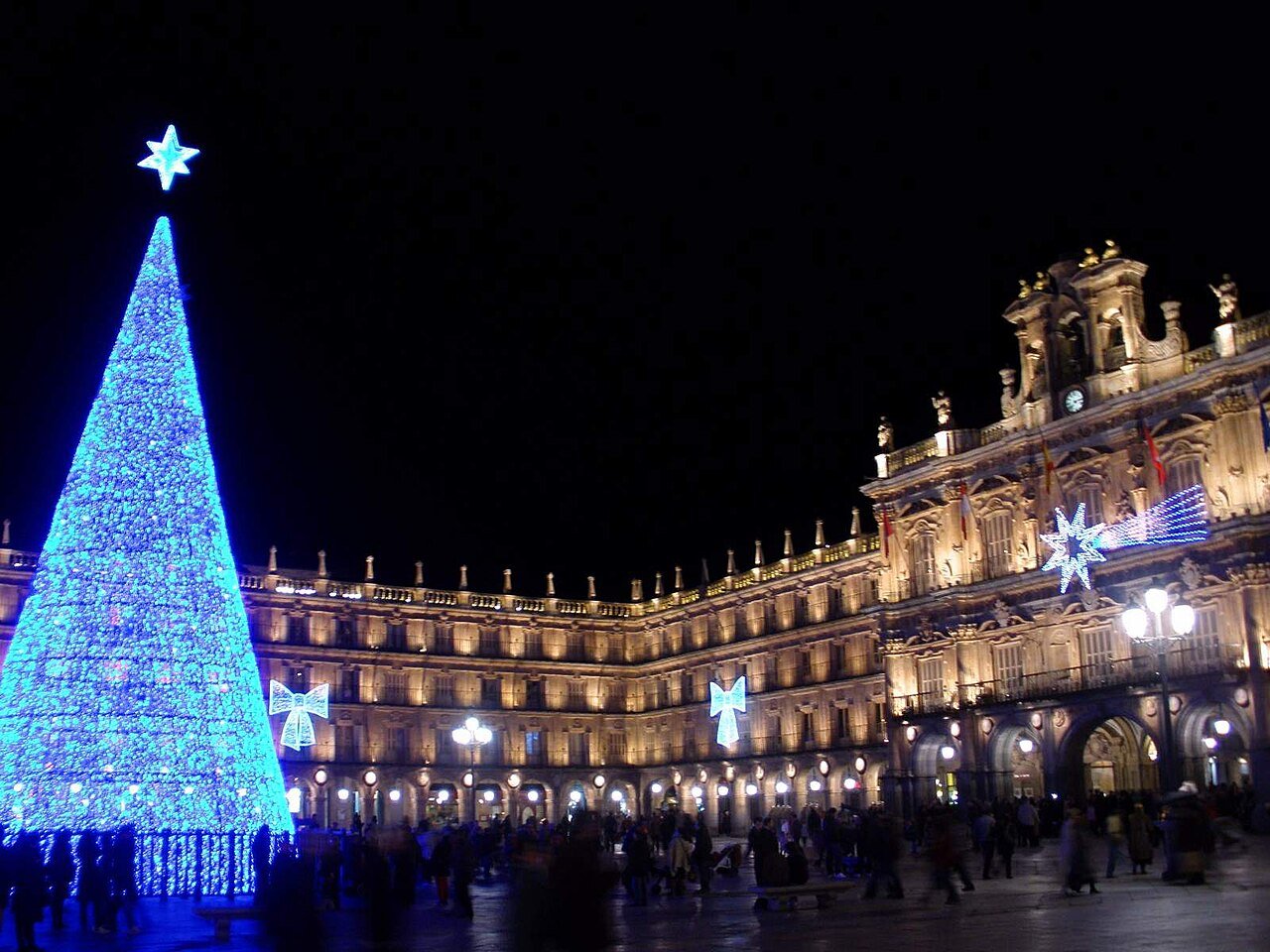
The market’s trump card is its neighbour. The Plaza Mayor, two minutes away and the finest baroque square in Spain, is the city’s festive parlour — the great tree, the lights, the cafés under the arcades — and the December rhythm is to browse Anaya, then take chocolate in the square as the illuminations come on. Salamanca is a university city, and December belongs to the students: lectures end, the tunas (student minstrel bands in 17th-century dress) sing in the streets, and mid-month brings the city’s own invention, the Nochevieja Universitaria — a full New Year’s Eve, grapes, bells and all, celebrated in the Plaza Mayor a fortnight early (a tradition since the late 1990s) so students can party before dispersing home for the real one. If your market trip coincides, you will get two Spanish festivals for the price of one.
Salamanca is also the easiest add-on in this guide: fast Alvia trains from Madrid Chamartín take about an hour and a half, the old town is a compact walk from end to end, and the cold, clear, starlit nights are the reward for anyone who finds the Mediterranean markets insufficiently wintry.
11. At a Glance: Every Market’s 2026 Dates
| City & market | Where | 2026 dates | The one thing not to miss |
|---|---|---|---|
| Madrid — Plaza Mayor | Plaza Mayor | Late Nov – 31 Dec | The belén stalls, and joke gifts for 28 Dec |
| Barcelona — Fira de Santa Llúcia | Avinguda de la Catedral | Late Nov (expected) – 23 Dec | A caganer and a Tió de Nadal |
| Seville — Feria del Belén | Av. de la Constitución | Early Nov (7–8 Nov) – 23 Dec | Figures from the makers’ own stalls |
| Valencia — Feria de Artesanía | Plaza de la Reina | Late Nov – 6 Jan (expected) | The split-hour evening session under the Miguelete |
| Zaragoza — Plaza del Pilar | Plaza del Pilar | Late Nov – 6 Jan (expected) | The 1,000 m² Belén de Judea |
| Málaga — Paseo del Parque & Muelle Uno | Paseo del Parque / the port | Early Dec – 6/7 Jan | The Calle Larios light-and-sound show |
| Granada — Bib-Rambla | Plaza Bib-Rambla | 1 Dec – 6 Jan | Taracea marquetry, then the Alhambra at dusk |
| Bilbao — Muelle de Ripa & Gabonart | Muelle de Ripa / El Arenal | Early Dec – 5 Jan | Santo Tomás, Monday 21 Dec: talo con txistorra |
| San Sebastián — Gabonetako Azoka | Paseo del Urumea | Late Nov – 6 Jan | The metre-tall belén of Plaza de Gipuzkoa |
| Salamanca — Plaza de Anaya | Plaza de Anaya | 26 Nov – 5 Jan | The Plaza Mayor tree, two minutes away |
A note on the dates: Spanish markets are run by city councils and vendors’ associations, and most confirm their exact opening days each autumn. Where the table says “expected”, the 2026 edition’s dates follow the pattern of recent years and the season’s published listings; the fairs themselves announce the final days on their own channels. Seville’s and Salamanca’s dates and Madrid’s closing day were published for 2026 at the time of writing; the rest should be re-checked a few weeks before you travel — and every market in this guide opens by the first days of December at the latest.
12. How to Plan a Christmas-Market Trip: Practical Notes
When to come. The sweet spot is the first two weeks of December: every market in the guide is open, the lights are on, and the crowds have not yet peaked. The last week of November works if you choose your city — Málaga’s switch-on on 27 November and Seville’s early opening are the reliable fixtures, while several northern fairs are still raising their stalls. Expect special hours at the season’s hinges: markets typically close early on 24 and 31 December, some shut entirely on 25 December and 1 January (Granada’s does), and the lucky ones trading to Reyes do their most festive business on 5 January, the eve of the Kings.
Mind the split day. Not every market keeps northern-European hours. Valencia’s fair closes from 14:00 to 16:30; the Basque craft fairs do the same; Seville’s belén fair has historically split its day too. The universal rule is that a Spanish market is at its best from about 17:00, when the lights come on, the after-work crowd arrives and the chestnut sellers fire up — plan sightseeing for the middle of the day and markets for the evening.
Chain them by train. Spain’s high-speed network turns market-hopping into a single-trip sport. Madrid–Zaragoza–Barcelona is one line, roughly 75–90 minutes per leg, so the three biggest fairs of the north-east fit one long weekend. Madrid–València runs under two hours; Madrid–Málaga and Madrid–Sevilla are AVE routes of about two and a half hours, and Salamanca is 90 minutes by Alvia. Book trains early for December weekends; the stations, in every city in this guide, are a walk or a short ride from the market square.
What to buy, and where. Buy the belén in Seville or Barcelona, where the makers sell their own figures; marquetry in Granada; ceramics in Valencia; a caganer only in Catalonia, where he belongs; and food everywhere — the markets themselves sell turrón, polvorones and candied fruits, but for the deep context of what Spaniards actually eat across these weeks, read our guide to Christmas food in Spain, and for the customs behind the stalls — the lottery, the twelve grapes, the Kings — our guide to Christmas traditions in Spain is the companion piece to this one. Almost every stall now takes cards, but carry small cash: the figure-sellers’ smallest treasures cost €1–€5 and are the fastest purchases you will make.
Pack for three climates. Málaga in December is a light jacket; Madrid is a proper coat; Zaragoza, Granada and Salamanca at night are gloves-and-hat cold, with the Ebro wind and the Sierra Nevada doing their work. The markets are all outdoors and all evening-weighted — dress for standing still in the cold, however sunny the afternoon looked.
Travel insurance, sorted
Whether it is a two-week holiday or a longer move, travel insurance is not the most glamorous part of a trip – but it is the one booking you want to have in place before a trip, and while you are already away. Get a quote from SafetyWing
Christmas Food in Spain: 11 Festive Dishes You Have to Try
13. Final Thoughts
Germany invented the Christmas market as a place to drink and eat in the cold; Spain invented its own version as a place to prepare — to buy the figures, the moss, the sweets and the joke wigs with which a family builds its own Christmas. That is why these ten fairs reward a traveller more than almost any other seasonal attraction in the country: nothing in them is staged for you. The Madrileños arguing over a shepherd, the Sevillians commissioning a fountain for the belén, the Bilbaínos queuing for a talo on Santo Tomás — you are browsing in the middle of the real thing, and the souvenir you carry home, a figure or a marquetry box, is the genuine article of the Spanish Christmas. Pick a city, come in the first half of December, and go after dark. ¡Feliz Navidad!
Frequently Asked Questions
When do Christmas markets in Spain open in 2026?
The season opens in stages. Seville’s Feria del Belén is the first, from the first week of November (published listings give 7–8 November) to 23 December. Most other fairs open in the last week of November — Málaga’s lights switch on Friday 27 November 2026 — and every market in this guide is running by the first days of December. Several (Valencia, Zaragoza, Málaga, Granada, San Sebastián) trade through to the Día de Reyes on 6 January 2027; Madrid’s Plaza Mayor market closes on 31 December, and Barcelona’s Santa Llúcia finishes earliest, on 23 December. Most councils and vendors’ associations confirm their exact opening days each autumn, so re-check a few weeks before travelling.
Which is the best Christmas market in Spain?
It depends on the Christmas you want. For scale and atmosphere, Madrid’s Plaza Mayor — 104 stalls in the great square — is the classic. For history and the belén trade, Barcelona’s Fira de Santa Llúcia (since 1786) and Seville’s all-nativity Feria del Belén are unmatched. For spectacle, Málaga’s light shows lead the country; for a single great set-piece, Zaragoza’s 1,000 m² Belén de Judea; for food-lovers, San Sebastián’s food stalls and Bilbao’s Santo Tomás fair on 21 December. If you can visit only one, make it Madrid or Barcelona; if you can chain two by train, add Zaragoza between them.
What do Spanish Christmas markets sell?
Above all, the makings of the belén: nativity figures in clay, wood and resin, plus scenery — cork bark, moss, miniature buildings, lights. Beyond that: Christmas decorations, natural trees and plants, handmade crafts (ceramics, leather, marquetry, jewellery), seasonal sweets such as turrón, polvorones and candied fruits, roasted chestnuts, and — in Madrid especially — the joke and party goods bought for the Día de los Santos Inocentes on 28 December and for New Year’s Eve. Each region adds its own signatures: the caganer and the Tió log in Catalonia, taracea marquetry in Granada, talo flatbreads at Bilbao’s Santo Tomás.
Are Spanish Christmas markets free to visit?
Yes — every market in this guide is an open-air fair on a public square or promenade, and entry is free. You pay only for what you buy, and for any separately ticketed extras that share the square, such as ice rinks, carousels and big wheels. Zaragoza’s giant Belén de Judea, the largest nativity scene in Spain, is free to walk through. Small belén figures start at €1–€5; quality handmade pieces run €20–€50 and collectors’ figures several hundred.
Do the markets stay open on Christmas Day and New Year’s Day?
Mostly not in full. Typical practice is early closing on 24 and 31 December, and full or partial closure on 25 December and 1 January — Granada’s market, for example, is closed on both days, while Madrid’s Plaza Mayor market trades to 31 December and Barcelona’s Santa Llúcia has already finished on 23 December. The markets that run to Reyes are busiest on 2–5 January. Always check the individual fair’s hours for the exact day you plan to visit.
What is the best way to visit several markets on one trip?
By high-speed train. Madrid, Zaragoza and Barcelona sit on one AVE line (about 75–90 minutes per leg), so the three biggest fairs fit a single long weekend; Valencia is under two hours from Madrid, Málaga and Seville about two and a half, and Salamanca 90 minutes by Alvia. Base yourself in Madrid for the southern and Valencian runs, or run the north-east line west to east. Go in the first two weeks of December, when every market is open and the crowds are still manageable, and visit each market after 17:00, when the lights are on.

2 Comments