Barcelona at Christmas 2026: Lights, Nativities, Concerts and Catalan Traditions
Barcelona at Christmas is a Mediterranean take on the festive season: no snow, no mulled wine in a freezing market square, but 130 kilometres of lights, a giant star over the old town, choir concerts in a modernista palace and a Christmas log that children beat with sticks until it produces presents. December is one of the best months to be in the city — the summer crowds have gone, the light is low and golden, and the whole calendar from late November to 6 January is built around things you can only see at this time of year.
This guide is the planning overview: when the lights go on, where the nativity scenes are, which concerts to book, what the Catalans actually do, and what stays open on 25 December. Where a subject has its own deep guide on this site — the markets, the traditions, the food, the winter season in general — we point you to it rather than repeat it.
One warning before the detail: Barcelona’s Christmas is not a long weekend, it is a six-week season with its own rhythm — the lights and the Sant Pau show from late November, the fairs and the tió through December, the concerts around the 26th, and the Kings to finish on 6 January. A three-day trip catches a slice of it; five or six days, well placed, catches the whole arc. The dates table in §9 is there so you can place yours.
In This Guide
- 1. The Christmas Lights: 130 Kilometres of Them
- 2. Nativity Scenes: the Star, the Pessebre and the Pessebristes
- 3. The Christmas Fairs in Brief
- 4. Catalan Christmas Traditions in the City
- 5. Christmas Concerts and Big Festive Nights
- 6. Gaudí in December
- 7. The Festive Table, Barcelona Style
- 8. New Year’s Eve and the Road to Kings’ Day
- 9. Barcelona Christmas 2026 at a Glance
- 10. Practical Notes: Weather, Closures and Getting Around
- 11. Final Thoughts
1. The Christmas Lights: 130 Kilometres of Them
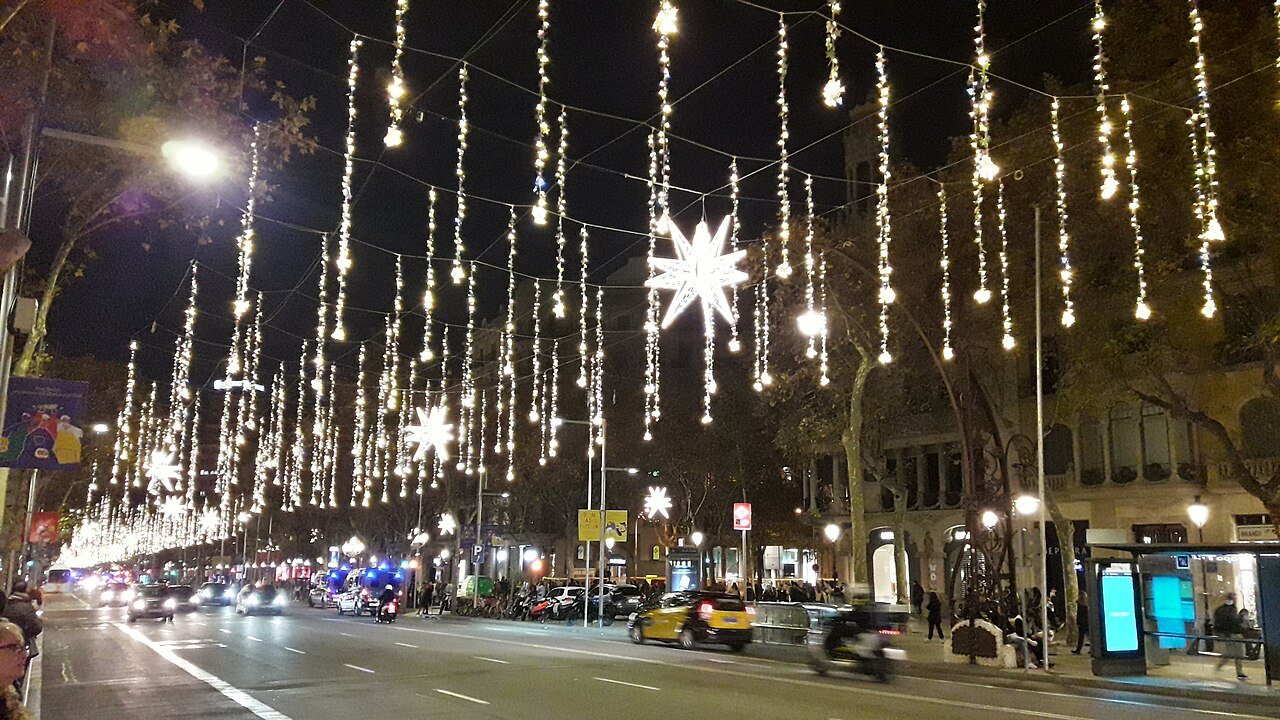
The lights are the season’s headline act, and in 2026 Barcelona is going bigger than ever: the city holds the title of European Capital of Christmas this year, and the council has announced the second edition of its Barcelona Llums de Nadal festival with around 130 kilometres of illuminated streets and a budget of roughly €4.6 million.
The starting gun is the switch-on on Passeig de Gràcia. The city’s official 2026 lighting calendar starts the season on Saturday 21 November 2026, with the first night’s lights running from 18:30, and local listings point to the usual early-evening switch-on show on Passeig de Gràcia that day — the council confirms the show’s exact details nearer the time, so check the municipal Christmas programme before you set out. After that, the lights burn every evening until 6 January 2027: according to the same official calendar they come on at 17:30, run until about 22:00–23:00 depending on the night, and stay up until midnight on 24 and 25 December.
The streets to build your evening around:
- Passeig de Gràcia — the switch-on street and the city’s grandest display, strung above the modernista blocks between Plaça de Catalunya and Carrer de Provença. Come after dark and walk it slowly in both directions; the view changes completely.
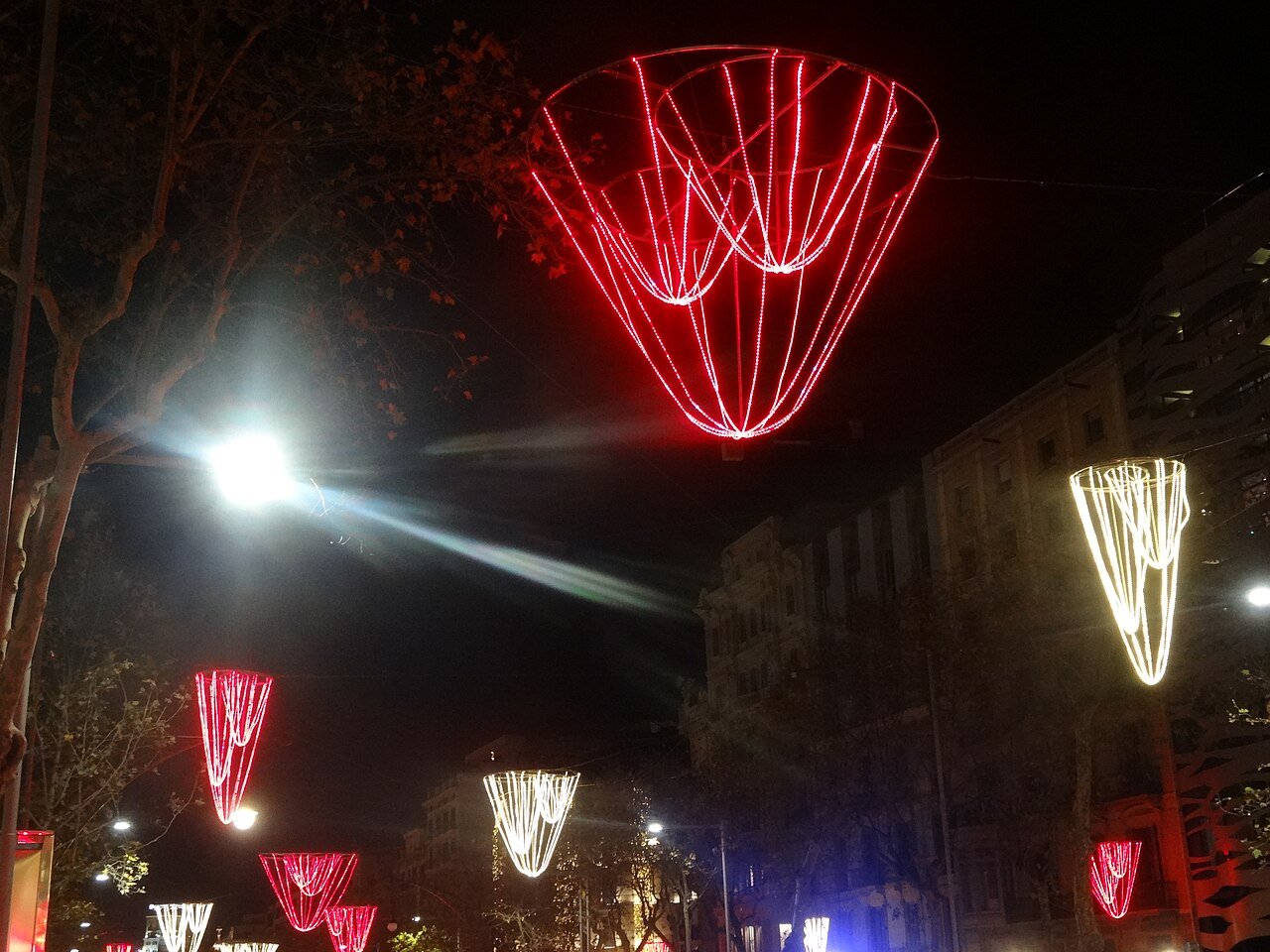
- The designer installations — Barcelona commissions artists to design the lights on its showcase streets rather than buying them off the shelf. The five 2025 designs return in 2026 on Via Laietana, Plaça de Catalunya, Carrer d’Aragó, Gran Via de les Corts Catalanes and Passeig de Sant Joan, and two new ones join them: Rambla de Prim in Sant Martí and Passeig de Maragall, where the lights spell out a poem.
- Portal de l’Àngel and Plaça de Catalunya — the shopping heart of the city, wall-to-wall light, with the El Corte Inglés façade doing its annual turn as a landmark in its own right.
- Avinguda del Paral·lel — lit along its full length for the first time in 2026, worth the detour if you are staying near Poble-sec or Montjuïc.
- The giant galets — oversized lights shaped like the galet, the big elbow pasta of Christmas Day soup, hung at the city’s 13 municipal markets and in Plaça de Sant Miquel. It is the most Barcelona detail of the whole display: the city lights up its Christmas dinner.
The way to see them is on foot, in one long evening walk. Start at the Sagrada Família end of Avinguda Gaudí in the blue hour, come down Passeig de Sant Joan past its designer installation, cross the Arc de Triomf, and climb Carrer d’Aragó and Via Laietana into the centre; then give Passeig de Gràcia a full slow pass from Diagonal to Plaça de Catalunya and finish on Portal de l’Àngel. It is about ninety minutes of walking, every street of it lit, and it strings together almost everything in this section. On switch-on night itself, Passeig de Gràcia closes to traffic and fills shoulder to shoulder — arrive by metro (the street’s own stations tip you straight into the crowd), expect the show to be short, and drift away down the side streets once the cheer goes up.
If you would rather be driven through it all, the one-hour Private Christmas Lights Tour by Eco Tuk Tuk covers Passeig de Gràcia, the lit façades of Casa Batlló and Casa Milà, the Arc de Triomf and Plaça de Catalunya with a driver-guide. It is rated 4.4/5 across 35 reviews, costs from $44.26 per person, takes a maximum of four passengers per vehicle, and offers free cancellation up to 24 hours in advance. It only runs in the lights season, so December dates go quickly.
2. Nativity Scenes: the Star, the Pessebre and the Pessebristes
Every Spanish city has its belén; Barcelona has a whole nativity trail — but the first stop needs a word of honest explanation, because the famous Plaça Sant Jaume nativity is not where, or what, it used to be.
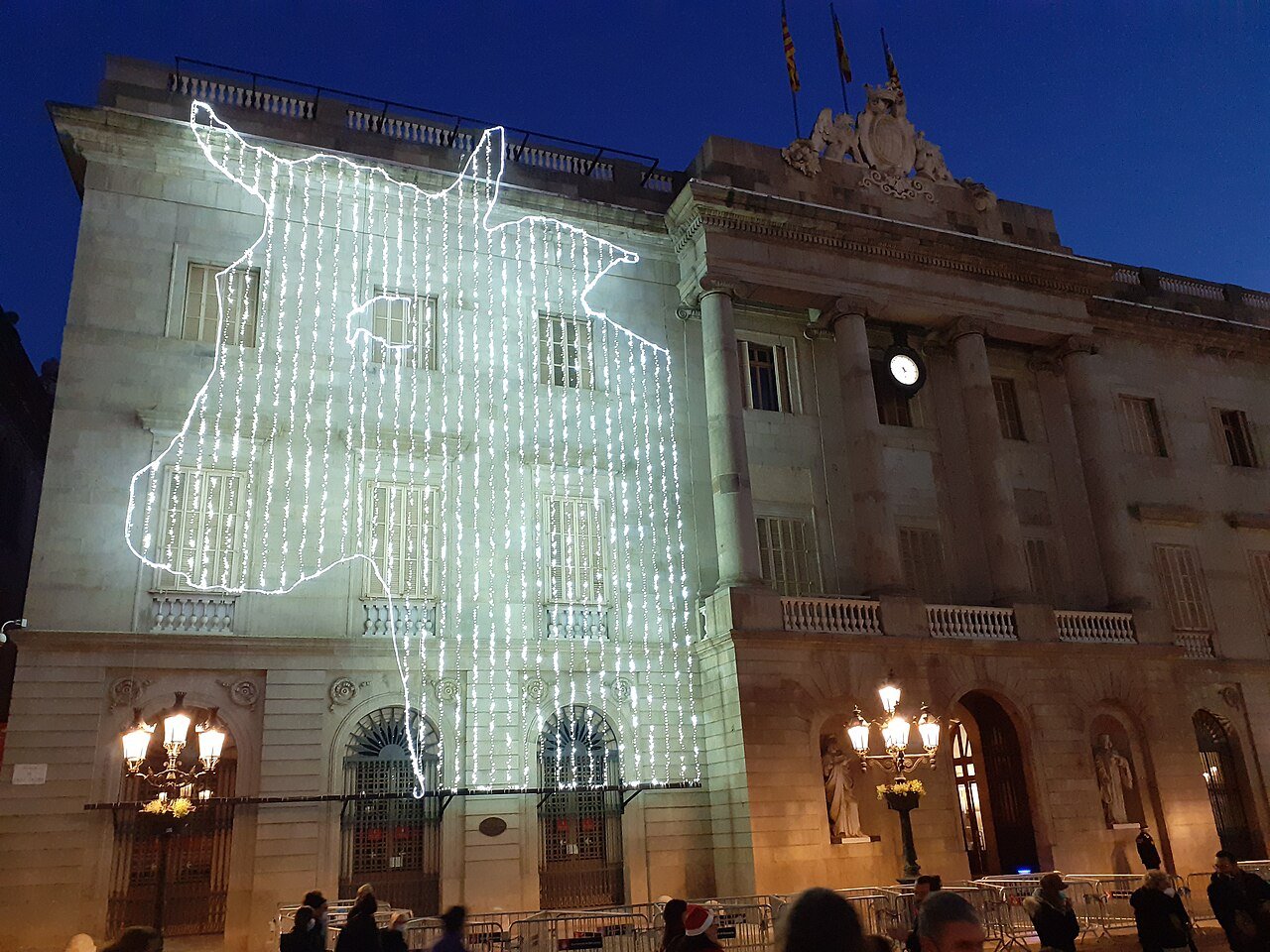
For decades the square between the City Hall and the Palau de la Generalitat hosted a big traditional pessebre (the Catalan word for the nativity scene). In recent years the open square’s centrepiece has become a contemporary light installation instead — in 2025 it was a giant illuminated 20-pointed star standing over the square, with a light show in the early evening — while the traditional nativity moved indoors, into the City Hall’s carriage courtyard (the Cotxeres de l’Ajuntament), where it is free to visit. The 2026 arrangement had not been published when this guide was prepared, so expect the same pattern — a modern installation on the square, a classic pessebre under cover nearby — and confirm the details in the municipal Christmas programme.
The nativity stops worth your time:
- The City Hall courtyard pessebre — the classic scene, built fresh each year by the Associació de Pessebristes de Barcelona, the city’s nativity-builders’ association, founded in the 19th century. Listed hours in recent years have been 11:00–19:00 on weekdays and until 20:00 on Saturdays, Sundays and holidays, with free entry.
- The pessebristes’ own exhibition — the association also mounts a display of hand-built dioramas near the Cathedral, tiny landscapes with plaster villages, working lights and running water. This is nativity-building as a serious art form, and it is the version locals queue for.
- The Cathedral cloister — a smaller, quieter nativity among the cloister’s famous geese, free with your visit to the old town’s Christmas heart.
- The fair stalls themselves — the Fira de Santa Llúcia outside the Cathedral (§3) is where Barcelona buys its figures, moss, cork bark and miniature houses; half the fun is watching families debate a new shepherd for the scene at home.
One figure gets a section of his own in §4 — the little man hiding in every Catalan nativity. First, the fairs.
Make an evening of the trail: the Sant Jaume installation and the courtyard pessebre sit a two-minute walk from the Cathedral, the pessebristes’ dioramas and the Santa Llúcia fair, so the whole nativity story fits inside one old-town stroll after the lights come on. It is also the most local hour you can spend in December Barcelona — these are displays families visit every single year, pointing out what has changed since the last one.
3. The Christmas Fairs in Brief
Barcelona’s Christmas fairs deserve — and on this site, have — guides of their own, so this is the short version. There are four:
- Fira de Santa Llúcia, on the avenue in front of the Cathedral, is the city’s Christmas fair since 1786: around 200 stalls (215 in 2025) selling nativity figures, greenery, handmade gifts and decorations. The organiser had not published its 2026 dates when this guide was prepared; recent editions have opened in the last days of November and closed on 23 December, and listings expect the same pattern in 2026 (from around 27–28 November). On December weekends a giant Caga Tió (§4) stands by the fair for children under 12 to feed and beat.
- Fira de Nadal de la Sagrada Família, in the streets around Gaudí’s basilica, is the neighbourhood fair: smaller, local, good for gifts and churros with a view of the Nativity façade.
- Nadal al Port, the Port Vell harbour fair (listed for 2026 from 27 November to 6 January), is the funfair end of the season: a big wheel, an ice rink, a floating illuminated nativity on the water and food stalls by the Columbus monument.
- Fira de Reis, the Three Kings fair along Gran Via, opens in mid-December and trades right through to 6 January — this is the toy fair, where Barcelona does its real gift shopping, because in Catalonia the Kings, not Christmas Day, bring the presents.
For stall-by-stall coverage, dates as they are confirmed and what to buy at each, read our guide to the Barcelona Christmas markets; for how Barcelona’s fairs compare with Madrid’s, Seville’s and the rest, see our round-up of Christmas markets in Spain.
Two practical notes. Santa Llúcia is a serious shopping fair, not a food market — come for figures, wreaths, mistletoe and crafts, and eat elsewhere (the Sagrada Família fair and the Port cover the churros-and-chocolate end of things). And the Reyes fair matters more than it looks: because the Kings bring the presents, Gran Via’s toy stalls in the first days of January are Barcelona’s real Christmas-shopping front line, open late and packed after dark.
4. Catalan Christmas Traditions in the City
Spain’s Christmas is long; Catalonia’s is also gloriously odd. Four traditions run the city’s December, and you will bump into all of them:
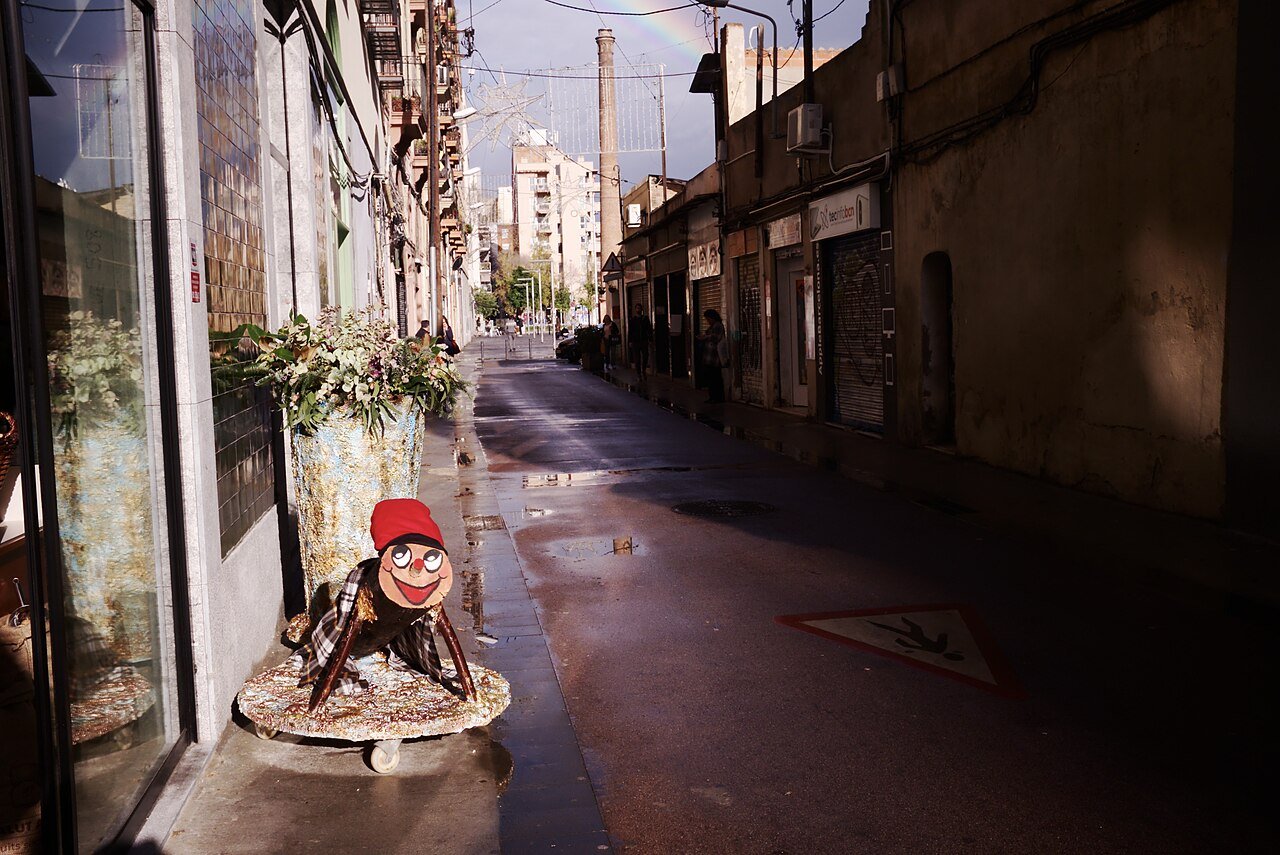
The Caga Tió. The Tió de Nadal is a log with a painted smiling face and a red barretina hat, kept on a blanket from 8 December and “fed” tangerines and scraps each night. On Christmas Eve or Christmas Day the children beat it with sticks, singing for it to caga — poop — sweets and small presents out from under the blanket. Giant tiós appear across the city in December, including the one by the Santa Llúcia fair where children under 12 can take a turn with the stick.
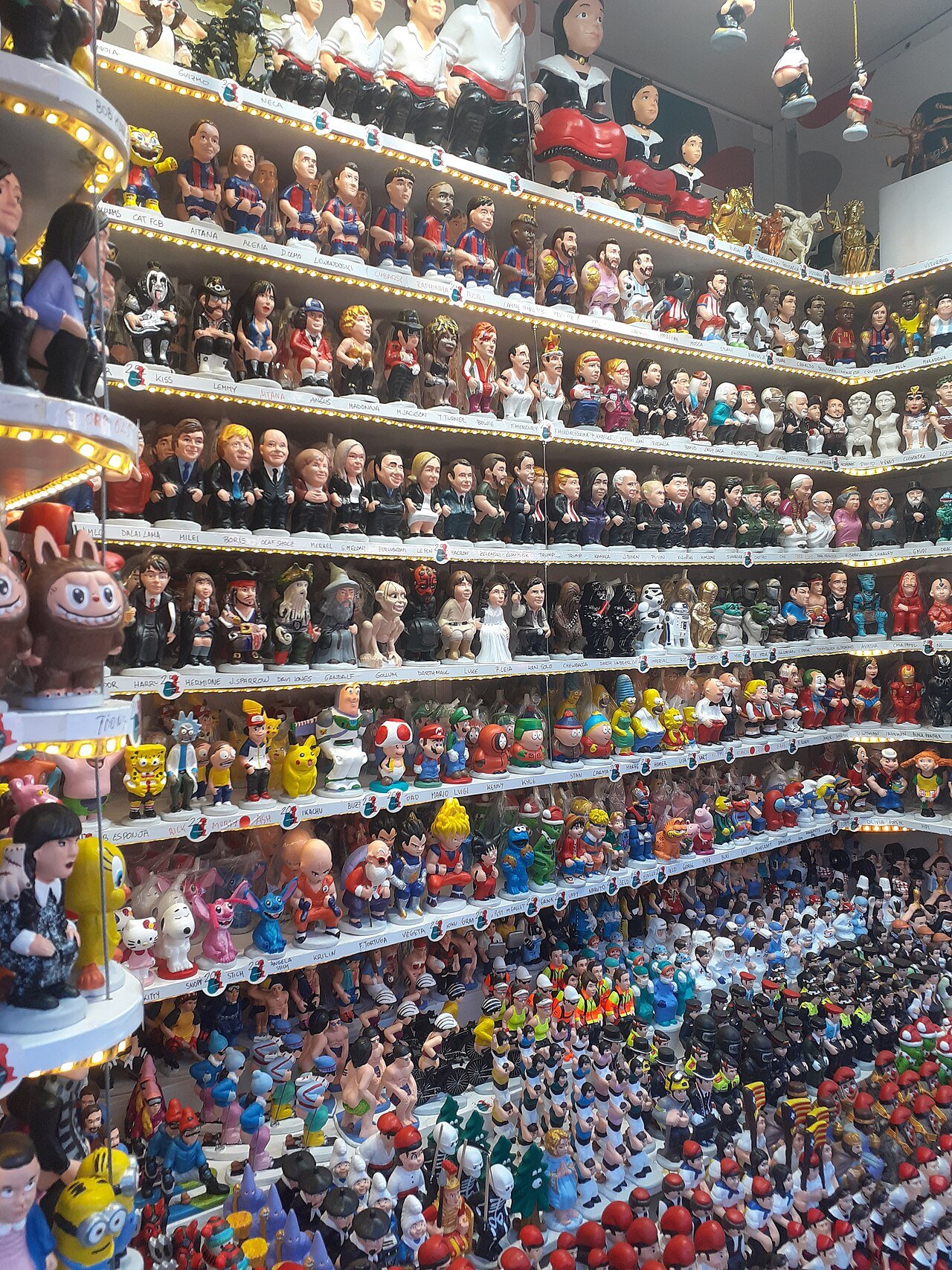
The caganer. Every Catalan nativity hides a caganer: a little figure squatting with his trousers down, doing his business behind a tree. He has been there since the 18th century — tradition says he fertilises the earth and brings luck — and the fair stalls now sell caganers of footballers, politicians and film characters by the hundred (see the photograph in §3). Finding him is the game children play at every pessebre in §2.
El Gordo. On the morning of Tuesday 22 December 2026 the whole country stops for the Christmas lottery draw, televised for hours as schoolchildren sing out the numbers. Barcelona queues at its famous lottery shops for weeks beforehand; buy a décimo (a tenth-share ticket) at an official outlet if you want in.
The calendar of saints. The season is punctuated by days that matter here: 8 December (the Immaculada) opens the tió’s feeding season; 26 December is Sant Esteve (St Stephen’s Day), a Catalan public holiday that gets its own concert (§5) and its own dish (§7); and the season does not end at New Year — it ends on 6 January with the Kings (§8).
Els Pastorets. Through December and into January, theatres across the city stage Els Pastorets, the Catalan shepherds’ play — the Nativity retold as a folk comedy with angels, demons and a good deal of slapstick, performed by neighbourhood companies as it has been for generations. It is in Catalan and it does not matter: follow the shepherds, boo the devils, and you will understand everything that counts. For visitors it is the single most local ticket of the season.
And one thing you will not see: Father Christmas. Papá Noel has gained ground, but in most Catalan homes he remains a supporting act — the tió handles Christmas, and the Kings handle the serious presents.
The full stories — the shepherd play Els Pastorets, the midnight Cant de la Sibil·la, the 12 grapes and the rest — live in our guide to Christmas traditions in Spain.
5. Christmas Concerts and Big Festive Nights
If you book one ticketed thing in Barcelona this Christmas, make it a concert. The city’s festive music calendar is anchored by two great modernista halls and one spectacular light show:
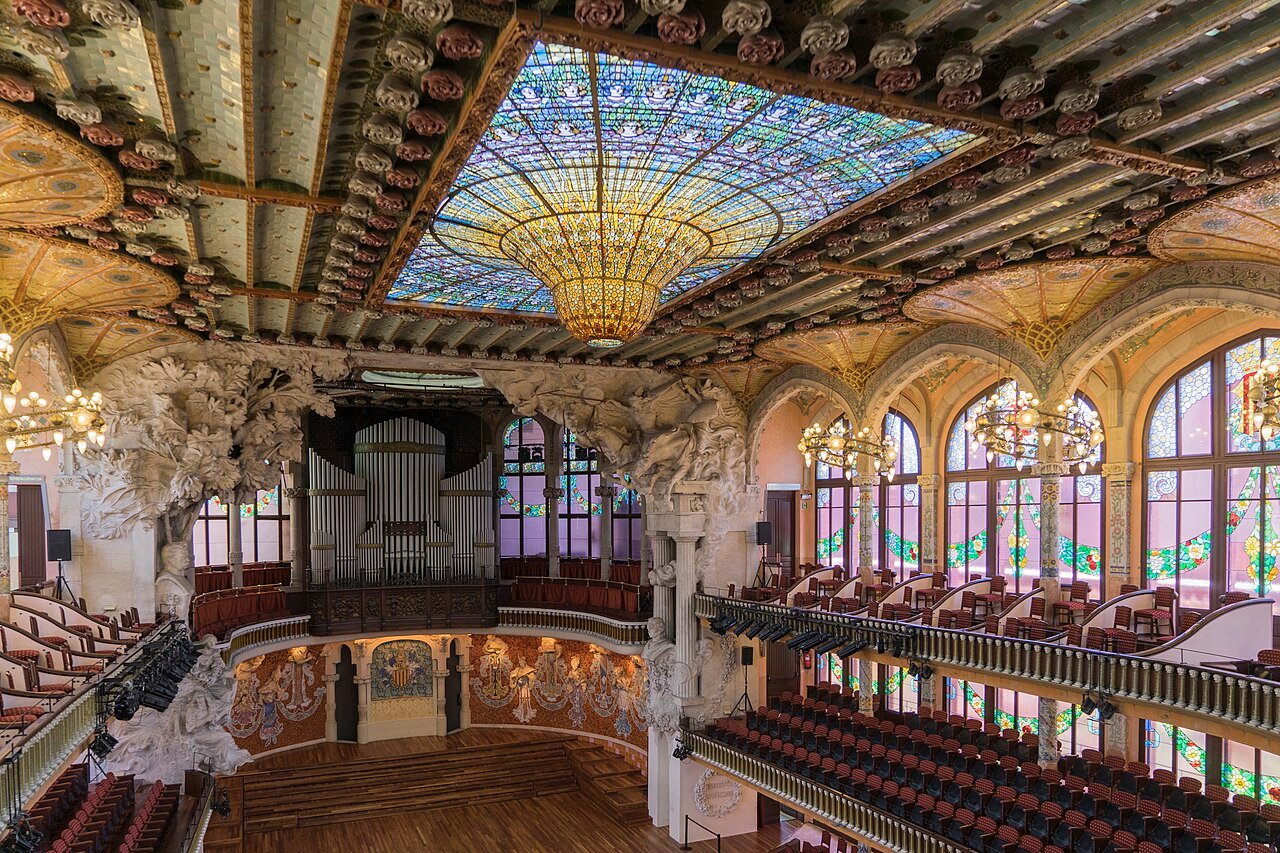
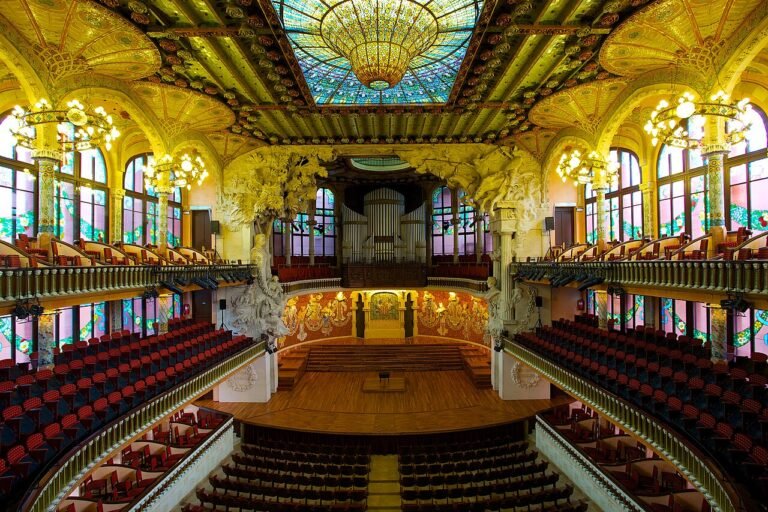
Concert de Sant Esteve, Palau de la Música Catalana — Saturday 26 December 2026, 19:00. The Orfeó Català’s St Stephen’s Day concert has been the sound of the Catalan Christmas since 1913, and the 2026 edition is confirmed: the full choir family — the Orfeó Català itself, the Palau Chamber Choir and the children’s and youth choirs — singing carols and Catalan Christmas music under the Palau’s stained-glass skylight, with tickets from €28 to €78. It sells out; book as soon as you know your dates. To see the hall by day as well, the Palau de la Música Entry Ticket is the official ticket — rated 4.6/5 across 6,290 reviews, from $22.26, skipping the ticket line, with free cancellation up to 24 hours in advance and an optional audio guide. The Palau is also newsworthy this season: its new Nova Porta entrance on Via Laietana opened in October 2026, and an immersive room is due to open inside it in December.
The Liceu’s December. The opera house on La Rambla gives Christmas over to ballet and opera in 2026: The Nutcracker, danced by the Badisches Staatstheater Karlsruhe company, runs 8–12 December, and Puccini’s La bohème opens on 30 December — a New Year’s Eve trip to the Liceu is a very Barcelona way to end the year. A family A Christmas Carol, with orchestra, children’s choir and live sand art, also appears in the season’s listings.
Els Llums de Sant Pau — 19 November 2026 to 10 January 2027. The Recinte Modernista de Sant Pau, Domènech i Montaner’s hospital pavilions a short walk from the Sagrada Família, becomes a walk-through world of light each evening (18:00–23:00). The 2026 edition is confirmed and themed on The Little Prince, with a 19-stop illuminated route, projections and live actors; it closes on 24 and 31 December and 5 January, and tickets start from €10 on the cheapest “Prince Days”, with standard adult entry at €17.90. Book ahead — weekend slots disappear.
Two more festive nights, both free: the Missa del Gall (Midnight Mass) on 24 December at the Cathedral and Santa Maria del Mar, where the medieval Cant de la Sibil·la — the Song of the Sibyl, sung by a single voice with a sword — survives as it has for centuries; and the Copa Nadal, the Christmas Day harbour swim, when hundreds of swimmers race 200 metres across the Port Vell in front of the Columbus monument, as they have every 25 December since 1907.
Not everything festive needs a ticket. In recent years Plaça de Catalunya has hosted a free city Christmas festival in the days either side of Christmas Day itself — street theatre, circus, dance and music on an outdoor stage in the middle of the lights — and the city’s markets and shopping streets get their own free concert programmes (the Sons de Ciutat cycle) through December. Both are announced in the municipal Christmas programme each autumn; on the ground, you will simply walk into them.
6. Gaudí in December
The big sights do not close for Christmas — they get better. December brings the year’s clearest light, the smallest queues of any holiday month, and one effect you cannot see in summer: inside the Sagrada Família, the low winter sun fires the stained glass for longer, and the basilica’s forest of columns glows red and gold through the middle of the day.
Sagrada Família. Book a timed slot well ahead even in December — weekends and the 26 December–1 January week sell out. The official Sagrada Familia Entry Ticket with Audio Guide is rated 4.6/5 across 121,664 reviews, costs from $37.70, includes the downloadable audio guide in 16 languages, offers tower access as an optional extra, and comes with free cancellation up to two days in advance. Plan around the feast days: the basilica has opened for the morning only (9:00–14:00) on 25 and 26 December in recent years, so check the official site when booking for 2026.
Casa Batlló. The house on Passeig de Gràcia opens every day of the year, Christmas Day included, and December is when to go at night: through the season it runs A Winter Night, an evening visit with a storytelling audio guide, special lighting and projections, and the façade itself is lit for Christmas. Note that its tickets are sold as non-refundable, so be sure of your evening before you book.
Park Güell and La Pedrera. The park’s monumental zone keeps its usual timed-entry rhythm in December and is at its best on a cold, clear morning — arrive for the first slots. La Pedrera (Casa Milà), a two-minute walk from Casa Batlló, closes on 25 December but opens on New Year’s Day, and runs its rooftop night experience on most December evenings (not 24, 25 or 31 December).
Casa Vicens and Sant Pau. Gaudí’s first house, in Gràcia, decorates for the season and pairs naturally with an evening at Els Llums de Sant Pau (§5), fifteen minutes away by metro — modernista Barcelona gives you a full Christmas day without trying.
Sequence it like this and December sightseeing almost plans itself: Sagrada Família in the late-morning light, the Sant Pau pavilions and their light show after dark, Casa Batlló on a Winter Night slot, Park Güell first thing on your clearest morning, and the Passeig de Gràcia houses on the same evening you walk the lights (§1). None of it needs summer’s queueing stamina — just book the timed entries before you fly.

7. The Festive Table, Barcelona Style
Catalan Christmas is eaten in courses, on specific days, in a specific order:
- 24 December, la Nit de Nadal — Christmas Eve dinner at home for most families; restaurants that open run set menus, and you must book.
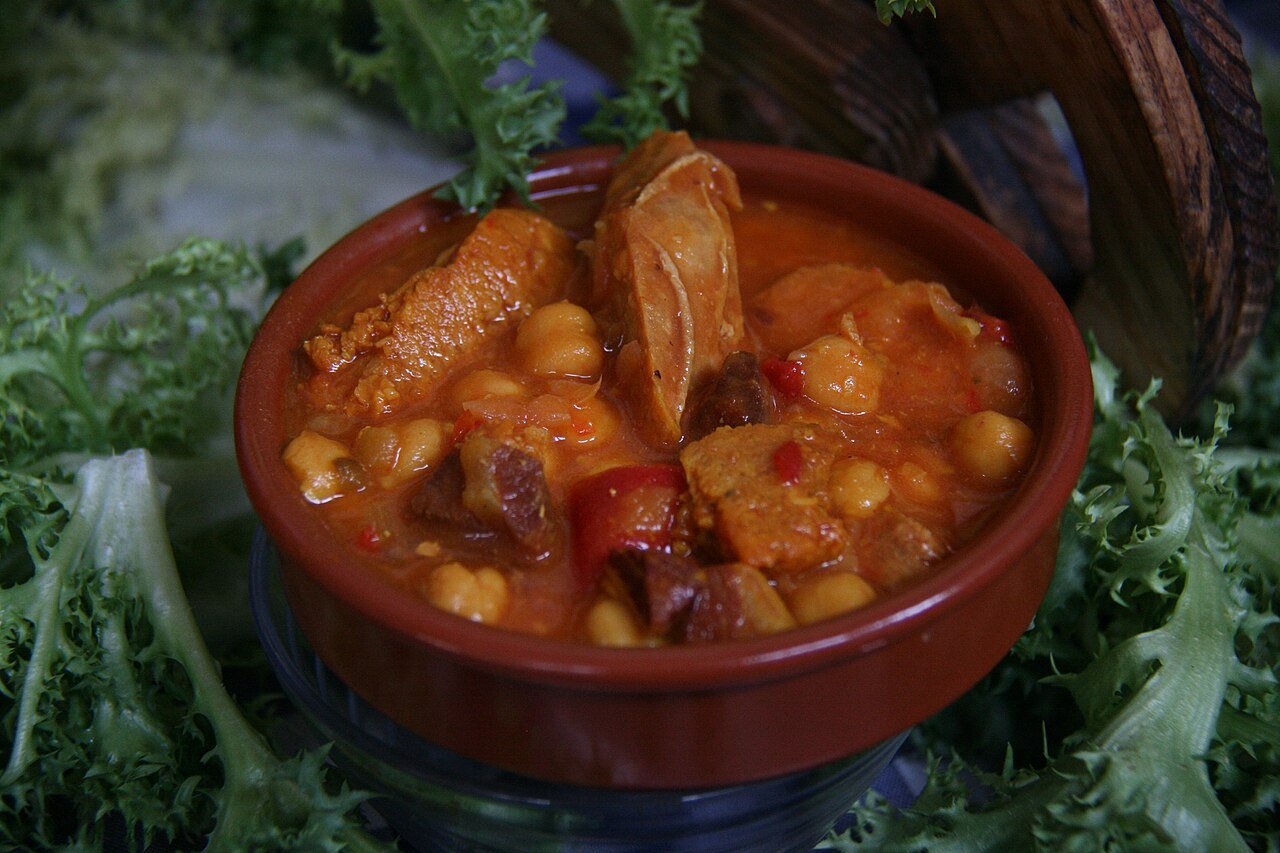
- 25 December, Nadal — the big one. Lunch starts with escudella, the great Catalan broth served in two acts: first the soup itself, with galets (the giant pasta shells — the same galets the city hangs in lights over its markets, §1), then the carn d’olla, the meats and vegetables cooked in the broth, brought to the table as the main course. Cava flows; turrón (the almond nougat, hard from Alicante or soft from Jijona) and neules, crisp rolled wafers, close the meal.
- 26 December, Sant Esteve — canelons: wide pasta tubes filled with the finely chopped leftover meats of the day before, under béchamel and grated cheese. Every Catalan grandmother’s version is definitive; every good traditional restaurant in the city serves them on the 26th.
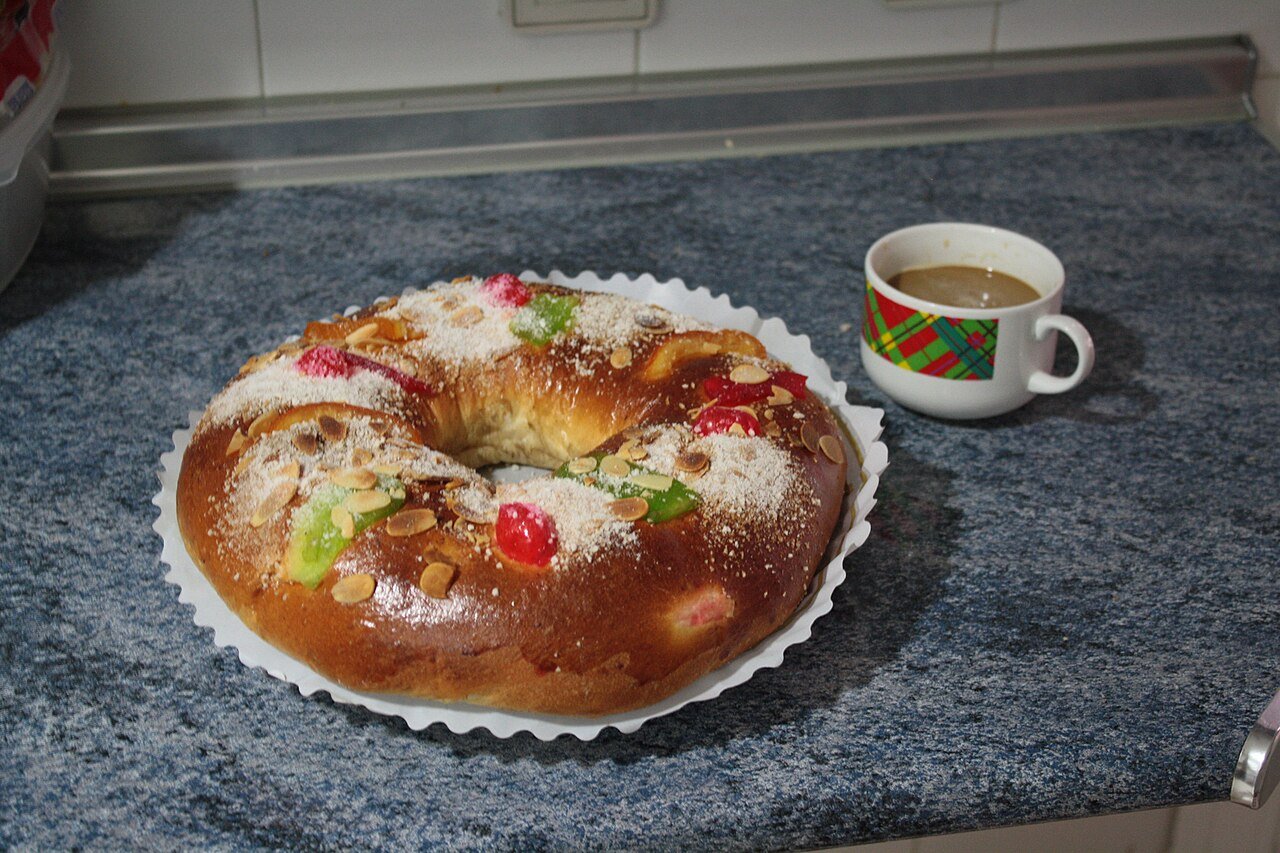
- 1 January — a quieter repeat performance, and 6 January ends the season with the roscón de Reyes (§9).
Where to eat it: the old town and Eixample fill with Christmas menus through December, and the municipal markets — the Boqueria above all, but also Sant Antoni and Santa Caterina — are where the city buys its escudella ingredients, turrón and neules in the days before the 25th; go on a weekday morning to shop like a local rather than fight the Saturday crowds. For turrón to take home, join the December queue at Planelles Donat on Portal de l’Àngel, the city’s beloved turrón shop since 1850, or at any Torrons Vicens — buy the hard Alicante and the soft Jijona, and a box of neules to eat on the plane. Note that 25 December itself is a family day: many restaurants close, and those that open book out — reserve your Christmas lunch as early as you reserve your concerts. The dishes, drinks and sweets in full — marzipan, polvorones, the works — are in our guide to Christmas food in Spain.
8. New Year’s Eve and the Road to Kings’ Day
Barcelona’s festive season does not peak on 25 December — it peaks twice more.
New Year’s Eve (Thursday 31 December 2026). Spain eats twelve grapes at midnight, one on each stroke of the clock, for luck. Most Barcelonans do it at home or at a party in front of the television — the city’s own countdown is broadcast live — with the grapes sold in little tins and cups in every supermarket from mid-December, cava at the ready and a party (a cotilló, with hats, streamers and dancing until dawn) afterwards. Barcelona’s official celebration has for years centred on the Magic Fountain and Avinguda Reina Maria Cristina, with music, fireworks and drones — but for 2026 local reports say the show moves to the Anella Olímpica, the Olympic ring on Montjuïc, because of renovation works around the Fira de Barcelona halls. The council publishes the final programme in December; check it before choosing your spot, arrive early wherever it lands, and note the metro runs all night (§10). If you prefer skates to crowds, the ice rink at Nadal al Port keeps the harbour lively into the evening.
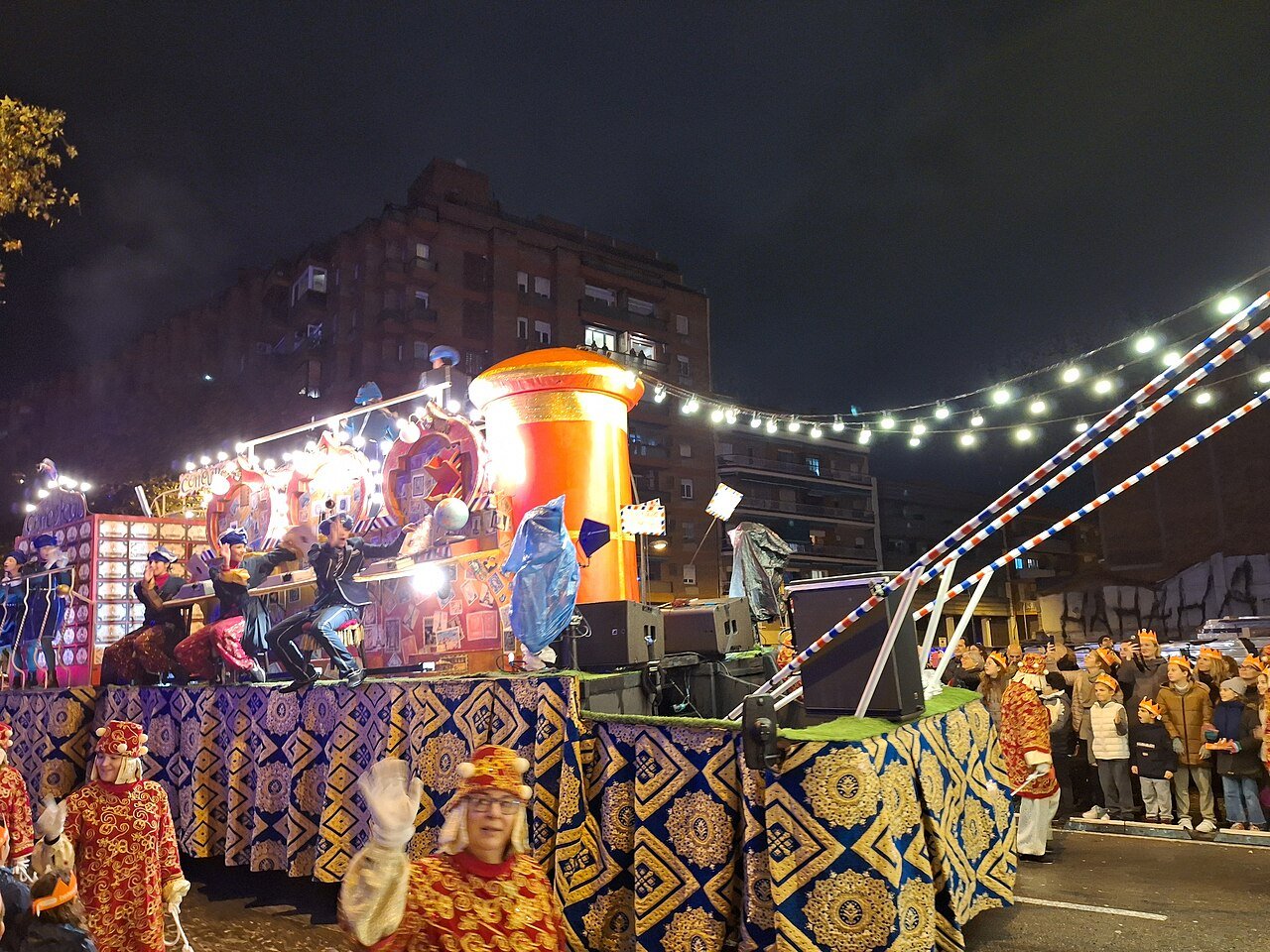
Kings’ Day — the real finale. In Catalonia the presents arrive with the Three Kings, and so does the city’s biggest parade. On the afternoon of 5 January 2027 Melchior, Gaspar and Balthazar sail into the Port Vell and land at the Portal de la Pau, at the foot of La Rambla; the Cavalcada de Reis then processes through the centre from 18:00 — floats, bands, pages throwing sweets, and a float carrying the royal postbox for last-minute letters. Children leave out shoes, water for the camels and something for the Kings; the morning of 6 January (a public holiday) brings the presents and the roscón, and the season closes with the lights going out that night.
If your trip can stretch to the 6th, stretch it. Barcelona between 31 December and 6 January is the city at its most itself.
9. Barcelona Christmas 2026 at a Glance
Everything in this guide, on one calendar. Read it by the shape of the season: the light installations open first and run longest; the fairs cluster between late November and 23 December, except the harbour and the Kings’ fair; the concerts bunch around Sant Esteve and New Year; and the two dates that change how the whole city behaves are 25 December, when Barcelona goes home to lunch, and 5–6 January, when it comes back out for the Kings. Dates marked “expected” follow the pattern of recent years and are confirmed by their organisers each autumn.
| Date (2026–27) | What is on |
|---|---|
| Thu 19 Nov 2026 | Els Llums de Sant Pau opens at the Recinte Modernista (runs to 10 Jan 2027) |
| Sat 21 Nov 2026 | Christmas lights season begins (city lighting calendar; switch-on show on Passeig de Gràcia — details confirmed nearer the time) |
| Late Nov 2026 (expected) | Fira de Santa Llúcia opens in front of the Cathedral (organiser’s dates pending; recent editions ran to 23 Dec) |
| Fri 27 Nov 2026 | Nadal al Port harbour fair opens (listed to 6 Jan 2027) |
| Tue 8 Dec 2026 | Immaculada (public holiday) — the Caga Tió’s feeding season starts |
| 8–12 Dec 2026 | The Nutcracker at the Liceu |
| Mid-Dec 2026 | Fira de Reis toy fair opens on Gran Via (to 6 Jan) |
| Tue 22 Dec 2026 | El Gordo Christmas lottery draw |
| Thu 24 Dec 2026 | Christmas Eve — Missa del Gall and the Cant de la Sibil·la at midnight |
| Fri 25 Dec 2026 | Christmas Day (public holiday) — escudella, Copa Nadal harbour swim; most museums closed |
| Sat 26 Dec 2026 | Sant Esteve (public holiday) — Concert de Sant Esteve at the Palau de la Música, 19:00; canelons everywhere |
| Wed 30 Dec 2026 | La bohème opens at the Liceu |
| Thu 31 Dec 2026 | New Year’s Eve — 12 grapes at midnight; official show reported to move to the Anella Olímpica |
| Fri 1 Jan 2027 | New Year’s Day (public holiday) |
| Tue 5 Jan 2027 | Cavalcada de Reis — the Kings land at Port Vell; parade from 18:00 |
| Wed 6 Jan 2027 | Kings’ Day (public holiday) — roscón de Reyes; the lights go out |
10. Practical Notes: Weather, Closures and Getting Around
Weather. December in Barcelona is mild and bright by northern-European standards: daytime highs around 14°C, nights around 8°C, and more dry days than wet ones. It is dark by about 17:30 in mid-December — which is precisely why the lights come on at 17:30. Bring a proper coat for evenings (the sea wind is real), layers for the sunny middays, and shoes you can walk a city in; you will not need snow gear. For the full seasonal picture — January sales, February’s Santa Eulàlia festival and Carnival — see our guide to Barcelona in winter.
What is open on 25 and 26 December, and 1 January. Set expectations by the Catalan holiday calendar: 8, 25 and 26 December and 1 and 6 January are public holidays, while Sunday 6 December is not moved to the Monday in Catalonia, so Monday 7 December is a normal working day with shops open. On 25 December most museums and sights close — the Picasso Museum among them — while the Sagrada Família has opened for the morning only (9:00–14:00) on 25 and 26 December in recent years, Casa Batlló opens every day of the year, and Park Güell keeps its timed entry running. Shops shut on the holidays themselves but trade normally — and late — on the days around them; the fairs close on their own schedules (§3). Restaurants are the tightest squeeze: book 24, 25 and 31 December meals well ahead.
Getting around. The centre is walkable end to end — Passeig de Gràcia to the Cathedral is fifteen minutes — and the metro covers everything else, including Sant Pau and the Sagrada Família. Two seasonal quirks from recent years: on 24 December the metro winds down early, with last trains around 23:00, and on 31 December it runs continuously all night; check TMB’s Christmas service page for the confirmed 2026 pattern. Taxis and ride-hailing surge after the big events (the switch-on, Sant Esteve, midnight on the 31st) — the metro is the better bet on all three nights.
Where to stay. Base yourself where the season happens. The Eixample, around Passeig de Gràcia, puts you on the switch-on street itself, between the two Gaudí houses and ten minutes from everything in this guide; the old town (the Gothic Quarter and El Born) trades grand avenues for atmosphere, with the Cathedral, the fair and the nativity trail on your doorstep. Either way you are inside the lights, and December rates — outside the 24 December to 1 January spike — are among the friendliest of the year.
Booking order. If you take one planning lesson from this guide: concerts first (Sant Esteve and the Liceu sell out), then the Sagrada Família and Els Llums de Sant Pau slots, then Christmas-week restaurants. The lights, the fairs and the nativities need no booking at all.

Travel insurance, sorted
Whether it is a two-week holiday or a longer move, travel insurance is not the most glamorous part of a trip – but it is the one booking you want to have in place before a trip, and while you are already away. Get a quote from SafetyWing
Christmas Markets in Spain: 10 Festive Fairs From Madrid to San Sebastián
11. Final Thoughts
Barcelona at Christmas rewards travellers who plan like locals: lights first, concerts booked early, Christmas lunch on the 25th, canelons on the 26th, and a trip long enough to end with the Kings on 6 January rather than the sales on the 27th. It is not the snow-globe Christmas of the north — it is better lit, better fed and entirely its own. Come for the switch-on if you can, stay for Sant Esteve, and let the season run to its real ending.
Frequently Asked Questions
When are the Christmas lights switched on in Barcelona in 2026?
The city’s official 2026 lighting calendar starts the season on Saturday 21 November 2026, with the first night’s lights running from 18:30 and the switch-on show held on Passeig de Gràcia — the council confirms the show’s exact details nearer the date. The lights then burn every evening from 17:30 until 6 January 2027, until about 22:00–23:00 on most nights and midnight on 24 and 25 December.
What is open in Barcelona on Christmas Day?
Less than on any other day of the season — and that is the point of the day. Most museums close on 25 December, including the Picasso Museum; the Sagrada Família has opened for the morning only (9:00–14:00) on 25 and 26 December in recent years; Casa Batlló opens every day of the year and Park Güell runs its usual timed entry. Many restaurants close or serve booked-out Christmas menus, so reserve lunch ahead — or join the crowds watching the Copa Nadal harbour swim and stroll the lights instead.
Is Barcelona worth visiting at Christmas?
Yes — it is one of the best-value weeks of the year. You get the full festive programme (130 km of lights, the fairs, the Sant Esteve concert, the Kings’ parade) with mild 14°C days, low-season flight and hotel prices outside the 24 December–1 January peak, and smaller queues at the big sights than at any other holiday. The trade-off is the sea: beach weather it is not.
What do people eat in Barcelona at Christmas?
Christmas Day lunch is escudella — the great broth with galet pasta, followed by the carn d’olla meats cooked in it — with cava, turrón and neules to finish. On 26 December, Sant Esteve, the leftover meats return inside canelons under béchamel. The season ends on 6 January with the roscón de Reyes, the ring cake with a hidden bean and a tiny king.
When do the Three Kings arrive in Barcelona?
On 5 January. The Kings sail into the Port Vell in the afternoon and land at the Portal de la Pau, and the Cavalcada de Reis parade processes through the city centre from 18:00. Presents are opened on the morning of 6 January, a public holiday — in Catalonia the Kings, not Christmas Day, are the gift-givers, which is why the Fira de Reis toy fair trades right up to the 6th.
How cold is Barcelona at Christmas, and what should I pack?
Expect daytime highs around 14°C and nights around 8°C, with darkness falling by about 17:30 in mid-December. Pack a warm coat for the evenings, layers for sunny middays, and comfortable walking shoes — you will cover the centre on foot. Snow is a genuine rarity; rain, when it comes, usually passes in a day.



2 Comments