7 Days in Southern Spain: The Perfect One-Week Andalusia Itinerary
Seven days in southern Spain works best as one line west: two nights in Granada for the Alhambra, one night in Córdoba for the Mezquita, two nights in Seville, one night in Ronda above its gorge, and a last night in Málaga, where the airport is. Run in that order, every leg is short, no day is wasted backtracking, and each stop is different enough from the last that the week never blurs.
This itinerary gives you the day-by-day working: what to do morning, afternoon and evening, the one booking that matters each day, and how you actually get to the next stop. It assumes you want the icons done properly rather than quickly — the same places we shortlisted in our guide to the iconic places in southern Spain, sequenced into a week that a real person can enjoy.
In This Guide
- Day 1: Arrive in Granada — the Albaicín and the View
- Day 2: The Alhambra, Done Properly
- Day 3: Córdoba — the Mezquita and the Patios
- Day 4: Seville — Cathedral, Giralda and Alcázar
- Day 5: Seville at Walking Pace — Santa Cruz, Plaza de España and Triana
- Day 6: Ronda and the White Villages
- Day 7: Málaga — Alcazaba, Gibralfaro and the Flight Home
- Where to Base Yourself (and What Works as a Day Trip)
- What to Book First
- When to Go
- Getting Around: With a Car and Without One
Day 1: Arrive in Granada — the Albaicín and the View
Most people reach Granada through Málaga airport, about an hour and a half away by direct bus or one of the few direct trains — build that transfer into the day and treat anything you see before dinner as a bonus. Drop your bags, shake off the journey with a slow walk, and save your energy for the evening, because Granada’s first impression should be the Albaicín at golden hour.
Spend the late afternoon climbing into the Albaicín, the old Moorish quarter of white lanes, carmen garden walls and stepped alleys facing the Alhambra across the Darro valley. There is no route to follow and getting lost is the activity; just keep drifting uphill. Our things to do in Granada guide maps the quarter properly if you want a walking order for tomorrow’s leftovers.
Be at the Mirador de San Nicolás before sunset — the wall fills up, so arrive in good time — and watch the Alhambra turn terracotta against the Sierra Nevada. Then walk down through the lanes to Plaza Nueva for dinner. Granada still serves a free tapa with every drink in most traditional bars, which makes the first night’s bar crawl the cheapest research you will ever do.
The one booking that matters today: none. Sleep early instead — tomorrow starts at the palace gate.

Day 2: The Alhambra, Done Properly
This is the day the whole week is built around, and it starts with the detail that rules it: your Alhambra ticket is named, checked against your passport or ID, and carries a strict timed slot for the Nasrid Palaces that you cannot change on the day. The official General ticket costs €21 — €22.27 bought online — and you should already hold it before you arrive in Spain (see What to Book First, below).
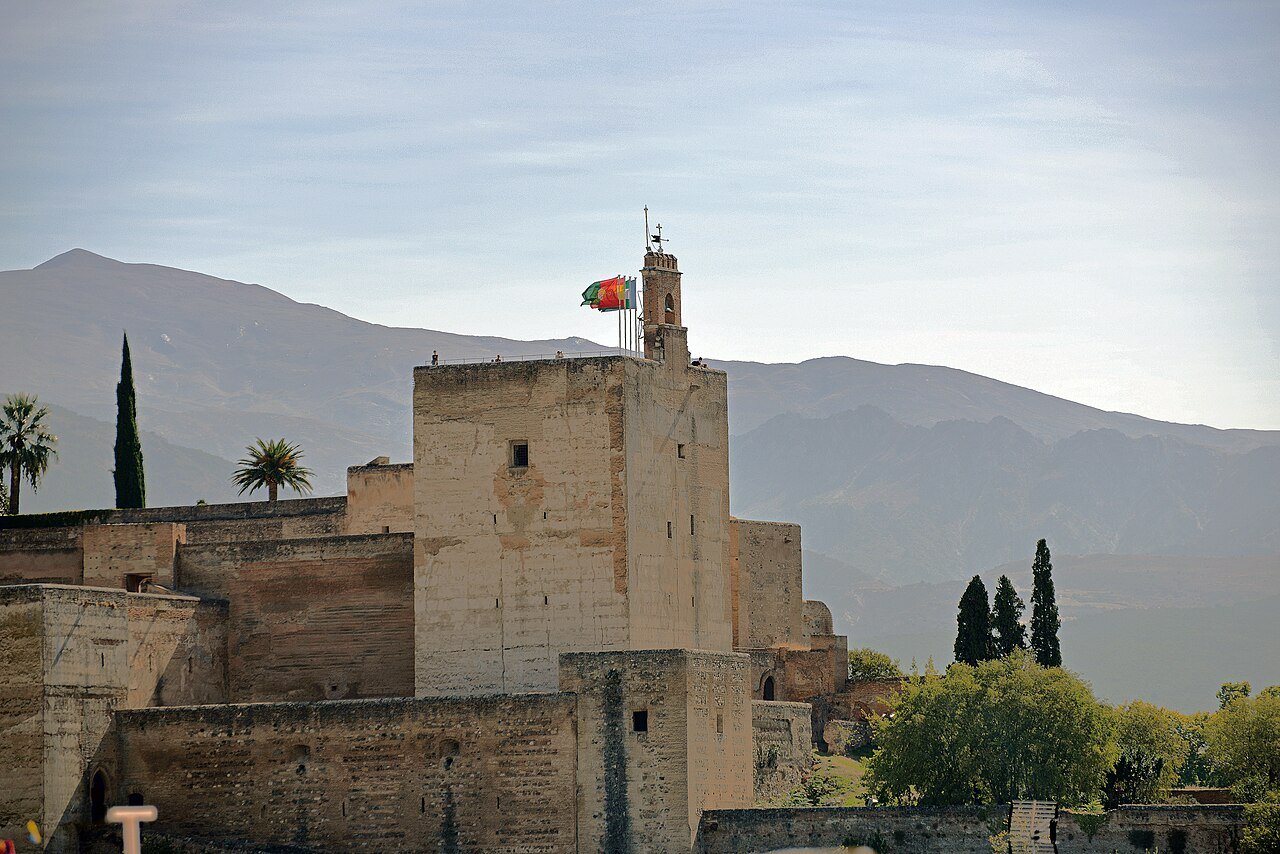
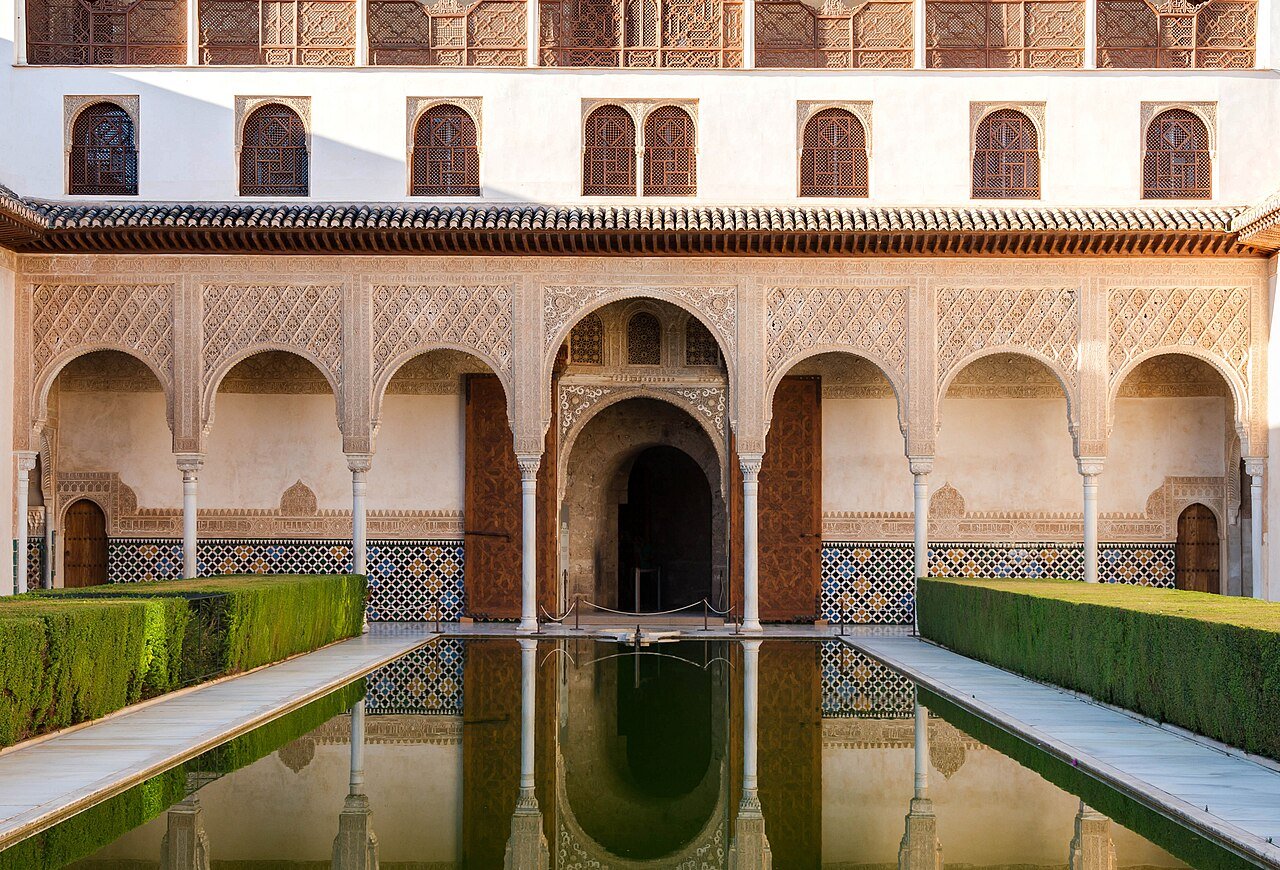
Give the complex the morning and do not rush it. Start with the Alcazaba fortress and the Torre de la Vela for the city views, keep your Nasrid Palaces slot sacred — the Court of the Lions and the carved stucco of the palaces are the single finest rooms in southern Spain — and finish across the ravine in the Generalife, where the gardens and water channels slow the day down. Three to four hours is honest timing; anyone who tells you two is skimming.
If official tickets sold out before you booked, a guided tour with tickets included is the standard fallback, and the combo format suits this itinerary well: the Granada: Combo Alhambra, Albaicín, and Sacromonte Tour is rated 4.7/5 from 48 reviews, runs from $70.56 per person, and pairs a three-hour morning tour of the full complex — Alcazaba, Nasrid Palaces and Generalife, tickets included — with a two-hour Albaicín and Sacromonte walk later in the day. Note its cancellation terms are tighter than most: you can cancel up to 24 hours in advance, but for a 50% refund, so be sure of your date before you book.

Spend the afternoon gently: the cathedral and Royal Chapel in the centre, where the Catholic Monarchs are buried, then the Alcaicería’s little bazaar lanes. In the evening, walk the Carrera del Darro along the river under the Alhambra’s walls — the prettiest street in the city after dark — and eat late, the Andalusian way.
Day 3: Córdoba — the Mezquita and the Patios
Leave Granada after breakfast for Córdoba, around two hours by direct train. The day’s shape is simple because one building dominates it, and it is like nothing else in Europe: the Mezquita-Catedral, a mosque with a forest of red-and-white double arches and a Renaissance cathedral rising out of its middle. The general ticket is now €15.
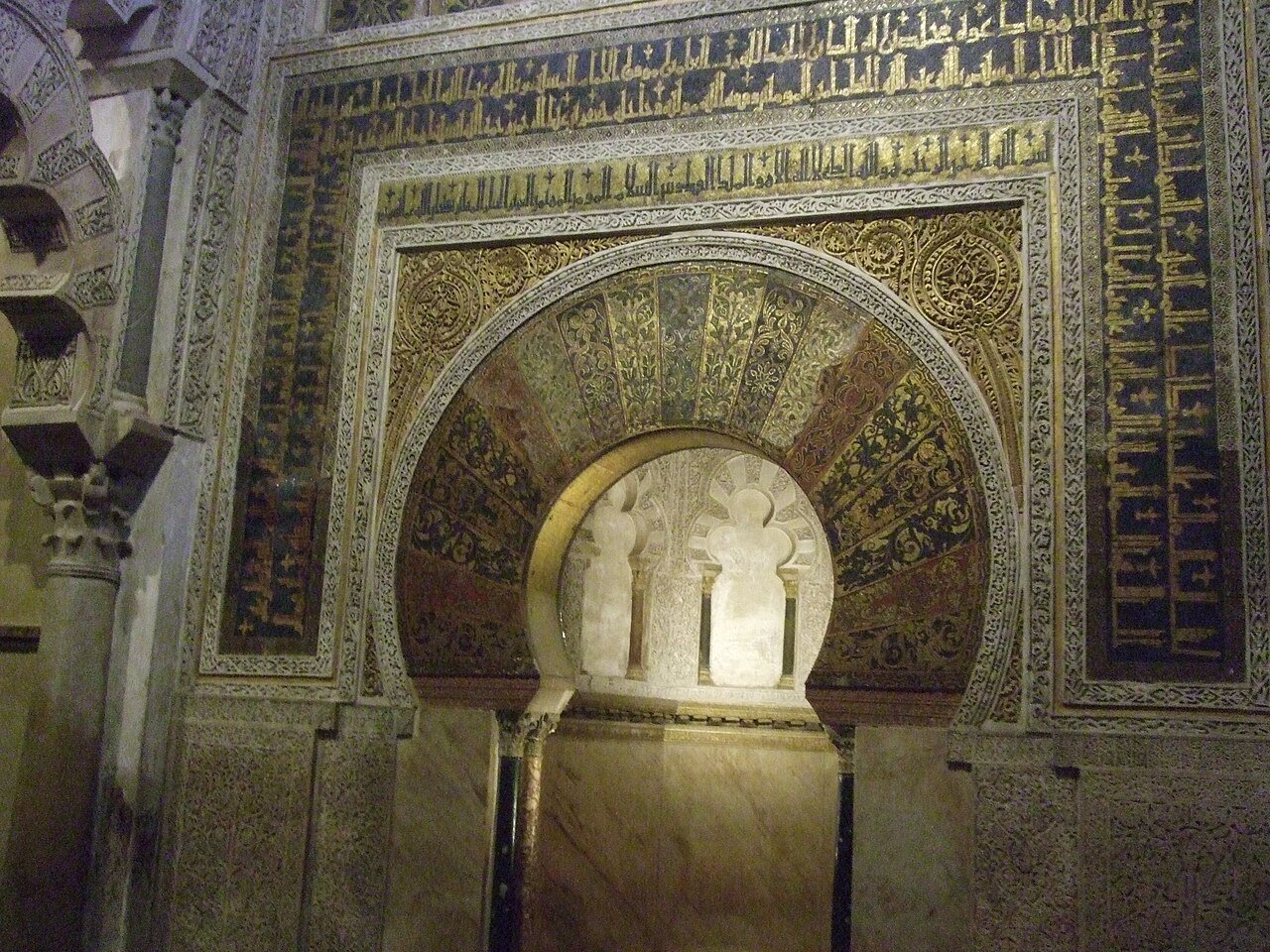
Go in the first hour of opening if you can, when the hall is emptiest and the low light catches the arches at their most theatrical. Walk the perimeter slowly to the mihrab, the gold-mosaic prayer niche at the far wall — it is the one thing not to miss inside — and then stand in the centre and let the scale of the place settle. A guide earns their fee here, because the building’s eight centuries of phases are invisible until someone points them out.

The afternoon belongs to the old town around the Mezquita: the Jewish Quarter’s lanes, the little synagogue, and Córdoba’s famous patios — flower-filled courtyards that residents open to the public each May for the Fiesta de los Patios, and which the Palacio de Viana strings together, twelve in one visit, all year round. Our things to do in Córdoba guide gives you the walking order.
End the day on the Roman bridge at sunset, looking back at the Mezquita across the Guadalquivir, then find a tavern in the old town for salmorejo and a glass of Montilla-Moriles, the local answer to sherry. One night in Córdoba is enough for the icons — but it is a night, not a day trip, and the evening is exactly why.
Day 4: Seville — Cathedral, Giralda and Alcázar
The morning train from Córdoba to Seville takes about 45 minutes on the fastest services — barely time to finish a coffee — which puts you in the capital of Andalucía by mid-morning. Check in, drop your bags, and spend the rest of the day on the pair of monuments that stand either side of the Plaza del Triunfo.
Seville Cathedral is the largest Gothic cathedral in the world, a stone mountain range raised on the site of the city’s great mosque, holding the tomb of Columbus and an altarpiece so large it takes a moment to focus on. Its bell tower, the Giralda, is the mosque’s old minaret, and you climb it the way the muezzin did — up a series of wide ramps rather than stairs — to a panorama of the whole city.
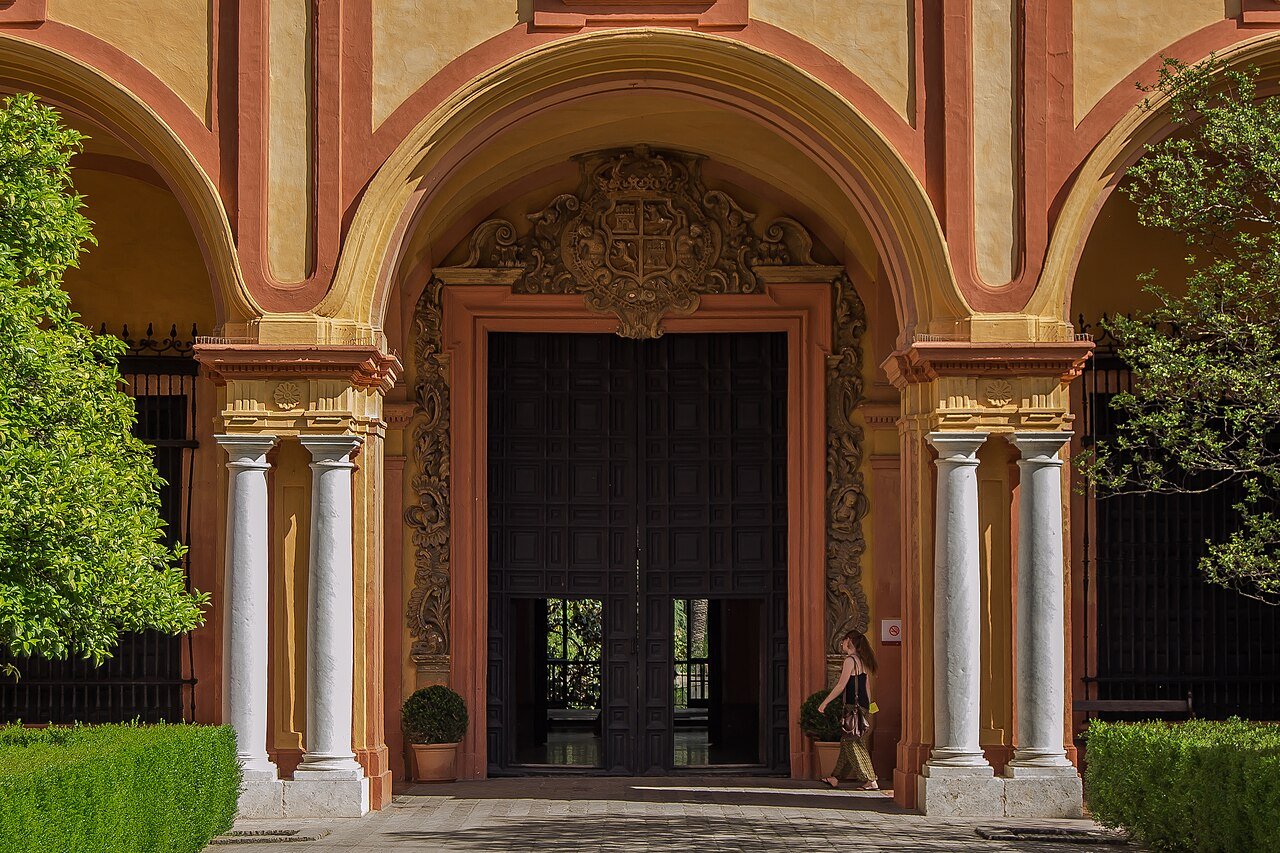
Opposite stands the Real Alcázar, Seville’s answer to the Alhambra: a royal palace still used by Spain’s royal family, all Mudéjar courtyards, tile and carved plaster, with acres of gardens behind it. Do the palace rooms before the middle of the day fills them, then give the gardens the slow hour most visitors skip.
Queues are the enemy of this day, and the efficient fix is one guided tour covering all three sights with priority access: the Seville: Priority Access Cathedral, Giralda & Alcázar Tour is rated 4.8/5 from 13,983 reviews, runs from $59.69 per person for a 2.5–3-hour visit, and puts a licensed guide’s storytelling across the cathedral, the tower climb and the Alcázar in a single morning. Book it for your first Seville morning and the rest of the city is yours.
This evening, walk it off: from the cathedral quarter down to the river, across to Triana for tapas on Calle Betis as the lights come on, and home over the bridge with the Torre del Oro lit up on the water.
Day 5: Seville at Walking Pace — Santa Cruz, Plaza de España and Triana
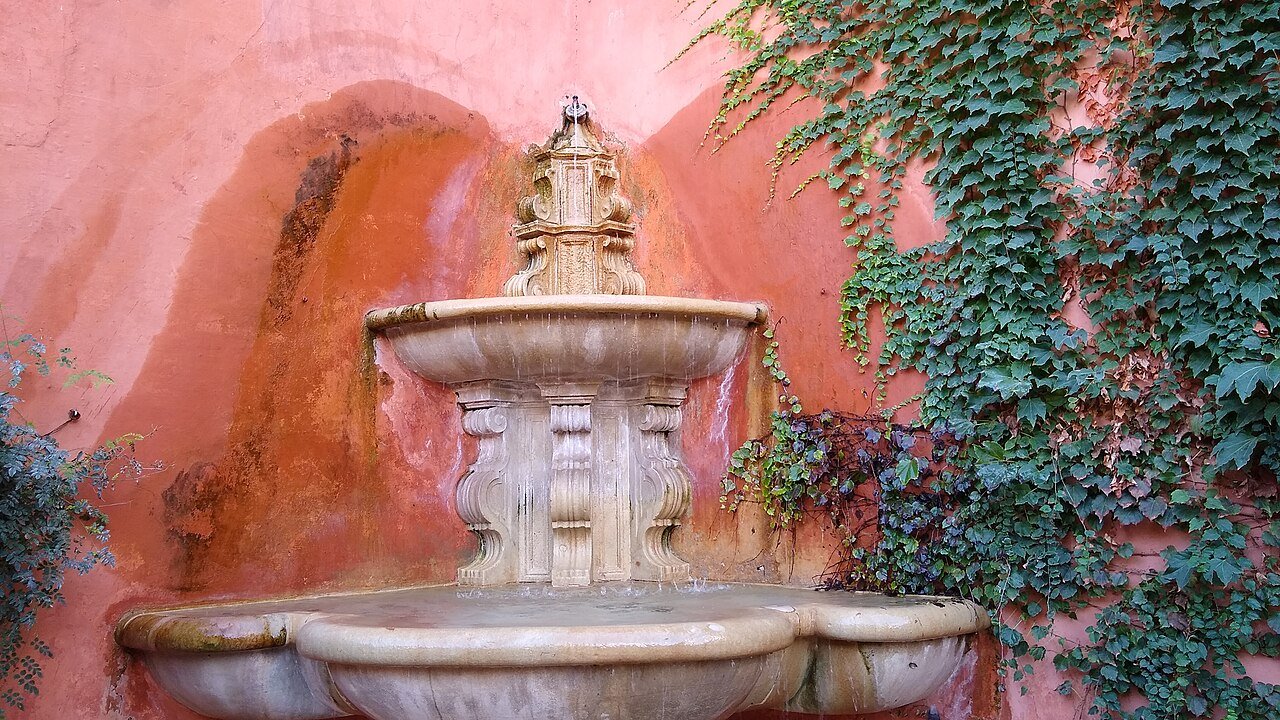
After yesterday’s monuments, today is deliberately unstructured — this is the day that stops the week feeling like a checklist. Start in the Barrio de Santa Cruz, the old Jewish quarter beside the Alcázar: a knot of lanes too narrow for cars, little plazas with orange trees, and details like the wall fountain on Plaza de Santa Cruz, made for lingering rather than photographing and rushing on.
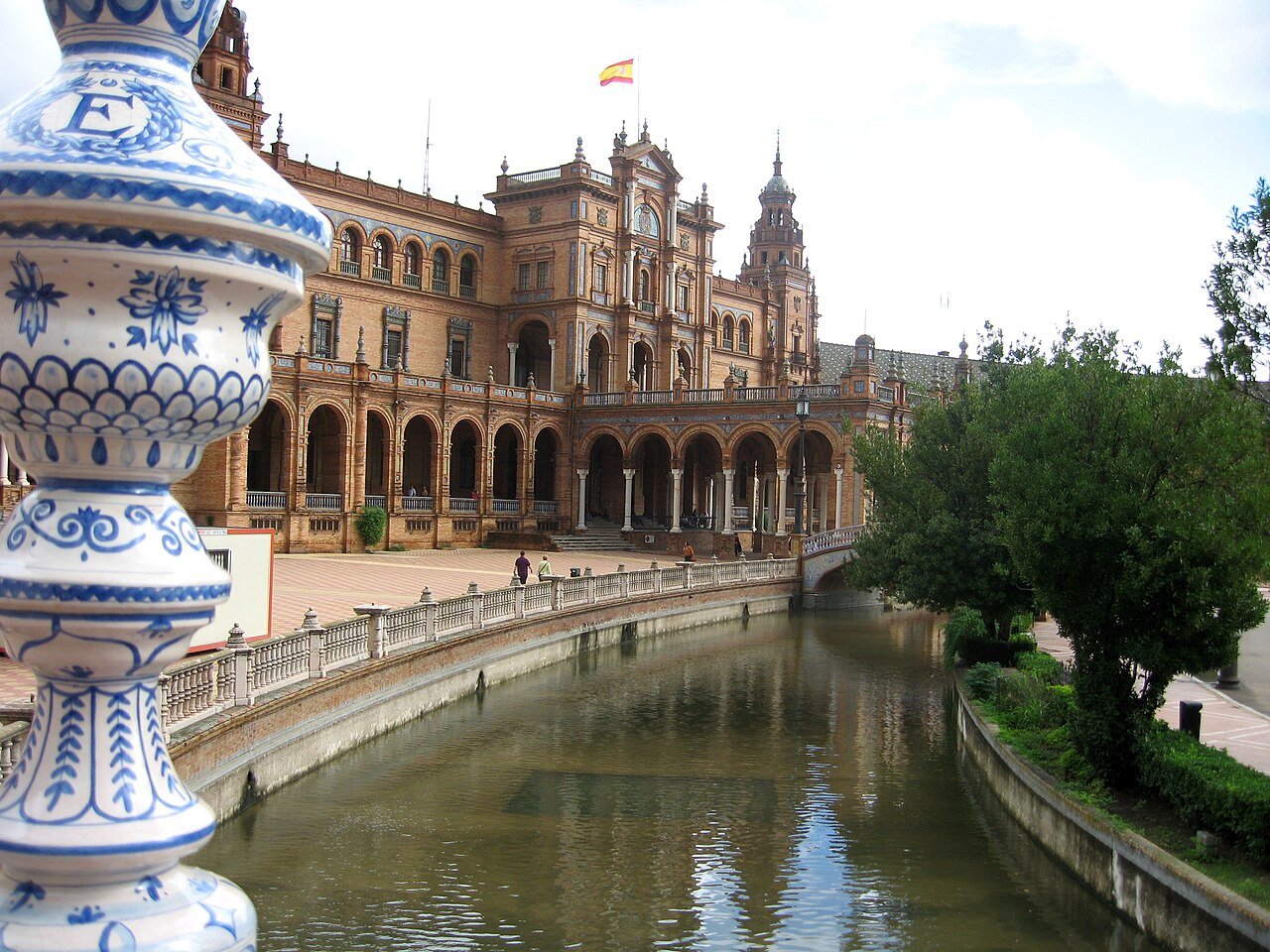
Late morning, stroll through the gardens of the Alcázar’s neighbourhood to the Plaza de España, the vast semicircular palace of brick and ceramic built for the 1929 exposition, with its canal, its little boats and a tiled alcove for every province in Spain. Find the provinces you have visited this week; the panels are miniature travel posters from 1929. The plaza is a public square and free at any hour — go before the middle of the day, when the arcade shade is the only mercy from the heat.
The afternoon is yours to spend as the trip so far has taught you: the Metropol Parasol (Las Setas) for the rooftop walkway, the Museum of Fine Arts if you want one serious gallery, or a long lunch and a siesta, which in Seville is not laziness but local practice. In the evening, cross to Triana properly this time — ceramics workshops, the market by the bridge, and flamenco in the bars where it lives rather than on a stage. If you want the staged version done well, tonight is the night to book a show.
Tomorrow you leave the big cities behind. Pack tonight, because the morning move to Ronda is an early one.
Day 6: Ronda and the White Villages
Today trades the plains for the mountains. From Seville, Ronda is about two hours by bus, and less by car; the road climbs into the Serranía and the week changes character completely. You are heading for the gorge.
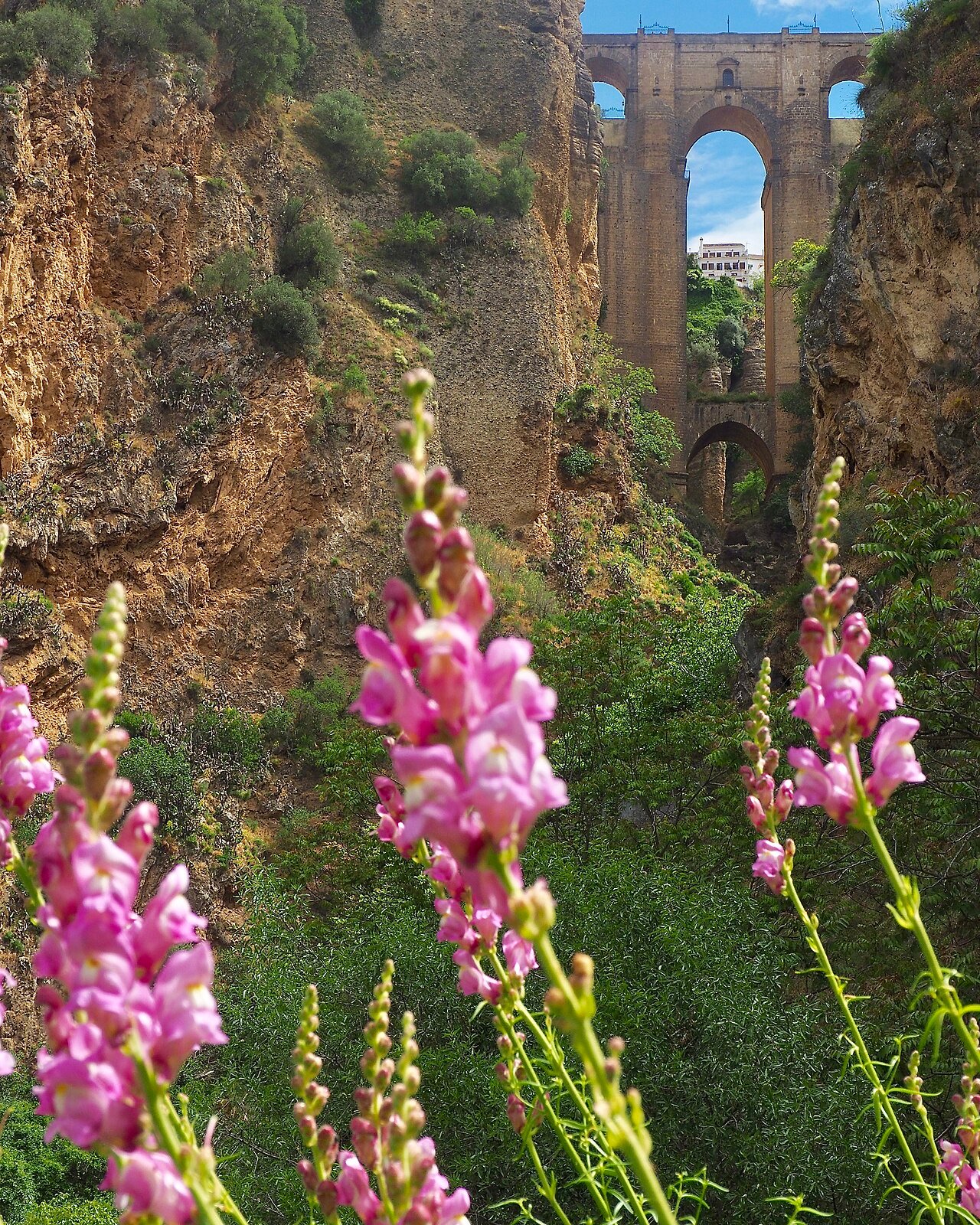
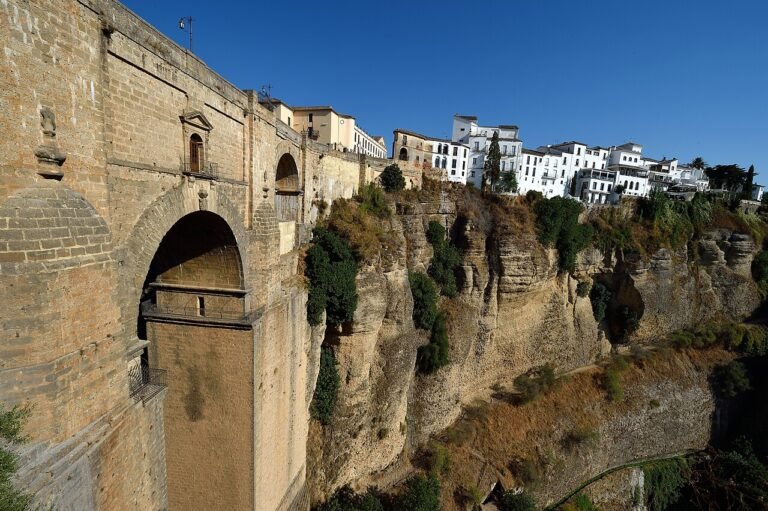
Ronda is split in two by El Tajo, a crack in the rock almost 100 metres deep, and leapt by the Puente Nuevo — the “new” bridge, finished in 1793. Cross it slowly, then take the path down on the new-town side towards the gorge-floor viewpoints, because the one thing not to miss is the view of the bridge, its full height read from below, rather than just the view from it. The old town behind the bridge holds the palaces and churches; the new town holds one of Spain’s oldest bullrings.
In the afternoon, add a white village. Setenil de las Bodegas, half an hour away, is the unforgettable one: its main streets run under the rock, houses built straight into the overhanging cliffs so the stone itself forms the roofs, with bars tucked beneath one continuous shelf on the Cuevas del Sol. Our guide to the best Spanish towns covers the strongest of the pueblos blancos if you are choosing between them — the short version is to pick one or two and drive the mountain roads slowly.

Sleep in Ronda tonight. The gorge floodlit after the day-trippers leave is the real show, and an evening in the old town is the week’s most romantic — which is precisely why this stop is a night and not a drive-through.
If you would rather not move hotels at all, the alternative is to base in Málaga and day-trip: the From Malaga: Ronda and Setenil Guided Tour Day Trip is rated 4.6/5 from 3,420 reviews, runs from $66.08 per person for a nine-hour day with the guided walk in Ronda and bullring museum entry included, and comes with free cancellation up to 24 hours in advance for a full refund plus reserve now & pay later. It covers the same ground — but you trade away Ronda at night, and that trade is worth knowing about before you make it.
Day 7: Málaga — Alcazaba, Gibralfaro and the Flight Home
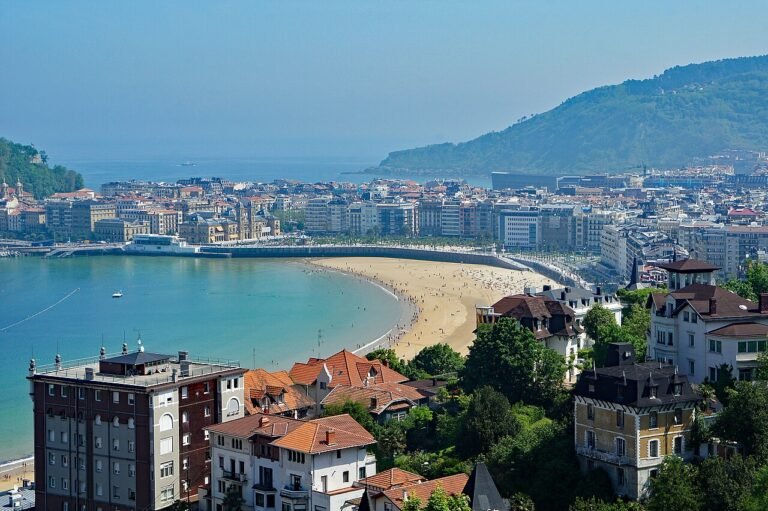
The last leg runs from Ronda down to Málaga, around two hours by road or rail, and it ends at the airport — which is exactly why the route finishes here. Málaga is too often treated as an airport with a beach attached; on this itinerary it gets a proper day, and it earns it.
Start with the double act of fortresses stacked above the port. The Alcazaba, the 11th-century Moorish palace-fortress, climbs its hill in terraces of arches, gardens and quiet courtyards, with the Roman theatre spread at its feet; above it, joined by a walled corridor, Gibralfaro castle holds the summit and the panorama — port, bullring, old town and the whole curve of the bay. The Alcazaba now costs €7, or €10 combined with Gibralfaro after the 2025 price rise. Our things to do in Málaga guide builds a longer stay around them if you have one.

With whatever hours remain, take your pick: the Picasso Museum in the painter’s birthplace city, the port promenade of Muelle Uno, or a plate of espetos — sardines grilled on skewers over olive wood — at a chiringuito in Pedregalejo, Málaga’s old fishing district. Then it is a short hop to the airport, and home.
If your flight is early, simply swap the order: come down from Ronda the night before, sleep in Málaga, and spend this morning on the fortress before you fly. The route forgives that change completely.
Where to Base Yourself (and What Works as a Day Trip)
The night split — Granada 2, Córdoba 1, Seville 2, Ronda 1, Málaga 1 — is the heart of this itinerary, because Andalucía’s distances punish hub-and-spoke travel. Four of the five stops sit on fast rail lines or easy roads from each other, and moving every night or two is genuinely less tiring than returning to one base: you never repeat a journey, and every evening lands somewhere new.
Two honest exceptions. Córdoba can be a day trip from Seville — the trains take about 45 minutes — but you would lose the Roman bridge at sunset and the patios in the evening quiet, which is half of what the city is for. And Ronda works as a day trip from Málaga, as the tour in Day 6 shows, but again the night is the point. If you have longer than a week, keep the same line and add nights rather than stops: our two-week Spain itinerary shows where Cádiz, the coast and the far south-east fit around this spine.
What to Book First
Book in this order, and the week takes care of itself:
- The Alhambra. Before flights, before hotels. Tickets are named, ID-checked and tied to a strict timed entry for the Nasrid Palaces; the General ticket costs €21 (€22.27 online) and popular dates — spring and autumn weekends above all — sell out weeks ahead. Everything else in this itinerary can flex around your Alhambra slot; nothing can replace it.
- The long trains. Córdoba–Seville especially: the fastest services fill, and booking ahead is cheaper. Granada’s direct trains are few, so check those times before you fix your Day 3.
- Seville’s monuments. Cathedral and Alcázar entry is timed; a priority-access tour or pre-booked tickets turn Day 4 from queueing into sightseeing.
- Ronda, if you are driving in high season. One night, small hotels, limited parking in the old town — book the room and check the parking when you do.
What does not need booking: the Mezquita (turn up early; the ticket is €15 and the hall swallows crowds), Málaga’s Alcazaba (€7, or €10 with Gibralfaro), the patios outside festival week, and every plaza, mirador and village in this itinerary.
When to Go
Spring (late March to early June) is southern Spain at its best: warm, bright, the orange blossom out in Seville, and — in May — Córdoba’s patios in full flower, though that week also brings the year’s biggest crowds and prices there. Autumn (mid-September to early November) runs a close second, with the sea still warm at the Málaga end of the trip.
July and August are the honest warning: Seville and Córdoba regularly pass 40 °C, and sightseeing becomes a dawn-and-evening activity with a long shaded lunch between. The itinerary still works, but start every day at opening time. Winter is mild, quiet and cheap by comparison, with the Sierra Nevada snow behind the Alhambra as compensation. If your diary allows ten days rather than seven, our 10 days in Spain itinerary shows how this southern line stretches into a wider country trip.
Getting Around: With a Car and Without One
Without a car is entirely workable, and for most people it is the easier version. Trains cover Granada–Córdoba–Seville and the Málaga airport leg; buses fill the gaps, above all Seville–Ronda, where the bus drops you in the centre of a town that is no fun to park in. Your only discipline is timetable discipline: Granada’s direct trains are few, so plan Days 3 and 7 around the actual departures, with the frequent ALSA buses as the reliable fallback on the Granada–Málaga axis.
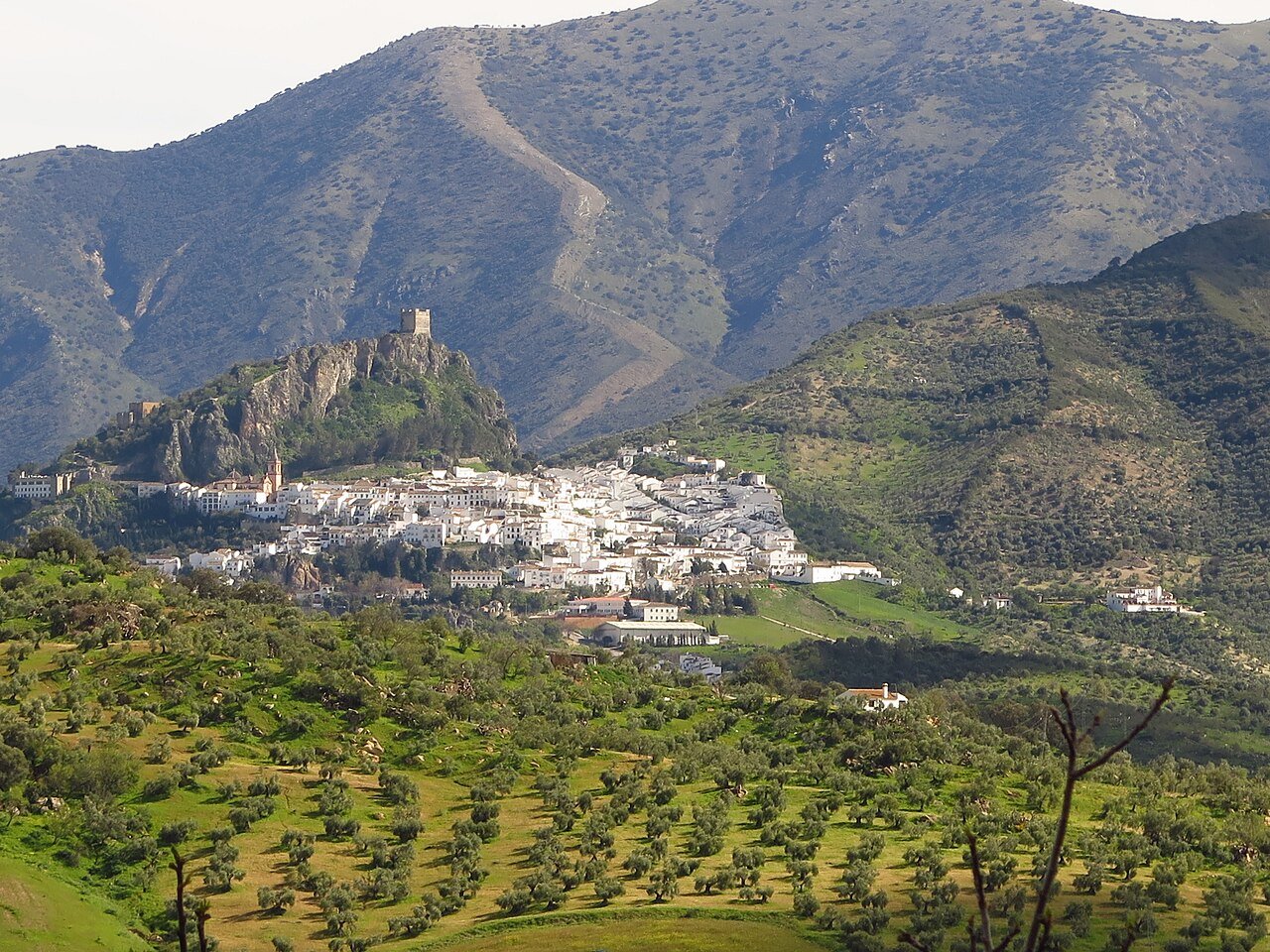
With a car, Days 6 and 7 transform: the white villages stop being a choice of one and become a string — Setenil, Zahara de la Sierra, Grazalema — driven at your own pace on some of the finest mountain roads in Spain, and Ronda–Málaga becomes a scenic drive rather than a schedule. The costs are old-town parking (pay for car parks; never improvise) and city driving you simply do not need for the Granada–Córdoba–Seville legs. The hybrid many travellers choose: trains for the first four days, a hire car picked up in Seville for Ronda, the villages and the airport run.
One route this week deliberately leaves out: the Caminito del Rey. It is a superb half-day from Málaga, but bolting it onto Day 7 makes the last day a rush, and a cliff walkway deserves better than leftover hours. Give it its own trip, based in Málaga, rather than a squeezed one.
Travel insurance, sorted
Whether it is a two-week holiday or a longer move, travel insurance is not the most glamorous part of a trip – but it is the one booking you want to have in place before a trip, and while you are already away. Get a quote from SafetyWing
Final Thoughts
The shape of this week is the shape of Andalucía itself: palace, mosque-cathedral, cathedral, gorge, sea — each day a different century, none of them a repeat. Keep the Alhambra booking sacred, sleep in the places rather than day-tripping past them, and let the evenings do as much work as the mornings. If you are giving the whole country a week instead of just the south, our one week in Spain itinerary runs the Madrid-to-Seville version; this southern line is the one we would choose.
Frequently Asked Questions
Can you really see southern Spain in 7 days?
Yes — if you run it as one line west, as this itinerary does: Granada, Córdoba, Seville, Ronda and Málaga, in that order, with no backtracking. Seven days covers the region’s defining sights with a full day or more in each of the big three cities. What it cannot do is add Cádiz, the Caminito del Rey or the Cabo de Gata coast without cutting something else; those belong to a ten-day or two-week version of the trip.
Do you need a car for this itinerary?
No. Trains link Granada, Córdoba and Seville, buses cover Seville to Ronda, and Málaga’s airport is minutes from the city, so the whole week runs comfortably on public transport. A car only becomes the better choice for the Ronda and white-villages days, where it lets you string Setenil, Zahara and Grazalema together at your own pace — the hybrid option in the Getting Around section covers that split.
Which airports should you fly into and out of?
Málaga (AGP) for both, in almost every case. It is the south’s main international airport, about an hour and a half from Granada by direct bus or train at the start of the trip, and a short hop from Málaga city on your last night. Flying home from anywhere else means backtracking east or north and giving back the time this route saves.
What is the one thing you must book in advance?
The Alhambra. Its tickets are named, checked against photo ID, and carry a strict timed slot for the Nasrid Palaces that cannot be changed on the day; the General ticket costs €21 (€22.27 bought online) and popular dates sell out weeks ahead. Book it before flights and hotels, and build the Granada days around the slot you get. Seville’s cathedral and Alcázar come second — timed entry means pre-booking there turns queueing time into sightseeing time.
Is one night in Córdoba enough?
For the icons, yes: the Mezquita in the morning quiet, the patios and Jewish Quarter in the afternoon, and the Roman bridge at sunset is a complete Córdoba. What one night cannot do is the city in patio festival week, when the courtyards deserve a second day, or a slow food-focused visit. If your week has a spare night anywhere, Córdoba and Ronda compete for it — take the extra one in whichever you cannot day-trip later.
When is the best time of year for this trip?
Spring, late March to early June, is the south at its best — warm, bright, orange blossom in Seville and the patios in flower in Córdoba in May. Mid-September to early November is a close second and quieter. July and August work only with early starts, as Seville and Córdoba regularly exceed 40 °C; winter is mild and uncrowded, with snow on the Sierra Nevada behind the Alhambra as the trade for shorter days.
Can you do this itinerary in reverse, from Málaga to Granada?
Yes, and it works almost as well. Start in Málaga for the Alcazaba and Gibralfaro, take Ronda as your second night, then Seville, Córdoba and Granada, flying home via Málaga airport after a final transfer from Granada of about an hour and a half. The one real cost of reversing is psychological: the Alhambra becomes your finale rather than your foundation, which many travellers actually prefer — you end the week on the finest rooms in Spain. Just remember that whichever direction you run it, the Alhambra tickets still get booked first.



One Comment