Food Tours in Spain: The Best Tapas Crawls, Market Tours and Cooking Classes, City by City
Spain is a country where lunch is the main event, where a bar with twelve stools can outcook a white-tablecloth restaurant, and where every region insists — correctly — that its way of eating is the real one. That is exactly what makes eating here both wonderful and treacherous for a visitor: the gap between a great food experience and a laminated-menu disappointment is rarely price or luck. It is local knowledge — which market stall, which bar, which dish, in which order, at what hour. A good food tour buys you that knowledge in a single morning or evening, and it is why food tours in Spain have become the first thing many travellers book rather than an afterthought.
This guide is built to help you choose, not just to browse. It compares the four kinds of Spanish food tour — market tours, tapas crawls, cooking classes and gourmet pintxos walks — then goes city by city: where a tour genuinely earns its money, what the best-run versions include, what they cost, and where you honestly do not need one because the local food culture hands itself to you for the price of a beer. Three tours are linked, one per style and budget, each checked on its live booking page; the rest are covered editorially so the comparisons stay honest. If you want the dishes themselves first — the tortillas, jamones and paellas behind all of this — start with our guide to famous Spanish foods; this article is about how to go and eat them properly.
Inside this guide:
- 1. Four Kinds of Food Tour — and How to Choose Yours
- 2. Madrid: The Market-and-Tapas Initiation
- 3. Barcelona: Boqueria Mornings and Born Tapas Nights
- 4. Seville: Triana, Where Tapas Is a Verb
- 5. Granada: The City Where the Tapa Is Still Free
- 6. Valencia: Market First, Then Paella Where It Was Born
- 7. San Sebastián: Pintxos, the Gourmet End of the Spectrum
- 8. Bilbao: The Same Counter Culture, Gentler Prices
- 9. Málaga and Mallorca: Two Market Cities Worth a Morning
- 10. Cooking Classes: The Tour You Take Home With You
- 11. Prices, the Booking Checklist, and When to Skip the Tour
1. Four Kinds of Food Tour — and How to Choose Yours
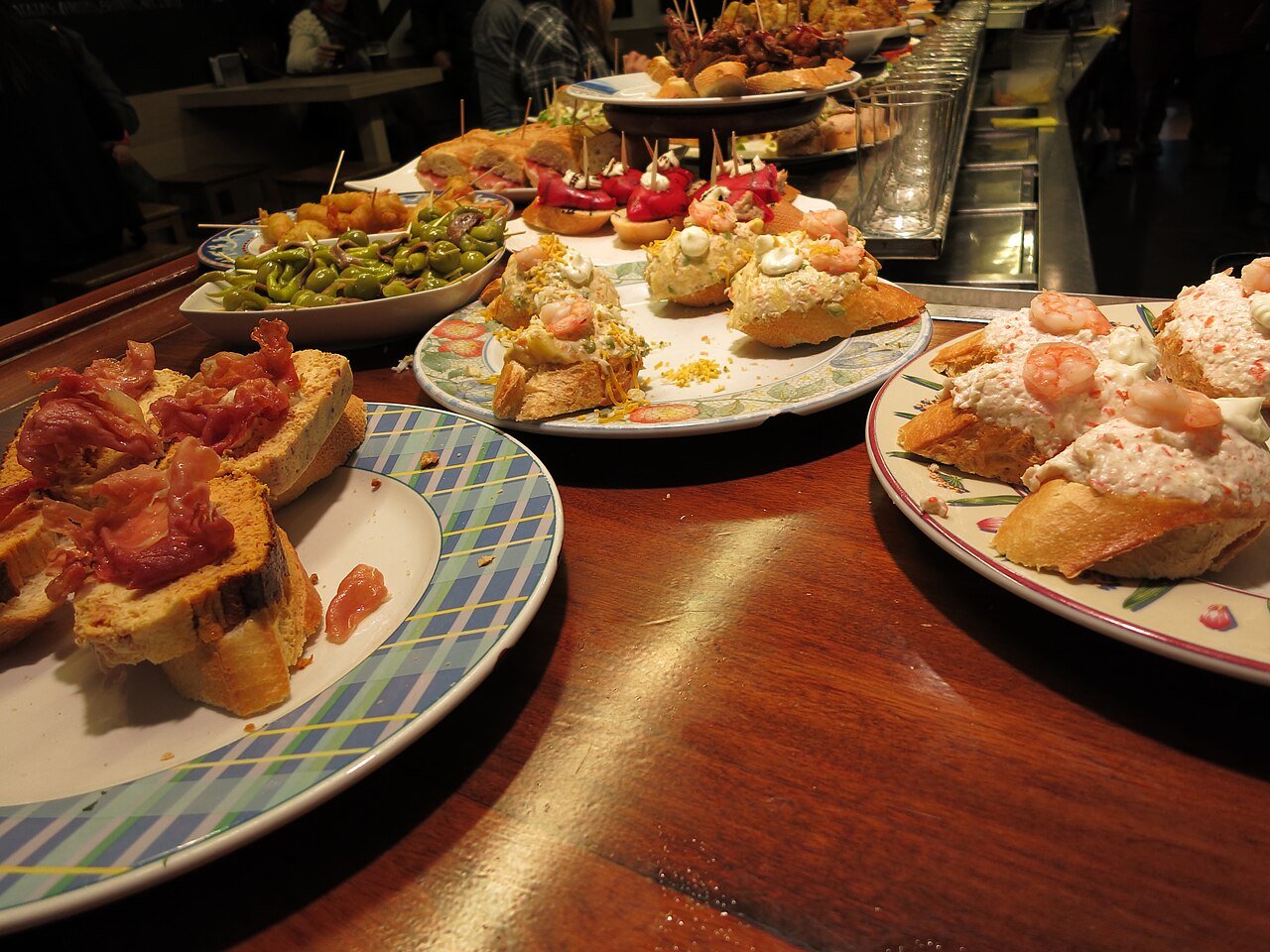
Almost every food tour in Spain is one of four formats, and picking the right format matters more than picking the right company. The market tour runs in the morning: a guide walks you through a working food market — stall by stall, olive oil here, cured meats there, a glass of vermouth at the market bar — with tastings at most stops and a light lunch built in. Choose it if you shop, cook or simply love produce; it is the most educational three hours in Spanish food. The tapas crawl runs in the early evening: three to five bars in one neighbourhood, one or two house specialities and a drink in each, eaten mostly standing up. Choose it for orientation — it teaches you a district and its rules on night one, and the rest of your trip’s evenings repay it.
The cooking class is the half-day commitment: market shopping with the chef, then a kitchen session — paella in Valencia and Barcelona, tapas menus in Seville and Madrid — ending with the meal you made, wine included. Choose it if you want a skill, not just a memory. The gourmet tour is the premium end, concentrated in San Sebastián: small groups, the famous bars in the right order, hot pintxos cooked to order, good wine by the glass. Choose it where the food culture is dense, competitive and slightly coded — exactly where a guide’s sequencing is worth real money.
Whichever format, the good versions share a fingerprint. Group size is twelve or fewer. Every tasting and drink is inside the ticket price — no “pay as you go at each bar,” which turns a tour into a supervised walk to a cash register. The guide is a local who plainly eats in these places, and the tour ends with a written list of recommendations for the rest of your stay. The warnings are equally consistent: very large groups, itineraries that name no specific bars or markets, and any stop that feels like a shop presentation. If a listing will not tell you what is included, assume the answer is “less than you hope.”
2. Madrid: The Market-and-Tapas Initiation
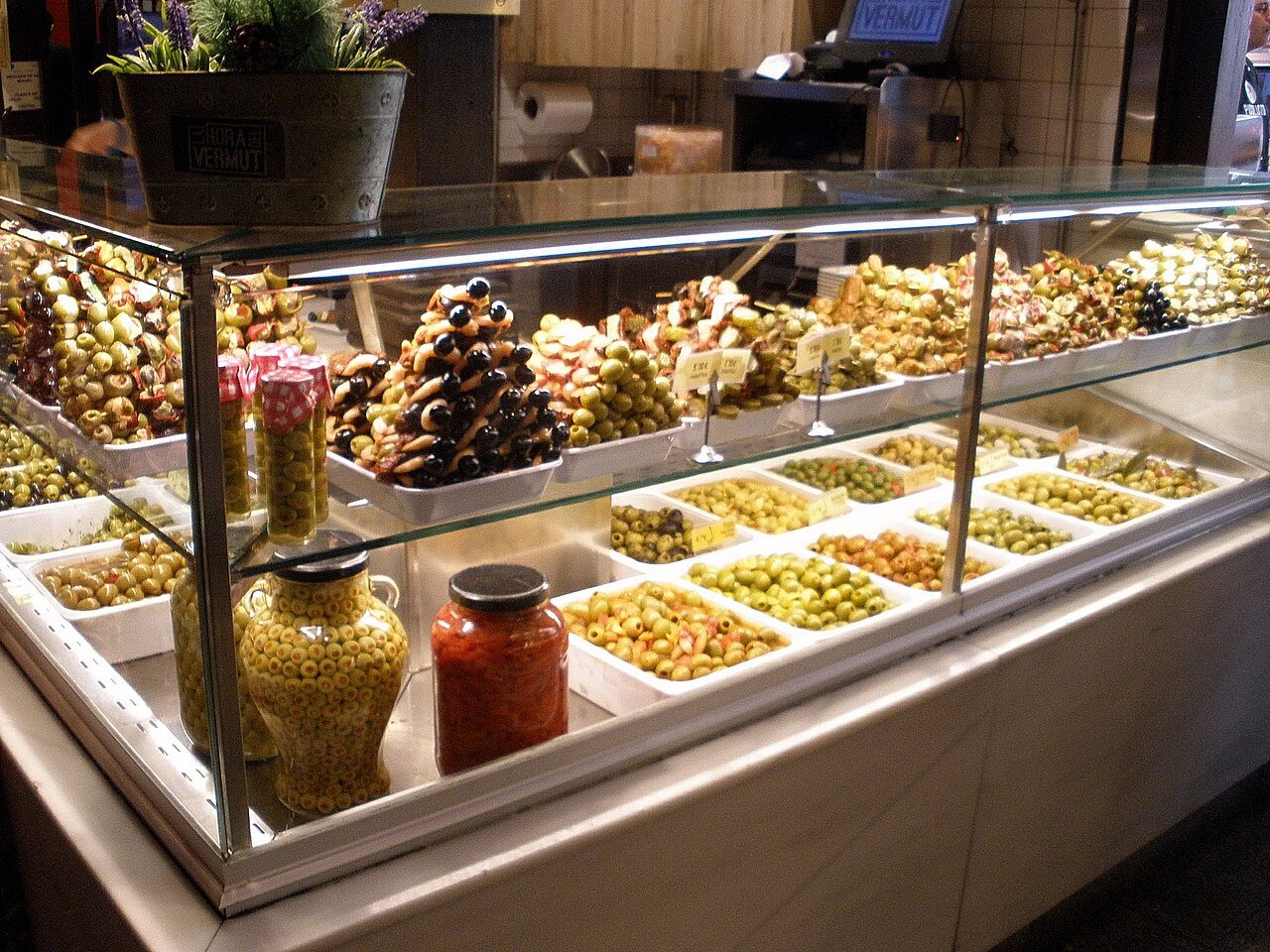
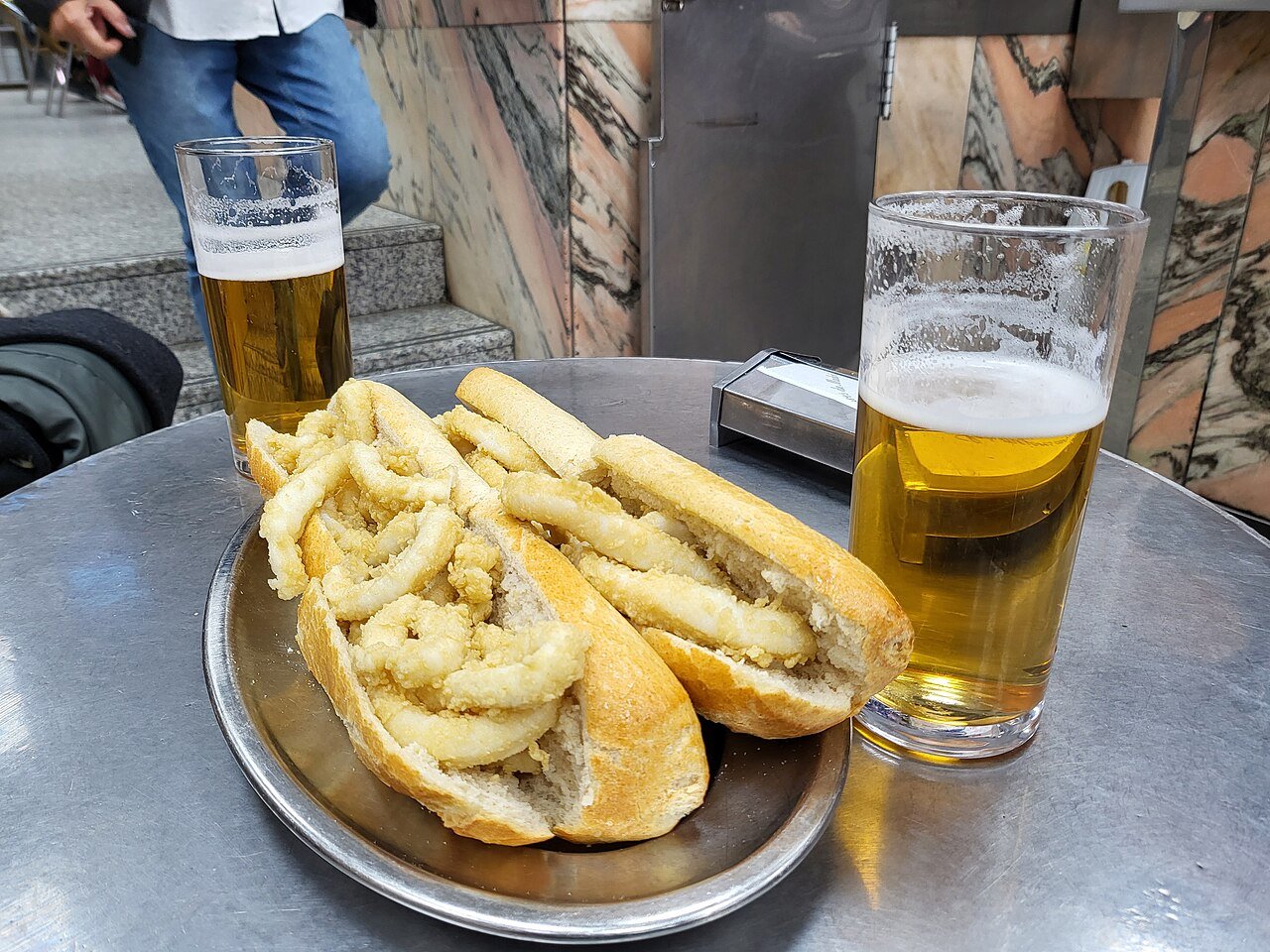
Madrid is the best all-round classroom in Spain, because the whole country cooks here: the capital’s bars pour Andalusian fino, slice Basque cheese and argue about tortilla with the confidence of a city that absorbed every region’s best dishes. Its markets split into two personalities — the Mercado de San Miguel, a beautiful gourmet hall of tasting stalls by the Plaza Mayor, and working neighbourhood markets like Antón Martín, where the stalls feed locals first and the vermouth bar is full by one o’clock. A good Madrid tour uses the second kind and explains the first, and the city’s other non-negotiables are a bocadillo de calamares eaten near the Plaza Mayor, churros con chocolate done properly — thick, dark, barely sweet — and the aperitivo hour built around a glass of red vermouth on tap.
The Madrid tour we link is built exactly on that syllabus. Madrid: Ultimate Food Tour of Local Markets & Tapas is run by a specialist food-tour operator through the small, family-run places madrileños actually use: it opens with churros and the real story of Spanish chocolate at a neighbourhood café (morning departures; the evening run swaps this for tapas and beer), takes in a young baker’s chorizo-stuffed rolls, then works through the Mercado de Antón Martín stall by stall — olives, cured meats, local produce, extra-virgin olive oil and a glass of that red vermouth — before a cheese tasting in a deli with a quietly extraordinary history and a finale of the city’s best-regarded calamari sandwich at the Plaza Mayor. The numbers: 4.8/5 from 233 reviews and from $88 per person, with more than fifteen tastings across eight stops — treat it as a meal, because it is one. One honest note: check the cancellation terms on the booking page before you pay, and pick the morning departure if the market matters to you — the stalls are the tour’s heart, and they wind down by mid-afternoon.
Done this way, Madrid stops being the city you eat in between museums and becomes the reference point for everything after: you will read every later menu in Spain faster, order vermouth without thinking, and know why the calamari sandwich is a point of civic pride rather than a curiosity.
3. Barcelona: Boqueria Mornings and Born Tapas Nights
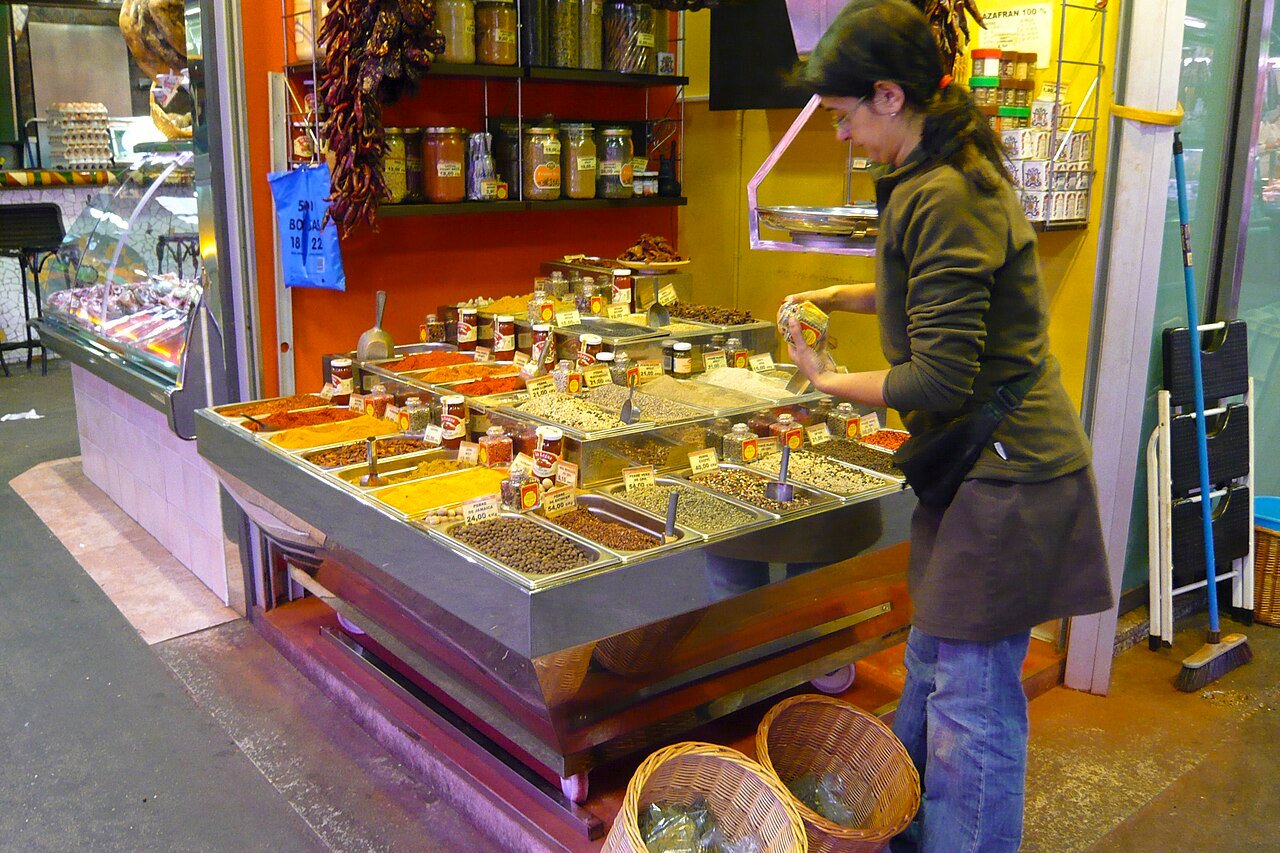
Barcelona’s food geography is a tale of one famous market and everything around it. La Boqueria, just off La Rambla, is genuinely magnificent and genuinely crowded: its front stalls sell fruit cups to the passing stream while the serious eating happens at the steel-counter bars deeper inside, over grilled seafood and seasonal mushrooms. The single most valuable thing a Barcelona market tour gives you is timing and depth — inside before the crush, pointed at the right counters, tasting saffron, pimentón and cured meats with someone who can explain why Catalonia seasons the way it does. Book the earliest slot any operator offers, and treat any tour that only walks the market’s front aisle as a photo walk, not a food tour.
Evenings belong to the old town. The Born and the Gothic Quarter hold the city’s best tapas bars in a tight, walkable knot, and a good crawl here runs on Catalan rules as much as Spanish ones: a vermouth first — Barcelona’s fer el vermut tradition is as strong as Madrid’s — then anchovies, bombas, grilled prawns and a glass of cava where the bar is proud of it. If wine is your real subject, keep it separate: our Barcelona wine tours guide covers the Penedès cava country day trips properly, and they deserve their own day rather than a squeezed hour. For dinner-level planning beyond tours, our Barcelona food guide maps the restaurants and neighbourhoods in full.
Barcelona is also Spain’s biggest classroom for the paella cooking class, usually built as market-first: a Boqueria shopping run with the chef, then back to a kitchen for the sofrito, the stock and the socarrat — the crisp base that decides whether a paella is real. Expect those classes, and the established operators’ morning market-and-tapas walks, to sit roughly in the €70–95 band; Section 10 explains how to judge a class once you have read a few listings. The pattern to follow in this city: market in the morning, crawl in the Born at night, class on a second day if cooking is your souvenir of choice.
4. Seville: Triana, Where Tapas Is a Verb
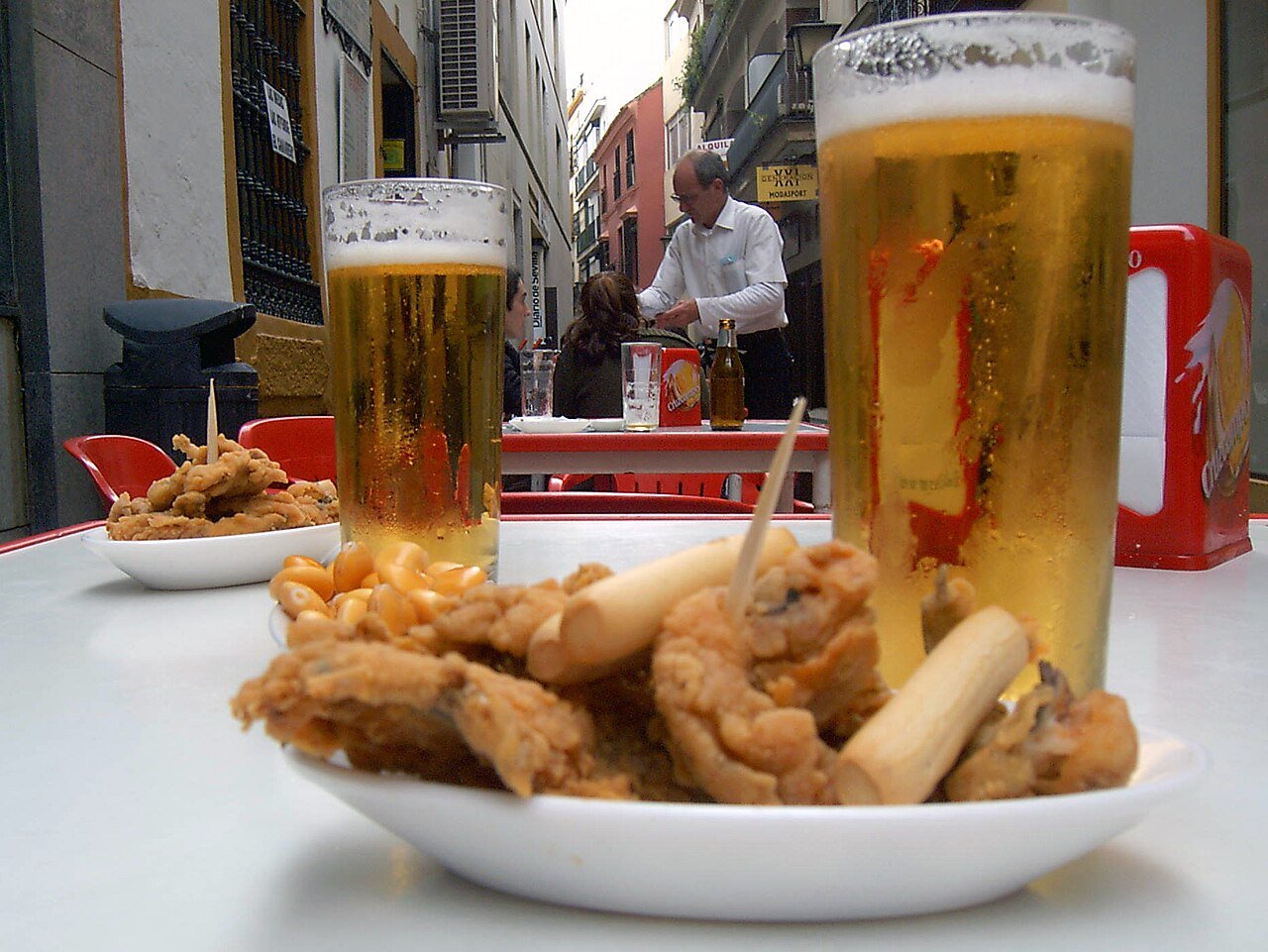
Seville is the spiritual home of the tapas crawl — the city where tapear is something you do for hours, never sitting for a full meal, moving bar to bar on a route locals hold in their heads like a bus map. The dishes are a fixed canon executed a hundred ways: espinacas con garbanzos, salmorejo thicker than anywhere else in Spain, huevos a la flamenca, the montadito de pringá, and fried fish — pescaíto frito — that arrives still crackling. Cross the river to Triana and the bars get more local, the prices soften, and the whole ritual slows down; it is the quarter a good Seville tour should be built around, not the monumental centre, where the terraces mostly serve the people photographing them.
The Seville tour we link runs on that Triana logic and is the value pick of this entire guide. Seville: Flavors of Andalucía Guided Food Tour with Tastings is a 2.5-hour walk through Triana with a local guide, built around two classic tapas bars — tapas to share and a drink included in each — plus the stories that connect what is on the plate to the city’s history, and a list of the guide’s own recommendations for the rest of your stay. It is rated 4.7/5 from 393 reviews, its guides score even higher than the tour itself, and at from $39 per person it costs less than a mediocre sit-down dinner in the cathedral quarter. It also carries the flexible terms to look for: free cancellation up to 24 hours in advance for a full refund, and reserve now & pay later — book your spot and pay nothing today.
Seville is equally strong for the class format: the city’s best-reviewed cooking class works out of the Triana market itself — shop the stalls with the chef, then cook a full tapas-and-paella menu in a rooftop kitchen — at 4.9/5 from around 890 reviews and from about $84 a head (we feature that one in our Seville markets guide rather than linking it twice). Choose between them by trip shape: crawl on your first evening for orientation, class on day two or three once you know which dishes you want to take home.
5. Granada: The City Where the Tapa Is Still Free
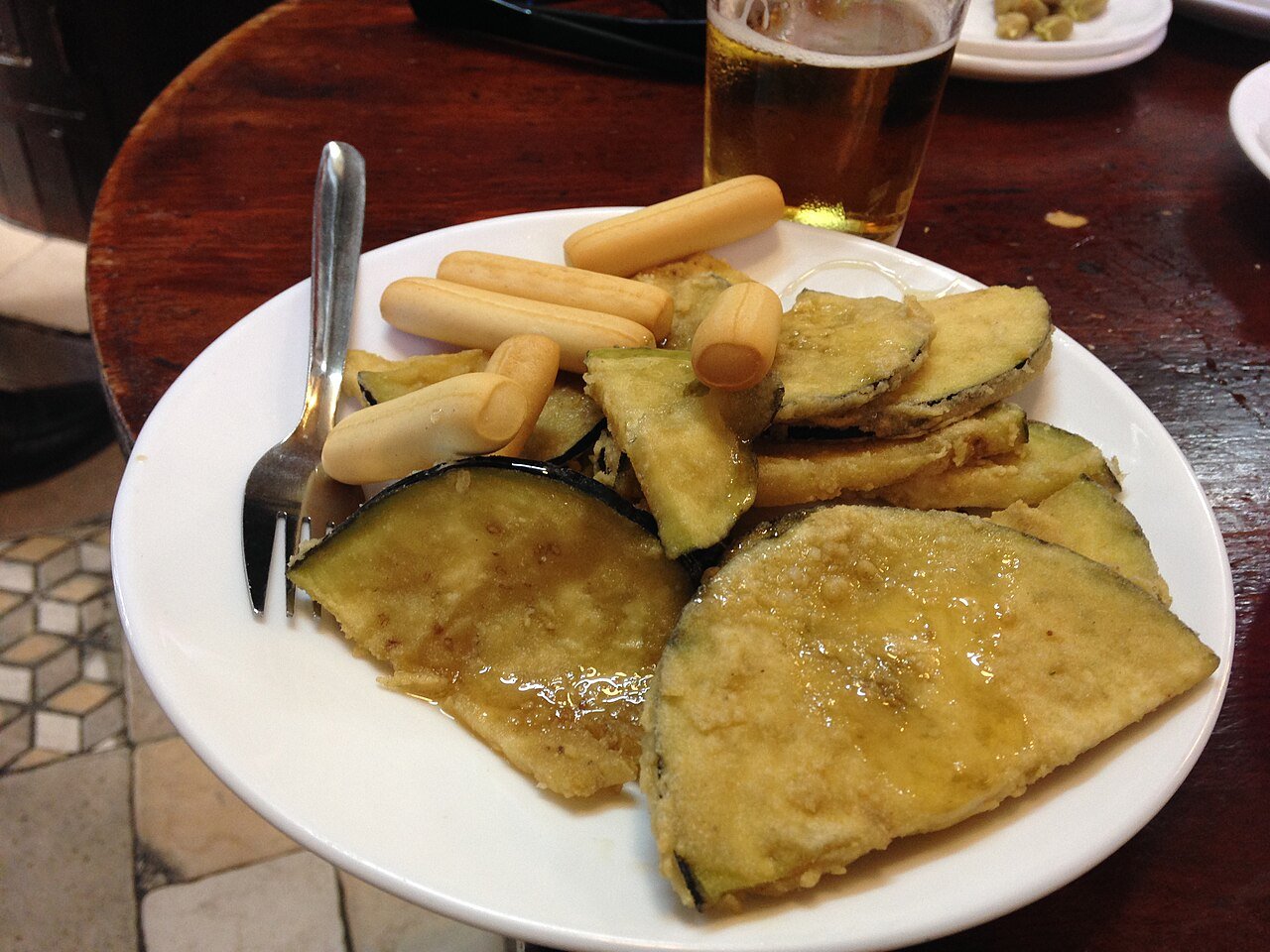
Granada is the great exception in this guide — the major Spanish city where you should usually skip the tour, because the food culture gives itself away. Order a drink in a traditional Granada bar and a tapa arrives with it, free, unasked: a small plate of whatever the kitchen is proud of, from albóndigas to a little rice dish to a montadito. Order a second, larger drink and the tapa typically steps up. It is a living tradition — also kept, in varying forms, in parts of Almería, Jaén and León — and in Granada it turns an evening’s bar-hopping into a progressive dinner that costs little more than the drinks.
The DIY rules are simple and worth following precisely. Drink small — a caña or a glass of the local Alhambra beer — because the tapa scales with visits, not with pint size. Take one drink per bar and move on; three or four bars is a full evening. Let the house choose: asking what today’s tapa is earns you the kitchen’s current best, and some bars keep a rising scale where regulars’ third rounds get the special plate. The classic ground is the streets around the cathedral and Calle Navas, with the Albaicín’s bars for the views — and for everything beyond eating, our guide to things to do in Granada covers the city in full.
So when does a tour make sense here at all? Two cases. If you have exactly one evening and want the culture decoded fast, a short guided crawl compresses the learning curve — which bars still honour the tradition properly is genuinely local knowledge, and the tourist-facing centre has bars where the “free tapa” has quietly become a token crisp. And if your interest is the sweets and tea houses of the old Moorish quarter — Granada’s teterías and Arab bakeries are a distinct food world — a guide adds context a map cannot. Otherwise: keep your money, order a caña, and let Granada feed you.
6. Valencia: Market First, Then Paella Where It Was Born
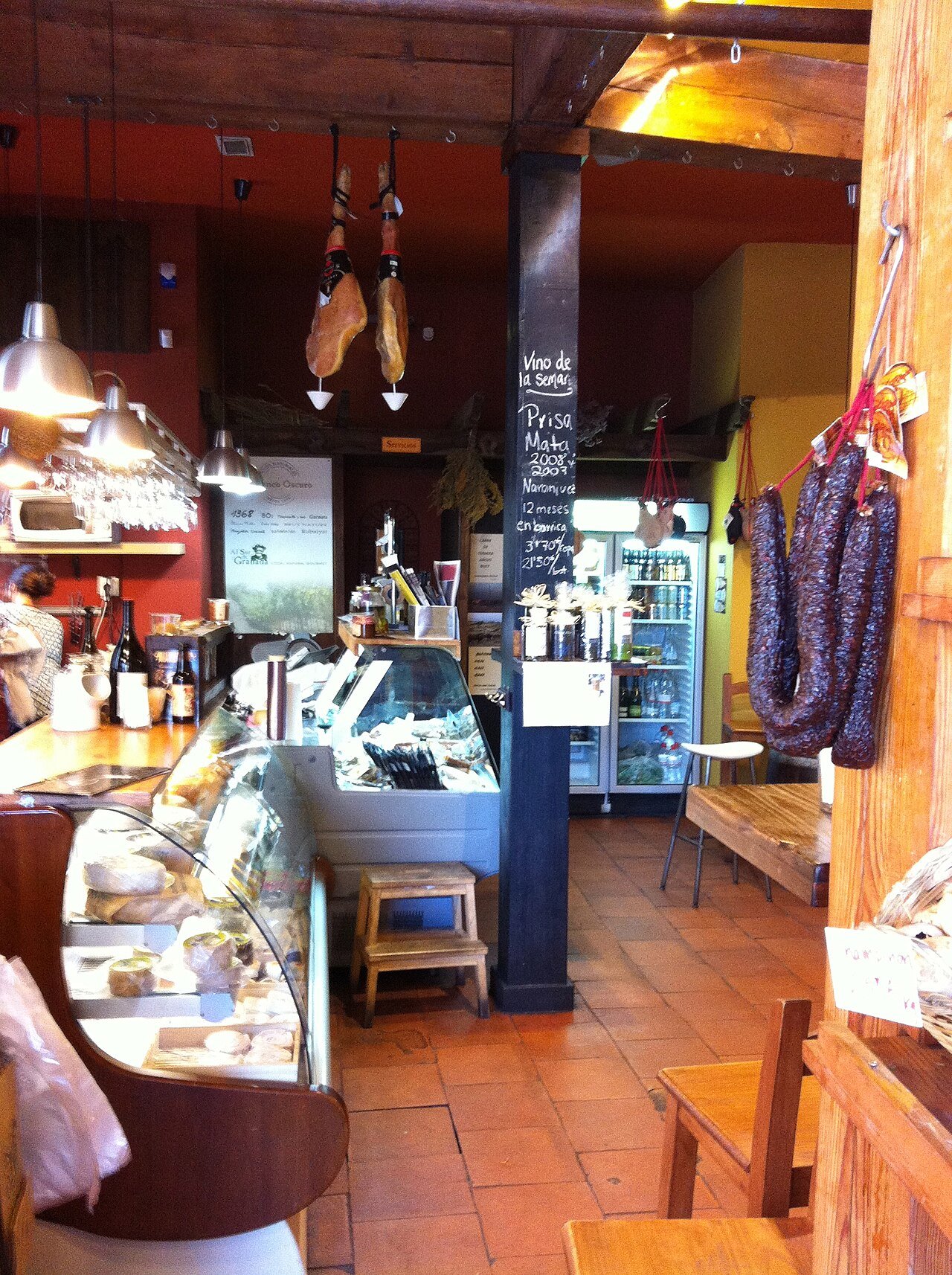
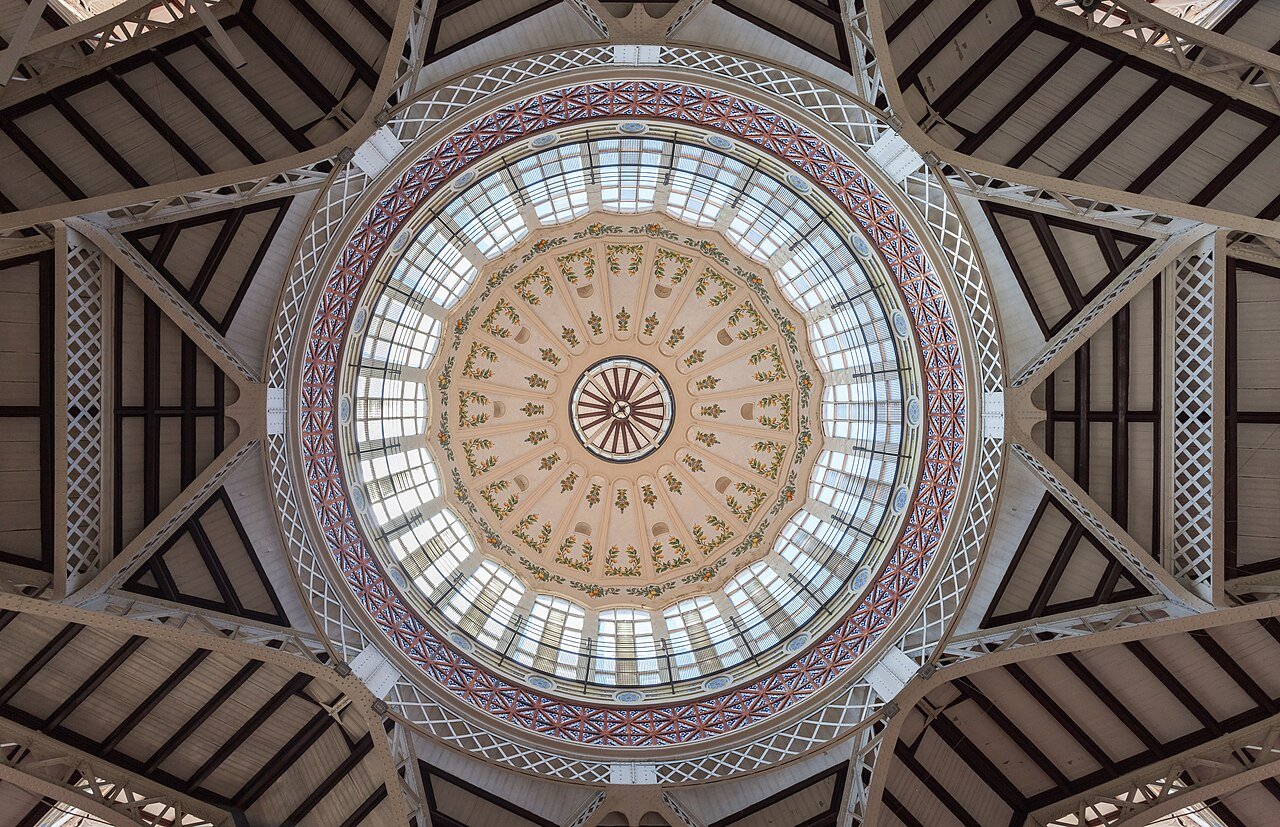
Valencia runs the cleanest food-tour logic in Spain: one great market in the morning, one great dish at lunch. The Mercado Central — a soaring modernista hall of iron, glass and painted tile — is among Europe’s finest food markets, and a guided hour inside it teaches the whole Valencian pantry in one sweep: the rice varieties of the Albufera, the beans and snails of the real paella, saffron, oranges in every form, and the tiger nuts that become horchata. Go early, go hungry, and let the guide’s stall relationships do the tasting — the jamón and cheese counters here reward being introduced.
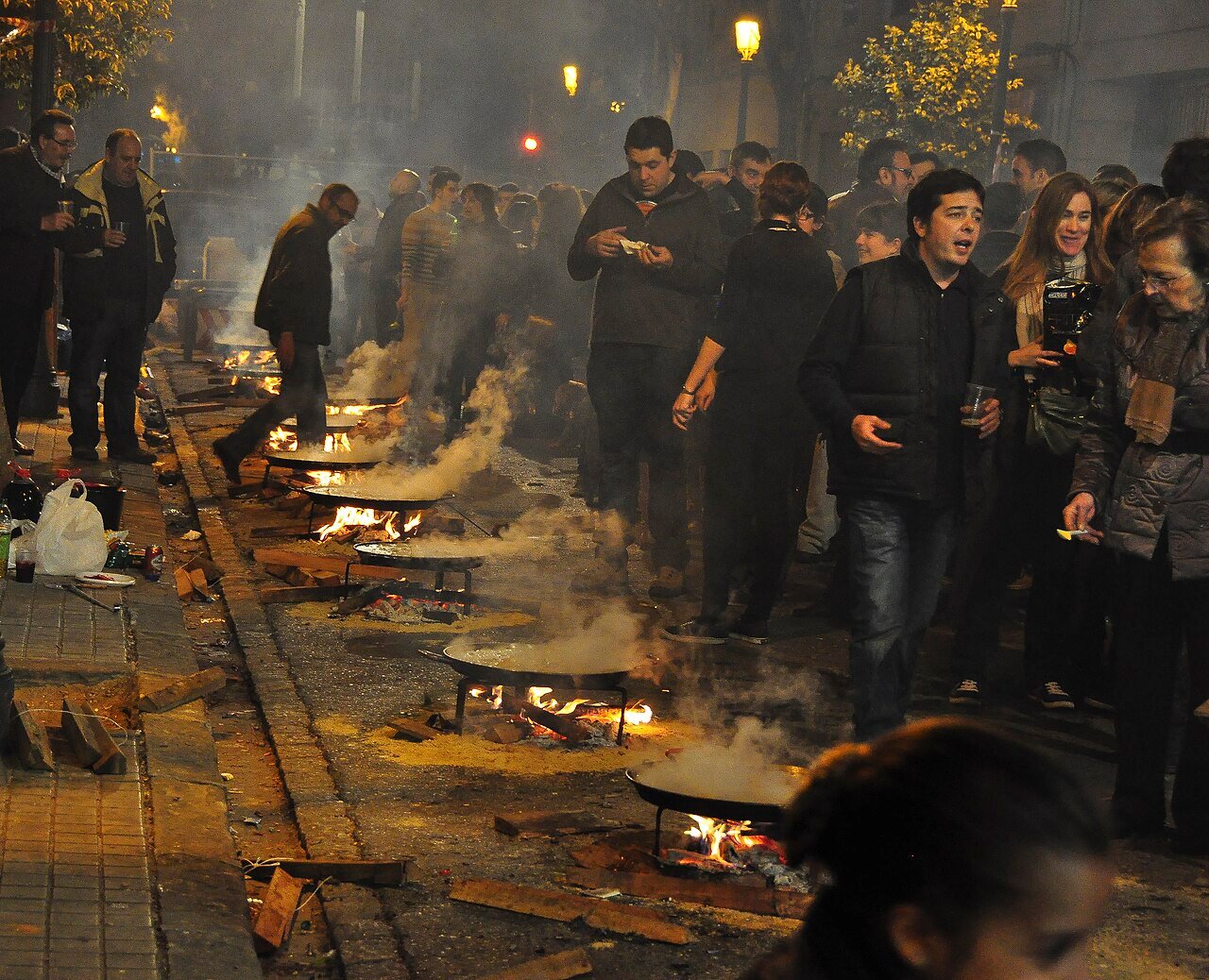
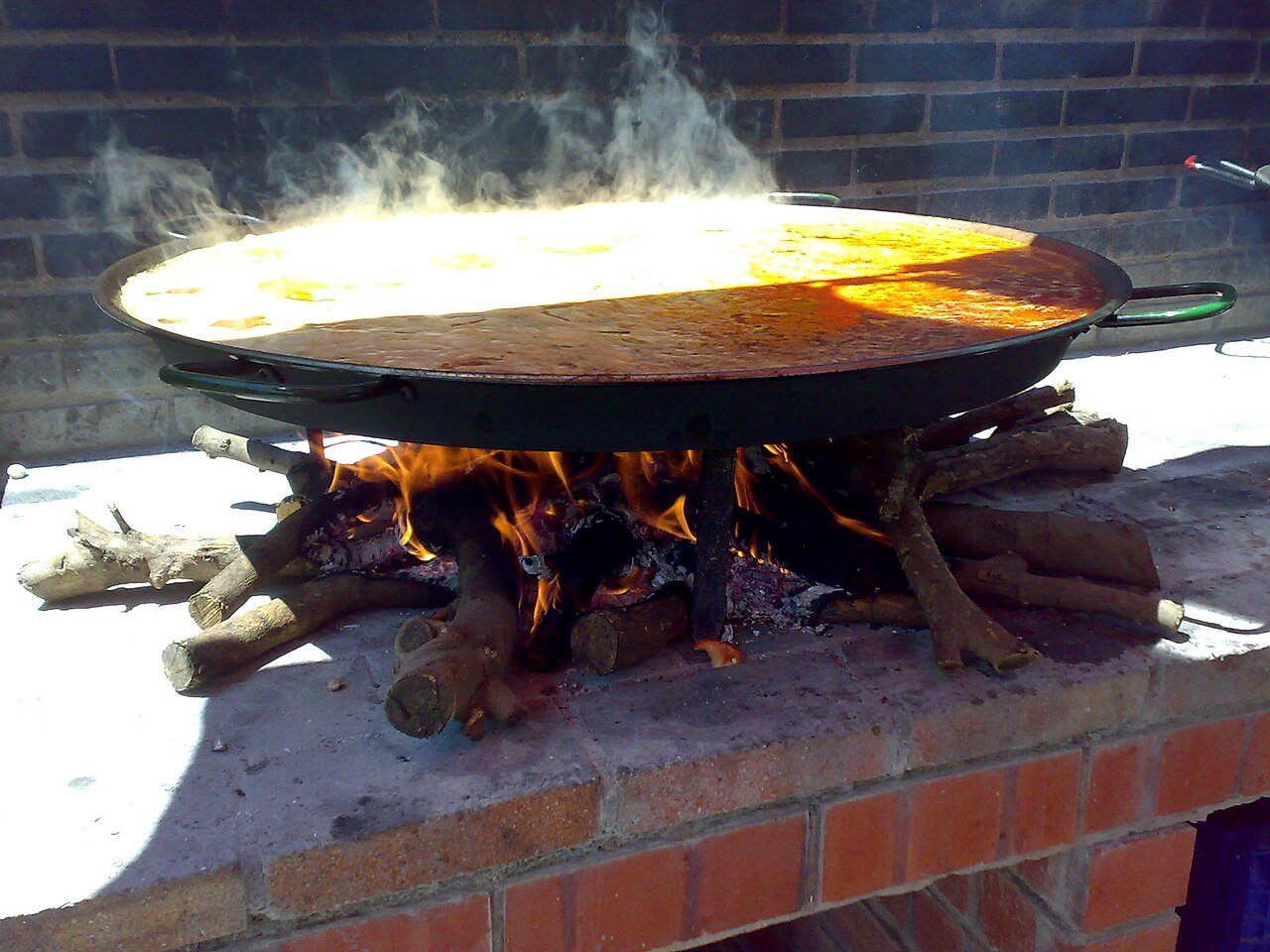
Then, paella — under rules Valencians enforce like law. Paella is lunch, never dinner; it is cooked to order and takes its time; the pan is shared, minimum two; the crisp socarrat base is the prize; and the authentic paella valenciana contains chicken, rabbit and beans — the seafood versions are delicious, later and different dishes, and anything involving chorizo is, locally, a small scandal. A market-and-paella tour or class that states these rules in its own description is one that takes the dish seriously; Section 10 covers how the classes work. If the fire and the theatre of it appeal, festival nights still show the original version: whole streets of pans over orange-wood fires. Beyond the table, our guide to the best things to do in Valencia covers the city end to end.
Valencia’s third flavour completes the day: agua de Valencia — cava, orange juice and a quiet kick — invented here and best drunk here, ideally late, in the old town. A city that hands you a market, a sacrament and a cocktail in one day rarely needs a long itinerary; it needs a morning tour slot, a booked paella lunch, and no dinner reservation at all.
7. San Sebastián: Pintxos, the Gourmet End of the Spectrum
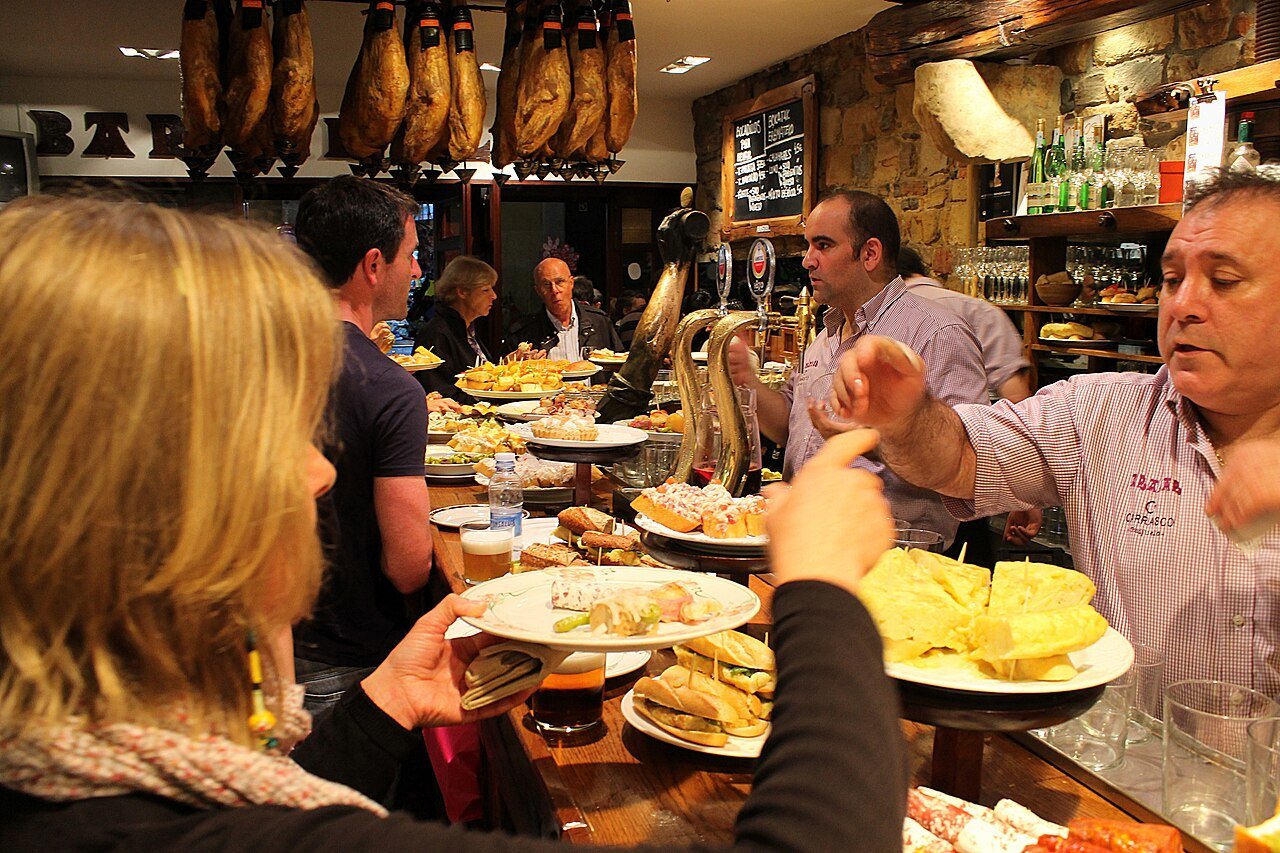
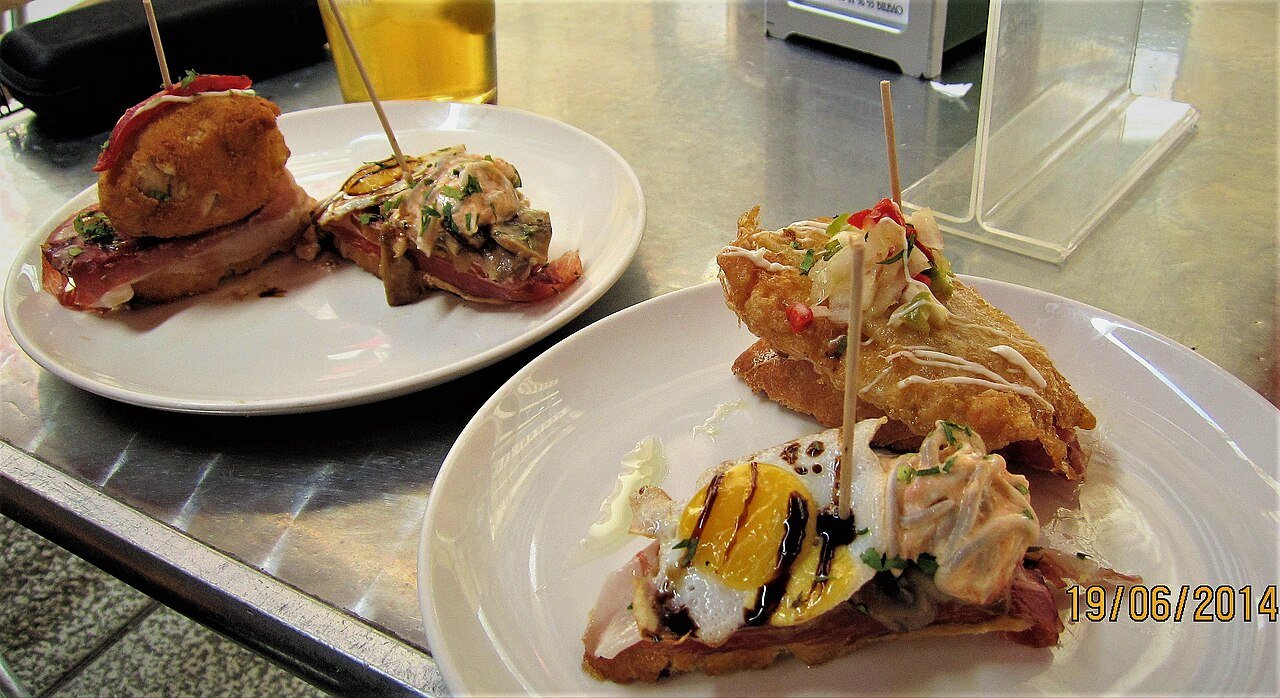
San Sebastián — Donostia — is where Spanish food culture reaches its highest concentration: a compact old town, the Parte Vieja, lined with bars whose counters groan with pintxos, in a city famous worldwide for the density of its fine dining. The pintxo system has its own etiquette, and it is not obvious: cold pintxos sit on the counter and you help yourself, keeping the skewers so the bar can count; the great ones — the calientes — are not on display at all but cooked to order from a short board, and knowing which bar’s which hot pintxo is the entire game. You eat two or three, drink a small glass of txakoli poured from a height or a zurito of beer, pay, and move. Repeat five times and you have had one of the great food evenings in Europe.
That code is precisely why this is the city where a guided tour earns its premium. The one we link is the city’s benchmark: San Sebastian: Pintxos and Wine Tour runs three hours through the old town with a local expert, covering five bars with eight pintxos and four drinks included — txakoli, Basque cider and Rioja among them — sequenced so the hot dishes arrive as they should, and finishing the way every Donostia night should, with burnt Basque cheesecake. It is rated 4.9/5 from 652 reviews, starts from $115 per person with all food and drink in the price, and carries the booking terms to look for: free cancellation up to 24 hours in advance for a full refund, and reserve now & pay later. It meets in the early evening outside Tabakalera on Ijentea Kalea and groups stay small.
Take it on your first night. The tour’s real product is not the eight pintxos — it is the map it leaves in your head: which counters, which hot dishes, how to order, how to pay. Nights two and three, done solo at half the cost, are where the investment pays out.
8. Bilbao: The Same Counter Culture, Gentler Prices
Bilbao eats like San Sebastián’s less famous sibling — same pintxos tradition, same txakoli, same reverence for the counter — with two practical differences: the bars are a little less besieged, and the bill at the end of a crawl is noticeably kinder. The geography is simple. Plaza Nueva, the arcaded square in the old town, rings itself with pintxo bars and fills on weekend lunchtimes with the whole city doing its rounds; the Mercado de la Ribera, the vast covered market on the river beside it, is one of the largest food markets in Europe and the right morning counterpart. A very Bilbao pleasure is the market’s gastro-bars: buy nothing, cook nothing — just graze the stalls’ own counters with a glass in hand.
Tour supply here is thinner than in San Sebastián, which is itself information: operators go where the fame is. Guided pintxo walks do run — expect the same format, evenings in the old town, at bands typically below San Sebastián’s — but Bilbao is the Basque city where the DIY version hurts least. Keep skewers, order one hot pintxo per bar by asking what the house does best, and let Plaza Nueva’s circuit carry you. If you are splitting a Basque trip between the two cities, spend the guided-tour money in San Sebastián (Section 7) and eat Bilbao freestyle; the etiquette transfers perfectly and the second city becomes the relaxed reprise.
One dish deserves a name before you go: the gilda — a skewer of olive, anchovy and pickled green chilli — is the Basque bar’s founding pintxo, invented in San Sebastián in the 1940s and now the first thing on half the counters in Bilbao too. It is three bites of salt, acid and gentle heat, designed to wake the palate before anything richer, and it costs very little: order one wherever you see them piled in a dish by the till, and you will understand the whole culture’s logic in miniature. The tortilla counters run a friendly rivalry here as well — Bilbao bars argue for the juicy, almost-runny centre — and the city’s kalimotxo habit, red wine and cola over ice, is the working-class classic the wine bars would rather you discovered in a traditional tavern anyway.
9. Málaga and Mallorca: Two Market Cities Worth a Morning
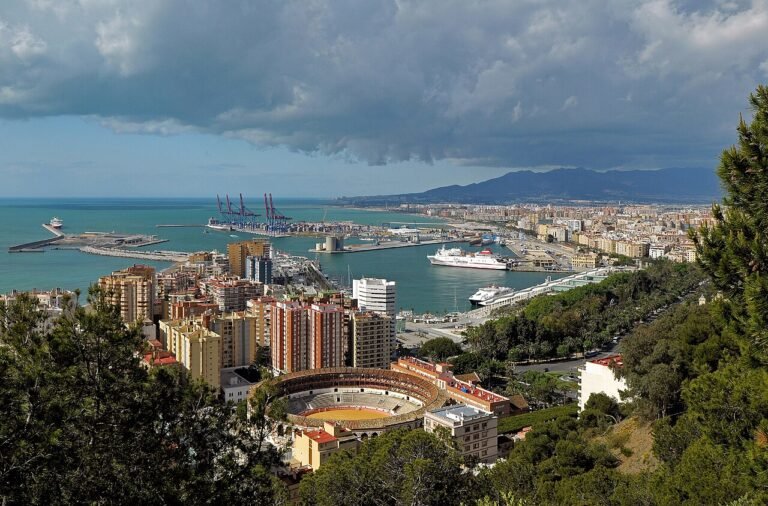
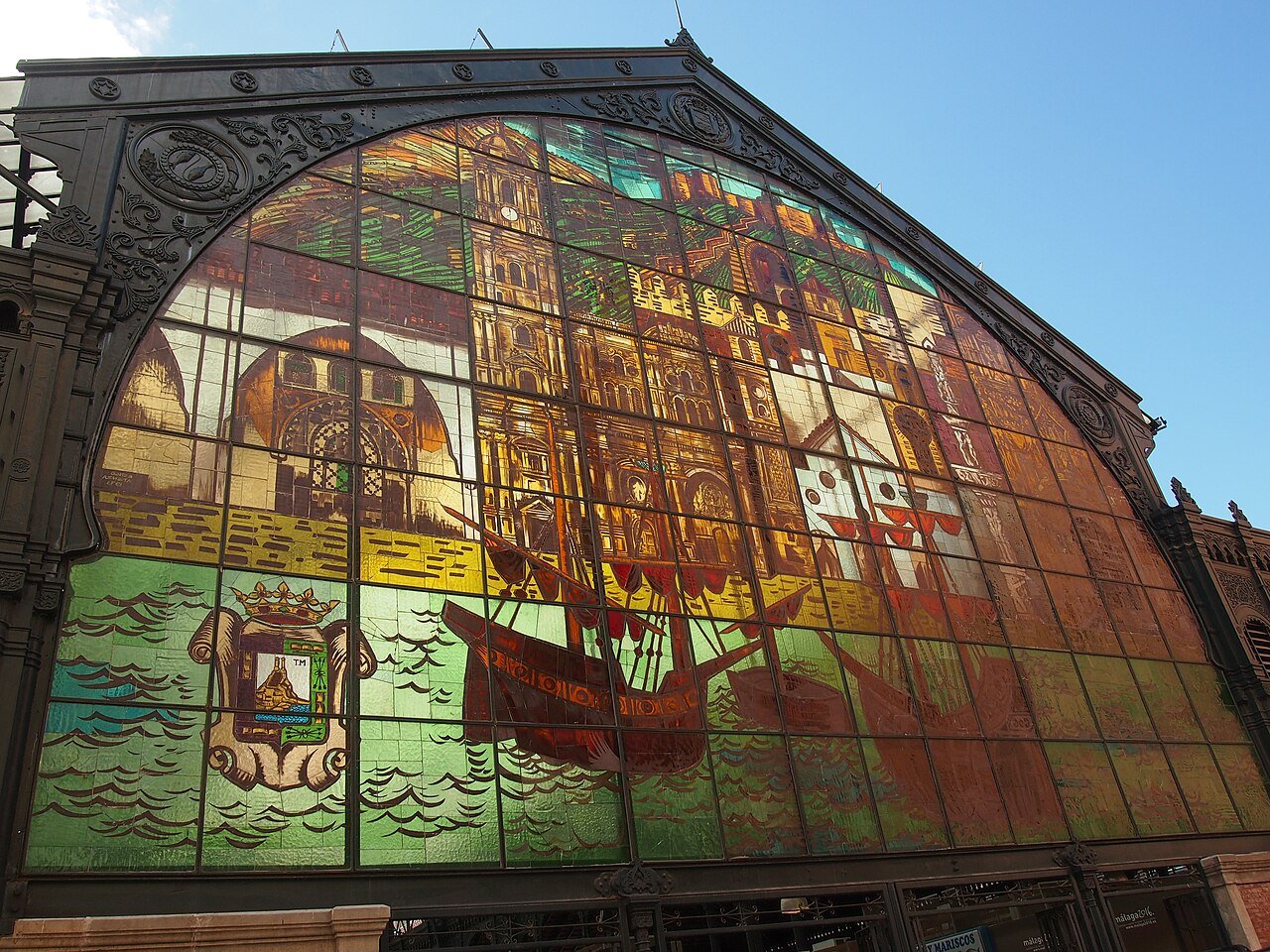
Two more cities reward the market-first pattern, even though neither needs a long guided programme. Málaga centres on the Mercado de Atarazanas, a nineteenth-century iron hall behind a huge stained-glass gable, where the fish counters are the morning show and the market bars fry the catch for lunch. The city’s full food day writes itself: market late morning, espetos — sardines skewered and grilled over olive-wood fires — at a beach chiringuito in El Palo or Pedregalejo, and a glass of the local sweet wine after. Palma de Mallorca runs the same play on island ingredients: the Mercat de l’Olivar for sobrasada, Mahón cheese from Menorca and seafood still arguing with the ice, then ensaïmada — the spiral pastry, eaten warm if you are lucky — from an old bakery, and tapas in the Lonja quarter at night.
In both cities, short market-and-tapas walks exist and sit at the friendly end of the price range, but the honest verdict is that a morning is enough either way: these are cities where the market is the attraction and the rest of the day belongs to the sea. Book a tour if you want the produce decoded — Mallorca’s pantry especially, with its sobrasada grades and almond everything, rewards explanation — and skip it without guilt if you would rather drift. Save your tour budget in the south for Seville’s crawl, and in the Balearics, for a sobrasada you would never have chosen alone.
Mallorca hides one more food experience the tour companies underuse: the island’s olive oil and wine country around Binissalem and the Tramuntana foothills, where small estates pour new oil over pa amb oli — bread rubbed with tomato — in stone farmhouses. If your Mallorca trip has a car day in it, that drive-plus-tasting format suits the island better than another city walk; in Málaga, the equivalent detour is the white-village road up to the sweet-wine bodegas. Neither replaces the market morning — both are what you do with the appetite the market morning creates.
10. Cooking Classes: The Tour You Take Home With You
A cooking class is the only food tour whose value compounds after the trip ends, and Spain’s are unusually well-formed. The standard architecture: meet the chef at the market, shop together for the day’s menu — this hour alone justifies the ticket, because Spanish market shopping runs on relationships and seasons no supermarket teaches — then cook for two to three hours, then sit down to everything, with wine, in the late afternoon. Menus divide by city: paella in Valencia and Barcelona, where the class is as much about policing the rules (sofrito patience, proper stock, no stirring, the socarrat) as about the recipe; tapas-plus-paella in Seville, where the Triana-market class described in Section 4 is the model; tortilla, croquetas and regional menus in Madrid.
Judge listings by three things. The market run must be included, not optional — a class that starts in the kitchen is a demo with aprons. Group size and station setup matter: you want your own burner time, not a view of somebody else’s. And the recipes must come home in writing. Priced honestly, the established classes in the big cities sit around the same band as a premium walking tour — roughly $75–115 a head with the meal and wine — which makes them, course for course, some of the best-value food spending in this guide. Choose the class over the crawl if you cook at home even occasionally; choose it over a second guided walk almost always.
11. Prices, the Booking Checklist, and When to Skip the Tour
What should all this cost? The three linked tours mark the spectrum. The Seville Triana crawl is the budget anchor at from $39 a head for 2.5 hours with tastings and drinks inside. Madrid’s market-and-tapas tour sits mid-range at from $88 with fifteen-plus tastings — a full meal’s worth. San Sebastián’s gourmet evening is the premium at from $115, all pintxos and drinks included. Cooking classes in the big cities run roughly $75–115. Against DIY: a neighbourhood tapa typically runs about €2.50–4.50 and a caña about €2–3, so a disciplined solo crawl is always cheaper — what the ticket buys is sequence, access, explanation and the recommendations you use for the rest of the trip. For honest overall trip numbers, our budget travel in Spain guide breaks down what a day on the ground really costs.
Before you pay for any food tour, run the checklist. Are all tastings and drinks included in the price — explicitly? Is the group capped at twelve or fewer? Does the listing name its markets, neighbourhoods or bars rather than “hidden gems”? Does the meeting point sit in the district you will actually eat in? What are the cancellation terms — read them on the booking page itself, not in a summary; two of this guide’s three linked tours state free cancellation up to 24 hours ahead, and that flexibility is worth favouring when plans are still soft. And does the tour fit your trip’s shape: our general Spain travel tips cover the wider planning, but the food rule is simple — one tour, early in the trip, in the city whose food culture is most coded: San Sebastián first, Seville or Madrid next, a class wherever paella matters to you.
And when to skip entirely? Granada, where drinks come with free tapas. Any city on a repeat visit, when the first trip’s tour already gave you the map. And any evening when the choice is between a tour and a market-town lunch you have already researched — Spain rewards the prepared independent eater almost as warmly as the guided one. The tour is a key, not the meal itself: use it to unlock a city, then eat the city.

Travel insurance, sorted
Whether it is a two-week holiday or a longer move, travel insurance is not the most glamorous part of a trip – but it is the one booking you want to have in place before a trip, and while you are already away. Get a quote from SafetyWing
Final Thoughts
If this guide leaves you with one booking, make it this: a food tour on your first full day, in the city where you will spend the most evenings. In San Sebastián, the guided pintxo evening decodes a whole culture for the price of a good dinner. In Seville, a $39 crawl buys you Triana. In Madrid, a market morning reorders how you shop and eat for the rest of the trip — and a cooking class anywhere is the souvenir that keeps working back home. Eat first, sightsee second: in Spain, that is not indulgence. It is the correct order of operations.

Two Weeks in Spain: The 14-Day Itinerary That Finally Fits It All In
Frequently Asked Questions
Are food tours in Spain worth it?
In the cities where the food culture runs on local rules — San Sebastián above all, then Seville and Madrid — yes, clearly: one tour on your first day buys the map, the etiquette and the bar list you then use free for the rest of the trip. In Granada, where every drink brings a free tapa, and in smaller market cities like Málaga and Palma, the DIY version loses very little. Section 11 gives the skip-it cases honestly.
How much does a food tour in Spain cost?
The tours linked in this guide run from $39 per person for the 2.5-hour Seville tapas crawl, through $88 for Madrid’s market-and-tapas tour with more than fifteen tastings, to $115 for San Sebastián’s three-hour gourmet pintxos evening — tastings and drinks included in all three. Cooking classes in the big cities sit around $75–115 a head, meal and wine included.
Which city has the best food tours in Spain?
San Sebastián, for the food itself: the pintxos bar culture there is the densest and most refined in the country, and the guided evening tour is this guide’s premium pick. Seville is the best value — a top-rated Triana crawl from $39 — and Madrid is the best all-rounder, where a market-and-tapas tour covers the whole country’s cooking in one morning.
Should I book a market tour, a tapas crawl or a cooking class?
Match the format to the trip. A market tour suits shoppers and the curious — mornings, produce, tastings, light lunch. A tapas crawl suits your first evening in a city: orientation, bar rules and a neighbourhood decoded. A cooking class suits anyone who cooks: half a day, a market run with the chef and a meal you made — the only format you take home with you. Section 1 compares all four formats, gourmet tours included.
Will I actually be full, or is it just tastings?
You will be full. Madrid’s linked tour runs to more than fifteen tastings across eight stops, San Sebastián’s covers eight pintxos and four drinks in three hours, and even the shorter Seville crawl builds in tapas and a drink at each of its two bars. Treat whichever you book as that day’s meal, eat a light breakfast, and do not book a restaurant for straight afterwards.
Can vegetarians and other restricted diets take a Spanish food tour?
Usually yes, with two rules: declare the requirement when you book, not at the meeting point, and pick an operator that answers the question properly in its listing. Spain is jamón-heavy, so the adaptation is real work for a guide — the Madrid tour linked here is a good sign, since its reviews specifically praise the guides for adapting stops around dietary needs. Granada’s free-tapa system is the hardest to control, as the kitchen chooses the plate.
When should I take the tour, and what if my plans change?
Take it on your first full day in the city — morning market tour or first-evening crawl — so the knowledge compounds across the trip. On flexibility: the Seville and San Sebastián tours linked in this guide both state free cancellation up to 24 hours in advance for a full refund, plus reserve now & pay later, so you can hold a spot and pay nothing today. For the Madrid tour, check the cancellation terms on its booking page before paying, as they are set out there.