Things to Do in Córdoba: 10 Essential Highlights From the Mezquita to the Patios
Córdoba is the easiest of Spain’s great cities to undersell, and the easiest to do badly. From Seville it is forty-five minutes by train, from Madrid under two hours — so thousands of people a year treat it as a morning: off the train, into the Mezquita, a photograph of some orange trees, back to the station by lunch. They have seen the single most astonishing interior in Spain, and almost nothing of Córdoba.
Because the Mezquita is the headline, not the whole story. Around it stands the city that built it: a Jewish quarter of white lanes and hidden courtyards, the fortress gardens where Ferdinand and Isabella received Columbus, a Roman bridge still carrying the evening promenade, a palace made of twelve courtyards, taverns serving a tomato soup thick enough to stand a spoon in — and eight kilometres away, the ruined palace-city of the caliph who ruled from here when Córdoba was one of the largest cities on earth. This guide plans the visit properly: two days if you can, the Mezquita booked honestly and first, and the May festival — when the whole city throws open its patios — treated with the honesty it deserves, because it is both the best and the busiest fortnight of Córdoba’s year. If the city is one day of a longer route, it is Day 3 of our one week in Spain itinerary — and of all seven days, it is the one travellers most often wish they had made two.
Córdoba in this guide
- 1. The Mezquita-Catedral: A Cathedral Inside a Forest of Arches
- 2. The Jewish Quarter: White Lanes, Iron Grilles and One Perfect View
- 3. The Synagogue: One Small Room, Seven Hundred Years
- 4. The Alcázar de los Reyes Cristianos: Come for the Gardens
- 5. The Roman Bridge and the Calahorra Tower: Córdoba at Sunset
- 6. The Patios: Step Inside Córdoba’s Living Rooms
- 7. Palacio de Viana: The Museum of Courtyards
- 8. Eat Like a Cordobán: Salmorejo, Flamenquín and the Old Tabernas
- 9. Plaza del Potro and the Small Museums: Córdoba Between the Monuments
- 10. Half-Day Trip: Medina Azahara, the Caliph’s Shining City
- 11. Córdoba Practicalities
- Frequently Asked Questions
1. The Mezquita-Catedral: A Cathedral Inside a Forest of Arches
Start here, on your first morning, whatever else you do. The Great Mosque of Córdoba was begun in 785 by Abd al-Rahman I, the Umayyad prince who had fled Damascus and made al-Andalus his own, on the site of a Visigothic church. Over the following two centuries his successors doubled it, doubled it again and pushed it east in one last vast expansion under Almanzor in 987, until the prayer hall covered a rectangle bigger than several football pitches — a flat, low, endless forest of columns carrying the mosque’s signature double arches, striped red and white, rank behind rank in every direction.
Eight hundred and fifty-six columns stand today, of jasper, onyx, marble and granite, many of them recycled Roman and Visigothic pieces — and the effect is not of a room but of a landscape. Walk in and keep walking: the hall has no single focal point, and that is the point. Then find the far wall, the qibla, where al-Hakam II built the mosque’s treasure in the 960s: the maqsurah, the caliph’s reserved enclosure, screened by interlaced arches of impossible complexity, and behind it the mihrab — not a room but a small octagonal shrine faced in gold mosaics made by a craftsman sent from Constantinople, its dome a single carved shell. It is one of the great pieces of religious art in Europe, and it sits in permanent half-light at the hall’s quiet southern edge.
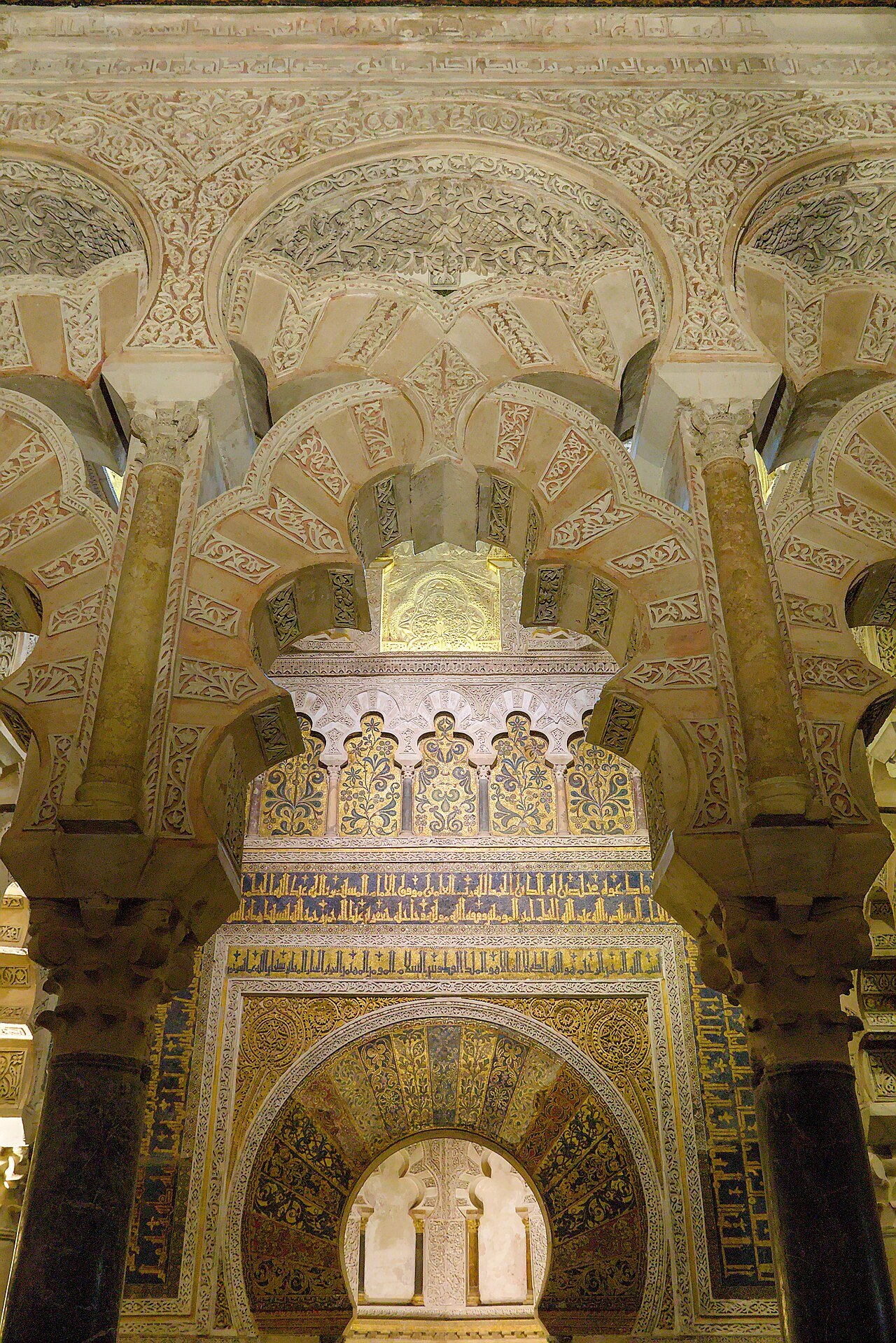
Then turn around. In the middle of the forest, reached by crossing aisle after aisle of striped arches, a Renaissance cathedral rises out of the floor — begun in 1523, built over two centuries, all Gothic vaults, Baroque choir stalls and gilded light, plugged into the mosque like a ship run aground in a stone sea. Charles V, who had authorised the work sight unseen, is said to have told the chapter on seeing it: you have built what you or others might have built anywhere, but you have destroyed something that was unique in the world. Whatever he actually said, the building argues both sides forever — vandalism and masterpiece in the same view — and it is why we place the Mezquita among the unmissable entries in our round-up of the best places to visit in Spain. The whole complex was Córdoba’s first UNESCO World Heritage inscription, in 1984.
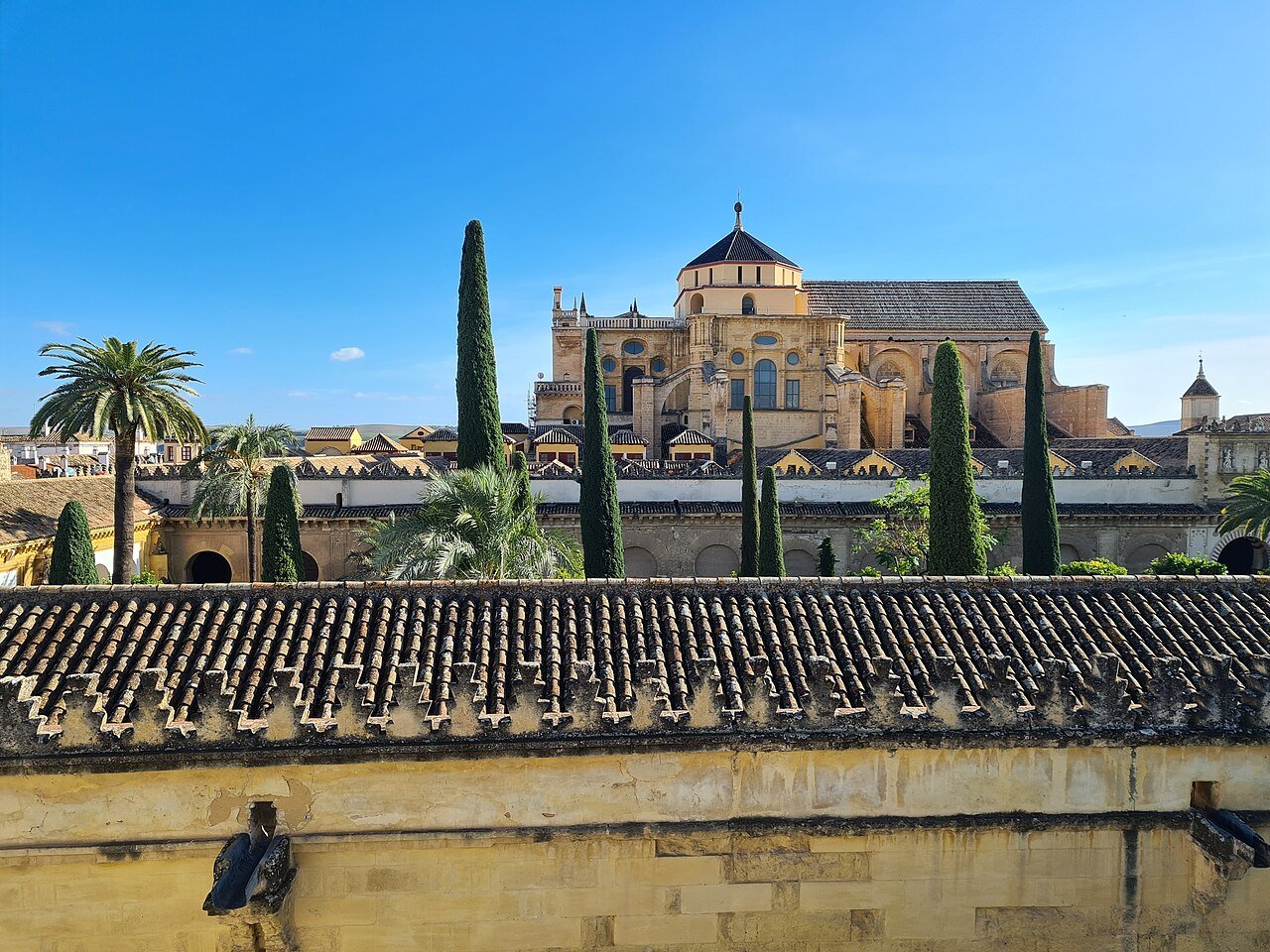
Now the honest booking part, because this is a working cathedral and a monument that queues. The official general ticket costs €15 (reduced €12; children 10–14 €8; under-10s free) — if you see €13 quoted in an older guide, it is out of date. Buy on the monument’s official website or at the reception centre in the Patio de San Eulogio, and in spring, at Easter and on any weekend, buy days ahead: timed entry sells out. That ticket also includes, free, the route of the Fernandine Churches — the medieval churches Ferdinand III founded across the old town, worth an unhurried hour on day two. Two more official options deserve space. The free visit, Monday to Saturday 8:30–9:30, opens the prayer hall to individual visitors before the ticketed day (no groups, doors close to new entries at 9:20) — arrive at 8:15, walk the forest almost alone, and understand that you are inside a morning act of worship as much as a monument. And the bell tower, €4, climbs the old minaret of Abd al-Rahman III inside its Renaissance shell, entries every half hour, for the one view that explains the building: mosque roofs, courtyard oranges, cathedral, river, bridge, city.
Prefer the story told as you walk? Córdoba: Skip-the-Ticket-Line Mosque-Cathedral Guided Tour (GetYourGuide) enters through a separate entrance with no ticket line, runs 75 minutes to an hour and a half with an official guide and headsets, and at the time of writing was rated 4.6/5 from 11,104 reviews, from $33. It offers free cancellation up to 24 hours before for a full refund and reserve now & pay later, and it meets at the Puerta del Perdón in the orange-tree courtyard. Do not skip that courtyard on your way out, either: the Patio de los Naranjos, planted with orange trees in fountain-fed rows, is free to enter and is the city’s oldest public square in all but name.
2. The Jewish Quarter: White Lanes, Iron Grilles and One Perfect View
The Mezquita stands at the south-western corner of the old town, and the streets that wrap around its northern and western walls are the Judería — the Jewish quarter of medieval Córdoba, and today simply the most atmospheric few acres of the city. This was a working neighbourhood of scholars, physicians, jewellers and merchants, home over the centuries to figures like the philosopher Maimónides, born here in 1138 and honoured by a small statue on the Plaza de Tiberiades, a man in bronze sitting in thought with a book on his knee.
Do not navigate it. The quarter rewards wandering: lanes just wide enough for two, whitewash blazing in the sun, windows sealed with black iron grilles, and behind half-open doors the flash of a patio — tiled, planted, cool. The main thread is Calle Judíos, running north from the Puerta de Almodóvar, the old gate in the city wall where a statue of Seneca — Córdoba’s Roman philosopher, born here two millennia ago — keeps watch outside. On Calle Judíos you will pass the synagogue (the whole of the next section), and directly opposite it the Casa de Sefarad, a small private museum of Sephardic culture in a fourteenth-century house, which does the human filling-in the synagogue’s empty prayer hall cannot: music, dress, kitchens, exile. A few doors along, the Zoco — a municipal crafts market set around yet another flower-hung courtyard — sells Córdoba’s leatherwork and jewellery without the hard sell.
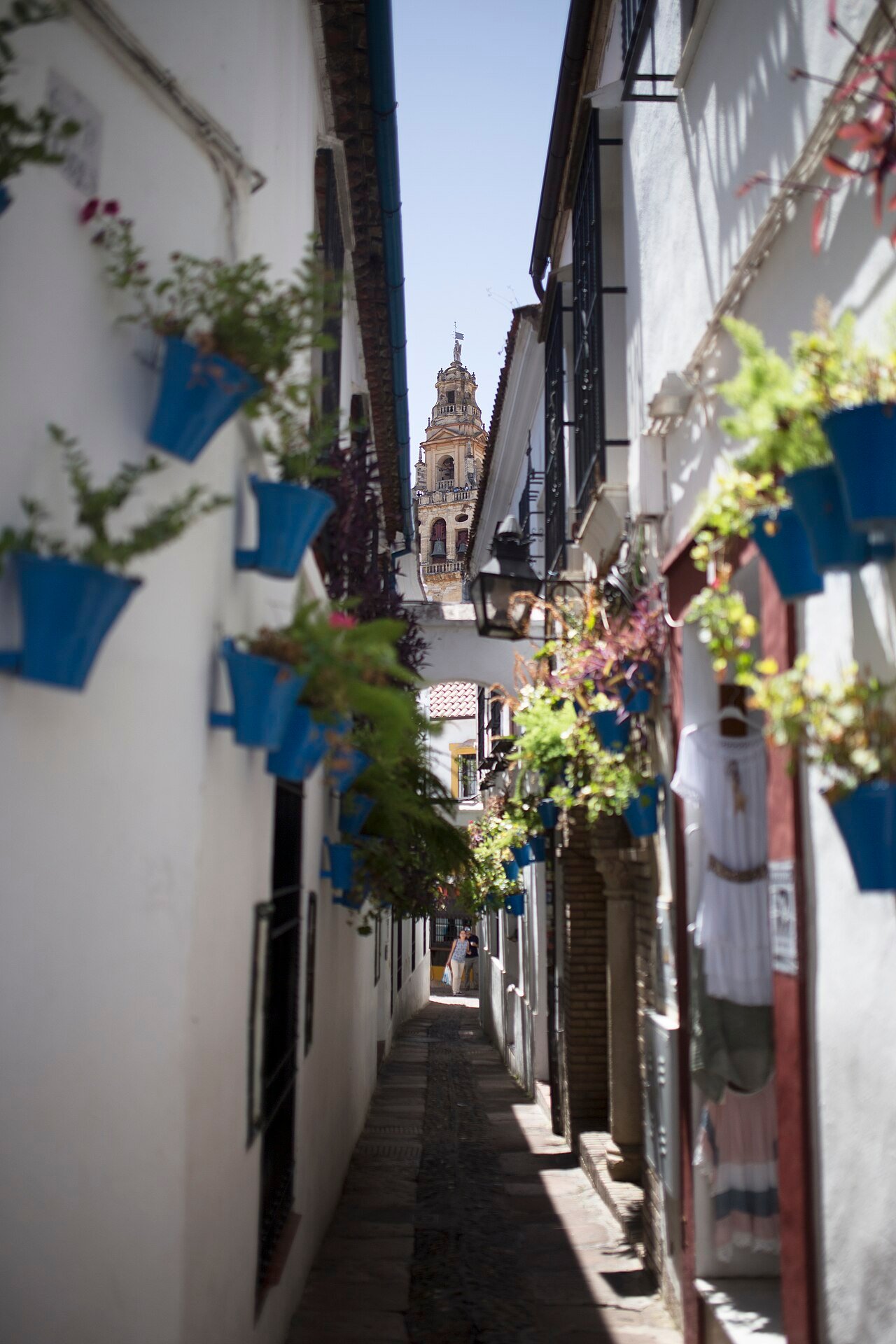
Save the quarter’s most famous forty metres for when the light is good. The Calleja de las Flores, a dead-end lane off Calle Velázquez Bosco, was dressed up in its present form in the mid-twentieth century and has been Córdoba’s postcard ever since: blue flowerpots pinned up both white walls, geraniums overhead, and at the lane’s end, framed by an arch, the Mezquita’s bell tower standing at exactly the distance a camera would choose. Go early or late; at midday in May you may queue for the photograph. Its tiny neighbour, the Calleja del Arco, is narrower still and mostly has the view to itself.
A word on timing that applies to the whole quarter: the Judería is at its best before ten in the morning and after six in the evening, when the day-trip flow is elsewhere. Sleep inside it if you can (the practical section covers where), and these lanes in the early light, with the swallows up and the cafés setting out chairs, are Córdoba at its most itself.
3. The Synagogue: One Small Room, Seven Hundred Years
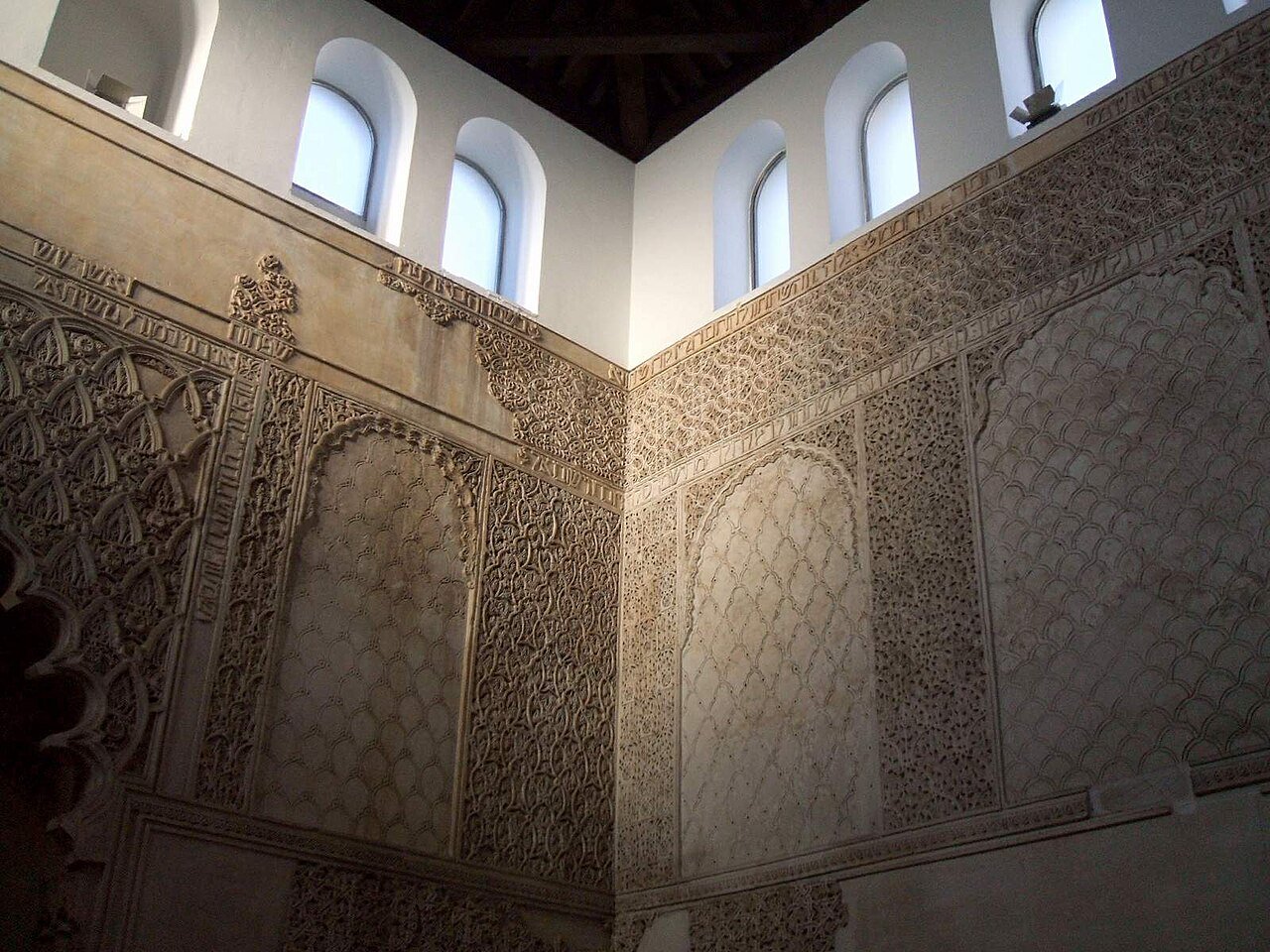
On Calle Judíos, behind an unmarked door you could pass three times, stands one of the most moving small rooms in Spain. Córdoba’s synagogue was built in 1315 — its foundation inscription names Isaac Moheb — and it is one of only three medieval synagogues to survive anywhere in Spain, the other two being in Toledo. After the expulsion of 1492 the building became a hospital, then a chapel, then a school, and the plasterwork that makes it precious survived under whitewash until the nineteenth century peeled it back.
The prayer hall is tiny — a single chamber a few metres square — and almost entirely covered, wall to wall and up to the women’s gallery, in Mudéjar carved plaster: interlacing geometric patterns, pine-cone and leaf motifs, and bands of Hebrew inscription carrying verses from the Psalms. Muslim craftsmen, working in the style of the Alhambra’s plasterers, decorated a Jewish house of prayer in a Christian-ruled city — Córdoba’s famous three cultures are not a slogan in this room; they are literally on the walls, one faith’s text in another’s handwriting. Climb the few steps to the gallery, where the women of the congregation sat behind the lattice, and look down: the whole community fitted into a space smaller than a tennis court.
The visit takes fifteen minutes and costs almost nothing: entry follows the Andalusian public-monument pattern — free for EU citizens, €1.50 for everyone else. Opening hours are short and seasonal (recent seasons have run mornings into mid-afternoon, closed Mondays), so treat it as a morning sight and pair it with the Casa de Sefarad across the lane. Small, quiet and seven hundred years old, it is the necessary balance to the Mezquita’s vastness — the same city, at the opposite scale.
4. The Alcázar de los Reyes Cristianos: Come for the Gardens
A five-minute walk south-west from the Mezquita brings you to the other royal Córdoba — Christian this time. The Alcázar de los Reyes Cristianos was built from 1328 for Alfonso XI of Castile on the site of the old caliphal fortress, and its towers watched the last act of medieval Spain: Ferdinand and Isabella held their court here through the years of the Granada war, received Columbus in audience in 1486 as he pressed his Atlantic scheme, and from here the final campaign against the Nasrid kingdom was directed. Later the fortress took a darker job — seat of the Inquisition in Córdoba for some three centuries — and the young Boabdil, last sultan of Granada, was held prisoner in its keep after his capture at Lucena.
Now the honest part, because it changes how you should plan this sight. At the time of writing, the Alcázar’s interiors are closed for restoration and the visit is the gardens only — and since restoration timetables in Spain run on their own calendar, check the current state before you go rather than trusting any guide, including this one. When the rooms reopen, the highlight indoors is the Salón de los Mosaicos, where superb Roman mosaics — dug up beneath the Plaza de la Corredera in 1959 — line the hall where the Catholic Monarchs held court.
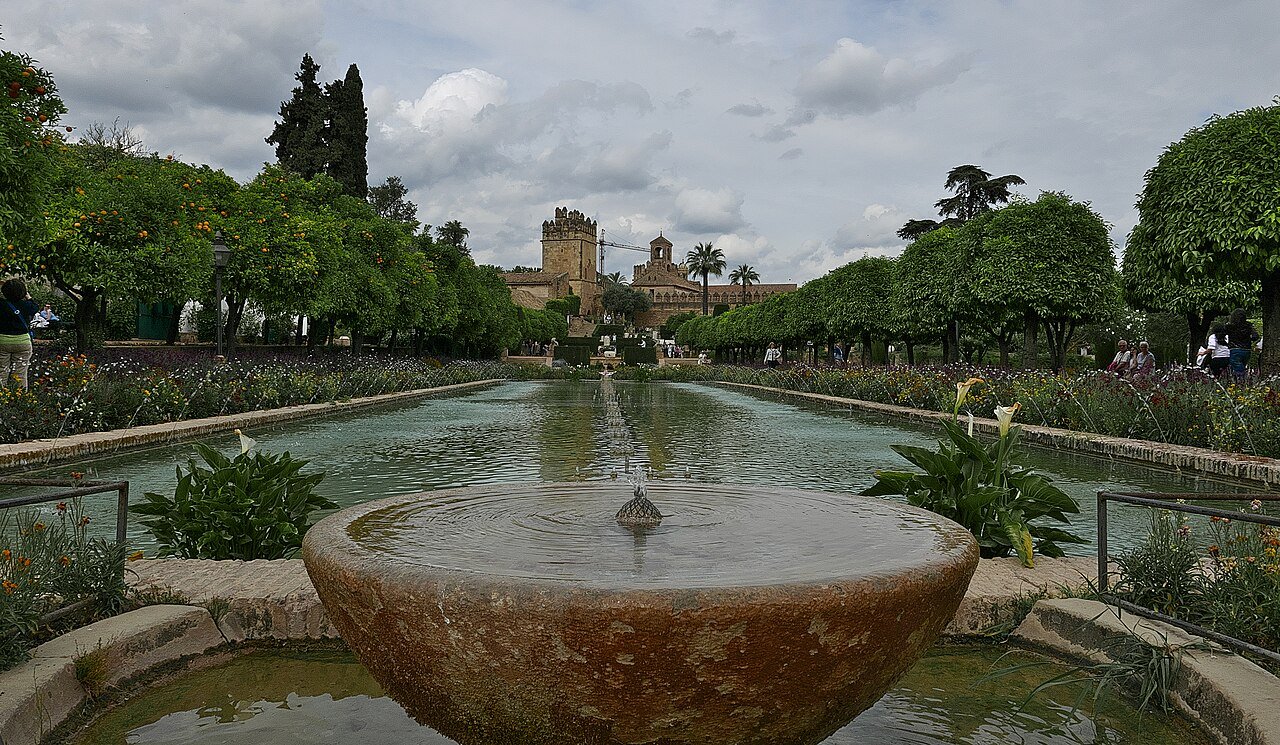
But here is the thing: even gardens-only, the visit earns its place, because these are among the finest historic gardens in Andalusia. They fall away from the fortress walls in terraces — long rectangular pools reflecting orange trees and clipped hedges, fountains running down the central axis, palm avenues, roses and myrtle, and at the meeting of the avenues the famous sculptural group of Ferdinand and Isabella in audience with Columbus, cast mid-conversation on the very ground where it happened. Allow an hour, go early, and treat the walls and towers as the frame rather than the picture. The Alcázar keeps the usual pattern of a Monday closure.
Next door, do not miss the doorway of the Caballerizas Reales, the Royal Stables founded by Felipe II in 1570 to create the pure Spanish horse — the Pura Raza Española was essentially invented in this building. Equestrian shows are staged in its great courtyard on certain evenings; schedules change by season, so check the board outside the door and, if a show falls on one of your nights, take it — horses dancing to music in a sixteenth-century stable yard is a very Córdoba evening.
5. The Roman Bridge and the Calahorra Tower: Córdoba at Sunset
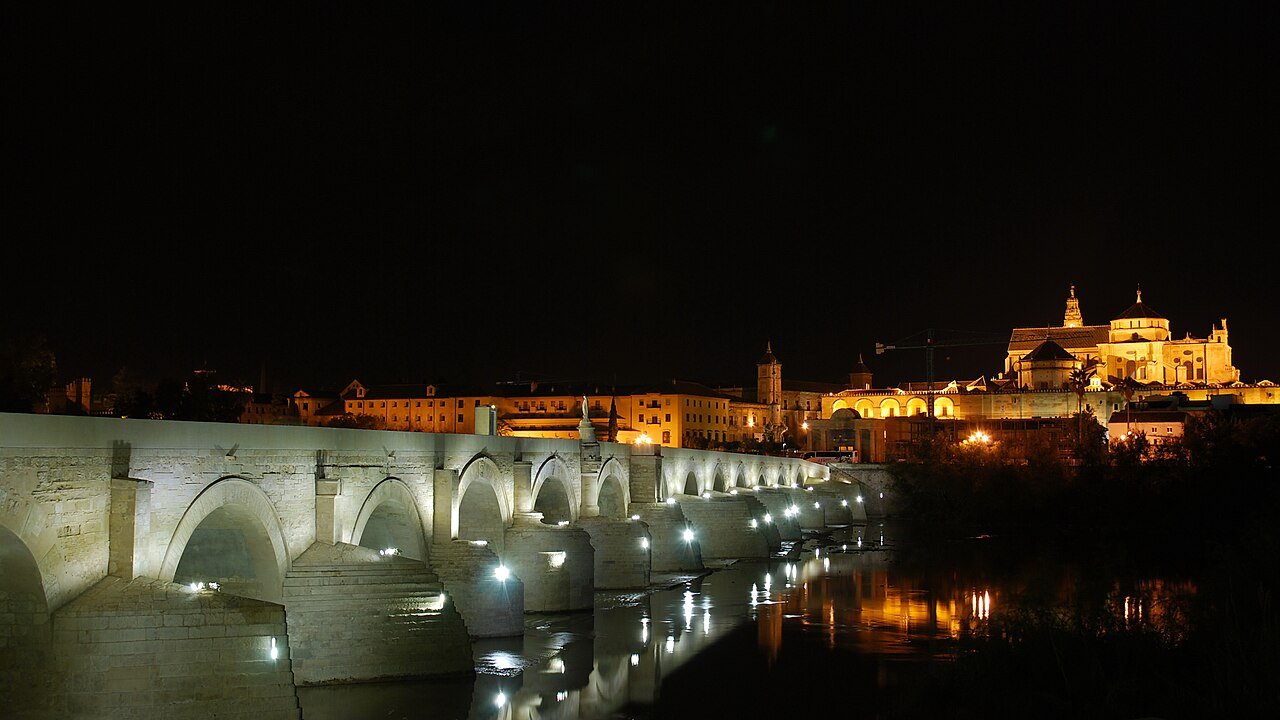
Every great Spanish river city has a walk it saves for the end of the day, and Córdoba’s is the Puente Romano. A bridge has crossed the Guadalquivir here since the first century BC; the present structure — sixteen arches, roughly 247 metres — is the accumulated work of two thousand years of rebuilding, Roman bones in largely medieval and later dress. It has been pedestrians-only for two decades, which returned it to its oldest purpose: the city’s evening promenade.
Walk it slowly, and walk it at the right hour. From the city end you pass through the Puerta del Puente, the triumphal gate of 1572 built to welcome Felipe II, and midway across you meet San Rafael standing on his column — the archangel who has guarded Córdoba since 1651, still accumulating candles and flowers. At the far end stands the Calahorra Tower, a fortress gate of the Islamic period, begun in the twelfth century and strengthened in 1369 under Enrique II, which today houses the Museo Vivo de al-Andalus: a small museum of the three cultures, all audiovisual storytelling and models, which divides opinion — the tower itself, and the climb to its roof terrace, do not. The Mezquita from up there, across the water, is the view the city is filed under in a million memories.
The timing matters more than the ticket. Come in the last hour before sunset, when the stone goes amber, the swallows come down over the river, and the Mezquita’s walls and the cathedral’s silhouette take the light together. Then cross back as the floodlights come on and the whole composition doubles itself in the Guadalquivir. Of all the free things in this guide, this is the one Córdoba’s own residents still do on purpose.
6. The Patios: Step Inside Córdoba’s Living Rooms
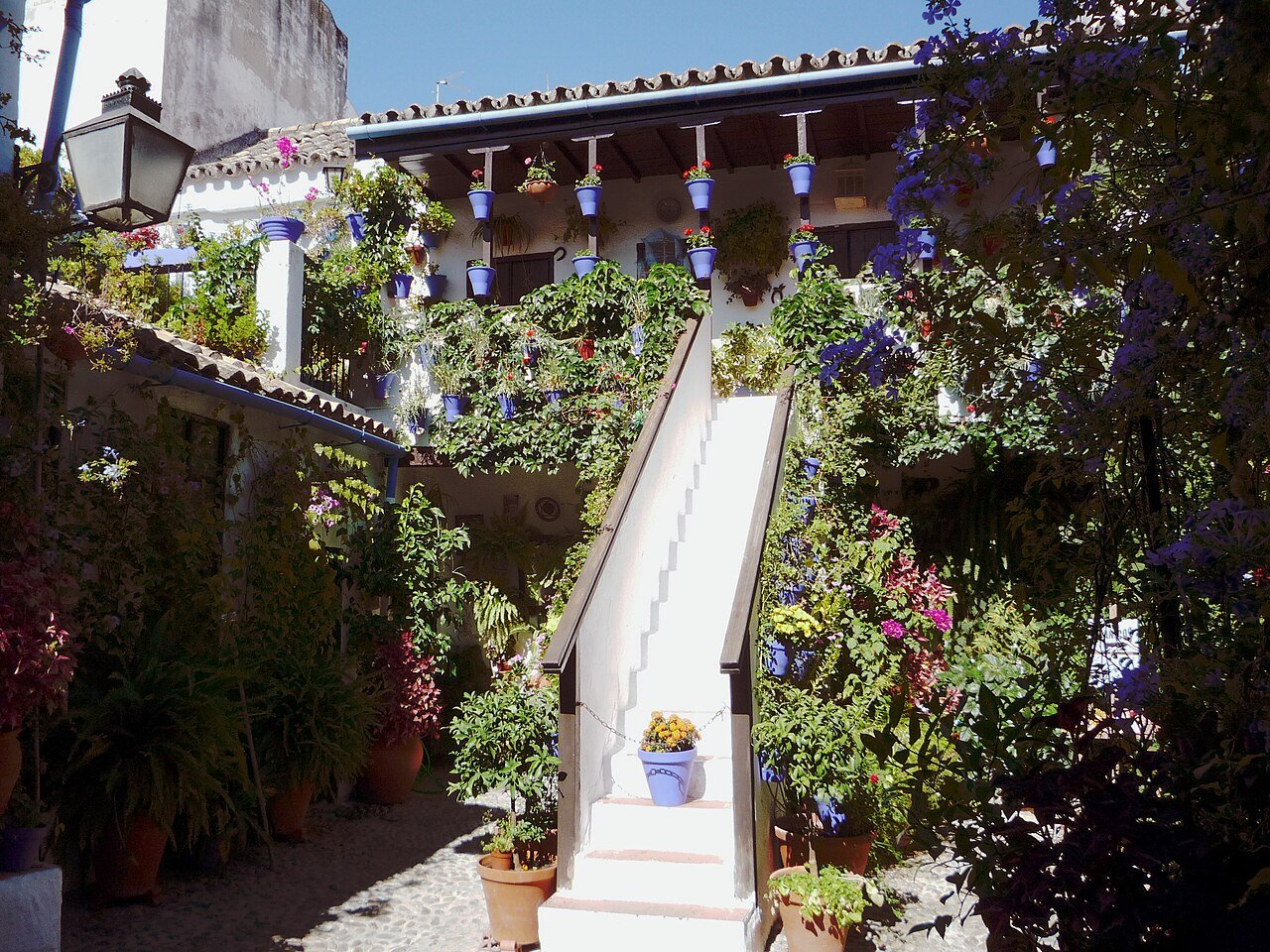
Córdoba’s houses are built backwards. In a city where summer afternoons regularly pass 40°C, life has always turned inward — Roman house, then Islamic house, then Christian corrala all arranged the same way: rooms around an open courtyard, where a well, a fountain and a dense shade of plants did the work of air-conditioning a thousand years before the word existed. The patio is not a garden appended to a Córdoba home. It is the home’s main room, its lungs and its pride.
Once a year the city opens those rooms to strangers. The Fiesta de los Patios, running since 1921 as a municipal contest, fills the first two weeks of May: dozens of private patios — 53 in the contest in 2026, across five signposted routes, plus institutional courtyards on top — unlock their street doors and receive the public, free, in the usual pattern of 11:00–14:00 and 18:00–22:00. In December 2012 UNESCO inscribed the festival on its Intangible Cultural Heritage list, and rightly: this is not a flower show that happens to be in courtyards. It is a neighbourhood culture — shared walls, shared wells, generations of neighbours in the old corralas tending pots communally — briefly visible from inside.
What you see, patio after patio, is exuberant: walls whitewashed to the roofline and then covered in geraniums, gitanillas and petunias in hundreds of pots; wells and fountains at the centre; iron grilles, old tiles, a lemon tree doing structural work. The classic quarter is San Basilio (the old Alcázar Viejo), in the fortress’s shadow, where the patios are densest and the queues longest; Santa Marina, San Lorenzo and the Judería all have routes of their own, and spreading your walking across them is the difference between a festival and a scrum. Two pieces of etiquette carry the whole visit: the patios are people’s homes, so move gently — and leave a coin in the collection box at the door. Entry is free; the water bills for five hundred geraniums are not, and the donation is the understood thank-you.
Honesty about May, because it decides holidays. The Patios are the peak of a whole Mayo Festivo: the Cruces de Mayo flower crosses in late April and early May, the Batalla de las Flores flower parade, the Patios themselves, and then the Feria de Nuestra Señora de la Salud fairground in late May. Córdoba in May is one of the great urban spectacles in Spain — and its hotels fill months ahead at the year’s highest prices, and the Mezquita queues double. If you are coming for the festival, plan it like a campaign: book the room and the Mezquita the moment dates are fixed (the coming year’s festival dates are confirmed on the official patios site early in the year; in 2026 it ran 4–17 May). If May is not your month, the patios still exist: several open on guided tours year-round, and this is the way to see them with the stories attached. Córdoba: Guided Tour of the Patios (GetYourGuide) runs an hour and a half with patio admission included, at the time of writing rated 4.4/5 from 985 reviews, from $22.32, with free cancellation up to 24 hours before for a full refund and reserve now & pay later; it meets at the main door of the Royal Stables, moving to the Town Hall door on Calle Capitulares during the festival itself.
7. Palacio de Viana: The Museum of Courtyards
If the festival patios are Córdoba’s courtyards at concert volume, Viana is the same music played in a quiet room, all year. The Palacio de Viana, in the Santa Marina quarter a fifteen-minute walk north-east of the Mezquita, is a great noble house that grew room by room and courtyard by courtyard over five centuries — and stayed a lived-in family home into the late twentieth century, its last marchioness entertaining guests among the collections until the house passed to the CajaSur foundation and opened as a museum. It was declared a national monument in 1981, and its own description of itself is exact: a museum of courtyards.
There are twelve patios and a garden, over some 6,500 square metres, and the pleasure is that no two agree on what a patio is. The Patio de Recibo receives you in gravel and restraint; the Columnas patio runs on arcades; the Patio del Pozo is gathered around its well; the Jardineros is green shade; and each is planted, furnished and proportioned to a different century’s idea of comfort. After the patios, the guided route through the house itself — kitchens, stables, salons stacked with porcelain, leatherwork, tapestries and one of Spain’s great collections of Cordoban embossed leather — fills in the domestic machinery behind the courtyards. At the time of writing, entry costs €8.50 for the patios and exterior route and €14 for the full visit including the house; the palace is closed on Mondays, and the house visits are guided and in Spanish, one honest limitation worth knowing before you choose the combined ticket.
Viana’s real value in a Córdoba itinerary is tactical as much as aesthetic: it is open when the festival is not, calm when the old town is not, and in May itself it offers patio splendour with a fraction of the San Basilio queues. Give it the late morning of your second day, then take its own quarter — Santa Marina, with its fernandine church and its taverns — for lunch.

8. Eat Like a Cordobán: Salmorejo, Flamenquín and the Old Tabernas
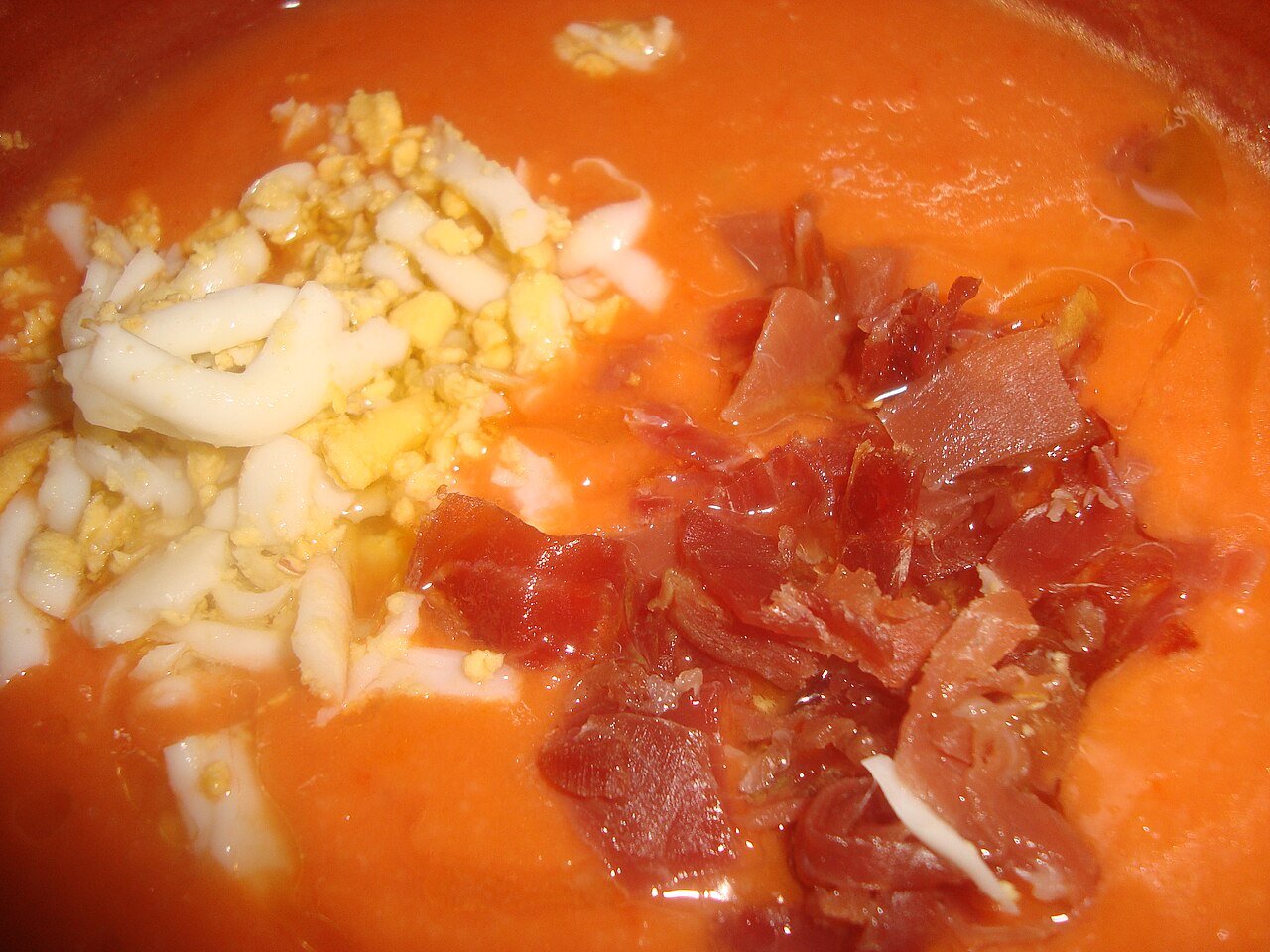
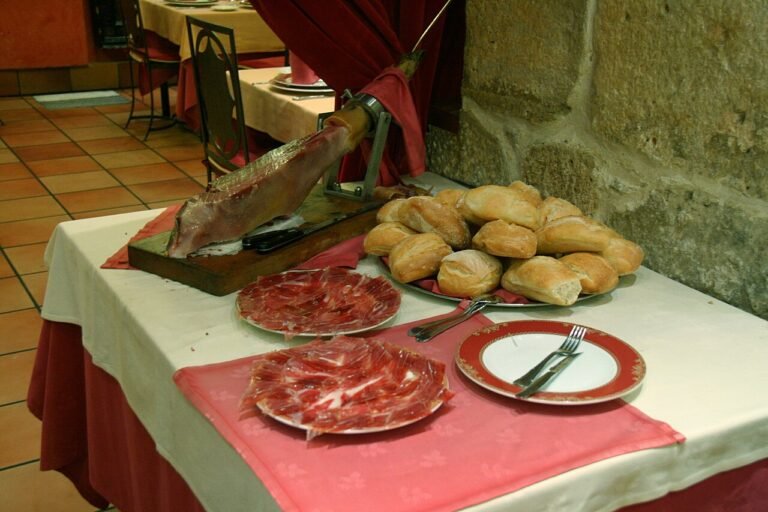
Every Andalusian city has a dish it will defend in an argument, and Córdoba’s fits in a soup bowl. Salmorejo is what gazpacho wants to be when it grows up: ripe tomatoes blended with bread, garlic and extra-virgin olive oil into a cream so thick a spoon stands in it, served cold under a snowfall of chopped hard-boiled egg and shavings of jamón. It belongs to Córdoba the way the Mezquita does, and you will eat it everywhere — as a starter in the grandest dining room and as a tapa standing at a zinc bar. Its older cousin mazamorra, made with almonds instead of tomato, predates the tomato’s arrival from America and still appears on traditional menus; order both once and join the local argument about which is the original.
The rest of the canon is equally unbothered by fashion. Flamenquín is pork loin rolled tight around cured ham, crumbed and fried to a deep gold, sliced into coins and made for sharing with a cold beer. Rabo de toro is the slow one: oxtail braised for hours in red wine until the meat surrenders, born in the days when the bullring supplied the taverns and now simply the city’s great stew. Add berenjenas con miel — aubergine fritters under a drizzle of cane honey, Moorish in its bones — and finish with a pastel cordobés, a puff-pastry round filled with cabello de ángel, the translucent pumpkin jam, eaten with coffee. For the glass beside it, know one name: Montilla-Moriles, the wine country south of the city, whose fino-style wines from Pedro Ximénez grapes are what the old tabernas pour by the small glass. If Andalusian food is your travelling passion, our guide to famous Spanish foods gives Córdoba’s dishes their full national context.
Where to eat matters as much as what. The Judería’s lanes carry their share of places trading on the view, but Córdoba still eats in tabernas — old, tiled, unpretentious taverns, many around the edges of the monument quarter and up toward the Corredera, where the menu is short, the salmorejo is made that morning and the bill is a pleasant surprise. The Mercado Victoria, a gourmet food hall installed in a nineteenth-century iron pavilion on the Paseo de la Victoria, is the indecisive group’s answer — a dozen counters, local and otherwise, under one pretty roof.
One correction, made plainly because guidebooks keep repeating it: Córdoba does not do the free tapa. That generous custom — a free plate with every drink — belongs to Granada, up the road. Here you order your tapas and raciones and pay for them, and at Córdoba prices you will not mind. A half-ración culture is strong here, which suits the city perfectly: more dishes, more arguments about which was best.
9. Plaza del Potro and the Small Museums: Córdoba Between the Monuments
By day two you will want an hour that is neither mosque nor courtyard, and the Plaza del Potro quarter, east of the Mezquita along the river, supplies it. The plaza itself — long, stone-flagged, centred on a fountain topped by a rearing colt, el potro — was the old town’s trading floor, and its inn, the Posada del Potro, earned the kind of fame no marketing buys: Cervantes named it in Don Quixote.

Along the plaza’s north side, the old Hospital de la Caridad houses two museums in one building, both small enough to do together in ninety minutes. The Museo de Bellas Artes is the serious one: a provincial fine-arts collection with real weight in the Spanish Golden Age — Zurbarán, Alejo Fernández (whose work also glows in the Mezquita’s orbit) and Antonio del Castillo, the city’s own Baroque painter — in cool, quiet rooms that rarely crowd. It follows the Andalusian museum pattern: free for EU citizens, €1.50 for everyone else. Across the entrance hall, the Museo Julio Romero de Torres is the personal one: Córdoba’s best-loved painter (1874–1930), whose dark-eyed portraits of the women of Córdoba became the city’s visual signature — you will start recognising his faces on wine labels and café walls all over town, and the museum in his own house makes sense of the cult.
Round out the hour with the working city around it. The Museo Arqueológico, on Plaza Jerónimo Páez, covers Roman Corduba and stands over the remains of its great theatre. The Plaza de la Corredera, a few streets north, is the city’s Castilian set piece: a perfect seventeenth-century rectangle of arcaded brick, once the stage for bullfights and public spectacle, now given over to a food market at one end and a acre of café terraces. And on Calle Capitulares, beside the town hall, the columns of the Roman Temple stand improbably among the municipal buildings — first-century marble, excavated in the 1950s, and the natural end of a walk that began at a mosque and passed a synagogue: three civilisations, twenty minutes apart.
10. Half-Day Trip: Medina Azahara, the Caliph’s Shining City
Eight kilometres west of the old town, at the foot of the Sierra Morena, lies the reason Córdoba once outranked almost every city in Europe. In 936 Abd al-Rahman III — by then not merely emir but caliph, founder of a western caliphate to rival Baghdad — ordered a new palace-city built from nothing: Madinat al-Zahra, “the Shining City”, a terraced royal capital of courts, mosques, gardens, barracks and workshops, built to receive ambassadors from Constantinople and the German emperor and leave them speechless.
It worked for barely a generation. From 1010 the caliphate tore itself apart in civil war, and the Shining City was sacked, burned and then quarried for a thousand years — Córdoba’s suburbs are partly built of it. What excavation has recovered since 1911 is roughly a tenth of the walled city, spread across three great terraces, and it is enough: the restored reception hall, the Salón Rico, where the caliph received embassies under carved stone arches; the House of Ja’far, the chief minister’s residence; the great Pórtico that fronted the parade ground; and streets stepping down the hill toward the plain. In 2018 UNESCO made it a World Heritage Site — Córdoba’s fourth inscription, a tally no other Spanish city holds.
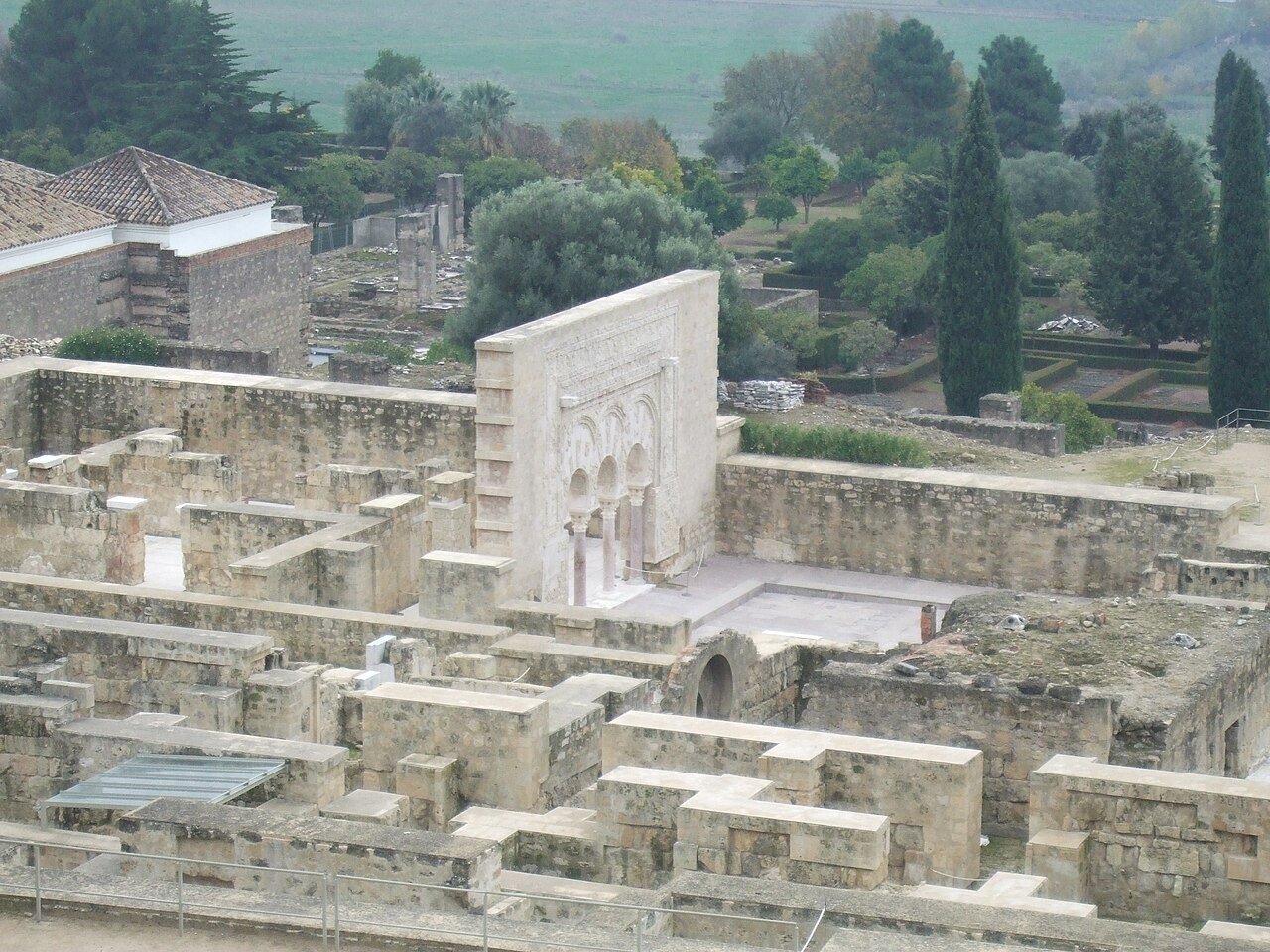
The visit has a fixed choreography, so plan it as the first half of a day. You park (or the city bus drops you) at the site museum, one of the largest archaeological museums in Spain and itself European Museum of the Year in 2012: see the film and the finds first — the famous bronze hind fountain, the carved ivory pyxides — because they put flesh on the ruins. Entry to the site itself is free for EU citizens and €1.50 for everyone else, and from the museum the authorised shuttle bus (€3 return) carries you the two kilometres up to the terraces; you cannot walk up or arrive independently at the ruins. A tourist bus from the city bundles the trip at around €10 return including the shuttle. Allow three hours altogether, go in the morning before the terraces heat up, and expect the usual Monday closure.
Guided is arguably the way this site most rewards, because a ruin field this fragmentary needs a narrator. Córdoba: Medina Azahara 3-Hour Guided Tour (GetYourGuide) is led by an archaeologist, includes the entrance ticket and offers optional round-trip transport from the city; at the time of writing it was rated 4.6/5 from 1,047 reviews, from $20, with free cancellation up to 24 hours before for a full refund and reserve now & pay later. One limitation stated plainly, because the page states it too: the live guide is in Spanish only — the museum’s film carries English subtitles, but if you want English commentary throughout, go self-guided with the museum’s materials instead.
11. Córdoba Practicalities
Getting here by train is the whole trick. Córdoba sits on the Madrid–Andalusia high-speed spine, and the railway does what no road can: Madrid Puerta de Atocha to Córdoba averages about 1 hour 45 minutes (fastest 1h43) with dozens of trains a day; Seville Santa Justa to Córdoba averages about 45 minutes with more than forty-five direct trains a day — which is why the Seville–Córdoba hop in our week itinerary works in either direction; and Córdoba to Granada averages about 1 hour 45, on the thinnest timetable of the three, so check times rather than assuming. Córdoba station (booking engines split between calling it Central and Julio Anguita; it is one and the same) stands about a 15–20 minute walk north-west of the Mezquita — an easy downhill stroll through the modern centre, or a short bus or taxi ride with luggage.
When to come. Spring is Córdoba’s crown: April brings orange blossom and kind temperatures, May brings the festival month described in section 6 — glorious and crowded in equal measure, with its premium prices. Summer is the honest caveat: Córdoba is regularly the hottest city in Spain, with afternoons well past 40°C; sightseeing reorganises around dawn and dusk and the long siesta, and the Mezquita’s cool hall becomes a refuge rather than a sight. Autumn is the connoisseur’s second spring, and winter is mild, bright and quiet, with the monuments at their emptiest. Whenever you come, pair the trip naturally: Córdoba and Granada are the caliphate and the emirate as a matched set, and Seville completes the triangle. If you are weighing Córdoba as a bolt-on, our day trips from Seville guide runs the day-trip maths in full — our verdict there and here is the same: a day trip sees the Mezquita; a night in Córdoba sees the city.
Where to stay. Sleep in the Judería if you want the monuments at your door and the lanes at dawn — the premium choice, with the caveat that its prettiest streets are pedestrian and your suitcase will learn them. The Centro around Plaza de las Tendillas is the practical all-rounder: proper hotels at every level, the Corredera and the shopping streets at hand, an easier walk from the station. The Ribera, along the river by the bridge, buys Mezquita views; and Santa Marina and the Axerquía, around Viana, are the local-flavoured quarters with the gentlest prices. On price generally, Córdoba is kinder than Seville or Madrid for most of the year — several of this guide’s sights are free or €1.50 — but May reverses all of it, and our budget travel in Spain guide’s shoulder-season advice applies with force. First time in the country? Skim our Spain travel tips before you book anything — the siesta, the late dinners and the festival calendar all shape a Córdoba trip more than most.
How long. One night is the minimum that respects the city: Mezquita first morning, Judería lanes, the bridge at sunset. Two nights is the answer this guide is built on — adding Medina Azahara, Viana, the Alcázar gardens and a proper tavern dinner. Three, in May, if the patios have you.
Travel insurance, sorted
Whether it is a two-week holiday or a longer move, travel insurance is not the most glamorous part of a trip – but it is the one booking you want to have in place before a trip, and while you are already away. Get a quote from SafetyWing
Final Thoughts
Córdoba’s rivals in Andalusia each get one big adjective — Seville the beautiful, Granada the romantic. Córdoba gets a harder one: the profound. No other Spanish city stacks three civilisations so tightly or carries them so casually: a mosque with a cathedral in its heart, a synagogue the size of a chapel with the Psalms carved in Islamic plaster, a caliph’s drowned city on the hill and a flower festival that turns private homes into public joy. Come for the Mezquita, by all means — everyone does, and everyone should. But give the city its night and its second morning, walk its bridge at dusk, eat its salmorejo standing up, and Córdoba stops being the day trip between Seville and Granada. It becomes the place the whole trip was secretly about.
Things to Do in Granada: 12 Unforgettable Highlights From the Alhambra to the Free Tapa
Frequently Asked Questions
How many days do you need in Córdoba?
Two days and at least one night. The Mezquita, the Jewish quarter, the synagogue and the Roman Bridge fill day one without hurrying; day two takes in Medina Azahara in the morning and the Palacio de Viana and the Alcázar gardens in the afternoon. A day trip from Seville is perfectly possible, but it reduces the city to the Mezquita and the lanes around it.
Do you need to book Mezquita tickets in advance?
In spring, at Easter, during the May festival and on any weekend: yes, days ahead, because timed entry sells out. The official general ticket costs €15 on the monument’s own website; reduced tickets are €12 and children aged 10–14 pay €8. Outside those peaks you can usually buy at the Patio de San Eulogio reception centre on the day. The flexible alternative is the free visiting hour, Monday to Saturday 8:30–9:30, for individual visitors — arrive early, as entry stops at 9:20.
When is the Patios Festival, and is it worth planning around?
In the first two weeks of May — in 2026 it ran 4–17 May, and the coming year’s dates are confirmed on the official patios site early in the year. Entry to the contest patios is free, with visiting usually 11:00–14:00 and 18:00–22:00. It is genuinely worth planning around: there is nothing else like it in Spain. But plan with open eyes — May is a whole festival month in Córdoba (flower crosses, the flower battle, the fair), hotels are at their most expensive and fill months ahead, and the classic San Basilio patios draw queues at peak hours.
Can you visit Córdoba as a day trip from Seville?
Yes, easily — more than forty-five direct trains a day make the run in about 45 minutes, and an early start gets you the Mezquita’s free hour or a first timed slot, the Jewish quarter, lunch and the bridge before an evening train back. What a day trip cannot comfortably hold is Medina Azahara (three hours with its shuttle choreography) plus everything else, and it takes the evening off the table — the bridge at sunset and the old town after dark are half of Córdoba’s argument for staying.
Is Córdoba expensive?
Outside May, it is one of the gentlest-priced of Spain’s great cities. The Mezquita at €15 is the one big ticket; the Synagogue and the Museo de Bellas Artes are free for EU citizens and €1.50 for everyone else, contest patios in May are free, the bridge and the orange-tree courtyard cost nothing, and tavern lunches run well below Seville prices. May, Easter and festival weekends are the exception — accommodation then carries the year’s premium, which is the practical argument for booking early or choosing April or October instead.
What should you eat first in Córdoba?
Salmorejo — the city’s signature bowl of thick tomato, bread and olive-oil cream, crowned with jamón and chopped egg. Order it wherever you land first; it is on every menu in the old town. Follow it across your stay with flamenquín (crumbed, fried pork-and-ham roll), rabo de toro (slow oxtail stew) and berenjenas con miel (aubergine fritters with cane honey), a pastel cordobés with coffee, and a glass of Montilla-Moriles, the local wine, alongside. One expectation to set: unlike Granada, Córdoba does not serve a free tapa with drinks — tapas here are ordered and paid for, and at local prices that is no hardship.



One Comment