Best Places to Visit in Mallorca: 12 Stops for Your First Trip
If you only pin twelve places on a first trip to Mallorca, make them these: Palma’s old town and La Seu cathedral first, then the Serra de Tramuntana coast — Valldemossa, Deià, Sóller, Fornalutx, Sa Calobra and Cap de Formentor — with Alcúdia, the Cuevas del Drach and two great beaches completing the island. Start with the capital: La Seu is a Gothic cathedral built on the sea wall itself, and it sets the tone for everything after.
The island’s shape is the second thing to understand. Mallorca looks big on the map, yet almost everything on this list sits within day-trip reach of Palma — the Tramuntana stops chain together along one mountain coast, and the caves and calas are single outings. Most first-timers do best based in Palma and radiating out; a split stay only earns its keep if you want slow mornings in the mountains or up north.
Mallorca is the Balearic chapter of the same story as the best places to visit in Spain — a different rhythm from the mainland’s iconic places in southern Spain, with a capital, a mountain range and a dozen coves packed into one island. Here are the twelve stops to build the trip around.

In This Guide
- 1. Palma Old Town and La Seu Cathedral
- 2. Castell de Bellver
- 3. Valldemossa and the Royal Charterhouse
- 4. Deià, the Village of Artists
- 5. Sóller and Port de Sóller by Vintage Train and Tram
- 6. Fornalutx, the Prettiest Village in the Valley
- 7. Sa Calobra and the Torrent de Pareis
- 8. Cap de Formentor
- 9. Alcúdia Old Town
- 10. Cuevas del Drach in Porto Cristo
- 11. Es Trenc Beach
- 12. Cala Mondragó
- 13. How to Get Around Mallorca
- 14. Where to Base Yourself
- 15. Final Thoughts
- 16. Frequently Asked Questions
Palma Old Town and La Seu Cathedral
Palma is where Mallorca starts, and La Seu is the reason. Building began in 1229, straight after Jaime I took the island, and the result is Levantine Gothic on a giant scale: 121 metres long, its central nave rising 44 metres, standing on the old sea wall between the Royal Palace of La Almudaina and the Parc de la Mar lake. Few European cathedrals sit this close to the water they were built to face.
The one thing not to miss is the great rose window — nearly 14 metres across, one of the largest Gothic rose windows in the world. Come in the morning, when the sun fires it into colour above the altar. On 2 February and 11 November the early light projects the window’s image onto the opposite wall, forming a perfect figure of eight that locals call the spectacle of the eight.
Inside, two famous names have left their mark. Antoni Gaudí reworked the choir and opened up windows between 1904 and 1914, and Miquel Barceló’s vast ceramic chapel of loaves and fishes, inaugurated in 2007, fills a side chapel with a cracked, sea-creature world of clay. Give the cathedral a slow hour, then lose yourself in the old town lanes behind it — courtyards, the Arab Baths’ neighbourhood, café terraces on the Passeig del Born.
Book it: the Palma de Mallorca: Old Town and Cathedral Tour (4.6/5, 892 reviews, from $31.25 per person) walks you through the old town with a local guide and includes cathedral entry — around 45 minutes inside La Seu, ending inside so you can stay on afterwards. Free cancellation up to 24 hours ahead and reserve now, pay later were both stated on the product page when checked.
Base logic is simple: this is the base. Sleep in or near the old town and Palma’s sights, restaurants and transport hub are all on foot.
Castell de Bellver
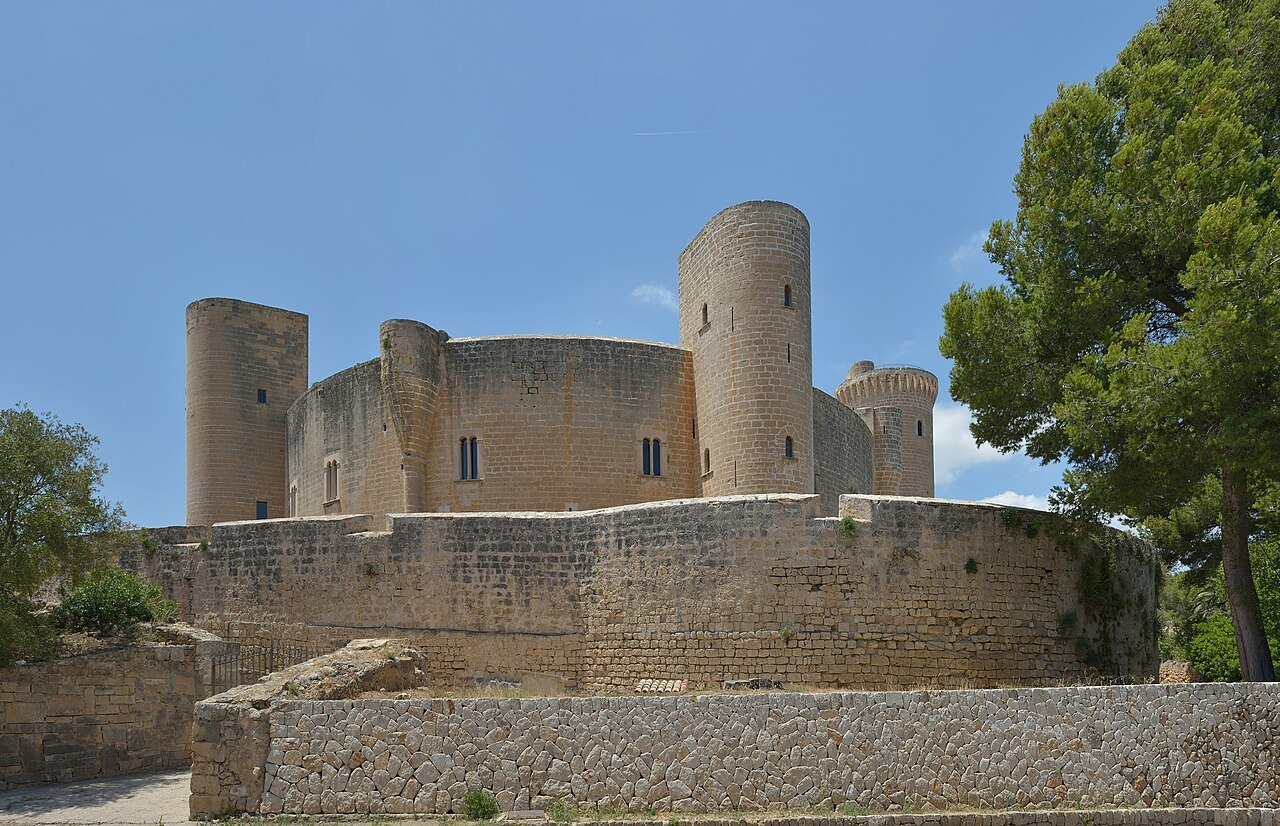
Three kilometres west of the old town, on a pine-covered hill 112.6 metres above the bay, stands the castle that breaks every castle rule: Bellver is round. Built between 1300 and 1311 for King Jaume II of Mallorca, its perfect circle — walls, courtyard and towers all curved — is unique in Spain and one of only a handful of circular castles in Europe. The name, from old Catalan, simply means “beautiful view”, and the rooftop terrace proves it.
The one thing not to miss is that view: Palma’s whole bay, the cathedral on its sea wall, the marina and the Tramuntana behind you, in a single slow turn. Inside, Palma’s City History Museum fills the rooms with the island’s story from Roman Pollentia to the present, which makes Bellver the ideal second sight of a Palma day — context first, then the island.
Come late in the afternoon, when the stone turns honey-coloured and the heat drops; the walk up through the Bellver pine forest is part of the pleasure. It is a short bus or taxi hop from the centre, so it pairs with the old town rather than needing its own day.
Valldemossa and the Royal Charterhouse
The Tramuntana begins properly at Valldemossa, a honey-stone village folded into the hills above 400 metres, all cobbled lanes, green shutters and flower pots. At its heart stands the Royal Charterhouse: begun as a palace of Jaume II for his son Sancho, handed to Carthusian monks in 1399, and emptied when the monks were expelled in 1835. The cells were then rented out — which is how the village got its famous winter.
In 1838–1839 the composer Frédéric Chopin and the writer George Sand rented a cell here. Chopin finished his Preludes Op. 28 in that cell, and the little museum keeps his Pleyel piano; Sand went home and wrote A Winter in Majorca, complaining about almost everything except the landscape. The one thing not to miss is that cell — music history in three small rooms — followed by a warm coca de patata, the village’s soft potato bun, from a bakery on the lane.
Valldemossa is at its best early, before the day-trip coaches climb up, or in the golden hour when they leave. From Palma it is a short bus ride, and it starts the classic Tramuntana chain: Valldemossa, Deià and Sóller line up along the same coast road.

Deià, the Village of Artists
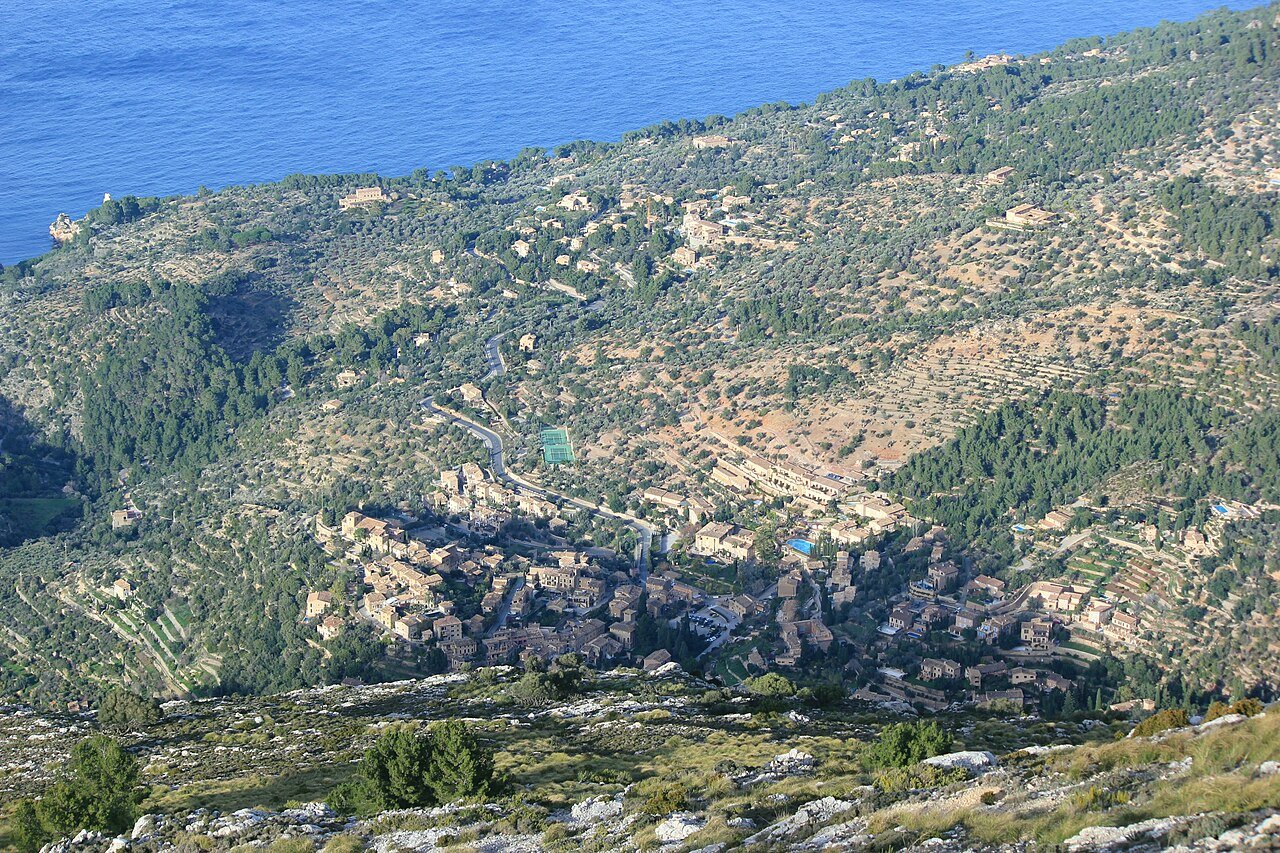
Ten minutes along the coast road, Deià tumbles down a green hillside under the Puig de Teix: honey-coloured houses, olive terraces, a church on the hill and the sea glittering at the bottom of the valley. Pretty villages are common in the Tramuntana, but Deià has a second life as the island’s artists’ colony — painters, writers and musicians have been washing up here for a century.
The name that made it is Robert Graves, the English poet and author of I, Claudius. He settled in Deià in 1929, returned in 1946 after the Civil War years away, and stayed until his death in 1985. His house, Ca n’Alluny, is now a small museum of his life and work, and the one thing not to miss is the short climb after it: Graves lies in the little churchyard on the hill, under a plain slab, with the whole village and valley below.
Allow time, too, for the walk down to Cala Deià — about 30 minutes on foot to a small shingle cove with a pair of fish restaurants on the rocks. Deià works as an easy day trip from Palma, but it also makes the case for a night or two: this coast anchors many of the island’s romantic getaways in Spain, and Deià after the day-trippers leave is the reason why.
Sóller and Port de Sóller by Vintage Train and Tram
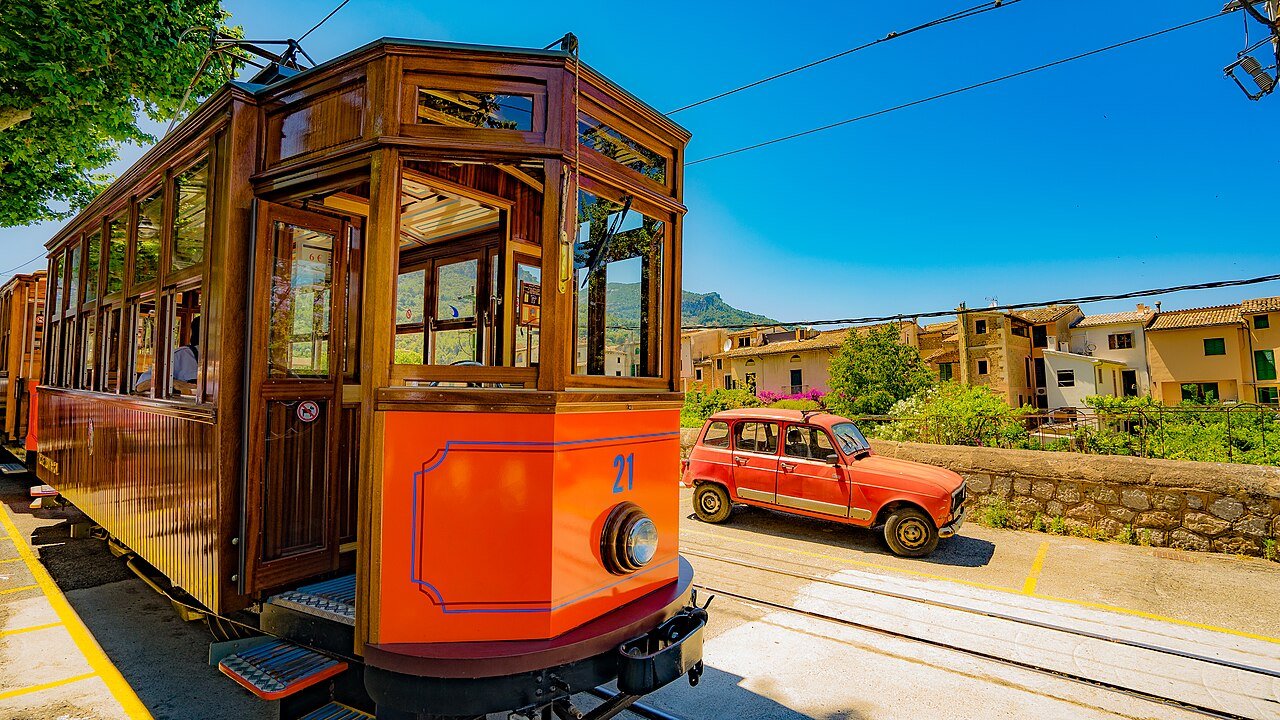
Sóller sits in a bowl of orange groves under the highest peaks of the Tramuntana, and the way to arrive is the point: a wooden train that has been climbing out of Palma since it was inaugurated in 1912. The little train rattles through 13 tunnels and over the Cinc Ponts viaduct, slowing for the viewpoint above the valley before rolling into Sóller station — where, fittingly, the station building shows Miró etchings and Picasso ceramics.
In town, take coffee on the Plaça de sa Constitució between the church of Sant Bartomeu and the modernist Banco de Sóller, then do what everyone does: catch the vintage tram for the slow 5-kilometre ride down to Port de Sóller. The port is a near-perfect horseshoe bay, with two sandy beaches, a lighthouse at each arm and seafood restaurants along the promenade — the west coast’s one real resort bay, and it still feels like a fishing port.
The one thing not to miss is the full chain in one day: train up, tram down, swim and lunch at the port, tram and train home. Book it as one ticket: the Mallorca: Island Trip by Train, Tramway, and Boat (4.4/5, 1,324 reviews, from $72.50 per person) bundles the return train and tram with the boat from Port de Sóller to Sa Calobra at your own pace — the simplest way to run this whole day from Palma. Free cancellation up to 24 hours ahead and reserve now, pay later were both stated on the product page when checked.
Day trip or base? The train makes Sóller the easiest Tramuntana day trip of all, but the port is also the strongest second base on the island if you split your stay.

Fornalutx, the Prettiest Village in the Valley
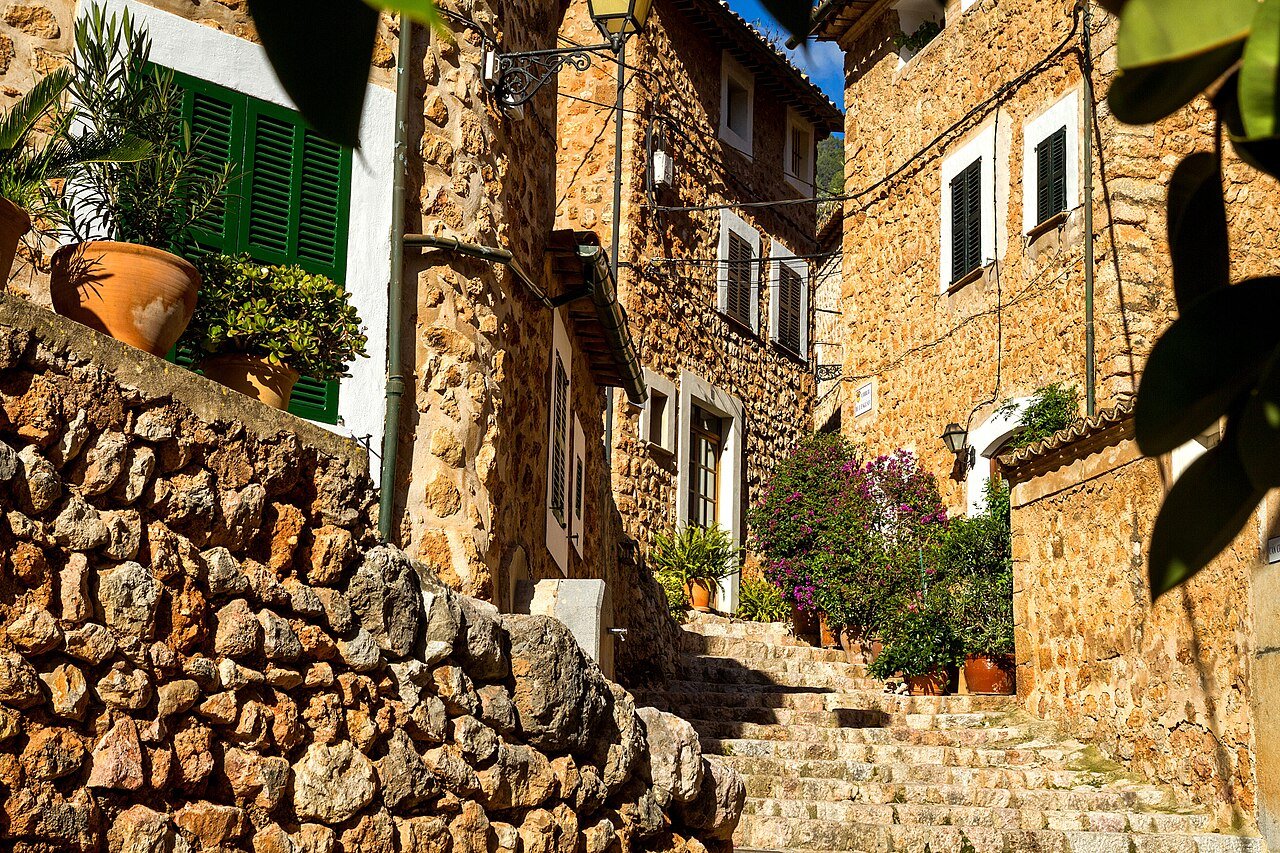
Five minutes above Sóller, the valley narrows into Fornalutx — a village built almost entirely of golden stone, terraced into the hillside under Puig Major, the Balearics’ highest summit at 1,436 metres. It is regularly named among the prettiest villages in Spain, and for once the label survives the visit: stepped lanes too narrow for cars, citrus trees overhanging the walls, washing lines and bougainvillea, and hardly a building that breaks the spell.
There is no single sight here, and that is the pleasure. The one thing not to miss is the stepped lane climb from the little square past the church to the top of the village, ideally in the morning when the stone glows and the cafés are setting out chairs. Walkers use Fornalutx as the trailhead for the Barranc de Biniaraix, the great stepped gorge path up towards the Cúber reservoir.
Fornalutx pairs naturally with Sóller — same valley, same day — and belongs on any list of the best Spanish towns to wander without an agenda. Come by car or on the local bus from Sóller; do not expect to hurry it.
Sa Calobra and the Torrent de Pareis
Every great coast has one drive that becomes the story you tell at home, and Mallorca’s is the Ma-2141 down to Sa Calobra. The road was designed by engineer Antonio Parietti and opened in 1933 without machines doing the hard part — hairpin after hairpin dropping from the Coll de Cal Reis pass at 682 metres, including the famous 270-degree loop nicknamed the tie knot, where the road passes under itself.
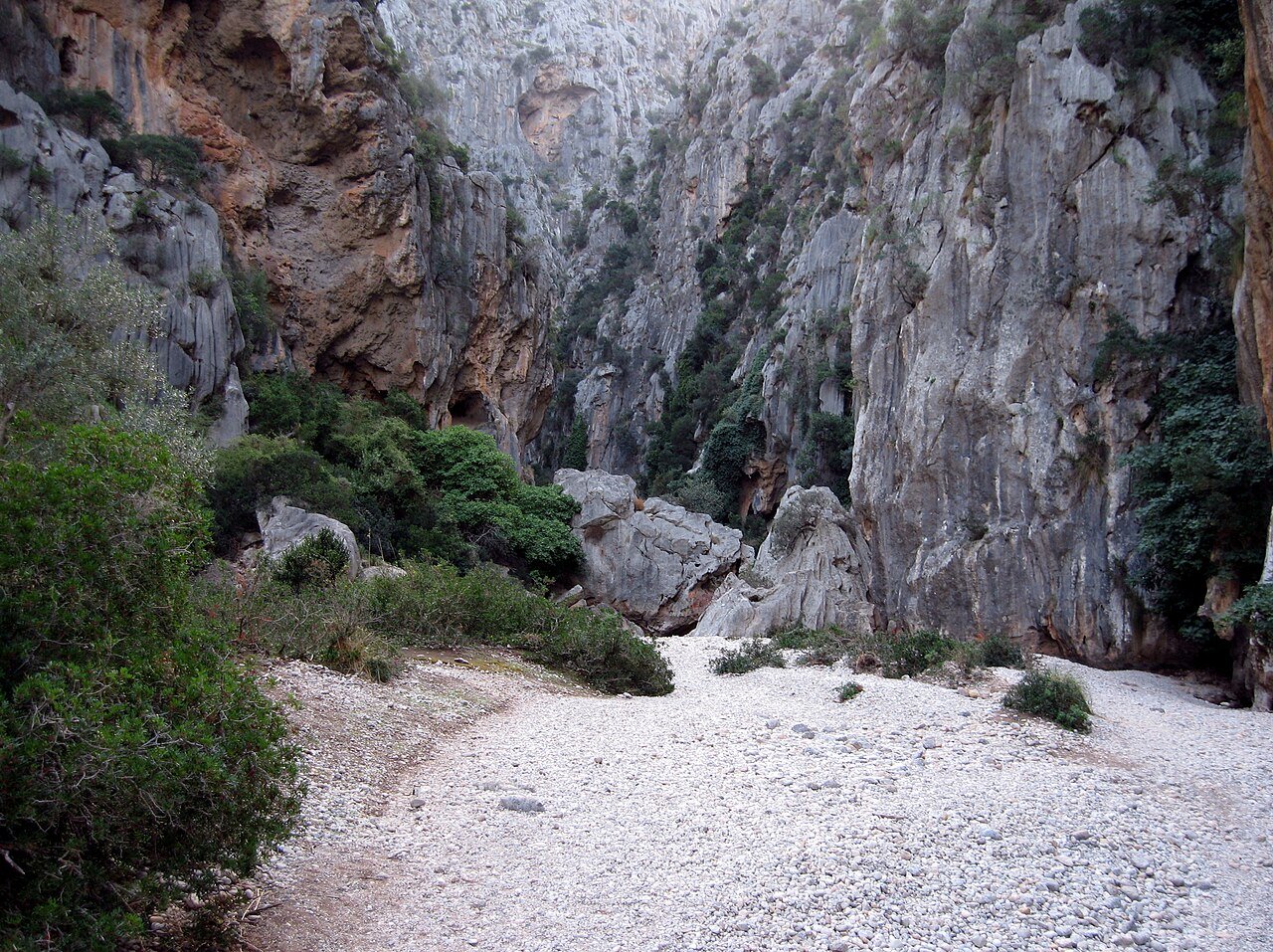
At the bottom, the tiny cove of Sa Calobra is only the warm-up. Follow the path along the shore and through two short rock tunnels and you arrive at the mouth of the Torrent de Pareis: a pebble beach pinched between the walls of a gorge more than 3 kilometres long, with cliffs rising up to 200 metres. The one thing not to miss is simply standing in that slot of light and water — it is the wildest landscape in Mallorca, and it earns every hairpin.
Two honest warnings-as-advice: the gorge hike itself (down from Escorca) is a serious, experts-only undertaking in dry weather, not a stroll; and in high summer the cove fills by midday. Come early by car, or skip the drive entirely — boats run from Port de Sóller (the combined ticket in the Sóller section above includes one), which turns the hardest drive on the island into the easiest arrival.
Cap de Formentor
The Formentor peninsula is Mallorca’s northern finger, a ridge of pine and pale rock pointing at Menorca. The road out, the Ma-2210, is an attraction in itself: about 20 kilometres from Port de Pollença of climbing curves and sudden sea views, stopping first at the Mirador Es Colomer, where the cliffs drop sheer into blue water on both sides of the ridge.
Beyond it, the road passes the pine-backed sand of Platja de Formentor and ends at the lighthouse, built in 1863 and standing some 200 metres above the sea at the very tip of the cape. The one thing not to miss is that final viewpoint — on a clear day the whole north coast unrolls behind you. Sunset is the famous hour, but morning light on the cliffs is quieter and, for photographs, better.
Plan the access before you go: from mid-May to mid-October the final stretch between Formentor beach and the lighthouse is closed to private cars during the day (in 2026 the closure ran 15 May to 18 October, 10:00–22:00), and the TIB 334 shuttle bus from Alcúdia and Port de Pollença takes over, stopping at Es Colomer too. Outside the season you can drive to the lighthouse; in season, the shuttle is genuinely the relaxed option. Formentor pairs with Alcúdia, below, as one northern day.

Alcúdia Old Town
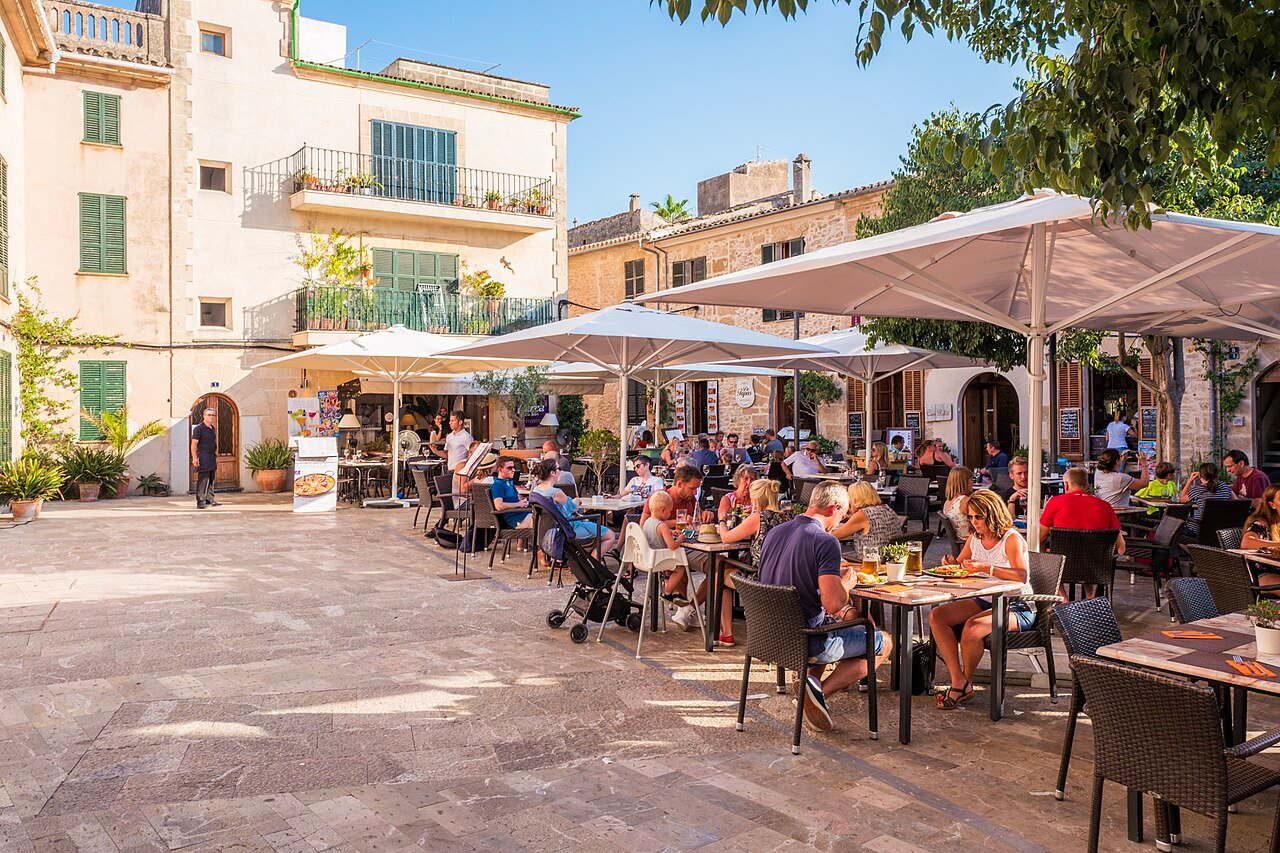
Alcúdia is the north’s counterweight to Palma: a complete little medieval town still wearing its ring of walls. Walk in through one of the old gates and the lanes narrow to stone houses, small squares and café terraces; climb onto the wall walk and the whole plan of the town — and the countryside running to two bays — makes sense at a glance.
The one thing not to miss is just outside the walls: the excavated streets, forum and houses of Pollentia, the Roman city that stood here before Alcúdia existed, with its small theatre carved out of the rock at the edge of the site. Roman first, medieval second, lunch third — the town square does a very good lunch.
Alcúdia is about an hour from Palma, and it splits its duties well: a day trip in its own right, the natural partner to a Cap de Formentor morning, and the best northern base if you split your stay — the long beach at Port d’Alcúdia begins just down the road.
Cuevas del Drach in Porto Cristo
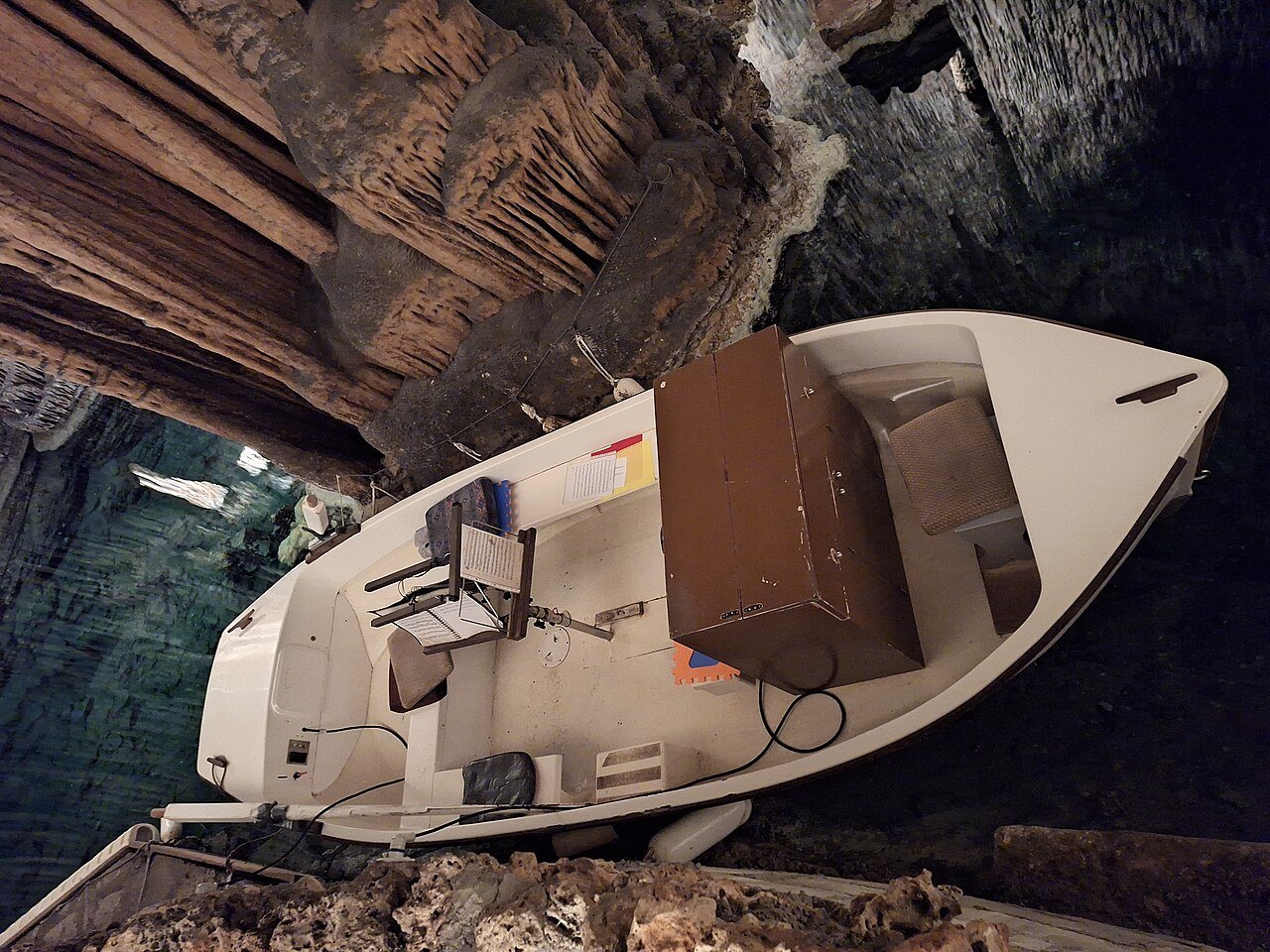
The east coast hides Mallorca’s great underground set piece. The Cuevas del Drach, at Porto Cristo, run through four connected caves of dripping stalactites and still, coloured pools — and end at Lake Martel, an underground lake about 170 metres long, one of the largest in the world.
Since 1935 the visit has ended the same way: the lights drop, and a boat carrying musicians glides across the lake playing classical music, the sound rolling off the water and the rock. It should be kitsch; in the dark, it is genuinely moving. Afterwards you can cross part of the lake by boat yourself. The one thing not to miss is exactly that concert — arrive for an earlier tour in summer, when the cave queues build, and enjoy the fact that the caves hold a cool, even temperature whatever the heat outside.
Book it: the Mallorca: Ticket for Caves of Drach with Pickup Service (4.2/5, 589 reviews, from $69.10 per person) includes pick-up from locations across the island, your cave entry, the Lake Martel concert and the boat ride, plus free time in Porto Cristo. Reserve now, pay later was stated on the product page when checked. From Palma it is a half-day outing; from an east-coast base it is the easiest trip on this list.
Es Trenc Beach
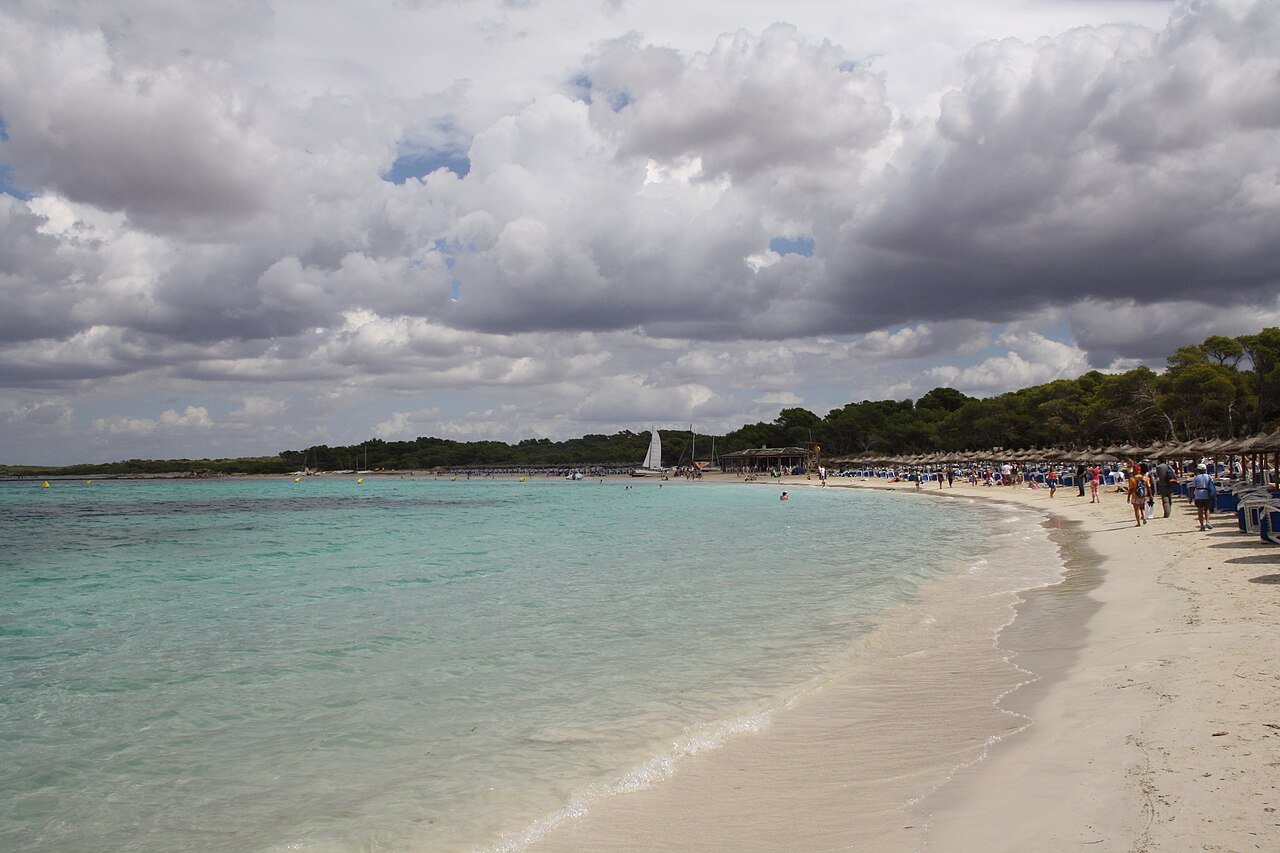
After cathedrals, castles and caves, the south coast gives you the island’s great natural beach. Es Trenc, near Colònia de Sant Jordi, is a long sweep of white sand and glassy turquoise shallows with nothing built behind it — no promenade, no resort strip, just dunes, pines and the Salobrar de Campos salt flats inland. It sits within a protected natural area, and it feels like it.
The water is the thing: shallow for a long way out, warm, and the colour of every Balearic postcard ever printed. The one practical rule is timing — in summer the car parks fill and the best sand goes early, so treat Es Trenc as a morning expedition with a long, lazy finish, not a casual afternoon drop-in.
From Palma it is a straightforward day trip by car or bus; based in the south or south-east, it becomes your default beach. If your trip has room for only one classic beach day, this is the one to spend it on.
Cala Mondragó
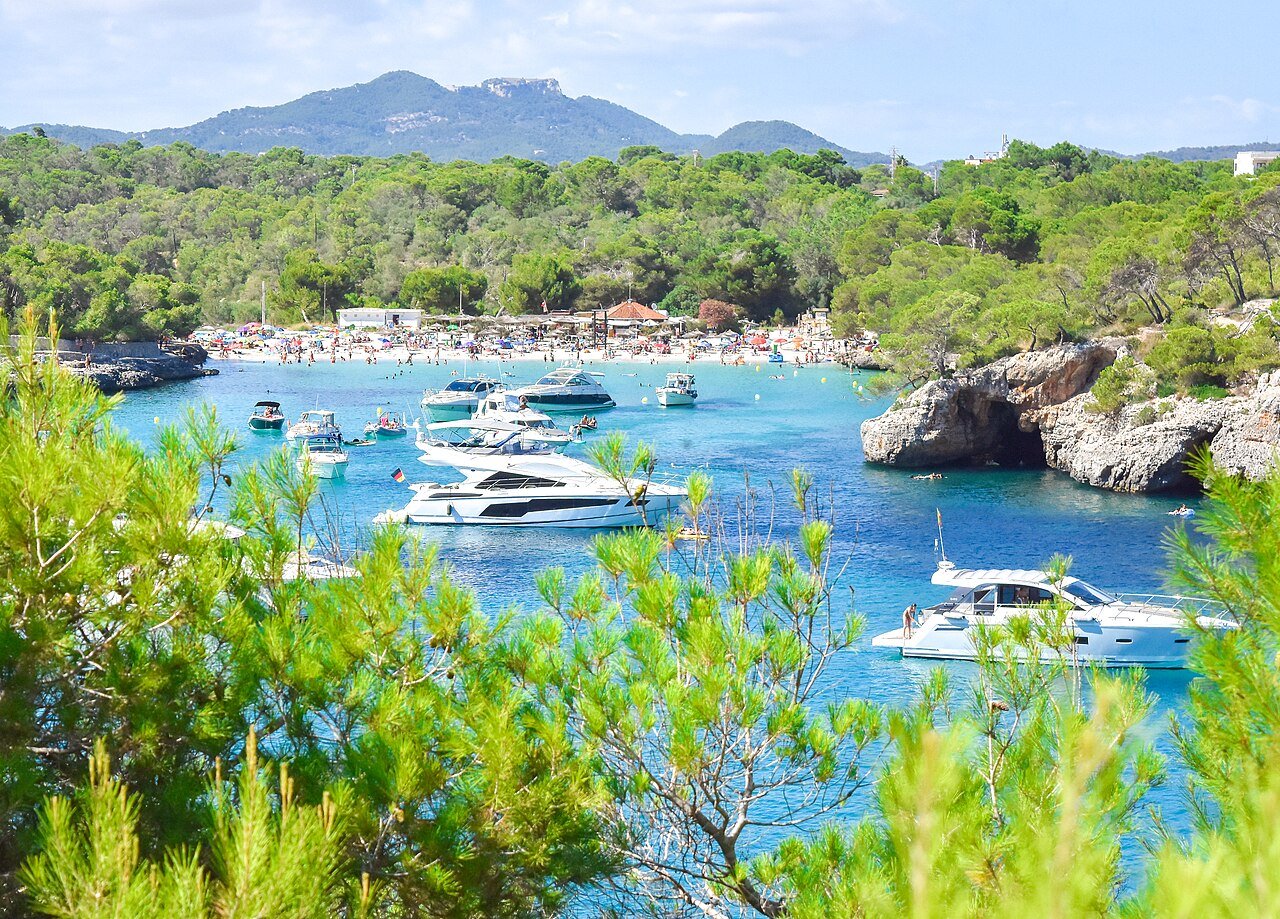
Cala Mondragó, in the natural park of the same name near Santanyí, is Es Trenc’s smaller, greener sister: not one cove but two, Cala Mondragó itself and S’Amarador, joined by a short path around the headland through the pines. Both are white-sand inlets with shallow, gin-clear water and rock shelves for spreading a towel out of the crowd.
The one thing not to miss is the walk between them — ten minutes of pine shade and sea views that turns one beach into a two-beach day, with the second cove usually the quieter. Facilities are simple, which is the trade the natural park makes to stay this unspoiled; bring what you need for the day.
Mondragó suits families especially well — gentle entry, shade at the edges, no road noise — and it pairs with a morning in Santanyí town or an evening in Cala d’Or. From Palma it is a day trip by car; from a south-east base it is on your doorstep.
How to Get Around Mallorca
Almost every trip starts at Palma de Mallorca Airport (PMI), the island’s gateway just outside the city. The A1 bus runs from the airport to the Estació Intermodal at Plaça d’Espanya in the centre — Palma’s transport hub, the single most useful address on the island for a first trip.
From the Intermodal, the island fans out for you. TIB buses cover the island’s towns and beaches; island trains run inland towards Inca and Manacor; and the Sóller train departs from its own little station beside the Intermodal — as much an attraction as a transport link (that is stop 5, above). With Palma as your base and the buses and trains onside, stops 1–6 and 9 on this list are all reachable without a car.
A car changes the edges, not the core. Rent one for Cap de Formentor (outside the shuttle season), the Sa Calobra road, and the freedom to chain calas on the south and east coasts — mountain roads are slow and beautiful, so plan fewer stops per day than the map suggests. In the Formentor season, leave the car behind and take the TIB 334 shuttle instead.
Where to Base Yourself
For a first trip, Palma is the answer for most people: the old town for character, the cathedral and Bellver on your doorstep, the island’s best restaurants and nightlife, and the Intermodal turning every day trip on this list into a straight line. Four or five nights in Palma with day trips will cover more of this list, more easily, than any other plan.
Split the stay only when the island pulls you two ways. Palma plus Port de Sóller gives you slow Tramuntana mornings and the train on your doorstep; Palma plus Alcúdia suits a north-focused trip built around Formentor and the old town; and a south-east base near Santanyí or Cala d’Or swaps city evenings for cala-hopping days at Es Trenc and Mondragó. It is the same one-base-versus-split question we work through for the mainland in our guide to the best Costa del Sol towns — and the same rule applies: split only when the second base saves you real driving.
Travel insurance, sorted
Whether it is a two-week holiday or a longer move, travel insurance is not the most glamorous part of a trip – but it is the one booking you want to have in place before a trip, and while you are already away. Get a quote from SafetyWing
Final Thoughts
Mallorca rewards the traveller who treats it as twelve places rather than one beach. Do Palma properly — the cathedral in the morning light, Bellver above the bay — then follow the Tramuntana chain village by village, take the two great drives at the day’s quiet ends, and keep one full day for sand: Es Trenc or Mondragó, not both in a rush. That is a first trip that covers the island’s whole character, and it will still leave you a list for the second visit. For the practical layer underneath all of it — bookings, seasons and getting around Spain smoothly — our Spain travel tips are the companion read.
Best Costa del Sol Towns: 10 Places to Stay and Visit
Frequently Asked Questions
What is the number one place to visit in Mallorca?
Palma’s La Seu cathedral and the old town around it. The cathedral — Gothic, sea-walled, with one of the largest rose windows in the world — is the island’s defining sight, and basing yourself in Palma puts it, Bellver Castle and the island’s transport hub within walking distance of your hotel. If one day trip follows, make it the Sóller train.
How many days do you need in Mallorca?
Four to five days covers the highlights of this list comfortably: Palma and Bellver, the Sóller train day, Valldemossa and Deià, one of the great drives, and a beach day. A week lets you do all twelve stops without rushing and add Alcúdia and the Cuevas del Drach as the full days they deserve to be. A long weekend should stick to Palma plus the Tramuntana coast.
Can you visit these places without a car?
Yes, for most of them. Palma, Bellver, Valldemossa, Deià (by bus), Sóller and Port de Sóller (by the vintage train and tram), Alcúdia and the Cuevas del Drach (with pick-up options) all work from a Palma base on public transport or tours. A car earns its money for Cap de Formentor outside the shuttle season, the Sa Calobra drive and chaining the south-coast calas — though even Formentor has the TIB 334 shuttle in the summer season.
Which is the prettiest village in Mallorca?
Fornalutx takes the title most often — a golden-stone village of stepped lanes under Puig Major, five minutes from Sóller — but the honest answer is a three-way contest: Valldemossa has the Charterhouse and the Chopin story, Deià has the artists, the church hill and its cove, and all three fit into one unhurried Tramuntana day from Palma.
Is the Sóller train worth it?
Yes — it is the one Mallorca experience that is both the journey and the destination. The wooden train has climbed from Palma through 13 tunnels since 1912, the tram continues to the Port de Sóller waterfront, and the combined ticket can add the boat to Sa Calobra, turning three of this list’s stops into one seamless day. Book a couple of days ahead in summer; the trains fill.
When is the best time to visit Mallorca?
Late spring and early autumn are the sweet spots: warm enough for the calas, cool enough for the Tramuntana villages and drives, and without the peak-summer crowds. July and August bring the full beach season but also the heat, the busiest roads and the Formentor car restrictions. Winter is quiet and green — Palma and the mountain villages work beautifully, but some beach and boat services pause.
Where should a first-time visitor stay in Mallorca?
In Palma, in or near the old town, for at least the first part of the trip: the cathedral, Bellver, the restaurants and the Intermodal station are all close, and every stop on this list radiates from there. Split the stay with Port de Sóller or Alcúdia only if you have a week or more and want mountain or northern mornings without the daily return to the city.

One Comment