10 Best Day Trips from Seville: Córdoba, Ronda, Cádiz and Beyond
Seville sits at the centre of the greatest concentration of wonders in Spain. Ride the fast trains out of Santa Justa station and the map unfolds like a fan: the Mezquita’s forest of arches in Córdoba in under an hour, Ronda’s gorge-spanning bridge, Cádiz’s Atlantic light, sherry cellars in Jerez, Roman ruins a bus ride away, and — the long, glorious day — the Alhambra in Granada. No other Spanish city offers so many world-class days out within day-trip range, and the trains and motorways of Andalusia make most of them easy.
This guide covers the ten day trips I recommend most, ordered by how I would prioritise them, with honest journey times and the traveller each one suits. A Seville base keeps everything simple — our Where to Stay in Seville guide covers the neighbourhoods — and you will be back each night for tapas. If you take only one, make it Córdoba: the single greatest building in Spain, 45 minutes away.
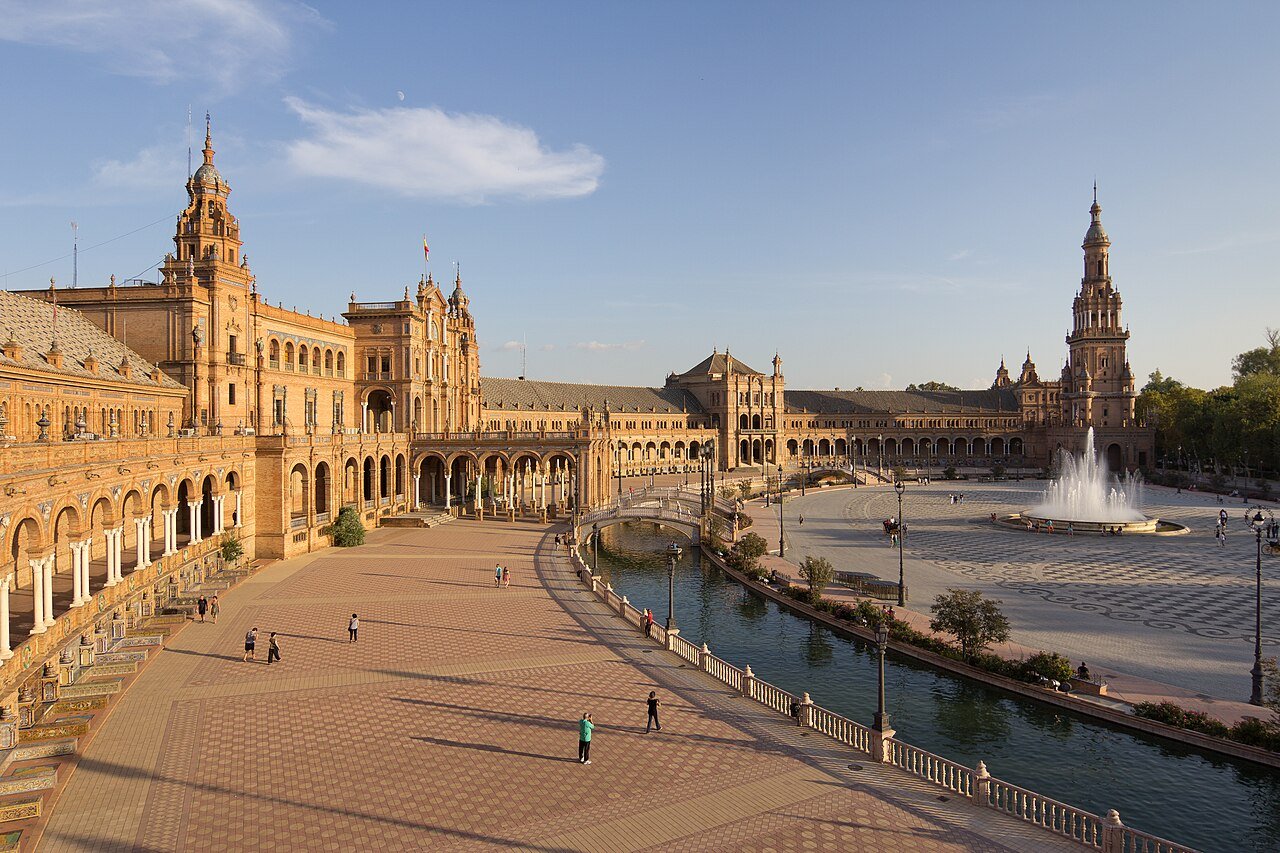
The Day Trips at a Glance
- Córdoba — the Mezquita-Catedral and the Jewish quarter. Under an hour. Everyone, first.
- Ronda — the Puente Nuevo over the great gorge. About two hours. Drama seekers.
- Cádiz — the Atlantic’s silver cup: cathedral, fish market, beaches. Under two hours. Sea air and seafood.
- Jerez de la Frontera — sherry bodegas and dancing horses. About an hour. Wine lovers.
- Granada — the Alhambra. A long two-and-a-half to three hours each way. The bucket-list day.
- Málaga — Picasso, the Alcazaba and the Mediterranean. About two hours. Art plus beach.
- Itálica — Roman streets and a great amphitheatre, 30 minutes away. Half a day. History without the journey.
- Carmona — a fortress-gate town above the plain. Under an hour. The easy half day.
- Arcos de la Frontera — a white village on a cliff edge. About an hour and a half. Pueblo blanco hunters.
- Doñana — flamingos, dunes and Europe’s great wetland. A tour day. Nature lovers.
Table of Contents
- The Day Trips at a Glance
- 1. Córdoba: The Mezquita and the Jewish Quarter
- 2. Ronda: The Town Above the Gorge
- 3. Cádiz: The Silver Cup by the Atlantic
- 4. Jerez de la Frontera: Sherry and Horses
- 5. Granada: The Alhambra (The Long Day)
- 6. Málaga: Picasso’s City by the Sea
- 7. Itálica: Rome, Half an Hour Away
- 8. Carmona: The Fortress Town
- 9. Arcos de la Frontera: The White Village on the Cliff
- 10. Doñana: The Great Wetland
- Getting There: Trains, Buses and Tours
- Which Day Trip Should You Choose?
- Final Thoughts
1. Córdoba: The Mezquita and the Jewish Quarter

Forty-five minutes by fast train delivers the day trip that outranks all others: the Mezquita-Catedral, the Great Mosque of Córdoba, a building of hypnotic scale — row upon row of red-and-white double arches, some 850 columns, a Renaissance cathedral improbably planted in its middle. It has no equal in Spain, and going early matters: book the first entry you can, and arrive at the Orange Tree Courtyard before the tour groups fill it.
The rest of Córdoba arranges itself around it: the Jewish quarter’s white lanes and its synagogue, the flower-filled patios (a festival in May, open courtyards year-round in smaller numbers), the Roman bridge over the Guadalquivir at dusk, and the Alcázar’s gardens. Córdoba runs hotter even than Seville — in summer, this is a morning-sights, long-lunch, evening-return kind of day. Trains from Santa Justa are frequent and fast; a tour removes the timetabling. If you are choosing when to make the trip, our Best Time to Visit Seville guide covers the seasons that suit Andalusia’s inland cities best. Whatever else you do in Andalusia, do Córdoba.
2. Ronda: The Town Above the Gorge

Ronda is Andalusia’s great spectacle of geography: a town split in two by the El Tajo gorge, a chasm over 100 metres deep, and joined by the Puente Nuevo — the “new” bridge of 1793, one of the most photographed structures in Spain. Stand on it at mid-morning, then walk down for the classic view of the bridge and its waterfall from below; the old town on the far side holds the Mondragón palace, the church of Santa María la Mayor, and some of the oldest bullring history in the country (the Plaza de Toros, late 18th century, with its museum). Hemingway and Orson Welles both fell for Ronda, and the clifftop gardens still trade on the romance.
The journey is the catch: trains take roughly two hours, sometimes with a change, and buses a similar time, which is why so many visitors take a tour — the white villages route often folds Ronda together with Setenil de las Bodegas or Grazalema. However you get there, Ronda rewards a full day and the gorge in both morning and late light.
3. Cádiz: The Silver Cup by the Atlantic

The train line ends at the sea: Cádiz, three thousand years old, girdled by the Atlantic, glowing a particular silvery gold that locals call the Tacita de Plata — the little silver cup. The old town is an island of domes, watchtowers and palm-shaded squares wrapped in sea walls: the baroque cathedral with its golden dome, the fish market where the morning’s catch becomes your lunch plan, the Caleta beach tucked between two castles, and the Tavira tower’s camera obscura for the rooftop panorama. Cádiz is also Spain’s carnival capital — come in February and the whole city sings satire in fancy dress.
At roughly an hour and three quarters by train, Cádiz is the Atlantic counterpart to everything landlocked Seville offers: cooler, brinier, slower. Eat fried fish (pescaíto frito) in the Viña quarter, walk the sea wall at sunset, and take the evening train home. It pairs naturally in travellers’ minds with our Best Things to Do in Seville guide — the two cities are Andalusia’s perfect double act.
4. Jerez de la Frontera: Sherry and Horses
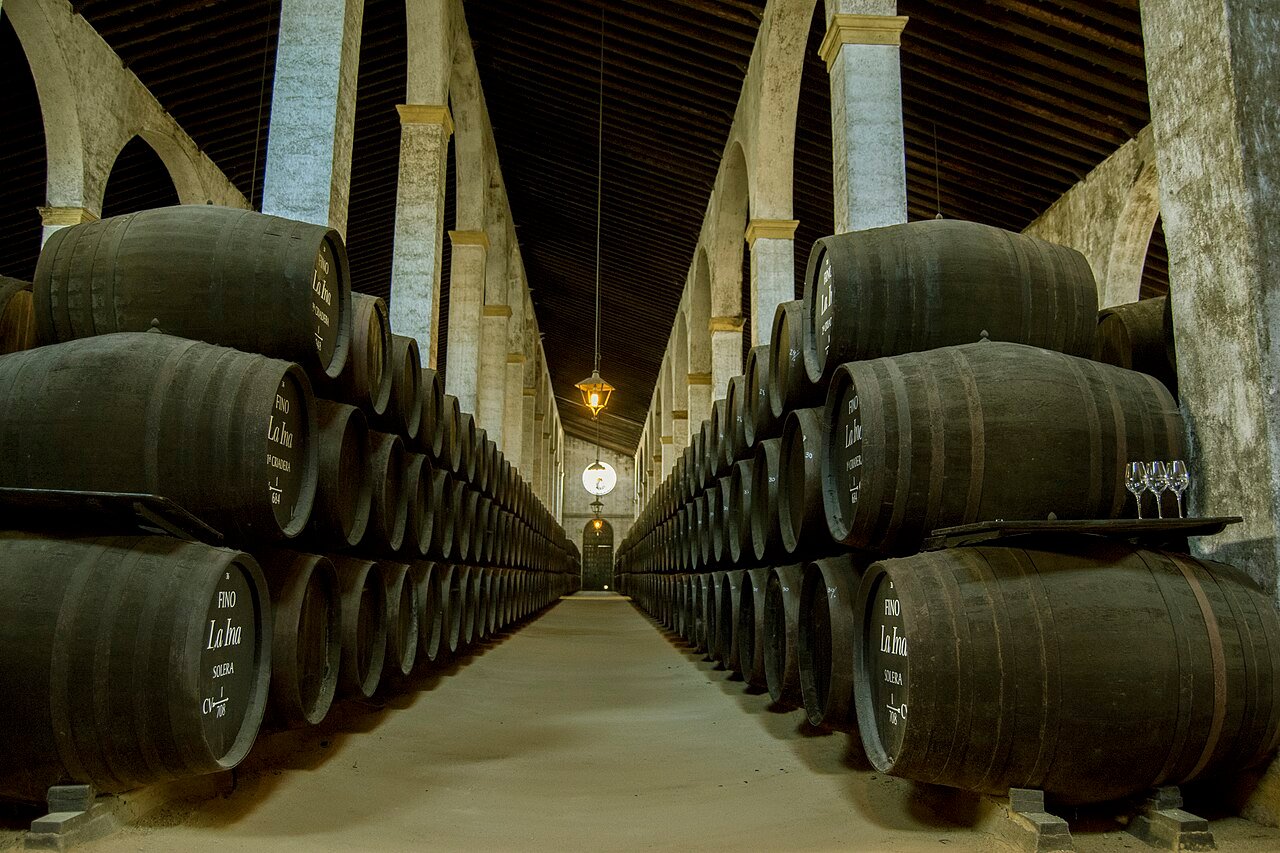
An hour south, Jerez runs on two glories: sherry and horses. The bodegas are cathedrals of wine — vaulted halls of oak barrels stacked in solera pyramids, González Byass (Tío Pepe) and Lustau the most famous names — where the chalky albariza soil and the Atlantic winds produce finos, amontillados and olorosos unlike anything else called wine. A bodega tour with tasting is the day’s anchor; book ahead in season. The second glory performs on Thursdays and Saturdays at the Royal Andalusian School of Equestrian Art, where the Carthusian horses dance in the famous show — check the calendar, as performances are not daily.
Between the two, Jerez’s old town offers the Alcázar with its mosque and Arab baths, a fine cathedral, and flamenco in its blood — the Santiago and San Miguel quarters are the art’s ancestral home. It is the food-and-drink traveller’s day trip, and the tastiest possible detour.
5. Granada: The Alhambra (The Long Day)

Honesty first: Granada is a long day — roughly two and a half to three hours each way by train — and the Alhambra deserves more. But if Seville is your only Andalusian base, go anyway, because the Alhambra is the Alhambra: the Nasrid palaces’ carved plaster and tilework, the Court of the Lions, the Generalife’s gardens, a fortress-palace that stands among the supreme buildings of the world. Two rules govern the day. First, tickets sell out far ahead — book the Nasrid Palaces entry the moment your dates are fixed, or take a tour that includes them. Second, take the earliest transport out and protect the palaces’ timed slot above everything else; the Albaicín’s lanes and the cathedral are the flexible part.
Start before dawn, and you will be back in Seville for a late dinner with the Court of the Lions still glowing behind your eyes. Plenty of travellers conclude Granada deserved its own nights — it does — but a long day beats never.
6. Málaga: Picasso’s City by the Sea
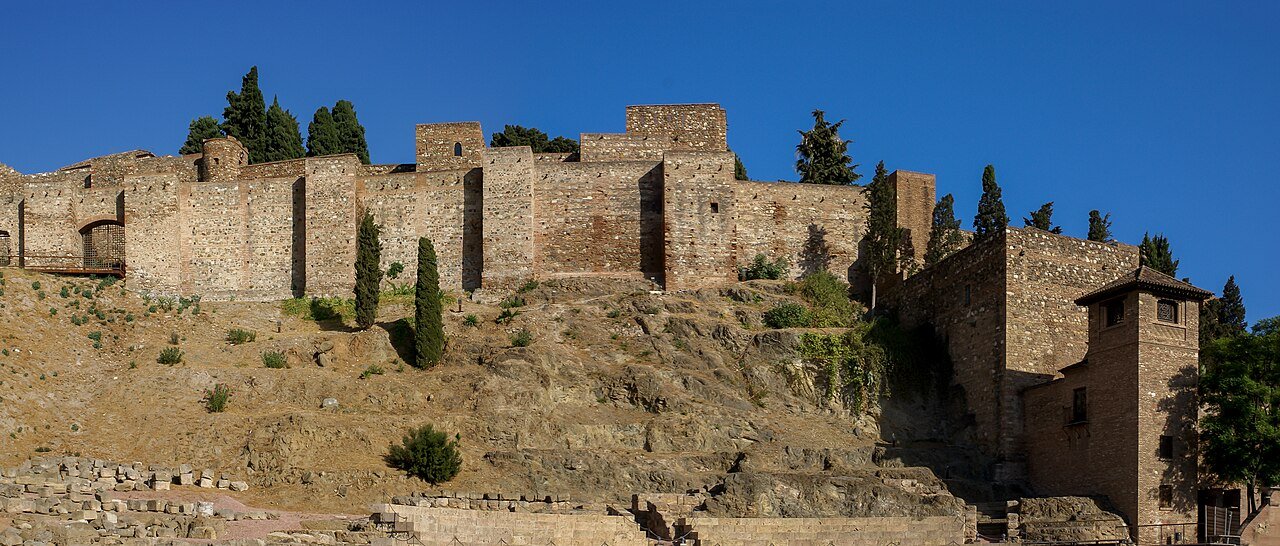
Two hours east, Málaga has reinvented itself from gateway to destination: a city with serious museums, a handsome old town and a beach attached. The Picasso Museum — in the palace quarter of the artist’s birth city — anchors the day, with the Carmen Thyssen and the Pompidou’s harbour-side cube as the supporting acts; above everything, the Alcazaba’s Moorish palaces climb to the Gibralfaro castle, whose view takes in the bullring, the port and the bay. The Roman theatre sits at the Alcazaba’s feet, the Atarazanas market feeds you, and the Muelle Uno promenade does the evening.
Málaga runs on Seville’s hottest days as the escape valve — sea breezes, a swim off La Malagueta, and trains until late. It is also the natural partner to a Costa del Sol stay; from Seville, treat it as the art-and-sea day trip and go by fast train.
7. Itálica: Rome, Half an Hour Away

The closest wonder on this list hides in plain sight in the suburb-village of Santiponce: Itálica, founded in 206 BC, the first Roman city in Spain, birthplace (by tradition) of the emperors Trajan and Hadrian. Its amphitheatre — among the largest in the empire, seating some 25,000 — doubled as the Dragonpit in Game of Thrones, and the paved streets above it hold villa after villa of superb mosaic floors: Neptune, the birds, the planetarium. It is a vast, quiet, evocative site, and on a weekday morning you may have whole streets to yourself.
Buses from Plaza de Armas take roughly 30–40 minutes; allow half a day including the village’s monastery of San Isidoro del Campo. Check opening days before you go — the site traditionally closes on Mondays. This is the half-day trip for anyone whose Seville days are full but who refuses to leave Andalusia without touching Rome.
8. Carmona: The Fortress Town
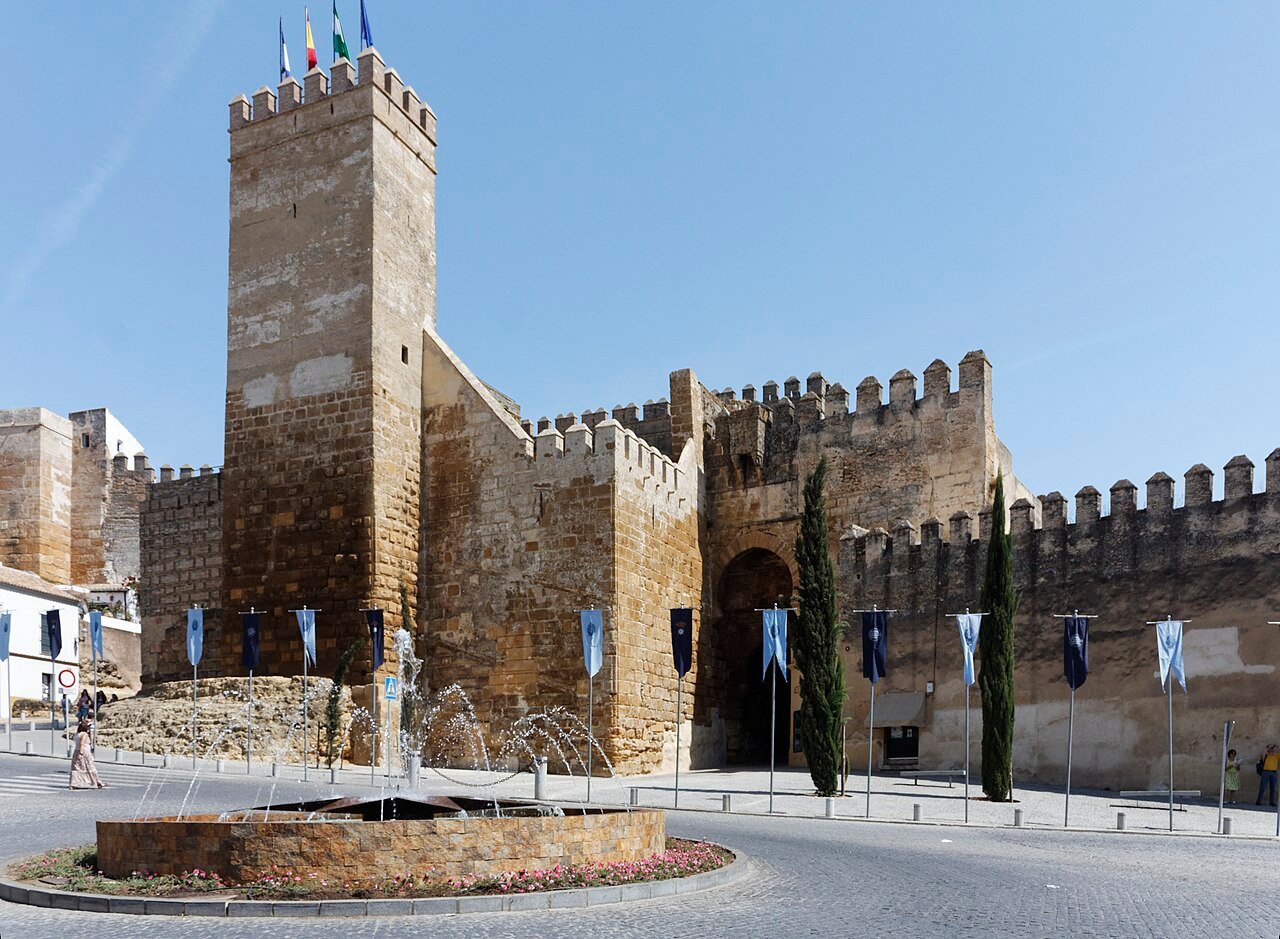
Thirty-five minutes east, Carmona is Seville’s own day trip — the one its residents take. You enter through the Puerta de Sevilla, a fortress-gate with Roman bones and Moorish and Renaissance layers, into a town of white streets, Mudéjar churches and convents famous for their sweets. The Alcázar de Arriba crowns the hill (its courtyard is now a parador with a view-eating terrace), the Roman necropolis across town holds family tombs cut into the rock, and the plain of the Guadalquivir spreads out below like a map of everywhere else on this list.
Buses from San Bernardo and Prado de San Sebastián run through the day. Carmona is the gentle option — no queues, no blockbuster, just a beautiful small Andalusian town done slowly — and for many travellers it becomes the favourite precisely because of that.
Free Seville travel guide
Planning a trip to Seville? Get our free one-page Seville checklist: what to book ahead, what to skip, and the tapas bars we actually eat in.
9. Arcos de la Frontera: The White Village on the Cliff

The gateway to the Ruta de los Pueblos Blancos, Arcos is the white village as archetype: a ridge-top old town of whitewashed lanes that narrows as it climbs until it ends at a cliff edge — the Balcón de la Peña Nueva, a viewpoint hanging over a sheer drop to the Guadalete river and the plain. On the way up: the castle (privately held, admired from outside), the church of Santa María and its great tower, the church of San Pedro near the brink, and lanes so narrow in the old Jewish quarter that they feel medieval because they are.
At roughly an hour and a half by bus, usually changing in Jerez, Arcos is the trip where a car or a white-villages tour earns its money — the standard circuit chains Arcos with Zahara de la Sierra or Grazalema, and Ronda beyond. Come for a morning, when the light rakes across the cliff and the swallows own the gorge, and lunch in the old town before the roads call you onward.
10. Doñana: The Great Wetland

South-west of the city, where the Guadalquivir dies into marshes and dunes, lies Doñana — a national park and UNESCO-listed wetland among the most important in Europe: flamingos in pink thousands, wild horses, deer in the cotos, storks nesting on every chimney in spring, and the Iberian lynx haunting the scrub if fortune loves you. The gateway village of El Rocío, with its sand streets and great hermitage, draws a million pilgrims each spring for the Romería — one of Spain’s most extraordinary festivals, and the one week when a casual visit is impossible.
Doñana is not a public-transport trip: access to the park is by authorised 4×4 tour, typically from El Rocío or Sanlúcar, and Seville-based excursions handle the whole day. It is also a seasonal choice — autumn and spring, when the marshes hold water and migrants, are prime; high summer is dry and hard. Nature lovers, plan this one first and let the cities fit around it.
Getting There: Trains, Buses and Tours
Seville’s Santa Justa station runs the show for Córdoba (about 45 minutes), Jerez and Cádiz (about an hour and an hour and three quarters respectively), Málaga (about two hours) and Granada (roughly two and a half to three) — book the fast trains ahead for the best fares, and see our Seville Airport Guide for reaching the station from the airport. San Bernardo station serves Carmona-bound buses alongside the Prado de San Sebastián stops; Plaza de Armas is the bus station for Itálica and the white-villages routes.
Where tours win: Ronda (awkward rail timings), Granada (ticket certainty for the Alhambra), Doñana (4×4 access is tour-only) and the chained white-village routes. Where the train wins: Córdoba, Cádiz, Jerez and Málaga — fast, frequent and straight into the old towns.
Which Day Trip Should You Choose?
Only time for one? Córdoba. The Mezquita, 45 minutes away — nothing else is close, in either sense.
The greatest hits, in order: Córdoba, Granada (if you’ll rise early), Cádiz, Ronda.
Half a day only: Itálica for Rome, Carmona for the fortress town, Jerez if the bodegas align.
Beach attached: Cádiz first, Málaga second.
Wine and food: Jerez, and it isn’t close.
Nature: Doñana — with Arcos and Ronda as the landscape runners-up.
However you choose, pace the week: the day trips are the seasoning of a Seville stay, not a replacement for it, and the city itself repays slow days — our 2 Days in Seville itinerary and 3 Days in Seville itinerary show the city days between the excursions at their best, and our Best Things to Do in Seville guide ranks what you are coming home to each night.
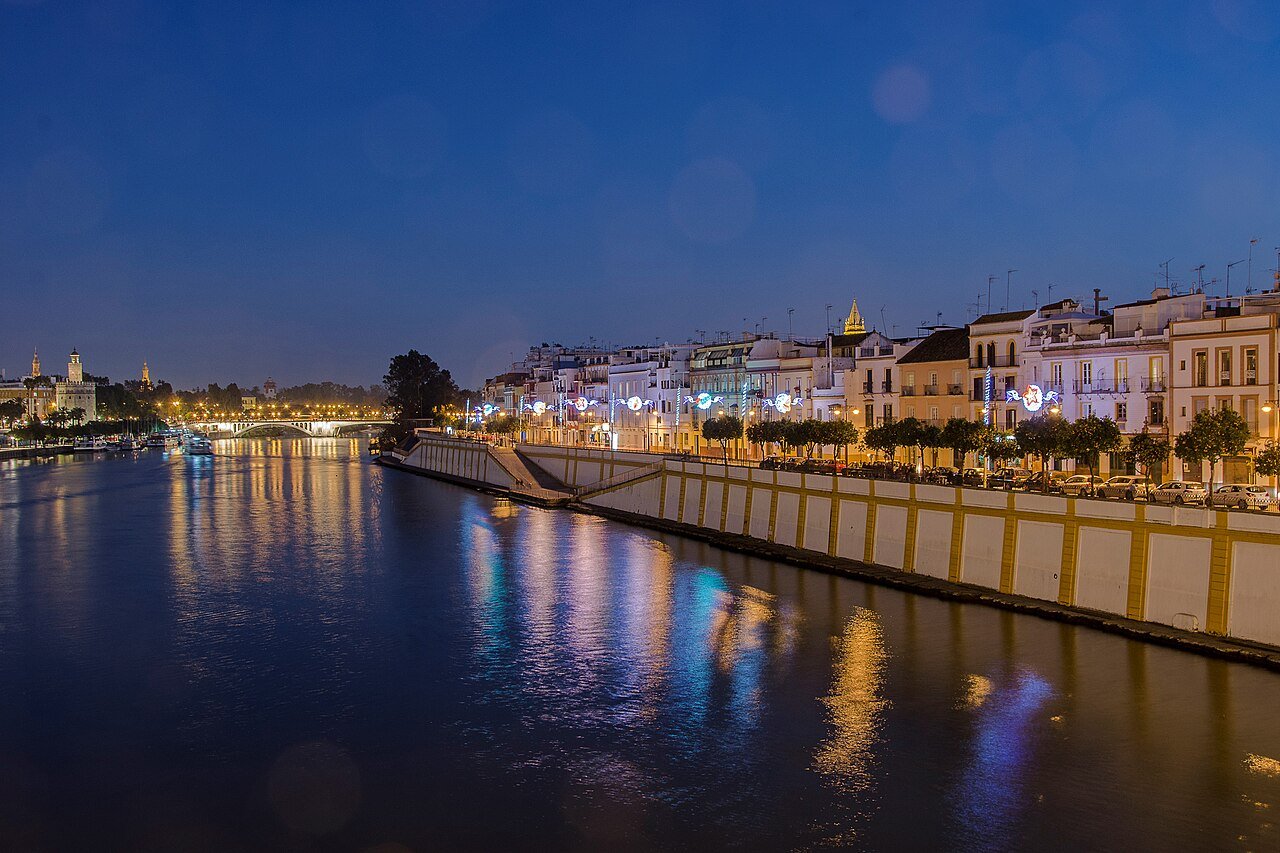 Calle Betis at dusk, Triana — the coloured Triana houses along the riverfront at evening, lights glowing
Travel insurance, sorted
Whether it is a two-week holiday or a longer move, travel insurance is the one booking not to skip. We point readers to SafetyWing’s Nomad Insurance — cover built for travellers, remote workers and longer stays abroad, on a flexible monthly subscription you can start before a trip or while you are already away. Get a quote from SafetyWing
Final Thoughts
From Seville, Andalusia arranges itself into days: a mosque-cathedral in 45 minutes, a bridge over a gorge, a silver city by the Atlantic, sherry cellars, a Roman amphitheatre before lunch, and the Alhambra if you are willing to earn it. Take Córdoba without debate, Cádiz for the sea, Doñana in season — and leave a day unplanned, because the traveller next to you on the Córdoba train will have a story about Ronda. However the week assembles itself, you will start and end every day in the most beautiful base city in Spain: our Seville hub page — “Your Ultimate Guide to Seville” gathers everything we have written to help you enjoy it.
¡Buen viaje!

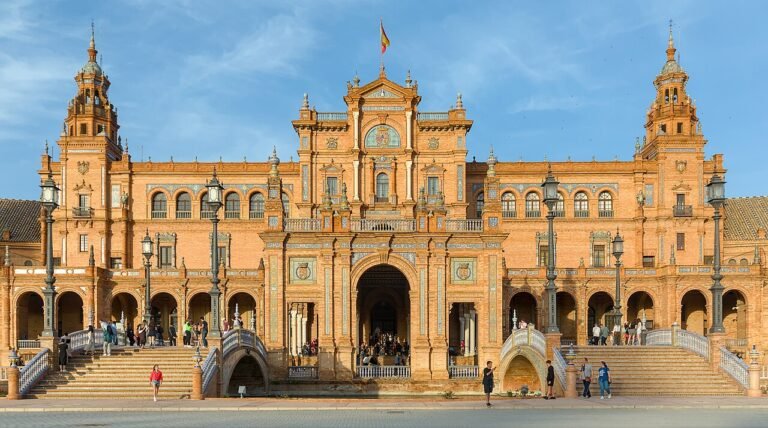
Photo credits: Plaza de España — Carlos Delgado, CC BY-SA 4.0 · Mezquita-Catedral of Córdoba, interior — Benjamin Smith, CC BY-SA 4.0 · Puente Nuevo, Ronda — CEphoto (Uwe Aranas), CC BY-SA 3.0 · Cádiz Cathedral — Axel Cotón Gutiérrez, CC BY-SA 4.0 · Bodegas Lustau, Jerez — Anual, CC BY-SA 4.0 · The Alhambra from the Generalife — Benjamin Smith, CC BY-SA 4.0 · Alcazaba of Málaga — Matti Blume, CC BY-SA 4.0 · Amphitheatre of Itálica — Diego Delso, CC BY-SA 4.0 · Puerta de Sevilla, Carmona — Daniel Villafruela, CC BY-SA 4.0 · Arcos de la Frontera — Diego Delso, CC BY-SA 4.0 · Marismas de Doñana — Dvazquezq, CC BY-SA 3.0 es · Calle Betis — Anual, CC BY-SA 4.0. All via Wikimedia Commons.



3 Comments