Best Flamenco Shows in Spain: The Tablaos, Caves and Peñas Worth Your Money
Ask a room of travellers to name the most Spanish night out imaginable and flamenco wins every time — it is on our list of things you can only do in Spain for a reason. A singer wringing a note out of somewhere below the ribcage, a guitarist’s hands moving faster than your eyes, a dancer’s heels striking a wooden stage like a drum kit. UNESCO put flamenco on its Intangible Cultural Heritage list in 2010, and no other art form is so completely Spain’s own.
Here is the problem nobody warns you about: Spain sells hundreds of flamenco shows a night, and they are not all the real thing. For every small room where a great cantaor silences a crowd of locals, there is a hotel-basement dinner show where a tired dancer performs to backing-track applause. The difference is not luck. It is knowing which format you are buying, which city does it best, and which specific rooms the aficionados themselves respect.
That is what this guide is for. It explains the three ways Spain watches flamenco — the tablao, the peña and the festival — then walks the six great flamenco cities venue by venue: Seville, Granada, Madrid, Barcelona, Córdoba and Jerez. It finishes with the two sections that will save your money and your evening: what a ticket should actually cost, and how to spot a tourist trap before you are sitting in one.
One promise before the venues: this guide names names. Every room below earned its place the way flamenco itself judges — by reputation among the people who perform and watch this art every week of the year. Where a famous house did not make the cut, it is because its current show trades on the name rather than the cast; where a small room did, it is because aficionados cross their own city to sit in it. Prices are quoted only where we verified them, and the terms of every booking link in this guide were checked on the day it was prepared.
In this guide:
- 1. Tablao, Peña or Festival? The Three Ways to See Flamenco
- 2. Seville: Los Gallos and the Classic Tablaos
- 3. Seville: Casa de la Memoria and the Museo del Baile Flamenco
- 4. Granada: A Zambra Inside a Sacromonte Cave
- 5. Madrid: Corral de la Morería and the Capital’s Tablaos
- 6. Barcelona: Palau Dalmases, Tablao de Carmen and the Rambla
- 7. Córdoba: Tablao El Cardenal by the Mezquita
- 8. Jerez: Peñas, Tabancos and the Festival de Jerez
- 9. What Should a Flamenco Ticket Cost?
- 10. How to Spot a Tourist Trap
- 11. When to Go and How Far Ahead to Book
1. Tablao, Peña or Festival? The Three Ways to See Flamenco
Every flamenco night in Spain belongs to one of three formats, and picking the format matters more than picking the city. Get this section right and the rest of the guide is just choosing names.
A tablao is a commercial flamenco venue: a small theatre built around a raised wooden stage — the tablado, which gives the tablao its name — with tables or theatre rows in front of it. You buy a ticket, you are guaranteed a full professional company (a cuadro: singers, guitarists, dancers and the hand-clappers called palmeros), and the show runs a tight hour or so. Many tablaos offer dinner before or during the performance. This is the format almost every visitor should choose for a first flamenco night: reliable, bookable, and — in the right rooms — genuinely world-class.
A peña is something else entirely: a members’ club run by and for aficionados, the devoted fans who treat flamenco the way other towns treat a football club. The emphasis is on cante, the singing, which aficionados consider the soul of the art. Peñas are cheap or free, the artists may be brilliant or may be somebody’s talented nephew, and nobody is performing for tourists — which is exactly the magic and exactly the risk. Málaga, one of Andalusia’s great flamenco cities, guards one of Spain’s most respected peñas; our guide to things to do in Málaga points you towards its scene. Treat a peña night as a privilege: arrive early, buy drinks, keep quiet during the cante, and never talk over a singer.
A festival concentrates everything. For a week or two, one city fills with headline artists, late-night peña sessions, masterclasses and street performances, and the audience is thick with guitarists, dancers and critics from all over the world. Festivals are the best flamenco on earth, full stop — but they happen on fixed dates, sell out, and reward planning (see §11).
One more piece of vocabulary before the venues. Whatever the format, watch the whole cuadro, not just the dancer. The singer leads; the guitarist answers; the palmas build the rhythm architecture underneath; and the cries of ¡olé! and ¡vamos! from performers and audience — the jaleo — are part of the music. A great night is a conversation between all of them.
You will also hear the word palo — flamenco’s family of song forms, each with its own rhythm, mood and homeland. The soleá is the slow, grave mother form. The bulerías of Jerez are fast, playful and fiendishly rhythmic, built on a twelve-beat cycle that the palmas make visible. Alegrías bring Cádiz sunshine and tangos bring groove. You do not need to tell them apart to enjoy a show — but the moment you notice a room lean in for a soleá and erupt for the bulerías finale, you are watching flamenco the way its own audience does.
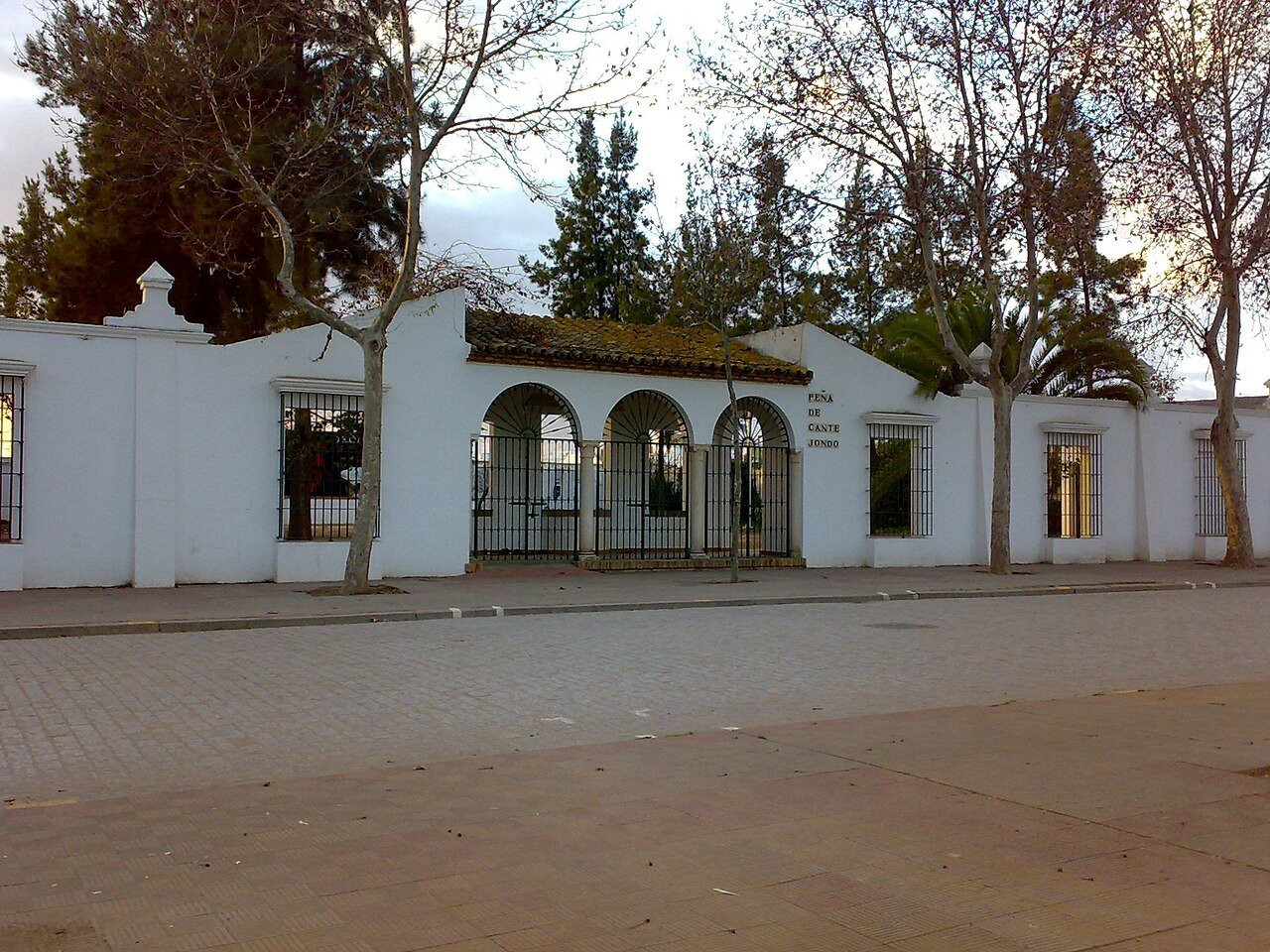
2. Seville: Los Gallos and the Classic Tablaos
Seville is flamenco’s capital of polish — the city with the deepest bench of professional tablaos, in the neighbourhood, Santa Cruz, where the art has been performed for visitors since before it was fashionable. If you see one tablao in your life, the smart money says see it here.
The benchmark is Los Gallos, on Plaza de Santa Cruz, staging flamenco since 1966 and billed as the city’s oldest tablao. The room is small, the stage is close, and the house style is gloriously old-fashioned: no microphones, no amplification tricks, just voice, guitar and heels on wood. It is the purist’s pick in Seville — the place locals send visiting musicians. Show-only tickets run to roughly €38 by guide prices, and it is worth every cent of the premium over the big dinner houses.
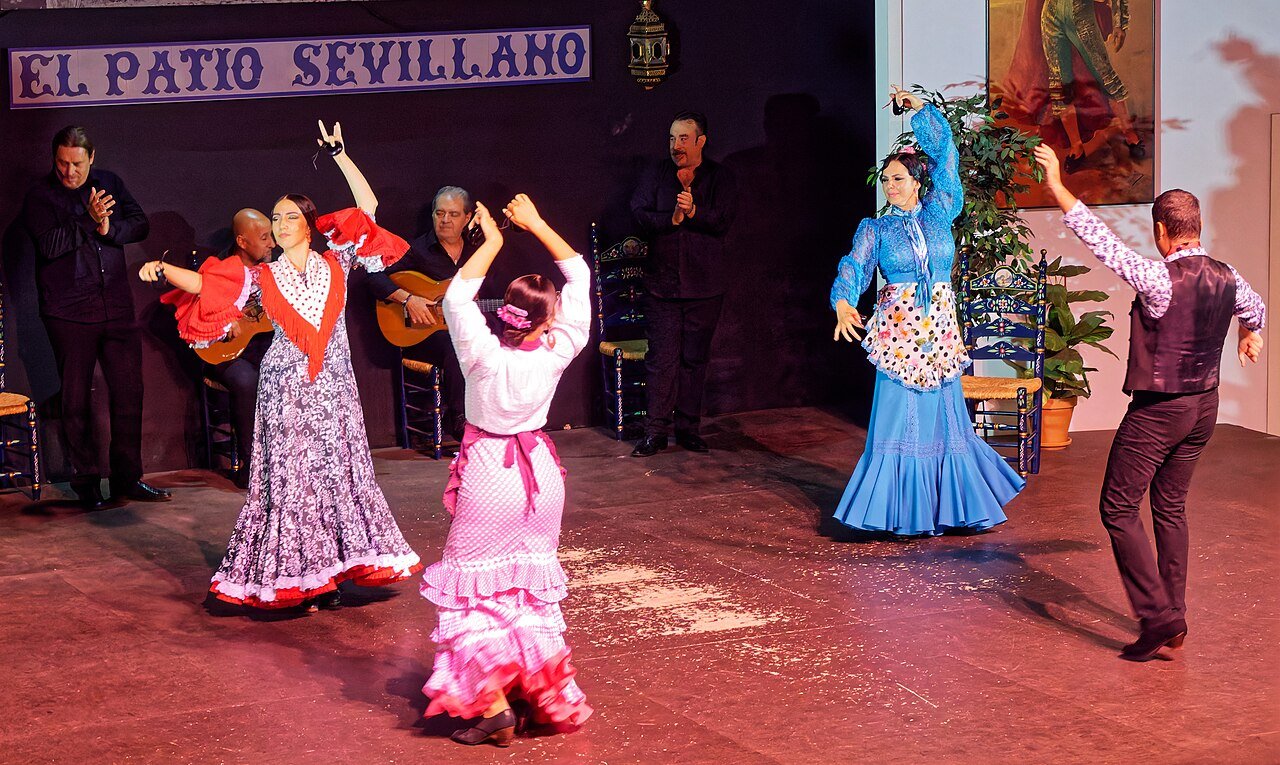
The classic alternative is Tablao El Arenal, founded in 1975 by the dancer Curro Vélez on Calle Rodo, a step from the Maestranza bullring. El Arenal is the grand dinner-show format done properly — a full Andalusian menu, a large and accomplished cuadro, and a room that feels like a celebration rather than a recital. Expect roughly €45 for the show alone and €71–86 with dinner, per guide prices. El Patio Sevillano, the big riverside tablao in our featured photograph, works the same generous scale: a complete company on a proper stage, built for first-timers who want the full spectacle.
Two practical Seville notes before you book. Most classic tablaos run two sittings a night — an earlier show and a later evening one that flamenco people quietly consider the real performance, when the room is warmer and the artists looser; if your stamina allows, take the late sitting. And Santa Cruz is a warren: give yourself ten minutes to find the door, because every venue in this section hides on a lane your map will swear does not exist.
At the opposite end of the budget sits La Carbonería, a former coal store where flamenco happens the old way — free, informal, unannounced, the dancer inches from a standing crowd with drinks in hand. There is no ticket, no programme and no guarantee; there is also no experience in Seville quite like catching a great young bailaora there on the right night. Best for: tablao first-timers (Los Gallos or El Arenal) and return visitors hunting atmosphere (La Carbonería). Skip the dinner packages everywhere if the flamenco itself is your priority — §9 explains why.
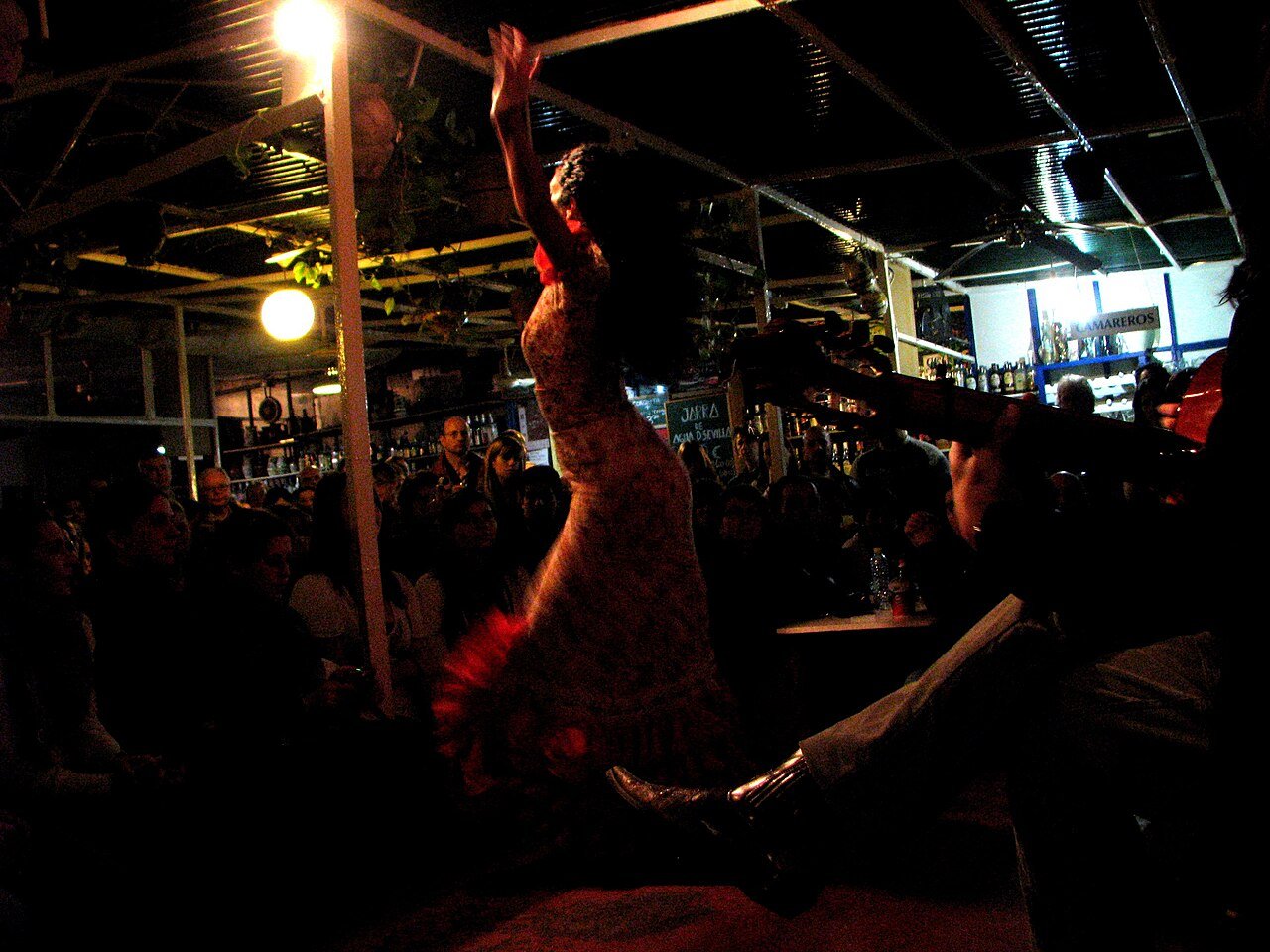
For the roots beneath the polish, cross the river to Triana — the working-class, pottery-making quarter where so much of Seville’s flamenco was born, and where singers were once made in its taverns and courtyards. No single Triana address makes this guide’s list, because the quarter’s flamenco today lives in small bars and peña-style rooms that change with the season. Walk it in the evening, follow the sound of a guitar through an open door, and you are doing what Sevillanos have always done.
3. Seville: Casa de la Memoria and the Museo del Baile Flamenco
Seville’s second flamenco circuit swaps spectacle for intensity. These are the small rooms — no dinner, no drinks service, no distractions — where the audience sits close enough to see the effort, and where many travellers end up having the flamenco night they remember longest.
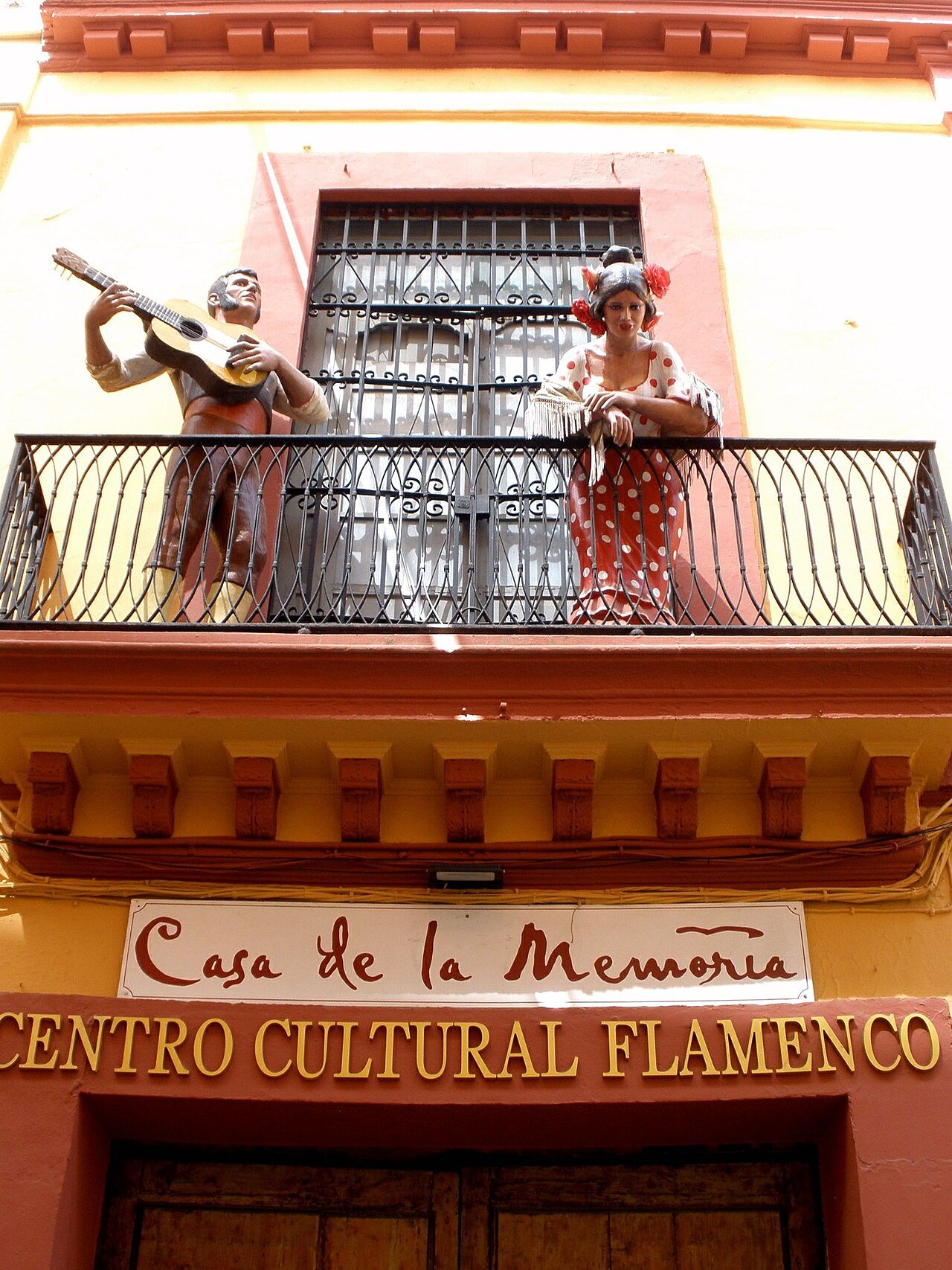
Casa de la Memoria performs in the courtyard of an old palace house on Calle Cuna, in front of about a hundred seats. There is no food at all — a deliberate choice that keeps the room silent and the focus total — and the programming leans towards respected artists rather than anonymous rotation casts. At around €24 it is one of the best-value serious flamenco tickets in Spain, which is why it sells out two to three days ahead in high season. Book it the moment your Seville dates are fixed.
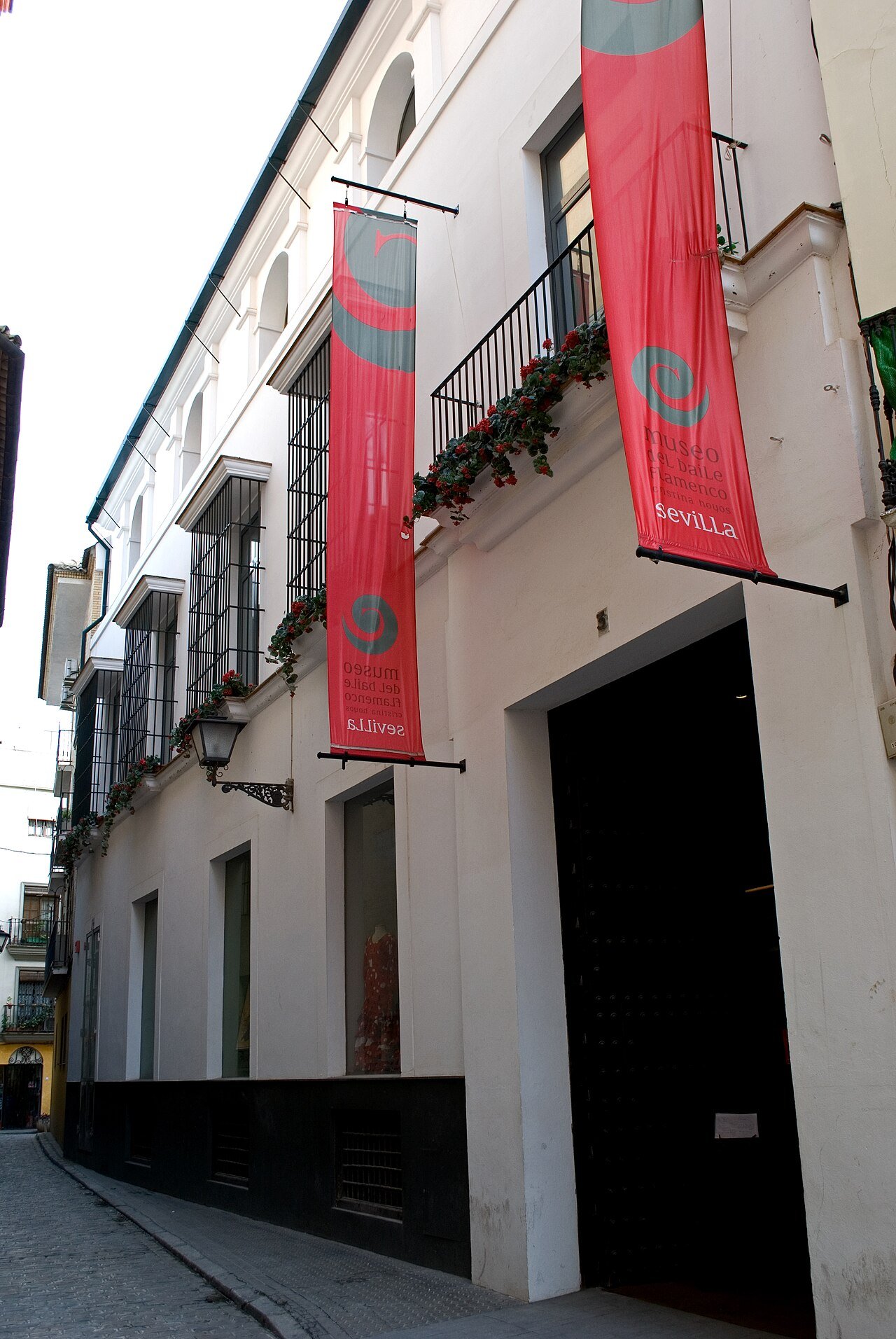
A few streets away, the Museo del Baile Flamenco pairs the city’s flamenco museum — founded by Cristina Hoyos, one of the great dancers of her generation — with nightly shows in the building’s eighteenth-century courtyard. Do the museum first and the show second: an hour among the costumes, photographs and interactive exhibits teaches your eyes what to watch for, and the performance lands completely differently afterwards. Seating is unnumbered, so arrive half an hour early for the good chairs.
Book it: Seville: Puro Flamenco Show with Optional Museum Ticket — rated 4.8/5 from 7,002 reviews, from $37 for the one-hour show, with the museum ticket available as an add-on. The booking holds free cancellation up to 24 hours ahead and reserve now & pay later, so there is no reason to leave this one to chance. Best for: anyone who wants to understand flamenco, not just watch it. The big-tableau energy of §2 it is not — this circuit is about proximity, and proximity is addictive.
The museum half deserves more than the rushed twenty minutes visitors usually give it. The permanent exhibition traces flamenco from its Andalusian and Romani roots through the café cantante era to the modern stage — costumes, photographs and film of the great names, with Hoyos’s own story woven through it. Give it the better part of an hour before the evening show, and the courtyard performance becomes what it is designed to be: the exhibition’s final, living room.
4. Granada: A Zambra Inside a Sacromonte Cave
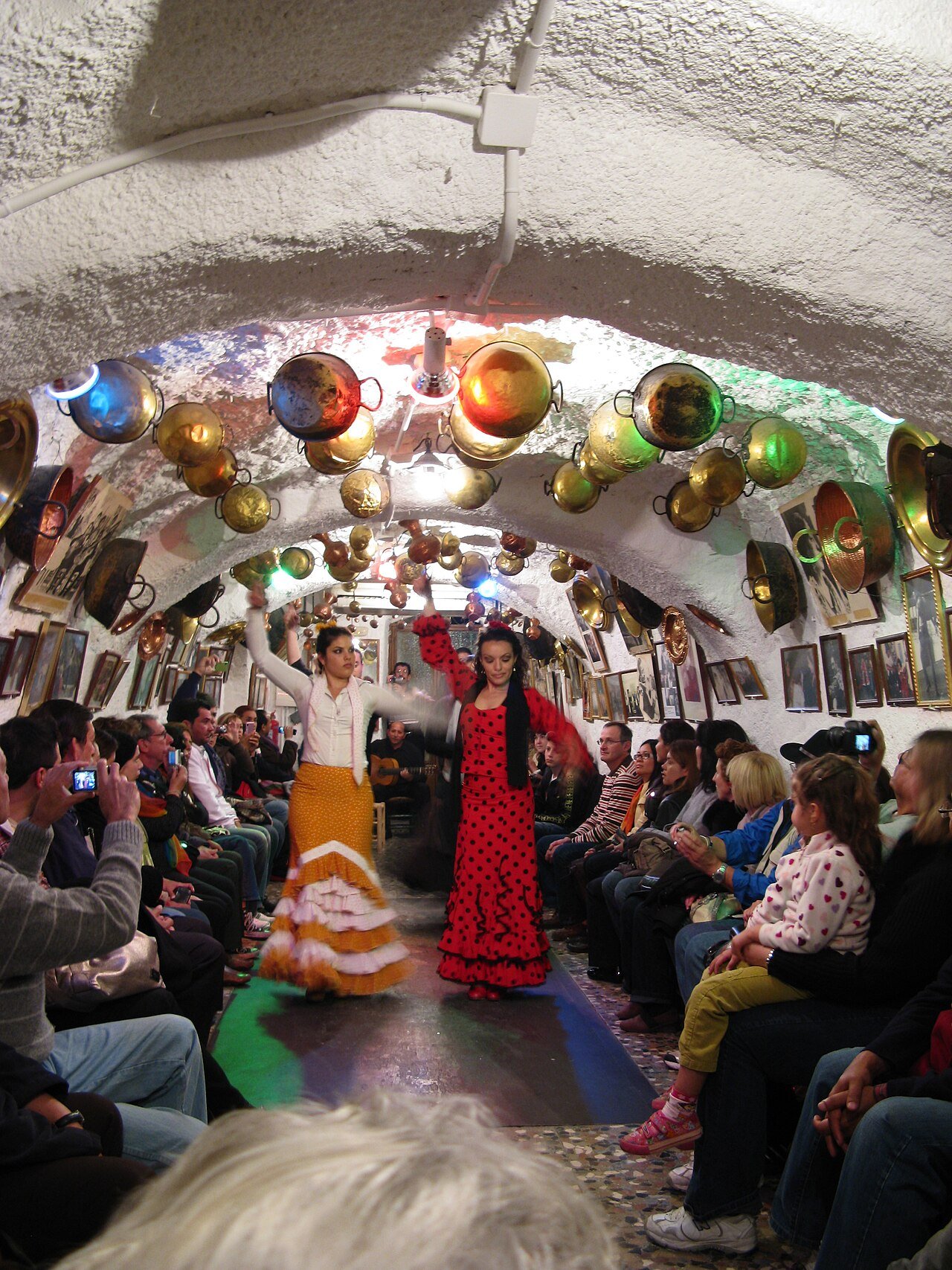
Granada does not do tablaos the Seville way. Granada does the zambra — and the zambra only makes sense in its birthplace: the whitewashed cave houses of Sacromonte, the hillside neighbourhood above the city where Romani families settled centuries ago and turned their wedding celebrations into an art form. A zambra cast dances down the middle of the cave, the audience sits inches away along both walls, and the whole thing feels less like a show than like being allowed into somebody’s family party, five hundred years old.
A zambra unfolds as a suite rather than a set list. The cast processes down the central aisle, and the dances build from the stately wedding songs of the alboreá towards faster, brighter numbers, the dancers weaving between the two rows of seats with the guitarist following the action. There is no fourth wall to break — the cave never had one — and by the final number the boundary between performers and audience has usually dissolved into shared palmas.
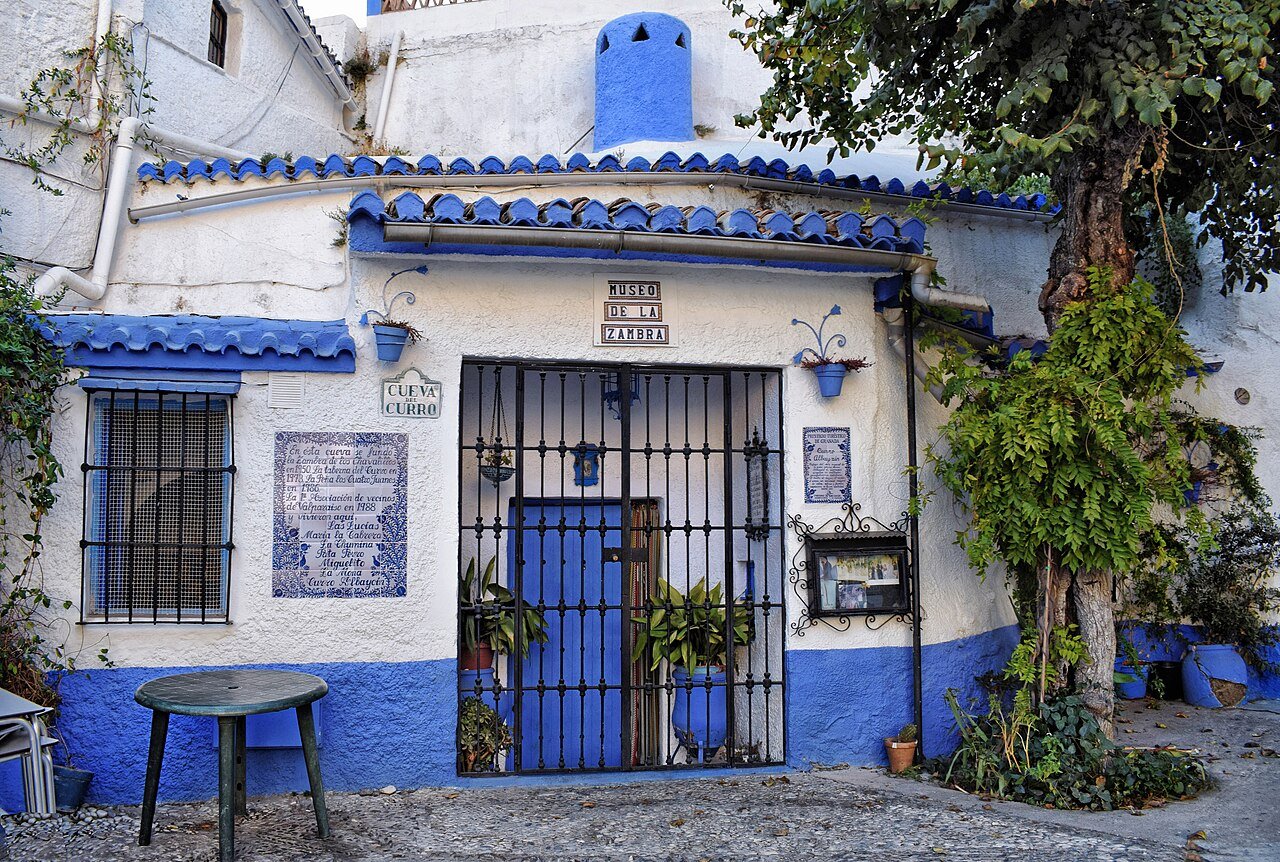
The cave to book is Cuevas Los Tarantos, performing on the Camino del Sacromonte since 1972 and the neighbourhood institution. Book it: Sacromonte: Cuevas Los Tarantos Flamenco Show Tickets — rated 4.5/5 from 2,181 reviews, from $31 for the one-hour show with a drink included, with free cancellation up to 24 hours ahead and reserve now & pay later. Neighbouring caves work the same generous format — Cueva de la Rocío, in our photograph, and Venta El Gallo, further up the hill, are both long-established family houses.
Practical notes the caves deserve. The Camino del Sacromonte is a steep, narrow lane; wear shoes you can walk a hill in, and plan the taxi or bus down afterwards rather than improvising at midnight. If a cave is not your thing, Granada keeps two good off-hill options: Jardines de Zoraya, a garden restaurant tablao in the Albayzín, and La Alboreá, a small theatre-style room in the centre. Both are honest houses; neither is a cave, and the cave is the point. Pair a zambra night with a day among the things to do in Granada and you have the city’s two essential experiences in a single trip. Best for: romantics and anyone who finds theatres sterile. Skip it if tight, low-ceilinged spaces bother you — these are real caves, and they feel like it.
Come down the hill slowly afterwards: the lane empties, the Albayzín glows, and the Alhambra sits lit across the valley — Granada’s encore, free of charge.
5. Madrid: Corral de la Morería and the Capital’s Tablaos
Madrid’s claim is different from Seville’s. The capital is where flamenco’s stars eventually arrive — the city of the biggest reputations, the most demanding audiences and the room every dancer dreams of headlining. A great Madrid tablao night has a crackle of ambition the Andalusian rooms happily do without.
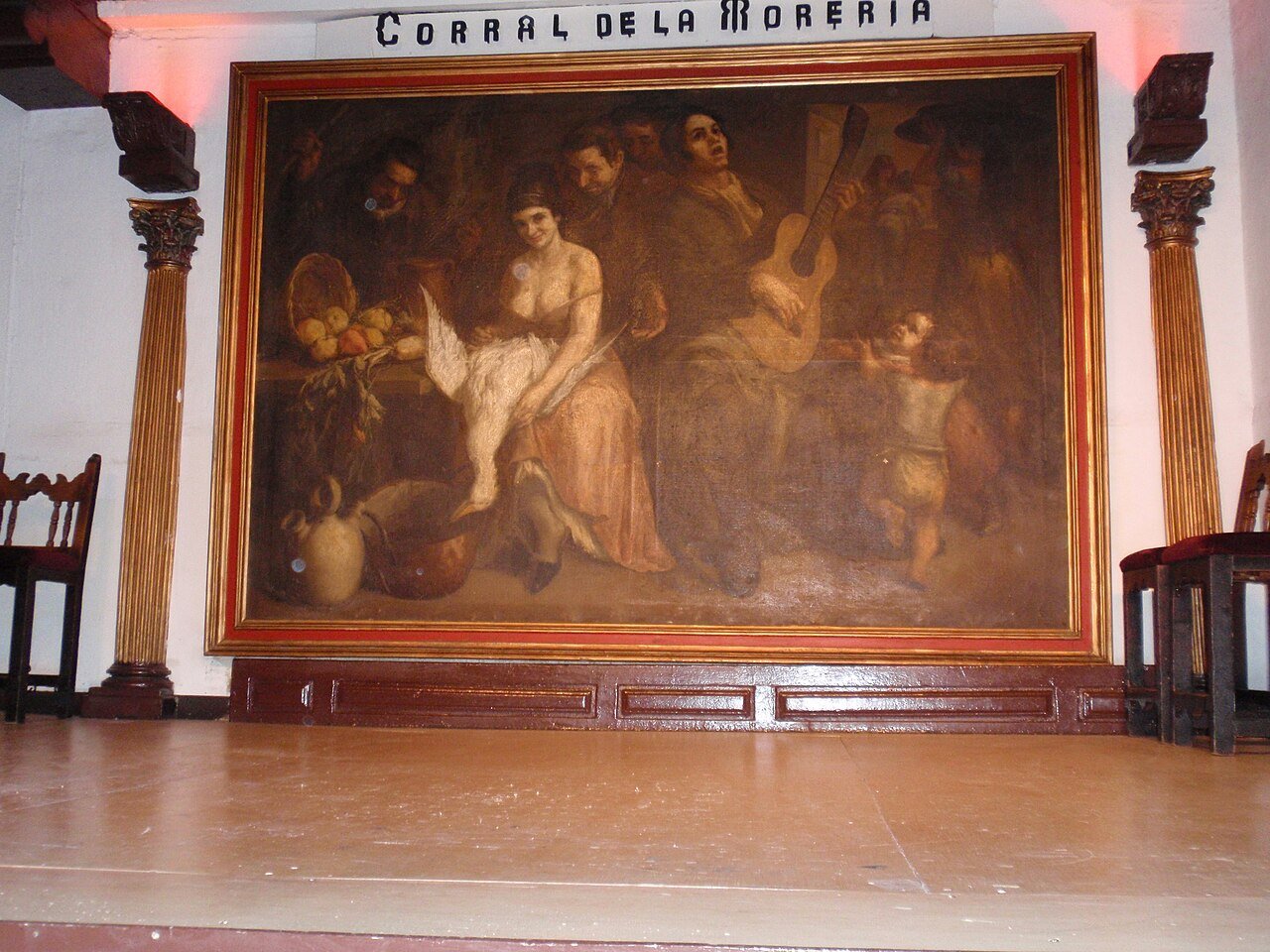
The famous name is the Corral de la Morería, opened in 1956 by Manuel del Rey and billed — by common consent as much as by its own marketing — as the cathedral of flamenco. Nine artists share its small stage nightly, the dancer roster reads like a hall of fame across the decades, and the attached restaurant is a serious fine-dining room in its own right. Book direct with the house; platform prices for the show start from about $56, and weekends sell out well ahead. This is the splurge pick of the entire guide, and on the right night it earns it.
The cannier booking is a few streets away. Tablao Torres Bermejas, performing since 1960 in an interior modelled on the Alhambra — carved arches, tiles, the full Nasrid fantasy — puts on a full traditional cuadro at a friendlier price. Book it: Madrid: Live Flamenco Show with Food and Drink Options — rated 4.5/5 from 11,137 reviews, from about $35 for the one-hour show, with food and drink packages if you want them, plus free cancellation up to 24 hours ahead and reserve now & pay later.
Madrid earned this scene. In the nineteenth century its cafés cantantes were flamenco’s first commercial stages, and when the tablao era arrived in the 1950s the capital’s rooms became the art’s shop window to the world — the Corral and Torres Bermejas are both survivors of that golden decade. The pattern holds today: a dancer who conquers Madrid’s tablaos has, in the flamenco world’s eyes, arrived.
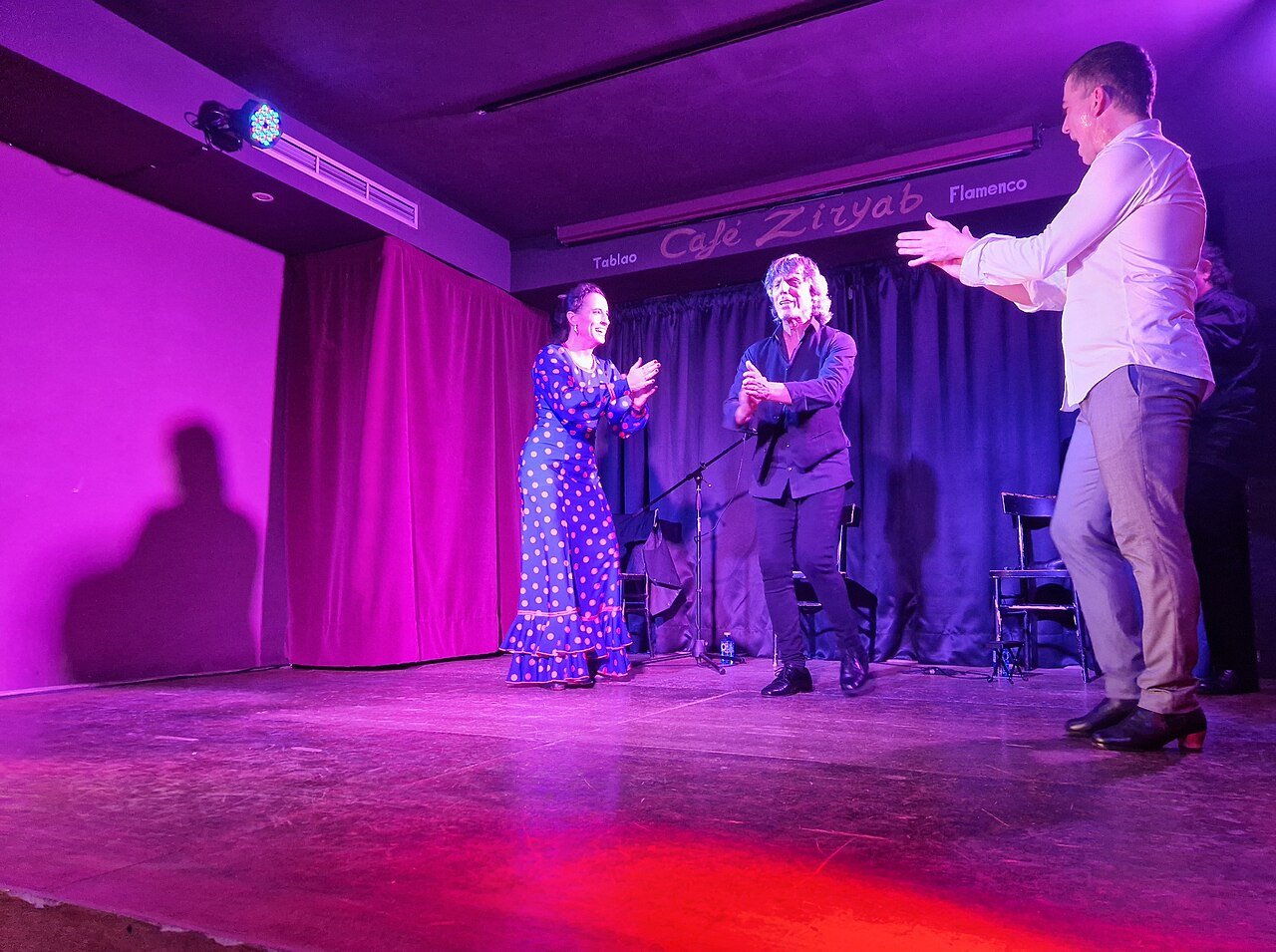
Round out the capital with its smaller rooms: Cardamomo, near Puerta del Sol, is where the city’s young stars cut their teeth in front of an audience that knows; Tablao Café Ziryab, in our photograph, is the intimate Huertas option, all palmas and proximity; and the Teatro Flamenco Madrid stages flamenco in a proper theatre format for those who prefer a seat and a programme to a table. Best for: star-spotting and a big-city night out. Madrid is also the easiest flamenco city in Spain — every venue in this section sits within walking distance of a metro station and a late dinner.
6. Barcelona: Palau Dalmases, Tablao de Carmen and the Rambla
Barcelona is the question mark in every flamenco guide, so let us answer it honestly. Flamenco is an Andalusian art, and Barcelona’s scene grew from the Andalusian families who migrated to Catalonia — but what they built is no imitation. This is the city that produced Carmen Amaya, born in the Somorrostro shantytown by the beach and still, for many, the greatest dancer who ever lived. Barcelona’s best rooms are entirely serious; you simply have to pick them, because the city also sells more flamenco tat than anywhere else in Spain (§10 was written with its tout-lined avenues in mind).
The infrastructure tells the story. Barcelona’s flamenco grew up in the Paral·lel’s theatres and the taverns of the old town, fed by migration and always half in dialogue with the city’s other music — which is why its best rooms feel a little more theatrical, a little more cosmopolitan than Seville’s, without being any less devoted. Judge the houses below by the same standard as everywhere in this guide: named artists, real cante, a room that listens.
Start with the connoisseur’s pick: Palau Dalmases, a baroque palace in El Born whose candlelit courtyard hosts small, high-quality shows — a singer, a guitarist, dancers, and an audience close enough to hear the guitar’s wood. It is the most beautiful room in this guide. For the classic big tablao format, Tablao de Carmen, inside the Poble Espanyol and named in honour of Carmen Amaya herself, runs the generous dinner-show model with a strong cast. And on La Rambla itself, Tablao Cordobés has been staging full cuadros under its Alhambra-style arches since 1970 — our photograph shows its company mid-performance — and remains the one Rambla address flamenco people will defend.

Finally, the concert format: Gran Gala Flamenco stages large-scale productions at the Palau de la Música Catalana, Barcelona’s modernista jewel-box concert hall — flamenco as a night at the opera, in a room worth the ticket alone. Best for: travellers based in Barcelona who want the real thing without leaving the city (and you do not need to leave the city). Just buy from the named houses above, never from a street flyer.
Two Barcelona specifics. The Palau de la Música concerts run on selected dates through the season rather than nightly, so check the hall’s calendar before building an evening around one. And the city’s tablaos mostly run earlier sittings than Andalusia’s — a gift if you are travelling with children or an early train, less so if your flamenco tastes run to the small hours; for those, Madrid and Seville keep later faith.
7. Córdoba: Tablao El Cardenal by the Mezquita
Córdoba is flamenco’s quiet achiever — a city whose musical pedigree (its Concurso Nacional de Arte Flamenco, founded in 1956, launched the young Fosforito and remains a kingmaker) far outruns its visitor numbers. That imbalance is your opportunity: the city’s one essential tablao performs to rooms that are rarely as packed as they should be.
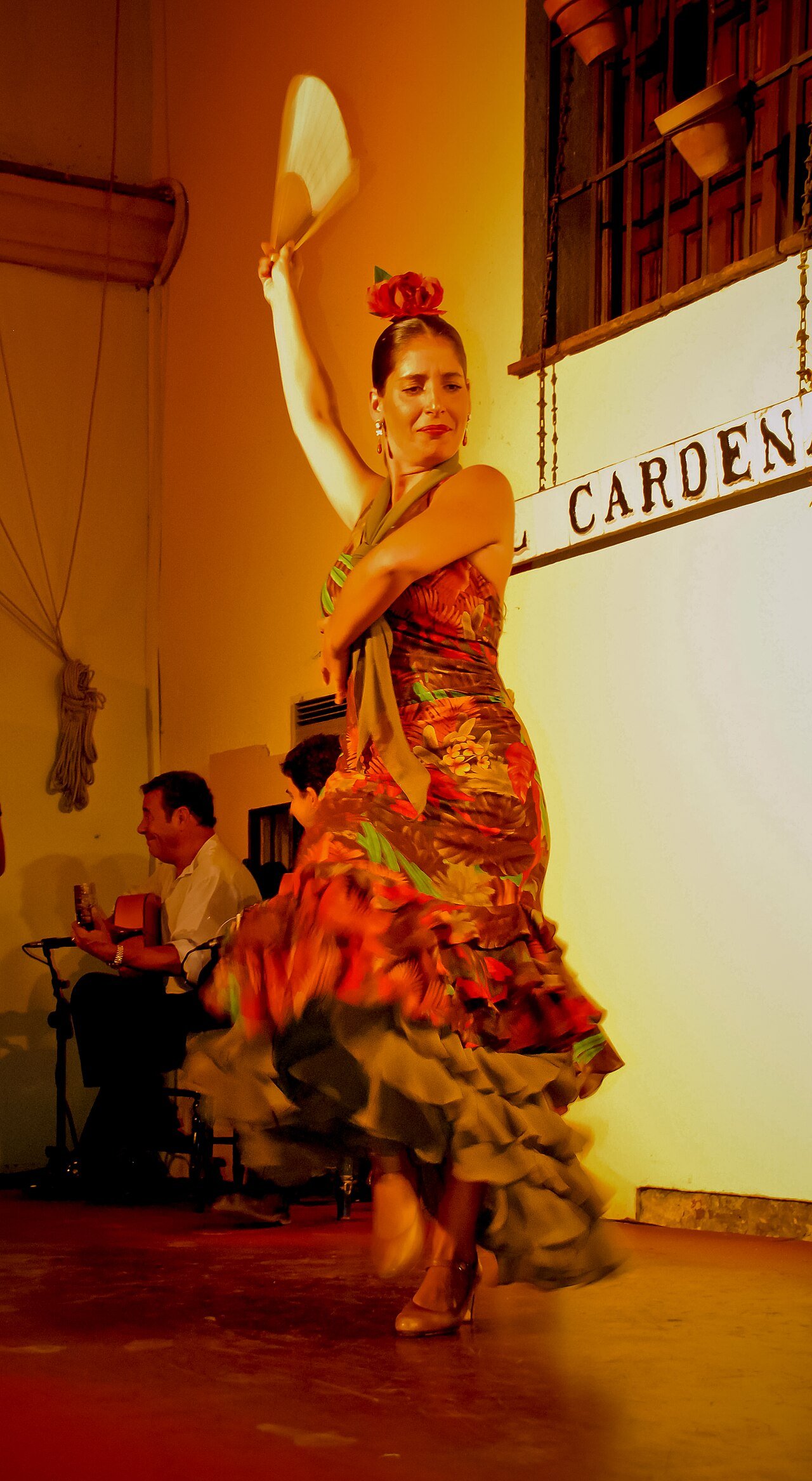
Tablao El Cardenal sits on Calle Buen Pastor in the Jewish Quarter, about five minutes’ walk from the Mezquita, in the courtyard of a former archbishop’s palace. Its cuadro is built the Córdoba way — seven artists with an unusually generous contingent of dancers — and the ticket includes a drink, which you will sip under the courtyard’s plants as the show builds. It is the natural flamenco night to bolt onto a Mezquita day, and our guide to things to do in Córdoba shows how the two fit together.
Time a visit for June and Córdoba gives you something no ticket buys: the Noche Blanca del Flamenco, one long night when the old town fills with free outdoor performances — stages in the plazas, cante until dawn, the whole city out in the warm dark. It is the finest free flamenco night in Spain, and the standing argument for putting Córdoba, not just its famous mosque, on an Andalusian itinerary. Best for: travellers who like their culture without a crowd of other travellers.
Córdoba rewards the traveller who lingers past the day-trip hours whatever the season: the Mezquita crowds thin by evening, the Jewish Quarter empties, and the slow walk from the last patio bar to El Cardenal’s courtyard is the city’s best hour.
8. Jerez: Peñas, Tabancos and the Festival de Jerez
Every flamenco road ends in Jerez. This small sherry city in Cádiz province is the cradle of the bulerías, the fastest and most joyful of flamenco’s rhythms, and — with its Santiago and San Miguel neighbourhoods — one of the two or three great heartlands of cante jondo, the deep song. Jerez does not really do tablaos. Jerez does peñas, tabancos and one extraordinary festival, and it expects you to meet it on those terms.
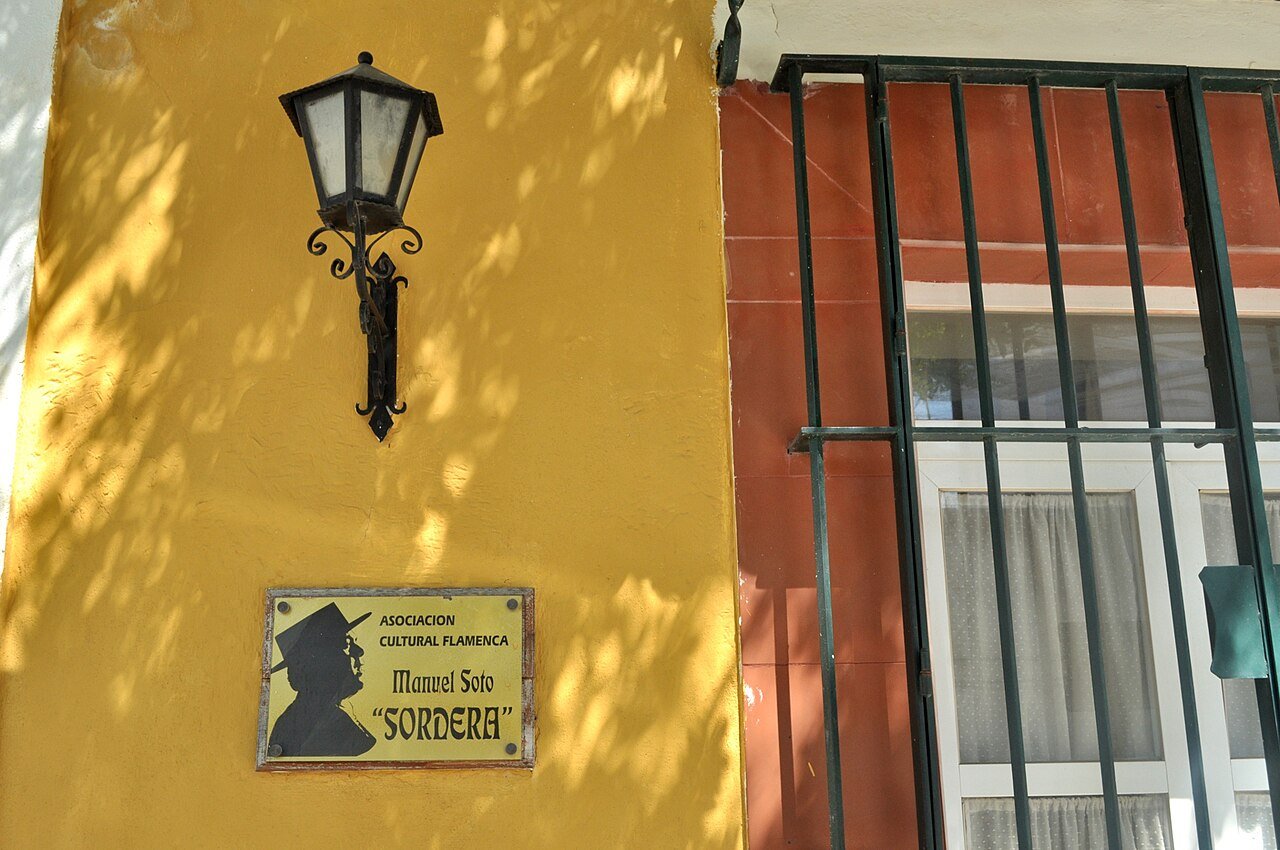
The peñas are the city’s living rooms of song. Houses like Tío José de Paula and the Asociación Cultural Flamenca Manuel Soto “Sordera” — whose tiled plaque anchors our photograph — belong to their neighbourhoods, host announced nights of cante, and welcome respectful visitors the way a village pub welcomes a stranger who has clearly come for the right reasons. Between them, the tabancos pour sherry straight from the barrel in tiled, sawdust-floored taverns — Tabanco El Pasaje among the oldest — where a glass of fino and a plate of olives can, on the right evening, turn into an impromptu performance nobody scheduled.
A word on the bulerías, because Jerez will make you feel it before you understand it. It is flamenco’s great party form — fast, witty, built for improvisation — and in Jerez it belongs to everyone: at a peña night the finale invites the whole room into the rhythm, one dancer at a time taking a few steps in the centre while the circle claps them on. Visitors are not expected to perform. They are expected to keep the palmas honest, and to understand that in this city the boundary between audience and artist has always been a polite fiction.
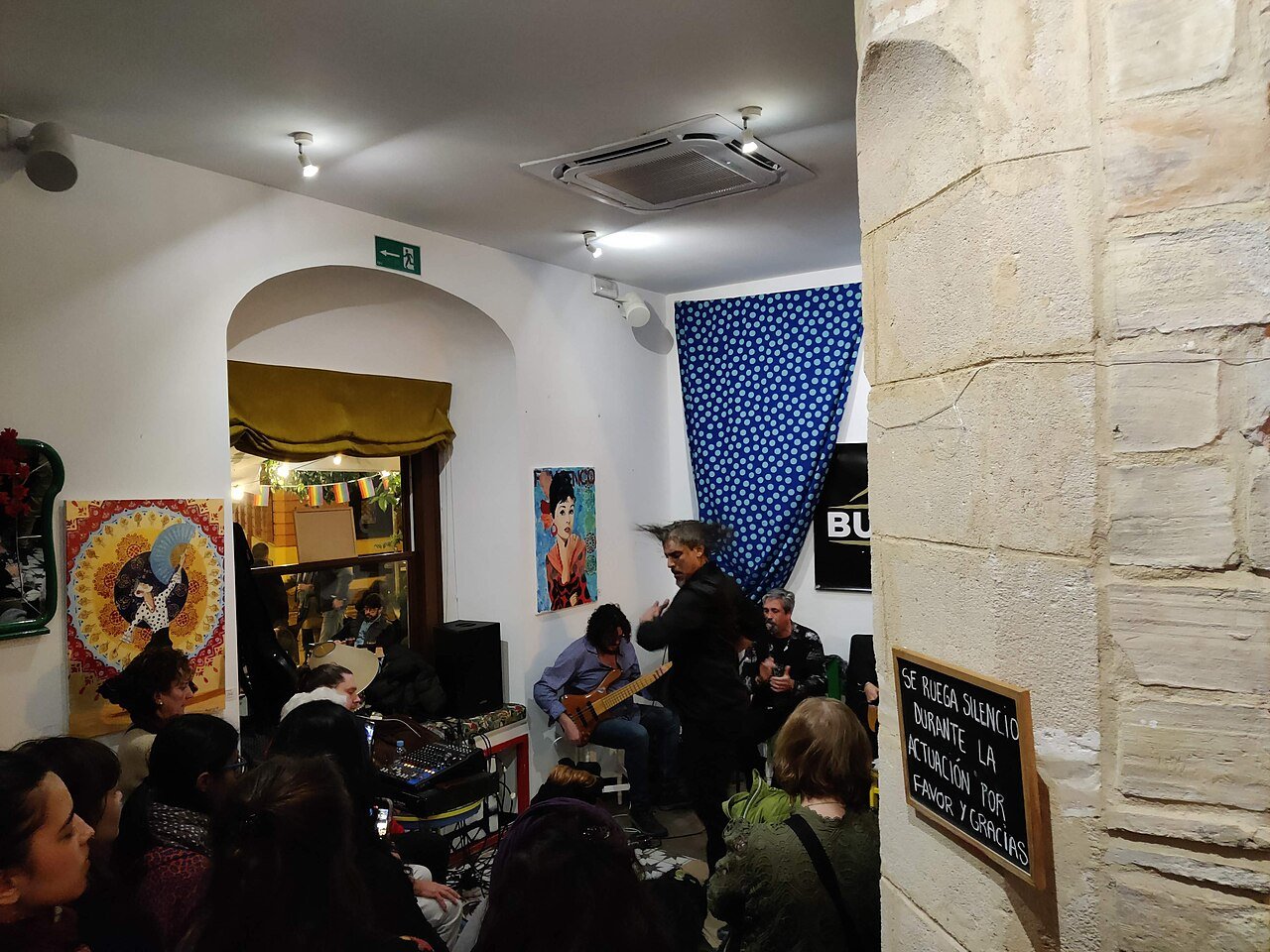
Then, for a fortnight straddling late February and early March, the Festival de Jerez turns the whole city into flamenco’s world capital: premieres at the Teatro Villamarta, courses full of dancers flown in from Tokyo and New York, and peña nights like the one in our photograph, where a bailaor performs for a packed small room beneath a chalkboard asking for silence during the performance. That sign tells you everything about Jerez. If your Spain trip is being built around small, characterful places, Jerez belongs on the same shortlist as our round-up of the best Spanish towns — and a festival week here is the single best flamenco trip in this guide. Best for: the already-converted, and anyone who suspects they are about to be.
9. What Should a Flamenco Ticket Cost?
Flamenco pricing baffles visitors because the same word — “show” — covers a €10 peña night and a €90 dinner package. Here is the honest ladder, bottom to top, so you can tell at a glance whether a price is fair, cheap or a trap wearing a nice dress.
A peña night costs the least of anything in this guide: entry is often free or close to it, and your real spend is drinks at neighbourhood prices. A small theatre-style room — Casa de la Memoria is the benchmark — runs to around €24 for an hour of pure show. A Sacromonte cave show with a drink included starts from $31 on GetYourGuide for Cuevas Los Tarantos. The classic tablao, show only — Los Gallos, El Arenal — sits around €38–45, and Madrid’s Torres Bermejas undercuts the band, from about $35. At the top, the star rooms charge star prices: the Corral de la Morería’s platform listings start from about $56 before you have eaten a thing.
Dinner is where budgets go to die. Adding the meal typically lifts a tablao ticket into the €70–90 range (El Arenal’s dinner band runs €71–86 by guide prices), and the food, while sometimes good, is never the reason anyone remembers the night. Our standing advice: pay for artists and for the room, not for the menu. Eat tapas before the show like a local, take the show-only ticket, and spend the difference on a second flamenco night somewhere smaller. The one exception is travellers for whom the dinner-show is the occasion — a celebration night at El Arenal or the Corral — in which case book it proudly and skip our sermon.
One last calibration: the cheapest ticket is not always the saving it looks. A bargain seat in a vast dinner room where the show plays as background music costs more per minute of real flamenco than roughly €38 at Los Gallos, where every seat is close and every note is the point. Price the evening by the quality of the hour, not by the number on the ticket — that single habit will steer you right through every city in this guide.
10. How to Spot a Tourist Trap
Tourist-trap flamenco is a small industry, and it has tells. Learn these and you will never sit through a bad show in Spain again.
The traps cluster where the cruise crowds are: outside big-city stations, along Barcelona’s most famous boulevard, and anywhere a person is pressing a flyer into your hand. The product inside is consistent — a “flamenco show” bolted onto a hotel buffet or a paella dinner, one or two dancers working a huge room, the cante reduced to a backing track or a singer racing through shortened songs, and a drinks bill engineered to make the “free show” the most expensive hour of your trip. The single most reliable red flag is the sales pitch itself: no serious house in this guide needs touts, because its seats sell on reputation.
The positive signs are just as consistent. Real houses name their artists — flamenco is a star culture, and a venue proud of its cast prints the names. Real houses give the cante its own space: at some point the dancer sits down and the room goes quiet for the singer, and the audience listens the way the chalkboard in our Jerez photograph demands. Real houses are small, start late, ask for silence and no flash photography, and draw a visible minority of Spaniards who have clearly come for the music. If a show advertises itself mainly on dinner, duration and a free sangria, walk on. Our wider Spain travel tips will help you dodge the non-flamenco versions of the same traps.
Add one modern tell: the anonymous resale listing. Shows sold through generic experience marketplaces under titles like “Authentic Flamenco Night with Dinner!” — no venue named, no artists named, a hotel pickup as the headline feature — are almost always the same dinner-room product at a marked-up price. If a listing will not tell you where the flamenco happens and who performs it, that silence is the review. Every bookable show in this guide names its house, and that is not an accident.
11. When to Go and How Far Ahead to Book
Flamenco runs all year — the tablaos in this guide perform nightly in every season — but the calendar has peaks worth planning a whole trip around. The Festival de Jerez owns late February into early March. Córdoba’s free Noche Blanca lights up one June night. August belongs to the Festival del Cante de las Minas at La Unión, the great cante competition. Autumn brings Madrid’s Suma Flamenca, and Seville’s Bienal — the art’s most prestigious festival — takes over the city in the autumn of even years, so its next edition falls in 2028.

Season shapes the tablaos too. In Seville, the weeks of Semana Santa and the Feria de Abril flood the city and its tablaos alike — book everything early in those weeks, or accept the late sitting and enjoy the crowds. In August, Andalusia is hot enough that the evening show becomes the whole strategy: sightsee early, siesta, and let flamenco own the night. Winter is the connoisseur’s bargain — the same casts, smaller and more local audiences, and seats that are far easier to get.
Booking lead times split cleanly by format. Headline festival shows and the intimate rooms — Casa de la Memoria above all — go first: reserve the small rooms at least two to three days ahead in high season and festival tickets the moment your dates are set. The classic tablaos are usually bookable a day or two out outside peak weeks, and peñas run on local announcement, so the skill there is simply turning up early and staying late. A southern swing of Seville, Granada, Córdoba and Jerez fits beautifully inside a one-week Spain itinerary — four cities, four completely different flamenco nights, and not one of them wasted.
Travel insurance, sorted
Whether it is a two-week holiday or a longer move, travel insurance is not the most glamorous part of a trip — but it is the part that stops a broken ankle or a cancelled flight from becoming a five-figure problem. One policy can cover your whole trip. Get a quote from SafetyWing
Final Thoughts
Flamenco is not a show Spain puts on for visitors. It is a living argument — about grief, joy, pride and rhythm — that Spanish families have been having in public for two hundred years, and a tablao ticket is simply a seat inside it. The six cities in this guide each keep a different dialect of the same language — Seville’s polish, Granada’s caves, Madrid’s ambition, Barcelona’s theatre, Córdoba’s quiet confidence, Jerez’s soul. Choose the format that suits your curiosity, choose a room with names on the bill, pay for the artists rather than the dinner, and give the cante your silence when it asks for it. Do those four things in any of the six cities above and you will not see a bad performance — God willing, you will see the night that explains Spain to you better than any museum can.

15 Things You Can Only Do in Spain: Experiences Found Nowhere Else on Earth
Frequently Asked Questions
Which city is best for flamenco?
Seville, for a first trip: it has the deepest bench of quality tablaos, from the unamplified purity of Los Gallos to the intimate Casa de la Memoria. Granada wins for setting — nothing matches a zambra inside a Sacromonte cave — and Jerez wins for depth, with peñas and cante you will not hear anywhere else. Madrid is best for star names, Barcelona is better than its reputation if you use the houses named in this guide, and Córdoba is the connoisseur’s quiet pick.
How much does a flamenco show cost in Spain?
Expect roughly €24 for a small theatre-style show, $31–37 for bookable headline tickets like Cuevas Los Tarantos and the Museo del Baile Flamenco show, around €38–45 for a classic tablao without dinner, and from about $56 at Madrid’s Corral de la Morería. Dinner packages push the same shows into the €70–90 range. Peña nights are the bargain of Spanish nightlife — often free, with your spend going on drinks. Festival headline tickets sit between the tablao bands and sell on scarcity rather than luxury.
What should I wear to a flamenco show?
Smart casual is right almost everywhere; no tablao in this guide enforces a dress code, and locals dress for a normal good night out. The exceptions are practical, not social: Sacromonte’s cave lanes are steep and uneven, so wear shoes you can climb a hill in, and take a layer for the walk back down. At the Corral de la Morería’s restaurant, smarter dress matches the room. Peñas sit at the far end of relaxed — you are a guest in somebody’s club, so neat and respectful beats fancy every time.
Can children go to a flamenco show?
Yes — children are welcome at the tablaos and cave shows in this guide, and Spanish families bring their own. Pick the earlier performance where a venue offers two sittings, since shows run a full hour of intense, loud music and the late sittings finish near midnight. Peña nights and festival late sessions are adult territory in atmosphere if not by rule, and restless toddlers will struggle anywhere the room demands silence.
Can I take photos during a flamenco show?
Generally, no. Most serious houses ban photography and filming during the performance — the flash breaks the artists’ concentration and the room’s spell — and staff will say so at the door. Some venues allow a quick photograph in the final minutes when the cast invites it. Photograph the room before the show, put the phone away when the lights drop, and let the palmas do the documenting.
What is the difference between a tablao and a peña?
A tablao is a commercial venue: you buy a ticket for a guaranteed professional show on a raised stage, usually with table service. A peña is a members’ flamenco club run by aficionados, centred on the singing — cheaper or free, unpredictable, not staged for tourists, and often magical precisely because of that. See a tablao for your first flamenco night; graduate to a peña when you want the real, unscripted thing.