10 Days in Spain: One Classic Route, Three Travel Styles
Ten days in Spain is enough for the classic first trip done properly — Madrid and Toledo, Córdoba, Granada, Seville and Barcelona, strung together on short train rides and one short flight, with every great sight given a full day and no journey wasted on backtracking. It is also the trip length travellers most often misjudge: three days longer than the standard week — just enough to tempt you into adding everything — and four days shorter than the fortnight, which is where everything actually fits. The honest answer is not “the week, but more”: it is a route with a shape of its own.
This guide gives you that route three ways. First, the classic build, walked day by day. Second, the same ten days rebuilt for travellers who eat their way through a country — a food-and-culture south that drops Barcelona and buys Málaga and Ronda with the savings. Third, a northern arc — Madrid, San Sebastián, Barcelona — for high summer and second trips. Underneath all three sits the comparison that decides between them: what the extra three days genuinely buy over seven, and what ten days still cannot hold that fourteen can.
In This Guide
- 1. The Route at a Glance: Five Bases, One Direction
- 2. Where the Extra Three Days Go: 10 Days vs 7 vs 14
- 3. Before You Book: The Decisions That Make or Break the Ten Days
- 4. Days 1–2: Madrid — The Prado, the Old Town and a Proper Start
- 5. Day 3: Toledo — The Day Trip the Third Night Buys
- 6. Day 4: Córdoba — The Mezquita and the Night That Matters
- 7. Days 5–6: Granada — The Alhambra, and a Second Day to Spend
- 8. Days 7–8: Seville — Two Full Days in the Evening City
- 9. Days 9–10: Barcelona — Fly North, Finish with Gaudí
- 10. Style Two: The Food-and-Culture South (No Barcelona)
- 11. Style Three: The Northern Arc (Madrid, San Sebastián, Barcelona)
- 12. What Ten Days Cost: The Honest Sketch
- Final Thoughts
1. The Route at a Glance: Five Bases, One Direction
The classic ten days obey the same geography as every good Spain route: the railway runs south from Madrid through Córdoba towards Granada and Seville, and one short flight jumps north to Barcelona, so the trip reads in a single direction and never revisits a station. What ten days change is not the map but the margins. Madrid gets a third night, and with it Toledo. Seville gets a second full day instead of a day and a half. Barcelona stops being the alternative week and becomes the finale. The longest surface leg of the whole trip is under three hours, and only one day — the flight north — involves an airport.
The sights justify the shape: ranked lists of the best places to visit in Spain keep returning to the same six interiors — the Prado, Toledo Cathedral, the Mezquita, the Alhambra, Seville’s Alcázar, the Sagrada Família — and the classic route is simply the shortest honest string through all of them. Here it is on one screen; read the sleep column as the plan and everything else as commentary:
| Day | You wake up in | The day in one line | You sleep in |
|---|---|---|---|
| 1 | — (arriving) | Madrid, gently: check in, one plaza, the Retiro at golden hour | Madrid |
| 2 | Madrid | The Prado in the morning, the old town all afternoon | Madrid |
| 3 | Madrid | Toledo: the cathedral, El Greco and the three cultures | Madrid |
| 4 | Madrid | Morning train south; the Mezquita and Córdoba’s old town | Córdoba |
| 5 | Córdoba | Late-morning train; Granada’s Albaicín and the sunset viewpoint | Granada |
| 6 | Granada | The Alhambra, at the pace it demands | Granada |
| 7 | Granada | Morning train west; Seville and the Plaza de España by golden hour | Seville |
| 8 | Seville | Cathedral and Alcázar, then Triana after dark | Seville |
| 9 | Seville | The short flight north; Barcelona’s Gothic Quarter and a first Gaudí evening | Barcelona |
| 10 | Barcelona | Park Güell in the morning, the Sagrada Família, one last long lunch — then out | — (depart) |
Two honest footnotes. First, the classic route is nine nights: Day 10 ends with an evening flight home. Travellers whose flight leaves the next morning gain the single most valuable amendment in this guide — a tenth night in Barcelona, which makes Day 10 a full day and Montserrat possible (§9). Second, the route reverses cleanly: fly into Barcelona and out of Madrid and the same days read backwards. Madrid first simply suits more flight schedules, and puts the Mediterranean at the farewell dinner.
2. Where the Extra Three Days Go: 10 Days vs 7 vs 14
The fair question is what, exactly, three extra days purchase. The answer is specific, because each of the three days does a different job.
Extra day one buys Toledo. The seven-day version of this route refuses Toledo outright — not because Toledo is anything less than magnificent, but because a week in Madrid has exactly one spare day and the Prado needs it more. A third Madrid night changes the arithmetic: Toledo becomes a day trip that costs nothing elsewhere, thirty-four minutes each way by train, and the route gains an entire second civilisation for the price of a return rail ticket.
Extra day two buys Seville at full size. In a week, Seville is the finale and it is squeezed: an arrival afternoon, one day for both great interiors, and out. Ten days give the city the second full day it has always deserved — the cathedral and the Alcázar taken separately and slowly, a morning in Triana that is not stolen from anything, and an evening that can be spent on flamenco or the river rather than on packing.
Extra day three buys Barcelona. A week in the south has to choose between Andalusia and Gaudí; ten days end the argument. Barcelona gets a day and a half on the nine-night version — the Gothic Quarter, the Eixample and both headline Gaudí sights — and two full days if you take the tenth night. It is a taste rather than a residency, but it converts Barcelona from a separate future trip into this trip’s finale.
What ten days still cannot hold is equally specific, and it is the fortnight’s territory: nights in Málaga and a Ronda day taken from there rather than squeezed from Seville; Girona and Montserrat both as Barcelona day trips (ten days force a choice, §9); Valencia in any form; and the entire north. If your list already includes two of those, you do not have a ten-day trip — you have a fourteen-day trip trying to wear smaller clothes, and our two-week Spain itinerary is the honest document. Conversely, if Toledo and Barcelona both leave you cold and the south is the whole point, the week does the job for less: our one-week Spain itinerary is this route’s first seven days, walked at the same pace. Ten days is the right length for exactly one traveller profile: the first-timer who wants the southern classics and Toledo and a Barcelona ending, and lets the north, the islands and the deep south wait.

3. Before You Book: The Decisions That Make or Break the Ten Days
Ten days give you more slack than a week, but the booking order matters just as much, because the route still hangs on two timed sights that sell out and a railway that prices like an airline.
Book the flights open-jaw. Into Madrid, out of Barcelona (or the reverse). Open-jaw fares on European routes usually price close to a simple return, and they are what make the one-direction shape possible. The one internal flight — Seville to Barcelona on Day 9 — should be bought in the same session: it is a budget-airline route whose early fares are modest and whose late fares are not, and fixing it early fixes the whole second half of the trip around it.
Book the Alhambra before anything else on the ground. The Nasrid Palaces admit visitors in small timed groups, the ticket carries the visitor’s name and passport number, and the original ID is checked at the door. In busy months the slots disappear weeks ahead. Day 6’s slot is the first purchase of the trip — before the hotels, before the trains. The Sagrada Família’s timed entry is the second sight in the same class: book its Day 10 slot the same week. Everything else on the route forgives a fortnight’s notice; these two do not.
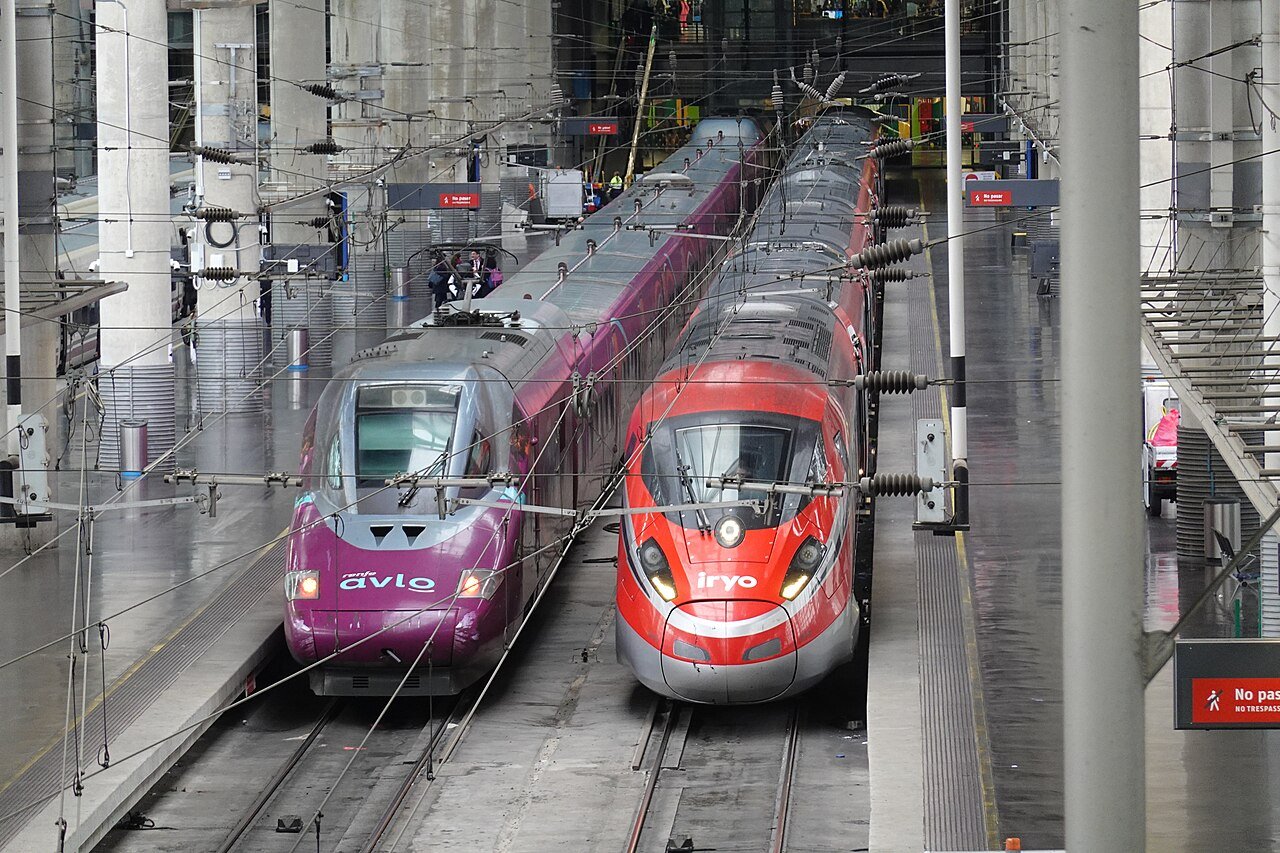
Book the trains early — and read one timetable first. Spanish high-speed fares rise as each departure fills, and the same seat can cost three times as much bought late. One leg deserves a check before you fix the plan around it: Córdoba to Granada is the thinnest service on the route, with only a handful of direct trains a day, so let the railway choose Day 5’s departure time. Madrid–Córdoba, Madrid–Toledo and Granada–Seville are all frequent enough to be forgiving.
Plan on Spanish hours from the start. The country’s mechanics — lunch at two, dinner at nine or later, the quiet afternoon, tipping, the border systems — are set out in our Spain travel tips, and every itinerary here is built with them rather than against them: monuments in the morning, the long lunch as the day’s hinge, evenings treated as a destination in themselves. By Day 4 the rhythm stops feeling like a timetable and starts feeling like the point.
4. Days 1–2: Madrid — The Prado, the Old Town and a Proper Start
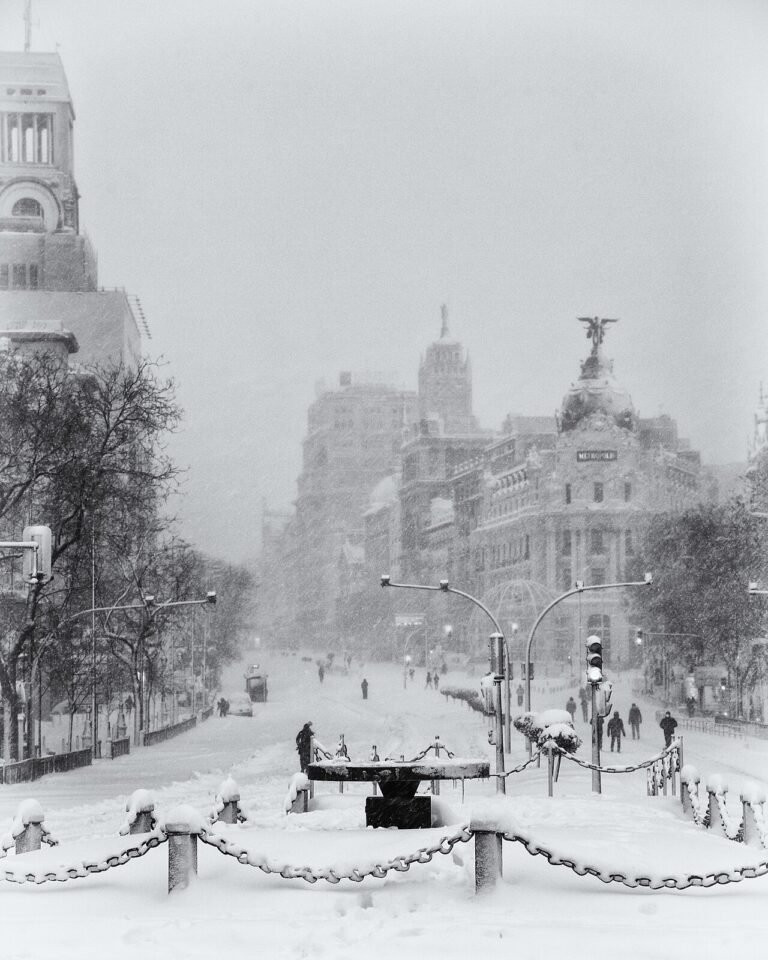
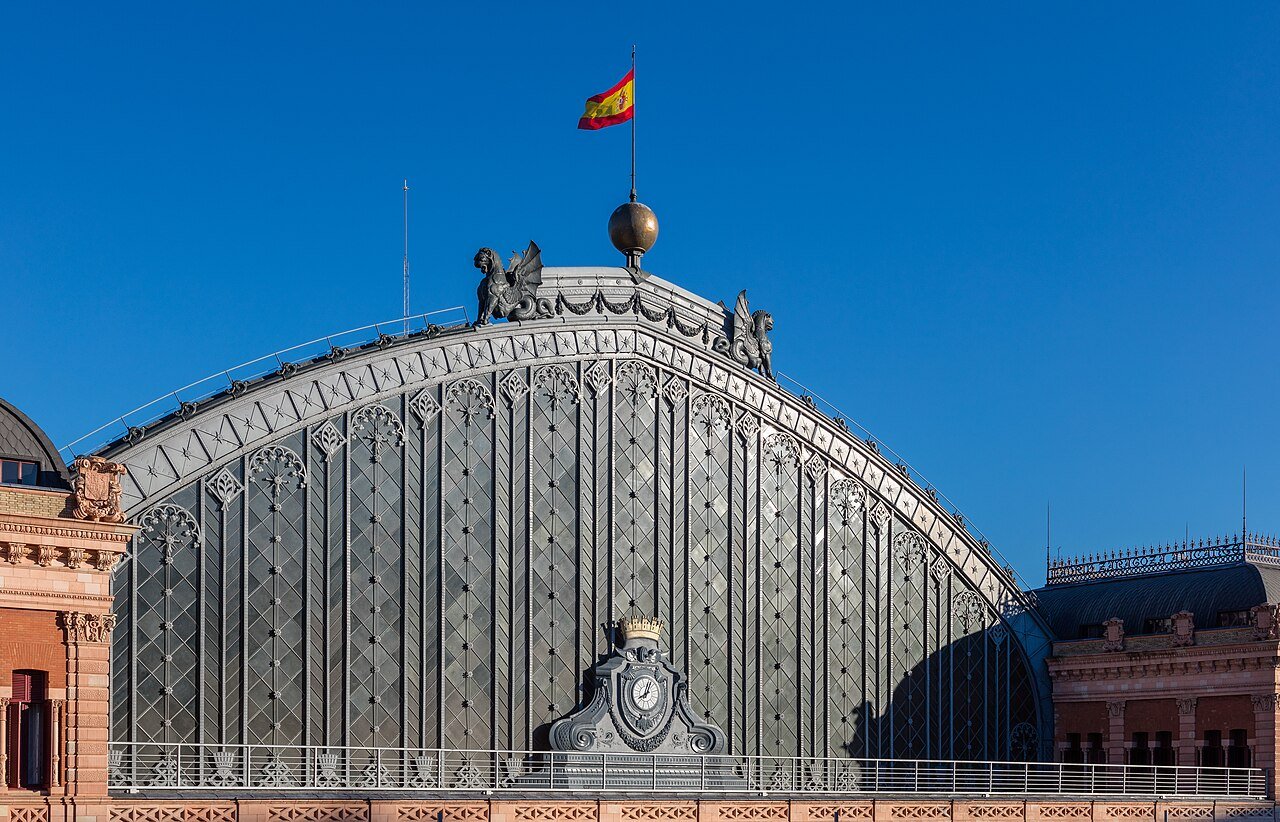
Ten days let Madrid be what it should be: a beginning, not an obstacle. However you arrive, Day 1 is a half day and the itinerary treats it as one — get in, get settled, take one slow loop and sleep at an hour that makes the rest of the trip possible. Base within walking distance of Atocha station, in the Huertas (Barrio de las Letras) or the edge of Centro: the Prado is ten minutes one way, the station is under your feet on the three mornings you leave from it, and Plaza Mayor is a stroll. Drop the bags and walk the loop — Plaza Mayor under its frescoed arches, east through the literary quarter, and into the Retiro for the golden hour, when the boating lake flattens to bronze and the Crystal Palace catches the light. Dinner late and light, in the tapas bars of Huertas or La Latina. Resist the museums today.
Day 2 belongs to the Prado, and it gets the whole morning. One of the world’s great museums cannot be done in an hour and should not share its morning with anything else: go at opening with a short list — Las Meninas, Goya’s Black Paintings, the Bosch room — and work outward from them. The museum’s own ticket is €15 at the door with timed entry, and there is a genuine free alternative: entry is free for the last two hours of the day, Monday to Saturday 18:00–20:00 and Sundays and holidays 17:00–19:00. The paid morning is the right call — two crowded evening hours is a poor trade for this collection — though a strict budget can use the free window for a second, slower lap.
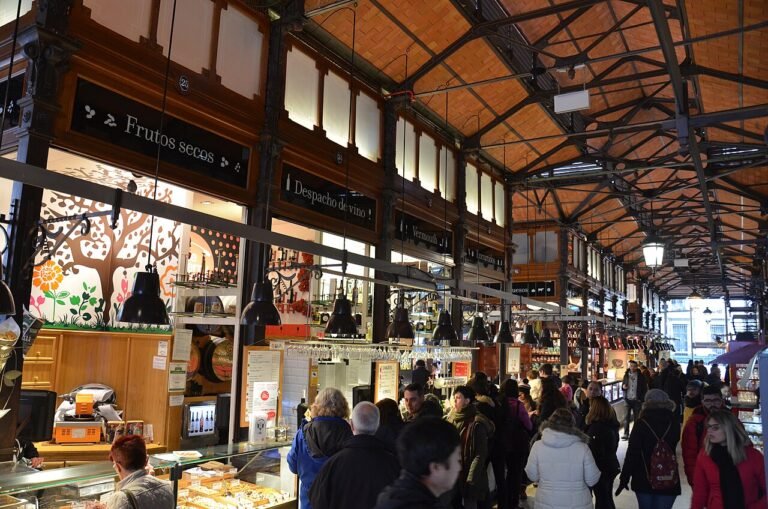
The afternoon is the old town, and it needs no tickets: west through Huertas to Plaza Mayor and Madrid de los Austrias, the Royal Palace from its square with the Almudena Cathedral opposite, the Mercado de San Miguel for a look and a glass (priced for visitors), and the long lazy business of tapas around Cava Baja. If energy remains at dusk, the Temple of Debod — an Egyptian temple reassembled on a hill west of the centre — is Madrid’s favourite sunset and the correct end to the capital’s full day. Tomorrow you leave the city twice: once for Toledo, and for good the day after.
Sleep in Madrid — nights 1–3 of 3. Base: Centro/Huertas near Atocha, for the Prado, the old town and three separate departures from the same station.

5. Day 3: Toledo — The Day Trip the Third Night Buys
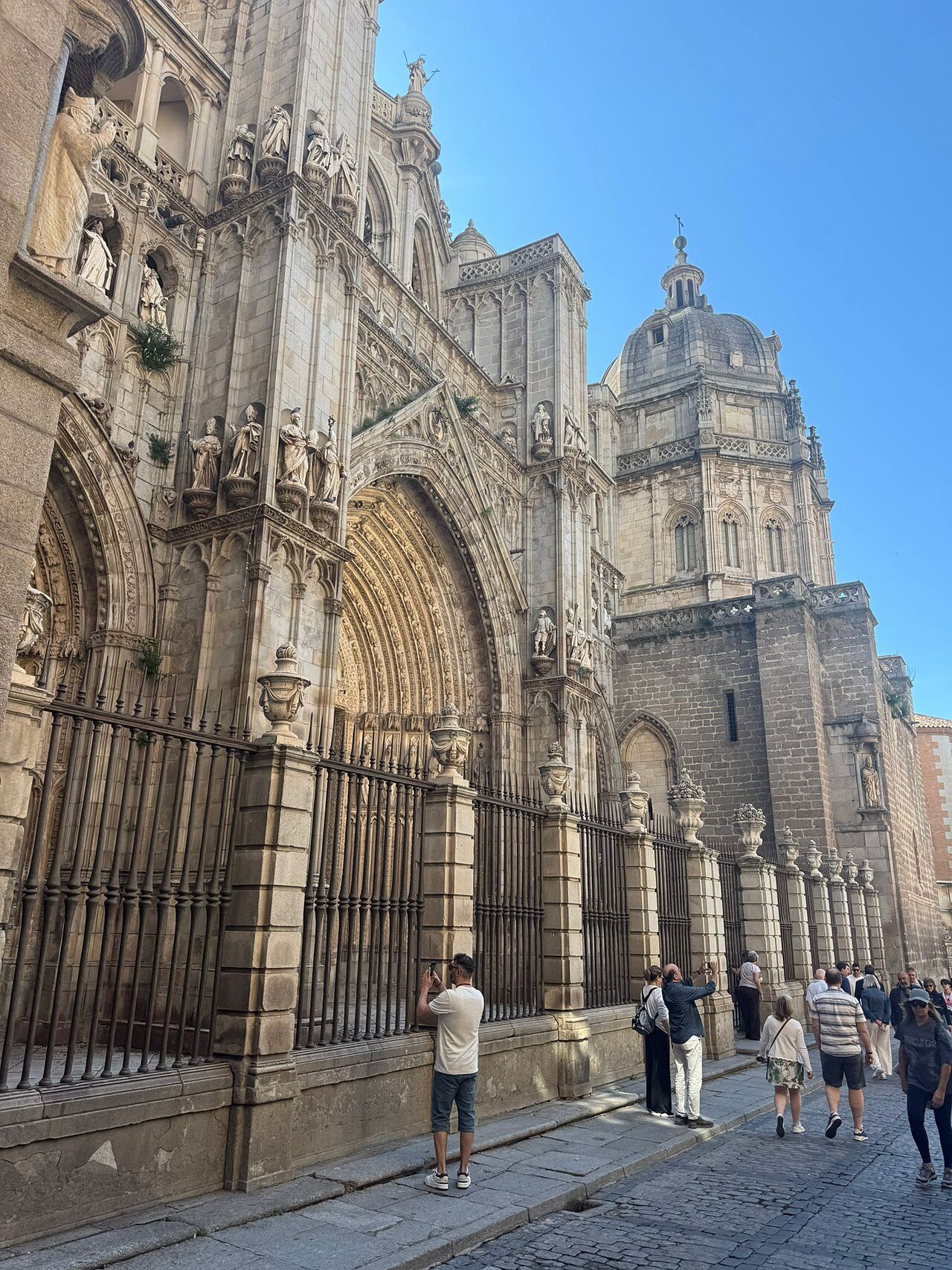
This is the day the ten-day trip exists for. Toledo — former capital of Spain, the city where Christian, Jewish and Muslim cultures built side by side for centuries — sits just thirty-four minutes from Atocha by direct Avant train, with about fifteen trains a day, and it fills a day exactly: big enough to be a second capital, small enough to walk entire. Take a morning train out and an early-evening one back, and sleep in the same Madrid bed — the route stays one-directional and unpacking stays theoretical.
The day choreographs itself. Start at the Mirador del Valle, the viewpoint across the Tagus, while the light is young: the whole city on its hill, Alcázar and cathedral spire over the river bend, is the geography lesson that makes the streets inside legible. Then cross into the old town and take the three cultures in order: the cathedral first, one of the great Gothic interiors of Spain, with El Greco, Goya and Titian in its sacristy; the Church of Santo Tomé for the single painting that justifies the day on its own, El Greco’s Burial of the Count of Orgaz; the Synagogue of Santa María la Blanca, all white horseshoe arches; and the cloisters of San Juan de los Reyes. Save room for marzipan — Toledo’s almond sweet is better here than anywhere. The Alcázar, the fortress on the summit, is the exterior punctuation mark; its military museum is the one thing the day can honestly skip.
Travellers who would rather not choreograph can hand the day to a guide. The guided day trip to Toledo by bus on GetYourGuide — 4.2/5 from 6,267 reviews, from $38 per person — runs from the Neptune Fountain in three versions: a six-hour Express, and two nine-hour full days whose higher packages add guided entry to the cathedral and Santo Tomé or a VIP wristband covering seven monuments. It carries the flexible terms worth having — free cancellation up to 24 hours in advance for a full refund, and reserve now & pay later, so you can hold a place and pay nothing today. Our own preference on a ten-day trip is the train and your own pacing — Toledo rewards wandering, and the tours keep a schedule — but for travellers who want the stories told and the logistics gone, it is the sensible booking.
Back in Madrid by evening, the day ends the way locals end it: late, standing up, in the bars near your hotel. Pack tonight. Tomorrow the trip turns south and the bases start changing.
Sleep in Madrid — night 3 of 3. Tomorrow’s train leaves from the station you have been walking past all week.
6. Day 4: Córdoba — The Mezquita and the Night That Matters
Take a morning train from Atocha — not the first, not the last — and about an hour and three quarters later step out into Andalusia. Madrid to Córdoba is the easiest leg of the trip: direct high-speed trains run all day, around forty-five of them, and Córdoba station is a short walk or quick taxi from the old town. By late morning you are standing in the city that was, a thousand years ago, one of the largest in the world and the capital of Islamic Spain — and in front of the building that proves it.
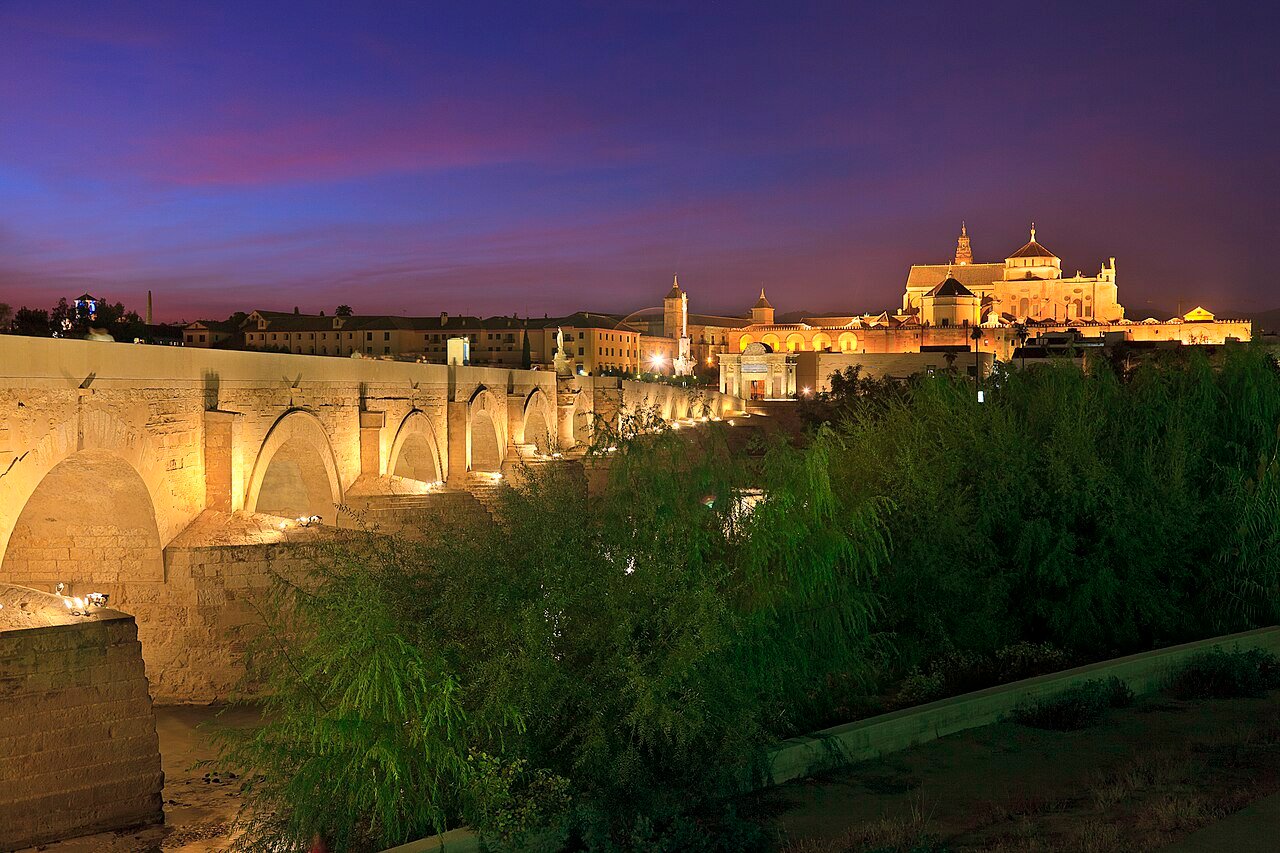
The Mezquita is the day’s whole argument, so give it the late morning and do not rush it. Inside, the famous forest of red-and-white double arches runs away in every direction, hundreds of columns deep, cool and dim and strangely quiet even with a crowd inside; then, at the centre, the light changes and a full Renaissance cathedral rises out of the prayer hall as if it had erupted there. It is one of the two or three interiors in Europe that genuinely rearranges a traveller’s sense of scale. Time your arrival for the late morning if you can: the overnight is this itinerary’s structural advantage, because you are already here while the day-trip crowds are still on their trains.
The afternoon is Córdoba at walking pace: the white lanes of the Jewish Quarter, the little synagogue, the Alcázar de los Reyes Cristianos and its terraced gardens, the flower-filled patios the city is famous for — at their explosive best in May, charming in every month. Then, as the light goes, the Roman Bridge across the Guadalquivir: the Mezquita’s bulk lit behind you, the river moving below. Cross it slowly. It is the day’s second sight, and it is free.
Evening is why the night is spent here. The day-trippers leave on the last trains to Seville and Málaga, and Córdoba reverts to its residents — dinner in the old town, salmorejo and a glass of Montilla in a patio courtyard, the bridge lit across the water. One night in Córdoba remains the best-value night in Spanish itinerary planning: a whole great city of Islamic Spain, experienced after hours, for the price of one hotel night and no extra travel, because the railway passes through Córdoba on its way south either way.
Sleep in Córdoba — the trip’s single night here. Base: the old town, within a few streets of the Mezquita; everything in this day is walkable from it.
7. Days 5–6: Granada — The Alhambra, and a Second Day to Spend
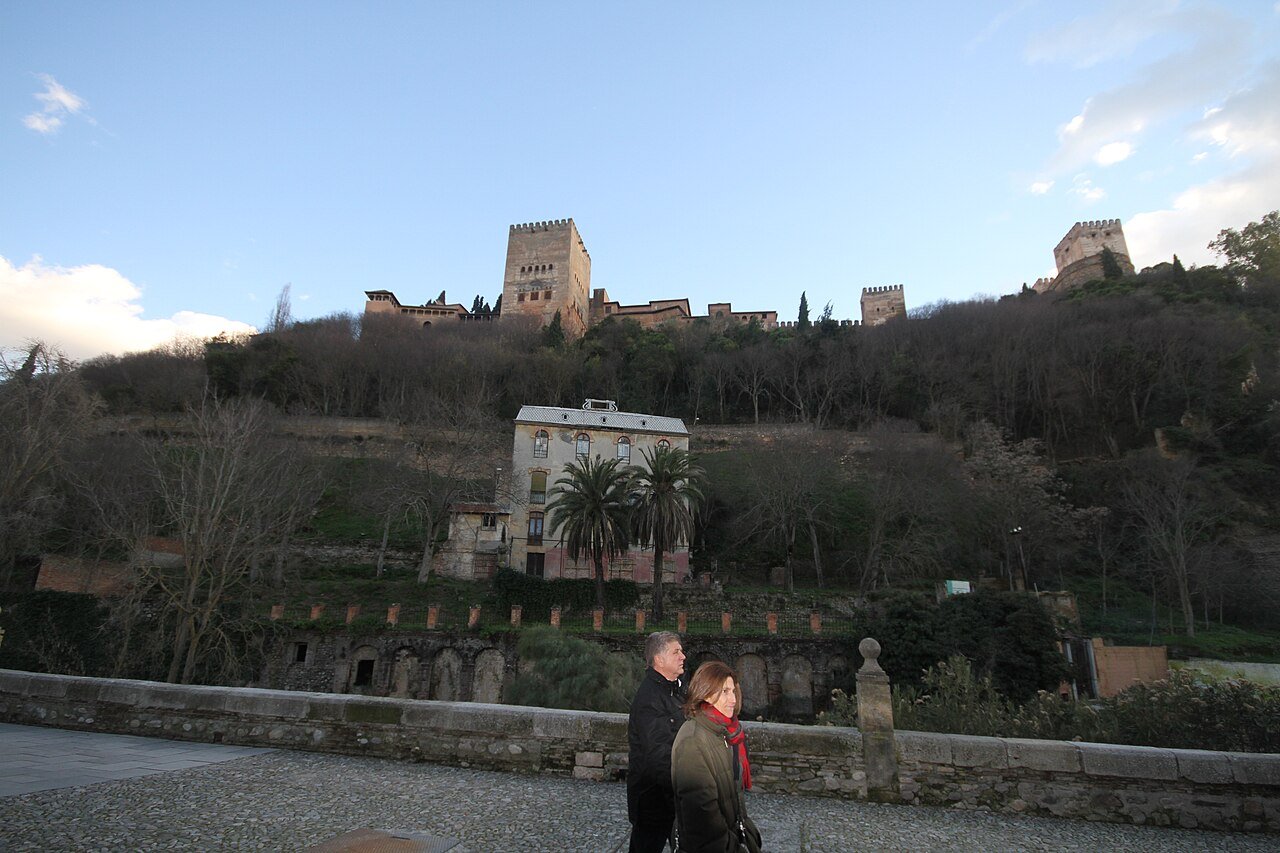
Day 5 is a quiet travel morning. Take a late-morning direct train from Córdoba — the ride east takes about an hour and three quarters through the olive hills of the Subbética, and because this is the route’s thinnest service, a handful of direct trains a day, you will have chosen the departure back in §3. No alarm: a slow Córdoba breakfast, one last look at the bridge, and the train. Granada station sits west of the centre, a short tram or taxi ride from the old town, and the afternoon has a single assignment: the Albaicín, the old Moorish quarter on the hill opposite the Alhambra. Lose yourself in its white lanes and hidden carmen gardens, climbing as the afternoon cools to the Mirador de San Nicolás, and arrive before sunset. The view from San Nicolás — the Alhambra spread along its ridge with the Sierra Nevada behind — is the most famous in Spain, and seeing it the evening before your visit is not a spoiler; it is an orientation. Tomorrow you will be inside the postcard.
For sleeping, take the less romantic option: the Albaicín is beautiful and steep and no friend to suitcases, so base in the Centro or the Realejo, on the flat, with every restaurant in the city around you. Granada is also the free-tapa capital of this route — order a drink in the right bars and a small plate arrives with it — so tonight’s dinner costs less and entertains more than anywhere else on the trip. Eat, wander the cathedral streets, and stop early. Tomorrow has a time slot with your name on it.
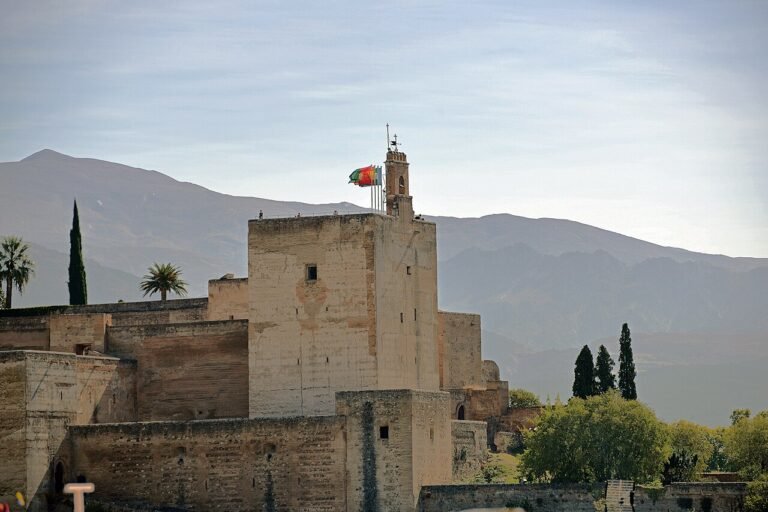
Day 6 is the Alhambra, and ten days change nothing about its rules — they just mean you arrive at them rested. The Nasrid Palaces are entered at the half-hour slot printed on your ticket, with the original passport or ID the booking was made under, and the slot is absolute. Build the complex around it: the Alcazaba fortress and its towers, the palace rooms themselves at their appointed hour — the Mexuar, the Court of the Myrtles with its still reflecting pool, the Court of the Lions — and the Generalife’s long, fountain-cooled gardens to finish. Allow three and a half to four hours for the whole hill; anything less sees the outline and misses the point. Buy through the official channels the moment your dates exist; if official stock has gone, authorised resellers are the usual second chance — our guide to things to do in Granada covers the visit and the city around it in full.
What the ten-day traveller has that the seven-day traveller does not is the rest of Day 6, unhurried. The cathedral and the Royal Chapel, where Ferdinand and Isabella are buried, fill the late afternoon in the centre; the Carrera del Darro, the lane that runs along the river below the Alhambra walls, is the evening walk; and a second round of the free-tapa bars is the celebration. Energy left? Climb to Sacromonte, the cave-house quarter above the Albaicín, where the city’s flamenco roots live.
Sleep in Granada — nights 1–2 of 2. Base: Centro or the Realejo, for flat streets, restaurants and an easy start to the Alhambra.
8. Days 7–8: Seville — Two Full Days in the Evening City
The morning train west from Granada is the classic route’s longest surface leg and one of its kindest: direct services run about four times a day and take around two and three-quarter hours across the width of Andalusia. Take a morning departure and you are in Seville before lunch, with the city’s best shift — the late afternoon and the long evening — still ahead. Sevilla-Santa Justa station is a short bus or taxi ride, or a twenty-minute walk, from the old town. Base in the Barrio Santa Cruz or the streets around the cathedral, the old Jewish quarter turned postcard, and let Day 7 mirror Day 1: settle, take one great sight slowly, and let the evening expand. The sight is the Plaza de España, timed for the late afternoon when the tour buses thin and the low sun sets its semicircular palace of brick and tile glowing terracotta and gold — a canal with rowing boats, and a tiled alcove for every province in Spain along its arcade. Find the ones you have slept in: Toledo, Córdoba, Granada. The week assembles itself in retrospect. The María Luisa Park behind it, all shade and fountains, is the walk back.
Day 8 is the day the second Seville night buys, and it is spent on the two interiors that stand a hundred metres apart in the centre. The cathedral first, in the morning: one of the largest Gothic cathedrals in the world, raised on the site of the great mosque, Columbus’s tomb inside, and the Giralda as its bell tower — the mosque’s minaret, climbed by ramps rather than stairs because the muezzin once rode up them on horseback. Climb it before the day heats up. The Alcázar takes the afternoon: still a royal residence, the oldest royal palace in Europe still in use, layering the Mudéjar courtyards of the Patio de las Doncellas and the golden dome of the Salón de Embajadores over gardens that go on far longer than first-time visitors budget for.
One booking can carry both. The Seville Cathedral, Giralda & Alcázar guided tour on GetYourGuide — 4.5/5 from 2,147 reviews, from about $73 per person — runs three and a half hours with a live guide from Calle Francos 19, with skip-the-line tickets to both monuments and Giralda access included. Read its terms with clear eyes: cancellation up to 24 hours in advance returns 50%, not a full refund, so book it when Day 8 is firm rather than as a placeholder. Travellers who prefer to separate the two visits can book each monument’s own timed ticket instead — the guided version’s value is one queue-free morning and a guide who connects the mosque, the minaret and the palace into a single story.
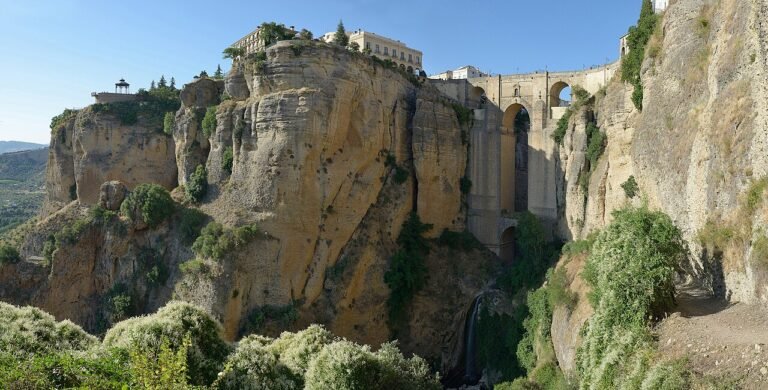
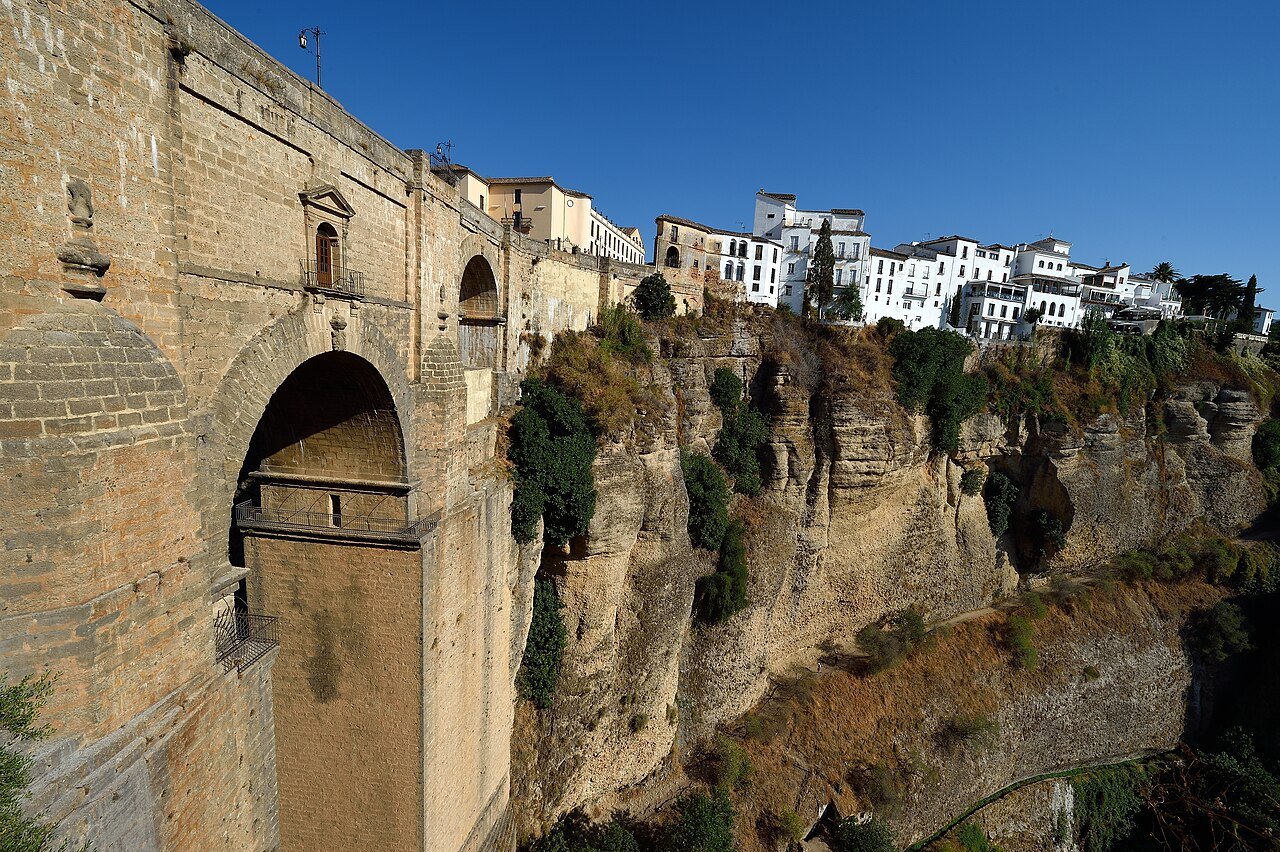
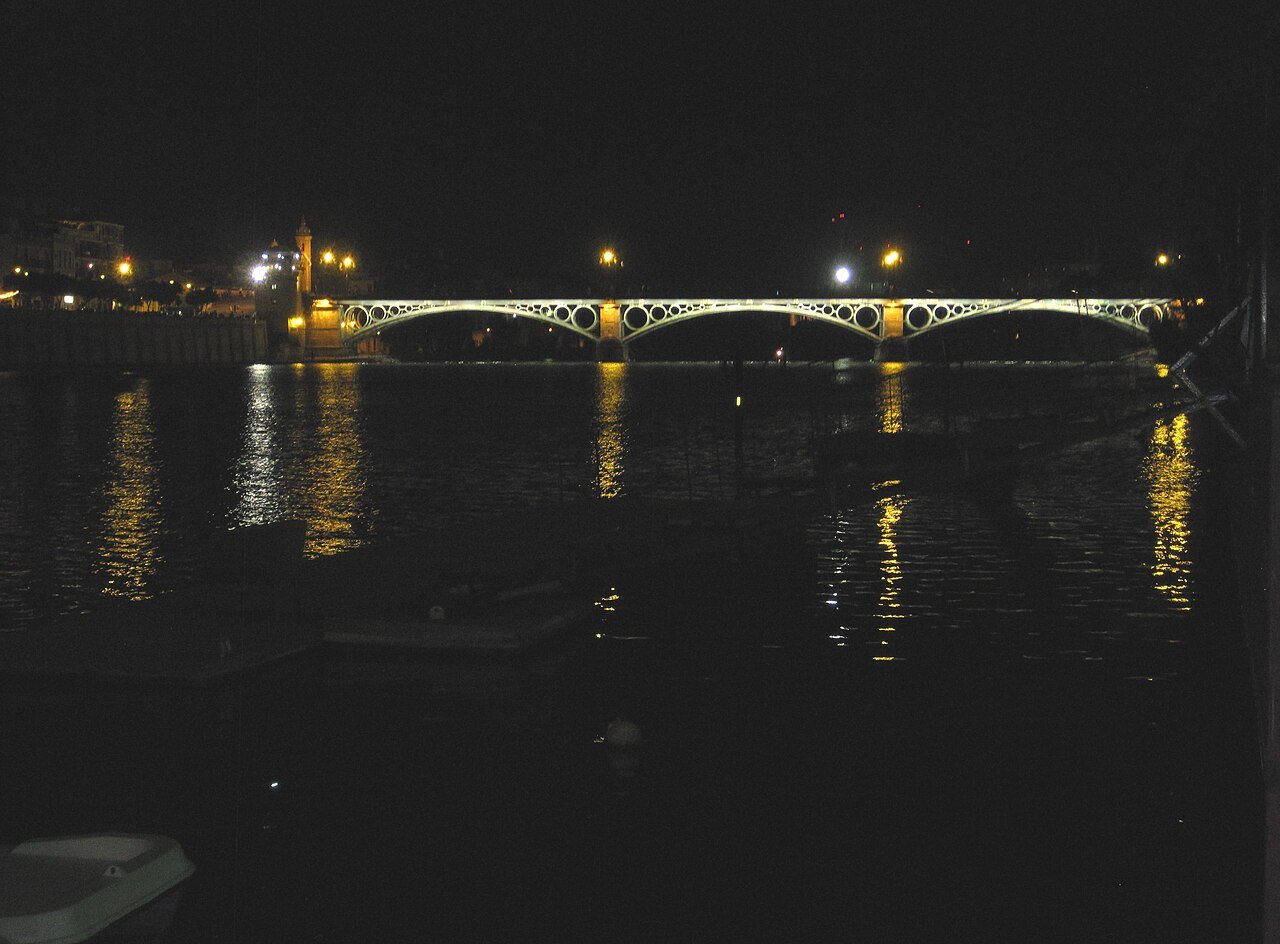
What about Ronda — the white town on its gorge, the sight the seven-day trip refuses? From Seville it exists as a long day trip, and the honest verdict is that it costs Day 8. If Ronda matters more to you than Seville’s second day, make the swap knowingly — or better, take Style Two (§10), which reaches Ronda from a Málaga base where it belongs. Tonight, though, belongs to Seville: cross the river to Triana, the potters’ and sailors’ quarter, for the farewell southern evening — tile workshops, riverside bars, and the bridge lit behind you on the walk home.
Sleep in Seville — nights 1–2 of 2. Base: Santa Cruz or Centro, inside the old town’s web of lanes.
9. Days 9–10: Barcelona — Fly North, Finish with Gaudí
Day 9 begins with the route’s one flight, and it is not close: Seville to Barcelona takes about an hour and three quarters in the air, several times a day, while the fastest direct trains take a little over six hours. Fly in the morning and the day survives; ride, and it does not. Barcelona-Sants or the airport bus puts you in the city by lunch, and the base to choose is the Eixample near the old town’s edge — Gaudí’s avenues under your feet, the Gothic Quarter a walk downhill. Day 9’s afternoon is deliberately surface-level: the Gothic Quarter’s lanes and cathedral square, the Rambla walked once and forgiven, and a first Gaudí evening along the Passeig de Gràcia, where the Casa Batlló and La Pedrera glow under their floodlights.
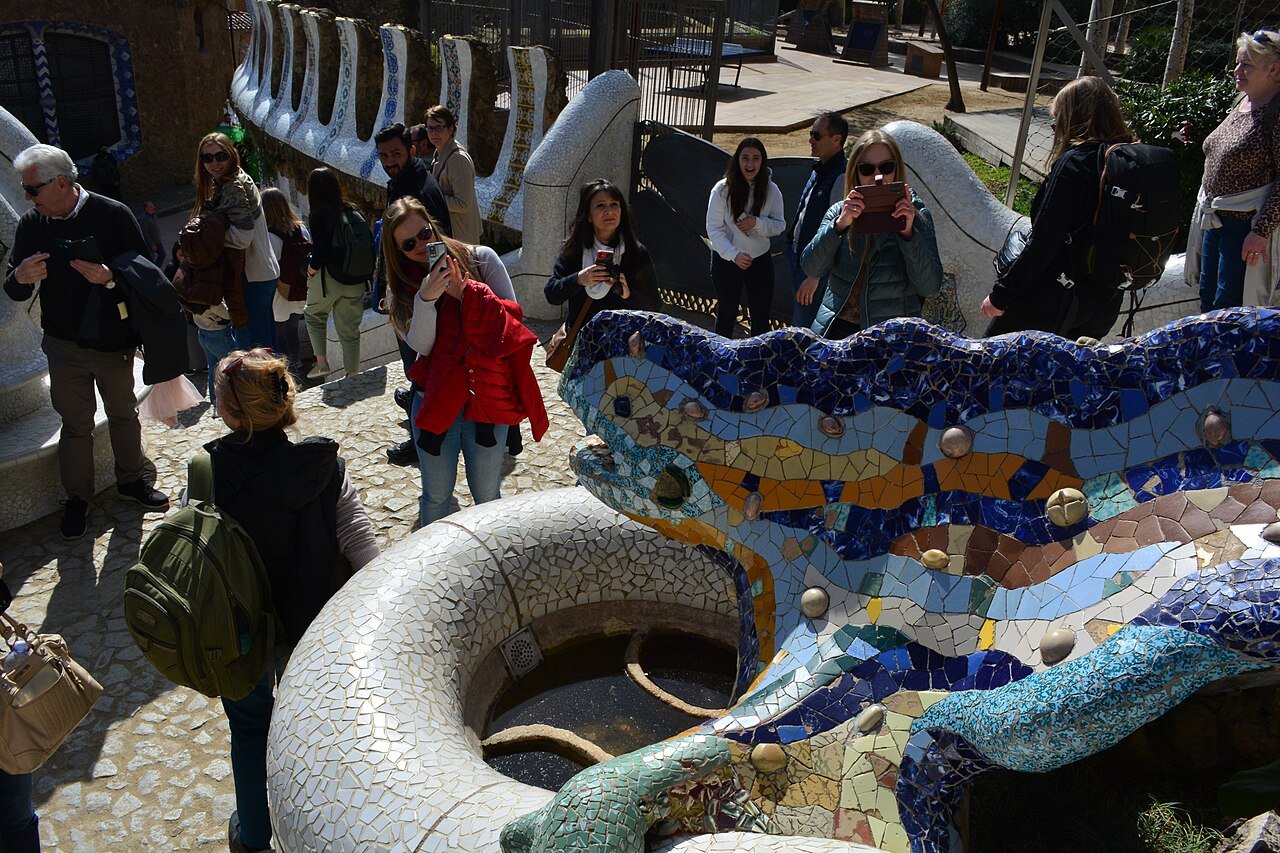
Day 10 is the Gaudí day, and it runs on two timed tickets you booked in §3. Park Güell first, in the morning, before the terraces fill: the mosaic salamander on the entrance stair, the forest of leaning columns in the Hypostyle Hall, and the great undulating bench above the city with the Mediterranean behind it. Then the Sagrada Família, given the middle of the day and no competition — take the tower if your legs and the weather agree, but understand that the interior is the sight: a stone forest lit through stained glass, unlike any building on earth, still rising after more than a century of construction. What remains of the day is Barcelona at table: one last long lunch, a vermouth in a Gràcia square, and the evening flight home.
The honest footnote is the one §1 promised. A day and a half is a taste of Barcelona, not the city — travellers who take the tenth night (fly home on the morning of Day 11) should spend the extra day on the old town and the Eixample at the full size of our 3 days in Barcelona itinerary — or on the mountain: Montserrat, the serrated monastery an hour from the city, the day trip the nine-night version has to refuse. The organised version many take is the Montserrat cogwheel and abbey tour on GetYourGuide — 4.7/5 from 7,173 reviews, from about $44 per person — coach out, cogwheel train up the mountain, the Santa Maria abbey with monastery entry included, and a choice between the half-day return and a full day that continues to a family winery in a 10th-century castle for tapas or lunch and a tasting. Check its cancellation terms on the booking page before you pay; they are set out there. Girona, the other great Barcelona day trip, is the one this length refuses twice over — it belongs to the tenth night and a slower Barcelona, or to the fortnight.
Sleep in Barcelona — night 1 of 1 (plus the optional tenth night). Base: the Eixample near the old town’s edge, for Gaudí on the doorstep and an easy run to Sants or the airport.
10. Style Two: The Food-and-Culture South (No Barcelona)
Same ten days, different religion. Style Two is for the traveller who has already done Barcelona, or who reads a menu the way other people read a map: it takes the classic route’s Barcelona block and spends it in the south instead, on the two places the classic route passes by — Málaga and Ronda — and on eating properly in all of them. The shape: Madrid 2 nights (the Prado and the old town; Toledo becomes an optional swap for Day 2’s afternoon, not a fixture) · Córdoba 1 night, exactly as the classic route · Granada 2 nights, the Alhambra plus a full food day · Málaga 2 nights, reached by direct train from Granada — pick one of the direct departures, from about an hour and a half · Seville 2 nights, closing the trip, with flights home from Seville or back through Málaga.
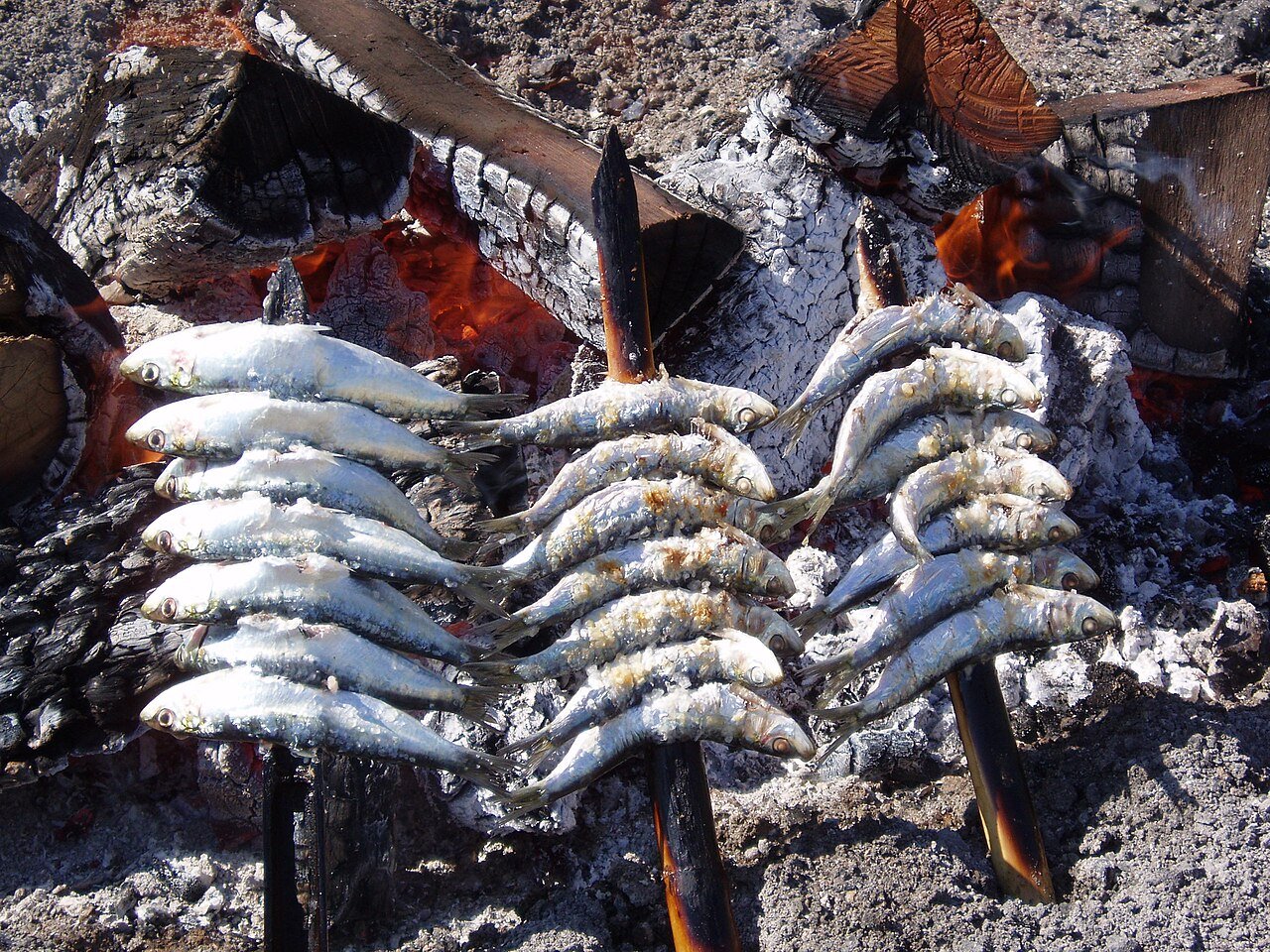
Málaga is the revelation of this build. A generation ago it was the airport you passed through; it is now a genuine city break in its own right — the Alcazaba fortress above the port, an old town of marble streets, serious museums, and the Mercado de Atarazanas for the morning’s shopping. Its second day is Ronda’s: the gorge town is a natural excursion from Málaga, by train up through the mountains or on the day tours that run from the city, and from this base it costs nothing elsewhere — the swap the classic route warns against becomes free. Evenings in Málaga belong to the beach suburbs of El Palo and Pedregalejo, where the chiringuitos grill espetos — sardines skewered on cane over olive-wood fires — a few metres from your table.
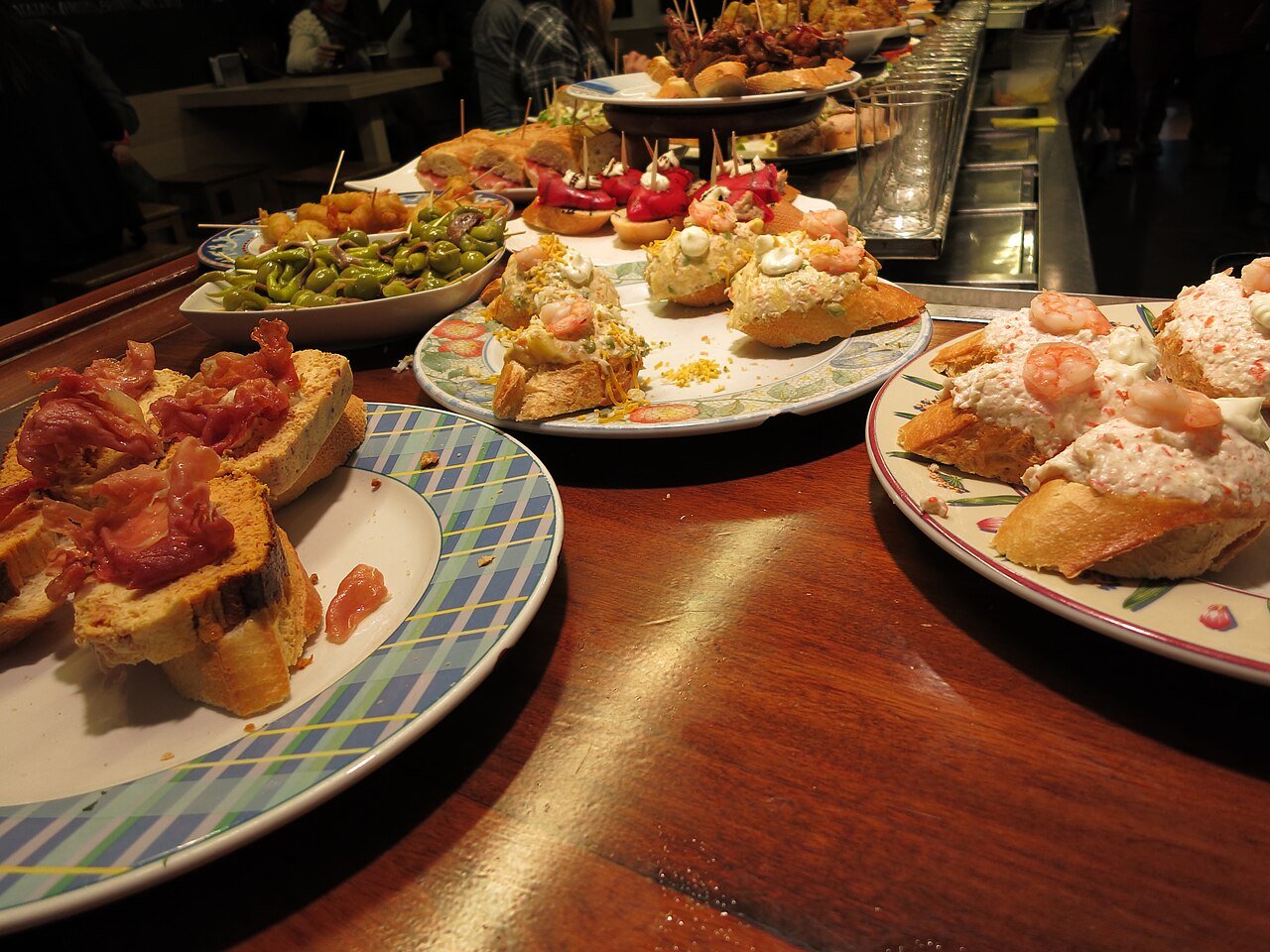
The food logic runs through the whole build, not just Málaga. Granada gets its free-tapa economy treated as a programme rather than a curiosity; Seville’s two days are built around Triana’s bars as much as its monuments; and the guided version of eating — market tours, tapas crawls, the cooking classes that start at the stalls — is worth one booking per trip. Our guide to food tours in Spain compares the formats city by city and names the tours worth paying for. Style Two’s honest cost: no Gaudí, no Mediterranean finale in Barcelona, and Toledo demoted to an option. Its honest gain: the deepest version of Andalusia that ten days can hold, and a trip that ends, as southern trips should, in Seville after dark.
11. Style Three: The Northern Arc (Madrid, San Sebastián, Barcelona)
The third build of the same ten days turns the map upside down, and it exists for two travellers: the one coming in July or August, when the southern cities are a serious proposition by day, and the one who has already walked the classic route and wants the Spain that route omits. The north is greener, cooler, wetter and — around one small bay in the Basque Country — home to the most concentrated good eating on the continent. The shape: Madrid 2 nights · San Sebastián 3 nights · Barcelona 3 nights · and one flex night, best spent as a third Madrid night (which restores Toledo) or a fourth in Barcelona. Nine nights, three bases, and not one internal flight required unless you want it.
Madrid to San Sebastián is the long rail leg: direct Alvia and Intercity trains take about five to five and a half hours, a few times a day, crossing the Meseta and dropping through green hills to the coast — take a morning train and the afternoon is yours. San Sebastián itself needs no itinerary surgery: the Parte Vieja’s pintxo bars, worked counter by counter in the local order; the sweep of La Concha bay, regularly voted among the world’s great city beaches; Monte Igueldo’s funicular for the postcard. Bilbao is the day trip — just over an hour by bus — for the Guggenheim’s titanium curves and a second, grittier old town. Then east: a direct Alvia runs from San Sebastián to Barcelona once or twice a day at around six hours, or fly — San Sebastián’s own airport has a daily Barcelona flight and Bilbao offers more — and give Barcelona the three nights the classic route could not, so its old town, its Eixample and one of its day trips all fit.
The honest costs of the north are weather and omission. Green Spain earns its colour: pack for a shower in any month, including the ones where Seville is unusable by noon. And this arc omits the entire Moorish south — no Mezquita, no Alhambra, no Alcázar — which is why it is a second trip or a summer trip rather than the default first one. But for the traveller it fits, it is not a compromise at all: it is the version of Spain built from pintxos, surf light and Gaudí, and in August it is simply the wisest ten days in the country.

12. What Ten Days Cost: The Honest Sketch
Ten days on the ground in Spain, priced from the traveller-reported daily bands in our budget travel guide, runs about €600–800 per person travelling lean, €1,200–1,600 at the sensible mid-range, and €2,000–2,500 in comfort — international flights excluded, with beds, food, city transport and sights inside those figures. The ten-day route fits all three bands for the same structural reason the week does: its money goes on six interiors, a handful of trains and one short flight, while its daily pleasures — old towns, viewpoints, bridges at dusk — are free.
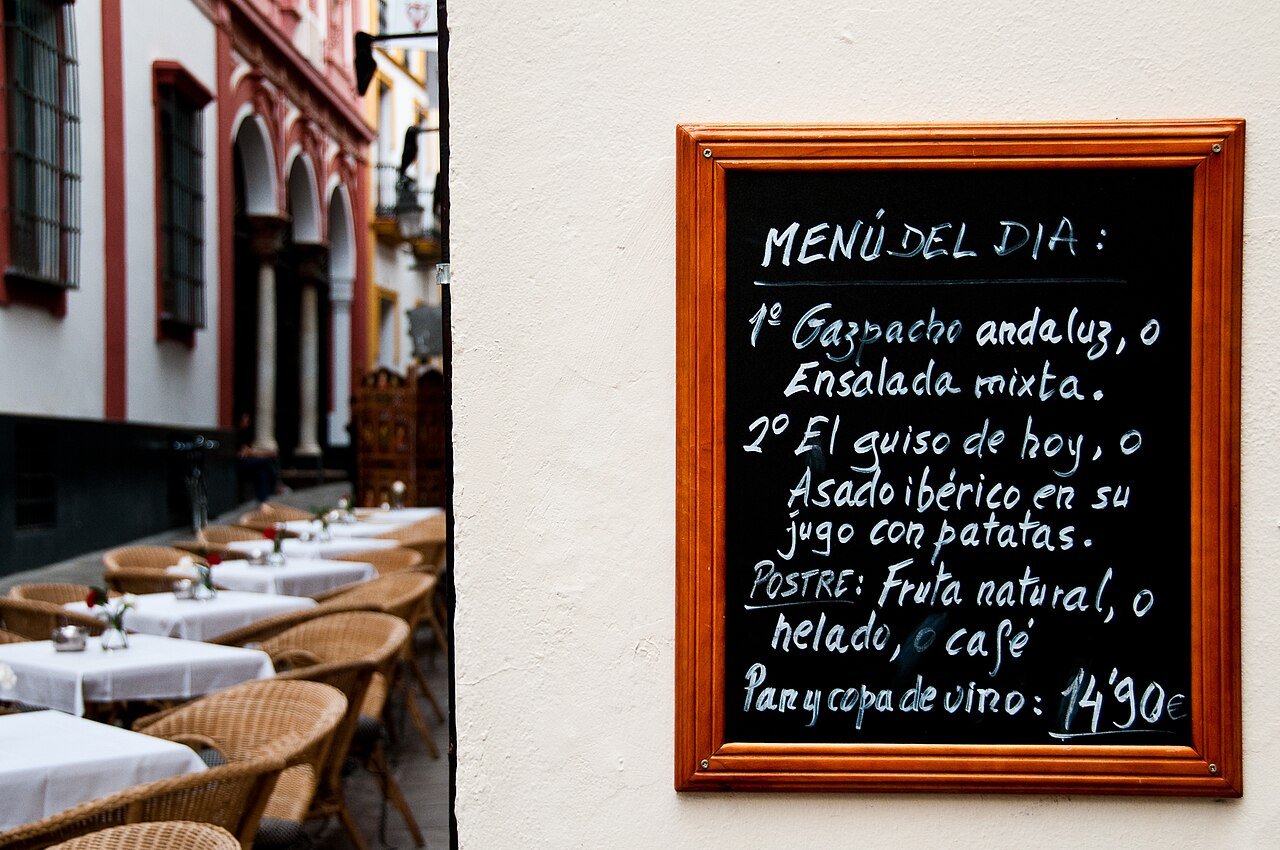
The route-specific lines are few. The four southern rail legs, booked ahead at advance fares, typically land in the €55–110-per-person territory the one-week route prices — Madrid–Córdoba is advertised from under €20 booked early, and the Andalusian legs from roughly €19 and €28–42 — with the Toledo return a small addition and the Seville–Barcelona flight a modest fare if bought with everything else. Bought at the station on the day, the same rails can cost two or three times that. The three organised tours linked in §§5, 8 and 9 are priced in dollars on their pages — from $38, about $73 and about $44 respectively — and all three are upgrades on days the itinerary already covers by train or on foot, not necessities. Food follows the mechanism that keeps every Spanish trip honest: the menú del día, the workers’ set lunch chalked on boards outside ordinary restaurants — starter, main, dessert, bread and a drink for a single low price — eaten as the day’s main meal at two o’clock. Build the food day around it and even the mid-range band stops feeling like a discipline.
Travel insurance, sorted
Whether it is a two-week holiday or a longer move, travel insurance is not the most glamorous part of a trip – but it is the one booking you want to have in place before a trip, and while you are already away. Get a quote from SafetyWing
Final Thoughts
Seven days shows you the south. Fourteen shows you almost everything. Ten days is the length in between that turns out to have a personality of its own: long enough for Toledo’s hill and a Barcelona ending, honest enough to admit that Ronda, Girona and the north still belong to other trips — or to this guide’s two variant routes. Whichever build you choose, the disciplines do not change: book the Alhambra first, book the trains early, take the evenings seriously, and let one route run in one direction. Do that, and around Day 8 — in Triana, with the river going dark and one Gaudí morning still ahead of you — the extra three days will explain themselves.
Food Tours in Spain: The Best Tapas Crawls, Market Tours and Cooking Classes, City by City
Frequently Asked Questions
Is 10 days in Spain enough?
For the classic first trip, it is the sweet spot. Ten days covers Madrid, Toledo, Córdoba, Granada, Seville and Barcelona with full days in each and no journey longer than about two and three-quarter hours. It is not enough for Spain entire: Málaga and Ronda as more than a day trip, Valencia, the north coast and the islands all need the fortnight or a second trip. The honest frame is not “Spain in ten days” but “the classic route, finished properly, in ten days”.
What is the best route for a 10-day Spain itinerary?
The one in this guide: fly into Madrid and out of Barcelona, spend three nights in Madrid with Toledo as a day trip, ride the high-speed railway south for one night in Córdoba and two in Granada, continue west for two nights in Seville, then take the short flight north for Barcelona. It runs in one direction with no backtracking and strings together the Prado, Toledo Cathedral, the Mezquita, the Alhambra, Seville’s Alcázar and the Sagrada Família. Travellers who have already done Barcelona should use the southern build in §10 instead; summer travellers should consider the northern arc in §11.
How many places should I stay in during 10 days in Spain?
Five bases on the classic route: three nights in Madrid, one in Córdoba, two each in Granada and Seville, and one or two in Barcelona. Fewer bases turn Córdoba and Granada into punishing day trips; more bases turn the trip into a sequence of check-ins. Córdoba’s single night is the one deliberate exception — it earns its place by giving you the Mezquita’s city after the day-trippers have left. The two variant routes use three and five bases respectively.
Should I fly or take the train from Seville to Barcelona?
Fly. Direct flights take about an hour and three quarters and run several times a day, while the fastest direct trains take a little over six hours — a whole sightseeing day, spent in a seat. Every other leg of this itinerary belongs on the railway, where the journeys are under three hours and the stations sit inside their cities; this single hop is the exception, and the plane returns Day 9 to Barcelona.
What should I book first for a 10-day Spain trip?
The Alhambra, before anything else on the ground: its Nasrid Palaces slots are named, timed and checked against your passport, and in busy months they sell out weeks ahead. Book the Sagrada Família’s timed entry in the same session, then the open-jaw flights and the Seville–Barcelona hop, then the high-speed train legs while their advance fares last. The Prado, Toledo Cathedral, Seville’s Alcázar and Park Güell deserve advance tickets too, but they forgive a fortnight’s notice in a way the first two do not.
How much does 10 days in Spain cost?
On the ground, per person, excluding international flights: about €600–800 travelling lean, €1,200–1,600 at the mid-range level most travellers choose, and €2,000–2,500 in comfort, scaled from the daily bands in our budget guide. The route-specific costs stay small if you book ahead — roughly €55–110 per person for the southern train legs at advance fares, a modest early fare for the internal flight, and timed tickets for the six great interiors. Eating on Spanish hours, with the menú del día as the main meal, is what keeps the food line inside every band.
Can I add Ronda and Montserrat to a 10-day trip?
One of them, comfortably — not both, on the classic route. Montserrat joins if you take the tenth night in Barcelona (§9); Ronda joins if you swap it for Seville’s second day, or if you choose Style Two (§10), which reaches it from a Málaga base at no cost to anything else. Both together, done properly, is the two-week trip’s shape. Any plan that promises both plus everything else is taking the days from the sights you travelled for.