Best Costa Brava Towns: 12 Places to Stay and Visit
If you base in one Costa Brava town on a first trip, make it Tossa de Mar: it is the only town on the Catalan coast that still keeps its medieval walls, and those walls stand over one of the coast’s best town beaches. After Tossa, work north the way this list does — the Palafrugell fishing villages, Begur and the medieval pair inland, the Medes Islands, and finally whitewashed Cadaqués under Cap de Creus.
The coast’s shape is the second thing to understand. The Costa Brava — the “rugged coast” — runs up the Girona province shoreline from Blanes to the French border, and it is not one long beach but a chain of pine-covered headlands, small coves and old fishing ports, with two medieval villages hiding just inland. The southern towns sit within easy reach of Barcelona; the far north, around Cadaqués, feels like another country and takes real time to reach.
Two honest exclusions before we start: Lloret de Mar and Platja d’Aro are the coast’s party and package resorts, and they are not on this list — this is the Costa Brava of walled old towns, working harbours and stone villages. Most visitors arrive as an extension of a Barcelona trip — our roundup of day trips from Barcelona covers the one-day version — but the towns below deserve more than a day. Here are the twelve to build the trip around.

In This Guide
- 1. Tossa de Mar, the Walled Town on the Beach
- 2. Blanes and the Marimurtra Gardens
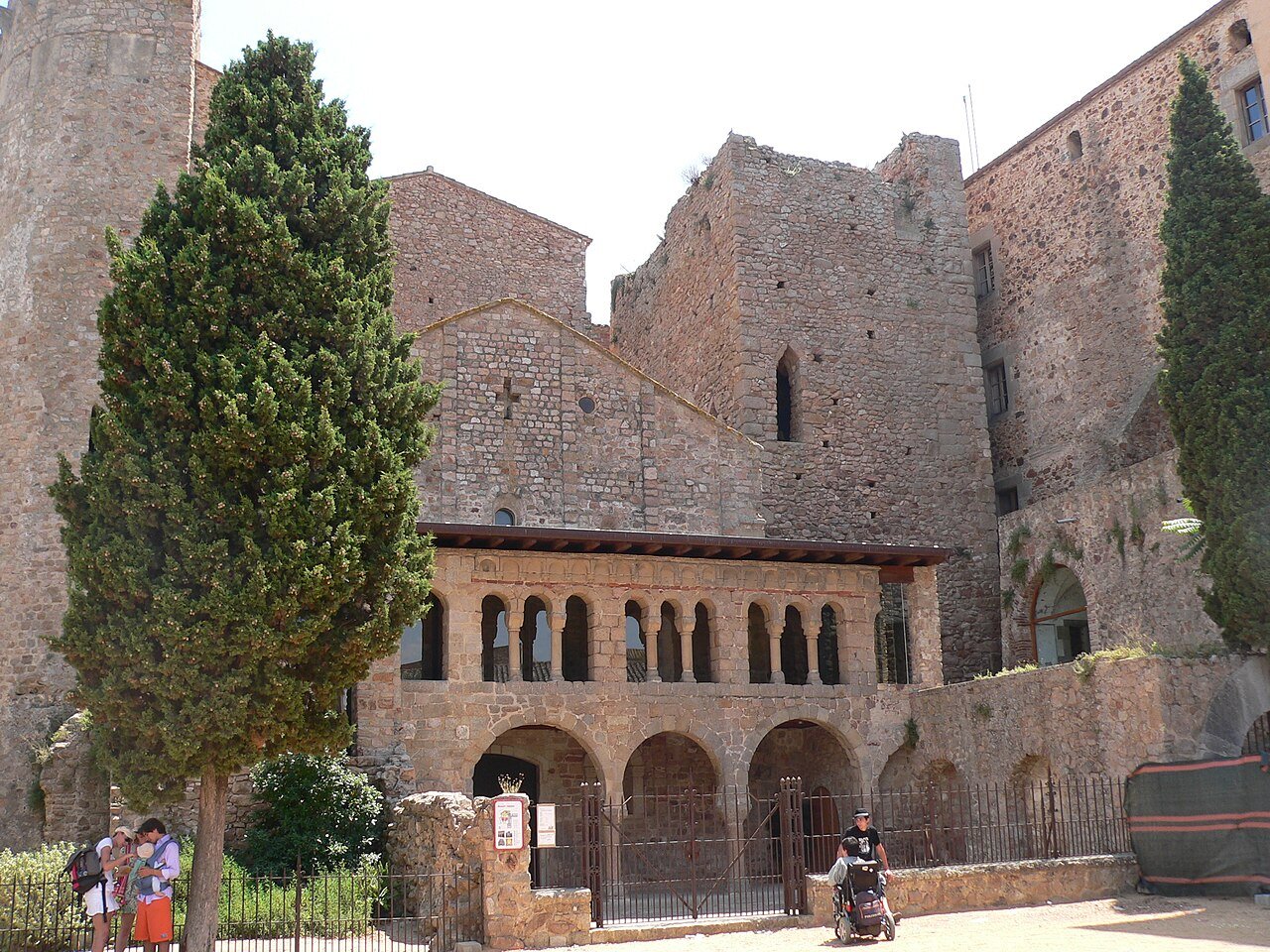
- 3. Sant Feliu de Guíxols and the Porta Ferrada
- 4. Calella de Palafrugell, the Fishing Village
- 5. Llafranc and the Sant Sebastià Lighthouse
- 6. Tamariu, the Small Cove
- 7. Begur, the Castle Town Above Eight Coves
- 8. Pals, the Gothic Hill Village
- 9. Peratallada, the Village Cut from Rock
- 10. L’Estartit and the Medes Islands
- 11. Cadaqués, Dalí’s Whitewashed Village
- 12. Roses and the Great Bay
- 13. How to Get Around the Costa Brava
- 14. Where to Base Yourself
- 15. Final Thoughts
- 16. Frequently Asked Questions
Tossa de Mar, the Walled Town on the Beach
Tossa is where the Costa Brava stops being a resort strip and starts being itself. At the south end of its bay, a complete medieval town — the Vila Vella — climbs a headland inside its own walls: stone lanes, three sturdy towers and a ruined Gothic church, all of it hanging over the main beach. It is the only fortified medieval town left on the Catalan coast, a protected monument since 1931, and it means Tossa has a split personality no other resort town can match: bucket-and-spade beach in front, 14th-century old town behind.
The one thing not to miss is the walk up through the Vila Vella to the lighthouse at the top. Go through the gate, climb the lanes past the bronze statue of Ava Gardner — she filmed Pandora and the Flying Dutchman here in 1950, when Tossa was still a fishing village, and the town never forgot her — and keep going until the whole bay opens out below. On the way down, find the Sa Roqueta quarter, the old fishermen’s neighbourhood of white houses between the walls and the port.
Tossa’s three town beaches stack up neatly: Platja Gran, the big one under the walls; Mar Menuda, shallower and calmer; and Es Codolar, a little cove tucked behind the old town that is the Costa Brava in miniature. Come to the Vila Vella early in the morning or at golden hour, when the day-trippers thin and the stone turns the colour of honey.
Book it from Barcelona: the From Barcelona: Tossa de Mar Day Tour with Beach Time (4.9/5, 597 reviews, from $43 per person) runs about an hour and a half by bus from Barcelona Nord, walks you around the fortified perimeter up to the lighthouse with a guide, then hands you the afternoon for the beaches. It is the easiest way to test Tossa before committing to a stay.
Base logic: this is the base. Tossa has the coast’s best balance of beach, old town, restaurants and onward connections, and it works for couples and families alike. If you only sleep in one Costa Brava town, sleep here.
Blanes and the Marimurtra Gardens
Blanes is the Costa Brava’s front door — the first town up the coast from Barcelona, where the cliffs begin and the resort sprawl of the Maresme ends. It is a working Catalan town as much as a resort, with a long town beach, a fishing port that still lands its catch, and a rocky islet, Sa Palomera, joined to the promenade and treated by locals as the exact spot where the Costa Brava starts.
The one thing not to miss sits on the cliffs at the town’s south-eastern edge: the Marimurtra Botanical Garden. The German naturalist Carl Faust began buying this headland in 1918 and spent his fortune turning it into a garden of more than 4,000 plant species from five continents — cactus terraces, subtropical corners, pergolas of bougainvillea — all of it arranged along the cliff so that almost every path ends at a sea view. The little Temple of Linnaeus, a domed lookout on the cliff edge, is the garden’s postcard shot.
Come in the morning, when the garden is quiet and the light is on the water, then walk back into town for lunch around the port. Blanes works as a gentle first or last stop — the closest Costa Brava town to Barcelona, with a train station the inland towns would envy — but most travellers will enjoy it more as a half-day than as a base.

Sant Feliu de Guíxols and the Porta Ferrada
Sant Feliu is the Costa Brava’s reality check: a real town that happens to sit on a beautiful bay. Fishermen, boatyards and a marina share the waterfront with a sheltered town beach, and behind it the old streets belong to the people who live here all year. If the Palafrugell villages are the coast’s pretty face, Sant Feliu is its handshake.
The one thing not to miss is the Benedictine monastery at the top of the old town. Monasteries have stood above this harbour since the 10th century, and its heart is the Porta Ferrada — the “iron door” — a Romanesque portico of horseshoe arches held between two towers, one that signalled with smoke, one with a horn, when danger came from the sea. It is the symbol of the town, and the monastery around it now holds the local history museum.
Sant Feliu is also the southern trailhead of the wilder middle coast: the cliff road and coastal path north from its Sant Pol beach run towards coves that never see a crowd. Stay here if you want a local, lived-in base with everything on foot; day-trip it if your base is further south — but do not skip the Porta Ferrada either way.
Calella de Palafrugell, the Fishing Village
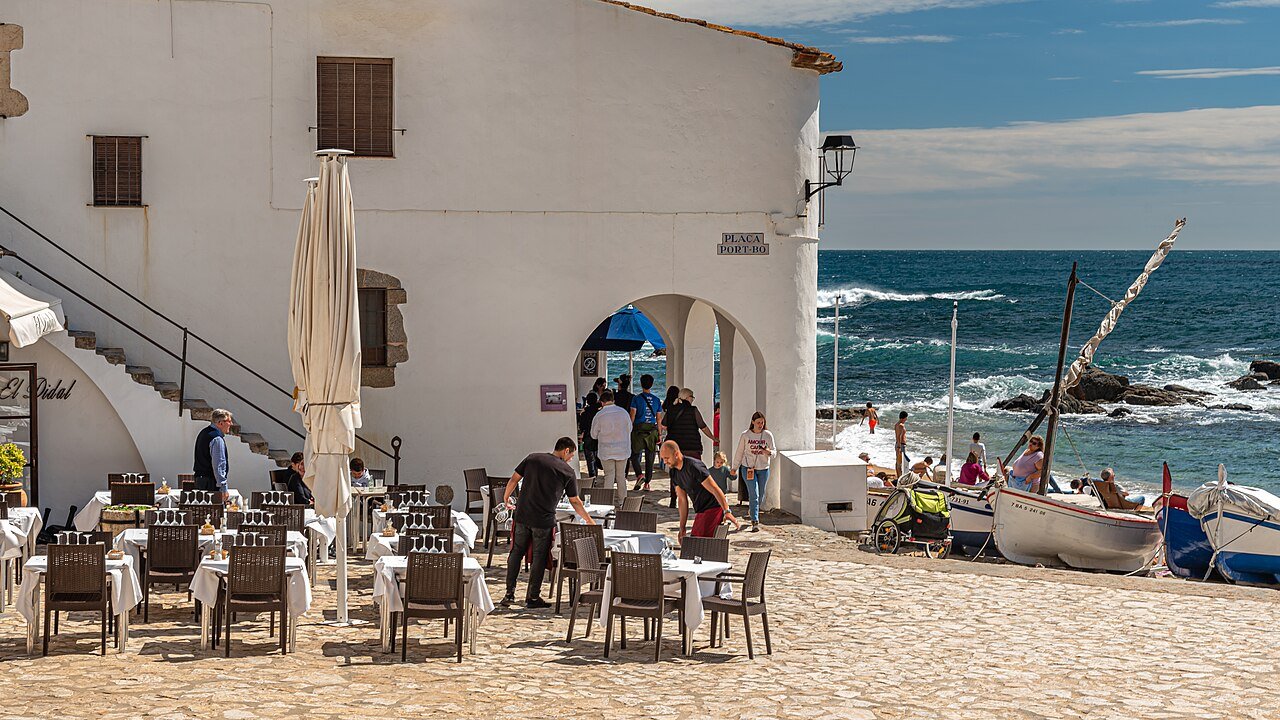
If the Costa Brava has a village that looks the way visitors hope the whole coast looks, it is Calella de Palafrugell. White houses crowd down to a string of small beaches; fishing boats sit pulled up on the sand; and along the main cove, Port Bo, a row of vaulted arches — Les Voltes — shades the restaurant terraces. The arches were built in the 19th century as a place for fishermen to mend nets and shelter their gear; now they shelter long lunches instead, which is progress of a kind.
The one thing not to miss is the walk south on the Camí de Ronda, the coastal path, to El Golfet cove beneath the Cap Roig headland — then up into the Cap Roig gardens above it. The gardens were created from 1927 by a Russian colonel, Nicolai Woevodsky, and his English wife Dorothy Webster, around the castle they built themselves: more than a thousand plant species, sculpture among the pines, and terraces that drop towards the sea. It is the second great cliff garden of this coast, and the quieter of the two.
Calella keeps its evenings: dinner under the arches, a stroll along the coves, nothing louder than the water. It makes a superb small base for the middle coast — the one travellers choose when the trip is about swimming, walking and eating rather than sightseeing at speed.
Llafranc and the Sant Sebastià Lighthouse
Llafranc is Calella’s sister village, fifteen minutes north along the coastal path: one perfect crescent of pale sand, a low promenade of restaurants and small hotels, and a harbour tucked at the end. It is slightly sleeker than Calella and slightly sleepier — the village equivalent of a long lunch that drifts into evening.
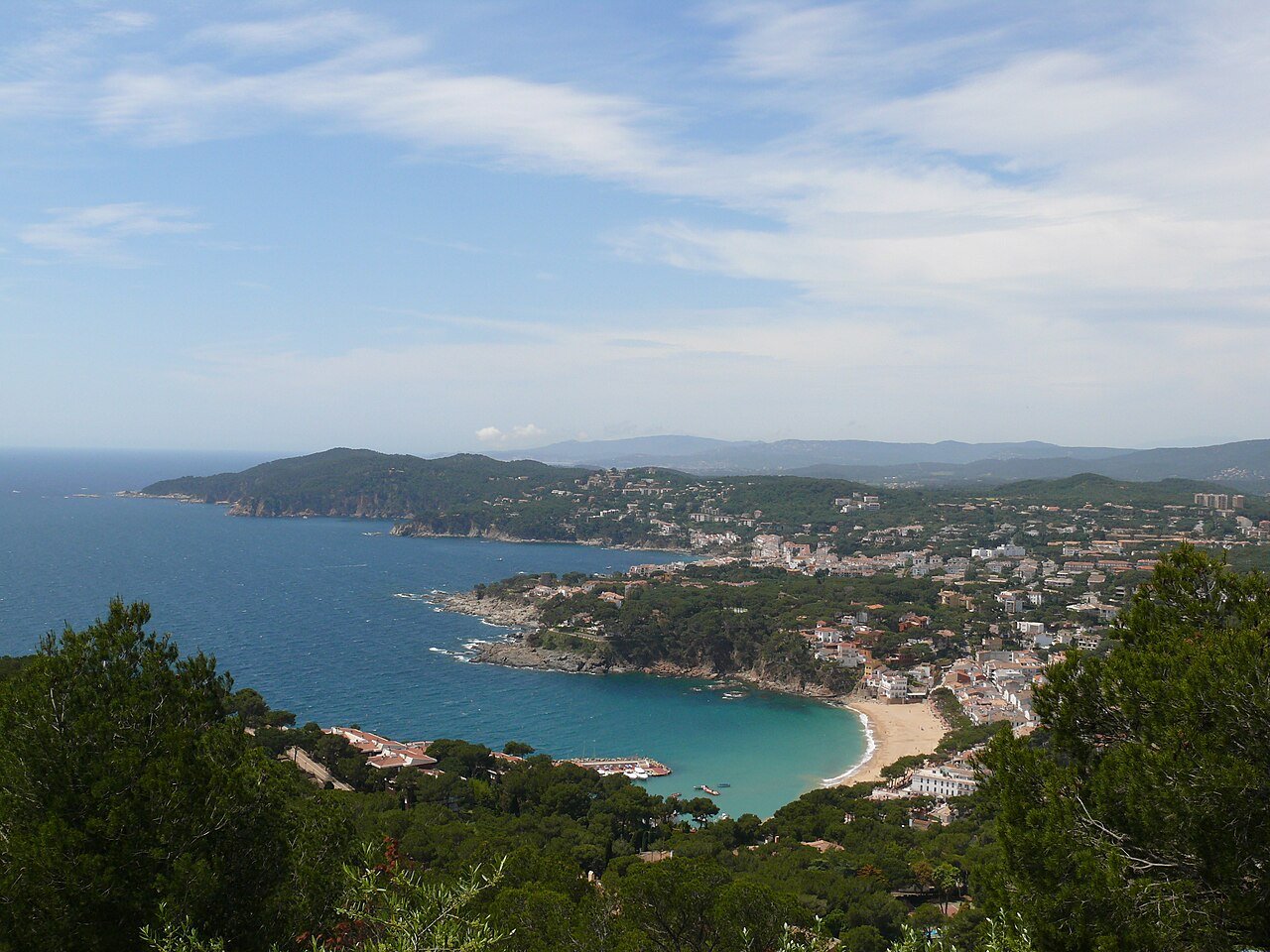
The one thing not to miss is above it. Climb — on foot up the path, or by the little road — to the Far de Sant Sebastià, the lighthouse on the headland that divides Llafranc from Tamariu. Lit in 1857 and standing some 169 metres above the sea, it is one of the most powerful lights on this coast, and the headland around it layers a hermitage, a medieval watchtower and the remains of an Iberian settlement into one viewpoint. From the terrace, the whole middle coast unrolls: Calella behind you, Tamariu’s cove ahead, the Formigues islets glittering offshore.
Walk the Camí de Ronda between Calella and Llafranc at least once, in the late afternoon, and have dinner in whichever village you end in. As a base, Llafranc suits travellers who want the Palafrugell coves with a touch more polish — and the lighthouse walk on their doorstep.
Tamariu, the Small Cove
Tamariu is the smallest of the Palafrugell three: a single sheltered cove, a short promenade, a handful of restaurants and a fringe of tamarisk trees — the trees the village is named for — behind a beach that shelves gently into famously clear water. There is no old town, no monument, no itinerary. That is the point.
The one thing to do here is get in the water. Tamariu’s sheltered bay, ringed by pine-topped rocks, is one of the middle coast’s best swimming and snorkelling spots, and the cove is a favourite starting point for divers exploring the reefs along this stretch. Walk the coastal path a few minutes either way and the crowds fall away to pocket-sized coves you may have to yourself.
Tamariu works as a half-day swim stop between Llafranc and Begur, or as the quietest possible base — a place to rent a small apartment, swim before breakfast and do very little, very well. In high summer its little car park fills early; come by bus or on foot along the path instead.
Begur, the Castle Town Above Eight Coves
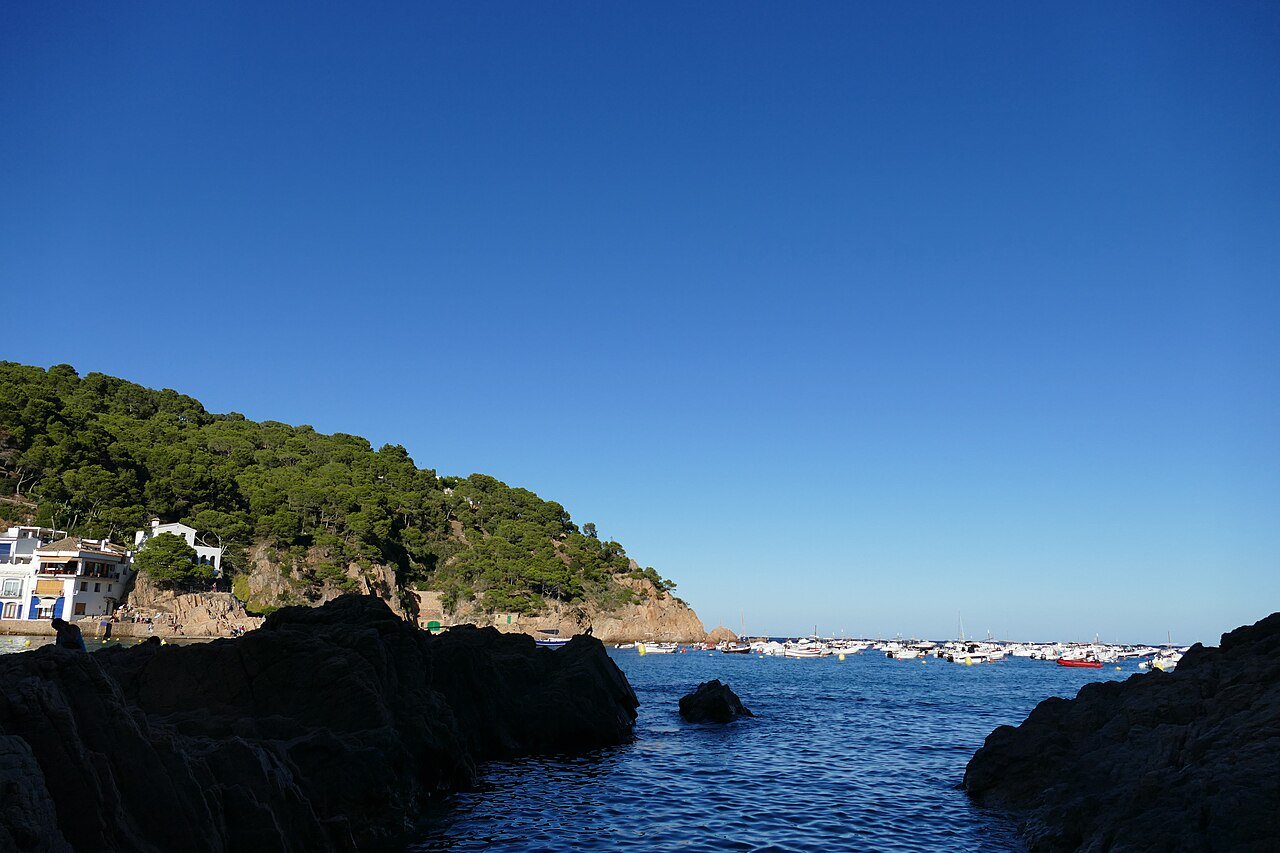
Begur does not sit on its beach — it sits above eight of them. The town crowns a hill a mile inland, all steep lanes and grand houses gathered under the ruins of its medieval castle, and scattered around its skirts are eight coves and beaches, each with its own character: Aiguablava’s impossibly turquoise water, Sa Tuna’s fishing-village charm, big Sa Riera, hidden Platja Fonda under the pines.
The town itself carries two histories in its stones. The castle and the 16th-century defence towers belong to the pirate centuries, when Begur watched the sea for raiders. The elegant indiano houses belong to the 19th, when locals who had made fortunes in Cuba came home and built themselves Caribbean-flavoured mansions on Catalan lanes. Few towns compress the coast’s whole story — corsairs, emigrants, fishermen — into so small a centre.
The one thing not to miss is the climb to the castle at the end of the day, when the light softens over the Empordà and the Medes Islands float on the horizon. Begur is a connoisseur’s base: the strongest restaurants of the middle coast, a lively summer evening scene in its squares, and a different cove for every day of the week. It belongs on any list of the best Spanish towns to slow down in — but bring a car, because those eight coves are the whole point and they are spread around the hill.

Pals, the Gothic Hill Village
Pals stands a few minutes inland on its hill, close enough to the sea to watch it, far enough to belong to another century. Its old town — El Pedró — is a complete Gothic quarter in warm stone: arched lanes, a Romanesque church tower’s worth of history in the Torre de les Hores, the Tower of the Hours, which rises over the rooftops as the village’s symbol, and the Gothic church of Sant Pere at the top of the climb.
The one thing not to miss is the Josep Pla viewpoint beside the church. From its terrace the Empordà plain spreads out in a patchwork of fields and rice paddies — Pals grows some of Catalonia’s most prized rice on that plain — all the way to the sea, where the Medes Islands sit on the horizon and the Montgrí massif closes the view. Writers have been describing this exact panorama for a century; it still earns it.
Pals pairs with Peratallada, below, as the coast’s great inland half-day: two medieval villages, one lunch of local rice, zero beach towels. It also makes a quietly luxurious base — stone-house hotels and good restaurants, ten minutes from the beaches at its own Platja de Pals and from Begur’s coves.
Peratallada, the Village Cut from Rock
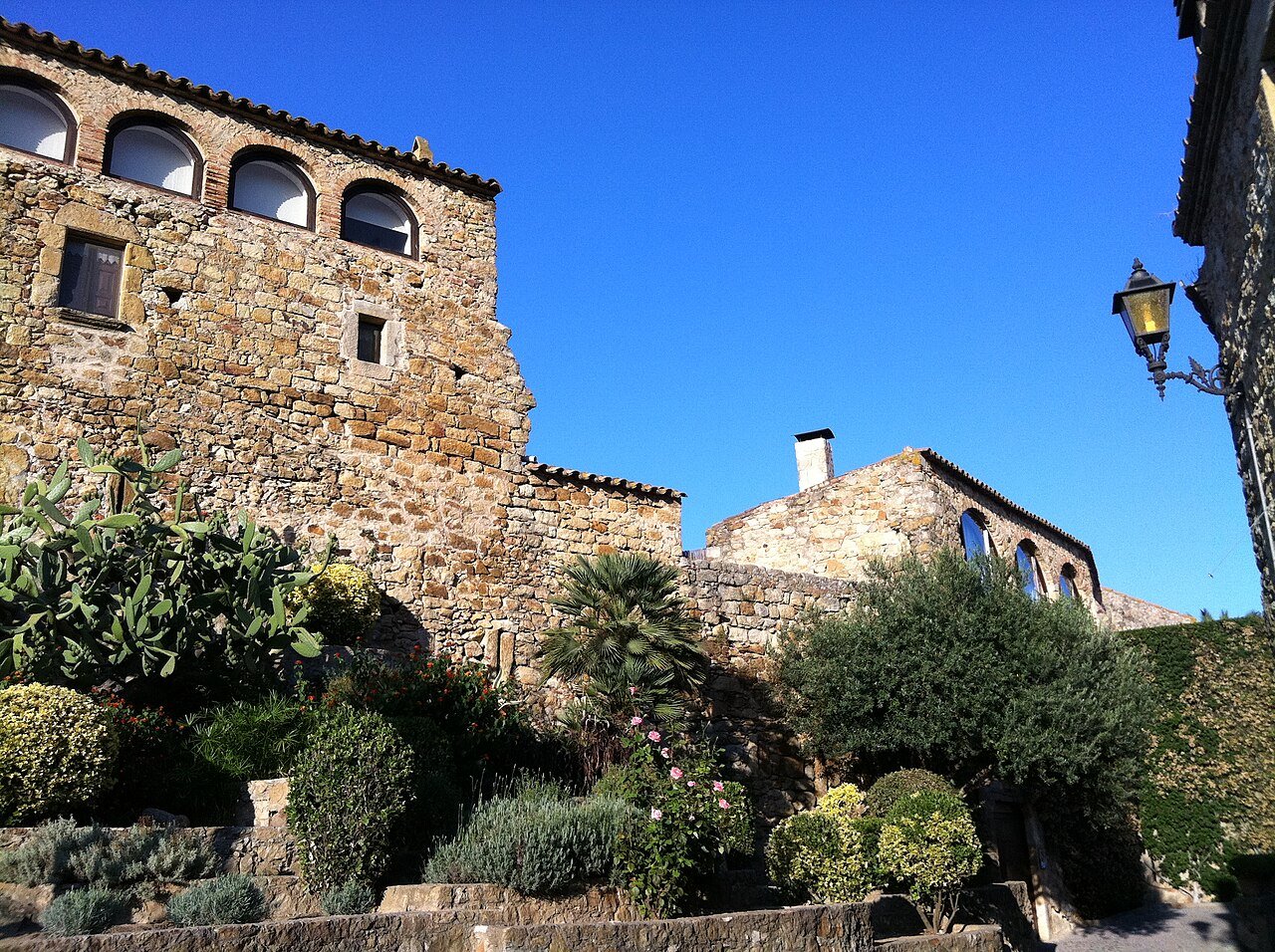
Peratallada’s name is its explanation: it means “cut stone”, and the village is quite literally carved out of its rock — most famously its moat, a great trench excavated straight into the stone around the walls. Inside is one of the best-preserved medieval villages in Catalonia: a castle-palace, a small Romanesque church, and lanes of honey-coloured stone houses where the loudest decision of the day is which restaurant terrace to sit on.
There is no single sight here, and that is the pleasure, exactly as at Pals. The one thing not to miss is a slow full circuit — in through the gate, around the moat-side lanes, across the arcaded main square — ideally in the early evening, when the day-trip groups have gone, the stone glows, and the restaurants are setting out candles. Peratallada has quietly become a food village: several of its stone houses hold some of the Empordà’s most loved tables.
Peratallada is a visit, not a base, for most people — an evening paired with Pals, or a night in one of its boutique stone hotels if you want the medieval lanes to yourself after dark. Either way, it is the inland detour that proves the Costa Brava is not only a coast.
L’Estartit and the Medes Islands
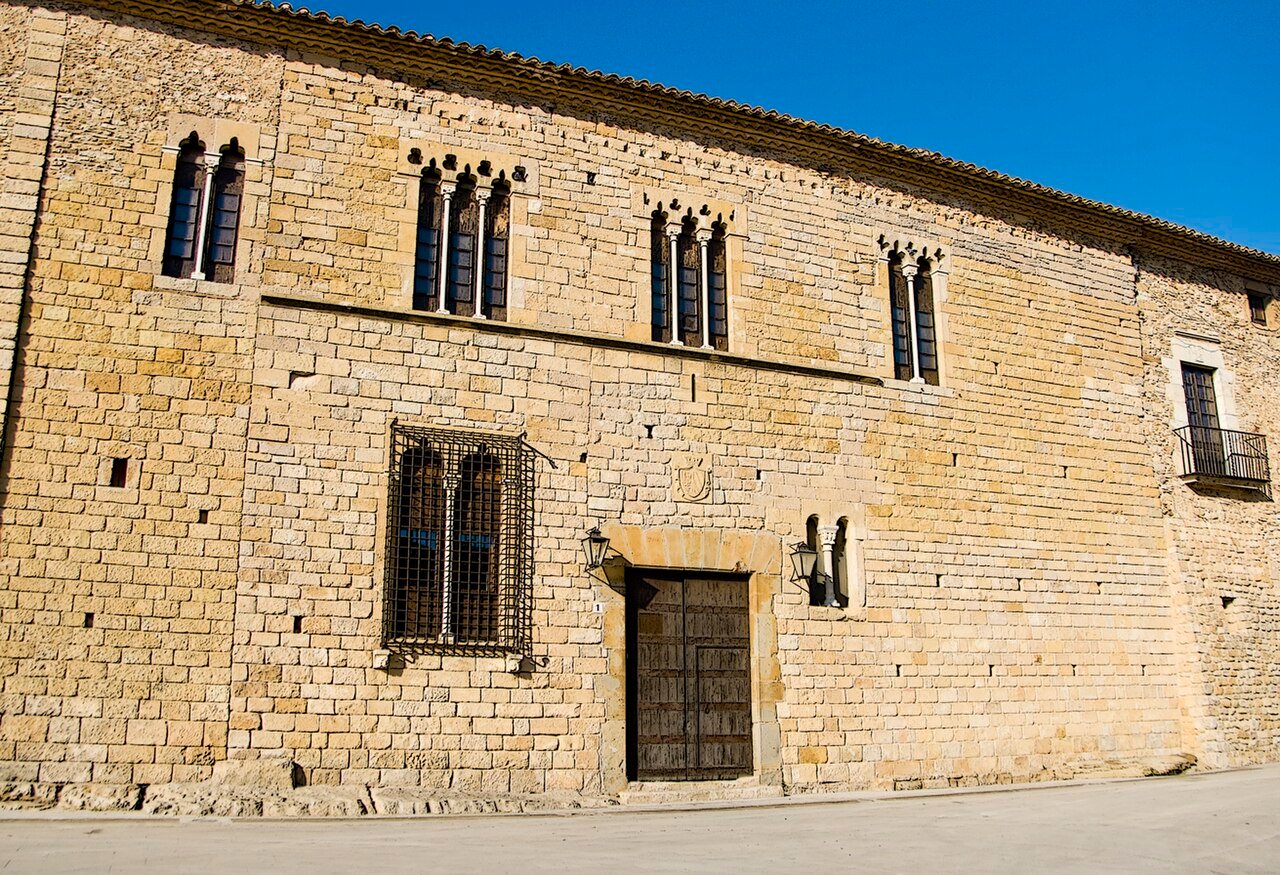
L’Estartit is a modest resort town with an immodest treasure: a mile offshore sit the Medes Islands, seven bare limestone islets that rise out of the Mediterranean like the peaks of a drowned mountain range — which, as the continuation of the Montgrí massif, is more or less what they are. Since 1983, when fishing around them was banned, their waters have been one of the western Mediterranean’s great marine reserves, and everything underwater here has had four decades to grow bold: dusky groupers the size of sheep, shoals of barracuda, walls of red and yellow gorgonians, meadows of Posidonia seagrass.
You do not need to dive to meet it. The one thing not to miss is the glass-bottom boat trip out to the islands. Book the Estartit: Medes Islands Traditional Boat Trip, Caves & Swim (4.6/5, 389 reviews, from $27 per person): ninety minutes aboard the Núria, a traditional fishing boat built in 1942 carrying just 20 passengers, circling the reserve, nosing into the Montgrí coast’s sea caves and through the La Foradada rock arch when the sea allows, with the seabed rolling past the glass panels and a swimming stop in summer. Free cancellation up to 24 hours ahead and reserve now, pay later were both stated on the product page when checked.
L’Estartit itself is the practical base for this northern-middle stretch: a long sandy beach under the Montgrí, a marina full of dive boats, and the islands on every horizon. Divers should give it two nights; everyone else, one full day with the boat at its centre.
Cadaqués, Dalí’s Whitewashed Village
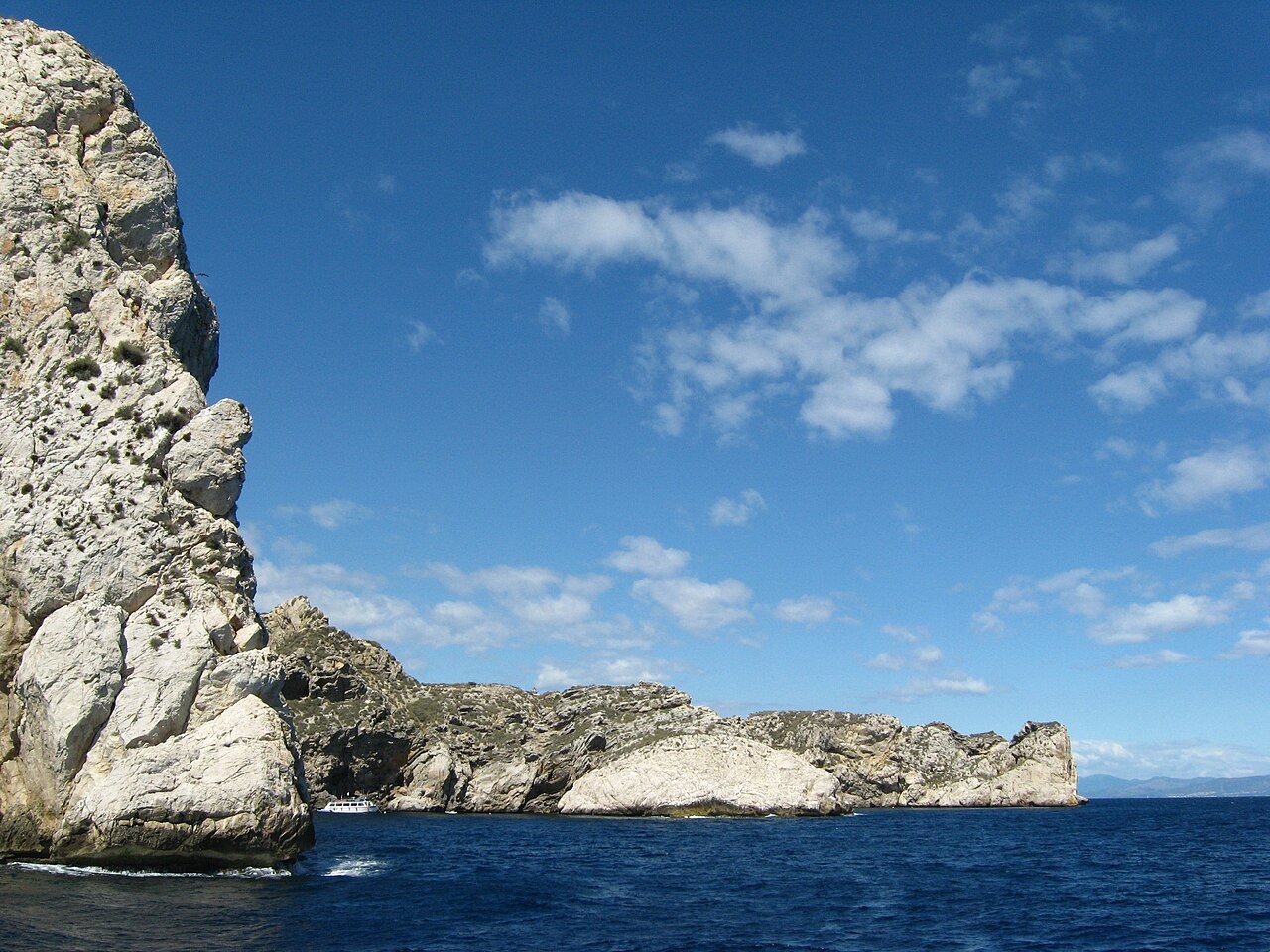
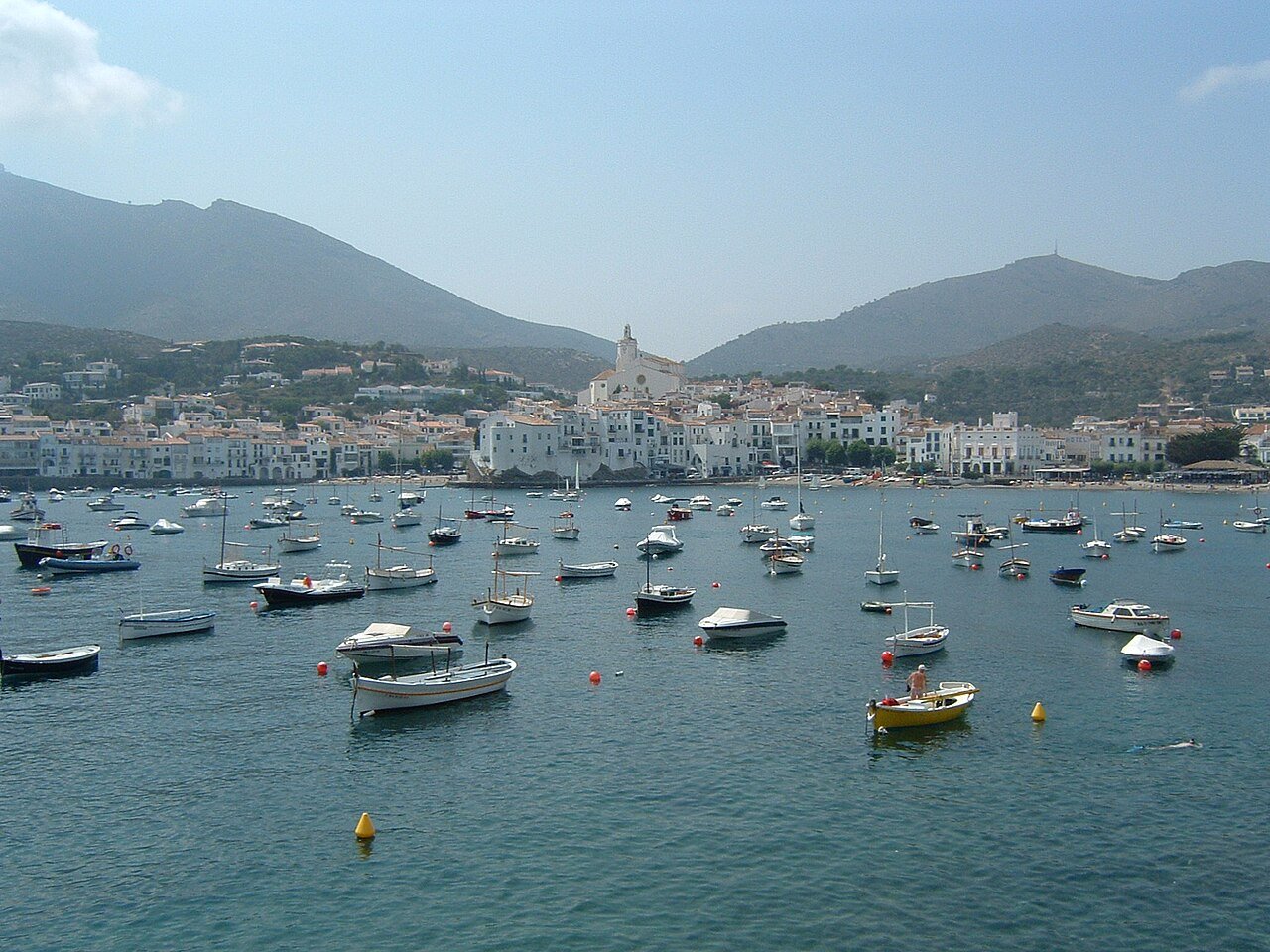
At the far north-eastern corner of Spain, at the end of one of the great winding drives in Catalonia, sits Cadaqués: an amphitheatre of whitewashed houses around a boat-filled bay, with the church of Santa Maria on its little hill and the wind-sculpted rocks of Cap de Creus — the Iberian Peninsula’s easternmost point — standing guard behind it. For centuries it was reachable almost only by sea, and it still feels pleasantly marooned.
The name above the village is Salvador Dalí. In 1930 he bought a single fisherman’s hut in the tiny bay of Portlligat, a short walk north of the centre, and over the following forty years he and Gala joined up hut after neighbouring hut into a labyrinthine white house of studios, eggs and mirrors. It is now the Dalí House-Museum — the one thing not to miss in Cadaqués — and it admits only small pre-booked groups, so reserve your timed entry well ahead or expect to admire it from the bay like everyone else. Dalí lived and worked there until 1982, and half the surrealist century passed through its door.
The full Dalí day out runs from Barcelona: the Barcelona: Dali Museum, House and Cadaques Guided Tour (4.7/5, 1,118 reviews, from $122 per person) spends eleven hours pairing the Dalí Theatre-Museum in Figueres with Cadaqués and the Portlligat house. One honest catch: from September to June that is the route, but in July and August the tour swaps Cadaqués for a medieval village and Gala’s castle at Púbol — check the dates before you book.
Do Cadaqués slowly if you can. The drive in over the Cap de Creus hills is spectacular and slow in equal measure, the village fills by midday in summer, and its best hours are the early morning and the long evening, when the bay turns to glass. It is the one town on this list that most rewards a night — and the sunset boat in from Roses is the arrival it deserves.
Roses and the Great Bay
Roses is the Costa Brava’s big northern town, spread along the southern curve of its enormous bay — the largest natural bay on this coast — with a long promenade, a working fishing port and a marina, all facing west across the water towards the Empordà plain and the foothills of the Pyrenees. That westward face is its gift: nowhere else on the Costa Brava watches the sun set into the sea like Roses does.
The one thing not to miss is the Ciutadella, the great 16th-century fortress by the town centre. Inside its walls, eleven hectares of grass hold the whole history of the bay in layers: the Greek and Roman trading town of Rhode, founded here when this coast looked towards Athens, and the Romanesque monastery of Santa Maria among the later military works. It is an hour of quiet archaeology a hundred metres from the beach crowds.
Roses is the practical northern base: the best-connected town of the far north, with the Cap de Creus coves on one side, Cadaqués over the hill, and boat trips — to Cadaqués, around the cape, out to the Medes — leaving from its harbour. Choose it when you want the wild north without giving up a real town’s restaurants, supermarkets and evening life.

How to Get Around the Costa Brava
The coast has two gateways. Barcelona’s airport serves the south — Blanes is little more than an hour up the motorway — while Girona’s airport and Girona city serve the middle and north. Trains do the edges well: the coastal line from Barcelona runs to Blanes and stops there, the inland line serves Girona and Figueres, and high-speed trains put Girona under forty minutes from Barcelona — the full route is covered in our Girona day trip from Barcelona guide.
Buses fill the gaps. Sarfa and Moventis coaches link Barcelona and Girona with nearly every town on this list — Tossa is about an hour and a half from Barcelona Nord station — but frequencies thin out off-season, and the cove villages run on summer timetables. Check the day’s times before you build a plan around them.
A car is what unlocks the coast properly: the Begur coves, the Pals–Peratallada pair, and above all Cadaqués, which sits at the end of a gloriously winding road over the Cap de Creus hills, the best part of two and a half hours from Barcelona. Mountain and coast roads here are slow by design — plan fewer towns per day than the map suggests. And do not overlook the Camí de Ronda: the waymarked coastal path (largely the GR-92 long-distance route) links cove to cove along the whole shoreline, and its short legs — Calella to Llafranc, Llafranc to Tamariu — make the best half-days on the coast.
Where to Base Yourself
For a first trip, Tossa de Mar is the answer for most people: the walled old town, three beaches, the coast’s best spread of restaurants at every budget, and day trips radiating north. Four or five nights in Tossa with a car will cover the southern and middle coast more easily than any other plan.
Split the stay when the coast pulls you two ways. Tossa plus a Palafrugell village — Calella for character, Llafranc for polish, Tamariu for quiet — slows the middle coast down into swimming days and coastal walks. Adding two nights in the north, in Cadaqués for atmosphere or Roses for practicality, turns the far end of the coast from a marathon day trip into the best part of the holiday. It is the same one-base-versus-split question we work through for the south coast in our guide to the best Costa del Sol towns — and the same rule applies: split only when the second base saves you real driving.
Travel insurance, sorted
Whether it is a two-week holiday or a longer move, travel insurance is not the most glamorous part of a trip – but it is the one booking you want to have in place before a trip, and while you are already away. Get a quote from SafetyWing
Final Thoughts
The Costa Brava rewards the traveller who treats it as twelve towns rather than one beach. Walk Tossa’s walls at golden hour, take coffee under the arches at Port Bo, climb to Begur’s castle and Pals’ viewpoint, ride the little boat out to the Medes, and save the long winding drive to Cadaqués for a day with nothing else in it — ideally ending with a night there. That is a coast covered properly: resorts and fishing villages, castles and marine reserves, in the order the shoreline intended. For where it fits in the bigger journey, see the best places to visit in Spain — and for the practical layer underneath all of it, our Spain travel tips are the companion read.

Best Places to Visit in Mallorca: 12 Stops for Your First Trip
Frequently Asked Questions
What is the best town on the Costa Brava?
Tossa de Mar, for most first-time visitors. It is the only town on the Catalan coast that keeps its complete medieval walls, and it pairs them with three beaches, the Sa Roqueta fishing quarter and the widest choice of places to stay and eat — the best all-round base on the coast. If you prefer somewhere smaller and more bohemian, Cadaqués is the alternative answer.
How many days do you need on the Costa Brava?
Three days covers the highlights: Tossa de Mar, one Palafrugell village with the Camí de Ronda walk, and Begur or the Pals–Peratallada pair. Five to seven days lets you do the coast properly — add the Medes Islands boat trip, a night in Cadaqués and a slow day doing very little in a cove. A single day trip from Barcelona should pick one town, and that town should be Tossa.
Can you visit the Costa Brava without a car?
Yes, for the southern and middle coast. Trains reach Blanes, buses run from Barcelona and Girona to Tossa, Sant Feliu, the Palafrugell villages and L’Estartit, and organised day tours cover Tossa and Cadaqués. A car earns its money for Begur’s scattered coves, the inland villages in one loop, and Cadaqués — which has no station and a slow bus route. Walkers can also chain the villages on the Camí de Ronda.
Which Costa Brava town is best for families?
Llafranc and Calella de Palafrugell share the title: gentle, sheltered bays, a promenade of restaurants, and the coastal path between them for burning off energy. Tossa de Mar suits families who want more going on — a bigger beach, the castle walls to explore and more places to eat. L’Estartit adds the glass-bottom boat to the Medes Islands, which children tend to remember longest.
What is the prettiest village on the Costa Brava?
It depends on your century. Peratallada is the prettiest medieval village — honey stone, a rock-cut moat and barely a modern building in sight. Cadaqués is the prettiest fishing village, all whitewash and boats under Cap de Creus. And Calella de Palafrugell’s Port Bo, with its arches and beached boats, is the single prettiest waterfront. All three fit into one unhurried trip.
When is the best time to visit the Costa Brava?
May, June and September are the sweet spots: warm sea, open restaurants and boats running, but without the peak crowds. July and August bring the full summer — the warmest water and the hardest parking, when the cove villages fill by mid-morning. Winter is mild and quiet, with the fierce tramuntana wind as the trade-off; many beach businesses close, but the medieval villages and Girona are yours alone.
Is Cadaqués worth the drive?
Yes — it is the Costa Brava’s far, wild end and unlike anywhere else on the coast: a whitewashed village in the Cap de Creus natural park, with Dalí’s house at Portlligat a short walk away. The drive over the hills is slow and winding, which is exactly why it works best as an overnight rather than a day trip. Book the Dalí House well in advance; entry is timed and small-group only.