10 Best Day Trips from Barcelona: Monasteries, Medieval Towns and the Costa Brava
Barcelona could fill a fortnight on its own — but some of the best days of a Catalan trip start at the station. Within an hour or so of the city stand a monastery pinned to a saw-toothed mountain, a medieval city of coloured riverside houses, Roman ruins above the sea, Dalí’s surreal theatre, and beaches that make the city strands look like a rehearsal. Catalonia is compact, its trains are good, and its variety is absurd for the distances involved.
This guide covers the ten day trips I recommend most, ordered roughly by distance, with honest journey times and the traveller each one suits. All of them pair with a Barcelona base — our Where to Stay in Barcelona guide covers the neighbourhoods — and almost none of them needs a car. Start with the one every visitor should take once: Montserrat, close enough for a half day, strange and beautiful enough to feel like another planet.
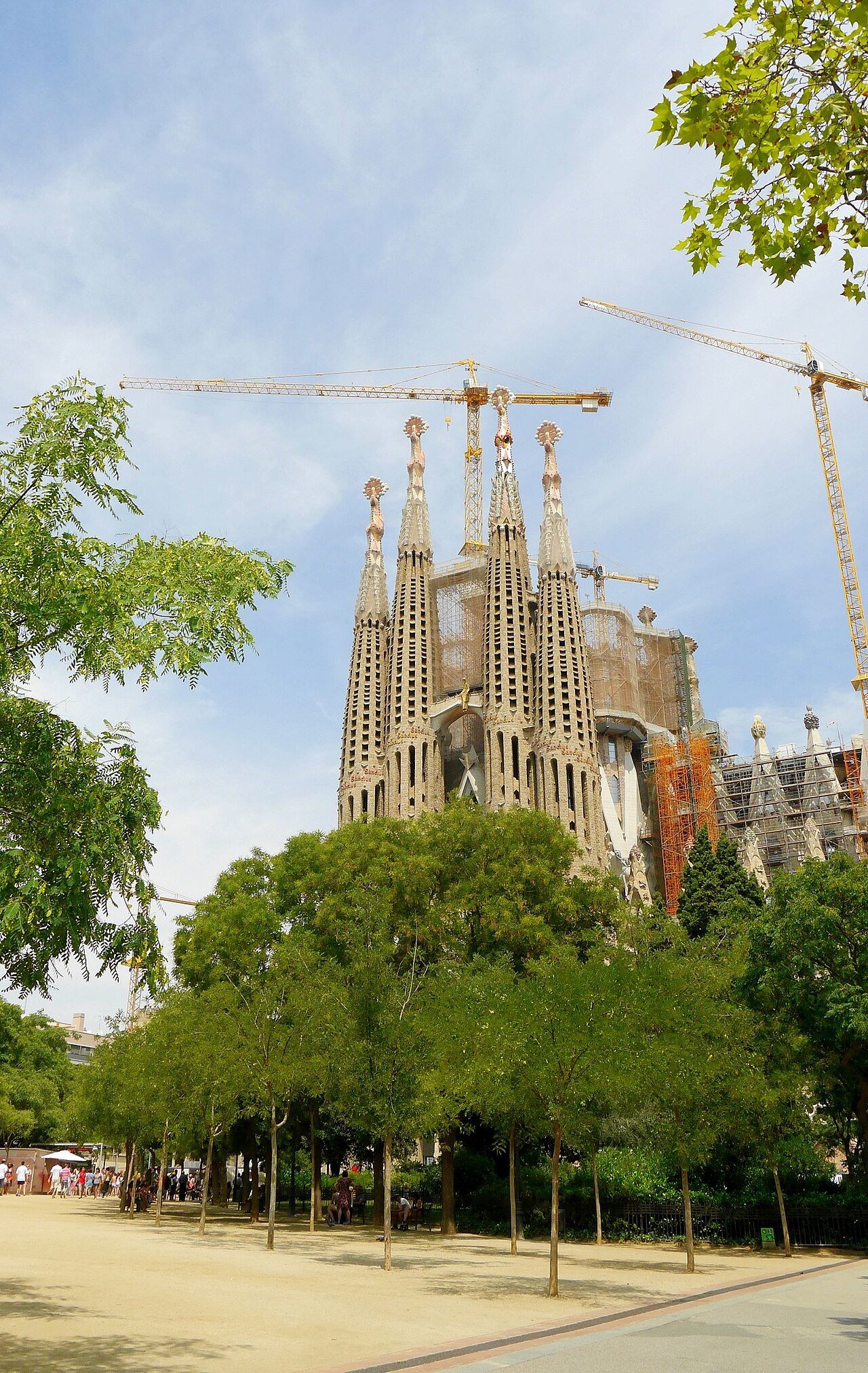
The Day Trips at a Glance
- Montserrat — the mountain monastery, the Black Madonna, the boys’ choir. Half to a full day. Everyone should do this one.
- Girona — coloured houses on the Onyar, a great cathedral, a film-set old town. A full day. City lovers.
- Sitges — whitewashed seaside charm, beaches and Modernista mansions. Half to a full day. Beach-plus-culture.
- Tarragona — a Roman amphitheatre above the sea and a UNESCO-listed Roman city. A full day. History lovers.
- Tossa de Mar — the Costa Brava’s walled old town on its own bay. A full day. The coast at its prettiest.
- Figueres — Dalí’s Theatre-Museum, the world’s most entertaining museum. Half to a full day. Art lovers and the curious.
- Besalú — a medieval bridge and a perfectly preserved old town. Half a day, pairs with Girona. Village wanderers.
- Vic — a great market square, a Roman temple and real Catalan life. Half a day. Repeat visitors.
- The Penedès — cava cellars like cathedrals among the vines. Half to a full day. Wine lovers.
- Cardona — a mighty castle above a mountain of salt. A full day, easiest by car or tour. Castle collectors.
Table of Contents
- The Day Trips at a Glance
- 1. Montserrat: The Monastery in the Sky
- 2. Girona: The Coloured City on the Onyar
- 3. Sitges: The Elegant Escape
- 4. Tarragona: Rome by the Sea
- 5. Tossa de Mar: The Walled Town on the Bay
- 6. Figueres: Dalí’s Theatre of the Absurd
- 7. Besalú: The Medieval Time Capsule
- 8. Vic: The Market Town
- 9. The Penedès: Cava Country
- 10. Cardona: The Castle Above the Salt Mountain
- Getting There: Trains, Buses and Driving
- Which Day Trip Should You Choose?
- Final Thoughts
1. Montserrat: The Monastery in the Sky
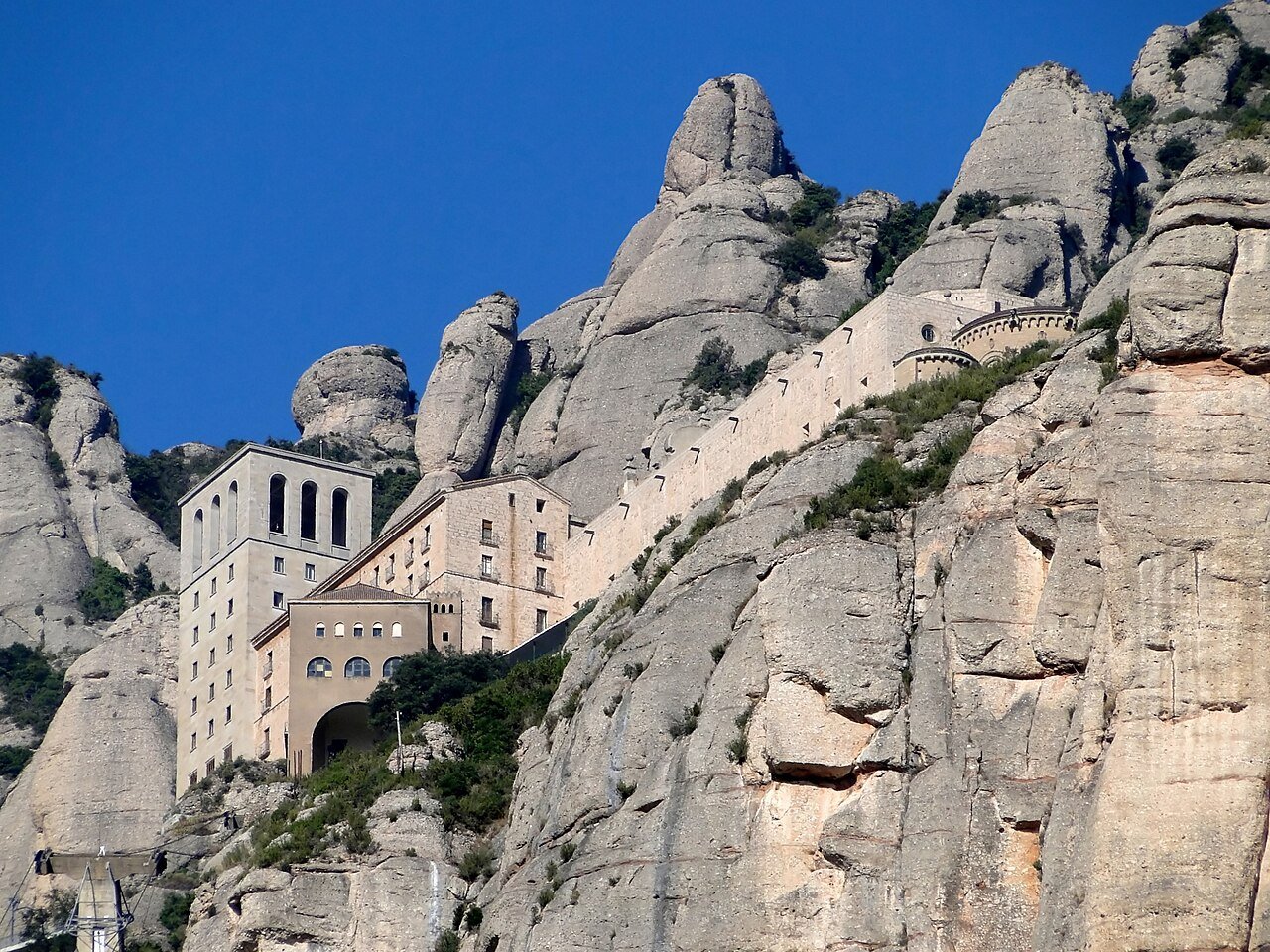
An hour north-west of the city, the mountain rises like a stone hallucination: a ridge of pink, serrated pinnacles, and midway up it, a Benedictine abbey that has drawn pilgrims for a thousand years. Montserrat is Catalonia’s spiritual heart — home to La Moreneta, the Black Madonna, and to the Escolania, one of Europe’s oldest boys’ choirs (they sing most days at 1pm; check the abbey’s calendar, as the choir has holidays) — and it wraps that sanctity in scenery that needs no faith to appreciate.
The classic trip runs: train from Plaça Espanya on the R5 line to either the cable car (Aeri de Montserrat) or the rack railway (Monistrol de Montserrat) for the ascent; the basilica and the Madonna’s chapel; then the funiculars — up to Sant Joan for the walking trails and the hermitages, or down towards the Santa Cova. Walkers get the best of the mountain: the trails to Sant Jeroni, the summit at 1,236m, turn a good day trip into a great one. A guided tour handles all of it in one booking; independently, combined train-plus-transport tickets are sold at Plaça Espanya. Give it a full day if you walk, a long half day if you don’t — and read our How Many Days in Barcelona guide on why Montserrat, not the city, should take your fourth day.
2. Girona: The Coloured City on the Onyar

Some 38 minutes by high-speed train, Girona is Barcelona’s gentler mirror: a beautifully preserved medieval city where pastel houses hang over the River Onyar, the cathedral climbs a grand sweep of 86 steps to the widest Gothic nave in the world, and the old Jewish quarter — the Call — is among Europe’s best preserved. Game of Thrones fans will recognise the streets (Braavos and King’s Landing both filmed here); everyone else will recognise something rarer — a Catalan city that still feels entirely its own.
The day runs naturally: the cathedral and the Call in the morning, the Arab Baths and the city walls (walk the Passeig de la Muralla for the views back over the rooftops), lunch in the arcaded Plaça de la Independència, and the riverside houses in the afternoon light. Trains from Sants and Passeig de Gràcia are fast and frequent; a combined tour pairs Girona with the coast. Of all the trips on this list, Girona is the one people most often say deserved an overnight — go for the day, and don’t be surprised.
3. Sitges: The Elegant Escape

Thirty-five minutes south by train, Sitges is the day trip Barcelona takes itself: a whitewashed old town around the landmark church of Sant Bartomeu i Santa Tecla on its seafront rock, a string of sandy beaches, palm-lined promenades, and a century’s worth of artists, modernistas and merrymakers in its past. This was the town of Santiago Rusiñol, whose Cau Ferrat museum — stuffed with his collection, El Grecos included — remains a highlight, and the palaces of the indianos who came home rich from Cuba line its prettiest streets.

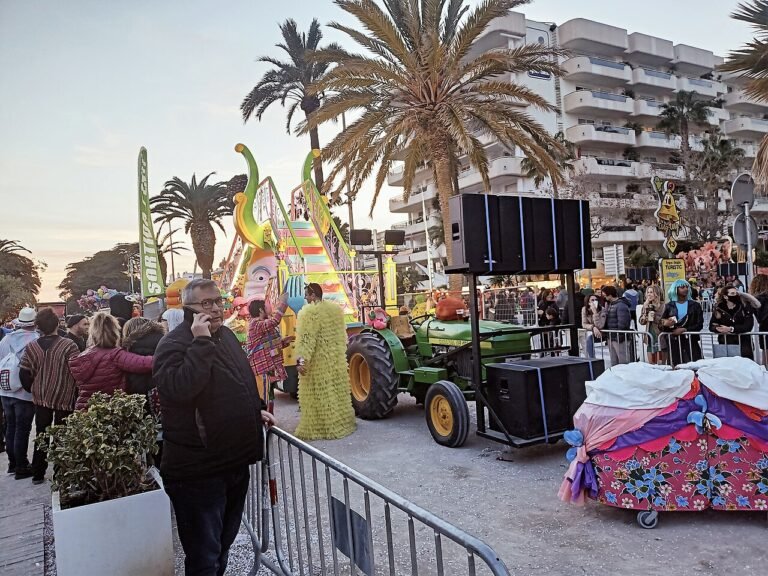
Sitges asks very little of you: swim, wander, eat well, repeat. Come in February or March and you may hit its carnival, among Spain’s most exuberant; come in August for the Festa Major, when castellers build their human towers in streets like this one and fireworks close the nights. Trains on the R2 Sud line from Passeig de Gràcia and Sants run until late — which is just as well, because Sitges at golden hour, with the church lit and the beach bars filling, is very hard to leave. Organised visits exist for those who want the history stitched together; honestly, a train ticket and a towel will do.
4. Tarragona: Rome by the Sea

An hour south, Tarragona was Tarraco — capital of Rome’s largest Iberian province — and it wears the fact magnificently. The amphitheatre sits in a natural bowl above the sea, gladiators’ view and all; the circus where chariots raced runs beneath the old town’s streets; the forum, the walls and a soaring aqueduct (the Pont del Diable, a short bus ride out) complete a Roman circuit that UNESCO lists and crowds somehow still underrate. The medieval old town on top — a fine cathedral, arcaded squares — and the fishermen’s quarter of El Serrallo below, for seafood lunches, make it a full and varied day.
Trains need one decision: fast trains serve Camp de Tarragona station, which sits inland and needs a connecting bus into town; slower regional trains reach Tarragona’s own seafront station, the better arrival. Either way, this is the best history day trip from Barcelona — Sagunto’s Valencian rival, and you can read how that one compares in our Day Trips from Valencia guide. Summer adds a temptation: the beaches of the Costa Daurada begin at the city’s edge.
5. Tossa de Mar: The Walled Town on the Bay

The Costa Brava’s southernmost resort-worthy town is also its most beautiful survivor: Tossa de Mar keeps the only fortified old town on the Catalan coast, its Vila Vella walls and towers enclosing a knot of stone lanes above a perfect horseshoe bay. Marc Chagall, who summered here in the 1930s, called it the Blue Paradise; Ava Gardner filmed here in the 1950s and her statue still gazes out to sea. Climb to the lighthouse for the panorama, swim off the Platja Gran beneath the walls, and eat in the old town’s stone-vaulted restaurants.
The catch is transport: Tossa has no station. Buses from Barcelona’s Estació del Nord take roughly an hour and a quarter, or combine train (to Blanes) with a local bus; many visitors simply fold Tossa into a Costa Brava tour that pairs it with Girona. It is the longest of the easy trips — make it a full day, start early, and let the beach have its hours.
6. Figueres: Dalí’s Theatre of the Absurd
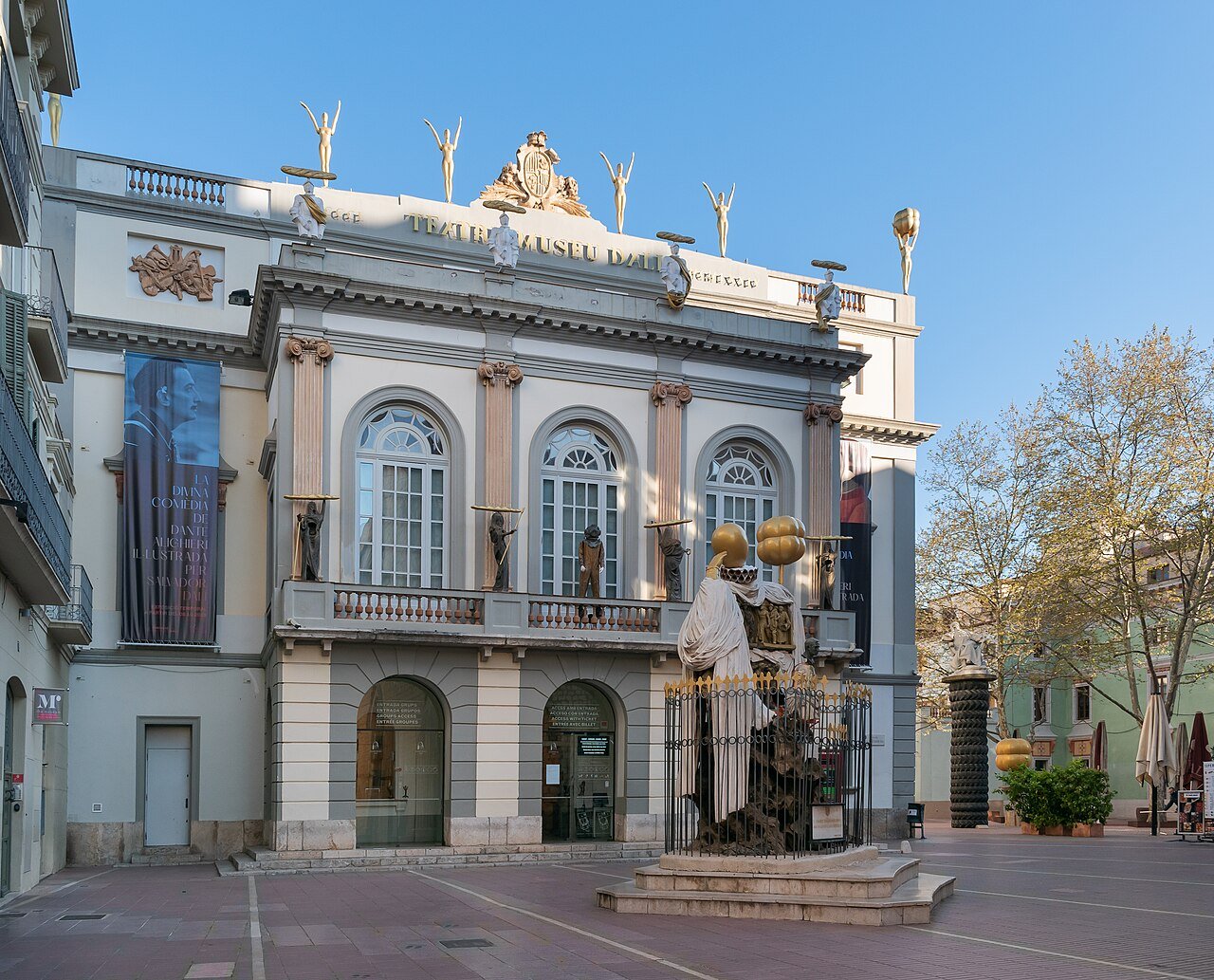
Fifty-five minutes by high-speed train, Figueres would be a pleasant Catalan market town with a big castle (Sant Ferran, one of Europe’s largest fortresses) — and then Salvador Dalí happened to it. The Dalí Theatre-Museum, built by the artist in the ruins of the town’s theatre and crowned with giant eggs, is less a museum than a total surrealist environment: a Cadillac raining inside, a face that becomes a room, Dalí’s own tomb in the crypt. It is the most entertaining museum in Spain, and the one that converts people who “don’t do museums”.
Book tickets ahead in season — the museum caps entry and queues build. High-speed trains serve Figueres-Vilafant station, a local bus or a 15-minute walk from the centre; slower regional trains reach the town station. Half a day does the museum; a full day adds Sant Ferran castle and a slow lunch. Pairs beautifully with Girona on a two-day swing, if your trip stretches.
7. Besalú: The Medieval Time Capsule
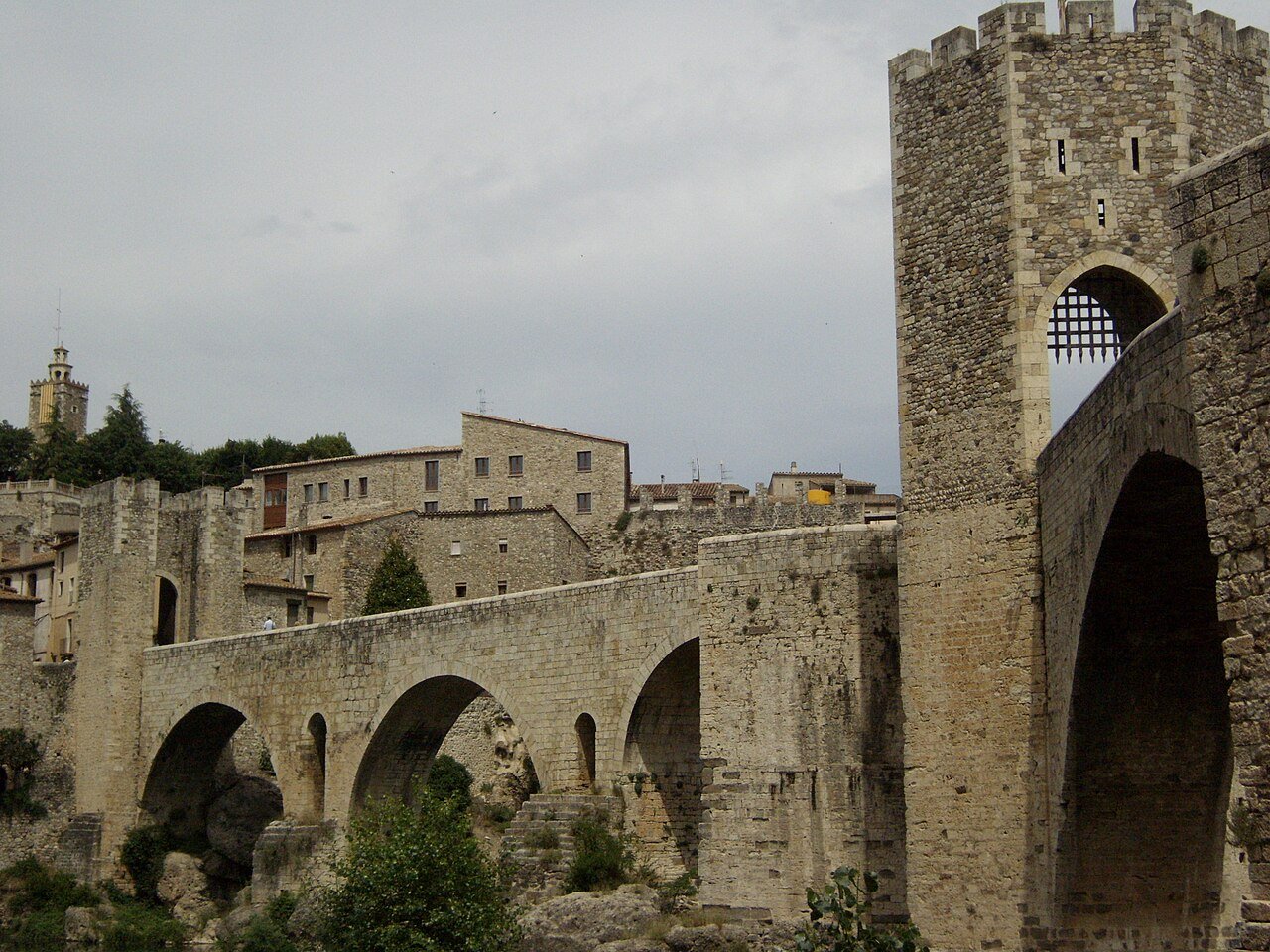
You arrive the way travellers have for eight centuries: across the fortified Romanesque bridge over the Fluvià, under its gatehouse tower. Besalú, once capital of its own county, is the most complete medieval town in Catalonia — arcaded main square, Romanesque churches, a rare medieval Jewish ritual bath (mikveh) among the very few surviving in Europe, and streets where nothing has needed to change for 400 years. It is small: two unhurried hours cover it, three with lunch in the square.
That smallness makes Besalú the perfect pairing rather than a solo expedition: buses from Barcelona take roughly an hour and three quarters, and the classic combination is Girona in the morning, Besalú in the afternoon (or the reverse) — a double dose of the medieval that tour itineraries discovered long ago. Village wanderers rank this the sleeper hit of the whole list.
Free Barcelona travel guide
Planning a trip to Barcelona? Get our free one-page Barcelona checklist: what to book ahead, what to skip, and the tapas bars we actually eat in.
8. Vic: The Market Town
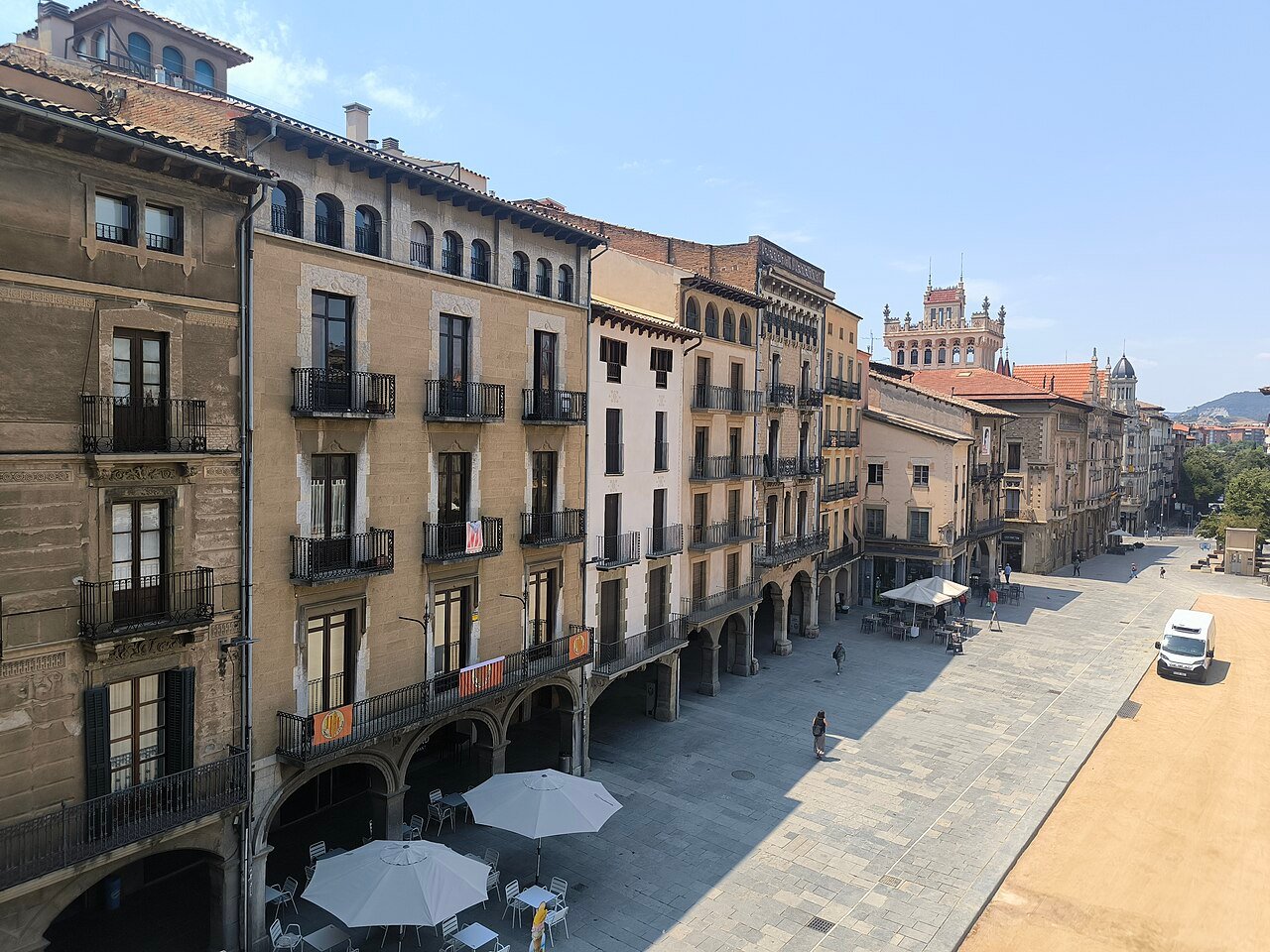
Seventy-five minutes inland by train, Vic is the trip for people who have done the famous ones: a handsome, working Catalan town wrapped around one of the great arcaded market squares of Spain. On Tuesday and Saturday mornings the Plaça Major fills with a market that has run since the Middle Ages — cheese, mushrooms in season, and the town’s famous fuet sausage — and the old town behind it holds a Roman temple improbably preserved inside a castle courtyard, a cathedral with Josep Maria Sert’s vast murals, and one of Catalonia’s best medieval art museums (the Museu d’Art Medieval, worth the trip alone for its Romanesque altarpieces).
Vic is also a place to eat: it is a byword in Catalonia for charcuterie and serious country cooking. Trains on the R3 line from Plaça Catalunya and Sants are cheap and scenic. Half a day, market morning essential — check which day you’re going.
9. The Penedès: Cava Country
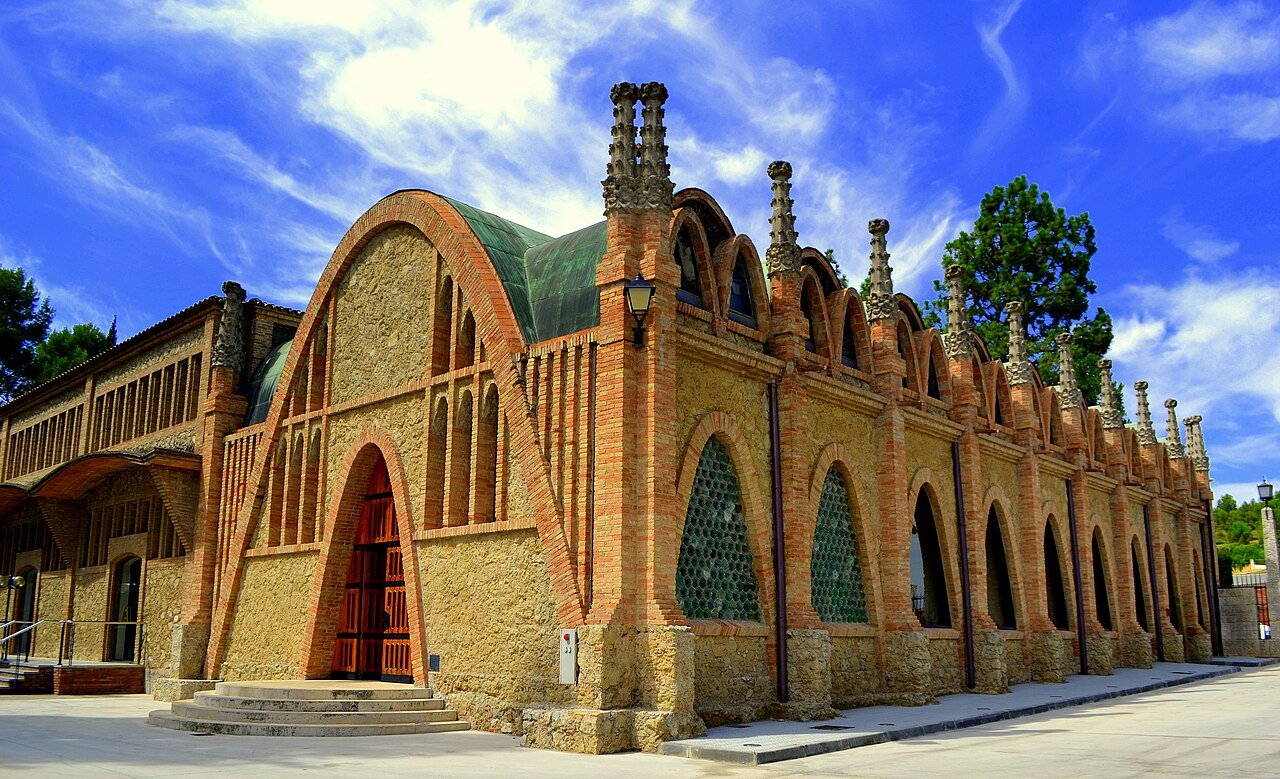
Forty minutes south-west, the vineyards take over. The Penedès is cava country — the homeland of Spain’s sparkling wine — and its capital, Sant Sadurní d’Anoia, is a town built by and for the bottle: here the great houses, Codorníu and Freixenet chief among them, age their cava in kilometres of underground cellars beneath Modernista winery buildings that Puig i Cadafalch designed like cathedrals of wine. Tours descend into the cool dark for the riddling racks and the tasting; the little train that tours Codorníu’s cellars is part of the fun.
Vilafranca del Penedès, the region’s other capital — home to one of Catalonia’s finest castellers teams and a good wine museum — sits ten minutes further and pairs naturally. Trains on the R4 line serve both towns from Sants and Plaça Catalunya. Tours bundle the driving and the drinking into one safe package, also sold in our Best Food in Barcelona guide as the city’s great edible excursion. Drivers: the tastings are generous — the train is the connoisseur’s choice.
10. Cardona: The Castle Above the Salt Mountain
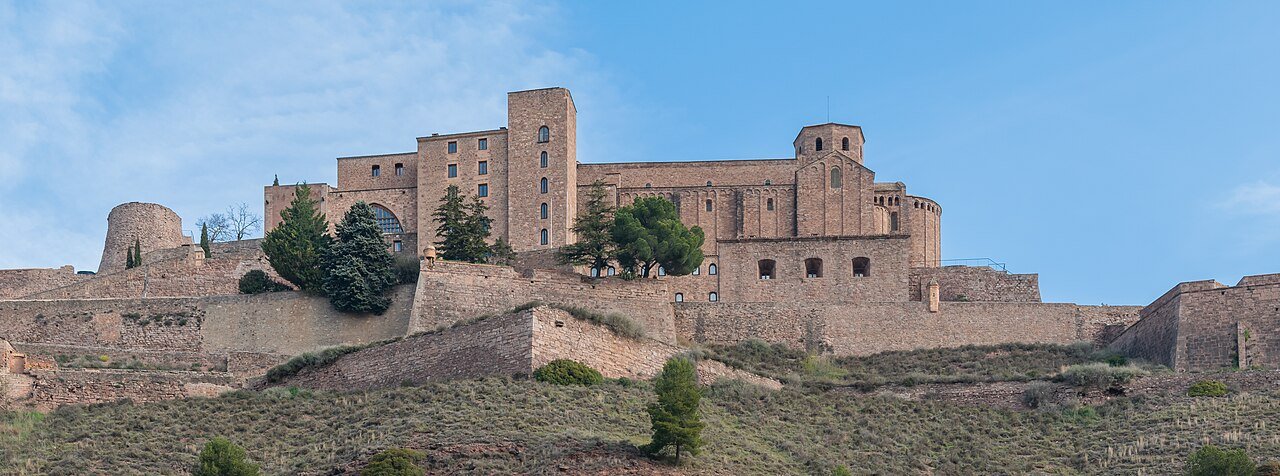
Ninety minutes inland, Cardona is the castle-collector’s day trip: a vast fortress on its hill — the last great stronghold to hold out in 1714, a fact Catalonia remembers — wrapped around the Romanesque church of Sant Vicenç, with the town’s medieval streets below. But Cardona’s real wonder is geological: beside it rises the Muntanya de Sal, a mountain of salt, mined since Roman times, whose guided tours descend into glittering galleries of salt stalactites. Castle above, salt below — no other trip on this list stacks its sights so strangely.
Cardona is the one destination here where a car or an organised tour genuinely helps: buses run from Barcelona but the day gets long, and tours often chain Cardona with Montserrat in a single grand circuit. Standing in the castle courtyard with the whole of central Catalonia spread below, and then walking inside a salt mountain an hour later, you will feel every kilometre was worth it.
Getting There: Trains, Buses and Driving

Barcelona scatters its departures across several stations, so check each trip’s: high-speed and long-distance trains (Girona, Figueres, Camp de Tarragona) leave from Barcelona Sants, many also calling at Passeig de Gràcia; Rodalies commuter trains serve Sitges (R2 Sud), Vic (R3), the Penedès (R4) and Montserrat’s connection (R5, from Plaça Espanya). Tossa and Besalú are bus trips from the Estació del Nord. Our Barcelona Airport Guide explains the airport stations, and the same integrated tickets cover many city legs.
A rental car earns its keep for Cardona, for chaining trips (Girona plus Besalú; Tossa at your own pace) and for the Costa Brava’s smaller coves beyond Tossa. Roads are good; the honest costs are tolls on the motorways and old-town parking at the far end — every destination on this list is best seen on foot anyway.
Which Day Trip Should You Choose?
Only time for one? Montserrat — it is like nothing else in Europe, and the tour makes it effortless.
History first: Tarragona for Rome, Girona for the medieval city, Cardona for the castle.
Beach plus sightseeing: Sitges for ease, Tossa for beauty.
Art and the unexpected: Figueres, with Besalú as the quiet counterweight.
Food and wine: the Penedès, unhurried, by train.
With children: Montserrat (trains, cable cars, a mountain to explore) and Sitges (the beach, with a town attached) win every time.
However you choose, the rhythm that works is the Catalan one: leave after breakfast, be back for the evening paseo — and if a trip runs long, let it. Our 2 Days in Barcelona itinerary and 3 Days in Barcelona itinerary show where a day trip slots into a city stay without breaking it, and our Best Things to Do in Barcelona guide covers everything waiting for you back in the city.
Travel insurance, sorted
Whether it is a two-week holiday or a longer move, travel insurance is the one booking not to skip. We point readers to SafetyWing’s Nomad Insurance — cover built for travellers, remote workers and longer stays abroad, on a flexible monthly subscription you can start before a trip or while you are already away. Get a quote from SafetyWing
Final Thoughts
Barcelona’s day trips are how a very good trip becomes a rounded one: a monastery in the clouds, Dalí’s eggs on a Figueres rooftop, a walled town on a blue bay, Rome by the sea and a castle above a mountain of salt — each of them close enough to be back for dinner. Take Montserrat on your first visit, Girona on your second day out, and keep Cardona in your pocket for the trip where Catalonia stops being a city break and starts being a region you are exploring. However far you roam, the city will be waiting at the end of the line — our Barcelona hub page — “Your Ultimate Guide to Barcelona” gathers everything we have written to help you enjoy it.
¡Buen viaje!
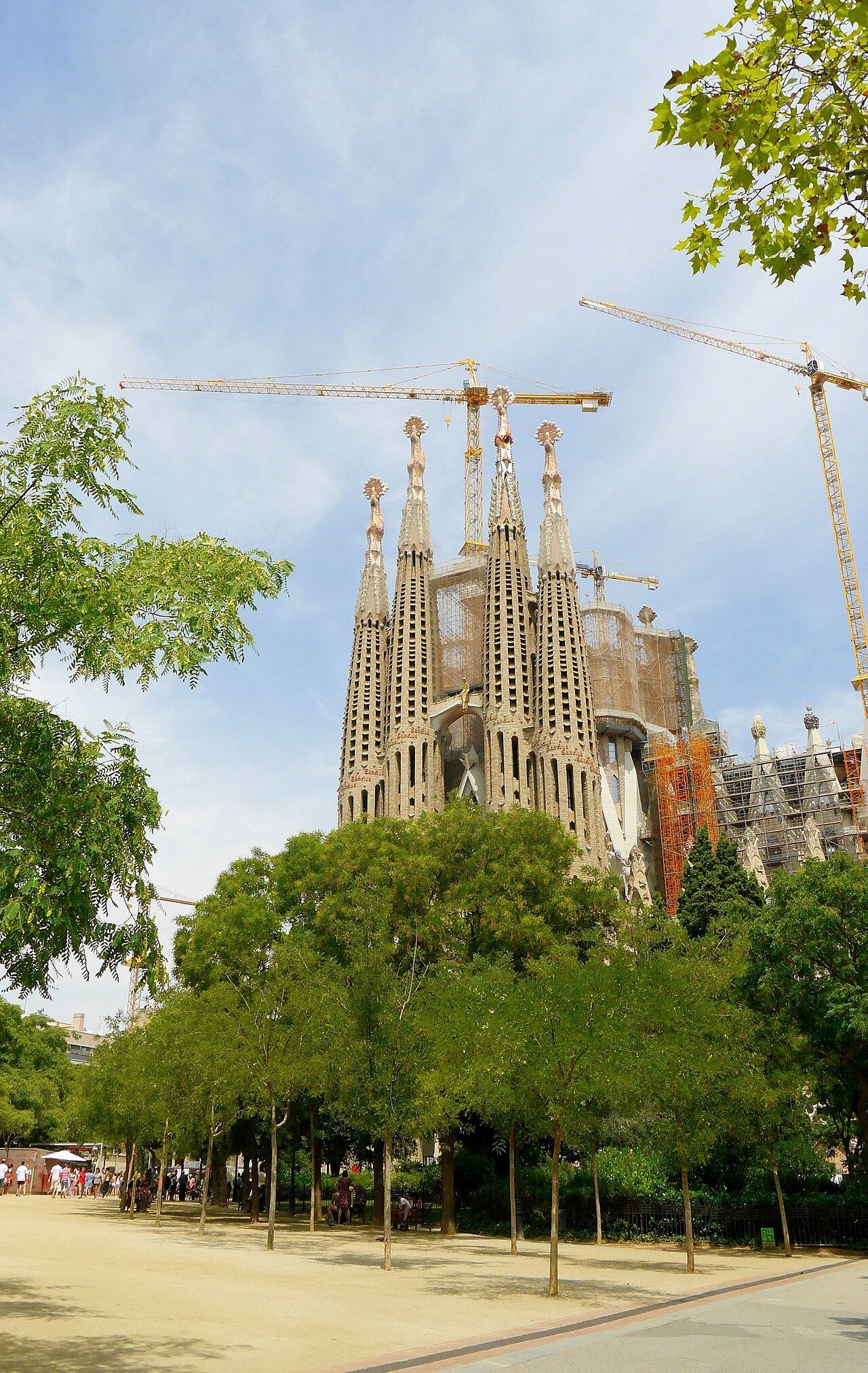
Photo credits: Sagrada Família — Ronny Siegel, CC BY 4.0 · Montserrat Abbey — Bernard Gagnon, CC BY-SA 3.0 · Girona, River Onyar —Tallaferro, CC BY 2.5 · Church of Sant Bartomeu i Santa Tecla, Sitges — G.M. Kowalewska, CC BY 3.0 · Castellers in Sitges — Mike McBey, CC BY 2.0 · Tarragona Amphitheatre — Bernard Gagnon, CC BY-SA 3.0 · Tossa de Mar — Jorge Franganillo, CC BY 2.0 · Dalí Theatre-Museum, Figueres — Krzysztof Golik, CC BY-SA 4.0 · Besalú bridge — CésarOP, CC BY-SA 3.0 es · Plaça Major, Vic — Pitxiquin, CC BY-SA 3.0 · Codorníu cellars, Sant Sadurní d’Anoia — Angela Llop, CC BY-SA 2.0 · Cardona Castle — Krzysztof Golik, CC BY-SA 4.0 · Barcelona Sants station — Smiley.toerist, CC BY-SA 4.0. All via Wikimedia Commons.


9 Comments