3 Days in Valencia: The Perfect Itinerary for First-Time Visitors
Three days is when Valencia stops being a city break and starts being a city you understand. Two days gets you the famous contrast — medieval old town one day, space-age arts complex the next — but the third day is where the real Valencia lives: a zoo with no visible cages in the old riverbed, paella eaten in the village that invented it, and a sunset boat ride across the lake where the rice for that paella grows.
So this itinerary keeps the greatest hits, gives them room to breathe, and then spends day three the way Valencians spend their own Sundays. Nothing is double-booked, the mornings start at civilised hours after day one, and I have built in the two things rushed itineraries never allow: a slow market morning and a long lunch by the water.
If you are here for less time, the same route compresses — our shorter Valencia plans use these days as building blocks. But if you have the three days, use all of them. Valencia rewards it more than any city I know in Spain.
Where to Stay in Valencia
For three days, stay in or beside the old town. Days one and two start there or pass through it, the restaurants you will want at night are there, and both the beach and the Albufera days are simple bus or taxi rides out. The three picks below cover every budget, and they are the same three I give friends.
Luxury pick — Only YOU Hotel Valencia
The city’s most stylish five-star, on Calle de la Paz in the heart of the old town. Playful, design-led interiors, a cocktail bar with a local following, and the cathedral two minutes from the door. Over three days it works beautifully as a base you actually enjoy coming back to.
Boutique pick — Vincci Palace Valencia
A handsome old palace a short walk from Plaza de la Virgen, converted into a calm, elegant boutique hotel — marble, warm wood, quietly excellent service. The sweet spot for travellers who want old-town soul without five-star prices.
Budget pick — Hostal Antigua Morellana
A small family-run hostal (in Spain: a guesthouse, not a hostel) in an 18th-century building near the Central Market, with a pretty tiled courtyard and simple, spotless rooms. Three nights here instead of a big hotel buys you a lot of very good lunches. Book early — word is out.
Table of Contents
- Where to Stay in Valencia
- Day 1: The Old Town in Depth — Cathedral, Silk Exchange and El Carmen
- Morning: Plaza de la Virgen, the Cathedral, the Miguelete and San Nicolás
- Afternoon: La Lonja, the Central Market and a Horchata Break
- Evening: The Serranos Towers and Dinner in El Carmen
- Day 2: The Riverbed and the Sea — Oceanogràfic, Turia Gardens and Malvarrosa
- Morning: The City of Arts and Sciences and the Oceanogràfic
- Afternoon: Cycling the Turia Gardens and Paella at Malvarrosa
- Evening: Russafa — Valencia’s Food Quarter
- Day 3: Bioparc, the Albufera and a Slow Goodbye
- Morning: Bioparc — the Zoo With No Cages
- Afternoon: El Palmar and the Albufera Lake
- Evening: Sunset on the Water and One Last Dinner
- Final Thoughts
Day 1: The Old Town in Depth — Cathedral, Silk Exchange and El Carmen

Day one belongs to the historic centre, done slowly. With three days in hand there is no reason to sprint: the old town is compact, flat and best understood on foot, with long pauses for coffee built in rather than apologised for.
Morning: Plaza de la Virgen, the Cathedral, the Miguelete and San Nicolás
Start in Plaza de la Virgen, on a terrace, with the fountain running and the square doing its morning business around you. The cathedral stands on one side — Romanesque, Gothic and Baroque layers wrapped around the site of the old mosque — and inside it, the small, hushed chapel that displays the chalice Valencia holds to be the Holy Grail. Go when it opens; the chapel deserves quiet, and quiet is what you get early — book the Valencia Cathedral, Holy Grail and Miguelete tour.
Climb the Miguelete straight afterwards: 207 spiral steps to the rooftop view that organises the whole city for you — old town below, the Turia’s green ribbon curving east, the sea at the end of it. Everything you do for the next three days makes more sense from up there.
Then walk five minutes to the morning’s sleeper hit: San Nicolás church, a plain-looking parish church whose entire ceiling is covered in frescoes so rich it is nicknamed the Valencian Sistine Chapel. Most visitors walk straight past it. Do not be most visitors.
Afternoon: La Lonja, the Central Market and a Horchata Break
After lunch-hour begins, cross to La Lonja de la Seda, the old silk exchange — a hall of twisted stone columns spiralling into a star-vaulted ceiling, built when Valencian silk money ran half the Mediterranean. It is UNESCO-listed, rarely crowded, and the single most beautiful room in the city.
Facing it is the Mercado Central, and with three days you can do it justice: not a dash, but a proper wander through one of Europe’s largest food markets — the fish hall alone is a geography lesson — buying little and often, the way the grandmothers around you are doing it. It closes mid-afternoon, so plan the wander before about 2pm.
Finish the afternoon the Valencian way, with a horchata at Horchatería Santa Catalina, pouring tiger-nut horchata since the 19th century. Order a fartón — the long, soft, dunkable pastry — and do as the locals do.
Free Valencia travel guide
Get all the Valencia tips and tricks you need for a stress-free trip – from a local!
Evening: The Serranos Towers and Dinner in El Carmen
Golden hour belongs to the Torres de Serranos, the great Gothic gates on the old town’s north edge. Climb them for the sunset view back over the rooftops, then drop into El Carmen below — the old town’s oldest quarter, a tangle of lanes, street art and small squares that comes alive after 8pm. Graze through it: a vermouth here, tapas there, dinner wherever the terrace is fullest of locals. This is not the night to be in bed early.
Day 2: The Riverbed and the Sea — Oceanogràfic, Turia Gardens and Malvarrosa

Day two runs east along the old riverbed to the sea: the future in the morning, the park at midday, paella and beach in the afternoon, and the city’s best food neighbourhood to finish.
Morning: The City of Arts and Sciences and the Oceanogràfic
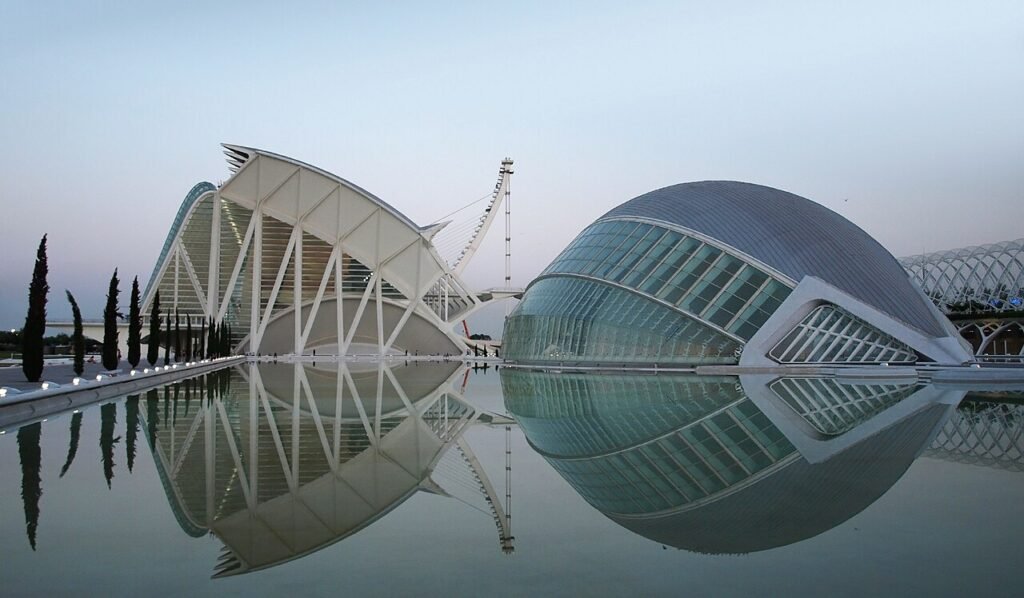
Arrive at the City of Arts and Sciences as it opens and walk the complex before the crowds: Calatrava’s Hemisfèric like a blinking eye, the science museum like a whale skeleton, the opera house above them, all doubled in the reflecting pools. Then commit your morning to the Oceanogràfic, Europe’s largest aquarium — the shark tunnel, the dolphinarium, the belugas, the Mediterranean halls. It is a genuine half-day place, and on a three-day trip you finally have the half day — book your Oceanogràfic entry ticket.
The smart ticket is the combined Oceanogràfic and Hemisfèric ticket: end the morning lying back under its IMAX dome while a film washes over you, then drift through the Umbracle’s palm-shaded walkway on your way out. Rested, cool, and ready for lunch.
Afternoon: Cycling the Turia Gardens and Paella at Malvarrosa

Cross the city the local way — through the Turia Gardens, nine kilometres of park in the riverbed of the diverted Turia. Rent a bike at the City of Arts end and ride west at garden pace: under the old bridges, past the flower-filled Puente de las Flores, around the vast reclining Gulliver whose slides and ramps turn a storybook giant into a playground. It is the green spine of Valencia and the best free hour in the city.

Then east again to Malvarrosa beach for the day’s main event: paella, at lunch, by the sea, as it must be. The rules bear repeating — paella is a lunch dish (roughly 1:30–3:30pm), the true Valenciana is chicken, rabbit and beans (no seafood, no chorizo), it is cooked to order over about 25 minutes, and the crispy socarrat at the bottom of the pan is fought over by people who love each other. Book a beachfront table, order for at least two, and let lunch take as long as it takes. Follow it with a slow hour on the sand. Short on time? This is the day our two-day visitors squeeze hardest (see our 2 Days in Valencia itinerary) — with three days, you do not have to.
Evening: Russafa — Valencia’s Food Quarter
Tonight, cross south of the old town into Russafa, the neighbourhood Valencia’s chefs, bakers and natural-wine pourers have made their own. Start with a look at the colourful Russafa Market hall from outside as it closes, then let the evening unfold street by street: a vermouth in a tiled old bar, small plates in a modern bistro, a glass somewhere with sawdust-dark wood and no menu board outside. Russafa is where the city eats when it is feeding itself rather than its guests — prices are kinder, rooms are livelier, and your best meal of the trip may well happen here by accident.
Day 3: Bioparc, the Albufera and a Slow Goodbye
Day three leaves the postcard circuit. A world-class zoo in the morning, the countryside the city’s most famous dish comes from in the afternoon, and a sunset that people drive from three provinces to watch.
Morning: Bioparc — the Zoo With No Cages

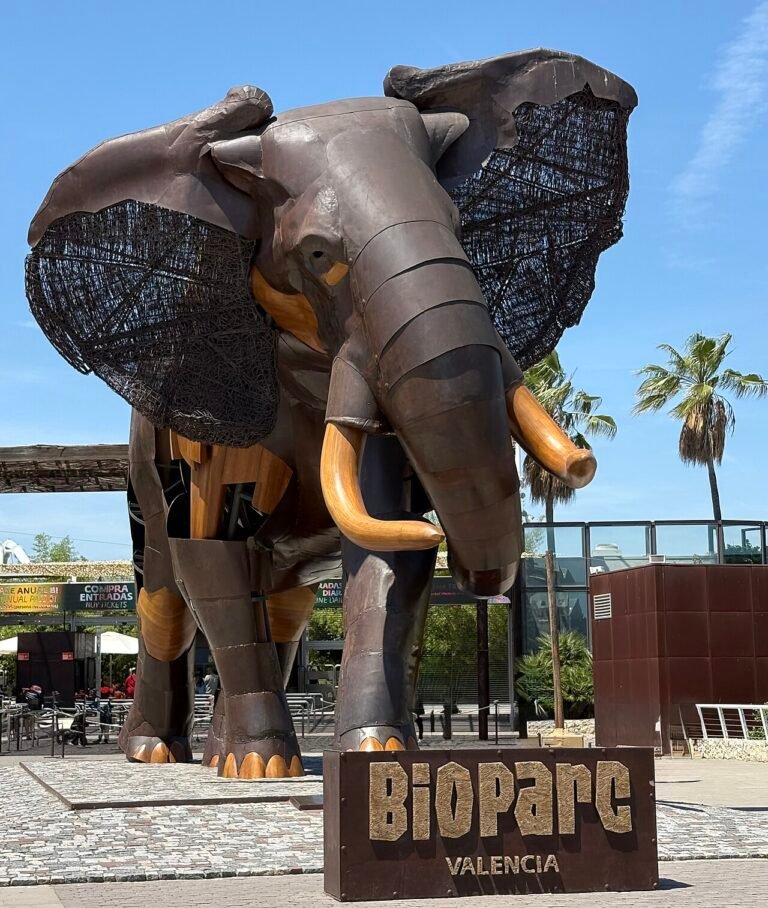
At the western end of the Turia Gardens sits Bioparc, and it is not like other zoos. There are no visible cages or fences — instead, rivers, rock walls and moats disappear into the landscaping, so you stand eye-to-eye with lemurs in a recreated Madagascar, watch giraffes drift across a savanna dotted with baobabs, and cross a bridge while elephants move below you. Go at opening, when the animals are active and the light is kind, and give it a full morning; families should know it is the single attraction Valencia’s children would vote for, every time.
Afternoon: El Palmar and the Albufera Lake

Now south, about half an hour by bus or taxi, to the Albufera — the great freshwater lake and natural park wrapped in rice fields. This is where paella was born, and lunch proves it: in the village of El Palmar, an island of restaurants between the canals, order the paella where it was invented, or try all i pebre, the fishermen’s eel and potato stew that locals will tell you is the real dish of the lake. Portions are generous, prices are village prices, and nobody is in a hurry.
After lunch, walk it off along the canals and rice fields — flat, huge-skied country that feels a hundred miles from the city you were in this morning — and save the lake itself for last.
Evening: Sunset on the Water and One Last Dinner
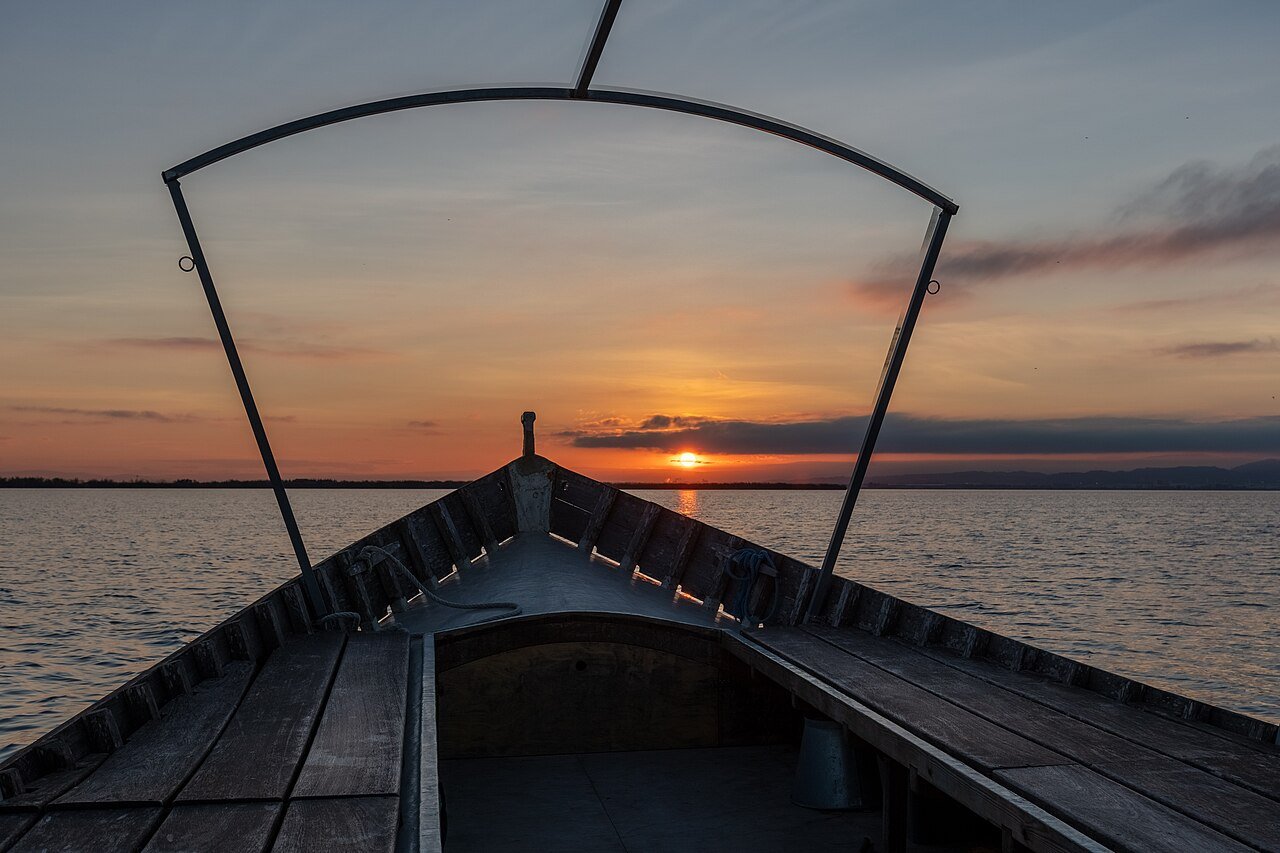
The Albufera’s great ritual is the sunset boat ride: traditional flat-bottomed wooden boats, called albuferencs, that slip out onto the lake as the light drops. The water turns to copper, the birds come home across it in long lines, and the whole boat goes quiet. Book the last departure if you can, and just watch. Of everything in this itinerary, this is the moment people describe to me months later.
Back in the city, keep the last dinner simple and close to your hotel — a final round of tapas in El Carmen or Russafa, a last Agua de Valencia, and a slow walk through the lit old town. Tomorrow, if you are leaving, you will already be planning the return. And if you are not leaving — if Valencia has quietly stretched your trip the way it stretches everyone’s — the gardens, the markets and the lake will all still be there in the morning (see our 1 Day in Valencia itinerary).
Final Thoughts
Three days in Valencia gives you the complete sentence instead of the headline: the old town’s towers, chapels and silk money; the riverbed city’s gardens, aquariums and beaches; and the lake country that feeds it all. You will have eaten paella in both its temples — the beachfront and the village that invented it — and watched the sun go down from a wooden boat in the middle of a rice sea. That is not a city break. That is the beginning of a habit.
¡Buen viaje!
READ NEXT
Your Ultimate Guide to Valencia
Planning beyond these three days? Explore the full Valencia guide for more sights, neighbourhoods and local tips.
Photo credits: Diego Delso, CC BY-SA 4.0; Codex, CC BY-SA 4.0; Diliff, CC BY-SA 3.0; MCAE Consulting, CC0; Juanedc, CC BY 2.0; Alberto-g-rovi, CC BY-SA 3.0 — all via Wikimedia Commons.

5 Comments