Las Fallas Festival Valencia: The Complete Guide to the Fire Festival
Short Answer
Las Fallas — les Falles in Valencian — is Valencia’s great fire festival, held every March in honour of Saint Joseph and inscribed by UNESCO on its Intangible Cultural Heritage of Humanity list in 2016. For most of the month the city builds: more than 350 neighbourhood commissions erect over 700 painted monuments, some of them 20 metres tall, on street corners all over Valencia. The core festival runs from 15 to 19 March — the monuments go up in the plantà, a five-minute earthquake of firecrackers called the mascletà shakes the Plaza del Ayuntamiento at 14:00 every day from 1 to 19 March, thousands of falleras in silk dresses carry flowers to the Virgin on 17 and 18 March, and on the night of 19 March, in the cremà, every monument burns. Almost everything happens outdoors and is free to watch; the only tickets in the story are small ones — the Ninot Exhibition in the run-up and the Museo Fallero, where the one figure per category pardoned by public vote each year survives. Book your hotel months ahead, bring ear protection, and give the festival at least three days.
Table of Contents
- The Short Version
- Bonfires for Saint Joseph: A Short History
- The Festival Calendar: What Happens, Day by Day
- La Mascletà: Five Minutes of Thunder
- The Monuments: Fallas, Ninots and a Year of Satire
- The One That Gets Away: The Ninot Indultat
- Where to See the Best Fallas
- La Ofrenda: A Mantle Made of Flowers
- La Nit del Foc and La Cremà: The Night Everything Burns
- Practical Info
- Tickets and Costs
- Getting There and Getting Around
- When to Go
- How Long You Need
- Tips for Visiting
- What to See Nearby
- Frequently Asked Questions
- Final Thoughts
The Short Version
No festival in Europe works like this one, because no other city spends a year building artworks in order to destroy them in a single night. Las Fallas is at once a satire festival, a pyrotechnics marathon, a flower procession and a citywide street party, and it earns its place at the top of any list of the best things to do in Valencia even though it exists for barely three weeks a year. The rhythm of a fallas day is set by gunpowder: the despertà wakes the neighbourhoods with firecrackers at dawn, the mascletà flattens the city centre at two, parades and band music fill the afternoon, and fireworks and street parties run past midnight. Between the explosions, the real sightseeing is the monuments themselves — hundreds of them, each with a theme, a grudge and a punchline, all of them free to wander around at any hour.

First-timers underestimate two things. The first is the noise, which is not background colour but the point of the exercise — Valencians experience the mascletà through their ribs. The second is how much local knowledge unlocks: which falla just won the special section, why one figure in a museum was spared, what the flower mantle means. If your days are few, a guided tour of the festival with a local guide is the fastest way to read the monuments instead of just photographing them. This guide gives you the rest: the story, the day-by-day calendar, where the great fallas stand, and how to survive the week with your hearing and your sense of humour intact.
Bonfires for Saint Joseph: A Short History
The seed of Las Fallas is a spring clean in a carpenter’s workshop. Valencia’s carpenters worked through the winter by the light of lamps hung from wooden stands called parots. On the eve of 19 March — the feast of Saint Joseph, their patron — the lamps were no longer needed, and the stands were burned in the street, with old furniture, offcuts and junk piled on top. Neighbourhoods joined in; somebody dressed a parot in old clothes; the dressed figure acquired a face, then a target. By the nineteenth century the street bonfires had become deliberate monuments, the city had begun organising and prizing them, and the figures — the ninots — had settled into their modern job: mocking the powerful, the famous and the neighbours, in that order.
The festival’s machinery is still neighbourhood-sized. Each monument belongs to a comisión fallera, a local association centred on its casal faller clubhouse, which raises money all year, hires professional artistes fallers and throws its own parties during the week. The whole thing is coordinated by the Junta Central Fallera, and each year the city elects a Fallera Mayor — the festival’s queen — who presides over everything from the opening call to the final fire. What began with carpenters was recognised by UNESCO in 2016 as part of the Intangible Cultural Heritage of Humanity, a listing that covers not just the monuments but the trades behind them: the artists, pyrotechnicians, silk weavers, musicians and florists of the festival. In 2026 the festival marked ten years on that list.
The Festival Calendar: What Happens, Day by Day
Las Fallas is best understood as a countdown. The season opens with la Crida, the official call, on the last Sunday of February: the Fallera Mayor invites the city to the festival from the Torres de Serranos, and fireworks close the ceremony. From 1 March, the daily mascletà begins in the Plaza del Ayuntamiento at 14:00 and runs every day until 19 March — miss everything else, and this is still the festival’s heartbeat. Through February and into March, the Exposició del Ninot gathers one nominated figure from every commission at the Science Museum in the City of Arts and Sciences, where the public votes for the year’s pardons.
The main week runs 15 to 19 March. On 15 March the children’s monuments must be standing; through the night of 15–16 March comes the plantà, when cranes, crews and whole neighbourhoods raise the great monuments, which must be complete by the morning of the 16th for judging. Prizes are awarded on 16 and 17 March — and on 15 March the two winning ninots indultats are announced, to be carried in triumph to the museum instead of the flames. On 17 and 18 March the Ofrenda fills the centre: tens of thousands of falleros and falleras in traditional dress process to the Plaza de la Virgen with flowers for the Virgin. The nights of 16, 17 and 18 March bring castle fireworks, building to the Nit del Foc — the Night of Fire — in the small hours of 19 March. And on 19 March, Saint Joseph’s day, after the last mascletà, comes the cremà: the burning of everything.

One honest caveat about dates: the festival’s shape is fixed by tradition — mascletàs from 1 March, main days 15 to 19 March — and the next edition is expected to follow it in mid-March 2027, but the Junta Central Fallera publishes the official programme closer to the time. Confirm exact dates and times against the official programme before you book travel around a specific event.
La Mascletà: Five Minutes of Thunder
Every day from 1 to 19 March, at 14:00 on the dot, the Plaza del Ayuntamiento — the square in front of Valencia City Hall — hosts a mascletà, and the whole city stops for it. A mascletà is not a fireworks display: there is almost nothing to look at except smoke. It is a composed barrage of firecrackers (masclets), fired in rising rhythms for five to seven minutes by a pyrotechnic company, building through waves of crackling intensity to the terremoto, the earthquake — a finale of ground-shaking detonations that you feel in your chest and in the soles of your feet. The volume close to the square can pass 120 decibels. Valencians do not watch a mascletà; they stand in it, mouths slightly open to balance the pressure, and applaud the pyrotechnician afterwards like a conductor.
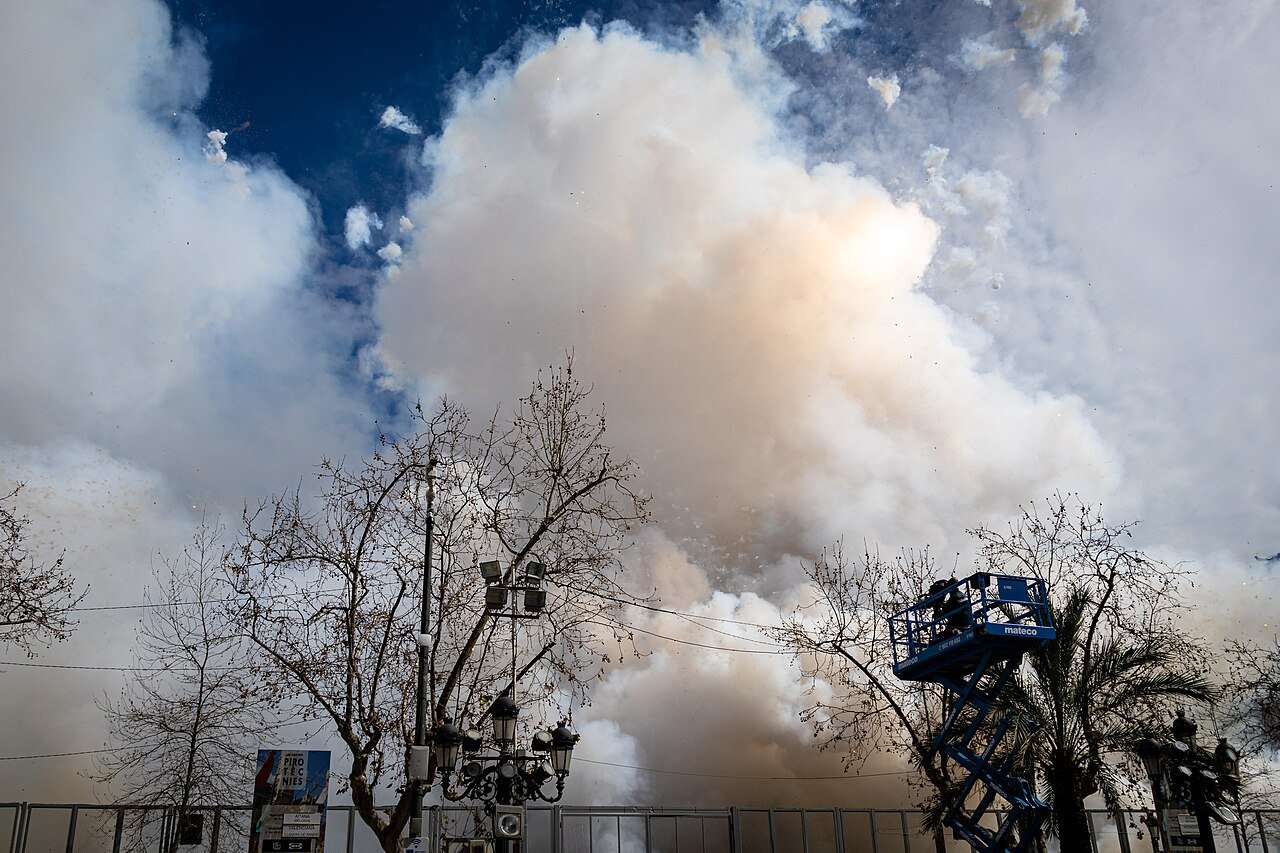
Practically: the square and its approach streets fill well before two, so arrive by 13:00 for a decent spot, and earlier still on the final weekend. Balconies overlooking the square are rented out for the occasion — the one genuinely luxurious way to see it. Stand further back with small children, and treat ear protection as essential rather than cautious: this is the loudest recurring event most visitors will ever attend, and the fallas week offers nineteen chances to get it right. Each day’s mascletà is fired by a different company, and locals argue about the rankings the way other cities argue about football.
The Monuments: Fallas, Ninots and a Year of Satire
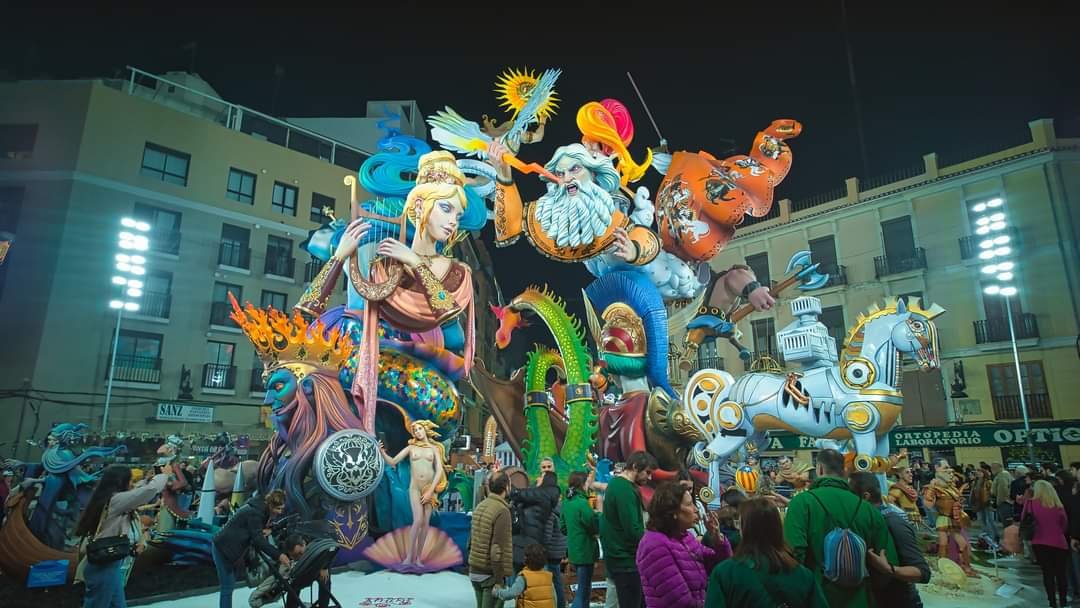
A falla is both the festival and the monument, and the monument is a small temporary city of satire. Each commission builds two: the falla mayor, the big one, and a falla infantil for children, gentler in theme and scale. The mayor is a central tower of figures — the biggest rise around 20 metres — arranged in scenes around a theme: a political scandal, the housing crisis, a celebrity meltdown, the price of oranges. The individual figures are the ninots, hand-modelled, painted in candy colours, and built today largely in polystyrene and modern composites over wooden frames by the workshops of the artistes fallers. Nothing is sacred and nobody is safe; if it happened in Valencia, in Spain or in the world last year, somebody has built a 6-metre version of it with a rhyme underneath explaining the joke.

The monuments compete. They are judged in categories by budget and ambition, topped by the Sección Especial, the first division of perhaps a dozen giants whose budgets are reported to run into six figures. Winning the special section is the festival’s supreme honour, and the great names defend it fiercely: Convento Jerusalén–Matemático Marzal took the first prize in both 2025 and 2026. The verdicts land on 16 and 17 March, and from then on the crowds move with a map in hand — the winning fallas draw queues around the block for their remaining days of life. Remember that all of it, prize or no prize, is standing in public streets, open at all hours and entirely free: the correct way to see the fallas is on foot, slowly, circling each monument twice because half the jokes are on the back.
The One That Gets Away: The Ninot Indultat
Out of more than 700 monuments’ worth of figures, exactly two ninots a year are allowed to live. The mechanism is a public vote, and it has run since 1934. Through February and into March, every commission sends its single best figure to the Exposició del Ninot — in recent years held in the Science Museum at the City of Arts and Sciences — where hundreds of hopefuls stand in rows: tender portraits, vicious caricatures, masterpieces of modelling. Visitors vote for one figure from the adult monuments and one from the children’s. The winners, the ninots indultats, are announced on 15 March, and when their monuments burn on the 19th, the pardoned figures are already safe.

Their afterlife is a museum. The pardoned ninots go to the Museo Fallero, the festival’s museum on the Plaza de Monteolivete, where the survivors stand in chronological order from 1934 to last March — ninety years of Valencian humour, history and heartbreak in one quiet convent building. Entry is €2 (€1 reduced, and free on Sundays and public holidays), and it is the single best preparation for the festival: an hour here teaches your eye what to look for in the streets. If you can only visit Valencia outside March, it is also how you see Las Fallas at all. Our complete guide to the museum is linked at the end of this article.
Where to See the Best Fallas
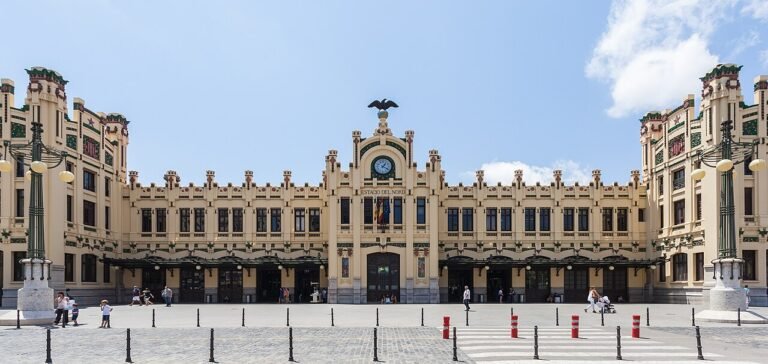
Start with the Sección Especial, the top division, whose giants cluster conveniently in and around the centre. The essential names: Convento Jerusalén–Matemático Marzal, just west of the centre near the Estación del Norte, the section’s serial winner; Plaza del Pilar, in the Velluters quarter west of the market; Na Jordana, the beloved traditionalists in El Carmen, famous for wit as much as scale; Exposición–Misser Mascó, north of the old riverbed; L’Antiga de Campanar, out in Campanar; and the Almirante Cadarso–Conde de Altea falla in the Eixample. Between them, allow a full day of walking — the monuments reward lingering, and every one is surrounded by street bars, bunyol stalls and neighbourhood parties.
Two more sites complete the circuit. The Plaza del Ayuntamiento holds the municipal falla, built by the city itself, outside the competition and usually the most experimental design of the year — it is also the falla that burns last, in the small hours of 20 March. And after dark, head south to Ruzafa (Russafa), where the commissions of Cuba–Literato Azorín and Sueca–Literato Azorín — both special-section names — anchor the famous street illuminations: whole streets roofed in tunnels of coloured light, switched on each evening of the festival week.

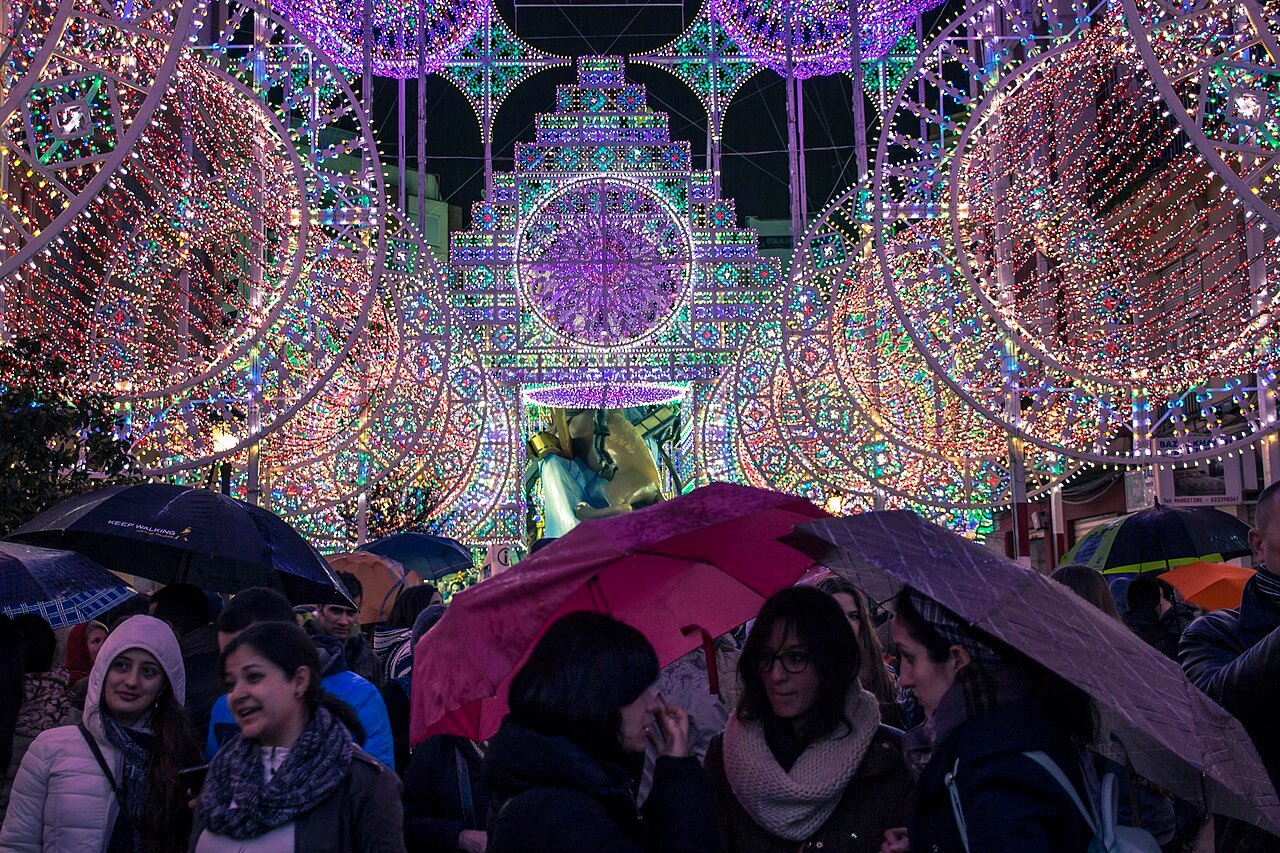
Do not neglect the small fallas. Some of the sharpest satire in the city stands on minor street corners in El Carmen and the old town, where commissions with tiny budgets compete on ideas alone. The festival’s geography lesson is simple: the special section for spectacle, the old town for jokes, Ruzafa for the nights.
La Ofrenda: A Mantle Made of Flowers
On 17 and 18 March, the gunpowder pauses and the festival shows its other face. The Ofrenda de Flores is a two-day procession in which the commissions — tens of thousands of falleros and falleras, marching with their bands behind their banners — carry bouquets of carnations across the city to the Plaza de la Virgen. There, the flowers are handed up and woven into the mantle of a giant image of the Virgen de los Desamparados, the patroness of Valencia: over two days, a great wooden frame becomes a towering robe of fresh flowers, built petal by petal in front of the crowd. It is slow, emotional and genuinely moving — falleras regularly weep as they hand over their bouquets — and it is the one fallas event where the city’s voice drops.

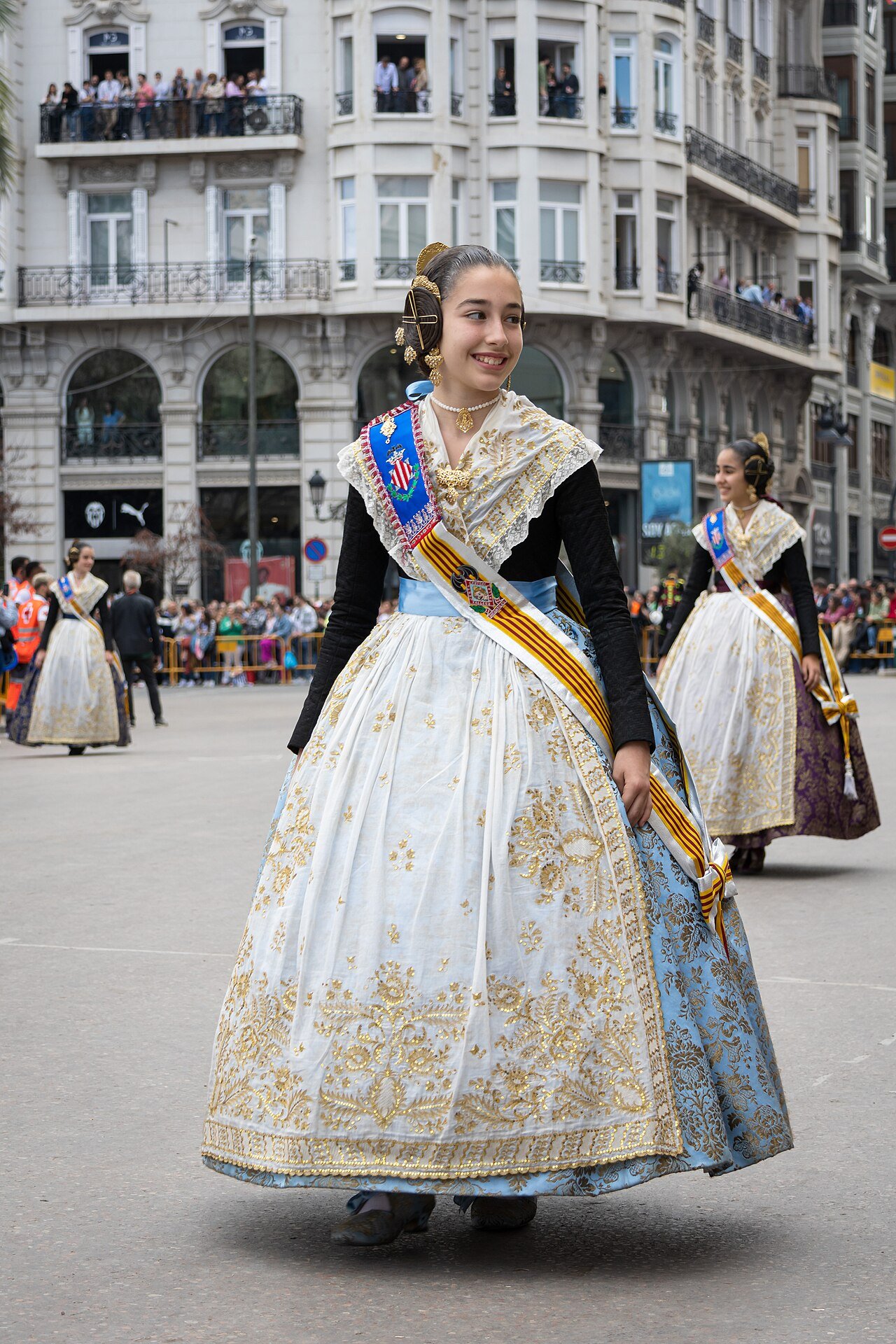
Half the spectacle is the dress. The falleras wear the traditional Valencian costume — brocade silk skirts, lace aprons and mantillas, gold jewellery, hair drawn up over ornate combs — much of it inherited, all of it maintained at serious expense, and worn with complete seriousness by everyone from grandmothers to five-year-olds. The processions run from mid-afternoon well into the night on both days, converging on the Plaza de la Virgen from across the centre; take up a position along the final approach streets or near the square itself, and simply let it flow past.
La Nit del Foc and La Cremà: The Night Everything Burns
The festival ends the way it lived: loudly, then in flames. Fireworks castles are fired on the nights of 16, 17 and 18 March, and the series peaks with the Nit del Foc, the Night of Fire, in the small hours of 19 March (around 01:30) — the largest fireworks display of the fallas, fired from the old riverbed area and watched by a city that has no intention of sleeping. Nineteen days of anticipation then funnel into a single date: 19 March, Saint Joseph’s day.
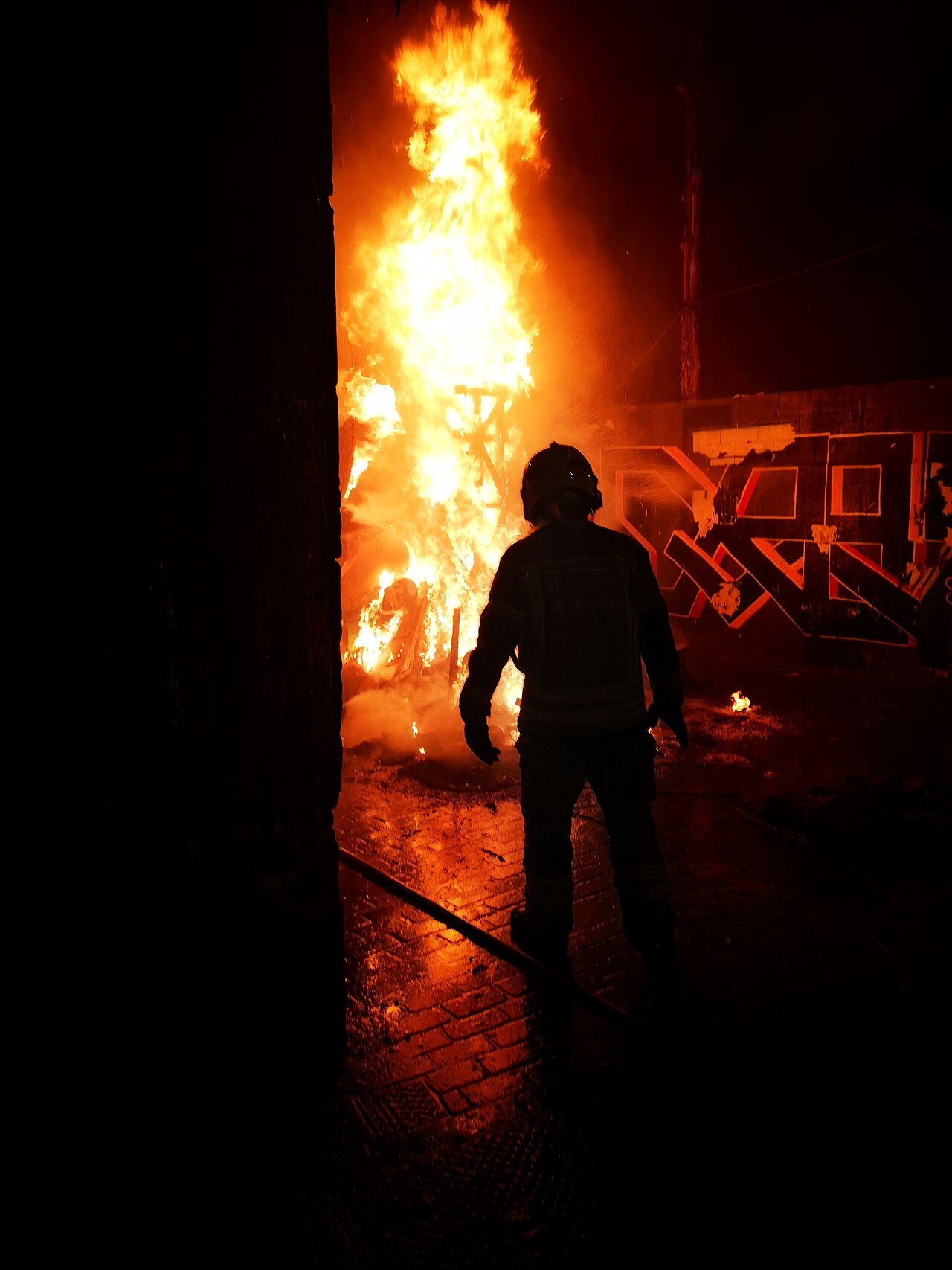
The cremà runs to a timetable. The children’s fallas burn first, from about 20:00, one on every corner, each with its own small crowd and ceremony. The great monuments follow from about 22:00, street by street across the whole city, so that for hours the skyline flickers in every direction. The first-prize falla of the Sección Especial burns at midnight, and the municipal falla in the Plaza del Ayuntamiento is lit last of all, at around 01:00. Firefighters — the bomberos — run the whole operation: they hose down the surrounding façades, light each monument in turn, and soak the ashes, while the fire crews’ sirens stitch the night together. Stand where the barriers put you — the heat from a special-section falla is serious at thirty paces — and let it be emotional: commissions sing, cry and applaud as a year’s work goes up, because the burning is not a failure of the festival. It is the festival. By dawn the streets are being swept, and the commissions are already arguing about next year.


Practical Info
Las Fallas takes over the entire city, and the practical rules follow from that. The centre is effectively closed to traffic during the main week, whole districts become pedestrian party zones, and normal opening hours bend around the festival. None of this is a problem if you plan like a local: stay central, walk everywhere, and treat the official programme — published by the Junta Central Fallera and Visit València each year — as your timetable. The festival crowds are dense but good-natured; the city’s emergency and cleaning services run a military-grade operation behind the scenes.
Tickets and Costs
Here is the festival’s best surprise: almost all of it is free. The monuments stand in public streets. The mascletà is free. The Ofrenda, the fireworks and the cremà are free. No ticket, pass or booking is needed for any of the headline events — your money goes on hotels, food and drink. The paid extras are small and specific: the Exposició del Ninot charges a modest entry fee, bought at the venue, in the weeks before the festival; the Museo Fallero costs €2 (€1 reduced, free on Sundays and public holidays); and balcony places for the mascletà are sold by the hotels and companies that own the balconies, at prices that climb steeply for the final days.
The other paid extra worth considering is guidance. The monuments are free, but their jokes are in Valencian, their stories are local, and their geography is bewildering on day one — which is why the Las Fallas Festival guided tour exists: two hours with a local guide through the old centre and Ruzafa, run during the festival itself, and cancellable free of charge up to 24 hours ahead if the weather or the crowds change your mind. Book it early; festival-week departures sell out.
Getting There and Getting Around
Valencia has its own airport with metro connections to the centre, and the Joaquín Sorolla station receives high-speed trains from Madrid and Barcelona — for festival week, book rail tickets as early as you book the hotel. Inside the city, the answer is your feet: the old town, Ruzafa, the Ayuntamiento and most special-section fallas sit within a walkable core, and during 15–19 March many central streets are closed or pedestrianised, with metro stations in the very centre sometimes closed around the mascletà and the cremà for crowd control. Taxis and buses are diverted around the festivities; allow generous time for any journey that crosses the centre, and never plan a tight connection on the night of 19 March.
When to Go
If you can only come once, come for the whole arc: arrive by 15 March and stay to the end. That gives you the plantà, the monuments standing complete and judged, both days of the Ofrenda, the Nit del Foc and the cremà — the festival entire. Arriving on 16 or 17 March is the efficient alternative: the fallas are up, the prizes are known, and the biggest days are still ahead. A shorter strike at the first weekend of mascletàs (early March) shows you the city’s warm-up — daily fireworks, the Ninot Exhibition, normal hotel prices — but not the monuments, which do not exist yet. And remember the honest caveat: the pattern repeats every year in mid-March, but confirm the official dates for your year before booking, as the exact programme is published closer to the festival.
How Long You Need
Three nights is the working minimum for the main week — enough for the monuments, a mascletà a day, the Ofrenda and the cremà if your dates are chosen well. Four nights is better: the sweet spot that lets you walk the special-section route without hurrying, spend an hour in the Museo Fallero before the crowds, and recover from one late night before the next. Add a fifth day and Valencia itself gets a look-in — the old town, the City of Arts and Sciences and the beach at Malvarrosa are all still there when the smoke clears, and the city on 20 March, hungover and sweeping up, has a charm of its own.
Tips for Visiting
- Book the hotel months ahead. Festival week fills Valencia; rooms near the centre for 15–19 March are scarce and expensive by January. Book the moment your dates are fixed, with free cancellation if you can get it.
- Bring real ear protection. The mascletà passes 120 decibels and petardos go off everywhere, at all hours. Foam plugs for adults, proper ear defenders for children — and keep both with you even at dinner.
- Take the mascletà seriously. Arrive in the Plaza del Ayuntamiento by 13:00 for a good spot (earlier on the final weekend), stand with your mouth slightly open, and never cover your ears theatrically in front of the locals — use the plugs you brought.
- Let a guide decode day one. The satire is topical, local and in Valencian. A festival walking tour on your first full day turns the rest of the week from photography into reading.
- Walk, and screenshot the map. Streets close, metro stations skip stops, and mobile data groans under the crowds. Download an offline map, agree meeting points, and assume every cross-centre journey takes twice as long.
- Eat like the week demands. Look for bunyols — pumpkin fritters — with thick hot chocolate from the street stalls, book proper restaurants ahead for the main days, and expect kitchens to run festival hours.
- Stand back at the cremà. The barriers are placed by people who know exactly how hot a falla burns. Watch from behind them, keep an eye on children, and wear shoes you can walk home in through ash and water.
What to See Nearby
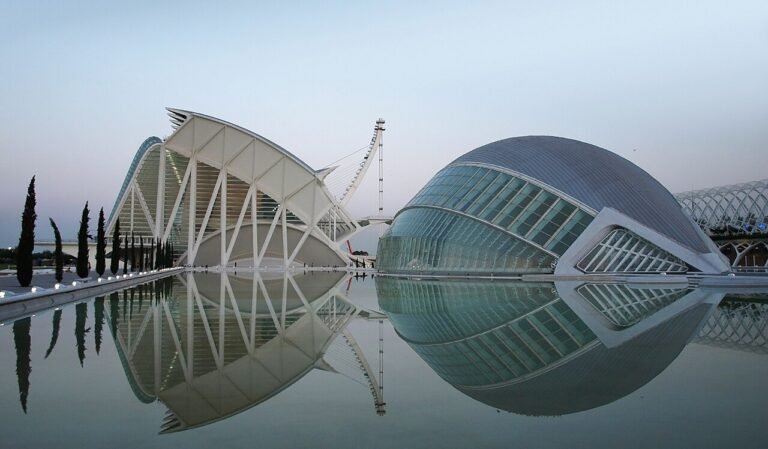
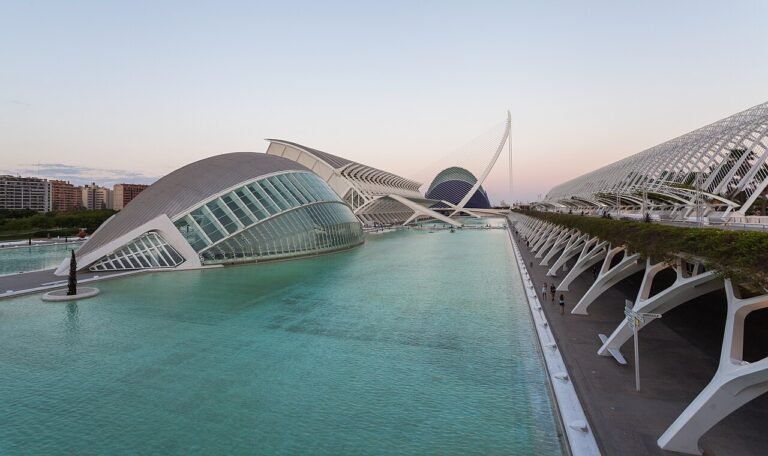
Fallas week consumes the centre, but Valencia’s permanent sights still earn their mornings. The Museo Fallero, at the end of this guide, pairs naturally with the City of Arts and Sciences ten minutes beyond it — and during February and early March that is also where the Exposició del Ninot sets up. In the old town, the cathedral, the Silk Exchange and the Central Market all sit inside the festival zone and stay visitable between events; the Plaza de la Virgen, where the Ofrenda ends, is the cathedral square itself. If the week needs one quiet hour, the Turia gardens — the park in the old riverbed — run green and relatively calm straight through the middle of the noise.
Frequently Asked Questions
When is Las Fallas held?
Every March. The festival season opens with la Crida on the last Sunday of February; the mascletà runs daily from 1 to 19 March at 14:00, and the main days — monuments up, Ofrenda, Nit del Foc and the cremà — run from 15 to 19 March, ending on the feast of Saint Joseph. The pattern is fixed by tradition, but check the official programme for your year, which is published closer to the festival.
Is Las Fallas free to attend?
Almost entirely, yes. The monuments, mascletà, Ofrenda, fireworks and cremà all happen in public streets and squares and cost nothing. The paid items are the small ones: a modest entry fee for the Exposició del Ninot, €2 for the Museo Fallero, rented balcony spots for the mascletà, and any guided tour you choose to book.
What exactly is a mascletà?
A five-to-seven-minute barrage of firecrackers, fired at 14:00 every day from 1 to 19 March in the Plaza del Ayuntamiento. It is composed like music — rising rhythms of noise and vibration rather than colour — and ends with the terremoto, a ground-shaking finale. It can pass 120 decibels, so bring ear protection.
What is a ninot indultat?
The one figure per category — one from the adult monuments, one from the children’s — that each year is pardoned from the flames by public vote at the Exposició del Ninot. The custom dates to 1934; the pardoned figures live permanently in the Museo Fallero.
How many days do I need for Las Fallas?
Three nights minimum in the main week, four ideally. Arrive by 15 March to see the plantà and the completed monuments, and stay through the cremà on the night of 19 March. With only two nights, choose 18–19 March for the Ofrenda’s second day, the Nit del Foc and the burning.
Is Las Fallas suitable for children?
Yes, with preparation. Children love the falla infantil monuments, the colours and the street food, and the Ofrenda is pure pageantry. The real issues are noise and crowds: bring proper ear defenders, experience the mascletà from the edge of the square rather than its heart, and expect very late nights — Valencian children simply nap and stay up.
Travel insurance, sorted
Whether it is a two-week holiday or a longer move, travel insurance is not the most glamorous part of a trip — but it is the one booking you want to have in place before a trip, and while you are already away. Get a quote from SafetyWing
Final Thoughts
Las Fallas should not work. A city of artists, carpenters, weavers and pyrotechnicians spends a year and a fortune building beauty whose entire destiny is a single night of fire — and does it with more joy than anywhere else in Europe spends on permanence. But stand in the Plaza del Ayuntamiento when the terremoto rolls through your ribs, watch a fallera weep as she gives up her flowers, and then stand back from the barrier on the 19th as a tower of jokes and grief and gossip goes up in one great exhale of flame, and it makes complete sense. Nothing in Valencia is kept; everything is renewed. Go in March, book early, bring earplugs — and plan to come back before the ashes are cold.
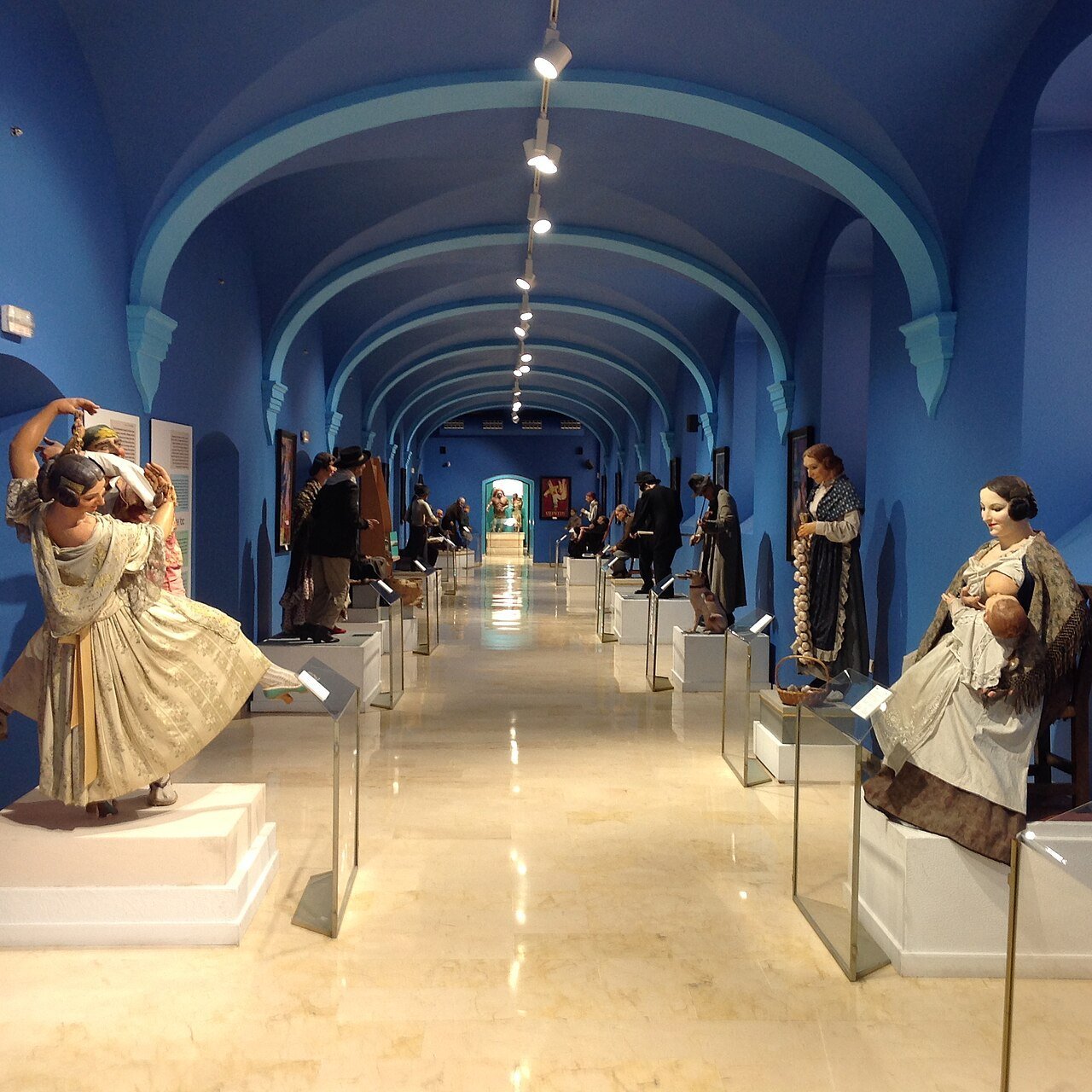
Photo credits: Altorrijos, Skody11, Ponscor, Rafa Esteve, Xavier Serra, Simon Burchell, falconaumanni and Monoyamonobooks, via Wikimedia Commons.