Valencia Joaquín Sorolla Station: The Complete Guide
Valencia has two railway stations, and this is the fast one. Valencia Joaquín Sorolla is the city’s high-speed terminus — the long, low, glass-and-steel shed south of the old town where the AVE trains from Madrid glide in less than two hours after leaving the capital, where the Euromed services set off up the coast to Barcelona, and where most visitors arriving by rail first set foot in the city. It is not beautiful like its older sister, the Estació del Nord, and it was never meant to be permanent. But it is simple, quick and ten minutes’ walk from everywhere that matters — once you know its handful of quirks.
This guide covers the station end to end: which trains use it (and which use the other station — the classic Valencia mistake), what is inside, how boarding works with its airport-style checks, and every way of getting between the platforms and the old town. If you are also flying or arriving at the other station, pair it with the arrival guide in the Read Next box below.

Contents
- 1. The Station in Brief: A Temporary Terminus
- 2. Which Trains Use Joaquín Sorolla?
- 3. Inside the Station
- 4. Boarding: Tickets, Security and Platforms
- 5. Getting To and From the Station
- 6. Joaquín Sorolla or Estació del Nord?
- 7. The Valencia Tourist Card: Your First Purchase
- 8. Around the Station: Ruzafa and the Parque Central
- 9. Practical Tips for a Smooth Departure
- 10. Final Thoughts
1. The Station in Brief: A Temporary Terminus
Joaquín Sorolla station opened on 17 December 2010, the day the high-speed line from Madrid reached Valencia and cut the journey to the capital from four hours to under two. It was built quickly and deliberately plainly — a single-level trainshed over the tracks with a glazed entrance hall — because it was always intended as the interim terminus: the long-term plan threads the high-speed lines through a tunnel to a new central station within the Parque Central project, on the old railway lands just south of here. A decade and a half on, the “temporary” station is still doing the job handsomely, and the plans remain long-term; travel on the station that exists, not the one on the posters.
The name is the city’s own tribute. Joaquín Sorolla (1863–1923), born two streets’ walk from this spot in the old town’s orbit, was the painter who bottled Mediterranean light — Valencian beaches, fishermen and orange groves in blazing whites and blues. Naming the fast station for him was Valencia’s way of saying the city’s modern face and its artistic soul board the same train. You will find his museum-house legacy across the city, but the station itself keeps things businesslike: find the hall, find the boards, find your platform.
2. Which Trains Use Joaquín Sorolla?
The rule is simple: high-speed and long-distance trains use Joaquín Sorolla; local and regional trains use the Estació del Nord. In practice, your ticket will say the station name in full — “València Joaquín Sorolla” — and it is worth reading it twice, because the two stations are a kilometre apart and Spanish timetables will not wait while you cross between them.
From this station you can catch:
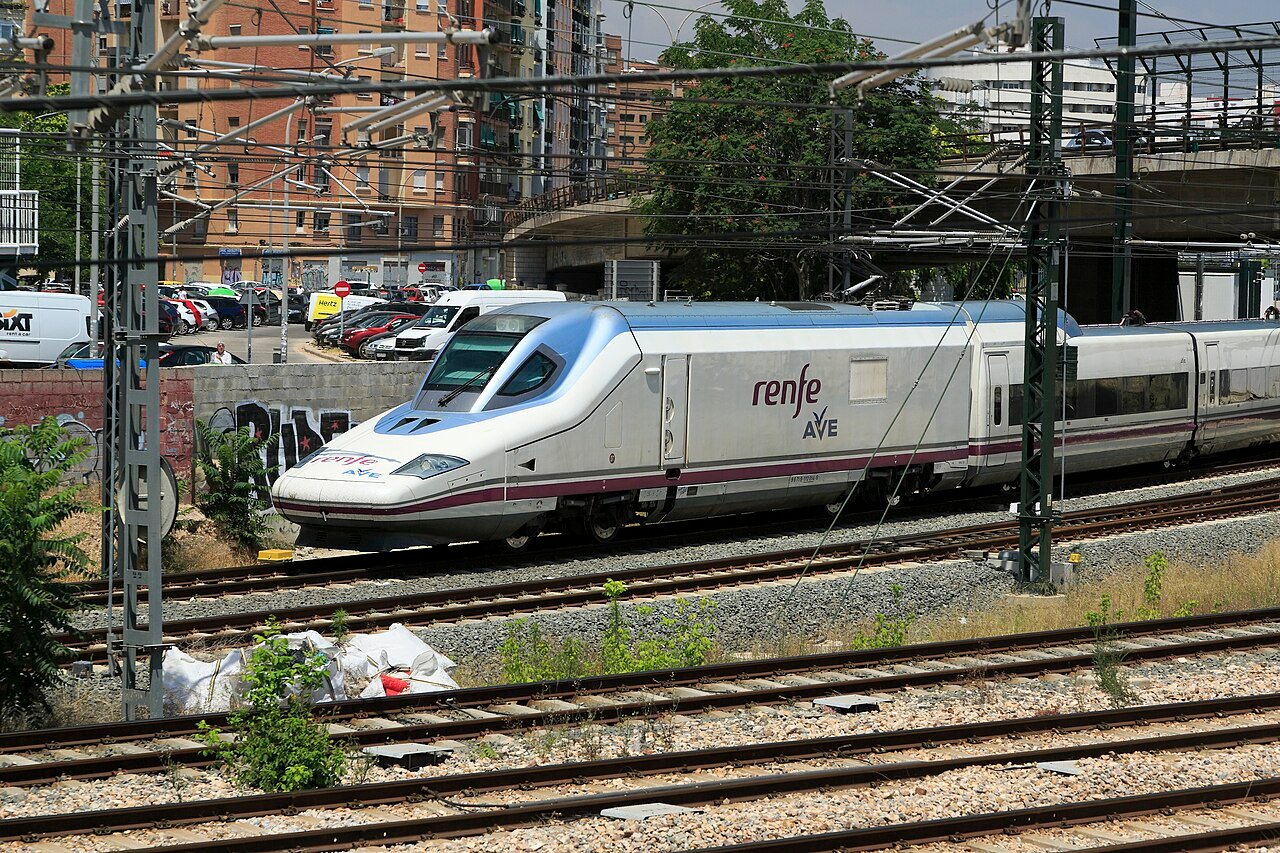
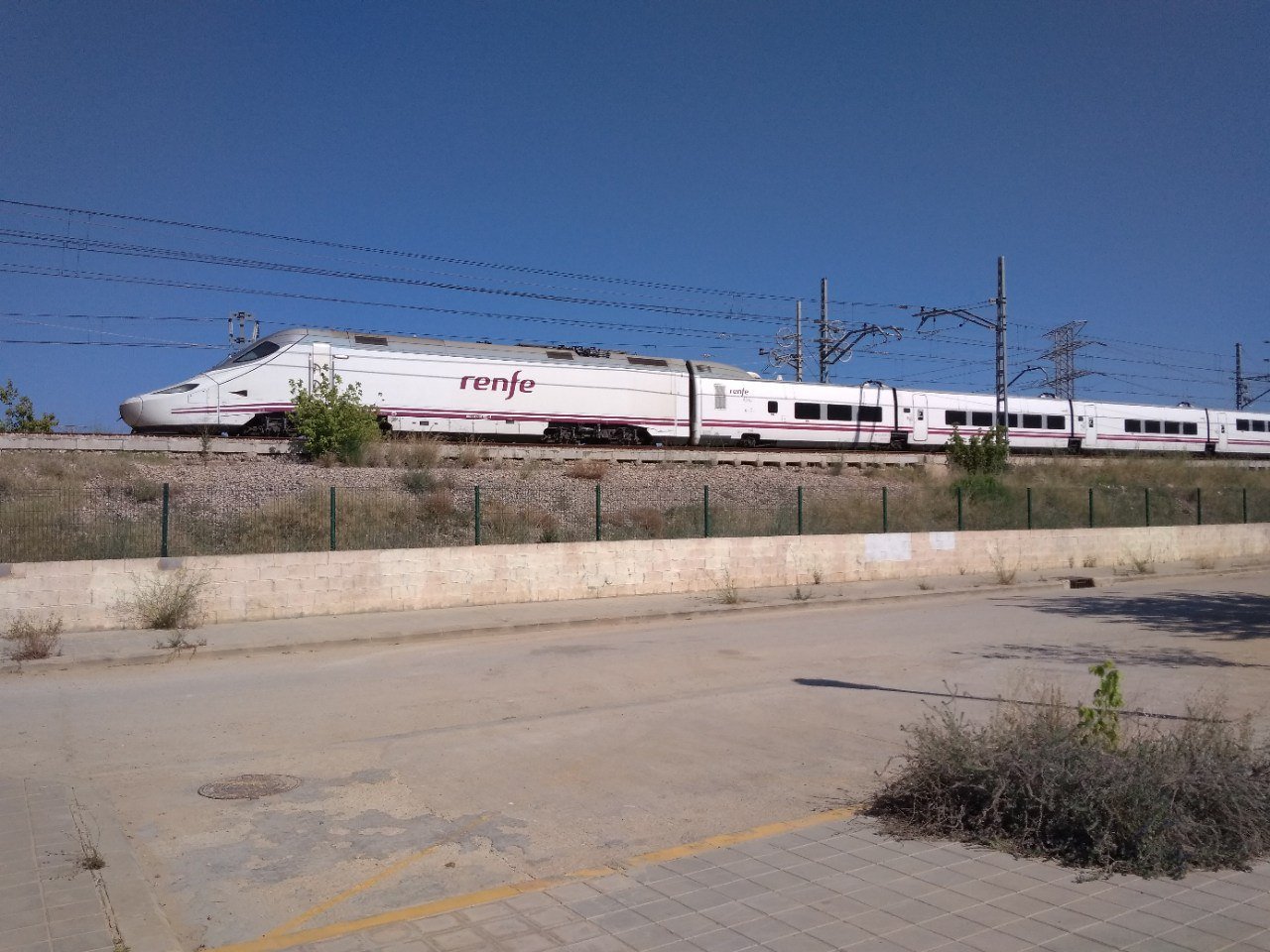
- Madrid — the flagship route. Renfe’s AVE and low-cost Avlo, plus OUIGO España and iryo, run between them many times a day to Madrid Chamartín; the fastest trains take 1 hour 40 minutes, stopping ones a touch over two hours.
- Barcelona — Euromed trains run up the Mediterranean coast in about 2 hours 40 minutes, calling at Castelló and Tarragona on the way to Barcelona Sants and França.
- The south and across Spain — AVE services also run cross-country (including to Seville via the high-speed network), and Alvia and Intercity trains link the station with Alicante, Murcia, Cartagena and Albacete, among others — the gauge-changing trains that leave the high-speed lines and continue on classic tracks.
- Castelló and the north — some long-distance services continue up the coast from here; purely regional trains on the same line leave from the Nord instead.
Everything else leaves from the Estació del Nord: the Cercanías commuter network that serves the coast and the suburbs, and the Media Distancia regional trains to Gandía, Sagunto, Castelló and Xàtiva. Section 6 below puts the two stations side by side.
3. Inside the Station
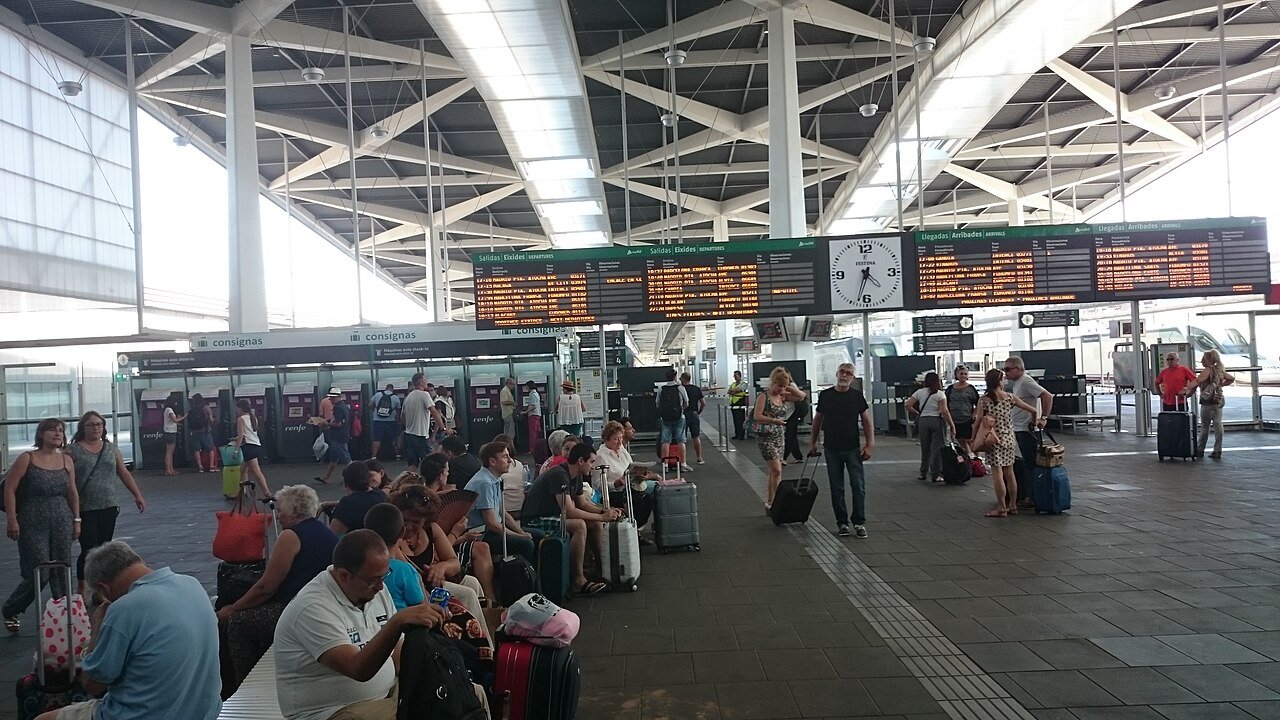
Sorolla’s plainness is its virtue: the station is one level and one long space, and it is very hard to get lost in. The entrance hall opens into the main concourse, where the big departure and arrival boards hang over the circulating space — the same hall you can see in the photograph below, complete with its clock and the consignas (left-luggage lockers) along the side. Around the edges you will find the ticket office and Renfe’s customer service desks, self-service ticket machines that speak English and take cards, cafés and a small run of shops, toilets, and seating that fills up in waves as each departure is called.
Two things surprise first-time users. First, there is no grand station buffet or lounge culture here — for a good coffee and a better sandwich, the bars of Ruzafa, five minutes away, beat the concourse (section 8). Second, the platforms are not open-access: they sit behind the ticket and security control described in the next section, so the concourse, not the platform, is where you wait. Watch the boards; trains are usually called 20 minutes or so before departure, and the flow from hall to platform is quick once your platform shows.
4. Boarding: Tickets, Security and Platforms
Boarding a high-speed train in Spain works more like a flight than a British train. Before the platforms, your ticket is scanned and your luggage passes through an X-ray belt — a light-touch check that takes two minutes when the hall is quiet and ten at peak times. The advice in our arrival guide stands: be at the station 20 to 30 minutes before departure, earlier with big bags or a group. Once through, the platforms sit in the trainshed beyond the glass: wide, level, step-free from the hall, with your coach number shown on the platform screens — walk to your coach’s marked zone before the train arrives and boarding takes a minute.
A few working details. Keep your ticket (or its phone QR code) open until you are seated; inspectors check on board too. Luggage goes in the racks at the coach ends and over the seats — there is no check-in and no weight drama, but you carry what you bring. First-class and premium fares on some operators include lounge access in larger stations; Sorolla keeps things equal — everyone gets the same concourse, and honestly, everyone is on the train within the half hour anyway.

5. Getting To and From the Station
On foot is the answer for most people, most of the time. The station stands just south of the old town: the Estació del Nord is about ten minutes’ flat walk north, and Plaça de l’Ajuntament — the old town’s southern doorstep — around fifteen. With a wheeled case on dry streets, walk it and you are done.
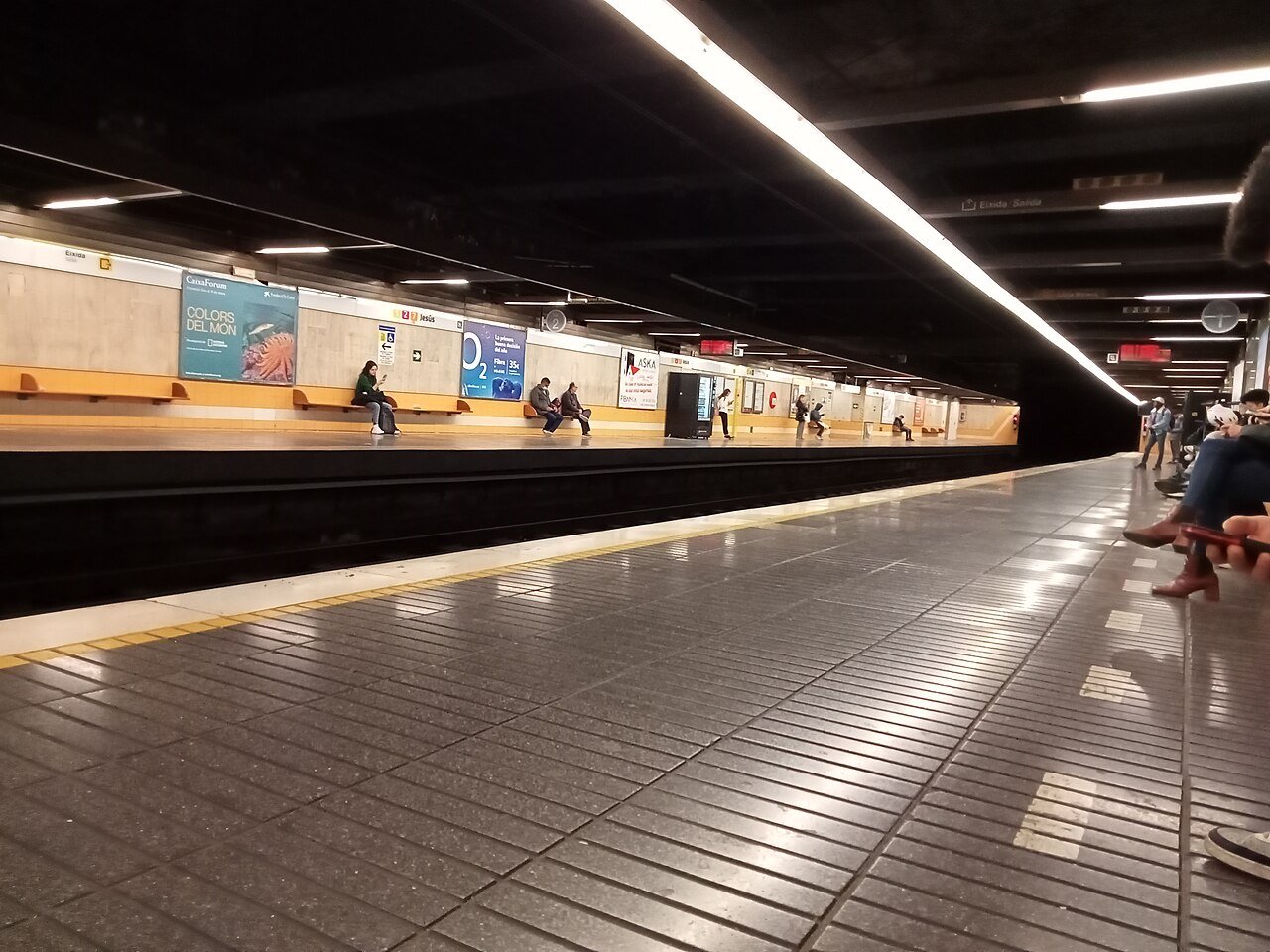
By metro, the nearest station is Jesús (lines 1, 2 and 7), three to five minutes’ walk from the station doors — follow the signs out of the hall and across to the metro entrance. Jesús puts the old town two stops away and connects at Àngel Guimerà for the airport lines. The Xàtiva station (lines 3, 5 and 9), in front of the Estació del Nord, is the better choice if your destination is the old town’s eastern side or the airport direct — a ten-minute walk, or one stop from Jesús with a change.
By bus, several EMT city lines — among them the 9, 10, 27, 89 and 90 — stop on the streets around the station, and the city’s night buses radiate from Plaça de l’Ajuntament after the metro closes. By taxi, a rank waits outside the entrance; the old town is a short ride away, and app-based rides (Cabify, FreeNow) pick up at the same forecourt. If you are staying near the station, our guide to where to stay in Valencia weighs the station quarter against the old town and Ruzafa.
And the safety net for the classic mistake: a free shuttle bus links Joaquín Sorolla with the Estació del Nord for passengers holding a train ticket — signed inside both stations. If you have arrived at the wrong one with time in hand, the shuttle or the ten-minute walk fixes it. Leave the margin, and it stays a story rather than a disaster.
6. Joaquín Sorolla or Estació del Nord?
| Joaquín Sorolla | Estació del Nord | |
|---|---|---|
| Character | Functional glass-and-steel shed, opened 2010 | Modernista palace of 1917 — visit it even without a train |
| Trains | AVE, Avlo, OUIGO, iryo, Euromed, Alvia, Intercity (long-distance) | Cercanías commuter and Media Distancia regional trains |
| Boarding | Ticket scan + luggage X-ray; arrive 20–30 min early | Walk straight to the platform, classic-station style |
| Nearest metro | Jesús (lines 1, 2, 7), 3–5 min walk | Xàtiva (lines 3, 5, 9), at the door |
| For the airport | Metro with a change (Jesús → Àngel Guimerà → lines 3/5) | Metro direct from Xàtiva (lines 3/5) |
| Position | 10 min walk south of the Nord | City centre, beside the bullring |
If your journey is part of a wider arrival — flights, airport metro, late-night landings — our complete Valencia Airport & Train Stations guide covers the whole picture in one place.

7. The Valencia Tourist Card: Your First Purchase
If you are arriving at Sorolla and heading into a few days of sightseeing, the city’s official card is the transport-and-tickets bundle to know about. The Valencia Tourist Card — 24, 48 or 72 hours, from $19 for the day version, rated 4.48 out of 5 across more than 2,000 reviews — covers all EMT city buses, the metro and tram and Cercanías trains in zones AB, which includes the metro journey out to the airport when you leave. On top of the transport, the municipal museums and monuments are free with it — La Lonja, the Serranos and Quart towers, the Fallas Museum and the Almoina among them — and a list of discounts (including at the City of Arts and Sciences) trims the rest.
The maths is kind to Sorolla arrivals in particular: one day of metro-and-bus hopping plus two municipal monuments usually covers the 24-hour card, and anything longer is ahead. Order the Valencia Tourist Card before you travel and collect it at a tourist office or one of the smart collection points around the city — there are points at the airport and in the centre, so you can activate it the moment you arrive in Valencia rather than queueing at the station.
8. Around the Station: Ruzafa and the Parque Central
Arrive early or leave late and the station’s own neighbourhood rewards the spare half hour. Five minutes east lies Ruzafa (Russafa), the grid of streets that has become Valencia’s favourite evening quarter: the covered Russafa market in the mornings, and by night a dense, good-humoured tangle of bars, bakeries, bookshops and restaurants where half the old town seems to come for dinner. It is the natural place to eat before an evening departure — and the quarter where a pre-train paella lunch is easiest to find near the station.
South of the platforms, the old railway lands are becoming the Parque Central, a large new landscape of gardens, ponds and esplanades being laid out in phases over the former tracks — worth a stroll if you are waiting out a connection, and a preview of the district the future central station will one day anchor. If your spare time is longer, the old town proper starts at the Estació del Nord, ten minutes north — our list of the best things to do in Valencia picks up from there.
9. Practical Tips for a Smooth Departure
- Read the station name on your ticket — “València Joaquín Sorolla” and “València Nord” are different stations, ten minutes apart. This single check prevents almost every station disaster in Valencia.
- Arrive 20–30 minutes before departure for the ticket scan and luggage X-ray; at peak holiday times, make it 40.
- Book long-distance trains ahead — AVE, OUIGO and iryo fares are dynamic; the cheapest Madrid seats sell out days ahead, and booking early is the difference between a bargain and a splurge.
- Keep the QR code handy — on your phone, unlocked, before you reach the gates; the queue behind you will thank you.
- Travelling on to the sights the same day? The old town’s monuments are a 15-minute walk; a 1-day Valencia itinerary can start the moment you step off the train.
- Left luggage — the consignas lockers in the hall take bags by the hour if your hotel check-in is later than your arrival.
- One card for the whole stay — the Valencia Tourist Card (§7) covers the metro, bus and tram plus free entry to the municipal monuments, and it includes the metro journey back to the airport when you leave.
Travel insurance, sorted
Whether it is a two-week holiday or a longer move, travel insurance is not the most glamorous part of a trip — but it is the one booking you want to have in place before a trip, and while you are already away. Get a quote from SafetyWing

Valencia Airport & Train Stations: The Complete Arrival Guide
10. Final Thoughts
Joaquín Sorolla will never be the station on the postcards — that honour stays with the tiled palace ten minutes north. But as a piece of travel machinery it is close to perfect: one level, one hall, fast trains to half of Spain, and a city that starts a short walk from its doors. Learn the two-station rule, arrive half an hour early, and Valencia’s fast station does the rest. ¡Buen viaje!
Frequently Asked Questions
What is Valencia Joaquín Sorolla station?
It is Valencia’s high-speed and long-distance railway station, opened in 2010 south of the old town. AVE, Avlo, OUIGO, iryo, Euromed, Alvia and Intercity trains use it; commuter and regional trains use the Estació del Nord, ten minutes’ walk away.
How far is Joaquín Sorolla station from Valencia city centre?
About a 15-minute walk to Plaça de l’Ajuntament at the old town’s edge, or two metro stops from Jesús station (lines 1, 2 and 7), a 3–5 minute walk from the station entrance.
How long does the train from Madrid to Valencia take?
The fastest AVE services cover Madrid Chamartín to Valencia Joaquín Sorolla in 1 hour 40 minutes; stopping trains take a little over two hours. Renfe (AVE and Avlo), OUIGO España and iryo all operate the route.
Do I need to arrive early at Joaquín Sorolla station?
Yes — long-distance boarding includes a ticket scan and an X-ray luggage check before the platforms. Arrive 20–30 minutes before departure, and 40 minutes at peak times.
How do I get from Joaquín Sorolla station to the airport?
Take the metro from Jesús (lines 1, 2 or 7) one stop to Àngel Guimerà and change to line 3 or 5 direct to Aeroport — around 30–35 minutes in total. A taxi takes about 20 minutes depending on traffic.
Which station is better for sightseeing, Sorolla or the Estació del Nord?
For sightseeing on foot, the Estació del Nord lands you marginally closer to the old town — but the difference is a ten-minute walk, and your train, not your preference, decides which station you use. Check the station name on your ticket.