23 Fun Facts About Valencia You Probably Didn’t Know
Here is a sentence to win a pub quiz with: the world’s first psychiatric hospital opened in Valencia, in 1410 — founded not by a king or a university, but by a friar who had just stepped between a mob and a mentally ill man being beaten in the street, and decided the city owed people like him a hospital instead of a beating. Six centuries later, Valencia is still quietly collecting firsts, oldest-evers and only-heres like that — it just doesn’t shout about them the way Barcelona and Madrid do.
So here they are: 23 fun facts about Valencia, every one of them checked before it was allowed on the list. A Roman retirement town, a kingdom ruled by El Cid, a year as the capital of Spain, a court that has met outdoors on Thursdays for a thousand years, the true birthplace of paella, and the orange that isn’t from Valencia at all. Where a famous “fact” is really a legend — and this city has two beauties — the list says so, because the true story underneath is usually better anyway.
In This Guide
- 1. The World’s First Psychiatric Hospital Opened Here in 1410
- 2. Valencia Was Founded as a Retirement Town for Roman Soldiers
- 3. El Cid Ruled Valencia as His Own Kingdom
- 4. Valencia Was the Capital of Spain for 11 Months
- 5. There Is a Bat on the Coat of Arms — and It May Have Started Life as a Dragon
- 6. A Court Has Met Outdoors at Noon on Thursdays for a Thousand Years
- 7. The Silk Exchange Is a Cathedral Built for Trade
- 8. The Serranos Towers Were a Prison — and a Wartime Safe for the Prado
- 9. The Cathedral Tower Is Named After a Bell
- 10. The Cathedral Guards a Cup Venerated as the Holy Grail
- 11. Valencia Is Spain’s Third-Largest City (and Fine With It)
- 12. The River That Flooded the City Is Now Its Longest Park
- 13. The City of Arts and Sciences Was Designed by a Local Boy
- 14. Europe’s Largest Aquarium Holds 42 Million Litres of Water
- 15. At Fallas, the Crowd Votes to Save One Figure from the Flames
- 16. The Mascletà Is a Concert You Feel in Your Chest
- 17. Paella Was a Farm Labourers’ Lunch, Not a Chef’s Creation
- 18. Spain’s Largest Lake Is Barely a Metre Deep
- 19. Horchata Is Not Made from Nuts
- 20. Agua de Valencia Was Invented in 1959
- 21. The Valencia Orange Is Not from Valencia
- 22. Europe’s Largest Fresh-Food Market Opened in 1928
- 23. Mestalla Is Named After an Irrigation Canal
- 24. Seeing the Facts: Valencia in a Day
- 25. Final Thoughts
- 26. Frequently Asked Questions
1. The World’s First Psychiatric Hospital Opened Here in 1410
Start with the most quietly astonishing item on this list. On 24 February 1409, the Mercedarian friar Joan Gilabert Jofré was walking to preach at the cathedral when he came across a crowd attacking a mentally ill man in the street. He rescued the man, carried the cause into his sermon that same day, and persuaded Valencia’s merchants to fund something that had never existed: a hospital solely for people with mental illness.
The Hospital of the Innocents opened its doors in 1410, and psychiatric historians widely describe it as the first psychiatric hospital in the world — with the honest footnote that “first” titles from six centuries ago are always argued over. What is not argued is the date, the place and the motive: care, not chains. The old hospital site on Calle del Hospital still looks after minds today, in a different way — it now houses the city’s public library.
2. Valencia Was Founded as a Retirement Town for Roman Soldiers
Valencia began as a pension plan. In 138 BC the Roman consul Decimus Junius Brutus settled around 2,000 of his veteran soldiers on a river island in the Turia, in territory Rome had just fought over. The colony’s name was a compliment to them: Valentia, from the Latin for strength and valour — a town named “bravery” for the men who had earned their retirement.
The retirement was not entirely peaceful. Pompey flattened Valentia in 75 BC during Rome’s civil wars, for picking the wrong side. The city was rebuilt, and the Roman street plan still ghosts through the old town — the forum lay roughly where the Plaza de la Virgen stands today, and you can walk down into the excavated Roman streets at the Almoina archaeological centre beside the cathedral.
3. El Cid Ruled Valencia as His Own Kingdom
Spain’s great medieval hero did not rule Valencia for a king — he ruled it for himself. Rodrigo Díaz de Vivar, El Cid, ground the city down by siege and took it in 1094, then governed it for five years as an effectively independent principality, ruling Christians and Muslims side by side, collecting its taxes and fighting off the Almoravid armies sent to take it back.
He died in Valencia in 1099, still undefeated here. His widow, Jimena, held the city for almost three more years before the Almoravids retook it in 1102 — and Valencia then stayed in Muslim hands for another 136 years, until James I arrived in 1238. The epic poem made El Cid a crusader; the record makes him something more interesting — a warlord who found a city he liked and kept it.
4. Valencia Was the Capital of Spain for 11 Months
Madrid has not always been the capital, and in living-memory terms Valencia nearly kept the job. In November 1936, with Franco’s troops besieging Madrid in the Civil War, the government of the Spanish Republic packed up and moved to Valencia. For eleven months — until the government moved on to Barcelona at the end of October 1937 — Valencia was the seat of Spain’s government, full of ministries, diplomats, spies and refugee intellectuals.
It was a brief, feverish golden age of cafés, posters and political intrigue, lived under air raids. The city wears the episode lightly now, but it is written into its 20th century: the same years saw the Serranos Towers (fact 8) turned into a vault for the Prado’s masterpieces, evacuated from Madrid for safekeeping.
5. There Is a Bat on the Coat of Arms — and It May Have Started Life as a Dragon
Look at Valencia’s coat of arms, at the badge of Valencia CF, at the ironwork and the souvenirs: a bat, wings spread, crowning everything. The legend explains it beautifully. During James I’s siege of Valencia in 1238, a bat landed on the king’s flag — or, in another telling, woke his camp just in time to defeat a surprise night attack — and the grateful king adopted the creature as the city’s good-luck symbol.
It is a legend, and it should be enjoyed as one: the king’s own chronicle never mentions a bat, and early documents speak of a swallow, if anything. Heraldry scholars give a slower, stranger answer — the crest descends from the winged dragon of the Kings of Aragon, which across the 1500s and 1600s was gradually redrawn, wing by wing, into a bat, and made official in the 17th century. Either way, the bat won. Few cities are branded by a creature of the night; Valencia, a city that eats dinner at ten, perhaps chose well.
6. A Court Has Met Outdoors at Noon on Thursdays for a Thousand Years
Every Thursday at noon, in the open air outside the cathedral’s Puerta de los Apóstoles, eight farmers sit on a semicircle of chairs and run one of the oldest courts on Earth. This is the Tribunal de las Aguas, the Water Tribunal: the elected síndicos of the huerta’s great irrigation canals, hearing farmers’ water disputes and settling them on the spot, out loud, in Valencian, as it has been done since the days of al-Andalus a thousand years ago.
There are no lawyers and no adjournments; a farmer states his case, the síndicos deliberate in front of everyone, and the ruling is final before the cathedral clock has finished striking. UNESCO put the tribunal on its Intangible Cultural Heritage list in 2009. It happens in the middle of Valencia’s old town, it is free to watch, and it is still not a performance — arrive at noon on a Thursday and you are watching working law, not folklore.
7. The Silk Exchange Is a Cathedral Built for Trade
In the 1400s Valencia was one of the richest trading cities in the Mediterranean, and it spent the money on an exchange hall that behaves like a cathedral. La Lonja de la Seda, the Silk Exchange, was built between 1482 and 1533: a great columned Trading Hall where silk merchants struck their deals beneath carved stone palm trees, wrapped in some of the finest civil Gothic architecture in Europe.
UNESCO made it a World Heritage Site in 1996, and it is one of three UNESCO listings packed into this one city — the Lonja, the Water Tribunal of fact 6, and the Fallas of fact 15. The neatest way to meet all three with the stories attached is the Valencia: Essentials and World Heritages Sites Walking Tour (4.6/5, 855 reviews, from $22 per person), a two-hour guided walk of the historic centre that takes you inside the Lonja — free cancellation up to 24 hours ahead and reserve now, pay later both apply.

8. The Serranos Towers Were a Prison — and a Wartime Safe for the Prado
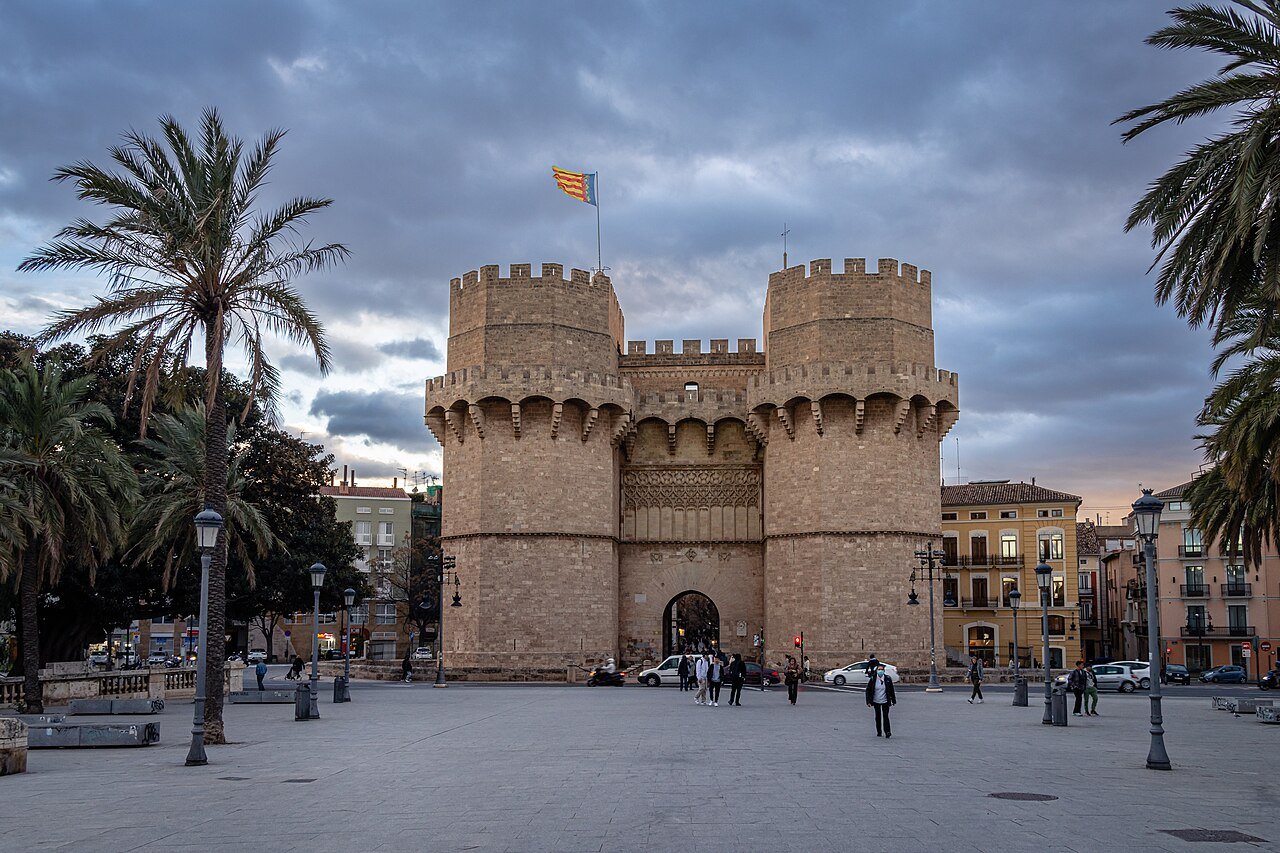
The twin Serranos Towers, raised between 1392 and 1398, are the grandest survivors of Valencia’s medieval wall — one of its twelve gates, of which only Serranos and the Quart Towers remain. For three centuries, from 1586 to 1887, their chambers served a colder purpose: a prison for nobles and knights, close enough to the city to shame them, strong enough to hold them.
Then came the towers’ finest hour. From November 1936, as bombs fell on Madrid, masterpieces evacuated from the Prado — Spain’s national art treasure — were stored inside Serranos under specially built reinforced-concrete protection, the medieval fortress turned into an art vault. The paintings survived the war inside a 500-year-old gatehouse. Climb the towers today and you get the old town spread out below the battlements that guarded Goya’s century.
9. The Cathedral Tower Is Named After a Bell
Valencia’s most recognisable silhouette, the octagonal tower rising over the old town, is El Miguelete — El Micalet in Valencian, “Little Michael”. The tower is not named for a saint’s statue or a king. It is named for its own great bell, blessed on 29 September 1418, the feast day of St Michael the Archangel, and the bell’s name simply swallowed the building.
Work on the tower began in 1381, and it was left, rather charmingly, without the spire its builders once planned — the flat terrace is the finish Valencians know. From street level it is 207 spiral steps to the top, and the view is the old town’s best: cathedral roofs, blue-tiled domes and the line of the sea. Our full guide to Valencia Cathedral covers the tower, the chapels and the cup in the next fact.

10. The Cathedral Guards a Cup Venerated as the Holy Grail
In a quiet chapel inside Valencia Cathedral sits a dark red agate cup, mounted in gold, that millions believe is the Holy Grail — the cup of the Last Supper. This one must be told the way the cathedral itself tells it: as tradition, held with complete seriousness, and never as proven fact.
Here is what can actually be documented. The vessel is genuinely ancient — an archaeological study in 1960 dated the agate cup itself to sometime between the 2nd century BC and the 1st century AD, made in the eastern Mediterranean. Its paper trail begins in 1399 at the monastery of San Juan de la Peña, it reached the cathedral in the 1430s, and it has been displayed in its chapel since 1916. Two popes — John Paul II in 1982 and Benedict XVI in 2006 — have celebrated Mass using it. The Church has never formally declared it the Grail. Believers need no declaration; sceptics get a beautiful, genuinely antique cup in a beautiful chapel. Both leave quieter than they came in.
11. Valencia Is Spain’s Third-Largest City (and Fine With It)
After Madrid and Barcelona comes Valencia: around 825,000 people inside the city limits on the official register for 2024, and the third-largest city in Spain. It is a ranking the city carries with suspicious ease — big enough for an opera house, a Formula-grade street circuit past, a La Liga giant and a research-grade aquarium, small enough that the centre still belongs to people on foot.
The surprise, for visitors arriving from the two giants, is how unhurried it feels. Valencia has the museums, markets and metro of a major European city and the table manners of a Mediterranean town. Third place, it turns out, is a very comfortable podium step.
12. The River That Flooded the City Is Now Its Longest Park
On 14 October 1957 the river Turia burst through Valencia in the Gran Riada, a flood that killed more than 80 people and drowned whole districts. The city’s answer was one of the boldest pieces of urban engineering in Europe: it moved the river. Under the Plan Sur, the Turia was diverted into a new channel south of the city — opened in 1969 — leaving nine kilometres of empty riverbed curling through the centre.
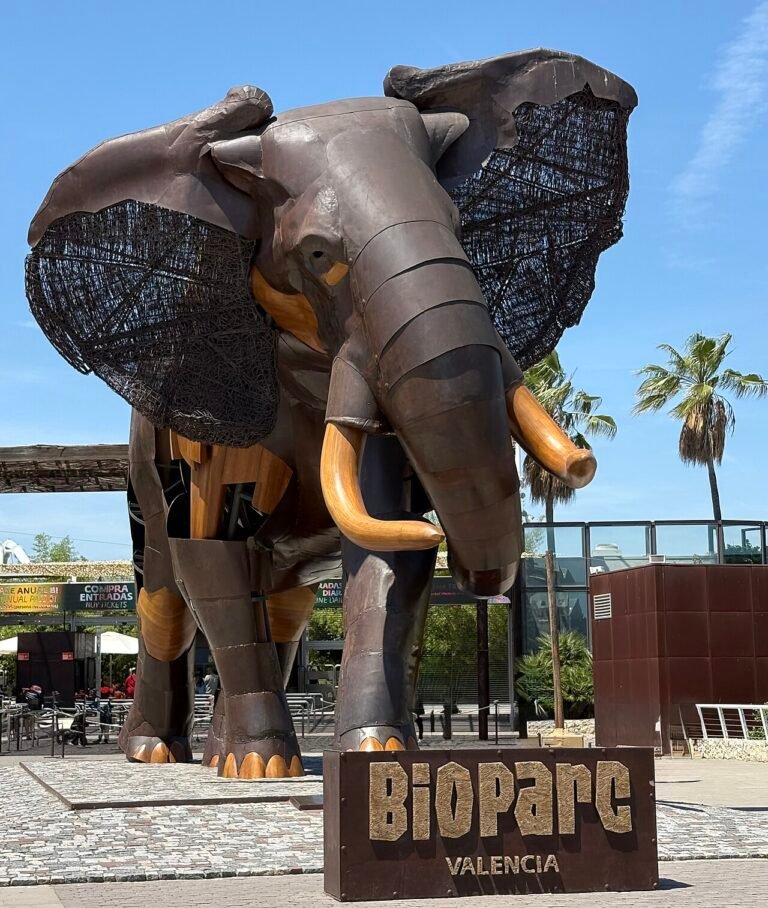
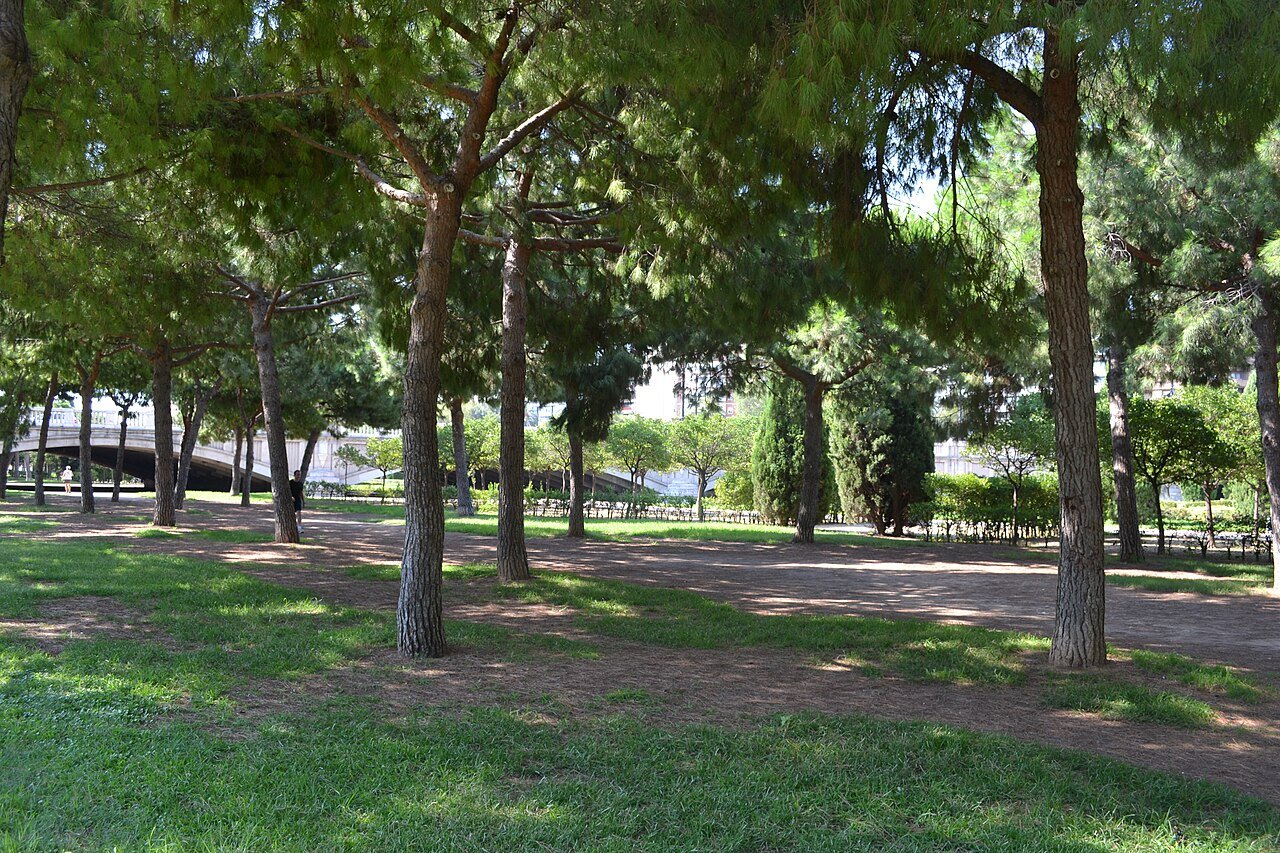
Engineers wanted a motorway in it. Valencians wanted their riverbed, and said so in a slogan that still turns up on walls: “El llit del Túria és nostre i el volem verd” — the Turia bed is ours and we want it green. The people won. Inaugurated in 1986, the Jardín del Turia is now a sunken ribbon of gardens, sports fields, fountains and playgrounds running under 18 bridges from the Bioparc to the City of Arts and Sciences. And the epilogue writes itself: when catastrophic floods hit the region in October 2024, the diverted channel carried the river safely past the historic centre it once destroyed.
13. The City of Arts and Sciences Was Designed by a Local Boy
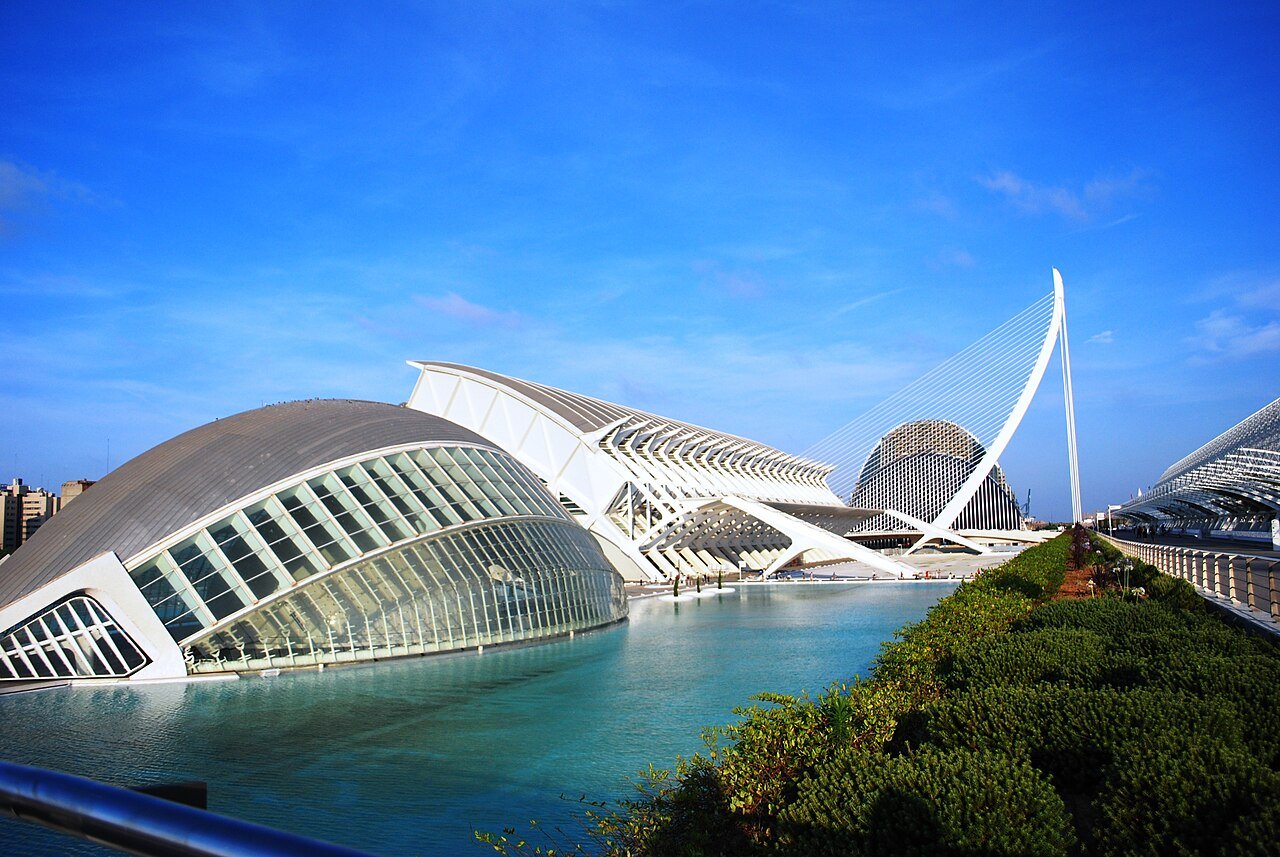
The white, skeletal City of Arts and Sciences looks beamed in from the 22nd century, but it is a hometown project: its architect, Santiago Calatrava, was born in Valencia. Construction began in 1996 on the drained final stretch of the old Turia bed (fact 12), and the first building, L’Hemisfèric — an IMAX cinema and planetarium shaped like a giant opening eye — welcomed the public on 16 April 1998.
Félix Candela designed the Oceanogràfic in the shape of a water lily; Calatrava’s science museum resembles a whale’s skeleton; the opera house rises like a ship’s prow. Few cities let one of their own redraw their skyline so completely. Stand at the Umbracle at sunset, when the whole complex doubles itself in its shallow pools, and Valencia’s gamble makes sense — this is now the image the world knows the city by.
14. Europe’s Largest Aquarium Holds 42 Million Litres of Water
Inside Calatrava and Candela’s complex sits L’Oceanogràfic, the largest oceanographic aquarium in Europe: around 110,000 square metres of marine habitats holding some 42 million litres of water and more than 500 species, from beluga whales in the Arctic pavilion to sharks cruising the long underwater tunnel.
It is the City of Arts and Sciences in miniature — architecturally theatrical, scientifically serious. The simplest way in is the Valencia: Oceanogràfic & Science Museum Combo (4.7/5, 2,923 reviews, from $43 per person), which pairs a timed Oceanogràfic entry with the interactive Science Museum next door on the same day. Book the aquarium slot for the morning; the belugas reward early arrivals.
15. At Fallas, the Crowd Votes to Save One Figure from the Flames
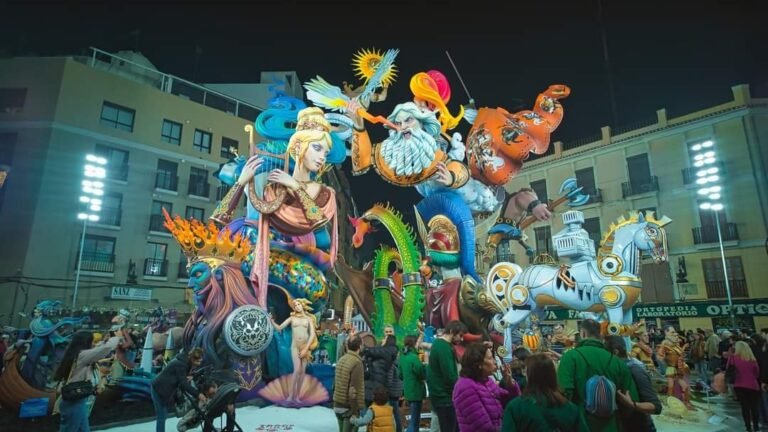
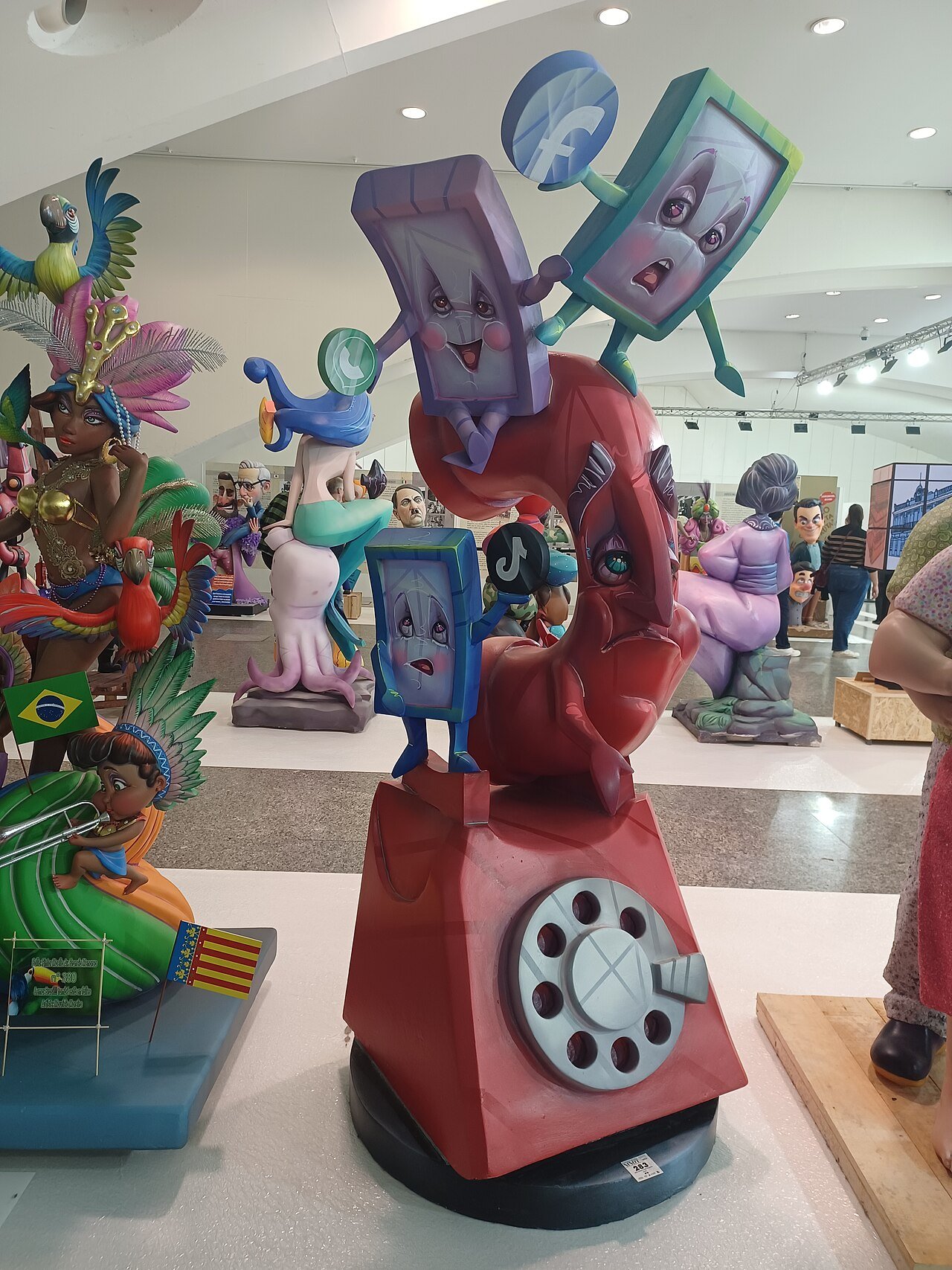
Every March, Valencia builds hundreds of enormous satirical monuments — fallas — out of wood, papier-mâché and spite, fills them with smaller figures called ninots, and then, on the night of 19 March, burns the lot in La Cremà. The Fallas festival, which runs 15 to 19 March, is on UNESCO’s Intangible Cultural Heritage list, and hidden inside the joyful arson is one of Europe’s sweetest democratic traditions.
Since 1934, the public has voted at the Ninot Exhibition to pardon exactly one figure — the ninot indultat — and rescue it from the flames. (A children’s figure has been pardoned the same way since 1963.) The saved ninots live on in the Museo Fallero, a small museum of beautiful losers that is, year by year since 1934, becoming an accidental archive of Valencian humour. Everything else burns. Our complete guide to Las Fallas explains how to be standing in the right plaza when it does.
16. The Mascletà Is a Concert You Feel in Your Chest
From 1 to 19 March, at 2pm sharp, the Plaça de l’Ajuntament fills with thousands of people who have come, essentially, to be shaken. The mascletà is a five-to-seven-minute barrage of firecrackers — but calling it fireworks-for-the-ears undersells it. It is rhythm, built like music: a slow opening patter, rising waves of explosions, and a final terremoto, an earthquake of sound that rolls through the square and up through the soles of your shoes.
Valencians judge a mascletà the way others judge an orchestra — on structure, crescendo and nerve — and they stand as close as the barriers allow, mouths slightly open, they will tell you, to balance the pressure. Visitors expecting pretty lights last about ten seconds. Visitors who surrender to it understand Fallas a little better: this is a festival you do not watch. You withstand it, grinning.
17. Paella Was a Farm Labourers’ Lunch, Not a Chef’s Creation
The world’s most argued-over rice dish began as a packed lunch. In the mid-1800s, in the rice country around the Albufera lagoon south of the city, farm labourers started cooking their midday meal in the fields: rice from the paddies around them, cooked in a wide, shallow pan over orange-wood fires with what the land provided — chicken, rabbit, beans, snails when they could be gathered.
Even the name gives the game away. “Paella” is simply the Valencian word for the pan itself, descended from the Latin patella — the dish is named after its cookware, not a chef, a city or a king. And a gentle correction to a thousand menus: paella was born here, in Valencia’s fields, which is why Valencians guard the recipe like a border. For where to eat the real thing, start with our guide to the best food in Valencia — and never let anyone put chorizo in it.

18. Spain’s Largest Lake Is Barely a Metre Deep
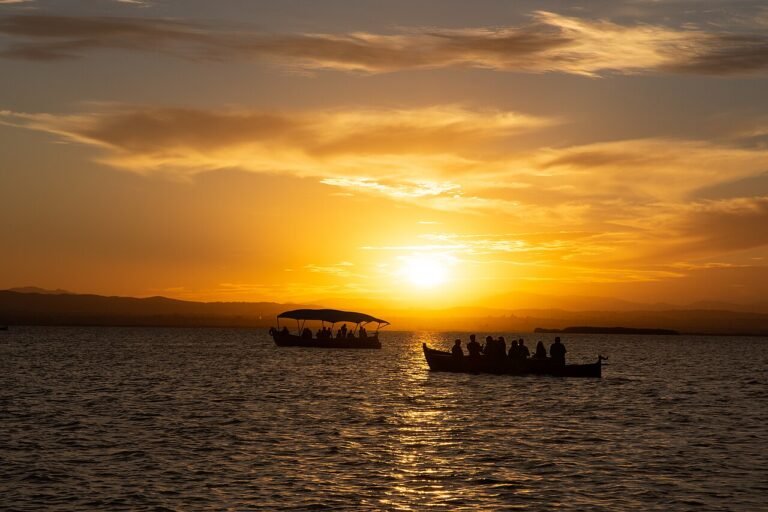
Ten kilometres south of the cathedral lies the Albufera: at about 24 square kilometres, the largest lake in Spain — and, on average, barely a metre deep. Its name comes from the Arabic al-buhayra, “little sea”, and the shallowness is the secret of everything: the rice fields that ring it, the eel fisheries, the mirror-flat sunsets, and the birdlife that made the whole wetland — 21,120 hectares of lagoon, paddies and dune forest — a protected Natural Park in 1986.
This is paella’s homeland (fact 17) and Valencia’s literary landscape too: Vicente Blasco Ibáñez set his novel Cañas y barro — Reeds and Mud — among the fishing families of El Palmar in 1902. To see it properly, get on the water: the Valencia: Albufera Guided Tour with Boat Ride, Drink & Sunset (4.5/5, 836 reviews, from $58.75 per person) runs four hours from the city through El Saler and El Palmar to a silent electric boat on the lagoon — reserve now, pay later applies, so you can book the sunset slot and settle up nearer the day.
19. Horchata Is Not Made from Nuts
Valencia’s other signature drink, the milky, cinnamon-dusted horchata served ice-cold in summer, hides a small botanical fib: the “tiger nut” it is made from is not a nut at all, but the little tuber of a sedge plant, grown in the irrigated huerta fields north of the city around Alboraya. The chufa de Valencia is protected by its own designation of origin, and the drink has been the city’s summer coolant for centuries.
And it comes with a royal legend. The story goes that James I, offered a glass of the strange white drink after the conquest, asked what it was — and on tasting it declared, “Això és or, xata!”: “This is gold, girl!” A lovely tale, and told everywhere as fact — but linguists give horchata a duller, likelier parent in the Latin hordeata, a barley drink. Believe the legend in the horchatería; believe the Latin in the library.
20. Agua de Valencia Was Invented in 1959
Not every Valencian tradition is medieval. The city’s party cocktail, Agua de Valencia — cava, fresh orange juice, a measure of vodka and a measure of gin, served by the jug — was invented in 1959 by the painter Constante Gil at the Café Madrid, a bohemian bar a few streets from the cathedral.
The story attached to it, preserved in María Ángeles Arazo’s book on Valencian nightlife, is that a group of Basque travellers kept ordering the bar’s cava and calling it “Agua de Bilbao” — Bilbao water — until Gil tired of the joke and mixed them something stronger: “then have Agua de Valencia.” The name stuck, the jug stuck, and the recipe escaped into the city when the bar’s regulars carried it across town in the 1970s. It tastes like brunch and lands like midnight; the orange juice is the only innocent ingredient.
21. The Valencia Orange Is Not from Valencia
Here is the list’s small betrayal. The Valencia orange — for a century one of the world’s great juicing oranges, the orange of a million breakfast tables — was not bred in Valencia. It was hybridised in the mid-1800s by William Wolfskill, a farmer in Santa Ana, California, who named his new orange after the Spanish city whose fruit was already famous across Europe for its sweetness.
The compliment was sincere and the marketing flawless: California sold the world a “Valencia” orange while Valencia itself exported its own, different fruit. So the orange on your juice carton is a Californian invention wearing a Valencian name — and the orchards around the city, whose blossom still scents the spring huerta, are the namesake, not the birthplace.
22. Europe’s Largest Fresh-Food Market Opened in 1928
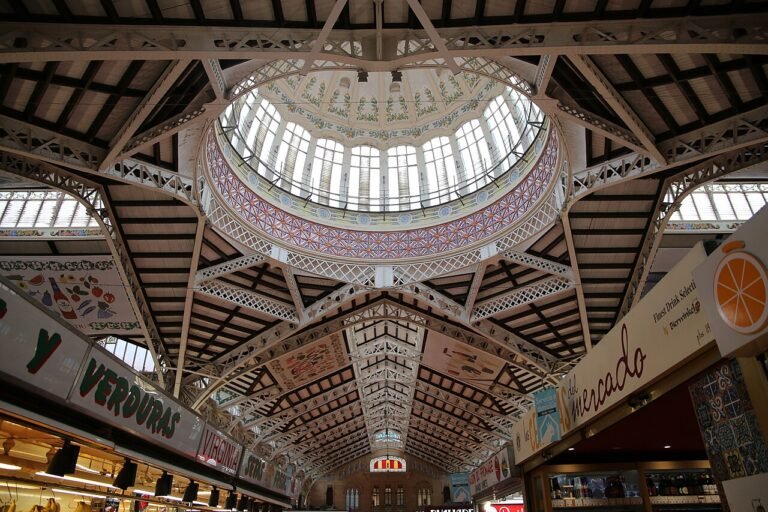
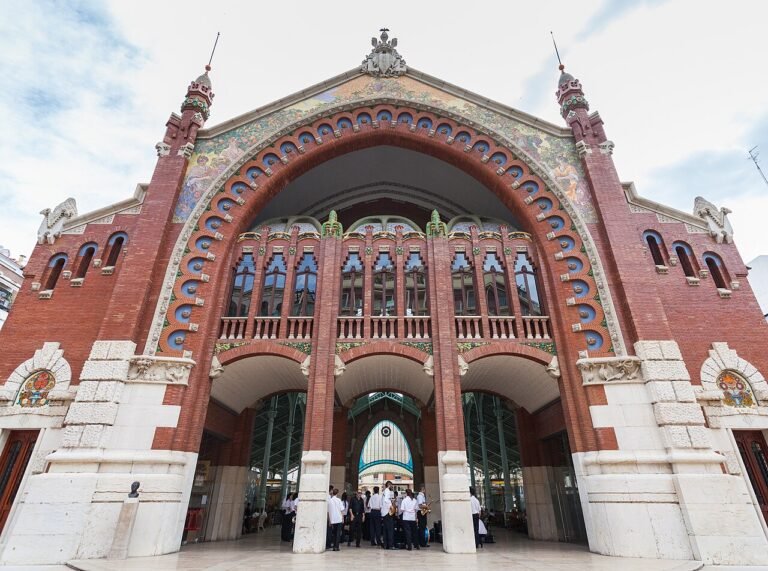
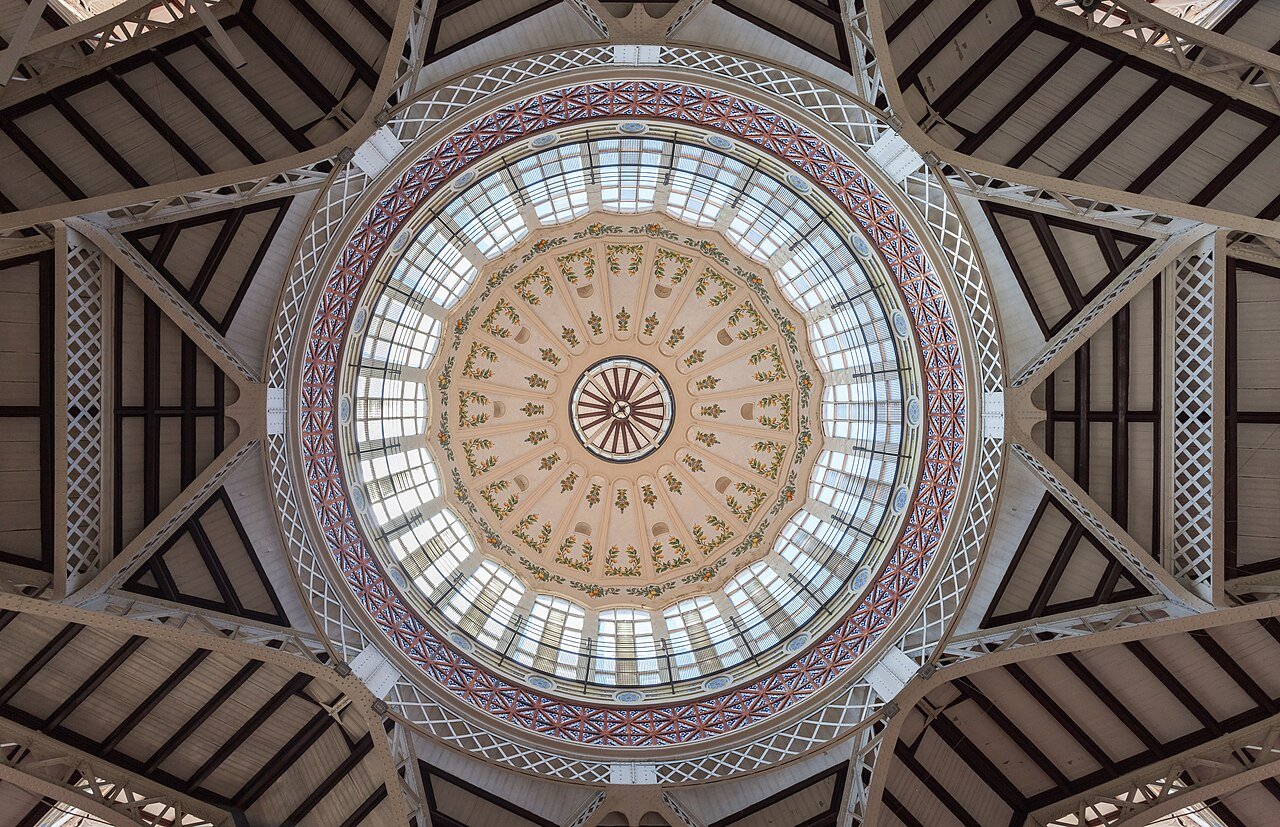
Under a modernist canopy of iron, glass and ceramic tiles in the old town stands the Mercado Central: more than 8,000 square metres of food, the largest fresh-produce market in Europe, with some 300 stalls selling everything the huerta and the Mediterranean can produce — saffron, snails, salt cod, oranges in sculptural piles, and live eels for the Albufera’s all i pebre.
Traders had sold food around this site for centuries, but the great hall itself is a 20th-century flourish: construction began in 1914 and the market was inaugurated in January 1928, crowned by its vast central dome and a weathervane parrot who has watched the shopping ever since. Go before ten in the morning, when the chefs are buying and the dome is full of light and shouting.
23. Mestalla Is Named After an Irrigation Canal
Valencia CF’s stadium, Mestalla — a steep-walled concrete amphitheatre that has terrified visiting teams since long before it was fashionable — opened on 20 May 1923 with a friendly against neighbours Levante, holding 17,000 people. And its name has nothing to do with football. The ground was built beside the Mestalla acequia, one of the huerta’s historic irrigation canals — the same canal network the Water Tribunal of fact 6 still governs — and the first fans quite literally had to hop or bridge the canal to reach the turnstiles. The stadium simply took the water’s name.
A century on, Mestalla holds 49,430 and carries a statistical crown: since January 2020 it has been the oldest stadium in La Liga. It has survived a renaming (it was the Estadio Luis Casanova from 1969 to 1994, until Casanova himself asked for the old name back) and a flood — the Turia’s waters reached it in 1957, the same disaster that reshaped the city in fact 12. A stadium named after a ditch, older than every rival: as Valencia facts go, it is the perfect last one.

Seeing the Facts: Valencia in a Day
The lovely thing about this list is that most of it fits inside one well-planned day, and a Thursday is the day to pick. Start in the old town: coffee, then the Mercado Central at its morning loudest (fact 22), the Lonja’s columned hall (fact 7) and the cathedral — up the Miguelete’s 207 steps (fact 9), into the Holy Chalice chapel (fact 10) — and be outside the Puerta de los Apóstoles at noon for the Water Tribunal (fact 6). Lunch is paella, eaten at lunchtime as Valencians insist (fact 17), with an Agua de Valencia only if the afternoon is negotiable (fact 20).
Walk it off down the Turia gardens (fact 12) to the City of Arts and Sciences (facts 13 and 14), and finish at the Albufera for sunset over the little sea (fact 18). That is a day built entirely out of facts. For the full menu of sights beyond this list, see the best things to do in Valencia, and before any Spain trip, our Spain travel tips are worth ten minutes.
Travel insurance, sorted
Whether it is a two-week holiday or a longer move, travel insurance is not the most glamorous part of a trip – but it is the one booking you want to have in place before a trip, and while you are already away. Get a quote from SafetyWing
Final Thoughts
Twenty-three facts, and a pattern runs through them: Valencia keeps inventing things quietly and letting louder places take the credit. It built the world’s first hospital for the mentally ill and the world’s most famous rice dish in its fields; it lent its name to an orange bred in California; it turned the river that nearly destroyed it into the park that defines it. Even its two great legends — the bat and the Grail cup — turn out, on inspection, to be more interesting in their true, complicated versions.
That is the city in one list. Come for the facts; stay because Valencia, third-largest and entirely unbothered about it, is the rare big city that still feels like it belongs to the people who live in it. God willing, the Water Tribunal will be sitting on Thursday.

11 Honest Reasons You Shouldn’t Visit Seville (and Who Should Go Anyway)
Frequently Asked Questions
What is Valencia most famous for?
Paella, above all — the dish was created in the fields around the Albufera lagoon in the mid-19th century, and Valencia is its undisputed home. Close behind come the Fallas festival in March, the futuristic City of Arts and Sciences, and Las Fallas’ quieter cousin in the calendar of Valencian obsessions: oranges, horchata and the Silk Exchange in the old town.
Is the Holy Grail really in Valencia Cathedral?
The cathedral displays the Holy Chalice, a red agate cup venerated for centuries as the cup of the Last Supper, and two popes have celebrated Mass with it. The cup itself is genuinely ancient — dated by study to between the 2nd century BC and the 1st century AD — and its documented history reaches back to 1399. But the Church has never formally authenticated it as the Grail, so the honest answer is: it is a tradition, presented as one, and the chapel is moving whichever way you come to it.
Why is there a bat on Valencia’s coat of arms?
Legend says a bat saved James I’s campaign to take Valencia in 1238 — by landing on his flag as an omen, or by waking his camp before a night attack — and the grateful king adopted it. Historians are cooler on the story: early documents mention a swallow, and the crest most likely descends from the winged dragon of the Kings of Aragon, gradually redrawn into a bat over the 16th and 17th centuries. The bat now crowns the city’s arms and Valencia CF’s badge.
Can you watch the Water Tribunal in Valencia?
Yes — it is a working court that sits in public. The Tribunal de las Aguas meets every Thursday at noon outside the Puerta de los Apóstoles of Valencia Cathedral, where its eight elected members hear irrigation disputes and rule on the spot. Arrive a little before twelve, stand with the small crowd, and you are watching a thousand-year-old institution do its ordinary week’s work. It costs nothing.
When is the best time to visit Valencia for Fallas?
The festival’s main days run from 15 to 19 March, ending with La Cremà, the burning of the monuments, on the night of the 19th. Come earlier in March if you can: the mascletà fires daily from 1 March, and the Ninot Exhibition — where you vote for the one figure to be pardoned from the flames — runs in the weeks before the monuments go up. Book accommodation well ahead; the city fills completely.
Is paella actually from Valencia?
Yes — and Valencians will correct anyone who says otherwise. Paella took its modern form in the mid-19th century around the Albufera lagoon, as the midday meal of farm labourers: rice, chicken, rabbit, beans and snails, cooked in the wide pan the dish is named after. Traditional Valencian paella contains no seafood and no chorizo; seafood paella is a separate, later — and also delicious — coastal variation.
How many days do you need in Valencia?
Two full days cover the essentials — one for the old town (market, Lonja, cathedral, Miguelete) and one split between the City of Arts and Sciences and the Turia gardens. Add a third day for the Albufera’s rice fields and lake, especially at sunset, and a fourth if your trip lands anywhere near Fallas or you want the museums done properly. This list’s one-day route is the express version.