Albufera Natural Park: The Complete Guide to Valencia’s Lake, Rice Fields and Sunsets
Ten kilometres south of Valencia’s cathedral, the city simply stops — and a different, older Valencia begins: a vast, shallow lake the Arabs named al-buhayra, “the little sea”, ringed by emerald rice fields, screened from the Mediterranean by a ribbon of pine forest and dune, and worked, fished and eaten from for a thousand years. There is no monument here, no ticket gate, no masterpiece behind glass. What the Albufera offers instead is a flat-bottomed wooden boat gliding through reeds at walking pace, a paella eaten in the village that invented it, flamingos drifting over flooded winter fields, and a sunset — la posta de sol — that Valencians treat the way other cities treat a cathedral: as the fixed point around which the day is arranged.
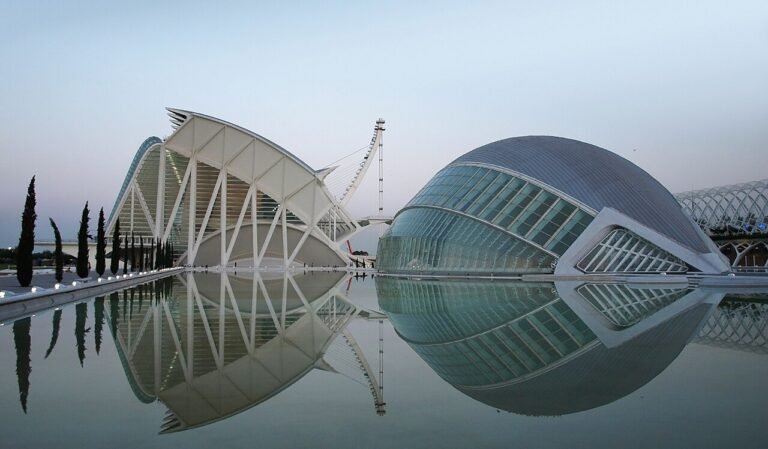
It is the natural counterweight to everything else in our Best Things to Do in Valencia coverage: where the city gives you Calatrava’s white concrete and Gothic stone, the Albufera gives you water, rice and sky. This guide walks the park the way a good day there unfolds — the lake and its strange geography first, then the visitor centre in the Devesa pines, the boat rides, El Palmar and its paella tables, the rice fields through their seasons, the birds, and finally the sunset — with the honest practical picture on buses, boats and timing, because this is a nature-and-food day, and it rewards being planned like one.
The Short Answer
Yes — the Albufera is Valencia’s essential escape, the day trip that explains where the city’s food, landscape and temperament come from. Half an hour from the centre by bus, you get one of Spain’s largest freshwater lakes, boat rides in traditional wooden albuferencs for the price of a coffee and a pastry, the birthplace of paella for lunch, and some of the finest birdwatching in the western Mediterranean — and if you time the ending right, a sunset over still water that people applaud. Give it a full, unhurried day built around three anchors: a boat ride, a long paella lunch in El Palmar, and the sunset. The guided version — lake boat trip, village and rice fields with the transport handled — is the Albufera boat trip; going independently on the 24 bus is easy and cheaper. Either way, do not try to squeeze it into a spare two hours: the Albufera’s whole point is slowness.
Table of Contents
- The Short Answer
- The Place in Brief: A Lake Held Back from the Sea
- Where to Start: The Racó de l’Olla and the Devesa
- The Boat Rides: Out on an Albuferenc
- El Palmar: The Village That Invented Paella
- The Rice Fields: A Landscape That Changes Colour
- Birdwatching: Flamingos, Herons and the Tancat de la Pipa
- The Sunset: La Posta de Sol
- Practical Info
- Tips for Visiting
- Final Thoughts
The Place in Brief: A Lake Held Back from the Sea
The Albufera is a lagoon that nearly became a bay. Thousands of years ago this was an open gulf of the Mediterranean; river silt and sea currents slowly built a sandbar across its mouth, and the bar became the Devesa — a strip of dune and pine forest some ten kilometres long and barely a kilometre wide — leaving the sea outside and a great shallow lake inside, fed by springs bubbling up through its bed (the ullals) and by the irrigation channels of the plain. The water is fresh now, only a few feet deep almost everywhere, and it still breathes with the Mediterranean through three narrow channels — the golas of Pujol, Perellonet and Perelló — whose sluice gates are opened and closed to set the lake’s level for the rice, the fishing and the birds. The whole protected park covers more than 21,000 hectares, and the remarkable thing is how little of it is wilderness in the empty sense: this is a working landscape, farmed, fished and hunted under rules refined over centuries, and that is exactly what makes it fascinating.
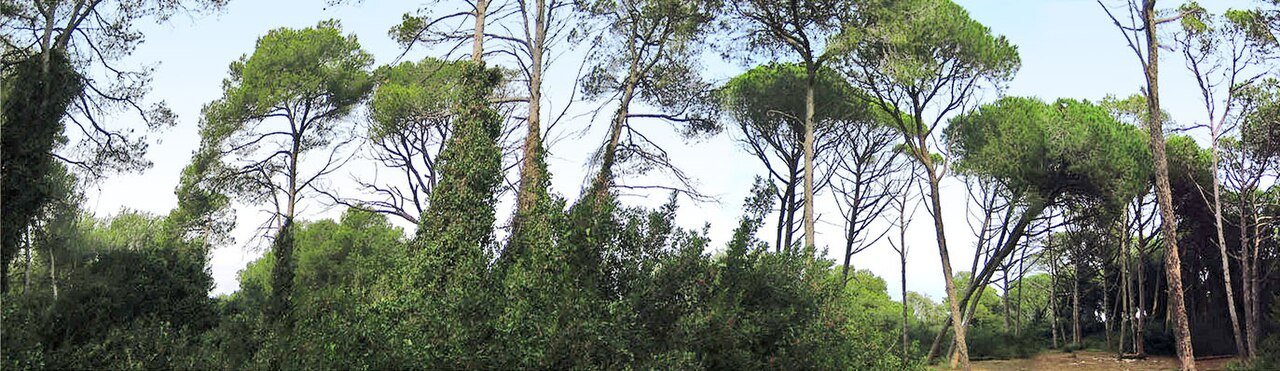
Stand on the shore and read the scene. The open water is chequered with redolins — great circles and lanes of stakes and netting, fixed fishing enclosures whose rights have been drawn by lot among El Palmar’s fishermen for generations; the eel fishery that works them is older than the city it feeds. Around the lake, the rice fields run to the horizon, a chequerboard that changes colour with the agricultural year. And behind you, if you have come through El Saler, stands the Devesa: Aleppo pines and dune scrub on the sandbar, with the sea audible through the trees. Three landscapes — lake, field, forest — stacked side by side in a strip you can cycle across in an hour.


Where to Start: The Racó de l’Olla and the Devesa
If you want to understand the park before you drift across it, start at the Racó de l’Olla, the park’s interpretation centre, set in the Devesa just off the CV-500 road south of El Saler. It is a modest place — exhibition rooms explaining the lake’s ecology and the rice cycle, an aquarium of the lagoon’s fish — but its treasure is outside: a bird observatory and lookout tower over a sheltered lagoon pool, where from the wooden hide you watch herons, egrets, ducks and, in season, flamingos going about their morning at close range and entirely unbothered. It is the single best free hour in the park. Entry is free; the centre keeps morning hours — roughly 9:00 to 14:00, with last entry a little before closing, and the gates (and its car park) lock at closing time — so treat it as the day’s first stop, not its last, and check the day’s hours before you set out.
The Devesa around it deserves its own slow hour. This is the sandbar that made the lake: dunes held together by pine forest, walking and cycling paths running its length, the Estany de Pujol — a broad artificial lagoon dug in the 1970s — shining between the trees, and beaches on the seaward side at El Saler that feel a world away from the city strands. Walk from the Racó into the pines and the park’s logic clicks into place: sea on one side, lake on the other, and this green wall of forest holding them apart.

The Boat Rides: Out on an Albuferenc
Everything in the Albufera is best understood from the water, and the water is travelled the way it has been for centuries: in an albuferenc, a long, flat-bottomed wooden boat, shallow as a tray, traditionally poled through the shallows with a long pike — the perxa — and nowadays usually helped by a small, quiet motor. The boats leave from the embarcaderos — the little jetties — above all at El Palmar, where they tie up along the village canals, and also near the Gola de Pujol. There is no terminal, no timetable board, no fuss: you walk up, agree a ride, and within minutes you are sliding out of the canal, past the reed beds and the redolins, into water so shallow and still that the boat seems to be gliding across a mirror laid over the fields.
A shared ride runs around forty minutes to an hour, and prices are modest — expect roughly €5–10 per adult at the time of writing, less for children, with the exact figure depending on the boatman, the season and whether you have booked a private boat. The boatmen are mostly El Palmar men whose families have fished this water for generations, and the running commentary — the fishing, the rice, the birds, the old stories, including the world of Blasco Ibáñez’s great Albufera novel Cañas y barro — is half the value. If you would rather have the whole day organised from the city, boat included, the Albufera boat trip packages the lake with El Palmar and the rice fields. But whenever you go, understand the hierarchy: a morning boat ride is lovely; a boat ride that ends as the light turns is the one people write home about — which is why the sunset departures fill first.


El Palmar: The Village That Invented Paella
El Palmar is a small island of a village, ringed by canals, at the lake’s southern shore — a grid of modest streets that supports, by any reasonable count, dozens of restaurants, because this is where paella was born. In the 18th and 19th centuries the rice workers and fishermen of the Albufera cooked their midday meal outdoors over orange-wood fires: rice from the fields at their feet, chicken and rabbit, the flat ferraúra beans and fat garrofó butter beans, snails when they could be gathered, whatever the lake and the land gave. That labourers’ lunch, refined in El Palmar’s kitchens, became paella valenciana — and the village has guarded the recipe ever since. The other essential local dish is the fisherman’s answer to the same landscape: all i pebre, a rich, garlicky stew of the lake’s own eels and potatoes, the colour of brick dust and utterly unlike anything else in Spain.
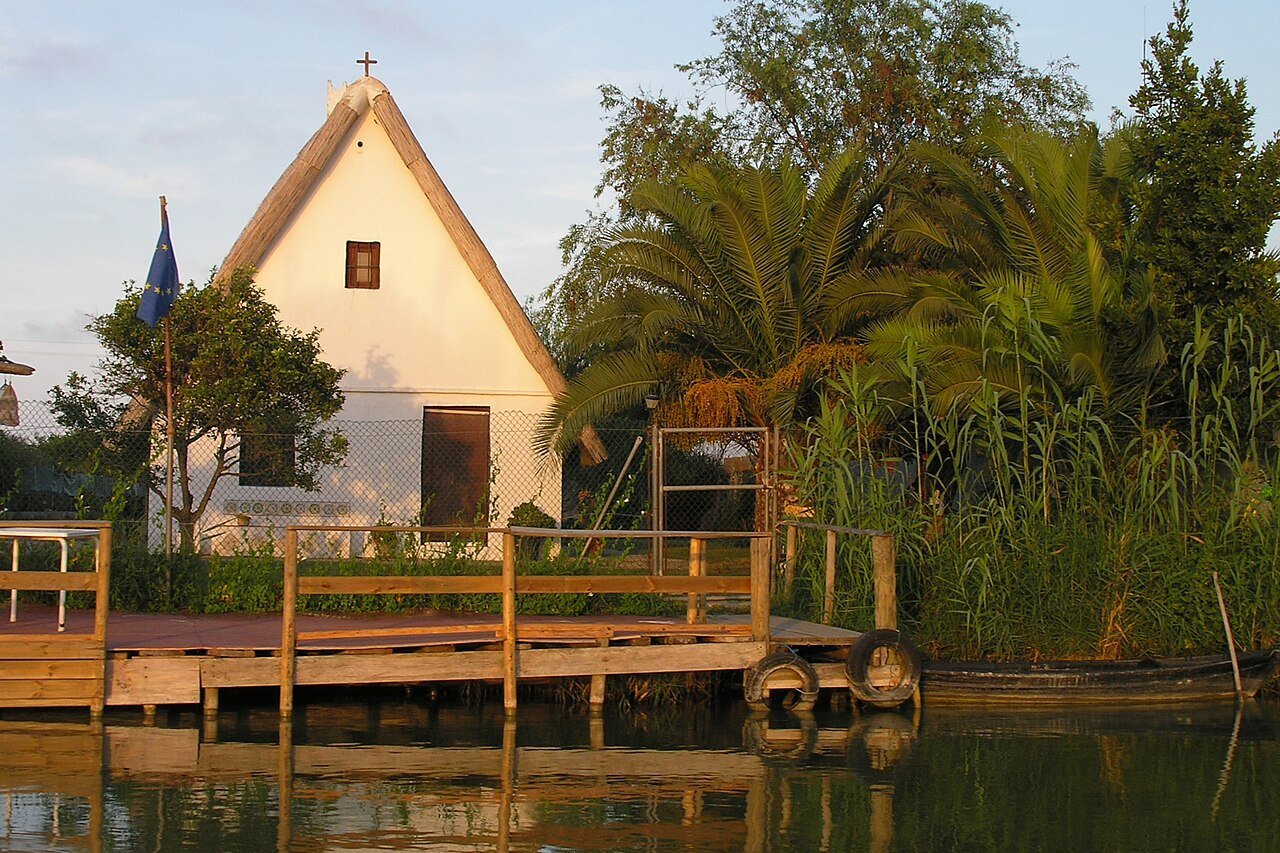
So lunch is not a break in the Albufera day; it is one of its main events, and it follows rules. Paella is a lunch dish — Valencians do not eat it at night, and a restaurant that serves it at 21:00 is telling you something. It is cooked to order, takes the better part of an hour, is ordered for a minimum of two, and arrives — and is eaten — in the wide, shallow pan it was cooked in, so the rice keeps its socarrat, the prized toasted crust underneath. Book ahead, above all on Sundays, when half of Valencia drives down to do exactly this; our Best Food in Valencia guide covers the city’s tables, but for paella in its homeland, El Palmar is the pilgrimage. Between the boat and the pan, wander the village: the canals with their moored boats, and the barracas — the whitewashed, steep-thatched houses of the rice country, built to shed water and store the harvest, a cross on the gable and the lake at the end of the garden.

Free Valencia travel guide
Planning a trip to Valencia? Get our free one-page Valencia checklist: what to book ahead, what to skip, and the paella places we actually eat in.
The Rice Fields: A Landscape That Changes Colour
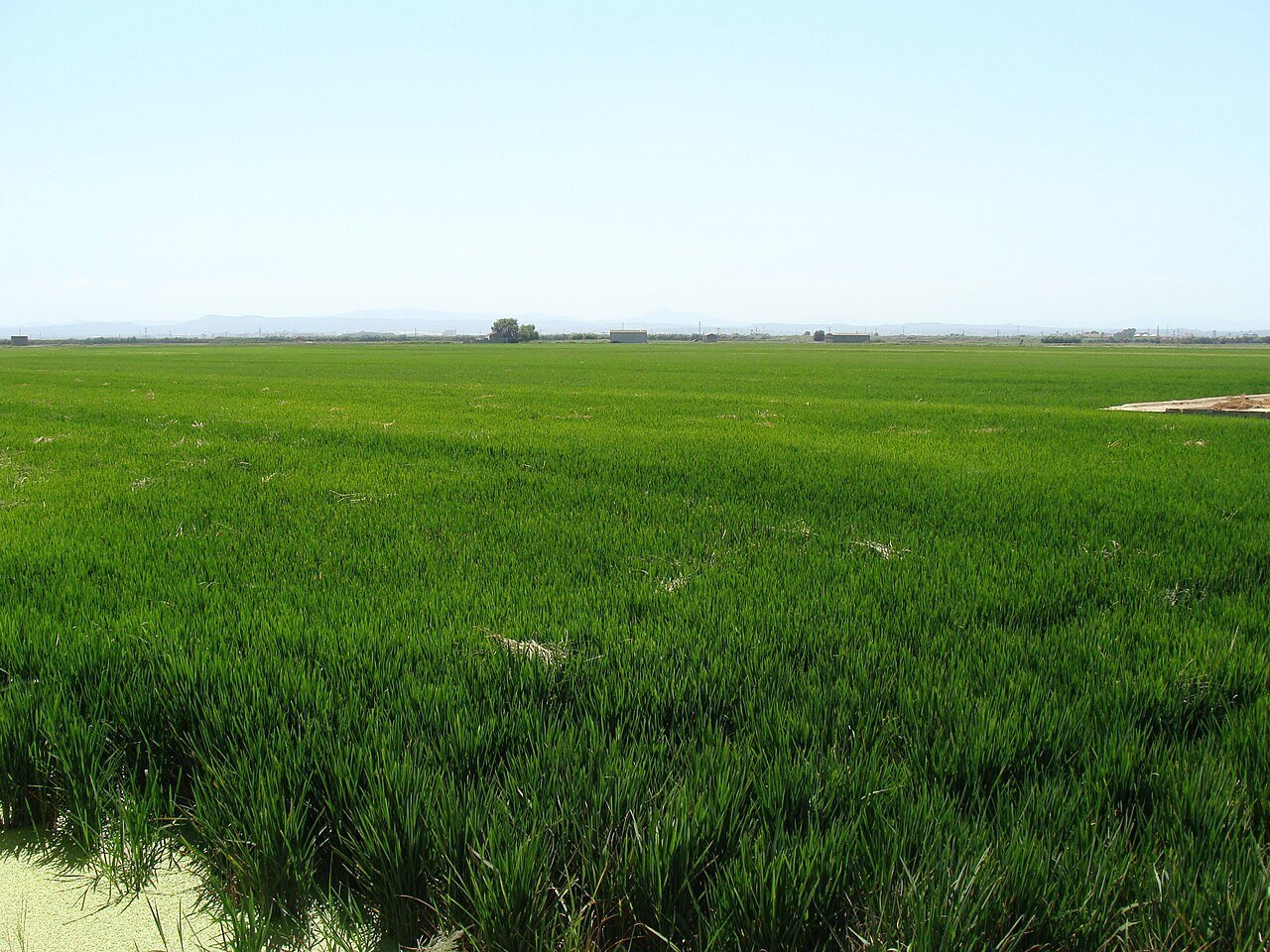
The lake is only the middle of the park; around it spreads the marjal, one of Europe’s great rice landscapes, some 14,000 hectares of levelled, bunded fields — the tancats — that grow the short-grain bomba rice behind Valencia’s protected Arròs de València designation. What makes the fields a sight in themselves is that they are never the same twice. Come in late spring and early summer and the young rice stands in flooded squares of mirror, each field reflecting the sky until the whole plain looks like a second, broken lake. By high summer the crop is a sea of improbable green, waist-high and rustling. In September and October the fields turn gold for the harvest. And then, in winter, the farmers flood them again — the perelló — and the dry fields become shallow lagoons crowded with tens of thousands of wintering birds, which is why an Albufera rice field in January can hold more flamingos than the lake itself.
None of this is scenery arranged for visitors; it is a crop cycle that the park’s wildlife has been folded into, water levels negotiated between farmers, fishermen and conservationists through the gola sluices. Drive or cycle any of the straight roads south of the lake — toward El Perelló or Sueca — and you ride through the whole calendar in a single journey, field by field: mirror, green, gold, water.
Birdwatching: Flamingos, Herons and the Tancat de la Pipa
The Albufera is one of the Mediterranean’s great bird wetlands — more than 300 species have been recorded here — and it works in every season, differently. Winter is the spectacle: the flooded fields and the lake fill with ducks, coots and waders in their tens of thousands, glossy ibis commute overhead in long lines, marsh harriers quarter the reed beds, and the flamingos come — in a good winter, in their thousands, sifting the shallows in pink regiments. Spring brings the breeding colonies: grey and purple herons, egrets and night herons nesting noisily in the reed beds and on the lake’s vegetated islands, the matas. Autumn passage adds migrants dropping in on their way to Africa. The red-crested pochard, a handsome duck that is scarce across Europe, is the park’s emblem bird — look for the males’ russet heads on the quieter pools.
You do not need to be a birder, or to own binoculars the size of baguettes, to enjoy any of this; you need a boat ride, a walk at the Racó de l’Olla, and eyes. Those who do want to go deeper should aim for the Tancat de la Pipa, a restored wetland of filtered lagoons and reed beds on the lake’s north-western shore near Catarroja, run as a reserve and study site: the birding there, from its hides, can be the best in the park, but access is limited and visits generally need to be arranged in advance — check before you plan a day around it. And a word of respect that the locals will thank you for: in the winter shooting season parts of the park work to the old hunting calendar, paths and flooded fields can be closed or busy at dawn, and the reserves’ rules — stay on paths, keep to the hides, no dogs off the lead — are what keep this shared landscape working for everyone.


The Sunset: La Posta de Sol
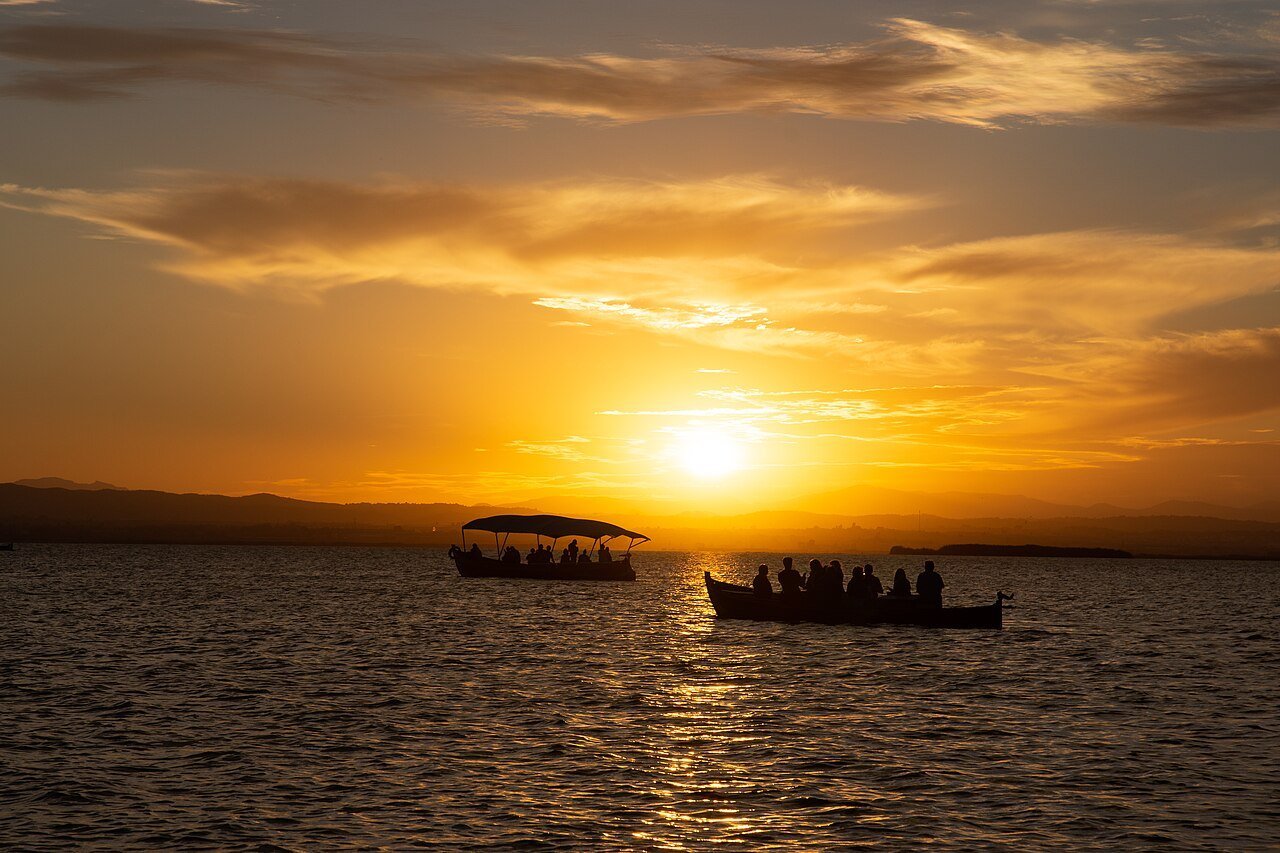
Every Albufera day has a destination, and it is not a place — it is a moment. Because the lake is a flat sheet of fresh water with its long axis running east to west, the sun sets straight down its length, behind the low inland hills, and on any calm evening the whole surface turns to hammered copper and rose. Valencians call it simply la posta de sol, and they plan around it: the last boats of the day are the sunset boats, booked first and remembered longest; the pier at the Gola de Pujol, where the road crosses the channel, fills with people leaning on the rail; El Palmar’s westward jetties gather their quiet crowds. There is no ticket, no programme, no commentary — just the light going down over water that men have fished for a thousand years, the birds crossing home overhead, and, very often, a small ripple of applause from the boats when the sun touches the hills.
If you take one piece of advice from this whole guide, take this one: arrange the day backwards from the sunset. Lunch long in El Palmar, drift through the afternoon, and be on the water — or at the Gola de Pujol viewpoint — for the last hour of light. A grey, windy evening can flatten the show, and boats may not run in rough weather; but when the Albufera performs, visitors who came for a nature park understand they have witnessed the city’s true evening ritual.

Practical Info
Getting there. By bus, EMT Valencia lines 24 and 25 are the park’s lifeline: they leave from the Porta de la Mar area (Carrer Navarro Reverter) in the city centre; the 24 runs to El Palmar itself, the 25 continues to El Perellonet and the beaches, and both serve El Saler and the Devesa stops (for the Racó de l’Olla, ask for the El Saler / Racó stop). Services run roughly every half hour through the day at the time of writing, the ride to El Palmar takes around 45 minutes, and the standard city single fare applies (around €1.50 — check the EMT app for the day’s timetable, as Sunday and holiday services are thinner). By car, the CV-500 runs south from the city along the Devesa; there is parking at the Racó de l’Olla (which locks when the centre closes), at the Gola de Pujol and in El Palmar, where Sunday lunch hours fill everything — arrive early or take the bus. By bike, a coastal cycle route runs from the City of Arts and Sciences down through Pinedo and El Saler — flat, scenic, and the connoisseur’s choice in spring; continuing around the lake makes a long day of it.
How long, and how to shape the day. Give the Albufera a full day if you can: visitor centre and Devesa in the morning, El Palmar and a long lunch at midday, a boat in the afternoon, sunset to finish. A half day works if you choose one anchor — El Palmar plus a boat — and skip the rest without regret. It pairs naturally with a morning at the aquarium end of the Turia — our Bioparc Valencia guide covers the city’s other great nature day — and it is a fixture of our Day Trips from Valencia guide.
Costs. The park itself is free; the Racó de l’Olla is free; the boat is the bargain of the region at roughly €5–10 a head; the serious money goes on lunch, where a proper paella for two with starters, wine and coffee in El Palmar is a mid-range restaurant spend — and the one part of the day we would not economise on.
Tips for Visiting
- Plan backwards from the sunset. Book the day’s shape around the last hour of light: morning visitor centre, long lunch, afternoon boat, sunset on the water or at the Gola de Pujol.
- Paella is lunch, and it is slow. Book El Palmar ahead — especially on Sundays — arrive hungry, order the real thing (chicken, rabbit, beans), and allow two hours at the table. The other dish to try is all i pebre, the eel stew.
- The bus needs checking, not just catching. Lines 24 and 25 are regular city buses with thinner Sunday services; note the time of the last bus back before you settle in for the sunset, or plan on a taxi from El Palmar.
- Match the season to the wish. Flamingos and flooded mirror-fields: winter. Green rice sea and long evenings: summer. Harvest gold and heavy bird movement: autumn. Nesting herons: spring. There is no wrong month, only a wrong expectation.
- Boats stop for weather. Wind and storms cancel sailings and flatten sunsets; keep the day’s plan loose, and if the forecast is wild, swap the Albufera day with a city day rather than forcing it.
- Bring the simple kit. Binoculars if you have them, a hat and water in summer, a layer for the boat at sunset in any season — the lake at dusk is cooler than the city you left.
Travel insurance, sorted
Whether it is a two-week holiday or a longer move, travel insurance is not the most glamorous part of a trip — but it is the one booking you want to have in place before a trip, and while you are already away.
Final Thoughts
Valencia’s futuristic skyline gets the photographs, but the Albufera is where the city comes from: the rice in its pans, the fish in its markets, the flat light in its painters, the patience in its people. It asks very little of you — a bus ride, a boat fare, an appetite — and gives back the rarest thing in modern travel: a landscape that is still worked, still eaten from, and still beautiful in the unselfconscious way of places that were never arranged for an audience. Come for the paella, stay for the birds, and be on the water when the sun goes down. That applause from the boats, when it comes, is not really for the sunset. It is for all of it.
¡Buen viaje!
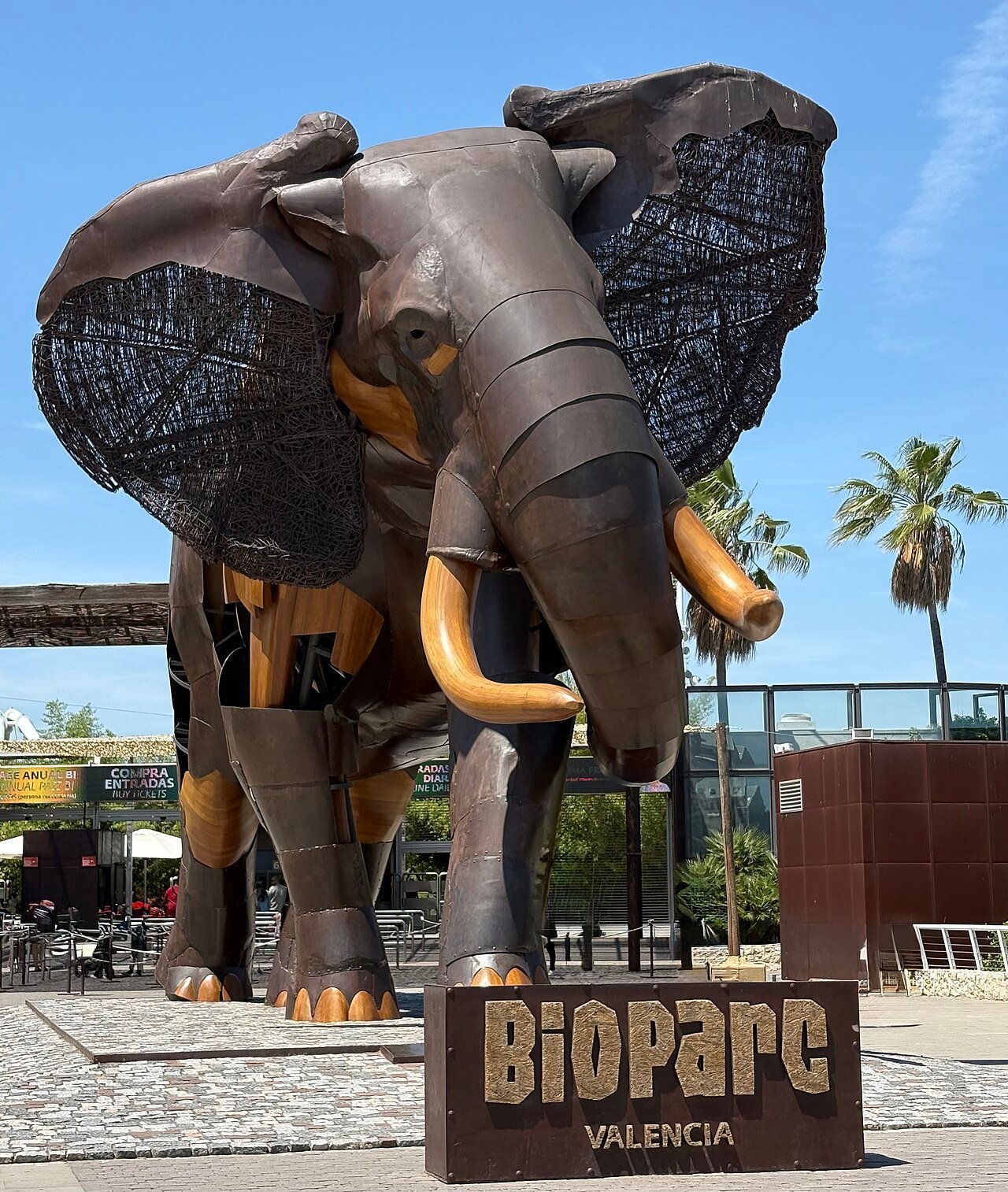
Photo credits: Two boats at sunset on the lake and the El Palmar jetty — Dorieo, CC BY-SA 4.0 · The open lake, the Racó de l’Olla observatory, aboard an albuferenc, a barraca at El Palmar, flamingos in flight, a grey heron and the sunset from the bow — Diego Delso, CC BY-SA 4.0 · The lake shore at dusk — Iforner, CC BY-SA 4.0 · The Devesa pines — Espencat, Public domain · The green rice fields — Fev, CC BY-SA 4.0 · A barraca at dusk — Flickr user 51470606@N05, CC BY 2.0. All via Wikimedia Commons.



One Comment