Barcelona Old Town & the Gothic Quarter: The Complete Guide
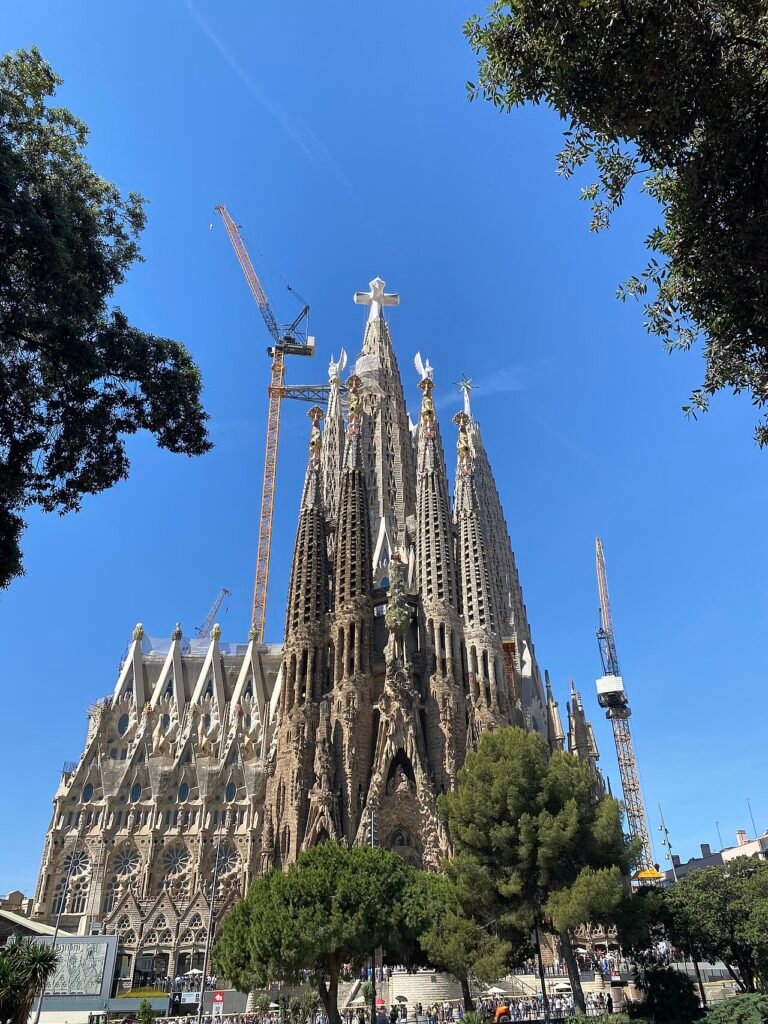
Every city has a room where it keeps its past; Barcelona keeps a whole quarter. Inside the Barri Gòtic — the Gothic Quarter, the medieval heart of the Ciutat Vella, the old town — the streets narrow to the width of a cart, the light arrives in slices, and two thousand years of city are stacked in a single glance: a Roman temple inside a hiking club, a royal palace over a Roman winery, a bomb-scarred square where schoolchildren now chase a fountain. Gaudí’s Barcelona is the one on the posters, and it is glorious — our Best Things to Do in Barcelona guide gives it its due — but this is the Barcelona underneath the posters, the one that was already old when the Sagrada Família was a field.
This guide walks the quarter the way it asks to be walked: slowly, and mostly without a map. We start at its most photographed bridge on Carrer del Bisbe, circle the Cathedral and its goose-filled cloister, stand in the Plaça del Rei where an empire was administered, descend into Roman Barcino at the Temple of Augustus and the city museum, and cross to the quarter’s quieter western half — the shrapnel-marked Plaça de Sant Felip Neri, the lanes of the medieval Jewish Call, the political stage of Plaça Sant Jaume, the great rose window of Santa Maria del Pi, and finally the palm shade of Plaça Reial. There is no ticket that covers it and no single sight that defines it. The quarter itself is the sight.
The Short Answer
Yes — the Gothic Quarter is unmissable, it is largely free, and it deserves at least half a day of unhurried wandering, ideally a full one. Almost everything in this guide is outdoors and costs nothing: the squares, the lanes, the Roman wall towers, the four surviving columns of the Temple of Augustus (free to enter). The one paid sight worth every cent is the MUHBA museum at Plaça del Rei, which walks you through an excavated Roman city block beneath the square. Come early in the morning for the lanes at their emptiest and again at dusk, when the stone turns honey-coloured and the squares fill with the evening passeig. Bring curiosity, wear out your phone battery on photographs, and keep a hand on your bag — this is pickpocket country, and the honest section on that is below.
Table of Contents
- The Short Answer
- The Story in Brief: A Roman City in Medieval Dress
- What to See: Carrer del Bisbe and the Cathedral Quarter
- What to See: Plaça del Rei and the Royal Palace
- What to See: Roman Barcino — the Temple of Augustus and the Walls
- What to See: Plaça de Sant Felip Neri and the Jewish Quarter
- What to See: Plaça Sant Jaume and Santa Maria del Pi
- What to See: Plaça Reial and the Southern Lanes
- Practical Info
- Tips for Visiting
- Final Thoughts
The Story in Brief: A Roman City in Medieval Dress
The quarter’s bones are Roman. Around the first century BC the colony of Barcino was laid out on a low hill, the Mont Tàber, where the Cathedral now stands — a small, neat walled town of forum, temple, baths and grid streets whose outline the medieval city simply inherited. When raiders made the empire nervous in the third and fourth centuries, Barcino wrapped itself in a mighty second wall studded with towers, built in a hurry and built well: chunks of it still stand, and recycled Roman tombstones are visible in its masonry, pressed into service as building blocks. The Gothic Quarter is, quite literally, founded on its own ancestors.
Onto that Roman skeleton the Middle Ages grafted the city of the counts of Barcelona and the Crown of Aragon: the royal palace at Plaça del Rei, the Cathedral raised between the thirteenth and fifteenth centuries, merchants’ and guildsmen’s houses, and one of medieval Europe’s largest Jewish communities in the Call. Then history did what it does. The Jewish quarter was destroyed in the pogrom of 1391; power drifted away; and in the nineteenth and early twentieth centuries the old town was partly reimagined — streets cut through, façades restored, and a good deal of picturesque “Gothic” detail actually added, including its most famous bridge, built in 1928. Purists grumble; visitors do not care, and honestly neither should you. The quarter is a palimpsest, not a forgery: read it layer by layer and every century is really there.

What to See: Carrer del Bisbe and the Cathedral Quarter
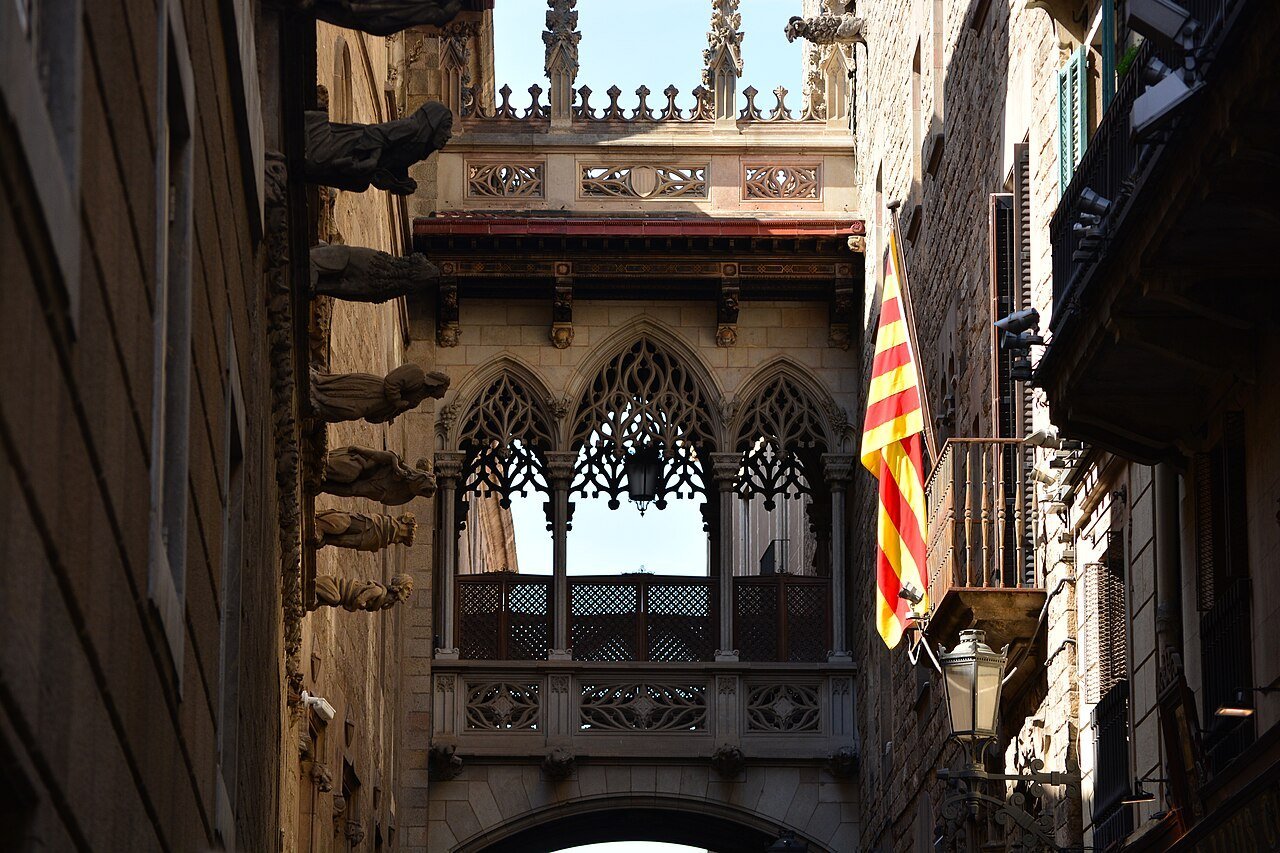
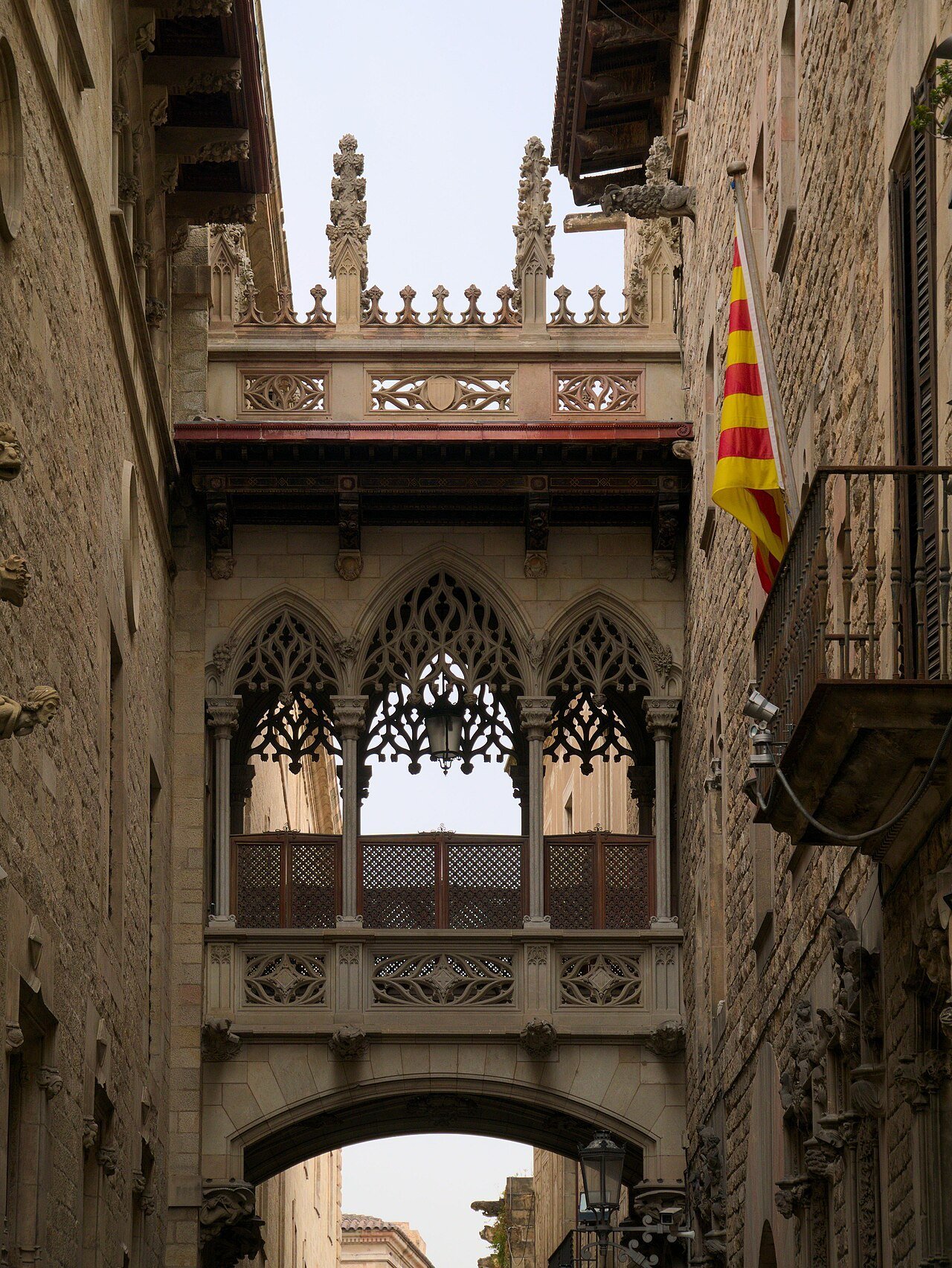
Begin where everyone begins, and where — for once — everyone is right: Carrer del Bisbe, the lane that runs along the Cathedral’s flank between Plaça Nova and Plaça Sant Jaume. Its ornament is the Pont del Bisbe, the little neo-Gothic bridge that leaps the street high overhead, linking the Palau de la Generalitat with the Casa dels Canonges. It looks immemorially medieval and was built in 1928, to a design by Joan Rubió i Bellver, a pupil of Gaudí — which tells you everything about this quarter’s blend of genuine age and confident stagecraft. Stand beneath it and look up: carved into the underside is a skull pierced by a dagger, around which Barcelonans have spun the usual crop of legends, from curses to wishes. You are not supposed to find it instantly; half the fun is watching the crowd beneath the arch all crane at once.
The lane is also a corridor of the quarter’s heavyweights. On one side, the Casa de l’Ardiaca, the old archdeacon’s house, leans against the Roman wall — peer into its courtyard for the fountain and the towering palm, and glance at its famous modernista letterbox by the door, carved with swallows and a tortoise that generations of letter-writers have blamed for slow post. Across the lane rises the Cathedral itself: the quarter’s anchor, seat of Santa Eulàlia, and the subject of our Barcelona Cathedral guide, which walks its interior in full. Do not skip its cloister while you are here — a green, fountain-cooled garden where thirteen white geese have honked their way through the centuries, one for each year of Eulàlia’s short life. It is the calmest room in the old town, and it is five steps from its busiest lane.

What to See: Plaça del Rei and the Royal Palace
Slip behind the Cathedral’s apse and the quarter changes register: the Plaça del Rei is its grandest enclosed space, a severe, beautiful rectangle of stone that was the courtyard of the Palau Reial Major, the palace of the counts of Barcelona and later the kings of Aragon. The tall, gallery-crowned tower is the Mirador del Rei Martí, a sixteenth-century watchtower; the great hall behind the square’s steps is the Saló del Tinell, one of the masterpieces of Catalan Gothic — a vast barrel-vaulted chamber where, tradition holds, Ferdinand and Isabella received Columbus on his return from the Americas. Whether or not the audience happened in precisely that room, the square earns the story: this was the administrative heart of a Mediterranean empire, and it still feels like it.
The palace complex is now the entrance to the MUHBA — the Museu d’Història de Barcelona — and the museum’s real treasure is under your feet. From the palace you descend by lift into an excavated slice of Roman Barcino preserved in the cool dark below the square: streets you can walk beside, the remains of a winery with its fermentation vats, a garum factory where Rome’s beloved fish sauce was made, dyeing workshops, laundries, and the early Christian basilica that succeeded them. It is one of the largest Roman urban excavations in Europe and the single best hour you can spend in the quarter — allow it time, and check the current ticket price and hours before you come, as both change. Before you descend, look in on the palace’s own chapel of Santa Àgata, built into the Roman wall on the square’s north side: inside hangs the fifteenth-century Epiphany altarpiece by Jaume Huguet, the master of Catalan Gothic painting, glowing quietly in a royal chapel that most visitors walk straight past. Back at street level, the square also hosts open-air concerts on summer evenings, when the stone does the acoustics for free.

What to See: Roman Barcino — the Temple of Augustus and the Walls
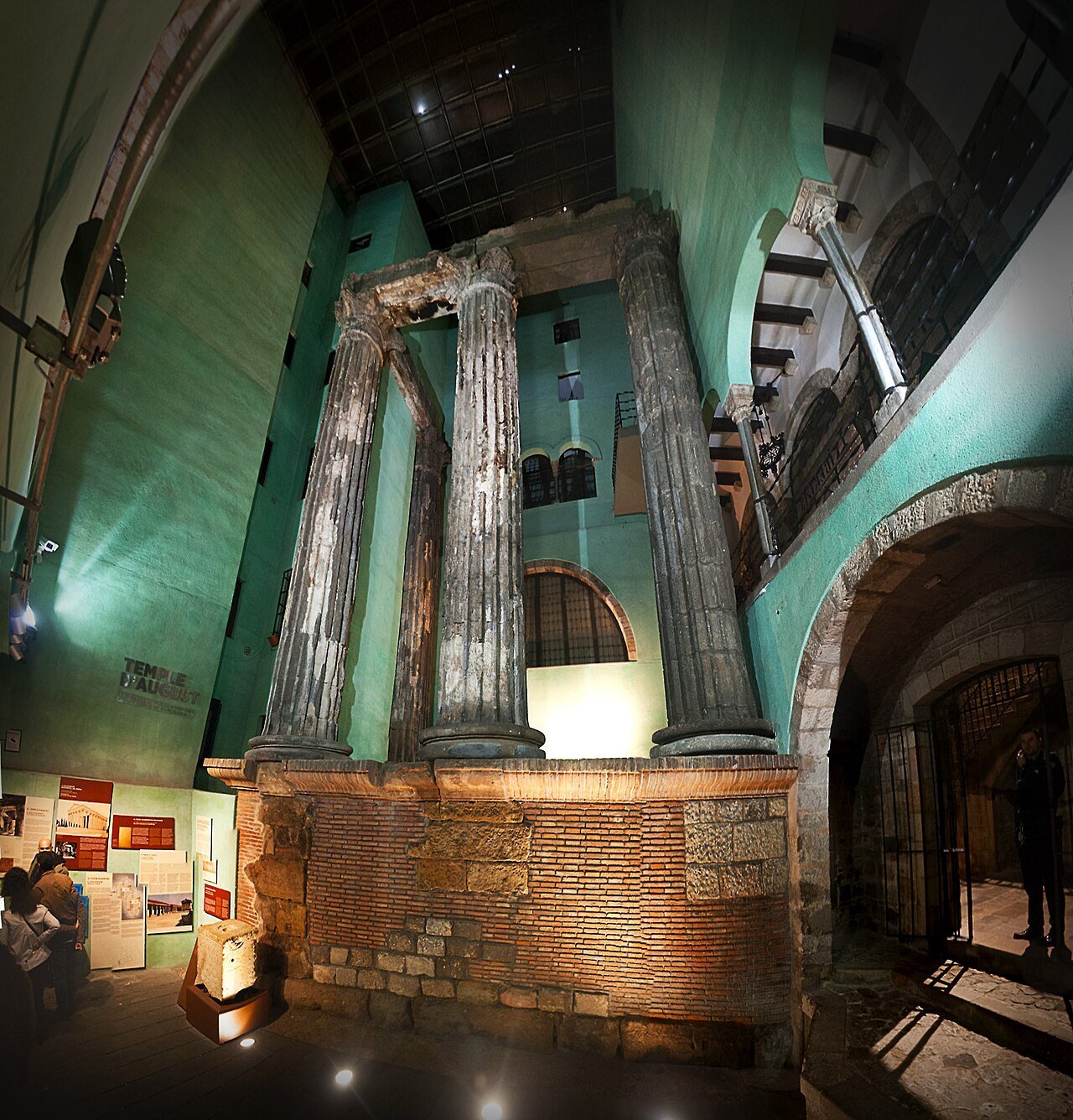
Two streets away, up a lane so quiet you will doubt the map, is the quarter’s most astonishing survival. Push through the door of the Centre Excursionista de Catalunya — a mountaineering club — on Carrer del Paradís, and its little courtyard contains four towering Corinthian columns, nine metres of fluted stone crowned with a fragment of architrave: the corner of the Temple of Augustus, which stood on the summit of Mont Tàber at the centre of Roman Barcino nearly two thousand years ago. The temple was never demolished; the city simply grew around it and swallowed it, the way the quarter swallows everything. Entry is free and the visit takes ten minutes, but the effect — imperial Rome, indoors, behind an ordinary door — lasts considerably longer. Opening days are limited and hours shift, so check before making a special trip.
For the walls, walk the quarter’s northern edge. At Plaça Nova, in front of the Cathedral, two great round Roman towers flank what was the city’s north gate, their lower courses late-Roman and visibly patched with reused stone; stretches of the wall then run along the streets behind the Cathedral, where you can read the hurried fourth-century masonry like a newspaper — Roman tombstones, column drums and carved blocks all cemented in together. Combine the towers, the temple and the MUHBA excavations and you have Barcino’s complete biography in a half-hour’s walking: its god, its defences and its dinner, preserved under a medieval city that never quite got round to clearing them away.

Free Barcelona travel guide
Planning a trip to Barcelona? Get our free one-page Barcelona checklist: what to book ahead, what to skip, and the old-town streets we actually wander.
What to See: Plaça de Sant Felip Neri and the Jewish Quarter
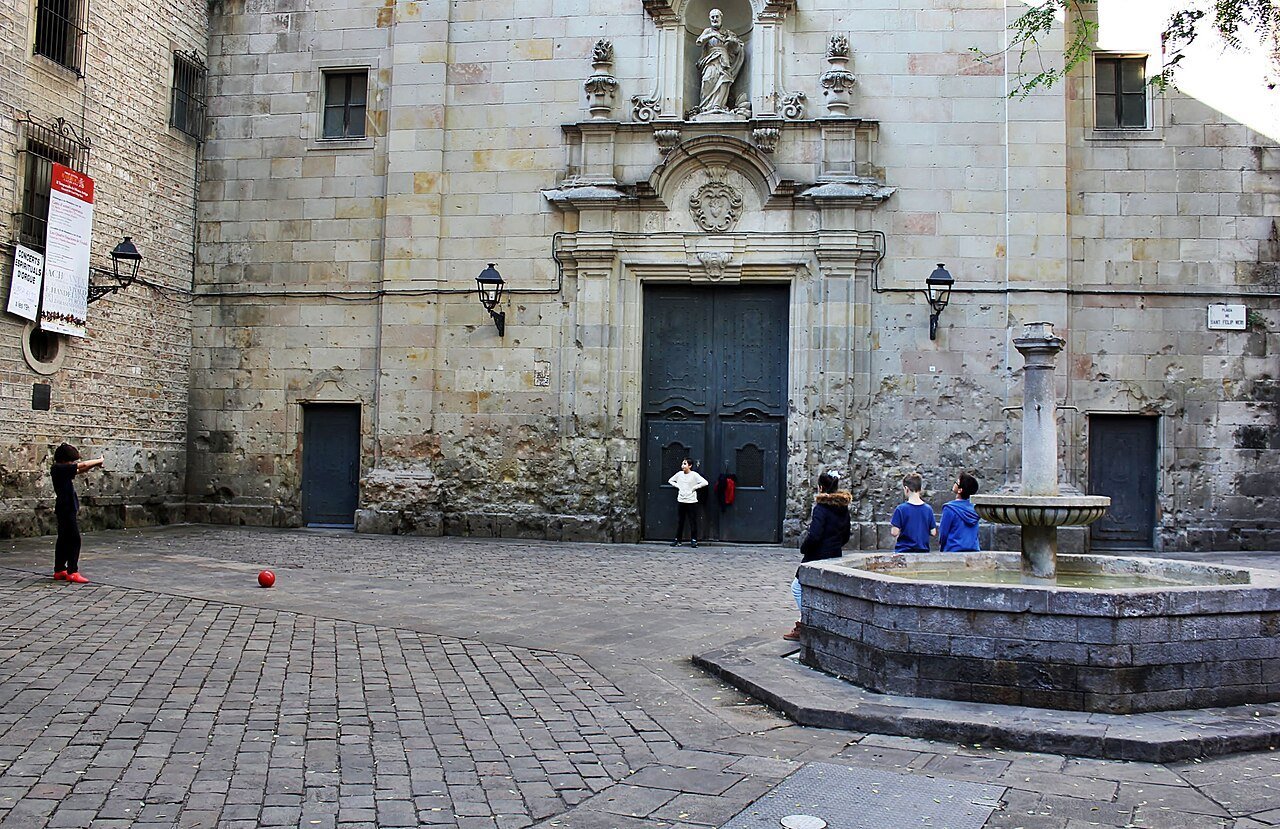
The quarter’s west side keeps its voice down. Plaça de Sant Felip Neri is reached through a couple of lanes so narrow that arriving feels like being let in on something: a small, still square of ochre stone, a simple fountain at its centre, the baroque church of Sant Felip Neri on one side and a school on the other. Then you see the church wall. Its lower façade is pocked and gouged, scarred as if by claws — the marks of the bomb that fell here on 30 January 1938, during the Civil War, killing more than forty people, most of them children from the school, who had taken shelter in the church basement. Franco’s regime long blamed the damage on other causes; the wall itself tells the truth, and the square has become the old town’s place of quiet memory. Come, stand a moment, and let it be what it is. The beautiful Renaissance guild houses on the square, incidentally, were moved here stone by stone from elsewhere in the city — the quarter’s habit of editing itself, again.
A few lanes south lies the Call, the medieval Jewish quarter — from the Hebrew qahal, community, by way of Catalan for a narrow lane. Until 1391 this dense knot of streets around Carrer del Call and Carrer de Marlet held one of Europe’s most distinguished Jewish communities, of scholars, physicians and merchants; after the pogrom of that year the community was destroyed and the quarter absorbed, its buildings re-faced until the lanes forgot their names. What survives takes a little finding, which is the point: at Carrer Marlet 5, a low doorway leads into the Sinagoga Major, rediscovered in the 1990s and claimed — with supporting archaeology and continuing scholarly debate, so hold the claim lightly — as the site of one of Europe’s oldest synagogues; the tiny, low-ceilinged prayer space is visitable for a small fee, hours varying. The MUHBA’s small El Call centre nearby fills in the story with objects and documents. This is history at whisper volume; a good Gothic Quarter walking tour earns its fee precisely here, where the sights hide in plain sight and the stories are everything.

What to See: Plaça Sant Jaume and Santa Maria del Pi
If Sant Felip Neri is the quarter’s whisper, Plaça Sant Jaume is its rostrum. The square stands on the forum of Roman Barcino, and it has been the seat of power ever since: on one side the Palau de la Generalitat, home of the Catalan government, its Gothic courtyard and orange trees hidden behind a Renaissance façade; facing it, the Ajuntament, Barcelona’s city hall. Between them the square hosts the city’s civic theatre — castells rising on festival days, the giant figures of the gegants processing, crowds gathering for everything from Sant Jordi’s day to cup finals on the big screen. On an ordinary Tuesday it is simply a handsome open space with two palaces glaring politely at each other across two millennia of shared ground; on a festival day it is the best free show in Catalonia. Both buildings run occasional open days and guided visits — worth checking if your trip coincides.
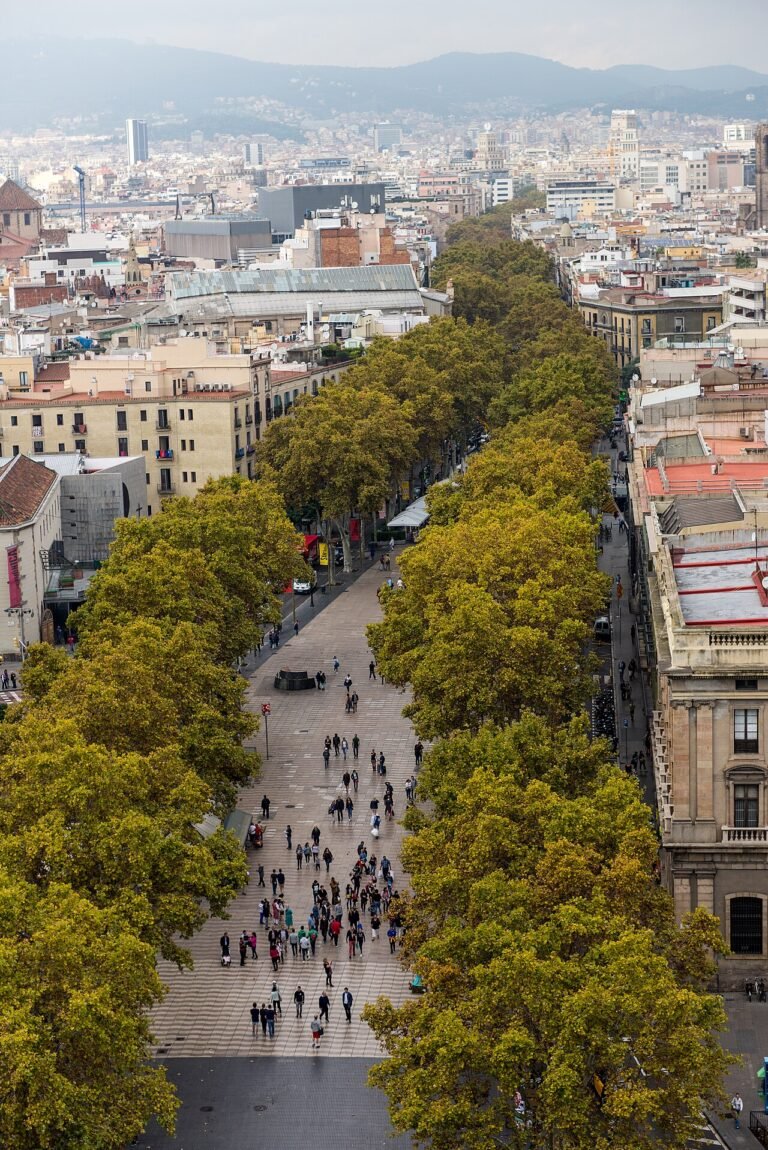
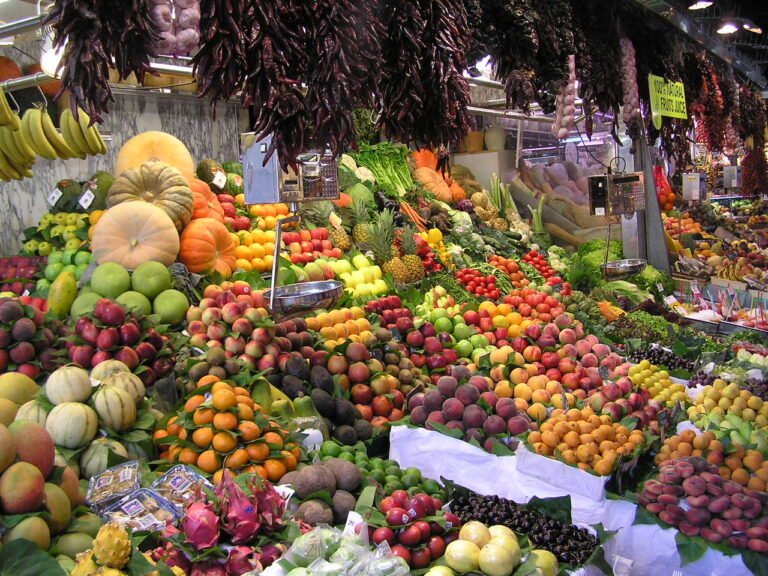
Five minutes west, the quarter softens around Santa Maria del Pi, the great fourteenth-century parish church of the pine tree. Catalan Gothic at its most muscular: a fortress-like exterior, an enormous single nave inside — one of the widest Gothic vaults in the world — and above the west door a rose window some ten metres across, among the largest of the Gothic age, rebuilt after the original was lost to fire in 1936. The square outside, the Plaça del Pi, holds a weekend art market under the pine, and the lanes around it — above all Carrer de Petritxol, the old town’s chocolate street, lined with granjas serving thick hot chocolate and melindros — are the quarter at its most edible. From here it is three minutes’ walk across La Rambla to the market halls of our La Boqueria guide: plan lunch accordingly.


What to See: Plaça Reial and the Southern Lanes
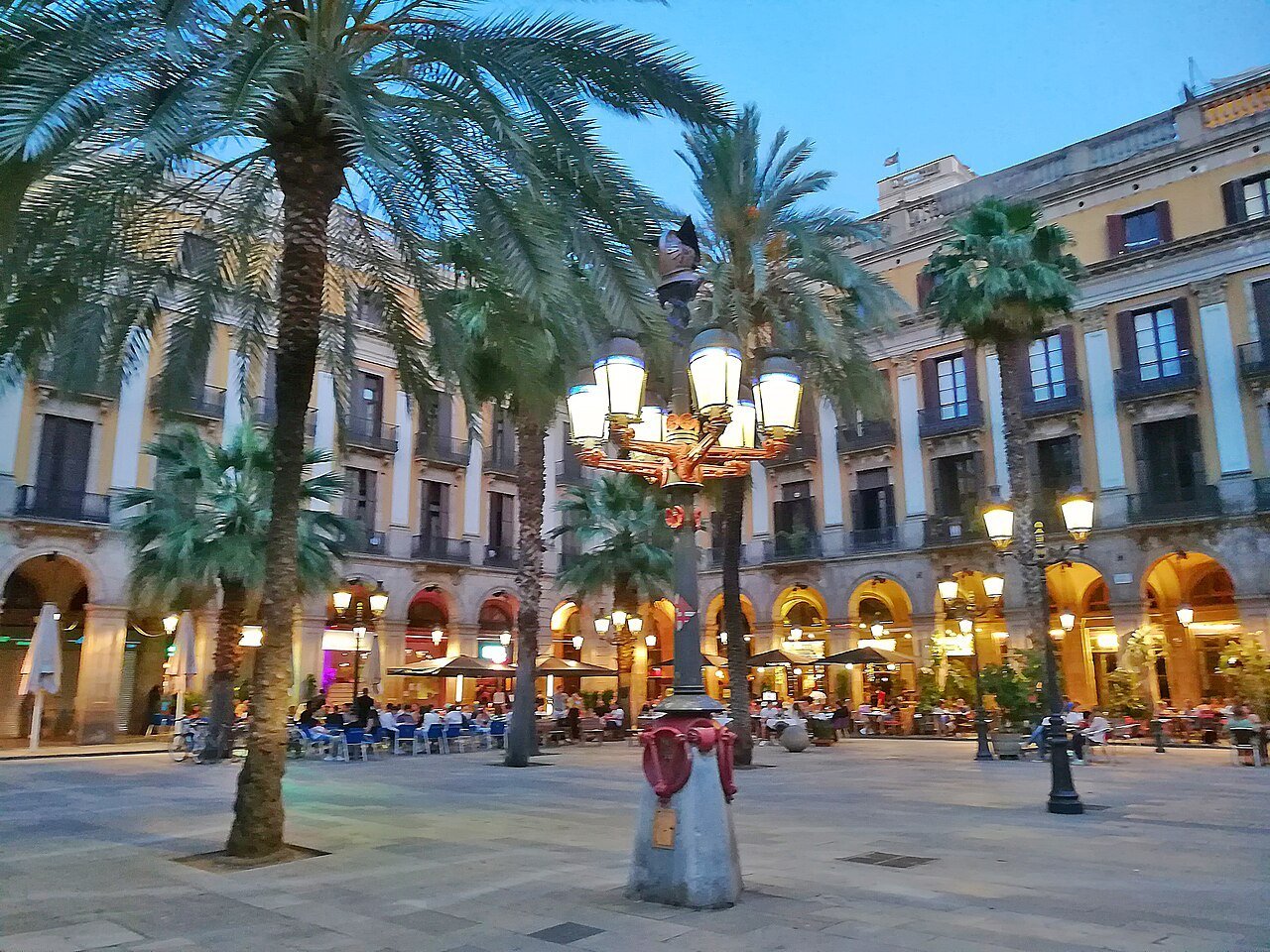
The quarter’s southern edge gives you its grand finale: Plaça Reial, just off La Rambla, a nineteenth-century set piece of ochre arcades, palm trees and ironwork that swapped the convent that stood here for Barcelona’s most elegant living room. Look at the lampposts flanking the Fountain of the Three Graces: six-armed, winged-helmeted, unmistakably odd — they are among the first public works of a young Antoni Gaudí, designed in 1878 before he had a style anyone could name. By day the square is café terraces and shade; by night it is the old town’s party, with clubs and bars working the arcades until late and a correspondingly lively crowd. Enjoy it, and enjoy it alert — of all the squares in this guide, this is the one where your bag deserves a knee through its strap after dark.
Around and below Plaça Reial, the southern lanes repay the wanderer: Carrer d’Avinyó, which gave Picasso the title of an early masterpiece; the little Plaça de George Orwell, named for the writer who fought in this city and described it in Homage to Catalonia; cheap, cheerful tapas bars that fill with locals queueing like locals. And when you surface, you are ideally placed: fifteen minutes east through the lanes of El Born is the soaring ship’s-hull nave of our Santa Maria del Mar guide — the two Gothic quarters, cathedral-side and sea-side, make one perfect walking day between them.

Practical Info
Getting there. The quarter is a pedestrian maze with metro gates for doors: Jaume I (line 4) drops you at its east edge, Liceu (line 3) at its west on La Rambla, and Catalunya (lines 1 and 3) at the top of La Rambla covers both. Nothing inside the quarter is more than ten minutes’ walk from anything else in this guide, and the correct transport once inside is your feet — the lanes are the attraction, and several are too narrow for anything with wheels anyway.
How long, and when. Half a day covers the headlines — Bisbe, Cathedral, Plaça del Rei, the temple — without strain; a full day lets you add the MUHBA excavations, the Call and Santa Maria del Pi, and still wander. Early morning is magic: by half past nine the lanes belong to deliveries and locals, and you will have the Pont del Bisbe almost to yourself. Evenings are the other golden hour. Around the Cathedral, Sunday mornings bring the sardana dancers circling on Plaça de la Seu — Catalonia dancing its national dance on the forum’s old ground, and entirely free to watch.
Safety, honestly. The Gothic Quarter is not dangerous, but it is one of Europe’s pickpocket capitals, and the honest guide says so plainly. The risk is theft, not violence: hands in bags at crowded photo stops, phones lifted from café tables, distraction teams working the lanes off La Rambla and around the Cathedral and Plaça Reial. The defences are boring and total: a zipped bag worn in front, nothing in back pockets, phone away when you are not using it, a firm no-thank-you to anyone who spills something on you or thrusts a petition, a sprig of rosemary or a petition board under your nose. Do that and the quarter is all pleasure — locals live, shop and raise children in these lanes, and the statistics that matter are about wallets, not people.
Staying in the old town. Sleeping inside the quarter puts the early-morning lanes on your doorstep and the whole of this guide within a five-minute walk: hotels and apartments fill the old merchants’ houses, the Cathedral area is the quietest base, and the streets off La Rambla the liveliest — and the lightest-sleeping should ask for a courtyard-facing room, because the old town celebrates late and the bin lorries start early. It is the most atmospheric base in Barcelona, chosen with open eyes.
Tips for Visiting
- Start at the bridge, before the crowds do. The Carrer del Bisbe is impassable-photo chaos by midday; at nine it is a private audience with the quarter’s most famous view.
- Book the walking tour early in your trip. A Gothic Quarter walking tour on day one re-reads the whole quarter for you — after it, every lane has a label, and the Call and the Roman layers stop being invisible.
- Do the MUHBA on a weekday morning. The underground city is the quarter’s one true blockbuster, and it is a better, quieter experience before the weekend groups descend.
- Let yourself get lost once, on purpose. The old town is small and ringed by streets you will recognise — La Rambla, Via Laietana, the Cathedral. Between them, getting lost for twenty minutes is the scheduled activity, not an accident.
- Eat one street off the sights. The squares’ terraces charge for their views; the same kitchen quality, at two-thirds of the price, sits in the lanes a minute away. Carrer de Petritxol’s chocolate, however, is worth the famous-street premium.
- Look for the skull under the bridge. Everyone photographs the Pont del Bisbe from the lane; the skull and dagger carved beneath its arch are the detail the guides save for the walkers who look up.
Travel insurance, sorted
Whether it is a two-week holiday or a longer move, travel insurance is not the most glamorous part of a trip — but it is the one booking you want to have in place before a trip, and while you are already away.
Final Thoughts
The Gothic Quarter is where Barcelona explains itself — not in a single monument, but in the pile-up: a Roman temple in a hiking club, a royal palace over a fish-sauce factory, a synagogue behind an unmarked door, a bomb’s signature on a church wall in a square full of children. Other districts have the masterpieces; this one has the evidence. Walk it slowly, look up often, put your phone in your pocket and your hand on your bag, and give the lanes the one thing they have always rewarded — time. The city outside has two thousand years of catching up to do.
¡Buen viaje!

Photo credits: The Pont del Bisbe close-up — Joe Mabel, CC BY-SA 4.0 · The Cathedral and Roman wall towers from above and a Gaudí lamppost in Plaça Reial — Enric, CC BY-SA 4.0 · The Pont del Bisbe full-length — Daniel Kraft, CC BY-SA 3.0 · A cloister goose at Barcelona Cathedral — Fernando, CC BY-SA 4.0 · Plaça del Rei — Catalan Art & Architecture Gallery (Josep Bracons), CC BY-SA 2.0 · The Temple of Augustus columns — Jesús Arpón, CC BY-SA 3.0 · A Roman inscription in the city wall and the rose window of Santa Maria del Pi — José Luiz, CC BY-SA 3.0 · Plaça de Sant Felip Neri — Justraveling.com, CC BY-SA 4.0 · Carrer de Marlet in the Call — Mariusmm, CC BY-SA 3.0 · Plaça Sant Jaume — Axelv, CC BY-SA 3.0 · A lane in the Barri Gòtic — Matti Blume, CC BY-SA 4.0. All via Wikimedia Commons.

10 Comments