Two Weeks in Southern Spain: A 14-Day Andalusia Itinerary
Two weeks in southern Spain runs like this: three nights in Granada, two in Córdoba, three in Seville, two in Cádiz, one in Ronda, two in Málaga and a final night in Almería, on the Cabo de Gata coast. That shape matters more than any single sight on it. The second week buys you the three things the one-week version has to cut — Cádiz, the Atlantic city a seven-day route never reaches; the Caminito del Rey, walked as its own day instead of a squeezed detour; and the wild volcanic coast of Cabo de Gata at the far south-eastern end — plus the quieter luxury of second mornings in the cities you came for.
This is the slow version of the southern line, written phase by phase rather than as a fourteen-day diary, because with two weeks the order matters more than the hour-by-hour. If you only have a week, our 7 days in southern Spain itinerary runs the same line at double speed; this article assumes you have the fortnight and want to know what the extra days are actually for. The places themselves are the ones we shortlisted as the iconic places in southern Spain — here they get the time they deserve.
In This Guide
- Days 1–3: Granada — the Alhambra and the Slow Quarters
- Days 4–5: Córdoba — the Mezquita, the Patios and a Second Day
- Days 6–8: Seville — the Icons, Then the Neighbourhoods
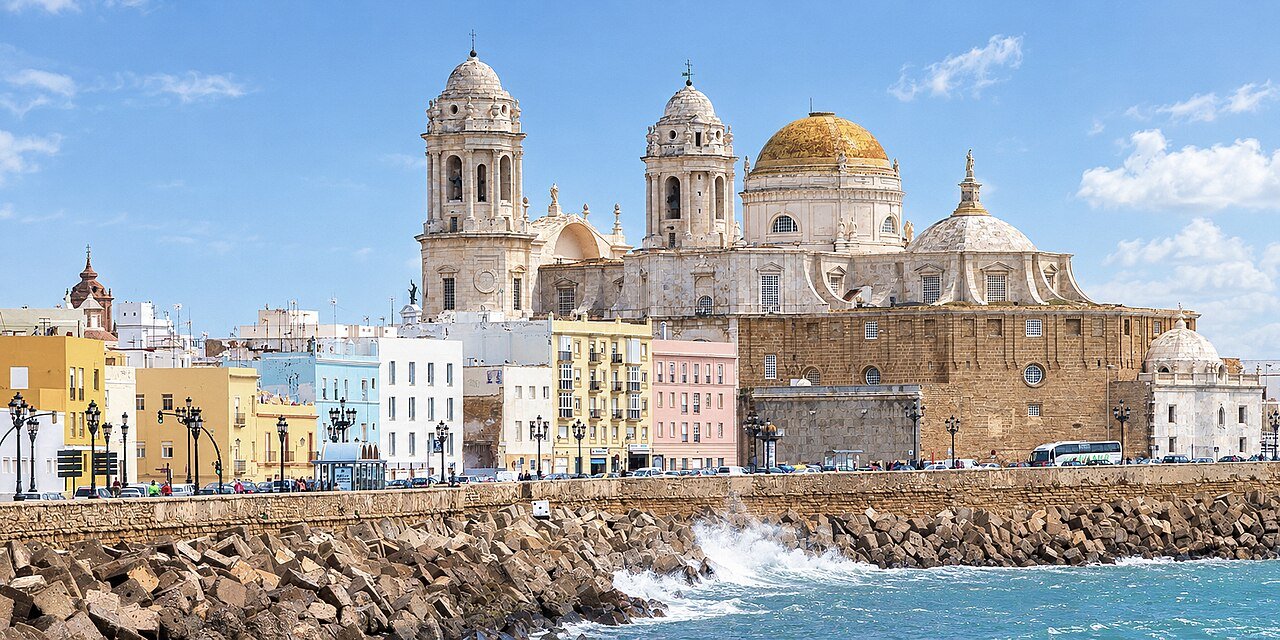
- Days 9–10: Cádiz — the Oldest City and the Atlantic
- Day 11: Ronda and the White Villages
- Days 12–13: Málaga — the City, Then the Caminito del Rey
- Day 14: Almería and Cabo de Gata — the Wild Coast Out
- Where to Base Yourself
- What to Book First
- When to Go
- Getting Around: Why Two Weeks Tips You Towards a Car
Days 1–3: Granada — the Alhambra and the Slow Quarters
Three nights in Granada changes the city’s whole register. The Alhambra still rules the trip — your ticket is named, checked against your passport or ID, and carries a strict timed slot for the Nasrid Palaces that you cannot change on the day; the official General ticket costs €21, or €22.27 bought online — but with a third night it stops being the only thing Granada is for.
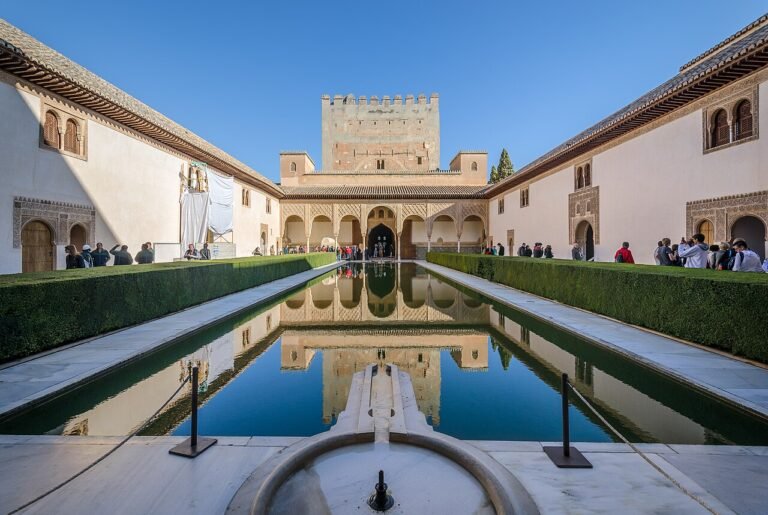
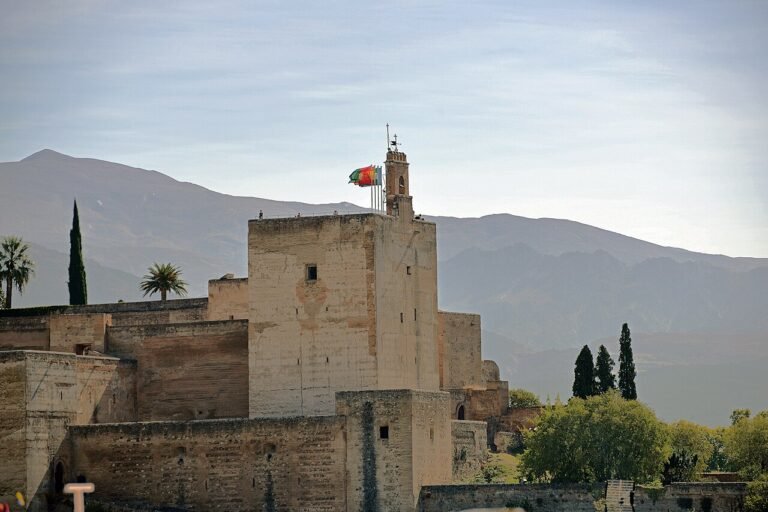
Give the palace its own morning and do it properly: the Alcazaba fortress and the Torre de la Vela first, the Nasrid Palaces at your slot — the Court of the Lions is the finest room in southern Spain — and the Generalife last, where the water channels and cypress walks slow everything down. Then stop. The one-week version leaves Granada the next morning; you do not, and the difference is the rest of this section.
What the extra time unlocks is the Granada that lives underneath the monument. A full day for the Albaicín with no agenda beyond drifting uphill through its white lanes to the Mirador de San Nicolás at sunset. An evening in Sacromonte, the cave-house quarter above the Darro, where flamenco was shaped in family caves and the houses are still hollowed out of the hill. The cathedral and Royal Chapel, the Alcaicería’s bazaar lanes, and a free-tapa bar crawl in which every drink still arrives with food in the traditional bars. Our things to do in Granada guide maps all of it street by street.


Days 4–5: Córdoba — the Mezquita, the Patios and a Second Day
The train from Granada takes around two hours, and Córdoba is where the two-week pace first proves itself. In the one-week version this city gets a single night and earns it; with two nights it gets something better — a second day, and with it the right to see the Mezquita twice.
See it first in the opening hour, when the hall of red-and-white double arches is emptiest and the low light does its theatre, walking the perimeter slowly to the mihrab, the gold-mosaic prayer niche at the far wall. The general ticket is now €15. Then spend the rest of day one in the old town that wraps around it: the Jewish Quarter’s lanes and little synagogue, the Roman bridge over the Guadalquivir, salmorejo in a tavern at lunch.
Day two belongs to the Córdoba the day-trippers never see. The patios come first — the flower-filled courtyards residents open each May for the Fiesta de los Patios, strung together all year at the Palacio de Viana, twelve in one visit. Then the Alcázar de los Reyes Cristianos, whose gardens of pools, hedges and orange trees are the city’s green lung, and a late return to the Mezquita’s quarter as the light drops — or a second entry, because a building this strange genuinely rewards one. Two nights also means the Roman bridge at sunset is a plan rather than a hope.


Days 6–8: Seville — the Icons, Then the Neighbourhoods
Córdoba to Seville is the easiest leg in Andalucía — around 45 minutes on the fastest trains — and three nights in the capital splits the city cleanly in two: the icons first, then the neighbourhoods, with a day in reserve for whatever Seville persuades you to repeat.
Day one is the monumental pair either side of the Plaza del Triunfo. Seville Cathedral, the largest Gothic cathedral in the world, raised on the site of the great mosque, holding the tomb of Columbus — and its bell tower, the Giralda, the mosque’s old minaret, climbed by wide ramps rather than stairs to the panorama of the whole city. Opposite, the Real Alcázar: a royal palace still used by Spain’s royal family, Mudéjar courtyards of tile and carved plaster, acres of gardens behind. Do the palace rooms before midday fills them and give the gardens the slow hour most visitors skip.
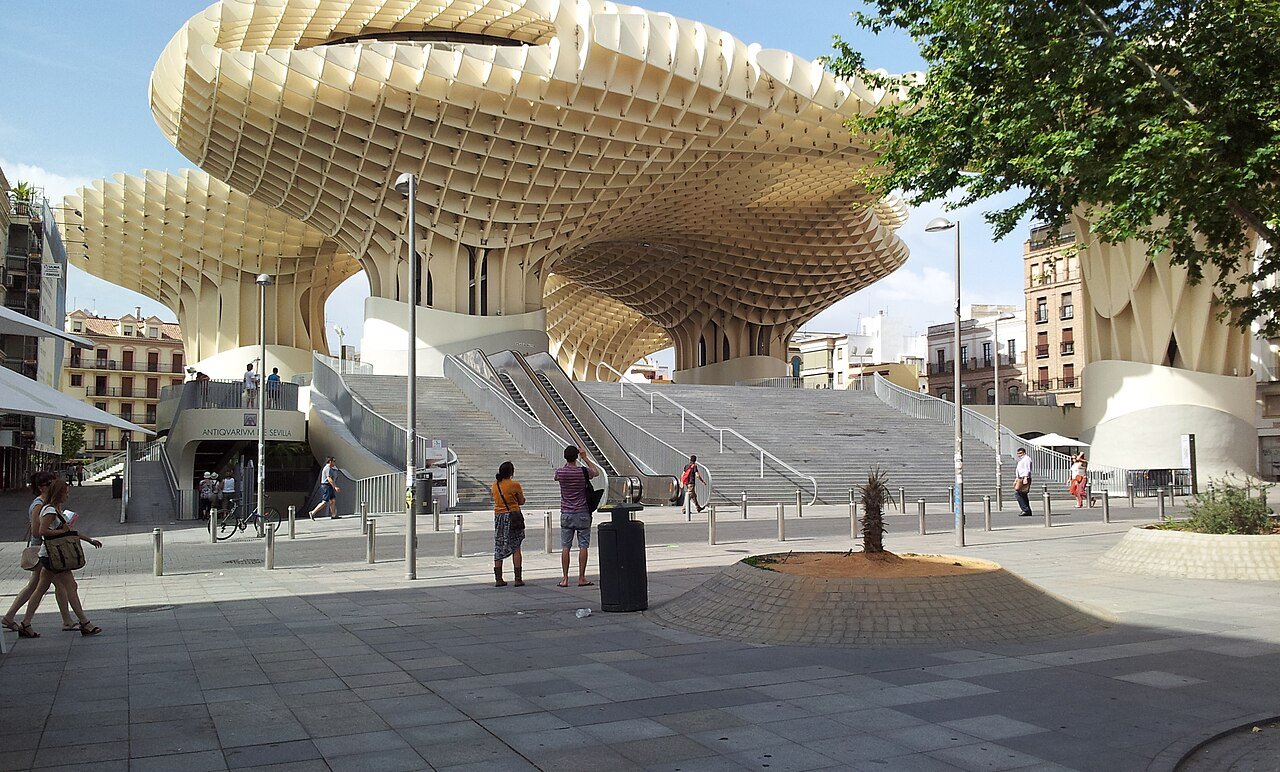
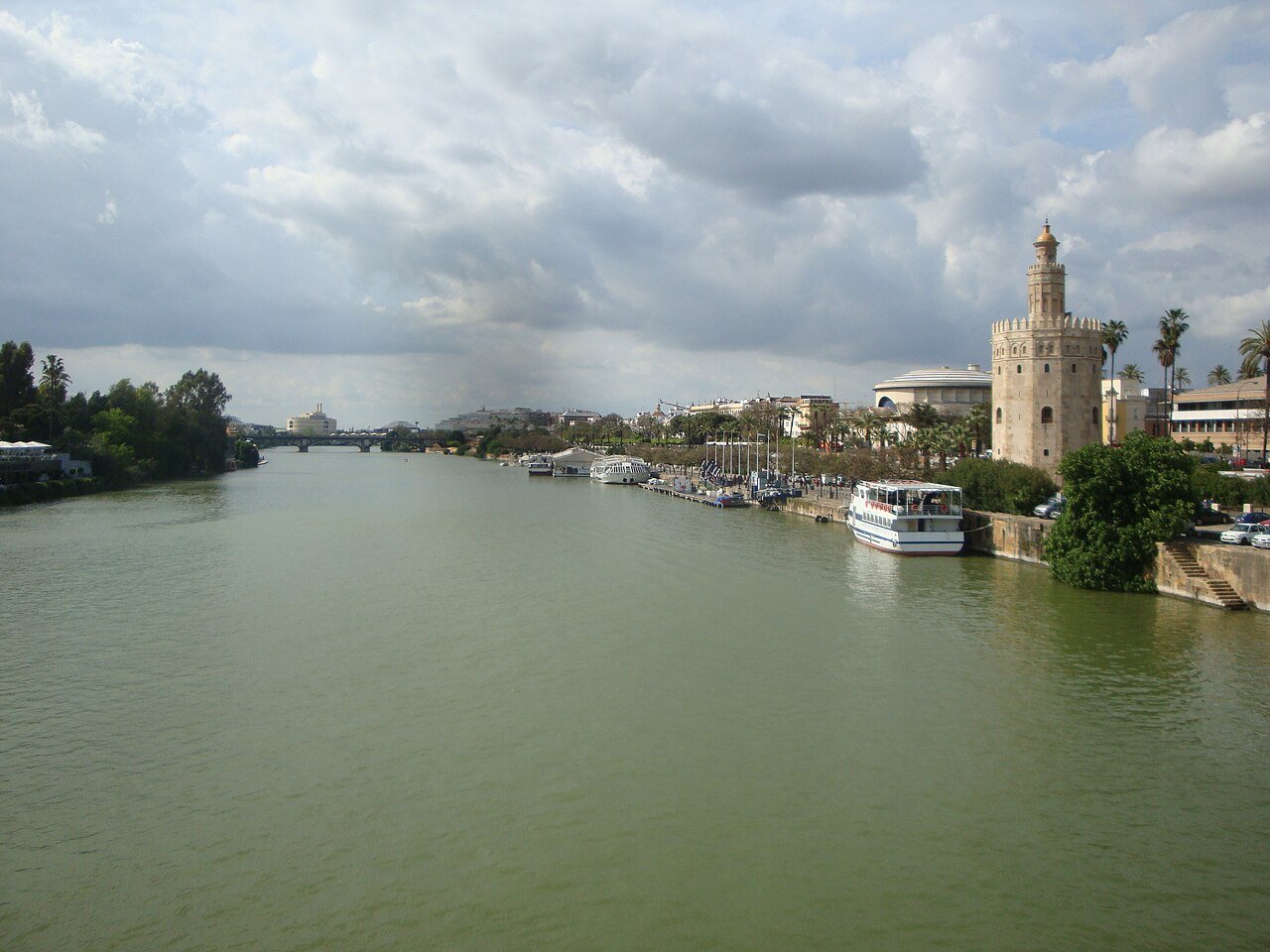
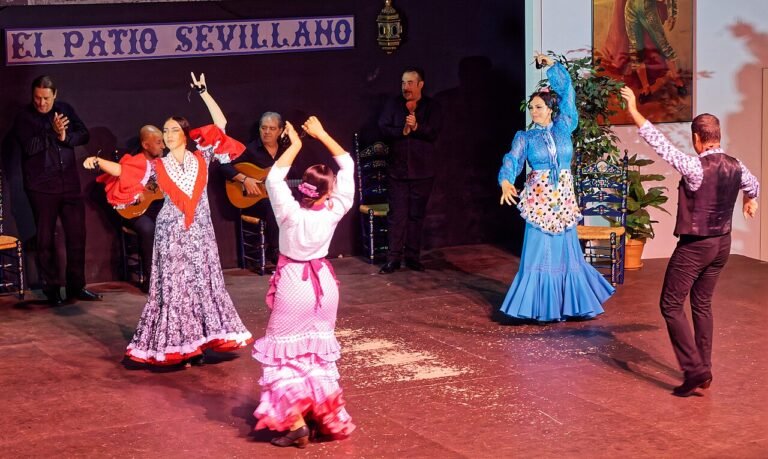
What the extra days unlock is the Seville that is not a monument. A morning in the Barrio de Santa Cruz that is allowed to get lost. The Plaza de España early, while the canal is glass — the 1929 semicircular showpiece of brick and ceramic, a tiled alcove for every province, free at any hour as the public square it is. Las Setas, the great wooden canopy of the Metropol Parasol, for its rooftop walkway at dusk. Triana across the river in the evening: ceramics workshops, the market by the bridge, tapas on Calle Betis as the Torre del Oro lights up on the water, and flamenco in the bars where it lives — or one staged show, booked properly, on the night of your choice rather than the only night you have.
Days 9–10: Cádiz — the Oldest City and the Atlantic
Cádiz is the first place on this route that the one-week version simply does not contain, and it justifies the whole second week on its own. Around an hour and a half from Seville by train, it is a dense old town on a narrow peninsula, founded by the Phoenicians as Gadir and among the oldest continuously inhabited cities in western Europe — almost entirely surrounded by Atlantic water, and lit like it knows it.
Two nights means Cádiz gets a full day and two evenings instead of a day trip’s stolen afternoon. Day one is the old town’s skeleton: the cathedral, whose dome of golden tiles catches the light like a lighthouse, and its Poniente tower for the panorama of domes, watchtowers and ocean; the Roman theatre, among the oldest and largest in Spain, sitting unassumingly in the El Pópulo quarter; and the watchtowers themselves, built by merchants to spot their ships coming home, of which the Torre Tavira is the one to climb. A guide earns their fee knitting 3,000 years together: the Cadiz: Medieval Tour is rated 4.7/5 from 465 reviews, runs from $32.12 per person for two hours with cathedral and Poniente Tower admission included, and comes with free cancellation up to 24 hours in advance for a full refund plus reserve now & pay later.
Day two is the Atlantic’s. The central market in the morning, when the fish stalls are at full volume; La Caleta, the old town’s little city beach between two castles, for the middle of the day; the Campo del Sur promenade walked slowly; and sunset where the whole city schedules it — the west-facing shore, the golden dome behind you, half of Cádiz out for the same light. Cádiz is also the route’s seafood summit: fried fish in the Viña quarter, eaten standing up, is not a recommendation so much as an instruction.

Day 11: Ronda and the White Villages
From Cádiz the route turns inland and uphill — by car this is the day the mountains start, and if you are travelling by train and bus it routes back through Seville’s rail hub, which is the one genuinely awkward leg of the fortnight and worth knowing about before you fix your bookings. Either way, the destination justifies the logistics: Ronda, split in two by the El Tajo gorge and leapt by the Puente Nuevo, the “new” bridge finished in 1793 that stands almost 100 metres above the Guadalevín river.
One night here is deliberate rather than stingy — Ronda is the one stop the two-week route keeps at the one-week length, because its drama is concentrated rather than spread. Cross the bridge slowly, take the path down towards the gorge-floor viewpoints for the view of the bridge, walk the old town’s palaces and churches, and stand in one of Spain’s oldest bullrings. Then add one white village on the way in or out: Setenil de las Bodegas, whose main streets run under the rock, is the unforgettable one. Our guide to the best Spanish towns covers the strongest of the pueblos blancos for the choosing.
And sleep here. The gorge floodlit, the day-trippers gone, the old town quiet — the night in Ronda is the week’s most romantic, and both versions of this route agree on keeping it.

Days 12–13: Málaga — the City, Then the Caminito del Rey
Málaga gets two nights and two completely different days, and the split is the point. From Ronda it is around two hours down to the coast, and the city that greets you is far more than the airport with a beach attached that too many travellers assume.
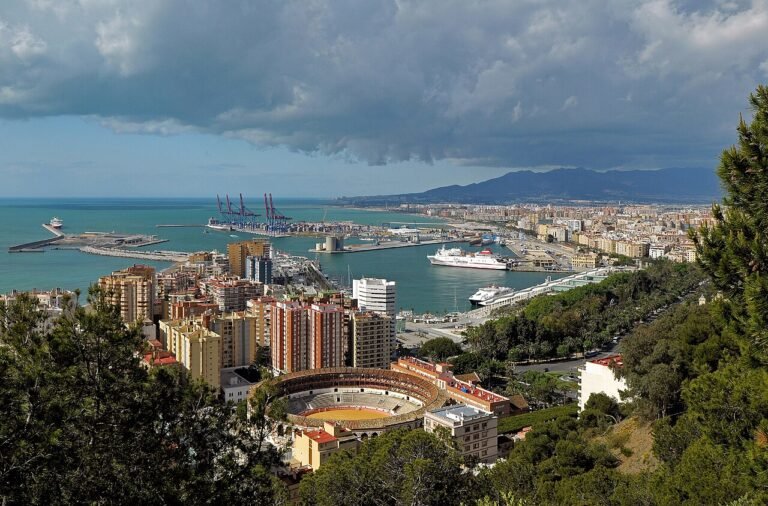
Day one is Málaga itself: the double act of fortresses above the port — the Alcazaba, the 11th-century Moorish palace-fortress of terraces and quiet courtyards with the Roman theatre at its feet, now €7 or €10 combined with Gibralfaro castle above it, whose summit holds the panorama of port, bullring and bay — then the Picasso Museum in the painter’s birthplace city, the port promenade of Muelle Uno under its great white pergola, and espetos, sardines grilled on skewers over olive wood, at a chiringuito in Pedregalejo. Our things to do in Málaga guide builds a longer stay around all of it.
Day two is the Caminito del Rey, given the full day the one-week route cannot spare it. A walkway pinned to the near-vertical walls of the Gaitanes Gorge, in places a hundred metres above the river: built for hydroelectric workers, walked by Alfonso XIII in 1921, decayed into legend, and rebuilt completely and reopened in 2015 as a safe — but still gloriously airy — boardwalk ending in a suspension bridge across the narrows. Entry is timed, helmets are issued and worn, and children under eight are not allowed. The straightforward way from a Málaga base is the organised day: the Caminito del Rey from Málaga: Round-Trip Bus + Tour with Official Guide is rated 4.8/5 from 963 reviews, runs from $64 per person for seven hours with the bus, a licensed guide and first-entry tickets included, and comes with free cancellation up to 24 hours in advance for a full refund plus reserve now & pay later — flexibility that matters on a route the weather can close.


Day 14: Almería and Cabo de Gata — the Wild Coast Out
The last leg runs east along the coast from Málaga — a couple of hours by road, through the greenhouse sea of the Almería coast — and the route ends by deliberately leaving the cities behind. If you are driving, break the journey at Nerja and climb the six kilometres inland to Frigiliana, the Axarquía’s model white village, before the coast road delivers you to Almería.
Almería city deserves its half day before the park takes over: its Alcazaba, one of the largest Moorish fortresses in Spain, climbs the hill above the port in three walled enclosures, and the cathedral was built half as a fortress against the pirates this coast lived in fear of. Then the landscape changes its mind completely. Cabo de Gata, in the far south-east, is a volcanic mountain range falling into the Mediterranean in a string of coves — black and ochre headlands, fossil dunes, salt flats with flamingos — the driest corner of Europe and like nowhere else in Spain.
The one thing not to miss is Playa de Mónsul, where a great fossilised lava flow stands in the surf like a frozen wave — go early, because in summer the small car parks fill and access to the most popular coves is controlled. The fishing village of San José is the natural base for the park’s southern coves; the northern coves are best seen from the water, from Carboneras: the Cabo de Gata: Yacht Tour to the 5 Best Beaches is rated 4.5/5 from 289 reviews, runs from $78.43 per person for a two-hour small-group cruise past Playa de los Muertos and the Mesa Roldán lighthouse to a swim stop at Cala de Enmedio, and comes with free cancellation up to 24 hours in advance for a full refund plus reserve now & pay later. Sleep this last night in Almería or San José; the route out is Málaga airport, a straightforward run back west, or Almería’s own small airport for the connections it offers.

Where to Base Yourself
The night split — Granada 3, Córdoba 2, Seville 3, Cádiz 2, Ronda 1, Málaga 2, Almería 1 — is the itinerary, and it works for the same reason the one-week split does: Andalucía’s distances punish hub-and-spoke travel, and every evening lands somewhere new. Two weeks softens the discipline, though. With seven bases in fourteen nights you are moving every other night on average, never twice in a row except at the Ronda turn, and each base earns its keep.
The honest alternatives, if packing seven times sounds like a chore. You can fold Córdoba into Seville — the trains take about 45 minutes — and day-trip it, but you lose the patios in the evening quiet and the bridge at sunset, which is half the city. You can fold Ronda into Málaga as a day trip and gain a fourteenth night somewhere calmer, but you trade away Ronda floodlit, and that trade is the whole point of stopping there. And you can drop the Almería night and fly home from Málaga after a second Cabo-free day — the route survives it, but the wild coast is what makes this version different, so cut anything else first. If your two weeks are for the whole country rather than just the south, our two-week Spain itinerary runs the Madrid-and-Barcelona version of the fortnight; this southern line is the deeper, slower cut of the same days.

What to Book First
Book in this order, and the fortnight takes care of itself:
- The Alhambra. Before flights, before hotels. Tickets are named, ID-checked and tied to a strict timed entry for the Nasrid Palaces; the General ticket costs €21 (€22.27 online) and popular dates — spring and autumn weekends above all — sell out weeks ahead. Everything else in this itinerary can flex around your Alhambra slot; nothing can replace it.
- The long trains. Córdoba–Seville especially: the fastest services fill, and booking ahead is cheaper. Granada’s direct trains are few, so check those times before you fix your Granada-to-Córdoba day.
- The Caminito del Rey. Timed entry, a fixed daily capacity and weather closures mean the day sells out in season — book it, or the organised tour that carries its own first-entry tickets, as soon as your Málaga dates are set.
- Seville’s monuments. Cathedral and Alcázar entry is timed; pre-booked tickets or a priority-access tour turn the icon day from queueing into sightseeing.
- Cabo de Gata in summer. The coves’ controlled access and small car parks reward an early start rather than a booking — but boat tours from Carboneras do sell out, so reserve the one you want.
What does not need booking: the Mezquita (turn up early; the ticket is €15 and the hall swallows crowds), Málaga’s Alcazaba (€7, or €10 with Gibralfaro), the patios outside festival week, and every plaza, mirador and village in this itinerary.
When to Go
Spring (late March to early June) is southern Spain at its best, and a two-week trip feels it twice over: warm, bright, orange blossom in Seville, the sea warming up at the Cádiz and Almería ends — and, in May, Córdoba’s patios in full flower, though festival week brings that city’s biggest crowds and prices. Autumn (mid-September to early November) runs a close second and is arguably the two-week season: the Mediterranean is at its warmest for the Cabo de Gata days, the inland cities have shed the worst of the heat, and the crowds thin everywhere.
July and August are the honest warning, doubled by the length of the trip: Seville and Córdoba regularly pass 40 °C, and a fortnight of dawn-and-evening sightseeing with long shaded lunches is a discipline not everyone wants on holiday — if summer is your only window, weight the trip towards its coasts, Cádiz and Cabo de Gata, and give the inland icons their early slots. Winter is mild, quiet and cheap by comparison, with snow on the Sierra Nevada behind the Alhambra as compensation and the Caminito at its emptiest. And if your diary stretches to ten days rather than fourteen, our 10 days in Spain itinerary shows which of these stops the shorter version keeps — Cádiz and Cabo de Gata are what the extra four days buy back.
Getting Around: With a Car and Without One
Without a car is entirely workable. Trains cover Granada–Córdoba–Seville and Seville–Cádiz well; buses fill the gaps, above all into Ronda and along the coast to Almería, with the frequent ALSA services as the reliable fallback wherever direct trains are few — Granada’s especially. Your two disciplines are timetable discipline on the Granada legs, and the one awkward hop: Cádiz to Ronda, which by public transport routes back through the Seville hub and eats half a day. Plan it as a travel morning with a long lunch at the far end, and it stops hurting.
With a car, the second week transforms — and this is the honest difference from the one-week version. Fourteen days tips the balance: the Cádiz-to-Ronda hop becomes a direct mountain drive instead of a hub detour, the white villages stop being a choice of one and become a string, Frigiliana and Nerja become a stop rather than a project, and Cabo de Gata — a natural park of scattered coves, trailhead car parks and one fishing-village base — is simply a different, better trip with wheels than without. The costs are the same as ever: old-town parking (pay for car parks; never improvise) and city driving you do not need for the Granada–Córdoba–Seville legs. The hybrid many travellers choose still applies: trains for the first week, a hire car picked up in Seville or Cádiz for Ronda, Málaga, the coast road and the airport run.
Travel insurance, sorted
Whether it is a two-week holiday or a longer move, travel insurance is not the most glamorous part of a trip – but it is the one booking you want to have in place before a trip, and while you are already away. Get a quote from SafetyWing
Final Thoughts
The shape of this fortnight is the shape of Andalucía itself, taken at the pace it asks for: palace, mosque-cathedral, cathedral, Atlantic, gorge, cliff path, volcanic coast — each phase a different century, none of them a repeat, and none of them rushed. Keep the Alhambra booking sacred, sleep in the places rather than day-tripping past them, and let the second week do the work it is there for: the cities get their second mornings, and the route gets its wild edges. Two weeks is not a long time in southern Spain. It is simply, finally, enough.
Frequently Asked Questions
Is two weeks too long for southern Spain?
No — it is close to the ideal length. One week covers the region’s spine (Granada, Córdoba, Seville, Ronda, Málaga) at a brisk but enjoyable pace; the second week adds Cádiz, a full Caminito del Rey day and the Cabo de Gata coast, and converts the big three cities from checklist stops into places you settle into. Travellers who find a fortnight too long in Andalucía are almost always the ones who based themselves in one city and day-tripped — this route moves, and moving is what fills the days.
What does the second week add that one week cannot?
Three whole places and a change of pace everywhere else. The places: Cádiz, the Atlantic old town a seven-day route never reaches; the Caminito del Rey as its own day from Málaga rather than a squeezed detour; and Almería with the Cabo de Gata natural park, the volcanic coast at the region’s far south-eastern end. The pace: second nights that become second mornings — the Mezquita seen twice, Seville’s neighbourhoods beyond the monuments, Granada’s Sacromonte in the evening — which is where most travellers say the trip actually lives.
Do you need a car for two weeks in southern Spain?
No, but the balance tips further towards one than it does in a week. Trains and buses cover the whole line — Granada, Córdoba, Seville and Cádiz are easy by rail, and buses handle Ronda and the Almería coast. A car earns its keep on exactly three things: the Cádiz-to-Ronda leg, which public transport routes awkwardly back through Seville; the white villages, which become a string instead of a choice; and Cabo de Gata, whose coves are scattered along a coast with trailhead car parks. The hybrid — trains for week one, a hire car from Seville or Cádiz onwards — is what many travellers choose.
Which airports should you fly into and out of?
Málaga (AGP) for both, in almost every case: it is the south’s main international airport, about an hour and a half from Granada by direct bus or train at the start, and the route’s shape means you pass back along the coast towards it at the end. Almería’s small airport can work for the return if its limited connections suit you, saving the run west on the last day. Flying into Seville and out of Málaga is the other sensible open-jaw — it simply reverses the route’s first half, and the itinerary survives reversing intact, as the last answer explains.
What is the one thing you must book in advance?
The Alhambra. Its tickets are named, checked against photo ID, and carry a strict timed slot for the Nasrid Palaces that cannot be changed on the day; the General ticket costs €21 (€22.27 bought online) and popular dates sell out weeks ahead. Book it before flights and hotels, and build the Granada days around the slot you get. Second on the list is the Caminito del Rey — timed entry with a fixed daily capacity — and third is Seville’s cathedral and Alcázar, where timed entry turns queueing time into sightseeing time.
When is the best time of year for a two-week trip?
Spring, late March to early June, is the south at its best — warm and bright inland, orange blossom in Seville, the patios in flower in Córdoba in May, and the sea coming into its own at both coastal ends. Mid-September to early November is a close second and the connoisseur’s pick for a fortnight, with the warmest sea of the year for Cabo de Gata and the inland heat broken. July and August work only with early starts and a coast-weighted version of the route, as Seville and Córdoba regularly exceed 40 °C; winter is mild and uncrowded, with snow behind the Alhambra as the trade for shorter days.
Can you do this itinerary in reverse, from Almería to Granada?
Yes, and the route is built to survive it. Start on the Cabo de Gata coast while you are fresh — Mónsul early, the boat from Carboneras, Almería’s Alcazaba — then run west through Málaga (city day first, Caminito second), Ronda, Cádiz, Seville and Córdoba, and finish in Granada, flying home via Málaga airport after a final transfer of about an hour and a half. Many travellers prefer it this way: the trip builds from wild coast to great cities and ends on the finest rooms in Spain, the Nasrid Palaces, as a finale rather than a foundation. Whichever direction you run it, the same two rules hold — book the Alhambra before you book anything else, and give Ronda its night. The gorge floodlit, with the day-trippers gone, is not a sight to drive away from in either direction.
One Comment