Mercado Central Valencia: The Complete Food Lover’s Guide
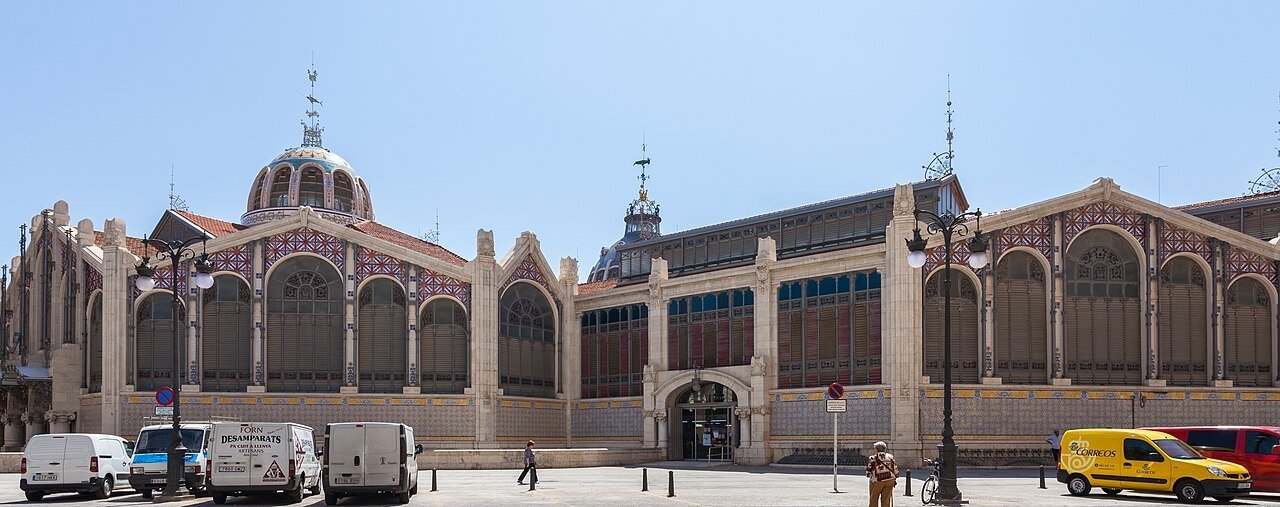
There are food markets you shop in, and food markets you simply stand in, looking up, while somebody’s grandmother pushes past you with a trolley full of artichokes. Valencia’s Mercado Central is both at once. It covers a whole city block of the old town — one of the largest fresh food markets in Europe — and it does so inside a soaring Modernista hall of iron, glass and painted ceramics, crowned by a dome decorated with orange branches and watched over, from the very top of the roof, by a green parrot. Under that dome, several hundred stalls sell everything the Valencian countryside and the Mediterranean can produce: fish that was swimming yesterday, hams cured for years, oranges picked from the groves that ring the city, and rice grown in the flooded fields of the Albufera a few kilometres south. It is a working market first and a sight second, and that order matters — come here to gawp by all means, but come hungry.
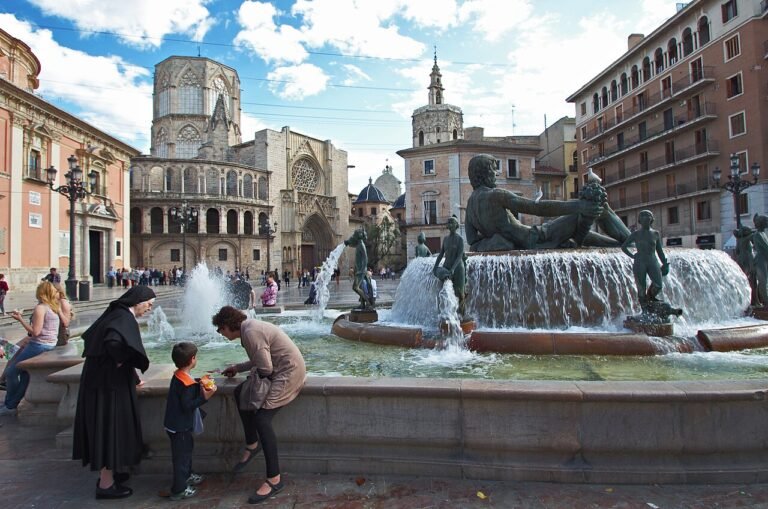
This guide walks the market the way a food lover should: the building itself first, because it is half the experience, then the fish, the meat and jamón, the fruit and vegetables of the Huerta, the deli stalls around the edges, and the bars where you can eat the market without cooking it. It sits directly across the Plaça del Mercat from the Lonja de la Seda — silk money on one side, food money on the other — and it belongs at the top of our Best Things to Do in Valencia list, above several places with tickets and queues. The market has neither. Walk in.

The Short Answer
Yes — the Mercado Central is unmissable, it is completely free to enter, and you should come in the morning, when the market is at full buzz and every stall is open. This is not a tourist attraction dressed as a market; it is Valencia’s real living room and larder, where the city’s chefs, grandmothers and restaurant buyers shop shoulder to shoulder, and where the produce of the Huerta — the market garden that surrounds the city — arrives daily. Give it an hour to wander and graze, longer if you are shopping for a picnic or a paella. If you want the stalls explained as you go, a guided GetYourGuide – Valencia food tour picks its way through the market tasting as it walks; but the market needs no ticket and no guide to enjoy — just an appetite and the sense to arrive before the early-afternoon wind-down.
Table of Contents
- The Short Answer
- The Story in Brief
- The Building and Its Dome
- The Fish Section
- The Meat, Jamón and Charcuterie Stalls
- Fruit, Vegetables and the Huerta
- The Stalls Around the Edges
- Eating Inside the Market
- Practical Info
- Tips for Visiting
- Final Thoughts
The Story in Brief
There has been a market on this ground since the thirteenth century — an open-air sprawl of stalls and awnings on the square outside the city walls, where the farmers of the Huerta sold what the irrigated fields produced and the fishermen of El Cabanyal sold what the sea gave up. For six hundred years Valencia fed itself in the open air here, in all weathers, and by the nineteenth century the city had decided its market deserved a roof worthy of its food. The competition for the building was held in 1910, and the winners were two young Catalan architects, Alejandro Soler March and Francisco Guardia Vial, who proposed something in the Valencian Modernista style: a cathedral of food built from the new materials — iron, glass and steel — and decorated with the old ones, ceramics and stained glass, in oranges, lemons and blossom.
Construction began in 1914 and, interrupted by the First World War’s shortages of iron, did not finish until 1928. What opened that year was one of the biggest covered markets in Europe: more than 8,000 square metres of trading floor under a roof of domes and pitched glass, holding at its height some 1,200 stalls. Nearly a century on, the numbers have settled a little — stalls have grown as families merged them — but the market remains one of Europe’s great fresh food halls, and the important thing has not changed at all: it is still where Valencia actually shops. The tour groups drift through taking photographs of the fish. The city, meanwhile, is buying the fish.
The Building and Its Dome
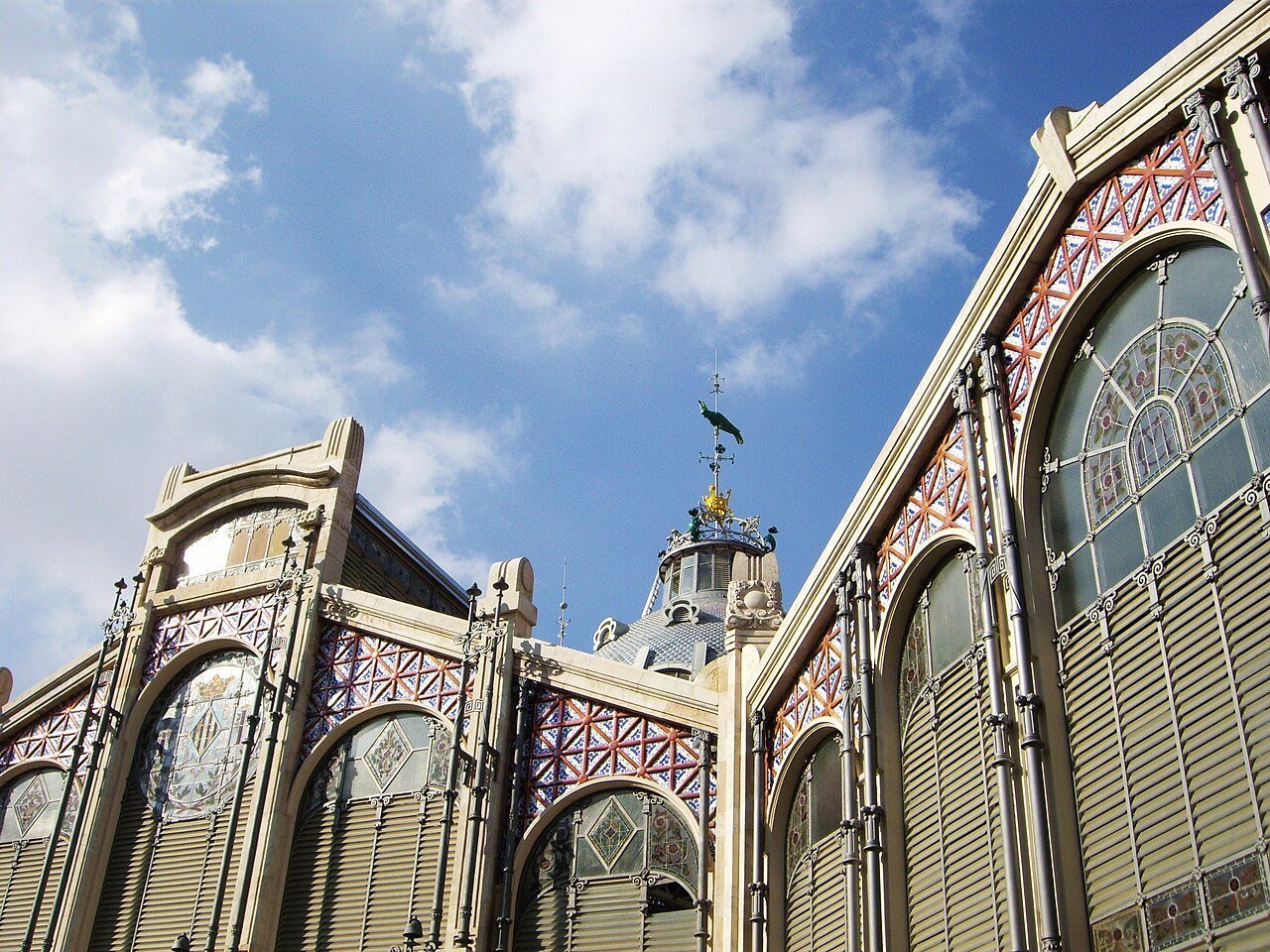
Before you look at a single stall, look up. The market’s great party trick is its central dome: a vast cupola of iron and glass that rises over the crossing of the aisles, its inner surface painted with branches of oranges and orange blossom and ringed with a band of patterned ceramics, so that daylight pours down through a Valencian orchard in the sky. Around it the roofs step and pitch in glass and timber over the aisles, held up by white iron trusses as delicate as lacework — this is a building engineered like a railway station and decorated like a wedding cake, and the combination is pure Valencian Modernismo, Catalonia’s art nouveau given a local accent of citrus and ceramics.
The details reward a slow circuit. At one end of the central aisle, high above the stalls, a round stained-glass window carries the red-and-gold striped arms of Valencia amid painted foliage — the city’s shield, glowing, in a food market. Ceramic panels of oranges and lemons run along the walls and façades; ironwork curls into plant shapes; even the little tiled stall numbers are pretty. And then there is the roofline. On top of the central dome sits a small spire, and on top of the spire a weathervane in the shape of a parrot — la cotorra del Mercat, the market parrot, the building’s mascot and one of the city’s best-loved symbols. The choice is a joke with deep roots: a parrot repeats everything it hears, and a market is where a city trades its news and gossip along with its cabbages. Listen to the roar under the dome at ten on a Saturday morning and you will hear exactly what the parrot is up there repeating.

The Fish Section
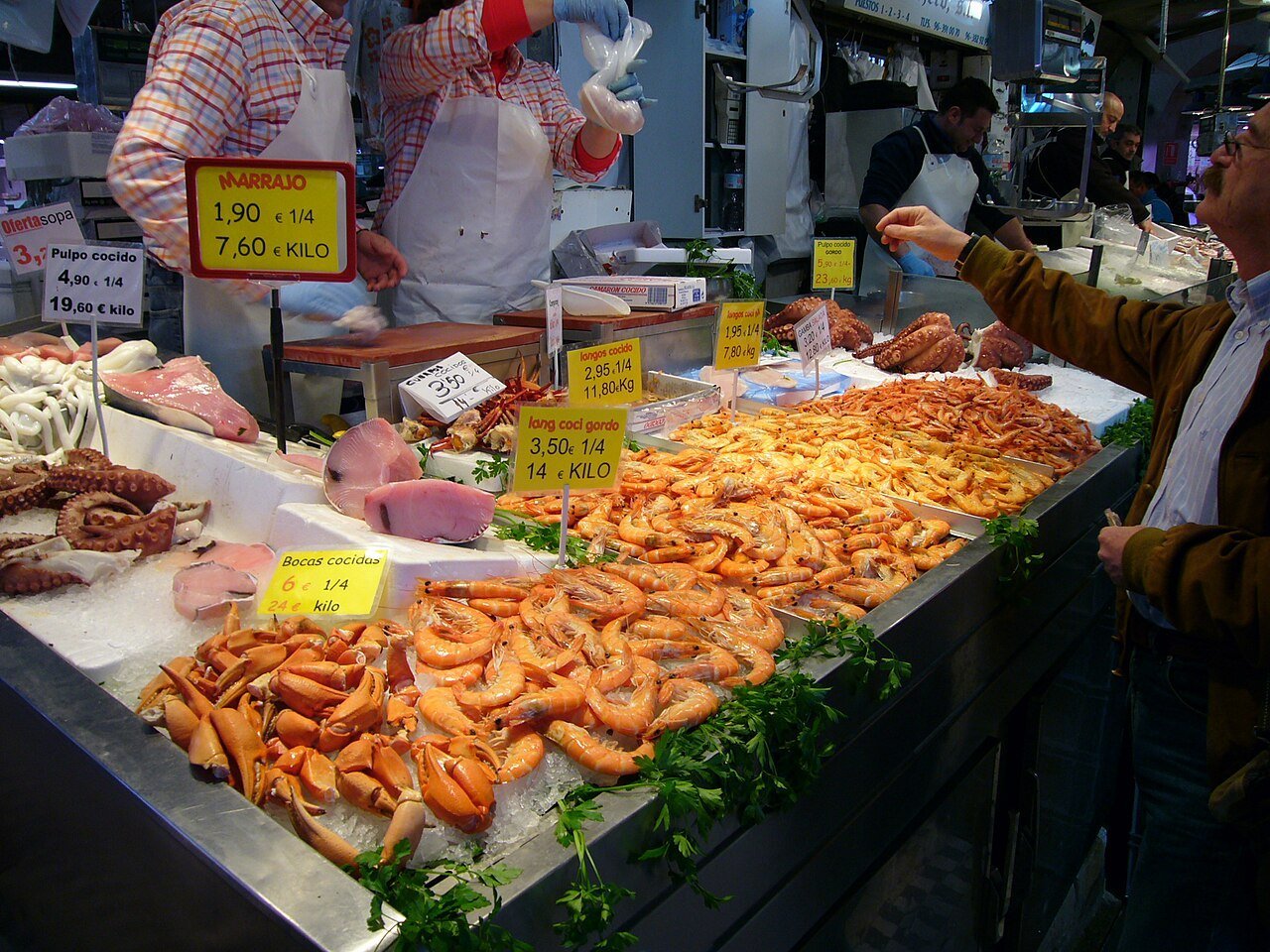
Every great market has a beating heart, and here it is the fish. The fish stalls fill one whole end of the building in long, gleaming rows, and the first thing that hits you is not the smell — the ice sees to that — but the abundance: whole Mediterranean fish laid out by species on crushed ice, silvery and stiff-finned; trays of gambas and langoustines; cigalas like little lobsters; clams and mussels; octopus curled in purple piles; cuttlefish and squid, whole and cleaned; and in season, trays of clóchinas, the small, sweet Valencian mussel that locals will tell you, correctly, puts the bigger Atlantic mussel in the shade.
The honest notes, because this section is not a sanitised display. Some of the stock is alive or very recently so: eels writhe slowly in their trays, and there are species on the ice — shark (marrajo), rays, strange deep-water faces — that remind you the Mediterranean is a wilder place than the fish counter at home suggests. Floors get wet; ice melts; the stallholders shout their prices and their opinions. It is theatre and larder in one, and the prices are written on little cards stuck in the ice, so you can browse without committing. You do not need to buy a thing to enjoy it. But if you have a kitchen in Valencia, this is where dinner starts — the stallholders will clean, gut and scale anything you point at, in about the time it takes to pay.

Free Valencia travel guide
Planning a trip to Valencia? Get our free one-page Valencia checklist: what to book ahead, what to skip, and the paella places we actually eat in.
The Meat, Jamón and Charcuterie Stalls
Turn from the fish into the meat aisles and the colour changes from silver to red and gold. The glory here is jamón: whole cured hams hang in long rows above the charcuterie counters, hooves up, in a display that is half stockroom and half chandelier. Read the labels as you would a wine list. Jamón ibérico from acorn-fed pigs sits at the top of the tree, priced accordingly; below it come the other ibérico grades and then the serrano hams, and Valencia also looks north to Aragón for Jamón de Teruel, a protected-name ham that locals rate highly and visitors overlook. The good stalls will slice any of it paper-thin to order, and — the traveller’s essential detail — vacuum-pack it (envasado al vacío), so a leg’s worth of flavour can fly home in your suitcase legally and keep for weeks.
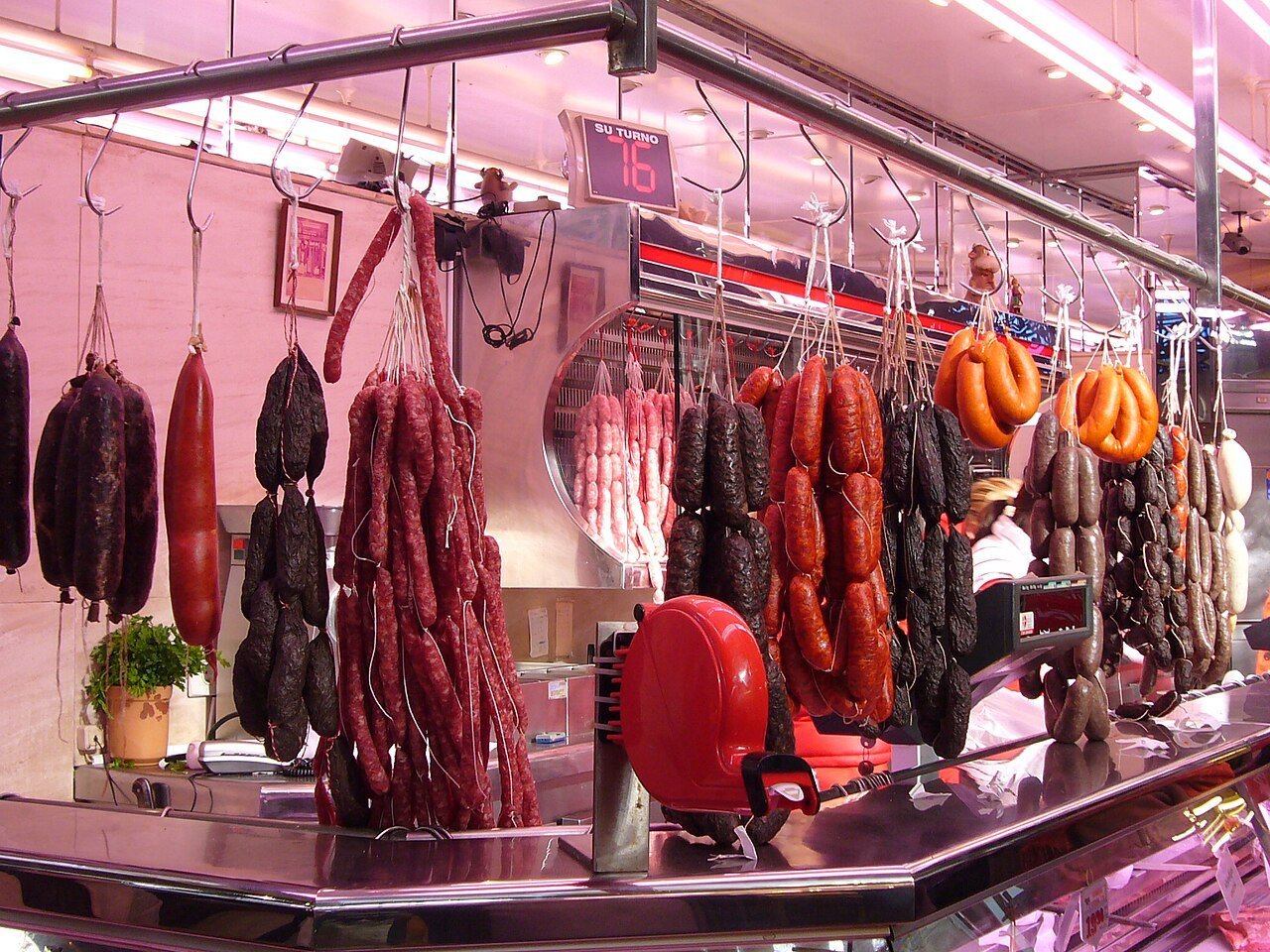
Around the hams runs the full charcuterie orchestra: strings of chorizo in shades of paprika red, dark morcillas, longaniza sausages, salchichón, sobrasada, lomo. The butchers proper sell the fresh side — pork, veal, lamb, rabbit (note it: rabbit is not a pet here, it is a paella ingredient), chicken and the offal that Valencian home cooking uses without apology. And notice the ritual at every counter: the red queue-ticket machine and the little display flashing SU TURNO — your turn. Take a ticket, watch the numbers, and do not drift away, because the stallholders run their queues with parade-ground fairness.

Fruit, Vegetables and the Huerta
Valencia is a city with a farm wrapped around it. The Huerta — the flat, green, intensely cultivated belt of smallholdings that surrounds the city, watered by a network of irrigation channels laid out centuries ago — is one of the oldest continuously farmed landscapes in Europe, and the Mercado Central is where it comes to be sold. The fruit and vegetable stalls are the market at its most painterly: oranges in pyramids (this is Valencia; the orange is not a fruit here, it is a flag), lemons, persimmons in autumn, strawberries, cherries from the hills in late spring, melons and watermelons stacked like cannonballs in summer, and tomatoes in more varieties than most supermarkets stock in total — including the fat, ugly, magnificent tomate valenciano, bred for flavour and eaten with olive oil and salt.
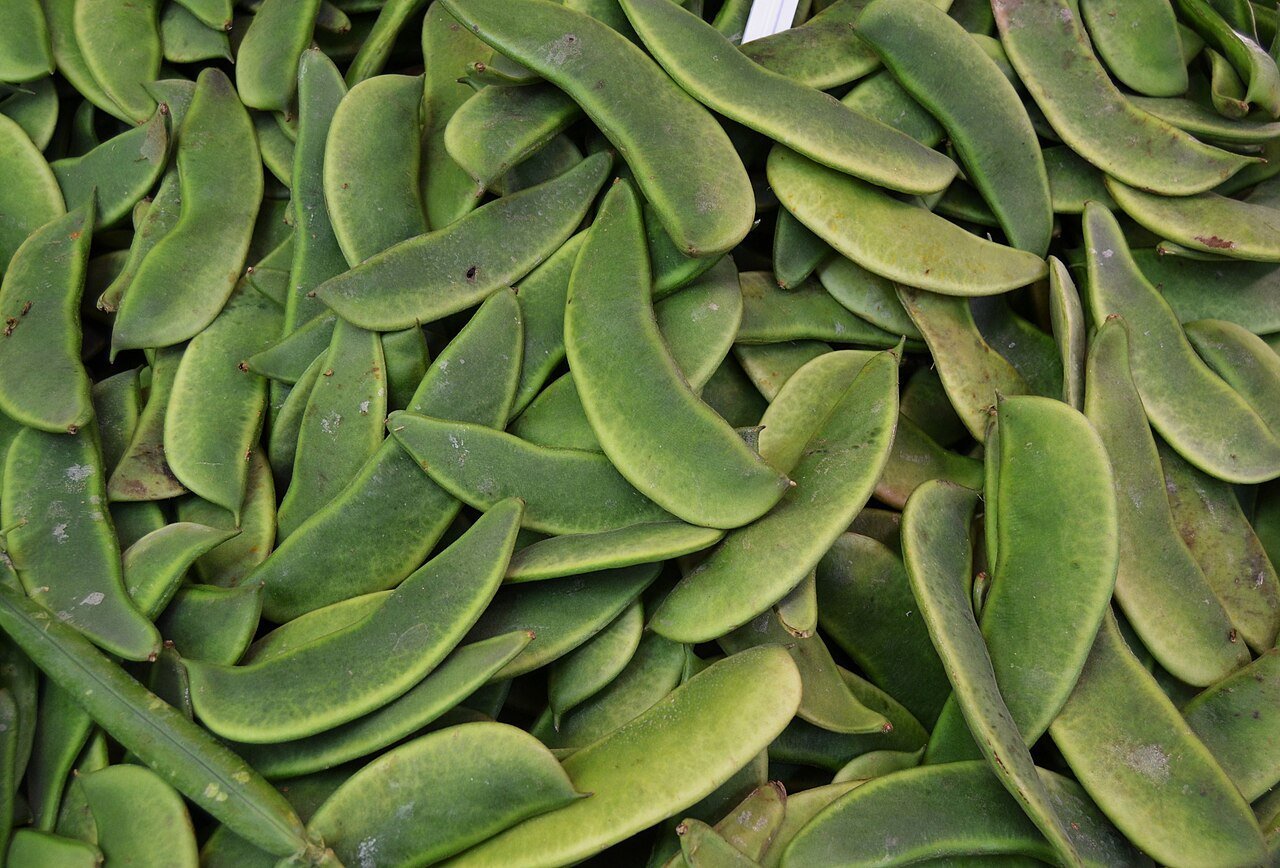
Three things to hunt for specifically. First, the garrofó: a huge, flat white lima bean sold fresh in its green pod or dried, and absolutely non-negotiable in an authentic paella valenciana — the sight of the fat pods on a stall is your sign that you are in the real paella’s homeland. Second, chufas, tiger nuts, the wrinkled little tubers that are soaked and ground into horchata de chufa, Valencia’s sweet, milky, cinnamon-dusted summer drink; you will find them dried on the stalls and the finished horchata in every café around the square. Third, whatever is in season and piled highest — artichokes in winter, broad beans and peas in spring — because the Huerta stalls sell what was picked, in many cases, that morning. Prices are chalked or carded on everything, stallholders weigh in kilos and half-kilos, and nobody minds a customer who buys two oranges and a tomato. That, in the end, is the point of the place.

The Stalls Around the Edges
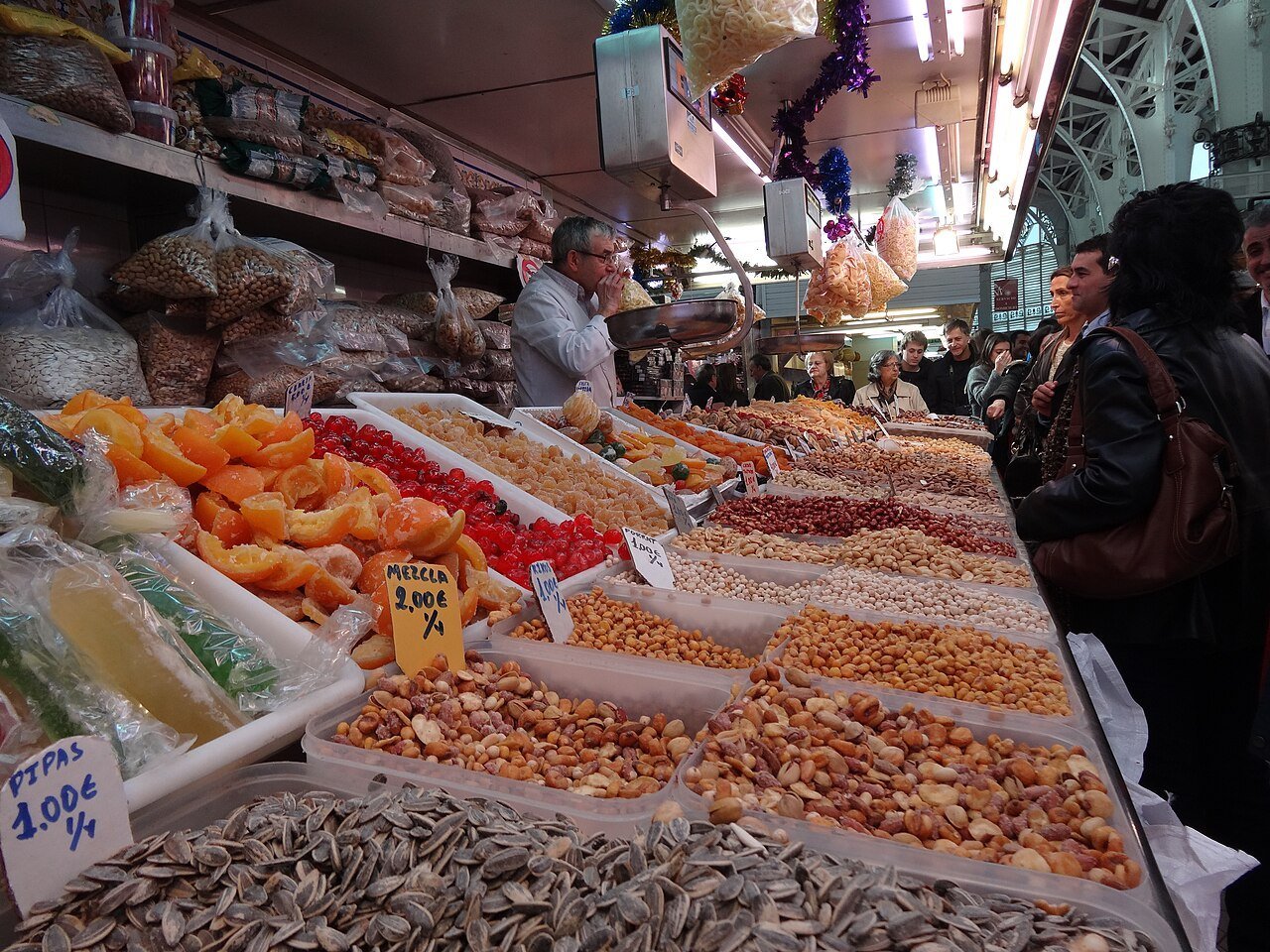
Work the perimeter and the market turns from fresh to forever — the stalls that sell what keeps, travels and gifts well. The deli and dry-goods stalls are where a food lover’s suitcase gets heavy: Valencian olive oils, from big tins for cooks to little hand-luggage bottles of extra virgin; saffron in its tiny, precious boxes (the most expensive ingredient in your paella, and the real thing is sold here by people who can tell you where it grew); pimentón and spices; dried beans and the short-grained bomba and Albufera rices that paella demands; olives by the scoop; dried fruits and nuts by the tray — almonds, hazelnuts, candied peel, sunflower seeds sold as pipas for nibbling; honey; preserves; and wines from the Valencian denominations, including the sturdy reds of Utiel-Requena just inland.
Season rewrites this section twice a year. At Christmas the edges belong to turrón — the almond nougat of Xixona, hard and soft, piled in slabs — along with marzipan and dried fruits for the festive table. In Fallas, in March, the chocolate and pumpkin-fritter world takes over the streets outside, and the market feeds the city through its loudest week. Whenever you come, the rule of the edges is simple: everything here survives a flight, most of it is made within the region, and the stallholders expect to be asked questions. Ask them. A saffron seller explaining grades is a Valencian art form in itself.

Eating Inside the Market
You can also eat the market standing up, and you should. Dotted among the stalls are small bars and cooked-food counters where the produce travels about four metres from stall to plate. The famous name is Central Bar, the market bar run by Ricard Camarena — one of Valencia’s most celebrated chefs, whose fine-dining cooking has earned Michelin stars across the city, and who keeps this counter as his love letter to the market itself: a gleaming bar where the tapas and filled bocadillo rolls are built from whatever the stalls around it are selling that day. The honest practicalities: the counter seats are few, it fills up from late morning, and the drill is to hover, order boldly when you catch the eye, and eat standing with a coffee or a small beer while the market roars around you. It is not a place for a long lunch. It is a place for a perfect twenty minutes.
Beyond Central Bar, the market offers humbler pleasures of the same kind: counters selling ready-cooked paellas and rice dishes by the portion — a genuinely good way to eat paella at lunchtime without committing a restaurant to the full pan — plus stalls selling olives, pickles and cured bits to graze on as you walk, and coffee bars at the edges for the market workers’ mid-morning break. For the full map of where Valencia eats once the market closes, our Best Food in Valencia guide takes over from here. Think of the market bars as the overture: loud, quick and made from the best raw materials in the city.

Practical Info
Hours. The market keeps market hours, not monument hours: it trades in the mornings through to mid-afternoon (as a rule of thumb, roughly 7.30am to 3pm), Monday to Saturday, and closes on Sundays and holidays. Individual stalls keep their own rhythms inside that — fish sells early, some stalls close a little before the building does — and the timetable does shift for holidays and Fallas, so check the market’s official site before planning a special trip. The building empties fast after 2pm; a visit at half past two is a visit to a market packing up.
When to come. The sweet spot is 9 to 11am: every stall open, the fish at its best, the buzz at full volume, and the aisles still passable. Chefs and serious shoppers come earlier; tour groups thicken things towards midday; Saturday is the week’s great performance — the whole city shopping at once — and the most fun if you like a crowd and the hardest work if you don’t. Bags and buying. Bring a tote or buy one of the market’s own; many locals shop with a wheeled trolley and nobody will judge you for copying them. Etiquette matters and is simple: do not touch the produce on the fruit and vegetable stalls — point, say how much, and let the stallholder pick, weigh and bag it; at counters with a ticket machine, take your turno and wait to be called; and ask before taking close-up photographs of a stallholder at work. The market also runs a home-delivery and online shopping service — handy if you are staying in Valencia with a kitchen, or want market produce without the morning expedition.
Getting there. The Mercado Central fills its own block on the Plaça del Mercat in the old town, with the Lonja de la Seda on one side and the church of Santos Juanes on the other; the cathedral is five minutes’ walk. The old town is a walking district — the nearest metro stations (Xàtiva and Àngel Guimerà) are a short stroll away, and coming on foot through the old-town streets is half the pleasure. Entry is free, there are entrances on every side, and you can walk in and out as often as you like. As a market should be.
Tips for Visiting
- Pair it with La Lonja, in either order. The silk exchange stands literally across the square — our La Lonja de la Seda guide walks you through it — and the two buildings are the same city’s two boasts, five hundred years apart: one built for silk, one for food. Do both in one morning, then lunch.
- Buy the paella, then learn the paella. Shop the rice, garrofó, saffron and rabbit here in the morning, and a GetYourGuide – Valencia paella cooking class will teach you what to do with them — several classes start with a market visit for exactly this reason.
- Take the ticket, watch the display. At busy counters the turno system rules absolutely. Number in hand, you are free to browse the stall; no number, no service, no exceptions — and it is the fairest system in Spain.
- Get your jamón vacuum-packed. Any good charcuterie stall will slice and seal it for travel. It keeps for weeks unopened, survives the flight, and makes you extremely popular at home.
- Drink the horchata. In the warm months, finish a market morning the Valencian way: a cold horchata de chufa with a farton — the long, soft, icing-dusted pastry made for dunking — at one of the cafés around the square.
- Leave the cathedral for after. The market fades by mid-afternoon but Valencia Cathedral keeps longer hours — market in the morning, Miguelete views after lunch is the order that works.
Travel insurance, sorted
Whether it is a two-week holiday or a longer move, travel insurance is the one booking not to skip. We point readers to SafetyWing’s Nomad Insurance — cover built for travellers, remote workers and longer stays abroad, on a flexible monthly subscription you can start before a trip or while you are already away. Get a quote from SafetyWing
Final Thoughts
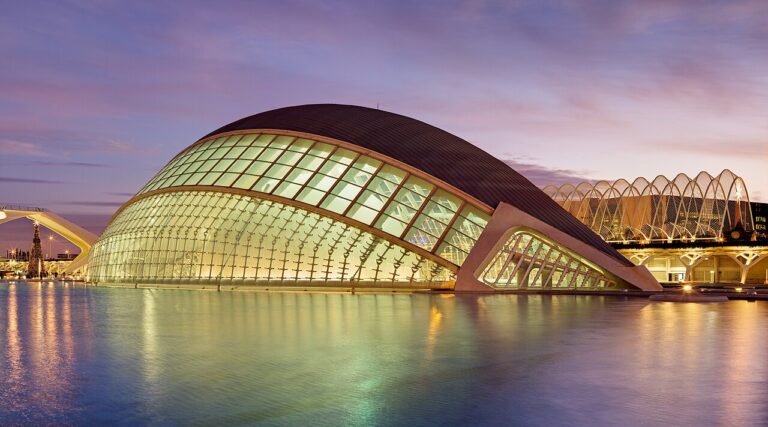
Valencia has grander sights — a Gothic silk exchange across the square, a space-age City of Arts and Sciences down the old riverbed — but it has no truer one. The Mercado Central is the city with its guard down: its farm, its sea, its seasons and its appetites, all trading under a dome painted with oranges, while a brass parrot listens on the roof. Come for the building and you will stay for the fish; come for the shopping and you will leave raving about the architecture. Either way, arrive in the morning, arrive hungry, and let the market do what it has done since the thirteenth century — feed Valencia, and feed you with it. For where to eat once you have seen where the food comes from, our Best Food in Valencia guide is the sequel this market deserves.
¡Buen viaje!

Photo credits: Francesco Bini — under the central dome, CC BY-SA 4.0; Diego Delso — the façade from the Plaça del Mercat and the fruit aisle, CC BY-SA 3.0; Enric — beneath the dome and the paella counter, CC BY-SA 4.0; Joanbanjo — the parrot weathervane and the garrofó pods, CC BY-SA 3.0; Jordiferrer — the shellfish counter and the charcuterie stall, CC BY-SA 3.0; Fev — the jamón stall, CC0; Montilleta — cuttlefish on ice and the dried goods stall, CC BY-SA 3.0; 19Tarrestnom65 — olive oils, CC BY-SA 4.0. All via Wikimedia Commons.


3 Comments