Seville Airport Guide: How to Get to the City Centre (and Around Seville)
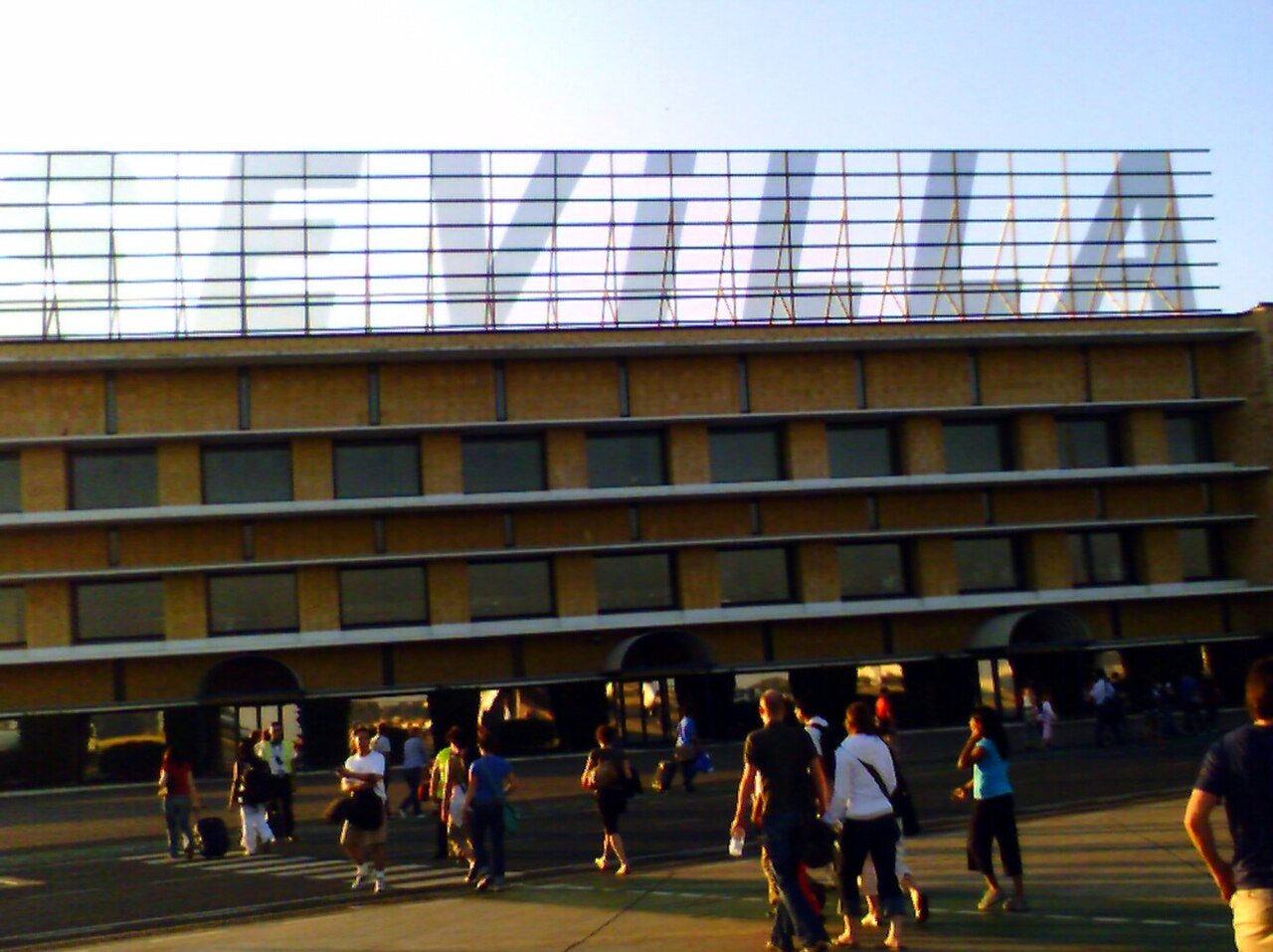
Here is the good news about arriving in Seville, and it is genuinely good: the airport is small, modern and only about 10 kilometres from the old town. There is no sprawling multi-terminal complex, no hour-long transfer, no confusing web of trains and shuttles. On a smooth run you can be off the plane, through the terminal and standing under the Giralda in well under an hour — and once you are in the centre, most of what you came to see is reachable on foot.
This guide covers the whole journey honestly: what the airport is like, the bus, taxi and transfer options into town with realistic prices, how Santa Justa station opens up the rest of Andalusia (and Madrid), and how getting around Seville itself actually works once you have arrived. If you are still planning the trip as a whole, start with Your Ultimate Guide to Seville and come back here for the logistics.
Where to Stay in Seville
However you arrive, base yourself in or near the old town and the transport questions mostly answer themselves — nearly everything is walkable. These are my three standard picks.
Luxury pick — Hotel Alfonso XIII
The city’s grande dame since 1929, a short stroll from both the Cathedral and the Alcázar, with the tram passing practically outside and the Prado de San Sebastián bus hub two minutes away. Grand courtyards, a garden pool, and the easiest arrival in Seville if you are treating yourself.
Boutique pick — Corral del Rey
A 17th-century casa palacio tucked down a quiet lane in Barrio Santa Cruz — plunge pool, rooftop terrace facing the Giralda, and the old town’s prettiest streets at the door. Note that the last hundred metres are pedestrian lanes; any taxi will drop you at the nearest corner, which is part of the charm.
Budget pick — Hotel Amadeus Sevilla
A friendly, family-run, music-themed hotel on a pedestrian street in Santa Cruz: composer-named rooms, a rooftop terrace, and the best-located neighbourhood in the city at an honest price. As central as it gets without paying central-hotel money.
Table of Contents
- Where to Stay in Seville
- The Airport at a Glance
- The EA Airport Bus: The Cheap, Easy Default
- Taxi: The Fixed-Fare Shortcut
- Private Transfer: Someone Waiting With Your Name
- Santa Justa Station and the Trains
- Getting Around the Centre: Walk First
- Cycling: Sevici and the Flat City
- Driving and Parking: Mostly, Don’t
- Final Thoughts
The Airport at a Glance
Seville Airport (SVQ), officially Aeropuerto de Sevilla and often called San Pablo after the district it sits in, has exactly one terminal — a handsome, vaulted building designed by Rafael Moneo for the Expo ’92 era and refurbished since. Check-in and arrivals share one compact hall, security is rarely a long story outside peak summer weekends, and the walk from the front door to the furthest gate takes minutes rather than the kilometre-long treks of Madrid or Barcelona. It handles several million passengers a year, mostly domestic and European flights — Ryanair, Vueling and Iberia are the big presences — which keeps the whole experience refreshingly human in scale.
The practical points are simple. Car-hire desks line the arrivals hall, there are the usual cafés landside and airside, and everything you need on departure — the taxi rank, the bus stop — is directly outside the arrivals doors. There is no train station and no metro at the airport, and there does not need to be: the city is that close. Your real choice is only how you want to cover those 10 kilometres.
The EA Airport Bus: The Cheap, Easy Default
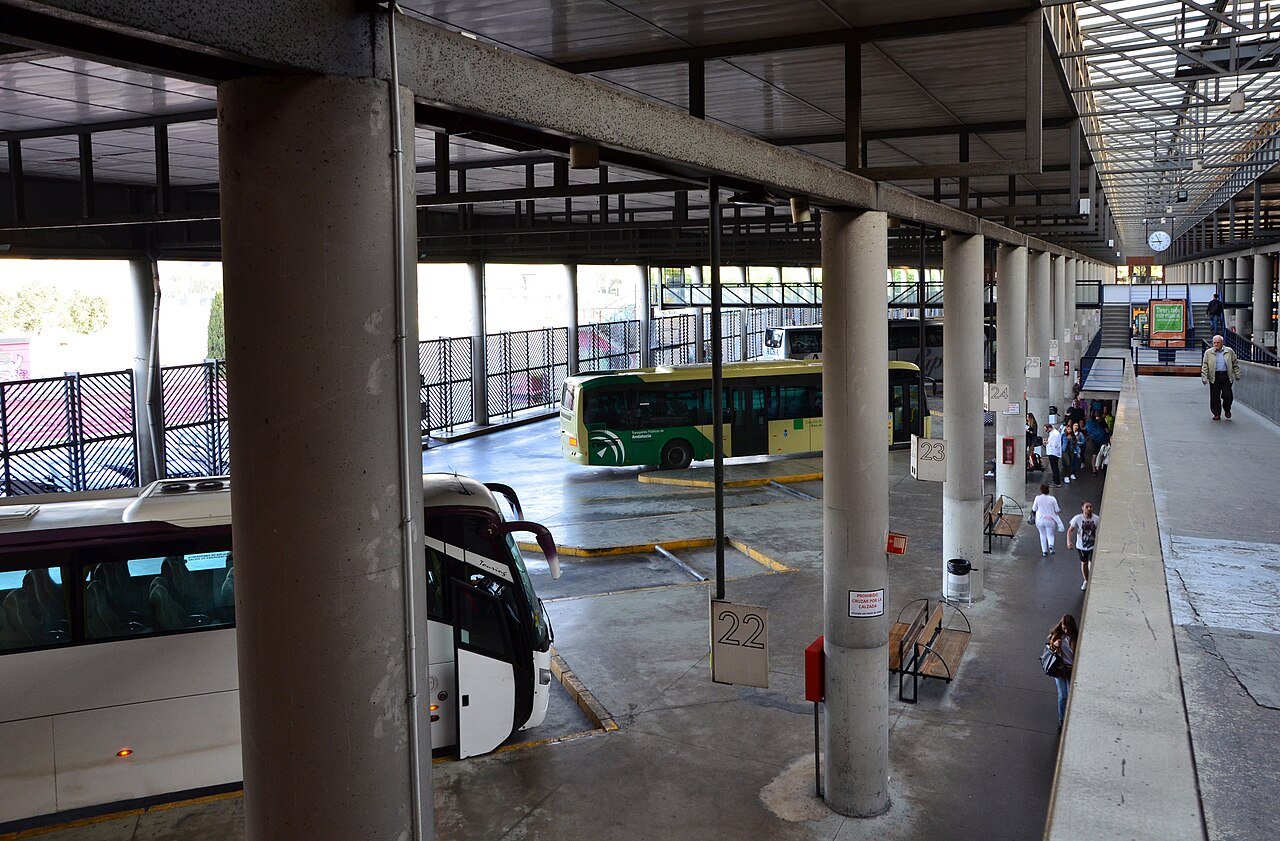
For most visitors, the answer is the EA line — Especial Aeropuerto — the dedicated airport bus run by TUSSAM, the city’s transport operator. It leaves from right outside arrivals and runs into the city roughly every 15 to 30 minutes from early morning (first departures around 4:30–5:20am, depending on direction) until around 1am. A single costs around €6, with a same-day return around €8; buy your ticket from the driver as you board. At these prices it is barely worth doing the maths against anything else if you are travelling solo or as a couple.
The route doubles as a useful tour of your arrival options. Heading into town, the bus calls at Avenida Kansas City and Santa Justa station (about 20 minutes in), then Luis de Morales in Nervión, San Bernardo, and Prado de San Sebastián — the big interchange beside the old town’s southern edge. Its most useful old-town stop is Paseo Colón by the Torre del Oro, a few minutes’ walk from the Cathedral, before it terminates at the Plaza de Armas bus station on the old town’s western side. The full run to Plaza de Armas takes around 35 minutes. Pick the stop nearest your hotel: our guide to Where to Stay in Seville will tell you which neighbourhood you are heading for.
Honest caveats: the buses have luggage racks but they fill up, and at peak arrival times you may stand for part of the ride. With very heavy bags, small children or a hotel deep in the pedestrian lanes, that final walk from the stop is the weak point of the plan — which is where the next two options earn their money.
Taxi: The Fixed-Fare Shortcut
Seville’s airport taxis work on an official fixed fare to any address in the city, which removes the usual meter anxiety entirely. Expect around €26 on a weekday daytime, rising to around €29 at night, at weekends and on public holidays, and a little more again on the big fiesta nights of Semana Santa and the Feria de Abril — the fare chart is displayed in every cab, and the fixed rate already covers your luggage. The rank is right outside arrivals, the cars are white and licensed, and the drive takes 15 to 20 minutes in normal traffic.
When is it worth the roughly €20 premium over the bus? When you are three or four people splitting it (at which point it is nearly bus money anyway), when you land late at night, when your hotel sits deep in Santa Cruz’s pedestrian lanes and a door-to-door drop saves a luggage-drag through the maze, or simply when the holiday starts the moment you land and you decline to spend any of it at a bus stop. All four are respectable reasons; Sevillians take the taxi too. One small local wrinkle: drivers are only obliged to give change from €20 notes, so carry smaller bills if you are paying cash — most cabs take cards, but ask before you set off.
Private Transfer: Someone Waiting With Your Name
The third option splits the difference between planning and comfort: a pre-booked private transfer, where a driver meets you in arrivals with a name board, helps with the bags and takes you straight to your door for a fixed price agreed in advance — typically in the same €25–35 neighbourhood as the taxi, depending on vehicle size. It earns its keep for families with tired children, groups of five or more who would need two taxis, anyone arriving on a late flight who does not want to think, and travellers heading somewhere the bus does not serve well. Book before you fly and the worst part of arrival day simply disappears: book a private Seville airport transfer.
Free Seville Travel Guide
Planning a trip to Seville? Get our free one-page Seville checklist: what to book ahead, what to skip, and the tapas bars we actually eat in.
Santa Justa Station and the Trains
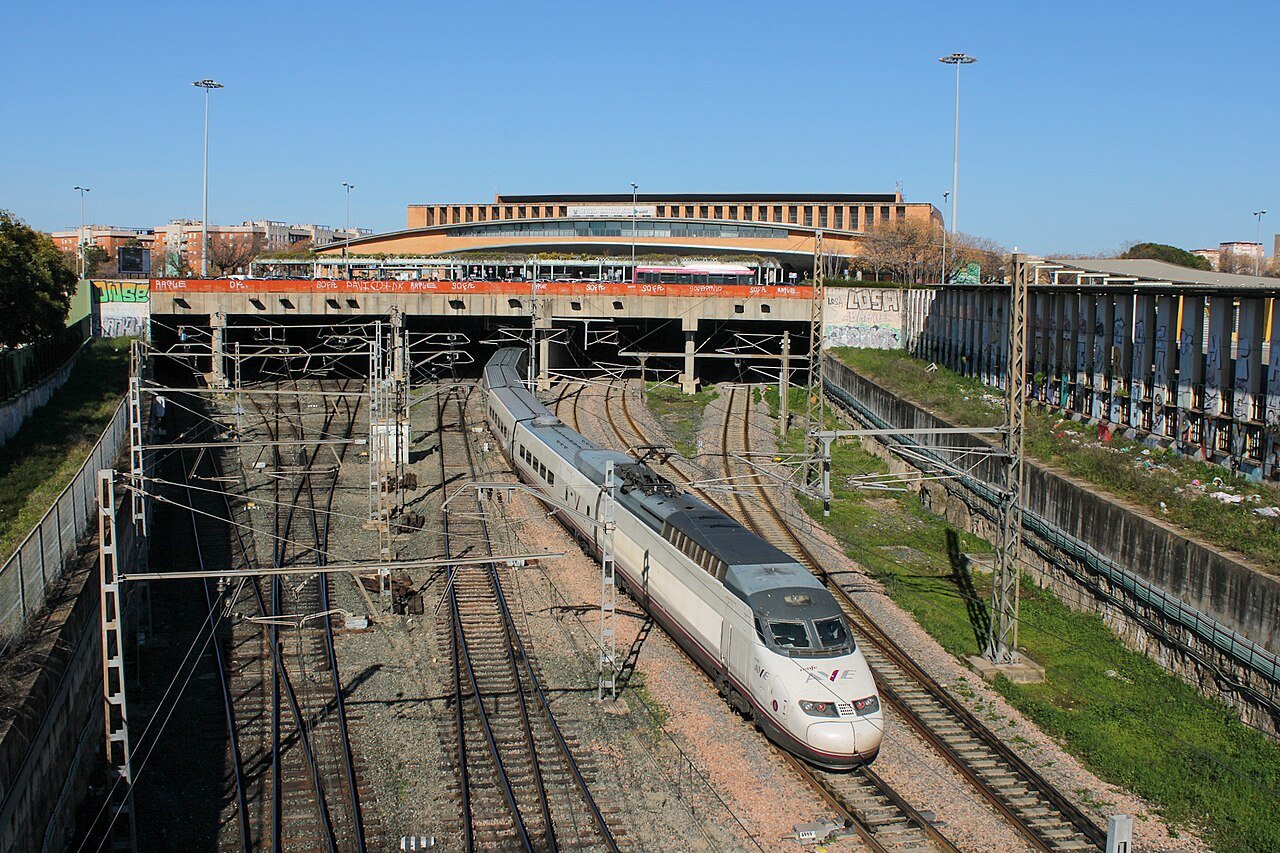
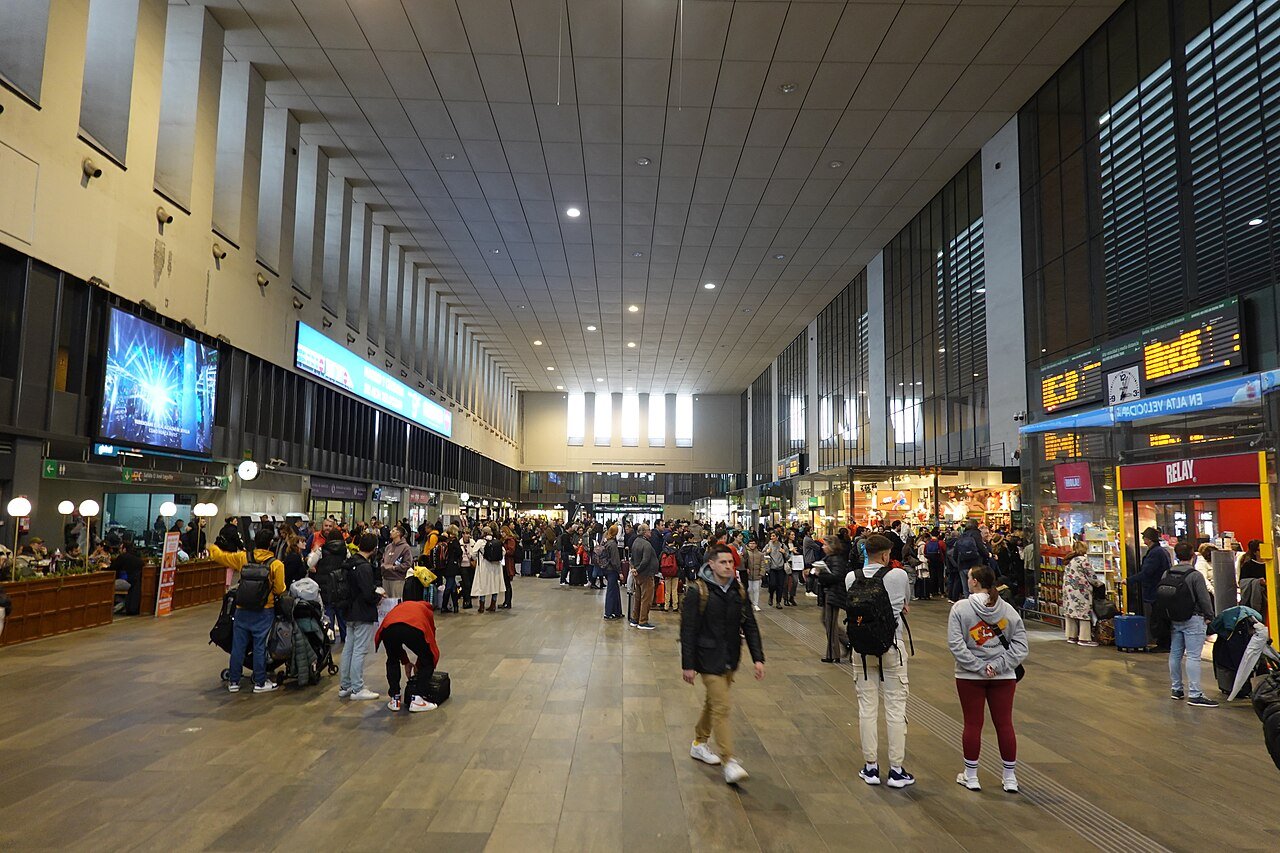
Whether or not you fly in, you will probably pass through Santa Justa, Seville’s main railway station, a big modern terminus on the north-eastern edge of the centre — about a 15-minute walk from the old town’s edge, and an EA bus stop on the way in from the airport. This is where Spain’s high-speed network puts Andalusia on your itinerary. The headline journeys: Córdoba in around 45 minutes, close enough that its great Mezquita becomes an easy day trip with breakfast at home; Madrid Atocha in around two and a half hours, which is why so many people pair the two cities; and Málaga in around two hours. AVE services now share the tracks with rival high-speed operators, so fares vary a lot — book ahead online and the same seat can cost half what it does on the day.
For getting between Santa Justa and your hotel, the EA bus and several city buses stop outside, taxis wait at the rank, and it is a flat, easy walk if your base is in Nervión or the eastern old town. If your Seville trip follows our 3 Days in Seville itinerary, a Córdoba day trip is the single best way to spend a fourth day.
Getting Around the Centre: Walk First

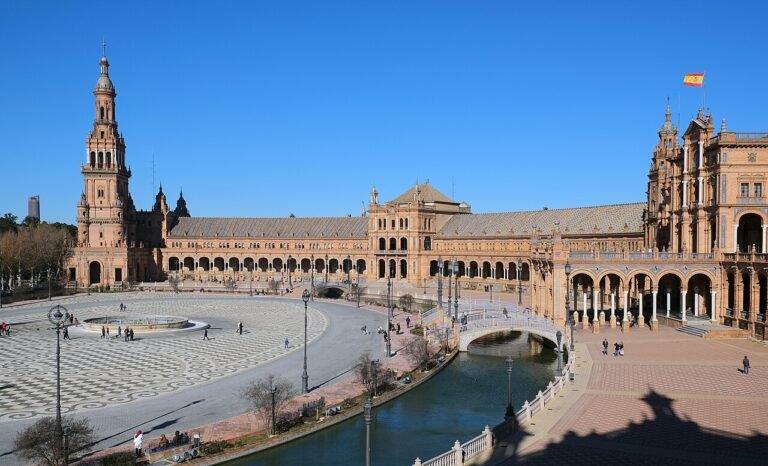
Now the honest truth that shapes everything else in this guide: Seville’s centre is a walking city, and it is not close. The historic centre is one of the largest in Europe, much of it pedestrianised or given over to lanes too narrow for cars, and the main sights — Cathedral, Alcázar, Plaza de España, the river, Triana bridge — sit within a rough 20-minute walking radius of each other on dead-flat ground. Visitors who try to “do transport” in Seville spend more time waiting for it than walking would ever have taken.
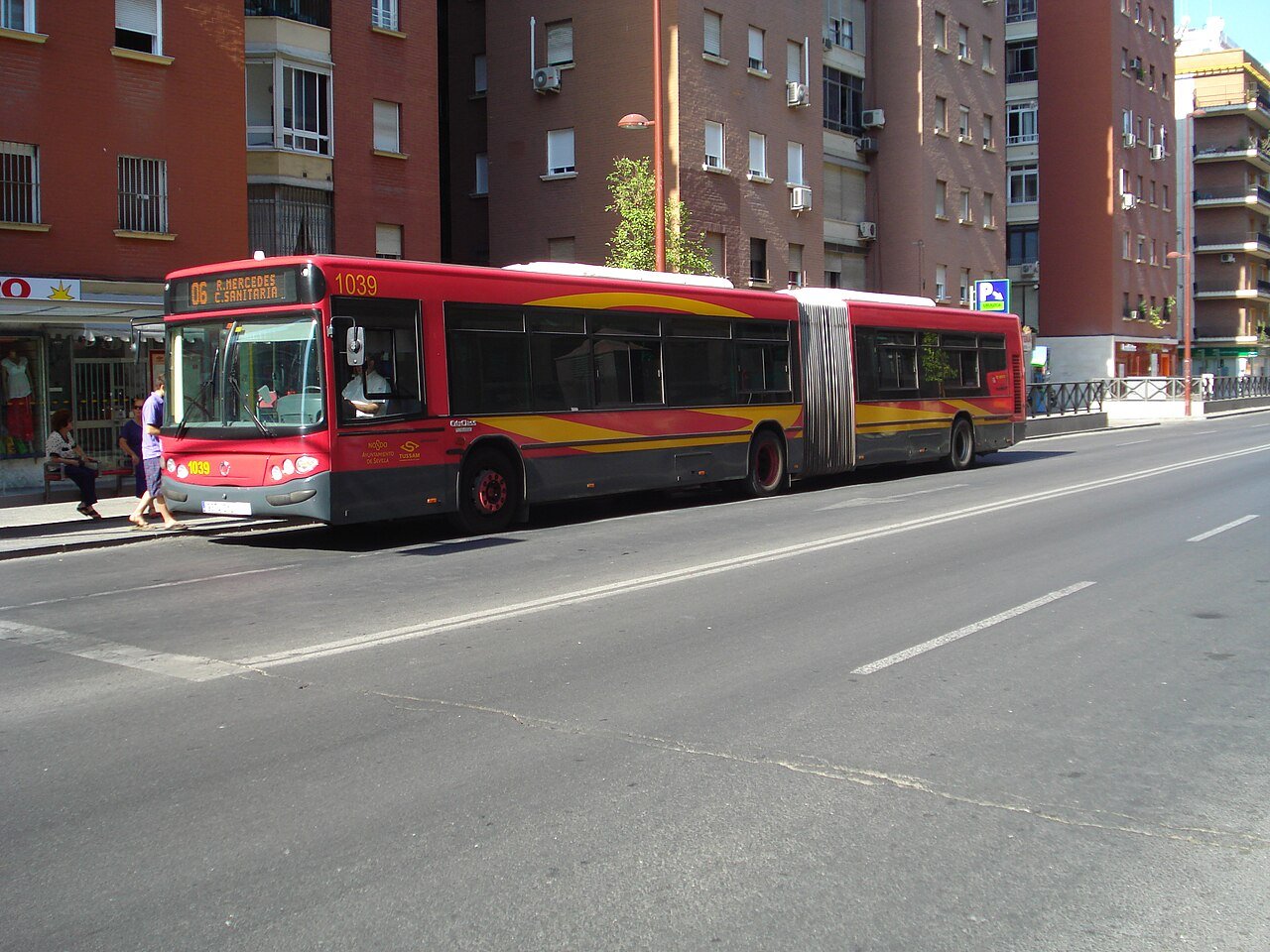
The exceptions are still worth knowing. The MetroCentro tram glides down Avenida de la Constitución past the Cathedral, linking Plaza Nueva in the heart of town with Puerta de Jerez, Prado de San Sebastián and San Bernardo — a short, pleasant hop when your feet have done enough, for a standard city fare of around €1.40. The TUSSAM city buses ring and cross the centre (the circular C-routes are the handy ones), cost the same sort of money per ride, and are how locals actually move; buy single tickets on board, or pick up a rechargeable travel card if you will ride often. And the metro — a single line, L1, running from Ciudad Expo in the Aljarafe through to Olivar de Quintos in Dos Hermanas — is genuinely useful in specific cases: reaching San Bernardo (where it meets the tram and suburban trains towards Santa Justa), Nervión’s shopping district, or Plaza de Cuba on the Triana side of the river. What it does not do is serve the old town’s heart or the airport, so for a classic first trip you may never ride it. The sights themselves, inside that walking radius, are all in our 15 Best Things to Do in Seville guide.
Cycling: Sevici and the Flat City

If walking is Seville’s default, cycling is its cheat code. The city is pan-flat, blessed with well over 150 kilometres of protected cycle lanes, and locals treat the bike as everyday transport rather than a sport. The public bike-share, Sevici, has hundreds of docking stations and thousands of those distinctive red bikes across the city — but be aware it is built for residents around an annual membership (around €30–35 a year, with the first half-hour of each ride included), so unless you are staying for weeks it is more something to admire than to join. For a short trip, the centre is full of rental shops hiring decent city bikes by the day, and the riverside path north and south of the bridges — and across to Triana — is the ride to take at golden hour.
Driving and Parking: Mostly, Don’t
Everything above adds up to one piece of advice: do not bring a car into central Seville. The old town’s streets were laid out for donkeys, many are one-way or pedestrian-only, residents’ zones eat what little parking exists, and you will spend your holiday orbiting for a space within walking distance of where you could have simply walked. Seville also operates a low-emission zone (ZBE) — currently centred on the Isla de la Cartuja, with restrictions tightening across Spanish cities year by year — so check your hire car’s environmental sticker and where it may go before assuming. If you do arrive by road, the sane move is to aim straight for one of the underground car parks on the centre’s ring (around Paseo Colón, Plaza de Armas or over in Nervión, roughly €2 an hour) or your hotel’s garage, park once, and forget the car until you leave — a car only really earns its keep for day trips out to the white villages and sherry country, and rental desks at the airport and Santa Justa make picking one up for those days easy.
Final Thoughts
Seville is one of those rare cities where the transport page is short because the answer is simple: fly into a small airport ten minutes from town, take the bus if you are counting euros or a fixed-fare taxi if you are not, and then walk everywhere in a flat, golden, pedestrian-friendly centre. Save the trains for the day Córdoba calls. The less time you spend thinking about getting around Seville, the more time you spend in it — which is rather the point.
¡Buen viaje!
READ NEXT
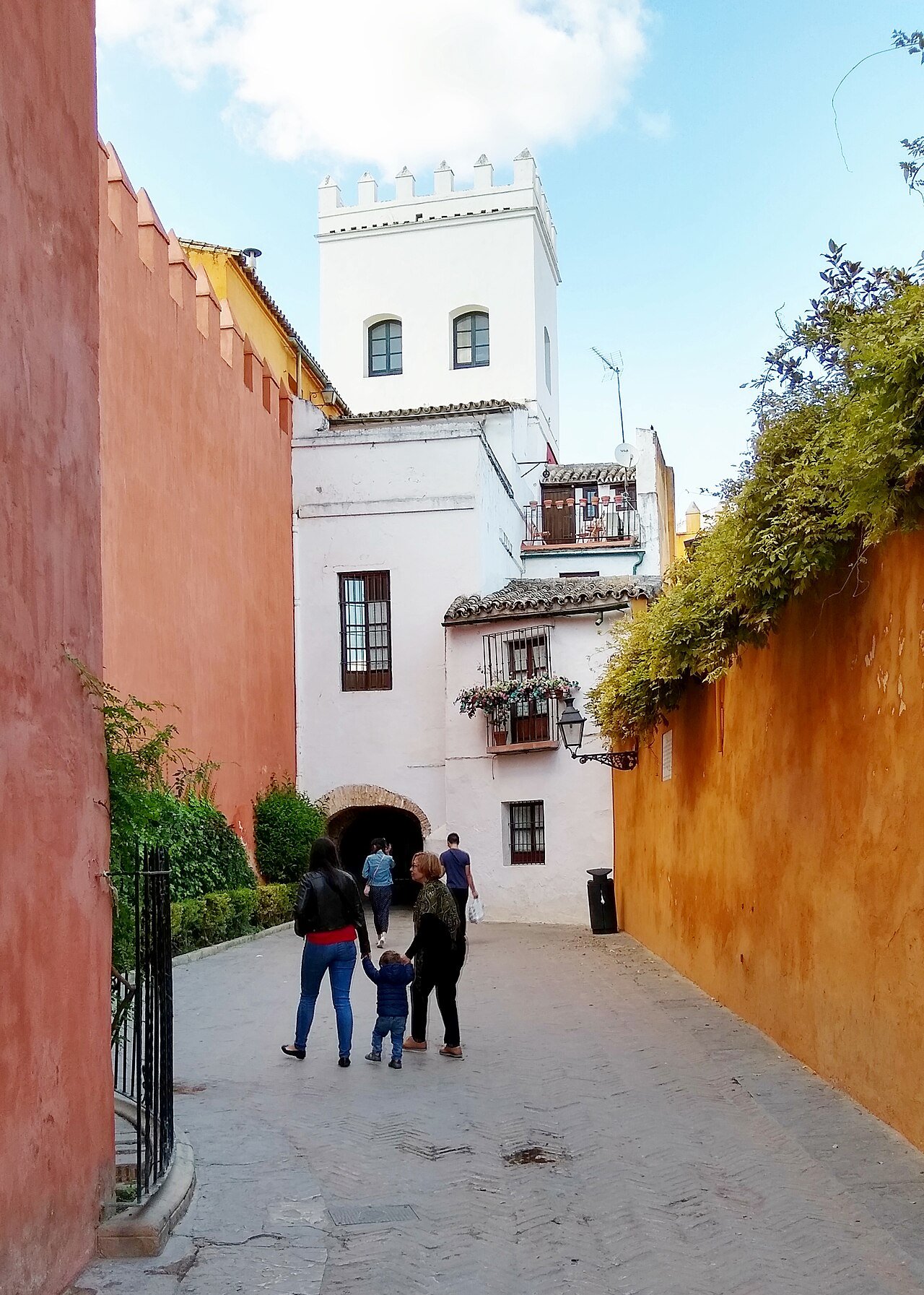
Where to Stay in Seville: The 7 Best Areas and Hotels for Every Traveller
Still choosing your base? See the seven best areas and hotels for every traveller, from Santa Cruz to Triana.
Photo credits: Seville Airport terminal — Asterion, CC BY-SA 2.5 · TUSSAM city bus — Frobles, CC BY-SA 4.0 · Plaza de Armas bus station — Gzzz, CC BY-SA 4.0 · AVE train at Santa Justa — Leonhard.628, CC BY 4.0 · MetroCentro tram, Avenida de la Constitución — Chabe01, CC BY-SA 4.0 · Sevici bike dock — Frobles, CC BY-SA 4.0 · Santa Justa station concourse — Smiley.toerist, CC BY-SA 4.0. All via Wikimedia Commons.

One Comment