Where to Stay in Seville: The 7 Best Areas and Hotels for Every Traveller
Ask a Sevillian where you should stay and they will not give you a district — they will give you a barrio, a neighbourhood with its own accent, its own bars and its own fierce opinions. That is the right way to think about this city. Seville’s sights are famous, but where you sleep decides the version of Seville you actually get: the postcard old town, the tapas-and-river local one, or the calm residential one where your money goes twice as far.
The honest headline first: almost every first-time visitor should stay in or near the old town, because Seville is a walking city and the distances punish anyone based in the wrong place. But “old town” covers very different streets, and there are good reasons — budget, nightlife, football, a car, a longer stay — to base yourself further out. This guide walks through the seven areas I recommend most, who each one suits, and a hotel or two in each that I would happily book myself. For the full picture of the city, start with Your Ultimate Guide to Seville, then use this page to pin down your base.
Where to Stay in Seville
Short on time? These are the three hotels I point everyone to first — one splurge, one boutique, one smart budget pick, all in or beside the old town.
Luxury pick — Hotel Alfonso XIII
The city’s grande dame since 1929: soaring tiled courtyards, a garden pool, and a five-minute stroll to both the Cathedral and the Alcázar. If the budget stretches once in Andalusia, stretch it here.
Boutique pick — Corral del Rey
A 17th-century casa palacio down a quiet lane in Barrio Santa Cruz — Roman columns, a plunge pool and a rooftop terrace facing the Giralda, with the old town’s prettiest streets at the door.
Budget pick — Hotel Amadeus Sevilla
A family-run, music-themed hotel on a pedestrian street in Santa Cruz: composer-named rooms, a rooftop terrace, and the best-located neighbourhood in the city at a fair, honest price.
Table of Contents
- Where to Stay in Seville
- Barrio Santa Cruz — The Postcard Old Town
- Centro and El Arenal — The Practical Heart
- Triana — The Local Favourite Across the River
- Alameda de Hércules — Young, Late and Bohemian
- Nervión — Modern, Practical and Football-Mad
- Los Remedios — Calm, Residential and Great Value
- Macarena — Real Seville, North of the Old Town
- Practical Tips for Booking in Seville
- Final Thoughts
Barrio Santa Cruz — The Postcard Old Town
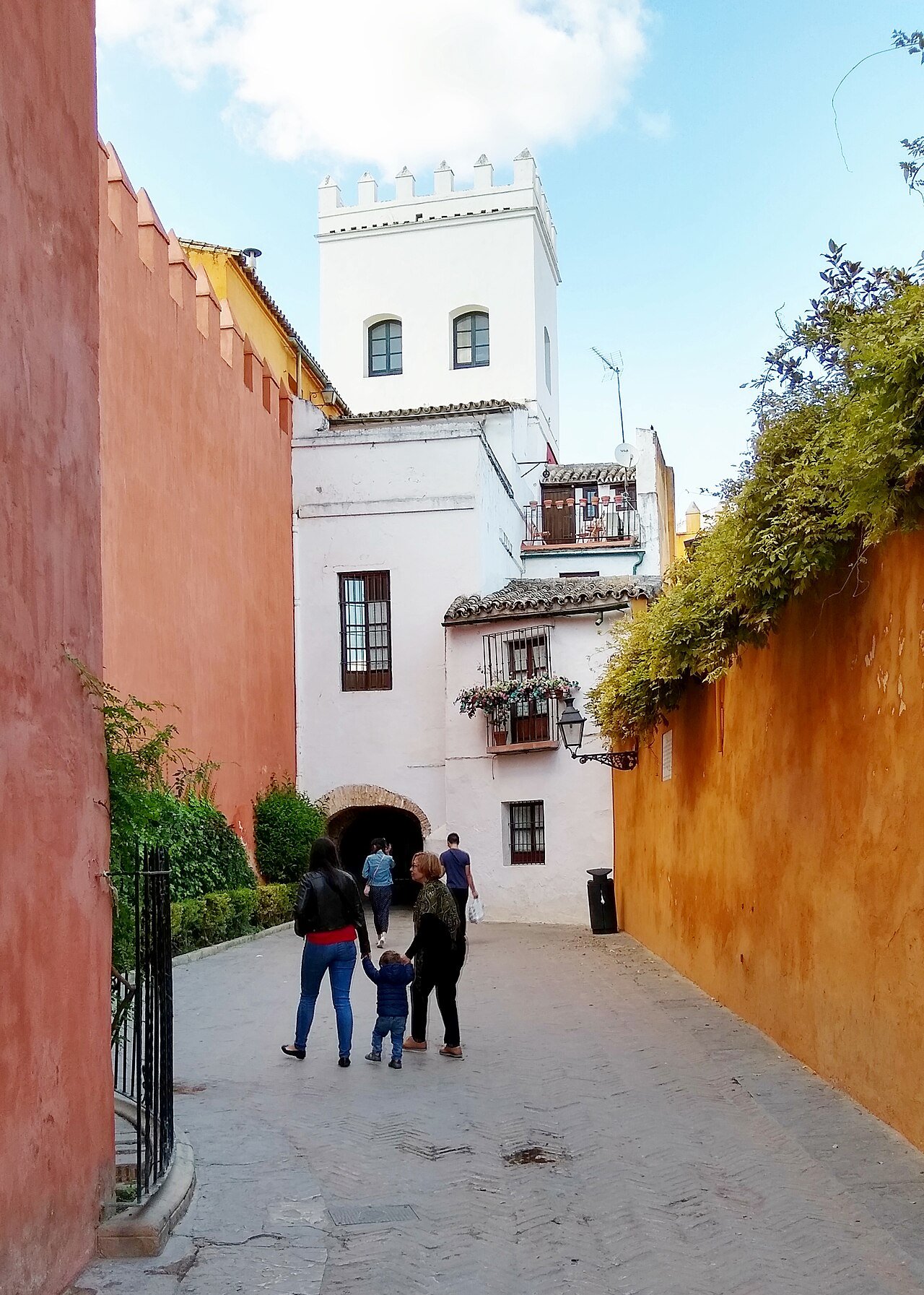
Best for: first-time visitors, romantics, anyone who wants the sights at the door.
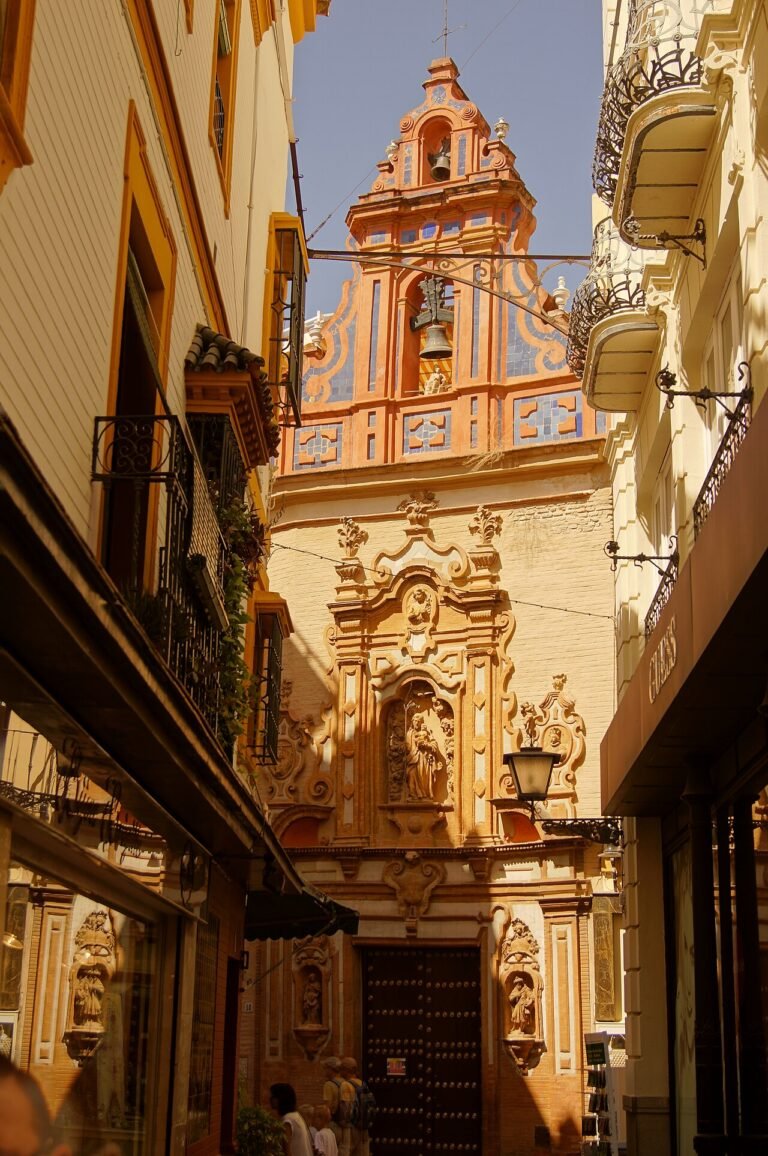
This is the Seville of the postcards: the old Jewish quarter, a maze of whitewashed lanes, tiny plazas with orange trees and balconies spilling geraniums, wrapped around the Cathedral and the Alcázar. Stay here and your sightseeing is a stroll, your evenings start with a wander rather than a journey, and the Giralda is quite literally your landmark home. The trade-offs are real, though — lanes are narrow and confusing, prices are the city’s highest, and in peak season the quarter can feel like it belongs to visitors rather than residents. For a first trip of two or three nights, I would not stay anywhere else.
Both of my standard picks above are here: Corral del Rey for boutique calm, and Hotel Amadeus Sevilla for the same streets at half the price. If your trip is built around an itinerary, Santa Cruz is also the natural base for our 1 Day in Seville itinerary — every stop on it is a short walk from these lanes.
Centro and El Arenal — The Practical Heart

Best for: shoppers, short stays, travellers who want everything within ten minutes.
West and north of Santa Cruz, the centre is Seville at its most useful: the shopping streets of Sierpes and Tetuán, grand Plaza Nueva, the tram and taxi ranks, and — sliding towards the river in El Arenal — the bullring, the opera house and some of the city’s oldest tapas bars. It is less storybook than Santa Cruz and more lived-in grand: handsome 19th-century streets, department stores, and hotels in every price bracket. You trade a little atmosphere for a lot of convenience, and you are still five to ten minutes’ walk from the Cathedral.
The classic address here is Hotel Inglaterra, facing Plaza Nueva — Seville’s grande dame of the centre, all old-school polish and a rooftop terrace looking over the square. In El Arenal, Vincci La Rábida hides a lovely Andalusian patio a short walk from the bullring, and feels calmer than its central location suggests. The Alfonso XIII, from my quick picks, sits just south of here too.
Triana — The Local Favourite Across the River

Best for: repeat visitors, food lovers, travellers who want local Seville with the postcard view.
Cross the Puente de Isabel II and the city exhales. Triana was historically the quarter of sailors, potters and flamenco singers, and it still runs on its own rhythm: a working food market, ceramics workshops, and the bars of Calle Betis facing the old town across the water. From here, the famous view is not something you visit — it is what you look at over breakfast. The centre is a ten-minute walk over the bridge, hotel prices drop noticeably, and evenings belong to locals. If you have done the old town before, or simply prefer your cities lived-in, base yourself here.
On the riverfront, Ribera de Triana Hotel gives you the Calle Betis view itself, with a rooftop terrace made for sunset. A few streets back, Hotel Monte Triana is the reliable local chain pick — comfortable, fairly priced and right by the market end of the quarter.
Free Seville Travel Guide — Planning a trip to Seville? Get our free one-page Seville checklist: what to book ahead, what to skip, and the tapas bars we actually eat in.
Alameda de Hércules — Young, Late and Bohemian
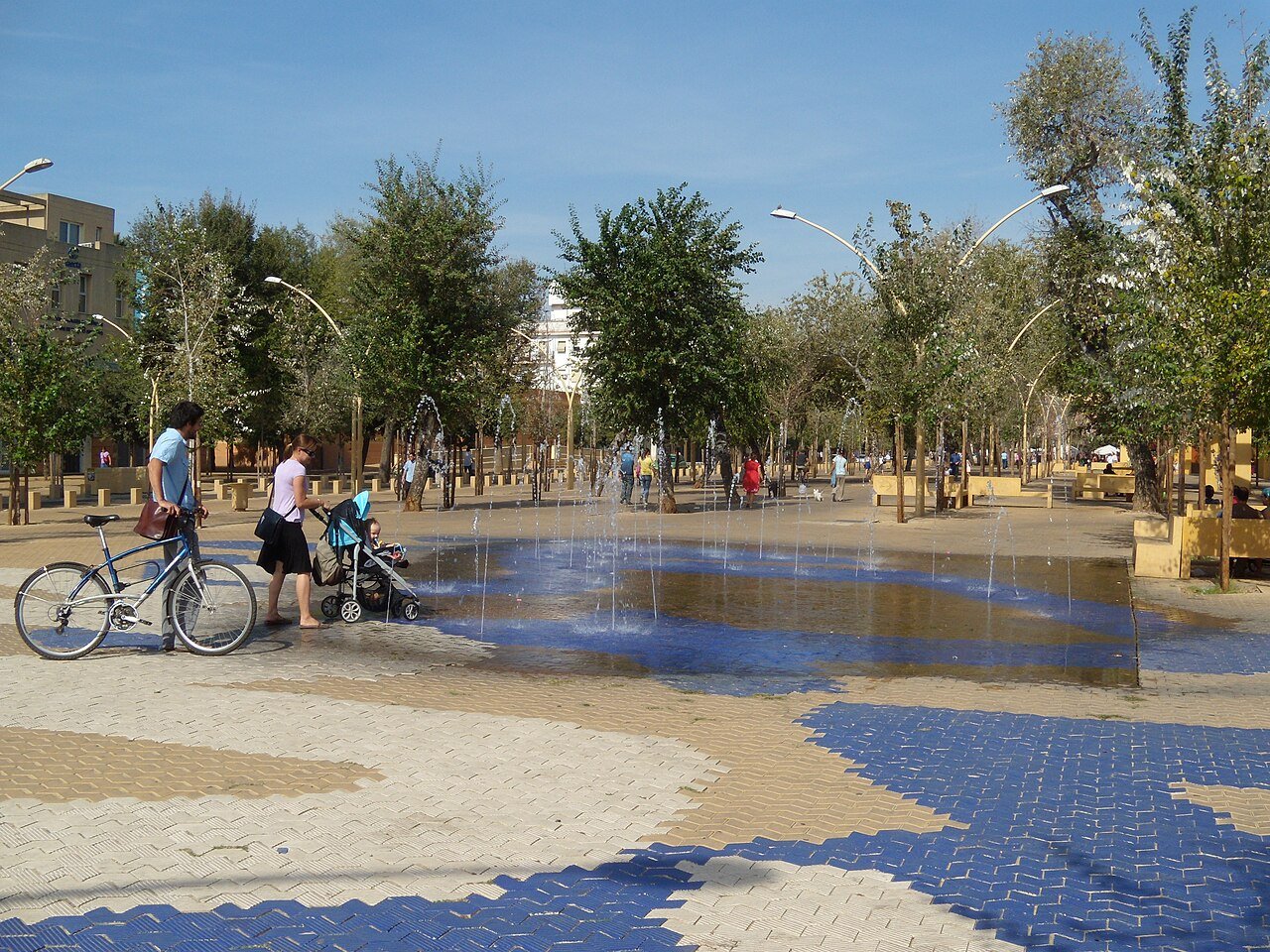
Best for: nightlife, younger travellers, longer stays, anyone who finds the monument zone too polished.
At the old town’s northern edge, the Alameda is a broad, tree-lined boulevard flanked by two Roman columns and filled, from about 8pm onwards, with what feels like half of young Seville. This is the city’s alternative heart: vintage shops, small theatres, craft-beer bars and terraces that run late — and prices that run lower than anywhere else this central. It is a fifteen-minute walk to the Cathedral, the streets around it are among the city’s most genuinely residential, and the trade-off is simple: it is lively, which means it can be loud, especially at weekends.
The standout stay is Hotel Sacristía de Santa Ana, a small boutique hotel in a lovingly restored old building right by the boulevard. A few steps away, Hotel Patio de la Alameda does exactly what its name promises — rooms around a leafy patio, calm inside whatever is happening outside. Staying up this way pairs naturally with the city’s less-touristy side, which our guide to the best things to do in Seville covers in full.
Nervión — Modern, Practical and Football-Mad
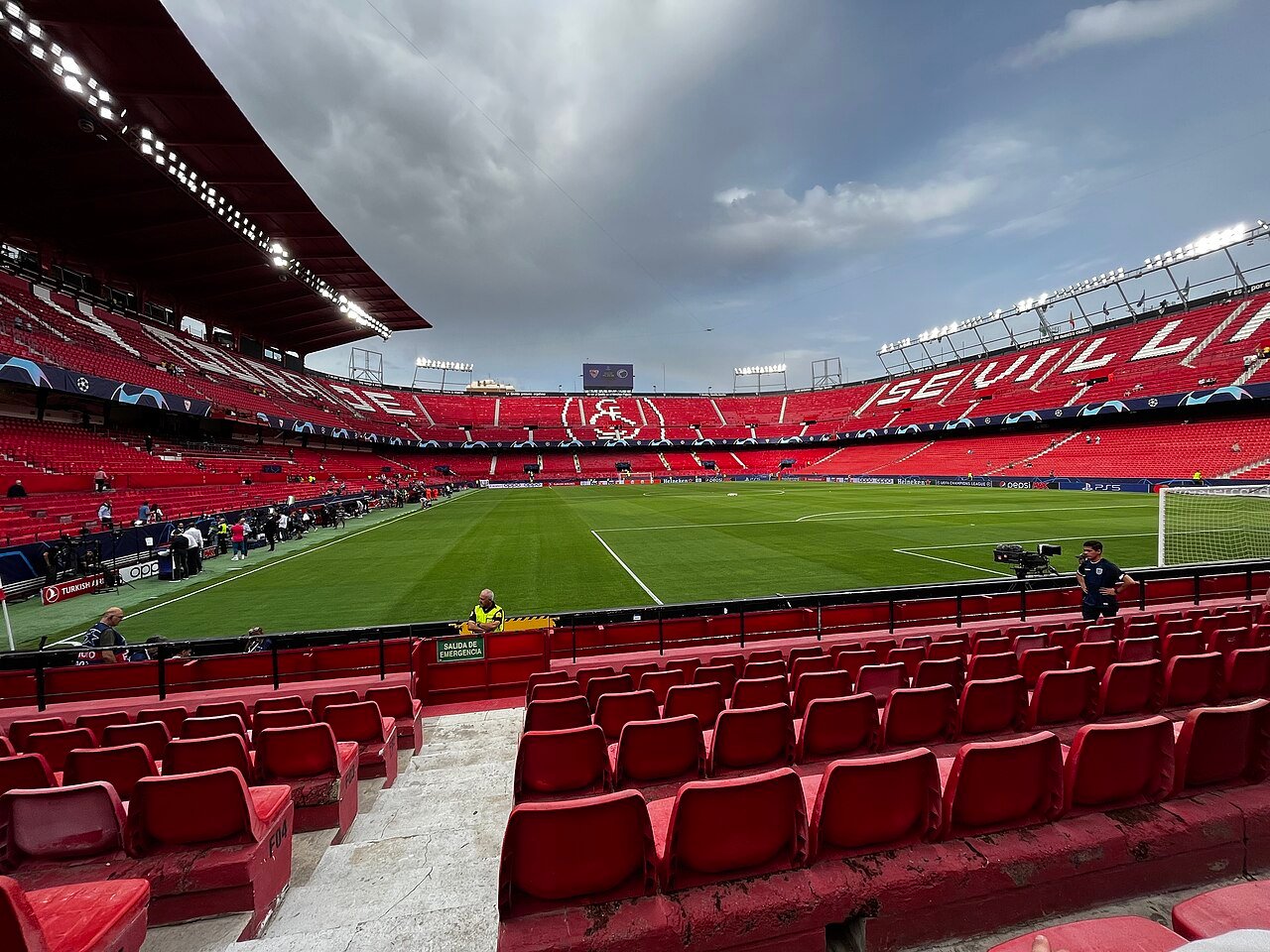
Best for: football fans, business travellers, drivers, anyone arriving by train.
East of the old town, Nervión is the Seville that actually works for a living: wide avenues, the city’s main shopping mall, big comfortable hotels with proper parking, and Santa Justa station — your arrival point if you came by high-speed train — on its northern edge. Its landmark is the Estadio Ramón Sánchez-Pizjuán, home of Sevilla FC, and on match nights the whole district turns red and very loud. The old town is ten minutes by taxi, tram or metro, and room rates here often undercut the centre by a third for a bigger, newer room. What you give up is charm; what you gain is ease.
The two dependable anchors are Hotel Meliá Lebreros on Calle Luis de Morales, a big classic hotel with a pool, and Hotel Sevilla Center on Avenida de la Buhaira, a short walk from the stadium. If your trip involves a match, book these early — match weekends sell the whole district out.
Los Remedios — Calm, Residential and Great Value
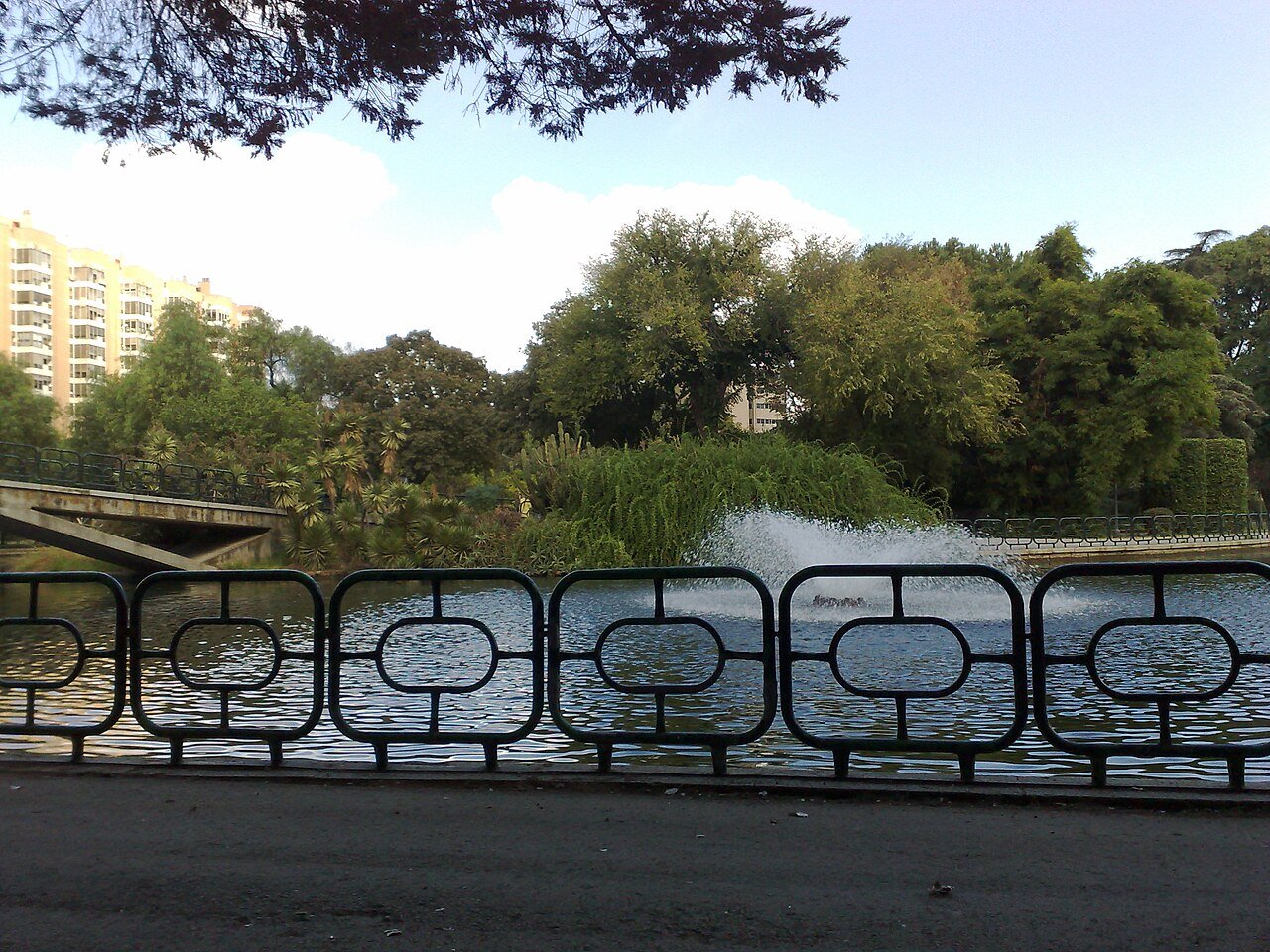
Best for: families, longer stays, Feria de Abril visitors, travellers on a budget who still want quality streets.
Directly south of Triana across the river, Los Remedios is where well-off Sevillians actually live: orderly streets, good local restaurants along Calle Asunción, the green lung of Parque de los Príncipes, and — for one week a year — the Feria de Abril fairground on its edge, when this becomes the most sought-after base in the city. The rest of the year it is calm, safe and noticeably cheaper than the old town, which is a fifteen-minute walk across the Puente de San Telmo. The honest caveat: hotels here are few, because this is a neighbourhood of homes, not visitors.
The mainstay is Hotel Monte Carmelo, a comfortable local-chain hotel on Calle Virgen de la Victoria that does the basics properly and quietly. If it is full, look just across the bridge in Triana rather than across town — you keep the same walkable, local feel.
Macarena — Real Seville, North of the Old Town

Best for: return visitors, Holy Week travellers, anyone who wants Seville beyond the postcard.
North of the old town walls — you enter through the Arco de la Macarena, beside the longest surviving stretch of the medieval muralla — the Macarena district is working Seville at its most traditional. Its heart is the Basílica de la Macarena, home of the city’s most beloved Virgin, and during Semana Santa this is the emotional centre of the entire week. Day to day, you get local markets, old-school bars and prices that remind you this is not a tourist district at all. The Cathedral is a twenty-minute walk or a short bus ride. Choose it if you have seen the centre already and want the city as its people know it.
The landmark stay is Exe Sevilla Macarena, facing the old Hospital de las Cinco Llagas near the basilica — big, established and often very fairly priced. Closer to the walls, Hotel San Gil is a smaller, characterful option in a palace house from the 1900 Seville exhibition era, with a pretty patio.
Practical Tips for Booking in Seville
Book the area, then the hotel. In Seville the neighbourhood matters more than star ratings — a three-star in Santa Cruz will give you a better trip than a five-star you have to commute from. Mind the calendar: during Semana Santa and the Feria de Abril, prices double or triple and the whole city books out months ahead; if your dates touch either, book the moment they are fixed. In summer, a pool is not a luxury — with 40°C afternoons normal, a hotel pool or at least strong air-conditioning and shutters genuinely changes the trip. Ask about the siesta city: smaller hotels may have limited reception hours, so tell them if you are arriving mid-afternoon. Finally, if you are following our 3 Days in Seville itinerary, any of the first three areas above keeps the whole route walkable.
Final Thoughts
If it is your first trip, make it easy on yourself: Santa Cruz if the budget allows, Centro or Triana if it does not, and you will spend your days walking and your evenings exactly where you want to be. Save Nervión for the practical trips, the Alameda for the late ones, Los Remedios for the slow ones and the Macarena for the trip where Seville stops being a destination and starts being a habit. Choose the barrio that matches the trip you actually want — the city will do the rest.
¡Buen viaje!
Photo credits: Calle Judería, Barrio Santa Cruz — CarlosVdeHabsburgo, CC BY-SA 4.0 · Plaza Nueva — Gzzz, CC BY-SA 4.0 · Calle Betis, Triana — Anual, CC BY-SA 4.0 · Alameda de Hércules — Gzzz, CC BY-SA 3.0 · Estadio Ramón Sánchez-Pizjuán — Niels98, CC BY-SA 4.0 · Parque de los Príncipes, Los Remedios — alfonsocg1983, CC BY 3.0 · Basílica de la Macarena — Suicasmo, CC BY-SA 4.0. All via Wikimedia Commons.


9 Comments