Barcelona Airport Guide: Every Way to Get from El Prat to the City Centre
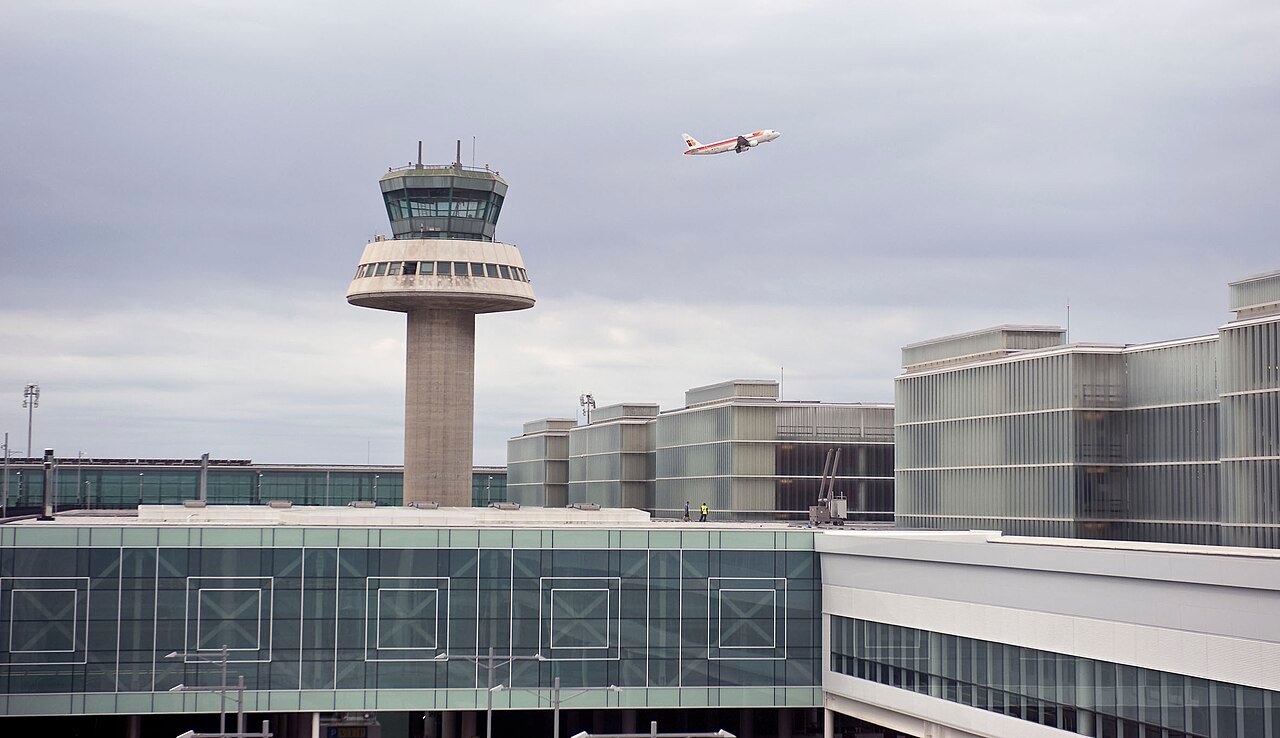
The flight is the easy part. The moment that shapes your first impression of Barcelona comes after you collect your bag at Josep Tarradellas Barcelona-El Prat Airport, about 13 km southwest of the centre, and decide how to get into the city. Barcelona gives you more choices than most airports — an express bus, a metro line, a suburban train, a city bus, taxis and pre-booked cars — and the best one depends on your terminal, your neighbourhood, and what time your flight touches down.
I have done this journey every way it can be done, including the 5am departures. This guide walks through each option with prices and journey times, and flags the daily ticket traps. Still planning the trip itself? Start with our full Barcelona guide.
Where to Stay in Barcelona
Where you sleep decides which route makes sense — my three most-recommended hotels:
Luxury pick — El Palace Barcelona
The city’s grande dame just off Passeig de Gràcia: grand rooms, a rooftop terrace, and the airport train’s Passeig de Gràcia station a short stroll away.
Boutique pick — Mercer Hotel Barcelona
A serene, design-led hideaway built into the Gothic Quarter’s Roman walls, with a small rooftop pool. Arrive by Aerobús to Plaça Catalunya and you are a ten-minute wander from the door.
Budget pick — Hotel Lleo
Two minutes from Plaça Catalunya, where the Aerobús terminates and half the metro network crosses. Simple, dependable rooms and a small rooftop pool.
Table of Contents
- Where to Stay in Barcelona
- The Two Terminals: T1 vs T2
- Aerobús: The Default for Most Visitors
- Metro L9 Sud: Frequent, But Mind the Ticket
- RENFE Train (R2 Nord): The Local’s Favourite
- City Bus 46 and the Night Buses
- Taxi: Door to Door, on the Meter
- Private Transfers and Ride Apps
- Which Option by Where You’re Staying
- Getting Back to the Airport
- Practical Tips: SIMs, Luggage and Scams
- Final Thoughts
The Two Terminals: T1 vs T2
El Prat has two terminals, and they are not two ends of one building — they sit about 4 km apart, with the runways between them, so check your booking first. Terminal 1 is the big, light-filled Ricardo Bofill building that opened in 2009; it handles most full-service airlines, with Iberia and Vueling based here alongside the likes of Lufthansa, Air France and British Airways. Terminal 2 is the older complex (sections A, B and C), home mainly to the low-costs — Ryanair, easyJet, Wizz Air and their rivals.
A free shuttle bus (signposted “Bus Transit”) links the terminals around the clock: every five to ten minutes during the day, less often overnight, about 10–15 minutes on the road. It runs landside, outside security, so allow half an hour door to door. One detail matters below: the metro and Aerobús serve both terminals, but the RENFE train station is at Terminal 2 only.

Aerobús: The Default for Most Visitors

For a first visit, the Aerobús is the option I point most people to. These light-blue express coaches run as two lines — A1 from Terminal 1, A2 from Terminal 2 — along the same city route: Plaça Espanya, Gran Via–Urgell, Plaça Universitat and finally Plaça Catalunya, at the top of La Rambla. The journey takes around 35 minutes depending on traffic, and buses leave every five to ten minutes through the day and roughly every 20 minutes overnight — the service runs 24/7, all year, making it the safety net for late landings and early departures.
Tickets cost just under €8 one-way (currently around €7.75), with a return at about €13 valid for 90 days. Buy online, from the machines at the stop, or from staff at the rank. One warning: the Aerobús is not part of the city transport network, so no T-casual, travel card or pass is accepted — it is its own ticket, every time. In return you get luggage racks, air conditioning and no changes: sit down at the airport, stand up at Plaça Catalunya.
Best for: stays near Plaça Catalunya, the Eixample or the old town; solo travellers; arrivals outside train hours.
Metro L9 Sud: Frequent, But Mind the Ticket
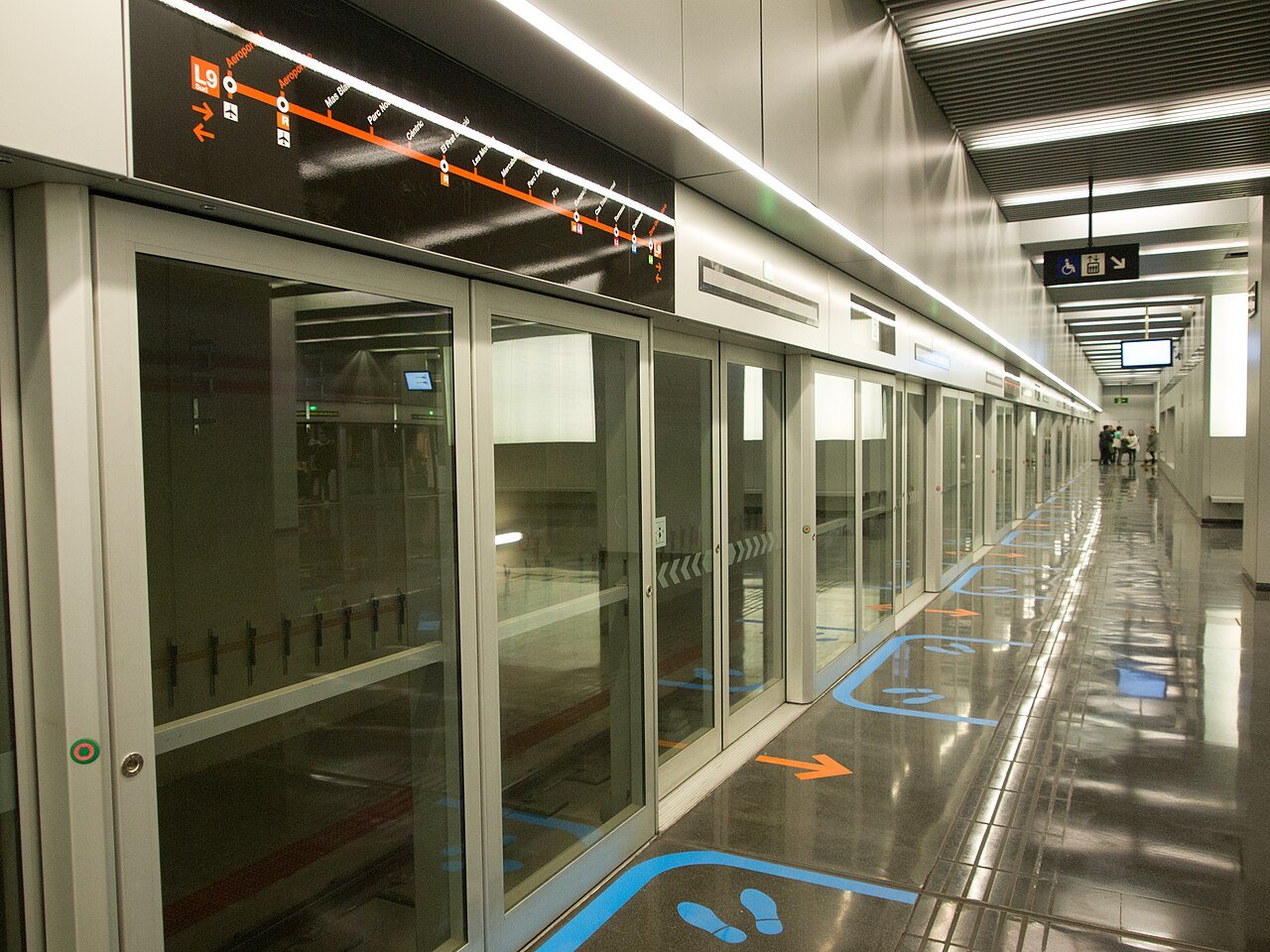
The metro’s orange L9 Sud line serves both terminals, with Aeroport T1 and Aeroport T2 stations built into them. Driverless trains run about every seven minutes, taking roughly 32 minutes to the end of the line at Zona Universitària. That is the route’s catch: no L9 station is central, so you always change — onto the L3 at Zona Universitària for Plaça Catalunya and Passeig de Gràcia, the L5 at Collblanc for Sants, or the L1 at Torrassa. Allow 45–50 minutes door to door.
The second catch is the ticket. The airport stations sit behind special gates: a standard single ticket, a T-casual and a T-familiar are all refused here. What you need is the dedicated Airport Ticket, €5.90, which covers the ride including your change of line. The exceptions are the unlimited products — the T-dia day pass (around €12, including an airport journey each way), the T-usual, the T-jove and the Hola Barcelona card all open the airport gates. Metro hours are roughly 5am to midnight Sunday to Thursday, until 2am on Fridays, and all night on Saturdays. Choose the metro if you are staying out west — Zona Universitària, Collblanc, Sants — or already hold an unlimited pass.
RENFE Train (R2 Nord): The Local’s Favourite

Ask a Barcelona resident how they get to the airport and most will say the train. The R2 Nord Rodalies line runs from a station attached to Terminal 2 (follow the covered walkway from T2B) straight into the city: about 19 minutes to Barcelona Sants and 27 minutes to Passeig de Gràcia, continuing to El Clot. Passeig de Gràcia station is the gem — you surface on Barcelona’s grandest avenue, mid-Eixample. Arriving at T1? Take the free shuttle to T2 first, and add 15 minutes.
Trains run every 30 minutes from around 05:40 to 23:38. A RENFE single costs around €4.90, but here is the trick that makes it the cheapest good option: unlike the metro, the train accepts integrated city tickets, and the airport counts as Zone 1 on them. One journey from a T-casual (around €13 for ten journeys) covers the ride, and a shareable T-familiar (eight journeys, around €11.50) can carry a whole group in on one card. The downsides are the half-hourly frequency — just missing one stings — and occasional works or delays, so check the departures board before committing.
City Bus 46 and the Night Buses
The slowest, cheapest, most local option is bus 46, an ordinary TMB city bus running from both terminals to Plaça Espanya between about 05:30 and 23:50, every 15–20 minutes. It stops plenty along the way, so the ride takes 35–45 minutes — but it costs a standard city fare (a single is around €2.90) and, crucially, the T-casual and T-familiar are fully valid, with no airport supplement. If you already hold a travel card, this bus is effectively free. The price is paid in time and luggage space: no racks, and it fills up at busy hours.
When the 46 stops, the Nitbus night network takes over: lines N16, N17 and N18 link the airport with Plaça Catalunya through the night, on the same standard fares. Between the night buses and the 24-hour Aerobús, you are never stranded at El Prat — some hours just need more patience.
Taxi: Door to Door, on the Meter

Official Barcelona taxis are black with yellow doors, with busy ranks outside arrivals at both terminals, day and night. Now for the fact that surprises visitors: there is no flat rate from the airport to the city centre. Despite what some blogs claim, city-centre rides run on the meter. An airport supplement of €4.60 is added, every trip out of the airport carries a €21 minimum fare, and the higher night and weekend tariff applies after 8pm — but there is no charge for luggage. Expect around €35–40 to Plaça Catalunya or Passeig de Gràcia in normal daytime traffic, a little more at night or in a jam, and roughly 20–30 minutes on the road. (The one official flat fare that does exist — €46 — covers the airport to the Moll Adossat cruise terminal only.)
Cards are accepted, and asking for a receipt (un recibo, por favor) is normal. For four people with suitcases, a €38 taxi split four ways often beats four Aerobús tickets on price per head and sanity alike.
Free Barcelona Travel Guide
Download our free printable Barcelona guide with the airport routes mapped, the ticket rules explained and our metro shortcuts.
Private Transfers and Ride Apps
A pre-booked private transfer is the taxi’s polished cousin: a fixed price agreed before you fly, a driver waiting in arrivals with your name on a board, flight tracking if you are delayed, and child seats on request. For families, groups of four or more and anyone landing very late, that certainty is worth the premium — expect from around €45 per car into the centre. Book a private airport transfer here.
Ride-hailing apps — FREENOW, Cabify and Uber all operate in Barcelona — work from the airport too, but app cars cannot use the taxi rank, so you will be directed to a designated pick-up area in the terminal car parks. Fares usually land a few euros above the metered taxi price and can surge well beyond it at peak times. My honest take: if taxis are waiting at the rank, the official cab is simpler.
Which Option by Where You’re Staying

- Eixample / Passeig de Gràcia: the R2 Nord train to Passeig de Gràcia station is unbeatable from T2; from T1, the Aerobús to Plaça Universitat or Catalunya leaves a short walk.
- Gothic Quarter / El Born: Aerobús to Plaça Catalunya, then wander in — or the train to Passeig de Gràcia and stroll down. Our neighbourhood breakdown is in the Where to Stay guide.
- Sants-Montjuïc / Plaça Espanya: bus 46 or the Aerobús’s first stop drops you at Plaça Espanya; the train stops at Sants itself.
- Gràcia: train to Passeig de Gràcia and change to the metro, or L9 Sud and the L3 up — both fine, neither magical.
- Barceloneta / the beach: Aerobús to Catalunya and the L4 metro, or a taxi if the bags are big.
- Poblenou: L9 Sud with one change, or train plus metro — and if you are still choosing between areas, the three-day route shows how each base plays out.
Getting Back to the Airport
Everything above works in reverse, with two wrinkles. First, timing: leave the centre about three hours before departure, two and a half at the very least — T1 security on a summer morning can be slow, and the walk to the far gates is long. Second, early flights: the metro starts around 5am and the first airport train leaves Sants at roughly 05:15, too tight for a 06:30 departure once check-in is added. For anything leaving before about 08:00, plan on the 24-hour Aerobús, a Nitbus, or a taxi or transfer booked the night before.
The Aerobús lines are terminal-specific on the way out too — A1 for T1, A2 for T2 — and a return ticket must match your departure terminal. Time to spare on your last morning? Our favourites list has the best ways to spend it.
Practical Tips: SIMs, Luggage and Scams
Getting connected. The easiest route is an eSIM activated before you land, so data works as the plane doors open. Prefer a physical SIM? Telecom shops and vending machines in both terminals are convenient but rarely the cheapest; the carriers’ shops around Plaça Catalunya usually beat them.
Luggage storage. Both terminals have left-luggage offices (consigna) if you land hours before check-in or fly out late after checking out — expect from around €6–€10 a day depending on bag size. Locker services near Sants and Plaça Catalunya do the same job centrally.
Scams and hassles to sidestep. Anyone who approaches you inside the terminal offering a taxi or a “cheap ride” is not an official driver — official taxis wait at the rank outside, and pre-booked drivers hold a name board; they do not tout. In the metro and at busy stations, keep luggage in front of you and bags zipped: airport routes are pickpocket favourites because everyone is tired and distracted. If a taxi ride feels scenic, note the licence number on the door and ask for the receipt — that pairing resolves most disputes.
Final Thoughts
There is no single right answer at El Prat — only the right one for your terminal, your neighbourhood and your arrival time. Land at T2 with a T-familiar in your pocket and the train is a small triumph; land at T1 at midnight and the Aerobús earns every cent; land with four people and a mountain of luggage and the taxi rank is your friend. Pick using the guide above, buy the right ticket first time, and your trip starts the way it should: calmly, and already like a local.
¡Buen viaje!

Photo credits: Iberia Airlines, CC BY 2.0; ÀlexHinojo, CC0; Mariusmm, CC BY-SA 4.0; Patrick1977, CC BY-SA 4.0; Enric, CC BY-SA 4.0; JT Curses, CC BY-SA 4.0; Jorge Franganillo, CC BY 3.0 (panorama). All via Wikimedia Commons.






2 Comments