2 Days in Seville: The Perfect Weekend Itinerary

Two days is the weekend Seville was made for. One day here is a sprint — doable, and we have written that route too — but two days lets the city breathe: the monuments in the cool of the morning, a market breakfast across the river, a sunset on top of a giant wooden mushroom, and nowhere you have to run to in between. Arrive on Friday evening if you can, because waking up already in Seville is half the pleasure.
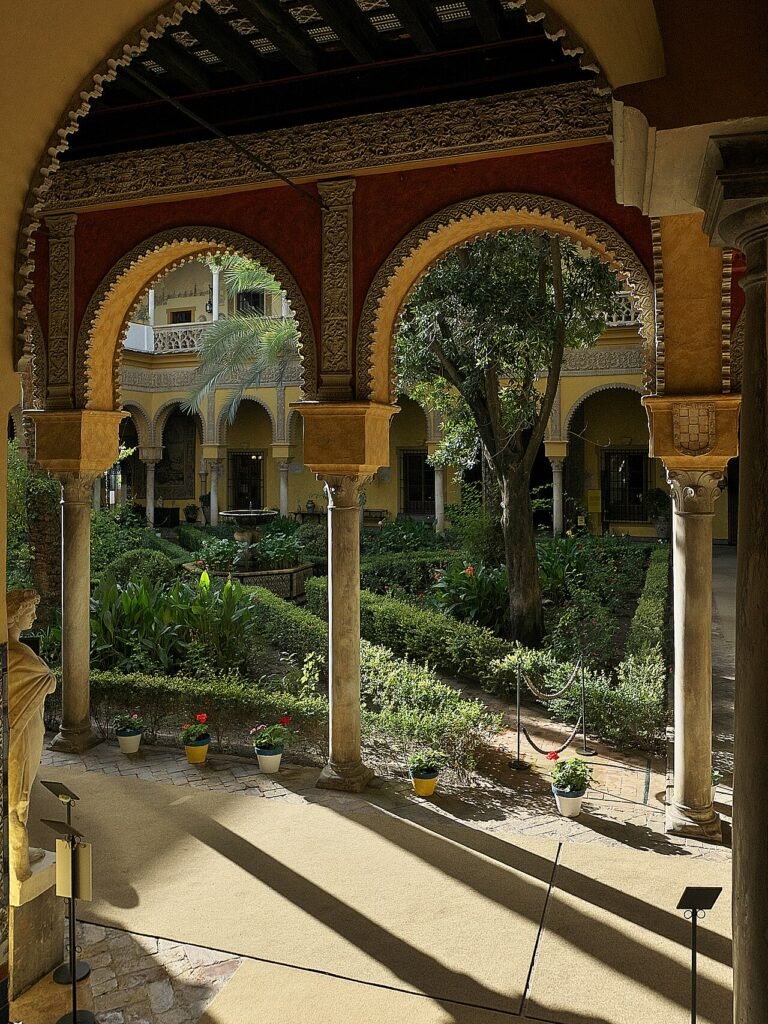
This itinerary splits the city the way locals feel it. Day one is the monumental old town — the Royal Alcázar, the Cathedral, and the lanes of Barrio Santa Cruz, taken slowly enough to actually enjoy them. Day two crosses to Triana for the market and the ceramics workshops, walks the river, and finishes above the rooftops at Las Setas. If you are staying longer, the 3 Days in Seville itinerary adds Casa de Pilatos and the Alameda at this same pace, and our Your Ultimate Guide to Seville gathers every Seville guide we have written in one place.
One piece of advice before the detail: book the Alcázar and Cathedral tickets the moment your weekend is fixed. Everything else in these two days can flex with the weather, the heat and your mood — those two time slots cannot.
Where to Stay in Seville
For a weekend, stay in or beside the old town and you will barely need a map: both days below are entirely walkable. These are the three hotels we recommend to everyone.
Luxury pick — Hotel Alfonso XIII
Seville’s most storied hotel, built for the 1929 exposition a few minutes’ walk from the Cathedral and the Alcázar — tiled courtyards, impeccable service, and a garden pool that turns a hot Saturday afternoon into a pleasure rather than a problem. For a special weekend, there is nowhere better in the city.
Boutique pick — Corral del Rey
A 17th-century casa palacio hidden in a quiet lane in Barrio Santa Cruz, the old Jewish quarter. Carved wood, Roman marble, a plunge pool and a rooftop terrace looking towards the Giralda — and the sleepy lanes of Santa Cruz on your doorstep for evening wanders.
Budget pick — Hotel Amadeus Sevilla
A charming family-run hotel with a music theme, on a pedestrian street in Santa Cruz — composer-named rooms, a piano in the house, and a rooftop terrace for a nightcap over the rooftops. Central, spotless and fairly priced: the smart weekend base.
Table of Contents
- Where to Stay in Seville
- Day 1: The Monuments, Done Slowly — Alcázar, Cathedral and Santa Cruz
- Morning: The Royal Alcázar, Without the Rush
- Afternoon: Seville Cathedral, the Giralda and the Archivo de Indias
- Evening: Santa Cruz After Dark and a Tapas Crawl
- Day 2: Markets, the River and the Mushrooms — Triana and Las Setas
- Morning: Plaza de España and María Luisa Park
- Late Morning: Triana Market and the Ceramics Workshops
- Afternoon: The Guadalquivir River Walk and Torre del Oro
- Evening: Sunset at Las Setas and a Late Flamenco Nightcap
- Final Thoughts
Day 1: The Monuments, Done Slowly — Alcázar, Cathedral and Santa Cruz

Day one takes Seville’s two greatest buildings at weekend pace. The trick is not doing more than the one-day visitors — it is doing the same things with slack in the schedule: time for the gardens, time for the view, time for a second coffee. Everything today happens within a few streets of the Cathedral, so the day walks itself.
Morning: The Royal Alcázar, Without the Rush
Take a mid-morning entry slot at the Royal Alcázar — early enough to beat the worst of the crowds, late enough for a proper breakfast first. (On your first Seville morning that should mean churros con chocolate or a tostada con tomate.) The Alcázar is Europe’s oldest royal palace still in use: a Christian palace built in Islamic Mudéjar style, all carved plaster, glazed tiles and still reflecting pools. The Courtyard of the Maidens is the famous view, but on a slow visit the small rooms reward you more — the Patio de las Muñecas, with its recycled Roman and caliphal columns, and the vaulted baths below the palace.
What two days really buys you is the gardens. Give them a full hour: the hedge maze of the old garden, the raised Galería del Grutesco you can walk along, peacocks strutting like they own the place (they do), and a coffee at the garden café under the orange trees. First-time visitors who rush this palace in an hour leave having seen the rooms and missed the point. Book the fixed time slot ahead — weekends sell out first: Royal Alcázar entry.
Afternoon: Seville Cathedral, the Giralda and the Archivo de Indias
Cross to the Cathedral after lunch — ideally with a coffee in your system and no more than an hour’s queue in front of you. It is the world’s largest Gothic church, and the numbers are not the point; the light is. Climb the Giralda — the old minaret, now the cathedral’s bell tower — not by stairs but by the ramps designed for a horse to carry the muezzin up. There is no lift, but there are no stairs either, and the terrace view at the top is the best orientation Seville offers: the Alcázar below you, the orange trees around the courtyard, the city flat to the horizon. Book the combined entry ahead of time, because the queues are longest mid-afternoon: Seville Cathedral and Giralda entry.

After the Cathedral, the Archivo de Indias is the perfect decompression stop: free, cool, quiet, and full of the actual documents of Spain’s American empire — Columbus’s logbook, the Treaty of Tordesillas, maps of the New World. It is the kind of museum you can do in 30 minutes and leave feeling smarter, not tired.
Free Seville travel guide
Planning a trip to Seville? Get our free one-page Seville checklist: what to book ahead, what to skip, and the tapas bars we actually eat in.
Evening: Santa Cruz After Dark and a Tapas Crawl
Evening belongs to Barrio Santa Cruz, the former Jewish quarter. The streets here are so narrow that cars cannot pass — this is a district built for walking, and it rewards it. The houses are whitewashed, the balconies flower-filled, and every turning reveals a small square where neighbours sit and watch the world go by. Start at the Plaza de Santa Cruz, find the little square of the Virgen de los Reyes, and let yourself get pleasantly lost for an hour before dinner.

For dinner, do not book a restaurant — do a tapas crawl. One drink and one dish per bar, three or four bars, and never sit down for long. Start on Calle Mateos Gago, where the old tabernas have been serving montaditos for generations, then drift towards the Plaza del Salvador, where the young crowd gathers outside the bars with their cañas and their plates. The rule is simple: if the bar is full of locals, go in; if it has a menu in six languages with pictures, keep walking. A weekend in Seville that does not end in a tapas crawl is a weekend wasted.
Day 2: Markets, the River and the Mushrooms — Triana and Las Setas

Day two is lighter — a day of neighbourhoods, markets and the river, with the big finish saved for sunset. It starts south of the centre, in the greenest, grandest corner of Seville, and it ends on top of the city. Between them, a market, a ceramics workshop, and a long lazy river walk.
Morning: Plaza de España and María Luisa Park
Start early at Plaza de España, Seville’s showpiece square, built for the 1929 Ibero-American Exposition. It is half a kilometre of curved brick and tile around a canal — bridges for each of Spain’s old kingdoms, tiled alcoves for each province, and rowing boats drifting under the bridges. Arrive before 10am and you will have the arcades almost to yourself; by midday the square is full of wedding photographers, flamenco dancers posing for portraits, and families on the boats. A half-hour row on the canal is the best way to see the square from the inside — book it on the spot at the boat hire by the main bridge.
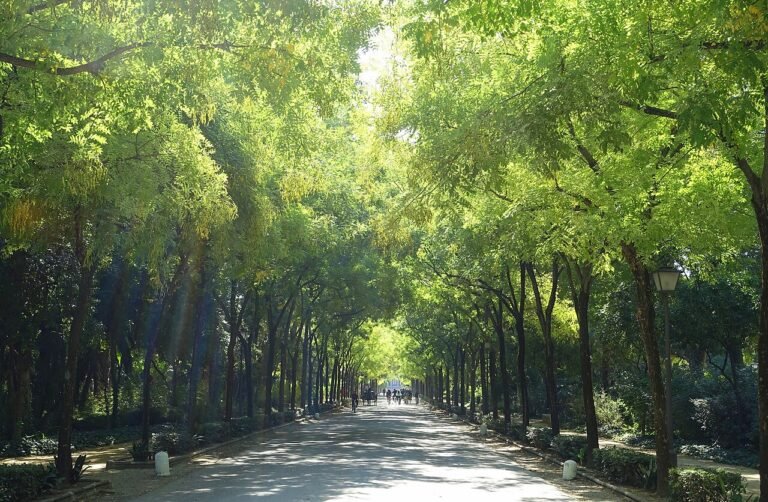
Then drift through María Luisa Park next door, the city’s great green lung. Palms, ponds, fountains, and the odd peacock: this is where Sevillanos come to walk their dogs, ride their bikes, and escape the heat. Cross the park slowly towards the river, and you will arrive at Triana by late morning, ready for the market.
Late Morning: Triana Market and the Ceramics Workshops
Triana, across the river, is Seville’s other half: the old potters’ quarter, the birthplace of flamenco, and a neighbourhood that still feels like a village. Start at the Mercado de Triana, the covered market on the site of the old castle. Come hungry — the stalls are piled with hams, cheeses, olives and fresh fish, and the little bars inside serve breakfast to market workers and locals. A tostada and a coffee at a market counter, surrounded by shoppers doing their daily shop, is one of the most Sevillano experiences you can have.

After the market, walk a few minutes to the Centro Cerámica Triana, the ceramics museum in a former tile factory. Triana has made tiles since Roman times, and the museum shows you how: the old kilns, the glazes, the workshops, and the tiles that decorated half of Andalusia. It is small, fascinating, and the shop sells genuine Triana ceramics — not the mass-produced copies you will find in the souvenir shops. Buy one tile, not ten: it will mean more at home.

Afternoon: The Guadalquivir River Walk and Torre del Oro
After lunch in Triana, walk back across the Isabel II bridge and turn right along the river. The Guadalquivir is Seville’s working river — rowers training on the water, fishermen on the banks, and the Torre del Oro, the 13th-century gold tower, standing guard at the bend. The tower is now a small naval museum; climb to the top for the view up and down the river, then keep walking south along the promenade. This is the slowest, loveliest part of the weekend: a flat, shaded walk with the river on one side and the old town on the other.

If you have done the one-day route before, you will know this river walk as the part you rushed; today, you do not have to. Stop for a coffee at one of the riverside kiosks, watch the rowers, and let the afternoon stretch. If you only have one day in the city, our 1 Day in Seville itinerary compresses the best of this weekend into a single day — but this is the version where you get to breathe.
Evening: Sunset at Las Setas and a Late Flamenco Nightcap
For the weekend’s finale, head to Plaza de la Encarnación and go up onto Las Setas — the Metropol Parasol, the world’s largest wooden structure, a vast mushroom canopy over the square. Time your visit for the last hour of light: the rooftop walkway gives you a 360-degree panorama of the old town, the Giralda and the Cathedral, and as the sun drops the canopy glows gold. It is the single best sunset spot in Seville, and the perfect place to look back over two days well spent. Book the sunset slot ahead: Setas de Sevilla entry.

After sunset, stay in Triana for dinner — the little streets around Calle Betis are full of tapas bars and small restaurants, and the riverside tables are the city’s best evening address. Then finish the weekend the way Seville finishes everything: with flamenco. The intimate Teatro Flamenco Triana, in the heart of the old potters’ quarter, puts on nightly shows in a small theatre where every seat is close to the stage — reserve your seats: Teatro Flamenco Triana show. From there, walk home across the bridge, the Giralda lit up behind you, and call it a weekend.
Final Thoughts
Two days in Seville is the sweet spot: long enough to see the monuments properly, short enough to leave you wanting more. You will have walked the old town, crossed the river, eaten in the market, and watched the sun set from a wooden mushroom — and you will have done it all without running. That is the weekend done right.
If this weekend leaves you hungry for more — and it will — the 3 Days in Seville itinerary slows the pace further still, adding Casa de Pilatos, the Alameda and a second, lazier day in Triana. But for a first weekend, this is the route we would give a friend. ¡Buen viaje!

Got more time? Stretch this weekend into the full three-day Seville itinerary, with Casa de Pilatos, the Alameda and a lazier Triana.
Photo credits: Metropol Parasol — Gzzz, CC BY-SA 4.0 · Royal Alcázar gardens, palm-lined path — Michal Osmenda, CC BY 2.0 · The Giralda from the orange-tree courtyard — Jebulon, CC0 · Calle Judería, Barrio Santa Cruz — CarlosVdeHabsburgo, CC BY-SA 4.0 · Plaza de España canal boats — Benjamín Núñez González, CC BY-SA 4.0 · Triana Market delicatessen stall — CarlosVdeHabsburgo, CC BY-SA 4.0 · Centro Cerámica Triana kiln — CarlosVdeHabsburgo, CC BY-SA 4.0 · Torre del Oro and the Guadalquivir — Benjamin Smith, CC BY-SA 4.0 · Metropol Parasol at sunset — ArthurFerna, CC BY-SA 4.0. All via Wikimedia Commons.



6 Comments