Poble Espanyol: The Complete Guide to Barcelona’s Village of Villages
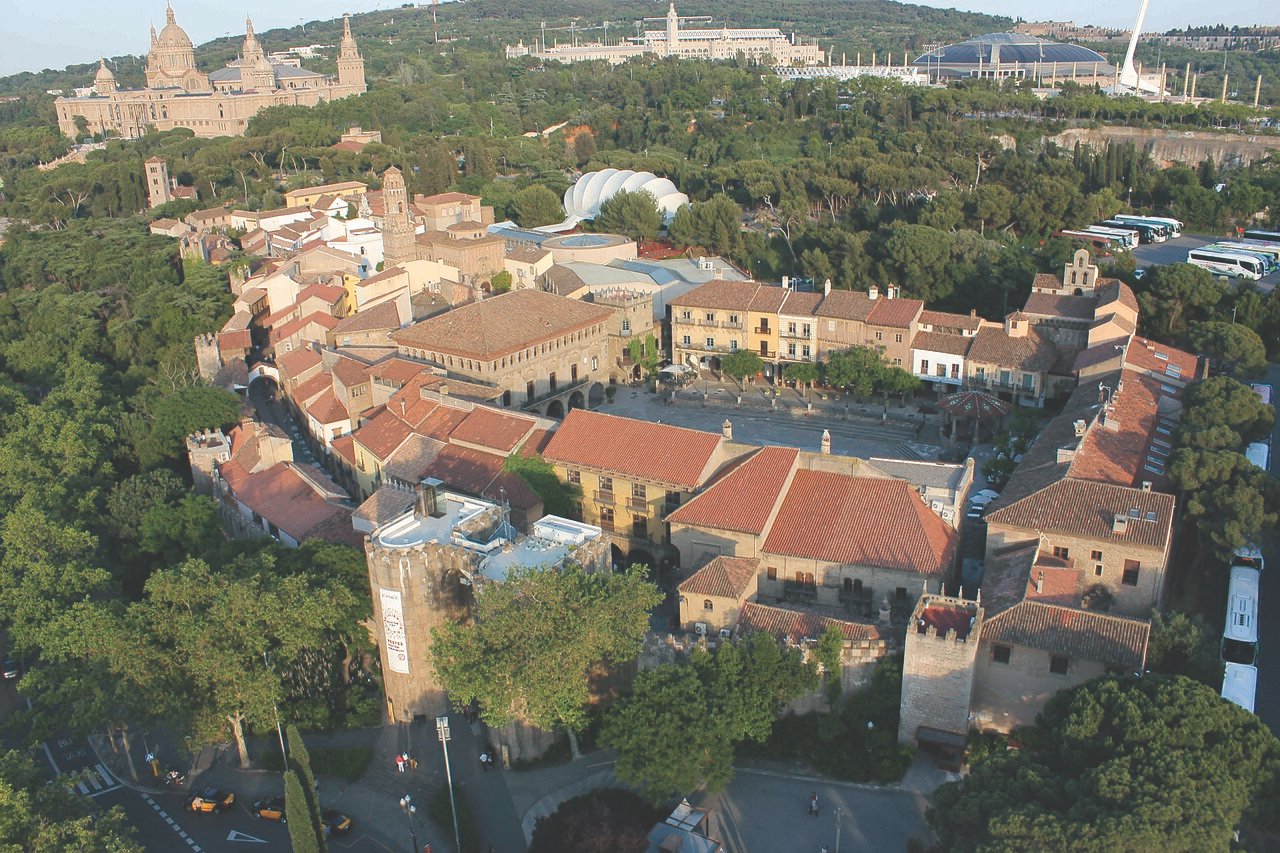
Halfway up Montjuïc, behind a medieval gate copied from the walls of Ávila, stands a village that should not exist. The Poble Espanyol — the “Spanish Village” — is a full-scale town built for a world’s fair in 1929: 117 real buildings, each a faithful copy of a house, church, tower or town hall from somewhere in Spain, assembled into streets and squares that climb the hill in four regional quarters. It was a temporary exhibit, meant for demolition when the fair closed; Barcelona refused, and nearly a century later it is still there — part open-air museum, part working village of artisans, part concert venue, and the strangest shortcut in Spanish travel: the whole country’s architecture in a single stroll.
This guide walks the village properly: the fair and the four men who crossed Spain to design it, the gate and the great square just inside, a route through the four zones — Castile at the centre, the Camino country of the north, the whitewashed south, the Mediterranean quarter at the top — plus the art collection hiding inside, the artisans who still work the streets, and the concerts and flamenco that take over after dark. And it gives the verdict honestly. It is one stop on the Montjuïc day our Best Things to Do in Barcelona guide builds across the hill — and the stop that tells you where in Spain you want to go next.
The Short Answer
Yes — the Poble Espanyol is worth it, with one condition: go in knowing it is a beautiful, lovingly made copy. For a first trip to Spain, or a short Barcelona stay, nothing else gives you the country’s architecture — Andalusian lanes, a Castilian main square, a Romanesque monastery, Mudéjar brickwork — in two or three walkable hours, with working artisans, a serious art museum and some of the best views on Montjuïc thrown in. It is ticketed, not free, and the extras are included: the Fran Daurel collection, the monastery of Sant Miquel and the audiovisual shows all come inside the price. Give it half a day, pair it with the Magic Fountain in the evening, and treat it as what it was always meant to be — an appetiser for Spain, not a substitute for it.
Table of Contents
- The Short Answer
- The Story in Brief: Built for a Fair, Kept Forever
- First Steps: Through the Ávila Gate to Plaça Major
- The Four Zones: A Walk Through Four Spains
- The Art Inside: Fran Daurel and the Sculpture Garden
- The Artisans: A Village That Still Works
- After Dark: Concerts, Fiestas and Flamenco
- The Perfect Pairing: The Village, Then the Fountain
- The Honest Verdict: Who Should Go, Who Should Skip
- Practical Info
- Tips for Visiting
- Final Thoughts
The Story in Brief: Built for a Fair, Kept Forever
The village exists because Barcelona was showing off. For the International Exposition of 1929 — the same fair that raised the Palau Nacional and set the Magic Fountain dancing — the organisers wanted an exhibit that showed Spain itself: not pavilions of products, but the country’s streets. The idea was promoted by the architect Josep Puig i Cadafalch, and the job fell to four men: the architects Francesc Folguera and Ramon Reventós, the art critic and painter Miquel Utrillo, and the painter and draughtsman Xavier Nogués. Between them they travelled some 20,000 kilometres and visited more than 1,600 towns and villages, photographing, sketching and measuring the buildings to be rebuilt on the hill.
What they built between 1926 and the fair’s opening in May 1929 was an “ideal village”: 117 full-scale buildings from every corner of the country, arranged as a real town — walled gate, main square, shifting quarters, a Romanesque monastery at the quiet top. It was always meant to be temporary, due for demolition once the Exposition closed; instead it was the fair’s popular triumph, and Barcelona simply kept its village.
First Steps: Through the Ávila Gate to Plaça Major
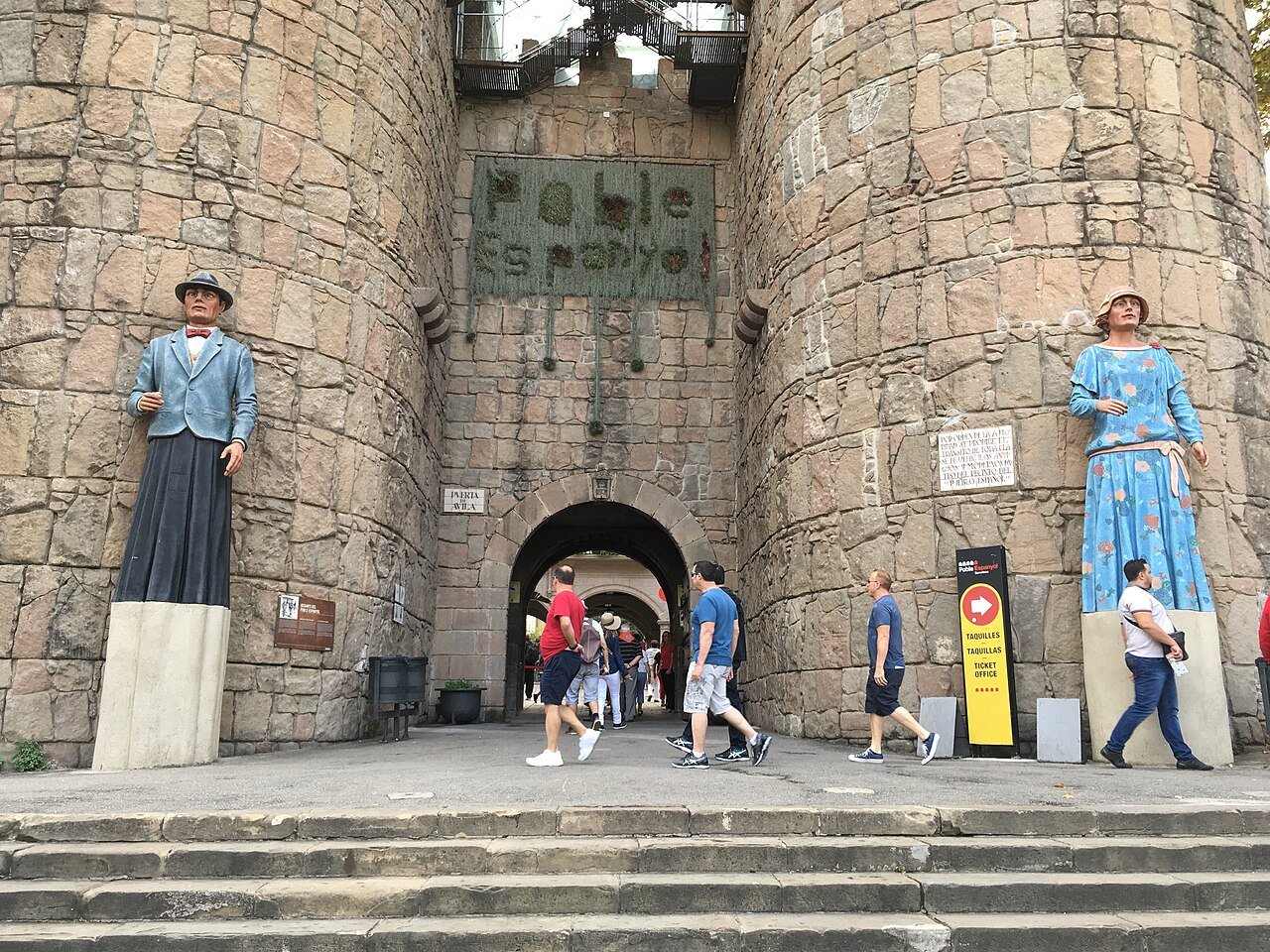
You enter the way you would enter a walled town in Castile: through a gate in a wall. The entrance reproduces the Puerta de San Vicente, one of the gates in the medieval ramparts of Ávila, all round stone towers and a single arch — and standing guard beside it are the village’s giants, the towering festival figures of Catalan festa. One practical note: the ticket line at this gate is the one queue of the day, and on a weekend morning it builds. The Poble Espanyol entry ticket bought ahead turns it into a formality — walk up, scan, and you are inside.
The gate delivers you almost immediately into the Plaça Major, the village’s thesis in one view. Its layout is modelled on the main square of Riaza, in Segovia province, but its buildings come from everywhere, and presiding over it stands the village’s own town hall: a Renaissance palace modelled on the town hall of Valderrobres (Vall-de-roures) in Aragón. At the centre stands the bandstand, the glorieta, because a Spanish main square without one would be a stage missing its orchestra. Nearly every street leads back here, and the place’s concerts and social life still happen on this square.

The Four Zones: A Walk Through Four Spains
The village is organised into four zones, and walking them in order is a small magic trick: the architecture changes its mind every few streets. The borders are deliberately soft — Spain’s are too — but the shifts are unmistakable.
The Centre: Castile around the square. The streets behind Plaça Major belong to inland Spain — Castile, Madrid, Extremadura — built of stone and gravity: thick walls, small windows, coats of arms over the doors. On the Plaza Castellana stands the Casa del Sol, a fortified Extremaduran house copied from Cáceres, all ashlar stone and defiance. This is the Spain of plateau winters and meseta light — the village’s sober keynote before the colours start.

The North: up the Gradas de Santiago. From the square’s top corner, a broad ceremonial staircase climbs to the village’s upper level. The Gradas de Santiago take their inspiration from the great stairs of Santiago de Compostela’s cathedral — the village’s nod to the Camino, scaled to fit — and the streets around them belong to the green north: Galician houses, a Basque farmhouse of stone and timber, the grey granite world of the Atlantic provinces.

The South: whitewash, flowerpots and a Mudéjar tower. Descend the other side and the palette inverts: white walls, black grilles, flowers in blue pots by the hundred. The Andalusian quarter is the village’s postcard — the Plazuela del Carmen, its wall studded with geraniums around a saint’s niche in the manner of Córdoba’s patios, and lanes like the Calle Cuna, copied stone for stone from Arcos de la Frontera. Rising over it all, improbably, is an Aragonese masterpiece: the Torre de Utebo, a full-scale copy of the sixteenth-century Mudéjar bell tower of Utebo in Zaragoza, brick and glazed ceramic in geometric lace. Inside it today runs FIESTA, a ten-minute immersive audiovisual ride through Spain’s great festivals, included in your ticket.


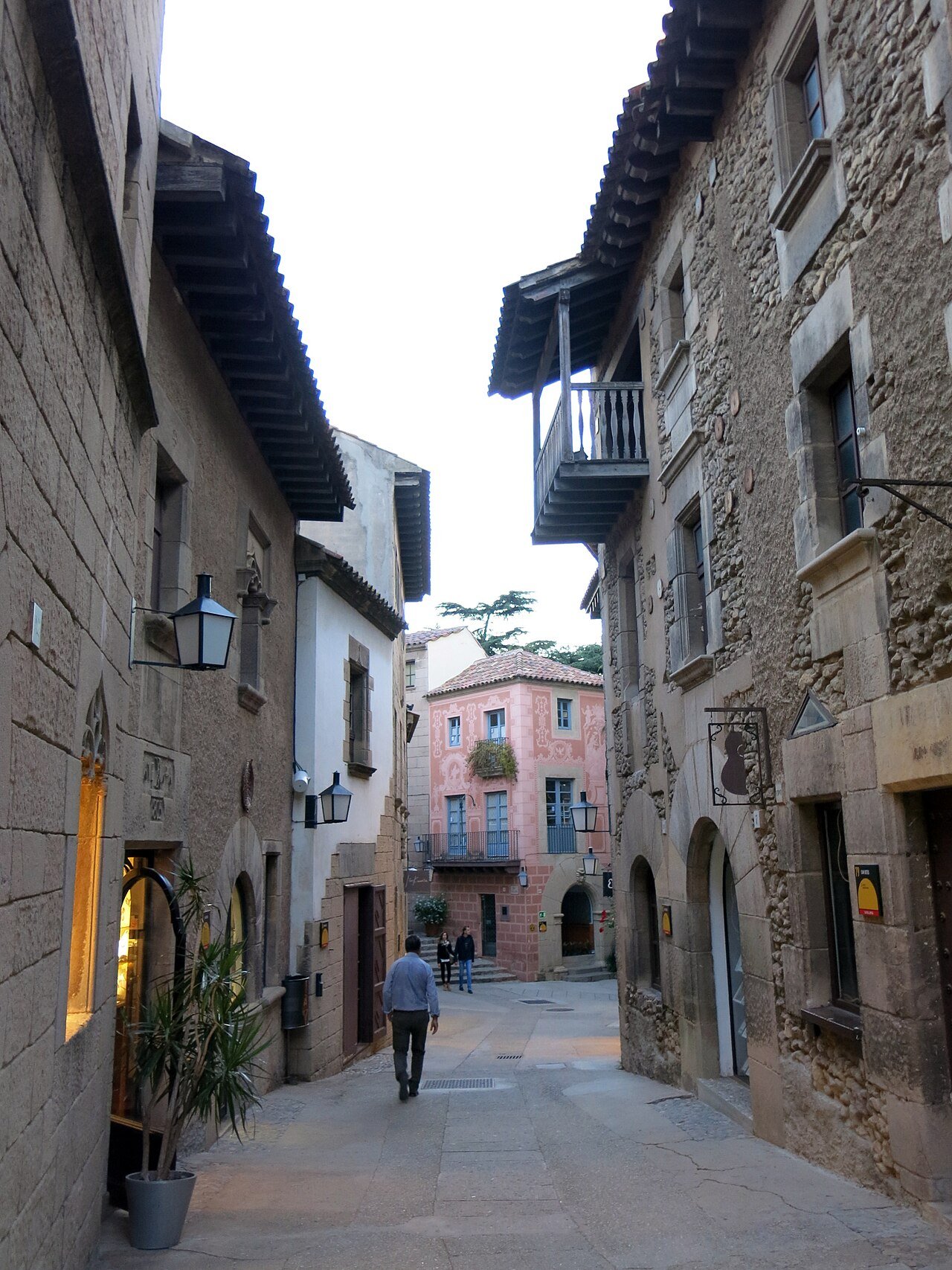
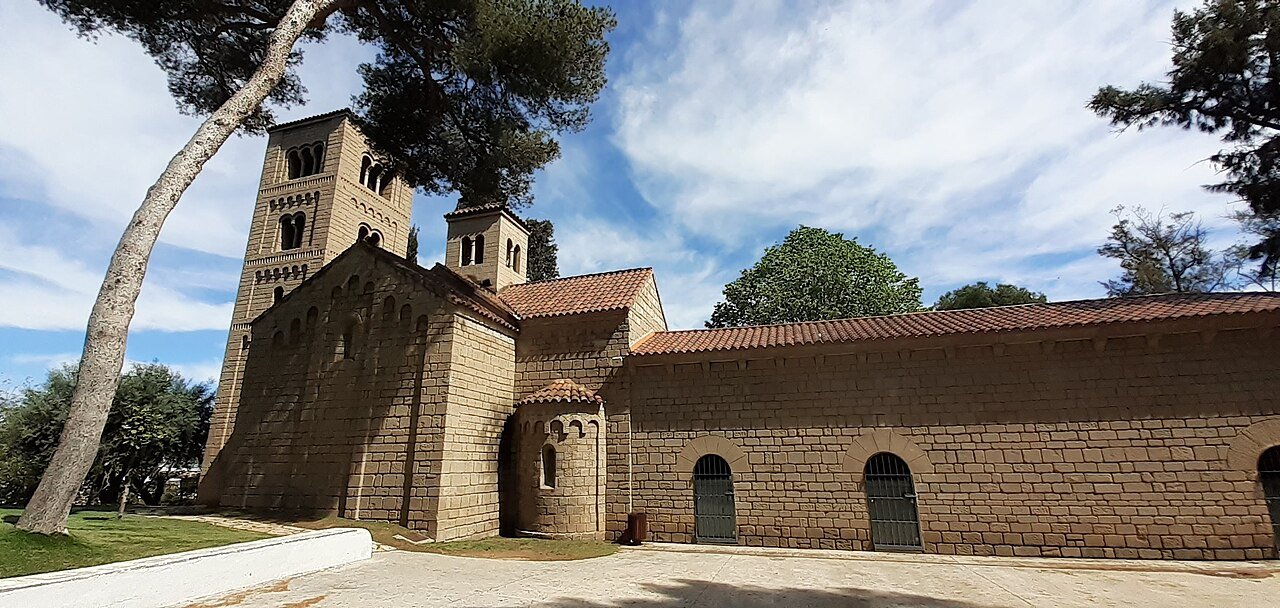
The Mediterranean: home ground, at the top. The highest streets are the village’s own: the Catalan quarter, with stone lanes like the Carrer dels Mercaders, joined by corners from Valencia and the Balearics. And at the very top, set apart among pines, stands the village’s quiet masterpiece — the Monastery of Sant Miquel, a recreation of a Catalan Romanesque monastery drawn from several real models, with a Lombard bell tower, a small cloister and frescoes inside. Few visitors climb this far: it is the calmest spot in the village, with some of the finest views over Barcelona on the hill.
Free Barcelona travel guide
Planning a trip to Barcelona? Get our free one-page Barcelona checklist: what to book ahead, what to skip, and the Montjuïc route — village, palace and fountain — we actually send friends on.
The Art Inside: Fran Daurel and the Sculpture Garden
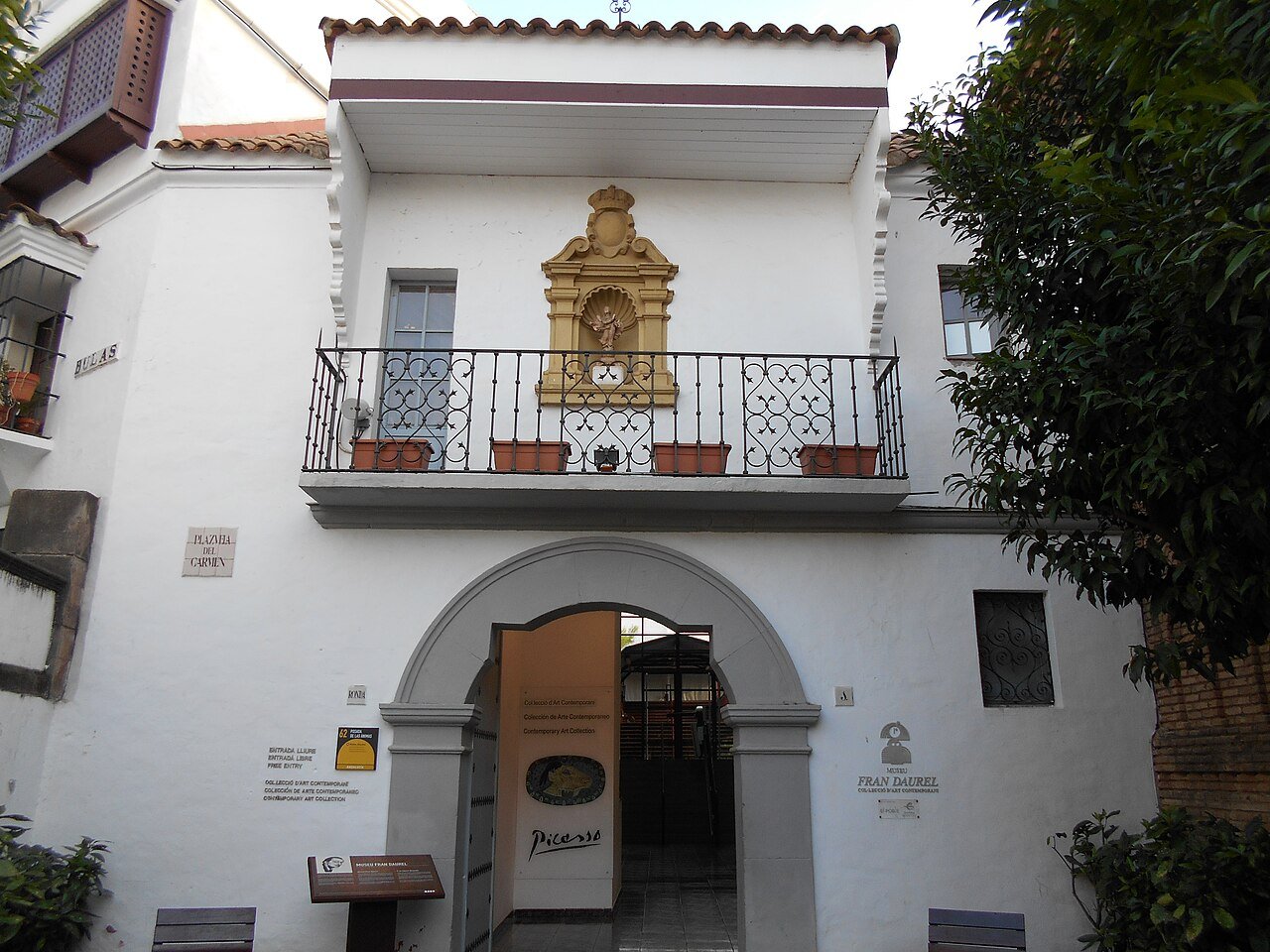
Here is the surprise the brochures bury: inside this village of replicas sits a real museum of modern art, and a good one. The Museu Fran Daurel, opened in December 2001, is a private foundation’s collection of more than 300 works of Spanish contemporary art — paintings, sculpture and ceramics by, among many others, Picasso, Dalí and Miró, with Picasso’s ceramics a particular pleasure. Included in the ticket and rarely busy, it changes the register of the visit completely: twenty minutes among originals, in a day spent among copies.
The collection spills outdoors. The Sculpture Garden, on the slope below the monastery, holds 36 sculptures by 27 contemporary artists along pine-shaded paths, with a viewpoint at its end over the city — and a pair of giant slides dropping through it. Beside the museum, the circular Espai Guinovart is devoted to the Catalan artist Josep Guinovart, built around one of his monumental sculptures. Do not leave the village having missed the museum.
The Artisans: A Village That Still Works
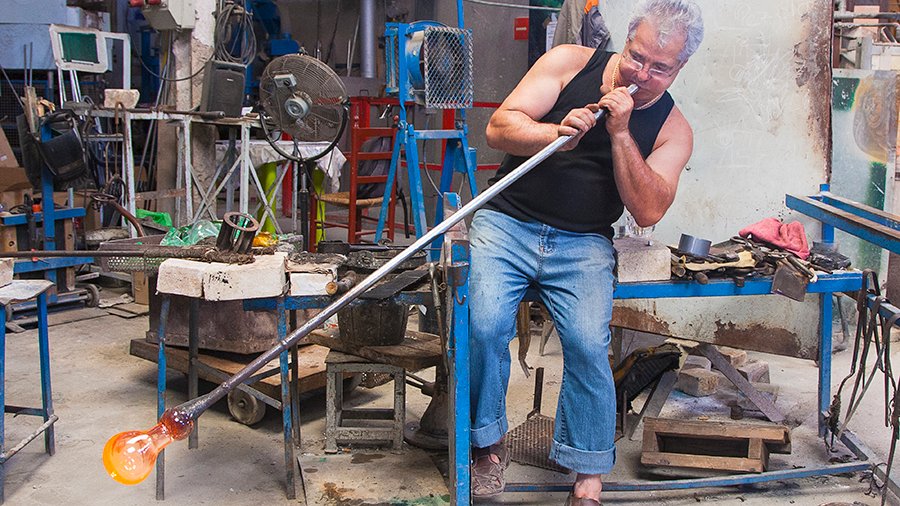
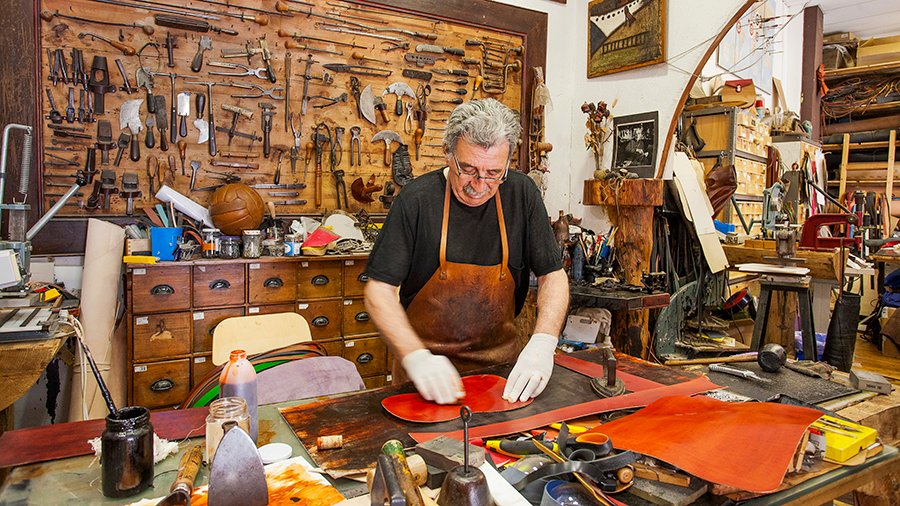
A museum village could easily have become a film set with shops. What keeps the Poble honest is that people work here. More than fifteen artisans practise in the village’s workshops — the enclosure is officially a zone of artisanal interest — in the traditional crafts: glassblowing, ceramics, leatherwork, jewellery, textiles. The glass workshop is the theatre of it: a gather of orange glass breathing out on a blowpipe, the artisan turning and shaping with skills unchanged in centuries. The leather workshop is its quiet counterpart — one man, a wall of tools sorted like a library, hides cut and stitched into bags that will outlast their maker.
Watch first, then decide about buying: the pieces are handmade in front of you, priced like it, and a world away from Ramblas souvenir tat. Several workshops run short courses if you want the tools in your own hands. This, more than the architecture, is what the village’s defenders point to: the buildings are copies, but the work is real.
After Dark: Concerts, Fiestas and Flamenco
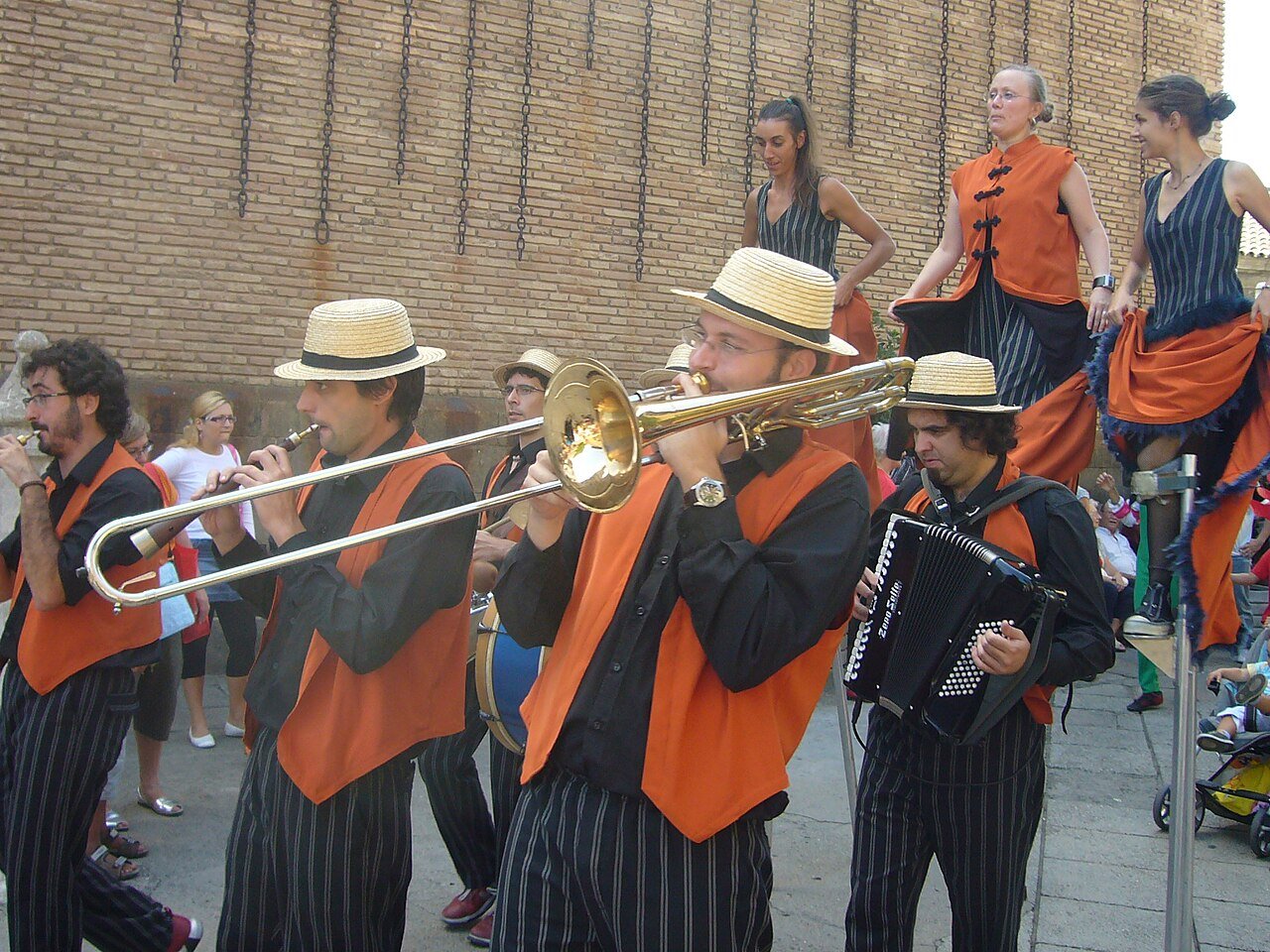
Most open-air museums close at dusk. The Poble changes costume: it has a second career as one of Barcelona’s great open-air venues. Concerts and festivals fill Plaça Major in summer — rock, blues, rumba, international acts — street musicians and stilt-walkers work the lanes on fiesta days, and the calendar runs from family Halloween events to a New Year’s Eve party in the whole enclosure. On those nights the replica square becomes simply a square, doing the job squares were built for.
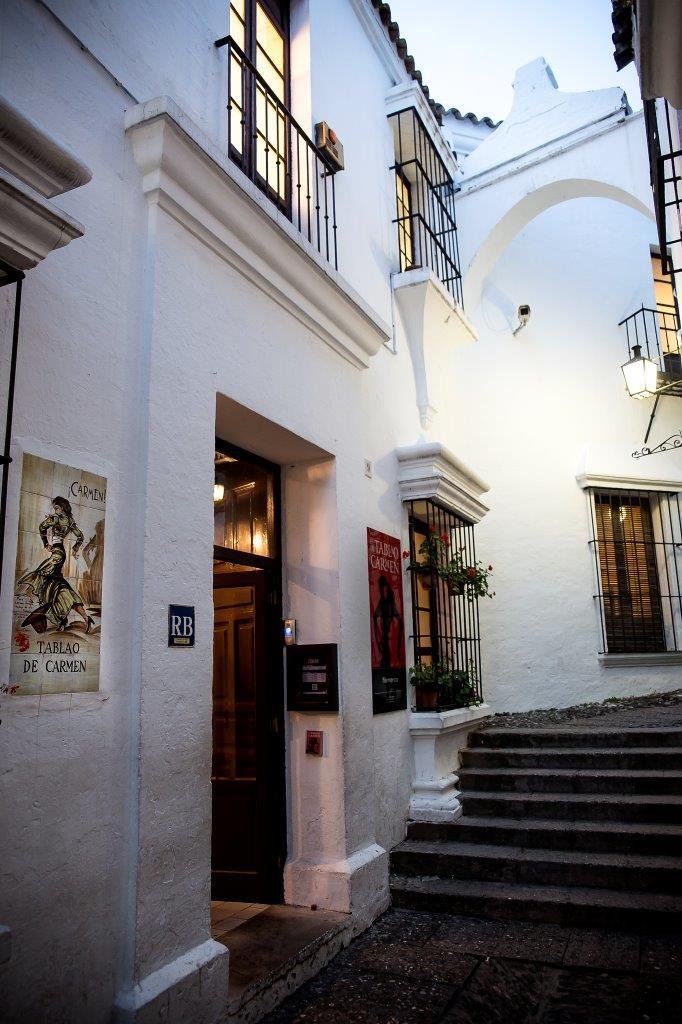
For a smaller room, the Tablao de Carmen, tucked into the Andalusian quarter, stages flamenco with dinner, tapas or just a drink — an intimate, traditional tablao, and one of the city’s long-running flamenco addresses. A tablao night is the alternative full stop to the fountain pairing: village in the late afternoon, flamenco after dark, and the hill’s lights on the walk down.
The Perfect Pairing: The Village, Then the Fountain
The best reason to time your visit for the late afternoon is what happens four hundred metres below the village after dark. Walk down the avenue as the light goes and you reach the Magic Fountain guide — the Font Màgica, the village’s own fairground sibling from 1929, performing its water-and-light show on show nights beneath the Palau Nacional. The pairing writes itself: architecture all afternoon, then colour and music in the dark — the two great survivors of the same exposition in a single outing.
Build the day upwards and it gets better still. The Palau Nacional above the fountain holds the MNAC guide, the national museum of Catalan art, and the hilltop above the village is crowned by the castle in our Montjuïc Castle guide. Village, museum, fountain: a full Montjuïc day with no transport more complicated than your feet. Just hold the fountain’s one rule in mind — check its official schedule for your date before you promise anyone a show.
The Honest Verdict: Who Should Go, Who Should Skip
Go if this is your first trip to Spain and you want the country’s map in your head before you travel it — the village is a brilliant primer. Go if you are travelling with children, who get a traffic-free town, workshops and sculpture-garden slides. Go if you love architecture, crafts or modern art, or want a full, easy Montjuïc day paired with the fountain.
Skip it, honestly, if replicas offend you on principle — every building here is a copy, and no craftsmanship will change that for you. Skip it if your Barcelona days are few and Gaudí is still unseen: the originals outrank the anthology. And know the two fair criticisms: on a quiet weekday morning parts of the village can feel hushed to the point of emptiness — it comes alive with events, artisans and the afternoon — and the bars inside charge a captive audience’s premium. Judged as a stage set that grew into a village — not as a substitute for Spain — it is still one of the most enjoyable sights on the hill.
Practical Info
Getting there. The village stands at Avinguda Francesc Ferrer i Guàrdia 13, on the western slope of Montjuïc. The nearest metro is Espanya (lines L1, L3 and L8, plus the FGC suburban lines); from the station, walk up the avenue past the Magic Fountain and keep climbing — ten to fifteen minutes on foot, all uphill. Buses also run up the avenue. Come on foot or by metro; the hill’s streets are no place to hunt for parking.
Tickets and what they include. Expect an adult ticket in the mid-teens of euros, less for children (current prices on the official site) — and since the gate’s is the one queue worth skipping, the Poble Espanyol entry ticket booked ahead earns its keep. The ticket is a whole enclosure pass — Fran Daurel, the Monastery of Sant Miquel, the FIESTA show inside the Utebo tower and the Feeling Spain spaces are all included — so a “quick look” regularly turns into three hours.
Hours and time needed. The village opens daily at 10am; closing varies by season and by what is on — event nights end latest. Check the official site for your date. Give the visit two to three hours at a stroll, more with the museum or a workshop; late afternoon is the sweet spot, running into a fountain evening below.
Tips for Visiting
- Arrive in the late afternoon. The lanes empty of tour groups, the stone turns gold, the artisans are still at work — and the Magic Fountain’s evening show is a short stroll downhill when you leave.
- Walk the zones in order, then climb to the monastery. Centre, North, South, Mediterranean: the route makes the geography click, and Sant Miquel’s terraces are the reward at the top.
- Do not skip the Fran Daurel. Included in the ticket, holding Picassos, and the one room in the village where everything is original.
- Watch the glassblower before you shop. A piece you watched being made is the only souvenir here that tells a story.
- Check the events calendar before you choose a day. A concert or fiesta night transforms the place — and an event can also close off parts of the enclosure, which the ticket page flags in advance.
- Keep the fountain rule. If the pairing is the plan, confirm the Magic Fountain is performing that night on the city’s official channels; drought and maintenance still take nights off the calendar.
Travel insurance, sorted
Whether it is a two-week holiday or a longer move, travel insurance is not the most glamorous part of a trip — but it is the one booking you want to have in place before a trip, and while you are already away.
Final Thoughts
Every other sight on Montjuïc is an original: a real palace, a real castle, a real fountain still dancing its 1929 steps. The Poble Espanyol is the hill’s beautiful impostor — a town of copies that was supposed to stand for one summer and has now stood for nearly a century, kept alive by the artisans, musicians and curators who moved in and made it real. Walk its four Spains in an afternoon, watch a man blow glass the way his trade has always blown it, then stroll down to the fountain as the lights come on — and let the village do what it was built to do: make you want to see the rest of Spain for yourself.
¡Buen viaje!
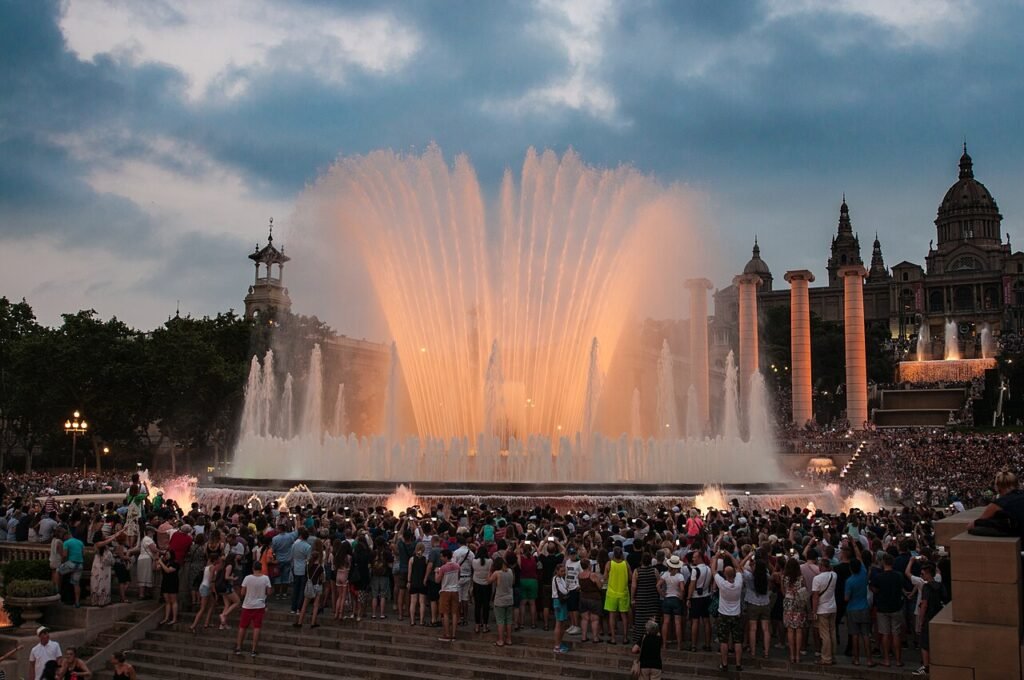
Photo credits: The village from above, the glassblower and the leather workshop — Poble Espanyol de Barcelona, CC BY-SA 4.0 · The entrance gate with the village giants — Thingstodoinbarcelona, CC BY-SA 4.0 · Plaça Major, the Plaza Castellana, the Gradas de Santiago, the Plazuela del Carmen, the Torre de Utebo and the Carrer dels Mercaders — Enric, CC BY-SA 4.0 · The Monastery of Sant Miquel — Herodotptlomeu, CC BY-SA 4.0 · The Fran Daurel Museum entrance — Canaan, CC BY-SA 4.0 · The street band at a village fiesta — Jordiferrer, CC BY-SA 3.0 · The Tablao de Carmen — Jdewandeleer, CC BY-SA 4.0. All via Wikimedia Commons.