Museu Frederic Marès Barcelona: The Complete Guide to the Collector’s Museum
Short Answer
The Museu Frederic Marès is Barcelona’s most personal museum: the life’s haul of one man, the sculptor Frederic Marès (1893–1991), who spent some seventy years buying everything from Roman bronze figurines and Romanesque wooden Virgins to hand fans, toy theatres and other people’s scissors, then gave the lot to the city. It fills part of the old royal palace of the Counts of Barcelona on the Plaça de Sant Iu, two minutes from the Cathedral in the Gothic Quarter. The lower floors hold one of Spain’s finest sculpture collections, strong on medieval polychrome wood; the top floor is the famous Collector’s Cabinet, room after room of 19th-century everyday life under glass. Entry is €4.20 (€2.40 reduced, under-16s free, and free on the first Sunday of the month and every Sunday afternoon), and you need ninety minutes to two hours to do it justice.
Table of Contents
- The Short Version
- The Sculptor Who Couldn’t Stop Collecting
- A Palace for a Collection: The Building
- The Sculpture Floors: Romanesque to Baroque
- The Collector’s Cabinet: The Museu Sentimental
- Marès’s Studio and the Courtyard
- What to Look For: The Pieces Nobody Misses Twice
- Practical Info
- Tickets and Booking
- Opening Hours
- Getting There
- When to Go
- How Long You Need
- Tips for Visiting
- What to See Nearby
- Final Thoughts
The Short Version
Most Barcelona museums show you a period, a movement or a single famous name. This one shows you a temperament. Frederic Marès could not walk past a beautiful object without wanting to own it, and because he lived to be ninety-seven and earned well as a sculptor, the wanting turned into tens of thousands of objects. The result is really two museums sharing one palace. Downstairs is the serious one: Hispanic sculpture from the ancient world to the 19th century, with whole shelves of Romanesque Virgins and some of the most moving medieval crucifixes in Catalonia. Upstairs is the one people fall in love with: the Collector’s Cabinet, where the 19th century is preserved not in masterpieces but in fans, clocks, pipes, photographs, toys and sewing kits. It belongs on any serious list of the best things to do in Barcelona, it costs less than a coffee and a pastry, and on a Sunday afternoon it is free.
The Sculptor Who Couldn’t Stop Collecting
Frederic Marès was born in Portbou, up near the French border, in 1893, and moved to Barcelona with his family at the age of ten. He trained as a sculptor at the city’s art school, La Llotja, and later taught there until 1964. His own work is still all over the city — he carved public monuments, including figures at the Plaça de Catalunya and on the Montjuïc steps below the Palau Nacional — and after the Civil War he was much in demand restoring damaged churches and statues. He was, by any measure, a successful working sculptor.
But the sculpture paid for the real project. From boyhood — he remembered collecting little pictures and chocolate wrappers as a child — Marès bought old things: first prints and books in the antiquarian shops of Paris, then, increasingly, medieval Spanish sculpture, which in the early 20th century could still be bought from village churches and dealers for very little. He spent what he earned on the collection, kept it in his studio on Carrer de Mallorca, and showed it to almost nobody. Friends knew; the public did not.

The turn came in 1944, when he was fifty-one. That year he presented his collection in public for the first time, and announced that he was leaving it to the city of Barcelona. The museum’s first rooms opened in 1948, in a building on Carrer dels Comtes, and Marès — who had more than forty years of life left — simply kept buying. Through the 1950s and 1960s the museum grew floor by floor, reaching roughly its present size by 1970. When even that filled up, he started giving things away to other museums and founding new ones elsewhere in Catalonia. He died in 1991, having spent the best part of a century assembling the contents of the building you are about to walk through.
A Palace for a Collection: The Building
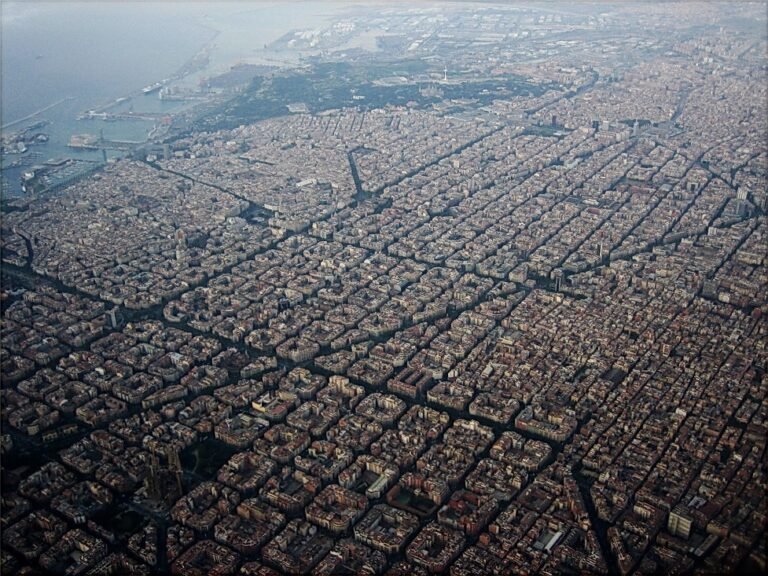
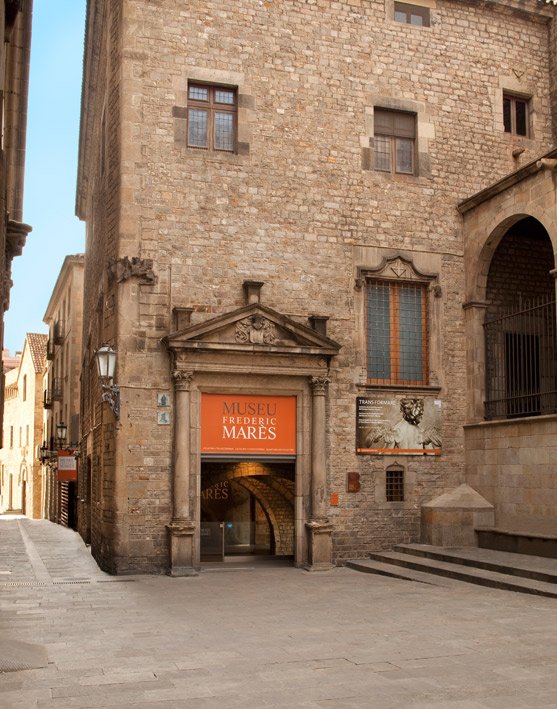
The museum sits inside one of the most historic piles in Barcelona: a surviving part of the Palau Reial Major, the Royal Palace of the Counts of Barcelona, in the tight knot of lanes around the Plaça del Rei. In the Middle Ages this was a working wing of the counts’ and kings’ palace complex; the great Saló del Tinell, the palace’s ceremonial hall, is a few steps away. The museum’s entrance is on the little Plaça de Sant Iu, a quiet stone square in the Barcelona old town and Gothic Quarter, with the apse of the Cathedral closing one side of it.

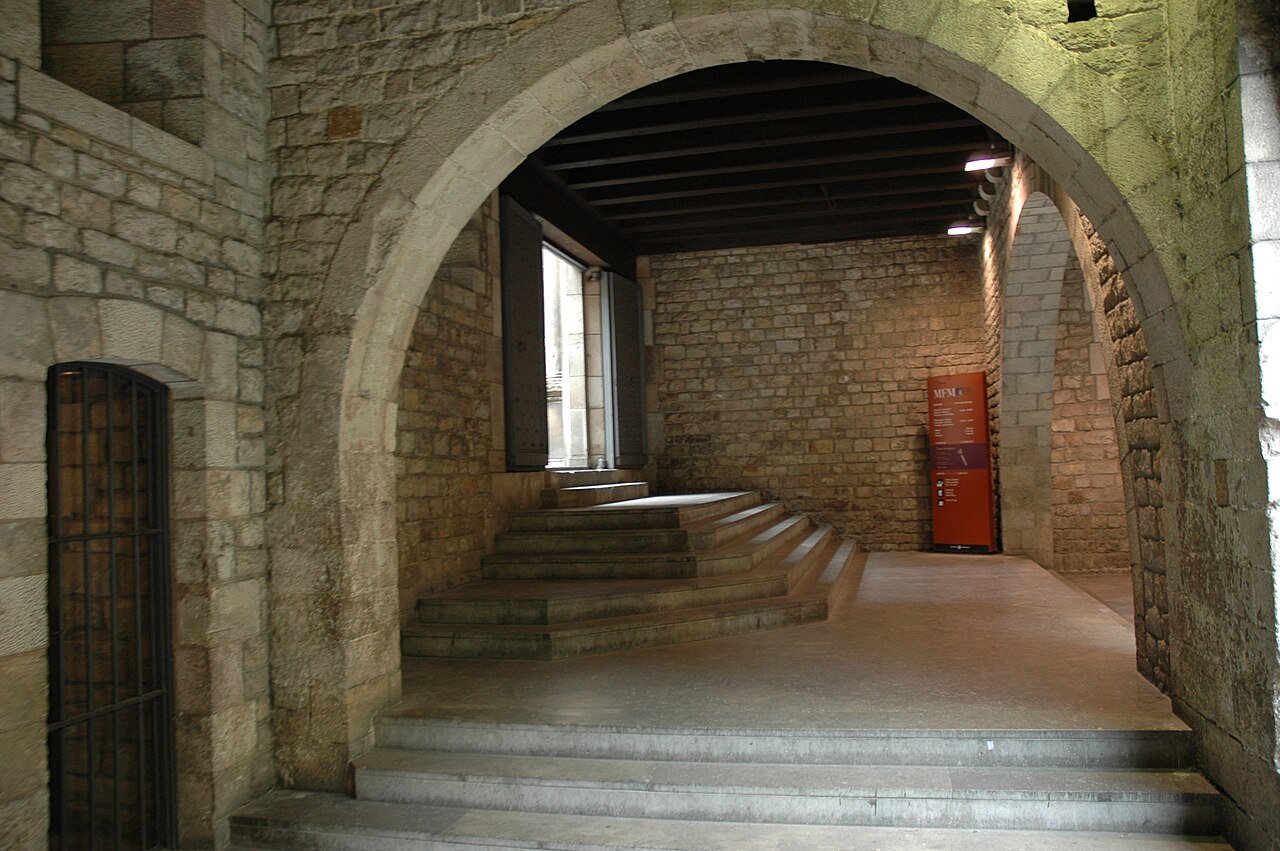
From the street it is all discretion: a stone façade, a classical doorway, an orange banner. Inside, the palace announces itself. You pass through a vaulted stone entrance hall and up a broad flight of ceremonial steps, and the rooms beyond still wear their palace bones — thick walls, stone arches, wooden ceilings — even where the displays are modern. The sculpture occupies the ground and first floors; the Collector’s Cabinet is above; and at the heart of the complex is the Verger, the old palace garden, which the museum keeps as a courtyard of orange trees and shade. It is worth remembering, as you climb, that counts and kings walked these stairs centuries before Marès filled them with other people’s Virgins.
The Sculpture Floors: Romanesque to Baroque
The sculpture collection is the reason art historians take this museum seriously, and it is arranged as a walk through a thousand years of Spanish carving. It begins small — Roman bronzes, early Christian and Visigothic fragments — and gathers force as it reaches the centuries Marès loved best. This is Hispanic sculpture in the round: stone and, above all, wood, much of it still wearing its original paint.
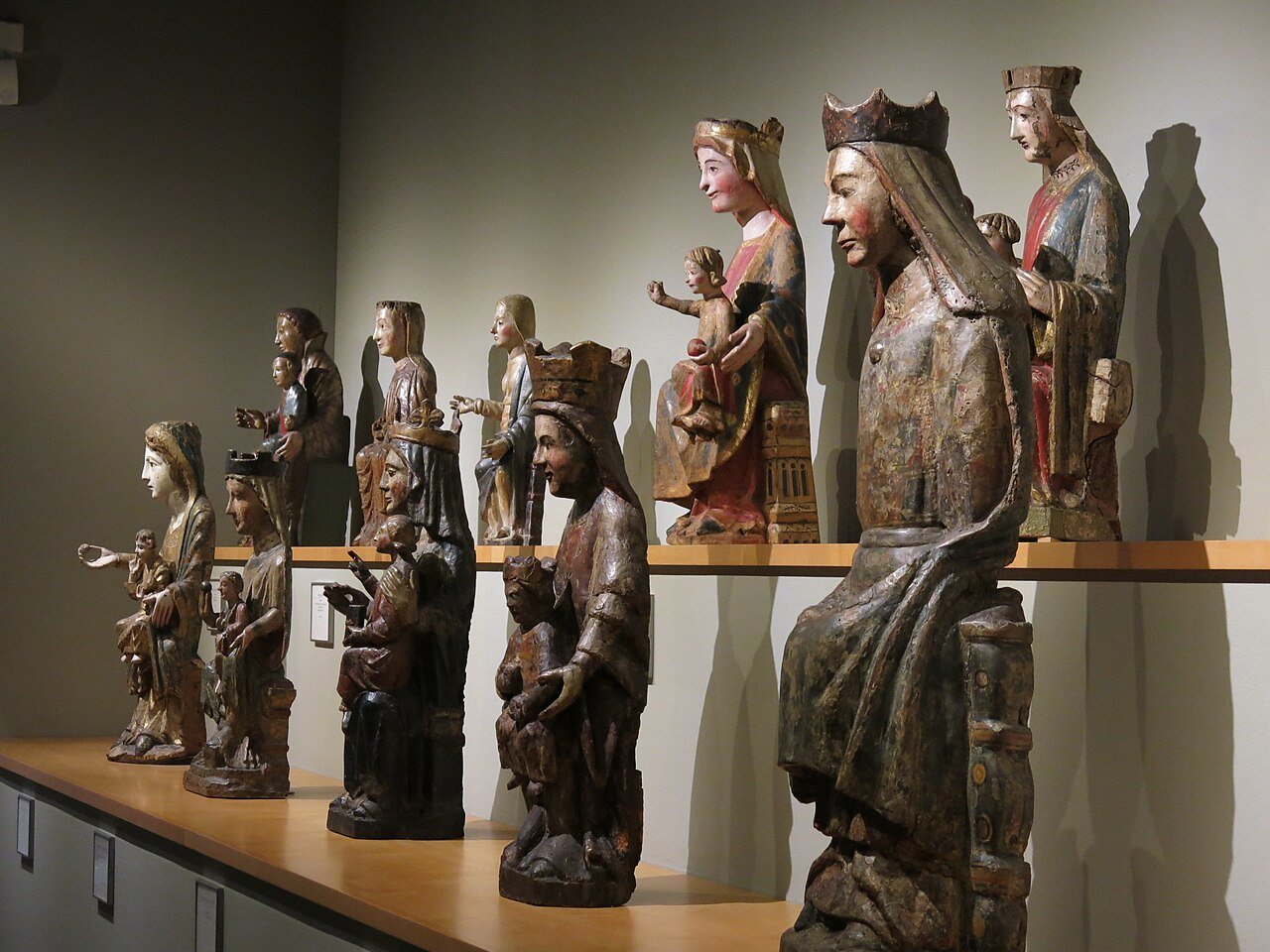
The glory is the Romanesque. Marès bought early and obsessively, and the museum holds rank after rank of 12th- and 13th-century images of the Mother of God with the Child — the Marededeus — carved for the village churches of Catalonia and Castile: crowned, frontal, solemn, each one slightly different in face and temper. Displayed together on long shelves, they stop being individual artworks and become something better: a whole civilisation’s idea of motherhood and majesty, repeated with variations. Stand back and take in the row; then go close and pick a favourite. Everyone does.
Near them are the crucifixes and Calvary groups — Christ on the cross, flanked by the Virgin and Saint John — in which Romanesque carving does its most emotional work: elongated bodies, stylised drapery, faces of extraordinary calm. One room groups a polychrome Calvary against a plain wall with a whole procession of medieval crucifixes behind it, and it is as powerful a room as any in Barcelona’s museums. For the great Romanesque frescoes you go to MNAC on Montjuïc; for Romanesque sculpture, this is the city’s deepest bench.
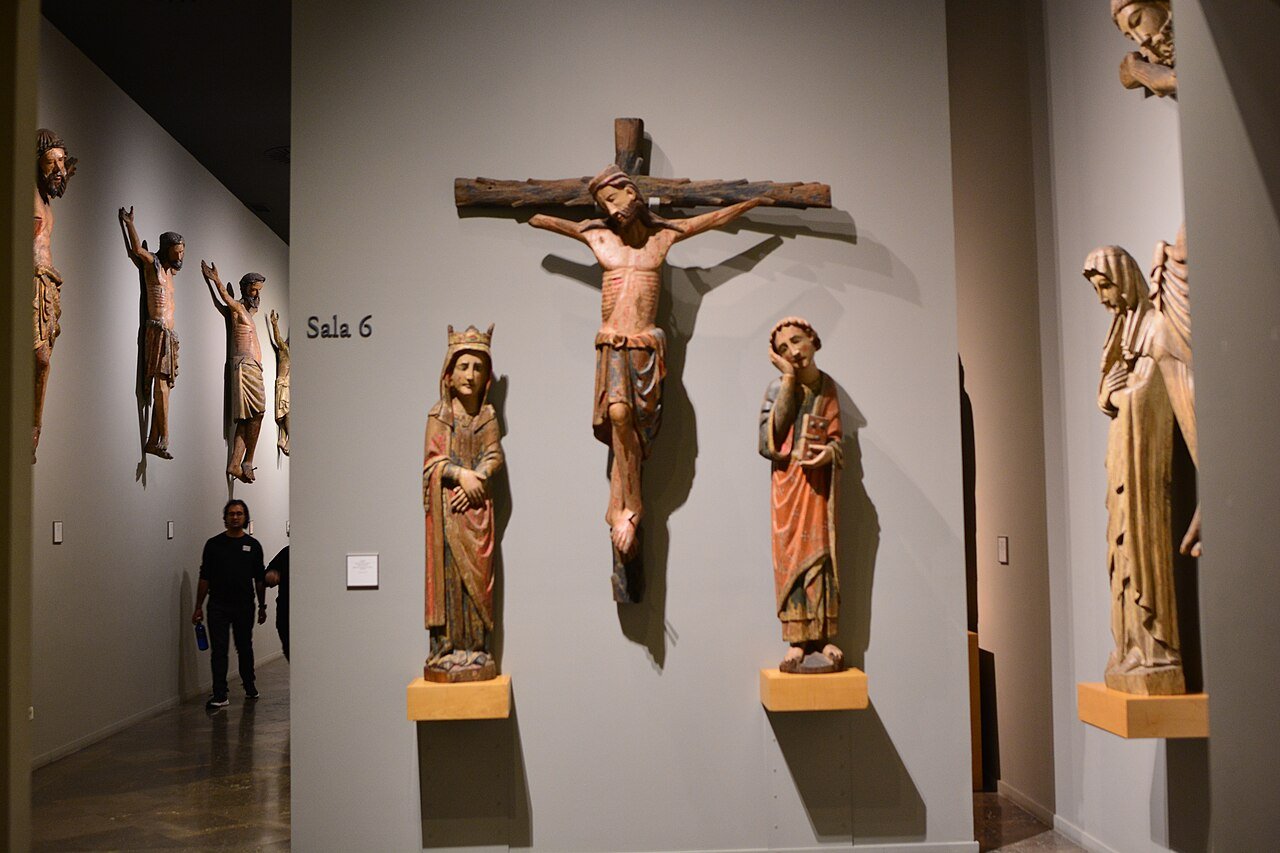
From there the walk continues through the Gothic centuries — alabasters, carved altarpiece figures, dark wooden saints under little Gothic canopies — into the Renaissance and the Baroque, when Spanish polychrome sculpture became almost unsettlingly lifelike, and on into the 19th century, where the collection comes back around to Marès’s own contemporaries. There are also arms and armour, ceramics and decorative pieces worked into the route. Nothing here is behind ropes at a distance; the rooms are quiet, the light is kind, and you can stand a nose away from a 900-year-old carving and study the chisel marks.

The Collector’s Cabinet: The Museu Sentimental
Then you climb to the top floor, and the museum changes key completely. The Collector’s Cabinet — often called the Museu Sentimental, the sentimental museum — is where Marès kept the second collection: not art, but life. Across a suite of themed rooms he assembled thousands upon thousands of objects from the 19th century, the world of his parents and grandparents, arranged exactly as a 19th-century collector would have arranged them: in mahogany cabinets, in drawers, in framed ranks on the wall.
There is a room for women — the Sala Femenina — with jewellery, combs, gloves and sewing things in stone-walled calm. There are cabinets of hand fans, hundreds of them, painted with courtships, bullfights, landscapes and lovers’ messages: the social media of 1850, in silk and ivory. There are clocks and watches, pipes and cigarette cards, spectacles and stereoscopic photographs, dolls and toy theatres, theatre programmes and dance cards, locks and keys by the dozen. And, most famously, there are the scissors: a whole framed case of them, dozens of pairs, each one different, each one — this is the point — beautiful.

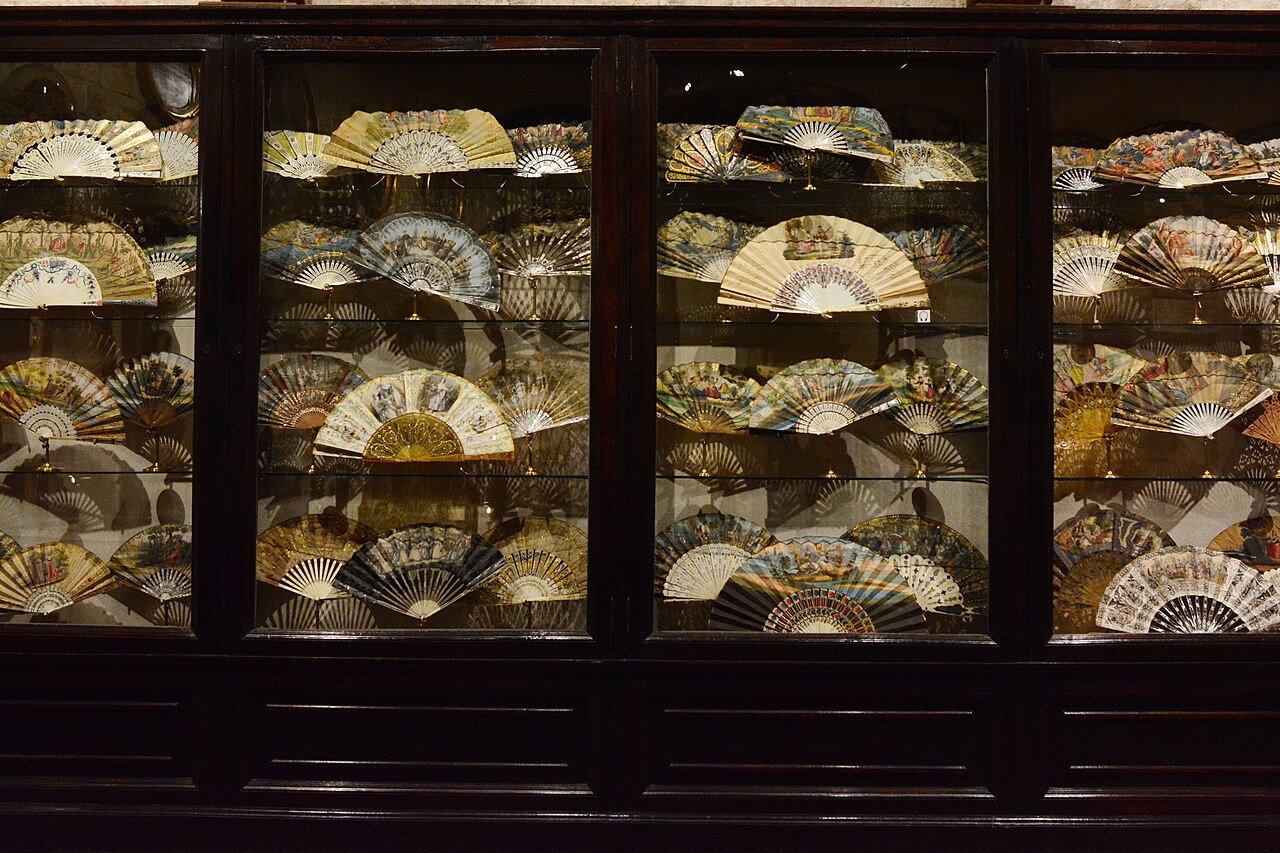
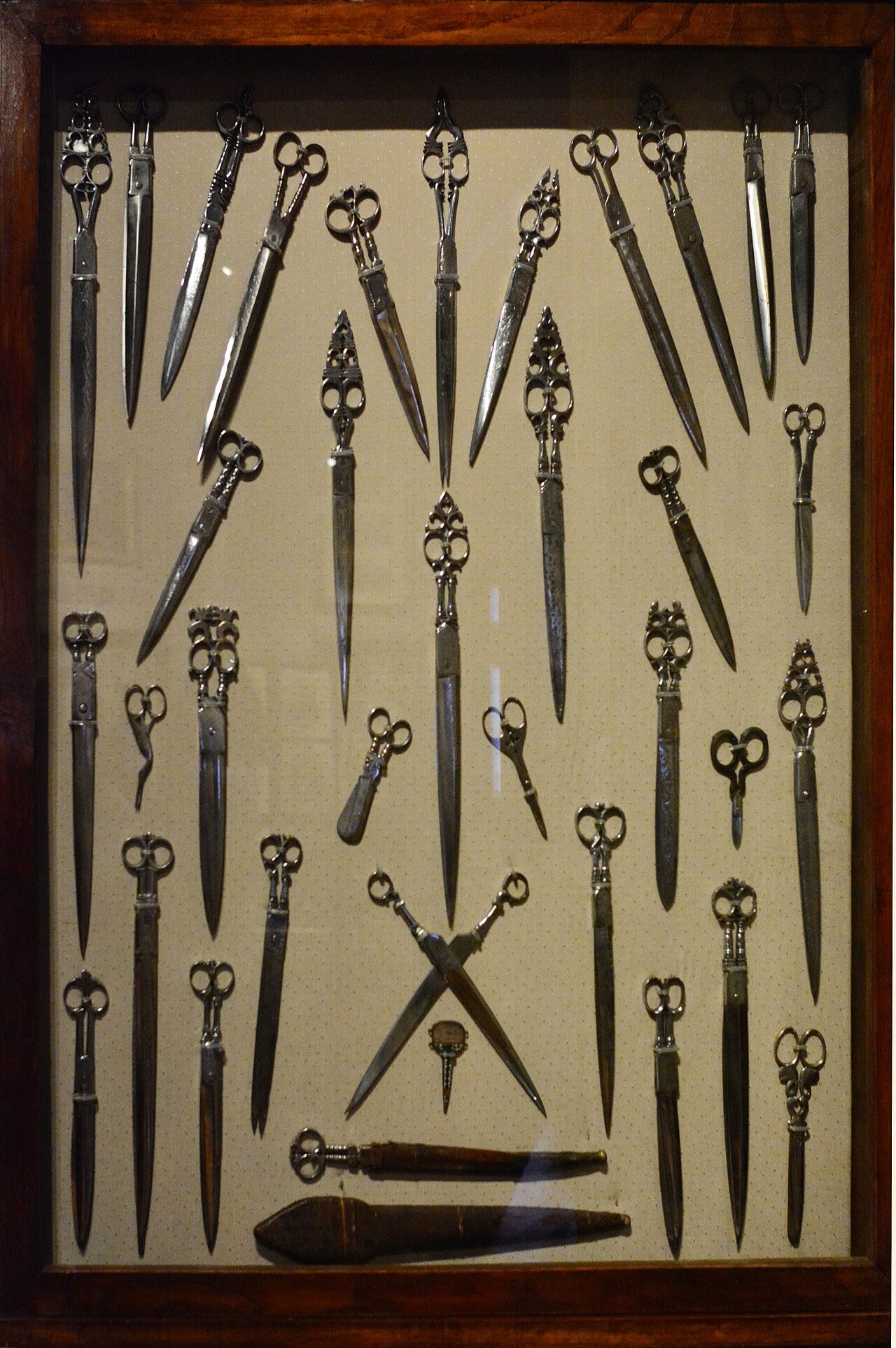
It would be easy to call this hoarding, and it wouldn’t be entirely wrong. But walk slowly and the cabinet becomes something more thoughtful: a museum of memory, built by a man who understood that a century survives as much in its fans and photographs as in its cathedrals. The stereoscopes make the point perfectly — families in 1860 gathered around these viewers to gawp at Egypt and Niagara in 3D, exactly as we gather around a screen now. The objects are small; the recognition is not.

Marès’s Studio and the Courtyard
Two spaces bring the collector himself back into his museum. The first is his study-library, preserved as he left it: a galleried room of tall bookcases, with his own sculptures — marbles, busts, plaster models, the works he chose to represent himself — standing in the body of the room below the books. It is the only room in the museum that is really a portrait: the sculptor at work, surrounded by what he made and what he read, inside the palace he filled with what he bought.

The second is outside. The Verger — the name means the orchard or garden — is the old palace garden, now a paved courtyard of orange trees and palms arranged around a low fountain, ringed by the palace’s stone arcades. After the intensity of the cabinets it is pure relief: a bench, a bit of shade, the sound of water, and almost nobody there. In summer a small café operates in the courtyard, which makes it one of the best-kept coffee secrets in the Gothic Quarter. Even without the café, build in five minutes here; the contrast between the crowded lanes outside and this green hush is the museum’s last exhibit.

What to Look For: The Pieces Nobody Misses Twice
If time is short, spend it on these. First, the Romanesque Virgins en masse — take the long view down the shelf before you look at any single carving, because the cumulative effect is the masterpiece. Second, the Calvary room, where the grouped crucifixes do in silence what whole altarpieces do elsewhere. Third, the fan cabinets upstairs: pick one fan and read it like a painting, because that is what it is. Fourth, the scissors — not because scissors are thrilling, but because the case is the collector’s whole philosophy in one frame, and it will recalibrate how you look at everything after it. Fifth, the automata and toys in the Cabinet, including a magnificently dressed mechanical gentleman in a top hat who still looks ready to perform. And finally, the courtyard: half the people who visit never find it.

Practical Info
Address: Plaça de Sant Iu 5, 08002 Barcelona — in the Gothic Quarter, beside the Plaça del Rei and the apse of Barcelona Cathedral, which is two minutes’ walk away.
What it is: a municipal museum with two permanent collections — the sculpture collection (ground and first floors) and the Collector’s Cabinet (top floor) — plus Marès’s preserved studio-library and the Verger courtyard. Labels are in Catalan, Spanish and English. It is one of the largest museums in the old town and one of the emptiest; even in high summer you may have rooms to yourself.
| Best for | Medieval-art lovers, collectors at heart, and anyone who wants a great museum without a queue |
| Entry | €4.20 general / €2.40 reduced; under-16s free; free for everyone on the first Sunday of the month and every Sunday afternoon |
| Time needed | 90 minutes to 2 hours for both collections; an hour for the highlights |
| Nearest metro | Jaume I (L4), 3 minutes on foot; Liceu (L3) also close |
| Don’t miss | The shelf of Romanesque Virgins — and the courtyard garden afterwards |
Tickets and Booking
Buy at the desk; there is no need to book ahead and queues are essentially unknown. General admission is €4.20 and the reduced rate is €2.40 (young people aged 16–29, over-65s and library-card holders are among those who qualify); under-16s enter free. Admission is free for everyone on the first Sunday of each month and every Sunday afternoon. One generous touch: your ticket remains valid for a return visit within six months, so if the Cabinet defeats you on day one, you can come back and finish it. No GetYourGuide product covers this museum specifically — anyone selling you a “skip-the-line Marès ticket” is selling you a city pass, not a ticket to here.
Opening Hours
Tuesday to Saturday, 10:00–19:00; Sundays and public holidays, 11:00–20:00. Closed on Mondays (except public holidays), and on 1 January, 1 May, 24 June and 25 December. The free Sunday-afternoon entry runs from 15:00 until closing at 20:00.
Getting There
You will almost certainly arrive on foot through the Gothic Quarter. The museum stands on the Plaça de Sant Iu, the small square between the Cathedral’s apse and the Plaça del Rei; find the Cathedral and you are a two-minute stroll away. By metro, Jaume I (L4, the yellow line) is the closest station; Liceu (L3) is a short walk across the old town. Buses V15, V17, 47 and 120 stop nearby on Via Laietana and around the Cathedral. Do not attempt to drive into the Gothic Quarter.
When to Go
Weekday mornings are the quietest, and the sculpture floors in particular reward having a room to yourself. Sunday afternoons are free and deservedly popular with Barcelonans, so expect company in the Cabinet — though “busy” here would be a quiet Tuesday at the Picasso Museum. In summer, come for the heat of the day: the palace walls keep the galleries cool, and the courtyard is shaded. If you are pairing the museum with the Cathedral and the Plaça del Rei, do the Marès first, before the old town’s tour groups thicken around midday.
How Long You Need
Ninety minutes is the honest minimum for both collections; two hours is better, and collectors will use three. A one-hour highlights route — Romanesque rooms, Calvary, Cabinet’s greatest hits, courtyard — is perfectly satisfying. The six-month return validity of the ticket makes splitting the visit across two days a real option if you are staying in the old town.
Free Barcelona travel guide
Planning a trip to Barcelona? Get our free one-page Barcelona checklist: what to book ahead, what to skip, and the tapas bars we actually eat in.
Tips for Visiting
- Do the sculpture first, the Cabinet second. The medieval floors are the serious masterpiece; the Cabinet is the delight. In that order, each sets up the other.
- Use the free slots. First Sunday of the month all day, and every Sunday from 15:00, entry costs nothing — at €4.20 it is hardly a fortune saved, but the Sunday crowd is a good one to join.
- Keep your ticket. It is valid for a return visit within six months, which is the museum quietly admitting that nobody sees everything in one go.
- Take the long view of the Virgins. Stand back from the Romanesque shelves and let the repetition work before you zoom in on individual faces.
- Find the courtyard. The Verger is unsigned enough to miss; it is through the palace arcades, and the five minutes of orange-tree shade will reset you for the old town.
- Photograph the small things. The Cabinet’s fans, scissors and stereoscopes are the photographs you will actually show people afterwards — the museum allows photography in most rooms; be discreet and skip the flash.
What to See Nearby
You are in the densest few hundred metres of old Barcelona. The Plaça del Rei, with the Saló del Tinell and the MUHBA history museum’s Roman streets below, opens off the same lanes. The Cathedral, with its cloister and geese, is two minutes away. Santa Maria del Pi and its rose window stand on the other side of the old town, five minutes west; the lanes of El Call, the medieval Jewish quarter, run just south of the Cathedral. Cross Via Laietana and you are in El Born, with the Museu Picasso and Santa Maria del Mar. The Marès pairs naturally with any of them — it is the contemplative half of a Gothic Quarter day.
Travel insurance, sorted
Whether it is a two-week holiday or a longer move, travel insurance is not the most glamorous part of a trip — but it is the one booking you want to have in place before a trip, and while you are already away. Get a quote from SafetyWing
Final Thoughts
Barcelona does not lack famous museums, but it has only one like this: a palace full of medieval Virgins and Victorian fans, assembled by a single stubborn man who believed that beauty turned up in scissors as readily as in sculpture, and who then gave the whole accumulation to his city. The Museu Frederic Marès is cheap, quiet, central and genuinely unlike anywhere else — the rare museum that tells you as much about the person who built it as about the things inside it. Go for the Romanesque carvings; stay for the scissors; leave through the orange trees.
¡Buen viaje!
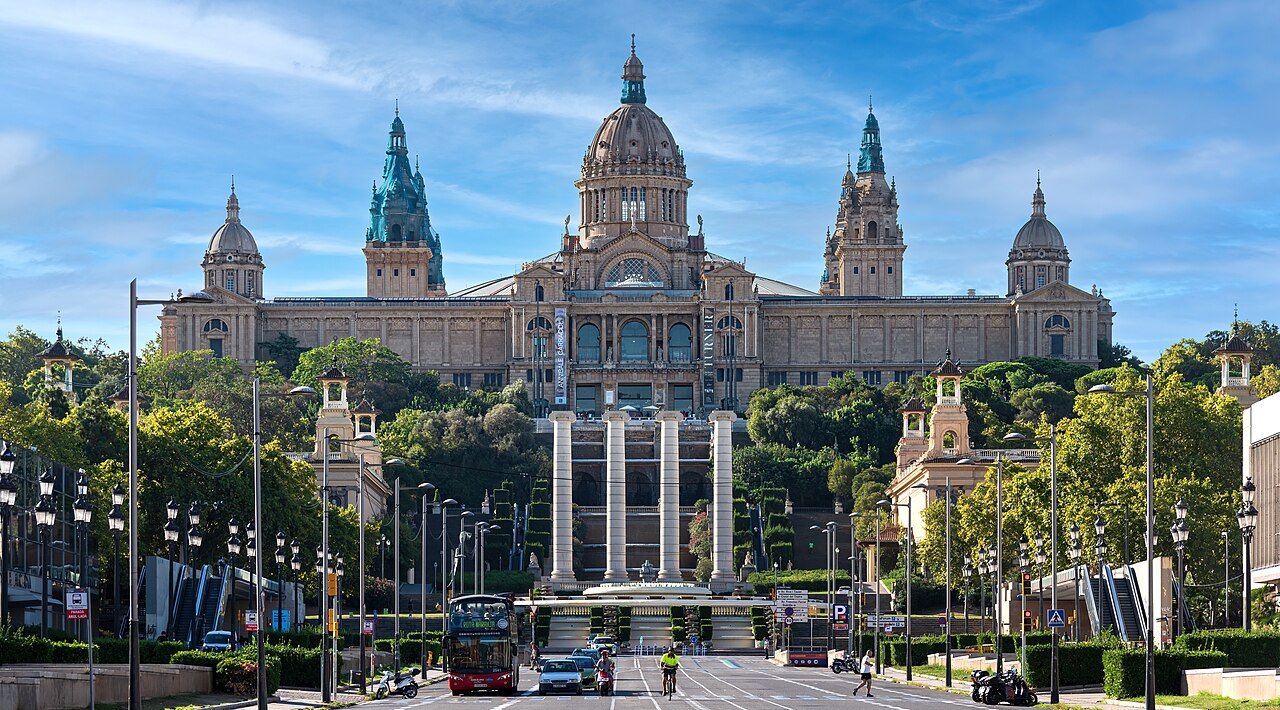
Photo credits: Enric (CC BY-SA 4.0); Joe Mabel (CC BY-SA 4.0 and public domain); Enfo, Josep Renalias and Guillem F-H (CC BY-SA 3.0), via Wikimedia Commons.