Barcelona in April: 12 Things to Do, From Books and Roses to the April Fair
April is the month Barcelona stops warming up and starts performing. The plane trees leaf out along every boulevard, the Gaudí houses get their spring light back, the terraces fill at lunchtime and stay full past sunset, and the festival calendar stacks up: top-level clay-court tennis, a film festival, the beloved day of books and roses, and an Andalusian fair to close the month. And in 2027 April gets a gift it doesn’t always receive — it dodges Easter entirely. Holy Week falls in late March this year, so April opens in the calm after the holiday wave, with early-summer weather and crowds that only build as Sant Jordi approaches. If March in Barcelona is the warm-up act, April is the headliner.

The practical shape of the month: Easter Monday (29 March) is a public holiday in Catalonia, the holiday crowds fly home in the first days of April, and the city exhales. Then the calendar stacks up — the free-museum Sunday on 4 April, tennis in Pedralbes from 12 to 18 April, the BCN Film Fest in Gràcia from 15 to 22 April, Sant Jordi on Friday 23 April, and the Feria de Abril at the Fòrum to close. If you want one day trip that catches spring at its best, make it the mountains and the cava country together: the Montserrat & Cava Wineries Day Trip from Barcelona with Pickup runs a full 10 hours — hotel pickup, the abbey and the Black Madonna in the morning, then three cava tastings at a family winery founded in 1872 — rated 4.7/5 across 257 reviews. Book it for a weekday and the mountain is yours.
What follows is the month in calendar order — calm days first, the fair last — with honest notes on the cold sea and the unpublished fair dates.
The Short Version
Short on time? Here is April in five lines:
- The calm: Easter fell in March in 2027, so April opens quiet — empty old-town lanes, walk-in sights, shoulder-season hotel rates for the first two weeks.
- The anchors: Free-Museum Sunday on 4 April; Barcelona Open tennis 12–18 April; BCN Film Fest 15–22 April; Sant Jordi on Friday 23 April; the Feria de Abril from late April at the Fòrum.
- The headline day: Sant Jordi (23 April) — books and roses on every street, Casa Batlló dressed in roses, authors signing in the open air. Not a public holiday, but the city treats it as one.
- The weather: Genuinely spring — highs around 19–20 °C, evenings near 11 °C, sunset after 20:45 by month’s end. The sea, at about 15 °C, is still a paddle, not a swim.
- The day trip: Montserrat plus the Penedès cava cellars in their green season — one guided day covers both, or ride the trains and do each separately.
April’s only real traps are assuming the beach is ready (it isn’t, quite) and assuming Sant Jordi week books itself (it doesn’t — it’s the month’s peak). Everything below is the detail.
What April Weather Is Really Like
April is when Barcelona’s spring stops being a rumour. After March’s turning point, the month delivers the first reliably warm, long, outdoor days of the year — t-shirt weather by early afternoon, jacket weather after dark, daylight stretching past eight in the evening from the very first week.
| April in Barcelona | The numbers |
|---|---|
| Daytime highs | Around 19–20 °C (about 19 °C early month, 20–21 °C by the end) |
| Night-time lows | Around 11 °C |
| Sea temperature | About 15 °C — bracing; a paddle for most people |
| Rain | Roughly 5 days in the month — spring showers, usually brief |
| Daylight | From about 12¾ hours on 1 April to nearly 14 hours on 30 April; sunset slides from ~20:16 to ~20:48 |
Pack for three seasons in one day: layers you can shed at noon, a proper jacket for evenings and the beach breeze, and shoes you can walk a festival day in. The sea needs honesty: 15 °C is colder than it looks from the promenade. Locals sunbathe from April; most don’t swim properly until June. Treat the beach as a beautiful place to sit, walk and paddle — anything more is a bonus for the cold-blooded. Our best time to visit Barcelona guide puts April in context; the short version is that locals who know the city often name it their favourite month outright.
Contents
- 1. Ride the Post-Easter Calm (1–4 April)
- 2. Free-Museum Sunday in Spring Green (4 April)
- 3. Take to the Terraces
- 4. The Gaudí Sights in Spring Green
- 5. Barcelona Open: Clay-Court Tennis in Pedralbes (12–18 April)
- 6. BCN Film Fest at the Verdi (15–22 April)
- 7. Day Trip: Montserrat in Spring
- 8. Cava Country in Its Green Season
- 9. Sant Jordi: The City of Books and Roses (23 April)
- 10. First Beach Days, Honestly
- 11. A Spring Markets Weekend
- 12. Feria de Abril: Seville’s Party, Barcelona-Style
1. Ride the Post-Easter Calm (1–4 April)
Start the month the way Barcelona itself does: exhaling. Because Easter Sunday fell on 28 March in 2027 — and Easter Monday, 29 March, is a public holiday in Catalonia — the great Holy Week wave breaks before April begins. The Spanish families fly home, the school groups vanish, and for the first week or so April’s Barcelona belongs to the people who live in it and the travellers smart enough to time the gap: winter crowd levels under spring skies.
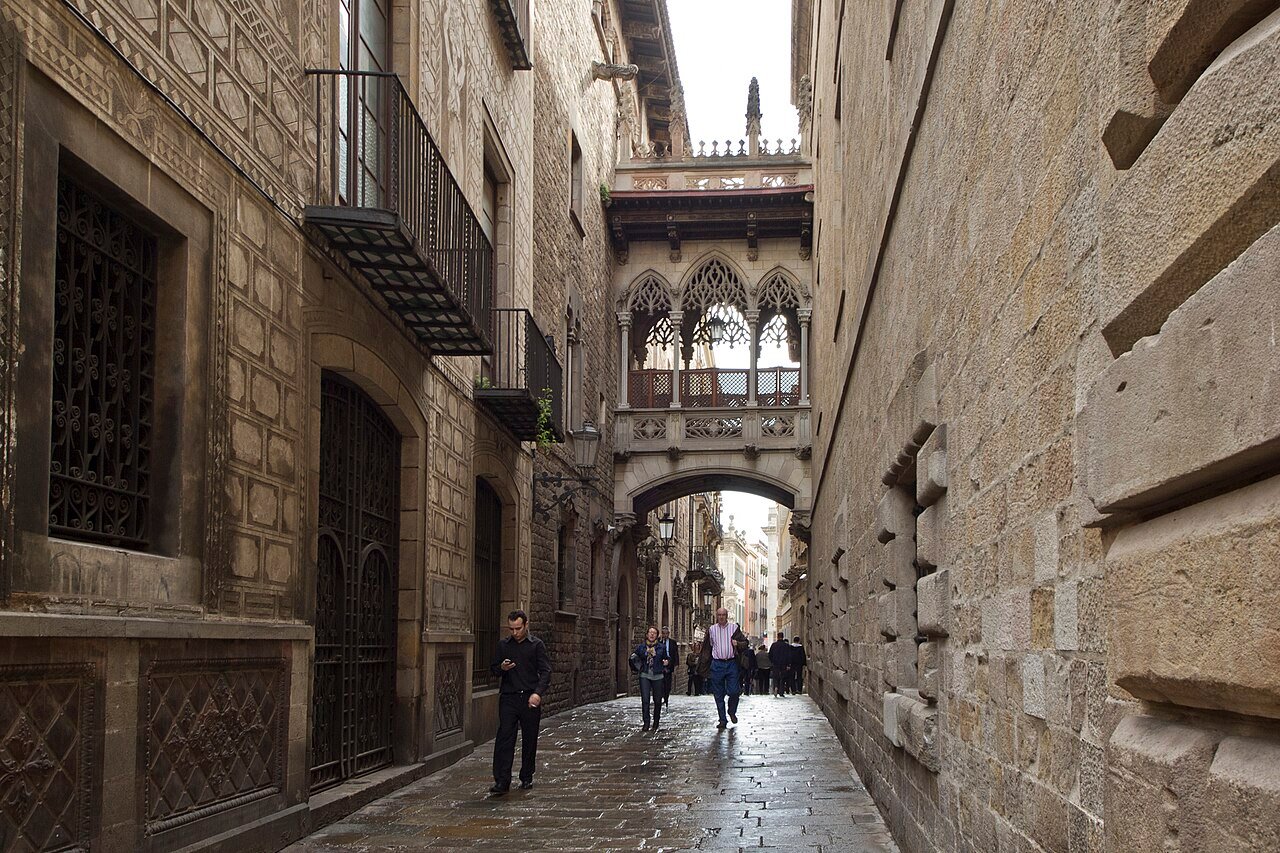
Spend the calm where it shows most. The Gothic Quarter’s lanes around the Barcelona Cathedral — Carrer del Bisbe and its famous little bridge, Plaça de Sant Felip Neri, the cloister with its geese — are atmospheric at any crowd level and magical at this one, especially before 10:00. Bakery windows still hold the last of the mones, the chocolate Easter cakes godparents give godchildren in Catalonia, traditionally eaten on Easter Monday and lingering a few days after.
Hotels price these days as shoulder season, too. If your April trip is flexible, front-load it. Everything gets busier from here: this is the practical sequel to Barcelona in March — March got the processions; April gets the peace they leave behind.
2. Free-Museum Sunday in Spring Green (Sunday 4 April)
April’s Free Sunday lands early and lands well: Sunday 4 April, the first Sunday of the month, when Barcelona’s great civic museums open free. Under the long-running scheme, many city museums are free all day on the first Sunday of the month — and a wider list joins free from 15:00 on Sunday afternoons generally — but April adds what the winter months could not: a spring-green Montjuïc to wander between museums, in gardens at their freshest.

Build the day on the hill. Start at the MNAC in the Palau Nacional — Romanesque frescoes rescued from Pyrenean churches and the finest terrace view in the city, all free on the scheme — then walk the hill while it’s green: the Jardins de Laribal’s pergolas and orange trees, the Greek-theatre gardens, the paths down toward the Fundació Joan Miró. Over in the old town, the Museu Picasso on Carrer de Montcada is the other first-Sunday heavyweight: the early work, the ceramics and the complete Las Meninas series.
Two pieces of discipline make the day work. First, free no longer means unbooked: the big names run timed entry even on free days, so reserve your slot online as soon as April’s booking opens — the free tickets for the famous museums go first. Second, pick two museums, not five; the scheme rewards depth, and the hill rewards lingering. Our guide to free things to do in Barcelona maps the full scheme museum by museum. Done right, 4 April is the best-value culture day of the Barcelona spring: world-class collections at €0, and a garden city in new leaf in between.
3. Take to the Terraces
Every city has a week when it moves outside, and in Barcelona that week falls in April. The terraces that stood folded through winter open in earnest, the vermut hour — a small glass of house vermouth, an olive, a slice of orange, late morning on a weekend — reclaims the squares, and lunch becomes a seating position you hold for two hours. Sunset passes 20:15 in the first week and 20:45 by the last, which quietly transforms the evening: drinks after sightseeing happen in daylight, in shirtsleeves, in no hurry at all.
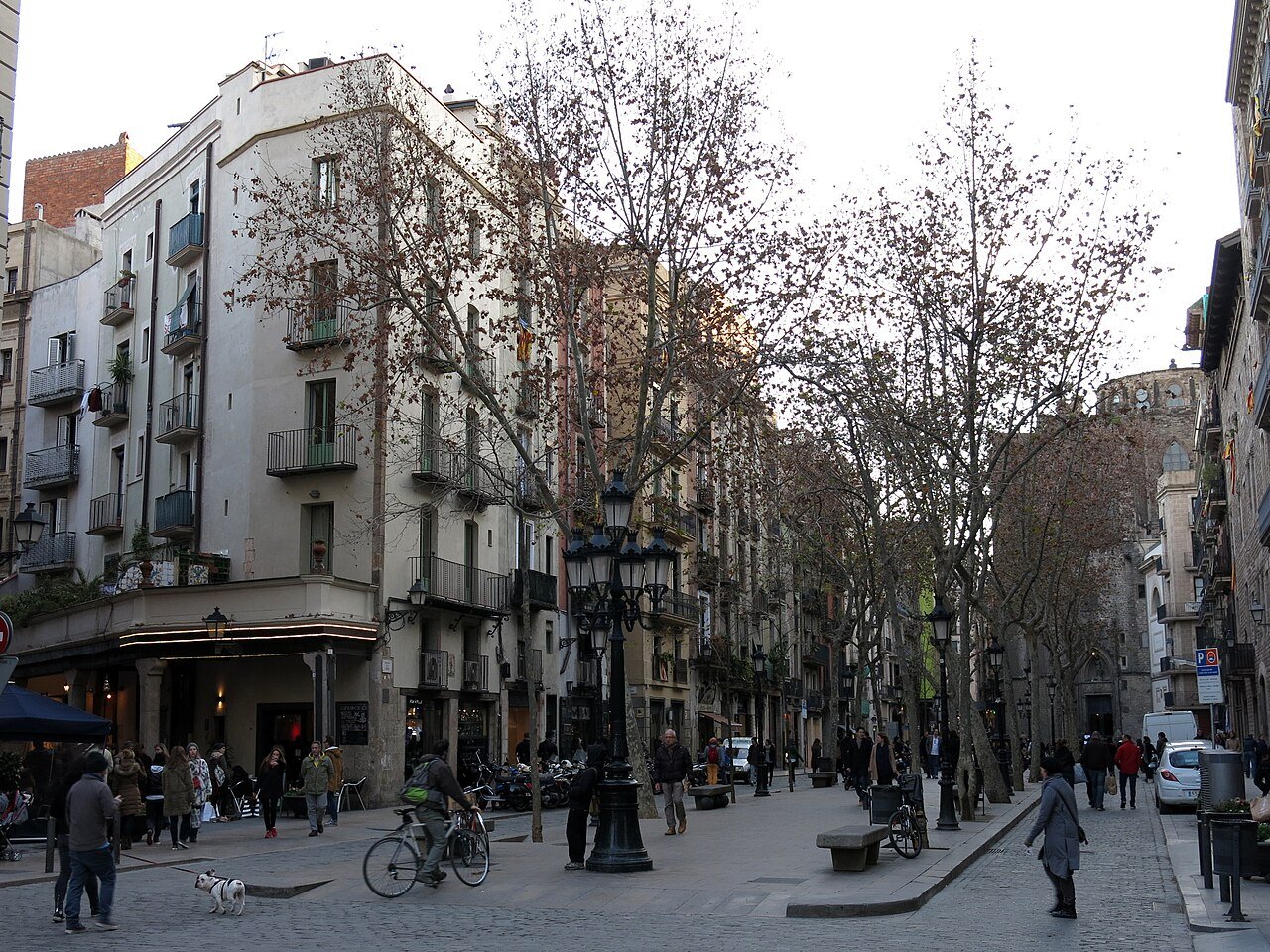
Know your squares. In Gràcia, the little plazas — Sol, Virreina, Diamant — are the locals’ living rooms, each ringed with terrace tables; arrive before 13:00 on a weekend or expect to hover. In El Born, Passeig del Born runs a promenade of tables under the plane trees toward Santa Maria del Mar. Along the seafront, the Barceloneta’s chiringuitos sell the same vermouth with a sea view at a seafront price — worth it once, for the sunset; the neighbourhood squares are better value the rest of the week.
One honest terrace note — the jacket rule: April’s evenings fall to around 11 °C, and the terraces with heaters and blankets fill first — the Mediterranean fools visitors every spring at about 21:30. Build one unscheduled terrace hour into every April day. It is not downtime; it is the point.
4. The Gaudí Sights in Spring Green
April is the hinge month for Gaudí. In January and February you could still treat the big sights as semi-spontaneous; by May and June, the famous time slots close out days ahead. April sits between: everything is bookable, everything is busy, and the houses — washed in spring light, gardens in flower — look the best they will look until autumn.
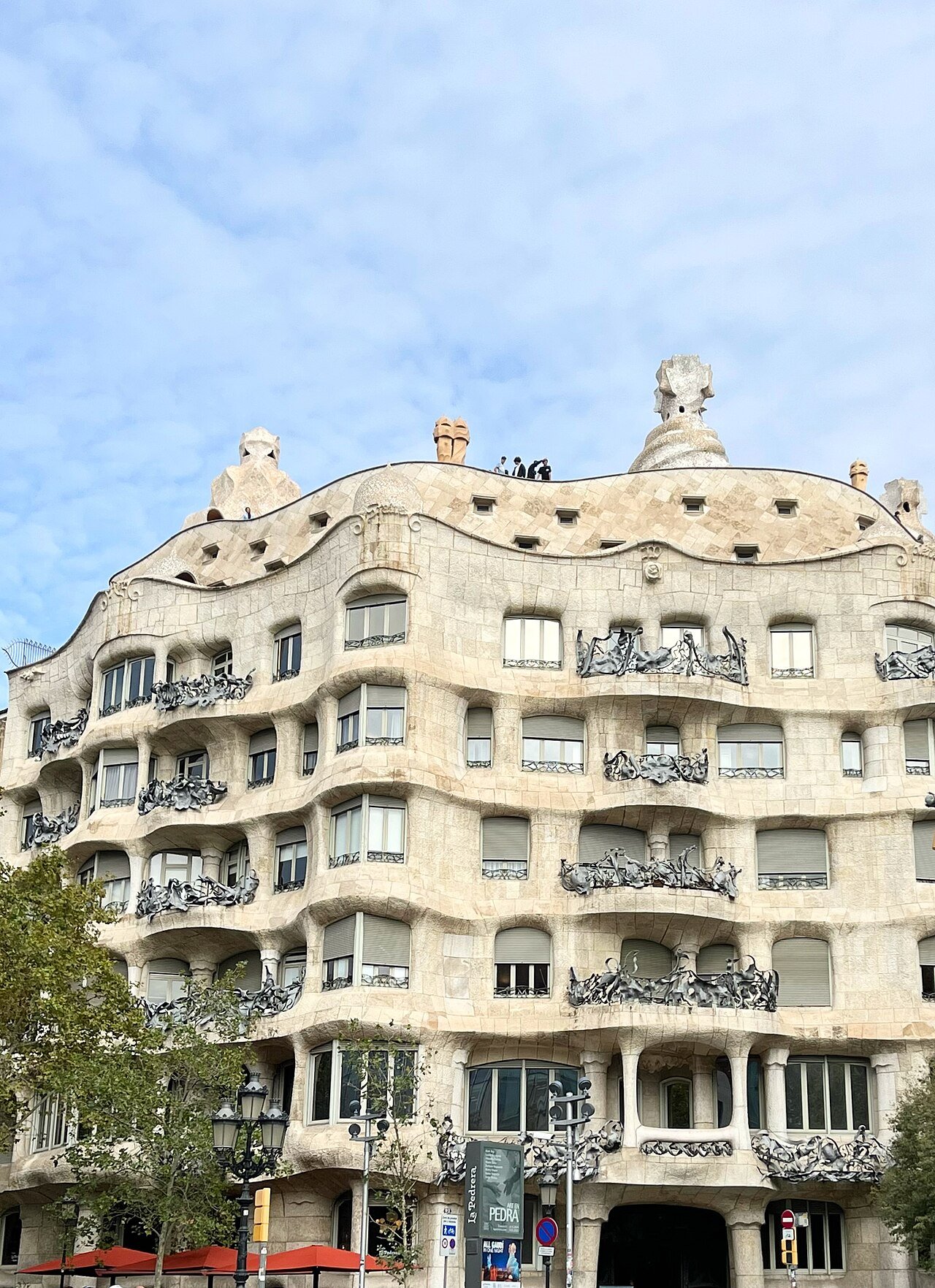
Park Güell is April’s emblem. The Monumental Zone runs its timed-entry system (book the first slot of the day and the famous terrace is briefly calm), but the free public park around it is the spring story — pine woods, rosemary in flower, and the viaduct paths at their greenest. Our dedicated Park Güell guide untangles the zones and the booking. On Passeig de Gràcia, Casa Batlló is building toward its Sant Jordi moment (see §9 for the roses), while La Pedrera’s warrior rooftop — chimneys like helmeted knights — is made for April’s long, clear mornings.
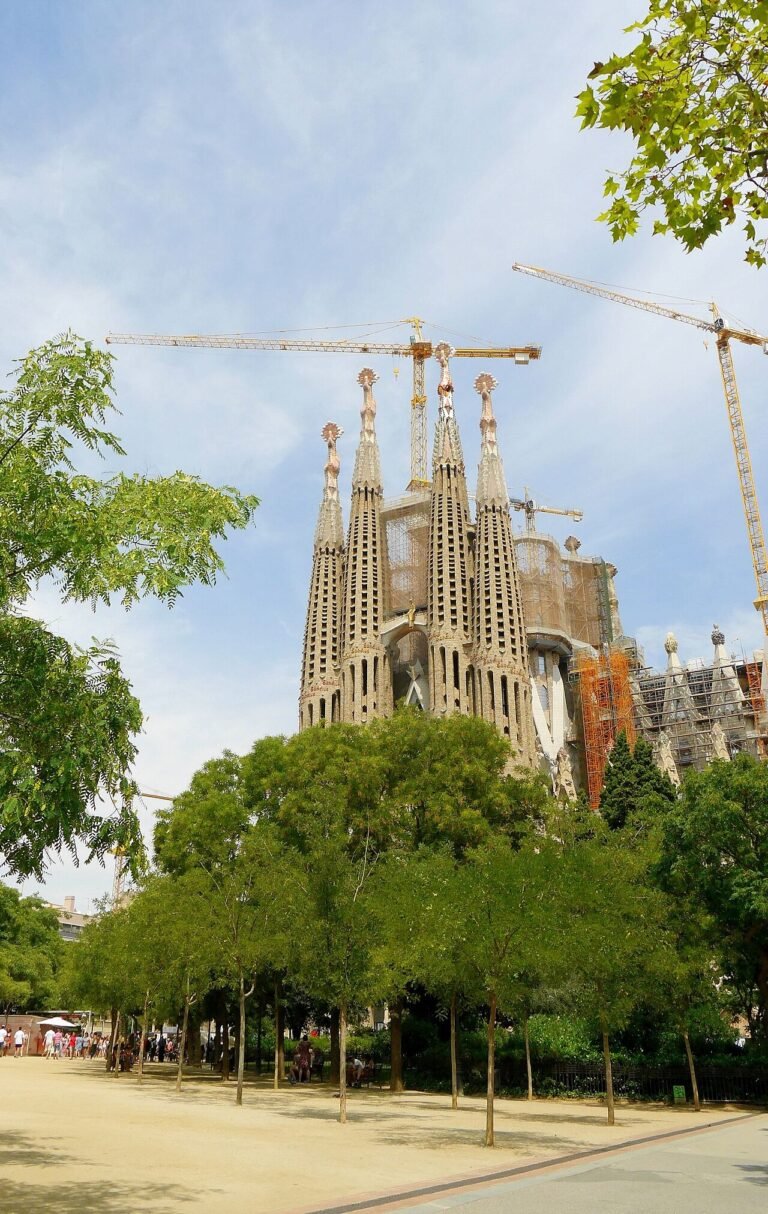
The Sagrada Família obeys the same law: the visit is superb and the booking is non-negotiable. Reserve the earliest entry you can, add the tower if the day is clear, and — as our inside the Sagrada Família guide argues — go when the morning sun comes through the cool-toned east glass, the forest of columns lit green and blue. One strategic warning: Sant Jordi week (roughly 19–25 April) is when Gaudí demand spikes hardest, because half of Spain bridges the 23rd into a long weekend. If your trip spans it, book the houses before anything else — and if it doesn’t, enjoy choosing your slot rather than taking what’s left.
5. Barcelona Open: Clay-Court Tennis in Pedralbes (12–18 April)
For one week in April, Barcelona becomes a tennis town. The Barcelona Open Banc Sabadell — the Trofeo Conde de Godó, an ATP 500 played since 1953 — takes over the Real Club de Tenis Barcelona in leafy Pedralbes from Monday 12 to Sunday 18 April 2027 (the 74th edition; qualifying runs across the preceding weekend). It is one of the clay season’s great stops on the road to Roland Garros, and its centre court carries a name that tells you its history: the Pista Rafa Nadal, after the twelve-time champion who grew up on this tournament.
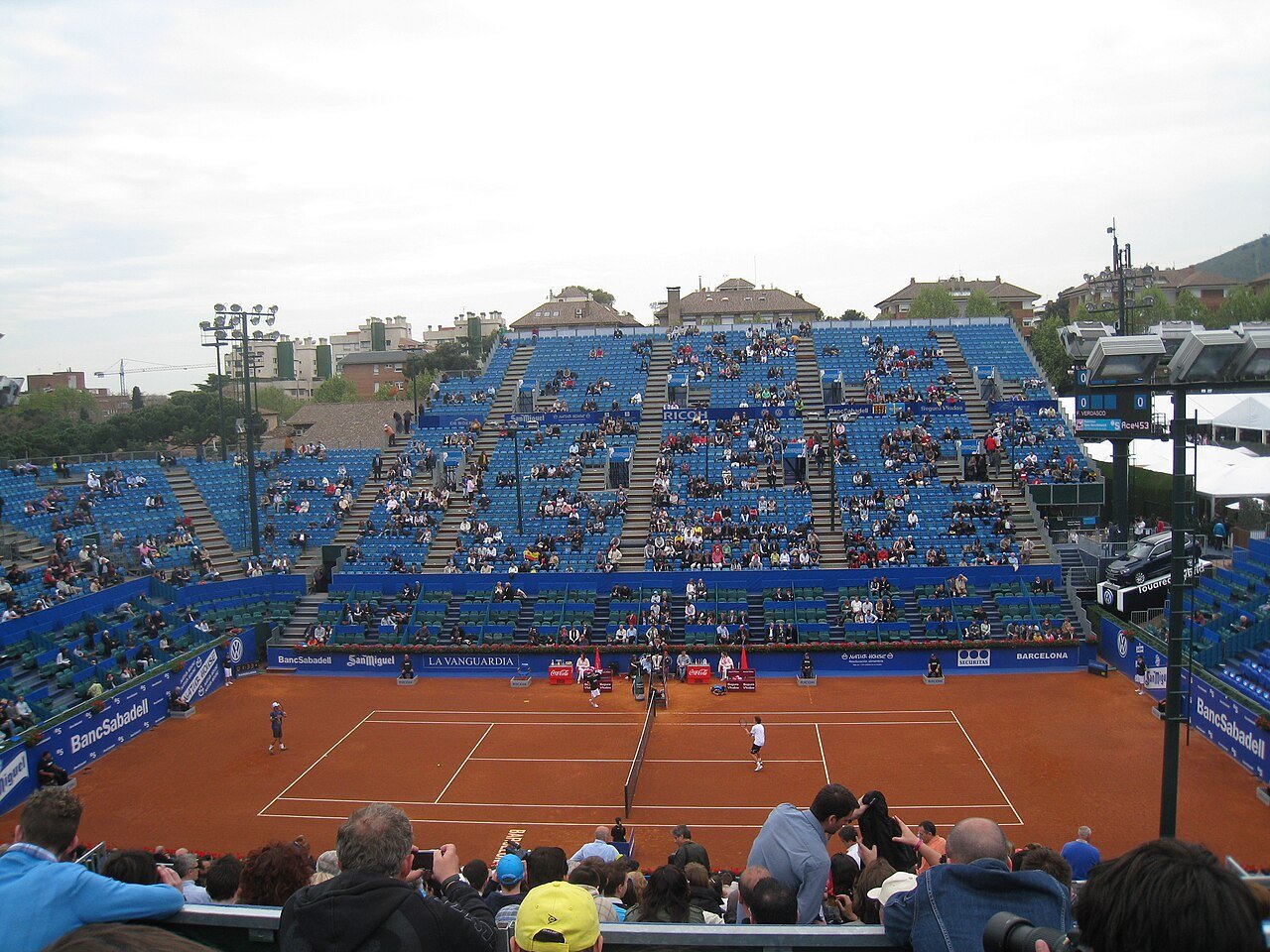
The pleasure of the Godó is its scale. This is a members’ club, not a stadium complex — intimate stands, red clay you can almost touch from the cheap seats, top-ten players warming up on outside courts a fence away. Early-week tickets are the value play: Monday to Wednesday you watch seeds and first rounds up close for a fraction of finals prices, and the grounds run a village of food stalls that locals treat as a spring fair in its own right. The final lands on Sunday 18 April — a neat sporting bookend, in 2027, with the Cursa de Bombers, the firefighters’ 10K fun-run traditionally held in the third week of April.
Practicalities: buy through the tournament’s official channels, ride up to the Zona Universitària/Palau Reial side and walk the last stretch through Pedralbes — the city’s grandest quarter, all walled gardens and embassies — and pack layers for evening sessions. It is one of the classiest sporting weeks in Europe, and it is pure April.
6. BCN Film Fest at the Verdi (15–22 April)
Barcelona’s film festival grew up around Sant Jordi, and it wears the connection proudly: the Festival Internacional de Cine de Barcelona-Sant Jordi — BCN Film Fest for short — builds its programme around literature, history and the arts, screening adaptations and bookish premieres in the run-up to the day of books itself. The 2027 edition runs Thursday 15 to Thursday 22 April, ending the night before Sant Jordi, and its home is one of the city’s beloved institutions: the Cinemes Verdi in Gràcia, the art-house cinema whose name is practically a neighbourhood landmark.
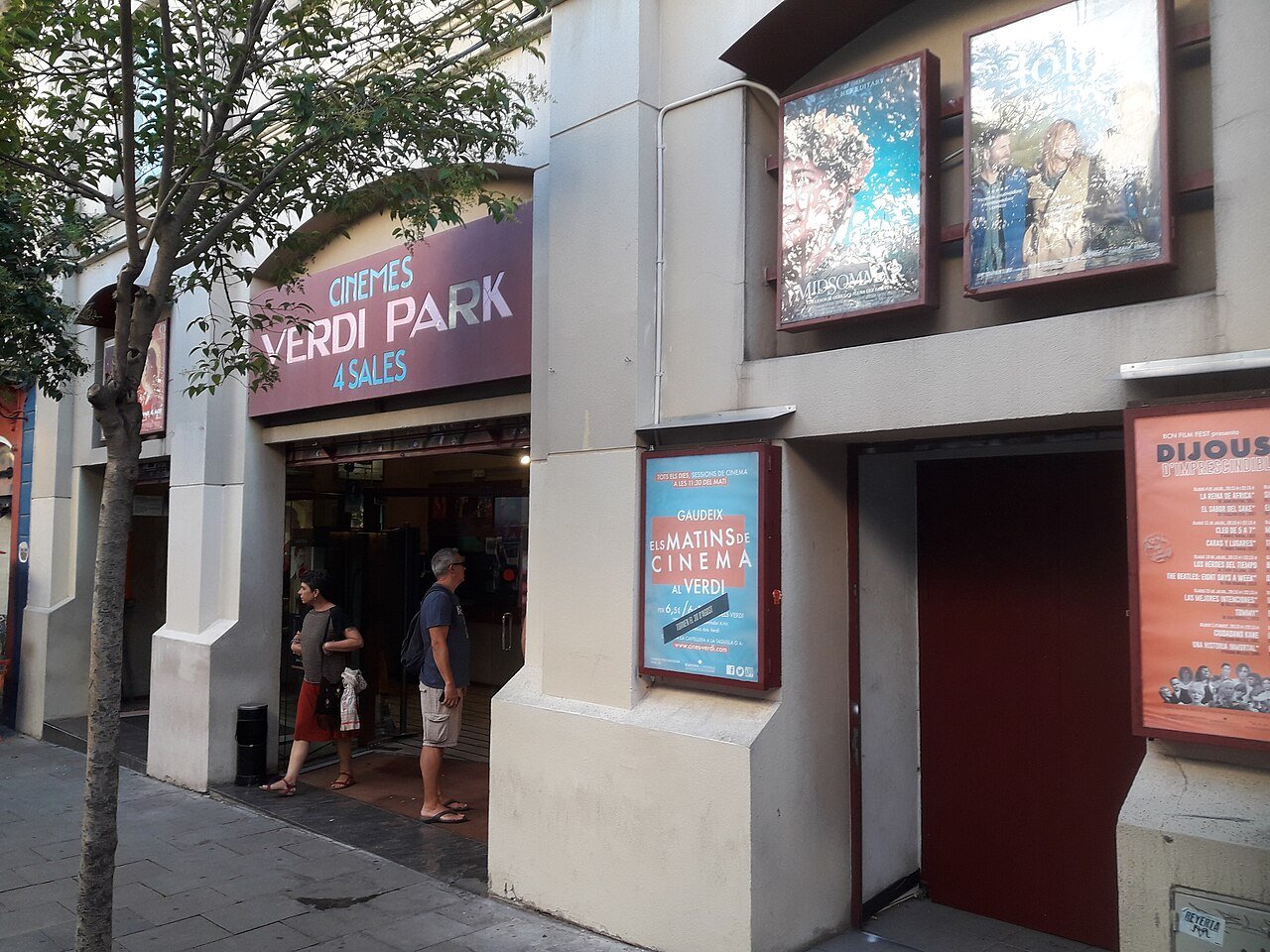
The format suits travellers unusually well. Tickets in recent editions ran about €4.90–€7.90 — festival cinema at neighbourhood prices — and the programme mixes premieres, literary adaptations and director Q&As, with films shown in original version with subtitles as a matter of house policy.
A note on expectations: the festival’s heart is Catalan and Spanish cinema alongside international literary fare, and the exact 2027 programme publishes closer to the dates — check the festival listings when you plan. But even a modest edition is worth the trip up the hill, into a real festival in a real neighbourhood cinema, at prices that assume an audience of neighbours. Of all April’s events, this is the one that still feels like a local secret.
7. Day Trip: Montserrat in Spring
If March’s Montserrat is about beating the crowds, April’s is about the mountain itself. The saw-toothed massif — Montserrat, the “serrated mountain” — turns green and flower-dusted in spring, the paths to the hermitages dry out after winter, and the abbey of Santa Maria sits in the clearest light of the year. It pairs naturally with the wine country at the mountain’s feet, which is why the smart single booking of the month is the Montserrat & Cava Wineries Day Trip from Barcelona with Pickup: 10 hours, hotel pickup between 08:00 and 08:30, the abbey and the mountain in the morning, then a family-run cava winery founded in 1872 for three tastings with appetizers — rated 4.7/5 across 257 reviews, from $106 per person.

Up at the monastery, April’s priorities: the basilica and the Black Madonna — La Moreneta, Catalonia’s patroness — reached by the camarín; the Escolania boys’ choir, which sings in the basilica on most days around 13:00 and is worth planning the morning around; and the funiculars and paths — Sant Joan up for the panorama, Santa Cova down to the chapel of the apparition — now walkable in spring conditions, wildflowers along the way. One date to hold: 27 April is the feast of the Mare de Déu de Montserrat, the abbey’s own great day. It is a privilege to be there and the busiest spring day on the mountain — go if the feast is the point, and pick another day if quiet is.
Going independently works beautifully too — our Montserrat monastery guide covers the train-and-rack-railway route from Plaça Espanya step by step. The April edge for the guided version is the day’s second half: the Penedès cellars sit directly on the road home, and doing abbey and winery in one loop, with somebody else driving, turns two good day trips into one great one.
8. Cava Country in Its Green Season
South-west of Montserrat, the Penedès does in April what wine country is supposed to do: it turns green. Through winter the vineyards stand as bare brown geometry; in April the vines leaf out row by row until the whole valley — one of Europe’s great sparkling-wine landscapes, the home of cava — is a rolling green patchwork under the mountain’s serrated silhouette. The cellar doors are open, the harvest crowds are five months away, and the tastings run at a human pace. If you took the guided day in §7, you have seen one great family winery; this section is for going back and doing the country properly, at your own speed.

The capital of cava is Sant Sadurní d’Anoia, about 50 minutes from Barcelona Sants by Rodalies train — Freixenet’s great cellars stand practically at the station, while Codorníu, the oldest name of all (the Raventós family has made wine here since the 16th century), keeps its modernista cellars — designed by Puig i Cadafalch, Gaudí’s great contemporary — a short ride away. Below ground, both run for kilometre after kilometre of bottle-lined galleries; above, the tours end, correctly, with glasses. A few stops along the same line, Vilafranca del Penedès adds the old-town counterweight: VINSEUM, the wine-cultures museum, and the basilica of Santa Maria.
Practical shape of the day: trains are cheap and frequent, cellar tours need booking a day or two ahead in April (more around weekends), and the golden rule applies — pick two producers, not four, and let lunch happen where it falls. Drivers should note the tastings are not symbolic; the train is the local’s choice for a reason. Fold the Penedès into the wider pattern with our day trips from Barcelona guide — and April is its month.
9. Sant Jordi: The City of Books and Roses (Friday 23 April)
And now the day the whole month leans toward. Friday 23 April 2027 is the Diada de Sant Jordi — Saint George’s Day, Catalonia’s patron saint and the most loved date in its calendar. By tradition a man gives a rose and a woman gives a book; modern Barcelona gives both, to everybody, in quantities that defy belief — millions of roses, and a measurable share of the Catalan book industry’s year, sold in a single day from stalls that colonise every pavement. It is not a public holiday. Shops open, offices open — and yet the whole city behaves as if it were on holiday.

The legend earns its keep. Sant Jordi slew the dragon that terrorised the town of Montbanc, and from the dragon’s blood grew a rose bush of the reddest roses — hence the flower. The book came later, and beautifully: 23 April is also the day Cervantes and Shakespeare both died in 1616, which is why UNESCO made it World Book Day. Barcelona fused the two into one festival of romance and reading, and the city’s authors sign their new books at stalls in the open air — the queues for a signature on Passeig de Gràcia are a spectator sport. The Palau de la Generalitat, seat of the Catalan government, traditionally opens its doors to the public for the day, Gothic courtyard and all.
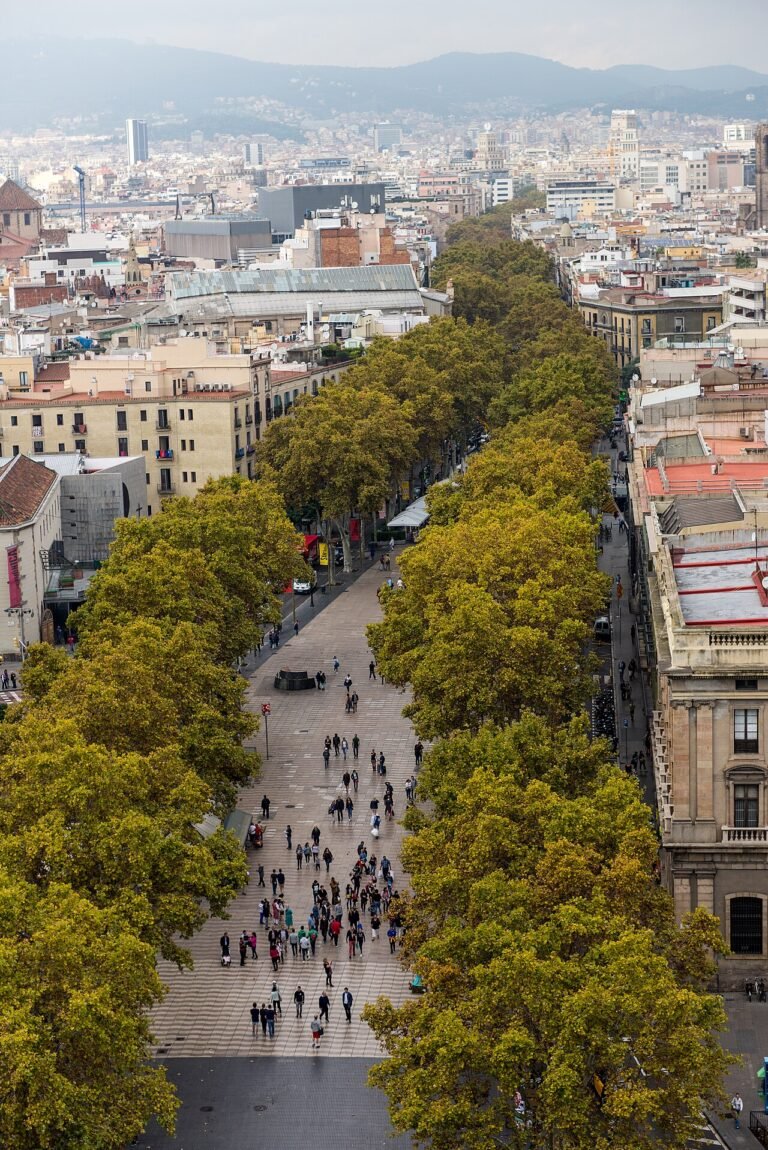
Gaudí gets the best costume. Casa Batlló — a house already built around the Sant Jordi legend, dragon-scale roof, the cross for the saint’s lance — dresses its façade in roses for the day, balcony after balcony of red blooms (our photo at the top of this article is exactly that). Book a slot if you want the inside — Sant Jordi is one of the house’s peak days — or join the crowd photographing the Rosada from the boulevard, as our Casa Batlló guide describes. Strategy for the day: walk La Rambla, Passeig de Gràcia and Rambla de Catalunya in the morning before the after-work surge, buy the book early (stalls sell out of the hits), and carry the rose all day — everyone does. If you can only be in Barcelona for one April day, make it this one. Nothing else in the European spring is quite like it.
10. First Beach Days, Honestly
April is when Barcelona’s beach season opens — and the honest version matters, because the gap between “opens” and “summer” is about fifteen weeks and ten degrees. The chiringuitos unpack their terraces for the season around Easter, the promenade fills with runners and cyclists, the beach-volleyball nets at Nova Icària are in full use, and on a calm late-April afternoon the sand at Bogatell genuinely looks like summer: towels down, picnics out, the whole city sunbathing. Then somebody goes in the water, and comes out again quite quickly, at a dignified speed.
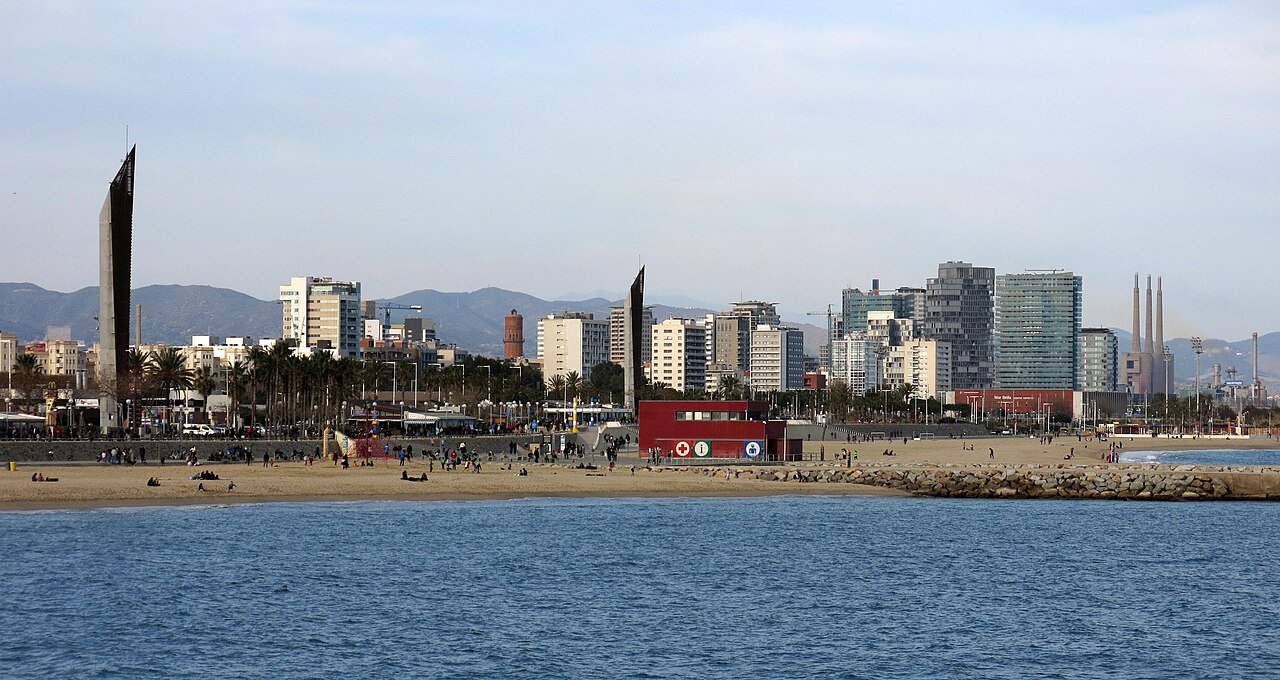
The numbers from the weather table tell the truth: the sea sits around 15 °C in April. For most visitors that means a paddle to the knees and a story to tell; for cold-water swimmers and the wetsuited surfers who appear off Bogatell whenever there’s swell, it’s a season opener. What April gives you instead of swimming is space: these same beaches in August are a negotiation, but in April you choose your spot, the promenade cafés have tables, and the walk along the full seafront — Barceloneta to the Fòrum — is one of the great free pleasures of the city, best in the late-afternoon light with a terrace stop built in.
Choose your stretch with our Barcelona beaches guide: Barceloneta for atmosphere and the old fishermen’s quarter behind it, Nova Icària and Bogatell for space and the local crowd, the far end toward the Fòrum for the quietest sand. One April warning: the breezes are real. Go late morning, leave when the wind gets up, and treat any full swim as a bonus trophy — not the plan.
11. A Spring Markets Weekend
Between the festivals, April’s weekends belong to the markets — spring is when the calendar shakes off winter. The design-market anchor is Palo Alto Market in Poblenou: a monthly weekend edition (usually the first weekend of the month) inside a former factory complex whose ivy-covered halls and gardens are half the attraction — street food in the courtyard, independent designers and vintage inside, DJs outside, and an entry fee of a few euros (about €5–€6 in recent editions) that keeps the crowds civilised.

The bookish anchor is Sant Antoni. Every Sunday morning the streets around the great iron market hall host Barcelona’s famous collectors’ market — secondhand books, comics, postcards, records and stamps — and in the month of Sant Jordi it swells: April’s Sundays at Sant Antoni are where the city’s book trade warms up for the 23rd, and where you’ll find the out-of-print volume the Rambla stalls can’t sell you. Add the food markets doing spring produce — artichokes from the Llobregat plain, the first strawberries, fava beans — and our Barcelona markets guide will route you between them.
The third pattern to check when you land: All Those Food Market, the city’s artisan food festival (independent chefs, bakers, brewers and makers in one long tasting hall), traditionally runs a spring edition on a weekend at Moll de la Fusta by the old port; the 2027 spring dates were still to be confirmed at the time of writing, so look it up on arrival. Whichever weekend you get: one market done properly in the morning, a long lunch, and the afternoon left loose.
12. Feria de Abril: Seville’s Party, Barcelona-Style (Late April)
The month ends with a transplant that took root half a century ago. The Feria de Abril — Seville’s April Fair, a week of flamenco dresses, sherry and dancing until dawn — was carried north by the Andalusian families who migrated to Catalonia for work, and Barcelona’s version, organised by the FECAC federation at the Parc del Fòrum, is now one of the largest popular festivals in Catalonia: around ten days of casetas (the striped party tents), sevillanas dancing, rebujito (manzanilla cut with lemonade) and fairground rides by the sea. Entry to the fairground is free; you pay for what you eat, drink and ride.
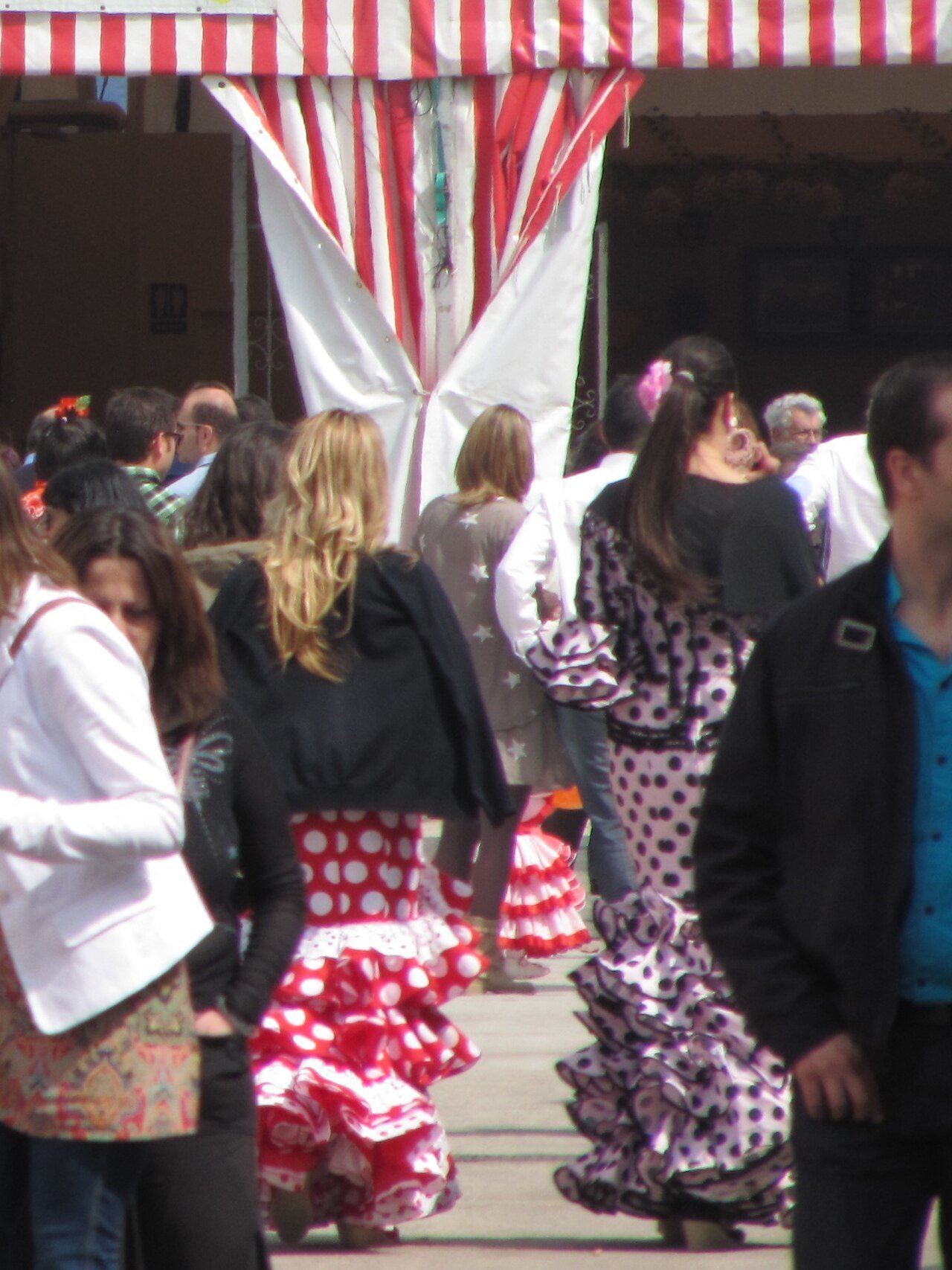
One piece of honesty before the party: the 2027 dates were not yet published at the time of writing. Recent editions have run from the last week of April into the first days of May (the 2025 fair ran 25 April–4 May), always starting a week or two after Seville’s, and the pattern is reliable enough to plan around — if your trip covers the last days of April, keep an evening free and confirm the final dates before you travel. What we can promise is the shape of it: opening night when the gateway lights switch on, families in full flamenco dress by day, the casetas turning into dance floors by night, and a crowd that is mostly the city itself celebrating its second heritage.
Come as a guest, not a spectator: learn three steps of sevillanas from a video on the train in (the metro to El Maresme-Fòrum drops you at the gate), accept the rebujito, and dance badly with enthusiasm — the only dress code that matters. Still here on Friday 30 April? UNESCO’s International Jazz Day fills venues citywide — an elegant eve to the 1 May holiday. April begins in a hush after Easter, and ends with two parties in a week. Book the middle well, and it might be the best month of the Barcelona year.
Which of the 12 Fits Your Trip?
| You are… | Start with |
|---|---|
| A first-timer with 3–4 days early in the month | 1 (Post-Easter Calm), 2 (Free-Museum Sunday), 4 (Gaudí in Spring Green), 7 (Montserrat) |
| A culture completist | 2, 5 (Barcelona Open), 6 (BCN Film Fest), 9 (Sant Jordi) |
| A romantic, or travelling as a couple | 9 (above all), 3 (Terraces), 7 (Montserrat in Spring) |
| A food-and-wine traveller | 8 (Cava Country), 11 (Markets Weekend), 3 |
| A sports fan | 5 (the Godó final, Sunday 18 April), 10 (the seafront in training mode) |
| A family | 1, 2, 10 (First Beach Days), 12 (Feria de Abril by day) |
| On a budget | 1, 2 (€0 museums), 10 (free beaches), 12 (free-entry fair), 6 (€5-ish cinema) |
| Chasing the local city, not the sights | 3, 6, 11, 12 — squares, cinema, markets, fair |
What April in Barcelona Costs
April sits in the shoulder-to-peak corridor: the first fortnight prices like spring, Sant Jordi week prices like a festival — because it is one. A realistic 2027 budget sketch:
| Item | April figure |
|---|---|
| Central hotel, per night | €120–160 early month, rising toward €170+ across Sant Jordi week — book the 23rd early |
| Barcelona Open tennis | Early rounds are the bargain of the week; the Sunday final (18 April) is the premium ticket |
| BCN Film Fest | Roughly €4.90–€7.90 a screening in recent editions |
| Montserrat + cava day trip (guided) | Montserrat & Cava Wineries Day Trip from Barcelona with Pickup — from $106 per person (about €98), 10 hours, hotel pickup, abbey plus three cava tastings, rated 4.7/5 across 257 reviews |
| Cava country independently | Rodalies train to Sant Sadurní d’Anoia for a few euros each way; cellar tours with tastings typically €15–25 |
| Feria de Abril | Fairground entry free — budget for caseta food, rebujito and rides |
| The beach | €0 — April’s sunbathing is free; the swim is earned |
| Sant Jordi | One book + one rose: the best-value day of the year |
Three money rules for April. Book Sant Jordi week (roughly 19–25 April) first — hotels, Gaudí slots and film-festival passes all tighten around the 23rd, a bridge Friday for half of Spain. Spend the calm: the first week’s prices buy the same city at a discount. And let the month’s free and cheap glories carry the budget — a €0 museum Sunday, a €6 film, a free-entry fair — so the one splurge lands without guilt.
Barcelona in March: 12 Things to Do, From the Sweetest Festival to Holy Week
Travel insurance, sorted
Whether it is a two-week holiday or a longer move, travel insurance is not the most glamorous part of a trip — but it is the one booking you want to have in place before a trip, and while you are already away. Get a quote from SafetyWing
Final Thoughts
April is the argument — the month that makes locals say the city is Europe’s easiest place to love. The light is long, the gardens are green, the sea is (almost) invited, and the calendar runs a perfect arc: quiet lanes after Easter, museums for free, tennis on clay, films in Gràcia, a mountain in flower, cellars underground — and then a Friday when the entire city buys a book and a rose, followed by a fair that dances the month out. Come in April, pack the jacket and the sunglasses, and save one unscheduled hour a day for a terrace. The city will do the rest.
FAQs
Is April a good time to visit Barcelona?
It is arguably the best single month of the year: spring weather (highs around 19–20 °C), long evenings, gardens at their greenest and a stacked calendar — Sant Jordi, the Barcelona Open, the BCN Film Fest, the Feria de Abril. In 2027 it comes with a bonus: Easter falls in March, so April opens calm. Our best time to visit Barcelona guide shows how it compares month by month.
What happens on Sant Jordi (23 April)?
Catalonia’s day of books and roses: by tradition partners exchange a rose and a book, and the whole city joins in — book and flower stalls on every main street, authors signing outdoors, Casa Batlló dressed in roses, the Palau de la Generalitat open to the public. It is a working day, not a public holiday, but the city treats it as a festival from morning to midnight. In 2027 it falls on Friday 23 April — book hotels and sights early.
Can you swim in the sea in Barcelona in April?
You can, but most people don’t: the sea is around 15 °C, which is a bracing paddle rather than a swim. April beach days are for sunbathing, promenading, volleyball and terrace lunches — the chiringuitos reopen for the season around Easter, and on calm days the sand fills up. Proper swimming season builds from late May. See §10 for the honest breakdown.
When is the Feria de Abril in Barcelona in 2027?
The FECAC federation had not published the 2027 dates at the time of writing. Barcelona’s Feria de Abril de Catalunya traditionally runs about ten days from the last week of April into the first days of May, a week or two after Seville’s fair (the 2025 edition ran 25 April–4 May), at the Parc del Fòrum, with free entry. If you’re visiting in late April, keep an evening free and confirm the final dates before you travel.
Is the Barcelona Open tennis worth it for a non-tennis fan?
Yes — it’s as much a spring social fixture as a sporting one. The 2027 edition runs 12–18 April at the Real Club de Tenis Barcelona in Pedralbes (ATP 500, centre court named the Pista Rafa Nadal). Early-round tickets are inexpensive, the grounds run a food-and-drink village, and you watch world-class clay tennis from a few metres away. The final is Sunday 18 April.
What should I pack for Barcelona in April?
Layers, honestly: t-shirts and light trousers for the 19–20 °C middays, a warm jacket and closed shoes for 11 °C evenings and the beach breeze, a light waterproof for the odd spring shower. Add sunglasses — the light is strong — and comfortable walking shoes: between the old town, Sant Jordi’s festival streets and a Montserrat path, April is a walking month. A swimsuit takes little space; just know it’s for the brave (see §10).


One Comment