Sarrià, Barcelona: The Complete Guide to the Last Village to Join the City
Fifteen minutes by train from Plaça Catalunya, Barcelona simply stops and a village begins. Sarrià was an independent town for a thousand years — a place of farmers, craftsmen and, later, the summer houses of the Barcelona rich — and it held out against joining the city longer than anywhere else on the plain, only becoming a Barcelona neighbourhood in 1921. A century on, the annexation still has not quite taken. The old core keeps its own main street, its own market, its own parish church, its own festival and its own pastry shop run by a poet’s family, all threaded through narrow streets that were laid out for carts, not cars.
This is not a neighbourhood of ticket queues and headline monuments, and that is exactly its appeal. Come to Sarrià to see how Barcelona’s villages actually worked: shop the market hall the town built in 1911, drink vermouth on the square where the town council once sat, walk a covered passageway between 18th-century houses, and finish among the statues of an aristocrat’s garden. This guide covers what to see, what it costs (almost everything is free), how the village held out until 1921, and how to fold Sarrià into a Barcelona day.
The Short Version
If you only have a couple of hours, do this: ride the FGC train to Sarrià station and walk five minutes into the old core. Start on Plaça de Sarrià, in front of the church of Sant Vicenç, then stroll the length of Carrer Major de Sarrià, the pedestrianised high street, stopping at the Pastisseria Foix for a cake. Cross Passeig de la Reina Elisenda to the Mercat de Sarrià, the town’s 1911 market hall, and loop back through the Plaça de Sant Vicenç, the prettiest of the old squares, and the covered Passatge de Mallofré. If the gardens are open, end at the Jardins de Can Sentmenat, ten minutes uphill.
Sarrià rewards appetite as much as sightseeing, and the most Sarrià way to do the market is the way its own residents use it: as a larder. The food experience based here is the Paella Maestro Market Tour & Sangria & Tapas, a cooking class that starts with a guided tour of the Mercat de Sarrià to choose the ingredients, then cooks a seafood paella, pan con tomate and sangria from a family recipe — rated 4.7 out of 5 by its guests, and a morning in the village with lunch built in.
Everything below is the full version: the history of the last annexation, each sight in turn, the eating streets, and all the practical detail — prices, opening arrangements, trains and timing.
Table of Contents
- A Short History of Sarrià
- Carrer Major de Sarrià: The Village High Street
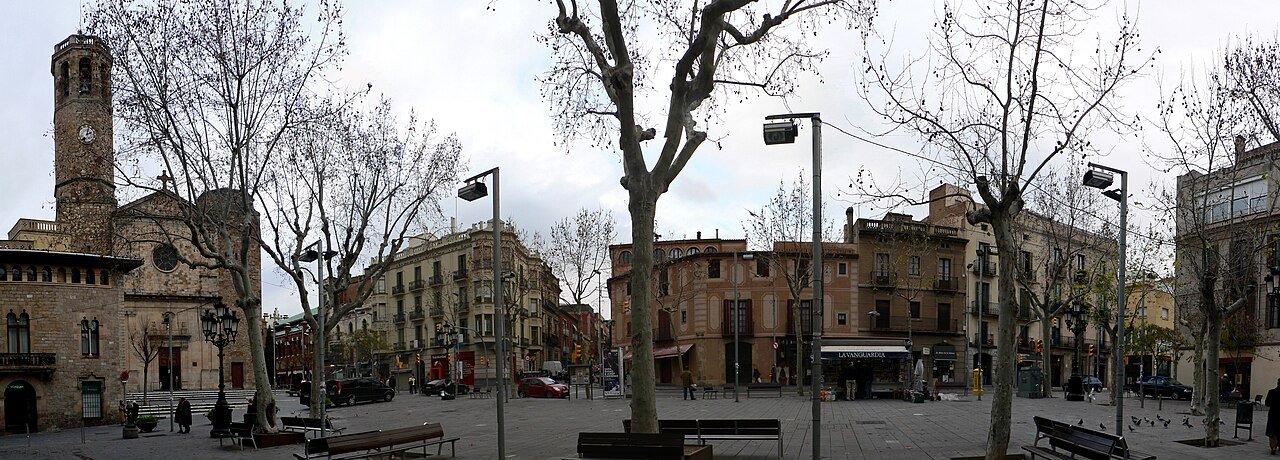
- Plaça de Sarrià and the Church of Sant Vicenç
- The Old Village Streets: Plaça de Sant Vicenç and the Passatge de Mallofré
- Mercat de Sarrià: The Village Market
- Pastisseria Foix: The Poet’s Pastry Shop
- Jardins de Can Sentmenat: The Marquesses’ Gardens
- Eating and Drinking in Sarrià
- Practical Info
- Tickets and Costs
- Getting There
- When to Go
- How Long You Need
- Tips for Visiting
- What to See Nearby
- Frequently Asked Questions
- Final Thoughts
A Short History of Sarrià

Sarrià enters the written record in 986, under the name Sirriano, as a farming settlement on the road west out of Barcelona, in the shelter of the Collserola hills. By the late Middle Ages it had grown into a real town, with a parish church, craftsmen and a population that lived from the land — vines, orchards and market gardens watered from the hills. From the 16th century onwards, wealthy Barcelona families discovered its clean air and began building summer houses here, and the village acquired the double character it still has: a working town of farmers and artisans with grand torres — tower houses — rising among the fields.
The railway made it permanent. The train reached Sarrià in the 19th century — among the earliest lines in Spain — and the summer residents became commuters; the schools founded by religious orders drew the city’s bourgeoisie to educate its children here. But when Barcelona swallowed its neighbouring towns in 1897 — Sants, Gràcia, Sant Andreu and the rest, handed over by royal decree — Sarrià refused to go. It held out for another 24 years, and only in 1921, again by royal decree and against local opposition, was it annexed: the last town on the Barcelona plain to join the city, a town of some 10,000 people with its own council, market traditions and fierce sense of itself. The parallel story across the city is Gràcia, which went in 1897 — Sarrià outlasted it by a generation.
Annexation changed the map, not the mentality. The old town council became a district office, the fields became some of the most expensive building land in Spain, and the wider Sarrià-Sant Gervasi district is today Barcelona’s most affluent. But the village core around Carrer Major never got rebuilt, and its residents — sarrianencs — still describe going into the centre as going “down to Barcelona”. Every October, the Festa Major lets them act on it.
Carrer Major de Sarrià: The Village High Street
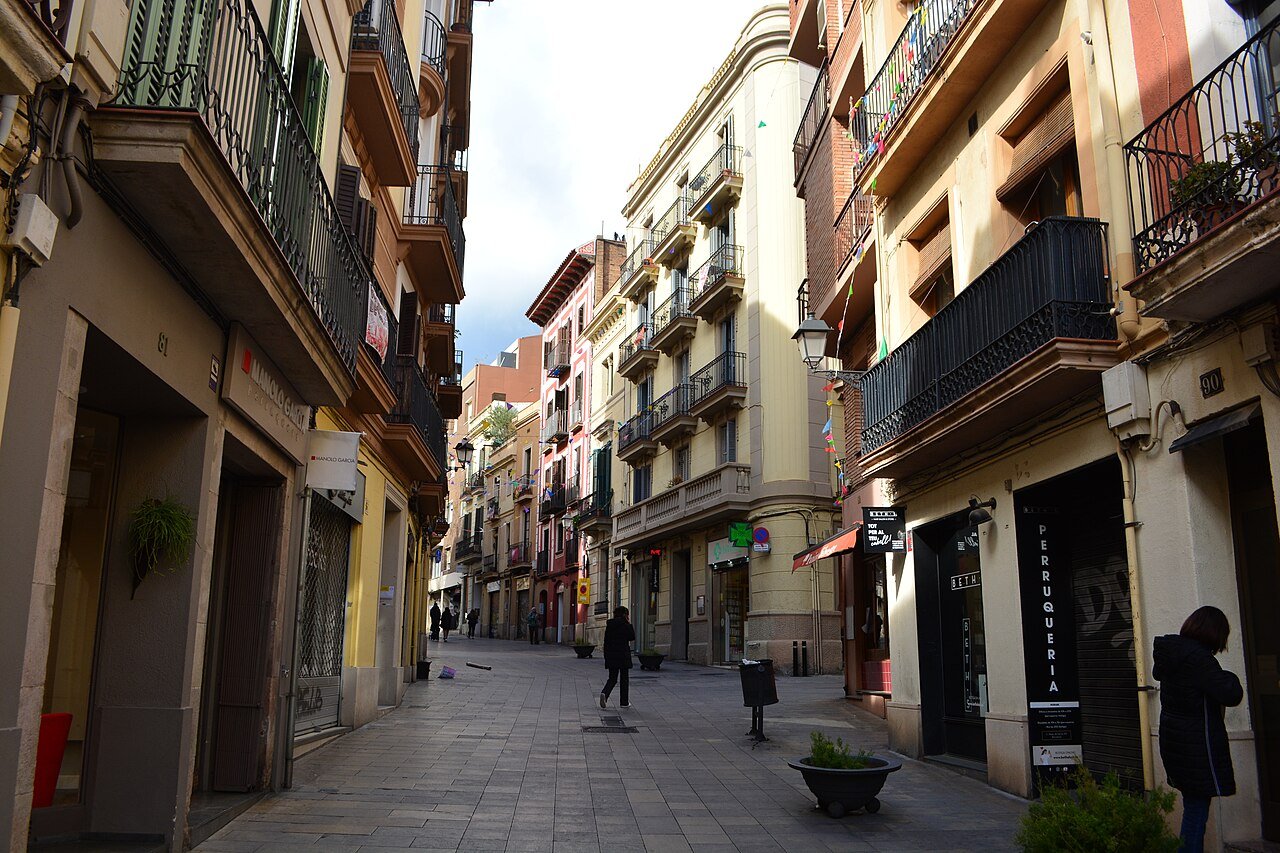
Every village has one street that does everything, and in Sarrià it is the Carrer Major de Sarrià. Pedestrianised along its old-core stretch, it runs from the church square down through the heart of the town, lined with the low, balconied houses of the 18th and 19th centuries, ground-floor shops that still serve residents before visitors — bakers, a pharmacy, bookshops, cafés with two tables on the pavement — and the odd grander façade where a summer family built in the town rather than above it. Look for the house at no. 118: above its stone arch, the lintel is dated 1694, one of the oldest doorways in the neighbourhood, and entirely unremarked — it is a working shop, not a museum piece.
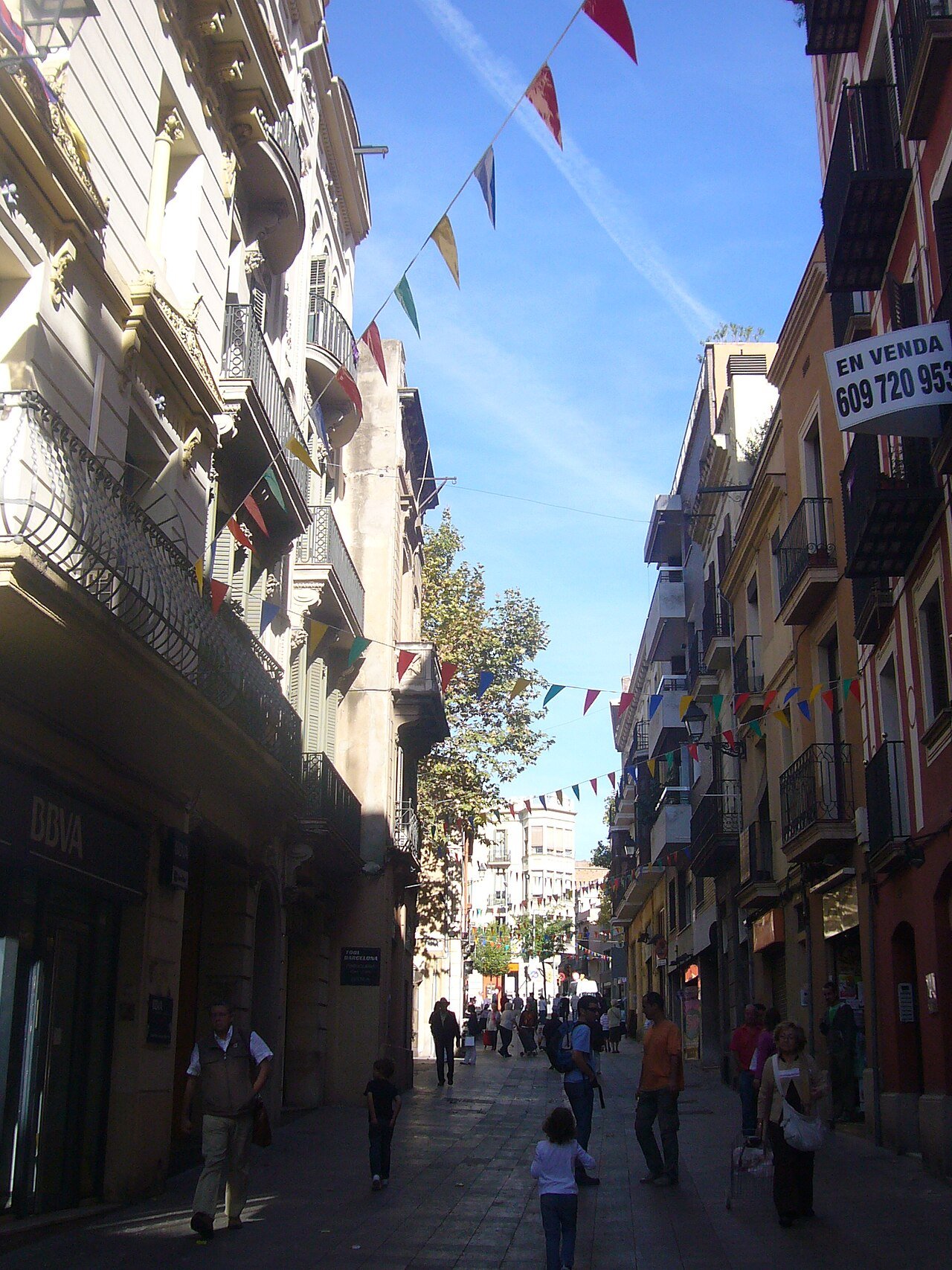
Walk it slowly and the street explains Sarrià better than any plaque: this is a high street in the British sense, a place the neighbourhood genuinely uses, which is why it has kept its scale. Nobody widened it, nobody arcaded it, and the traffic that ruined other village centres was simply kept out. In October, for the Festa Major, the Major gets its bunting and its communal street meals, and the whole town turns out onto it — the single best week to see the street doing what it was built for.
Plaça de Sarrià and the Church of Sant Vicenç
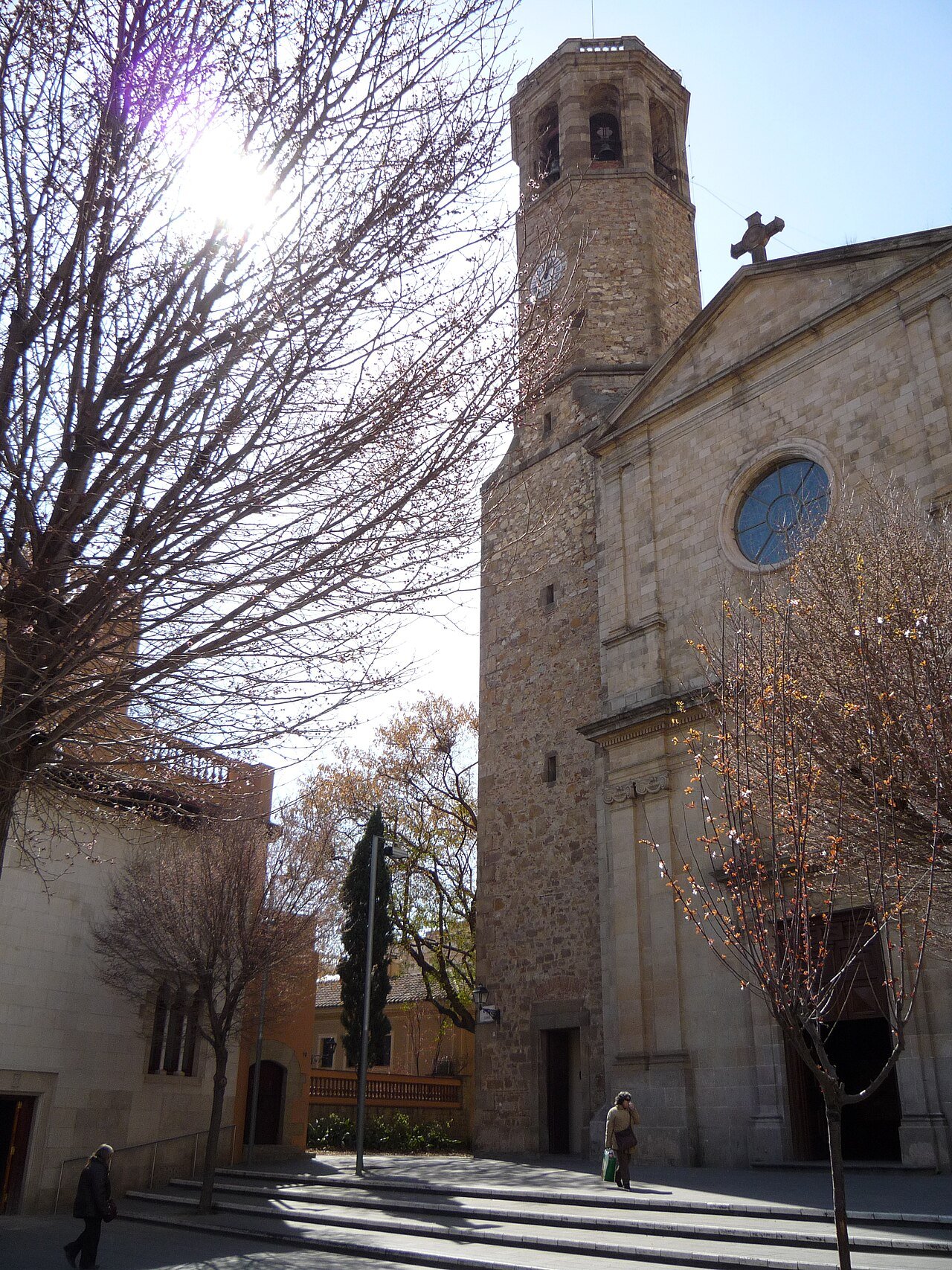
At the top of the old town stands its civic heart. Plaça de Sarrià is the square the town grew around: market square, meeting place and stage set for everything from sardana dancing on Sunday mornings to the processions of the Festa Major. On one side rises the parish church; facing it, the old town’s houses and the cafés where the square’s business now gets done over coffee. Before the market hall existed, the square itself held the fruit, vegetable and meat stalls — the market was the square, every morning, in the open air.
The church of Sant Vicenç de Sarrià is the town’s archive in stone. A church here is documented as early as 987; a Romanesque church was consecrated on the site in 1147, replaced by a Gothic one from 1373, and replaced again by the building you see today — a broad neoclassical church built between 1784 and 1807 to designs by Josep Mas i Dordal and Joan Fàbregas, its stone bell tower finished in 1818 and still the landmark you navigate by. The interior was burned in 1936, in the opening days of the Civil War, and the sanctuary was redecorated in 1954, so what you see inside is largely a careful post-war restoration. It remains what it has been for a thousand years: the working parish church of a town, dedicated to Sant Vicenç — St Vincent — the martyr whose statue you will meet again two streets away.
The Old Village Streets: Plaça de Sant Vicenç and the Passatge de Mallofré
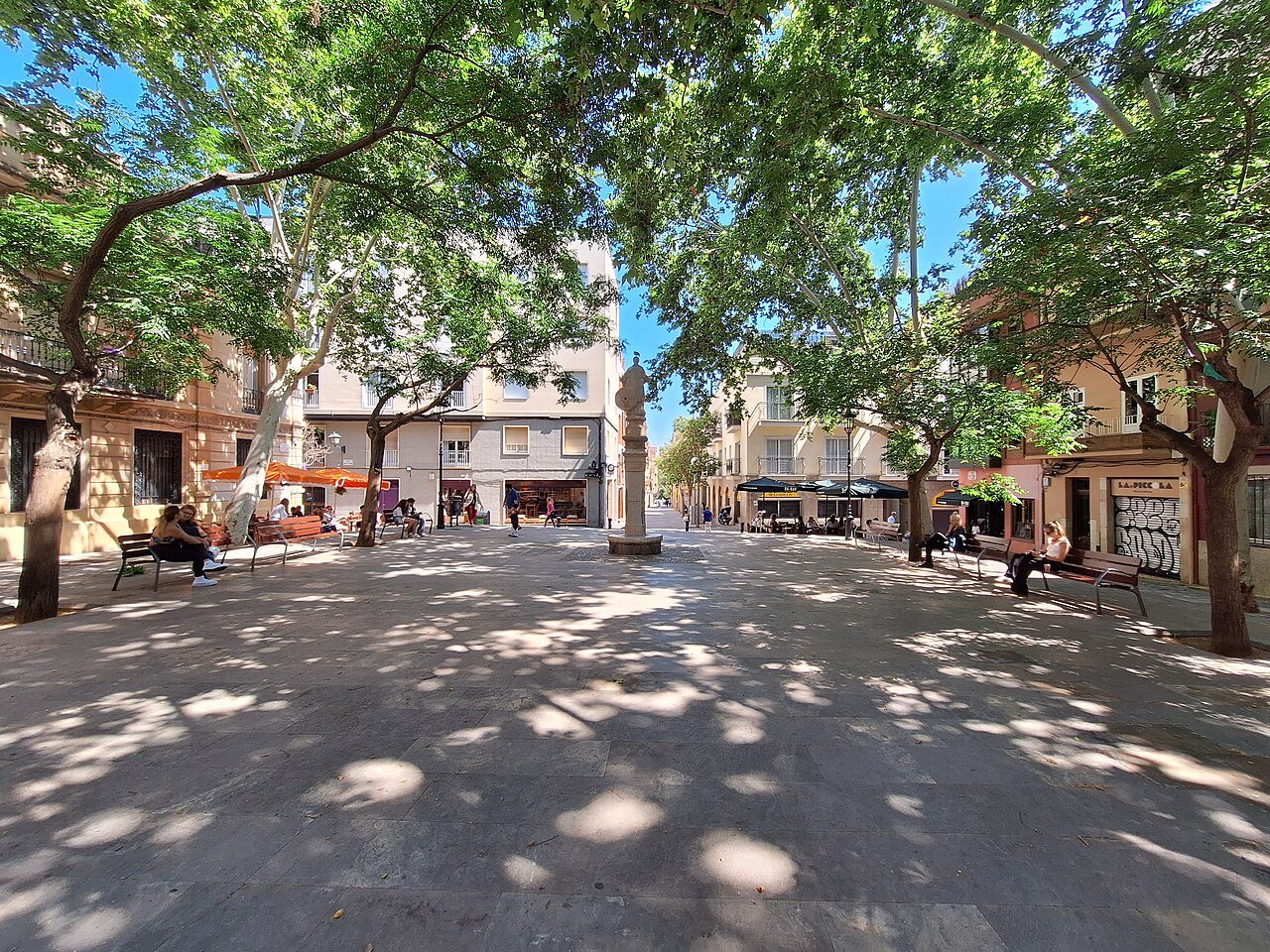
Slip behind the church and the streets shrink to village width. The loveliest of them opens into Plaça de Sant Vicenç, a small, tree-shaded square ringed with the painted houses of the late 19th and early 20th centuries. At its centre stands the statue of Sant Vicenç, the town’s patron, shown with the millstone of his martyrdom; it has presided over the square since 1896 and is attributed to the sculptor Nicolau Travé. There is no sight to ticket and nothing to queue for — just benches, terraces and the fountain — which is precisely the point of it.
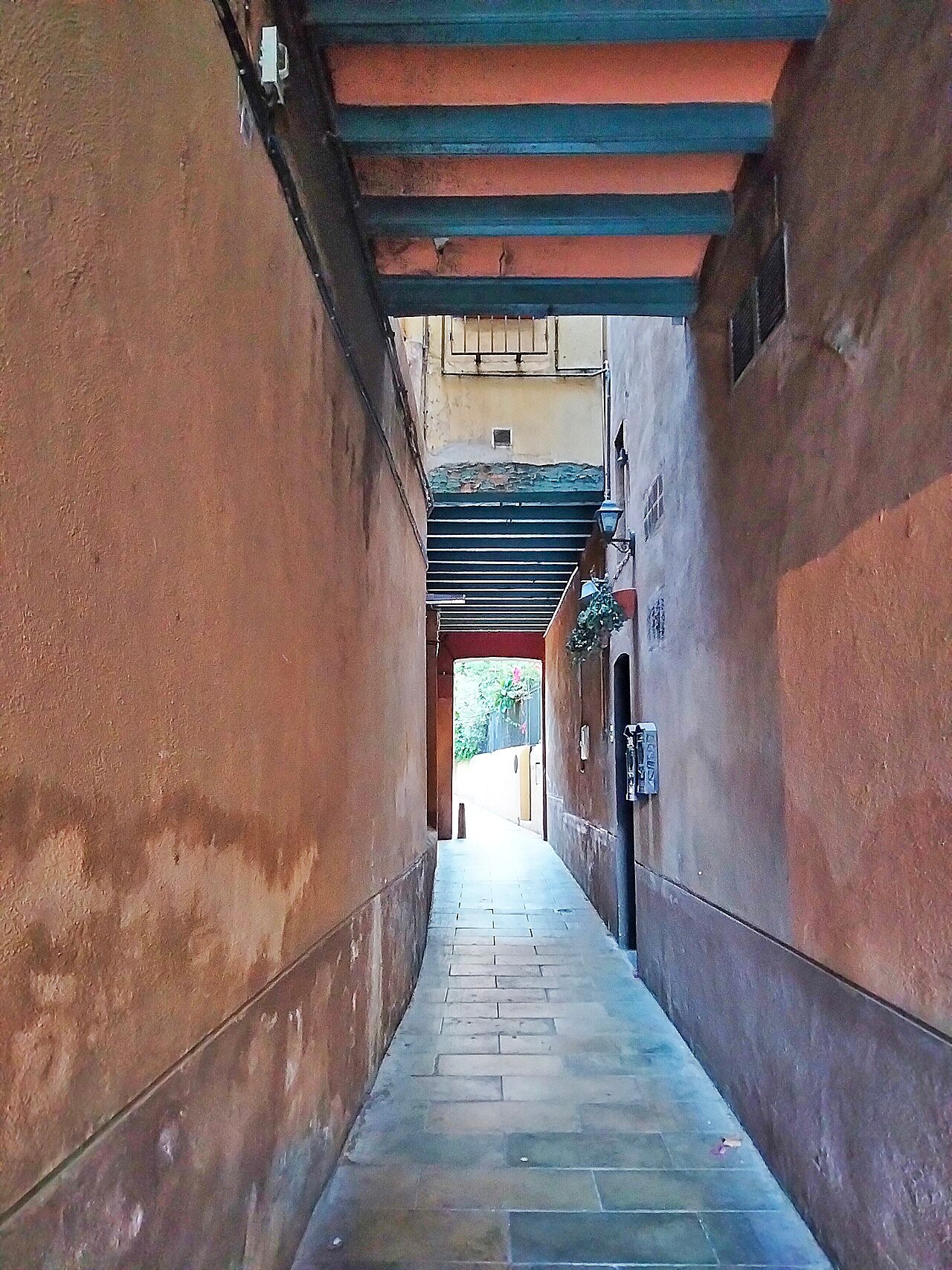
From the square, hunt down the Passatge de Mallofré, a narrow covered passageway threading between the old houses — part lane, part corridor, roofed with beams where the buildings lean together. Passages like this were the village’s shortcuts, worn by feet long before they were named, and a handful survive in the old core. The same knot of streets holds the Casa Orlandai, a Modernista mansion now working as the neighbourhood’s cultural centre — it is one of the engines of the Festa Major, organising the festival’s balcony performances — and the old town hall of 1896 on Plaça del Consell de la Vila, where the annexed town’s council first sat. None of it takes long to walk. All of it together is the argument for Sarrià: a complete small town, intact, inside a big city.
Mercat de Sarrià: The Village Market
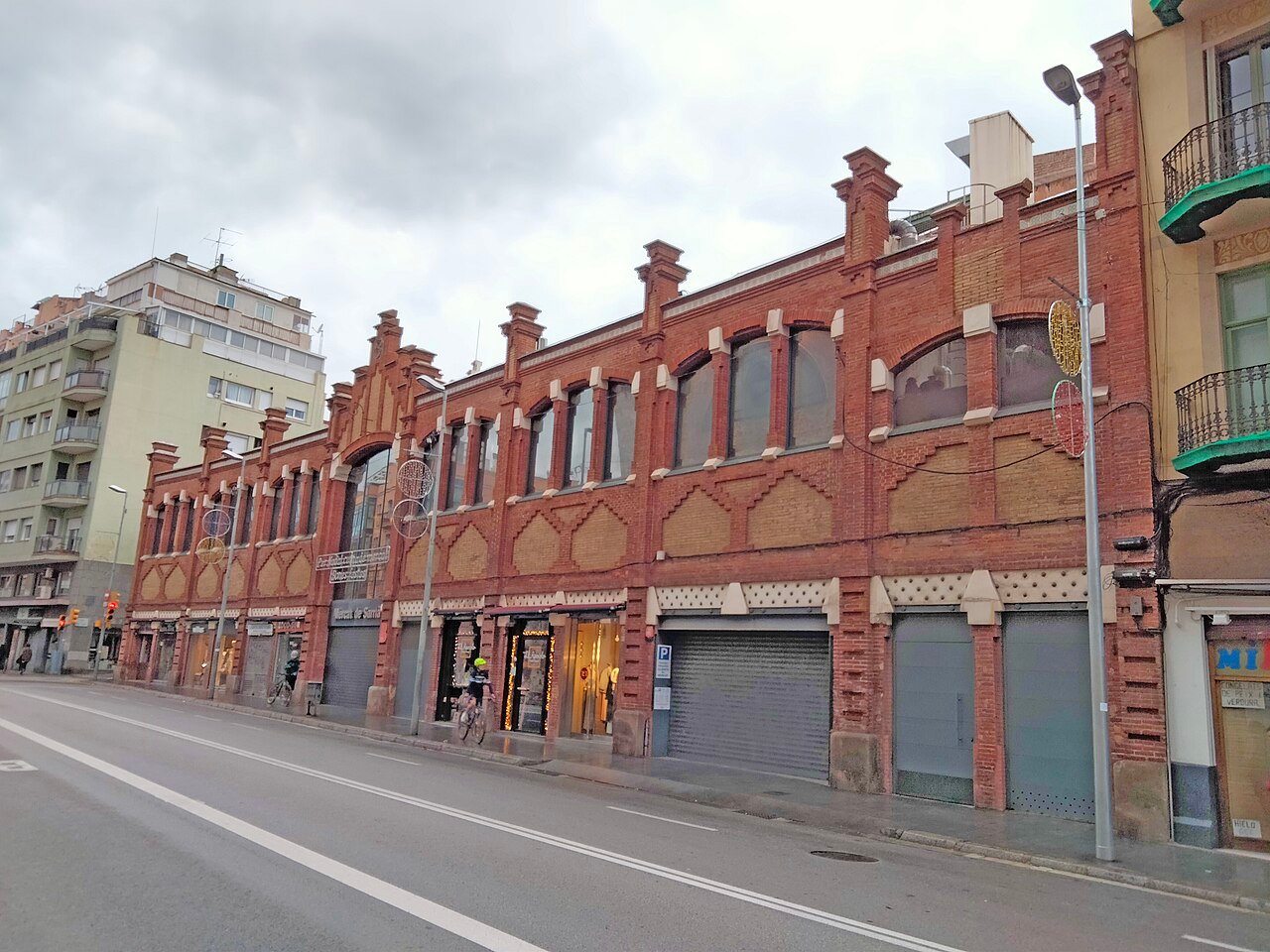
Directly across Passeig de la Reina Elisenda from the church stands the town’s other great institution. When the new passeig was cut through the village in 1909, it separated the church from the rector’s vegetable garden — and on that leftover plot the town built its covered market. The Mercat de Sarrià opened on 23 December 1911, just in time for the Christmas shopping, and the stallholders of the old open-air market on the square moved in days later. The building is a handsome piece of market Modernisme: red brick, iron trusses and stained glass, given a full renovation in 2007 and still doing the job it was built for.
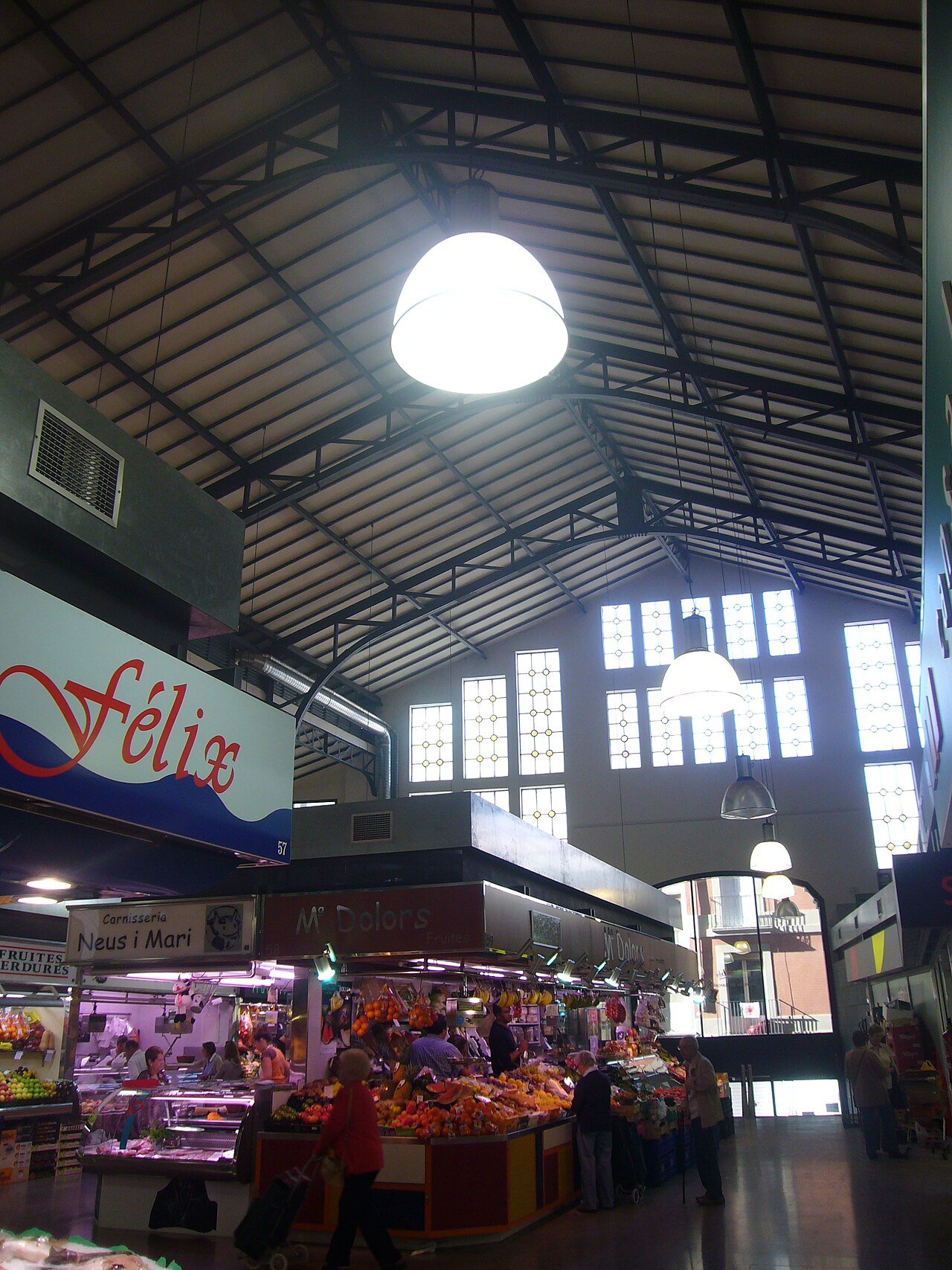
Inside, this is a residents’ market in the best sense: a compact hall of produce stalls, butchers, fishmongers and delicatessens, priced and stocked for the streets around it rather than for tour groups. Come in the morning, when the hall is at full voice. It is also the starting point of the neighbourhood’s one great food experience: the Paella Maestro Market Tour & Sangria & Tapas begins here, touring the market with the cook to choose the day’s ingredients before the class cooks seafood paella, pan con tomate and sangria from a family recipe — the market used exactly as the market intends.
Pastisseria Foix: The Poet’s Pastry Shop
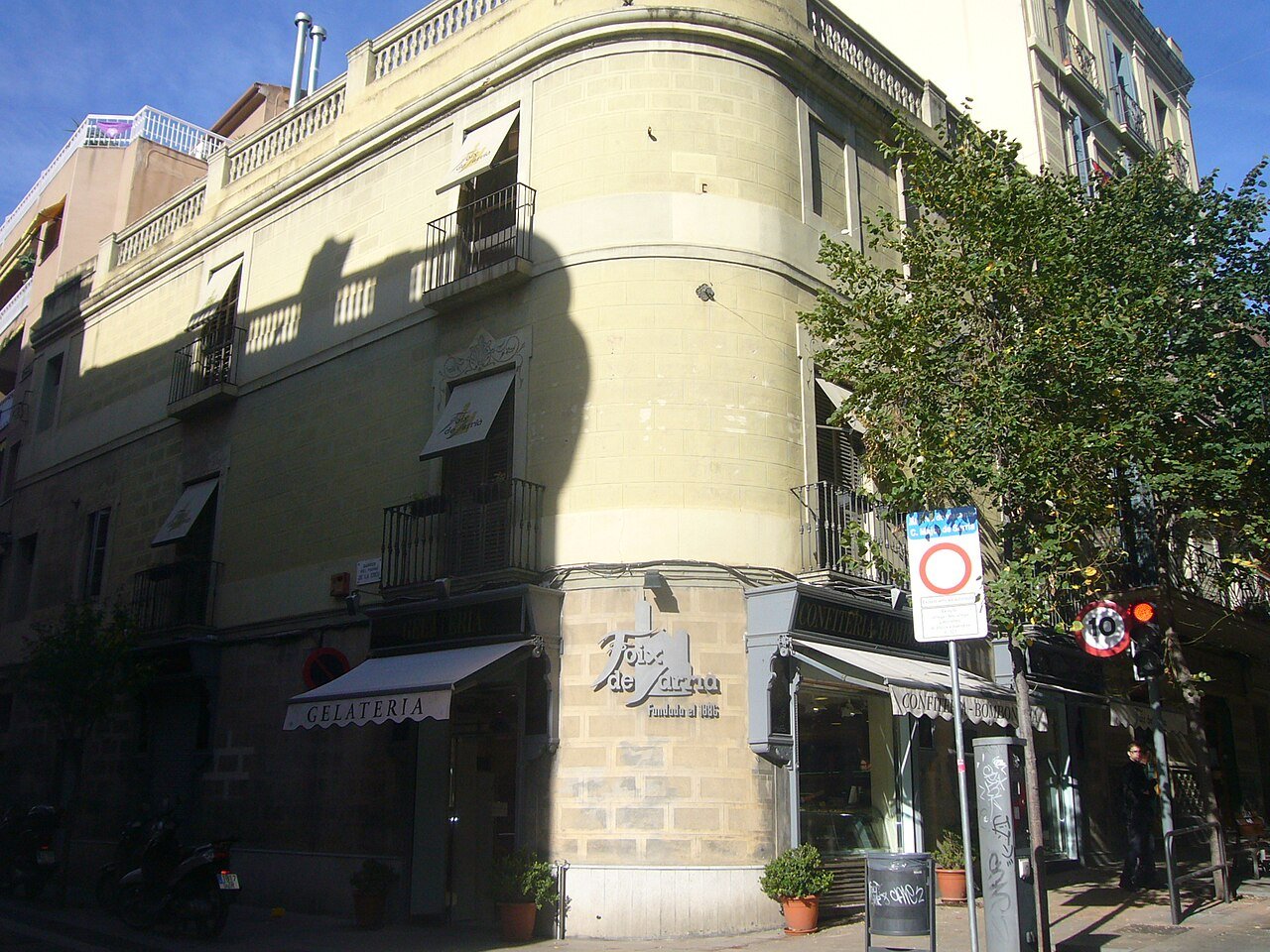
If Sarrià has a single famous address, it is a cake shop. The Pastisseria Foix de Sarrià opened in 1886 at Carrer Major de Sarrià 57, on the corner of Plaça de Sarrià — the founding date is lettered on the building itself — and it is still there, still family-run, and still one of the great pastry shops of Barcelona. The counters run with cakes, chocolates and truffles; the shop is known above all for its turrón and for the panettone the family pioneered in the city in the 1970s.

What lifts Foix from shop to monument is the name. The founders were the parents of J. V. Foix (1893–1987), born in Sarrià and one of the essential Catalan poets of the 20th century. Foix grew up over the shop, made it a meeting place for the avant-garde in his youth, and — after the Civil War, when he could have left — came home and ran the family business from 1936 to 1968 while writing the poems that made his name. The interior keeps its Modernista decoration of carved wood and painted ceilings; buying a cake here is a small act of literary pilgrimage whether you intend it or not.
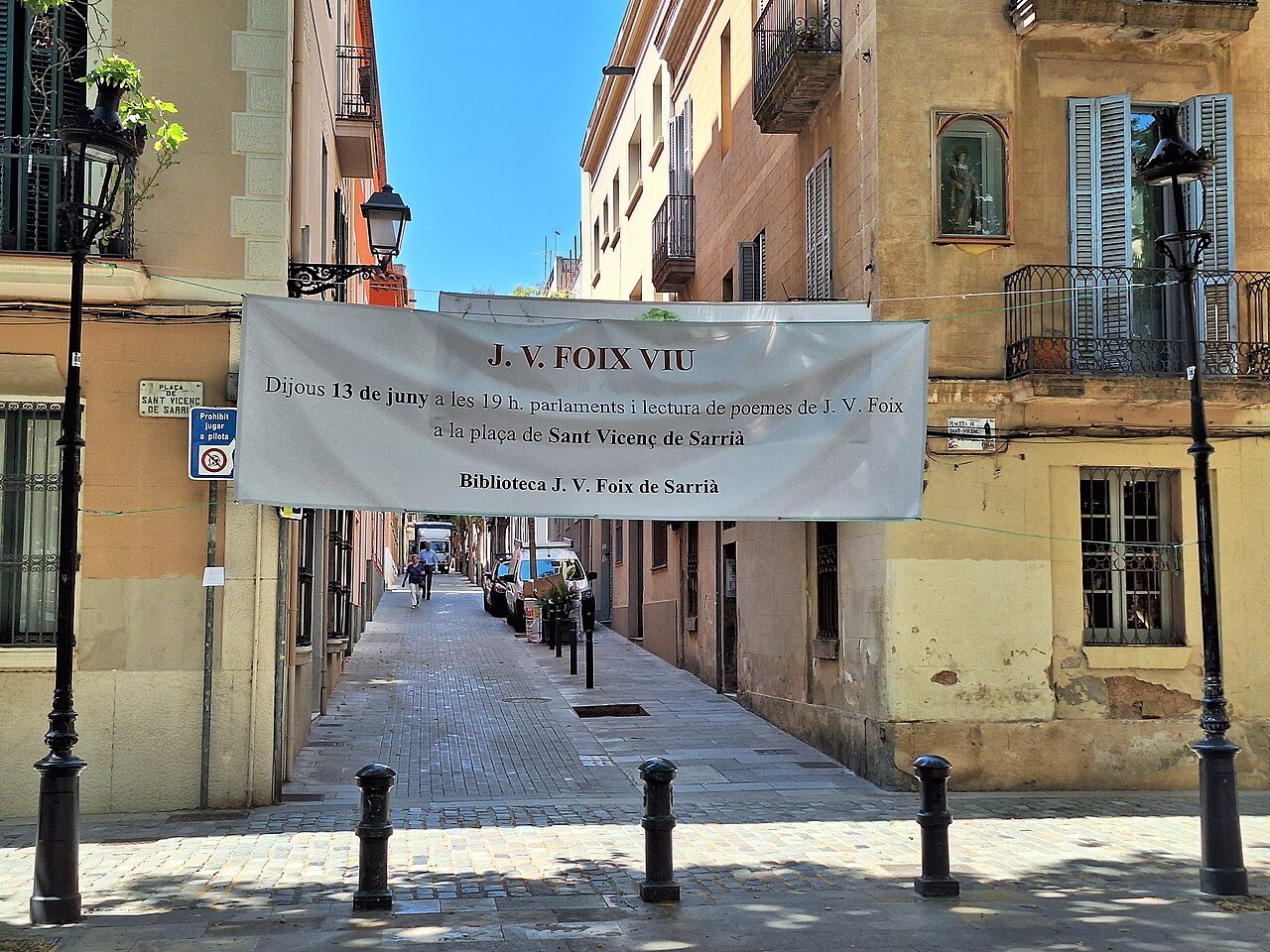
The village has not forgotten him. Sarrià’s library carries his name, and on a June evening you may find the streets around Plaça de Sant Vicenç strung with a banner — J. V. Foix Viu, “J. V. Foix Lives” — for an open-air reading of his poems in the square of his own parish. Few European neighbourhoods keep their poet this close.
Jardins de Can Sentmenat: The Marquesses’ Gardens
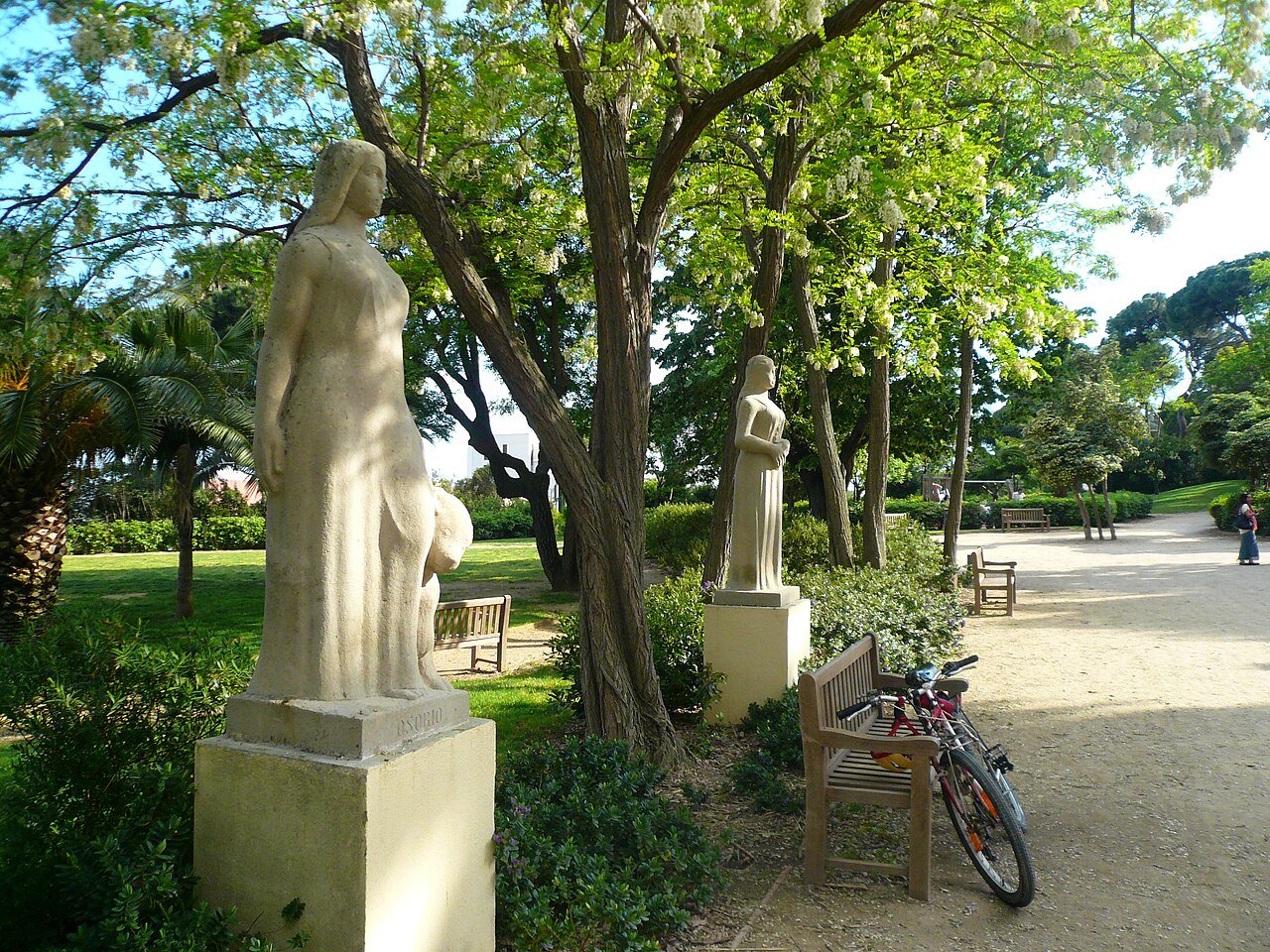
Ten minutes uphill from the old core, the village gives way to one of its great estates. The Jardins de Can Sentmenat, on Carrer de Can Caralleu, are the gardens of the palace of the Marquesses of Sentmenat: an estate recorded from 1325, when Guillem Teixidó built his manor house here, bought by the Sentmenat family in the early 17th century and remodelled in 1779, when Andreu Bosch gave the house its Neo-Gothic form. The gardens that survive are the aristocratic article — French in their geometry, Romantic in their planting: a terrace with views over the city, a circular pond among parterres, and a promenade guarded by seven stone women, statues symbolising the Sentmenat family and the allied houses it married into. Barcelona City Council acquired the estate in 1992, the gardens opened to the public in 1995, and the palace itself is now the EINA design school — students sketching where marquesses strolled.
One honest warning before you climb: at the time of writing (October 2026), the city’s own parks listing shows the gardens temporarily closed, as part of the African swine fever prevention measures affecting the Collserola foothills. Closures of this kind lift without much notice, so check the Jardins de Can Sentmenat page on barcelona.cat before making the trip up — and if they are closed, take the old town slowly instead and save the statues for a return visit.
Eating and Drinking in Sarrià
Sarrià eats like a town that feeds itself. The Carrer Major and the streets off Plaça de Sarrià carry the full village kit: vermouth bars that fill at noon, bakeries, small restaurants with a weekday menú del día, and cafés whose terraces face the squares. Prices run below the old town’s, and at lunch time you will be eating alongside the neighbourhood, not other visitors.
Two institutions deserve a detour by name. The first is Foix, above — go for a slice of cake and a coffee, and watch the counter at work. The second is Bar Tomás, on Carrer Major, a plain tiled bar with a citywide reputation built on one plate: its patatas bravas, served with allioli and a spicy sauce, which generations of Barcelonans have crossed the city to argue about. There is no secret to it and no booking — order the bravas, order a vermouth, and join the argument.
Practical Info
- Where it is: The old core of Sarrià sits in the north-west of the city, in the Sarrià-Sant Gervasi district, below the Collserola hills. Its spine is Carrer Major de Sarrià, between Plaça de Sarrià at the top and the FGC station a few minutes below.
- Church of Sant Vicenç: Plaça de Sarrià. A working parish church — entry is free, and visits should fit around services; Sunday mornings belong to the parish.
- Mercat de Sarrià: Passeig de la Reina Elisenda de Montcada 8. The hall follows the usual Barcelona municipal market pattern — weekday mornings and late afternoons, Saturday mornings — and weekday mornings are when it is at its best; check the Mercats de Barcelona listing for the current timetable before a special trip. The Plaça de Sarrià also hosts small fairs through the year, including an artisan sausage fair on the second and fourth Sundays from October to June.
- Pastisseria Foix: Carrer Major de Sarrià 57 (corner of Plaça de Sarrià 12-13). Closed some holidays; the queue at Christmas and Easter is part of the experience.
- Jardins de Can Sentmenat: Carrer de Can Caralleu 6-14. Free when open — but see the closure warning in the gardens section above and check barcelona.cat before going.
- The neighbourhood itself: Always open and always free — Sarrià is a living town, not an attraction.
Tickets and Costs
Sarrià is one of the cheapest days out in Barcelona, because almost everything in this guide costs nothing: the streets, the squares, the church, the passageway and — when open — the gardens are all free, and the market charges only for what you eat. A cake at Foix, a vermouth on the square and a plate of bravas at Bar Tomás will together cost less than a single museum ticket in the centre.
The one paid experience worth considering is the one that starts in the market: the Paella Maestro Market Tour & Sangria & Tapas — a guided tour of the Mercat de Sarrià to pick the ingredients, then a hands-on class cooking seafood paella, pan con tomate and sangria, rated 4.7 out of 5 from its reviews. Everything else in this guide can be done entirely on your own, at walking pace, for the price of lunch.
Getting There
Sarrià has no conventional Metro station — its railway is the FGC, and that is part of the village feel. From Plaça Catalunya, the L6, L7, S1 and S2 trains all run to Sarrià station in about 15 minutes; the old core begins a five-minute walk away, up Carrer Major. The Reina Elisenda station, terminus of the short L12 shuttle from Sarrià station, lands you beside the market and the church at the top of the old town. Both stations sit in the central fare zone, on the same tickets as the Metro — and Sarrià pairs easily with a day built around the best things to do in Barcelona, the train ride out being short enough to treat the village as the city’s quiet last stop rather than a separate trip.
When to Go
Sarrià works in every season, because it is a real town on a real timetable. Weekday mornings are the classic visit: the market in full swing, the Major busy with shoppers, Foix open and the squares doing their ordinary business. Sundays are gentle — the market closes, sardanas fill Plaça de Sarrià in the morning, and families take the terraces. The one week to aim for is the Festa Major de Sarrià, in early October: the festival honours the Mare de Déu del Roser, and for around ten days the old town dresses its balconies, lays communal meals in the streets and turns out its giants, big-heads and devils — the 2026 edition ran from 3 to 12 October, and the dates move slightly each year, so check the programme on barcelona.cat if you are timing a trip around it.
How Long You Need
Give Sarrià two to three unhurried hours, or half a day with lunch. The core route — Plaça de Sarrià and the church, the length of the Major, Foix, the market, Plaça de Sant Vicenç and the Passatge de Mallofré — takes about ninety minutes on foot; add the climb to Can Sentmenat, if the gardens are open, and a plate of bravas, and you have filled a morning properly. With a full day, Sarrià combines naturally with the sights on its own hill, covered next.
Tips for Visiting
- Arrive by FGC, leave by Reina Elisenda — or the other way round. Sarrià station drops you at the bottom of the Major and Reina Elisenda at the top by the church; walking the street one way and training from the other end saves retracing your steps.
- Come on a weekday morning. The market, the shops and the squares are all at their most alive before lunch; by mid-afternoon the village is napping.
- Time the market first. The Mercat de Sarrià is the one sight with a timetable — do it early, then let the rest of the visit unspool.
- Check the gardens before you climb. Can Sentmenat is temporarily closed at the time of writing; a glance at barcelona.cat saves a wasted walk uphill.
- Order the bravas at Bar Tomás. It is the neighbourhood’s one famous plate, and the bar is the village local — plain, busy and entirely uninterested in tourists, which is the charm.
- Save room for Foix. A cake from an 1886 pastry shop run by a poet’s family is the correct Sarrià souvenir; the turrón travels well if you are buying for others.
- Look at the lintels. The old core is full of dated doorways — the 1694 arch at Carrer Major 118 is the easiest to spot — and they turn a stroll into a treasure hunt.
- Stay for the light. Late afternoon on Plaça de Sant Vicenç, when the terraces fill and the statues catch the sun, is Sarrià at its best.
What to See Nearby
Sarrià is the gateway to Barcelona’s green north-west, and its neighbours are all uphill or along the ridge. Ten minutes west stands the Monestir de Pedralbes, the royal Gothic convent that belonged to old Sarrià’s world — its cloister is the quietest great space in the city. Above the village rises Tibidabo, reached by staying on the S1 or S2 one stop to Vallvidrera and taking the funicular up: fairground, basilica and the whole city laid out below. At the mountain’s foot sits CosmoCaixa, the science museum with its flooded Amazon forest — an easy pairing with Sarrià for families. And on the way down, Gaudí fans should not miss Torre Bellesguard, the castle-like house at the foot of the hill. Closer in, families on a Sunday can ride the miniature trains of the Parc de l’Oreneta, which usually run on Sunday mornings in the park above the old town.
Frequently Asked Questions
Where exactly is Sarrià in Barcelona?
Sarrià is a neighbourhood in the north-west of the city, in the Sarrià-Sant Gervasi district below the Collserola hills. It was an independent town until 1921. Its old core runs along Carrer Major de Sarrià between Plaça de Sarrià and the FGC Sarrià station, about 15 minutes by train from Plaça Catalunya.
Is Sarrià worth visiting?
Yes, if you want to see the Barcelona that lives behind the postcard city. There are no headline monuments and no queues: instead there is a complete old town — market, church, squares, a famous pastry shop — that still works as a town. It is the best half-day escape from the centre that never leaves the city.
How do I get to Sarrià?
By FGC train. Lines L6, L7, S1 and S2 run from Plaça Catalunya to Sarrià station in about 15 minutes, on ordinary central-zone tickets. The L12 shuttle continues from Sarrià station to Reina Elisenda, beside the market. There is no conventional Metro station in the neighbourhood.
When is the Festa Major de Sarrià?
In early October, in honour of the Mare de Déu del Roser — around ten days of decorated balconies, communal street meals, giants, human towers and fire runs. The 2026 edition ran from 3 to 12 October; exact dates are published each year on barcelona.cat.
What is Sarrià famous for?
For holding out: it was the last town on the Barcelona plain to be annexed by the city, in 1921. Within the city it is known for its village atmosphere, its 1911 market, the Pastisseria Foix (1886) and its poet J. V. Foix, the gardens of Can Sentmenat, and the patatas bravas at Bar Tomás.
How long do I need in Sarrià?
Two to three hours covers the whole old core on foot, including the market and a stop at Foix. Add lunch or the climb to Can Sentmenat and make it half a day; add Pedralbes or Tibidabo and it becomes a full, relaxed day.
Travel insurance, sorted
Whether it is a two-week holiday or a longer move, travel insurance is not the most glamorous part of a trip — but it is the one booking you want to have in place before a trip, and while you are already away. Get a quote from SafetyWing
Final Thoughts
Every city has a place where its older self survived, and in Barcelona that place is Sarrià. The Eixample shows you the city Barcelona planned; Sarrià shows you the town Barcelona absorbed — and never quite digested. A parish church documented in 987, a high street with a doorway from 1694, a market hall on a priest’s vegetable garden, a cake shop that raised a poet, a marquess’s statues standing in a public park: none of it was preserved for visitors, and that is why it convinces. Come up on the little train, walk the Major slowly, eat where the town eats, and you will leave with the rarest souvenir in Barcelona — the feeling of a village, fifteen minutes from the centre, that never stopped being one.

Photos: Enric (CC BY 4.0 and CC BY-SA 4.0), Joe Mabel and Pere López Brosa (CC BY-SA 4.0), Oliver-Bonjoch, Arria Belli, Jordiferrer and Pere López (CC BY-SA 3.0), via Wikimedia Commons.