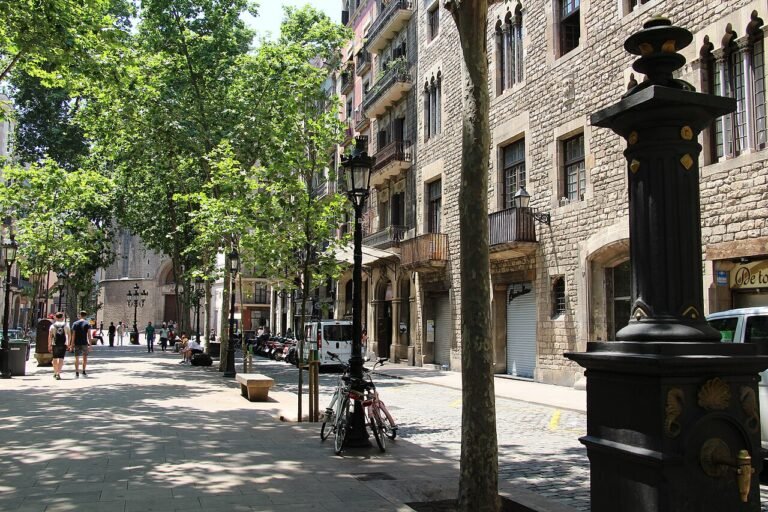
Best Parks and Gardens in Barcelona: 15 Parks and Gardens Worth Your Time
Barcelona builds its green spaces the way it builds everything else — with ambition. This is the city that turned a failed Gaudí housing estate into its most famous park, hid a 230-year-old hedge maze in a northern suburb, planted a cactus garden on a sun-baked sea-facing slope, and suspended a fifty-tonne concrete sculpture over a quarry lake. The parks and gardens below are not filler between sights. Several of them are the sights.
Start with the one that needs booking. Park Güell’s monumental zone runs on timed tickets that sell out days ahead in season, and it is the only garden on this list where turning up unprepared can genuinely waste your morning. Almost everything else here is free, unhurried and — outside the Montjuïc cluster on a Sunday — surprisingly empty of tourists. Here are the fifteen worth your time, in the order most visitors should tackle them.
The Short Version
- Park Güell — Gaudí’s mosaic masterpiece; book the monumental zone ahead
- Parc de la Ciutadella — the city’s green living room, with boats, a waterfall and the zoo
- Parc del Laberint d’Horta — Barcelona’s oldest garden, with a real hedge maze
- Jardí Botànic de Barcelona — five Mediterranean climates on one Montjuïc hillside
- Jardins de Mossèn Costa i Llobera — a cactus garden above the port
- Jardins de Laribal — waterfalls, pergolas and the famous Font del Gat
- Jardins de Mossèn Cinto Verdaguer — spring bulbs and harbour views
- Jardins del Palau de Pedralbes — royal palace gardens with two hidden Gaudí works
- Jardins de Joan Maragall — the royal garden that opens only on weekend mornings
- Parc de Cervantes — ten thousand rose bushes at the top of the Diagonal
- Parc de la Creueta del Coll — a quarry lake you can swim in, under a Chillida
- Parc de l’Espanya Industrial — lakeside terraces and a giant dragon in Sants
- Parc Diagonal Mar — Miralles’ sculptural seaside park
- Jardins de la Tamarita — a modernista estate garden nobody finds
- Jardins de la Universitat de Barcelona — cloister gardens in the middle of the Eixample
Table of Contents
- The Short Version
- 1. Park Güell
- 2. Parc de la Ciutadella
- 3. Parc del Laberint d’Horta
- 4. Jardí Botànic de Barcelona
- 5. Jardins de Mossèn Costa i Llobera
- 6. Jardins de Laribal
- 7. Jardins de Mossèn Cinto Verdaguer
- 8. Jardins del Palau de Pedralbes
- 9. Jardins de Joan Maragall
- 10. Parc de Cervantes
- 11. Parc de la Creueta del Coll
- 12. Parc de l’Espanya Industrial
- 13. Parc Diagonal Mar
- 14. Jardins de la Tamarita
- 15. Jardins de la Universitat de Barcelona
- Practical Information
- Tickets and Costs
- Getting There
- When to Go
- How Long You Need
- Tips for Visiting Barcelona’s Parks
- FAQs
- Final Thoughts
1. Park Güell

Park Güell began as a business venture that failed beautifully. Eusebi Güell hired Antoni Gaudí to design a garden city of luxury houses on a barren hillside above Gràcia; between 1900 and 1914 the roads, viaducts and public spaces went in, but only a couple of houses were ever built, and the project folded. The city bought the estate and opened it as a municipal park in 1926, and in 1984 UNESCO listed it as a World Heritage Site.
What Gaudí built for those imaginary residents is now the most visited park in Spain: the entrance staircase guarded by the mosaic salamander everyone calls El Drac, the forest of tilted columns in the Hypostyle Hall, and above it the Greek Theatre terrace, ringed by the famous undulating bench and looking straight out to the sea. That monumental core is ticketed and timed; the wooded rest of the park — stone viaducts, pine groves and viewpoints — is free to wander. Gaudí lived for twenty years in one of the two show houses, now the Gaudí House Museum, which needs a separate ticket. Timed slots for the monumental zone do sell out, so booking the Park Güell admission ticket in advance is the sensible move in season. Our complete Park Güell guide covers the entrances, the free zone and the best order to walk it.
2. Parc de la Ciutadella

If Güell is the park visitors queue for, Ciutadella is the park Barcelona actually uses. It stands on the flattened site of the hated Bourbon citadel, demolished after 1868, and was laid out for the 1888 Universal Exposition to designs by Josep Fontserè — for decades it was the only real park in a dense, walled-feeling city, and it still works as the centre’s green living room.
The set pieces are all from the exposition era. The Cascada is a triumphal-arch waterfall fountain of pure 1880s theatre — Venetian in spirit, crowned by a gilded quadriga — on which the young Gaudí is said to have assisted with the hydraulic machinery while still a student. The Castell dels Tres Dragons, Domènech i Montaner’s red-brick castle built as the exposition café-restaurant, anchors one corner; the Umbracle shade house and the Hivernacle glasshouse shelter palms and tropical plants nearby. Between them runs a boating lake where you can rent a rowing boat by the half hour. The Parliament of Catalonia sits in the old citadel arsenal, the zoo (opened 1892) fills the eastern end, and a life-size mammoth — a 1907 stone replica — lurks by the lake, a survivor of a plan to populate the park with prehistoric animals. Entry to the park is free, dawn to dusk-ish hours year-round.
3. Parc del Laberint d’Horta

Barcelona’s oldest surviving garden hides at the foot of the Collserola hills, and it is a genuine aristocratic survival: begun in 1791 for the Marquis of Llupià to designs by the Italian architect Domenico Bagutti, extended through the 19th century, and opened to the public in 1971. The centrepiece is exactly what the name promises — a maze of clipped cypress hedges, old enough and dense enough to get properly, briefly lost in, with a statue of Eros waiting at the centre.
Around it, the garden runs in two registers: neoclassical formality near the mansion — pavilions, a canal, mythological statues, a grotto — and a looser romantic garden of tall trees and a waterfall behind. At just over nine hectares it is big enough to absorb a slow morning, and the council caps visitor numbers at 750 a day to protect it. Admission costs €2.23, with free entry on Wednesdays and Sundays, which makes it one of the great bargains in the city. One caution: parts of the historic maze have been under restoration since 2025, so check the council page before making a special trip for the maze itself. Our complete Laberint d’Horta guide has the opening hours by season and the free-day details.
4. Jardí Botànic de Barcelona

The newest garden on this list is also the most quietly ambitious. Opened in 1999 on the slope of Montjuïc between the castle and the Olympic Stadium, the Jardí Botànic arranges some 14 hectares of planting by a single elegant idea: only five regions on Earth share Barcelona’s Mediterranean climate — the Mediterranean Basin itself, California, Chile, South Africa and south-western Australia — and each gets its own hillside here.
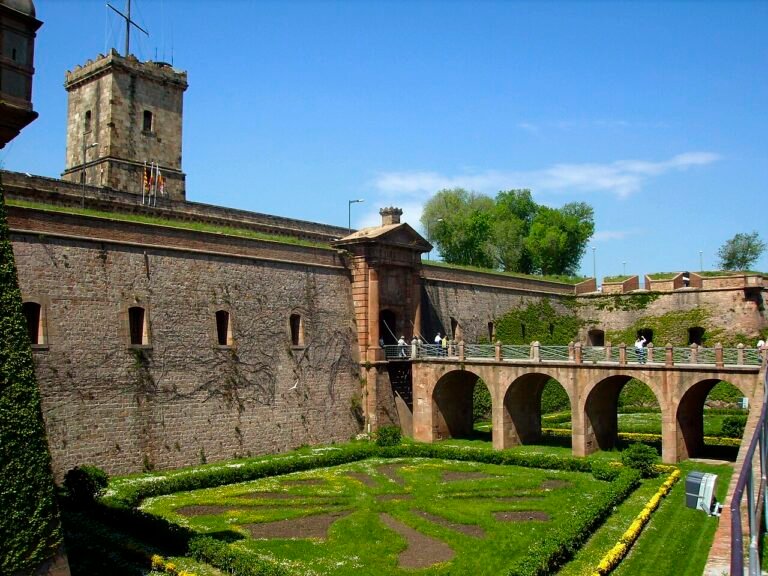
You walk from Canary Island palms at the entrance into Californian chaparral, Chilean palms, South African fynbos with its sculptural proteas, and Australian eucalyptus and banksia, watching the same climate produce wildly different plants on five continents. The collection runs to more than 1,300 species, laid out on a striking triangular mesh of paths designed with architects Carles Ferrater and Josep Lluís Canosa and landscape architect Bet Figueras. Admission is around €5, with free entry on the first Sunday of the month and on Sunday afternoons — confirm the current tariff before you go. Don’t confuse it with the Jardí Botànic Històric, a smaller 1930s garden tucked in the old Foixarda quarries behind the MNAC, which is free and worth the detour. The botanic garden sits directly below Montjuïc Castle, so the two pair naturally into one trip up the hill.
5. Jardins de Mossèn Costa i Llobera
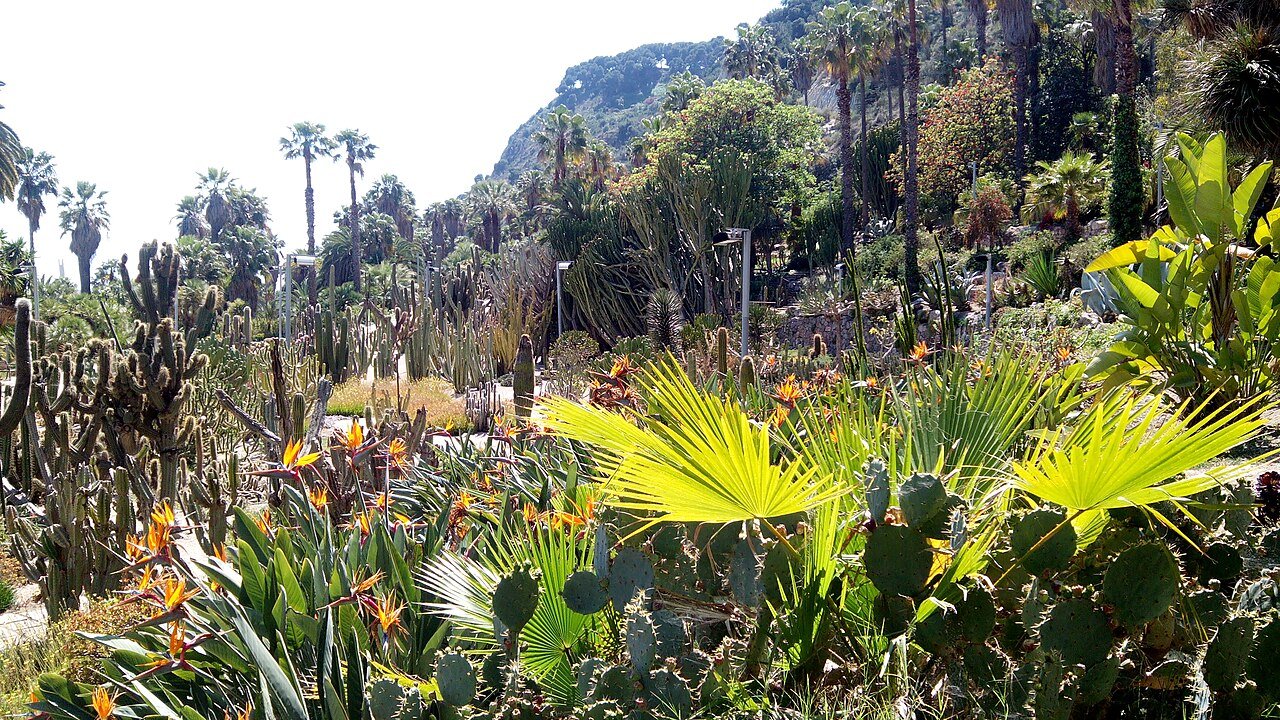
On Montjuïc’s sheltered, sea-facing south-east slope, a few degrees warmer than the streets below, Barcelona grows a desert. The Jardins de Mossèn Costa i Llobera, created in 1970 by architect Joan Maria Casamor with botanist Joan Pañella Bonastre, hold around 800 species of cacti and succulents across some six hectares of terraced hillside — one of the most important collections of its kind in Europe.
Barrel cacti swell beside paths, columnar cacti stand in ranks, agaves and aloes spill over the terraces, and through it all you look down over the working port. The garden is named for Miquel Costa i Llobera, the Mallorcan poet-priest, and it has survived its own drama: the hard frosts of 1985 and 1987 killed many of the original plantings, which have been patiently re-established since. It remains one of the least-visited gardens in the city — on a weekday morning you may share it with a handful of locals and the garden’s cats. Entry is free. If you do one Montjuïc garden that nobody else on your trip has heard of, make it this one.
6. Jardins de Laribal

The Laribal gardens are Montjuïc’s romantic heart: a hillside of shaded terraces, staircases, pergolas and running water laid out from 1917 under the French landscape architect Jean-Claude Nicolas Forestier, working with Nicolau Maria Rubió i Tudurí, in the build-up to the 1929 International Exposition. Forestier believed a Mediterranean garden should be built from shade, water and scent, and Laribal is his argument made real.
Water runs everywhere — down channels, over a waterfall, into pools edged with tiles and orange trees. Halfway up sits the Font del Gat, the Cat Fountain of 1929, famous far beyond the gardens through the Catalan song about a girl, a soldier and a tryst at the fountain; generations of Barcelona schoolchildren have been marched here to see it. Above the gardens stands the Teatre Grec, the open-air Greek theatre built for the exposition and still used for summer performances. The gardens are free, rarely crowded, and make the natural middle chapter of a Montjuïc walk: climb up from the Magic Fountain through Laribal and you arrive, eventually, at the Olympic Ring and the stadium.
7. Jardins de Mossèn Cinto Verdaguer
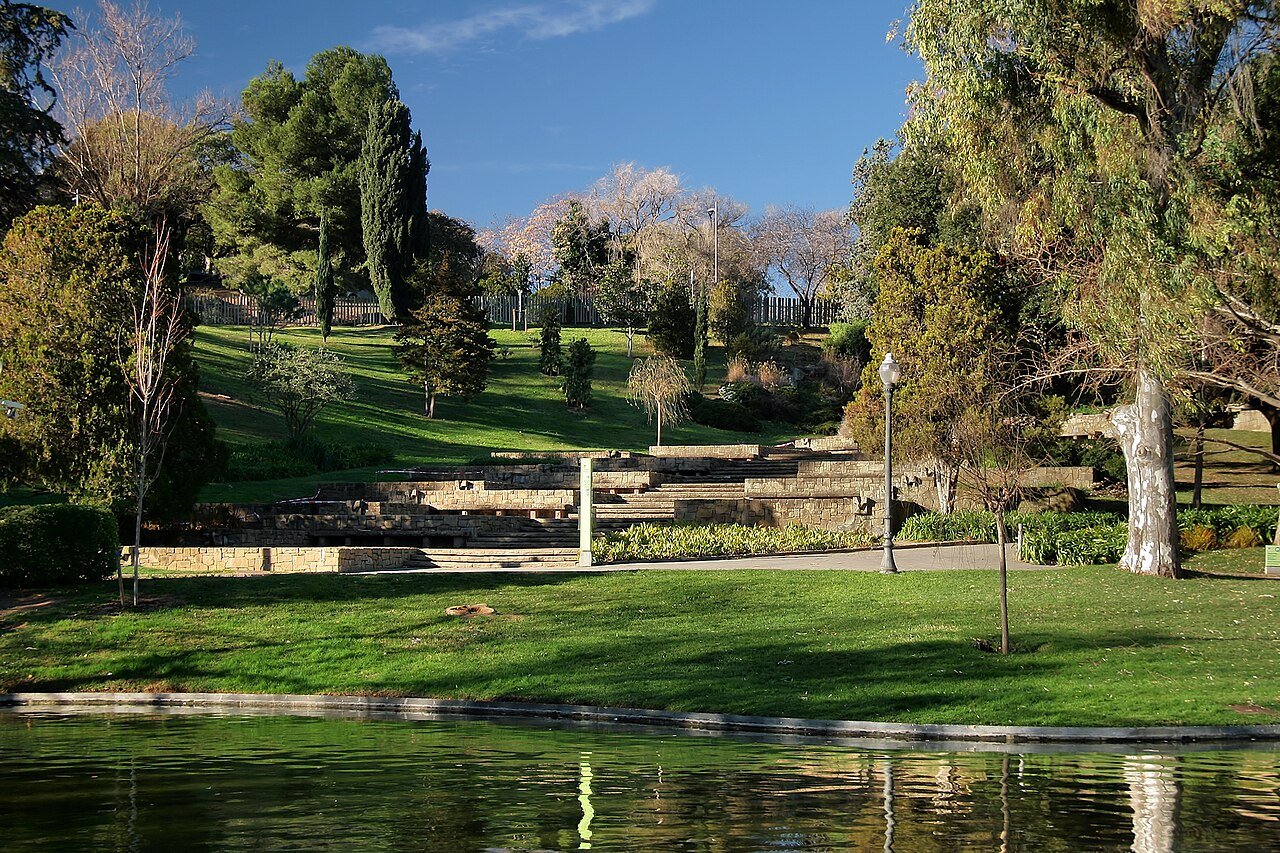
A short walk from the cactus garden, Montjuïc keeps a second poet’s garden with a completely different temperament. The Jardins de Mossèn Cinto Verdaguer, opened in 1970 to a design by Joaquim Maria Casamor — the same landscape architect behind Costa i Llobera — honour Jacint Verdaguer, the great 19th-century Catalan poet-priest, and where his namesake neighbour grows spikes, this one grows colour.
The planting runs on bulbs: in spring, tens of thousands of tulips, hyacinths and narcissi come up in drifts through the lawns, followed by summer bedding and ponds thick with water lilies. It is the most conventionally pretty garden in the city, the one locals choose for wedding photographs and slow Sunday walks, and from its upper paths you get a clear view down over the harbour and the Mediterranean. Like the cactus garden, it is free, and like it, most visitors to Montjuïc walk straight past. Together with Joan Maragall, the three poet-named gardens — Costa i Llobera, Cinto Verdaguer and Maragall — form a ready-made Montjuïc itinerary of their own.
8. Jardins del Palau de Pedralbes
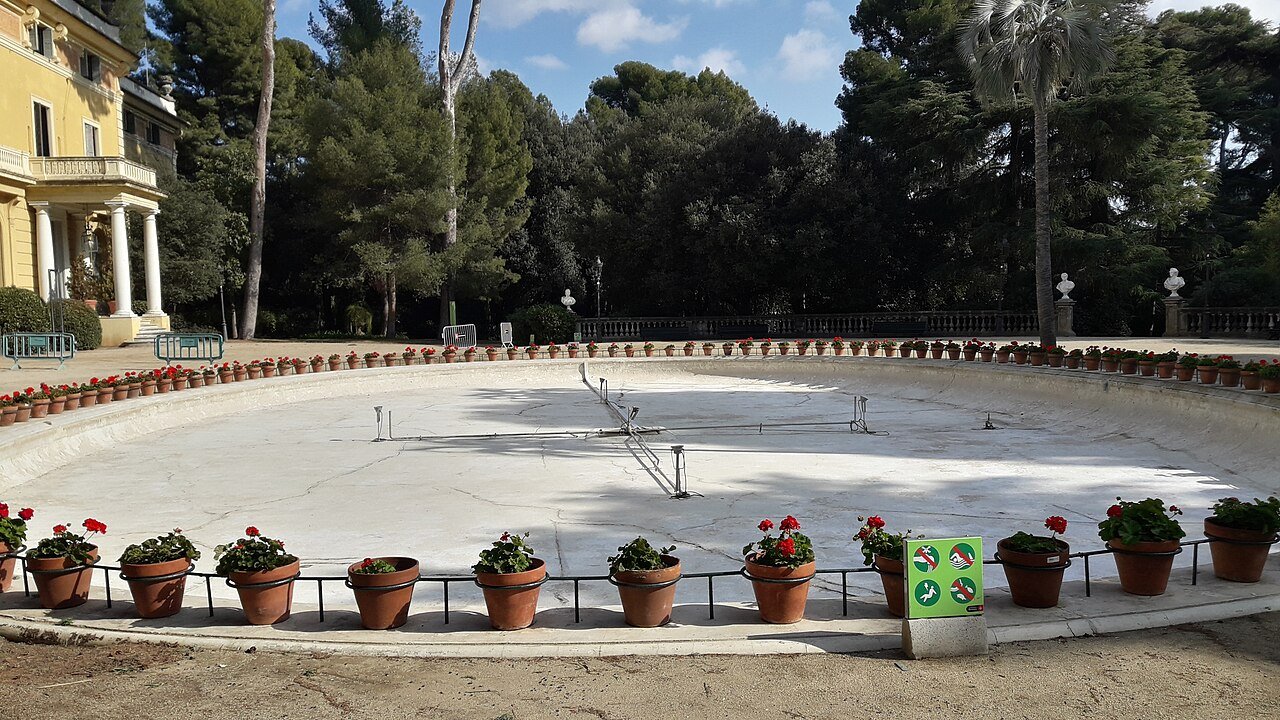
At the top of the Diagonal, behind tall gates, stand the gardens of the Palau de Pedralbes — the palace built between 1919 and 1929 as the Barcelona residence of the Spanish royal family, on land donated by the Güell family. The palace itself now houses the secretariat of the Union for the Mediterranean and is not generally open, but its gardens are free to enter, and they are among the most serene in the city.
Cedar avenues, a bamboo grove, formal parterres and shady ponds fill the grounds, and the gardens hide two early works by Gaudí, left over from the years when this was Eusebi Güell’s estate: the Font d’Hèrcules, a fountain of 1884 crowned by a bust of Hercules, and a parabolic pergola smothered in climbers. Most visitors walk past both without realising what they are looking at. Ten minutes’ walk uphill stands the Monestir de Pedralbes, a 14th-century royal monastery, and the pairing — palace garden in the morning, cloister after — is one of the most civilised half-days in Barcelona.
9. Jardins de Joan Maragall
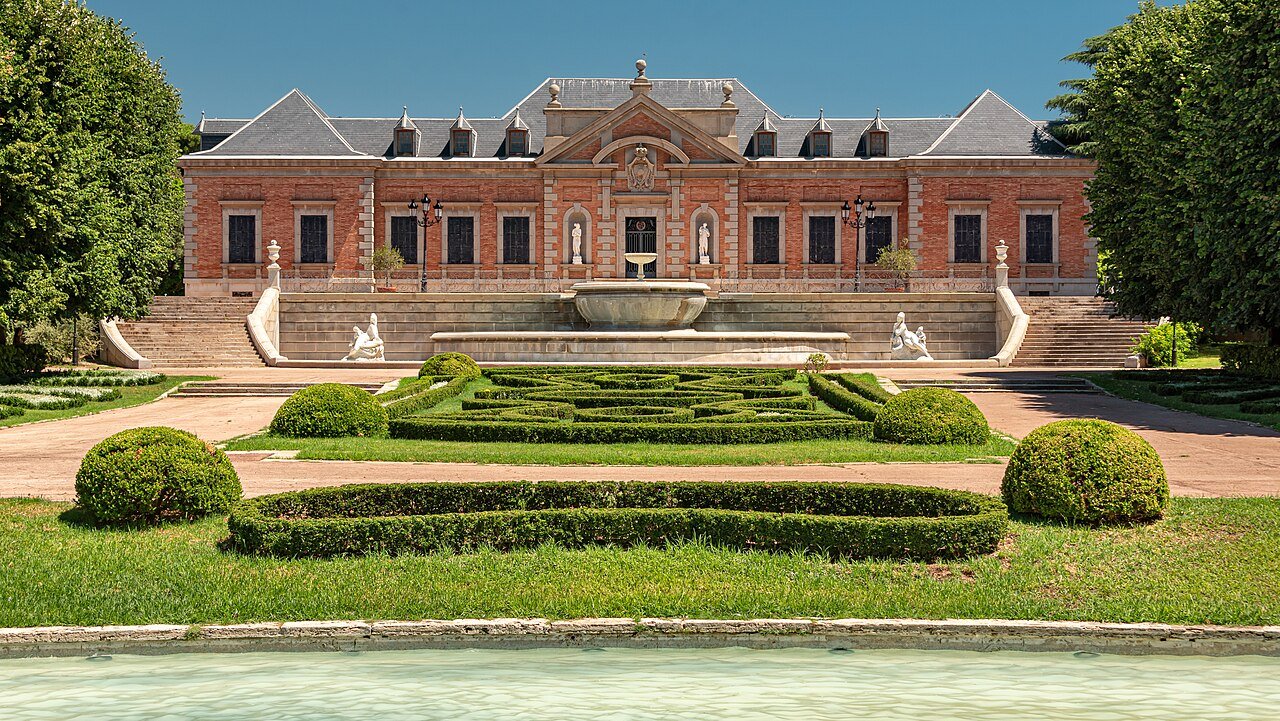
The third of Montjuïc’s poet gardens is the hardest to see, and for many visitors the most beautiful. The Jardins de Joan Maragall wrap around the Palauet Albéniz, built in 1929 as the royal residence for the International Exposition and still the Spanish royal family’s official home when they are in Barcelona. Forestier laid the gardens out in the formal French manner: broad lawns, clipped hedges, gravel walks, ornamental ponds and a scatter of sculptures.
Because the palace is a working royal residence, the gardens keep restricted hours — at the time of writing they open on Saturdays, Sundays and public holidays only, from 10:00 to 15:00, and admission is free. Hours can change around official events, so check the council’s page before you build a morning around them. Those limits are exactly why the gardens stay immaculate and near-empty: arrive at ten on a Sunday and you will likely have Forestier’s lawns almost to yourself, with the city spread out below the balustrade.
10. Parc de Cervantes

At the very top of Avinguda Diagonal, where the city hands over to the motorway and the university, the Parc de Cervantes does one thing and does it at full volume: roses. The park opened in 1965 to a design by Lluís Riudor, then the city’s director of parks, and its Roserar — the rose garden — holds more than 10,000 bushes across some 2,000 varieties, planted in ordered beds under a light canopy of trees.
Come between May and July, when the garden can carry up to 150,000 blooms at once, and the scent reaches you before the colour does. A dedicated Jardí dels Perfums gathers 235 of the most fragrant varieties for visitors who navigate by nose, visually impaired garden-lovers included. Every May the park hosts the International New Roses Competition, running since 2001, where breeders from around the world enter unreleased varieties to be judged in these beds. Entry is free year-round, but timing is everything: in rose season this is a first-rank sight, and out of it, a pleasant neighbourhood park with excellent shade.
11. Parc de la Creueta del Coll

A park built inside a worked-out granite quarry sounds like a compromise; at Creueta del Coll it is the whole point. When the El Coll quarry closed, the design team of Martorell, Bohigas and Mackay turned the pit into a park, opened in 1987, keeping the raw rock walls as the backdrop and flooding the floor with a lake.
Over that lake hangs one of the great pieces of public art in Spain: Eduardo Chillida’s Elogi de l’aigua (In Praise of Water), a concrete claw of more than fifty tonnes suspended from four steel cables anchored in the quarry walls, close enough to the water to meet its own reflection. It famously slipped from its cables in 1998, was recovered with barely a scratch, and rehung — a story every local will tell you. Ellsworth Kelly’s stark Tòtem stands near the entrance. In summer the shallow lake — barely 60 cm deep — becomes one of the city’s most distinctive bathing spots, lifeguards and all, while out of season it returns to being a quiet reflecting pool in a stone amphitheatre. Entry is free.
12. Parc de l’Espanya Industrial
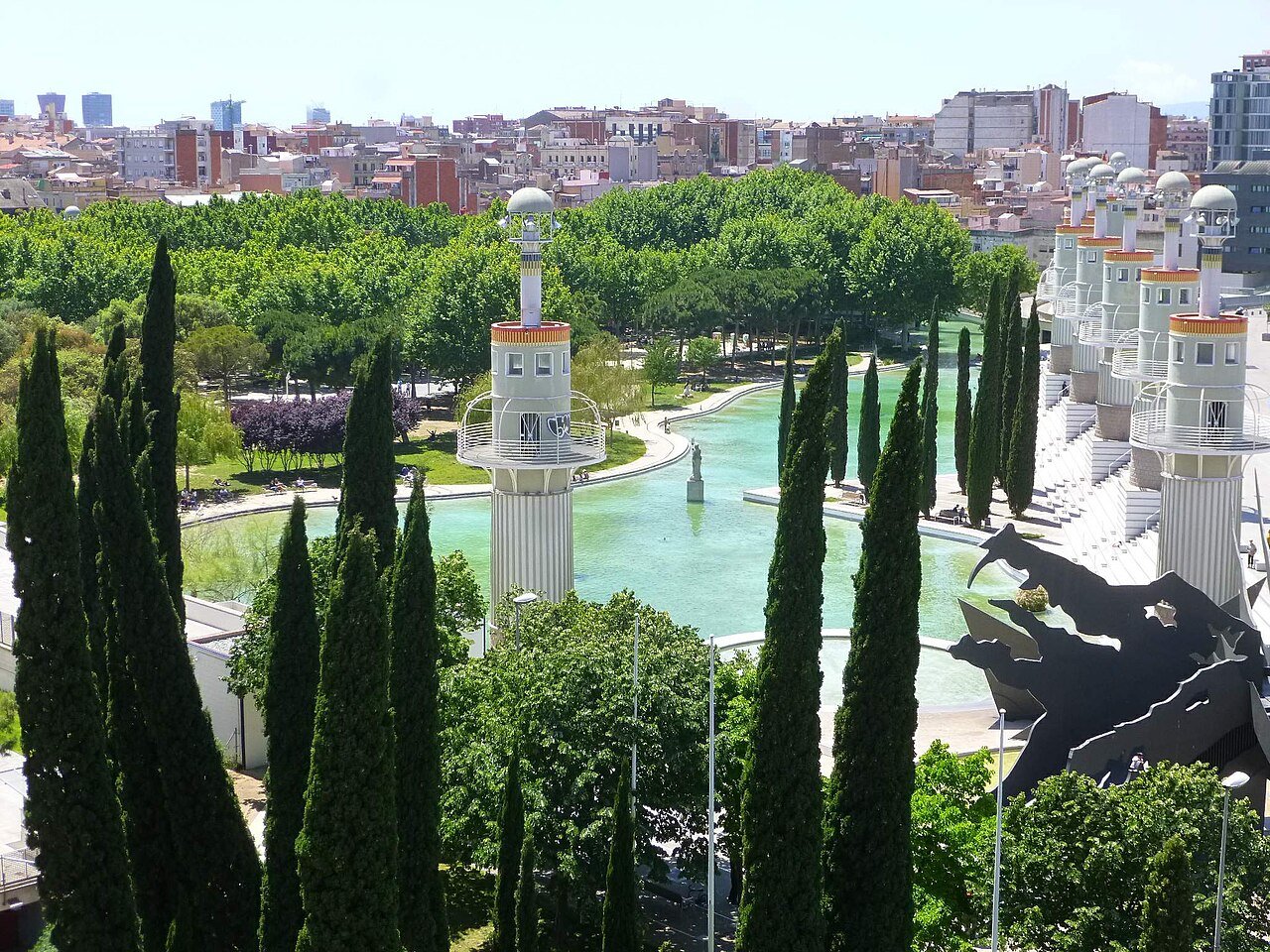
Sants keeps its park on the footprint of a factory. The Espanya Industrial was one of the great 19th-century textile mills; when it closed, the site became a park in 1985, its name kept as a memorial, and its lake laid out where the factory yards stood. Grass terraces step down to the water, a promenade runs along the shore, and a line of watchtowers with viewing platforms — part lighthouse, part folly — stands guard over the lake.
Families come for the Drac, Andrés Nagel’s enormous dragon of 1987, part sculpture and part climbing frame, which slides children down into the play area at the park’s edge. Office workers from Sants station eat lunch on the terraces; herons occasionally fish the lake; and on match days the whole place fills with locals taking the long way to nowhere in particular. It will not detain a sightseer for hours, but as a place to sit by water in a working neighbourhood, ten minutes from the main station, it has no rival. Entry is free.
13. Parc Diagonal Mar

The newest large park in the city stands at the sea end of the Diagonal, built for the 2004 Forum on former industrial land to designs by Enric Miralles and Benedetta Tagliabue. Where every other park on this list looks backwards — to expositions, estates and royal gardens — Diagonal Mar looks like the 21st century: giant tubular pergolas swoop over the paths like frozen calligraphy, planters hang in the air, and a lake spreads out between dunes and bridges.
At about 14 hectares it is one of the largest parks in Barcelona, and the least finished-feeling — deliberately open, sculptural and strange, a landscape designed as much to be photographed as planted. It works best combined with the sea: the park runs down towards the Fòrum bathing zone and the northern beaches, and our Barcelona beaches guide covers the swimming options at this end of the coast. Bring water and a hat in summer; the young trees still give less shade than the pergolas promise.
14. Jardins de la Tamarita
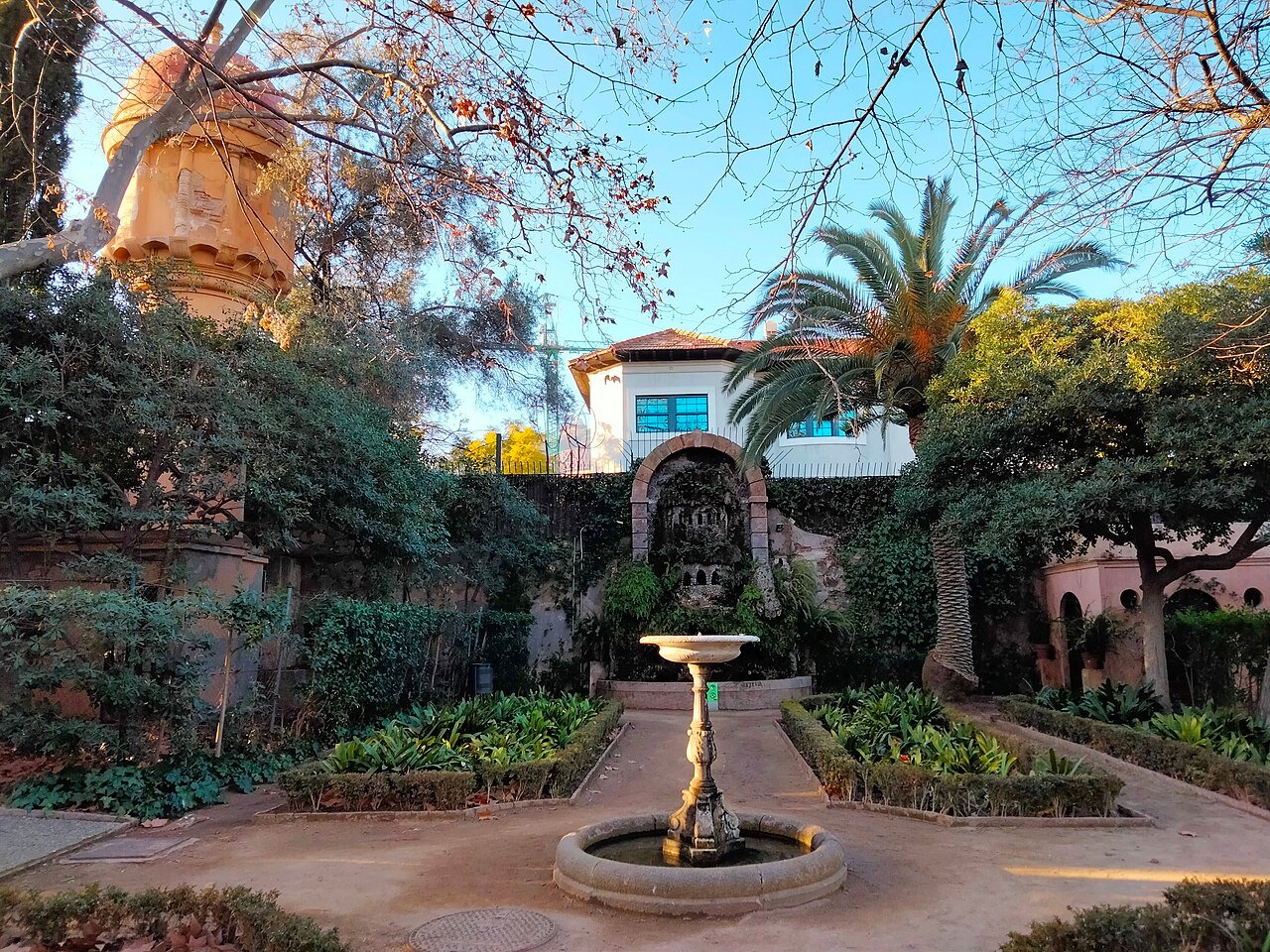
In the wealthy streets of Sarrià–Sant Gervasi, a gate in a wall opens on the garden of an early-20th-century cotton merchant’s estate — the Tamarita, built around the modernista Casa Craywinckel for the Mata family and laid out in the formal manner of the period. Of all the gardens on this list, it is the one where you are most likely to be alone.
The lower garden keeps the estate grammar: terraces, a small pond, statuary and gravel walks under mature trees. Above it, the planting loosens into something closer to a private woodland, with paths climbing through old oaks and pines to quiet clearings. It is small — an hour is generous — and it has no café, no famous architect’s signature and no queue, which is precisely its charm. If you are staying in the upper part of the city or visiting the Pedralbes gardens nearby, the Tamarita is the restful coda. Entry is free.
15. Jardins de la Universitat de Barcelona

The most central garden on this list is one almost no visitor enters. Behind the grand façade of the University of Barcelona’s Historic Building on the Gran Via — Elies Rogent’s 19th-century pile, raised from the 1860s — lie the university’s gardens: two cloistered courtyards, the Pati de Lletres and the Pati de Ciències, planted with orange trees, palms and magnolias, and a small botanical collection maintained around them.
Students read on the cloister benches, lectures murmur behind tall windows, and the traffic of the Eixample drops to a hum. The gardens are open free of charge whenever the university is open — weekday teaching hours, roughly — and nobody checks anything at the door; you simply walk in like a student and take a seat. As a green pause between the Plaça de Catalunya crowds and the Eixample’s Modernista blocks, it is unmatched. Combine it with the nearby arcades and cafés of the university quarter for the most local-feeling break in the city centre.
Practical Information
Location: The fifteen gardens spread across four clusters — Montjuïc (Botànic, Costa i Llobera, Laribal, Cinto Verdaguer, Joan Maragall), the centre (Ciutadella, University), the north-west (Park Güell, Laberint, Creueta del Coll, Cervantes, Pedralbes, Tamarita) and the ends of the Diagonal (Espanya Industrial in Sants; Diagonal Mar at the Fòrum).
Entry: Free for eleven of the fifteen; ticketed: Park Güell monumental zone, Laberint d’Horta (€2.23) and the Jardí Botànic (around €5).
Restricted hours: Joan Maragall opens weekends and public holidays only, 10:00–15:00 — plan around it.
Best light: Early morning for the Montjuïc gardens and Park Güell; the cactus garden is at its photographic best in late afternoon.
Tickets and Costs
Barcelona’s parks are a cheap date: almost everything on this list costs nothing at all.
- Park Güell monumental zone: official timed tickets cost €18 (€13.50 for children 7–12 and seniors; under-7s enter free with a ticket) — the park’s free zone costs nothing. The GetYourGuide admission ticket is a reseller option priced higher (listed from $24) with a mobile voucher; it is non-refundable, but it earns its keep when official slots for your dates have sold out.
- Parc del Laberint d’Horta: €2.23 standard, €1.42 reduced — and free every Wednesday and Sunday.
- Jardí Botànic de Barcelona: around €5 (check the current tariff), free on the first Sunday of the month and on Sunday afternoons.
- Gaudí House Museum (inside Park Güell): separate ticket, around €5.50.
- Everything else: free — including the Pedralbes, Joan Maragall and University gardens.
Getting There
For Park Güell: metro L3 to Lesseps or Vallcarca, then a 10–15 minute uphill walk; bus H6 or D40 to Travessera de Dalt.
For Ciutadella: metro L1 to Arc de Triomf or L4 to Ciutadella–Vila Olímpica.
For the Montjuïc gardens: metro L1/L3 to Espanya, then walk up through the exposition grounds; the funicular from Paral·lel (L2/L3) lands you near the Joan Maragall gardens and the castle road.
For Laberint d’Horta: metro L3 to Mundet — the garden gate is a few minutes from the station.
For Pedralbes, Cervantes and Tamarita: metro L3 to Palau Reial or Zona Universitària for the palace gardens and the rose garden; the FGC L7 to Avinguda Tibidabo suits the Tamarita.
For Creueta del Coll: metro L3 to Penitents, then a short uphill walk.
For Espanya Industrial and Diagonal Mar: L3/L5 to Sants Estació; L4 to El Maresme–Fòrum respectively.
For the University gardens: metro L1/L2 to Universitat.
When to Go
Spring is the great season twice over: March and April bring the bulb displays at Cinto Verdaguer, while May to July is rose season at Cervantes and the fullest flowering at the Jardí Botànic. Summer argues for early starts — the Montjuïc gardens by ten, Park Güell at opening — and for the Creueta del Coll lake, which only fills for bathing in the warm months. Autumn is the connoisseur’s season: warm light, thinning crowds, the Laberint at its greenest after rain. In winter, aim for the cactus garden on a clear morning — its sheltered slope genuinely runs a few degrees warmer than the city — and remember that Joan Maragall’s weekend-only hours matter most when daylight is short.
How Long You Need
- Park Güell: 2–3 hours including the free zone
- Ciutadella: 1–2 hours, plus the zoo if you add it
- Laberint d’Horta: 1.5–2 hours
- A Montjuïc gardens walk (Botànic + Costa i Llobera + Verdaguer + Laribal): half a day, easily
- Cervantes or Pedralbes: 1–1.5 hours each
- Creueta del Coll, Espanya Industrial, Diagonal Mar, Tamarita, University gardens: 45 minutes to 1 hour each
Most visitors pair two or three gardens with nearby sights rather than dedicating a day to parks alone — Montjuïc and Pedralbes are the natural clusters.
Tips for Visiting Barcelona’s Parks
- Book Park Güell before you book anything else. Its timed slots are the only hard deadline in this list, and in high season they go days ahead.
- Build Montjuïc as one walk. Fountain, Laribal, Verdaguer, Costa i Llobera, Botànic and the castle stack into a single ascending route — trying to visit them on separate days wastes the hill.
- Use the free days. Laberint is free on Wednesdays and Sundays; the Jardí Botànic on the first Sunday of the month and Sunday afternoons. On a budget week, the whole list can cost €0.
- Check Joan Maragall before a special trip. Royal events can close the gardens without much notice; the council page carries the current calendar.
- Carry water in summer. Several gardens — Costa i Llobera and Diagonal Mar especially — are exposed, shadeless and further from a café than they look on the map.
- Mind the maze. Laberint caps entry at 750 visitors to protect the hedges; on free Sundays in spring, go at opening time.
FAQs
What is the most beautiful park in Barcelona?
For architecture, Park Güell; for romance, the Laberint d’Horta; for planting, the Jardí Botànic or the Cervantes rose garden in season. Ciutadella is the one Barcelonans themselves would miss most.
Are Barcelona’s parks and gardens free to enter?
Almost all of them. The exceptions are Park Güell’s monumental zone (the rest of the park is free), the Laberint d’Horta at €2.23 — free on Wednesdays and Sundays — and the Jardí Botànic at around €5.
Which Barcelona park is best for children?
Ciutadella, for the rowing boats, playgrounds and the zoo. In summer, the shallow bathing lake at Creueta del Coll is a close second, and the dragon slide at Espanya Industrial delights younger children.
How long does Park Güell take, and do I need to book?
Allow two to three hours. The monumental zone uses timed entry and does sell out, so booking ahead is strongly recommended; the surrounding park is free and open without a ticket.
Which gardens should I visit in spring?
Cervantes for the roses from May, Cinto Verdaguer for the bulb displays in March and April, and the Jardí Botànic as its five regions flower in sequence. The Laberint is at its best after spring rain.
Can you picnic in Barcelona’s parks?
Yes — lawns in Ciutadella, Cervantes, Espanya Industrial and most other parks here are made for it. Keep to the grass rather than the planted beds, and take everything away with you; the Jardí Botànic asks visitors to use the picnic area outside its gates.
Travel insurance, sorted
Whether it is a two-week holiday or a longer move, travel insurance is not the most glamorous part of a trip — but it is the one booking you want to have in place before a trip, and while you are already away. Get a quote from SafetyWing
Final Thoughts
Barcelona’s gardens tell the city’s story as honestly as its museums do: an exposition park raised on a hated fortress, a Gaudí estate that failed as business and triumphed as art, a royal garden that still keeps royal hours, and a cactus desert thriving above the port. Most of them are free, most are quiet, and several are better than the paid attractions visitors queue for instead. Pick one cluster — Montjuïc for variety, Pedralbes for calm, the north for the maze — and give it a morning. The city will look different afterwards: greener, older, and considerably cleverer about what a park can be.

Park Güell: The Complete Visitors’ Guide
Photos: Wikimedia Commons — El Drac, Park Güell by Isiwal; Cascada, Ciutadella by Isiwal; Laberint maze by Bxalber; Jardí Botànic by Felix König; Costa i Llobera by Creichmann; Laribal by Txllxt TxllxT; Cinto Verdaguer by Jorge Franganillo; Palau de Pedralbes by Pere López Brosa; Palauet Albéniz by Jorge Franganillo; Cervantes roses by Jordiferrer; Creueta del Coll by Jordiferrer; Espanya Industrial by Zarateman; Diagonal Mar by Zarateman; Tamarita by Enric; University gardens by jordi domènech