Why Visit Seville? 15 Reasons This City Belongs on Your Spain Trip
Ask travellers to name Spain’s great cities and Seville is rarely the first word — Barcelona and Madrid get there first. Ask which Spanish city they dream about afterwards, and the answer changes. Seville is the place people add for two days and talk about for two years: a royal palace still used by kings, the largest Gothic cathedral on earth, a square film directors keep borrowing, and a street life — tapas at midnight, orange blossom in March, dancing in April — no other Spanish city matches.
This guide is the case for Seville: fifteen reasons, each one something you can stand in front of, taste or climb on a first visit. None needs a car, most are free, and the three that need tickets can be bundled into one morning — the Seville: Alcázar, Cathedral & Giralda Skip-the-Line Tour covers all three monuments in about three hours with skip-the-line entry included. Everything after that is wandering, eating and sitting in squares — which is, honestly, the point of Seville.
The Short Version
The fifteen, in the order most visitors fall for them:
- Plaza de España — the most beautiful square in Spain, and it is free
- The Royal Alcázar — a Mudéjar palace still used by Spain’s royal family
- The Cathedral and the Giralda — the world’s largest Gothic cathedral, climbed by ramps
- Santa Cruz — the old Jewish quarter, a labyrinth built for wandering
- Triana — potters, sailors and flamenco across the river
- María Luisa Park — a royal garden the size of a small town
- Las Setas — proof the old city is still inventing itself
- The tapas crawl — dinner as a walking tour, the Sevillian way
- Flamenco — born in these streets, and still raw here
- Feria de Abril — the week the whole city dances
- Semana Santa — the most intense week in the Spanish calendar
- Orange blossom — 40,000 orange trees, and a city that smells of them
- Three thousand years of layers — Roman, Islamic and Golden Age Seville in one walk
- Your money goes further — grand-city pleasures at neighbourhood prices
- A film set and a hub — Naboo, Dorne and half of Andalusia within a train ride
Table of Contents
- The Short Version
- Plaza de España: The Most Beautiful Square in Spain
- The Royal Alcázar: A Palace Still Fit for Kings
- The Cathedral and the Giralda: Scale You Can Climb
- Santa Cruz: The Quarter That Slows You Down
- Triana: The City Across the River
- María Luisa Park: Seville’s Green Drawing Room
- Las Setas: The Old City Is Still Inventing Itself
- Tapas: Dinner as a Walking Tour
- Flamenco: Born Here, Still Raw Here
- Feria de Abril: The Week Seville Dances
- Semana Santa: A City Holding Its Breath
- Orange Blossom and the Light
- Three Thousand Years in One Walk
- Your Money Goes Further Here
- A Film Set You Can Live In — and a Hub for Andalusia
- Practical Info
- Tickets and Costs
- Getting There
- When to Go
- How Long You Need
- Tips for Visiting Seville
- FAQs
- Final Thoughts
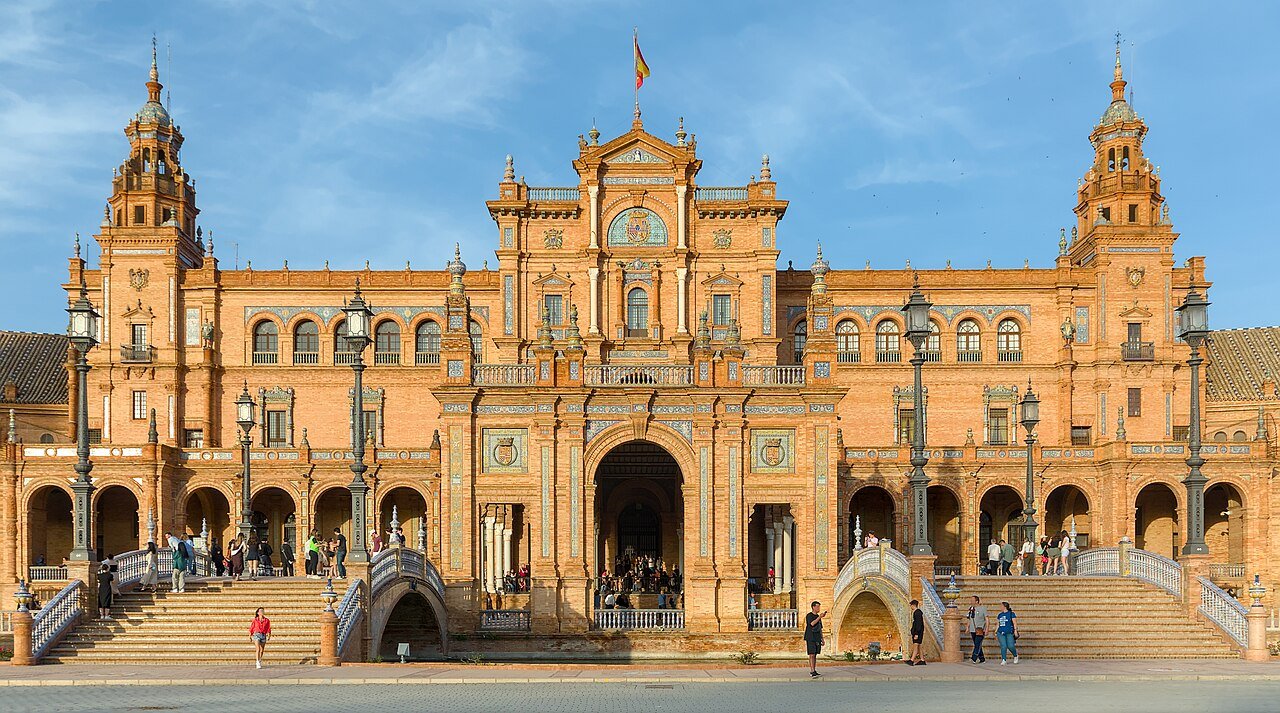
Plaza de España: The Most Beautiful Square in Spain
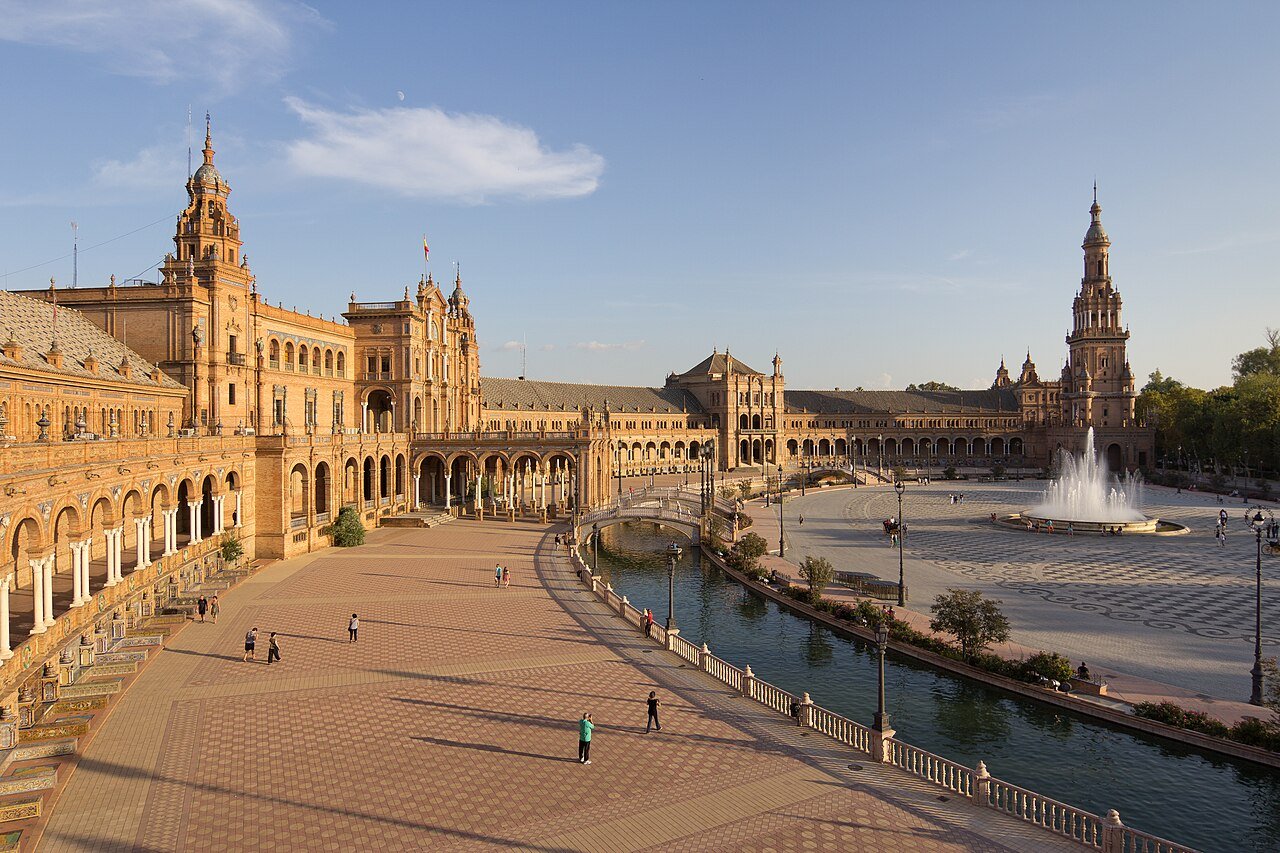
Start where Seville makes its first impression. The Plaza de España is a vast semicircle of brick, marble and painted tile built by Aníbal González for the Ibero-American Exposition of 1929 — a canal crossed by tiled bridges, two towers, and a continuous bench-and-alcove running round the curve, one for each province of Spain, each a small tiled painting of a city. It should feel like a monument. Instead, because students picnic on the steps and couples row boats on the canal, it feels like the city’s front garden.
It is also the most generous sight in Spain: no ticket, no queue, and a scale photographs cannot prepare you for. George Lucas filmed Anakin and Padmé’s arrival on Naboo here; David Lean had already used it as British Cairo in Lawrence of Arabia. Come before 10am, when the colonnade is nearly empty, and you will understand why this square alone justifies the trip south.
The Royal Alcázar: A Palace Still Fit for Kings
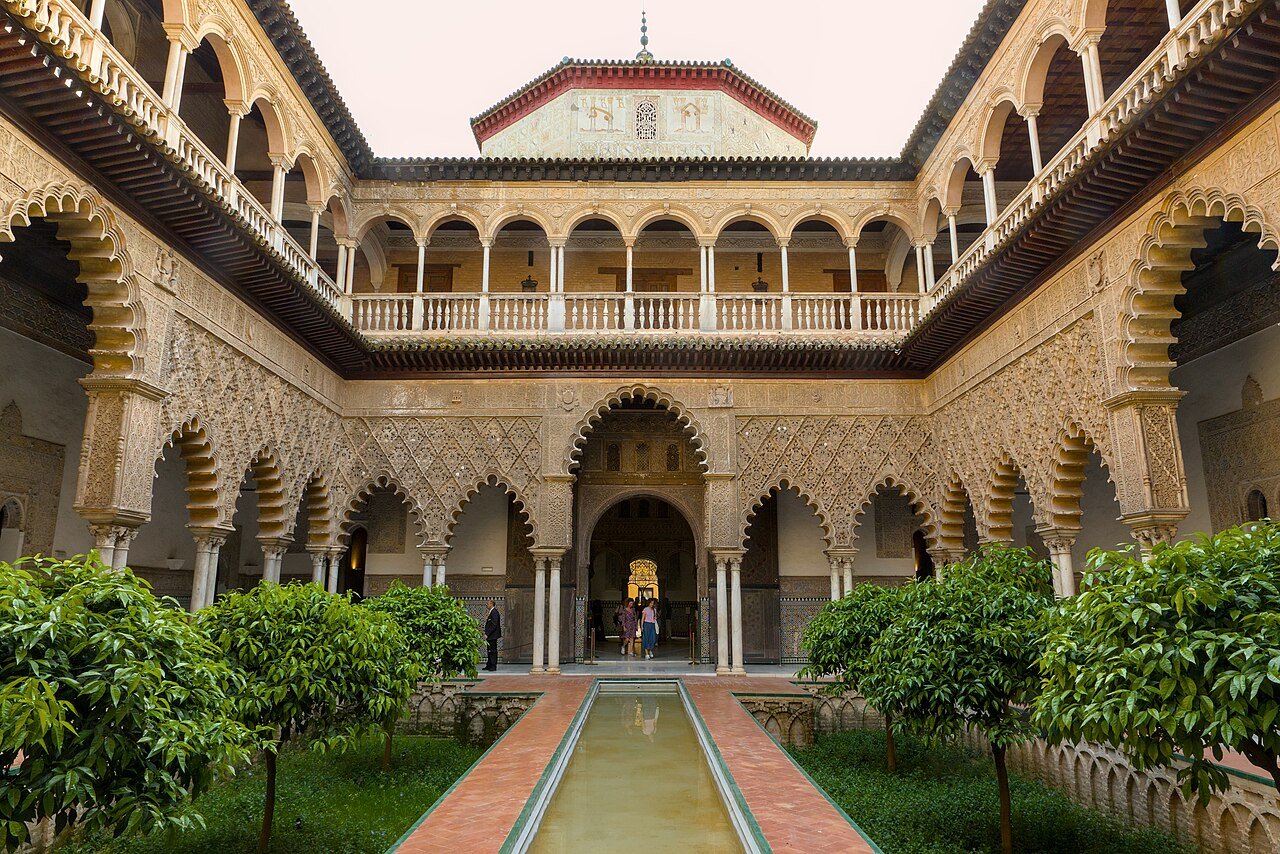
Behind a plain red wall sits the oldest royal palace in Europe still in regular use — when Spain’s royal family are in Seville, they stay in the upper apartments of the Real Alcázar. What you visit below them is the finest Mudéjar palace anywhere: the Patio de las Doncellas, where carved plaster and tile rise around a sunken garden; the Salón de Embajadores, crowned by a gilded dome; and gardens that keep unfolding — peacocks, orange groves, and Mercury’s Pool, which Game of Thrones viewers know as the Water Gardens of Dorne.
The Alcázar, the Cathedral and the Archivo de Indias were inscribed together as a UNESCO World Heritage Site in 1987, and of the three, the palace is the one that sells out. General admission is €15.50, tickets are nominative and timed, and booking days ahead is the single most useful thing you can do before arriving — our guide covers the rooms, gardens and booking in detail. Give it two hours at minimum.
The Cathedral and the Giralda: Scale You Can Climb
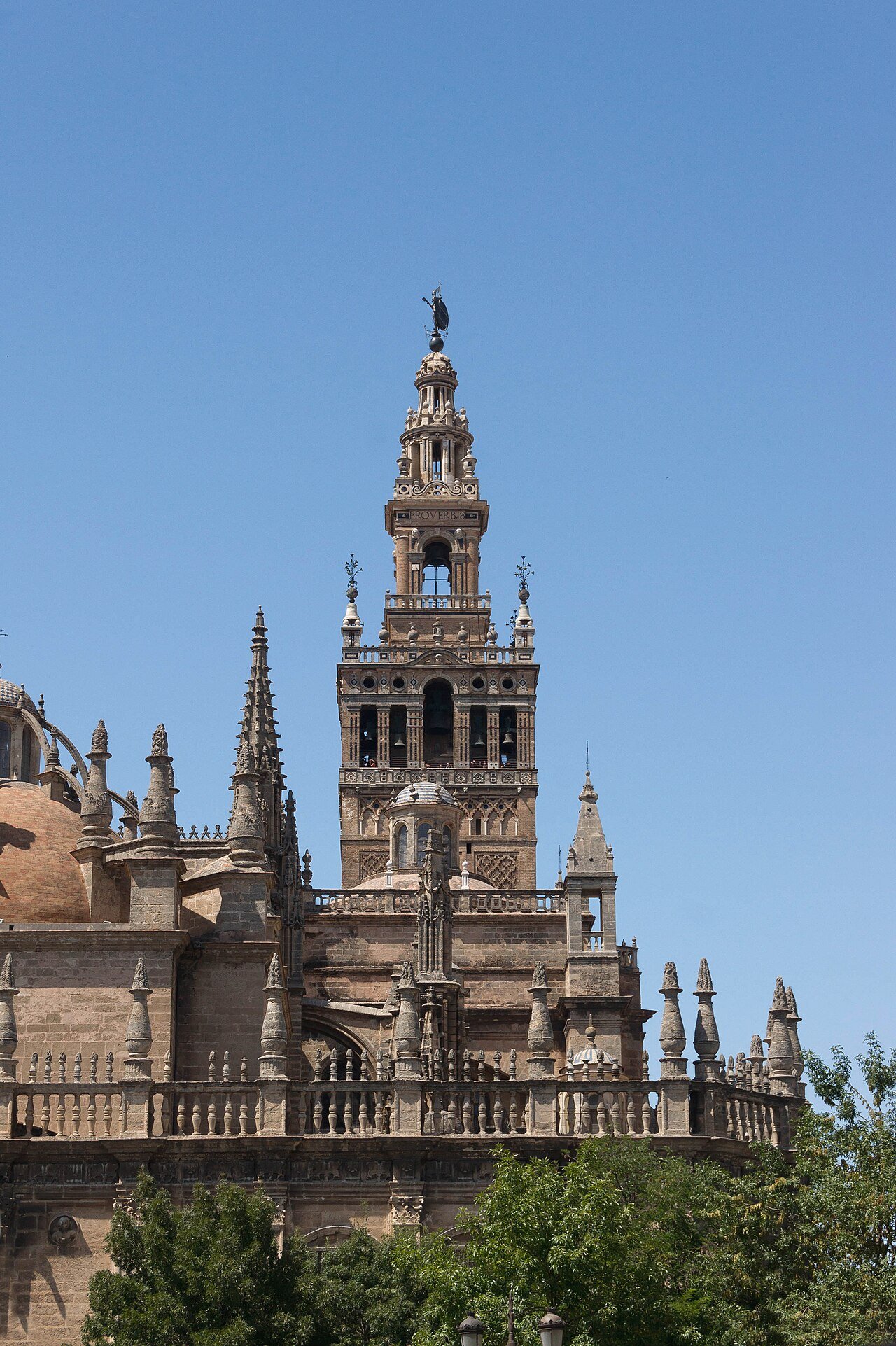
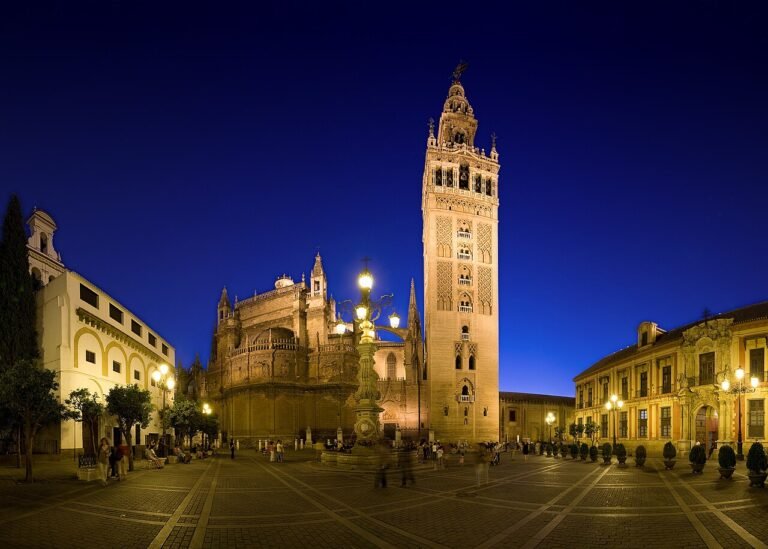
A short walk from the palace, Seville Cathedral makes a staggering claim: it is the largest Gothic cathedral in the world, raised in the fifteenth century on the footprint of the city’s great Almohad mosque — whose courtyard survives as the Patio de los Naranjos and whose minaret survives as the Giralda, Seville’s bell tower since 1198. Inside, the scale is the experience: five naves, the tomb of Christopher Columbus carried by four heralds, and a gilded main altarpiece that took most of a century to complete.
Then climb. The Giralda has no stairs — the muezzin once rode up its 35 broad ramps on horseback, and you walk the same ramps to a bell chamber 104 metres up. Our guide covers tickets and what to look for inside. Or have the logistics handled: the Seville: Alcázar, Cathedral & Giralda Skip-the-Line Tour pairs this with the Alcázar in one guided morning, entry to both included.
Santa Cruz: The Quarter That Slows You Down
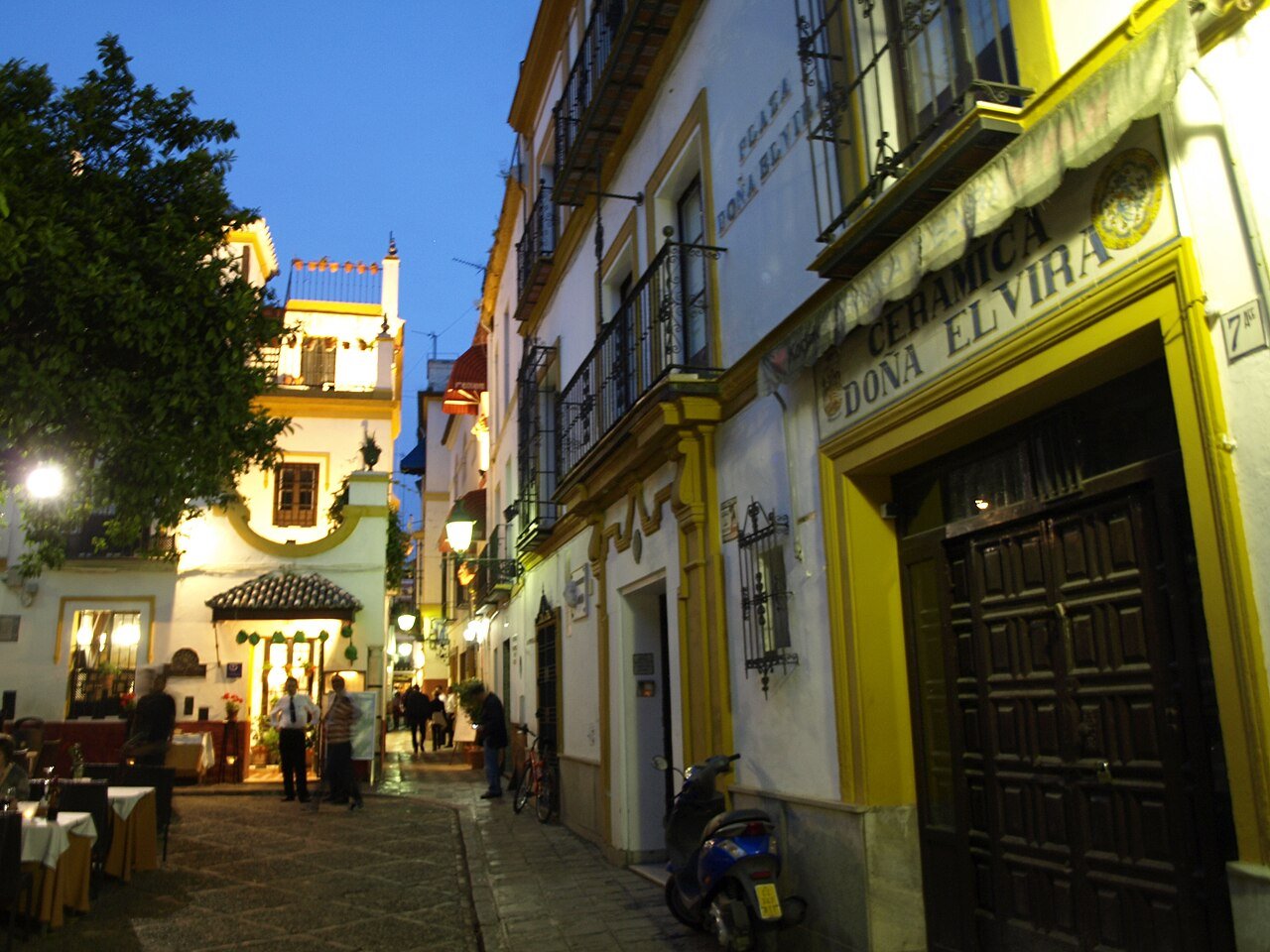
Every great city has a quarter that explains its temperament, and Seville’s is Santa Cruz. The old Jewish quarter is a deliberate labyrinth — lanes too narrow for carts, laid out, so the story goes, to baffle invaders and funnel what breeze there is through shaded passages. White walls, iron grilles, geraniums, sudden tiny plazas with a fountain and three orange trees: the Plaza de Doña Elvira, the Callejón del Agua along the Alcázar wall, the Hospital de los Venerables.
There is almost nothing to do in Santa Cruz, and that is its function. You go after the monuments, in the late afternoon, and walk without a destination — a coffee, a small church, a patio glimpsed through a gate. It is the part of the city that converts sightseeing into staying, and the reason so many visitors start searching property pages by their third evening.
Triana: The City Across the River
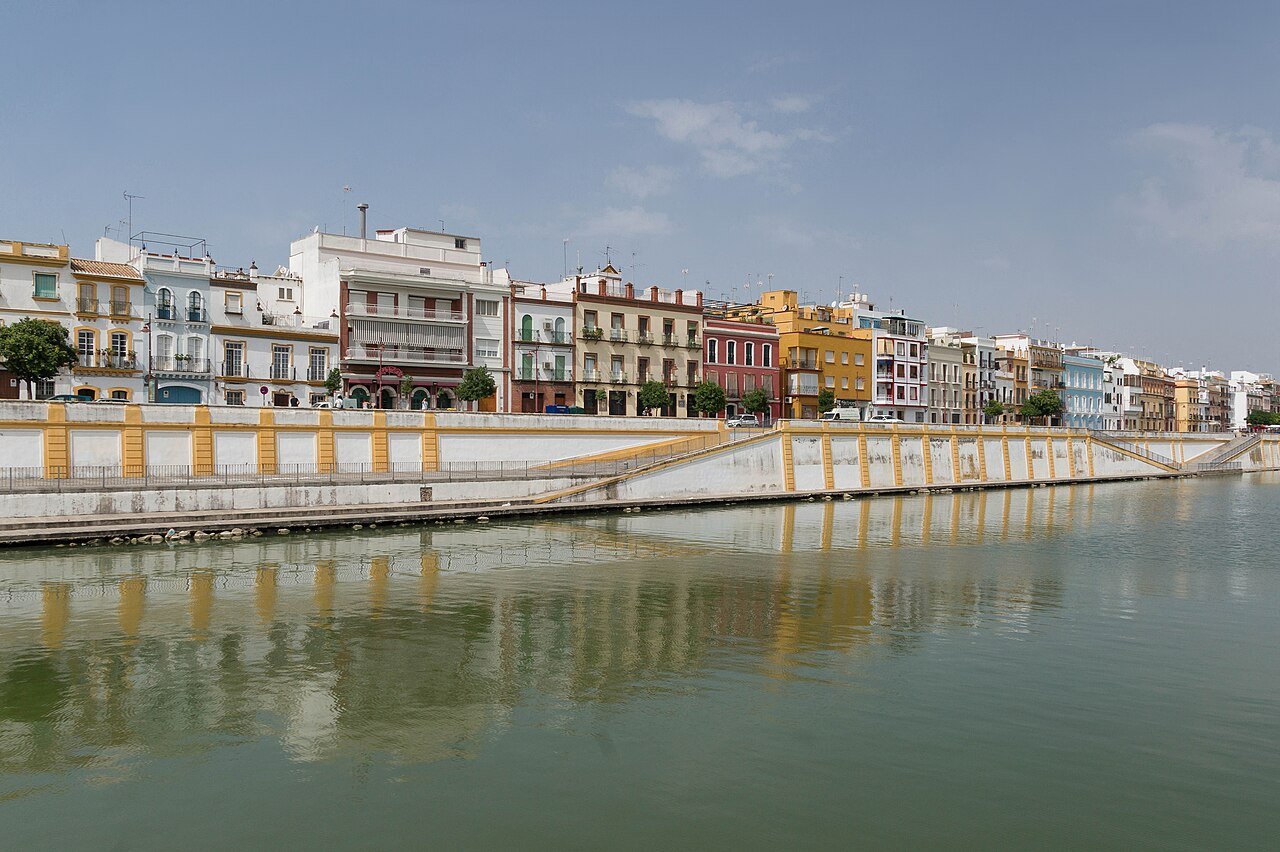
Seville has a second soul, and it lives over the bridge. Triana — reached by the iron Puente de Isabel II — was historically the quarter of potters, sailors and tile-makers, separate in spirit long after bridges joined it. Ceramics workshops lined Calle Alfarería for centuries; the tiled façade of the old Cerámica Santa Ana factory still glows on Calle San Jorge, and tile shops carry the trade on today.
Walk Calle Betis at river level in the evening, when the bars fill and the old town across the water turns gold, and you get the Seville Sevillanos claim as the real one — Triana has its own anthem, its own Virgin (the Esperanza de Triana), and a long habit of calling the bridge crossing “going to Seville”. Our guide maps the market, ceramics streets and riverfront in full. Come for an hour; the riverfront will keep you for the evening.
María Luisa Park: Seville’s Green Drawing Room
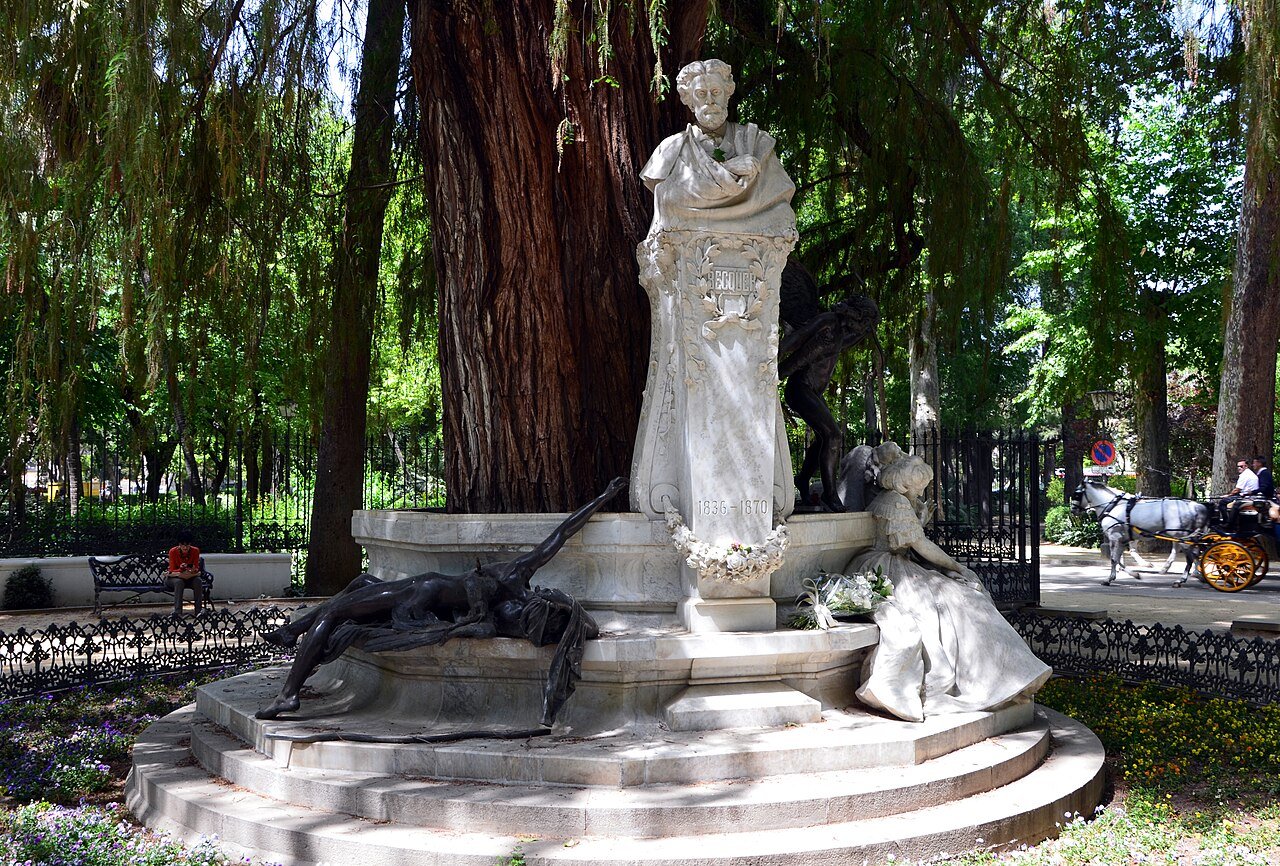
In 1893 the Infanta María Luisa Fernanda donated half the gardens of her San Telmo palace to the city, and Seville gained a park of some 34 hectares, later dressed for the 1929 exposition with tiled fountains and glorietas. This is not a lawn with trees: it is an outdoor museum of tilework and water — the Fuente de las Ranas, the park’s oldest fountain; the Glorieta de Bécquer, a marble love scene under a great cypress; avenues of palms and jacarandas; and at its southern end the Plaza de América, flanked by the Pabellón Mudéjar and the Royal Pavilion.
The park is the city’s pressure valve and its Sunday living room, connecting the two set pieces of 1929: enter from Plaza de España and stroll south, and the morning structures itself. Visitors inherit it free.
Las Setas: The Old City Is Still Inventing Itself
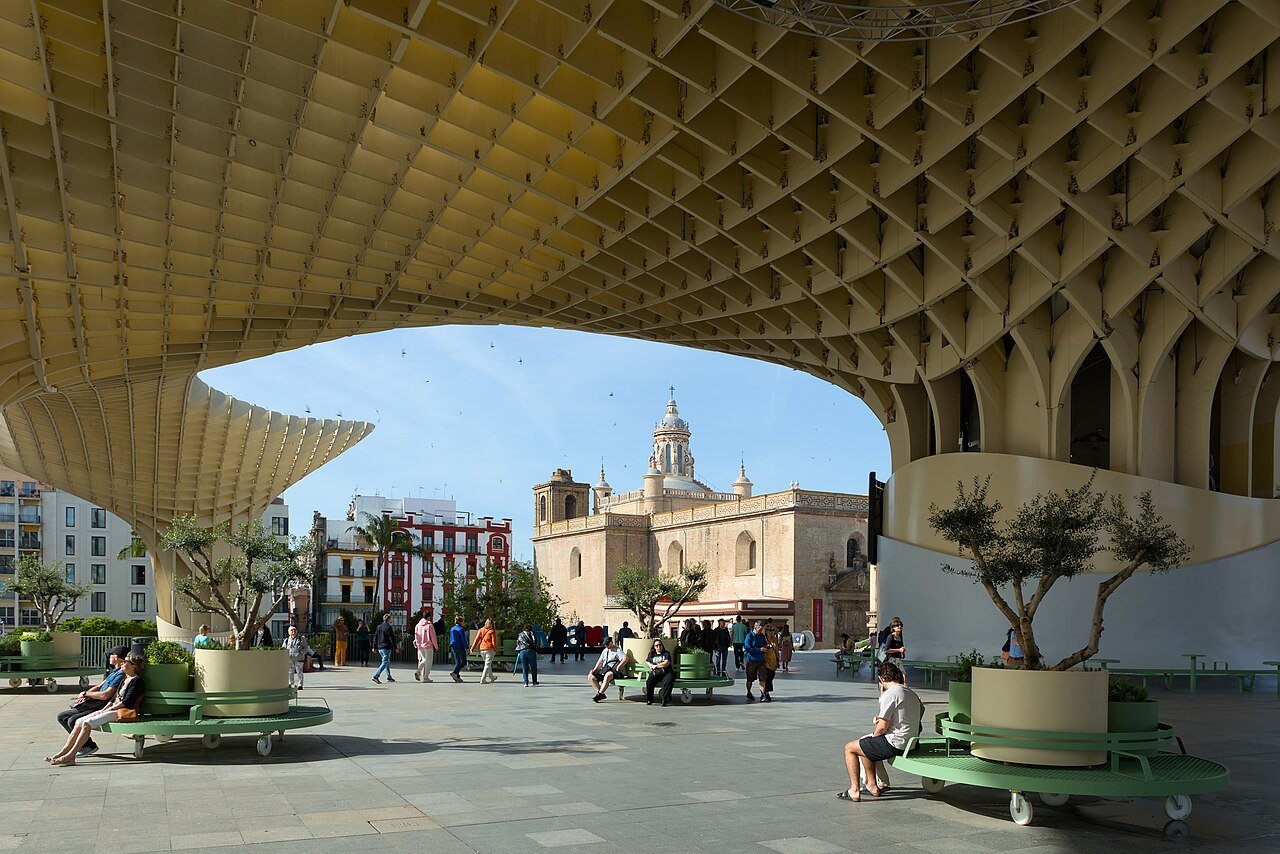
A city this proud of its past could easily pickle itself, and the great counter-argument stands in Plaza de la Encarnación. The Metropol Parasol — Las Setas, “the Mushrooms”, to everyone in Seville — is a vast latticed timber canopy, designed by Jürgen Mayer and completed in 2011, which claims a place among the largest wooden structures in the world. Underneath it, preserved in the Antiquarium, lie the Roman and Islamic streets the builders found in the ground; on top, a walkway snakes across the parasols with the city’s best sunset view of the Giralda.
Locals argued about Las Setas for years, which is precisely the point: Seville is a living city arguing about its future, not a theme park of its past. The market still trades at its feet, and the skyline from its walkway — cathedral, Giralda, a sea of rooftops — is the one the muezzin saw, plus this.
Tapas: Dinner as a Walking Tour

In Seville, dinner is not a reservation; it is a route. The tapeo — drifting from bar to bar, one tapa and one small beer standing at the counter in each — is the city’s true social institution, and the cooking is better than the format suggests: espinacas con garbanzos, spinach and chickpeas with roots in the city’s Islamic past; salmorejo, Córdoba’s gift that Seville adopted wholeheartedly; jamón ibérico cut to order; pescaíto frito, fried fish in paper; and vino de naranja, orange wine, in the old bars of Triana and the centre.
Seville even claims a hand in inventing the tapa itself: one much-told story credits a slice of ham laid over a glass of sherry — a tapa, a lid — to keep out the dust and flies. Hold the origin story loosely; hold the experience firmly. Our guide lists the dishes to order and where to order them. Budget a whole evening, one dish per bar, and let the route decide itself.
Flamenco: Born Here, Still Raw Here
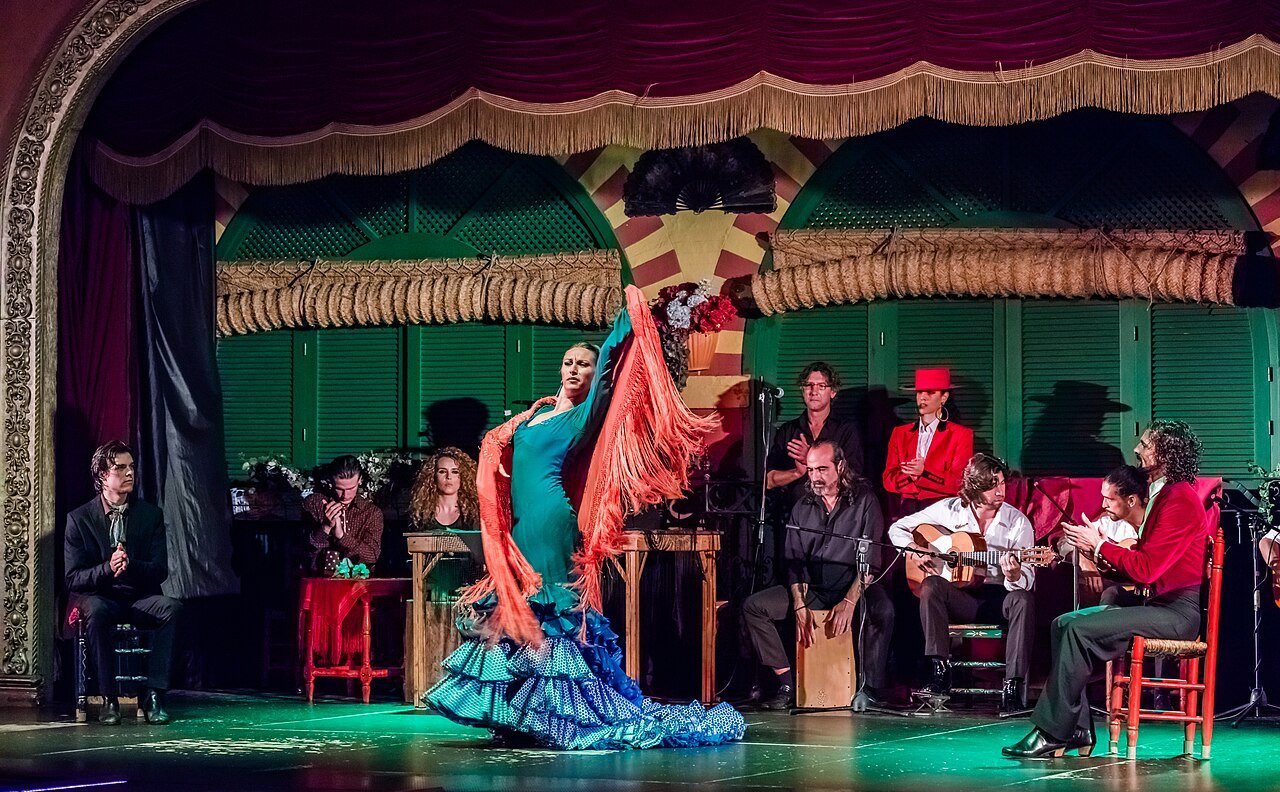
Flamenco grew up in Andalusia, and Seville — Triana and the old working-class barrios at its heart — is one of its birthplaces. UNESCO added it to its Intangible Cultural Heritage list in 2010, but in Seville it is not heritage behind glass: it is a dancer stamping a tablao stage, a singer in a peña where the audience are members and the silence is total, a family celebration where an aunt stands up and the room changes temperature.
You can watch it polished, and should — the Museo del Baile Flamenco, founded by the dancer Cristina Hoyos, pairs a museum with an intimate theatre show that is the best introduction in the city. But leave room for the rougher edges: a late drink in Triana or the Macarena when someone starts palmas and the evening reorganises itself. In most cities flamenco is an attraction you book. In Seville it is weather — it happens around you.
Feria de Abril: The Week Seville Dances
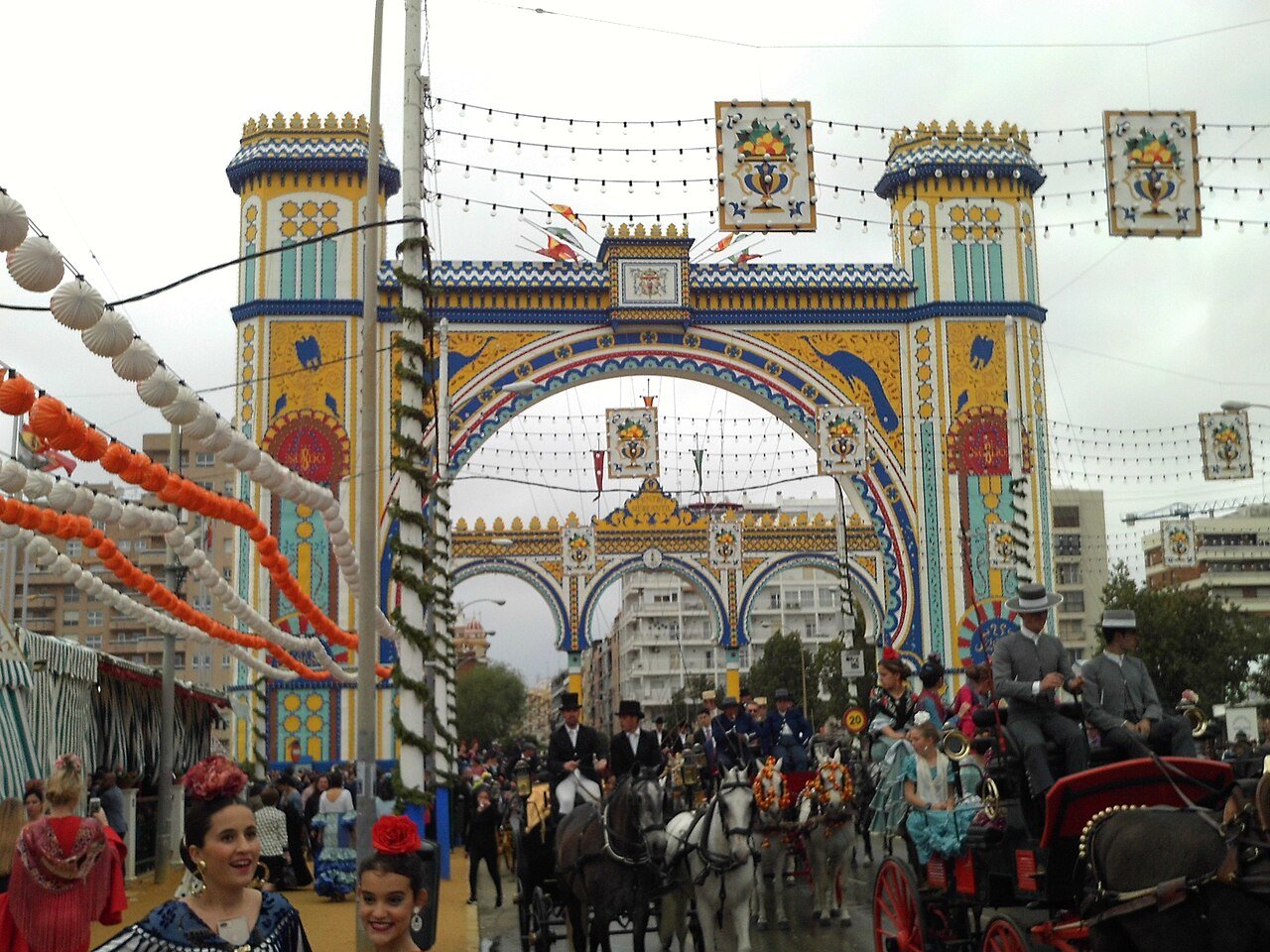
Two weeks after Easter, Seville performs the most joyful act of civic theatre in Spain. The Feria de Abril opens on a Monday night when the lights of a great illuminated gateway — the portada, redesigned every year — are switched on over the fairground in Los Remedios, and for six days the city decamps: around a thousand casetas, tented pavilions run by families, firms and brotherhoods, fill with fino, fried fish and dancing. The dance is the sevillanas, danced in pairs by everyone from grandmothers to toddlers, and the streets of the Real fill each lunchtime with horses and carriages.
What makes the Feria a reason to visit, rather than merely to watch, is how porous it is: the public casetas welcome anyone, the dancing is taught by osmosis, and the traje de flamenca — all ruffles and colour — turns a fairground into a ball. Our guide covers dates, etiquette and how visitors join in. Book accommodation months ahead; the city fills.
Semana Santa: A City Holding Its Breath
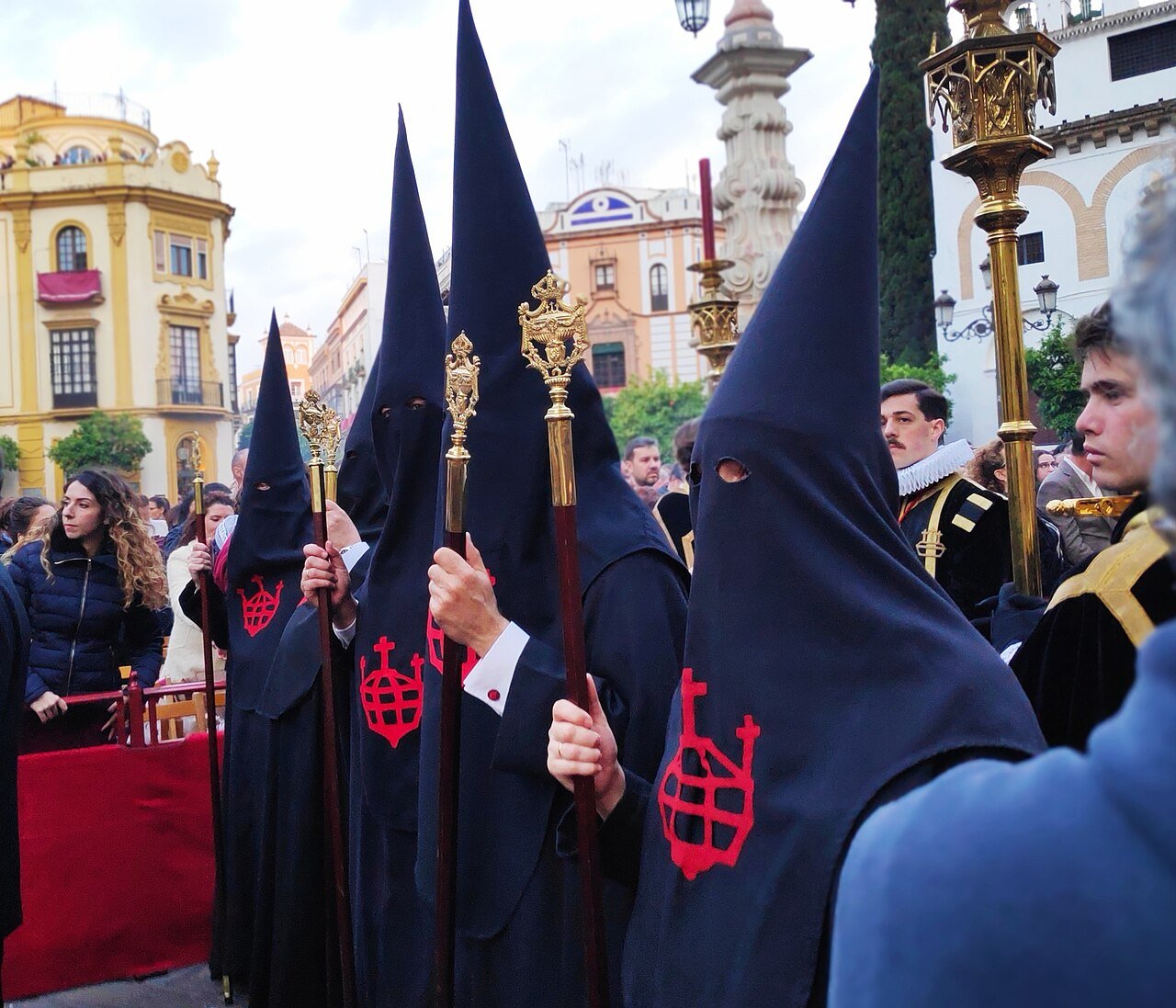
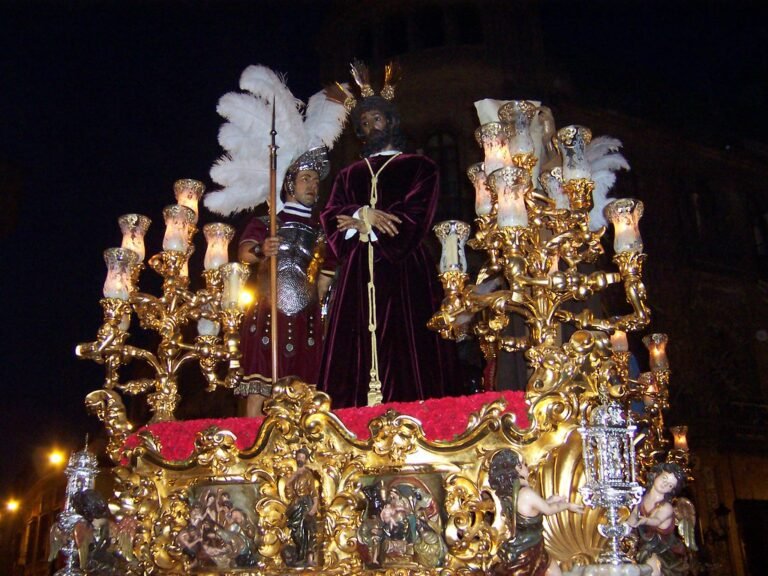
The week before the Feria’s laughter comes its opposite. In Semana Santa — Holy Week — some sixty brotherhoods, the hermandades, carry their pasos through the streets from Palm Sunday to Easter Sunday: vast gilded floats bearing images of Christ and the Virgin, some centuries old, shouldered by costaleros hidden beneath, moving at a shuffle through silent crowds. Around them walk the nazarenos in their pointed capirotes, brass bands play funeral marches, and from a balcony a singer may send a saeta — a raw, unaccompanied flamenco prayer — up at the Virgin as she passes.
It is recognised as a Fiesta of International Tourist Interest, and it rearranges the whole city: streets close, hotels fill a year ahead, and life pauses for processions that can run twelve hours. You need no religious belief to be stopped in your tracks by the Macarena passing under her arch at dawn, or La Esperanza de Triana crossing the bridge in the small hours of Good Friday. Our guide explains the brotherhoods, routes and where to stand.
Orange Blossom and the Light

Seville performs one trick no monument can match, every March. The city is planted with more than 40,000 orange trees — the count the Andalucía tourism board cites, and by its telling more than any city in the world — lining streets, filling squares and crowding the Cathedral’s own Patio de los Naranjos. For two or three weeks in spring those trees open their blossom, the azahar, and the entire city smells of it: a clean, sweet scent that is, for Sevillanos, the official announcement that the festival season has begun.
The fruit, be warned, is bitter orange — marmalade stock, famously shipped to Britain, and a mouth-puckering mistake if you pick one. But the trees earn their keep all year: shade in summer, green in winter, orange fruit through the darkest months. Add the famous light — long, golden evenings on limestone and whitewash — and you have why so many visitors describe Seville in terms of atmosphere rather than sights. The atmosphere is a sight.
Three Thousand Years in One Walk

Most cities keep their history in museums. Seville wears its as street plan. This was Roman Hispalis, and just outside the city stands Itálica, founded in 206 BC, birthplace of the emperors Trajan and Hadrian. It was Islamic Isbiliya, whose Almohad builders raised the Giralda and, down by the river in the 1220s, the Torre del Oro — the dodecagonal watchtower that guarded the port and now holds a small naval museum. And for two centuries after 1503 it was the monopoly port of Spain’s trade with the Americas, when the Casa de Contratación controlled every ship and the Archivo de Indias filed an empire’s paperwork.
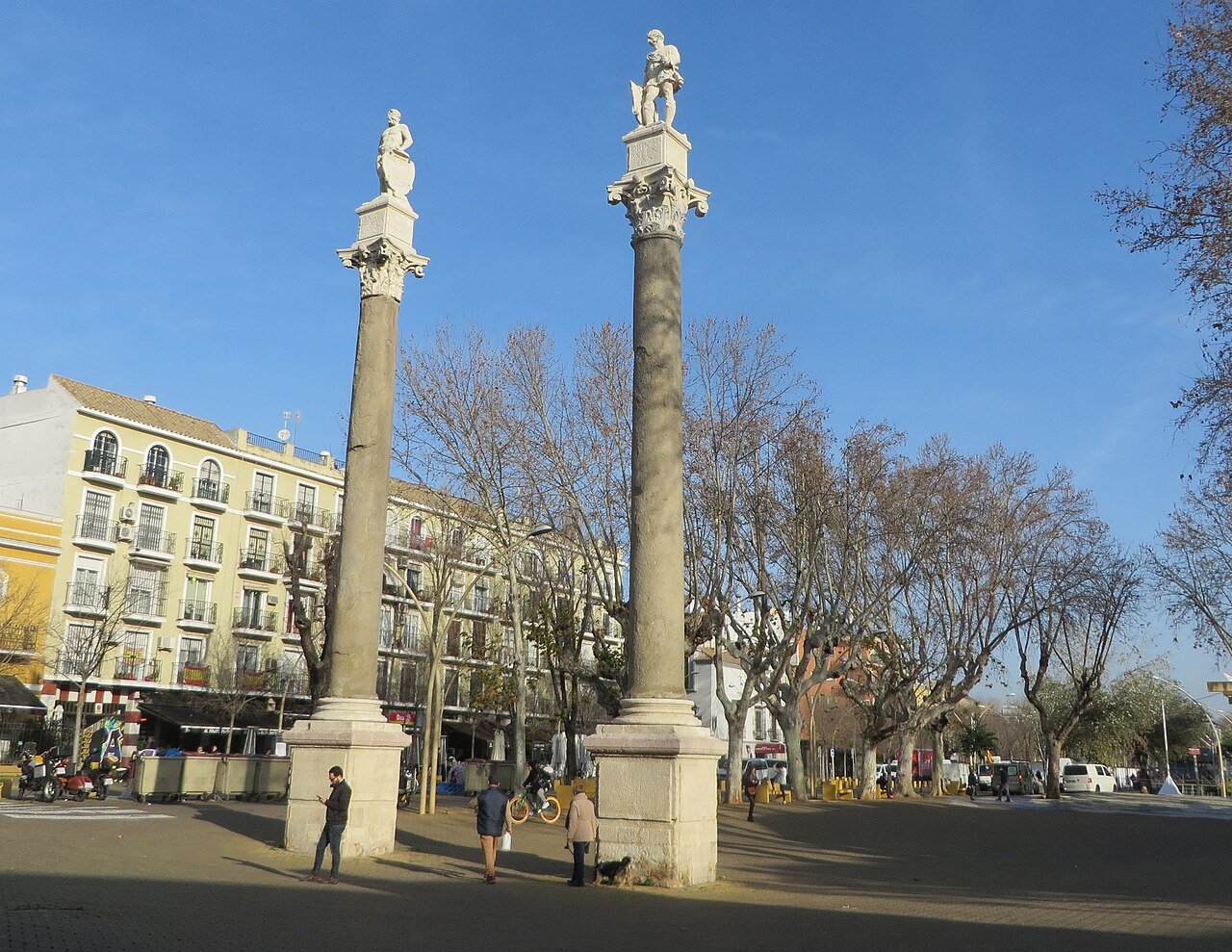
You can walk the whole stack in an afternoon: Roman columns standing in the Alameda, an Almohad tower on the river, a Gothic cathedral on a mosque, a Renaissance archive beside it, and a Golden Age palace quarter behind that. Few cities let you read three thousand years off the façades of a single walk — and then stop for tapas in the middle of it.
Your Money Goes Further Here
Seville delivers the full grand-city package — world-class monuments, a famous food culture, palace hotels — at prices a clear class below Barcelona and Madrid, and the difference shows in the small change of a trip. At the time of writing, in ordinary neighbourhood bars a caña of beer still commonly costs around €2 and a café con leche not much more; a menú del día typically runs to €12–15; and the city’s two great paid sights cost less than a blockbuster attraction in many capitals.
Just as valuable is the pace the prices buy. Because eating out is what locals do nightly, the centre runs on a relaxed, late, outdoor rhythm — dinner at ten, squares full at midnight, children still up — that money elsewhere cannot purchase. Festival weeks price like the world events they are; but euro for euro, few great cities give a visitor this much back.
A Film Set You Can Live In — and a Hub for Andalusia
Stand in Plaza de España and you are on Naboo, in British Cairo and outside a dictator’s palace at once; walk to the Alcázar and you are in Dorne; drive twenty minutes and Itálica’s amphitheatre is the Dragonpit. Seville has been a film set for sixty years — Lawrence of Arabia, Star Wars, Game of Thrones, La Peste — because it needs so little dressing: the palaces and plazas in this guide are the locations, open daily, playing themselves.
And when you have walked it, Seville hands you the rest of Andalusia. Córdoba’s Mezquita is about 45 minutes away by fast train; Cádiz about an hour and a half; sherry-making Jerez about an hour; Granada and the Alhambra around two and a half hours. No other base in the region combines this much city with this many day trips.
Practical Info
Seville’s historic centre is compact — the Alcázar, Cathedral, Santa Cruz and Plaza Nueva sit within ten minutes of one another, and Plaza de España and Triana are fifteen minutes beyond them in opposite directions. Nearly everything here is done on foot. The pleasures divide into the free and the ticketed: squares, quarters, park and riverfront cost nothing, while the Alcázar and the Cathedral-Giralda are the two paid anchors to plan around. Both ask visitors to dress respectfully — shoulders and knees covered. Adopt the Sevillian clock early: lunch from about 2pm, dinner rarely before 9pm.
Tickets and Costs
A first visit built on this guide’s reasons is remarkably light on tickets:
- Royal Alcázar — €15.50 general; nominative and timed; book the official site days ahead, longer in spring
- Cathedral and Giralda — €13 general, including the tower climb; book ahead in season and for Sundays, when visiting hours shrink around services
- Plaza de España, Santa Cruz, Triana, María Luisa Park, Las Setas from below — free; they are streets, squares and a park
- Las Setas walkway — a small fee for the rooftop walkway, with the Antiquarium below
- Flamenco — from free-with-a-drink in the right bar to a full theatre show at the Museo del Baile Flamenco
Under €30 covers both great monuments bought separately. The upgrade worth pricing is having them explained and queue-free in one morning: the Seville: Alcázar, Cathedral & Giralda Skip-the-Line Tour runs about three hours with skip-the-line entry to all three included and a local guide — what you are buying is the story connecting a mosque’s minaret to a Christian palace, plus your afternoons back.
Getting There
Seville’s airport (SVQ) sits about 10 km east of the centre, with a direct bus into the city in roughly half an hour and taxis at a fixed rate. Most visitors from elsewhere in Spain arrive by train at Santa Justa — AVE services run from Madrid in about two and a half hours and from Córdoba in about 45 minutes — a fifteen-minute walk from the old town. Drivers should park once, on the edge of the centre, and walk: the historic quarters were designed for feet and the occasional horse, and they have kept the habit.
When to Go
Spring is Seville’s masterpiece: March brings the azahar, April and May bring temperatures in the twenties, and the festival calendar — Semana Santa, then the Feria — shows the city at full intensity. Autumn, from mid-September to November, is the connoisseur’s season: the light returns, the crowds thin, the heat breaks. Winter is mild, quiet and cheap, with orange fruit on the trees. Summer is the honest trade-off — July and August afternoons regularly pass 40°C, the city empties to the coast, and life shifts to the mornings and small hours. The monuments are blissfully uncrowded; plan around the heat, not against it.
How Long You Need
Three full days covers this guide’s reasons at a civilised pace: one for the Alcázar, Cathedral and Santa Cruz; one for Plaza de España, the park, Triana and a tapas crawl; one for Las Setas, the river and your favourite quarters again, slowly. Add a fourth day for Itálica or Córdoba, and a fifth if your visit touches Semana Santa or the Feria. Two days is the workable minimum — but Seville’s rewards compound with time, and almost nobody wishes they had booked less of it.
Tips for Visiting Seville
- Book the Alcázar before anything else. The one sight that can simply be full — bring the ID you booked with.
- Do the monuments early, the streets late. Alcázar and Cathedral at opening, then surrender to the rhythm: long lunch, slow afternoon, city again from 7pm.
- Eat standing up at least once. The best tapas bars are counter bars. Order one dish, finish your drink, move on — that is the tapeo.
- Learn the two festival dates before you book. Semana Santa and the Feria transform prices, crowds and the city itself. Wonderful if intended, a shock if not.
- Carry water from April onwards, and respect the shade. Half the city is unshaded stone in full sun; Sevillanos plan routes by shadow, and so should you.
- Cross the river. Visitors who never leave the old town miss Triana — its market, ceramics and the Betis riverfront at dusk are half the city’s character.
FAQs
Is Seville worth visiting?
Yes — for most travellers it is the essential Andalusian city. It holds two of Spain’s greatest monuments (the Alcázar and the Cathedral-Giralda), its most beautiful square, a tapas culture that is an evening out in itself, and the two great street festivals of the Spanish year, all inside a walkable centre at prices below Barcelona and Madrid.
How many days do you need in Seville?
Three full days is the sweet spot: the Alcázar, Cathedral and Santa Cruz on day one; Plaza de España, the park and Triana on day two; Las Setas, the river and your favourite quarters again on day three. Add a day each for Itálica or Córdoba, and for the festivals in season.
When is the best time to visit Seville?
March to May, when the orange blossom is out, temperatures sit in the twenties and the festival season runs — but book early, because everyone else knows it too. Mid-September to November is the quieter alternative. July and August bring regular 40°C afternoons.
Is Seville expensive?
No — it is the value option among Spain’s great cities. The two headline monuments cost under €30, a menú del día typically runs €12–15, and most of the city’s pleasures — squares, quarters, park and riverfront — are free. Festival weeks are the exception, when hotel prices spike hard.
Is Seville walkable and safe?
The historic centre is compact and almost entirely walkable — most sights here sit within fifteen minutes of the Cathedral, and the flat terrain makes it easy walking outside summer afternoons. Seville is a late, outdoor, family city, busy until midnight and beyond; take the normal big-city care with belongings in crowds.
Should I choose Seville or Granada?
Both, if you can — they are different cities, not rivals. Granada has the Alhambra, one sight of world rank; Seville has the deeper bench: two great monuments, the square, the quarters, the food and the festivals, plus the better transport hub. If you are choosing one Andalusian base for several days, choose Seville and day-trip from it.
Travel insurance, sorted
Whether it is a two-week holiday or a longer move, travel insurance is not the most glamorous part of a trip — but it is the one booking you want to have in place before a trip, and while you are already away. Get a quote from SafetyWing
Final Thoughts
Barcelona has the sea and Gaudí; Madrid has the museums and the capital’s hum. Seville has something harder to build and impossible to copy: a complete way of life, practised outdoors, in public, at festival pitch, in a city beautiful for two thousand years and in no hurry to stop. A palace still in use, a cathedral climbed by ramps, a square that films borrow, dinner that walks, dancing that includes everyone — these fifteen reasons are less a list of things to see than an invitation to join in. Come for three days in spring, when the azahar is out. You will plan the return before you leave.
15 Best Things to Do in Seville You Can’t Miss
Photo credits: Plaza de España by Benjamin Smith, CC BY-SA 4.0; Patio de las Doncellas, Royal Alcázar by Benjamin Smith, CC BY-SA 4.0; the Giralda from the Alcázar by Jebulon, CC0; Barrio de Santa Cruz by Itto Ogami, CC BY 3.0; Triana riverfront by Jebulon, CC0; Glorieta de Bécquer by Gzzz, CC BY-SA 4.0; Metropol Parasol by Benjamin Smith, CC BY-SA 4.0; salmorejo by Funknendai, CC0; flamenco at the Palacio Andaluz by Diego Delso, CC BY-SA 4.0; Feria de Abril portada by CarlosVdeHabsburgo, CC BY-SA 4.0; nazarenos of the Santo Entierro by Kespito, CC BY-SA 3.0; Patio de los Naranjos by Roberto Chamoso G, CC BY-SA 3.0 es; Torre del Oro by Benjamin Smith, CC BY-SA 4.0; Alameda de Hércules by Jimfbleak, CC BY-SA 3.0 — all via Wikimedia Commons.