Barcelona in November: The Ultimate Guide to Weather, Events and What to Do
November is the month Barcelona exhales. The summer crowds are gone, the cruise-ship tide has ebbed, the heat that flattens the city in August is a memory — and what’s left is the Barcelona locals actually live in: golden light on the Eixample façades, chestnut smoke on street corners, the jazz festival in full swing, and Gaudí’s masterpieces you can finally stand in front of without a hundred strangers in your photograph.
It is not beach weather, and this guide won’t pretend otherwise. But if your idea of a great city break is mild days, long lunches, half-empty museums and hotel prices that have dropped down a gear, November might be the smartest month of the year to come. It also bookends beautifully: the month opens with All Saints’ Day and the Castanyada chestnut festival, and closes with the Christmas lights switching on and the city’s oldest Christmas market opening its stalls.
If you take one organised trip, make it the mountain. The From Barcelona: Montserrat Day Trip with Optional Tickets runs up to the Montserrat monastery by bus and rack railway — seven hours, rated 4.6/5 from over 2,500 reviews, from around $50, with free cancellation up to 24 hours in advance. In November’s thin crowds and low autumn light, it’s the day trip at its very best (§6 has the details).

Contents
- The Quick Verdict
- November at a Glance
- The Weather in November: What to Actually Expect
- What to Wear and Pack
- Crowds and Costs: The Shoulder-Season Dividend
- 1. See the Sagrada Família Without the Summer Queues
- 2. Take Park Güell at Autumn Pace
- 3. Celebrate La Castanyada Over All Saints’ Weekend
- 4. Spend Your Evenings at the Barcelona Jazz Festival
- 5. Use the Free-Museum First Sunday (1 November)
- 6. Ride Up to Montserrat in Its Quiet Season
- 7. Get Lost in the Gothic Quarter, Then Thaw Out With Chocolate
- 8. Hear a Concert at the Palau de la Música Catalana
- 9. Eat November: Panellets, Chestnuts and Mushroom Season
- 10. Walk the Seafront From Barceloneta to the Fòrum
- 11. Watch the Christmas Lights Switch On
- 12. Open Christmas at the Fira de Santa Llúcia
- Which November Trip Suits You?
- What a November Trip to Barcelona Costs
- Final Thoughts
- FAQs: Barcelona in November
The Quick Verdict
Short on time? Come in November and do these three: walk into the Sagrada Família on a weekday morning with the shortest queues of the year (§1), spend one evening under the skylight of the Palau de la Música while the jazz festival is on (§4, §8), and take the day trip up to Montserrat through the autumn hills (§6). Land your trip in the first days of the month and you also catch La Castanyada and a free-museum Sunday; land it in the last week and you get the Christmas lights and the Santa Llúcia fair instead. Either way, you win.
November at a Glance
- Temperatures: daytime highs around 18–19°C at the start of the month, easing to about 16°C by the end; nights from 11°C down to 8°C. Coat weather after dark, shirtsleeve lunches still possible in week one.
- Daylight: the clocks went back at the end of October, so sunset slides from about 17:40 on 1 November to roughly 17:25 by the 30th. Plan sightseeing for the morning and save interiors for the dark evenings.
- Rain: around five rainy days in a typical November, and the rain often arrives in one or two dramatic bursts rather than drizzle. Pack a compact umbrella; you may never open it.
- Key dates: 1 November (All Saints’ Day, a public holiday — and in 2026 it falls on a Sunday, doubling as the free-museum first Sunday). The Barcelona Jazz Festival runs all month. Black Friday falls on 27 November. The Christmas lights switch on in the final week, and the Fira de Santa Llúcia opens in the last days of the month.
- The sea: about 18°C in early November, 16°C by the end — swimmable for the hardy, a promenade month for everyone else.
The Weather in November: What to Actually Expect
November in Barcelona is a tale of two halves. The first fortnight still carries autumn’s warmth: expect plenty of days at 18–19°C, low golden sun that makes the whole Eixample glow, and terraces doing brisk business at lunchtime. The second half tilts towards winter — highs nearer 16°C, crisper mornings, and evenings that ask for a proper coat and scarf. Frost is essentially unheard of in the city, and snow is a once-a-generation event; this is a Mediterranean late autumn, not a northern one.
The month’s one real weather personality is rain. Barcelona’s autumn rain tends not to do grey drizzle — it arrives as a heavy shower day, sometimes with a proper Mediterranean downpour, then clears to washed blue skies. Build one flexible “museum day” into your plans and swap it with an outdoor day when the forecast demands, and the weather becomes a non-issue. For the full month-by-month picture, our guide to the best time to visit Barcelona shows where November sits in the year.
Two more November signatures are worth knowing. The first is the light: with the sun low and the air scrubbed clean after rain, visibility can be extraordinary — mornings when the Pyrenees stand snow-dusted on the horizon and the whole Collserola ridge cuts sharp against the sky. Photographers plan around these days; if one lands during your trip, drop everything and head for a viewpoint. The second is the wind: a handful of days each November, a dry tramuntana blows down from the north, dropping the temperature feel by a few degrees and making scarves earn their keep. It rarely lasts more than a day or two, and it usually brings those crystal skies with it.
What to Wear and Pack
Think layers, not bulk. Locals dress for November with a mid-weight coat, closed shoes, jeans or trousers, and a scarf that does real work after sunset. You’ll want: a waterproof outer layer or compact umbrella for the shower day; comfortable walking shoes that cope with wet marble pavements in the old town (beautiful, and slippery); one genuinely warm layer for Montserrat, where the monastery sits at over 700 metres and runs several degrees colder than the city; and swimwear only if you’re a committed cold-water swimmer or your hotel has a spa. Leave the shorts and sandals at home — not because it’s freezing, but because nobody in Barcelona is wearing them, and you’ll feel it in the evenings.
Crowds and Costs: The Shoulder-Season Dividend
November sits in the sweet spot between the October half-term rush and the Christmas build-up. The big sights stay open on full schedules, but the queues shrink to their shortest of the year, timed-entry slots at the Sagrada Família and Park Güell are bookable days rather than weeks ahead, and restaurants that turn people away in September will seat you on a walk-in. Hotels follow the same curve: rates in November typically run well below the September–October peak, with the best value in the middle two weeks of the month, before the lights switch-on weekend nudges prices back up. It is, quietly, one of the best-value months on the Barcelona calendar.
1. See the Sagrada Família Without the Summer Queues
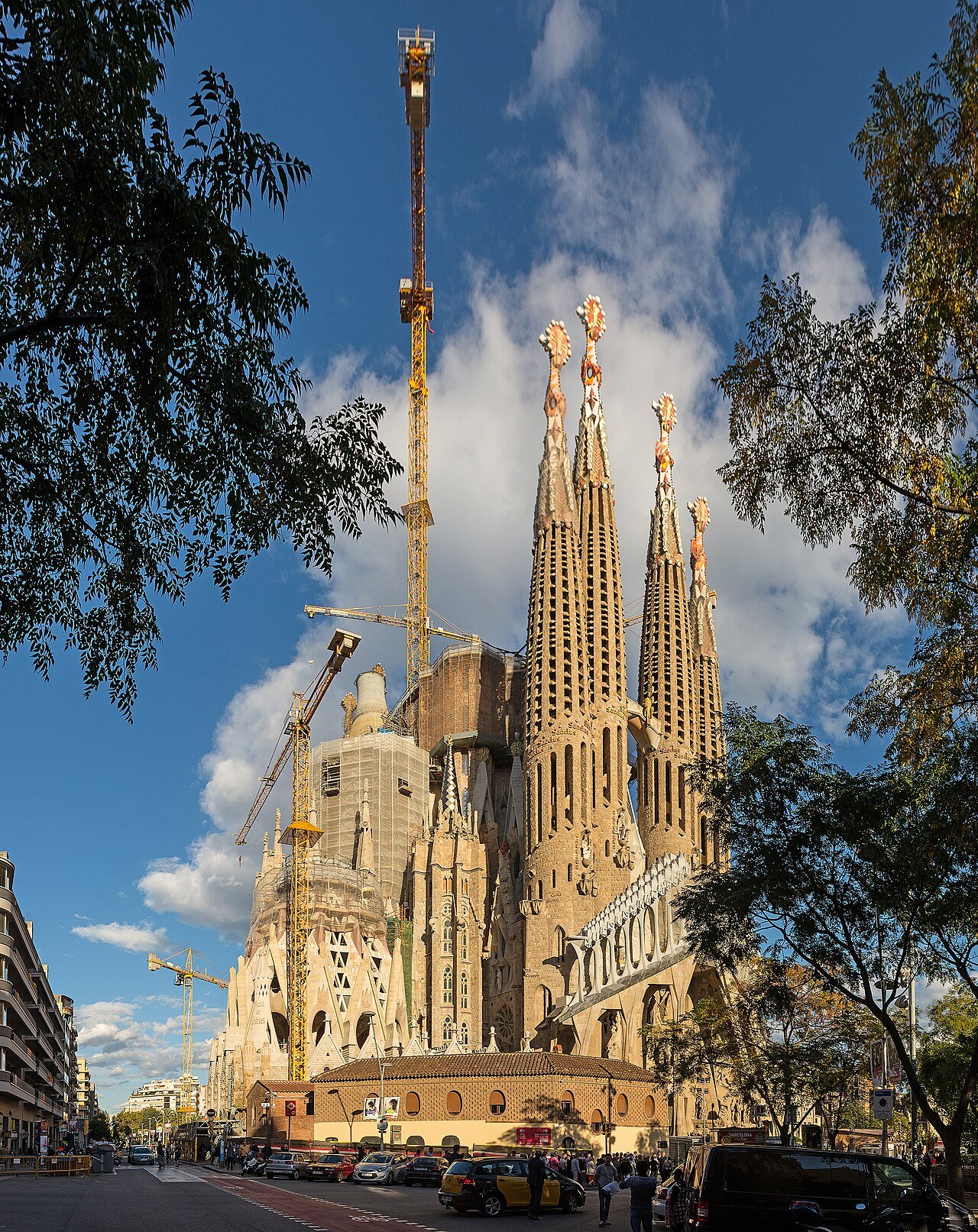
Everything that makes the Sagrada Família hard work in August — the sold-out slots, the shuffling crowds, the heat bouncing off the stone — evaporates in November. Timed tickets are usually available a few days ahead rather than a few weeks, the morning light pours through the west-facing stained glass in long coloured shafts, and you can stand in the nave as long as you like without being carried along by a tour group. Weekday mornings before 10am are the calmest of all.
Book the first slot of the day if you can: in November the sun sits lower, and the basilica’s interior — designed as a stone forest lit like a clearing — looks at its most dramatic when the light rakes in at an angle. Add a tower if the day is clear; the city spreads out below in crisp autumn visibility that summer haze never allows. Our walkthrough of what awaits inside the Sagrada Família helps you plan the visit room by room.
2. Take Park Güell at Autumn Pace
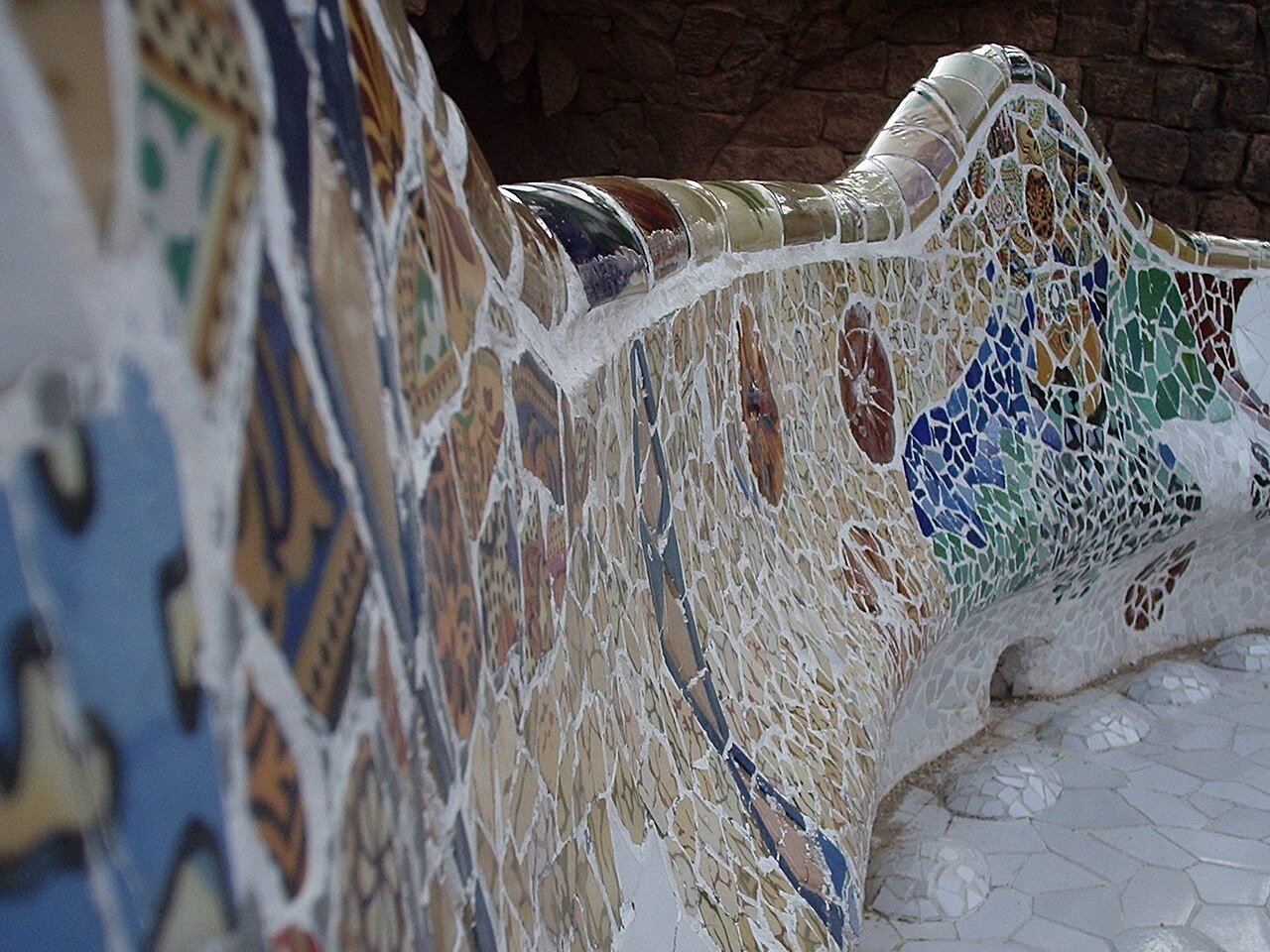
Park Güell in November is the park as Gaudí’s neighbours get to enjoy it: the famous mosaic terrace busy but breathable, the Monumental Zone’s timed slots easy to secure, and the pine woods and garden paths on the free hillside above it almost empty on weekday mornings. The light helps too — the low sun turns the trencadís mosaics on the wavy bench into something close to jewellery, and on clear days the view runs from the Sagrada Família’s towers straight down to a very blue Mediterranean.
Go early or late in the day, when the terrace belongs more to photographers and locals walking the view than to groups. Then keep climbing: the free zones of the park — the viaducts, the Austria Gardens, the paths up to the Turó de les Tres Creus — are where November walkers have the place nearly to themselves. Our complete Park Güell guide maps the ticketed core and the free park around it.
3. Celebrate La Castanyada Over All Saints’ Weekend
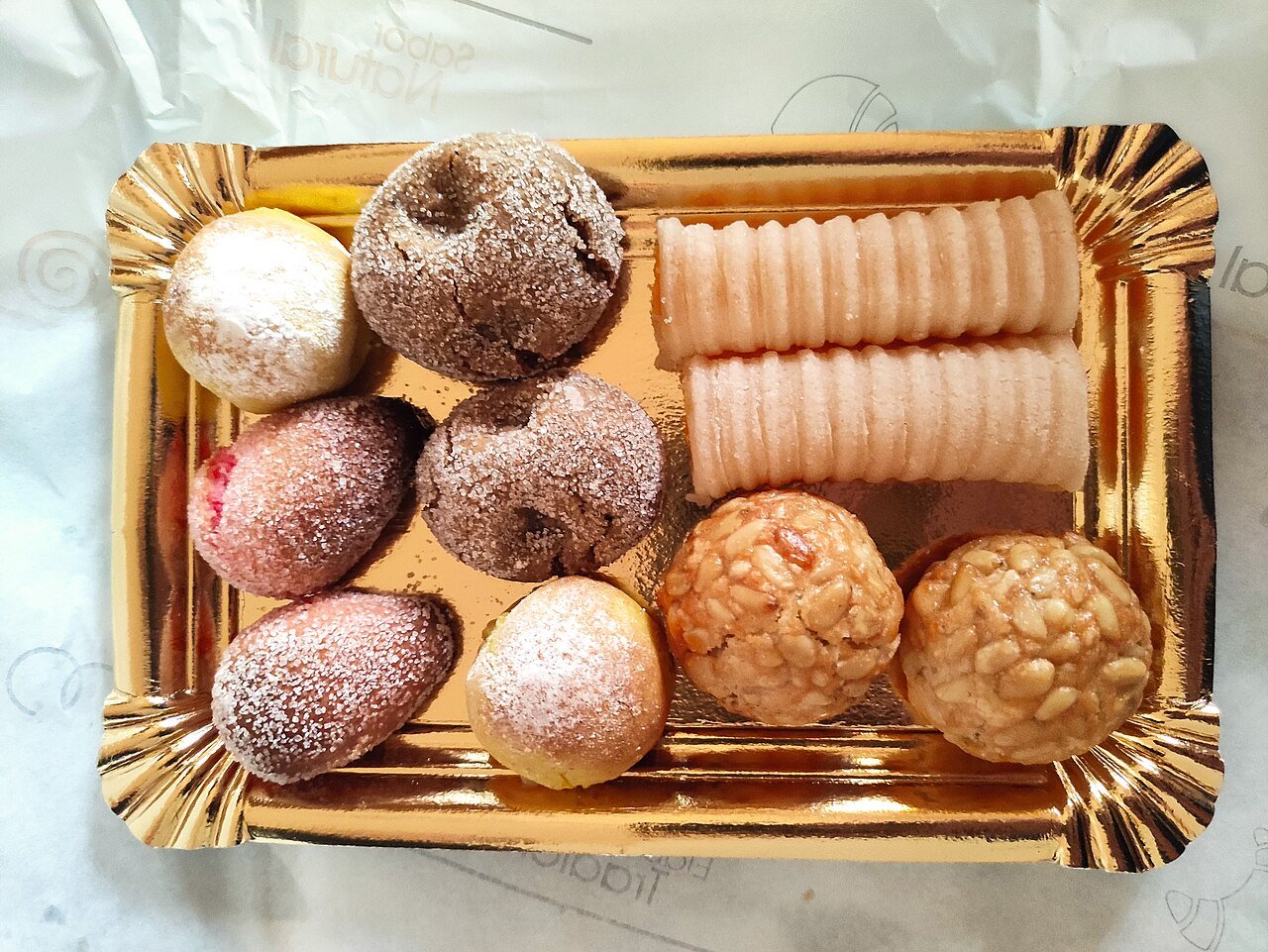
November opens with one of Catalonia’s most delicious traditions. For La Castanyada, the festival wrapped around All Saints’ Day (1 November, Tots Sants), the city smells of woodsmoke and roasting chestnuts: castanyeres tend their braziers on street corners, selling paper cones of hot castanyes alongside baked moniatos (sweet potatoes), and every bakery window fills with panellets — small marzipan sweets rolled in pine nuts, almonds or coffee, eaten with a glass of sweet moscatell wine. Families visit cemeteries with flowers on the day itself, and many businesses close — in 2026 the holiday falls on a Sunday, so expect a long, slow, festive weekend.
For a visitor it’s the easiest festival in the year to join: buy a cone of chestnuts from a corner stall, queue at a good pastisseria for a mixed box of panellets, and eat both walking. No tickets, no schedule, no insider knowledge required — just follow the smoke.
4. Spend Your Evenings at the Barcelona Jazz Festival

November is the beating heart of the Barcelona Jazz Festival — the Voll-Damm Festival Internacional de Jazz de Barcelona, running since 1966 and one of Europe’s great jazz institutions. The 2026 edition, the 58th, spreads its autumn season from late September to 23 December across 11 venues, which means almost any November evening offers a choice: headline names in concert halls, late sets in the little clubs around the old town, and everything in between. The festival opened its autumn run at the Palau de la Música Catalana, and that hall plus the basement club Jamboree on Plaça Reial are its two spiritual homes.
Tickets for the big nights sell through the festival’s own site (jazz.barcelona) and are worth booking ahead — November weekends especially. For the club sets, just build one into an evening in the Gothic Quarter: dinner late, as the city does, then jazz until the small hours. It is the single best use of November’s long dark evenings.
5. Use the Free-Museum First Sunday (1 November)
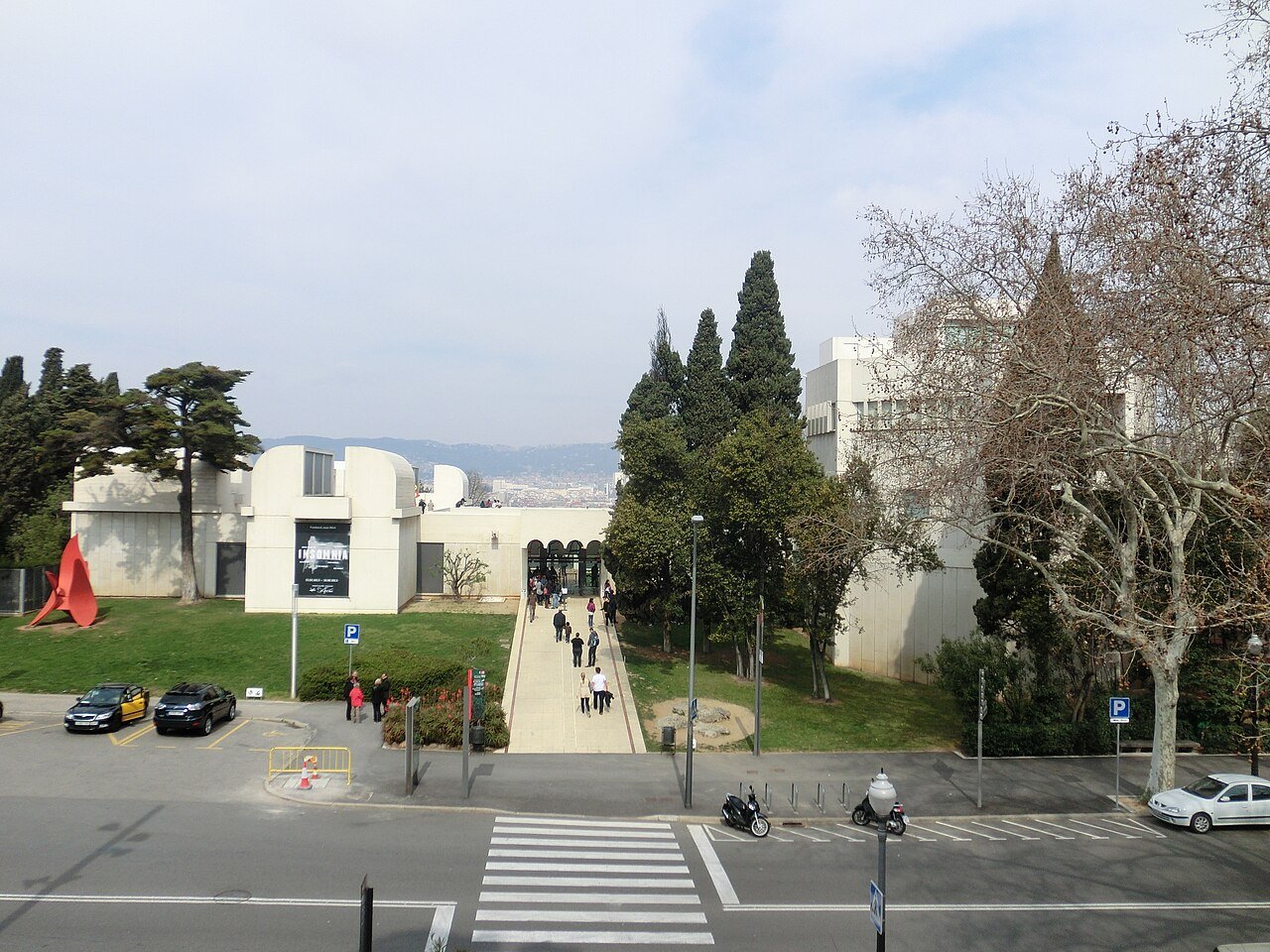
Most of Barcelona’s city museums open free on the first Sunday of the month — and in 2026, November’s first Sunday is the 1st, All Saints’ Day itself, a public holiday when the city is in slow weekend mode anyway. The MNAC up on Montjuïc, the Museu Picasso, the Fundació Joan Miró and the MUHBA history sites all join in, which puts the finest art collections in the city within reach for €0 on the same day the chestnut stalls are smoking outside.
Two rules make it work. First, book: the most popular free slots, above all the Picasso, are released as free online tickets and go days ahead — reserve yours the moment your trip is fixed. Second, arrive at opening time, when even free-Sunday crowds are thin. Pair a morning museum with an afternoon in the surrounding neighbourhood and the day costs almost nothing — our guide to free things to do in Barcelona has the full free-hours strategy for the whole month.
The smart way to spend the day is to cluster. Montjuïc stacks two of the free Sunday’s giants a ten-minute stroll apart — the MNAC’s Romanesque-to-modern marathon in the morning, the Fundació Joan Miró after lunch, with the castle views and the Olympic ring in between. In the old town, the Picasso on Carrer de Montcada pairs naturally with the MUHBA’s Roman-Barcelona sites and a Castanyada wander through El Born. Either way you’ll walk out having seen a world-class collection or two, in a city in holiday mood, for the price of the chestnuts.
6. Ride Up to Montserrat in Its Quiet Season
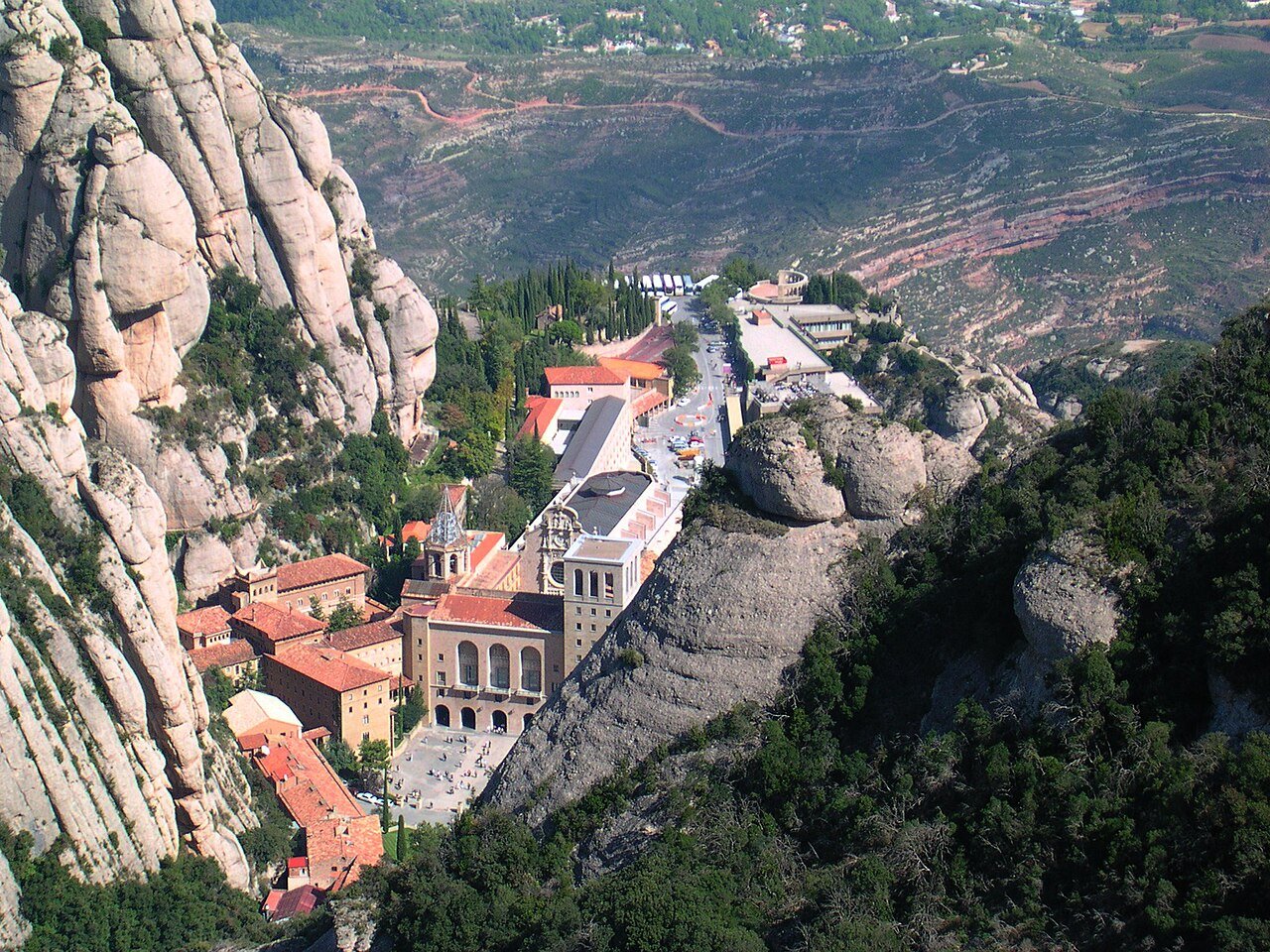
If Gaudí is Barcelona’s genius, Montserrat is its soul: a Benedictine abbey folded into a mountainside of impossible pink-grey pinnacles, an hour from the city — and November is arguably the finest month to go. The summer coach-party crush is gone, the natural park around the monastery turns russet and gold, the boys’ choir, the Escolania, is back in school-term residence (it sings on weekdays), and the mountain light does things that summer’s haze never permits.
The straightforward way up is the organised day trip: the From Barcelona: Montserrat Day Trip with Optional Tickets combines the coach ride with the rack railway up the mountain, a guided visit and free time at the abbey — seven hours door to door, from around $50, with free cancellation up to 24 hours in advance if the mountain weather turns. Dress warmer than you think: the monastery square sits high, and November wind up there has an edge. Doing it independently instead? Our Montserrat Monastery guide covers the train-and-rack-railway route step by step.
7. Get Lost in the Gothic Quarter, Then Thaw Out With Chocolate
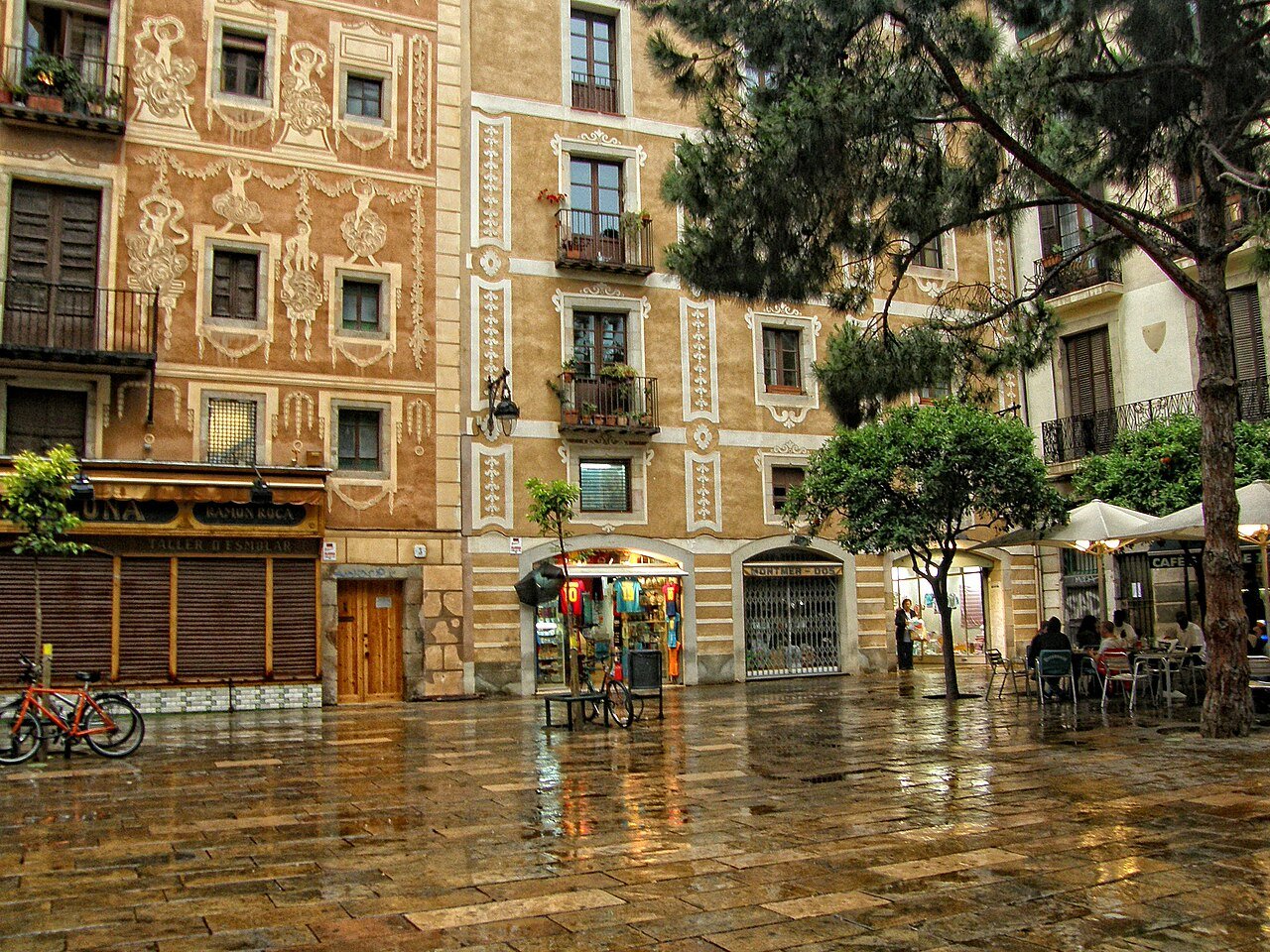
The Gothic Quarter was built for November. Its narrow stone lanes, shadowy in July, turn atmospheric in the low season: rain-washed squares, lamplight by half past five, the cathedral quarter nearly empty on weekday afternoons. This is the month to wander it slowly — Plaça del Pi with its sgraffito façades, the Jewish quarter of El Call, the Roman columns of the Temple of Augustus — without the summer human traffic jams at every photogenic corner.
And when the chill gets into your fingers, do what Barcelonans do: duck into a granja on Carrer de Petritxol, the little street that has specialised in chocolate for a century, and order xocolata desfeta — drinking chocolate so thick the spoon nearly stands in it — with churros or a melindro sponge finger for dunking. It is the city’s official November warm-up ritual. Our full guide to Barcelona’s Old Town and Gothic Quarter maps the lanes when you want the deep version.
8. Hear a Concert at the Palau de la Música Catalana
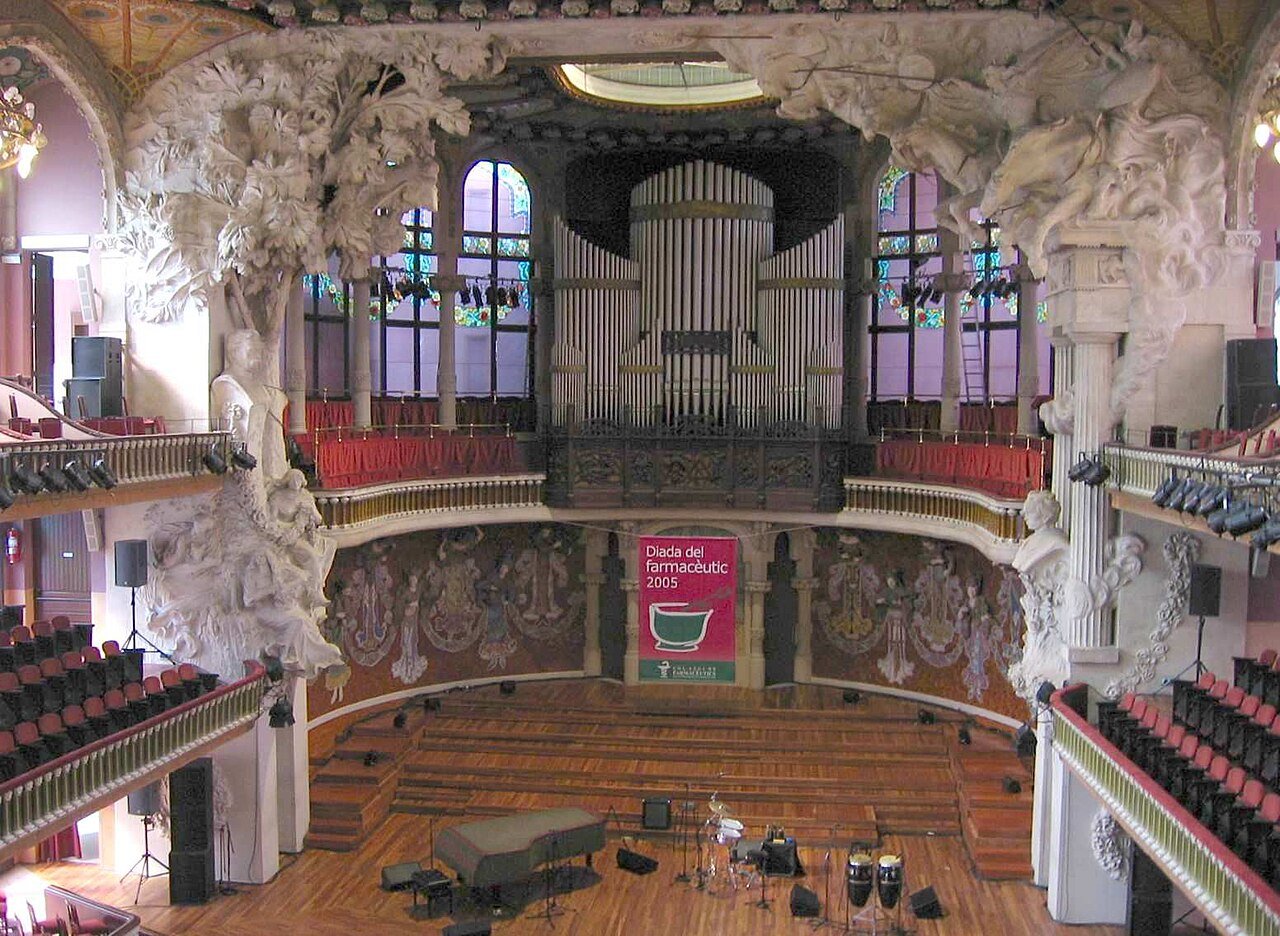
By day it’s a modernista jewel you tour with a guide; by night, the Palau de la Música Catalana becomes what it was built to be in 1908 — a working concert hall, and November, with the concert season and the jazz festival both in full swing, is when its calendar is richest. Under that famous stained-glass skylight, in a hall wrapped in roses, mosaics and sculpted muses, even an ordinary Tuesday-night recital feels like an occasion.
Choral music is the house speciality — the Palau is home to the Orfeó Català choir — but the month’s programmes run from symphony orchestras to the jazz festival’s headline sets (§4). Book through the Palau’s own site, take a seat anywhere (the acoustics and the view of the ceiling are generous throughout the hall), and arrive early enough to see the façade lit at night. If you can only do one evening out in November, make it this one.
9. Eat November: Panellets, Chestnuts and Mushroom Season
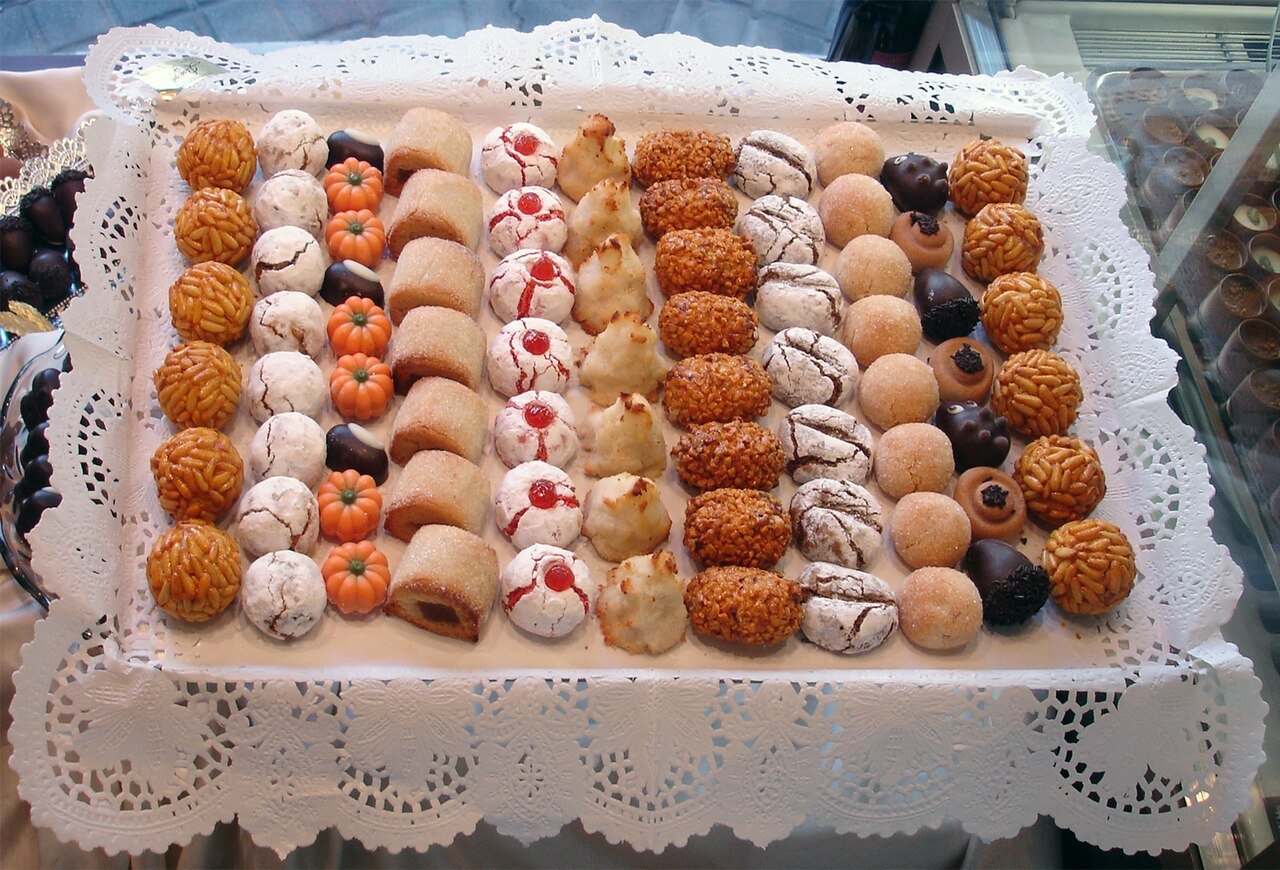
November is a quietly magnificent month to eat in Barcelona. The Castanyada (§3) opens it with panellets and roast chestnuts, and the theme continues in the markets: autumn in Catalonia is mushroom season, and stalls at La Boqueria and the neighbourhood markets pile up rovellons (the saffron milk caps locals prize above all others), camagrocs and ceps — on menus as well as market stalls, where they turn up grilled with garlic and parsley, folded into rice dishes, or scrambled with eggs. Look for plats de temporada and ask what’s good; November is when market cooking peaks.
Two more seasonal pleasures: vi novell, the new season’s young wine, traditionally broached in November and celebrated in wine bars with chestnuts and sausage; and the simple fact that the city’s restaurants are full of locals again, lunch menus are taken seriously, and nobody is queuing for a table behind a cruise excursion. Eat where the menú del día board is handwritten and the room is loud at 2pm.
10. Walk the Seafront From Barceloneta to the Fòrum
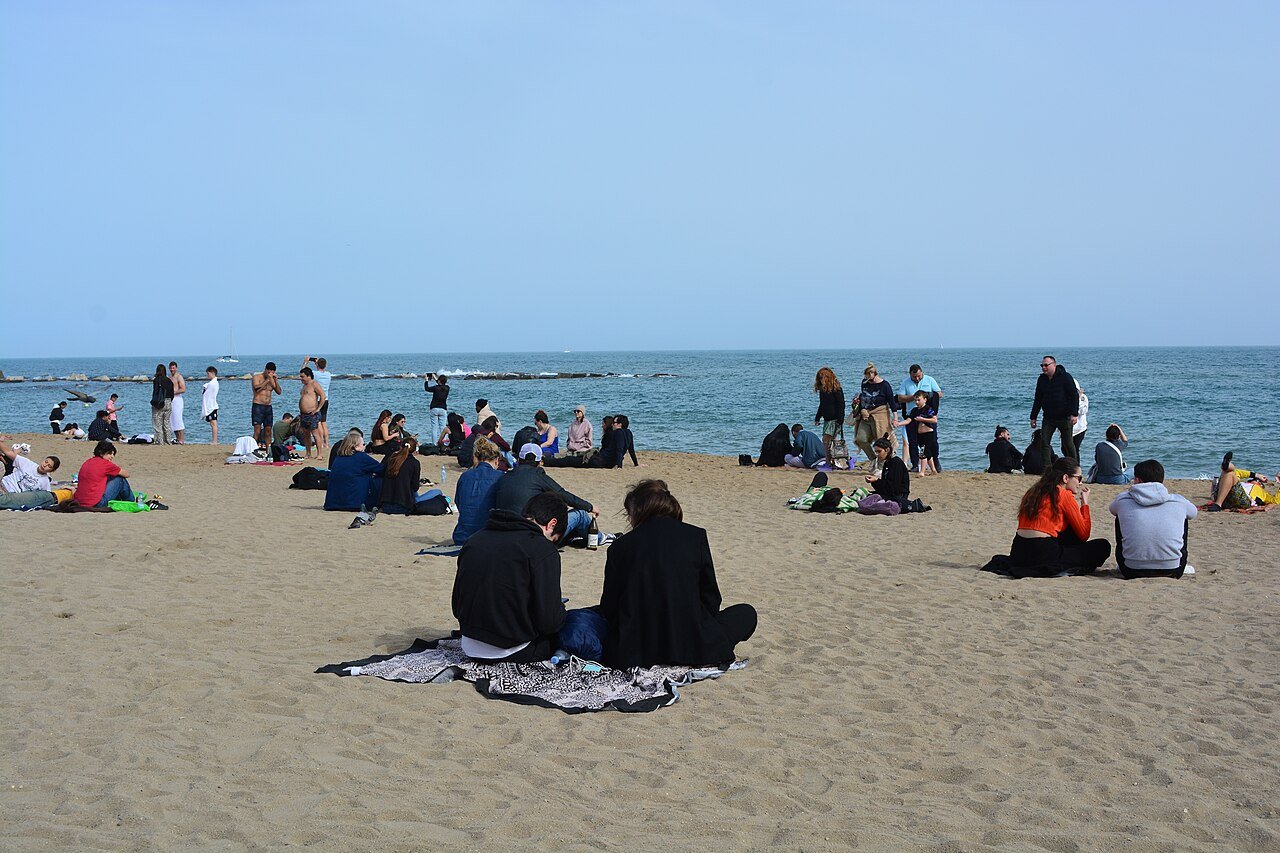
No, you probably won’t swim — though on a still, sunny late-November morning you’ll see a handful of Barcelonans who do, and the sea is still around 16–18°C if you’re tempted. But November is the promenade’s own season: the Passeig Marítim empties of beach towels and fills with runners, dog-walkers, rollerbladers and winter sun-seekers claiming the benches. The full waterfront walk, from the W Hotel at Barceloneta to the Fòrum at the northern end, is about five kilometres of flat, sea-breezed, sculpture-dotted pavement — Rebecca Horn’s rusty cubes, Frank Gehry’s golden fish and all.
Most of the xiringuito beach bars have closed or cut their hours by November, so plan coffee stops in the Barceloneta neighbourhood or the Port Olímpic instead. Go on a clear morning after rain, when the light is scrubbed clean and the Collserola hills stand out white-sharp behind the city, and you’ll understand why locals guard this month jealously.
Make a walk of it in stages. Start with coffee in Barceloneta’s little market square, take the promenade past the Port Olímpic’s towers and marina, and keep going through Poblenou — the old industrial neighbourhood where the seafront turns local, with its own rambla running down to the sand. The Bogatell and Mar Bella beaches up here are where the city itself walks its dogs and plays its beach volleyball in the cool months. Finish at the Fòrum’s vast solar panel and the Diagonal Mar parkland, then ride the tram or metro back. On the way, you’ll pass the winter swimming clubs whose members plunge year-round — November is when their morning ritual stops looking eccentric and starts looking enviable.
11. Watch the Christmas Lights Switch On

Sometime in the final week of November, Barcelona flips a switch and becomes a Christmas city. More than 100 kilometres of lights come on at once — over Passeig de Gràcia, La Rambla, Portal de l’Àngel and dozens of neighbourhood streets — at an early-evening switch-on ceremony that draws half the city into the centre. In 2025 the lights went on on 22 November; the council confirms the exact date each autumn (the traditional slot is the last Thursday of the month), and once lit they shine every evening until 6 January.
If your trip falls in the last November week, build the evening around it: lights at dusk, the Gaudí façades of the Block of Discord glowing in the middle of it all, then dinner in the Eixample. Even if you miss switch-on night itself, a late-November evening walk under the full display delivers the same magic with a fraction of the ceremony crowd.
12. Open Christmas at the Fira de Santa Llúcia
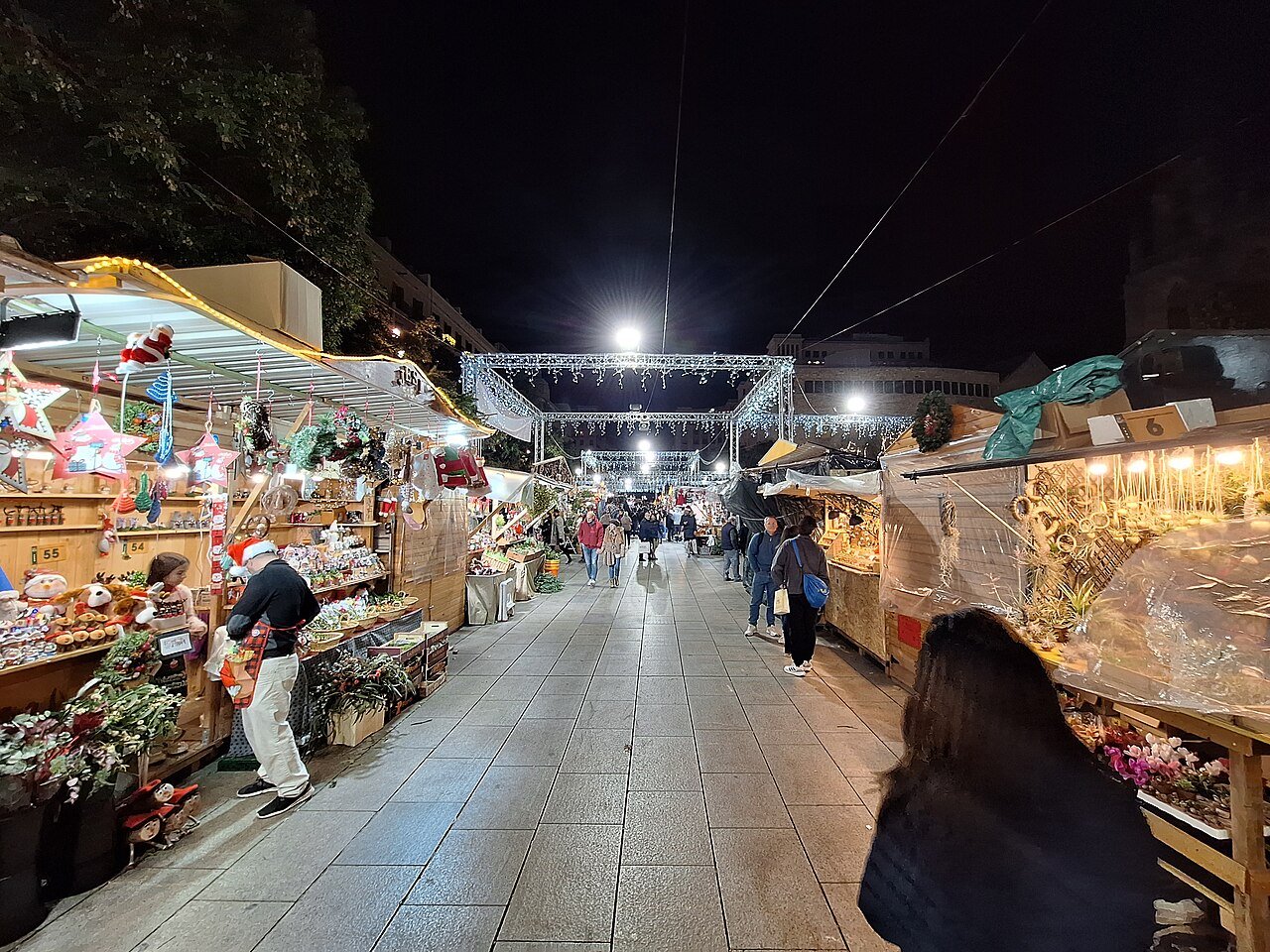
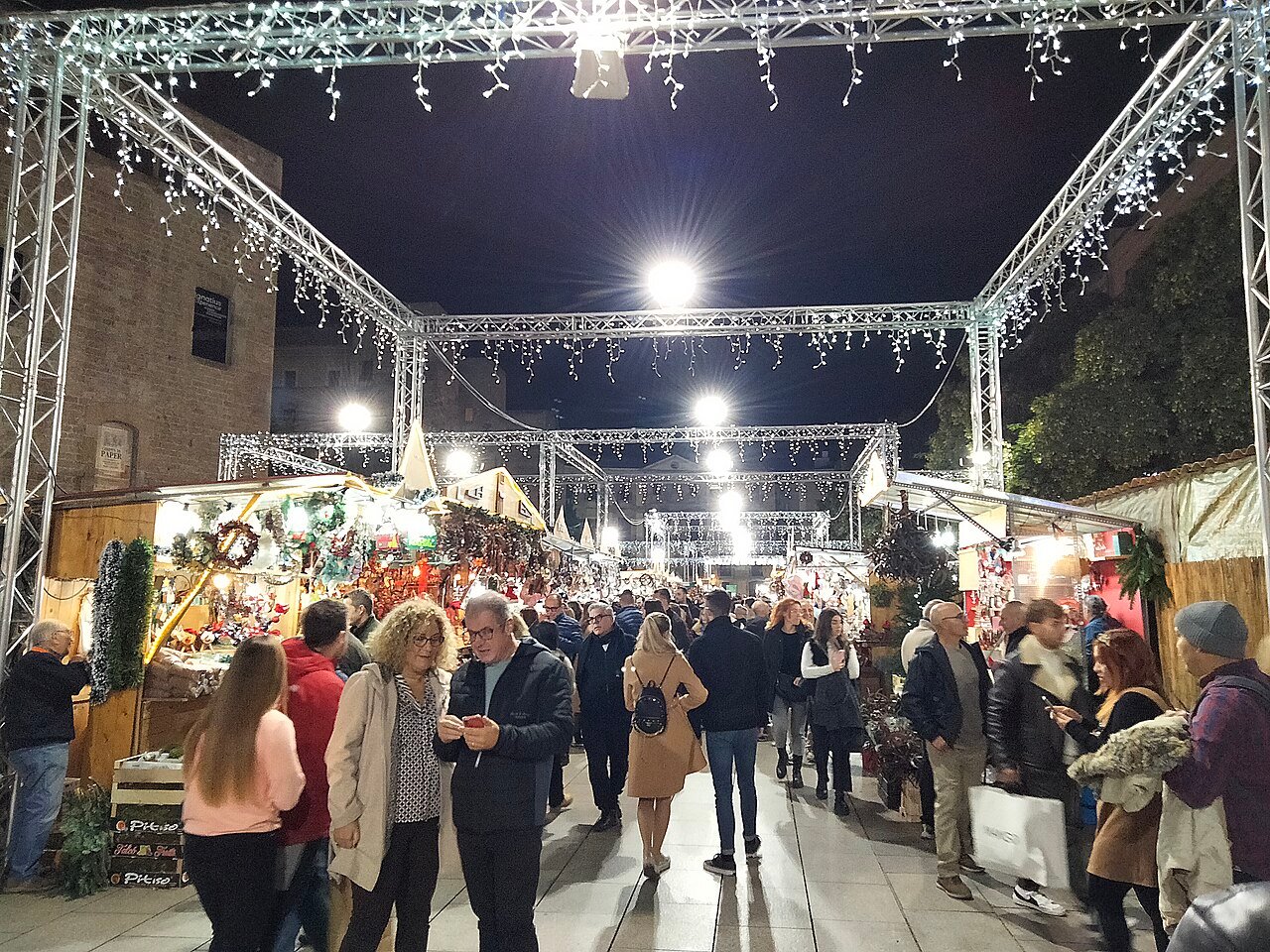
Barcelona’s Christmas season officially begins not with the lights but with a fair that has set up in front of the cathedral since 1786. The Fira de Santa Llúcia fills the Avinguda de la Catedral with more than 200 stalls: nativity-scene figures for the pessebre every Catalan home builds, Christmas trees and greenery, handcrafted gifts — and the two great Catalan characters, the caganer, the little pooping figure hidden in every nativity scene for luck, and the Tió de Nadal, the smiling log children feed through December. It is joyful, uncommercial in spirit, and completely free to wander.
In 2025 the fair ran from 28 November to 23 December, open daily about 10am to 9pm; the 2026 dates follow the same pattern and are confirmed by the organisers each autumn — expect the stalls to be up in the last days of November. Come on a weekday evening, when the cathedral is floodlit, the stall lights are on and the after-work crowd keeps it lively but moving.
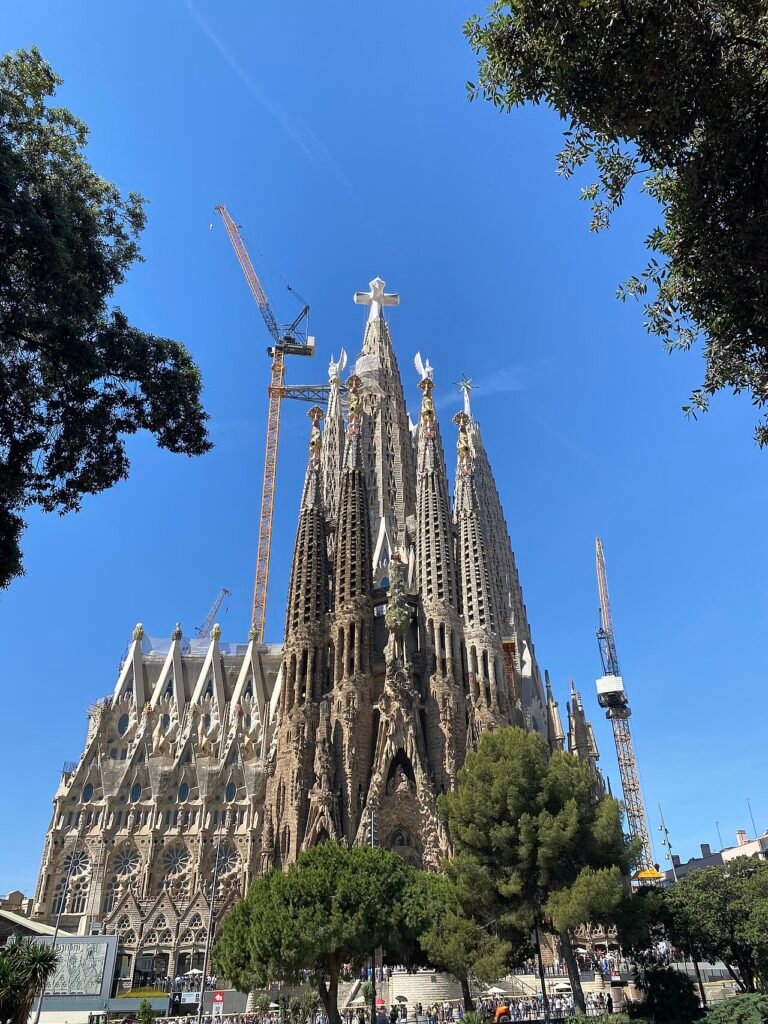
It also has a younger sibling worth the short trip across the Eixample: the Fira de Nadal de la Sagrada Família, the Christmas market that wraps around Gaudí’s basilica on the same late-November-to-23-December rhythm, with stalls selling trees, figures and festive food under the towers. Seeing the two in one evening — cathedral first, then the metro up to the Sagrada Família as the lights come on — is the finest free Christmas double-bill in the city, and it only exists for a few weeks a year.
Which November Trip Suits You?
- Here for the first weekend (around 1 November)? You’ve drawn the best hand of the month: La Castanyada, chestnut stalls, the All Saints holiday — and the free-museum first Sunday landing on the same weekend. Book the free Picasso tickets the moment you can.
- Culture-first trip? Aim for mid-November: jazz festival evenings, Palau concerts, half-empty museums, and the Gaudí icons at their calmest.
- Chasing the festive build-up? Come in the final week: Christmas lights switch-on, the Santa Llúcia fair opening, Black Friday sales on 27 November — and hotel prices not yet at December levels.
- On a budget? The middle two weeks are the value window: the lowest hotel rates of the season, free museum Sundays still in reach, and everything open.
- Coming to eat? Any week works, but early November doubles up: Castanyada sweets and chestnuts on the street corners, mushroom season at its peak in the markets, and restaurants full of locals rather than tour groups.
- Want a beach holiday? Honestly, pick another month — November’s sea is for promenading and the brave. But if you want the city itself, this is its most liveable month.
What a November Trip to Barcelona Costs
November’s shoulder-season pricing is a big part of its charm. Here’s the honest shape of daily spending, at the time of writing:
- Getting around — €0–€13 a day: The centre is walkable; a single metro or bus ride costs about €2.65, and the T-casual 10-journey card (around €13) covers most visitors for a long weekend.
- Eating — €13–€16 for the big meal: The weekday menú del día — three courses with a drink — is the city’s bargain at roughly €13–€16 in neighbourhood restaurants; November’s mushroom specials are worth every cent of the small supplement.
- The sights — cheaper if you time them: Headline interiors run to roughly €12–€35 a ticket at full price (the Gaudí houses sit at the top of that range), but the first-Sunday free hours (§5) and November’s easy availability make the paid layer smaller than in any peak month.
- The one splurge worth making — about $50: The From Barcelona: Montserrat Day Trip with Optional Tickets — seven hours, rated 4.6/5 from over 2,500 reviews, bus and rack railway included, free cancellation up to 24 hours ahead. In November’s clear mountain air it is the best-value day out of the city.
- The bottom line: A couple eating one restaurant meal a day and sightseeing smart can have a superb November day for €50–€80 a head, hotel aside — noticeably less than the same day costs in September.
Barcelona Christmas Markets: The Complete Guide to Santa Llúcia, the Sagrada Família Fair & the Three Kings Fair
Travel insurance, sorted
Whether it is a two-week holiday or a longer move, travel insurance is not the most glamorous part of a trip — but it is the one booking you want to have in place before a trip, and while you are already away. Get a quote from SafetyWing
Final Thoughts
Every city has a month when it belongs to the people who love it most, and in Barcelona that month is November. The icons are all still there — quieter, cheaper and lit by the best light of the year — while the city layers its own pleasures on top: chestnuts and panellets, jazz until late, mushroom lunches, and Christmas assembling itself in the final week. Come for the first weekend and you get the Castanyada and free museums; come for the last and you get the lights and the fair. Come for the middle, and you simply get Barcelona — which, God willing, is more than enough.
FAQs: Barcelona in November
Is November a good time to visit Barcelona?
Yes — for many travellers it’s the best-value month of the year. The weather is mild (roughly 16–19°C by day), the big sights are at their least crowded, hotel prices drop from their autumn peak, and the calendar is full: La Castanyada, the jazz festival all month, and the Christmas lights and markets starting in the final week. The trade-off is short days and no beach weather.
How cold does Barcelona get in November?
Not very, by northern standards. Daytime highs run from about 19°C early in the month to 16°C at the end, with nights between 8°C and 11°C. You’ll need a proper coat for evenings and a warm layer for Montserrat, but frost and snow are rarities in the city itself.
Does it rain a lot in Barcelona in November?
A typical November sees around five rainy days, and the rain tends to arrive in one or two heavy bursts rather than day-after-day drizzle. Pack a compact umbrella and keep one flexible indoor day in your plans — museums and the Palau de la Música were made for exactly this.
Can you swim in Barcelona in November?
The sea is about 18°C in early November and 16°C by the end — a short dip is perfectly possible for hardy swimmers (you’ll see locals doing it), but this is a promenade month, not a beach month. Most beach bars have closed or reduced hours by now.
What is La Castanyada?
Catalonia’s All Saints festival, celebrated on 31 October and 1 November. Street stalls roast chestnuts (castanyes) and sweet potatoes over braziers, bakeries sell panellets — little marzipan sweets, classically rolled in pine nuts — and families eat them with sweet moscatell wine and visit cemeteries with flowers on All Saints’ Day itself.
Is everything open in Barcelona in November?
Almost everything — November is a normal working month, and the sights run full schedules. The exception is 1 November, All Saints’ Day, a public holiday when many shops and some businesses close (museums and the big sights generally open, and in 2026 it’s also the free-entry first Sunday). Sundays see reduced retail hours as usual.



One Comment