Inside the Sagrada Família: Is It Worth It? 11 Things You Can’t Miss
Let me answer the title before you spend a euro: yes — go inside. I walk past this church several times a week and still, years on, feel a small jolt of disbelief that it exists. Plenty of famous sights are better from the postcard rack. The Sagrada Família is the opposite. The outside is a marvel — dripping stone, fruit-topped spires, a century and a half of scaffolding — but it is only the wrapping. The building Gaudí actually designed for you is behind the doors: a stone forest lit like the inside of a kaleidoscope, so unlike any church on earth that first-time visitors regularly go quiet at the threshold.
Gaudí took over the project in 1883, a year after the first stone was laid, and worked on it for over forty years, living on site towards the end, knowing he would never see it finished. In February 2026 the central Tower of Jesus Christ was topped out at 172.5 metres — officially the tallest church in the world — while the great Glory facade is still being built, so the church you visit is both a masterpiece and a building site, and all the more moving for it.
This guide walks you through the eleven things I would not let a friend miss, then answers the tower question honestly, then covers tickets and timing. Book ahead whatever you do — entry is timed, tickets are sold online only, and popular slots go days or weeks in advance: Sagrada Família entry ticket. It sits at the very top of our Best Things to Do in Barcelona guide for a reason; this is the deep dive that ranking deserves.

Table of Contents
- 1. The Forest of Columns
- 2. The Ceiling: A Canopy of Palms and Stars
- 3. The Cool Glass: Morning on the Nativity Side
- 4. The Fire Glass: Afternoon on the Passion Side
- 5. The Nativity Facade: Gaudí’s Own Stone Bible
- 6. The Passion Facade and the Magic Square
- 7. The Apse and the Crucifix Beneath Its Canopy
- 8. The Glory Doors: One Prayer in Fifty Languages
- 9. The Museum: Where the Building Explains Itself
- 10. The Model Workshop: Gaudí’s Method, Still Alive
- 11. The Crypt and Gaudí’s Tomb
- The Towers: Worth the Extra?
- Tickets and Practical Tips
- Final Verdict
1. The Forest of Columns
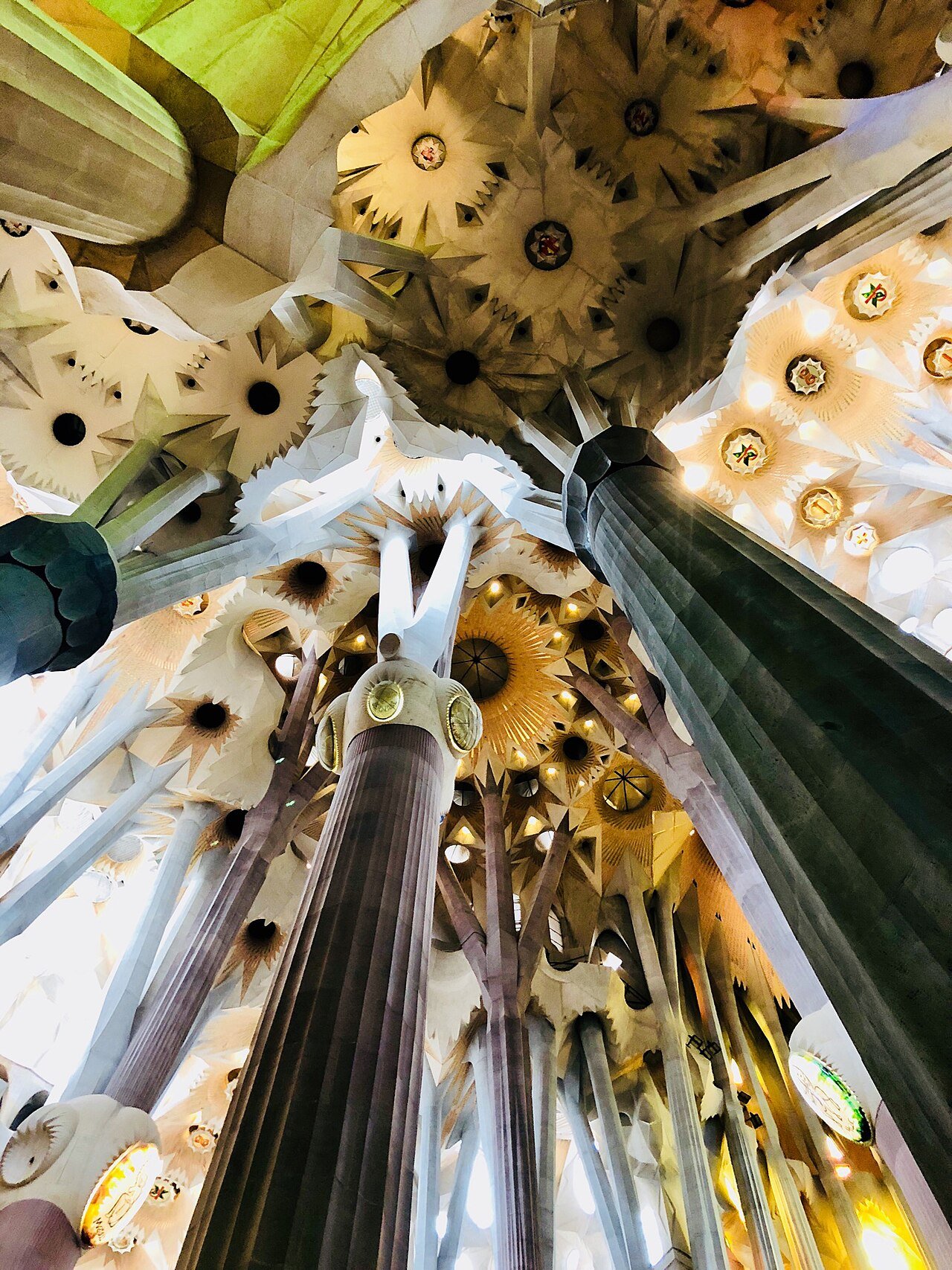
Walk in, take ten steps, and look up. This is the moment the whole visit is built around. Gaudí, who believed nature was God’s engineering manual, refused straight pillars and right angles. Instead the nave is a forest: dozens of stone trunks rising from the floor, tilting gently as they climb, then splitting — once, twice — into branches that spread into a canopy some 45 metres overhead. Nothing here is purely decorative; the branching is the structure, each fork gathering the weight of the vaults above and passing it down the trunk the way a tree carries its crown.
Look closer and the trunks change as they rise: the cross-section slowly twists and multiplies its sides, so a column that starts as a star-shaped base finishes almost a smooth circle at the top. The four great columns at the crossing, the strongest of all, are carved from deep-red porphyry and carry the symbols of the four evangelists. My advice: don’t rush for the centre-aisle photo. Stand still for a full minute first. The forest works on you slowly.
2. The Ceiling: A Canopy of Palms and Stars

Most visitors photograph the columns and forget to study what they are holding up. Don’t. The vaults above the nave are modelled on palm fronds and starbursts — vast stone leaves interlocking over your head, pierced by round skylights and gilded sun-discs inscribed with words from the liturgy. Where a Gothic ceiling draws your eye along rib and arch, this one feels grown rather than built, a treetop canopy filtering light onto a forest floor.
The geometry has a name — hyperboloid — and Gaudí used its curved surfaces to bounce light deep into the building rather than letting it pool in glare, so the interior never feels cavernous. The ceiling also hides a secret in plain sight: directly above the crossing rises the Tower of Jesus Christ, the 172.5-metre central tower completed outside in 2026, its weight arriving through those four porphyry columns as quietly as everything else in the forest.
3. The Cool Glass: Morning on the Nativity Side

The stained glass is the work of Joan Vila-Grau, who followed Gaudí’s instruction that the interior should be lit the way a day itself is lit: cool at the birth of things, warm towards their end. On the eastern, Nativity side, the windows run to blues, greens and turquoises — the colours of morning, water and new leaves. Come early in the day and that side of the forest is washed in a fresh, almost underwater light.
Vila-Grau’s glass is abstract rather than pictorial — no saints in robes, just fields of colour graded like a painter’s wash, with the names of sanctuaries lettered here and there in the panes. Stand in the centre aisle mid-morning and look back the way you came: the whole eastern wall glows blue-green behind you. Then turn around — the other half of the show is on the opposite wall, and this colour contrast is the single best argument for visiting on a sunny day.
4. The Fire Glass: Afternoon on the Passion Side
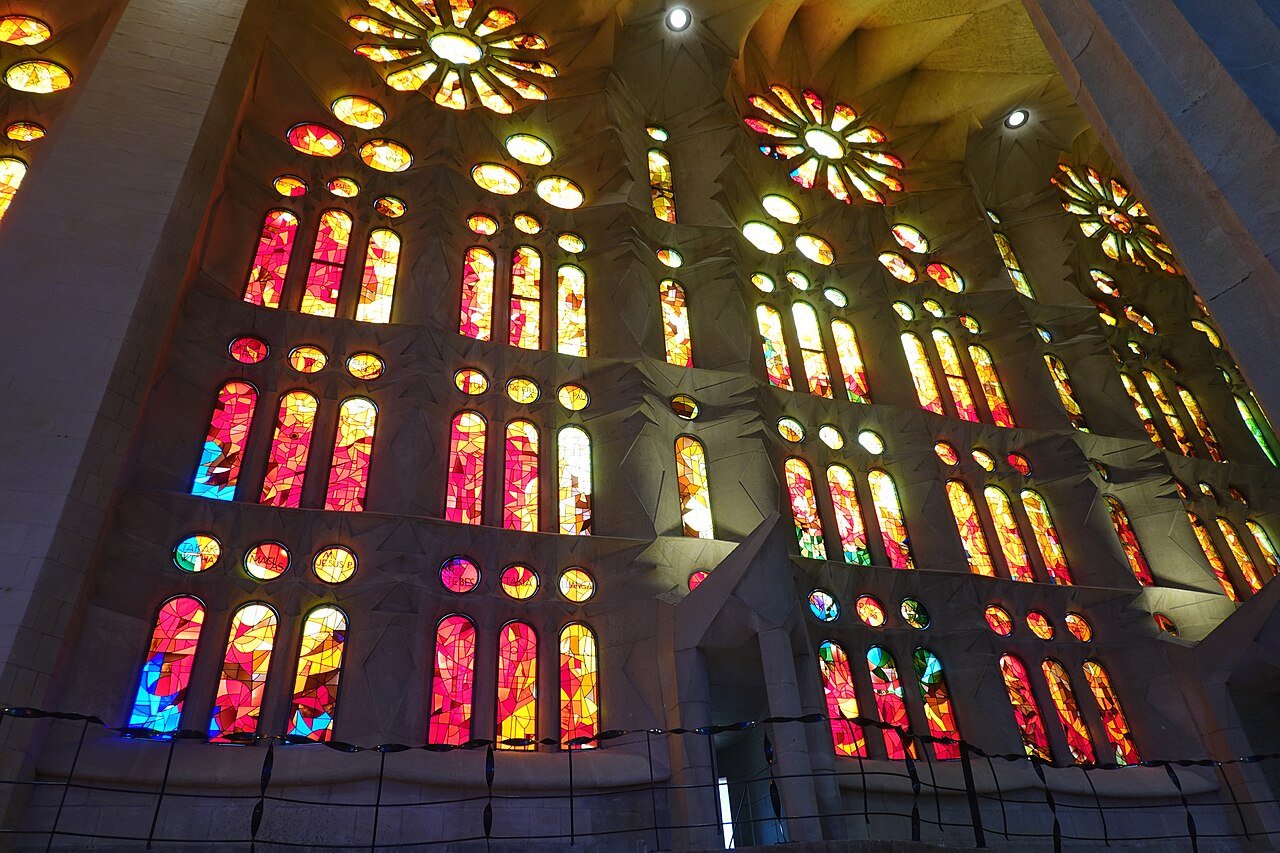
The western windows, behind the Passion facade, hold the day’s other mood: reds, oranges and golds, the palette of embers and sunset. From mid-afternoon, when the sun swings round to that side of the building, the light stops being gentle. It ignites. Pools of scarlet and amber slide across the floor and climb the columns, and the whole forest seems to smoulder. Regulars time their visits for this — if you take one tip from this article, take this one: for the full effect, book a slot in the mid-to-late afternoon on a bright day, and be standing in the nave when the west windows catch fire.
Gaudí, who died decades before this glass was made, specified the scheme and trusted others to finish it. Vila-Grau designed the glass to be intense but never violent, because the space is a place of prayer first — in the late-afternoon glow, with the crowds thinning, you can feel what he meant.
5. The Nativity Facade: Gaudí’s Own Stone Bible
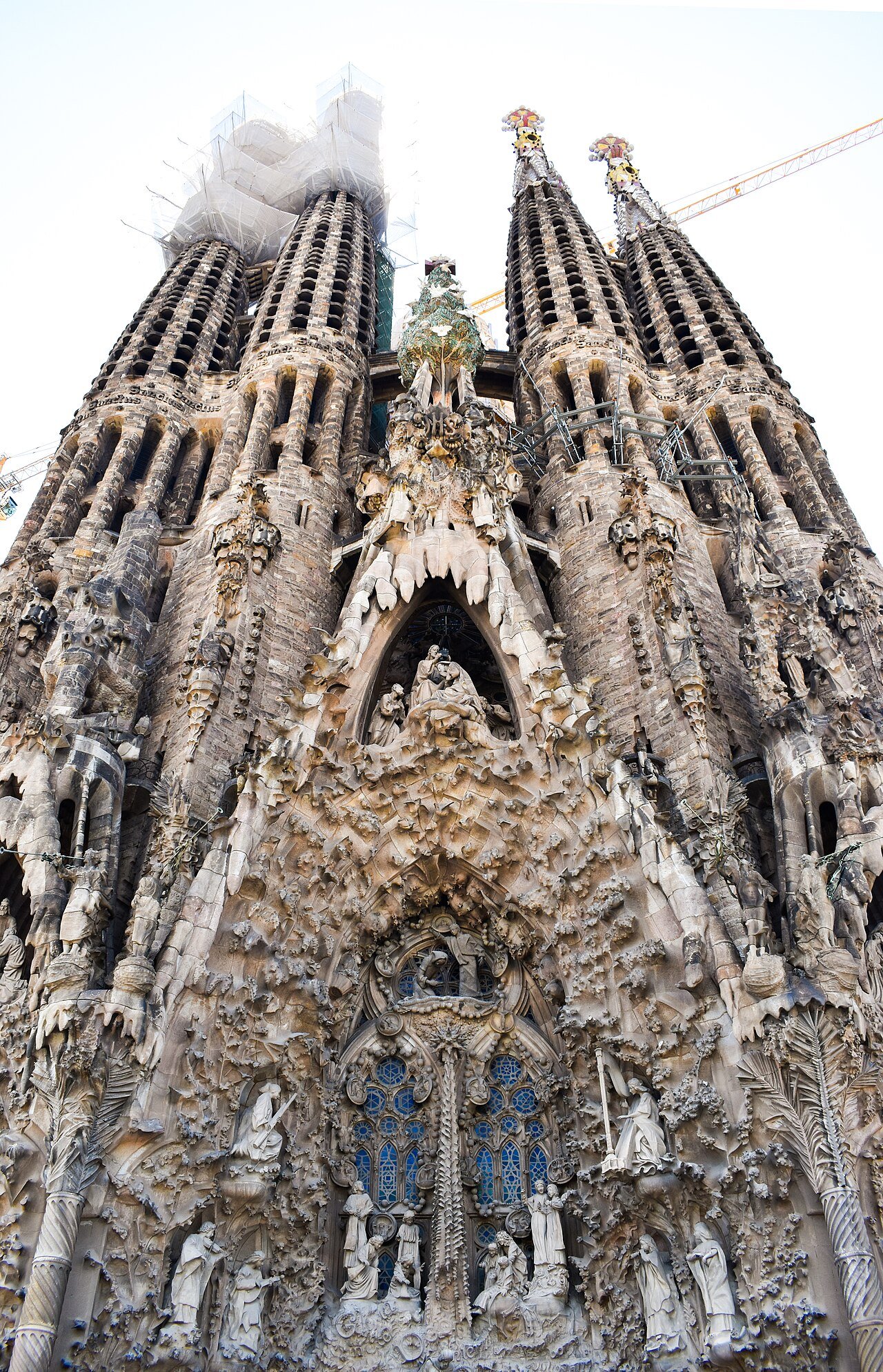
Technically you see this one before you go in — the visitor entrance is on this side, on Carrer de la Marina — but most people queue with their backs to it and miss half the detail. Arrive twenty minutes early and actually read it. It is the only facade Gaudí lived to see substantially built, packed with a carved Bible of Christ’s early life beneath a great stone cypress tree: the Nativity at the centre, the Magi and the Shepherds, angels with trumpets and harps, and everywhere the natural world he loved — tortoises holding up columns at the base, chameleons, birds, plants.
He completed this facade first, and made it the most joyful of the three, reasoning that the story of a life should begin with a birth, not a death — and that the public, seeing this, would fund the rest. A century later, it worked. Together with the crypt, this facade is the part inscribed by UNESCO as a World Heritage Site.
Free Barcelona travel guide
Planning a trip to Barcelona? Get our free one-page Barcelona checklist: what to book ahead, what to skip, and the tapas bars we actually eat in.
6. The Passion Facade and the Magic Square
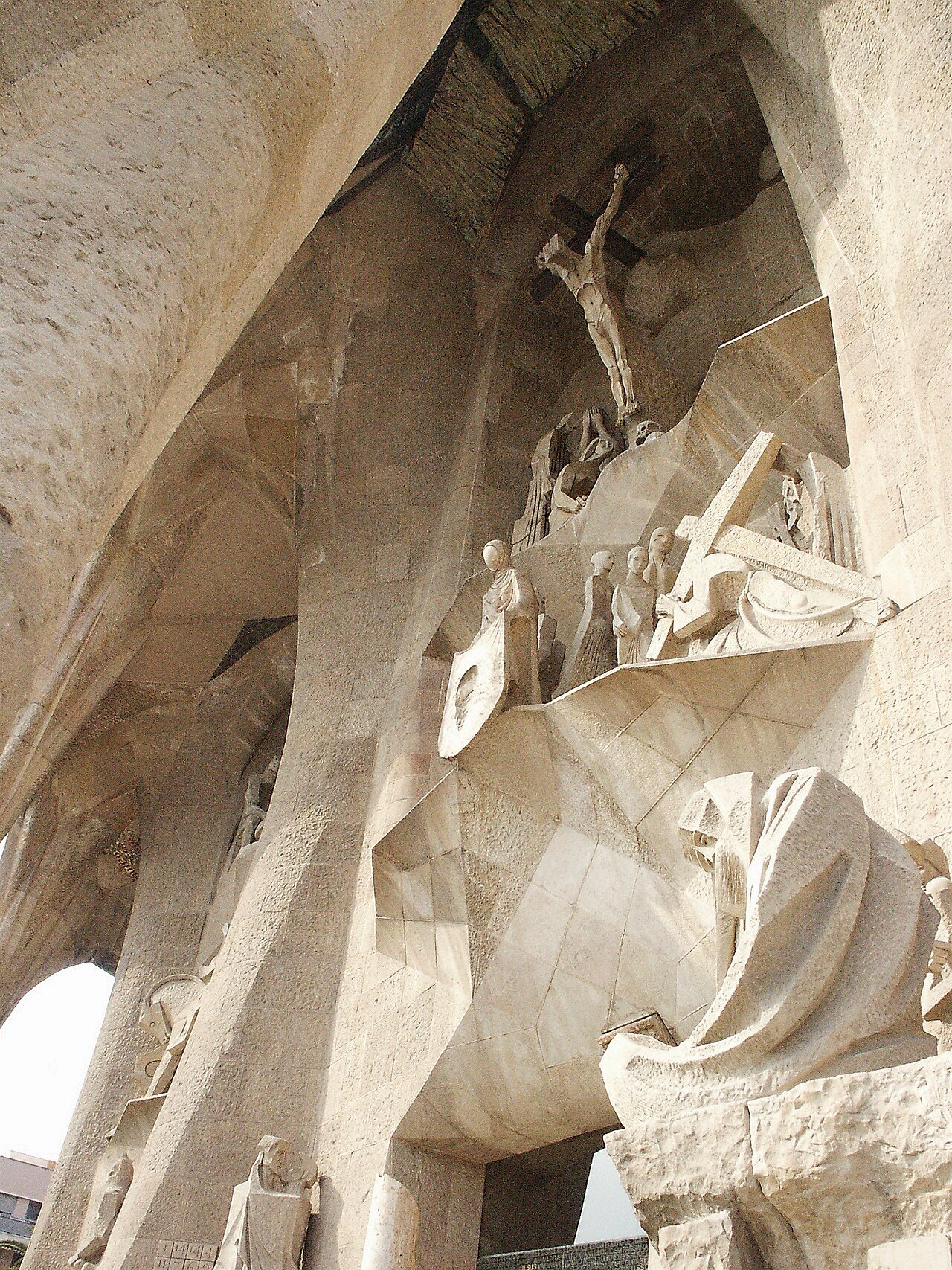
Cross to the western side, on Carrer de Sardenya, and the temperature changes. The Passion facade, carved in the late twentieth century by Josep Maria Subirachs, tells the story of Christ’s suffering and death in a style deliberately opposite to the Nativity side: bare bone-white stone, gaunt geometric figures, faces like masks of grief. Half of Barcelona still argues about whether it belongs on Gaudí’s church at all — see it and take your own side.
Two details to hunt for. First, the magic square beside the sculpture of Judas’s kiss: a grid of numbers that adds up to 33 — the age of Christ at the Crucifixion — in every row, column and diagonal. Second, among the top-level figures stands an evangelist whose face sharp-eyed visitors swear is Gaudí’s own, Subirachs’ quiet tribute to the master.
7. The Apse and the Crucifix Beneath Its Canopy
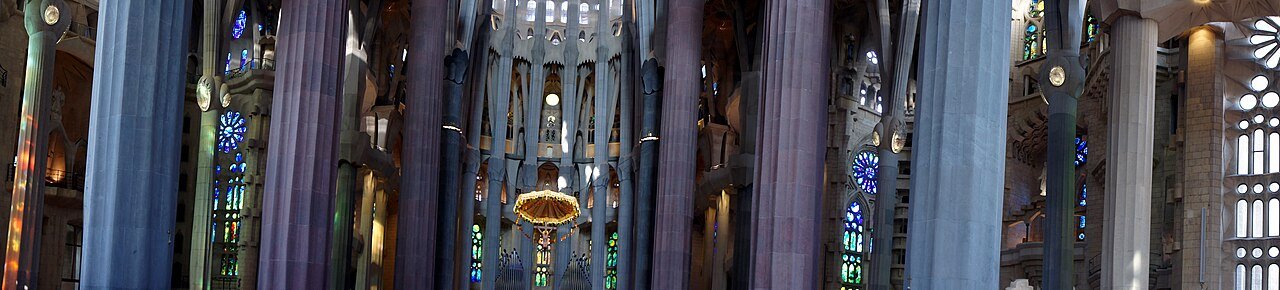
At the far end of the nave, past the crossing, sits the working heart of the building — remember, this is a working church, consecrated as a basilica in 2010, with Masses said daily. Above the altar hangs one of the interior’s most unexpected sights: a great golden canopy, part parasol, part vine, trailing ceramic grapes and wheat, with Christ on the cross suspended beneath it, lit like something descending through the treetops.
The apse around it is ringed with chapels; on the floor of the transept nearby, look down for the great mosaic initials of Jesus, Mary and Joseph woven into the stone. I bring visitors here last among the ground-floor sights, because the apse is where the building stops being an architectural wonder for a moment and becomes what it was built to be. Sit in a pew. Be quiet for a minute. Even the tour groups lower their voices here.
8. The Glory Doors: One Prayer in Fifty Languages
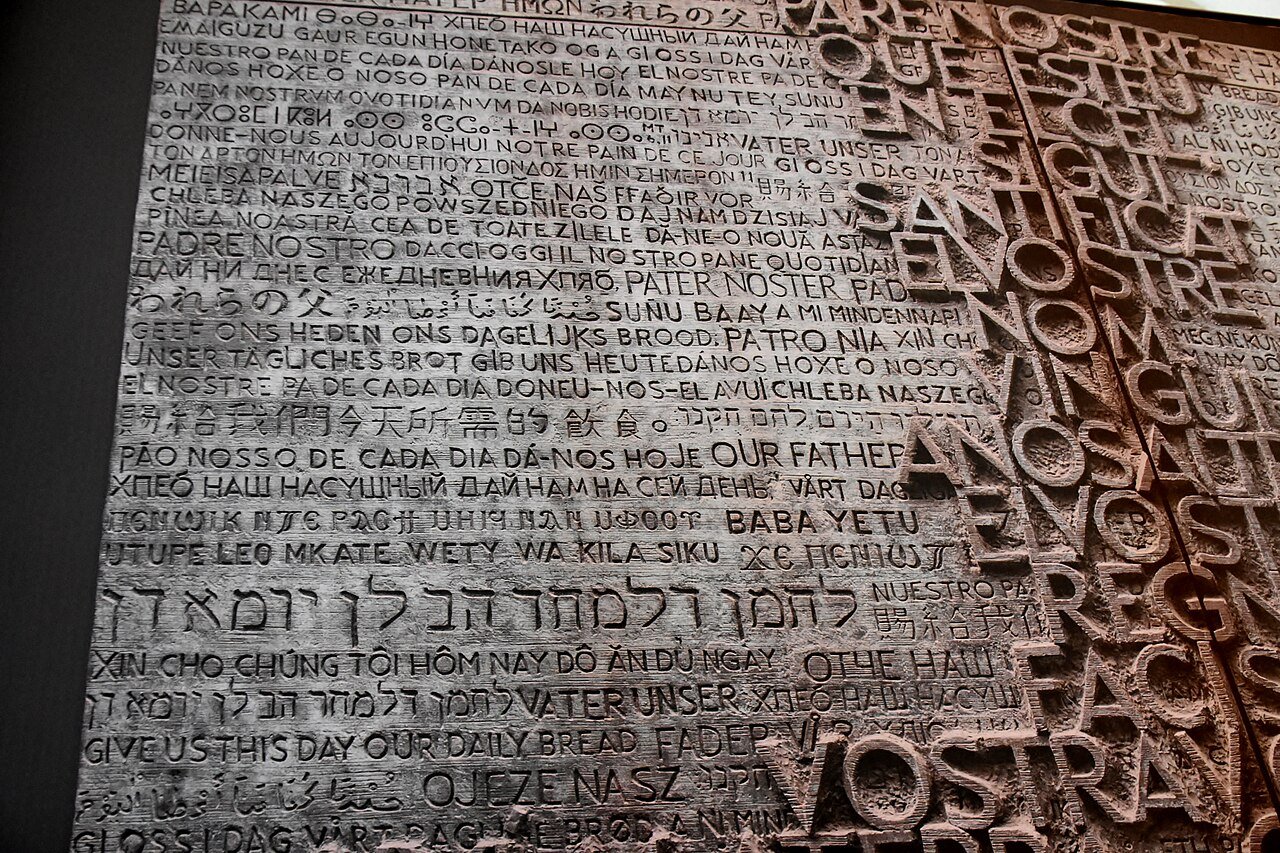
The southern Glory facade will eventually be the church’s grand main entrance — a decade or so of building still separates it from completion — but its bronze doors, already in place, are among my favourite details in the building. Covering them, in Subirachs’ lettering, runs the Lord’s Prayer: the complete prayer in Catalan stands raised and polished across the centre, “give us this day our daily bread” picked out in gold, while around it the same petition repeats in some fifty other languages — Hebrew, Arabic, Japanese, Swahili and dozens more.
It is the perfect Gaudí-era idea executed after his death: one prayer, every tongue, nobody excluded. Find the languages you know on the surface — then notice how many scripts you’ve never seen anywhere. When the Glory facade is finished, these doors will be how everyone enters. For now they’re a quiet preview most visitors walk straight past.
9. The Museum: Where the Building Explains Itself

Do not skip the museum, beneath the church on the Passion side and included in your ticket. This is where the “how on earth did he design that?” questions get answered. Gaudí did not draw this building the way architects draw; he modelled it, in plaster, at large scale, and the vaulted galleries hold those extraordinary white models — whole bays of the nave forest, facade studies, towers — some original, some painstakingly reconstructed.
Reconstruction was necessary because in 1936, during the Spanish Civil War, Gaudí’s on-site workshop was burned and his models smashed. His successors spent years reassembling the fragments like a three-dimensional jigsaw, then reverse-engineered his geometry with computers — work the museum explains through drawings, photographs and the famous hanging model of strings and weighted sacks: design the church upside down in chains, let gravity draw the perfect arch, then flip it over. Give the museum a good half hour; it transforms a second look at the nave afterwards.
10. The Model Workshop: Gaudí’s Method, Still Alive
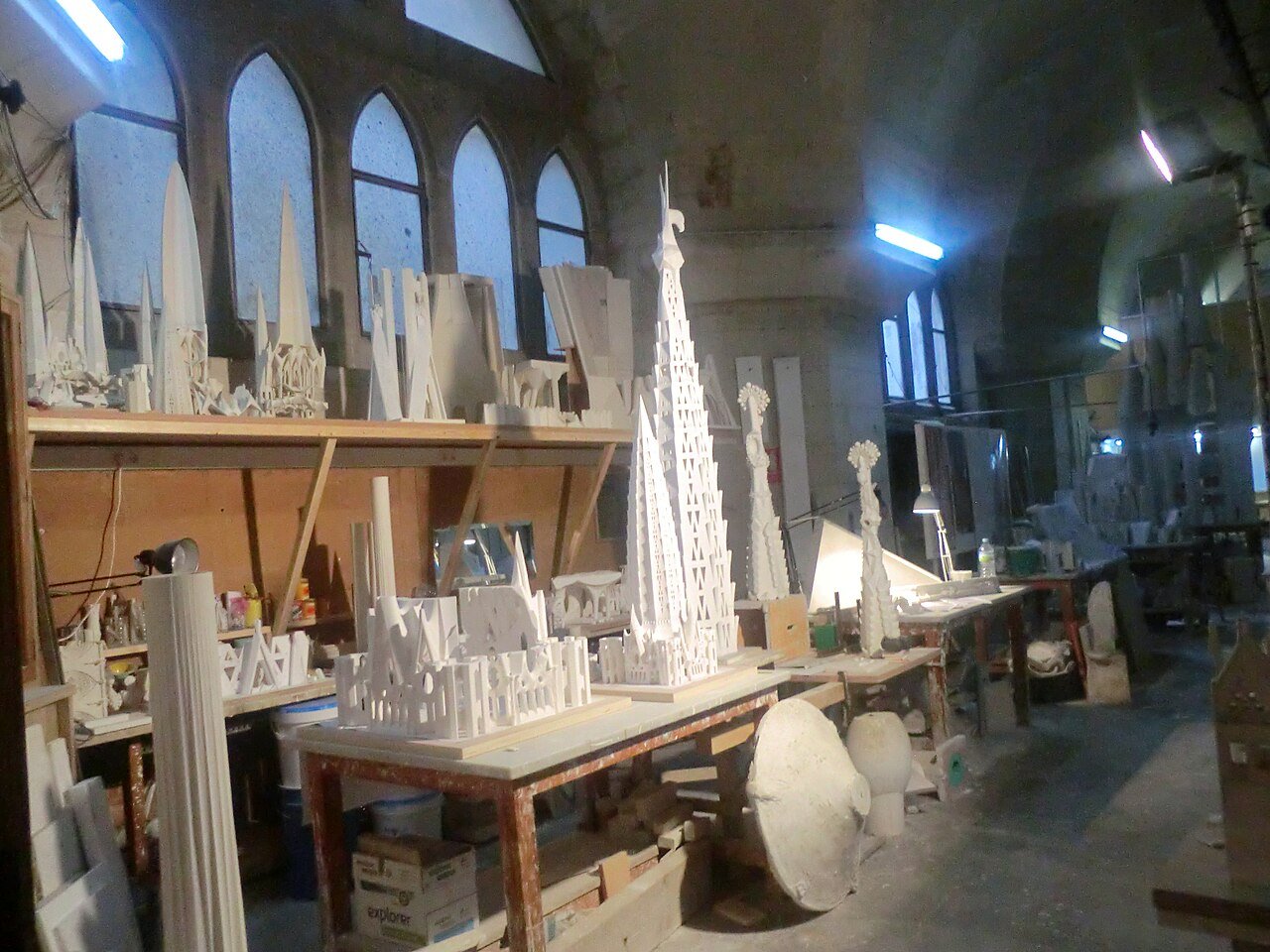
Part of the museum most visitors hurry through is the one I find most touching: the model workshop, where the basilica’s models are still made and repaired today, in direct line of descent from Gaudí’s own studio on this site. Shelves bend under plaster pinnacles, tower sections and facade details, all in the same chalky white, all built the way he insisted things be built — by hand, in three dimensions, tested against gravity rather than theory.
That faith in models over drawings is precisely why the church could survive his death: he left a method, not just plans. Builders here still work at 1:10 and 1:25 scale before committing a block of stone, now alongside 3D prints and CNC milling. There is something quietly staggering about a design office continuously occupied for a hundred years.
11. The Crypt and Gaudí’s Tomb

Beneath the apse lies the crypt, the oldest completed part of the church — begun before Gaudí, in a neo-Gothic style he inherited — and the most intimate. In its Chapel of Our Lady of Mount Carmel, under a plain inscribed slab, lies Gaudí himself. He died in June 1926, three days after being struck by a tram on his way to evening prayers, and was buried here in the building he had given his life to, half of Barcelona following the coffin.
The slab’s Latin calls him the “author of this temple” and says his ashes “await the resurrection of the dead” — inside a church still rising above him, which feels exactly right. The crypt is a place of prayer and opens to visitors at set times, often around Mass; check the day’s notices, and treat it as a chapel, not an attraction. It is the most human corner of the visit, and the right place to end the route.
The Towers: Worth the Extra?
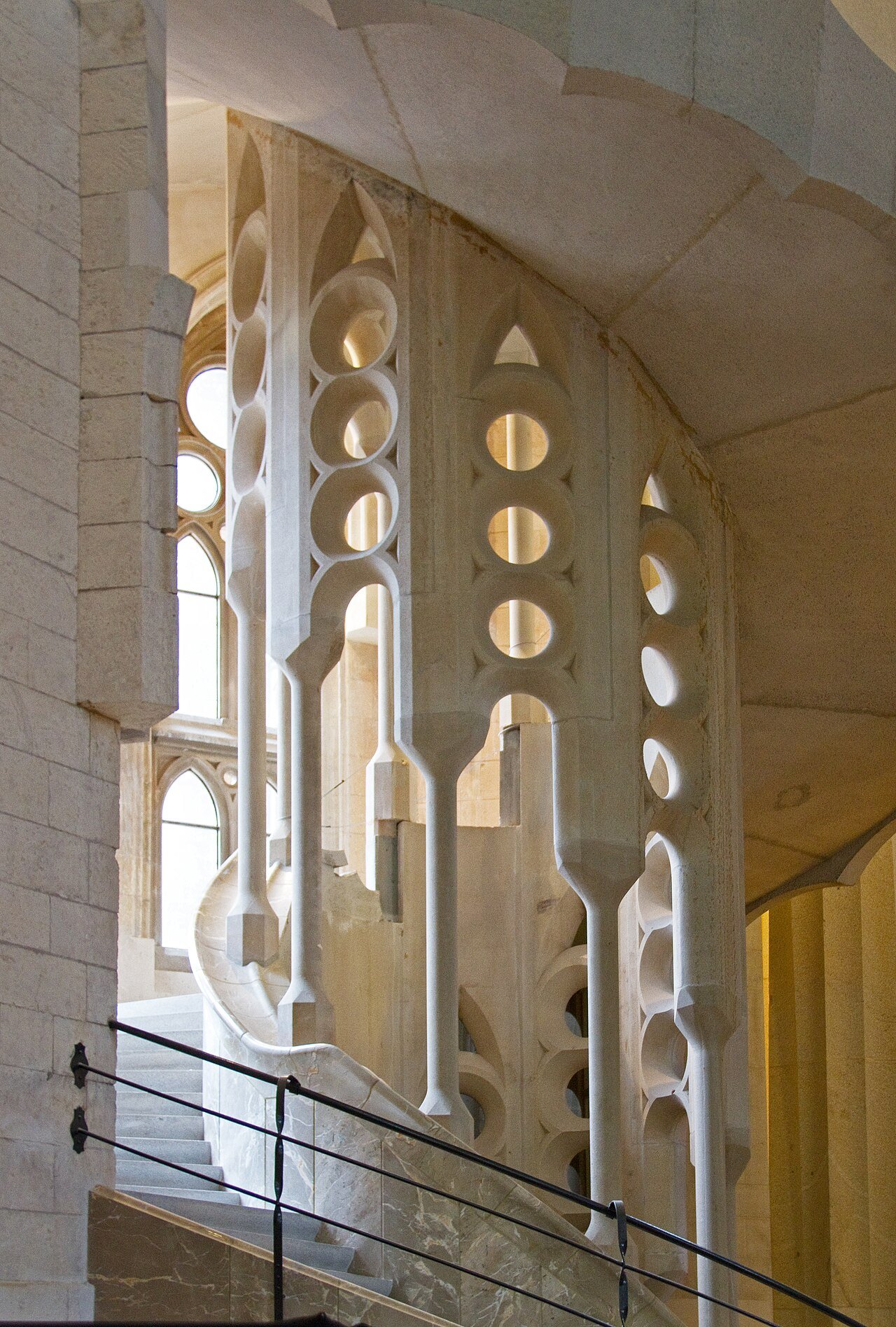
The honest answer: for most people, once — and choose the right tower. Tower access is a separate, timed add-on. A lift carries you up into one of the facade bell towers (you choose when booking, Nativity side or Passion side); the way down is on foot, down a tight spiral staircase that is an experience in itself and not one for anyone with vertigo, claustrophobia or unhappy knees.
What you get is not a sweeping Eiffel-Tower panorama — the openings are modest — but something more Sagrada-specific: the city’s chequerboard grid and the sea below, the basilica’s own pinnacles and fruit mosaics at arm’s length, and, from the bridge between the Nativity towers, a sculptor’s-eye view of the facade you read from the street. I send first-timers up the Nativity towers, for the facade detail and the morning light; the Passion side gives the wider western view. Lifts can be cancelled for wind or weather — another reason to treat the towers as the cherry, never the cake. And the central Tower of Jesus Christ, for all its record-breaking height, is not part of the visitor route: admire it from the crossing floor, looking up.
Tickets and Practical Tips
- Book online, book early. Tickets carry a timed entry slot and are not sold for walk-ups in any reliable way; in high season the good slots vanish well over a week ahead. Start here: Sagrada Família entry ticket.
- Prices, honestly: expect standard entry somewhere in the €30s at the time of writing, with guided tours and tower access costing more. Prices change, so confirm the current figure when you book rather than trusting any guide — including this one.
- Time the light. Morning entry = cool blue-green glass and thinner crowds; mid-to-late afternoon = the west windows on fire. For photography, afternoon wins; for quiet, take the first slot of the day.
- How long: ninety minutes minimum for the church alone; two hours with the museum, two and a half with a tower. Rushing this building is the one true way to waste the ticket.
- Audio guide and tours: the app-based audio guide is genuinely good; a guided tour earns its premium if you want the symbolism decoded — the magic square is easy to walk past.
- Getting there: the basilica has its own metro stop, Sagrada Família, on lines L2 and L5. General entry is on the Nativity side, Carrer de la Marina. Arrive fifteen to twenty minutes early for airport-style security screening.
- Dress and behaviour: it is a working basilica — covered shoulders, no beachwear, hats off, voices down. Personal photography is fine; tripods are not.
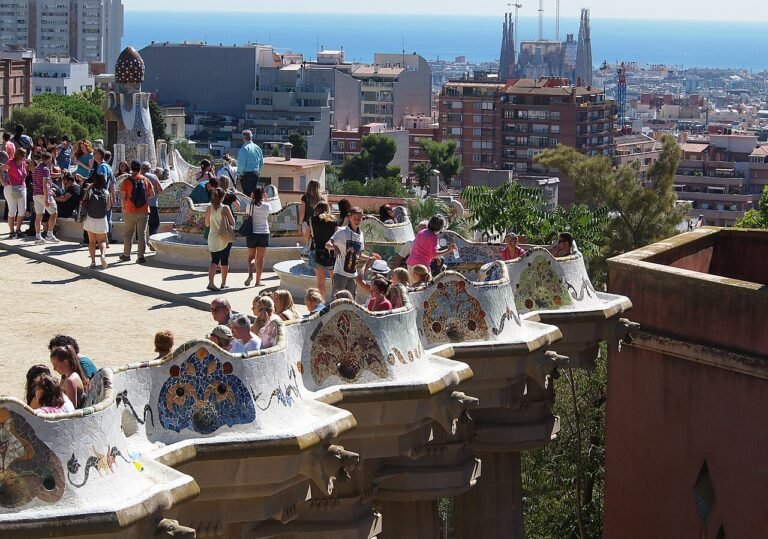
- Pair it: the Sagrada Família fills half a day at most, and combines naturally with Park Güell across the city — book both for the same day only if the slots are far apart: Park Güell entry ticket. Our 3 Days in Barcelona itinerary shows the pairing that works.
Travel insurance, sorted
Whether it is a two-week holiday or a longer move, travel insurance is the one booking not to skip. We point readers to SafetyWing’s Nomad Insurance — cover built for travellers, remote workers and longer stays abroad, on a flexible monthly subscription you can start before a trip or while you are already away. Get a quote from SafetyWing
Final Verdict
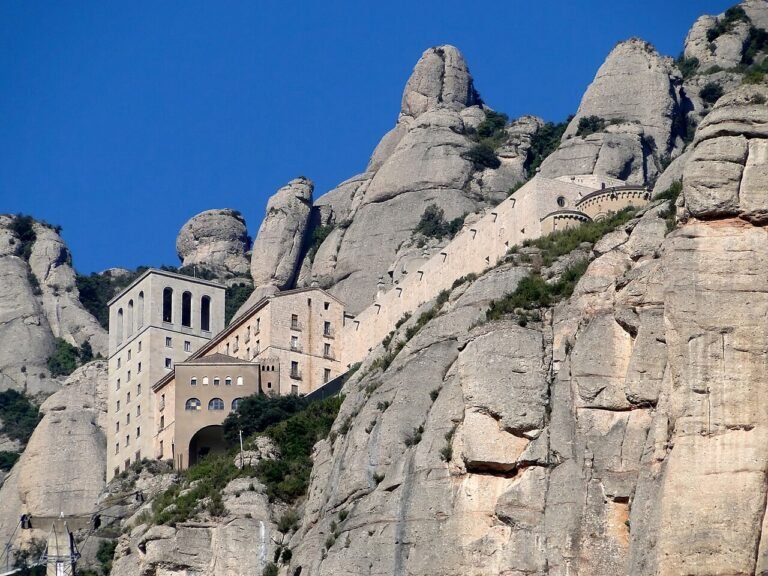
Is the Sagrada Família worth it? It is the single unmissable interior in Barcelona, and I’d go further: it belongs on any honest list of the great interiors of the world. The ticket is not cheap, the slots take planning, and the cranes are not going anywhere — and none of that survives the moment you step into that coloured, forest light for the first time. If your budget stretches to one paid attraction in this city, this is the one; our Best Time to Visit Barcelona guide will help you pick the season, and our Where to Stay in Barcelona guide covers the Eixample streets around it, the most convenient base for early entry slots. Had your fill of churches for one trip? Our Day Trips from Barcelona guide has Montserrat waiting. But do the Família first. Gaudí said his client was not in a hurry. You, timed ticket in hand, get to enjoy what a hundred years of patience built.
¡Buen viaje!
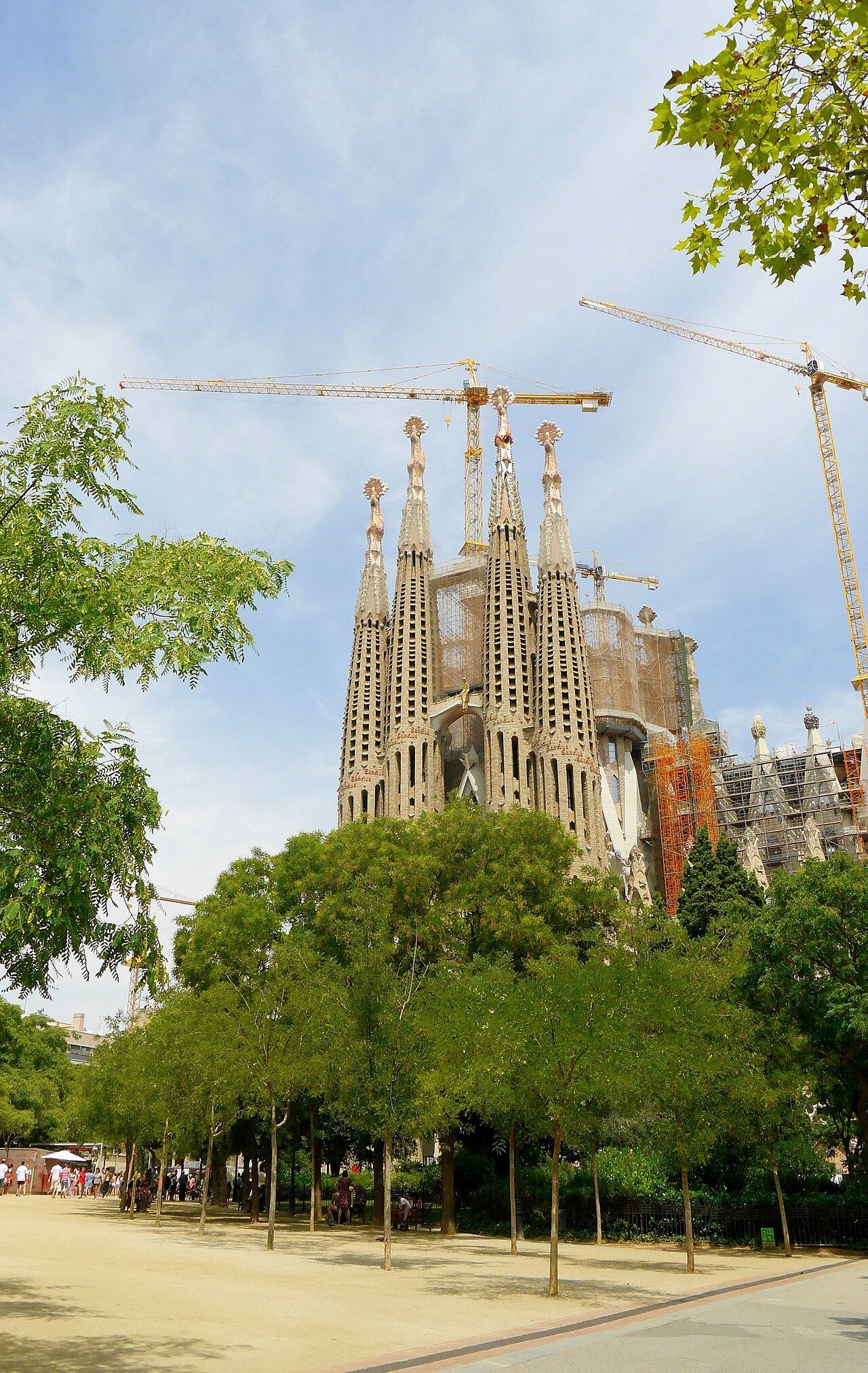
Photo credits: Nave of the Sagrada Família — Julian Lupyan, CC0 · The Forest of Columns — Gianluca Miscione, CC BY-SA 4.0 · The Ceiling — Ad Meskens, CC BY-SA 4.0 · The Cool Glass — Capvideo, CC BY 4.0 · The Fire Glass — Smiley.toerist, CC BY-SA 4.0 · The Nativity Facade — Julian Lupyan, CC0 · The Passion Facade — Rp22, CC BY 3.0 · The Apse and the Altar Canopy — Poniol60, CC0 · The Glory Doors — Richard Mortel, CC BY 2.0 · The Museum — Sagrada Família (oficial), CC BY-SA 3.0 · The Model Workshop — Cmr97, CC BY-SA 3.0 es · Gaudí’s Tomb — Bocachete, Public domain · The Towers Staircase — Tony Hisgett, CC BY 2.0. All via Wikimedia Commons.



21 Comments