Why Visit Barcelona? 15 Reasons This City Belongs on Your Spain Trip
Most European cities ask you to choose. Beach or culture? Old town or great food? A big-name sight in the morning or a neighbourhood you can actually live in for a week? Barcelona is the rare city that refuses the question. It has the most visited monument in Spain, a medieval quarter built over a Roman colony, a whole grid of nineteenth-century boulevards, real sand twenty minutes from the cathedral and a mountain monastery an hour away — and in 2026 it quietly added a record: its unfinished basilica became the tallest church on Earth.
That range is exactly why Barcelona puzzles first-timers. With this much going on, where do you start, what is it really like beyond the postcards, and does it deserve its place at the top of so many Spain itineraries? This guide gives you the honest version: 15 genuine reasons to go, the downsides nobody puts in the brochures, and the practical facts — ticket prices, the best months, the one booking you must not leave to chance — that decide whether the trip works.
One booking warning before anything else. The Sagrada Família sells timed, named tickets online only, and popular slots go days ahead in busy months. Sagrada Familia Entry Ticket with Audio Guide Through GetYourGuide that official ticket is rated 4.6/5 from 121,664 reviews, with free cancellation up to 2 days in advance — useful insurance for the one sight this whole city is built around.
Table of Contents
- Why Visit Barcelona? The Quick Verdict
- 1. The Sagrada Família — Now the Tallest Church in the World
- 2. A Whole Trail of Gaudí Masterpieces, Not Just One Building
- 3. Park Güell: A Park Like No Other
- 4. The Gothic Quarter and 2,000 Years of History
- 5. The Eixample Grid and Passeig de Gràcia
- 6. A Real City Beach, Twenty Minutes from the Cathedral
- 7. The Food: La Boqueria, Tapas and the Menú del Día
- 8. Montjuïc: A Whole Day Out on One Hill
- 9. The Viewpoints Above the Rooftops
- 10. Football and the New Camp Nou
- 11. Festivals All Year Round
- 12. Montserrat, an Hour Away
- 13. The Mediterranean Climate
- 14. Neighbourhoods That Still Feel Like Villages
- 15. It Fits Into Any Spain Trip
- The Honest Downsides
- When to Go
- Barcelona Tickets and Costs, Honestly
- Final Thoughts
- FAQs: Why Visit Barcelona?
Why Visit Barcelona? The Quick Verdict
Yes — and for most first trips to Spain, Barcelona is the single easiest city to recommend. It packs more world-class sights into walkable distance than anywhere else in the country, then adds the two things Madrid and Seville cannot offer: a beach and Gaudí. Give it a minimum of three full days; four or five lets you add Montserrat and stop rushing. Go in May, June or late September if you can. Book the Sagrada Família before you book anything else. The 15 reasons below explain why — and the honest downsides section further down explains what to watch out for.
1. The Sagrada Família — Now the Tallest Church in the World
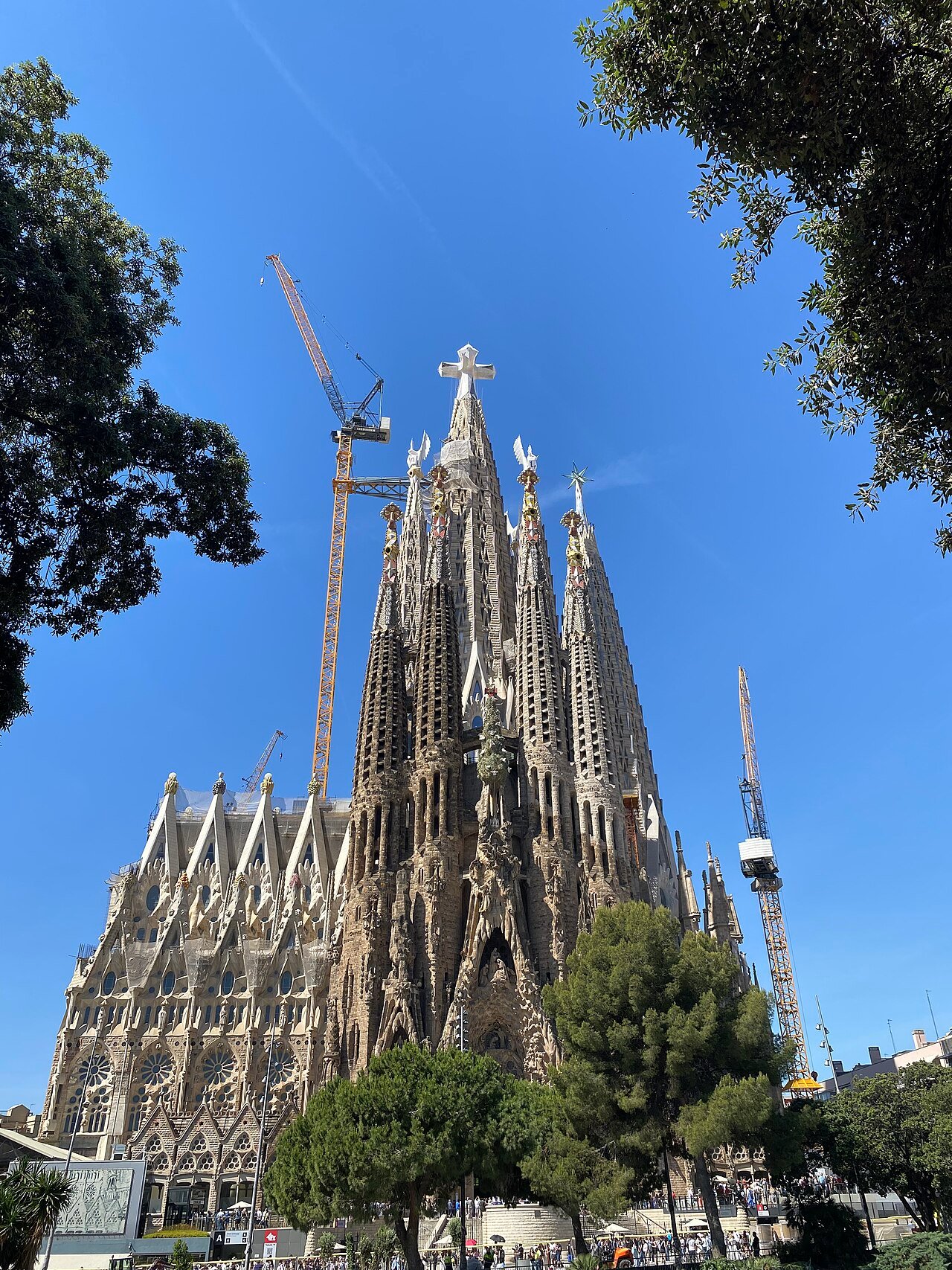
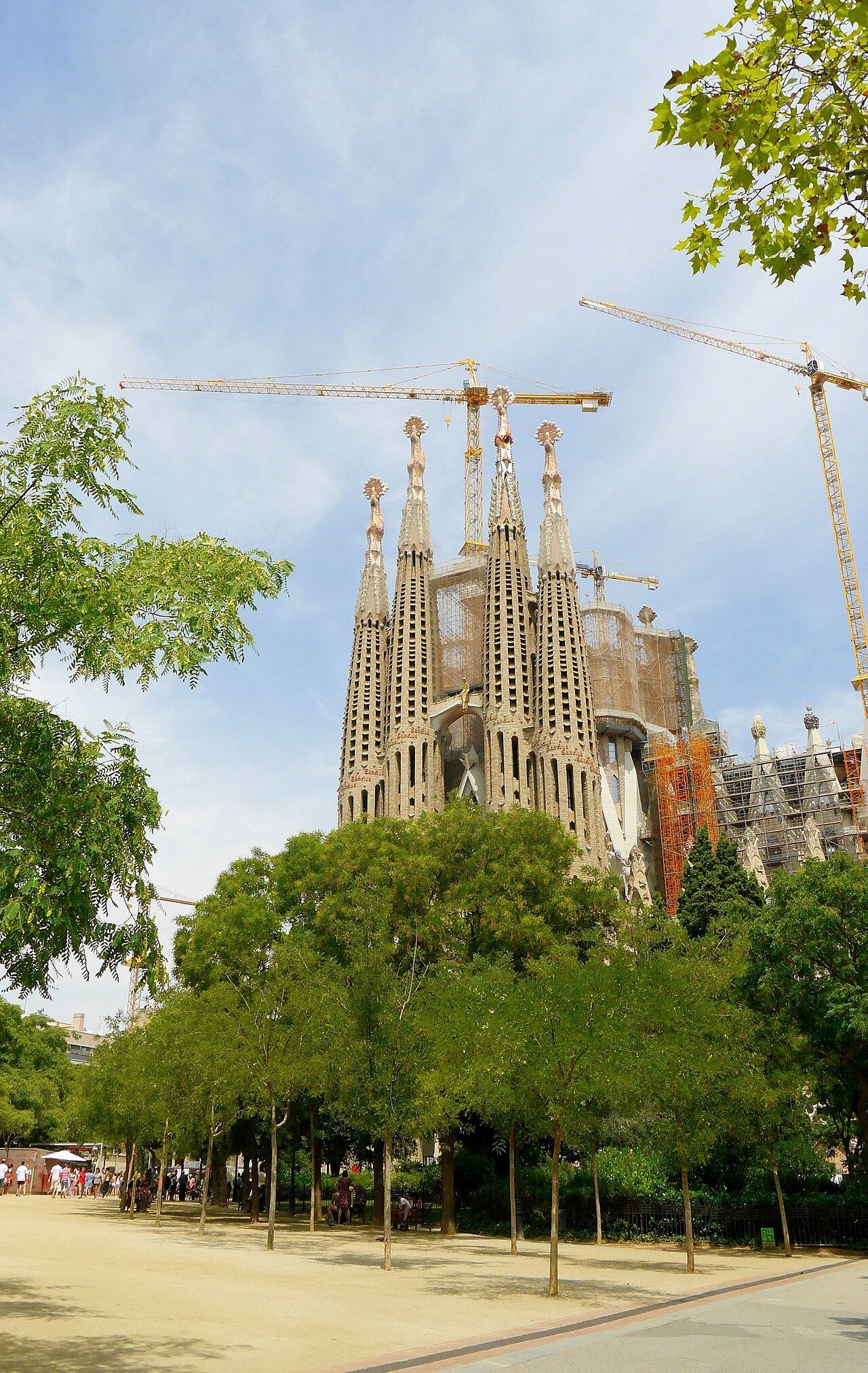
Every city has a symbol; Barcelona’s is a church that has been under construction since 1882 and is still not finished — and that is precisely the point of visiting now. Antoni Gaudí took over the project in 1883 and worked on it until his death in 1926, knowing he would never see it completed. In February 2026 the last piece of the central Tower of Jesus Christ was lifted into place, and on 10 June 2026 — exactly one hundred years after Gaudí’s death — Pope Leo XIV blessed the finished tower. At 172.5 metres the basilica became the tallest church in the world, passing Ulm Minster in Germany. Gaudí deliberately set the height just below Montjuïc hill: his church was not to out-top the work of God.
A visit today catches the building at its most interesting moment. The silhouette is finally complete — eighteen towers were planned, and the great central cross now crowns the skyline — while inside, work continues: the Glory Façade is still to be built and full completion is currently estimated for the mid-2030s, so you see a masterpiece and a building site in the same hour, which is a very Barcelona experience. The interior needs no scaffolding apology at all: a stone forest of branching columns, stained glass that floods one side in greens and blues and the other in fire oranges, and light that changes by the hour. For what to look for once you are inside, read our guide to Inside the Sagrada Família.
The practical facts: entrance is by timed, named ticket bought online — there is no box office — and the official basic ticket (basilica, museum and the audio-guide app) costs €26 on the church’s own site. Resellers charge more for the same access, so compare. Sagrada Familia Entry Ticket with Audio Guide The GetYourGuide version is the official ticket with that 4.6/5 rating from 121,664 reviews and free cancellation up to 2 days ahead. One honest note: the new Tower of Jesus Christ is not open to climb yet — it is a sight to look at, not up from, for now.
2. A Whole Trail of Gaudí Masterpieces, Not Just One Building
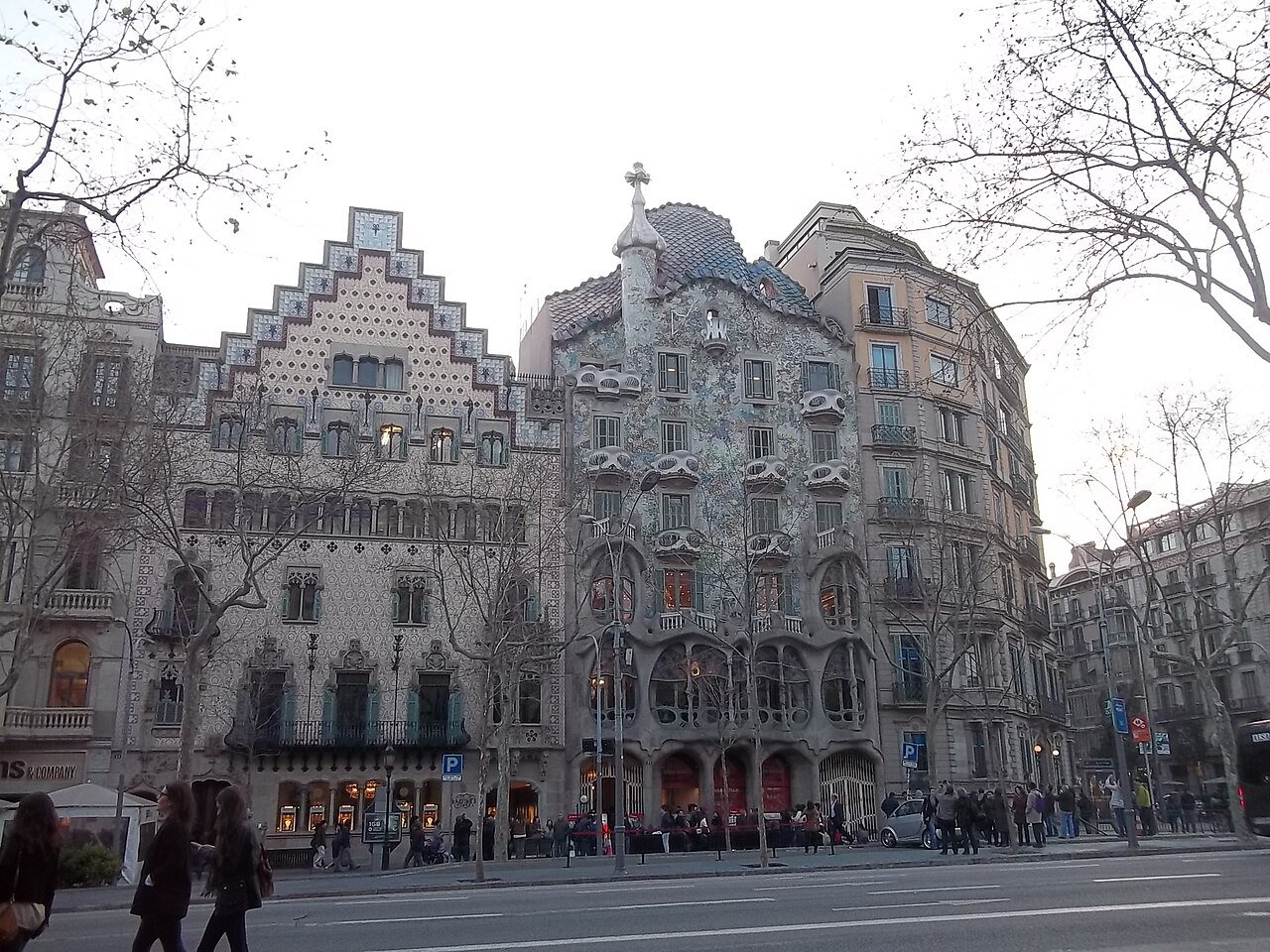
Plenty of cities have one genius building. Barcelona has a trail of them, and walking it is the closest thing travel offers to reading a novel in buildings. Casa Batlló, on Passeig de Gràcia, is the famous one: a façade of bone-like stone and dragon-scale tiles, and an interior where door handles, window frames and even the light wells are shaped by hand and eye. Next door sits Casa Amatller, by Gaudí’s rival Puig i Cadafalch, and a few doors down Domènech i Montaner’s Casa Lleó Morera — the three are known as the Block of Discord, modernisme’s architects competing on a single street. Ten minutes away, Casa Milà (La Pedrera) rolls like a stone sea, its rooftop guarded by warrior chimneys.
The trail keeps going: Palau Güell, Gaudí’s early palace just off La Rambla; the lampposts he designed for Plaça Reial as a young man; the Hospital de Sant Pau, Domènech i Montaner’s garden-city hospital of pavilions and mosaics, which many visitors quietly rate above the houses. Count them up and Barcelona holds nine UNESCO World Heritage sites, most of them modernista. To walk the whole trail inside a day or two is possible only here. For the full story of the dragon-roofed house, see our Casa Batlló guide.
Prices, honestly: the big Gaudí houses run on date-based pricing — Casa Batlló and La Pedrera both start from €29, and Sant Pau costs €18. Seeing all of them adds up; pick two interiors, and enjoy the rest from the pavement, where they cost nothing and still stop you in your tracks.
3. Park Güell: A Park Like No Other
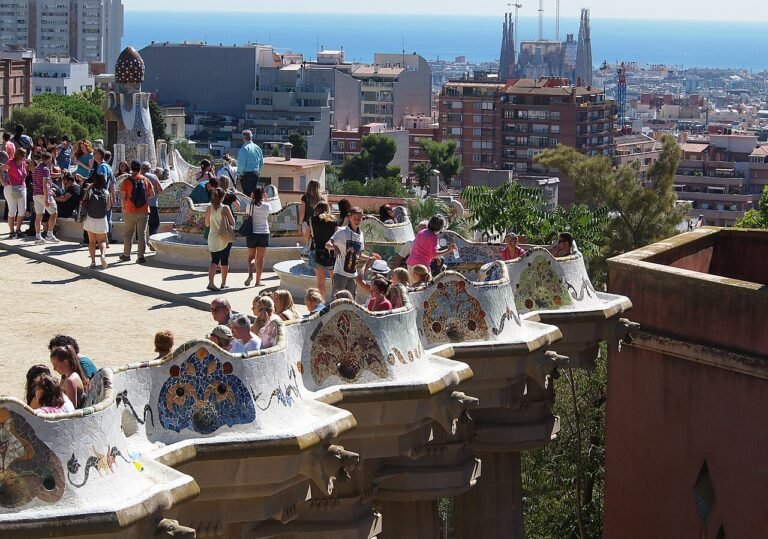
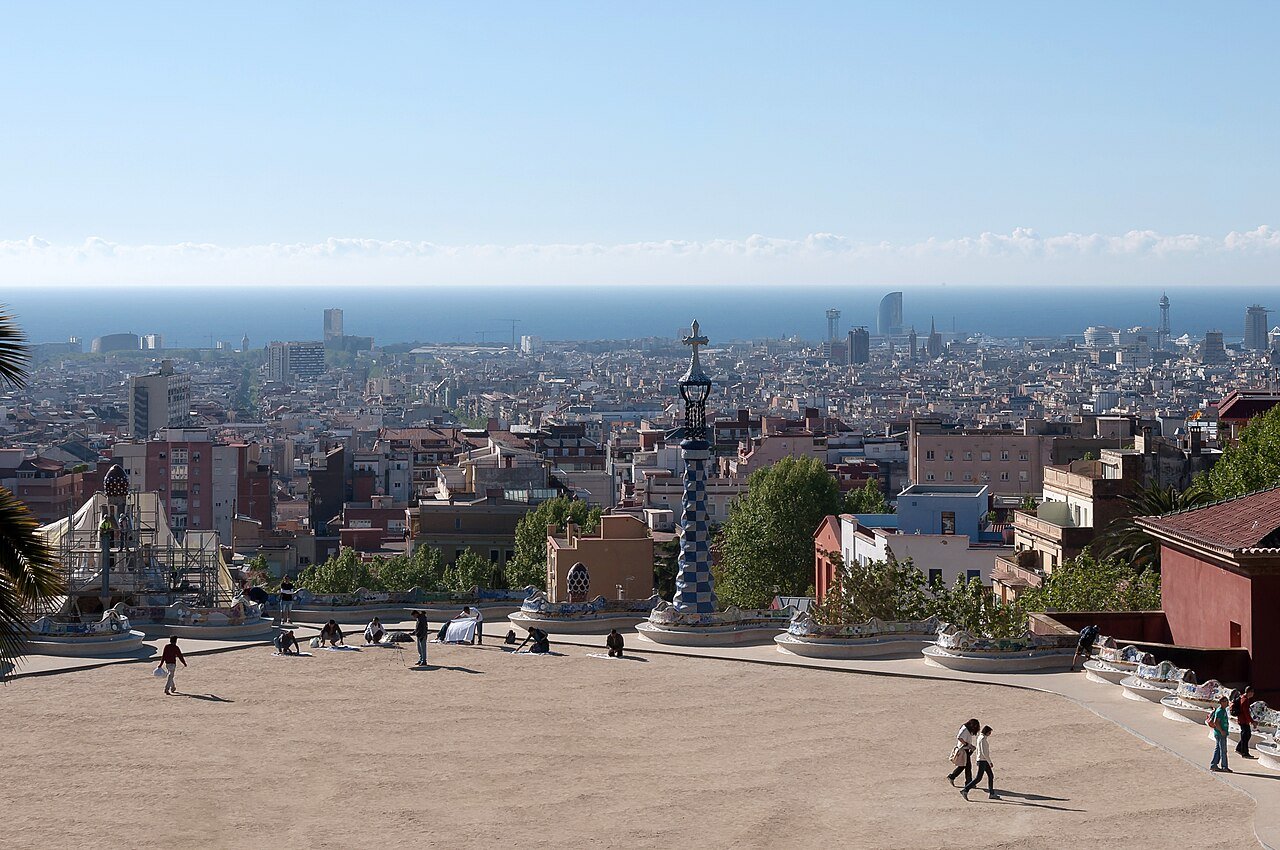
Above the Gràcia neighbourhood, Park Güell is what happened when Gaudí’s patron Eusebi Güell tried to build a garden suburb for wealthy families and the buyers never came. The houses failed; the park became immortal. You enter past two gingerbread gatehouses, climb the staircase guarded by El Drac — the mosaic salamander that is Barcelona’s unofficial mascot — and arrive at a forest of leaning stone columns holding up one of the great urban terraces: a vast plaza ringed by a single winding bench of broken-tile mosaic, with the whole city and the Mediterranean spread out below.
The entrance zone (the Monumental Zone) is ticketed and timed: €18 for adults and €13.50 for children aged 7–12 and seniors at the time of writing, booked online — the price rose in 2026, so ignore older guides quoting €10. What many visitors miss is that most of the park, the pine woods and viaducts and viewpoints above the ticketed core, is completely free and open to all; locals walk dogs there at dawn while the tour groups queue below. Go early or at golden hour, and read our complete Park Güell guide before you book, because the entry rules reward planning.
4. The Gothic Quarter and 2,000 Years of History
Gaudí gets the headlines, but Barcelona is two thousand years old, and its oldest layer is a joy to get lost in. The Romans founded the colony of Barcino here around the end of the first century BC, and pieces of their wall still stand woven into later buildings; in the MUHBA museum you can walk underground streets past Roman dye works and wine cellars, then surface beside the four surviving columns of the Temple of Augustus, hidden inside a medieval courtyard. Above that Roman skeleton grew the medieval city: the cathedral, with its cloister of thirteen white geese; the royal palace and the chapel of Santa Àgata on Plaça del Rei; palaces along Carrer de Montcada that now hold the Picasso Museum.
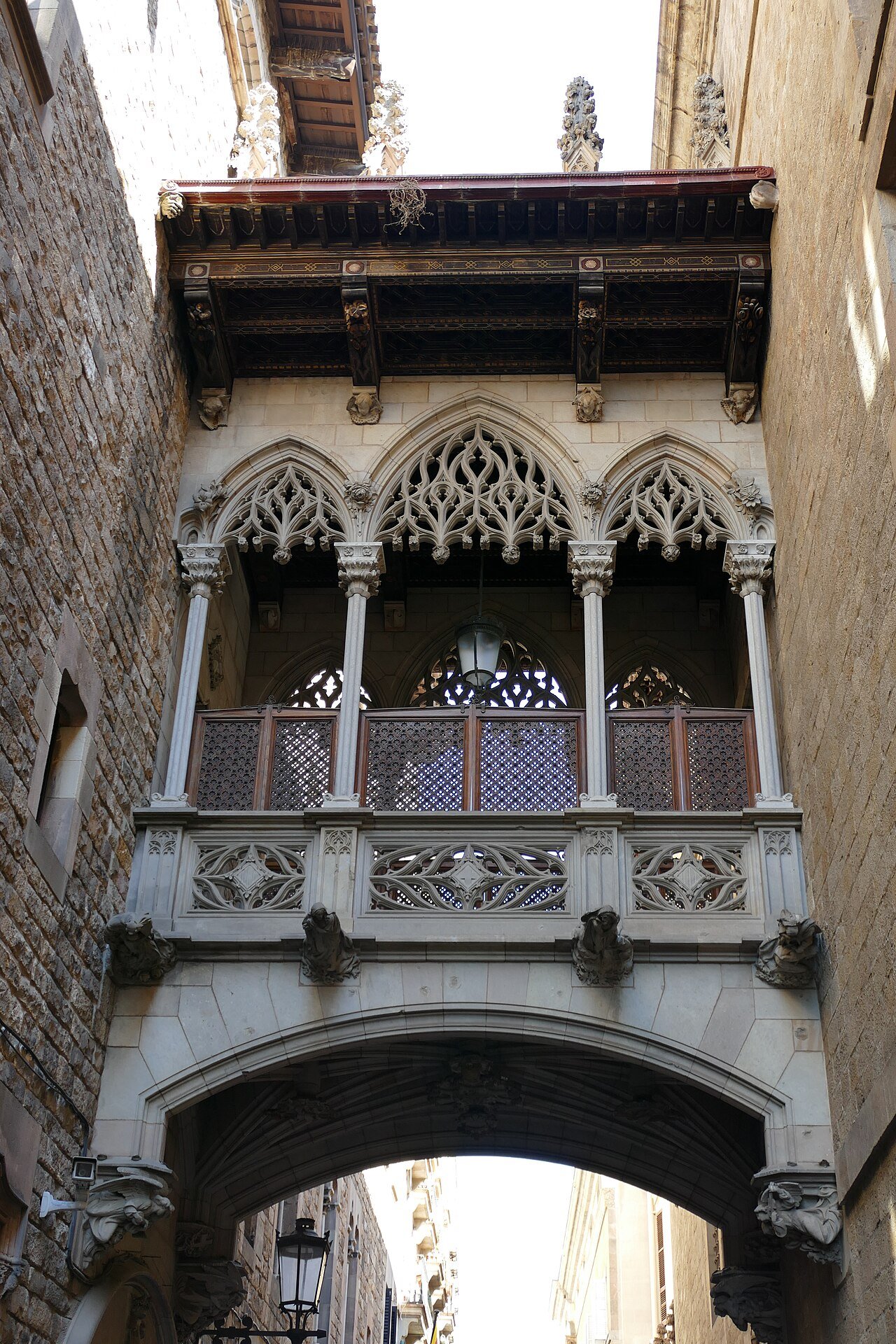
A confession the quarter itself keeps quiet: its most photographed sight, the lacy Pont del Bisbe bridge on Carrer del Bisbe, is not medieval at all — it was built in 1928, in pitch-perfect neo-Gothic. That sums up the Gothic Quarter: genuinely ancient bones, lovingly dressed up over the centuries, and all the better for an honest look. Wander it early in the morning before the groups arrive, and use our Gothic Quarter guide to find the corners the crowds walk straight past.
5. The Eixample Grid and Passeig de Gràcia
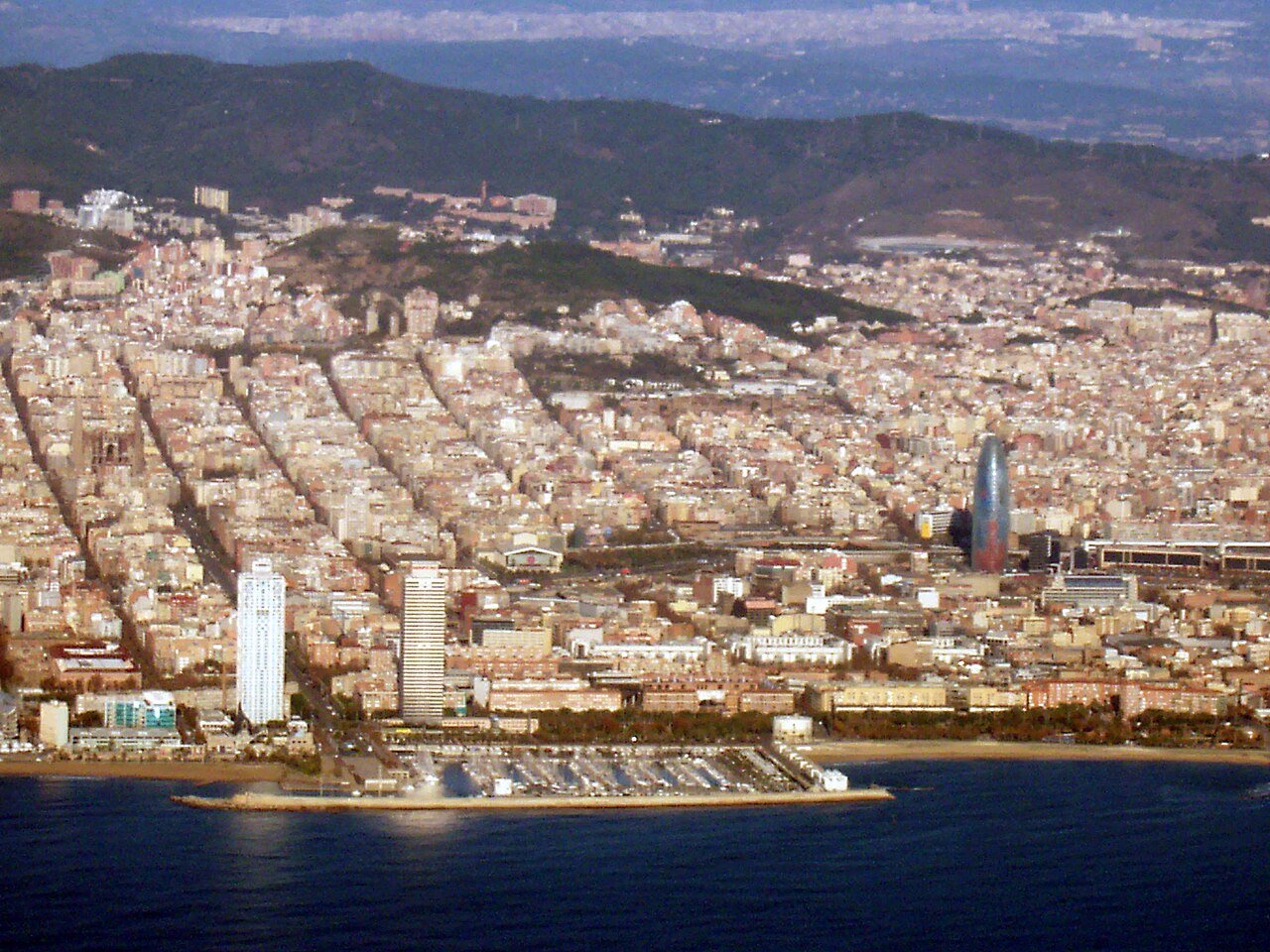
In 1859 Barcelona approved the most radical city plan in Europe. Engineer Ildefons Cerdà laid out the Eixample — “the Expansion” — as a grid of octagonal blocks, their corners cut off at 45 degrees to open up light, air and sightlines at every junction. Seen from the air, those chamfered blocks make a pattern no other city has; down at street level, the result is wide pavements, plane trees, and a district where getting lost is geometrically difficult.
The Eixample is also where Barcelona shops, eats and shows off. Its central boulevard, Passeig de Gràcia, runs from Plaça de Catalunya past the Block of Discord to the Gràcia neighbourhood, lined with the flagship stores of every luxury brand — but the real spectacle is free: the modernista façades, Gaudí’s lampposts and mosaic benches, and the city’s grandest apartment buildings. Walk it once in the morning for the architecture and once at dusk, when the shop windows and the Batlló façade light up, and you understand why Barcelonans treat a street as a sight in its own right. Today the district is being rebalanced again with “superblocks” that hand whole intersections back to pedestrians — Cerdà’s experiment is still running.
6. A Real City Beach, Twenty Minutes from the Cathedral
Here is the thing no rival Spanish city can copy: Barcelona is a serious sightseeing city that also has around five kilometres of sandy beaches, in a chain of ten, reachable on foot or by a short metro ride. Barceloneta is the classic — a former fishermen’s quarter of narrow streets and laundry-strung balconies, fronting a broad beach with its landmark W Hotel sail at the far end. The whole seafront was rebuilt for the 1992 Olympics, which turned a derelict industrial shore into the promenade the city now lives on.
Be honest with yourself about what a city beach is: lively, social, full of beach bars and volleyball nets, and packed in August — not a deserted cove. Judge it as the locals do, as the city’s outdoor living room: a morning swim before sightseeing, a late-afternoon caña at a chiringuito, a sunset walk from Barceloneta to the Port Olímpic. The water is cleanest after calm spells; after heavy storms, wait a day. Our Barcelona beaches guide ranks the whole chain, from busy Barceloneta to the quieter northern sands at Nova Icària and Bogatell.

7. The Food: La Boqueria, Tapas and the Menú del Día
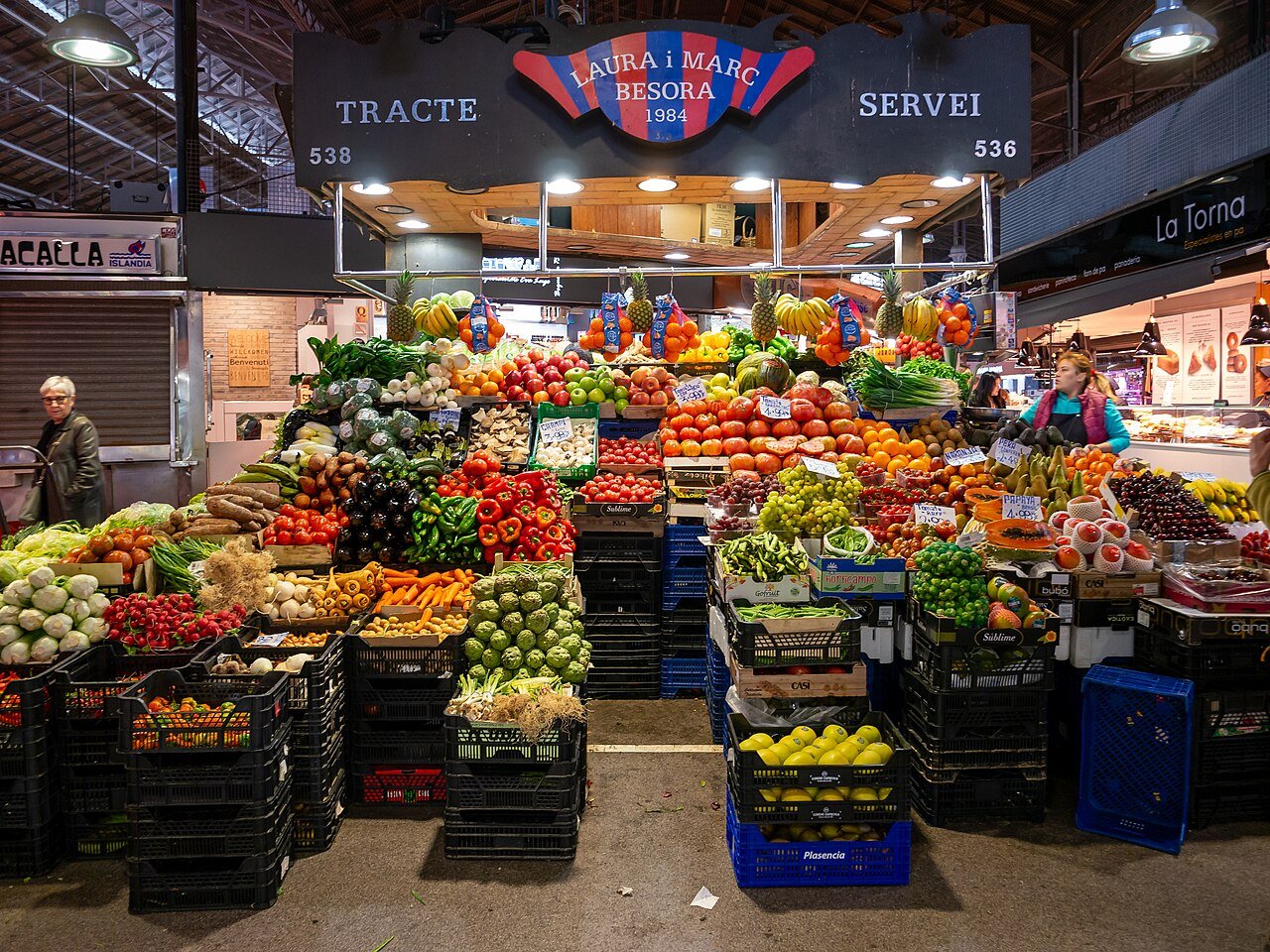
Barcelona eats brilliantly at every budget, and its temple is a market. La Boqueria, off La Rambla, has roots in thirteenth-century meat stalls and opened its iron-and-glass hall in 1840; today it is part working market, part theatre. The front aisles are pitched at visitors, so do what the locals do: walk past the juice cups to the deeper stalls and the tiny bars at the back, order what is being cooked in front of you, and let breakfast become an event. Beyond the market, the city’s food rhythm is easy to join — a vermouth before lunch, tapas standing at a bar counter in El Born or Poble-sec, and above all the menú del día, the fixed weekday lunch (typically €12–15) that remains Spain’s greatest travel bargain.
Catalan cooking has its own canon, different from the Andalusian south: pa amb tomàquet (bread rubbed with tomato) under everything, escalivada’s smoky peppers and aubergines, botifarra sausage, suquet fish stew, and crema catalana to finish — the original burnt-cream dessert, whatever France says. Save one serious meal for a neighbourhood restaurant in Gràcia or Sant Antoni, where the city’s chefs cook for their own people.
8. Montjuïc: A Whole Day Out on One Hill
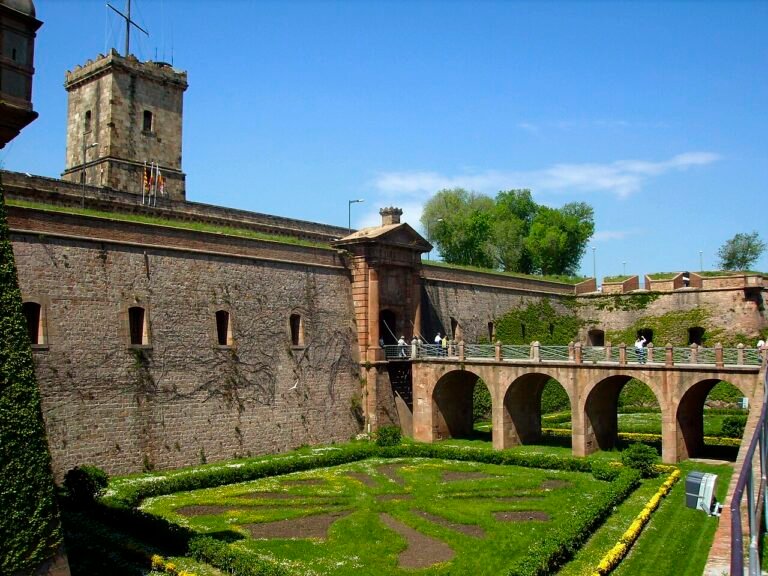
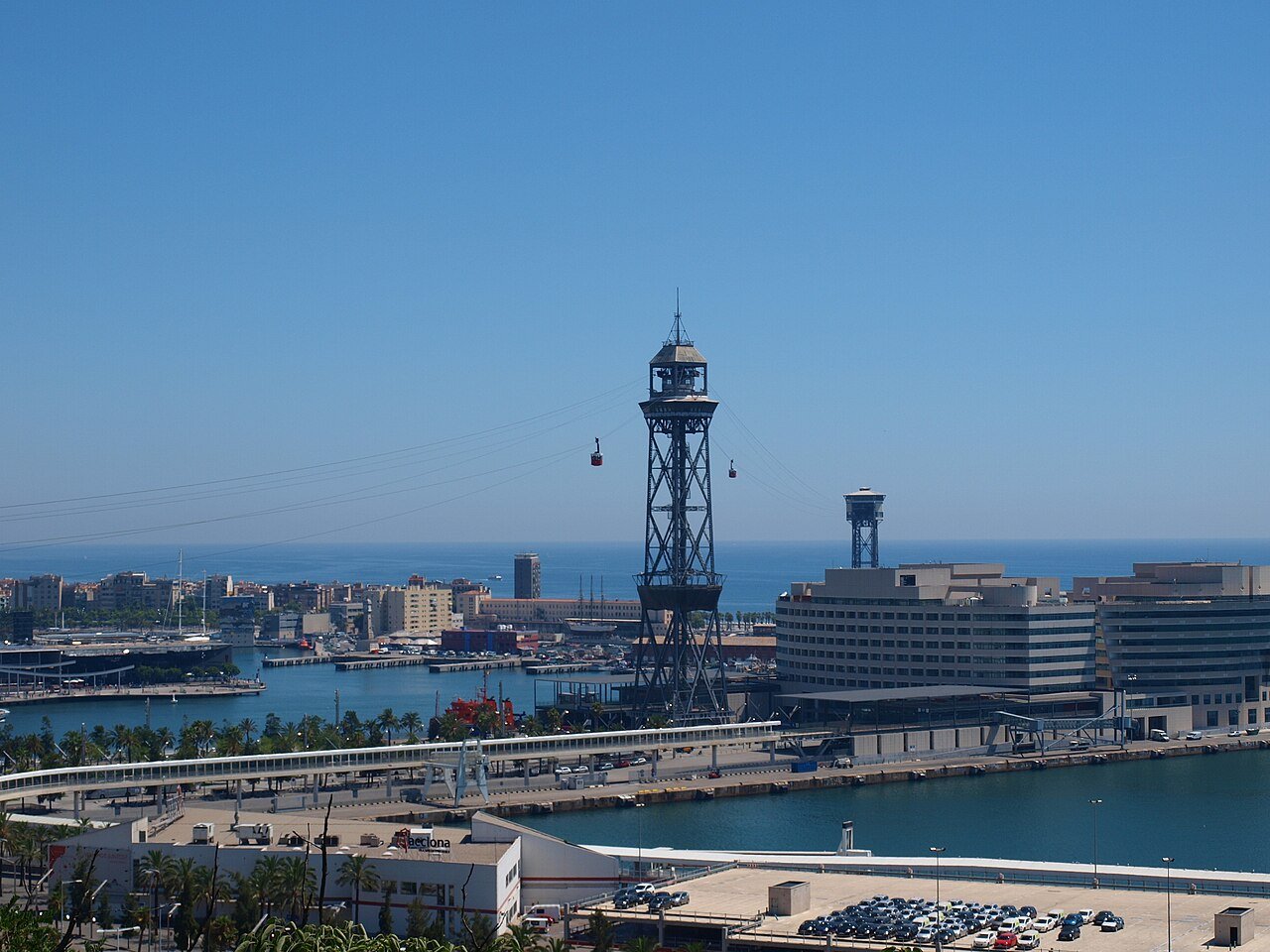
Between the old town and the port rises Montjuïc, a green hill that holds an entire day of sightseeing in one place. At the top, the castle — a fortress begun in the 1640s — gives the best harbour view in the city. Halfway down stands the Palau Nacional of the 1929 International Exposition, now the MNAC, Catalonia’s national art museum, with a Romanesque collection lifted from Pyrenean churches that has no equal. Below it, the Magic Fountain has been performing its water-and-light shows since that same 1929 fair. Then there is the 1992 Olympic layer: the stadium, the diving pools with their skyline backdrop, Calatrava’s soaring communications tower.
The trick to Montjuïc is that it is also simply a park — gardens, pine shade and quiet paths between the sights, with the city roaring somewhere far below. Ride a cable car up, walk down through the gardens, and you have had culture, views and rest in a single outing, which on day three of a city break is worth more than one extra museum.

9. The Viewpoints Above the Rooftops
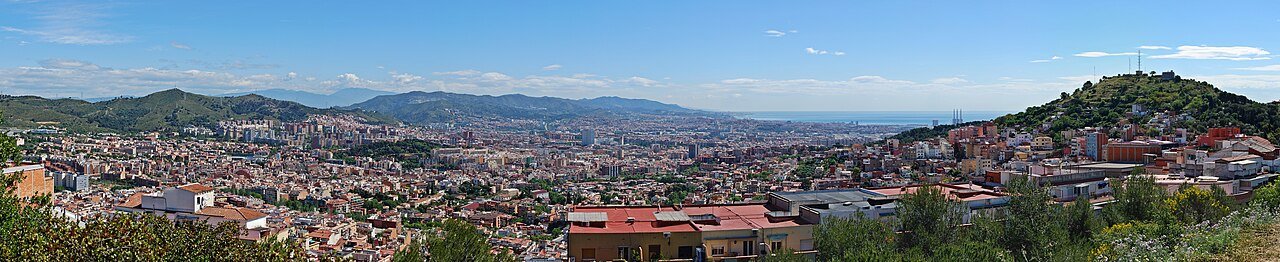
Barcelona is a natural amphitheatre: a flat grid pressed between the sea and a ring of hills, which means the city is full of places to look back at it. The people’s favourite is the Bunkers del Carmel, a Spanish Civil War anti-aircraft battery on the Turó de la Rovira hill, where the whole city — grid, towers, port, sea — opens up in a single 360-degree sweep; arrive before sunset and share it with half the neighbourhood. Above everything stands Tibidabo, the highest point of the Collserola ridge, crowned by the Sagrat Cor church and an amusement park that has been running since the first years of the twentieth century.
Add the free terraces you already own tickets for — Park Güell’s plaza, Montjuïc Castle’s walls, the Sagrada Família’s towers looking across at each other — and Barcelona becomes a city you understand from above as well as from the street. Few capitals let you read their whole story, Roman port to Olympic waterfront, in one turn of the head.
10. Football and the New Camp Nou
Even travellers who never watch football tend to make an exception here, because FC Barcelona is woven into Catalan identity — “més que un club”, more than a club, is the motto set into the stadium seats. And the stadium itself is news again. After 906 days playing across the city at Montjuïc while Camp Nou was rebuilt, Barça came home in November 2025. The reopened Spotify Camp Nou currently holds 62,652 spectators under its phased licence, the new third tier has been rising through 2026, and if the present timetable holds, the finished ground will seat around 105,000 — the largest football stadium in Europe — with the roof to follow.
Match tickets for the big fixtures are a project in themselves; the reliable way in is a smaller fixture, or the Barça Immersive Tour, the museum-and-viewpoint visit that runs while building continues — the full stadium tour returns when the works allow. Either way, a club this central to a city’s self-image is a sight, not just a sport.

11. Festivals All Year Round
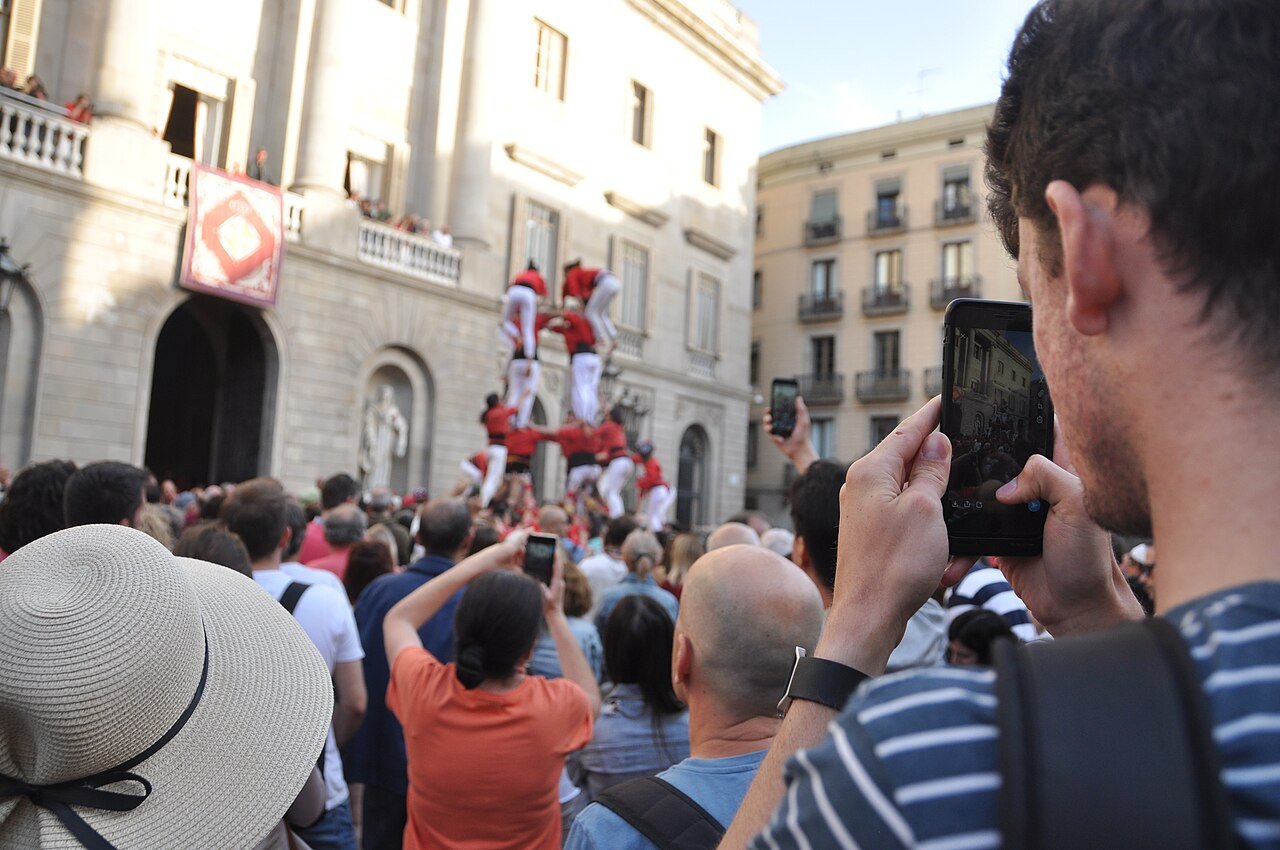
Time your trip to a festival and Barcelona doubles in value. The biggest is La Mercè, around 24 September: days of free street concerts, parades of giants, fire-running correfocs and human towers in front of the cathedral, all laid on by the city for its patron saint. On 23 April, Sant Jordi fills every street with book stalls and rose sellers for Catalonia’s day of lovers and literature — the most romantic day in the Spanish calendar. In mid-August the Gràcia festival turns its streets into competing works of decorated art, and on 23 June the beaches light bonfires for Sant Joan.
The thread through all of them is the castells — towers of people up to ten levels high, built by neighbourhood teams in checked shirts, a tradition UNESCO placed on its Intangible Cultural Heritage list in 2010. You will likely stumble on a practice or a festival performance in some square; stop. A child in a helmet climbing to the top of a human tower, to the roar of the crowd packed into the base, is the single most Catalan thing you can witness.
12. Montserrat, an Hour Away
Most great cities make you choose between the city and the mountains. From Barcelona you can have both before lunch. Some 50 kilometres northwest, the saw-toothed pink conglomerate of Montserrat rises straight out of the plain, and wedged into its cliff sits Catalonia’s spiritual home: the Benedictine abbey of Santa Maria de Montserrat, guardian of La Moreneta, the Black Madonna. The journey is half the pleasure — train from Plaça Espanya, then the rack railway (or the Aeri cable car) climbing the mountain wall.
Come for the basilica and the boys of the Escolania, one of Europe’s oldest children’s choirs; stay for the walking, with funiculars lifting you to hermitage paths and viewpoints across Catalonia. It is the essential Barcelona day trip, and our Montserrat Monastery guide covers the trains, the timed basilica entry and the choir’s schedule in full.

13. The Mediterranean Climate
Barcelona’s weather is the quiet reason underneath all the others. The city averages around 2,500 hours of sunshine a year, winters are mild — January afternoons commonly reach 14–15°C, warm enough for a terrace lunch in a jacket — and the sea takes the edge off summer nights. The swimming season honestly runs from May to October; outside it, the beaches stay alive as promenades, running routes and outdoor cafés.
That climate shapes the whole feel of a trip: breakfast outside, sightseeing in shirtsleeves in March, festivals in the street in September. It is also a planning tool. The same mildness makes Barcelona one of Europe’s best winter city breaks, when the Sagrada Família queues shrink, hotels drop their prices, and the light on the modernista façades turns golden by five.
14. Neighbourhoods That Still Feel Like Villages
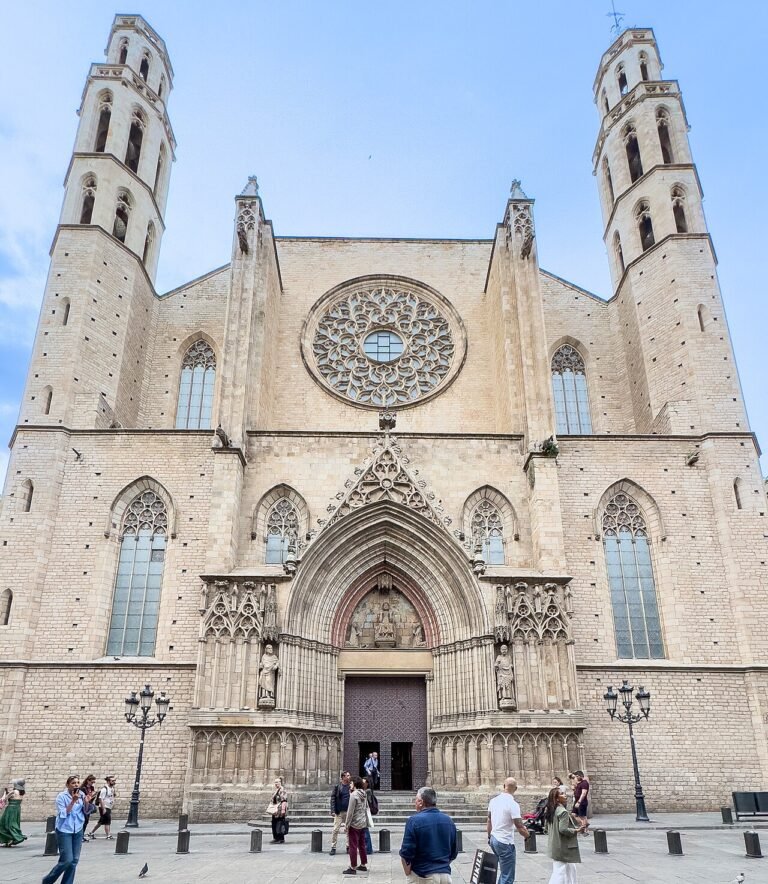
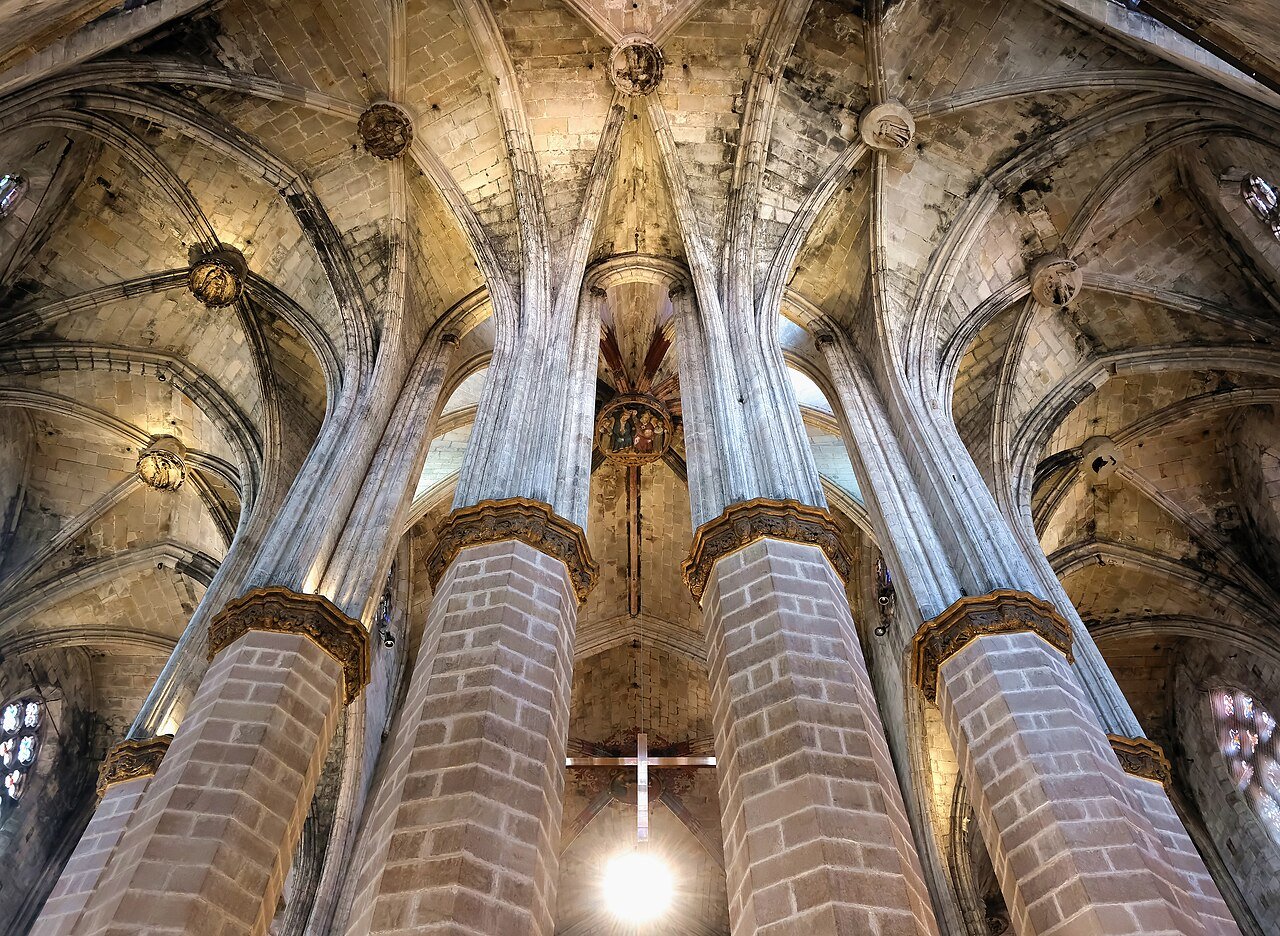
The sights fill your days; the neighbourhoods are what you will remember. Barcelona grew by swallowing the villages around it, and they kept their souls. Gràcia, annexed only in 1897, still runs on a village rhythm of small squares — each with its café terraces, its market, its festival — and barely a chain store in sight. El Born, below the old town, wraps medieval lanes around Santa Maria del Mar, the great Gothic church the port’s own guilds paid for and built in a single lifetime (1329–1383); its palm-thin columns are as moving as anything Gaudí built.
Then there is Sarrià, a wealthy village that still feels separate at the foot of the hills; Poblenou, the old industrial district reinventing itself between the beach and the tech towers; and Sant Antoni, centred on its rebuilt market, where the city’s young families actually live. Spend your evenings in these places, not the hotel district, and Barcelona stops being a checklist and starts being a city.

15. It Fits Into Any Spain Trip
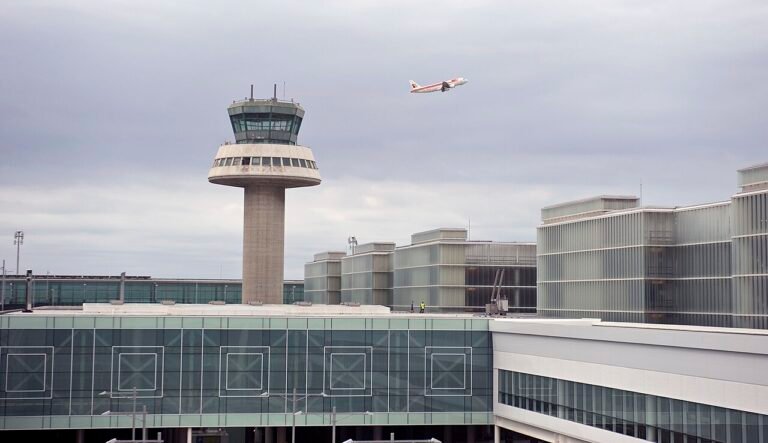
Finally, the practical reason: Barcelona is easy. El Prat airport sits about 12 kilometres from the centre, with the Aerobús reaching Plaça de Catalunya in around 35 minutes. The high-speed station at Sants puts Madrid about two and a half hours away and Paris around six and a half, so Barcelona pairs with almost any European itinerary — or anchors a Catalan one, with Girona, Sitges and the Costa Brava all inside day-trip range and the port sending ferries across the Mediterranean.
Once you arrive, the city itself is compact. The old town, the Eixample and the beach form one walkable triangle; the metro fills the gaps cheaply; and the sights cluster so kindly that a well-planned day strings the Gothic Quarter, Passeig de Gràcia and the Sagrada Família together on foot. Big cities usually tax you in logistics. Barcelona refunds the tax in time.
The Honest Downsides
No city earns trust by hiding its problems, and Barcelona has real ones. Pickpockets are the first: the city is safe in the violent-crime sense, but La Rambla, the metro and the Sagrada Família queues are prime territory for Europe’s slickest petty thieves. Wear your bag in front, keep your phone off café tables, and treat distraction tricks as what they are.
Second, the crowds, and how locals feel about them. Barcelona’s success has strained housing and patience; you may see “tourists go home” graffiti, and in 2024 protesters famously squirted visitors with water pistols. The city has announced it will let its roughly 10,101 licensed tourist-flat permits expire by November 2028, pushing visitors back towards hotels. None of this makes a trip impossible — millions still come happily — but it rewards travellers who stay in hotels, learn a few words of Catalan, and behave like guests. Third, the Gaudí bill: at around €29 a house, a couple seeing Batlló, La Pedrera and the Sagrada Família with towers can spend well over €150 on three sights. Fourth, August: hot, humid, the beaches at their fullest, and many beloved family restaurants closed while the city holidays. And a small one: the basilica is still a building site inside — cranes and scaffolding are part of the view, and will be for years.
When to Go
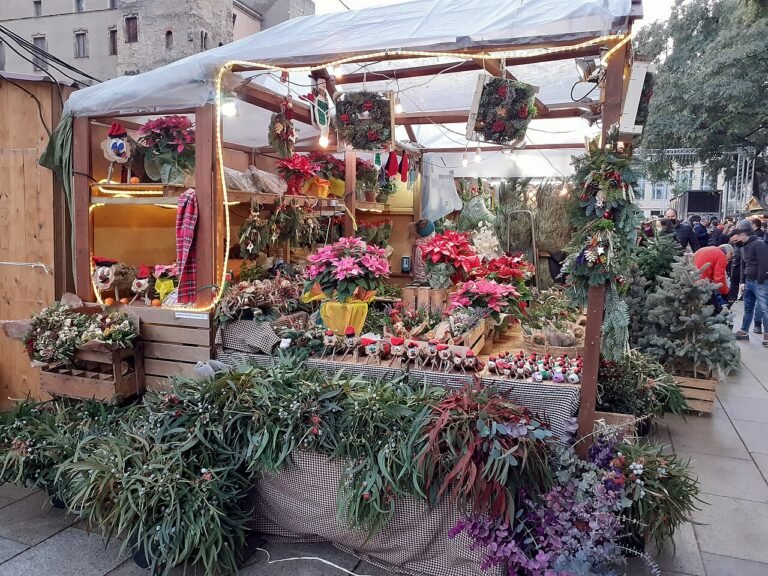
May and June are the sweet spot: warm enough to swim by June, the festivals starting, and the city not yet at August pressure. Mid-September to late October runs a close second, with La Mercè as the prize and the sea still warm. Winter (November to February) is the connoisseur’s choice — mild, bright, cheaper, and the great sights at their emptiest, with the Fira de Santa Llúcia Christmas market in front of the cathedral. July and especially August bring heat, humidity and peak crowds; come then only if the beach is the point. Easter week (Semana Santa) is busier in the south of Spain than here, but book the Sagrada Família early all the same.
Barcelona Tickets and Costs, Honestly
Budget for the big three first. The Sagrada Família’s official basic ticket is €26 — Sagrada Familia Entry Ticket with Audio Guide — and GetYourGuide’s listing of that same official ticket (4.6/5, 121,664 reviews, free cancellation up to 2 days ahead) is the flexible route when your dates might move. Park Güell’s Monumental Zone costs €18 (€13.50 for children 7–12 and seniors), Casa Batlló and La Pedrera start from €29 each with date-based pricing, and the Hospital de Sant Pau is €18. If you will ride the metro and buses hard, a multi-day transport pass such as the Hola Barcelona Travel Card can pay for itself; walkers will not need it.
Then balance the paid sights with the city’s long free list: the beaches, the Gothic Quarter’s streets, most of Park Güell outside the Monumental Zone, the Magic Fountain when it is running, the Bunkers del Carmel at sunset, Santa Maria del Mar and every modernista façade in the Eixample. A Barcelona day that costs almost nothing is easy to build — which is exactly why the paid icons are worth spending on.
30 Best Things to Do in Barcelona for First-Time Visitors
Travel insurance, sorted
Whether it is a two-week holiday or a longer move, travel insurance is not the most glamorous part of a trip — but it is the one booking you want to have in place before a trip, and while you are already away. Get a quote from SafetyWing
Final Thoughts
So, why visit Barcelona? Because it is the one city where a single long weekend can hold the world’s tallest church, a Roman street, a dragon-roofed house, a market breakfast, an afternoon on the sand and a mountain monastery — and where, in 2026, you can watch a 144-year-old building project reach its crowning moment. Come for the Sagrada Família, stay for the neighbourhoods, time it for spring or La Mercè if you can, and book that basilica ticket today. Barcelona has been drawing travellers for two thousand years; this decade, it is giving them more reasons than ever.
FAQs: Why Visit Barcelona?
Is three days enough for Barcelona?
Three full days is the honest minimum: one for the Sagrada Família and the Eixample, one for the Gothic Quarter, El Born and the beach, and one for Park Güell and Montjuïc. A fourth day adds Montserrat or Camp Nou and turns a good trip into a relaxed one.
Is Barcelona safe to visit?
Yes, with one specific warning: pickpocketing is common around La Rambla, the metro and the major sights. Violent crime against visitors is rare. Keep bags zipped and in front of you in crowds, do not leave phones on café tables, and the city is as safe as any in Western Europe.
Can you climb the new Tower of Jesus Christ?
Not yet. The tower’s exterior was completed in February 2026 and the tower was blessed by Pope Leo XIV on 10 June 2026, but it is not open to visitors at the time of writing — the lift-equipped façade towers covered by the official tower ticket are the climbable ones. The finished tower is, for now, something to look up at — all 172.5 metres of it.
When will the Sagrada Família be finished?
The skyline is complete: the central tower finished in 2026 made it the world’s tallest church. The building as a whole is not — the Glory Façade and interior works remain, and full completion is currently estimated for the mid-2030s. Treat any exact year as a forecast, not a promise.
Barcelona or Madrid first?
For a first trip, Barcelona: it has the bigger single sight, the Gaudí trail and the beach, all in a more compact area. Madrid answers with the Prado, a grander capital feel and better nightlife — ideally, the high-speed train does both in one trip, at about two and a half hours apart.