Barcelona in January: 12 Things to Do, From the Three Kings Parade to Calçotada Season

January is when Barcelona hands itself back to the people who live in it — but before the quiet comes the loudest night of the festive season. The month opens mid-party: the Christmas lights are still burning, the Three Kings are about to sail into the harbour, and children across the city are polishing their shoes for the most important morning of their year. Then, almost overnight, the crowds vanish. The Sagrada Família’s afternoon slots stop selling out, the great museums hand out free tickets on the first Sunday, the winter sales gut the prices on Portal de l’Àngel, and two festivals most visitors never hear of — Sant Antoni’s horse parade and the opening of calçot season — take over the calendar. Add the clearest skies of the year, hotel rates at their lowest, and lunches eaten outdoors in a jacket and sunglasses, and January turns into the connoisseur’s month: the same city as August, at half the price and a quarter of the crowd, with a completely different programme.
Come in the first week and you catch the whole Christmas season’s grand finale, from the free-museum Sunday on 3 January to the Kings’ arrival on the evening of the 5th and Epiphany itself on the 6th. Come mid-month and the city is at its calmest and cheapest, with the sales in full swing and Sant Antoni’s neighbourhood fiesta building towards the Tres Tombs parade. Come at the end and you are eating charred calçots with your fingers as the season opens, under winter sun strong enough to lunch outside. Whenever you land, one trip out of the city earns its place in a January itinerary: the Montserrat day trip from Barcelona, because the cold, dry winter air gives the mountain the sharpest views of the year. These are the twelve things to do in Barcelona in January, in calendar order — parade first, feast last.
The Short Version
- First Sunday freebies (3 Jan): many of the city’s big museums open free on the first Sunday of the month — build your museum day around it (§1).
- The Kings arrive (5 Jan): Melchior, Gaspar and Balthazar sail into the harbour in the late afternoon, then parade across the city until about 21:00–21:30 (§2).
- Epiphany morning (6 Jan): tortell de Reis for breakfast, the last gasp of the Fira de Reis, and a public holiday when most shops shut (§3).
- Last-chance lights (to 6 Jan): the Christmas illuminations burn until Three Kings Day — the first week is your final window (§4).
- Sant Pau’s light trail (to 10 Jan): Els Llums de Sant Pau usually closes a few days after Epiphany — go before it goes dark (§5).
- The rebaixes (from 7 Jan): the winter sales traditionally start the day after Epiphany and deepen all month (§6).
- Sant Antoni & the Tres Tombs (mid-to-late Jan): ten days of neighbourhood fiesta crowned by a parade of horses and carriages through the centre (§7).
- Calçot season opens: Catalonia’s great onion feast runs all month, with the Gran Festa de la Calçotada in Valls on the last Sunday, 31 January (§8).
- The big sights, minus the queues: January is the quietest month of the year at the Sagrada Família, Park Güell and the Gaudí houses (§9).
- Montserrat in winter air: the day trip is better in January — colder, clearer and emptier (§10).
Barcelona Weather in January
January is Barcelona’s coldest month, and it is worth being precise about what “cold” means here: daytime highs average around 14–15 °C (57–59 °F) and overnight lows around 6 °C (43 °F), so you are dressing for a crisp autumn day in northern Europe, not for snow. Rain is scarce — around 39 mm across roughly three or four wet days in a typical January — and dry, clear days are the norm, with the Mediterranean sitting at a bracing 14 °C or so: beautiful to walk beside, swimmable only for the genuinely hardy. Daylight grows through the month, from about 9 hours 15 minutes on the 1st to just over 10 hours by the 31st; sunrise is late, around 8:15, and sunset drifts from roughly 17:30 to 18:10, which hands you golden evenings without eating your sightseeing day. Pack layers, a proper coat, a scarf and shoes that can handle a cold snap: most days end up milder than the forecast suggests, and a sunny terrace at 15 °C feels like spring. The full month-by-month picture is in our guide to the best time to visit Barcelona.
12 Things to Do in Barcelona in January
Contents
- 1. Use the Free-Museum Sunday: 3 January
- 2. Watch the Three Kings Arrive by Sea (5 January)
- 3. Eat the Tortell de Reis and Work the Fira de Reis (5–6 January)
- 4. See the Christmas Lights on Their Last Nights (until 6 January)
- 5. Catch Els Llums de Sant Pau Before It Closes (until 10 January)
- 6. Shop the Winter Sales: The Rebaixes (from 7 January)
- 7. Join the Festa Major de Sant Antoni and the Tres Tombs
- 8. Eat a Calçotada: Catalonia’s Great Winter Feast
- 9. See the Big Sights Without the Queues
- 10. Take a Winter Day Trip to Montserrat
- 11. Walk the Seafront in the Winter Sun
- 12. Get Above the City: Winter Views From the Bunkers and Tibidabo
1. Use the Free-Museum Sunday: 3 January
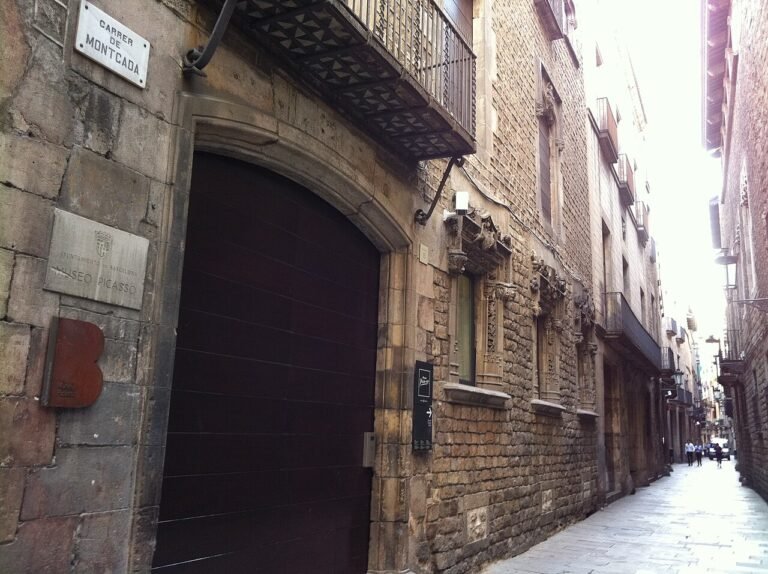
January hands culture-hunters a gift the summer crowds never get: the month’s first Sunday falls on 3 January 2027, inside the holiday week, and many of Barcelona’s biggest museums open their doors free on the first Sunday of every month. The Museu Picasso is the headline act — its Gothic palaces on Carrer de Montcada fill up fast even in winter, and free first-Sunday tickets are claimed online in advance, so book the moment the release opens rather than joining the queue on the day. The Museu Nacional d’Art de Catalunya (MNAC), up on Montjuïc beneath the Palau Nacional, runs the same first-Sunday pattern and throws in the best museum-café view in the city; plenty of the municipal museums add free entry on Sunday afternoons as well, which stretches the trick across the whole month’s Sundays.

The strategy is simple: pick one big museum for the free Sunday, arrive at opening time, and keep the rest of the day for the neighbourhood around it — El Born’s lanes after the Picasso, the Montjuïc gardens and castle after the MNAC. January’s low season means even the free days are manageable, a fraction of the crush these Sundays see in May. And if your trip misses the 3rd, take heart: several of the same museums keep free or reduced windows through the month, and the full list of no-cost wins is in our guide to free things to do in Barcelona.
2. Watch the Three Kings Arrive by Sea (5 January)
In Barcelona, Christmas does not end with Santa — the presents arrive with the Three Kings. Melchior, Gaspar and Balthazar reach the city the way important visitors always have: by sea. On the afternoon of 5 January, traditionally around 16:30, the royal party comes ashore at the Portal de la Pau by the Moll de la Fusta, sailing in aboard the Santa Eulàlia, a handsome three-masted schooner that spends the rest of the year moored at the same quay as part of the Maritime Museum. The mayor formally hands the Kings the key to the city — the one that opens every front door in Barcelona that night — and then the real spectacle starts: the Cavalcada de Reis, the Three Kings Parade, sets off at about 18:00 and rolls across the city for some three hours behind bands, dancers, giant illuminated floats and the pages who collect children’s letters and throw sweets to the crowd.
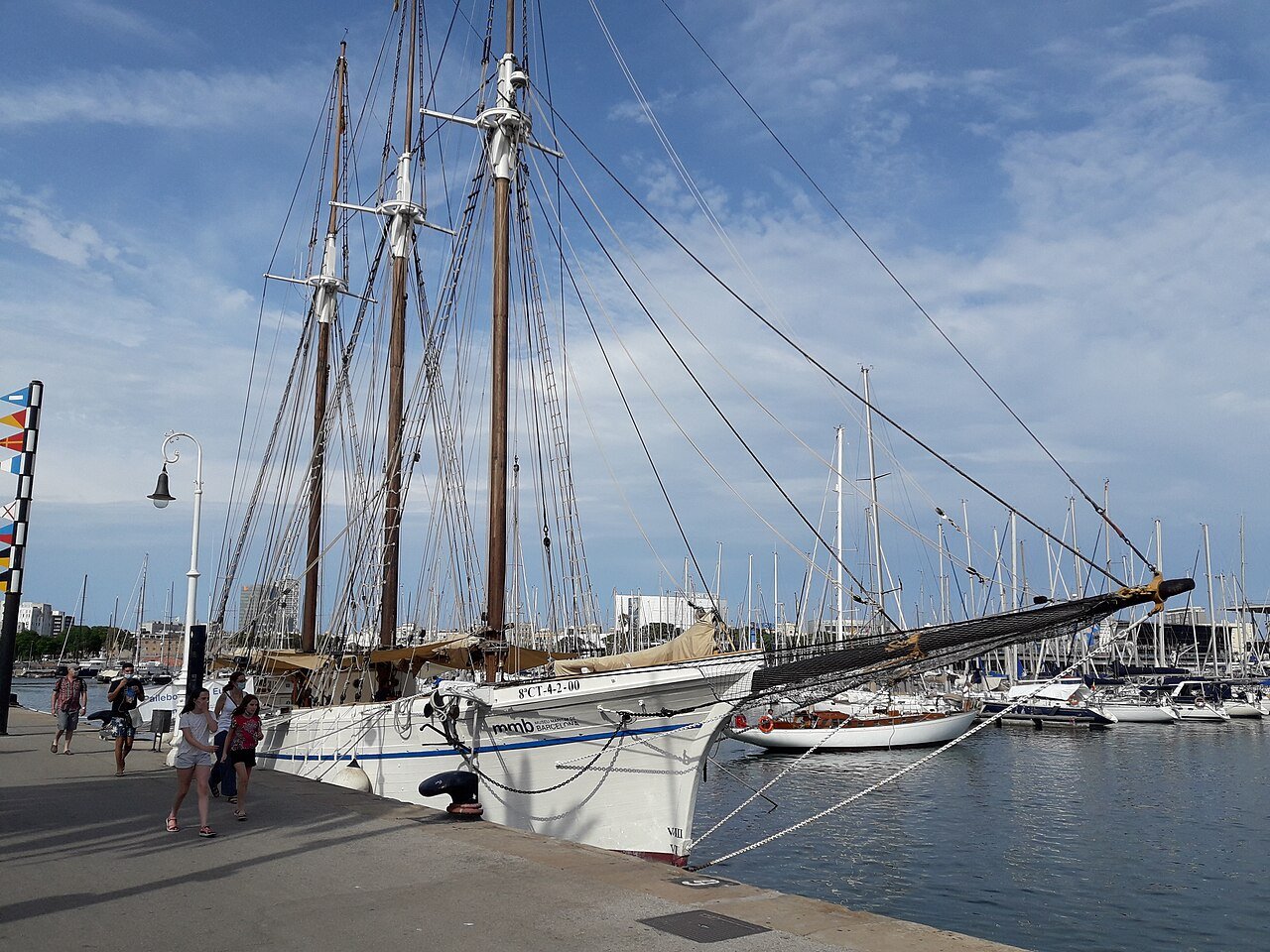
⚠ The city publishes the confirmed 2027 programme and street-by-street route closer to the day — neither was out when this guide was written — but recent years have run like this: from Avinguda del Marquès de l’Argentera beside the Ciutadella, along Passeig de Colom, up Avinguda del Paral·lel, through Ronda de Sant Pau, along Sepúlveda, and finishing at Avinguda de Maria Cristina by the Magic Fountain of Montjuïc at roughly 21:00–21:30. The reliable viewing strategy is to pick one stretch and commit: Colom for the harbour atmosphere near the arrival, Paral·lel for space and families, or the finish at Maria Cristina to see the full procession pass before the fountains. Arrive 45 minutes early for a front-row barrier spot, and bring a bag — the pages still throw wrapped sweets, and catching them is half the sport. That night, Barcelona’s children leave their shoes out, set turrón and wine for the Kings and water for the camels, and go to bed early. Visitors can simply enjoy the city at its most joyful.
3. Eat the Tortell de Reis and Work the Fira de Reis (5–6 January)
The morning of 6 January — Epiphany, a public holiday across Spain — belongs to one cake. The tortell de Reis is a golden ring of brioche filled with marzipan (or cream, or chocolate), crowned with candied fruit meant to read as the jewels on a crown, and it hides two things inside: a tiny king figurine, whose finder is crowned with the paper crown that comes in the box, and a dried broad bean, whose finder traditionally pays for next year’s cake. Every bakery in the city sells them in the first days of January and families carry them home like treasure; buy yours on the 5th or early on the 6th, because the best bakeries sell out, and eat it for breakfast the way the city does, with hot chocolate. Most shops and many restaurants close for the holiday itself, so plan Epiphany as a slow day: cake, a walk, the leftovers of the season.

The run-up to the 6th has its own institution: the Fira de Reis, the Three Kings Fair on the Gran Via between Carrer de Muntaner and Carrer de Calàbria, a toy-and-gift market that has served last-minute royal shoppers since the nineteenth century and runs right up to the eve of Epiphany — some stalls trade into the small hours of the night of the 5th, when half the city is still hunting for gifts. Rows of stalls sell toys, crafts, decorations and sweets, xurrerias fry churros at either end, and the whole avenue smells of sugar and pine. Even if your gift list is empty, walk it on the afternoon of the 5th before the parade: it is the last piece of the Christmas season still standing, and by the morning of the 7th it will be gone for another year.
4. See the Christmas Lights on Their Last Nights (until 6 January)
If you arrive for the Kings, you also catch the illuminations’ farewell: Barcelona’s Christmas lights burn until Three Kings Day, 6 January, and then the switch comes off for another year. That makes the evenings of 1–6 January the last chance to walk the full display — and because the big December crowds have gone home, it is arguably the best week to see it, with the boulevards lit and the pavements finally walkable. Build the evening the way locals do: start at Portal de l’Àngel, where giant translucent baubles hang over the shopping crowds, continue up Passeig de Gràcia past the glowing Gaudí façades, and finish on La Rambla or in Plaça de Catalunya as the lights come fully into their own after dark.

The lights switch on at dusk — around 17:30 on most evenings in recent seasons — so in January you can pair a lights walk with an early dinner without any late night at all. Two seasonal extras close the same week: the floating Christmas fair at the Port Vell, Nadal al Port, with its illuminated nativity on the water and giant Ferris wheel, is confirmed to run until 6 January 2027, and the Magic Fountain at Montjuïc traditionally joins the last evenings of the season. Photographers get the best of it midweek, when the school-holiday families thin out. Miss the switch-off and the city still glows — Barcelona is beautiful at night in any month — but the specific, bauble-hung magic of the Nadal streets packs away on the 6th, and the long, dark, sale-lit evenings of §6 take over.
5. Catch Els Llums de Sant Pau Before It Closes (until 10 January)
One Christmas-season event outlives the lights by a few days, and it is the prettiest ticket in the city: Els Llums de Sant Pau, the night-time light trail through the gardens of the Recinte Modernista de Sant Pau, Domènech i Montaner’s modernista former hospital, a UNESCO World Heritage Site ten minutes’ walk from the Sagrada Família. After dark the pavilions become a storybook: projections wash the sculpted façades in colour, light tunnels and illuminated sculptures line the garden paths, and the whole complex glows against the winter night. January’s early darkness is a gift here — by the middle of the month sunset is around 17:45, so even the earliest entry slots are properly dark, unlike the pale December twilights.
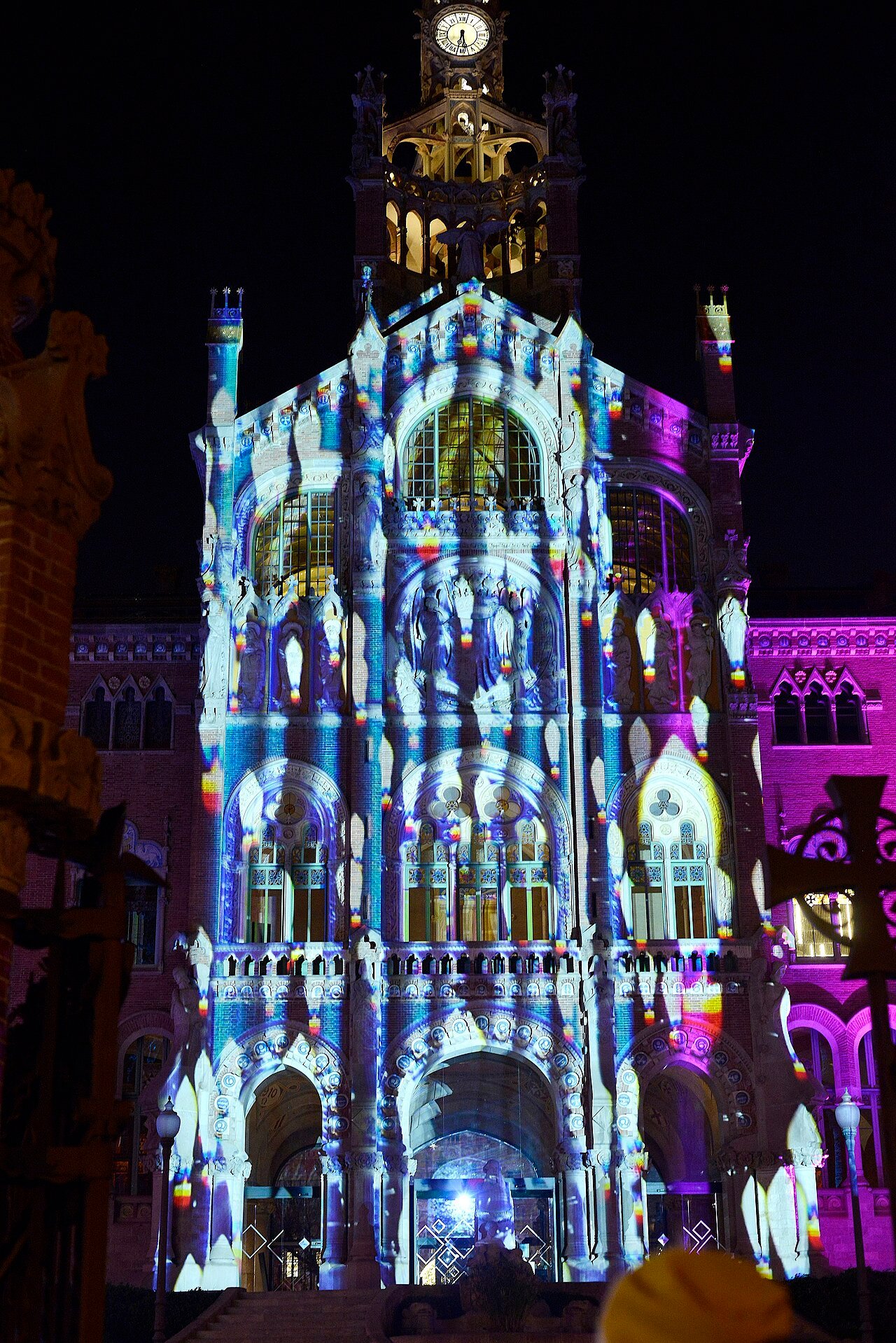
⚠ The current edition is listed as running to 10 January 2027, with the trail dark on parade night, 5 January — sensible, since the whole city is at the Cavalcada — but treat the end date and evenings as the organiser’s to confirm when tickets go on sale, and book ahead regardless: entry is timed, the final weekend sells out, and January’s school-holiday tail keeps the first days busy. Allow an hour to ninety minutes for the full circuit, dress for a garden at night (it is colder among the pavilions than the daytime city), and pair it with the Sagrada Família a few streets away: basilica in the afternoon light, light trail after dark, dinner in the Eixample between the two. When Sant Pau goes dark on the 10th, the Christmas season is officially over — everything after this point in the month is pure January.
6. Shop the Winter Sales: The Rebaixes (from 7 January)
The morning after Epiphany, the city’s other January religion begins: les rebaixes, the winter sales, which traditionally open on 7 January — the first full shopping day after the Kings have delivered — and run, deepening in waves, into February. First markdowns typically start around 30–50%, and the famous segones rebaixes, the second markdowns of late January, push the best discounts further still; the trade-off is stock, so the classic strategy is to buy the thing you love in week one and gamble on leftovers in week three. Barcelona is one of Spain’s great shopping cities, and the sales map is compact: Portal de l’Àngel, one of Europe’s busiest shopping streets, for the high-street names; Passeig de Gràcia for the luxury flagships and their January windows; El Corte Inglés on Plaça de Catalunya for everything under one roof; and the indie streets of El Born and Gràcia for local designers who cut prices just as hard.
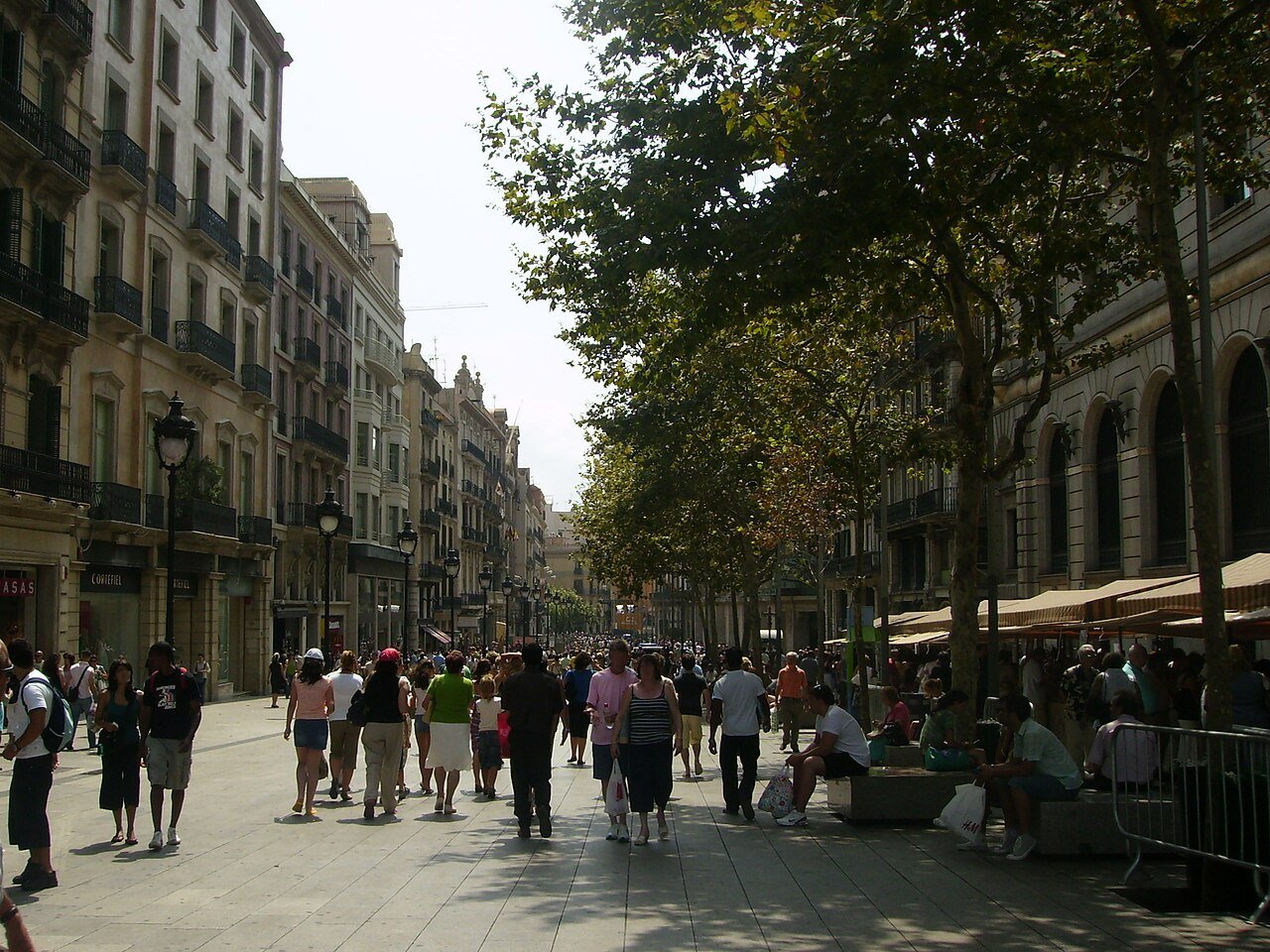
Practicalities: weekday mornings are the calmest time to shop, the first sales weekend is the busiest, and Sundays are mostly closed except for designated open days, so check before building a Sunday around the shops. January is also when the other prices drop: with the festive rush over, hotels and flights to Barcelona sit at their lowest of the year outside the sales’ first weekend — the city is one of Europe’s bargains this month if you time it midweek. Bring an extra bag or leave suitcase space: between the rebaixes and the last of the Fira de Reis stalls, January visitors reliably fly home heavier than they arrived.
7. Join the Festa Major de Sant Antoni and the Tres Tombs
Just as the sales fade into routine, a neighbourhood throws a party. Sant Antoni — the grid of streets around the great iron market west of the Raval — celebrates its Festa Major for around ten days in mid-to-late January, built around the feast of Sant Antoni Abat on 17 January (a Sunday in 2027). ⚠ The 2027 edition’s exact dates were unpublished when this guide was written; recent festivals ran 17–26 January in 2025 and 16–25 January in 2026, so expect roughly ten days centred on the 17th, with the full programme on the city’s festivities site nearer the time. Expect the full festa-major kit in a local key: street concerts and community meals, giants and big-heads, a fire run to close, a 10 km fun run, and the market square as the party’s front room.
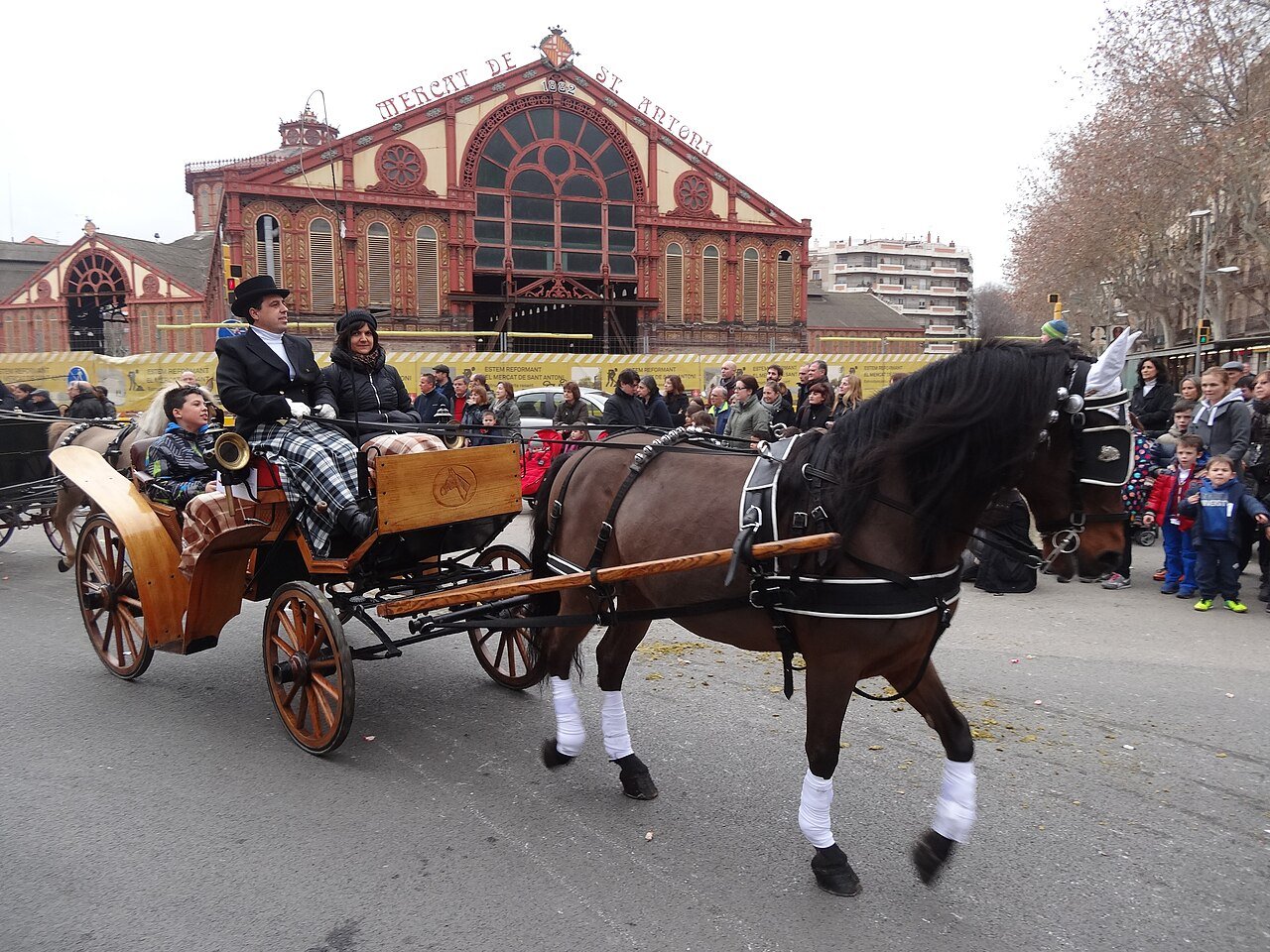
The centrepiece is older than Barcelona’s football clubs: the Tres Tombs, the “three laps” parade of horses, carriages and farm carts that has honoured Sant Antoni, patron saint of animals, since 1826. By tradition it rides on the first Saturday after the feast day — in 2027 that points to Saturday 23 January (⚠ confirm when the programme lands, and note that rain pushed the 2026 parade all the way to May, so check the city’s listings that week). The day starts outside the Escola Pia de Sant Antoni on Ronda de Sant Pau, where pets are brought for the traditional blessing; the parade of decorated carriages, working carts and hundreds of riders then makes its laps through the neighbourhood and into the centre, to music, before the crowds drift back to the market for lunch. Stand on Ronda de Sant Pau or Carrer del Comte d’Urgell for the best view, and arrive by 11:00. It is the most Barcelona event of the month: two hundred years old, run by a neighbourhood, and almost entirely free of tourists.
8. Eat a Calçotada: Catalonia’s Great Winter Feast
January is when Catalonia’s most gloriously messy ritual reaches full swing: the calçotada. The calçot is a special sweet spring onion, grown with its stem earthed up so it stays long, white and tender, and the season runs roughly from late autumn to April with its peak from January to March. The ritual never changes: bundles of calçots are grilled directly over open flames until the outer layers are blackened, wrapped in newspaper to steam and stay warm, then brought to the table in roof tiles. You peel away the charred skin with your fingers, dangle the calçot overhead, dip it deep into romesco — the brick-red sauce of roasted peppers, tomatoes, almonds, hazelnuts and garlic, called salvitxada in calçot country — and lower it into your mouth. A bib is provided and it is not optional. Grilled meats, beans and artichokes follow, washed down with wine drunk from a porró, the glass spouted vessel you pour from a height and never touch with your lips if you can help it.
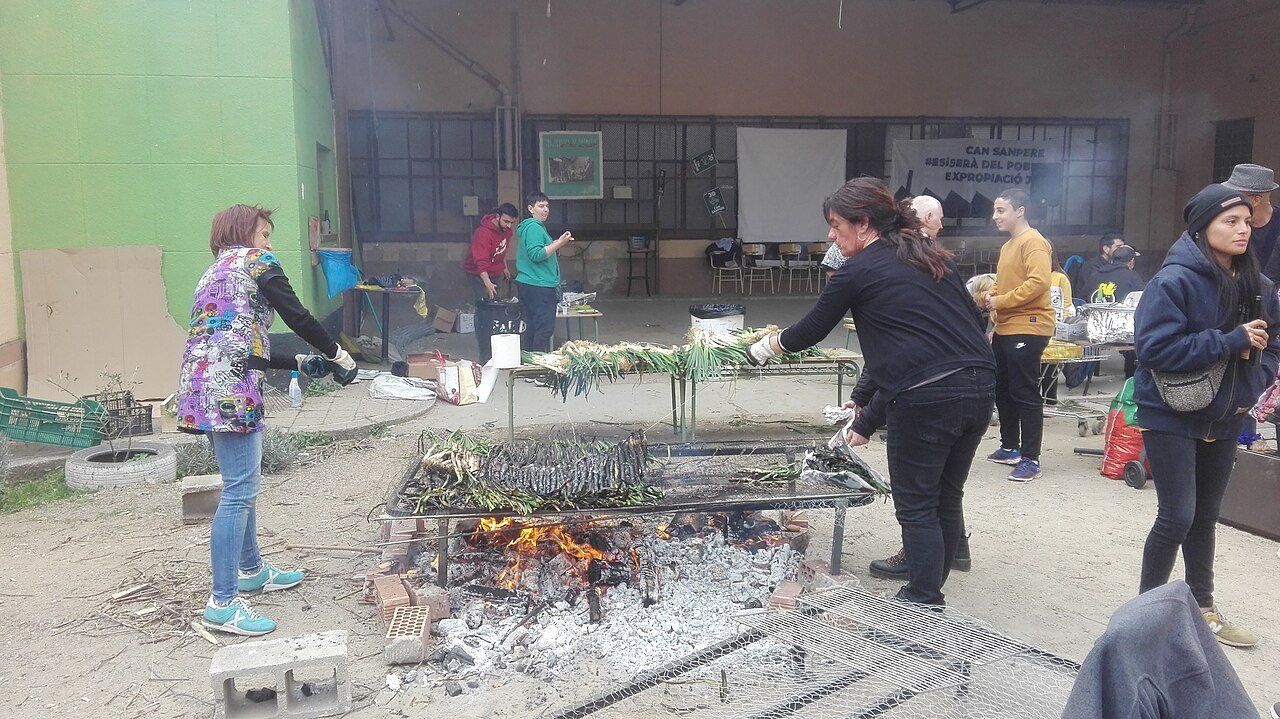
The season’s official party is the Gran Festa de la Calçotada in Valls, the calçot’s hometown, held on the last Sunday of January since 1982 — in 2027 that is Sunday 31 January — with street grilling, parades and a famous calçot-eating contest where champions put away around three hundred in three quarters of an hour. Valls is about 1 hour 15 minutes from Barcelona by car, or by train towards Tarragona with a short hop onward, and makes a superb Sunday trip. But you do not need to leave the city: through the season, farmhouse restaurants in the Collserola hills and grill restaurants across Barcelona run set calçotada menus, typically somewhere around €30–45 a head with the full sequence of courses (⚠ typical published ranges, not a fixed price — menus vary by house). Book weekends ahead, wear clothes that forgive charcoal, and treat it as the month’s essential meal.
9. See the Big Sights Without the Queues
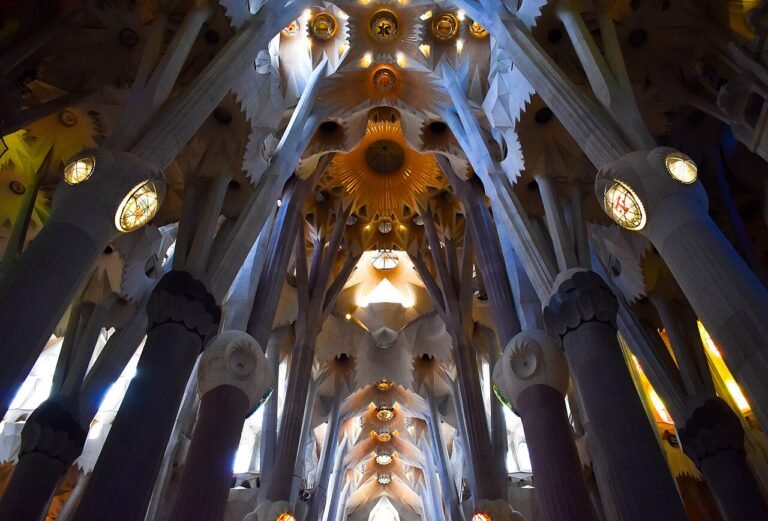
Here is January’s quiet superpower: it is the emptiest month of the year at the monuments that define Barcelona. The Sagrada Família in the last week of January is a different building from the August version — timed tickets are bookable at civilised hours, the nave has room to breathe, and the winter sun does something special inside: low in the southern sky, it pours through Gaudí’s warm western glass in the afternoon and sets the stone alight in reds and golds, while mornings belong to the cool blue-green glass of the eastern side. The practical notes still apply — book online ahead, always — and the full room-by-room picture is in our inside the Sagrada Família guide. Note that 1 and 6 January are holidays with reduced morning-only hours at several sights (⚠ as the basilica’s published calendar showed for the recent season), so keep the big two for ordinary days.
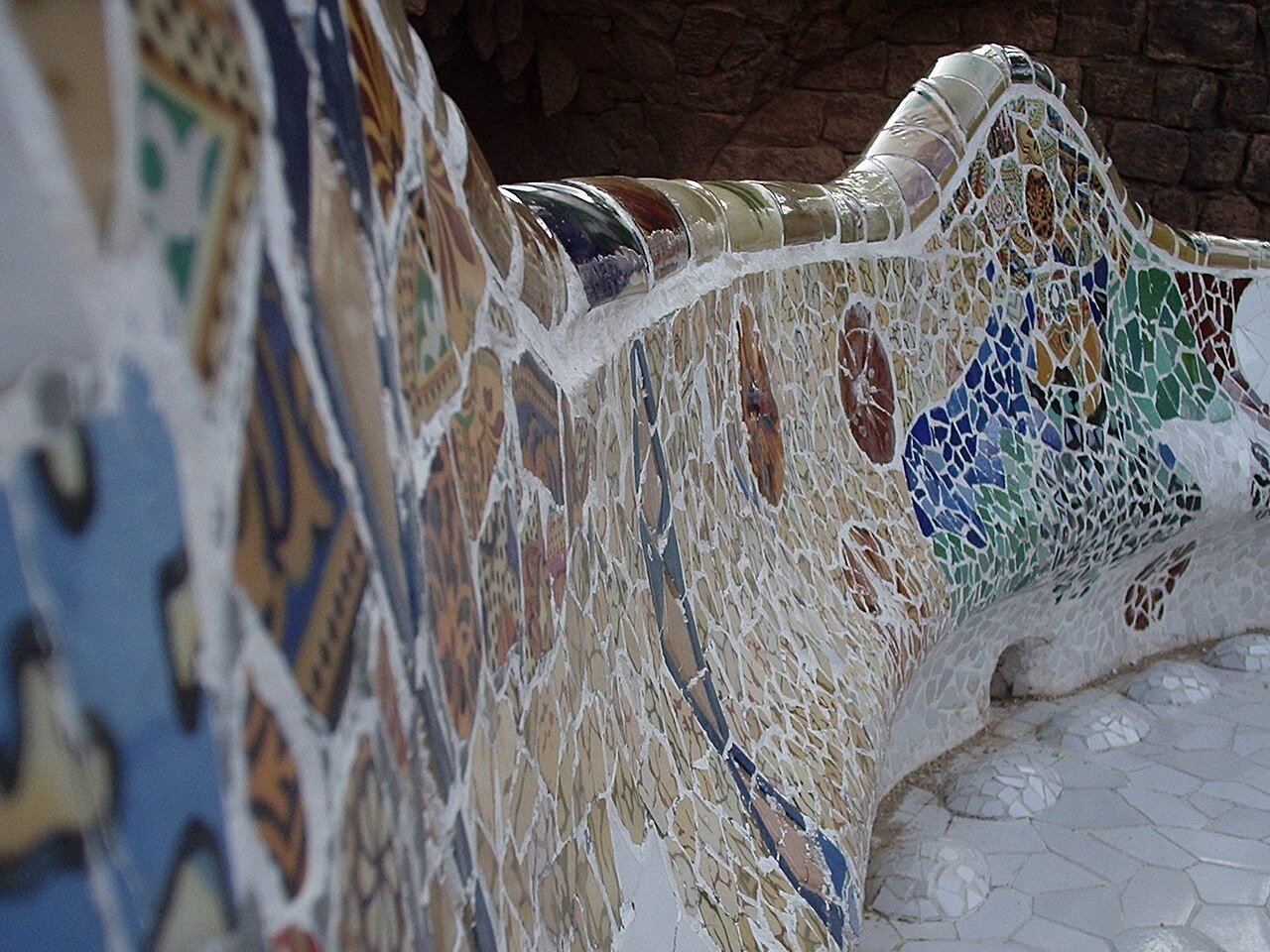
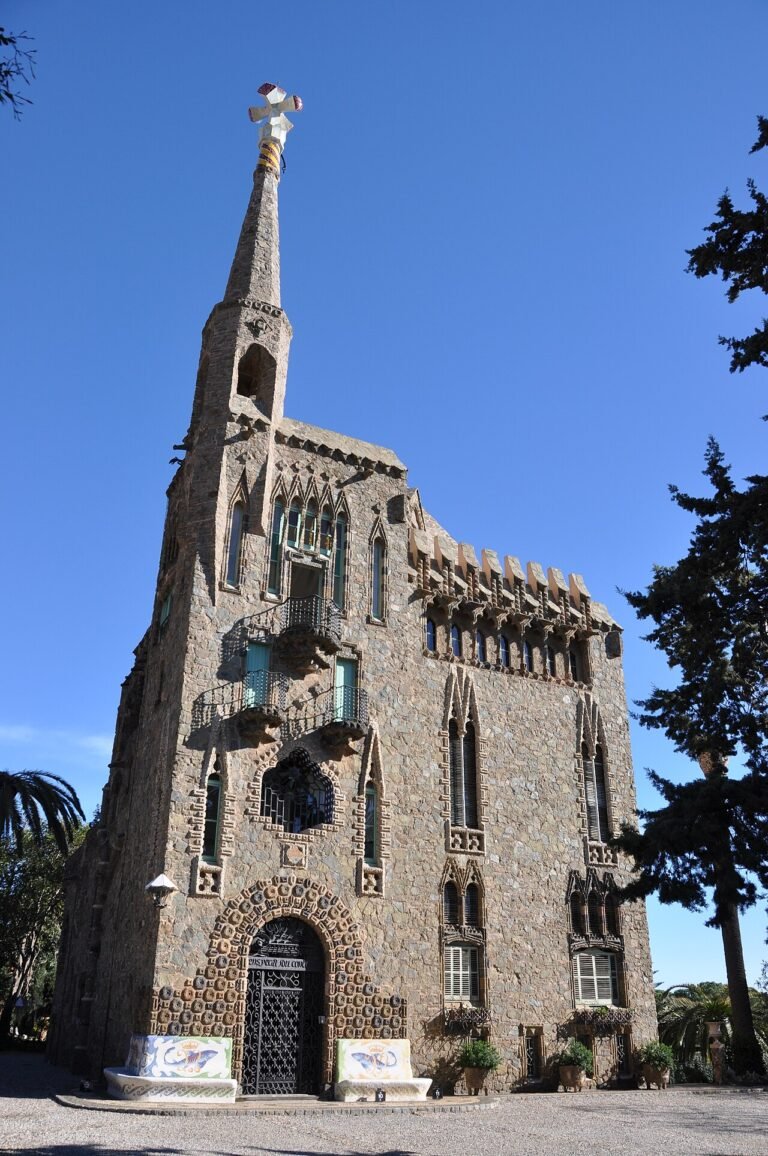
Park Güell tells the same story: the Monumental Zone (€18 at the official 2026 price, with reductions for children and seniors and under-7s free with a ticket) is bookable at short notice in January, the mosaic terrace is shareable rather than shoulder-to-shoulder, and the park’s free outer zone is at its greenest after the winter rains. The Gaudí houses follow suit — Casa Batlló and Casa Milà both run quieter in January, with morning slots that sell out in hours in June sitting open — and the Gothic Quarter’s museums, cathedral and lanes are at their most atmospheric in the low, slanting light. If you have ever postponed Barcelona because you hate queues, this is the month the city recompenses you.
10. Take a Winter Day Trip to Montserrat
Every season has its Montserrat argument, and winter’s is the strongest: the cold, dry January air is the clearest of the year, and from the abbey terrace the serrated ridge, the Llobregat valley and the plain below sit in hard, bright focus — on the finest days the Pyrenees stand snow-white on the horizon and old hands swear the sea glitters the other way. The abbey itself runs at low-season pace: shorter queues for the Black Madonna, space in the basilica, and — a January bonus for music-lovers — the Escolania, the boys’ choir that falls silent over the Christmas break, usually returns to sing at the midday service once term resumes (⚠ the choir’s calendar is the abbey’s to publish; check it before promising yourself the Salve). Dress a layer warmer than the city: the abbey sits at about 720 metres and the wind up there is honest.

The easy way to do it is the trip built for exactly this: the Montserrat day trip from Barcelona — a 7-hour day out with a live English- and Spanish-speaking guide, rated 4.6 out of 5 across 2,518 reviews, with optional tickets layered on for the museum and the rack-railway side of the mountain. Go early in the day if you can: winter light on the rock is best before noon, and you will be back in Barcelona for the sales-hour evening. For the do-it-yourself version — trains from Plaça d’Espanya, the cable car against the rack railway, the funiculars above the abbey — our Montserrat monastery guide has the full breakdown. Either way, January is when the mountain feels most like the pilgrimage site it has been for a thousand years: quiet, cold and magnificent.
11. Walk the Seafront in the Winter Sun
Barcelona’s beach in January is a local’s place, and it might be the most relaxing walk in this whole list. The promenade from the W Hotel at Barceloneta up through Port Olímpic to Poblenou runs almost empty by summer standards: runners, cyclists, dog-walkers, wetsuit surfers waiting on the winter swells, and the occasional brave swimmer (the sea sits around 14 °C — the city’s winter-swimming faithful swear by it; visitors are free to simply applaud). The morning light is the show: the sun comes up over the water, low and golden, and the whole seafront glows while the city behind you is still in its coat-and-coffee hour.
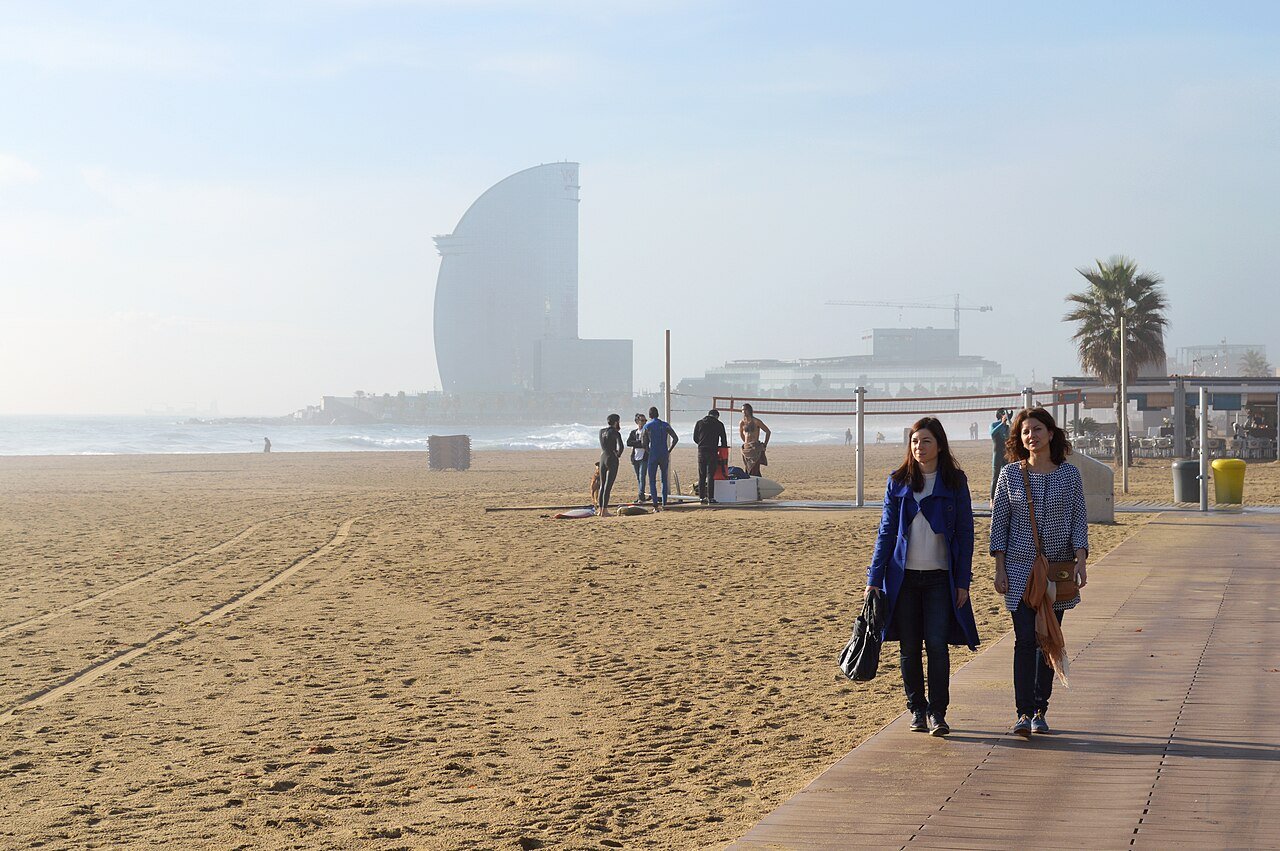
Build the outing around lunch, because January’s seafront secret is the terrace: south-facing chiringuito and restaurant terraces along the promenade catch the midday sun, and on a calm 15 °C day Barcelonans eat rice outdoors in sunglasses while northern Europe scrapes ice off windscreens. Order the way the neighbourhood does — a vermouth first, then a proper paella or fideuà in the old fishing quarter of Barceloneta itself — and walk it off along the sand afterwards. Our Barcelona beaches guide maps the whole strip beach by beach; in January, read it as a walking guide rather than a swimming one, keep one eye on the wind forecast (a tramuntana day turns the promenade bracing), and you have the month’s cheapest pleasure.
12. Get Above the City: Winter Views From the Bunkers and Tibidabo
End the month the way the light deserves: from above. Winter’s dry, washed air gives Barcelona its sharpest panoramas of the year, and the two great free-or-cheap viewpoints cash in. The Bunkers del Carmel, the civil-war anti-aircraft batteries on the Turó de la Rovira hill, look straight down the Eixample grid to the sea — Sagrada Família, Torre Glòries, the twin towers of Port Olímpic all in one frame — and cost nothing but the climb; sunset here in January comes at a civilised 18:00 or so by month’s end, with the city lights taking over as you watch. Go on a clear late afternoon, bring a jacket against the hilltop wind, and give the grid the hour it earns.

Higher still, Tibidabo tops the Collserola ridge at 512 metres, the city’s ceiling: the Sagrat Cor church crowns it, its terrace lift rising to the statue’s feet for one of the great views of Catalonia — on the clearest winter days the panorama runs from Montserrat to the snowline of the Pyrenees. The vintage amusement park is a weekends-and-holidays affair in winter, but the viewpoint, the church and the funicular ride up are the point in January, and the crowds are a rumour. Pair the two viewpoints on different days — Bunkers for the golden city grid, Tibidabo for the full mountain-to-sea sweep — and you finish January seeing Barcelona the way the winter light wants you to: sharp, blue and entirely yours.
Which of the 12 Fits Your Trip?
| Your trip | Don’t miss | Also add |
|---|---|---|
| The Kings-week trip (1–6 Jan) | The Cavalcada (§2), tortell de Reis (§3), the lights’ last nights (§4) | The free-museum Sunday (§1) |
| The bargain break | The rebaixes (§6), the cheapest hotel weeks of the year | The big sights at low-season pace (§9) |
| The festival hunt | Sant Antoni & the Tres Tombs (§7), the calçotada (§8) | Valls on 31 January for the Gran Festa |
| The culture trip | The Picasso and MNAC on the free Sunday (§1) | Sant Pau’s light trail before it closes (§5) |
| The food trip | A full calçotada menu (§8), tortell and xurros (§3) | A seafront rice lunch in the sun (§11) |
| The quiet-city trip | Montserrat in winter air (§10), the empty seafront (§11) | The Bunkers at sunset (§12) |
What January in Barcelona Costs
January is the cheapest month of the year to do Barcelona well, and its biggest spectacles are free:
- Free: the Cavalcada de Reis and the Kings’ harbour arrival (§2), the Fira de Reis (§3), the Christmas-lights walk (§4), many major museums on the first Sunday, 3 January (§1), the Tres Tombs parade and the Sant Antoni street festival (§7), the Bunkers viewpoint and the seafront promenade (§§11–12).
- Els Llums de Sant Pau (§5): a ticketed, timed-entry trail — book ahead for the final evenings; prices are the organiser’s to set for the season.
- Montserrat (§10): the Montserrat day trip runs from $50 per person (about €45) for the 7-hour guided day, rated 4.6/5 across 2,518 reviews — with free cancellation up to 24 hours in advance for a full refund and reserve-now-pay-later, so a January booking stays flexible if the weather turns (both stated on GetYourGuide’s product page when this guide was checked).
- The big sights (§9): Park Güell’s Monumental Zone is €18 at the official 2026 price; Sagrada Família and the Gaudí houses are standard timed tickets — the January saving is not the price but the availability.
- Eating the season (§§3, 8): a tortell de Reis from a good bakery is a modest splurge shared by the whole table; a full calçotada menu at a Barcelona restaurant typically runs around €30–45 a head (⚠ typical published ranges — each house sets its own).
- Hotels and flights: outside the Kings’ weekend of 1–6 January, expect the softest rates of the year, especially midweek — the sales crowds shop by day and the city sleeps cheap.
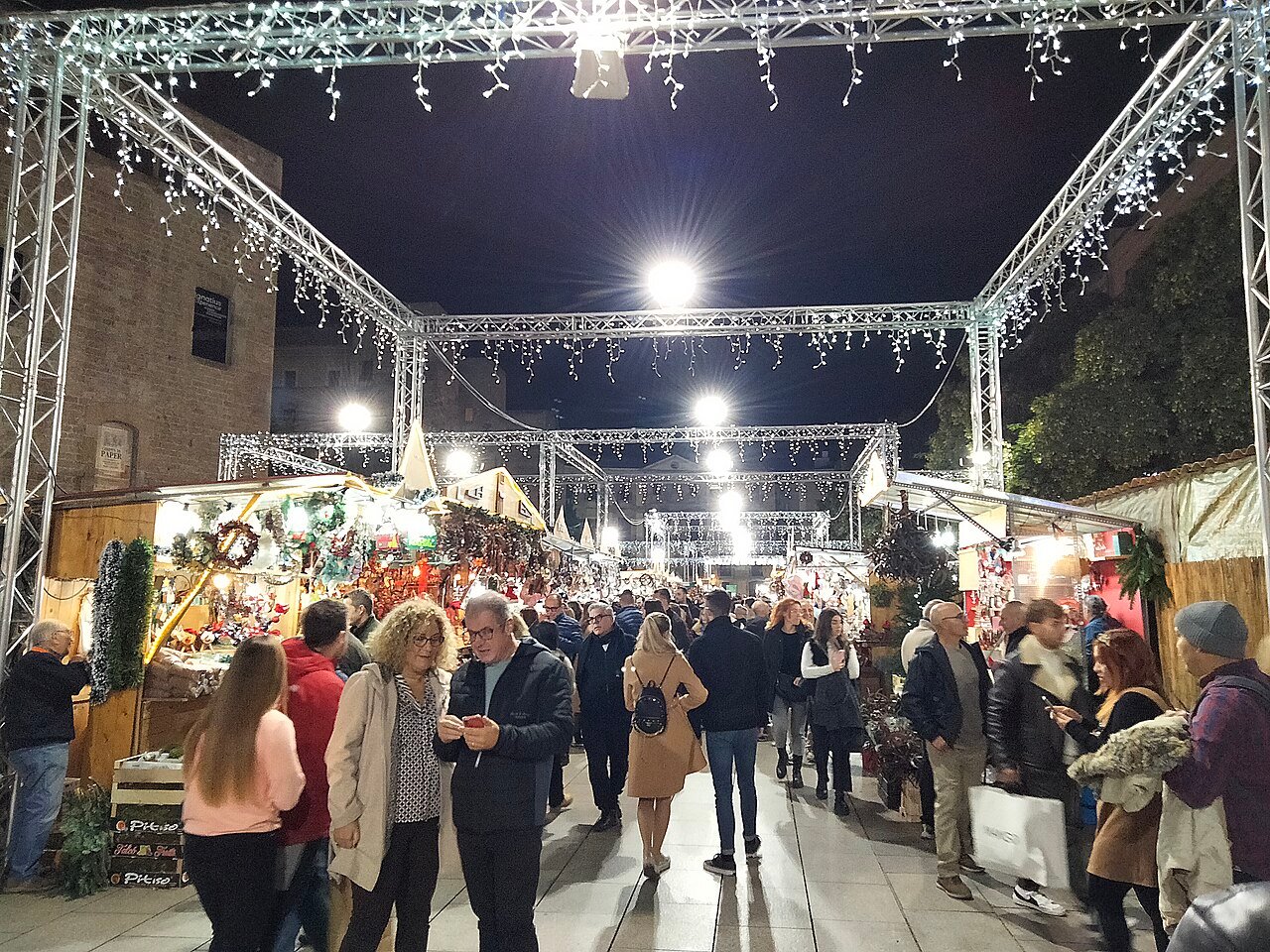
Barcelona Christmas Markets: The Complete Guide to Santa Llúcia, the Sagrada Família Fair & the Three Kings Fair
Travel insurance, sorted
Whether it is a two-week holiday or a longer move, travel insurance is not the most glamorous part of a trip — but it is the one booking you want to have in place before a trip, and while you are already away. Get a quote from SafetyWing
Final Thoughts
January breaks Barcelona’s year in the best possible place: one week of farewell fireworks — the Kings, the cake, the lights’ last nights — followed by three weeks of the city at its most itself, cheap, calm and quietly festive in ways no summer visitor ever sees. If December showed you the season at full volume, January is the collector’s edition: the same streets, half the people, double the room to enjoy them. Come for the parade and stay for the sales; come for the sales and stay for the horses and the onions. And if your trip starts in the festive weeks, our guide to Barcelona in December picks up the season where this one leaves off. Whenever in the month you land, pack the coat, book the free Sunday, and eat at least one calçot with your fingers — God willing, January will do the rest.
FAQs
Is Barcelona cold in January?
It is the city’s coldest month, but “cold” is relative: daytime highs average around 14–15 °C (57–59 °F) and nights around 6 °C (43 °F), with dry, sunny days the norm and only three or four rainy days in a typical month. Layers and a proper coat cover it — snow in the city itself is a rarity.
Where should I watch the Three Kings Parade?
The Cavalcada sets off at about 18:00 on 5 January after the Kings land by boat at the harbour around 16:30, and recent routes have run from the Ciutadella along Passeig de Colom and Avinguda del Paral·lel to the Magic Fountain at Montjuïc, finishing around 21:00–21:30. Pick one stretch, arrive 45 minutes early, and check the city’s published programme for the confirmed 2027 route.
Are shops open on 6 January in Barcelona?
Mostly no — Epiphany is a public holiday, and shops, markets and many restaurants close while bakeries do a roaring morning trade in tortell de Reis. The Fira de Reis on the Gran Via trades up to the eve of the 5th for last-minute gifts, and the winter sales open on 7 January.
Can I eat a calçotada without leaving Barcelona?
Yes — through calçot season (roughly late autumn to April, peaking January to March) farmhouse restaurants in the Collserola hills and grill restaurants across the city serve full calçotada menus, typically around €30–45 a head. The pilgrimage version is the Gran Festa de la Calçotada in Valls on the last Sunday of January, about 1 hour 15 minutes away.
Is January a good month to visit Barcelona?
If you value space over swimming, it may be the best month of all: the lowest prices of the year, the quietest monuments, the sales, two festivals most visitors never see — and, in the first week, the whole Christmas season’s grand finale with the Kings. The trade-offs are short days, a cold sea and the need for a coat.
What should I pack for Barcelona in January?
Layers you can peel off at a sunny lunch terrace and add back at dusk: a warm coat, a scarf, closed shoes that handle the odd rainy day, and sunglasses — January’s light is bright even when the air is cold. Add room in the case for the sales.