The Sagrada Família Towers: The Complete Guide (Which Tower, What You See, Is It Worth It?)
Every visitor to the Sagrada Família faces the same small decision at booking, usually in about four seconds: towers — yes or no? It deserves more than four seconds, because the tower visit is not a taller version of the church visit. It is a different experience entirely — part viewpoint, part sculpture gallery at touching distance, part endurance test in a stone snail shell — and whether it is worth your money depends entirely on which tower you pick and what your knees, nerves and schedule are like.
The short verdict, before the detail: yes, for most first-time visitors, once — and pick the Nativity side. You ride a lift up into the bell towers, walk a bridge between spires high above the facade, and come down several hundred spiral steps past carvings you cannot see from anywhere else on earth. But it is not for everyone, it is never the main event — the interior is, and our Inside the Sagrada Família guide explains why — and one thing needs saying plainly at the start: the record-breaking central Tower of Jesus Christ is not part of this. Nobody sells you a ticket up it. More on that below.

The Towers at a Glance
- What you can climb: one of the two facade tower groups — the Nativity towers (east side) or the Passion towers (west side). You choose one when you book; a ticket never covers both.
- How it works: a lift carries you up; the way down is always on foot, down a narrow spiral staircase — roughly 340 steps on the Nativity side, roughly 420 on the Passion side. There is no lift descent and no turning back halfway.
- How high: the lift leaves you around 50–65 metres up, with platforms and the bridge above that. The towers themselves rise to 98–107 metres on the Nativity side and a little more on the Passion side — but you never stand at the very top.
- Time needed: allow 30–45 minutes for the tower itself, on top of your church visit.
- Tickets: tower access is a timed add-on bought with your entry ticket, online in advance. Standalone tower tickets don’t exist, and standard entry does not include the towers.
- Price, honestly: standard entry sits somewhere in the €30s at the time of writing; the tower version costs more on top. Confirm the live figure when you book — it changes.
- Restrictions: children under 6 cannot go up, under-16s must be with an adult, and the towers are off-limits — genuinely, not bureaucratically — for anyone with serious vertigo, claustrophobia, mobility problems or bad knees.
- Weather: tower lifts can be suspended for high wind or storms at short notice; if that happens, the tower part of your ticket is the part that gets refunded or rescheduled.
Table of Contents
- The Towers at a Glance
- First, the Tower You Can’t Climb
- The Nativity Towers: Gaudí’s Own Side
- The Passion Towers: The Starker Side, the Wider View
- Nativity or Passion? The Decision in One Breath
- The Climb Itself: Lift Up, Bridge Across, Spiral Down
- Who Should Skip the Towers (Honestly)
- How Tower Tickets Work
- Tips for the Best Tower Visit
- Final Verdict
First, the Tower You Can’t Climb
Since February 2026, the Sagrada Família has been officially the tallest church in the world. On 20 February 2026 the final piece — the upper arm of its great cross — was lifted onto the central Tower of Jesus Christ, taking the basilica to 172.5 metres and past Ulm Minster’s record, which had stood since 1890. It is a magnificent silhouette-completing moment, and it generates one persistent misunderstanding: visitors assume the famous tower is the one their ticket climbs.
It is not. The Tower of Jesus Christ rises over the crossing, in the middle of the church, and it is not on the visitor route — no ticket, tour or add-on takes you up it, whatever a reseller’s headline implies. The towers you can climb are the older, lower bell towers on the two completed facades. Admire the big one the way everyone does: from the crossing floor, looking straight up into the light, or from across the Plaça de Gaudí with your neck craned. Then book a facade tower with clear eyes.
The Nativity Towers: Gaudí’s Own Side
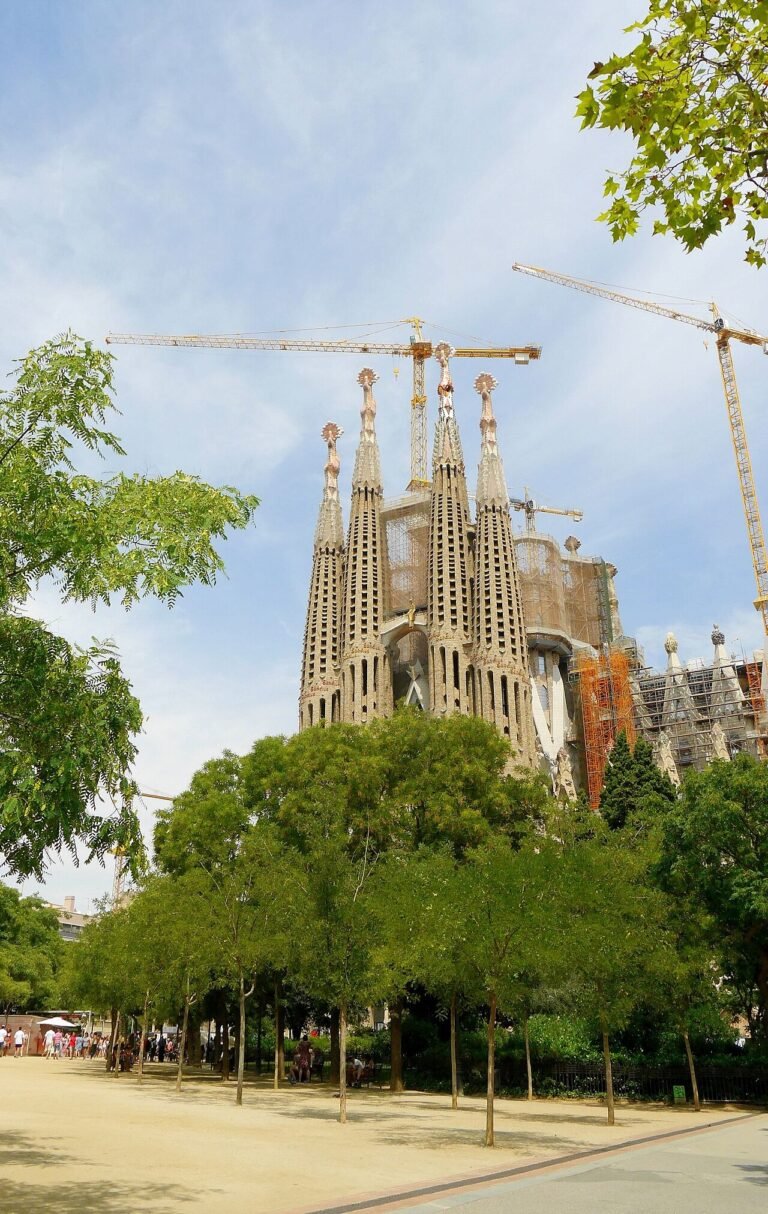
The Nativity facade faces east, towards the sunrise it celebrates, and its four towers — dedicated to the apostles Barnabas, Simon, Jude and Matthew — are the only ones Gaudí himself saw rising. The first was finished in his lifetime; the set was completed shortly after his death, in 1930, from his models. That makes this the tower visit for anyone who came for Gaudí’s hand rather than a panorama.
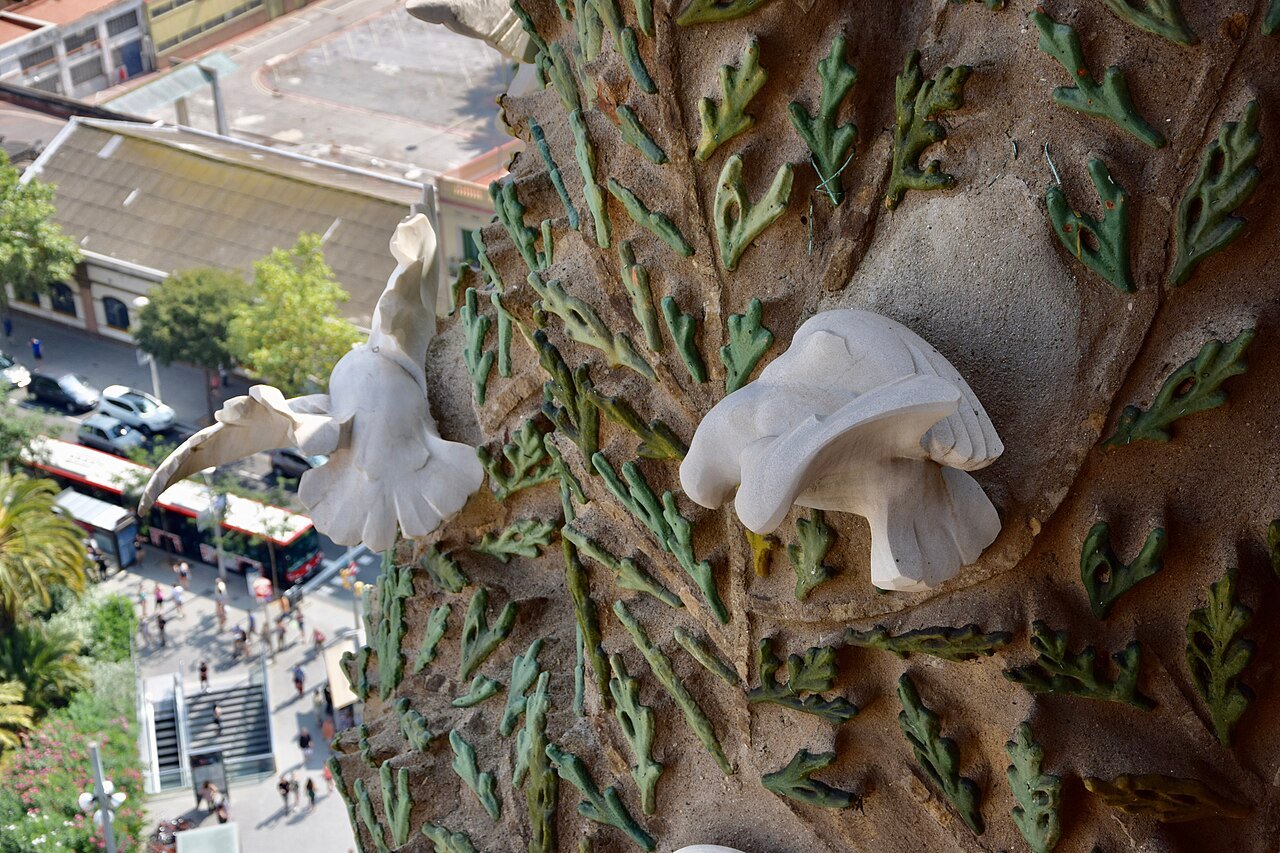
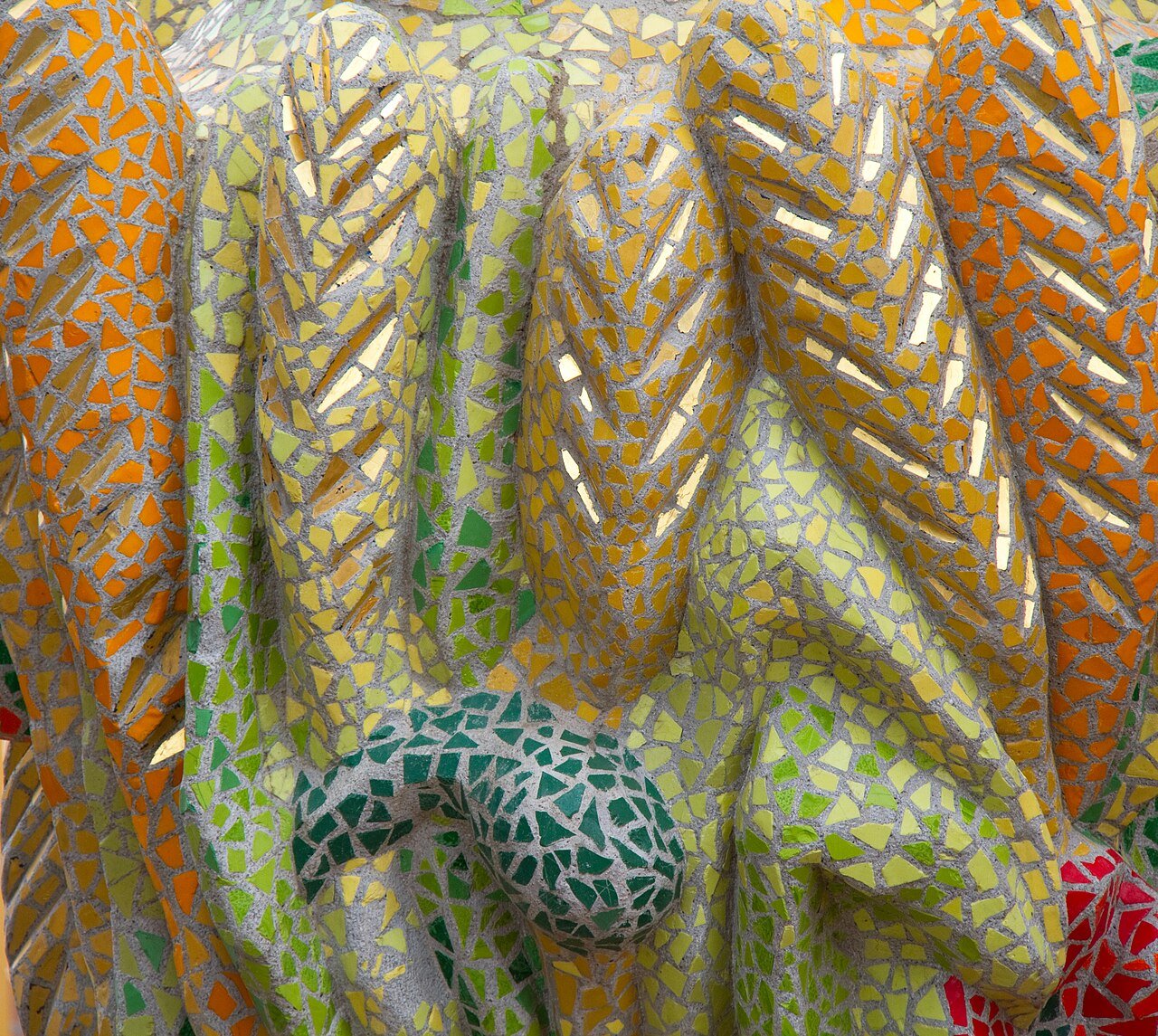
What you get up here is closeness. The lift delivers you among the spires, and the facade you read as a stone Bible from the street becomes a three-dimensional neighbourhood: the great stone cypress tree that crowns the facade, its white doves frozen mid-flutter an arm’s length away, the green ceramic leaves, the lettering, the sculpture turning corners you never knew existed. The trencadís mosaic work — broken-tile surfacing in greens, golds and reds — is at eye level rather than sixty metres overhead.
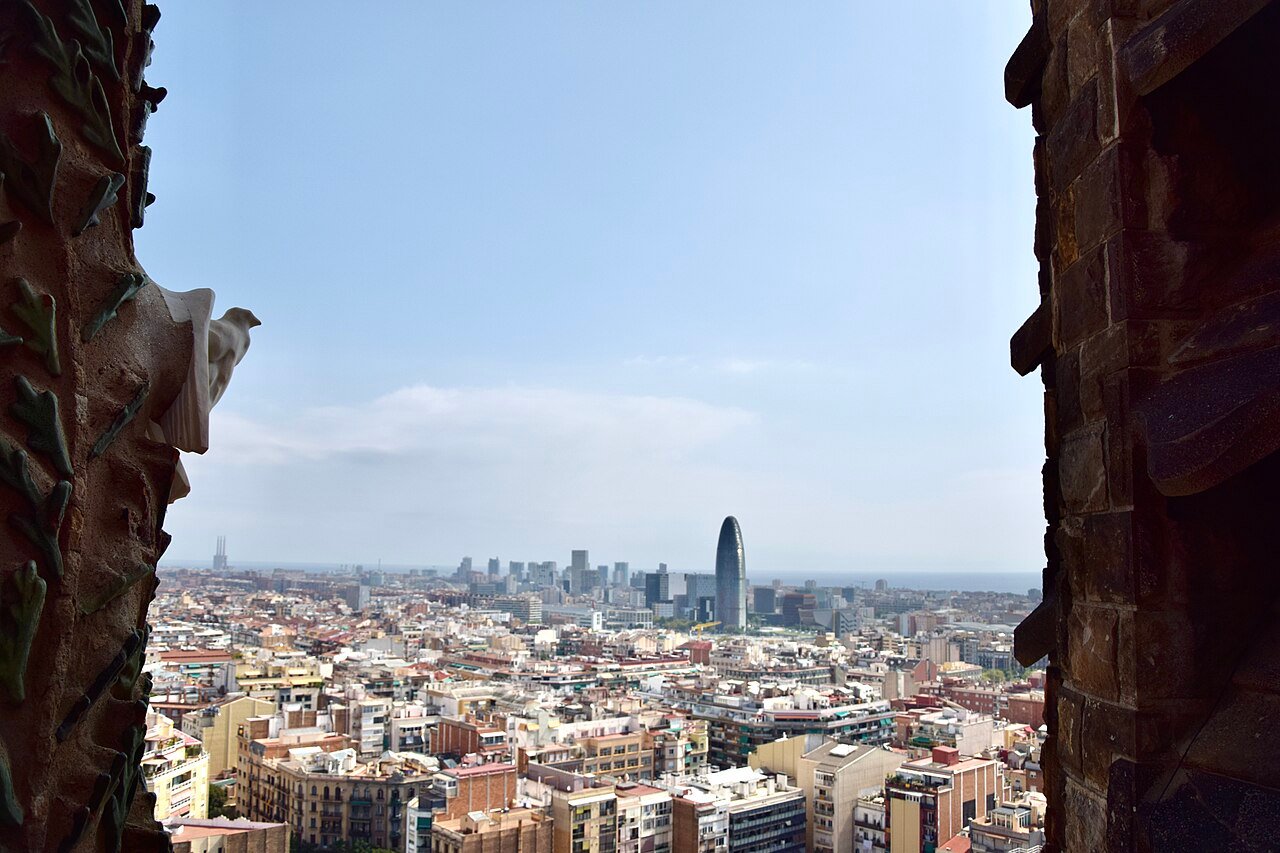
The views face east and north-east: the chequerboard grid of the Eixample unrolling below you, the Plaça de Gaudí and its pond directly beneath, the bullet-shaped Torre Glòries on the horizon and, on a clear morning, the Mediterranean as a bright band behind the rooftops. Because the facade faces the sunrise, morning is this tower’s light — the stone glows, the sea shows, and the crowds are at their thinnest. If your basilica slot is early, the Nativity tower is the natural pairing.
The Passion Towers: The Starker Side, the Wider View
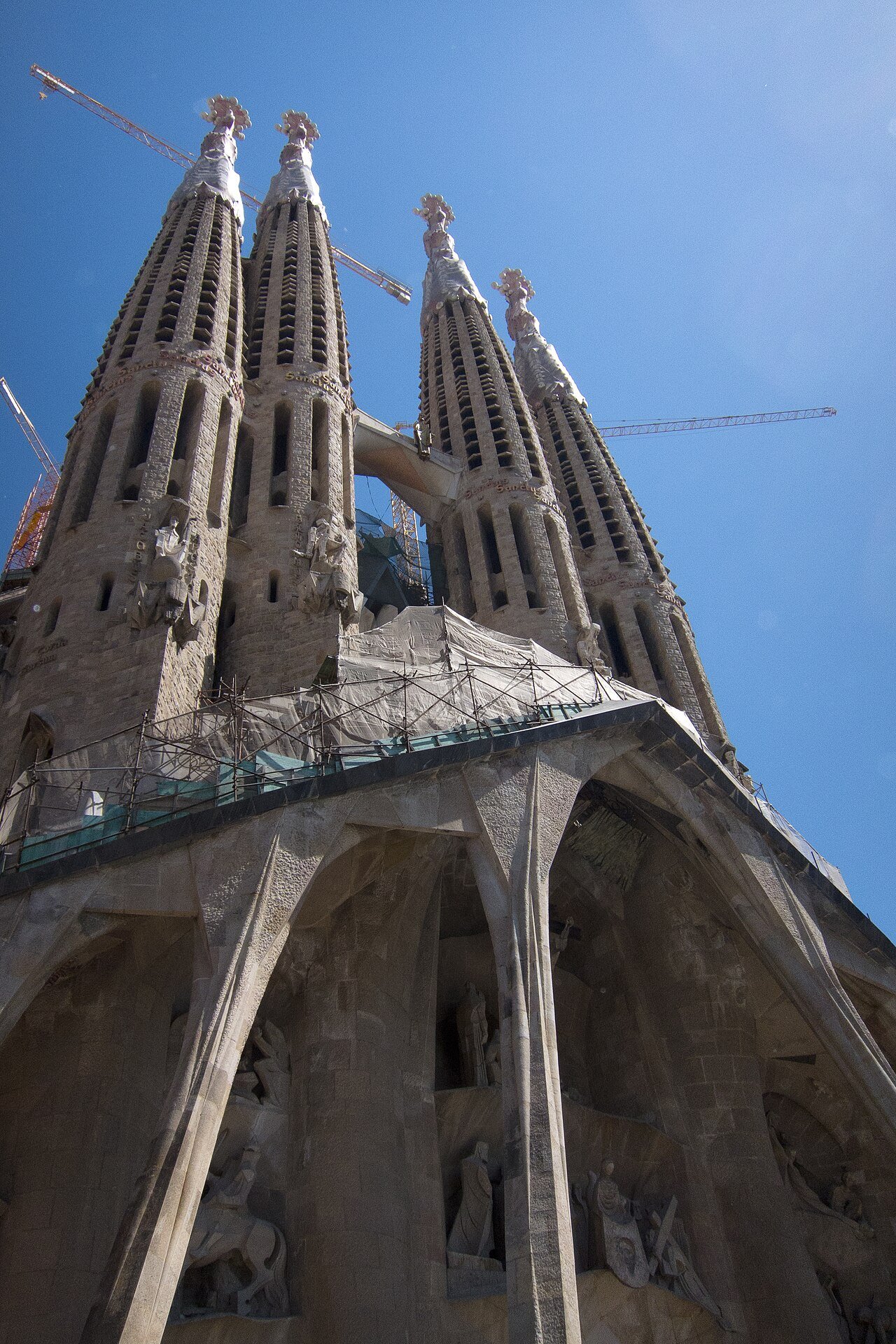
The Passion facade faces west, into the sunset, and everything about its towers is the Nativity’s opposite. Built between 1954 and 1976 from Gaudí’s models but in a harder age, they rise a few metres taller than the Nativity set, and where the east side is all organic abundance, the west is bone and angle: bare inclined columns, the stark sculptures of Josep Maria Subirachs, an architecture of suffering doing exactly what Gaudí asked of it — to strike a little fear.
From the top, the outlook swings west and south-west across the city: the old town and the Gothic Quarter in the middle distance, Montjuïc’s castle hill beyond, the Collserola ridge and Tibidabo closing the horizon, and the sea appearing off to your left on clear days. It is the broader, more urban panorama of the two — less facade intimacy, more city. And because the facade faces the evening sun, the Passion side owns the late afternoon: book a mid-to-late-afternoon slot and the whole western view is washed in gold while the stone around you turns to ember colours.
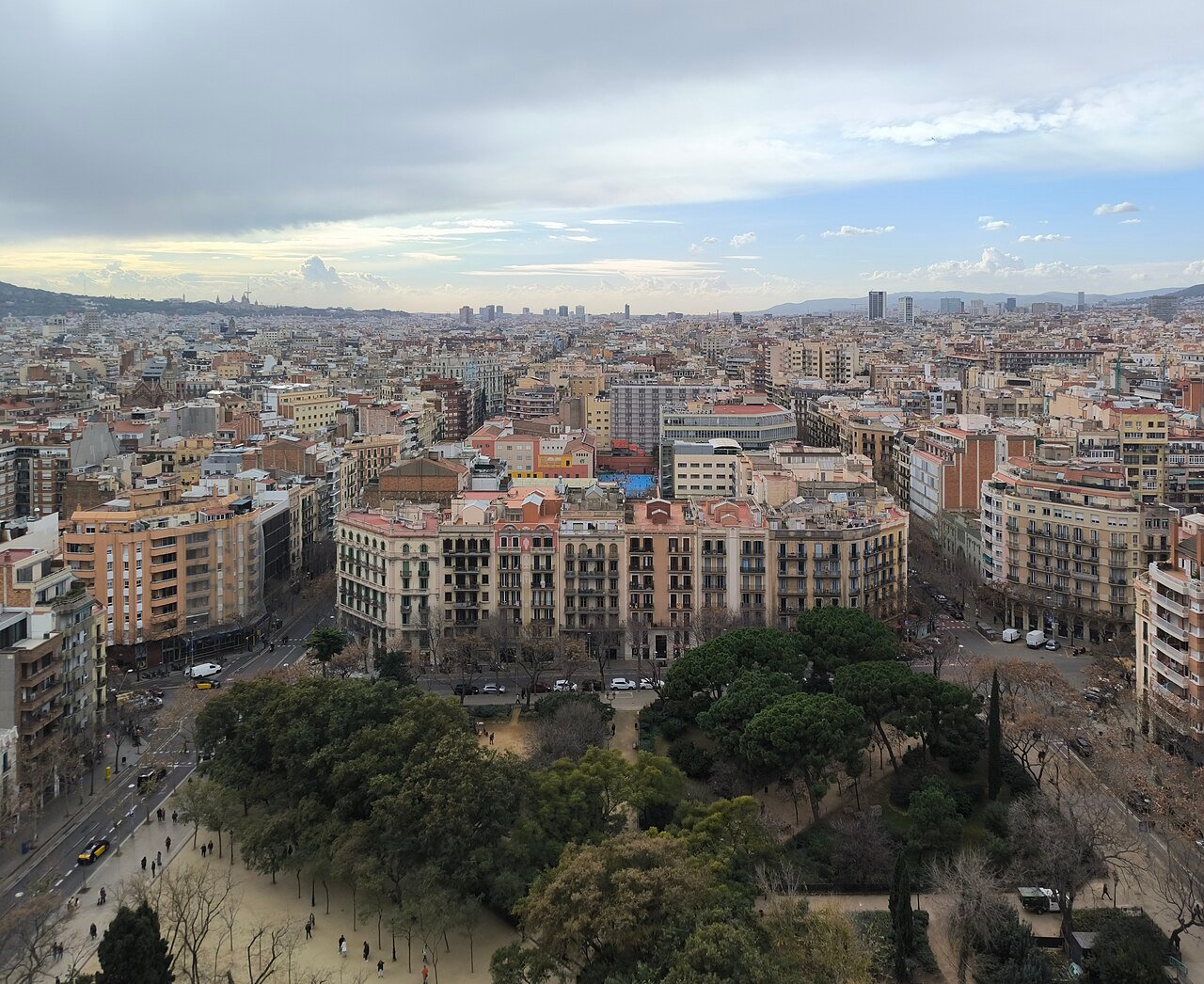
A practical point in the Passion tower’s favour: it is usually the easier of the two to book at short notice, because everyone else has read the same advice about the Nativity side. If your dates are fixed and the Nativity slots have gone, take the Passion tower without a second thought — you are trading Gaudí-era detail for the bigger view, which is a fair trade, not a consolation prize.
Nativity or Passion? The Decision in One Breath
First visit, morning slot, Gaudí devotee, nervous-but-willing about heights: Nativity. Afternoon slot, photographer, panorama hunter, second visit, or the Nativity side is sold out: Passion. If you genuinely cannot decide, let your basilica entry time decide for you — east tower with a morning ticket, west tower with an afternoon one, so the light is always working for you rather than against you. And remember the constraint that settles many arguments: you can only climb one per visit, so there is no wrong answer, just a first answer.
Free Barcelona travel guide
Planning a trip to Barcelona? Get our free one-page Barcelona checklist: what to book ahead, what to skip, and the tapas bars we actually eat in.
The Climb Itself: Lift Up, Bridge Across, Spiral Down
However the booking page makes it sound, this is not a “go to the top and look out” attraction. It is a small journey with three distinct acts.
Act one: the lift. You present yourself at the tower base at your timed slot — bags and rucksacks go into the lockers there, so travel light — and a small lift whisks you up inside the tower. It is quick, enclosed and unremarkable, which is precisely the point: all the drama is saved for outside.
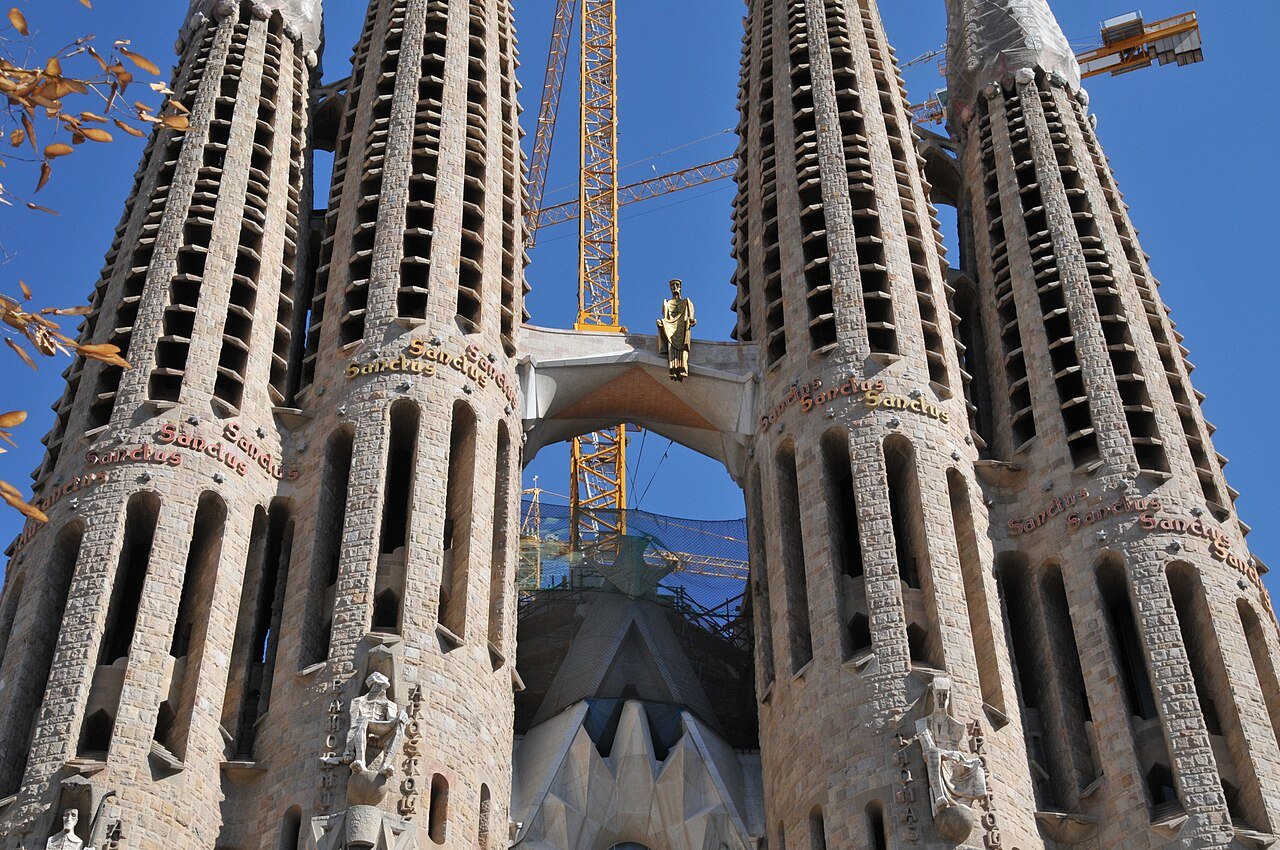
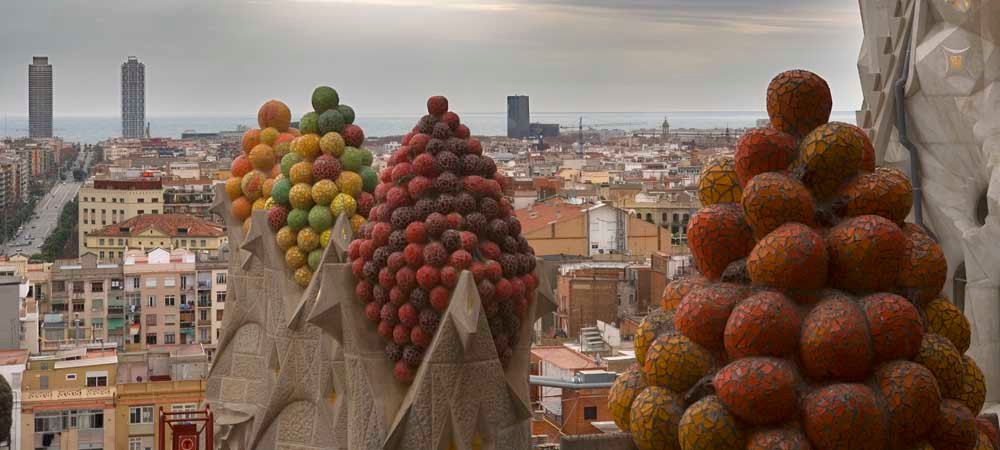
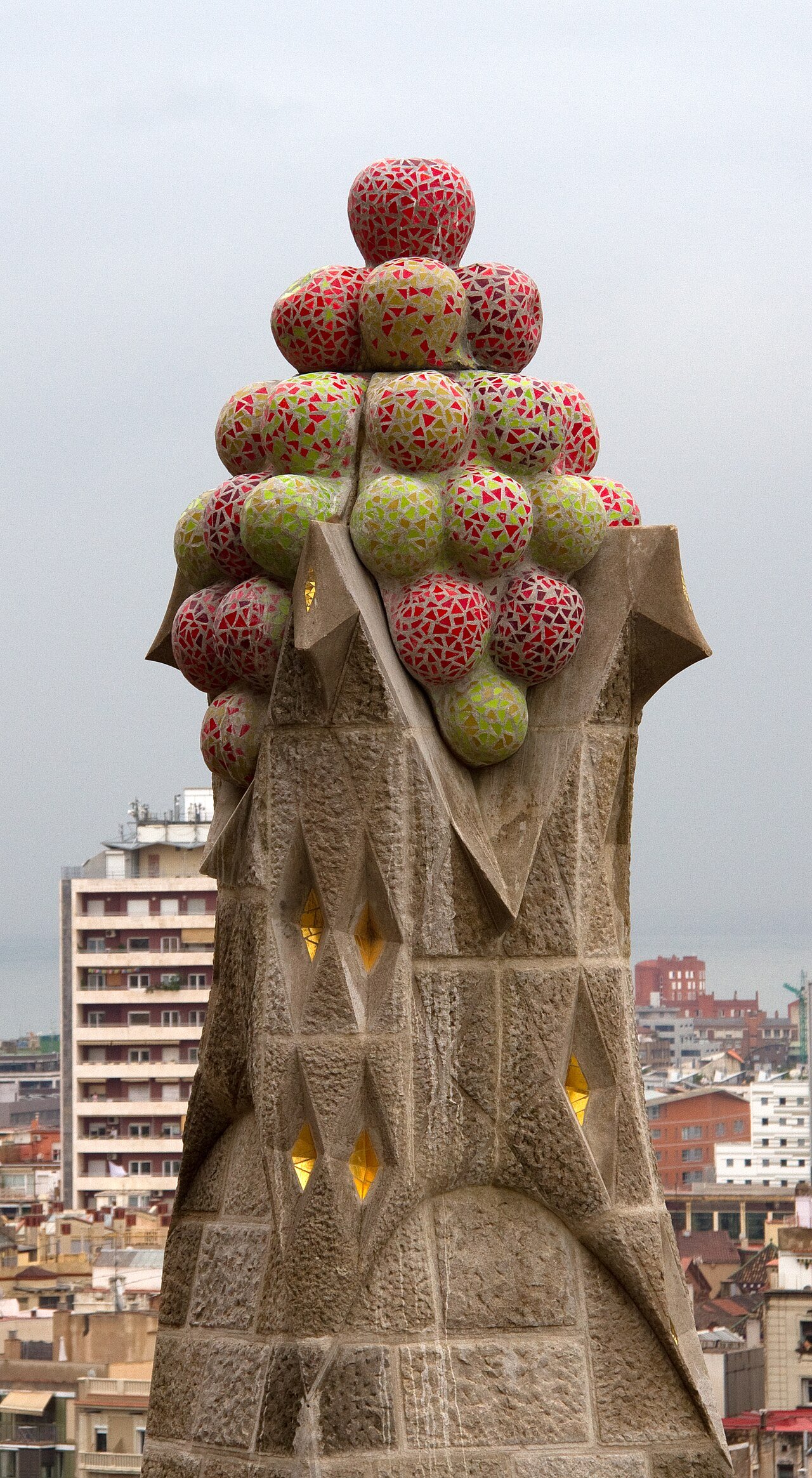
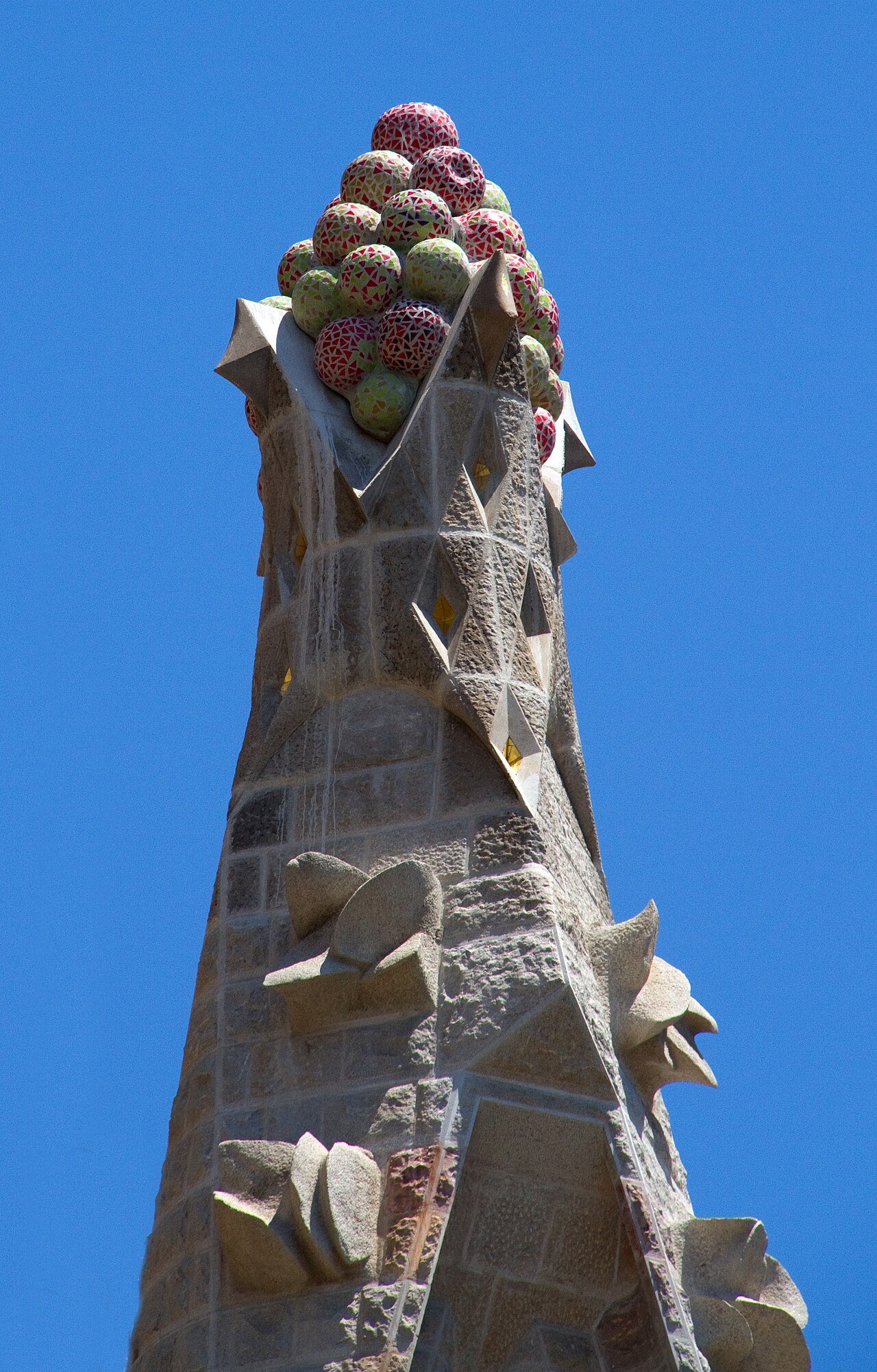
Act two: the top, and the bridge. You step out among the spires, and for a few minutes the building belongs to your eye level: pinnacles topped with baskets of mosaic fruit — grapes, figs and oranges in trencadís, the Eucharistic harvest Gaudí set glittering over the city — close enough to study tile by tile. On the Nativity route, the highlight is the bridge between two of the towers, slung high across the facade with the gilded figure at its centre and the Sanctus, Sanctus, Sanctus lettering running around the towers beside you. Crossing it, with the facade falling away on both sides, is the single most memorable minute of the tower visit — and, for anyone shaky with heights, the moment that tests them. The Passion route has its own shorter bridge crossing between towers. Either way: this, not the panorama, is what you will describe at dinner.
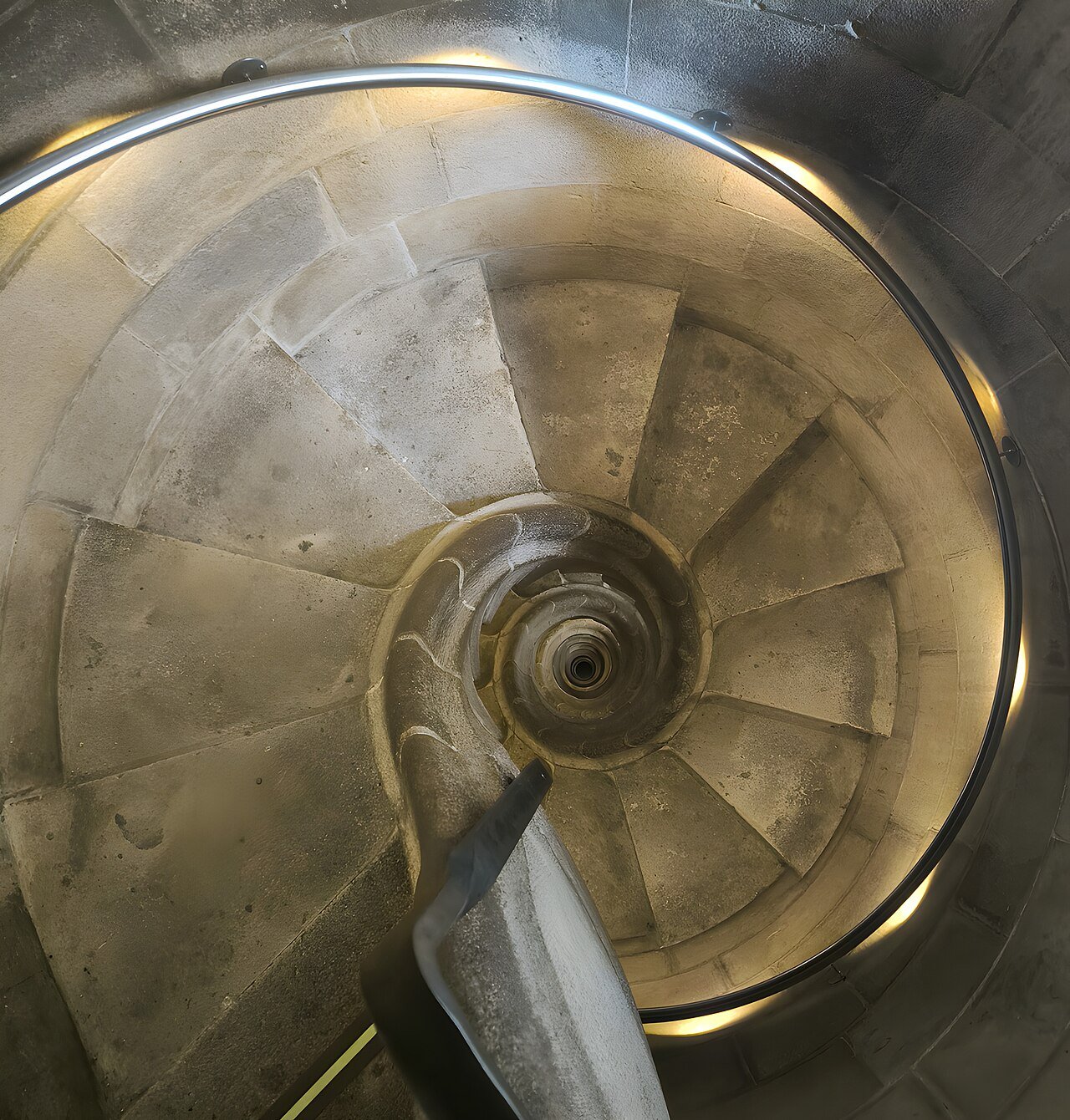
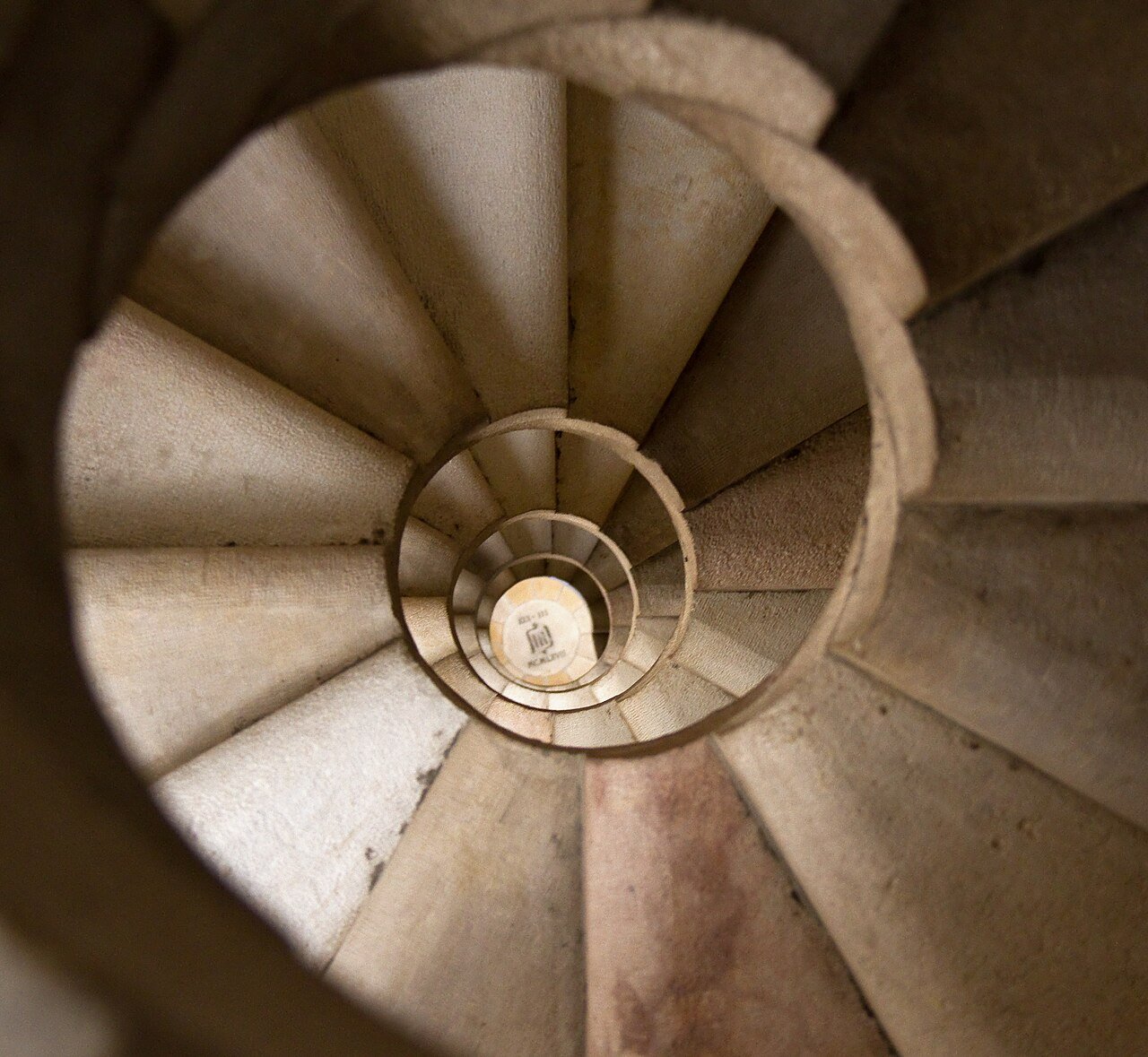
Act three: the descent. There is no lift down. You walk — down a stone spiral staircase that corkscrews through the tower’s core, turning and turning, hundreds of steps (roughly 340 on the Nativity side, roughly 420 on the Passion side), the steps narrowing towards the centre, small openings framing snapshots of the city as you pass. Gaudí modelled these stairs on a snail’s shell, and descending one feels exactly like being inside one. It takes ten to twenty minutes, it is one-way, and once you start there is no exit, no lift and no shortcut. Most people emerge slightly dizzy and entirely delighted. Some do not — which brings us to the honest section.
Who Should Skip the Towers (Honestly)
I recommend the towers often, but not to everyone, and the basilica’s own restrictions back this up. Skip them, and spend the money on a guided tour instead, if:
- Vertigo or a real fear of heights. The bridge crossing and the open tower tops are exposed, and the spiral’s openings frame long drops. A mild wobble is normal; genuine vertigo will make twenty minutes miserable.
- Claustrophobia. The staircase is a narrow stone tube. If enclosed spiral spaces trouble you, the descent — remember, no exit halfway — is the worst place in Barcelona to discover it.
- Knees, hips or heart. Several hundred worn, uneven, turning steps, all downhill, with people behind you. There is no alternative route and nowhere to rest properly.
- Children under 6 — not a judgement call; they are simply not permitted up. Under-16s must be accompanied by an adult. Older children who like climbing usually love it; toddlers in arms are a hard no, and there is nowhere for a pushchair.
- Anyone with mobility limitations. The towers predate accessibility by a century and have not caught up: lift up, stairs only down, no step-free route exists.
None of this is a lesser visit. The nave will still rearrange your expectations of what a church can be, and the towers will still be there on a future trip with stronger knees.
How Tower Tickets Work
Tower access is sold only as part of a basilica ticket, chosen in advance: when you book, you pick your entry slot, pick your tower (Nativity or Passion), and receive a timed tower slot within your visit. There is no buying the add-on at the door, no upgrading a standard ticket on the day, and — because everything is timed and capped — tower slots in high season disappear days or weeks ahead, the Nativity side first. Start your booking here: Sagrada Família entry ticket on GetYourGuide.
Two operational details worth knowing. First, the basilica can suspend the lifts for wind or weather — the towers are exposed stone funnels, and on a tramontana day they close. If your tower is cancelled, the tower portion is refunded or rescheduled, but your church visit goes ahead; build your day so the towers are the bonus, never the load-bearing wall. Second, the tower slot is a specific time, not an open invitation: miss it and it is gone, so once inside, keep half an eye on the clock — the museum in particular has a way of eating twenty minutes you meant to keep. The towers sit at the top of our Best Things to Do in Barcelona guide itinerary for good reason, but they reward planners.
Tips for the Best Tower Visit
- Match the tower to the light: Nativity in the morning, Passion in the afternoon. It is the single decision that most improves the photos.
- Do the church first, towers second if your slots allow — the interior deserves your freshest eyes, and the tower works beautifully as a finale.
- Travel light: bags go in lockers at the tower base; a phone and a bottle of water are all you need. Tripods and selfie sticks stay below.
- Wear real shoes. Worn stone spiral steps are slippery in sandals and unforgiving in heels.
- Clear day over cloudy one: if your dates are flexible, the towers are the part of the visit most hostage to weather — haze eats the sea view by noon in summer; crisp winter mornings are the connoisseur’s choice, as our Best Time to Visit Barcelona guide would tell you about the city generally.
- Look at the building, not just from it. Half the tower visit’s value is the sculpture at arm’s length. Slow down at the top; the staircase will still be there.
- Build the day around it: a morning Nativity tower pairs with an Eixample afternoon; our 3 Days in Barcelona itinerary shows where the basilica day sits in a full trip.
Travel insurance, sorted
Whether it is a two-week holiday or a longer move, travel insurance is the one booking not to skip. We point readers to SafetyWing’s Nomad Insurance — cover built for travellers, remote workers and longer stays abroad, on a flexible monthly subscription you can start before a trip or while you are already away.
Final Verdict
Are the Sagrada Família towers worth it? For most visitors, yes — once, on the Nativity side, in the morning. Not for the panorama, which is lovely but not Barcelona’s best; for the bridge between the spires, the doves and fruit baskets at touching distance, and the strange privilege of descending through the inside of a snail shell Gaudí designed a century ago. Skip them without regret if heights, tight spaces or knees say no — the masterpiece is the church itself, and no tower changes that. And when you come back down to the crossing and look up at the Tower of Jesus Christ soaring to its 172.5 metres, you will understand the building’s final lesson: some towers are for climbing, and the greatest one is simply for looking up at, in wonder, from below.
Sagrada Família entry ticket on GetYourGuide
¡Buen viaje!
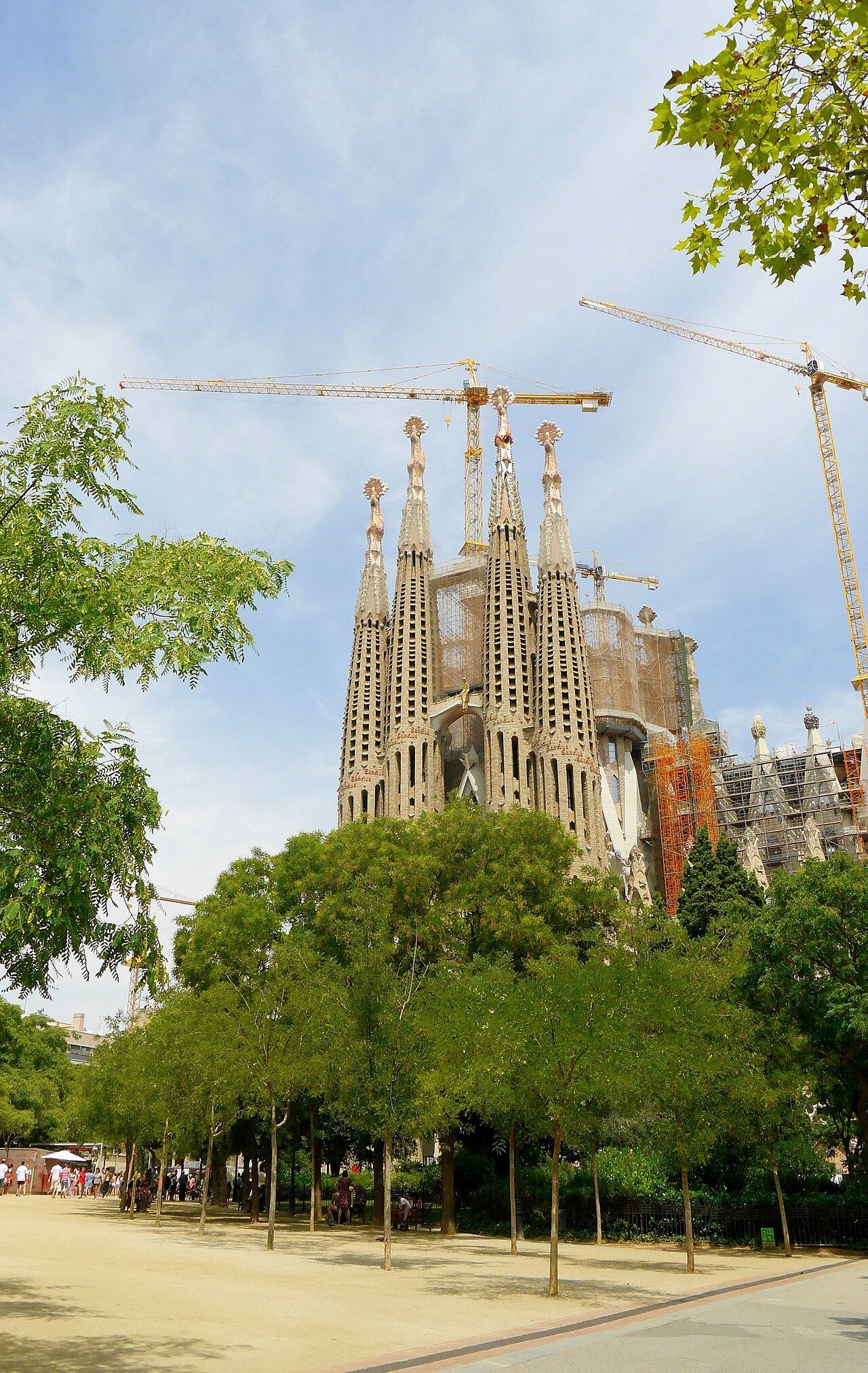
Photo credits: The Nativity Tower View — Maksim Sokolov, CC BY-SA 4.0 · The Cypress Doves — Ank Kumar, CC BY-SA 4.0 · Trencadís Mosaic — Tony Hisgett, CC BY 2.0 · Between the Nativity Towers — Ank Kumar, CC BY-SA 4.0 · The Passion Towers — Thomas Quine, CC BY-SA 2.0 · The General View — Reda Kerbush, CC BY-SA 4.0 · The Bridge Between the Towers — Serge Melki, CC BY 2.0 · The Fruit Baskets — Sagrada Família (oficial), CC BY-SA 3.0 · The Fruit Pinnacle — Tony Hisgett, CC BY 2.0 · The Passion Staircase — Reda Kerbush, CC BY-SA 4.0 · The Spiral Staircase — Tony Hisgett, CC BY 2.0 · The Lone Pinnacle — Tony Hisgett, CC BY 2.0. All via Wikimedia Commons.

5 Comments