El Born: The Complete Guide to Barcelona’s Medieval Quarter
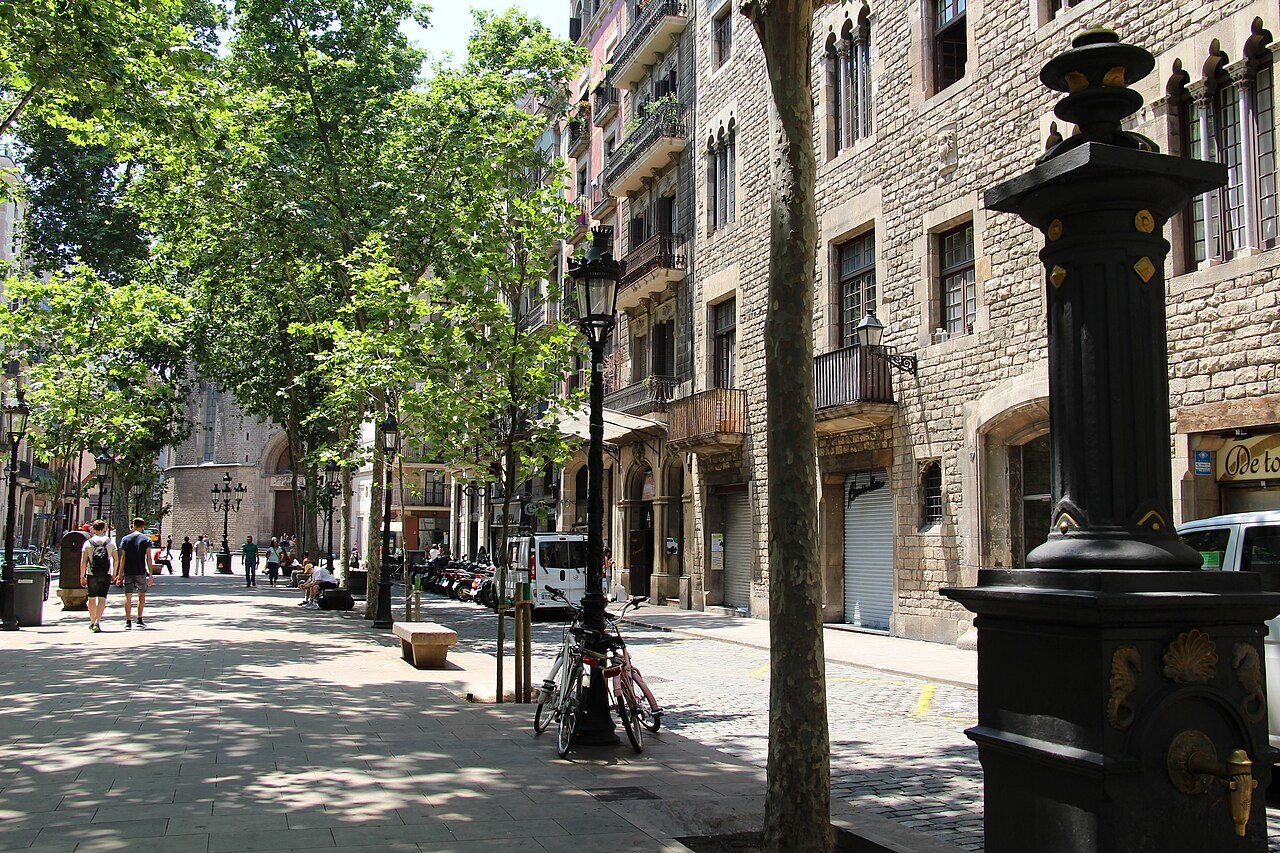
If the Gothic Quarter is Barcelona in its Sunday clothes, El Born is Barcelona in shirtsleeves. This knot of stone lanes — across Via Laietana from the cathedral, between the old town and the green of the Ciutadella park — was the city’s engine room in its medieval prime: the quarter of the sea merchants, the shipwrights and the silversmiths, where the money that built Barcelona was made and, loudly, spent. It still runs on work and pleasure in equal measure. Carrer Montcada’s palaces now hold the Picasso Museum, the old jousting ground is a line of bar terraces, the wholesale market hides a demolished city under its floor, and over everything stand the twin towers of Santa Maria del Mar, the church the porters built for themselves.
This guide walks the quarter end to end: the merchants’ story and the catastrophe of 1714; the great church and its memorial square; the buried streets of the El Born CCM; the Picasso palaces of Montcada; the wave-roofed Santa Caterina market; and the boutique lanes and vermouth bars in between. It is one chapter of the story our Best Things to Do in Barcelona guide tells citywide — the chapter with the best bars.
The Short Answer
Yes — El Born is the old-town quarter to base your evenings, and arguably your whole stay, around: a compact medieval grid holding one of Europe’s great Gothic churches, the Picasso Museum, a market with the city’s most photographed roof and a buried 1700s city inside a second one, plus Barcelona’s densest run of small bars and independent shops — all flat, walkable, and ten minutes end to end. The paid sights (the Picasso Museum, the Palau de la Música) reward booking ahead, while the quarter’s two most powerful places — Santa Maria del Mar and the streets under the El Born CCM — are cheap or free. Give it a full day threaded with an evening, and if you want the layers read aloud, an El Born and Gothic Quarter walking tour links the Born’s palaces and church to the cathedral streets in a couple of hours.
Table of Contents
- The Short Answer
- The Story in Brief: Merchants, Jousts and the Year 1714
- Santa Maria del Mar: The People’s Cathedral
- Passeig del Born: From Jousting Ground to Nightlife Spine
- El Born CCM: The 1700s City Under the Market Hall
- At the Top Edge: The Palau de la Música Catalana
- Carrer Montcada and the Museu Picasso
- Mercat de Santa Caterina: The Market Under a Wave
- Shopping the Born: Princesa, Argenteria and the Boutiques
- Where to Eat and Drink: Tapas Lanes and the Vermouth Hour
- Staying in El Born
- Practical Info
- Tips for Visiting
- Final Thoughts
The Story in Brief: Merchants, Jousts and the Year 1714
El Born grew up outside the Roman walls, along the shore road, in the district called La Ribera — the waterfront. Through the 13th and 14th centuries this was the richest ground in Barcelona: the sea consuls and great merchants built their palaces here, the guilds their halls, and the port its workforce. Carrer Montcada filled with noble houses; the silversmiths took the Argenteria; the hat-makers, spice-sellers and rope-makers each stamped their trade onto a street name still legible on the plaques today. At its heart, the open ground of the Born — the word means a tournament ground — hosted jousts and festivals a few steps from the church rising beside it.
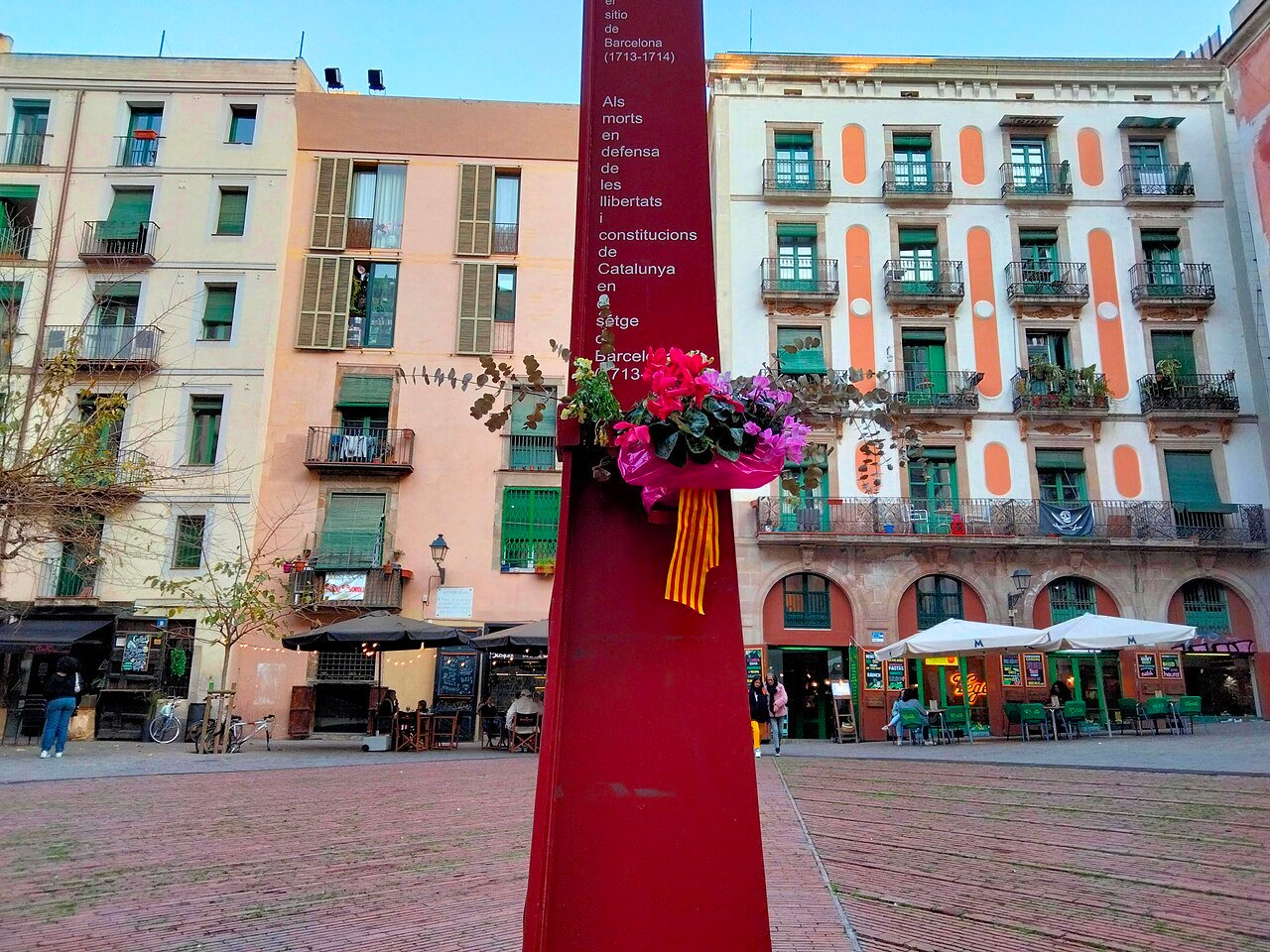
Then came 1714. In the War of the Spanish Succession, Barcelona held out for the Habsburg cause against the Bourbon king Philip V through a siege of more than a year, and on 11 September 1714 the city fell. The punishment fell heaviest precisely here. To build the Ciutadella fortress that would watch over the city, the victors demolished a swathe of La Ribera — well over a thousand houses, by the usual count — and displaced thousands, forced to pull down their own homes. The siege dead were buried in the Fossar de les Moreres, the cemetery beside Santa Maria del Mar, and the square covering it is now the quarter’s — and Catalonia’s — memorial ground: a sloping red field of brick under Albert Viaplana’s steel memorial, its torch kept burning, inscribed with Frederic Soler’s words: at the Fossar de les Moreres no traitor is buried; even losing our flags, it will be the urn of honour. Every 11 September, the Diada, the square fills with flowers and crowds; the rest of the year it is dog-walkers, café terraces and one of the most quietly charged spots in the city.
The Born that survived rebuilt itself as a working district around its wholesale market, and spent two centuries as the city’s pantry and workshop before the market left in the 1970s. Its modern revival — Picasso first, in 1963, then the designers and the bars — has made it fashionable without sanding off the medieval grain. That grain is the point: the grandest slice of medieval Barcelona is still a neighbourhood first.
Santa Maria del Mar: The People’s Cathedral
Stand in the little square of Santa Maria and look up: two slender octagonal towers, a great rose window, a façade of almost military plainness. Santa Maria del Mar is the masterpiece of Catalan Gothic and the quarter’s reason for existing — and it is not, and never was, the city’s cathedral. That title belongs to the building covered by our Barcelona Cathedral guide. Santa Maria was something rarer: a parish church paid for by the people of the port district themselves. The bastaixos, the porters who unloaded the ships, carried the stone for it on their backs from the quarries at Montjuïc — look for their carved figures, bent under their loads, on the main doors — and the whole church went up in a single campaign between 1329 and 1383, fifty-four years fast enough that the building reads as one pure idea: a vast single space ringed by slender columns, built to hold a congregation of sailors, merchants and stevedores.

Inside, the effect is the opposite of the Gothic Quarter’s candlelit gloom: height, light and air, the columns spaced so wide that the nave feels like a stone forest clearing. The stained glass is largely later — fire in 1936, in the first days of the Civil War, gutted the interior fittings — but the architecture survived intact, which is why the visit is about space rather than treasure. Our Santa Maria del Mar guide walks the church in full, including the rooftop visits among the towers and gargoyles; here, simply do not skip it. It is the finest interior in the old town, and the square outside — cafés under the towers — is the quarter in one frame.

Passeig del Born: From Jousting Ground to Nightlife Spine
From the church door, the Born’s main street runs straight ahead: the Passeig del Born, a boulevard of plane trees, old lamps and palace fronts that was the quarter’s ceremonial ground for five hundred years. Knights jousted here — bornar meant to tilt in the lists — and the city held its festivals and markets on the same gravel. The jousts are long gone, but the Passeig has never stopped being the quarter’s stage. By day it is the Born’s front room: shoppers drifting between boutiques, old men on the benches, the first vermouths on the terraces before lunch.
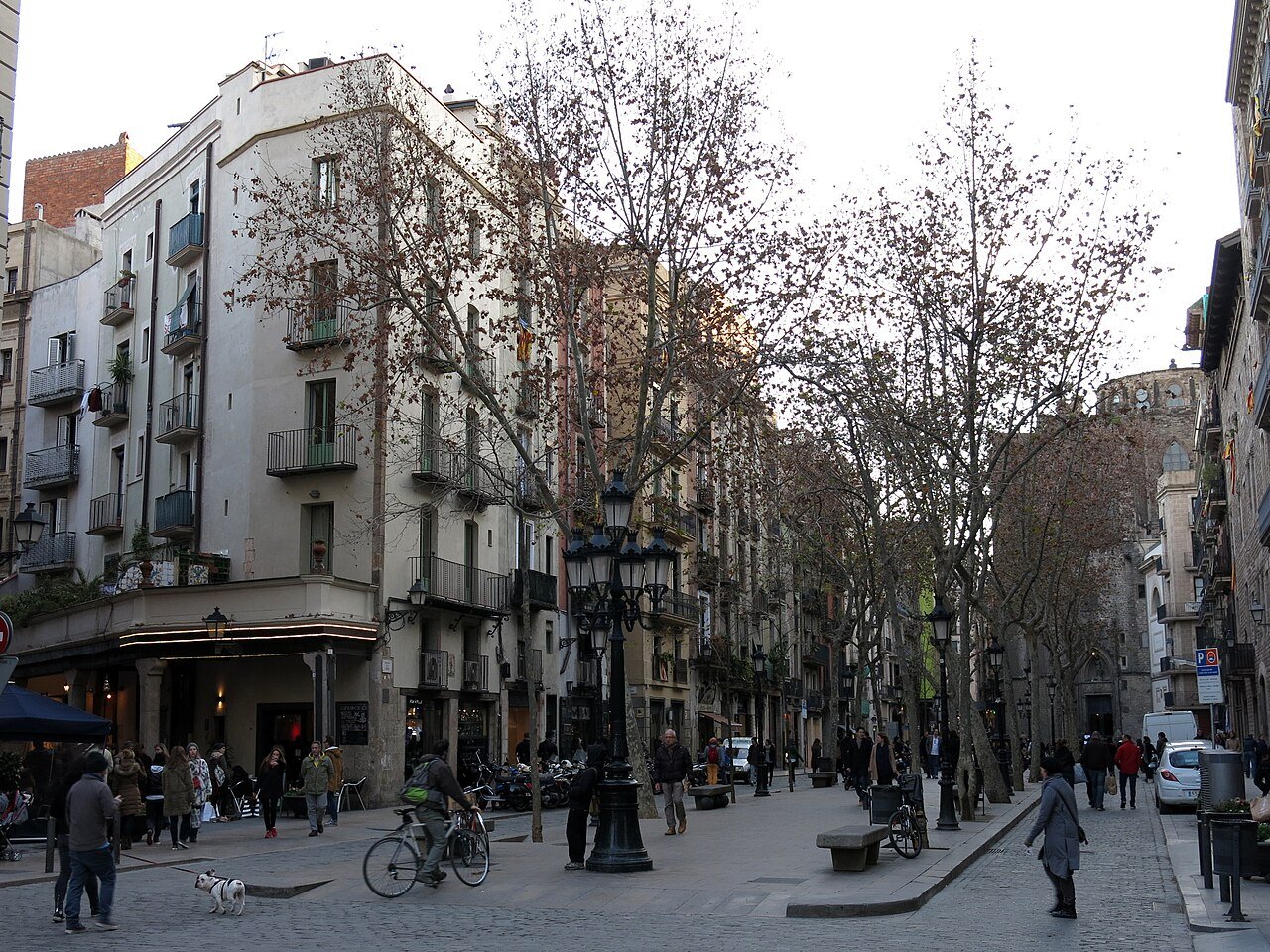
By night it changes shift. The Passeig and the lanes off it hold the densest concentration of small bars in the old town, and from Thursday to Saturday the boulevard hums until late. Be honest about which Born you are booking: the street that charms at noon parties at midnight, and the residents above the bars — the Born is still, defiantly, residential — have spent years negotiating the balance, with terraces licensed and closing hours enforced. Join the evening, by all means; the quarter runs on it. Just take it at the Born’s own volume, and let the walk home be a quiet one.
El Born CCM: The 1700s City Under the Market Hall
Two minutes from the Passeig stands the quarter’s second great building, and its strangest: the old Mercat del Born, an iron-and-glass hall opened in 1876 as Barcelona’s central wholesale market — and underneath its floor, an entire city. When the market closed and conversion work began in the early 2000s, the diggers found what the demolition squads of 1716 had left: the streets of the Ribera razed for the Ciutadella fortress, preserved at basement level almost exactly as they fell — house walls, workshops, taverns, the paved lanes between them, even the Rec Comtal, the canal that carried water through medieval Barcelona, running down the middle.

The building reopened on 11 September 2013 as El Born Centre de Cultura i Memòria, and the arrangement is unlike any museum in Spain: you walk a gallery deck around and over the ruins, looking down on the lost streets while the exhibition reads them for you — who lived in which house, what the taverns sold, how the siege unfolded street by street. Rafael Moneo’s conversion keeps the market hall itself as the biggest exhibit. Entry to the hall and the view over the site are free; guided descents into the ruins are the paid extra. It is the single best place in Barcelona to understand 1714 — and the reason this guide put the history first.
At the Top Edge: The Palau de la Música Catalana
The Born’s lanes end at Carrer de la Princesa, the straight street cut through the old fabric in the 1850s, and just across it — five minutes uphill from the Passeig — the quarter claims one more masterpiece, whatever the maps say about boundaries. The Palau de la Música Catalana, built 1905–1908 by Lluís Domènech i Montaner for the Orfeó Català choir, is Catalan modernisme at its most exuberant: a red-brick corner exploding with mosaic columns, composers’ busts, and Miquel Blay’s great stone crowd of Catalan singers pouring around the corner. Inside is the famous stained-glass skylight — a concert hall lit like a garden.
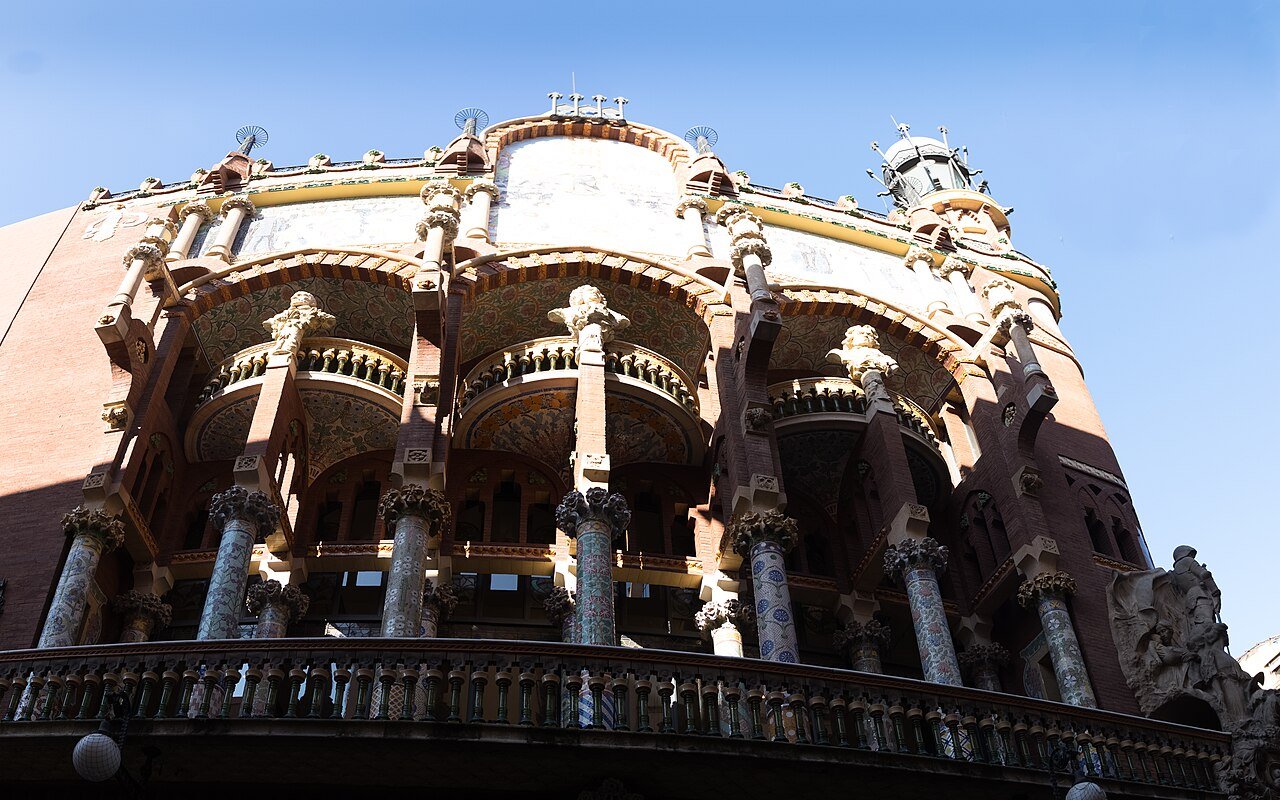
You can attend a concert — the best way — or take the daytime guided visit; our Palau de la Música Catalana guide covers both in full, with the booking advice that matters. From the Born, treat the Palau as the quarter’s top gate: start here in the morning, when the façade catches the sun, and let the lanes carry you downhill to the church and the Passeig by lunch.
Carrer Montcada and the Museu Picasso
If you walk one street in the Born slowly, make it Carrer Montcada. Laid out in the 12th century and built up through the 13th to 15th, it was the grandest address in maritime Barcelona: a canyon of stone palaces, each with its courtyard and gatehouse, home to the merchant dynasties who ran the Mediterranean trade. The palaces are still there — Aguilar, Meca, Mauri, Finestres, the Baró de Castellet — and since 1963 five of them have held the Museu Picasso, the museum of Picasso’s Barcelona years: the painter arrived as a teenager, lived two lanes away on Carrer de la Mercè, and kept Barcelona as his reference point for life. The collection is strongest exactly where other Picasso museums are weakest — the early work, the Blue Period, and the complete Las Meninas series of 1957, Picasso repainting Velázquez canvas by canvas.
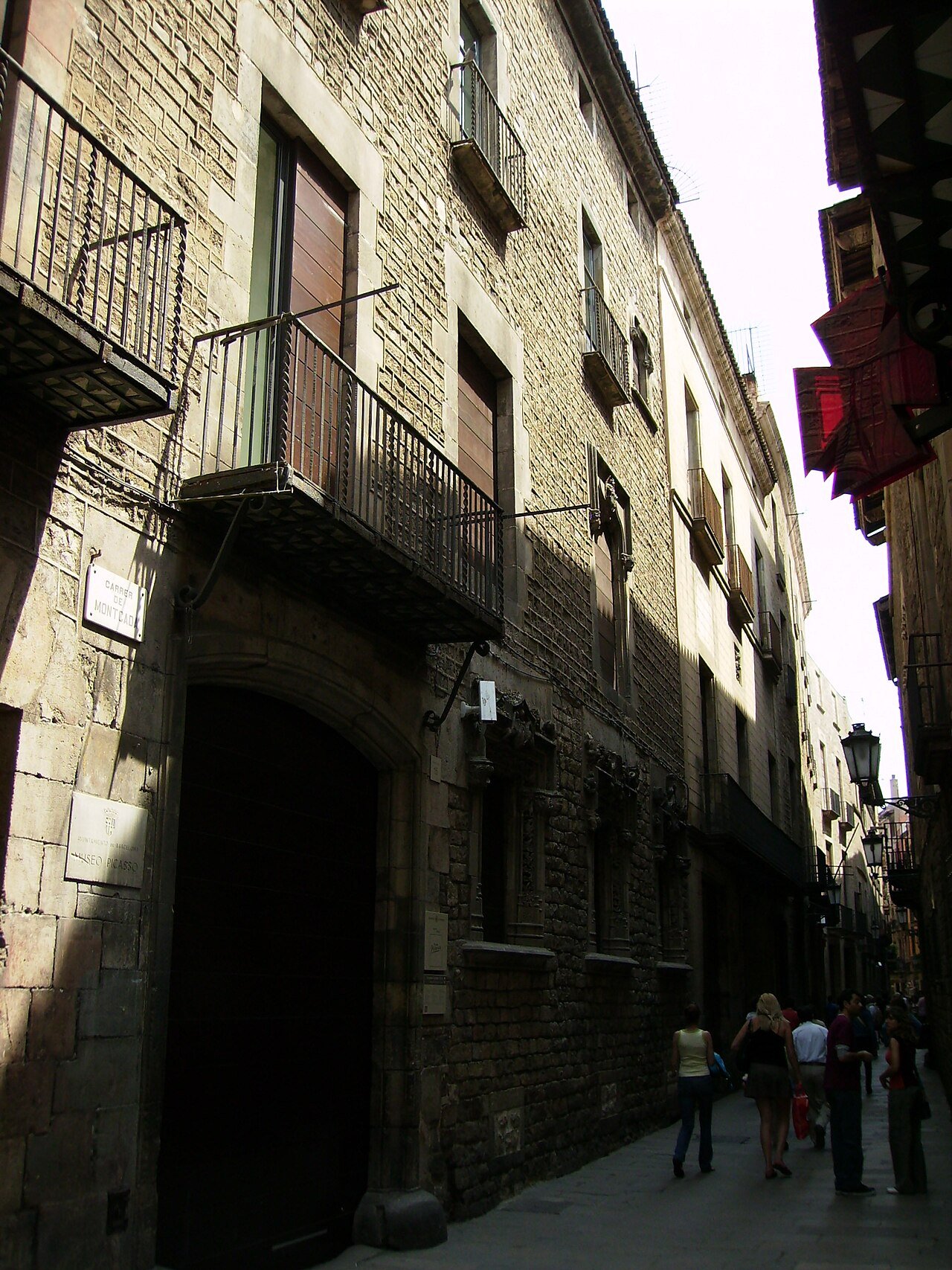

The museum is one of the most visited in Spain, and the practical advice is blunt: book online in advance, go early or late, and give the courtyards as much attention as the canvases — the palaces are exhibits in themselves. The street’s second life is as the quarter’s gallery row: commercial galleries and design spaces fill the palaces’ ground floors, so the walk back to the Passeig is a window-shop through five centuries of other people’s wealth, converted.
Mercat de Santa Caterina: The Market Under a Wave
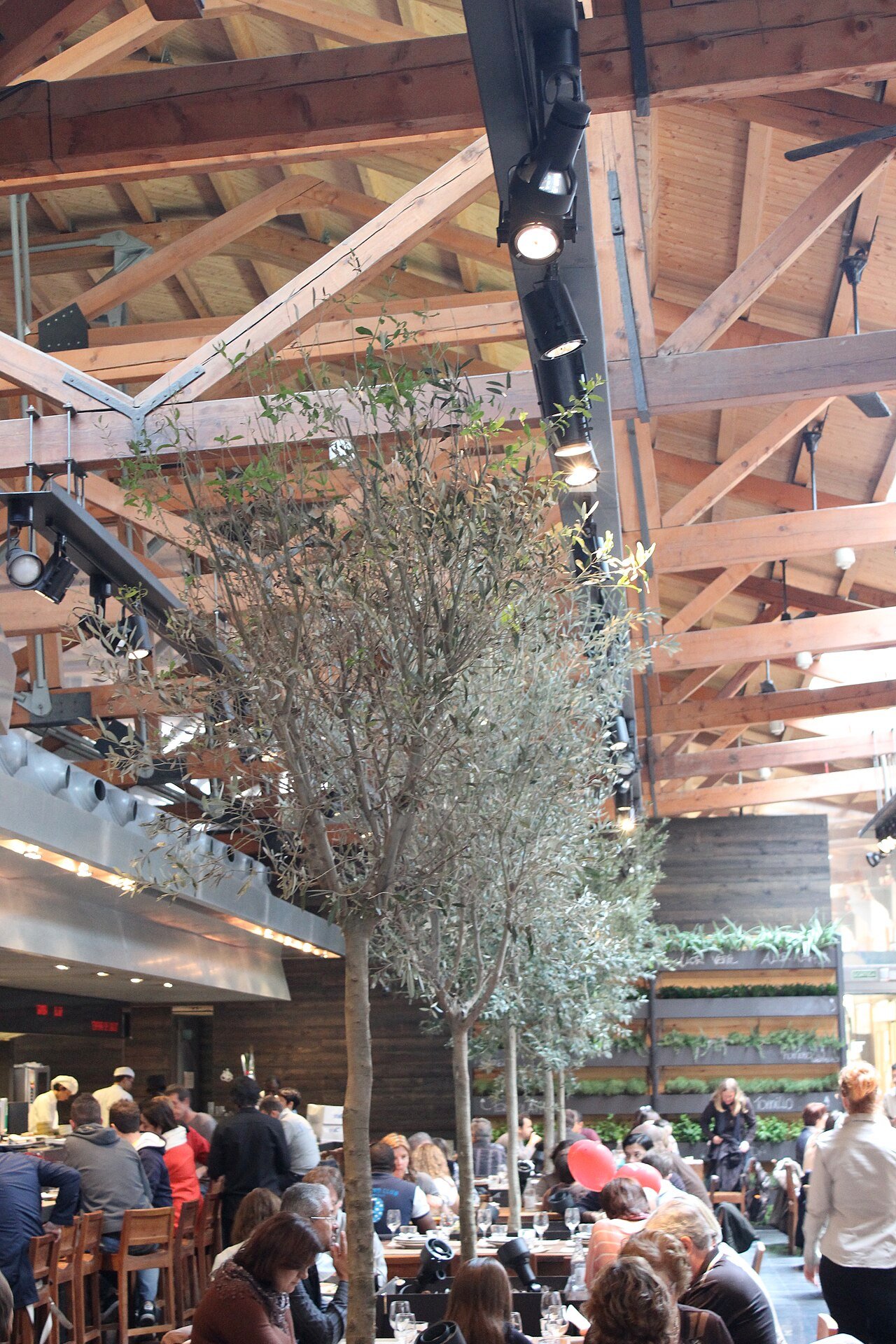
At the quarter’s north-western corner, a roof like a coloured landslide announces the Mercat de Santa Caterina — the Born’s working food market and, since its 2005 relaunch, a piece of landmark architecture. The building stands on the site of the Dominican convent of Santa Caterina, burned in 1835; a market rose here in the 1840s, Barcelona’s first covered market, and stood until Enric Miralles and Benedetta Tagliabue rebuilt it around the old façades. Their roof is the famous image: a great wooden wave inside, and outside a skin of ceramic hexagons in dozens of colours — the abstract of a fruit stall, and now one of the city’s postcard shots.

Inside, it remains a neighbourhood market first — fishmongers, butchers, the winter mushrooms and spring calçots of the season — with the additions a visitor wants: stalls serving what they sell, and restaurant counters under the timber structure where market produce goes straight onto plates. A small archaeological corner displays remains of the convent and the Roman necropolis beneath it, found during the rebuild; the Born, characteristically, has older Born underneath. Come in the morning, and note the contrast with La Boqueria across the old town: this is the market where the quarter itself shops.
Shopping the Born: Princesa, Argenteria and the Boutiques
The Born is the best shopping quarter in old Barcelona for one reason: the chains mostly stayed on Portal de l’Àngel, and these lanes belong to independents. Two historic axes frame the hunt. Carrer de la Princesa, the 1850s boulevard at the quarter’s top, runs long-standing local shops and bakeries under its arcaded fronts. Carrer de l’Argenteria — the silversmiths’ street — slopes from the church between small jewel-box shopfronts, and at its foot stands Casa Gispert, roasting nuts and coffee since 1851 in one of the city’s oldest wood-fired ovens; the smell alone is worth the visit.

Between the two axes, the lanes — Rec, Comerç, Banys Vells, Flassaders — are the boutique heartland: Catalan designers, vintage shops, perfumeries and working workshops. Quality is high and prices honest by old-town standards, but the stock Barcelona rule applies: many small shops close for lunch, Monday mornings are quiet, and August thins everything. Shop late morning or from five, and let the lanes set the route.
Free Barcelona travel guide
Exploring the Born? Get our free one-page Barcelona checklist: what to book ahead, where to eat one street off the main lanes, and the old-town walks to pair with this quarter.
Where to Eat and Drink: Tapas Lanes and the Vermouth Hour
The Born eats standing up. Its classic circuit runs on counters: a glass of house vermouth — dark, bitter, iced, with an olive and a slice of orange — at the midday hora del vermut, then a slow graze through the tapas bars around the Passeig, the Fossar and Plaça de les Olles. El Xampanyet, the tiled cava bar of 1929 beside the Picasso Museum, is the quarter’s rite of passage: homemade cava, anchovies, a queue, and a room unchanged in decades. Around it the pattern repeats — counters for cod and conservas, grills for mushrooms and prawns, old bars doing one thing perfectly since before you were born.

Dinner runs later and quieter in the side lanes, from traditional Catalan to some of the city’s most inventive small restaurants; book at weekends, and treat the Passeig terraces as drinks-and-people-watching — eat one street in, where the locals’ tables are. Finish as the quarter does: back on the Passeig for the last glass, the church towers lit at the end of the street.
Staying in El Born
The case for it. You sleep inside the postcard: medieval lanes, church bells marking the hours, the beach fifteen minutes’ walk one way and the cathedral ten the other. Hotels are mostly small — converted palaces and boutique houses — and apartments put you over the lanes themselves. For a trip built on wandering, eating and drinking well, no Barcelona base competes.
The honest case against. The Born parties. Passeig-facing rooms over the bar streets will hear every decibel of a Saturday night, and prices, inevitably, are old-town prices. The fix is in the booking: choose a courtyard-facing room or a side lane — Banys Vells, Rec or the streets toward the market are measurably quieter than the Passeig itself — and confirm the floor and window side with the hotel, and the Born’s one real con largely dissolves.
Practical Info
Getting there. The Born is ringed by stations. Jaume I (metro L4) sits on Via Laietana at the quarter’s western edge, two minutes from the church; Barceloneta (L4) serves the southern lanes; Arc de Triomf (L1 and Rodalies) is five minutes north, past the Palau. Most characterful of all, the Estació de França — Barcelona’s grand old terminus of 1929, all marble and iron — stands at the quarter’s foot on Avinguda del Marquès de l’Argentera, served by Rodalies and regional trains and worth a look for the trainshed alone. The whole district is flat and walkable — driving into it is neither possible nor sensible.

How long, and how to shape the day. Three hours covers the church, the CCM and the Passeig; a full day adds the Picasso Museum, the market and the Palau properly; the evening is not optional — the Born is half a night quarter. A guide threads it efficiently: an El Born and Gothic Quarter walking tour typically links the Born to the cathedral streets in two to three hours, leaving you oriented for your own evening.
Costs and hours. The lanes, squares and the El Born CCM hall are free; Santa Maria del Mar charges a modest entry outside services; the Picasso Museum and Palau tours are the ticketed anchors — book both ahead. Santa Caterina market closes Sundays, the Born CCM on Mondays; the Fossar is open ground at all hours, and most affecting early in the morning.
Tips for Visiting
- Book the two anchors. Picasso Museum tickets and Palau tours sell out days ahead in season; everything else in the quarter can be spontaneous.
- Do the church between services. Santa Maria del Mar is a working parish: visit mid-morning or late afternoon, dress for a church, and consider the rooftop visit for the view over the Born’s rooftops.
- Read the buried city from above first. At the El Born CCM, walk the full circuit of the deck before the detail — the lost quarter’s layout only makes sense whole.
- Eat at counter height. The Born’s best meals are its bar counters, at vermouth hour and after nine; the Passeig terraces are for the drink before and after, not the main event.
- Sleep on a side lane. A courtyard-facing room off the Passeig keeps the quarter’s charm and loses its noise.
- Walk it twice. Once by day for the museums and market, once after dark — the Born’s two shifts are two different quarters, and you want both.
Travel insurance, sorted
Whether it is a two-week holiday or a longer move, travel insurance is not the most glamorous part of a trip — but it is the one booking you want to have in place before a trip, and while you are already away.
Final Thoughts
El Born is Barcelona’s best evidence that a medieval city can stay alive without becoming a museum of itself. The palaces hold art now and the jousting ground holds terraces, but the pattern is unchanged: work, worship, food and noise, packed into stone lanes by the sea. Stand in the Fossar early, when the flame is lit and the square is empty; end the day on the Passeig with the towers floodlit at its head. Between those two moments you will have walked the whole biography of the city — and eaten very well inside it.
¡Buen viaje!
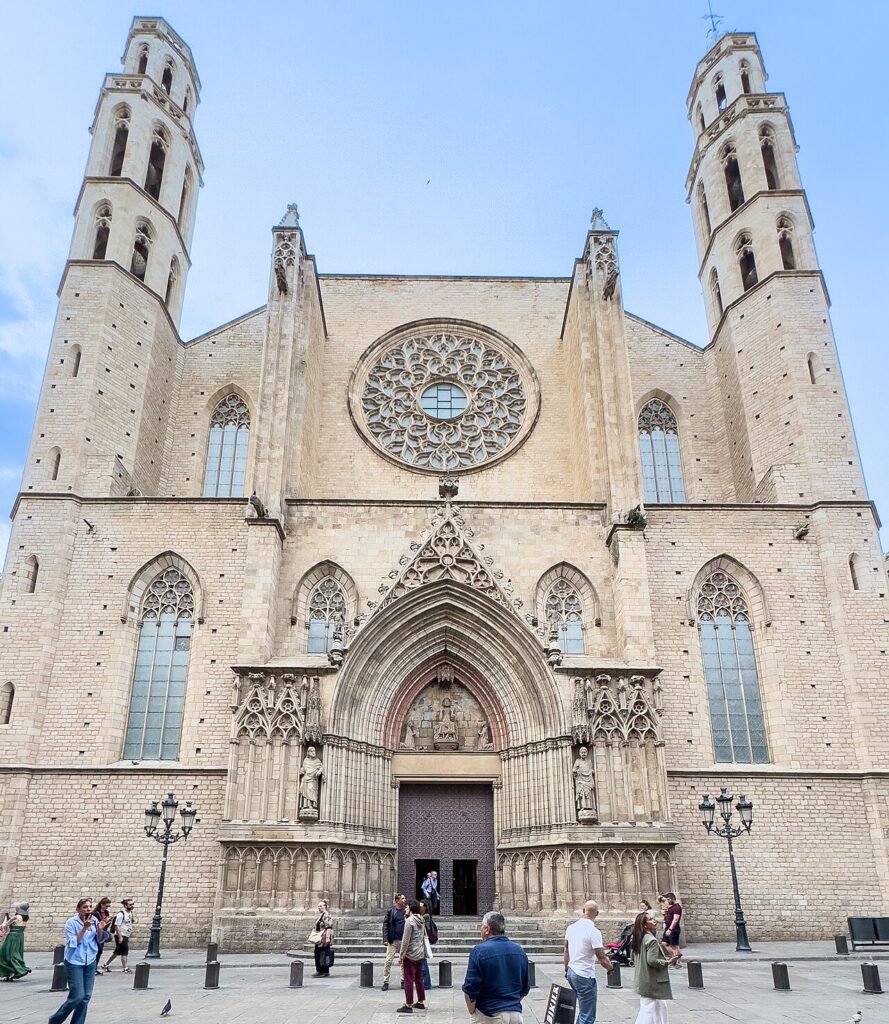
Photo credits: The Passeig del Born — Fred Romero, CC BY 2.0 · The Fossar de les Moreres by night — Jorge Franganillo, CC BY 3.0 · The Palau de la Música Catalana — bep, CC BY-SA 3.0 · Carrer Montcada — Puigalder, CC BY-SA 3.0 · The Mercat de Santa Caterina roof — Tony Hisgett, CC BY 2.0 · Inside the Mercat de Santa Caterina — Radiuk, CC BY-SA 3.0 · Inside Santa Maria del Mar — Kent Wang, CC BY-SA 4.0 · The Estació de França — Azulino, CC BY-SA 4.0 · The Fossar memorial, Santa Maria del Mar by night, the Passeig del Born, inside the El Born CCM, the Palau del Baró de Castellet courtyard and Carrer de l’Argenteria — Enric, CC BY-SA 4.0. All via Wikimedia Commons.



One Comment