Barcelona in July: 12 Things to Do, From the Grec’s Summer Stage to the Pride Parade
July is Barcelona with the volume all the way up. The heat arrives in earnest — afternoons near thirty degrees, nights that barely cool — and the city answers by moving its life outdoors and after dark: a five-week open-air theatre festival on Montjuïc, a second giant music festival at the Fòrum, the Mediterranean’s biggest Pride building to its parade, neighbourhood street parties, cinema in a castle moat, and a sea as warm as the air. Where June in Barcelona was summer at full strength, July is summer at full stretch — hotter, later, longer.

The practical shape of the month: the Grec occupies the Teatre Grec and stages citywide all month, free-museum Sunday lands on the 4th, Cruïlla takes the Fòrum from 7 to 10 July, Pride builds toward its mid-July parade Saturday, the Raval and Poble-sec hold their festes majors, and Sala Montjuïc opens in the castle moat from mid-month. One thing July does not contain: a public holiday — Barcelona works straight through, and so does everything in this guide. And when the heat needs an answer rather than a strategy, book the water: Barcelona: Costa Brava Kayak & Snorkel Tour with Picnic swaps the city’s hot sand for the coves of S’Agaró — six hours, a picnic on the rocks, water so clear the fish arrive before the mask fogs. Rated 4.5/5 across 2,178 reviews, from $69, free cancellation up to 24 hours ahead.
What follows is the month in calendar order — the stage first, the night last.
The Short Version
Short on time? Here is July in five lines:
- The shape: Peak summer — the hottest month, the warmest sea, and a festival calendar that runs from open-air theatre to Pride without a quiet week.
- The headline stage: The Grec Festival, all month at the Teatre Grec and across the city — Barcelona’s summer season of theatre, dance, music and circus.
- The headline weekend: Festival Cruïlla, 7–10 July at the Parc del Fòrum — four days by the sea, with Pride’s parade Saturday following a week later on the established pattern.
- The weather: Genuinely hot — highs around 28–29 °C, nights near 21–22 °C, a sea at 23–25 °C and sunset still after 21:00 for most of the month.
- The strategy: July is played on the Mediterranean clock — sights early, shade and water at midday, the city again from seven until very late. Book the Gaudí sights and festival hotels first; everything else bends.
July’s only real traps are sightseeing at two in the afternoon and expecting a public holiday that does not exist.
What July Weather Is Really Like
July is the month the heat stops being a subplot. This is the real Mediterranean summer: dependable, bright and hot enough that the time of day becomes the main planning decision of every day.
| July in Barcelona | The numbers |
|---|---|
| Daytime highs | Around 28–29 °C — and 33 °C or more on heatwave days, which most Julys contain |
| Night-time lows | Around 21–22 °C — “tropical nights” that stay above 20 °C are the month’s normal, not its exception |
| Sea temperature | About 23 °C at the start, climbing to 24–25 °C by the end — the warmest water of the year so far |
| Rain | Roughly 2–3 days in the month — usually a short, theatrical afternoon storm rather than a lost day |
| Daylight | Just under 15 hours at the start, easing to about 14 by the end; sunset slips from about 21:28 to about 21:05 |
Pack for heat without negotiation: the lightest clothes you own, swimwear in rotation, a hat, serious sun protection and sandals that can walk. The behavioural packing matters more: July rewards the local rhythm ruthlessly — out early, slow and shaded through the middle of the day, then a second full day from seven in the evening past midnight. Our best time to visit Barcelona guide sets July against the year; the short version is that July trades June’s manners for August’s intensity a few weeks early, and hands you the city’s best sea and fullest calendar as compensation.
Contents
- 1. The Grec Takes the Stage (All Month)
- 2. Free-Museum Sunday, Played for Cool (Sunday 4 July)
- 3. Festival Cruïlla: The Fòrum’s Second Summer (7–10 July)
- 4. The Beaches in Peak Season
- 5. The Gaudí Sights at Full Stretch
- 6. Day Trip: Kayak the Costa Brava
- 7. Pride Barcelona: The Parade Month (Mid-July)
- 8. Festa Major Season: The Raval & Poble-sec
- 9. Sala Montjuïc: Cinema in the Castle Moat
- 10. The Heat, Handled: The Mediterranean Rhythm
- 11. Eat July: Salt Cod, Melons and Market Mornings
- 12. July After Dark: The City Comes Out at Night
1. The Grec Takes the Stage (All Month)
If July has a presiding institution, it is this one. The Festival Grec — named for the Teatre Grec, the open-air amphitheatre carved into a Montjuïc quarry for the 1929 exhibition — is Barcelona’s great summer season of theatre, dance, music and circus, founded in 1976 and running for roughly five weeks from the last days of June to the end of July. In July it is not an event you attend once; it is the weather system the whole cultural month moves inside.

The amphitheatre itself is the essential night: six hundred seats of warm stone rising into the cypresses, the stage lit against the old quarry face. Around that anchor the festival spreads citywide — the Teatre Lliure, the Mercat de les Flors dance house, concert halls and found spaces — with recent editions staging around a hundred performances, mixing Catalan companies with the international names the Grec has always imported. Most tickets sit in a modest €15–30 range, the best-value serious culture of the summer, and the amphitheatre’s gardens are open and free to wander by day even between performances.
⚠ Dates to confirm: the Grec’s 2027 edition had published neither its exact dates nor its programme when this guide was researched — the city tourism portal lists it simply as “July 2027, dates to be determined”. The shape is dependable (opening night in the final days of June, five weeks of performances through late July), and the programme traditionally lands in spring: if a night at the Teatre Grec matters to your trip, check festivalgrec.barcelona when it appears and book the amphitheatre nights first — they sell before the indoor venues.
2. Free-Museum Sunday, Played for Cool (Sunday 4 July)
July’s first Sunday is 4 July, and in this month the free-museum scheme gains a second purpose: air-conditioning you can feel virtuous about. Most of the city’s civic museums open free on the first Sunday, many of them all day — and in July their stone halls and cooled galleries are quite simply the best rooms in Barcelona between noon and five.
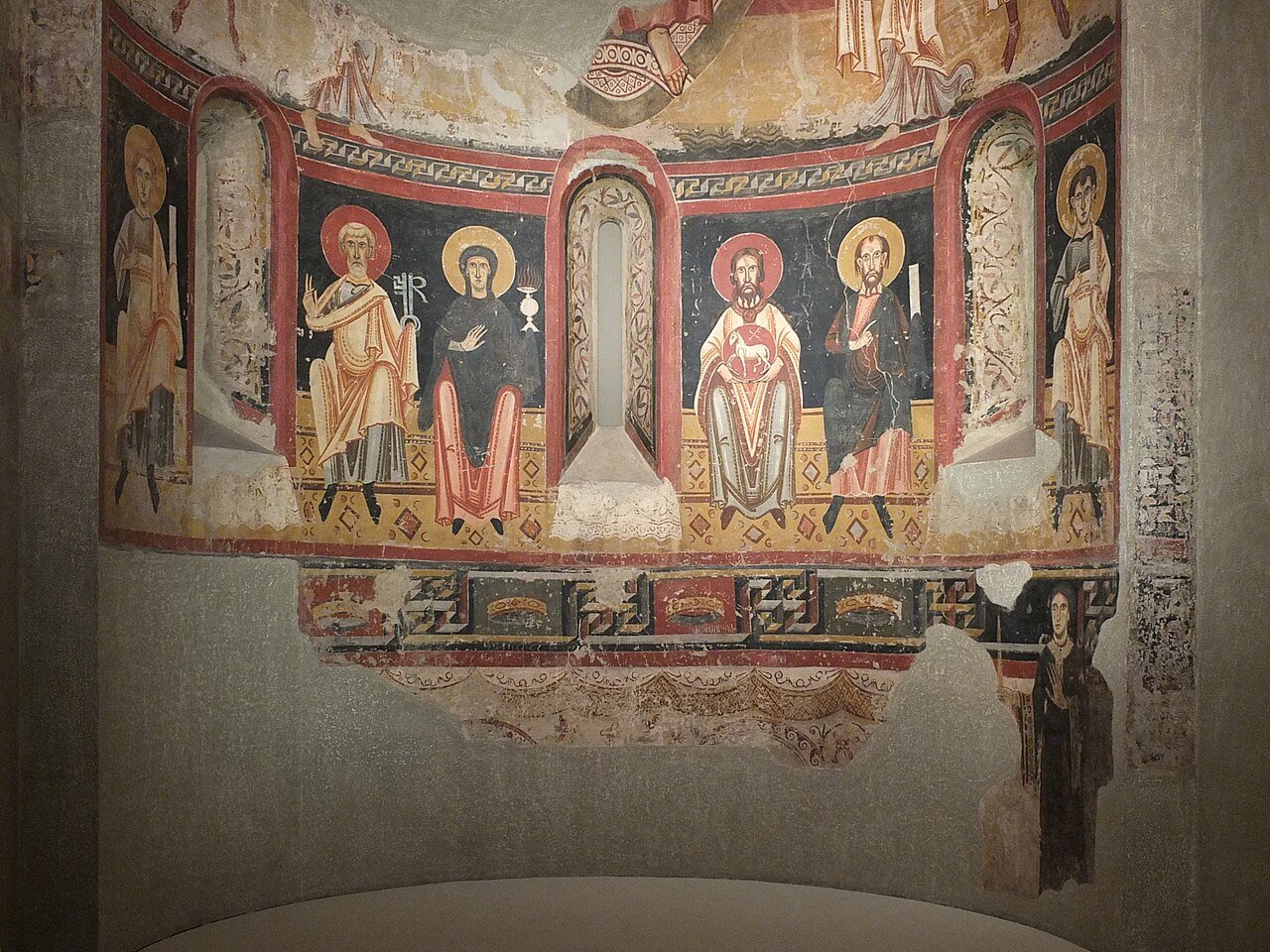
Build the day as a heat strategy with masterpieces inside it. The MNAC’s Romanesque galleries — whole church apses lifted from Pyrenean villages and rebuilt in the Palau Nacional, the greatest collection of its kind anywhere — are cool, dim and hushed at exactly the hours the streets are unbearable. The Museu Picasso’s Gothic palaces on Carrer Montcada do the same job in the old town, though its free slots are July’s most contested booking and go within minutes of release; the Fundació Joan Miró’s white rooms and the Maritime Museum’s vast shipyard hall are the quieter plays. Reserve the moment bookings open and arrive at doors for the big names.
The complete scheme, museum by museum and booking window by booking window, is in our guide to free things to do in Barcelona. In July, read it as a cooling map as much as a saving: a free Sunday at the height of summer is three or four of the day’s most dangerous hours spent in the city’s most beautiful refrigerators.
3. Festival Cruïlla: The Fòrum’s Second Summer (7–10 July)
Five weeks after Primavera Sound packs up, the Parc del Fòrum does it all again — differently. Festival Cruïlla (“crossroads” in Catalan) runs Wednesday 7 to Saturday 10 July 2027 at the same seafront site, and its personality is Primavera’s mirror image: proudly eclectic and heavily Catalan-Spanish, mixing international headliners with the country’s own stars, stand-up comedy stages, art installations and a food offer treated as programming rather than catering.

The crossroads idea is the programme’s actual policy: a single evening can run from a legacy rock act to a rumba band to a Netflix-famous comic, and the crowd — more local, more mixed in age, noticeably less of a pilgrimage than Primavera’s — treats the whole thing as the city’s own summer party rather than a destination festival. Four days, gates in the late afternoon, the sea at the fence line, and headline sets scheduled after dark, when the concrete finally cools.
The honest ticket position: the dates are confirmed for 2027 but the lineup had not been announced when this guide was researched, so anyone naming you headliners is guessing. In recent editions a four-day pass has cost around €145 — treat that as the pattern, not a promise — with day tickets once the programme lands. The Fòrum weekends are also the month’s first hotel pressure point, so the room comes before the ticket either way.
4. The Beaches in Peak Season
July is the beaches’ maximum month — not the busiest (August takes that title on sheer bodies) but the most complete: the warmest water, the longest service day, and every element of the high-season machine running at once — lifeguards on duty daily (10:30–19:30 in the established pattern), every chiringuito open, showers, toilets, sports zones, buoyed swimming channels and assisted bathing all in daily service.
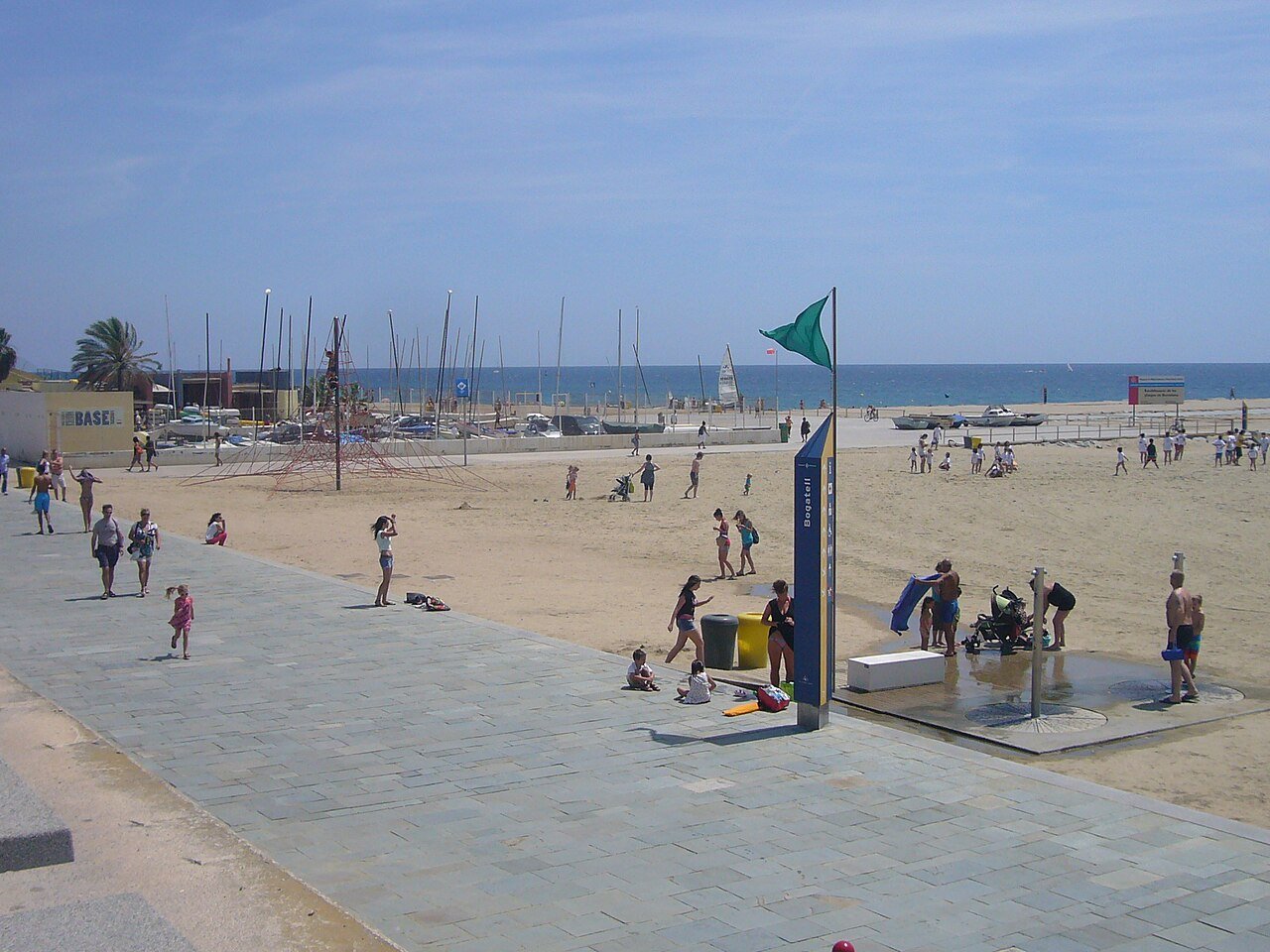
At 23 °C as the month opens and 24–25 °C by its end, the water has crossed from refreshing to welcoming — the temperature at which the first swim happens before breakfast and the last at dusk. July also brings the season’s two honest complications. The crowds peak on weekends, when the whole metropolitan area joins you: weekday mornings before eleven remain the connoisseur’s slot, with Bogatell and Nova Icària holding space that Barceloneta surrendered by ten. And warm water is jellyfish water — most days are flag-green and untroubled, but the flag system earns its keep this month, and a yellow flag is information, not insult.
Match the beach to the day as June taught: Barceloneta for theatre and the old quarter’s seafood behind it, Nova Icària for calm water and families, Bogatell for room, Mar Bella for the young crowd, the Fòrum end for quiet. Our guide to Barcelona’s beaches walks the whole string. July’s footnote is a happy one: unlike August, the city behind the beach is still itself — every restaurant open, every local not yet gone home.
5. The Gaudí Sights at Full Stretch
July is the Gaudí sights’ hardest month and, handled correctly, their most rewarding. The crowds are at annual maximum — “book ahead” graduates to “book the day your flights are confirmed” — but the light is doing things it does at no other time of year.

The east glass pours its cool blues and greens into the morning nave; the west glass, in the late afternoon, sets the whole interior alight in reds and golds — which makes the day’s strategy write itself. Take the first slot for space, or the last slots for the fire show; the middle of the day belongs to everyone who booked later than you. Inside the basilica, our guide to inside the Sagrada Família walks the columns, the light and the museum in the order the building reveals them.
Park Güell obeys the same law with an earlier hour: the timed ticket covers the terrace and the dragon stairway, the wooded park around it stays free, and an opening-time entry buys you the mosaic bench with elbow room and the city in clean morning air. When the two great names are full — in July, on some days, they will be — the pressure valves are genuine, not consolations: Casa Vicens, Gaudí’s first house, all tile and garden in Gràcia; the Sant Pau Recinte Modernista, Domènech i Montaner’s hospital-city of pavilions, routinely half as busy as it deserves; and the Palau Güell’s rooftop chimneys a street off La Rambla. July does not forgive improvisation at the icons. Booked first and built around, it gives you the sights at their most spectacular and their most crowded in the same hour — and the spectacular wins.
6. Day Trip: Kayak the Costa Brava
Every month of this series has an escape valve, and July’s is the one the heat makes compulsory. Forty-odd miles north, the Costa Brava’s coves sit in water a degree cooler and several shades clearer than the city’s, in bays no road reaches — which is why the way to see them is from a kayak, at water level.
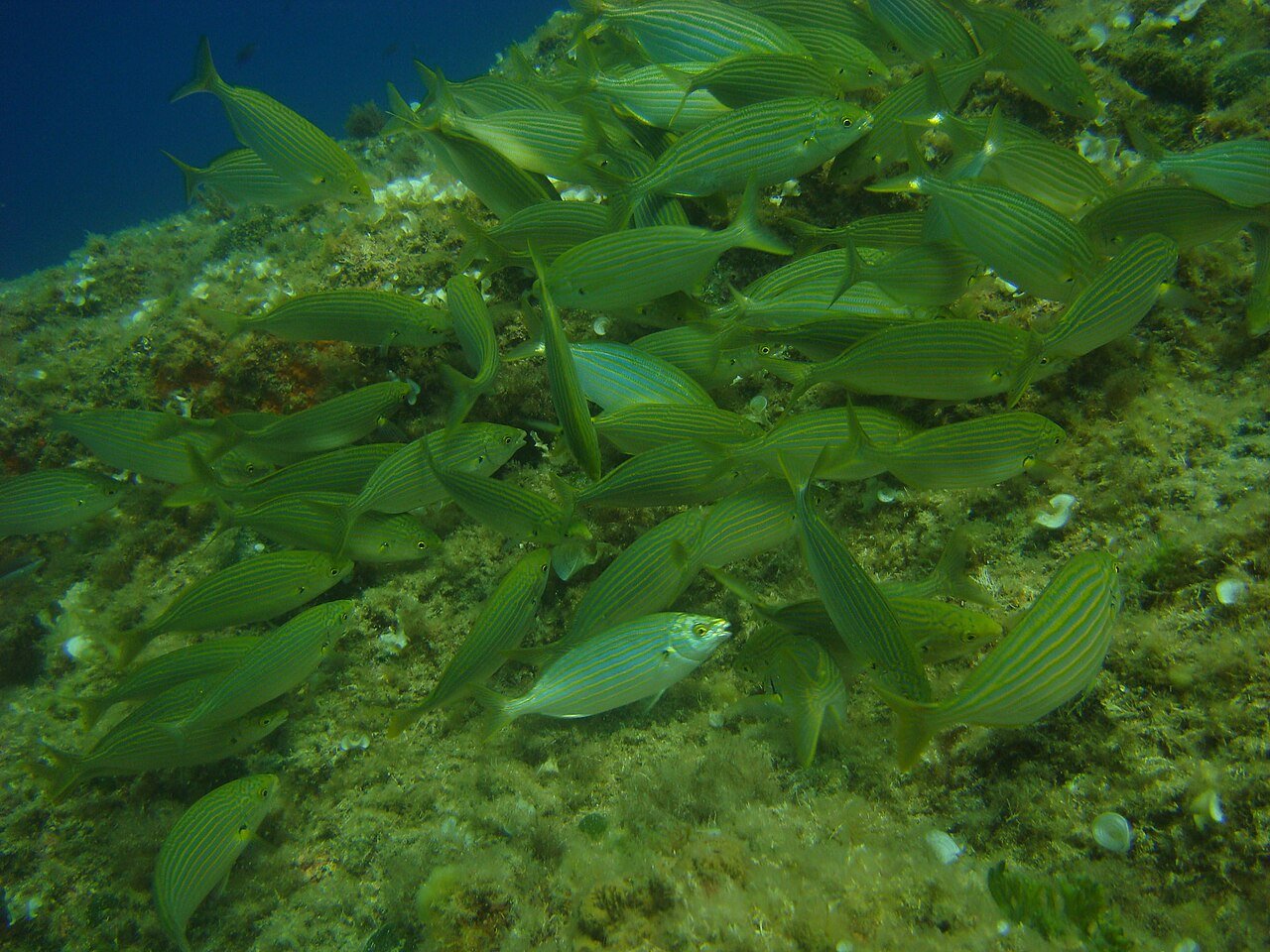
The trip to book is Barcelona: Costa Brava Kayak & Snorkel Tour with Picnic. It meets in the centre at Kulas Bar on Passeig de Colom, buses you about 75 minutes up the coast to Platja d’Aro, and puts you on the water along the S’Agaró shore — sea caves, rocky coves and beaches reachable only by paddle, with snorkelling stops where the salema school in their hundreds over the rocks. Six hours door to door, with a picnic lunch and water on the shore, free time on the sand, and a drink back in Barcelona to close. It is rated 4.5/5 across 2,178 reviews and costs from $69 per person — and in a month when plans melt, the detail that matters is the flexibility: cancellation is free up to 24 hours in advance, with a reserve-now-pay-later option if you want the day held first. Two honest requirements: it is a swimmers’ trip, and under-14s only paddle if they are strong swimmers.
Take it on a weekday if you can — the coves keep weekday space even in July — and take it instead of a second city beach day, not instead of a sights day. Our day trips from Barcelona guide sets it among the coast and mountain options; in July, with the thermometer where it is, the kayak argues for itself.
7. Pride Barcelona: The Parade Month (Mid-July)
June is Pride month everywhere else. Barcelona, characteristically, keeps its own calendar — and July is when the city’s Pride becomes the main event. The Gayxample, the Eixample grid around Carrer de la Diputació that has been the city’s LGTBI heart for decades, runs at full summer strength all month, and the festival programme builds across weeks of concerts, talks, sport and street events toward the day everything aims at: parade Saturday.
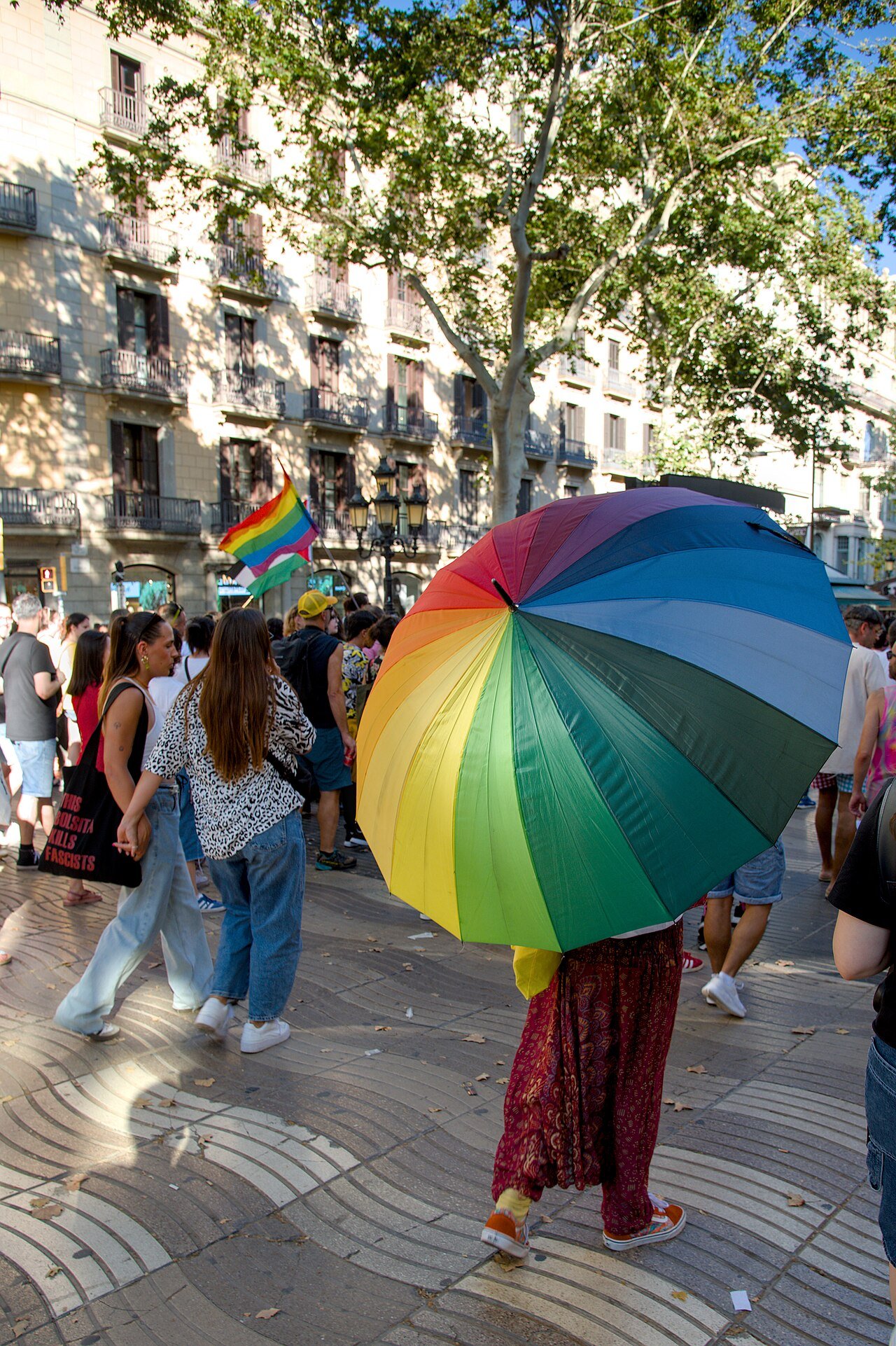
The parade itself is one of the great street days of the European summer. On the established shape it departs Plaça Universitat in the early evening — 18:00, when the heat has broken — and rolls down the Gran Via with close to sixty floats before turning into Passeig de Lluís Companys, where the main stage and festival village wait under the Arc de Triomf. Concerts run across the weekend at open-air stages, and the whole production is free to watch from the pavement. Position yourself on the Gran Via before half past five, bring water, and let the evening do the rest.
⚠ Dates to confirm, stated plainly: Pride Barcelona had published no 2027 dates when this guide was researched — the city tourism portal lists the festival as “July 2027, dates to be determined”, and that is all anyone honestly knows. What the pattern supports: in 2026 the programme ran from 26 June to a parade on Saturday 18 July, and on that shape the 2027 parade falls on a mid-July Saturday with weeks of programming before it. If Pride is the purpose of your trip, watch pridebarcelona.org through the spring, book a mid-to-late July window on flexible rates, and do not let anyone sell you a specific 2027 date that has not been announced.
8. Festa Major Season: The Raval & Poble-sec
Between the headline festivals, July belongs to the neighbourhoods. The festa major — each district’s annual street festival, organised by its own residents’ commission and free to anyone who walks in — is the most local thing Barcelona does, and July holds two of the best of the summer.
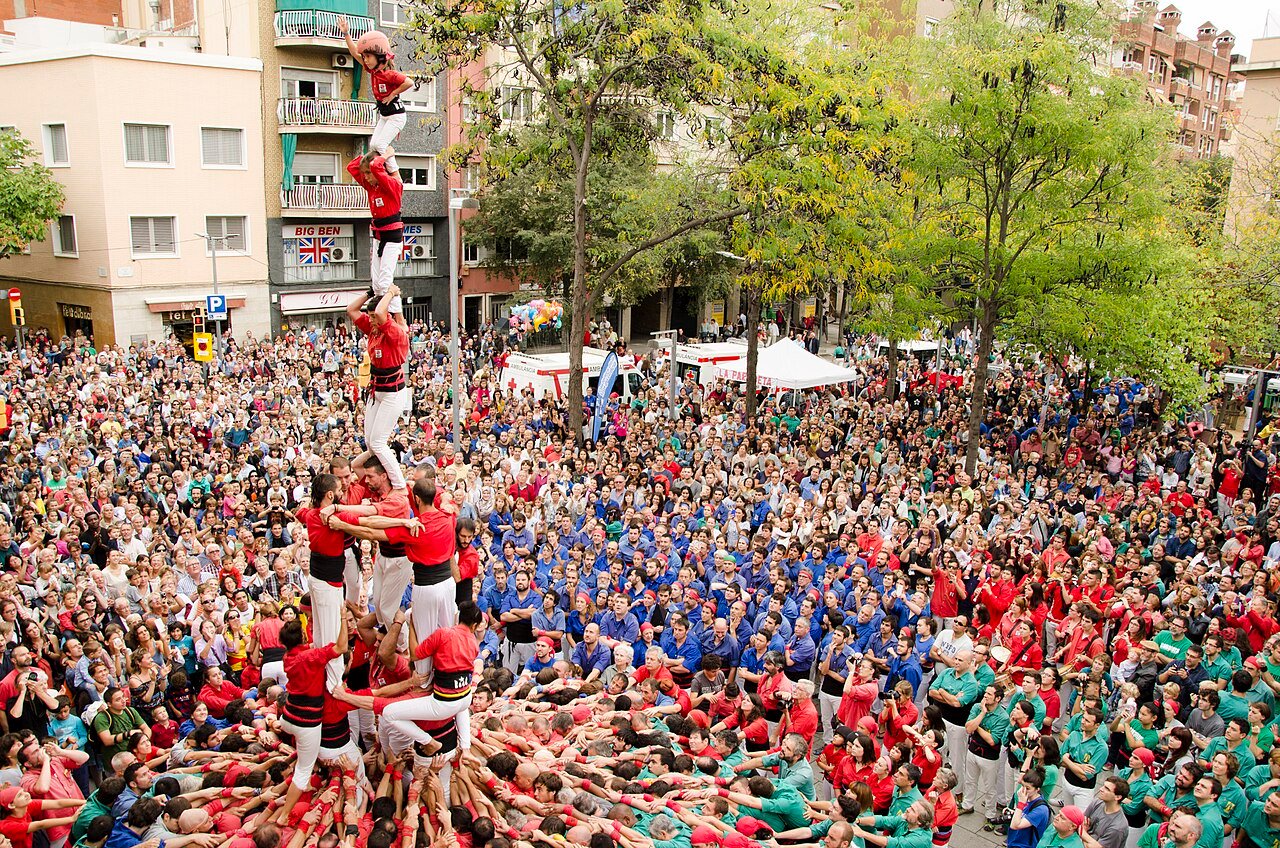
The Raval goes first, in the middle of the month around the feast of the Mare de Déu del Carme on 16 July — its recent editions have run three to four days across the mid-July weekend. The Raval’s festa is the city’s most international: world-music stages on the Rambla del Raval, food from the neighbourhood’s hundred kitchens, the gegants and capgrossos parading out of the side streets. Poble-sec follows in the month’s second fortnight, at the foot of Montjuïc: a festa with a performer’s soul, built around the old music-hall strip of Paral·lel, where El Molino’s windmill still turns, and along Carrer de Blai, the pinchos street, which becomes an open-air banquet. Expect castells in the squares — the human towers rising tier by tier over the crowd — concerts until late, and a craft-beer sideline that has become a fixture.
Neither festa publishes its programme far ahead — the commissions announce in the weeks before, in Catalan — so treat the windows above as the pattern they are and check nearer the time. What needs no confirmation is the value: these are the days when you are not watching Barcelona’s culture but standing inside it, for the price of a plastic cup of something cold.
9. Sala Montjuïc: Cinema in the Castle Moat
From mid-July, the best seat in Barcelona after dark may be a patch of grass inside a fortress. Sala Montjuïc sets its screen in the Santa Eulàlia moat of Montjuïc Castle — the great dry ditch beneath the walls, lawned and terraced — and runs the city’s defining open-air cinema season: a live concert as the light goes, then a film under the walls once it is fully dark.
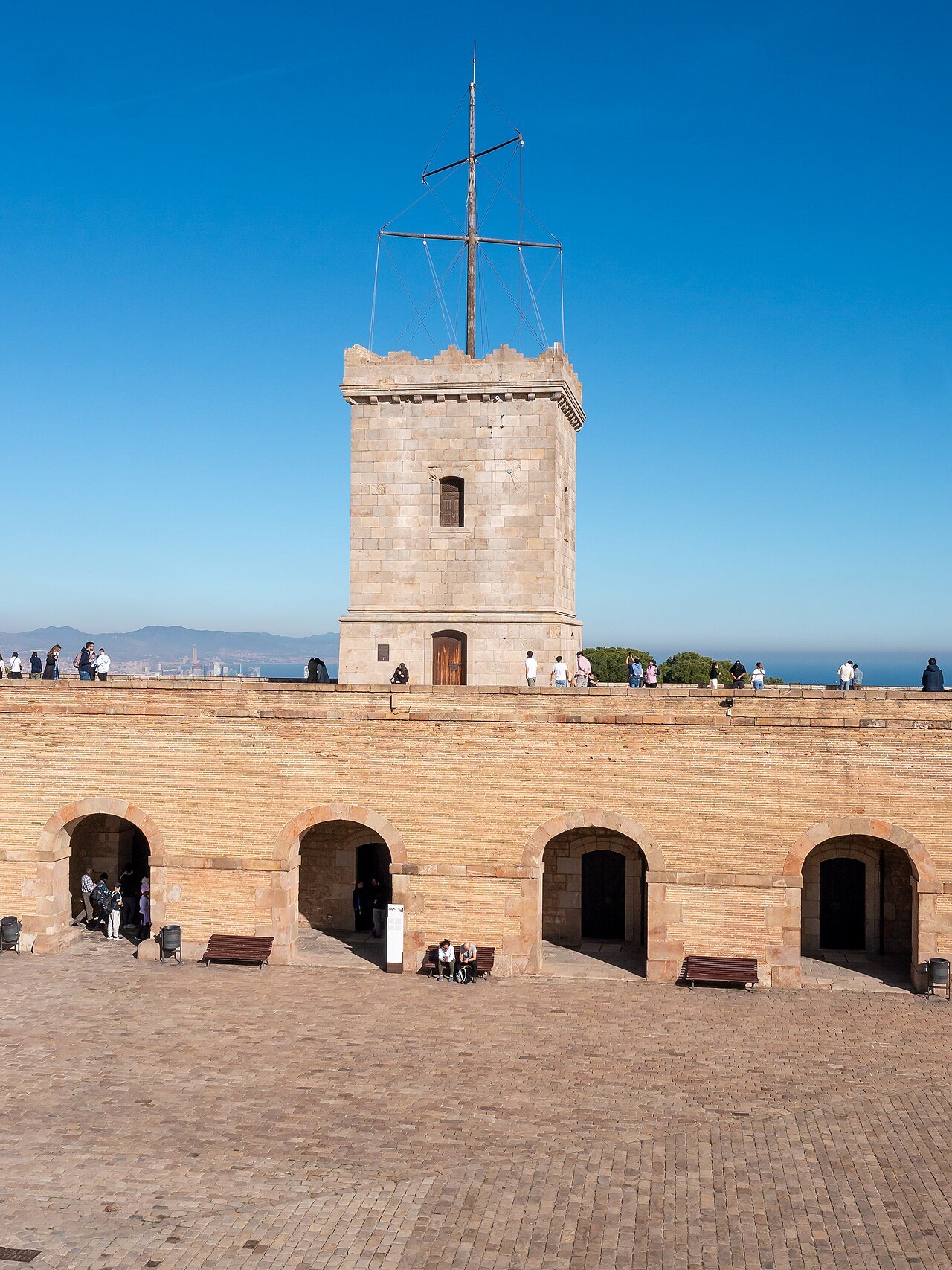
The ritual is fixed and perfect. Gates open in the evening; you claim grass, unpack the picnic every local brings, and a band plays on the small stage from about 20:45. The film — classics and recent international cinema, always in the original language with subtitles — starts around 22:00, by which time the castle walls hold the night’s first cool air and the city is glittering below. Deckchairs rent for a few euros. In its most recent edition the season ran from 10 July to 5 August, four nights a week (Mon, Wed, Fri, Sat), with tickets around €7.50 — the shape to expect when the 2027 programme lands in late spring; salamontjuic.org is where it appears.
Come up early and make the castle part of the evening: the ramparts and the watchtower terrace hold the best sunset panorama on this side of the city, and the cable car down to Paral·lel is the scenic exit. Of all July’s evenings, this is the one residents guard most jealously — which is the strongest review it can be given.
10. The Heat, Handled: The Mediterranean Rhythm
The visitors who suffer in July are the ones running a northern schedule — out at ten, sights at two, dinner at seven — against a climate that punishes every part of it. The city has spent centuries writing the alternative.
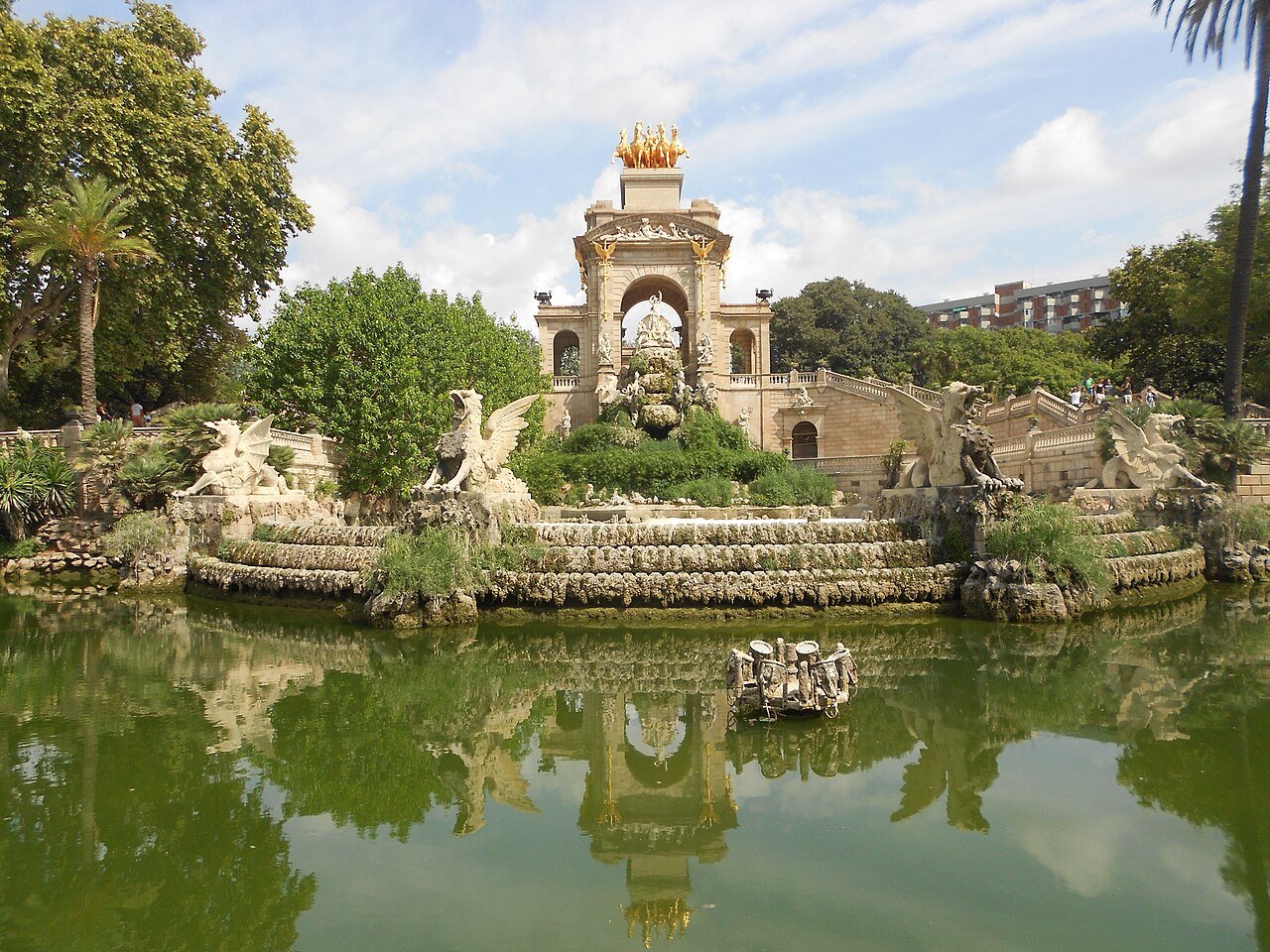
The local rhythm, stated as a timetable. Morning is for distance: sights, markets and walking between nine and one, while the streets are still in the buildings’ shadow. The middle of the day is for retreat: a long lunch that runs to three, then shade, water or a dark cool room until six — a museum (§2’s trick works on ordinary days too), the hotel pool, the sea, or the green lung of the Ciutadella, where the Cascada’s lake and the plane-tree avenues hold the coolest air in the old town. The city’s outdoor pools join the system in summer — the Montjuïc pools above the port, built for the 1992 Olympics’ diving, are the spectacular option. Evening is the second day: from seven the city restarts at full strength and runs past midnight, and everything in this guide from the Grec to the castle cinema is scheduled by people who know it.
The heatwave clause: most Julys contain two or three days above 33 °C. On those days, downgrade without guilt — the beach before ten, the kayak (§6), the museums at midday, the city after dark — hydrate before you are thirsty, and treat the siesta hours as Barcelona treats them: not laziness, but engineering.
11. Eat July: Salt Cod, Melons and Market Mornings
July’s market is the Mediterranean at full song. The melon family takes the stalls — cantaloupes, Galias and great watermelons cut to order — tomatoes arrive in varieties with names, peaches and nectarines peak, figs begin, and the fish counters run the summer script: sardines for the grill, prawns from Palamós when the budget stretches, and the raw material of the season’s defining cold dishes.
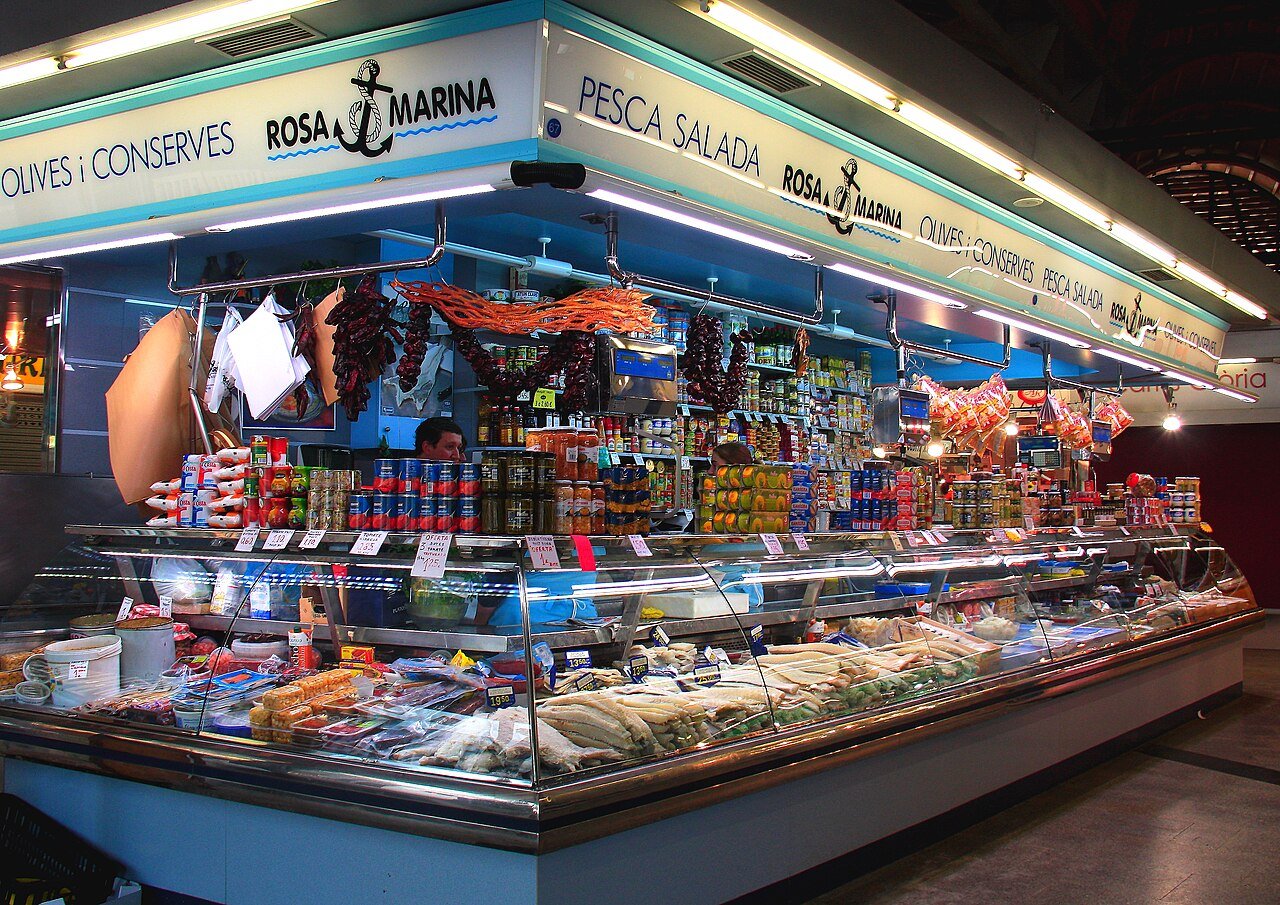
The dish of the month is the one that never meets heat: esqueixada, salt cod shredded by hand with tomato, onion, peppers and olives — which is why the pesca salada stalls, the salt-cod specialists like this one at Santa Caterina, are July’s essential counters. Around it the cold canon assembles itself: gazpacho and salmorejo by the glass, escalivada’s roasted peppers and aubergine, melon with cured ham, horchata de chufa from the tigernut shops of the old town — a drink invented for exactly this weather — and granissats, the slush of lemon or coffee that every good ice-cream counter keeps turning.
Timing is the tactic. Shop the markets before ten — La Boqueria’s back aisles, Santa Caterina under its coloured roof, Sant Antoni’s great iron hall — while the produce is at its best and the halls are cool, and let breakfast happen standing up. Our Barcelona markets guide routes between them all. July eating is about a calendar so generous that lunch can be a melon, a tomato and a piece of salt cod in the shade — and still be the meal you describe when you get home.
12. July After Dark: The City Comes Out at Night
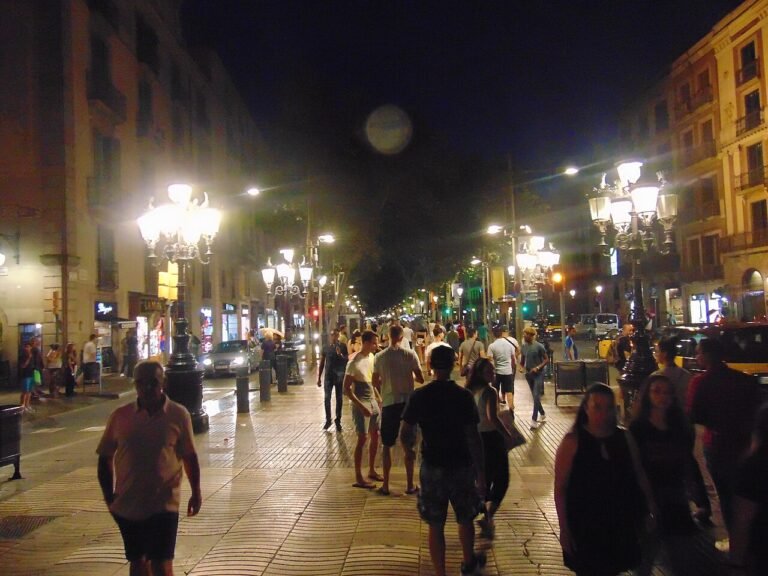
Ask a Barcelona resident when July happens and they will not mention the beach. They will mention the night. With dinner at ten and terraces full at midnight, July’s evening programme is the fullest of the year — and the month’s heat strategy and its pleasure are the same thing.
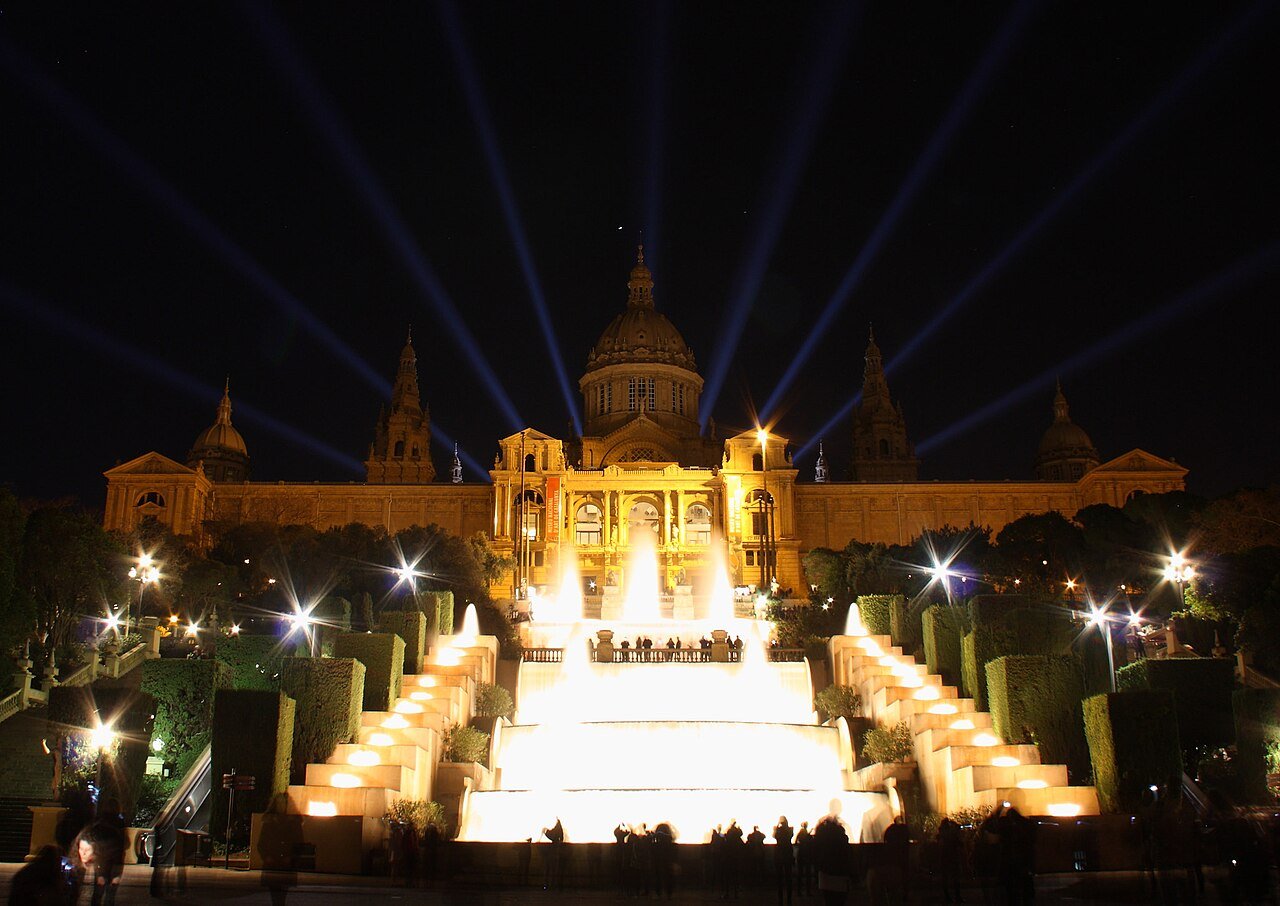
The set pieces you already have: Grec nights on Montjuïc (§1), cinema in the castle moat (§9), the Pride stages (§7) and the festa-major streets (§8), which between them cover most nights of the month. Around them the standing summer programme fills the gaps. Música als Parcs brings free early-evening concerts — classical, jazz, world music — to the city’s parks through the summer, the kind of event you plan a picnic around. The beach at Sant Sebastià hosts open-air cinema on its sand on summer Thursday and Sunday evenings, free, with the screen against the sea. And on Plaça d’Espanya the Magic Fountain’s evening shows have traditionally drawn the crowds below the Palau Nacional — with one drought-era honesty: the shows have been paused in recent dry years, so check the fountain’s current status before building an evening around it; the cascades and the palace lit up are worth the walk either way.
Our guide to Barcelona at night maps the whole after-dark circuit. July’s version is simple: sleep in the afternoon if you must, but not through the night — in this month, the night is the city.
Which of the 12 Fits Your Trip?
| If your trip is about… | Start with… | Why |
|---|---|---|
| Theatre and serious culture | 1 (The Grec) | A five-week open-air season centred on a quarry amphitheatre — July is its home month |
| The big festival weekend | 3 (Cruïlla) + 7 (Pride) | The Fòrum runs 7–10 July; the parade Saturday follows on the established mid-July pattern |
| The Mediterranean itself | 4 (The Beaches) + 6 (The Kayak Day) | A 23–25 °C sea, full lifeguard service, and coves an hour north that no road reaches |
| The icons, done properly | 5 (The Gaudí Sights) | Peak crowds, but the Sagrada’s west glass at closing time is the year’s great light show |
| The city the locals keep | 8 (The Festes Majors) + 12 (July After Dark) | Neighbourhood street parties and a nightlife that starts when the heat breaks |
| Culture on a budget | 2 (Free-Museum Sunday) + 9 (Sala Montjuïc) | Free collections on the 4th; cinema under castle walls for about €7.50 |
| Surviving the heat happily | 10 (The Mediterranean Rhythm) | The timetable the whole city runs on — mornings, shade, water, then the night |
| Eating the season | 11 (Eat July) | Esqueixada, melons, horchata and market mornings before ten |
What July in Barcelona Costs
July is peak season, full stop: the year’s joint-highest hotel rates and festival weekends that behave like events anywhere. The compensations are real — much of the calendar is free, and the sea charges nothing.
| July cost | What to budget |
|---|---|
| Barcelona: Costa Brava Kayak & Snorkel Tour with Picnic | From $69 per person for 6 hours including transport, gear, picnic and a closing drink — 4.5/5 across 2,178 reviews, free cancellation up to 24 hours ahead |
| A central hotel | Around €180–240 a night — and more across the Cruïlla days and Pride’s parade weekend. Book July rooms before anything else |
| Festival Cruïlla | Four-day passes ran around €145 in recent editions, day tickets less — the 2027 prices land with the lineup |
| A Grec night | Most tickets between €15 and €30 once the programme opens — serious theatre at neighbourhood prices |
| Sala Montjuïc | Around €7.50 a ticket in recent editions, plus a few euros for a deckchair — the summer’s cheapest great evening |
| Free-museum Sunday (the 4th) | €0 all day at the big civic museums — reserve the free slots the moment they open |
| The beaches | €0 — peak season, lifeguards and the warmest sea of the year, all free |
| The Gaudí sights | The Sagrada Família from around €40 — in July the slot itself is the prize, and it goes weeks ahead |
| A market breakfast | Coffee and a pastry at a market bar for a few euros; a whole melon costs less than the cocktail you will have at midnight |
Three money rules for July. First, sequence ruthlessly: hotels for the festival and Pride weekends first, Gaudí slots the day flights are booked, everything else after. Second, let the month’s free architecture carry the budget — the free Sunday, the free festes, the free beach — and spend the savings on the two paid peaks, the kayak day and a Teatre Grec night. Third, buy flexibility where July punishes rigidity: the kayak’s free cancellation is the model — in a month this hot and this full, the refundable plan is the one that survives.

Barcelona in June: 12 Things to Do, From Primavera Sound to the Night of Fire
Travel insurance, sorted
Whether it is a two-week holiday or a longer move, travel insurance is not the most glamorous part of a trip — but it is the one booking you want to have in place before a trip, and while you are already away. Get a quote from SafetyWing
Final Thoughts
Put the months in a row and July is the one with nothing left in reserve: the sea at its warmest, the stage at its fullest, the parade at its loudest, the nights at their longest-feeling — and a thermometer that makes sure you experience all of it on the city’s own ancient schedule rather than yours. Come with the rhythm learned and July is not the hard month; it is the complete one, the month Barcelona stops selecting highlights and simply presents everything at once. Book the rooms, book the basilica, keep one evening for a film in a castle moat and one morning for a kayak — and let the heat set the timetable. It has had more practice than you.
FAQs
Is July a good time to visit Barcelona?
It is the fullest month of the year — the warmest sea (23–25 °C), the Grec all month, Cruïlla on 7–10 July, Pride’s parade in mid-July and the festes majors — at the price of the year’s real heat (highs around 28–29 °C, more in heatwaves) and peak-season crowds and rates. If you can play the Mediterranean rhythm — early starts, shaded middays, late nights — July gives you more Barcelona per day than any other month.
How hot does Barcelona actually get in July?
Hot, but usually manageable: average highs around 28–29 °C and lows around 21–22 °C, with most Julys containing a few heatwave days of 33 °C or more and nights that stay above 25 °C. The sea breeze does daily rescue work, and the city’s whole culture — siesta hours, evening life, cool museums, the signed refugis climàtics network of cool refuges — is engineered around exactly this. The secret is scheduling, not suffering: nothing important should be planned outdoors between two and six.
When is Pride Barcelona in 2027?
The honest answer, as of this guide’s research in late October 2026: the dates have not been announced. Pride Barcelona is a July festival — the city tourism portal lists the 2027 edition in July with dates to be determined — and in 2026 the programme ran from 26 June to the parade on Saturday 18 July, departing Plaça Universitat at 18:00 for Passeig de Lluís Companys via the Gran Via. Expect the same shape in 2027 — weeks of events building to a mid-July parade Saturday — confirm at pridebarcelona.org in the spring, and book the window on flexible rates.
Can you swim in the sea in Barcelona in July?
Yes — this is the sea’s best month so far. The water runs about 23 °C at the start of July and 24–25 °C by the end, warm enough for long swims at any hour; the beaches operate at full high-season specification with lifeguards on duty daily (10:30–19:30 on the established pattern), assisted bathing, showers and buoyed channels. Two July notes: weekends are the year’s most crowded until August, so swim on weekday mornings for space — and warm water can bring jellyfish, so read the flags and the lifeguards’ boards before you wade in.
What is the Grec Festival, and how do I get tickets?
The Grec is Barcelona’s summer festival of theatre, dance, music and circus, founded in 1976 and centred on the Teatre Grec, the open-air amphitheatre in a Montjuïc quarry, with performances citywide for about five weeks from late June to the end of July. Most tickets cost a modest €15–30. The 2027 programme had not been published when this guide was researched (the tourism portal lists “July 2027, dates to be determined”); it traditionally appears in spring at festivalgrec.barcelona — book the amphitheatre nights first, as they sell fastest.
What should I book first for a July trip?
Hotels for the immovable dates — Cruïlla (7–10 July) and Pride’s parade weekend — then timed Gaudí tickets for the Sagrada Família and Park Güell the day your flights are confirmed, then the kayak day while its free cancellation holds your options open, and a Grec night the week the programme lands. Pack heat-first: the lightest wardrobe you own, swimwear, a hat, real sun protection — and a plan shaped like the city’s own: sights in the morning, shade and water at midday, a second day that starts at seven.



One Comment