Why Visit Valencia? 15 Reasons This City Belongs on Your Spain Trip
Valencia is the Spain trip people nearly did not take — and then cannot stop talking about. It has the futuristic architecture, the great food story and the festival, but it also has something Barcelona and Seville cannot offer in the same package: a proper city beach, a river turned into a park, and prices that still feel honest. Here are fifteen reasons Valencia belongs on your Spain trip — plus, at the end, the few honest downsides, so you can decide with your eyes open.
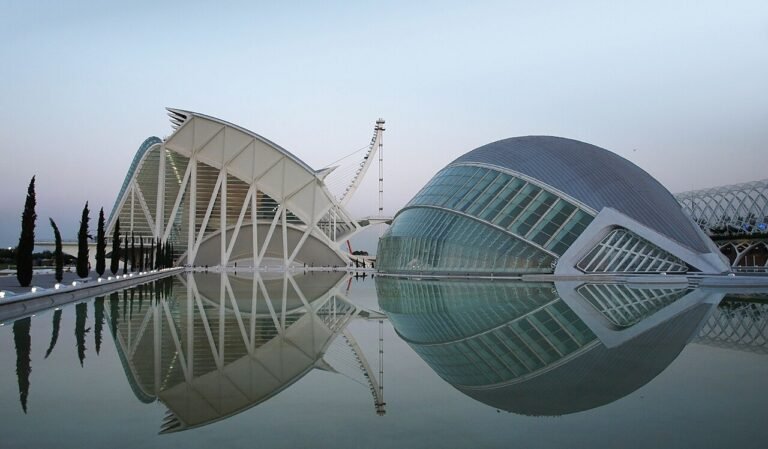
Start with the big one. The City of Arts and Sciences delivers the photograph everyone recognises, and inside it sits L’Oceanogràfic, the largest aquarium complex in Europe. If you visit one paid attraction in Valencia, make it that one: book the Oceanogràfic’s timed-entry ticket before you go, because entry runs on time slots and the queues at the door are the worst way to start a day.

The Short Version: 15 Reasons to Visit Valencia
- The City of Arts and Sciences — Calatrava’s white sci-fi city in the old riverbed.
- L’Oceanogràfic — Europe’s largest aquarium complex, with belugas and an underwater tunnel.
- The Turia Gardens — a whole river, replanted as a nine-kilometre park.
- A genuine old town — Ciutat Vella and El Carmen: plazas, towers and street art.
- The Holy Grail — Valencia Cathedral guards the most credible Holy Chalice anywhere.
- La Lonja de la Seda — a silk exchange so fine UNESCO lists it, and entry costs €2.
- Paella in its birthplace — the real thing, eaten at lunchtime, by the sea.
- City beaches done properly — Malvarrosa’s wide sand, minutes from the centre.
- L’Albufera — a mirror-calm lagoon, rice fields and sunset boat rides.
- Las Fallas — the loudest, brightest festival in Spain, every March.
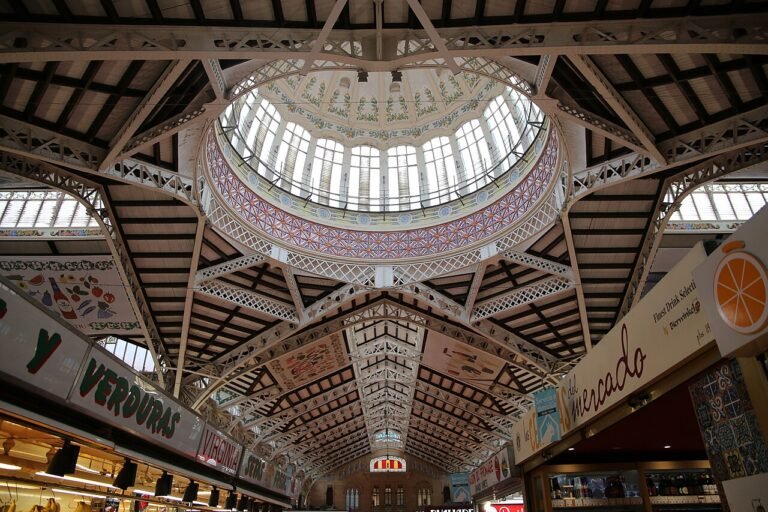
- Mercado Central — one of Europe’s great food halls, still a working market.
- Bioparc — a zoo with no visible cages, built as a walk through Africa.
- More than 300 days of sunshine — and winters you can sightsee in a T-shirt.
- Your money goes further — big-city sights at noticeably smaller-city prices.
- A city built for bikes — flat streets, endless cycle lanes, the park as your highway.
Table of Contents
- The City of Arts and Sciences Is Unlike Anything Else in Spain
- L’Oceanogràfic Is Europe’s Largest Aquarium Complex
- The Turia Gardens Turn a River into a Park
- The Old Town Is the Real Thing
- You Can See the Holy Grail
- La Lonja de la Seda Is a €2 Masterpiece
- This Is Where Paella Comes From
- The Beach Is Part of the City
- L’Albufera Is Valencia’s Mirror
- Las Fallas Has to Be Heard to Be Believed
- Mercado Central Is a Cathedral of Food
- Bioparc Rebuilt the Zoo
- The Weather Is a Reason All by Itself
- Your Money Goes Further Here
- The City Is Built for Bikes
- The Honest Downsides
- Practical Information
- Tickets and Costs
- Getting There
- When to Go
- How Long You Need
- Tips for Visiting Valencia
- FAQs About Visiting Valencia
- Final Thoughts
1. The City of Arts and Sciences Is Unlike Anything Else in Spain
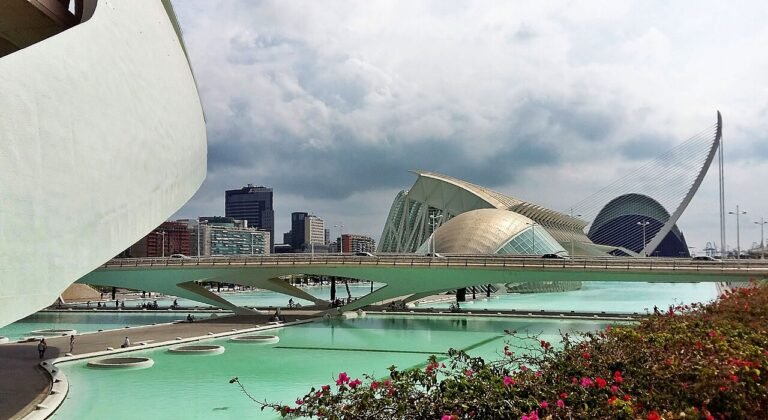
Stand at the eastern end of the Turia riverbed and Valencia stops looking like a historic Spanish city and starts looking like the set of a science-fiction film. The City of Arts and Sciences (Ciudad de las Artes y las Ciencias) is a family of vast white buildings by Santiago Calatrava, with the Oceanogràfic designed by Félix Candela: L’Hemisfèric, an IMAX cinema shaped like a giant eye that blinks open over its reflecting pool; the Museu de les Ciències, a science museum ribbed like a whale’s skeleton; the Palau de les Arts, an opera house like a ship’s prow; and L’Umbracle, a palm-lined garden under a latticed arch.
Work began in 1996 and the Hemisfèric opened first, in 1998; the complex grew for more than a decade and reportedly cost around €1.2 billion — a figure Valencians still argue about. Whatever you think of the bill, the place works: families at the science museum, couples photographing the reflections at dusk, runners passing underneath on the park paths. You do not even need a ticket to enjoy it — the pools, bridges and gardens between the buildings are public space. Our full guide to the City of Arts and Sciences breaks down which buildings are worth paying for.
2. L’Oceanogràfic Is Europe’s Largest Aquarium Complex
The City of Arts and Sciences saves its best interior for last. L’Oceanogràfic, opened in 2003 in Candela’s swooping concrete shells, is the largest aquarium complex in Europe: some 110,000 square metres holding 42 million litres of water and around 45,000 animals of roughly 500 species, arranged by ocean habitat — Mediterranean, wetlands, temperate and tropical seas, the Red Sea, the Arctic and Antarctic.
The moments people remember are the underwater tunnel, where sharks and rays pass over your head, and the Arctic building, where beluga whales drift past the glass at eye level — a genuinely strange, quiet encounter you will not get at any other Spanish aquarium. There is also a dolphinarium, a walk-through aviary in a giant sphere, and an underwater restaurant if you want lunch with the fish watching you. Allow at least three hours, and go early or late in the day to dodge the school-trip crowds. Entry is by timed slot: get the Oceanogràfic entry ticket sorted in advance and walk straight in. Our dedicated Oceanogràfic guide covers the layout zone by zone.

3. The Turia Gardens Turn a River into a Park
Every great city has a park; Valencia has a riverbed. In October 1957 the Turia river flooded catastrophically, killing at least 81 people. The city diverted the river south of the centre under the Plan Sur works, completed in 1969 — and when planners proposed turning the empty riverbed into a motorway, Valencians campaigned until the plan was dropped. The park that replaced it opened in 1986 and now runs for roughly nine kilometres and 136 hectares, crossed by 18 bridges, from the Cabecera Park and Bioparc in the west to the City of Arts and Sciences in the east.
For a visitor, the Turia is the city’s green highway: you can walk, run or cycle its whole length without meeting a car, passing pine woods, orange trees, sports pitches, the giant climbing-frame Gulliver, and the flower-carpeted Puente de las Flores. It connects almost everything on this list — stay anywhere near it and Valencia becomes a park with a city attached. Our Turia Gardens guide walks the route bridge by bridge.

4. The Old Town Is the Real Thing
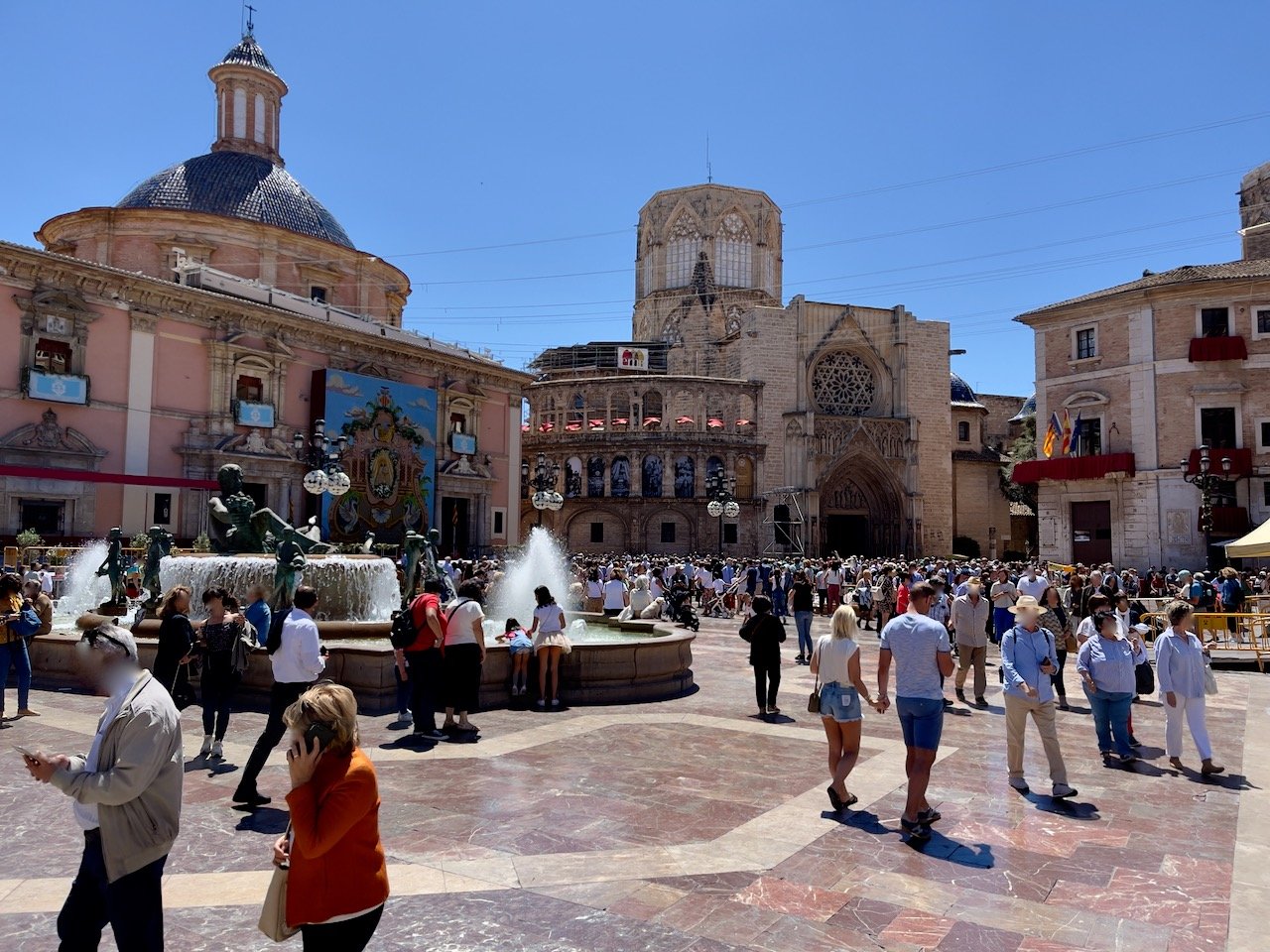
Valencia was founded by the Romans in 138 BC, and its old town — Ciutat Vella — still follows the ancient street plan: a dense, lived-in tangle of lanes opening suddenly onto plazas. Start at Plaza de la Virgen, where the Turia fountain’s bronze figures represent the river and its irrigation channels, watched over by the Basílica de la Virgen and the cathedral’s Apostles’ Door. Every Thursday at noon the Water Tribunal, one of Europe’s oldest legal bodies and UNESCO-listed in its own right, still meets at that door to settle farmers’ water disputes.
Two medieval gate towers survive from the city walls: the Torres de Serranos, built in the 1390s and climbable for the view, and the Torres de Quart, built in the 1440s and still scarred by Napoleonic cannonballs. North of the centre, the El Carmen quarter layers bohemian bars, the frescoed church of San Nicolás — nicknamed Valencia’s Sistine Chapel — and some of Spain’s best street art onto the oldest streets in the city. This is not a preserved museum quarter; it is where Valencians actually drink, shop and argue. Give it evenings, not just sightseeing hours.
5. You Can See the Holy Grail
Plenty of places claim the Grail; Valencia’s claim is the one the Vatican has treated most seriously. The Santo Cáliz — an agate cup mounted in gold and jewels — is kept in its own Gothic chapel in Valencia Cathedral, venerated as the cup of the Last Supper. Two popes, John Paul II in 1982 and Benedict XVI in 2006, have celebrated Mass using it, which is about as close to an endorsement as relics get. Stand in the quiet chapel and make up your own mind.
The cathedral itself, raised from 1262 on the site of the city’s mosque, mixes Romanesque, Gothic and Baroque doors on three sides. The ticket — around €9 at the time of writing — includes the museum, where Goya paintings hang almost unnoticed, and the climb up El Miguelete, the octagonal bell tower: 207 steps to a terrace with the whole city, the huerta and the sea laid out below. Our Valencia Cathedral guide covers the chapel, the tower and the Thursday tribunal in detail.

6. La Lonja de la Seda Is a €2 Masterpiece
Face the Mercado Central and turn around: the crenellated stone building opposite is La Lonja de la Seda, the silk exchange built between 1483 and 1548, when Valencia’s silk trade made it one of the richest cities in the Mediterranean. UNESCO inscribed it in 1996 as one of the finest civil Gothic buildings in Europe — and the astonishing thing is how many visitors walk straight past it.
Do not. Step into the Sala de Contratación, the trading hall built in 1483–1498 by Pere Compte, and you are standing in a stone forest: 24 twisted columns climbing about 17 metres into star-vaulted ceilings, lit by tall traceried windows, with a Latin inscription around the walls promising honest merchants a place in paradise. Upstairs, the Consolat de Mar chamber has a gilded coffered ceiling rescued from the old city hall. The whole visit takes half an hour, entry is €2 (free on Sundays and public holidays, closed Mondays) — the best-value ticket in Valencia, and the perfect partner to the market across the road.

7. This Is Where Paella Comes From
Paella is not “Spanish” — it is Valencian, born in the rice fields around L’Albufera, and Valencia is fiercely, wonderfully pedantic about it. A true paella valenciana contains chicken, rabbit, green ferraúra beans, white garrofó beans, tomato, olive oil, saffron and Bomba rice — and nothing else. Seafood paella exists and can be delicious, but it is a different dish; anything with chorizo is, locally, an act of war.
Eating it properly is a ritual: paella is a lunch dish, cooked to order (allow 30–40 minutes), served in the pan for a minimum of two people, and eaten — ideally — near the sea in El Cabanyal or in the city that invented it, washed down with a cold beer or a jug of Agua de Valencia, the cava-and-orange-juice cocktail created at Café Madrid in 1959. Expect to pay roughly €18–€25 a head for the genuine article in the old town or the beach quarter; suspiciously cheap “paella for one, ready now” is exactly what it looks like. Round it off with horchata — the sweet tiger-nut drink — and a farton for dunking, at a classic horchatería like Santa Catalina.

8. The Beach Is Part of the City
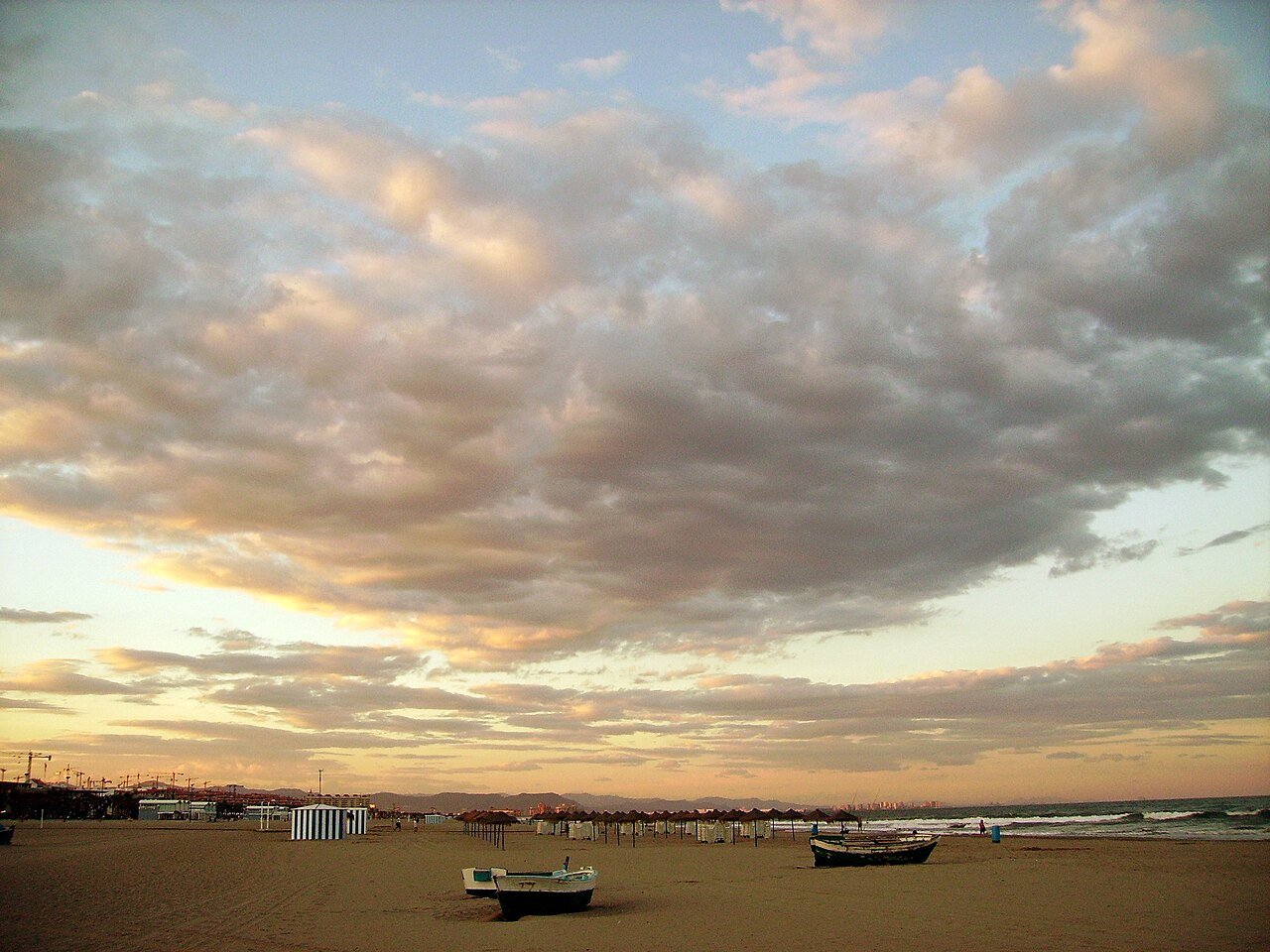
Most Spanish city breaks make you choose: culture or coast. Valencia refuses. A tram or bus ride of about twenty minutes from the old town — or a flat cycle through the Turia and out along the avenues — lands you on Malvarrosa, well over a kilometre of fine, pale sand that is in places more than 100 metres wide, named after the mallow-rose fields that once grew behind it and painted obsessively by Joaquín Sorolla, the city’s great artist of light.
Southwards it merges into Las Arenas, where the old spa resort has anchored the promenade since 1898, and behind the sand lies El Cabanyal, the old fishermen’s quarter of tiled, modernista houses — now the city’s most interesting eating neighbourhood. The combined seafront runs for kilometres: promenade cafés, volleyball nets, chiringuitos, and locals doing the evening paseo exactly as they do in the old town. Come in late spring or autumn and you may get a warm swim with half the beach to yourself — the advantage of a beach that belongs to a working city, not a resort strip.
9. L’Albufera Is Valencia’s Mirror
Ten kilometres south of the city, the landscape flips: L’Albufera Natural Park, protected since 1986, wraps 21,120 hectares of rice paddies, pine forest and one of Spain’s most important wetlands around a vast freshwater lagoon — roughly 2,800 hectares of water averaging barely a metre deep, separated from the sea by a strip of dunes and pines. This is where Valencia’s rice grows, where its paella was invented, and where the city comes to breathe.
Base yourself in El Palmar, the little fishing village on the lake’s southern shore, where nearly every restaurant serves paella and all i pebre, the local eel stew. Then do the thing everyone remembers: take a flat-bottomed albuferenc boat out onto the lagoon in the late afternoon, when the water turns to glass and the sun drops into it. Birdlife is serious here — herons, egrets, flamingos in season — and the EMT bus 25 from Porta de la Mar makes it an easy half-day from the centre. Our Albufera Natural Park guide covers boats, birding and where to eat.

10. Las Fallas Has to Be Heard to Be Believed
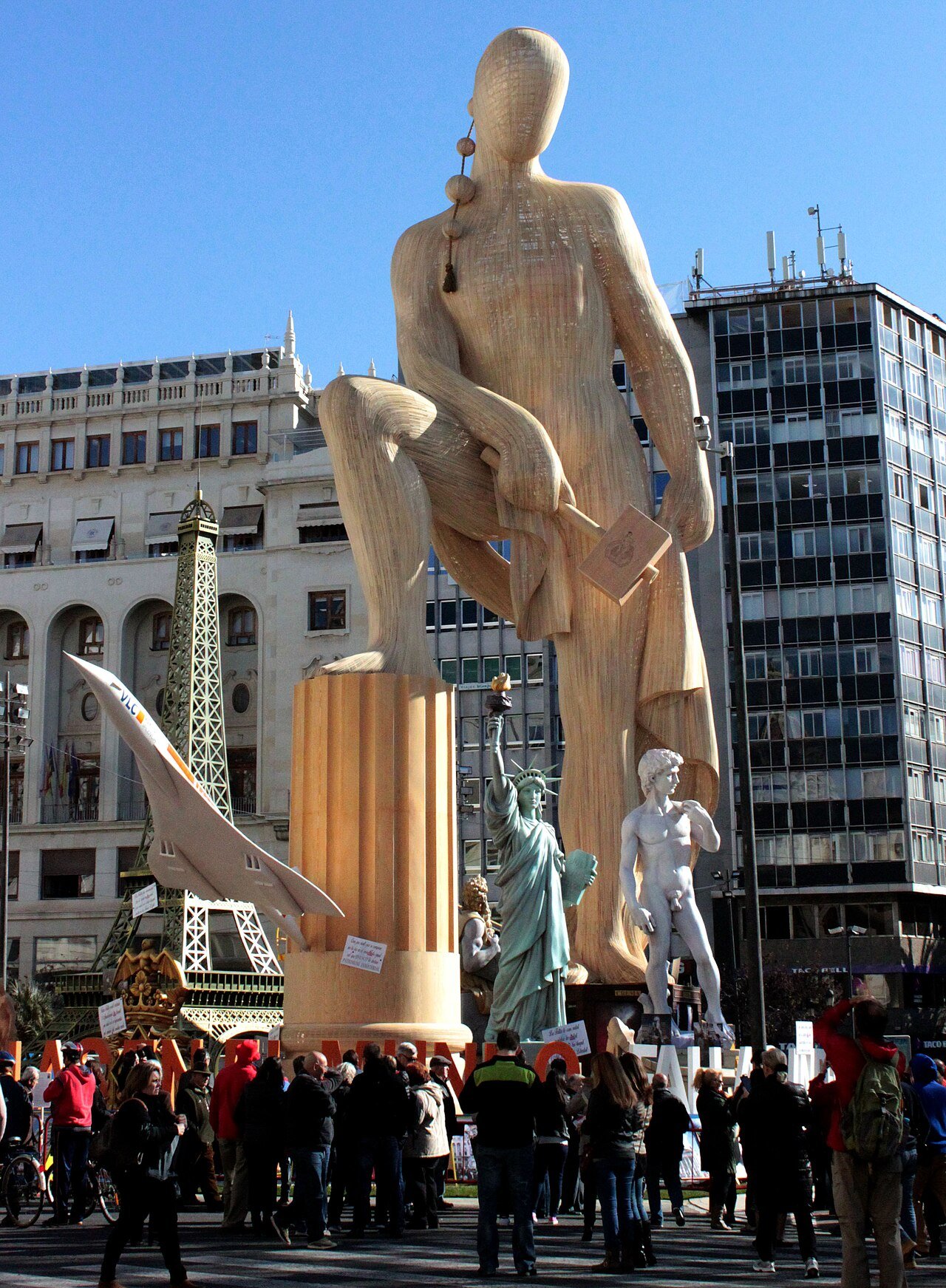
For five days every March, Valencia builds around 800 enormous satirical sculptures — fallas — out of wood, cork and papier-mâché, displays them on street corners across the city, and then, on the night of 19 March, burns every single one. UNESCO added Las Fallas to its Intangible Cultural Heritage list in 2016, and even that honour undersells the scale of it: this is a city of 800,000 people throwing itself a party that takes all year to prepare.
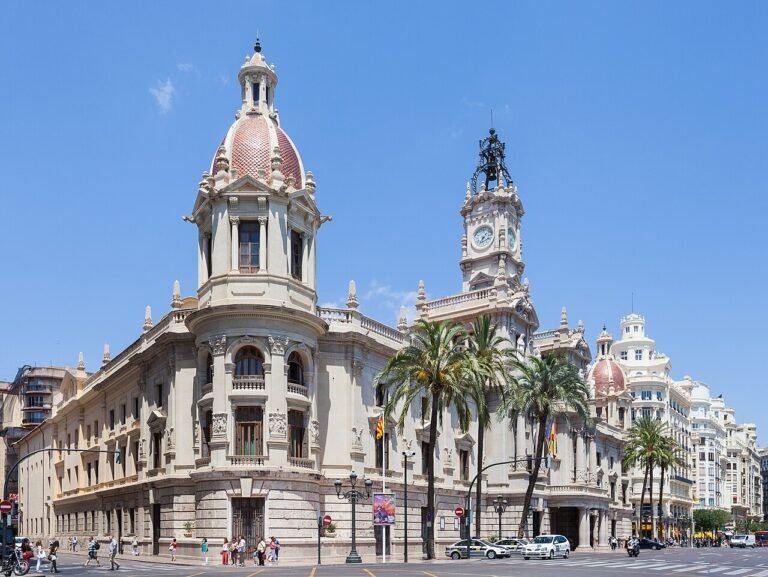
The daily rhythm is fixed: at 2pm from 1 to 19 March, thousands pack Plaza del Ayuntamiento for the mascletà, a five-minute earthquake of coordinated firecrackers that you feel in your ribcage. Between mascletàs there are parades of falleras in silk dresses, the flower offering to the Virgin, churro stands frying buñuelos on every corner — and at midnight on the 19th, the cremà, when the monuments go up in flames one by one and the fire crews hose down the surrounding buildings. Hotel prices spike and sleep is optimistic, but no festival in Spain involves a whole city like this one. Our Las Fallas festival guide explains the calendar day by day. The 2027 main week runs 15–19 March, as it does every year — book absurdly early.
11. Mercado Central Is a Cathedral of Food
If La Lonja is where Valencia sold silk, the Mercado Central — directly opposite — is where it sells everything edible. Inaugurated in 1928 and covering about 8,200 square metres under an iron-and-glass modernista roof, it is one of Europe’s largest fresh-food markets: hundreds of stalls piled with huerta vegetables, saffron, oranges, hams, cheeses, and fish so fresh it is still debating the matter. Look up: the central dome rises 30 metres, topped by a weathervane parrot — la cotorra — the market’s mascot.
This is a working market first and a sight second, which is exactly its charm. Valencians shop here seriously; join them early (Monday to Saturday, 7:30am–3pm; closed Sundays), graze at the stalls, then take a stool at Central Bar, chef Ricard Camarena’s tapas bar inside the market, for whatever came off the boats that morning. Entry is free — the only cost is what you cannot resist buying. Go before 10am for the full theatre of the fish auctions’ aftermath and the best light through the dome.

12. Bioparc Rebuilt the Zoo
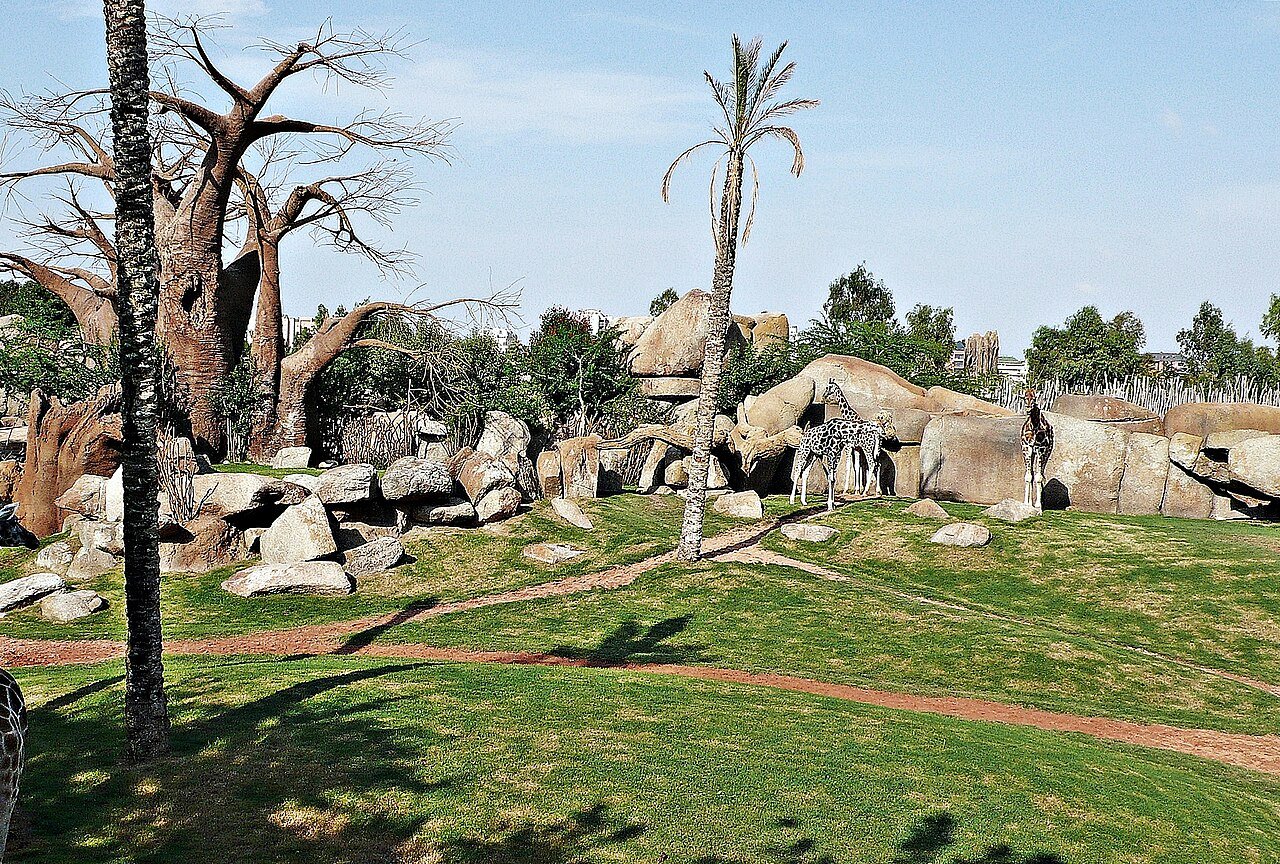
At the western end of the Turia, where the park meets the Cabecera lake, Bioparc has been quietly redefining what a city zoo can be since 2008. Its ten hectares recreate African habitats — savanna, Madagascar, equatorial forest, wetlands — with the barriers hidden in rockwork, rivers and glass, so a giraffe drifts past a baobab a few metres away and nothing cage-like interrupts the view. The concept is called zoo-immersion, and Bioparc is its best European example.
Highlights: the savanna, where giraffes, rhinos and antelope share open ground; the Kitum Cave, where you watch hippos swim underwater, described as the only view of its kind in Spain; and Madagascar, where lemurs move through the trees around you. Thousands of animals live here, but the landscaping is the star — it feels like a walk through Africa that happens to be inside a Spanish city. Tickets run to around €31 at the gate at the time of writing; it sits at the far end of the Turia, so pair it with a park walk or cycle and make a day of the west end.
13. The Weather Is a Reason All by Itself
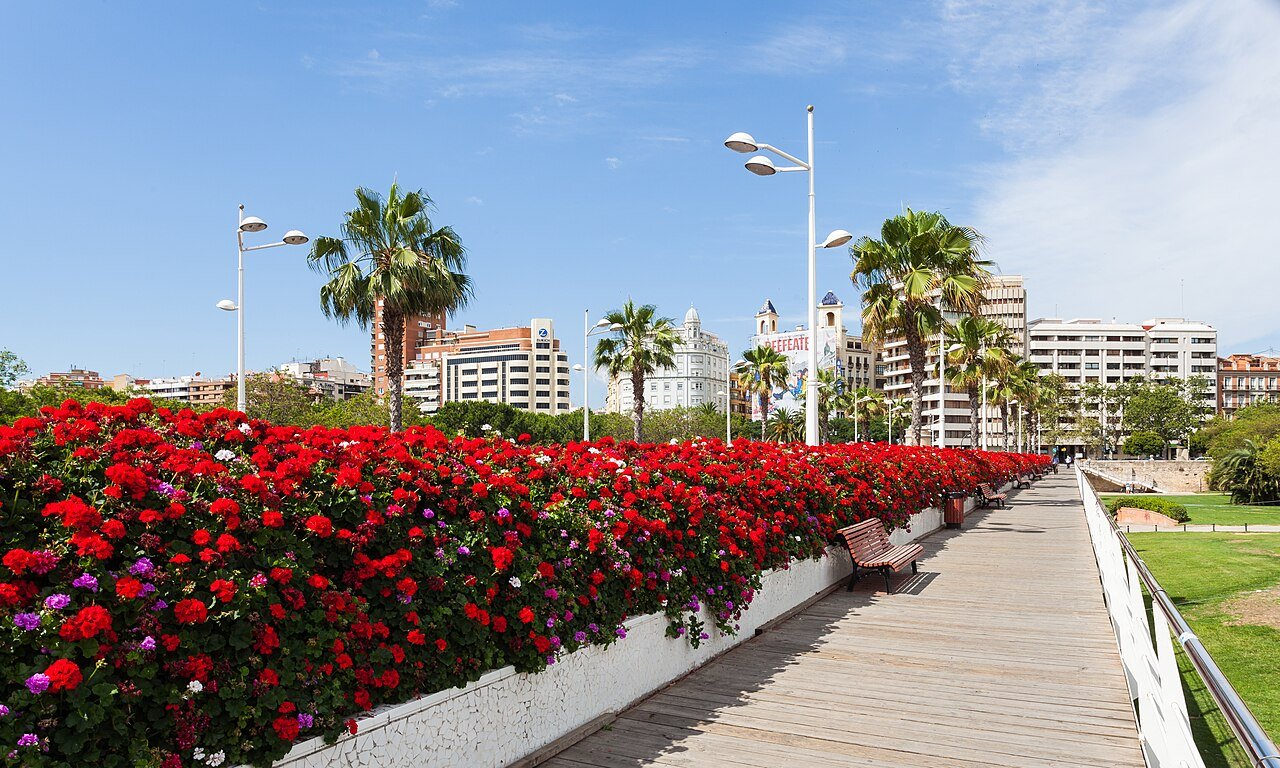
Valencia’s climate is the quiet superpower underneath every other reason on this list. The city counts more than 300 days of sunshine a year and an average annual temperature of around 18°C; winters are mild enough that January lunches happen on terraces, and the sea is swimmable from late spring well into autumn. Even the city’s bridges celebrate the sun — the Puente de las Flores, the flower bridge over the Turia, is replanted through the year with thousands of blooms and blazes red under a blue sky for much of it.
The honest exception is high summer: July and August bring real heat and humidity, and midday sightseeing becomes a negotiation. Valencians respond the local way — long lunches, siesta hours, the beach at both ends of the day. But visit in the shoulder seasons and the climate is close to unbeatable in Spain: March gives you Las Fallas under spring skies, October gives you warm-sea swims with the crowds gone. Valencia was European Green Capital 2024, and on a bright February morning, cycling the Turia in a T-shirt, you understand the whole pitch at once.
14. Your Money Goes Further Here
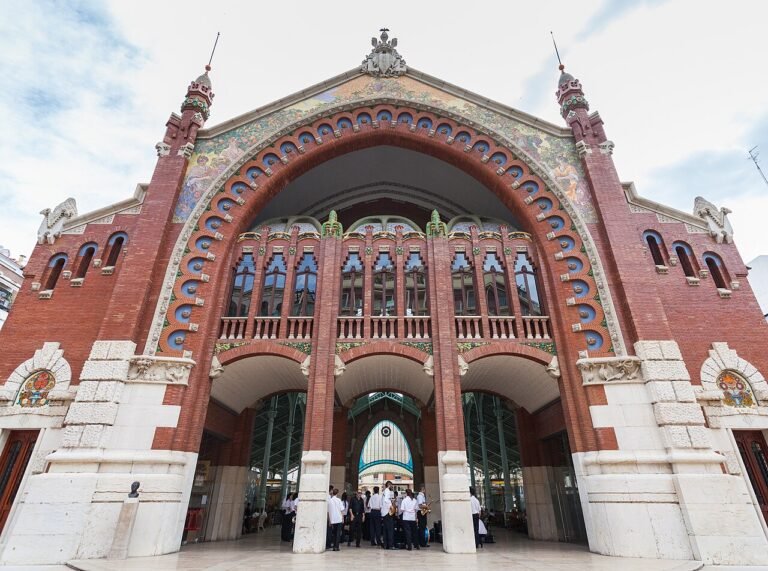
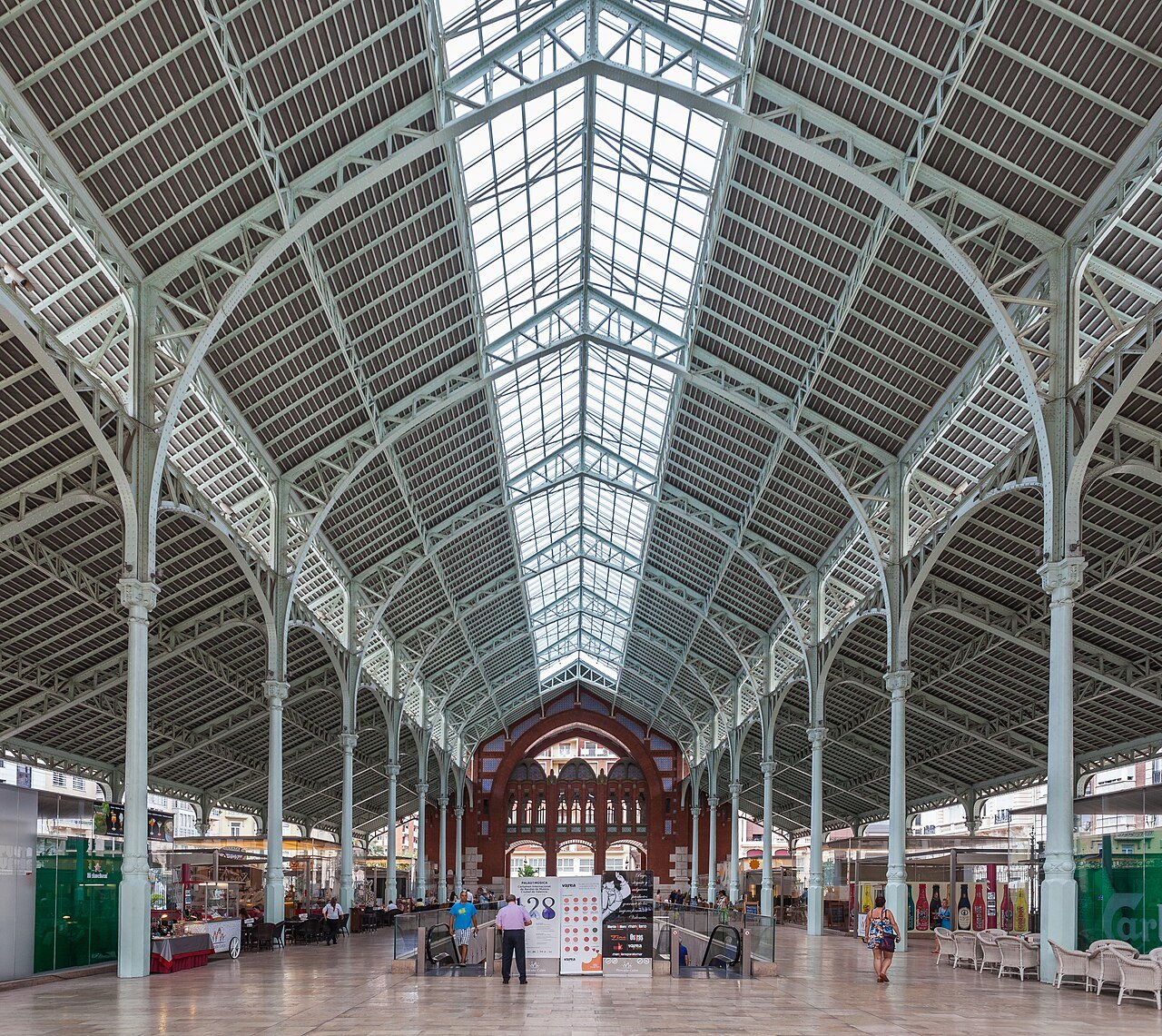
Valencia delivers a big-city inventory — the architecture, the aquarium, the cathedral, the beach — at prices that consistently undercut Barcelona and Madrid. The pattern holds everywhere: a UNESCO masterpiece for €2 at La Lonja, a cathedral ticket under €10, an excellent menú del día in a neighbourhood restaurant for roughly €12–€15, and a food-hall lunch inside the gorgeous Mercado de Colón, the 1916 market hall in the Eixample that now houses cafés and bars under its iron-and-glass roof, for the price of a coffee and a tapa or two more than the street outside.
Accommodation follows the same curve: the same class of hotel, the same week of the year, usually costs noticeably less than its Barcelona equivalent — outside Las Fallas week, when the whole city sells out and prices briefly lose their minds. For a family, the maths compounds: the Turia, the beaches, the old town and the City of Arts and Sciences’ outdoor spaces are all free, so your spend concentrates on the two or three ticketed sights that matter. Few Spanish cities give you this much per euro.
15. The City Is Built for Bikes
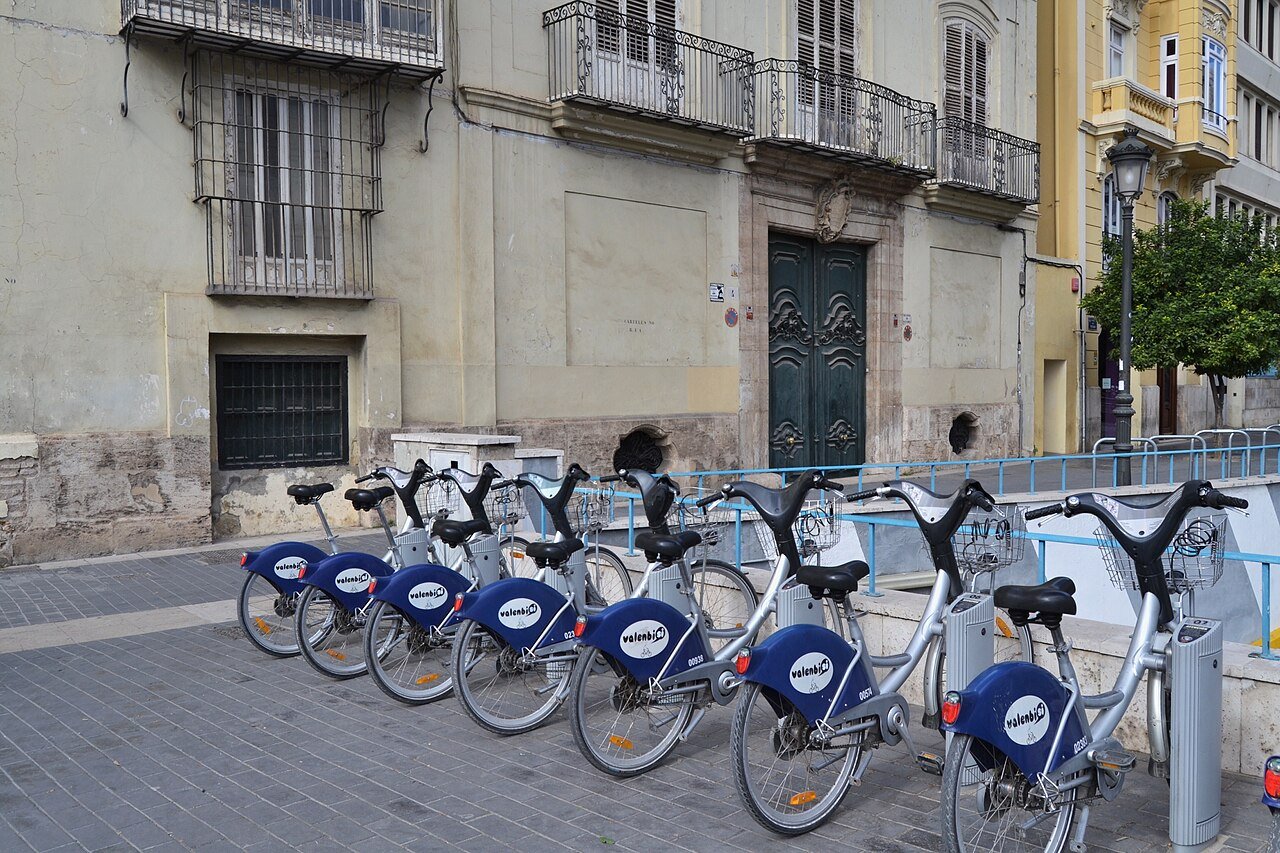
Valencia is flat, compact and threaded with more than 160 kilometres of cycle lanes — and the Turia Gardens run through the middle like a green motorway reserved for people. Nowhere else in Spain makes exploring by bike this obvious: old town to beach without a hill, a traffic jam or a difficult decision. Locals treat the bicycle as default transport, and visitors can join them in minutes.
The city’s Valenbisi sharing scheme runs some 275 docking stations; a weekly pass costs around €13 and the first 30 minutes of each ride are included, which turns sightseeing into a series of short hops — dock, look, ride on. Prefer your own wheels? Rental shops cluster around the old town and Ruzafa, and guided rides along the Turia to the City of Arts and Sciences are the city’s easiest orientation tour. One local warning: lock up properly and use the lanes as marked — fines for pavement cycling are real. Otherwise, this is the rare city where the greenest way round is also the fastest and the most fun.
The Honest Downsides
No city earns fifteen reasons without a few catches — the SpainInspired version of this question asks “why not” too, and fairly. August is hard work: hot, humid and best handled at the beach rather than the cathedral steps. Las Fallas is not for everyone: if you dislike crowds, noise and the smell of gunpowder, mid-March Valencia will test you, and hotel prices peak hard. The City of Arts and Sciences divides opinion — some find the complex stunning, others find it soulless and expensive inside, and the Oceanogràfic gets very busy in high season (go at opening or late afternoon). Finally, the city beaches are urban beaches: usually clean and Blue Flag-standard, but they can look scruffy after storms, and the water is Mediterranean-calm rather than postcard-turquoise. None of this should stop you — it should just shape when you come and what you expect.
Practical Information
Valencia’s centre is compact and flat: the old town, the Eixample and Ruzafa are all walkable, and the Turia connects the rest. Metrovalencia links the airport to the centre (lines 3 and 5, about 20 minutes to Xàtiva station by the bullring), and the EMT bus and tram network covers the beach and L’Albufera (bus 25 to El Palmar). Joaquín Sorolla station handles high-speed AVE trains from Madrid (about 1 hour 40 minutes) and Barcelona. Base yourself in the old town for atmosphere, the Eixample or Ruzafa for restaurants and local life, or El Cabanyal for the beach. A Valencia Tourist Card can pay off if you plan heavy museum and transport use; otherwise single tickets and walking do the job.
Tickets and Costs
The paid highlights, at the time of writing: Oceanogràfic roughly €36–€43 depending on season and where you buy — combinations with the Museu de les Ciències (around €8) and Hemisfèric (around €9) work out cheaper per venue and can be spread over two or three days; the Oceanogràfic entry ticket gives you a timed slot — check the cancellation terms on the booking page before you pay. Cathedral and Miguelete around €9 (tower climb included or a small supplement depending on current arrangements). La Lonja €2, free Sundays and holidays. Bioparc around €31 at the gate, usually a little less online. Mercado Central, Turia Gardens, the beaches and the City of Arts and Sciences grounds are all free — Valencia’s best bargain is how much of the city costs nothing.
Getting There
Valencia Airport (VLC) sits about 8 km west of the centre, with flights across Europe and a metro ride of roughly 20 minutes into town. High-speed trains make Valencia an easy add-on to a Madrid or Barcelona trip: AVE services reach Madrid in about 1 hour 40 minutes and Barcelona in around 3 hours, arriving at Joaquín Sorolla station, a short walk or metro hop from the centre. Long-distance buses use the Estació d’Autobusos by the Turia. If you are touring the Mediterranean coast by car, Valencia is the natural midpoint between Barcelona and Alicante — but you will not need the car inside the city.
When to Go
March for Las Fallas and spring weather — book months ahead. April to June is the sweet spot: warm, swimmable by late May, and pre-summer calm. July and August suit beach-first trips if you sightsee early and late. September and October bring warm seas, thinning crowds and the rice harvest around L’Albufera — many locals’ favourite months. November to February is mild, quiet and cheap, with terrace lunches still on the table; the sea is for the brave only.
How Long You Need
Two full days cover the essentials at a sprint: City of Arts and Sciences with the Oceanogràfic, the old town with the cathedral and La Lonja, and a Turia walk. Three to four days is the honest answer — add the beach and El Cabanyal, a sunset boat on L’Albufera, and time to eat properly. With five days, fold in Bioparc, the Mercado de Colón and Ruzafa’s café scene, and a day trip — or simply slow down to Valencian speed, which is rather the point.
Tips for Visiting Valencia
Eat paella at lunch, never dinner, and order it where it is cooked to order — a 35-minute wait is a good sign, not a bad one. Book the Oceanogràfic for opening time or after 4pm to escape the midday crush. Climb the Miguelete in the morning for the clearest views. Treat the Turia as your map: if you can find the park, you can find everything. During Las Fallas, carry earplugs if you are sensitive to noise and book accommodation the moment your dates are fixed. Learn three words of Valencian goodwill — bon dia (good morning) goes a long way.
FAQs About Visiting Valencia
Is Valencia worth visiting, or should I choose Barcelona?
Both, ideally — but if you must choose, Valencia gives you the beach, the food story and the futuristic architecture with fewer crowds and lower prices. Barcelona has Gaudí and greater fame; Valencia has the easier, sunnier, better-value trip.
How many days do you need in Valencia?
Three to four. Two days covers the City of Arts and Sciences, the Oceanogràfic and the old town; the extra days buy you the beach, L’Albufera and eating at Valencian pace.
When is the best time to visit Valencia?
Spring (April–June) and early autumn (September–October) for warmth without peak heat or crowds. Come in mid-March only if Las Fallas is the point of the trip — and book far ahead.
Is Valencia expensive?
By Spanish big-city standards, no. Expect a good menú del día for roughly €12–€15, major-sight tickets mostly under €10 (the Oceanogràfic and Bioparc are the exceptions), and hotel prices below Barcelona’s outside festival week.
What food is Valencia famous for?
Paella valenciana above all — plus arroz a banda and other rice dishes, all i pebre (eel stew) from L’Albufera, horchata with fartons, and Agua de Valencia, the cava-and-orange cocktail invented here in 1959.
Can you swim at Valencia’s beaches?
Yes — Malvarrosa and Las Arenas are wide, sandy, lifeguarded in season and about 20 minutes from the old town by tram, bus or bike. The water is warmest from June to October.
Travel insurance, sorted
Whether it is a two-week holiday or a longer move, travel insurance is not the most glamorous part of a trip — but it is the one booking you want to have in place before a trip, and while you are already away. Get a quote from SafetyWing
Final Thoughts
Valencia is the rare city that gives you a whole Spain trip in one place: Roman streets and a Holy Grail, a silk exchange and a sci-fi aquarium city, a river to cycle and a beach to end the day on — then feeds you the most argued-over rice dish on earth, in the fields’ own city, for lunch. It is not the understudy to Barcelona or Seville; it is a different, sunnier answer. Come for a long weekend, stay for the light.

15 Best Things to Do in Valencia for First-Time Visitors
Photos: Diliff (CC BY-SA 3.0), Dorieo (CC BY-SA 4.0), LiteraryTech (CC BY-SA 4.0), Zarateman (CC0), Diego Delso (CC BY-SA 3.0 / 4.0), Jan Harenburg (CC BY-SA 4.0), Manuel Martín Vicente (CC BY 2.0), Falconaumanni (CC BY-SA 3.0), Alberto-g-rovi (CC BY-SA 3.0) and Joanbanjo (CC BY-SA 3.0), via Wikimedia Commons.